Antibiotic-free poultry production for food security, food safety, and environmental stewardship
Abstract
The use of antibiotic growth promoters (AGPs) in poultry production has raised concerns for human, animal, and environmental health owing to the development and spread of antimicrobial resistance. These concerns have triggered global efforts to decrease AGP use and have intensified calls for sustainable, antibiotic-free production. Antibiotic-free production aims to safeguard food security and safety while mitigating environmental risks; however, it faces challenges, including reduced productivity, increased disease susceptibility, and economic constraints. This systematic review assesses the current knowledge of AGPs and their alternatives in poultry production and identifies key research gaps. It examines the mechanisms through which AGPs promote growth and antimicrobial resistance, and the challenges and opportunities associated with antibiotic-free poultry systems, including regulatory and sustainability considerations. A total of 149 peer-reviewed articles published between 2005 and 2025 were identified following preferred reporting items for systematic reviews and meta-analyses guidelines. Evidence suggests that no single additive can consistently replace AGPs; rather, successful antibiotic-free production depends on integrated strategies targeting gut integrity, microbial ecology, and host immunity. Key inconsistencies in the literature include variable responses caused by diet composition, environmental conditions, and bird genetics, emphasising the need for mechanistic, systems-level approaches to optimise outcomes. Robust, scalable antibiotic-free systems will require coordinated advances in nutrition, management, and microbial modulation, supported by validation under commercial conditions. The transition from AGPs to sustainable, antibiotic-free poultry production requires coordinated action by researchers, policymakers, industry stakeholders, farmers, and consumers to establish resilient systems that deliver safe, high-quality products while promoting public health, food security, and environmental stewardship.
antibiotics; environmental health; health care systems; natural additives; poultry; sustainable production
Introduction
The global poultry industry continues to expand rapidly, making significant contributions to food and nutrition security and economic development in many nations. In 2022, global chicken meat production reached approximately 124 million tonnes, with further growth anticipated to meet rising consumer demand (Food and Agriculture Organization of the United Nations, 2022). To sustain this intensification, antibiotics have long been used for prophylactic, therapeutic, and growth-promoting purposes. While sub-therapeutic levels of antibiotics have traditionally improved bird health, feed efficiency, and growth performance (Rahman et al., 2022; Eko et al., 2023), their indiscriminate use has generated unintended and far-reaching consequences. Foremost among these is the emergence of antibiotic-resistant bacteria, which can be transmitted to humans through poultry products, direct contact, or environmental exposure (Abreu et al., 2023). Antimicrobial resistance undermines the effectiveness of commonly used antibiotics in treating infections, complicating medical care and increasing healthcare costs (Heinemann et al., 2020). Residual antibiotics in poultry manure further exacerbate the problem, as they leach into soil and water systems, disrupt ecosystems, and promote resistance in non-target organisms (Yang et al., 2020). Collectively, these risks compromise food safety, public health, and environmental integrity, highlighting the need for sustainable alternatives to antibiotic-dependent systems (Muhammad et al., 2020; Gray et al., 2021).
In response, several high-income countries have restricted or banned the use of in-feed antibiotics, accelerating interest in antibiotic-free poultry production systems. These systems are designed to safeguard human health and environmental sustainability while ensuring food security. However, they also face challenges, including reduced productivity, higher disease risk, and economic constraints (Cervantes, 2015). Addressing these challenges requires a holistic approach that integrates improved management practices, enhanced biosecurity, vaccination, and the strategic use of natural antimicrobial or nutritional alternatives (Speksnijder et al., 2015; Abd El-Hack et al., 2022; Fonseca et al., 2024). Accordingly, this review examines the mechanisms by which antibiotic growth promoters (AGPs) enhance performance and drive antimicrobial resistance, while evaluating the challenges and opportunities of antibiotic-free poultry production systems, and considers the policy and sustainability frameworks required for their adoption. The aim is to provide insights that can guide the development of poultry production systems that promote food security, ensure food safety, and uphold environmental stewardship.
Methodology
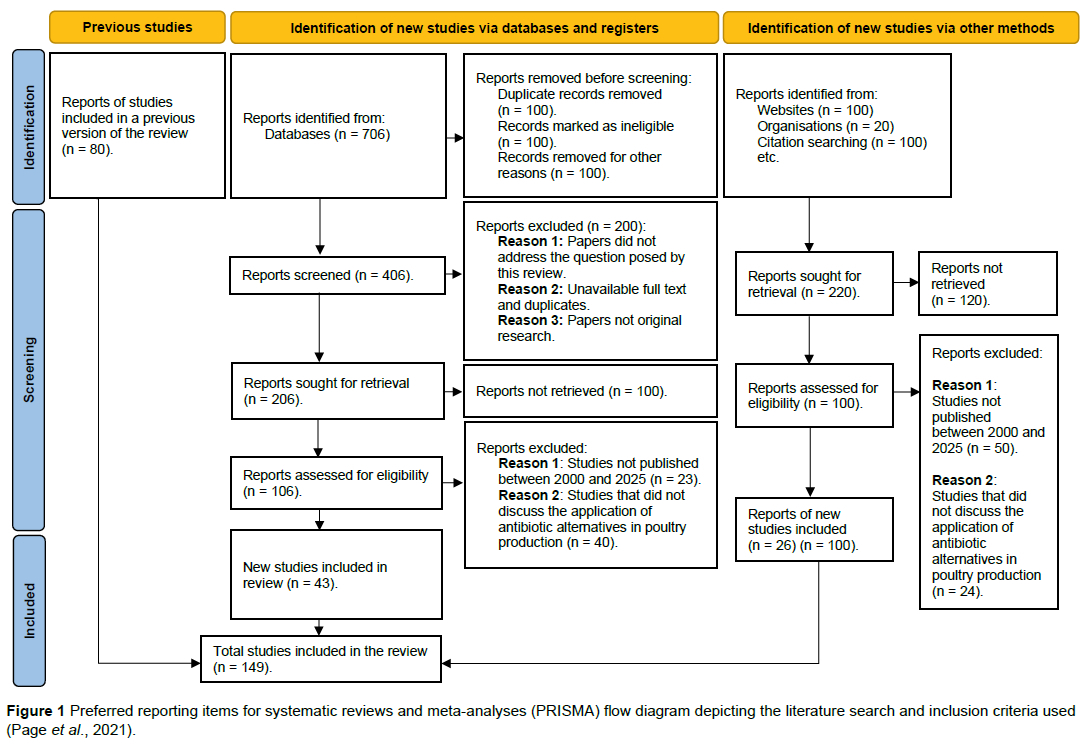
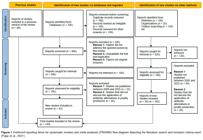
An extensive systematic literature search was conducted using Google Scholar, Scopus, ScienceDirect, and PubMed. The search was conducted using two or more of the following keyword combinations: (1) antibiotics, environmental health, natural additives, health care system, poultry, and sustainable production; (2) antibiotic evolution, anti-microbial growth promoters, poultry, multi-drug resistant pathogens, and antibiotic residues; (3) antibiotic residues, antimicrobial resistance, broilers, manure, poultry products, and food safety; (4) common antibiotic alternatives, challenges, limitations, applications, and poultry; and (5) bacteriophages, exogenous enzymes, phytobiotics, organic acids, essential oils, and poultry production systems. The sequence of article identification, exclusion, screening, and inclusion steps is demonstrated by the preferred reporting items for systematic reviews and meta-analyses (PRISMA) protocol, as described by Page et al. (2021) (Figure 1). The inclusion criteria focused on peer-reviewed journal articles published between 2005 and 2025 that investigated the use of natural additives as in-feed strategies in place of synthetic antibiotics, and the spread and emergence of drug-resistant non-target organisms in poultry systems. The inclusion criteria also included papers that focused on the fate of synthetic antibiotic residues, the impacts of conventional antibiotics on non-target organisms, and the impacts of alternative natural antibiotics. However, papers that did not evaluate the use of natural antibiotic alternatives in place of synthetic antibiotics in poultry systems, as well as literature reviews, were excluded. As a result, 149 studies met the inclusion criteria and were used to develop the current systematic review.
Antibiotic use in conventional poultry production
The evolution of antibiotic use in poultry farming
The rapid expansion of intensive poultry production has traditionally been supported by veterinary antibiotics used for prophylactic, subtherapeutic, and growth-promotion purposes (Fei et al., 2023). Intensive poultry farming, characterised by high stocking densities, has led to the proliferation of pathogens, resulting in the development of harmful diseases such as Gumboro, Newcastle, typhoid, and coccidiosis, among others (Owusu-Doubreh et al., 2023). However, since the discovery of the first and most common antibiotic (penicillin) by Alexander Fleming in 1928, several antibiotics (synthetic and natural) have been developed and are currently used to treat harmful pathogens in commercial birds (Lacroix et al., 2023). Over the past decades, more than 35 unique antimicrobial agents, including penicillin, cephalosporins, tetracyclines, chloramphenicol, macrolides, spectinomycin, lincosamide, sulphonamides, nitrofurans, nitroimidazoles, trimethoprim, polymyxins, quinolones, and macrocyclics (annamycins, glycopeptides, and aminoglycosides) have been successfully developed for use in commercial birds (Owusu-Doubreh et al., 2023). However, the use of synthetic antibiotics has been banned in several developed countries because of public concerns about the emergence of multidrug-resistant bacteria (Tabashsum et al., 2023). In 2006, the European Union banned the use of dietary antibiotics in food-producing animals as growth promoters and/or therapeutics (Roth et al., 2019). Subsequently, the United States Food and Drug Administration (FDA) also banned the use of antibiotics in animal production (Al-Khalaifah, 2018), intending to protect consumers from harmful antibiotic residues that could be transferred to animal food products.
Although several developed countries have considered banning antibiotic use in animal feeds, many developing nations, especially those in southern Africa and parts of Asia, continue to rely on them for improved production efficiency (Fei et al., 2023; Campagnano et al., 2024), despite increasing concerns regarding their impact on human and environmental health. Antibiotics are mostly used in broiler production in developing countries, and this use is characterised by limited controls and regulatory policies, raising serious public health concerns (Owusu-Doubreh et al., 2023). Therefore, sustainable antibiotic alternatives must be identified, evaluated, and adopted in poultry production (Al-Khalaifah, 2018). Alternative strategies may include vaccinations, bacteriophages (Tabashsum et al., 2023), probiotics, essential oils, organic acids, phytobiotics, plant-based synbiotics, and prebiotics, as well as antimicrobial peptides (Oladokun, 2020).
Benefits and unintended consequences of antibiotics
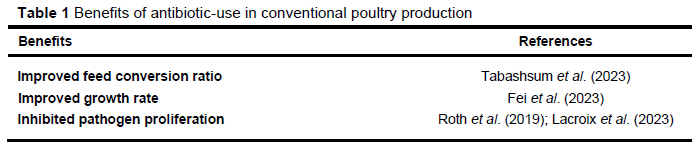
Traditionally, in-feed antibiotics are used to control, kill, or inhibit the proliferation of infectious diseases while promoting the growth and immune response of the animal (Al-Khalaifah, 2018). Table 1 summarises the major benefits of using antibiotics in conventional poultry production. The intensive nature of conventional poultry farming exposes birds to numerous harmful pathogens, leading to disease outbreaks (Tabashsum et al., 2023). Major poultry diseases, such as coccidiosis (Eimeria spp.), cause serious problems, including diarrhoea, decreased egg production, decreased feed conversion efficiency, reduced growth rates, and high mortality and morbidity rates (Owusu-Doubreh et al., 2023).
Poultry producers have traditionally used antibiotics to manage diseases and poor productivity in intensively reared birds (Campagnano et al., 2024). However, these benefits are accompanied by several risks, including threats to environmental sustainability and animal welfare, the emergence of antibiotic-resistant pathogens, and the occurrence of antibiotic residues (Tabashsum et al., 2023). In humans, several health concerns have been raised regarding the use of antibiotics in poultry production. These include the emergence of drug-resistant bacteria, the intoxication of the normal intestinal microbiota, bone marrow depression, reproductive disorders, allergic reactions, and carcinogenic and mutagenic responses (Mohammadzadeh et al., 2022). Another challenge is the leaching of antibiotic residues into soil and water systems from poultry litter, urine, and contaminated feedstuffs, thereby indirectly contributing to the development of antimicrobial-resistant pathogens in the environment (Lacroix et al., 2023). Furthermore, disregarding recommended withdrawal periods leads to the transfer of synthetic drugs or metabolic residues from poultry meat and eggs to consumers, thus threatening human health (Mohammadzadeh et al., 2022). Current trends indicate that the continued use of antibiotics in animal production could result in approximately 10 million deaths per annum by 2050 (Hutchings & Truman, 2019).
Mechanisms of action of antibiotics
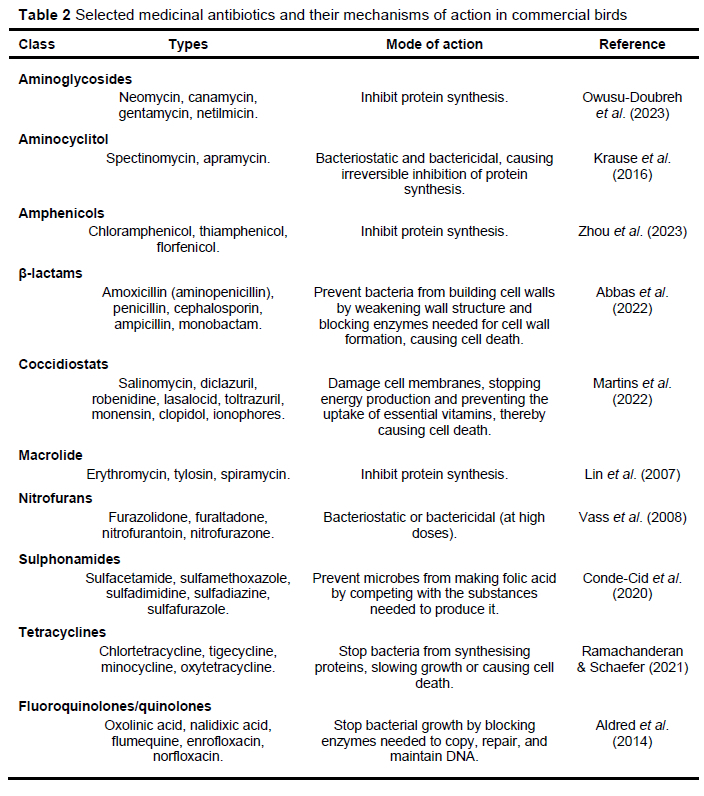
Antibiotics are chemical compounds produced by living organisms to suppress or terminate the growth of microorganisms (Owusu-Doubreh et al., 2023). These compounds are naturally occurring, semi-synthetic, or synthetic substances that exhibit antimicrobial activity (Roth et al., 2019). Although scientific evidence suggests that they help remodel microbial diversity and populations in the gastrointestinal tracts of animals (e.g. commercial birds) (Mehdi et al., 2018), the mechanisms by which antibiotics exert their effects in poultry production remain incompletely understood. Table 2 summarises the possible modes of action of commonly used antibiotics in poultry production.
Inhibition of protein synthesis
Deoxyribonucleic acid (DNA) is a crucial prerequisite for protein synthesis, as it is translated into proteins at the ribosomal site (Abreu et al., 2023). Specifically, the ribosome translates DNA into messenger RNA (mRNA), which is then translated into a protein (Chaillou et al., 2014). Bacterial ribosomes are composed of three ribosomal RNA molecules (16S, 23S, and 5S rRNA) and more than 50 ribosomal proteins. These components assemble into two distinct subunits: the small 30S subunit and the large 50S subunit, which associate to form the functional 70S ribosome (Ramakrishnan, 2002). Protein synthesis is a highly regulated and coordinated process in which translation factors direct ribosomal activity through four sequential stages, namely, initiation, elongation, termination, and ribosome recycling (Lin et al., 2018). Selected antibiotics (aminocyclitol, amphenicols, macrolides, tetracyclines, and aminoglycosides) are added to poultry diets to inhibit the formation of bacterial proteins on the ribosomes, which may result in the death of infectious bacterial cells (Table 2).
Ribosomal inhibitors are among the most effective antimicrobial drugs and account for more than half of the veterinary medicines used to treat infections in animals (Abreu et al., 2023). These drugs work by stopping bacteria from making proteins, which are essential for their growth. For example, tetracyclines bind to bacterial ribosomes and block the entry of amino acids needed to make proteins, which stops protein production and slows or stops bacterial growth (Ramachanderan & Schaefer, 2021). Although tetracyclines and neomycin bind to similar sites on the ribosome, they inhibit protein synthesis in different ways (Lin et al., 2018). Tetracyclines prevent the building blocks of proteins from entering the ribosome, while neomycin interferes with their movement, causing errors in protein synthesis and eventually killing the bacterium (Hörömpöli et al., 2021).
The region of the 30S ribosomal subunit encompassing helix 44 and its immediate surroundings is a major target for several classes of antibiotics, including tetracyclines and aminoglycosides (Lin et al., 2018). Streptomycin, an aminoglycoside, not only interacts with helix 44 but also contacts helix 18, helix 27, and ribosomal protein uS12. These interactions induce conformational changes in the conserved nucleotides A1492 and A1493 within the decoding centre (Rocha et al., 2021). The positively charged amino groups of streptomycin facilitate its binding to the negatively charged A-site cleft of the 30S subunit, thereby disrupting accurate decoding and inhibiting bacterial protein synthesis (Prabhu et al., 2022). Aminoglycoside antibiotics like paromomycin and gentamicin attach to a specific part of the bacterial ribosome and change its shape. This causes the ribosome to misread the genetic code, allowing the wrong amino acids to be added during protein synthesis. Consequently, alterations in the decoding centre substantially reduce translational fidelity, allowing promiscuous transfer RNA (tRNA) binding and impairing mRNA translocation (Parajuli et al., 2021). In addition to targeting the small subunit, certain aminoglycosides bind to the groove of helix 69 of the 23S rRNA within the large ribosomal subunit (Lin et al., 2018). This interaction distorts the inter-subunit bridge B2a, thereby disrupting subunit rotation and ribosome recycling (Parajuli et al., 2021). Hygromycin B, another aminoglycoside, does not promote miscoding but instead increases the affinity of tRNA for the A-site, and, similar to neomycin, inhibits tRNA translocation (Gonzalez et al., 1978).
Inhibition of bacterial cell wall synthesis
Some antibiotics act by preventing the formation of cell walls (Table 2), thereby inhibiting the proliferation of non-beneficial microbes. Specifically, β-lactams (carbapenems, cephalosporins, penicillins, and monobactams) target the cell walls of bacterial pathogens, which are crucial for their viability and growth and the maintenance of cell shape (Keller & Dörr, 2023). These antibiotics target penicillin-binding proteins by inhibiting the synthesis of peptidoglycan (the primary cell wall polymer) in both Gram-negative and Gram-positive bacteria (Tooke et al., 2019). This causes several problems for bacterial cells. Firstly, no crosslinks will form, resulting in the breakdown of the emerging protein fibril networks. Secondly, this leads to cells entering a nefarious cycle of synthesising long, uncross-linked peptidoglycan strands, which are immediately destroyed by autolysins (lytic transglucosylases and endopeptidases). These enzymes are mostly active during rapid cell growth and elongation. As a result, cell growth is slowed and/or completely halted (Abbas et al., 2022).
Inhibition of nucleic acid replication, recombination, and repair
Fluoroquinolones (also referred to as quinolones) exert their antibacterial activity by inhibiting bacterial type II topoisomerases, specifically DNA gyrase and DNA topoisomerase IV, which are essential for DNA replication and chromosome segregation (Bush et al., 2020). These enzymes function by introducing transient double-stranded breaks in duplex DNA, passing an intact DNA segment through the break, and subsequently religating the cleaved strands to resolve topological constraints during DNA synthesis (Blondeau, 2004). Type II topoisomerases are indispensable for bacterial viability; however, their activity must be tightly regulated, as they can become cytotoxic if the balance between DNA cleavage and religation is disrupted (Pommier et al., 2010). Reduced gyrase-mediated DNA cleavage slows DNA replication and impairs cell growth, whereas insufficient topoisomerase IV activity prevents proper decatenation of daughter chromosomes, ultimately leading to cell death through mitotic failure. Conversely, excessive gyrase- or topoisomerase IV-mediated DNA cleavage can convert normally transient cleavage complexes into permanent double-stranded DNA breaks. Such lesions activate the SOS response and other DNA repair pathways and may culminate in bacterial cell death (Aldred & Kerns, 2014). Fluoroquinolones are broad-spectrum antibiotics effective against both Gram-positive and Gram-negative bacteria. They act by binding to DNA and to DNA gyrase or topoisomerase IV, thereby stabilising the enzyme-DNA cleavage complex and preventing DNA religation. This inhibition of DNA supercoiling and relaxation leads to the accumulation of lethal DNA breaks and ultimately results in bacterial cell death (Bush et al., 2020).
Reducing pathogenic microbial populations
The sustainability of poultry production is under threat owing to the emergence of several contagious diseases that must be addressed to ensure a sustainable enterprise. Coccidiosis is a major protozoan disease caused by Eimeria species that effects the economic viability of poultry production, with effects ranging from subclinical to fatal (Abebe & Gugsa, 2018). In commercial birds, physiological symptoms may include intestinal lesions, poor growth performance, and epidemic disorders such as mycoplasmosis, colibacillosis, and high mortality rates (Chapman et al., 2010). Broiler farmers use coccidiostats in poultry feeds to combat this disease and help maintain the health and well-being of their birds and, in some cases, improve feed conversion efficiency (Martins et al., 2022). Macrolides are antibiotics that inhibit bacterial growth by binding to bacterial ribosomes and interfering with protein synthesis (Lin et al., 2007).
Disruption of folic acid formation and competitive free amino acid uptake
Sulphonamides and trimethoprim are two important classes of antibiotics that inhibit folic acid synthesis and interfere with competitive free amino acid uptake (Table 2). Proteins present in poultry feedstuffs are complex macromolecules that must be enzymatically hydrolysed into free amino acids before absorption. When the dietary amino acid supply is inadequate, catabolic processes intensify, and endogenous body proteins are mobilised to meet metabolic demands (Kidd et al., 2021). This metabolic imbalance can be mitigated by supplementing free amino acids, which may suppress excessive protein catabolism by reducing catabolic enzyme activity (Hilliar et al., 2020). Therefore, increasing dietary methionine concentrations can enhance the intestinal transport and absorption of other essential amino acids, such as lysine and arginine, and improve the embryonic uptake of these amino acids from the egg (Sarsour & Persia, 2022; Yin et al., 2025). However, excessive methionine supplementation beyond recommended inclusion levels may lead to hyperhomocysteinemia, a metabolic condition associated with impaired renal function, pathological changes in arterial walls, and an increased risk of thromboembolic and cardiovascular disorders (Tombarkiewicz et al., 2024). In commercial poultry, elevated homocysteine concentrations are frequently linked to deficiencies in folic acid and vitamin B6. Folic acid plays a critical role in homocysteine remethylation and is therefore a key limiting factor in maintaining amino acid homeostasis (Tombarkiewicz et al., 2024). Notably, sulphonamides and certain coccidiostats have been shown to inhibit folic acid synthesis while simultaneously influencing the uptake of essential amino acids, including lysine and arginine, which are required for optimal growth and development (Conde-Cid et al., 2020; Martins et al., 2022).
Development of antibiotic-resistant bacteria
Poultry production systems are widely recognised as high-risk environments for the development, emergence, and dissemination of antimicrobial-resistant bacterial strains, largely due to the persistent and often intensive use of antibiotics (Abreu et al., 2023; Owusu-Doubreh et al., 2023). Bacteria can acquire resistance to therapeutic antibiotics through three primary mechanisms: (1) by pumping the drug out of the cell, resulting in a reduced intracellular concentration of the drug; (2) by chemically breaking the drug down; and (3) by modifying the drug target to prevent effective interaction (Lin et al., 2018). For example, bacteria often become resistant to tetracyclines by acquiring new genes that help them expel the antibiotic from the cell, protect the ribosome from the antibiotic, or degrade the antibiotic, making the treatment less effective (Ramachanderan & Schaefer, 2021). Consequently, antibiotic-resistant genes enable pathogenic microbes to thrive in the presence of antibiotics (Cornejo et al., 2020), undermining the efficacy of antibiotics and further exacerbating farmers' production costs. When commercial birds are administered antibiotics, antimicrobial-resistant bacteria tend to replicate and outcompete non-resistant strains, owing to the complex interrelationship between the host, environment, and microbes (Scicchitano et al., 2024). During the slaughter of birds or the processing of poultry products, antimicrobial-resistant bacteria can contaminate food and be transferred to consumers (Punchihewage-Don et al., 2022). Accordingly, the use of antibiotics leads to the emergence of antibiotic-resistant bacteria, which pose a threat to environmental, animal, and human health (Lacroix et al., 2023). In developing countries, antibiotics are often administered by non-specialist personnel, whereas in developed countries, where their use is permitted, the rules are stricter, often requiring a specialist to administer the medication to the birds. The administration of antibiotics by non-specialist personnel may lead to prolonged and excessive antibiotic dosages, potentially resulting in the development of drug-resistant bacteria (Mohammadzadeh et al., 2022).
Antibiotic residues in poultry meat and eggs
The use of antibiotics by poultry farmers is driven by the need to improve broiler meat and egg production by supporting and enhancing disease prevention, growth rates, and feed conversion ratios (Mehdi et al., 2018). However, the deposition of toxic antibiotic residues in broiler meat and egg products is a significant problem in poultry production, largely due to the indiscriminate use of antibiotics in poultry farming, and is widely linked to adverse health impacts in humans (Cornejo et al., 2020). The threat of antibiotic residues in poultry products is a global challenge (Owusu-Doubreh et al., 2023). Worldwide, intake of antibiotic residues by both humans and livestock is estimated to range from 1 × 10⁵ to 2 × 10⁵ tonnes (Mehdi et al., 2018). Antimicrobial drug residues in food products occur when recommended withdrawal periods are not observed or when unlicensed medicinal antimicrobials are used (Owusu-Doubreh et al., 2023).
Broiler chickens are reared worldwide because of their short growth cycles and low-fat composition (Haque et al., 2020). The potential of medicinal drug deposition in animal tissues depends on pharmacokinetic factors, such as metabolism, absorption, distribution, and excretion in the bird (Owusu-Doubreh et al., 2023). For example, residues of ciprofloxacin, enrofloxacin, oxytetracycline, doxycycline, and amoxicillin were detected in various poultry tissues (liver, thigh muscle, and breast muscle) in southern Asia (Sarker et al., 2018). Similarly, residues of ciprofloxacin and oxytetracycline were detected in chicken breast meat in East Africa (Ahmed & Gareib, 2016). In Nepal, broilers were analysed for antibiotic residues and tested positive for enrofloxacin, ciprofloxacin, streptomycin, and chloramphenicol (Prajapati et al., 2018).
In layer hens, the concentrations and deposition patterns of antibiotic residues are influenced by the drug composition in the diet, egg development, the nature of the egg compartment, the hen's physiology, and the physicochemical properties of the antibiotics used (Owusu-Doubreh et al., 2023). Once the drug has been administered to the birds, the antimicrobial compounds can be absorbed and transported in the bloodstream, where they reach the ovaries (Muaz et al., 2018). Antibiotic residues can accumulate in egg yolk or white, potentially harming consumers' health (Cornejo et al., 2020). For example, tetracyclines have been reported to interfere with tooth development in children. This is also the case with β-agonists, such as clenbuterol, which can result in food poisoning and muscle tremors, palpitations, and tachycardia (Haque et al., 2020). Quinolone residues have been found to produce joint injuries, allergic reactions, DNA damage, and other genotoxic effects in humans (Fei et al., 2023).
Impact of antibiotics on non-target organisms
Poultry litter and urine are increasingly recognised as a significant source of antibiotic residues in the environment, leading to the emergence of antimicrobial-resistant bacteria and resistant genes. Organisms such as houseflies tend to act as vectors of antibiotic resistance because of their unrestricted access to poultry manure (Graham et al., 2009). An investigation into the excretion rates of common antibiotics through poultry litter revealed that the excretion rates of major antibiotics, namely lincosamide, tetracycline, macrolide, sulphonamide, and fluoroquinolone, were 60%, 75%-80%, 50%-90%, 80%-90%, and 90%, respectively (Rashid et al., 2023). Nevertheless, poultry litter is considered a valuable organic fertiliser for organic farming owing to its essential nutrients and mineral elements, which can improve the chemical and physical properties of agricultural land (Rashid et al., 2023). Unfortunately, the presence of a high concentration of unmetabolised antibiotics in poultry litter, leading to soil and water pollution, is inevitable (Rashid et al., 2023), and this affects non-target organisms, including humans, plants, insects, and other animals. For example, antibiotic residues in the soil profile can negatively affect plants that absorb contaminated water from the environment. These residues degrade and/or transform into several toxic compounds, and they also migrate to neighbouring agricultural lands through surface runoff and percolation into underground aquifers (Rashid et al., 2023). This is a serious problem because residues are eventually stored in various plant tissues and organs, inevitably resulting in the unintended exposure of consumers and wildlife to antibiotics (Haque et al., 2020).
Nutritional strategies to minimise or eliminate antibiotic use
Consumer concerns and pressure regarding the harmful effects of antibiotic use have led to the search for strategies to minimise or eliminate antibiotic use in poultry production. These strategies are designed to reduce mortality rates and enhance poultry gut microflora, productivity, and food safety without the use of antibiotics. These strategies can generally be grouped into antibiotic alternatives and nutritional management practices.
Nutritional management
To reduce disease susceptibility and strengthen the immune system in poultry, it is essential to provide balanced nutrition tailored to birds' specific nutrient requirements. Optimal nutrition plays a crucial role in supporting immune responses, as nutrient deficiencies or imbalances can compromise immunity and increase susceptibility to infections (Adedokun & Olojede, 2019). For example, dietary vitamin E, selenium, and zinc have been shown to enhance immune defences by stimulating immune cell activity and antibody production in ducks (He et al., 2013), geese (Fu et al., 2022), and broiler chickens (Hafez et al., 2020). Similarly, amino acids such as methionine and lysine are crucial for maintaining mucosal barrier integrity and the overall health of immune tissues (Konieczka et al., 2022; Gong et al., 2023), thereby reducing disease incidence and the need for antibiotics.
In addition to meeting nutrient requirements, feed producers can also adopt alternative strategies such as incorporating fermented energy or protein sources into poultry diets. Fermented feed ingredients can help promote a healthy gut microbiota, improve gut integrity, and enhance immunity, further reducing reliance on antibiotics in poultry production systems.
Alternatives to in-feed antibiotics
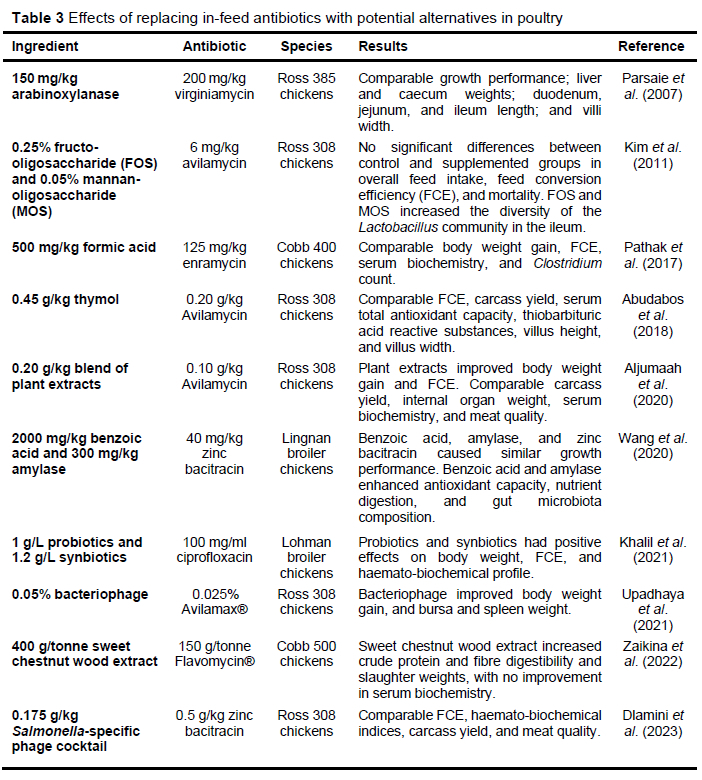
The poultry industry has increasingly adopted antibiotic-free management practices and interventions to address challenges posed by antibiotic resistance and the demand for ethically produced poultry products. The use of these antibiotic alternatives has been found to improve performance, feed efficiency, and the health of poultry without compromising product quality or causing antimicrobial resistance-related challenges. The influence and potency of these antibiotic alternatives, including prebiotics, probiotics, and organic acids, are presented and summarised in Table 3.
Bacteriophages
Bacteriophages are viruses that selectively target and infect bacteria. Bacteriophages active against infections are primarily found in environments where their host bacteria are prevalent, such as farms. They affect the immune system by influencing how immune cells respond to infections, and they can also alter the balance and activity of gut bacteria (Yang et al., 2020). By influencing bacterial community formation and phases, they also support bacterial colonisation and enhance disease resistance in various body sites (Rahman et al., 2022). The mechanisms of action of bacteriophages involve attaching to and colonising receptors on bacterial cell surfaces, injecting their genetic material, and utilising the bacterial cell's machinery to produce new phages. The newly formed phages will cause the bacterial cells to lyse, releasing new phages to infect other bacteria. Bacteriophages are desirable because they can maintain a balanced gut microbiota population by targeting specific harmful bacteria, without destroying beneficial strains. Bacteriophages have been shown to reduce Salmonella colonisation and infection rates in Ross 308 broilers (Dlamini et al., 2023) and colibacillosis occurrence in Cobb 500 broilers (Huff et al., 2004). Other studies have demonstrated that bacteriophages reduce the incidence of Salmonella enterica serovar Enteritidis shedding in quails (Ahmed & Gareib, 2016). Although bacteriophages have shown potential as a viable antibiotic alternative, their adoption and use in the poultry industry remain limited because of high production costs, the need for specialised and skilled personnel, a lack of policy direction, and host specificity.
Exogenous enzymes
Enzymes produced through bacterial and fungal fermentation are primarily used as feed additives to enhance the feed conversion efficiency of poultry (Andrew Selaledi et al., 2020). These enzymes improve bird performance by reducing digesta viscosity, facilitating digestion and nutrient absorption, and increasing feed intake (Gadde et al., 2017). The enhanced feed digestibility observed in birds fed enzyme-containing diets is attributed to the ability of enzymes to break down fibre, reduce feed viscosity, and regulate gut microbiota by destroying the cell wall, disrupting its integrity, and releasing the nutrients bound within (Gadde et al., 2017; Andrew Selaledi et al., 2020). The mechanisms and modes of action of enzymes are linked to their hydrolytic properties, which enable them to access and degrade the matrix of biologically active components, including cytosolic spaces and cell walls (Streimikyte et al., 2022). The efficacy of enzymes is influenced by feed composition, moisture content, and gut conditions, including pH.
Organic acids
Organic acids are carbon-based compounds that play an important role in maintaining gut health in poultry (Yang et al., 2020; Tian et al., 2021). Their primary mode of action involves lowering the gastrointestinal tract pH, thereby enhancing starch stability, protein utilisation, and feed conversion efficiency by improving nutrient digestion and increasing protease activity. In addition, organic acids suppress pathogenic bacteria such as Escherichia coli and Salmonella, while promoting beneficial bacteria, particularly Lactobacillus species in the ileum, resulting in improved growth performance (Nava et al., 2009). Although the beneficial effects of organic acids in poultry production are well documented, their precise mechanisms of action remain incompletely understood. Moreover, their efficacy is influenced by several factors, including dosage, gut environment, and the specific type of organic acid used. Therefore, further research is required to elucidate their mechanisms of action, determine optimal inclusion levels, and identify the most effective organic acids for poultry nutrition.
Phytobiotics
Phytobiotics such as spices, natural compounds, and herbs offer health benefits when incorporated into the diet (Yang et al., 2016; Tian et al., 2021; Abd El-Hack et al., 2022). The mechanisms by which phytobiotics improve gut health and bird performance include their antioxidant and antimicrobial properties, enhanced palatability, improved digestion, growth promotion, and improved overall gut health (Andrew Selaledi et al., 2020; Abd El-Hack et al., 2022). The antimicrobial activity of phytobiotics is attributed to bioactive compounds that disrupt the metabolic pathways of pathogenic bacteria. The reduction and destruction of pathogenic bacteria result in a healthy gut lining, improved growth performance, and reduced incidence of diseases such as necrotic enteritis, without compromising meat quality (Li et al., 2015; Das et al., 2020). However, the efficacy of phytobiotics may vary, owing to differences in plant chemical composition, processing techniques, and environmental factors.
Essential oils
Essential oils are concentrated plant extracts that possess characteristic scents, which are attributed to the presence of aromatic compounds and active ingredients. These oils are typically obtained from bark, flowers, leaves, peels, and/or seeds through processes such as cold pressing or solvent extraction. These oils are gaining traction in the poultry industry because of their antimicrobial, antioxidant, anti-inflammatory, and digestion-enhancing properties. Essential oils disrupt cell membranes and suppress the growth of pathogenic bacteria, leading to a healthy gut microbiota composition (Angane et al., 2022). Furthermore, essential oils protect the intestinal lining and gut integrity by reducing oxidative stress and neutralising free radicals. Moreover, the decrease in pathogenic bacterial populations indicates that organic acids can lower bacterial loads in poultry.
Prebiotics, probiotics, and synbiotics
Prebiotics are components of foods that escape digestion in the gastrointestinal tract and are fermented by probiotic species such as Bifidobacterium and Lactobacillus in the large intestine. Prebiotics are fermented by gut microbes to produce short-chain volatile fatty acids (SCVFAs) such as acetate, propionate, and butyrate, which reduce the pH and eliminate harmful gut microbiota (Yaqoob et al., 2021). The fermentation of prebiotics and production of SCVFAs play a critical role in maintaining a balanced gut microbiome and upregulating favourable immune responses, thereby maintaining health and product quality. Short-chain volatile fatty acids also play a critical role in maintaining gut barrier function by preventing harmful microbiota from attaching to the gut lining and by inhibiting toxin production. Some studies have demonstrated that the incorporation of prebiotics, such as oligosaccharides, upregulates the immune responses of Cobb 500 chickens (Murarolli et al., 2014), while other studies have demonstrated that prebiotics (mannan oligosaccharides, virginiamycin, and bacitracin) had similar effects to conventional dietary interventions in terms of weight gain and carcass yield (Baurhoo et al., 2009). This demonstrates that prebiotics are suitable alternatives to antibiotics in the poultry industry.
As live microorganisms, probiotics are acid-resistant, making them suitable for enhancing poultry gut health and overall well-being (Abreu et al., 2023). Probiotics attach to the lining of the intestines, forming a barrier that prevents pathogenic bacteria from adhering to the gut wall and invading intestinal cells (competitive exclusion). This leads to a balanced gut microbiome, which, in turn, enhances the growth, digestion, nutrient uptake, and immunity of poultry (Bortoluzzi et al., 2019; Vieco-Saiz et al., 2019). Furthermore, some studies have demonstrated that probiotics can reduce the stress of densely stocked poultry, while improving carcass traits, intestinal morphology, and growth performance (He et al., 2019; Agustono et al., 2022). The combination of probiotics and prebiotics (synbiotics) enhances the survival of beneficial microbes in the gut, resulting in a greater impact compared to when they are used separately. Synbiotics increase the production of both lactic acid and SCVFAs (Markowiak-Kopeć et al., 2022).
Comparative effectiveness of in-feed antibiotic alternatives
As shown in Table 3, direct comparisons between in-feed antibiotics and antibiotic alternatives remain limited, largely owing to differences in poultry species/strains, dosage levels, and experimental designs used across studies. Nevertheless, several studies have attempted to evaluate the comparative effectiveness of in-feed antibiotic alternatives in poultry nutrition. However, the findings are often inconsistent. For instance, Abd El-Ghany et al. (2022) compared probiotics, postbiotics, and amoxicillin in broiler chickens challenged with Clostridium perfringens. Their results indicated that postbiotics improved immune response and gut health relative to the other treatments. Similarly, supplementation with organic acids has been reported to significantly reduce the enteric C. perfringens population while improving feed conversion efficiency and intestinal morphology. In contrast, Shah et al. (2025) compared a synbiotic to an AGP under a necrotic enteritis challenge and found that neither synbiotics nor the AGP significantly improved the growth performance of broiler chickens. Likewise, Tumpa et al. (2024) evaluated the effectiveness of probiotics, organic acids, exogenous enzymes, and phytogenics, and reported that organic acids produced the most favourable overall growth performance outcomes of the alternatives tested. These contrasting findings suggest that in-feed antibiotic alternatives do not consistently outperform AGPs, particularly under severe disease challenge conditions. Consequently, Mohite et al. (2021) investigated the effects of single additives versus combined feed additives (prebiotics, probiotics, and organic acids) in Giriraja chicken. Their results indicated that multi-additive strategies were more effective than single additives, highlighting the potential benefits of synergistic combinations of antibiotic alternatives in poultry diets. Despite these potential benefits, the use of some in-feed antibiotic alternatives, such as phytobiotics and enzymes, may be limited by their rapid degradation in the gut before reaching their target site. To enhance their stability and efficacy, advanced delivery technologies such as nano-encapsulation should be employed to protect active compounds until they reach their intended site of action.
There is currently limited information available on the effectiveness of in-feed antibiotic alternatives in terms of reducing or eliminating antibiotic resistance genes. Nevertheless, some studies have reported the presence of antibiotic resistance genes in antibiotic-free poultry production systems (Liu et al., 2020; Farooq et al., 2022; Baker et al., 2023). This observation suggests that resistance genes may already be widespread in poultry production environments and may not be solely associated with the current use of antibiotics. In addition, resistant bacteria can potentially be transmitted vertically from breeder flocks to newly hatched chicks. Therefore, further research is required to determine whether in-feed antibiotic alternatives can effectively reduce or eradicate antibiotic resistance genes within poultry production systems.
Sustainable antibiotic-free poultry production systems
Sustainability is a multipronged phenomenon that encompasses environmental, social, and economic well-being. In poultry production, the adoption of alternative management practices and therapeutic interventions, such as bacteriophages, enzymes, phytogenics, plant extracts, and probiotics, can be used to replace antibiotics and contribute positively to environmental sustainability (Kithama et al., 2021). These management practices have been used to support gut health, growth performance, nutrient digestion and uptake, and product quality. Furthermore, social sustainability is concerned with enhancing the welfare of birds and workers (Fernandes et al., 2021). The enhancement of poultry welfare can be achieved through the optimisation of stocking densities and the rearing of strains with excellent feed efficiencies and high stress tolerance levels (Bessei, 2006). Moreover, the social sustainability of alternative poultry production systems can be achieved by reskilling and upskilling producers and workers in sustainable management practices that require minimal antibiotic interventions (Chah et al., 2022). One of the criticisms levelled against antibiotic-free production systems is that they lack economic viability because of the high cost of production inputs (e.g. probiotics) (Cervantes, 2015). To mitigate these challenges, poultry producers can utilise locally available resources as feed (inexpensive feed sources) and therapeutics, while maintaining birds at optimal stocking densities (Alber et al., 2019; Li et al., 2019; Zou et al., 2020).
Lessons learnt
While positive outcomes of antibiotic-free poultry production abound, there is a need for a closer analysis of possible unintended consequences in animal and human health, food security, and the cost of production. Notable successes in public health and agriculture have been achieved by reducing antibiotic use by 56% between 2007 and 2012 in the Netherlands (Speksnijder et al., 2015). This change was driven by the recognition of increased antimicrobial resistance risks, highlighted by the presence of pathogens such as Staphylococcus aureus. The reduction was the result of a collaborative effort involving government regulation, veterinary oversight, and stakeholder engagement within the livestock sector (Speksnijder et al., 2015). This initiative promotes healthier livestock and safer consumer products, serving as a model for global agriculture that demonstrates the effectiveness of combined efforts in sustainable farming practices. The Netherlands continues to aim for a 70% reduction, inspiring other nations to adopt similar approaches in combating antimicrobial resistance (Hesp et al., 2019; Wallinga et al., 2022). In contrast to this success story, when chicken litter samples from conventional farms (with antibiotics) and antibiotic-free farms in the Abruzzi region of Italy were screened for antibiotic-resistant genes (Farooq et al., 2022), the authors noted higher tetracycline antibiotic resistance from the antibiotic-free farms.
Akter et al. (2023) examined management practices crucial to the success of antibiotic-free poultry production, including brooding, housing, feed and water management, lighting, and stringent biosecurity measures, in Bangladesh. The authors found a benefit-to-cost ratio of 1.40, indicating a 40% return on investment, which they attributed to reduced mortality rates, higher market prices for safe broiler meat, and consumers' willingness to pay more for healthier, antibiotic-free poultry products. Hence, marketing strategies that highlight the health benefits of antibiotic-free poultry products can enhance their market potential. However, challenges such as high feed costs, limited availability of day-old chicks, and a lack of training and infrastructure were still prevalent (Hennessey et al., 2021). Thus, improving local feed production, expanding hatchery facilities, and training farmers to sustain and scale the antibiotic-free poultry industry in Bangladesh were recommended (Akter et al., 2023).
In recent years, the performance of sustainable poultry farms across Africa has been inconsistent, despite the adoption of innovative strategies that minimise antibiotic usage. One commendable approach has been the use of natural additives such as probiotics, prebiotics, and phytochemicals in poultry diets (Andrew Selaledi et al., 2020). For instance, a study conducted on several farms in Kenya demonstrated that birds reared with antibiotic alternatives showed fewer signs of disease and exhibited better growth rates than those on traditional antibiotic-based regimens (Kiambi et al., 2021). This shift promotes healthier poultry populations and aligns with global trends aimed at reducing antibiotic resistance.
Additionally, improvements in sanitary conditions and farm biosecurity measures have played a crucial role in mitigating the spread of infectious diseases among poultry, further reducing dependence on antibiotics. Enhanced cleaning protocols, better ventilation systems, and strict visitor controls are among the biosecurity measures that have been effectively implemented. Such practices have been observed in Nigeria (Agada et al., 2014) and Ghana (Andoh et al., 2016), where farms adopting these measures reported a dramatic decrease in on-farm mortalities and disease outbreaks. However, Bamidele et al. (2022) evaluated faecal samples from conventional farms and farms using ethnoveterinary medicine in Nasarawa State, Nigeria, and reported increased streptomycin antibiotic resistance in samples from the ethnoveterinary medicine farms. This raises concerns about the effectiveness of alternative farming systems in reducing antibiotic resistance in global poultry production.
Quality assurance
Monitoring in sustainable poultry production systems involves the systematic gathering, analysis, and interpretation of data on antimicrobial use and resistance, with the aim of guiding policy, public health responses, and global efforts through surveillance and trend analysis (Rahman et al., 2022). Certification programmes are structured efforts to promote and verify the reduction of antimicrobial use in animal agriculture, setting specific standards and guidelines to curb the spread of antimicrobial resistance (Haque et al., 2020). These programmes typically involve standard development, compliance monitoring, certification, training, and continuous improvement processes.
Sanders et al. (2020) proposed a monitoring and certification programme for sustainable poultry farms, aiming to combat antimicrobial resistance by providing precise data on antimicrobial use at the farm level. By adopting methodologies from existing systems, monitoring enables accurate tracking, analysis, and benchmarking of antimicrobial use, guiding farmers toward reduced, responsible antibiotic use. Certified farms that demonstrate low antimicrobial use are recognised, thereby promoting sustainable practices and enhancing consumer trust (Hedman et al., 2020). Sanders et al. (2020) leveraged transparent reporting and harmonised analysis based on insights from 38 antimicrobial use monitoring systems across 16 countries, ensuring comparability and clarity in the results. Such a structured approach supports broader initiatives to reduce antimicrobial use, benefits public health, and advances animal welfare, setting a standard in the poultry industry.
Subsequently, research by George & George (2023) demonstrated how advanced monitoring systems on poultry farms can reduce antibiotic use by automating environmental controls and health monitoring. Artificial intelligence systems detect health issues early, reducing the need for pharmaceutical interventions and supporting antibiotic-free poultry production. This approach aligns with certification programmes focused on sustainable farming practices, establishing new industry standards for health and efficiency (George & George, 2023). By adopting these technologies, farms can enhance animal welfare, improve profitability, and meet certification criteria for reduced antibiotic usage.
Consumer trust and transparency
Consumer trust and transparency refer to the critical relationship and open communication between poultry producers and consumers regarding the methods and practices used to rear poultry without antibiotics (Sanders et al., 2020). This concept is particularly significant for marketing poultry products to health-conscious, environmentally aware consumers who prioritise animal welfare and sustainable agricultural practices. A study by Garcez de Oliveira Padilha et al. (2021) highlighted a gap in Australian consumers' understanding of sustainable poultry farming, particularly regarding antibiotic use and the environmental impacts of production. Consumers often equate higher prices with greater sustainability and make incorrect assumptions based on sustainability labels (Garcez de Oliveira Padilha et al., 2021). This misperception highlights the need for clearer labelling and improved education to help consumers make informed choices about the sustainability of chicken products, particularly regarding antibiotic stewardship. Garcez de Oliveira Padilha et al. (2021) suggested that improving transparency in labelling could bridge the trust gap between consumers and producers. By offering clearer, more accurate sustainability credentials, the poultry industry can ensure that consumer purchases align more closely with their sustainability values, encouraging more informed decisions and supporting broader sustainable practices across the industry. Similarly, Ritter (2021) highlighted consumer confusion caused by the plethora of ambiguous meat labels and proposed a new labelling initiative rooted in One Health principles. This approach emphasises transparency and educates consumers about antibiotic stewardship practices in poultry farming, aiming to reduce antimicrobial resistance. The proposed labels would detail the measures farms take to minimise antibiotic use, fostering consumer trust and encouraging sustainable practices that align with broader public health and environmental goals.
Consumer trust in sustainable poultry farming is significantly influenced by transparency about antibiotic use. Barrett et al. (2021) reported that 77.1% of consumers are concerned about antimicrobial use in poultry production, primarily because of concerns about human health and animal welfare, although this is not directly linked to fears of antimicrobial resistance. This discrepancy suggests a need for clearer communication from farms about their antibiotic policies, aligning with consumer expectations and building trust. The authors noted that consumer concerns are influenced by demographic factors, including gender, age, income, and education. However, current research methods, which are primarily quantitative and use indices such as willingness-to-pay studies, may not fully capture the complexity of consumer decision-making. The authors suggest that incorporating qualitative research could offer deeper insights into consumer behaviours and preferences, potentially guiding poultry producers to better meet market demands and enhance industry sustainability.
Quality and safety of poultry products
Nutritional quality
In recent years, the poultry industry has undergone a significant shift towards antibiotic-free production, driven by consumer demand for higher animal welfare standards and concerns about antibiotic resistance. Guaragni et al. (2020) examined the use of 25 mg inulin/kg as a replacement for 4.4 mg lincomycin/kg in Cobb 500 chickens challenged with 1.0 mL of C. perfringens (4.0 × 10⁸ colony-forming units/mL) at day 21. Their results showed no variation in breast meat pH, colour, tenderness, cooking loss, water-holding capacity, thiobarbituric acid reactive substances (TBARS), glutathione S-transferase, superoxide dismutase, or catalase activity. Similarly, the replacement of 15 mg virginiamycin/kg with 400 mg/kg of an essential oil blend (60% cinnamon, 30% oregano, and 10% limestone as carrier) in Ross 308 chickens resulted in comparable breast meat tenderness, cooking loss, TBARS, crude protein, lipids, moisture, and mineral content (Bosetti et al., 2020). Supplementation with antibiotic alternatives better meets customer needs for safer, sustainable, and ethically produced food than antibiotic-reliant chicken farming, which raises concerns about drug residues and antibiotic resistance.
When antibiotic-free and conventional broiler meat are compared, the nutritional quality in terms of the protein, vitamin, and mineral content remains largely the same. However, antibiotic-free broiler meat is perceived as healthier because it lacks antibiotic residues; these residues may contribute to the development of antibiotic resistance and negatively impact human health. Consequently, while the basic nutritional properties, such as the protein content, remain largely unaffected, the presence/absence of antibiotic residues is a major difference and has a significant impact on consumer and environmental health.
Antibiotic residues
Antibiotic residues in poultry meat and eggs are a significant concern for food safety and public health (Mund et al., 2017). Residues can persist in meat and eggs after poultry are treated with antibiotics, potentially leading to human exposure when these products are consumed (Muaz et al., 2018). Regulatory bodies, such as the European Union and the FDA, have established maximum residue limits (MRLs) for antibiotics in food products to ensure their safety for consumption. These MRLs vary by antibiotic, but are generally set at levels deemed safe based on toxicological assessments (Muaz et al., 2018). Oyedeji et al. (2021) found that the concentrations of tylosin, sulfadimethoxine, enrofloxacin, and sulfamerazine residues in imported and local frozen meat and gizzards of broiler chickens and turkeys exceeded MRLs. This implies that these producers did not observe recommended withdrawal periods before slaughtering poultry treated with antibiotics, thereby exposing consumers to potentially harmful antibiotic residues. The presence of antibiotic residues above these limits poses a significant human health risk, underscoring the importance of strict adherence to withdrawal periods and proper management practices in poultry production.
The presence of antibiotic residues in food can directly affect consumer health in several ways. Firstly, even at low levels, these residues can cause allergic reactions in sensitive individuals, including skin rashes, respiratory distress, and gastrointestinal disturbances (Barrett et al., 2021). Additionally, the consumption of poultry products containing antibiotic residues has been linked to the development of human antibiotic-resistant bacteria (Mund et al., 2017). These bacteria can transfer resistance genes to other bacteria in the human gut, potentially leading to infections that are more difficult to treat (McInnes et al., 2020). Consequently, minimising antibiotic residues in poultry products is crucial for protecting consumer health and mitigating the risks associated with antibiotic resistance.
Health benefits
Sustainable poultry farming is generally associated with enhanced animal welfare standards, thereby suggesting healthier birds and better products. Birds raised without the need for routine antibiotics are generally managed using good husbandry practices and/or antibiotic alternatives. The preference for sustainable poultry products reflects growing consumer demand for natural and organic products, which are believed to be safer and more nutritious. The market trend towards cleaner labels, which eschew chemical additives and pharmaceuticals, is based on the perception supported by some studies (Barrett et al., 2021; Ritter, 2021) that these products are healthier.
Challenges for antibiotic-free poultry production and future directions
Cost of production
The biggest challenge in antibiotic-free poultry production systems is cost management. Antibiotic-free production systems may require more feed and space, and longer rearing times, than conventional production systems (Cervantes, 2015). This will result in higher market costs and, consequently, increase the prices of meat and eggs in retail markets (Tabashsum et al., 2023). Furthermore, the use of alternative therapeutics may decrease broiler growth performance and compromise meat quality (Lillehoj et al., 2018). Some studies have suggested that composite therapy can have the same effect as antibiotics; however, composite therapeutics (synbiotics) are more expensive as they combine therapeutics from different sources (Tabashsum et al., 2023). Bacteriophages and vaccines have been proposed as interventions to treat diseases such as coccidiosis (Smith, 2019). However, the challenge with these interventions is that they target a specific pathogen and do not offer cross-protection against multiple pathogens (Tabashsum et al., 2023). Probiotics and prebiotics have thus been proposed as a solution. Probiotics and prebiotics protect against disease by modulating the gut microbiota, triggering host immune responses, and producing metabolites such as SCVFAs (Cervantes, 2015; Van Wagenberg et al., 2020). However, their mechanisms of action and delivery methods, as well as the interactions between the gut microbiota and probiotics in humans, have not been fully explored (Van Wagenberg et al., 2020). Prebiotics may be the most feasible as they are abundant in cost-effective food sources such as unripe banana flour.
The use of alternative therapeutics is expected to increase production costs, as some studies have suggested that alternative medications are more expensive than antibiotics (Cervantes, 2015; Ray et al., 2019; Van Wagenberg et al., 2020). Ray et al. (2019) demonstrated that using probiotics as therapeutics to control Campylobacter in broiler chickens is relatively expensive. Some studies have suggested that recommended dosage levels in poultry should be 1%-10% (Van Wagenberg et al., 2020; Tukaram et al., 2022), as dosages above this level incur a higher cost with no added benefit for growth, gut health, immunity, and product quality in chickens. Studies investigating optimal dosage levels for various chicken breeds (layers and broilers) may thus be required.
Increased production costs lead to higher market prices for poultry products (Kato et al., 2022). The Economic Research Division of the United States of America found that organic eggs were twice as expensive as conventional eggs, and it was suggested that products labelled as 'raised without antibiotics' (RWA) command a premium in the market and therefore sell at higher prices (Zaheer, 2015). Given that the price of RWA foods has increased by 20% per annum since 1990 (Centner, 2016), most consumers in the developing world may become food insecure if this trend continues. Eggs and meat serve as cheap sources of high-quality protein for most consumers in the developing world, particularly those with low incomes (Zaheer, 2015). Hence, the increase in organic or RWA meat and eggs may leave consumers in low-income brackets food- and nutrient-insecure, as they will not be able to afford these premium poultry products.
Fraudulent marketing practices
The advent of RWA poultry products has increased fraudulent marketing and product labelling practices in the food industry, as producers seek to capitalise on the higher profit margins associated with the premium prices of RWA products (Peacock, 2013). Because of their prolonged rearing times and lower stocking densities, broiler chickens reared in antibiotic-free production systems require more feed to reach market weight (El Jeni et al., 2021). The costs and demands of feeding these birds increase significantly as farmers must support a large number of birds for a prolonged period; consequently, most studies have suggested that antibiotic-free production systems have higher production costs than conventional production systems (Kato et al., 2022). In addition, antibiotic-free production systems such as free-range systems incur substantial losses of animal stock owing to predation and parasite infestations caused by the consumption of infested feed (El Jeni et al., 2021).
To support the global take-off and mainstreaming of natural additives in poultry diets, private and public stakeholders should collectively invest in the development and dissemination of inexpensive, locally available, and scalable natural additives, suited to peri-urban and rural poultry feed processing contexts. Farmers should prioritise the upscaling of selected natural feed additives. Agricultural extension agents/institutions and feed manufacturers should promote awareness and knowledge sharing to enable smallholder farmers and feed manufacturers to adopt sustainable, climate-resilient substitutes for antibiotics. Local governments should focus on framework policies that incentivise the large-scale adoption and use of locally available natural additives in place of synthetic antibiotics to reduce/eliminate over-dependence on imported conventional synthetic antibiotics.
Inappropriate feed formulations
The nutritional composition of the feedstuffs used in antibiotic-free production systems, particularly in free-range systems, is often unknown and variable because of its agricultural origin (Mallick et al., 2020; Alhotan, 2021). This makes it difficult for nutritionists to formulate balanced rations, as they do not know the nutritional composition of the individual feed sources; hence, the animals' nutritional requirements may not be met. Furthermore, manufacturing may require the establishment of novel analytical procedures and production lines, which will incur additional costs and necessitate the upskilling of farmers. The use of alternative feedstuffs such as rapeseed, barley, rye, and legumes in antibiotic-free production systems may also be limited by the high fibre and antinutrient contents of these products, which reduce the bioavailability of nutrients for digestion (Alhotan, 2021; Seidavi et al., 2021; Singh & Kim, 2021).
The provision of nutritionally imbalanced diets/rations results in prolonged rearing times due to impaired and sub-optimal biophysical processes (Ravindran, 2013; Yadav, 2022). Chickens will not extract nutrients at a similar level to those fed well-balanced feeds, leading to poor growth and development. The chickens must therefore remain in the production cycle for longer to reach their desired marketable state (Mallick et al., 2020; Alhotan, 2021).
Ineffective antibiotic alternatives
Probiotics, prebiotics, and nucleotides have been used as alternative therapeutics to antibiotics (Ray et al., 2019; Van Wagenberg et al., 2020). However, some studies have argued that alternative therapeutics, when used as single agents, are less effective than antibiotics (Tabashsum et al., 2023). Furthermore, the mechanisms of action and methods of delivery, as well as the interactions between the gut microbiota and probiotics, and the secondary responses they induce, remain unknown, likely because of their complexity. Moreover, some of these therapeutics, such as bacteriophages, cannot offer cross-pathogen protection (Tabashsum et al., 2023). This means that if chickens are infected by non-targeted pathogens, they will not be protected.
Further studies are needed to investigate consumers', farmers', and feed manufacturers' perceptions of the use of natural antibiotic alternatives in poultry production systems. Researchers often focus on the impacts of substitute natural additives (e.g. bacteriophages, exogenous enzymes, organic acids, phytobiotics, essential oils, and biotics), while overlooking how feed manufacturers, farmers, and consumers perceive the use of in-feed antibiotics compared with antibiotic-free chickens. In addition, further studies should investigate the development of standard optimal inclusion levels for alternative antibiotic types and their synergic effects. The effects of various feed formulation techniques (e.g. extrusion, high-temperature processing, boiling, and soaking) on plant-based feed ingredients also warrant further study. These processing techniques may affect the heat stability of plant-based natural additives, potentially altering their mechanistic effects in feed. Additional studies should also investigate the long-term effects of natural additives on gut microbial viability.
Conclusions and recommendations
The transition toward antibiotic-free poultry production represents both a scientific and practical challenge, requiring a shift from reliance on single-function interventions to integrated, systems-based approaches. While a variety of feed additives have demonstrated potential to improve gut health, immune function, and growth performance, the evidence also indicates that their efficacy is highly variable and often insufficient to fully replicate the multifunctional benefits historically provided by AGPs. This variability reflects the complex and dynamic nature of the gut ecosystem, where outcomes are shaped by interactions between the diet, microbiota, host physiology, and environmental stressors. Consequently, antibiotic-free production cannot be achieved by directly substituting antibiotics with individual additives, but rather through coordinated strategies that enhance gut integrity, stabilise microbial communities, and support host resilience. Among the available approaches, combinations of functional feed additives, coupled with improved management practices, appear most promising for achieving consistent performance under commercial conditions. However, significant gaps remain, particularly in understanding the mechanisms underpinning additive efficacy, the conditions under which they fail, and their long-term impacts on animal health and productivity.
Future research should prioritise mechanistic studies linking microbial modulation to host responses, the development of standardised evaluation frameworks, and validation in realistic production environments. Ultimately, the success of antibiotic-free poultry systems will depend on integrating nutritional, microbial, and management interventions into coherent strategies that balance productivity, animal welfare, and public health considerations.
Authors' contributions
C.M.M. was responsible for conceptualisation, writing of the manuscript, and validation. I.K., R.S.D., and T.M. wrote the initial draft of this manuscript. M.S.M. wrote, validated, and finalised the manuscript. V.M. conceptualised, wrote, and validated the manuscript. All authors have read and approved the finalised manuscript.
Conflict of interest declaration
The authors declare no conflicts of interest.
References
- Abbas, A.T., Salih, H.A., & Hassan, B.A., 2022. Review of beta lactams. Annals of the Romanian Society for Cell Biology, 26(1):1863-1881.
-
Abd El-Ghany, W.A., Abdel-Latif, M.A., Hosny, F., Alatfeehy, N.M., Noreldin, A.E., Quesnell, R.R., Chapman, R., Sakai, L., & Elbestawy, A.R., 2022. Comparative efficacy of postbiotic, probiotic, and antibiotic against necrotic enteritis in broiler chickens. Poultry Science, 101(8):101988. DOI: https://doi.org/10.1016/j.psj.2022.101988
» https://doi.org/10.1016/j.psj.2022.101988 -
Abd El-Hack, M.E., El-Saadony, M.T., Salem, H.M., El-Tahan, A.M., Soliman, M.M., Youssef, G.B., Taha, A.E., Soliman, S.M., Ahmed, A.E., El-Kott, A.F., & Al Syaad, K.M., 2022. Alternatives to antibiotics for organic poultry production: types, modes of action, and impacts on bird's health and production. Poultry Science, 101(4):101696. DOI: https://doi.org/10.1016/j.psj.2022.101696
» https://doi.org/10.1016/j.psj.2022.101696 - Abebe, E. & Gugsa, G., 2018. A review on poultry coccidiosis. Abyssinia Journal of Science and Technology, 3(1):1-12.
-
Abreu, R., Semedo-Lemsaddek, T., Cunha, E., Tavares, L, & Oliveira, M., 2023. Antimicrobial drug resistance in poultry production: Current status and innovative strategies for bacterial control. Microorganisms, 11(4):953. DOI: https://doi.org/10.3390/microorganisms11040953
» https://doi.org/10.3390/microorganisms11040953 -
Abudabos, A.M., Alyemni, A.H., Dafalla, Y.M., & Khan, R.U., 2018. The effect of phytogenics on growth traits, blood biochemical and intestinal histology in broiler chickens exposed to Clostridium perfringens challenge. Journal of Applied Animal Research, 46(1):691-695. DOI: https://doi.org/10.1080/09712119.2017.1383258
» https://doi.org/10.1080/09712119.2017.1383258 -
Adedokun, S.A. & Olojede, O.C., 2019. Optimizing gastrointestinal integrity in poultry: the role of nutrients and feed additives. Frontiers in Veterinary Science, 5:348. DOI: https://doi.org/10.3389/fvets.2018.00348
» https://doi.org/10.3389/fvets.2018.00348 -
Agada, G.O.A., Abdullahi, I.O., Aminu, M., Odugbo, M., Chollom, S.C., Kumbish, P.R., & Okwori, A.E.J., 2014. Prevalence and antibiotic resistance profile of Salmonella isolates from commercial poultry and poultry farm handlers in Jos, Plateau State, Nigeria. British Microbiology Research Journal, 4(4):462-479. DOI: https://doi.org/10.9734/BMRJ/2014/5872
» https://doi.org/10.9734/BMRJ/2014/5872 -
Agustono, B., Lokapirnasari, W.P., Yunita, M.N., Kinanti, R.N., Cesa, A.E., & Windria, S., 2022. Efficacy of dietary supplementary probiotics as substitutes for antibiotic growth promoters during the starter period on growth performances, carcass traits, and immune organs of male layer chicken. Veterinary World, 15(2):324. DOI: https://doi.org/10.14202/vetworld.2022.324-330
» https://doi.org/10.14202/vetworld.2022.324-330 -
Ahmed, A.M. & Gareib, M.M., 2016. Detection of some antibiotic residues in chicken meat and chicken luncheon. Egyptian Journal of Chemistry and Environmental Health, 2(2):315-323. DOI: https://doi.org/10.21608/ejceh.2016.254334
» https://doi.org/10.21608/ejceh.2016.254334 -
Akter, M.S., Uddin, M.T., & Dhar, A.R., 2023. Advancing safe broiler farming in Bangladesh: An investigation of management practices, financial profitability, and consumer perceptions. Commodities, 2(3):312-328. DOI: https://doi.org/10.3390/commodities2030018
» https://doi.org/10.3390/commodities2030018 -
Alber, A., Costa, T., Chintoan-Uta, C., Bryson, K.J., Kaiser, P., Stevens, M.P., & Vervelde, L., 2019. Dose-dependent differential resistance of inbred chicken lines to avian pathogenic Escherichia coli challenge. Avian Pathology, 48(2):157-167. DOI: https://doi.org/10.1080/03079457.2018.1562154
» https://doi.org/10.1080/03079457.2018.1562154 -
Aldred, K.J., Kerns, R.J., & Osheroff, N., 2014. Mechanism of quinolone action and resistance. Biochemistry, 53(10):1565-1574. DOI: https://doi.org/10.1021/bi5000564
» https://doi.org/10.1021/bi5000564 -
Alhotan, R.A., 2021. Commercial poultry feed formulation: Current status, challenges, and future expectations. World's Poultry Science Journal, 77(2):279-299. DOI: https://doi.org/10.1080/00439339.2021.1891400
» https://doi.org/10.1080/00439339.2021.1891400 -
Aljumaah, M.R., Suliman, G.M., Abdullatif, A.A., & Abudabos, A.M., 2020. Effects of phytobiotic feed additives on growth traits, blood biochemistry, and meat characteristics of broiler chickens exposed to Salmonella typhimurium. Poultry Science, 99(11):5744-5751. DOI: https://doi.org/10.1016/j.psj.2020.07.033
» https://doi.org/10.1016/j.psj.2020.07.033 -
Al-Khalaifah, H.S., 2018. Benefits of probiotics and/or prebiotics for antibiotic-reduced poultry. Poultry Science, 97(11):3807-3815. DOI: https://doi.org/10.3382/ps/pey160
» https://doi.org/10.3382/ps/pey160 -
Andoh, L.A., Dalsgaard, A., Obiri-Danso, K., Newman, M.J., Barco, L., & Olsen, J.E., 2016. Prevalence and antimicrobial resistance of Salmonella serovars isolated from poultry in Ghana. Epidemiology & Infection, 144(15):3288-3299. DOI: https://doi.org/10.1017/S0950268816001126
» https://doi.org/10.1017/S0950268816001126 -
Andrew Selaledi, L., Mohammed Hassan, Z., Manyelo, T.G., & Mabelebele, M., 2020. The current status of the alternative use to antibiotics in poultry production: An African perspective. Antibiotics, 9(9):594. DOI: https://doi.org/10.3390/antibiotics9090594
» https://doi.org/10.3390/antibiotics9090594 -
Angane, M., Swift, S., Huang, K., Butts, C.A., & Quek, S.Y., 2022. Essential oils and their major components: An updated review on antimicrobial activities, mechanism of action and their potential application in the food industry. Foods, 11(3):464. DOI: https://doi.org/10.3390/foods11030464
» https://doi.org/10.3390/foods11030464 -
Baker, M., Zhang, X., Maciel-Guerra, A., Dong, Y., Wang, W., Hu, Y., Renney, D., Hu, Y., Liu, L., Li, H., & Tong, Z., 2023. Machine learning and metagenomics reveal shared antimicrobial resistance profiles across multiple chicken farms and abattoirs in China. Nature Food, 4(8):707-720. DOI: https://doi.org/10.1038/s43016-023-00814-w
» https://doi.org/10.1038/s43016-023-00814-w -
Bamidele, O., Yakubu, A., Joseph, E.B., & Amole, T.A., 2022. Antibiotic resistance of bacterial isolates from smallholder poultry droppings in the Guinea savanna zone of Nigeria. Antibiotics, 11(7):973. DOI: https://doi.org/10.3390/antibiotics11070973
» https://doi.org/10.3390/antibiotics11070973 -
Barrett, J.R., Innes, G.K., Johnson, K.A., Lhermie, G., Ivanek, R., Greiner Safi, A., & Lansing, D., 2021. Consumer perceptions of antimicrobial use in animal husbandry: A scoping review. PLoS One, 16(12):e0261010. DOI: https://doi.org/10.1371/journal.pone.0261010
» https://doi.org/10.1371/journal.pone.0261010 -
Baurhoo, B., Ferket, P.R., & Zhao, X., 2009. Effects of diets containing different concentrations of mannanoligosaccharide or antibiotics on growth performance, intestinal development, cecal and litter microbial populations, and carcass parameters of broilers. Poultry Science, 88(11):2262-2272. DOI: https://doi.org/10.3382/ps.2008-00562
» https://doi.org/10.3382/ps.2008-00562 -
Bessei, W., 2006. Welfare of broilers: a review. World's Poultry Science Journal, 62(3):455-466. DOI: https://doi.org/10.1017/S0043933906001085
» https://doi.org/10.1017/S0043933906001085 -
Blondeau, J.M., 2004. Fluoroquinolones: mechanism of action, classification, and development of resistance. Survey of Ophthalmology, 49(2):S73-S78. DOI: https://doi.org/10.1016/j.survophthal.2004.01.005
» https://doi.org/10.1016/j.survophthal.2004.01.005 -
Bortoluzzi, C., Serpa Vieira, B., de Paula Dorigam, J.C., Menconi, A., Sokale, A., Doranalli, K., & Applegate, T.J., 2019. Bacillus subtilis DSM 32315 supplementation attenuates the effects of Clostridium perfringens challenge on the growth performance and intestinal microbiota of broiler chickens. Microorganisms, 7(3):71. DOI: https://doi.org/10.3390/microorganisms7030071
» https://doi.org/10.3390/microorganisms7030071 -
Bosetti, G.E., Griebler, L., Aniecevski, E., Facchi, C.S., Baggio, C., Rossatto, G., Leite, F., Valentini, F.D., Santo, A.D., Pagnussatt, H., & Boiago, M.M., 2020. Microencapsulated carvacrol and cinnamaldehyde replace growth-promoting antibiotics: Effect on performance and meat quality in broiler chickens. Anais da Academia Brasileira de Ciências, 92(3):e20200343. DOI: https://doi.org/10.1590/0001-3765202020200343
» https://doi.org/10.1590/0001-3765202020200343 -
Bush, N.G., Diez-Santos, I., Abbott, L.R., & Maxwell, A., 2020. Quinolones: mechanism, lethality and their contributions to antibiotic resistance. Molecules, 25(23):5662. DOI: https://doi.org/10.3390/molecules25235662
» https://doi.org/10.3390/molecules25235662 -
Campagnano, M., Xiao, K., Gilboa, Y., Cheruty, U., & Friedler, E., 2024. Fate of antibiotics and hormones during hydrothermal carbonization of poultry litter: degradation kinetics and toxicity assessment of filtrates and hydrochars. Environmental Research, 248:118168. DOI: https://doi.org/10.1016/j.envres.2024.118168
» https://doi.org/10.1016/j.envres.2024.118168 -
Centner, T.J., 2016. Efforts to slacken antibiotic resistance: Labeling meat products from animals raised without antibiotics in the United States. Science of the Total Environment, 563:1088-1094. DOI: https://doi.org/10.1016/j.scitotenv.2016.05.082
» https://doi.org/10.1016/j.scitotenv.2016.05.082 -
Cervantes, H.M., 2015. Antibiotic-free poultry production: is it sustainable? Journal of Applied Poultry Research, 24(1):91-97. DOI: https://doi.org/10.3382/japr/pfv006
» https://doi.org/10.3382/japr/pfv006 -
Chah, J.M., Nwankwo, S.C., Uddin, I.O., & Chah, K.F., 2022. Knowledge and practices regarding antibiotic use among small-scale poultry farmers in Enugu State, Nigeria. Heliyon, 8(4). DOI: https://doi.org/10.1016/j.heliyon.2022.e09342.
» https://doi.org/10.1016/j.heliyon.2022.e09342 -
Chaillou, T., Kirby, T.J., & McCarthy, J.J., 2014. Ribosome biogenesis: emerging evidence for a central role in the regulation of skeletal muscle mass. Journal of Cellular Physiology, 229(11):1584-1594. DOI: https://doi.org/10.1002/jcp.24604
» https://doi.org/10.1002/jcp.24604 -
Chapman, H.D., Jeffers, T.K., & Williams, R.B., 2010. Forty years of monensin for the control of coccidiosis in poultry. Poultry Science, 89(9):1788-1801. DOI: https://doi.org/10.3382/ps.2010-00931
» https://doi.org/10.3382/ps.2010-00931 -
Conde-Cid, M., Núñez-Delgado, A., Fernández-Sanjurjo, M.J., Álvarez-Rodríguez, E., Fernández-Calviño, D., & Arias-Estévez, M., 2020. Tetracycline and sulfonamide antibiotics in soils: presence, fate and environmental risks. Processes, 8(11):1479. DOI: https://doi.org/10.3390/pr8111479
» https://doi.org/10.3390/pr8111479 -
Cornejo, J., Pokrant, E., Figueroa, F., Riquelme, R., Galdames, P., Di Pillo, F., Jimenez-Bluhm, P., & Hamilton-West, C., 2020. Assessing antibiotic residues in poultry eggs from backyard production systems in Chile, first approach to a non-addressed issue in farm animals. Animals, 10(6):1056. DOI: https://doi.org/10.3390/ani10061056
» https://doi.org/10.3390/ani10061056 -
Das, Q., Islam, M.R., Lepp, D., Tang, J., Yin, X., Mats, L., Liu, H., Ross, K., Kennes, Y.M., Yacini, H., & Warriner, K., 2020. Gut microbiota, blood metabolites, and spleen immunity in broiler chickens fed berry pomaces and phenolic-enriched extractives. Frontiers in Veterinary Science, 7:150. DOI: https://doi.org/10.3389/fvets.2020.00150
» https://doi.org/10.3389/fvets.2020.00150 -
Dlamini, S.B., Mnisi, C.M., Ateba, C.N., Egbu, C.F., & Mlambo, V., 2023. In-feed Salmonella-specific phages alter the physiology, intestinal histomorphology, and carcass and meat quality parameters in broiler chickens. Scientific African, 21:e01756. DOI: https://doi.org/10.1016/j.sciaf.2023.e01756
» https://doi.org/10.1016/j.sciaf.2023.e01756 - Eko, P.M., Ekpo, U.E., Afolabi, K.D., & Idio, A.D., 2023. Assessment of antibiotic use in broiler management: Unnoticed effects and alternative strategies for sustainable poultry farming-A review. In: Contemporary Discourse on Nigeria's Economic Profile, A Festschrift in Honour of Prof. Nyaudoh U. Ndaeyo. Eds: Ayandele, I.A., Udom, G.N., Effiong, E.O., Etuk, U.R., Ekpo, I.E., Inyang, U.G., Edet, G.E., & Moffat, I., Publication of University of Uyo, Uyo, Akwa Ibom State, Nigeria. pp. 632-640.
-
El Jeni, R., Dittoe, D.K., Olson, E.G., Lourenco, J., Seidel, D.S., Ricke, S.C., & Callaway, T.R., 2021. An overview of health challenges in alternative poultry production systems. Poultry Science, 100(7):101173. DOI: https://doi.org/10.1016/j.psj.2021.101173
» https://doi.org/10.1016/j.psj.2021.101173 -
Etuah, S., Ohene-Yankyera, K., Liu, Z., Mensah, J.O., & Lan, J., 2020. Determinants of cost inefficiency in poultry production: Evidence from small-scale broiler farms in the Ashanti region of Ghana. Tropical Animal Health and Production, 52(3):1149-1159. DOI: https://doi.org/10.1007/s11250-019-02115-6
» https://doi.org/10.1007/s11250-019-02115-6 -
Food and Agriculture Organization of the United Nations (FAO), 2022. Meat market review. Emerging trend and outlook. Available: https://openknowledge.fao.org/server/api/core/bitstreams/5fcbf357-eac5-4e22-84ce-ec0936d5fb52/content [20 April 2025].
» https://openknowledge.fao.org/server/api/core/bitstreams/5fcbf357-eac5-4e22-84ce-ec0936d5fb52/content -
Farooq, M., Smoglica, C., Ruffini, F., Soldati, L., Marsilio, F., & Di Francesco, C.E., 2022. Antibiotic resistance genes occurrence in conventional and antibiotic-free poultry farming, Italy. Animals, 12(18):2310. DOI: https://doi.org/10.3390/ani12182310
» https://doi.org/10.3390/ani12182310 -
Fei, Z., Song, S., Gao, J., Song, Y., Xiao, X., Yang, X., Jiang, D., & Yang, D., 2023. Antibiotic residues in chicken meat in China: Occurrence and cumulative health risk assessment. Journal of Food Composition & Analysis, 116:105082. DOI: https://doi.org/10.1016/j.jfca.2022.105082
» https://doi.org/10.1016/j.jfca.2022.105082 -
Fernandes, J.N., Hemsworth, P.H., Coleman, G.J., & Tilbrook, A.J., 2021. Costs and benefits of improving farm animal welfare. Agriculture, 11(2):104. DOI: https://doi.org/10.3390/agriculture11020104
» https://doi.org/10.3390/agriculture11020104 -
Fonseca, A., Kenney, S., Van Syoc, E., Bierly, S., Dini-Andreote, F., Silverman, J., Boney, J., & Ganda, E., 2024. Investigating antibiotic-free feed additives for growth promotion in poultry: effects on performance and microbiota. Poultry Science, 103(5):103604. DOI: https://doi.org/10.1016/j.psj.2024.103604
» https://doi.org/10.1016/j.psj.2024.103604 -
Fu, Z., Zhong, T., Wan, X., Xu, L., Yang, H., Han, H., & Wang, Z., 2022. Effects of dietary vitamin E supplementation on reproductive performance, egg characteristics, antioxidant capacity, and immune status in breeding geese during the late laying period. Antioxidants, 11(10):2070. DOI: https://doi.org/10.3390/antiox11102070
» https://doi.org/10.3390/antiox11102070 -
Gadde, U., Kim, W.H., Oh, S.T., & Lillehoj, H.S., 2017. Alternatives to antibiotics for maximizing growth performance and feed efficiency in poultry: a review. Animal Health Research Reviews, 18(1):26-45. DOI: https://doi.org/10.1017/S1466252316000207
» https://doi.org/10.1017/S1466252316000207 -
Garcez de Oliveira Padilha, L., Malek, L., & Umberger, W.J., 2021. Sustainable meat: Looking through the eyes of Australian consumers. Sustainability, 13(10):5398. DOI: https://doi.org/10.3390/su13105398
» https://doi.org/10.3390/su13105398 - George, A.S. & George, A.H., 2023. Optimizing poultry production through advanced monitoring and control systems. Partners Universal International Innovation Journal, 1(5):77-97.
-
Gong, L., Mahmood, T., Mercier, Y., Xu, H., Zhang, X., Zhao, Y., Luo, Y., & Guo, Y., 2023. Dietary methionine sources and levels modulate the intestinal health status of broiler chickens. Animal Nutrition, 15:242-255. DOI: https://doi.org/10.1016/j.aninu.2023.07.004
» https://doi.org/10.1016/j.aninu.2023.07.004 -
Gonzalez, A., Jimenez, A., Vazquez, D., Davies, J.E., & Schindler, D., 1978. Studies on the mode of action of hygromycin B, an inhibitor of translocation in eukaryotes. Biochimica et Biophysica Acta (BBA)-Nucleic Acids and Protein Synthesis, 521(2):459-469. DOI: https://doi.org/10.1016/0005-2787(78)90287-3
» https://doi.org/10.1016/0005-2787(78)90287-3 -
Graham, J.P., Price, L.B., Evans, S.L., Graczyk, T.K., & Silbergeld, E.K., 2009. Antibiotic resistant enterococci and staphylococci isolated from flies collected near confined poultry feeding operations. Science of The Total Environment, 407(8):2701-2710. DOI: https://doi.org/10.1016/j.scitotenv.2008.11.056
» https://doi.org/10.1016/j.scitotenv.2008.11.056 -
Gray, P., Jenner, R., Norris, J., Page, S., & Browning, G., 2021. Antimicrobial prescribing guidelines for poultry. Australian Veterinary Journal, 99(6):181. DOI: https://doi.org/10.1111/avj.13034
» https://doi.org/10.1111/avj.13034 -
Guaragni, A., Boiago, M.M., Bottari, N.B., Morsch, V.M., Lopes, T.F., & da Silva, A.S., 2020. Feed supplementation with inulin on broiler performance and meat quality challenged with Clostridium perfringens: Infection and prebiotic impacts. Microbial Pathogenesis, 139:103889. DOI: https://doi.org/10.1016/j.micpath.2019.103889
» https://doi.org/10.1016/j.micpath.2019.103889 -
Hafez, A., Nassef, E., Fahmy, M., Elsabagh, M., Bakr, A., & Hegazi, E., 2020. Impact of dietary nano-zinc oxide on immune response and antioxidant defense of broiler chickens. Environmental Science and Pollution Research, 27(16):19108-19114. DOI: https://doi.org/10.1007/s11356-019-04344-6
» https://doi.org/10.1007/s11356-019-04344-6 -
Haque, M.H., Sarker, S., Islam, M.S., Islam, M.A., Karim, M.R., Kayesh, M.E.H., Shiddiky, M.J., & Anwer, M.S., 2020. Sustainable antibiotic-free broiler meat production: Current trends, challenges, and possibilities in a developing country perspective. Biology, 9(11):411. DOI: https://doi.org/10.3390/biology9110411
» https://doi.org/10.3390/biology9110411 -
He, J., Zhang, K.Y., Chen, D.W., Ding, X.M., Feng, G.D., & Ao, X., 2013. Effects of vitamin E and selenium yeast on growth performance and immune function in ducks fed maize naturally contaminated with aflatoxin B1. Livestock Science, 152(2-3):200-207. DOI: https://doi.org/10.1016/j.livsci.2012.12.018
» https://doi.org/10.1016/j.livsci.2012.12.018 -
He, T., Long, S., Mahfuz, S., Wu, D., Wang, X., Wei, X., & Piao, X., 2019. Effects of probiotics as antibiotics substitutes on growth performance, serum biochemical parameters, intestinal morphology, and barrier function of broilers. Animals, 9(11):985. DOI: https://doi.org/10.3390/ani9110985
» https://doi.org/10.3390/ani9110985 -
Hedman, H.D., Vasco, K.A., & Zhang, L., 2020. A review of antimicrobial resistance in poultry farming within low-resource settings. Animals, 10(8):1264. DOI: https://doi.org/10.3390/ani10081264
» https://doi.org/10.3390/ani10081264 -
Heinemann, C., Leubner, C.D., Savin, M., Sib, E., Schmithausen, R.M., & Steinhoff-Wagner, J., 2020. Research note: tracing pathways of entry and persistence of facultative pathogenic and antibiotic-resistant bacteria in a commercial broiler farm with substantial health problems. Poultry Science, 99(11):5481-5486. DOI: https://doi.org/10.1016/j.psj.2020.08.050
» https://doi.org/10.1016/j.psj.2020.08.050 -
Hennessey, M., Fournié, G., Hoque, M.A., Biswas, P.K., Alarcon, P., Ebata, A., Mahmud, R., Hasan, M., & Barnett, T., 2021. Intensification of fragility: Poultry production and distribution in Bangladesh and its implications for disease risk. Preventive Veterinary Medicine, 191:105367. DOI: https://doi.org/10.1016/j.prevetmed.2021.105367
» https://doi.org/10.1016/j.prevetmed.2021.105367 -
Hesp, A., Veldman, K., van der Goot, J., Mevius, D., & van Schaik, G., 2019. Monitoring antimicrobial resistance trends in commensal Escherichia coli from livestock, the Netherlands, 1998 to 2016. Eurosurveillance, 24(25):1800438. DOI: https://doi.org/10.2807/1560-7917.ES.2019.24.25.1800438
» https://doi.org/10.2807/1560-7917.ES.2019.24.25.1800438 -
Hilliar, M., Keerqin, C., Girish, C.K., Barekatain, R., Wu, S.B., & Swick, R.A., 2020. Reducing protein and supplementing crystalline amino acids, to alter dietary amino acid profiles in birds challenged for subclinical necrotic enteritis. Poultry Science, 99(4):2048-2060. DOI: https://doi.org/10.1016/j.psj.2019.11.042
» https://doi.org/10.1016/j.psj.2019.11.042 -
Hörömpöli, D., Ciglia, C., Glüsenkamp, K.H., Haustedt, L.O., Falkenstein-Paul, H., Bendas, G., Berscheid, A., & Brötz-Oesterhelt, H., 2021. The antibiotic negamycin crosses the bacterial cytoplasmic membrane by multiple routes. Antimicrobial Agents and Chemotherapy, 65(4):10.1128/aac.00986-20. DOI: https://doi.org/10.1128/aac.00986-20
» https://doi.org/10.1128/aac.00986-20» https://doi.org/10.1128/aac.00986-20 -
Huff, W.E., Huff, G.R., Rath, N.C., Balog, J.M., & Donoghue, A.M., 2004. Therapeutic efficacy of bacteriophage and Baytril (enrofloxacin) individually and in combination to treat colibacillosis in broilers. Poultry Science, 83(12):1944-1947. DOI: https://doi.org/10.1093/ps/83.12.1944
» https://doi.org/10.1093/ps/83.12.1944 -
Hutchings, M.I., Truman, A.W., & Wilkinson, B., 2019. Antibiotics: past, present and future. Current Opinion in Microbiology, 51:72-80. DOI: https://doi.org/10.1016/j.mib.2019.10.008
» https://doi.org/10.1016/j.mib.2019.10.008 -
Kato, H., Shimizuike, Y., Yasuda, K., Yoshimatsu, R., Yasuda, K.T., Imamura, Y., & Imai, R., 2022. Estimating production costs and retail prices in different poultry housing systems: conventional, enriched cage, aviary, and barn in Japan. Poultry Science, 101(12):102194. DOI: https://doi.org/10.1016/j.psj.2022.102194
» https://doi.org/10.1016/j.psj.2022.102194 -
Keller, M.R. & Dörr, T., 2023. Bacterial metabolism and susceptibility to cell wall-active antibiotics. Advances in Microbial Physiology, 83:181-219. DOI: https://doi.org/10.1016/bs.ampbs.2023.04.002
» https://doi.org/10.1016/bs.ampbs.2023.04.002 -
Khalil, K.K.I., Islam, M.A., Islam, M.M., Sujan, K.M., Islam, M.K., & Miah, M.A., 2021. Effects of selected probiotics and synbiotics on growth performance and blood-biochemical changes in broiler chickens. Journal of the Bangladesh Agricultural University, 19(4):471-476. DOI: https://doi.org/10.5455/JBAU.120923
» https://doi.org/10.5455/JBAU.120923 -
Kiambi, S., Mwanza, R., Sirma, A., Czerniak, C., Kimani, T., Kabali, E., Dorado-Garcia, A., Eckford, S., Price, C., Gikonyo, S., & Byarugaba, D.K., 2021. Understanding antimicrobial use contexts in the poultry sector: challenges for small-scale layer farms in Kenya. Antibiotics, 10(2):106. DOI: https://doi.org/10.3390/antibiotics10020106
» https://doi.org/10.3390/antibiotics10020106 -
Kidd, M.T., Maynard, C.W., & Mullenix, G.J., 2021. Progress of amino acid nutrition for diet protein reduction in poultry. Journal of Animal Science & Biotechnology, 12(1):45. DOI: https://doi.org/10.1186/s40104-021-00568-0
» https://doi.org/10.1186/s40104-021-00568-0 -
Kim, G.B., Seo, Y.M., Kim, C.H., & Paik, I.K., 2011. Effect of dietary prebiotic supplementation on the performance, intestinal microflora, and immune response of broilers. Poultry Science, 90(1):75-82. DOI: https://doi.org/10.3382/ps.2010-00732
» https://doi.org/10.3382/ps.2010-00732 -
Kithama, M., Hassan, Y.I., Guo, K., Kiarie, E., & Diarra, M.S., 2021. The enzymatic digestion of pomaces from some fruits for value-added feed applications in animal production. Frontiers in Sustainable Food Systems, 5:611259. DOI: https://doi.org/10.3389/fsufs.2021.611259
» https://doi.org/10.3389/fsufs.2021.611259 -
Konieczka, P., Tykałowski, B., Ognik, K., Kinsner, M., Szkopek, D., Wójcik, M., Mikulski, D., & Jankowski, J., 2022. Increased arginine, lysine, and methionine levels can improve the performance, gut integrity and immune status of turkeys but the effect is interactive and depends on challenge conditions. Veterinary Research, 53(1):59. DOI: https://doi.org/10.1186/s13567-022-01080-7
» https://doi.org/10.1186/s13567-022-01080-7 -
Krause, K.M., Serio, A.W., Kane, T.R., & Connolly, L.E., 2016. Aminoglycosides: an overview. Cold Spring Harbor Perspectives in Medicine, 6(6):a027029. DOI: https://doi.org/10.1101/cshperspect.a027029
» https://doi.org/10.1101/cshperspect.a027029 -
Lacroix, M.Z., Ramon-Portugal, F., Huesca, A., Angastiniotis, K., Simitopoulou, M., Kefalas, G., Ferrari, P., Levallois, P., Fourichon, C., Wolthuis-Fillerup, M., & De Roest, K., 2023. Residues of veterinary antibiotics in manures from pig and chicken farms in a context of antimicrobial use reduction by implementation of health and welfare plans. Environmental Research, 238:117242. DOI: https://doi.org/10.1016/j.envres.2023.117242
» https://doi.org/10.1016/j.envres.2023.117242 -
Li, H.L., Zhao, P.Y., Lei, Y., Hossain, M.M., & Kim, I.H., 2015. Phytoncide, phytogenic feed additive as an alternative to conventional antibiotics, improved growth performance and decreased excreta gas emission without adverse effect on meat quality in broiler chickens. Livestock Science, 181:1-6. DOI: https://doi.org/10.1016/j.livsci.2015.10.001
» https://doi.org/10.1016/j.livsci.2015.10.001 -
Li, X., Nie, C., Liu, Y., Chen, Y., Lv, X., Wang, L., Zhang, J., Li, K., Jia, Y., Ban, L., & Ning, Z., 2019. A genome-wide association study explores the genetic determinism of host resistance to Salmonella pullorum infection in chickens. Genetics Selection Evolution, 51(1):51. DOI: https://doi.org/10.1186/s12711-019-0492-4
» https://doi.org/10.1186/s12711-019-0492-4 -
Lillehoj, H., Liu, Y., Calsamiglia, S., Fernandez-Miyakawa, M.E., Chi, F., Cravens, R.L., Oh, S., & Gay, C.G., 2018. Phytochemicals as antibiotic alternatives to promote growth and enhance host health. Veterinary Research, 49(1):76. DOI: https://doi.org/10.1186/s13567-018-0562-6
» https://doi.org/10.1186/s13567-018-0562-6 -
Lin, J., Yan, M., Sahin, O., Pereira, S., Chang, Y.J., & Zhang, Q., 2007. Effect of macrolide usage on emergence of erythromycin-resistant Campylobacter isolates in chickens. Antimicrobial Agents and Chemotherapy, 51(5):1678-1686. DOI: https://doi.org/10.1128/aac.01411-06
» https://doi.org/10.1128/aac.01411-06 -
Lin, J., Zhou, D., Steitz, T.A., Polikanov, Y.S., & Gagnon, M.G., 2018. Ribosome-targeting antibiotics: modes of action, mechanisms of resistance, and implications for drug design. Annual Review of Biochemistry, 87(1):451-478. DOI: https://doi.org/10.1146/annurev-biochem-062917-011942
» https://doi.org/10.1146/annurev-biochem-062917-011942 -
Liu, Y., Dyall-Smith, M., Marenda, M., Hu, H.W., Browning, G., & Billman-Jacobe, H., 2020. Antibiotic resistance genes in antibiotic-free chicken farms. Antibiotics, 9(3):120. DOI: https://doi.org/10.3390/antibiotics9030120
» https://doi.org/10.3390/antibiotics9030120 -
Mallick, P., Muduli, K., Biswal, J.N., & Pumwa, J., 2020. Broiler poultry feed cost optimization using linear programming technique. Journal of Operations and Strategic Planning, 3(1):31-57. DOI: https://doi.org/10.1177/2516600X19896910
» https://doi.org/10.1177/2516600X19896910 -
Markowiak-Kopeć, P., Śliżewska, K., & Lipiński, K., 2022. Insight into dominant intestinal microbiota and the fatty acids profile of turkeys following the administration of synbiotic preparations. Journal of the Science of Food and Agriculture, 102(12):5272-5287. DOI: https://doi.org/10.1002/jsfa.11881
» https://doi.org/10.1002/jsfa.11881 -
Martins, R.R., Silva, L.J., Pereira, A.M., Esteves, A., Duarte, S.C., & Pena, A., 2022. Coccidiostats and poultry: A comprehensive review and current legislation. Foods, 11(18):2738. DOI: https://doi.org/10.3390/foods11182738
» https://doi.org/10.3390/foods11182738 -
McInnes, R.S., McCallum, G.E., Lamberte, L.E., & van Schaik, W., 2020. Horizontal transfer of antibiotic resistance genes in the human gut microbiome. Current Opinion in Microbiology, 53:35-43. DOI: https://doi.org/10.1016/j.mib.2020.02.002
» https://doi.org/10.1016/j.mib.2020.02.002 -
Mehdi, Y., Létourneau-Montminy, M.P., Gaucher, M.L., Chorfi, Y., Suresh, G., Rouissi, T., Brar, S.K., Côté, C., Ramirez, A.A., & Godbout, S., 2018. Use of antibiotics in broiler production: Global impacts and alternatives. Animal Nutrition, 4(2):170-178. DOI: https://doi.org/10.1016/j.aninu.2018.03.002
» https://doi.org/10.1016/j.aninu.2018.03.002 -
Mohammadzadeh, M., Montaseri, M., Hosseinzadeh, S., Majlesi, M., Berizi, E., Zare, M., Derakhshan, Z., Ferrante, M., & Conti, G.O., 2022. Antibiotic residues in poultry tissues in Iran: a systematic review and meta-analysis. Environmental Research, 204:112038. DOI: https://doi.org/10.1016/j.envres.2021.112038
» https://doi.org/10.1016/j.envres.2021.112038 - Mohite, A.R., Yadav, M.M., Kankhare, D.H., & Vasave, V.M., 2021. Malgamation effect of organic acid with prebiotics and probiotics on growth performance and carcass traits of Giriraja birds. The Pharma Innovation Journal, 10(12):733-738.
-
Muaz, K., Riaz, M., Akhtar, S., Park, S., & Ismail, A., 2018. Antibiotic residues in chicken meat: global prevalence, threats, and decontamination strategies: a review. Journal of Food Protection, 81(4):619-627. DOI: https://doi.org/10.4315/0362-028X.JFP-17-086
» https://doi.org/10.4315/0362-028X.JFP-17-086 -
Muhammad, J., Khan, S., Su, J.Q., Hesham, A.E.L., Ditta, A., Nawab, J., & Ali, A., 2020. Antibiotics in poultry manure and their associated health issues: a systematic review. Journal of Soils and Sediments, 20(1):486-497. DOI: https://doi.org/10.1007/s11368-019-02360-0
» https://doi.org/10.1007/s11368-019-02360-0 -
Mund, M.D., Khan, U.H., Tahir, U., Mustafa, B.E., & Fayyaz, A., 2017. Antimicrobial drug residues in poultry products and implications on public health: A review. International Journal of Food Properties, 20(7):1433-1446. DOI: https://doi.org/10.1080/10942912.2016.1212874
» https://doi.org/10.1080/10942912.2016.1212874 -
Murarolli, V.D.A., Burbarelli, M.F.D.C., Polycarpo, G.V., Ribeiro, P.D.A.P., Moro, M.E.G., & Albuquerque, R.D., 2014. Prebiotic, probiotic and symbiotic as alternative to antibiotics on the performance and immune response of broiler chickens. Brazilian Journal of Poultry Science, 16:279-284. DOI: https://doi.org/10.1590/1516-635x1603279-284
» https://doi.org/10.1590/1516-635x1603279-284 -
Nava, G.M., Attene-Ramos, M.S., Gaskins, H.R., & Richards, J.D., 2009. Molecular analysis of microbial community structure in the chicken ileum following organic acid supplementation. Veterinary Microbiology, 137(3-4):345-353. DOI: https://doi.org/10.1016/j.vetmic.2009.01.037
» https://doi.org/10.1016/j.vetmic.2009.01.037 -
Oladokun, S. & Adewole, D.I., 2020. In ovo delivery of bioactive substances: an alternative to the use of antibiotic growth promoters in poultry production-a review. Journal of Applied Poultry Research, 29(3):744-763. DOI: https://doi.org/10.1016/j.japr.2020.06.002
» https://doi.org/10.1016/j.japr.2020.06.002 -
Owusu-Doubreh, B., Appaw, W.O., & Abe-Inge, V., 2023. Antibiotic residues in poultry eggs and its implications on public health: A review. Scientific African, 19:e01456. DOI: https://doi.org/10.1016/j.sciaf.2022.e01456
» https://doi.org/10.1016/j.sciaf.2022.e01456 -
Oyedeji, A.O., Msagati, T.A., Williams, A.B., & Benson, N.U., 2021. Detection and quantification of multiclass antibiotic residues in poultry products using solid-phase extraction and high-performance liquid chromatography with diode array detection. Heliyon, 7(12). DOI: https://doi.org/10.1016/j.heliyon.2021.e08469.
» https://doi.org/10.1016/j.heliyon.2021.e08469 -
Page, M.J., McKenzie, J.E., Bossuyt, P.M., Boutron, I., Hoffmann, T.C., Mulrow, C.D., Shamseer, L., Tetzlaff, J.M., Akl, E.A., Brennan, S.E., & Chou, R., 2021. The PRISMA 2020 statement: an updated guideline for reporting systematic reviews. BMJ, 372:n71. DOI: https://doi.org/10.1136/bmj.n71
» https://doi.org/10.1136/bmj.n71 -
Parajuli, N.P., Mandava, C.S., Pavlov, M.Y., & Sanyal, S., 2021. Mechanistic insights into translation inhibition by aminoglycoside antibiotic arbekacin. Nucleic Acids Research, 49(12):6880-6892. DOI: https://doi.org/10.1093/nar/gkab495
» https://doi.org/10.1093/nar/gkab495 -
Parsaie, S., Shariatmadari, F., Zamiri, M.J., & Khajeh, K., 2007. Influence of wheat-based diets supplemented with xylanase, bile acid and antibiotics on performance, digestive tract measurements and gut morphology of broilers compared with a maize-based diet. British Poultry Science, 48(5):594-600. DOI: https://doi.org/10.1080/00071660701615788
» https://doi.org/10.1080/00071660701615788 -
Pathak, M., Mandal, G.P., Patra, A.K., Samanta, I., Pradhan, S., & Haldar, S., 2017. Effects of dietary supplementation of cinnamaldehyde and formic acid on growth performance, intestinal microbiota and immune response in broiler chickens. Animal Production Science, 57(5):821-827. DOI: https://doi.org/10.1071/AN15816
» https://doi.org/10.1071/AN15816 - Peacock, D.L., 2013. The market for drug-free poultry: Why robust regulation of animal raising claims is the right prescription to combat antibiotic resistance. Journal of Food Law and Policy, 9:223.
- Pommier, Y., Leo, E., Zhang, H., & Marchand, C., 2010. DNA topoisomerases and their poisoning by anticancer and antibacterial drugs. Chemistry & Biology, 17(5):421-433.
-
Prabhu, D., Rajamanikandan, S., Amala, M., Saritha, P., Jeyakanthan, J., & Ramasamy, P., 2022. Functional characterization, mechanism, and mode of action of putative streptomycin adenylyltransferase from Serratia marcescens. Antibiotics, 11(12):1722. DOI: https://doi.org/10.3390/antibiotics11121722
» https://doi.org/10.3390/antibiotics11121722 -
Prajapati, M., Ranjit, E., Shrestha, R., Shrestha, S.P., Adhikari, S.K., & Khanal, D.R., 2018. Status of antibiotic residues in poultry meat of Nepal. Nepalese Veterinary Journal, 35:55-62. DOI: https://doi.org/10.3126/nvj.v35i0.25240
» https://doi.org/10.3126/nvj.v35i0.25240 -
Punchihewage-Don, A.J., Hawkins, J., Adnan, A.M., Hashem, F., & Parveen, S., 2022. The outbreaks and prevalence of antimicrobial resistant Salmonella in poultry in the United States: An overview. Heliyon, 8(11). DOI: https://doi.org/10.1016/j.heliyon.2022.e11571
» https://doi.org/10.1016/j.heliyon.2022.e11571 -
Rahman, M.R.T., Fliss, I., & Biron, E., 2022. Insights in the development and uses of alternatives to antibiotic growth promoters in poultry and swine production. Antibiotics, 11(6):766. DOI: https://doi.org/10.3390/antibiotics11060766
» https://doi.org/10.3390/antibiotics11060766 -
Ramachanderan, R. & Schaefer, B., 2021. Tetracycline antibiotics. ChemTexts, 7(3):18. DOI: https://doi.org/10.1007/s40828-021-00138-x
» https://doi.org/10.1007/s40828-021-00138-x - Ramakrishnan, V., 2002. Ribosome structure and the mechanism of translation. Cell, 108(4):557-572.
-
Rashid, A., Muhammad, J., Khan, S., Kanwal, A., & Sun, Q., 2023. Poultry manure gleaned antibiotic residues in soil environment: A perspective of spatial variability and influencing factors. Chemosphere, 317:137907. DOI: https://doi.org/10.1016/j.chemosphere.2023.137907
» https://doi.org/10.1016/j.chemosphere.2023.137907 - Ravindran, V., 2013. Alternative feedstuffs for use in poultry feed formulations. In: Poultry Development Review. Food and Agriculture Organization of the United Nations, Rome, Italy. pp. 72-75.
-
Ray, B.C., Chowdhury, S.D., & Khatun, A., 2019. Productive performance and cost effectiveness of broiler using three different probiotics in the diet. Bangladesh Journal of Animal Science, 48(2):85-91. DOI: https://doi.org/10.3329/bjas.v48i2.46761
» https://doi.org/10.3329/bjas.v48i2.46761 -
Ritter, G.D., 2021. Using meat labels to communicate the risk of antimicrobial-resistant bacterial infections from foods of animal origin: The case for a balanced one health approach to raising food animals. Delaware Journal of Public Health, 7(1):32. DOI: https://doi.org/10.32481/djph.2021.001.007
» https://doi.org/10.32481/djph.2021.001.007 -
Rocha, D.M., Viveiros, M., Saraiva, M., & Osório, N.S., 2021. The neglected contribution of streptomycin to the tuberculosis drug resistance problem. Genes, 12(12):2003. DOI: https://doi.org/10.3390/genes12122003
» https://doi.org/10.3390/genes12122003 -
Roth, N., Käsbohrer, A., Mayrhofer, S., Zitz, U., Hofacre, C., & Domig, K.J., 2019. The application of antibiotics in broiler production and the resulting antibiotic resistance in Escherichia coli: A global overview. Poultry Science, 98(4):1791-1804. DOI: https://doi.org/10.3382/ps/pey539
» https://doi.org/10.3382/ps/pey539 -
Sanders, P., Vanderhaeghen, W., Fertner, M., Fuchs, K., Obritzhauser, W., Agunos, A., Carson, C., Borck Høg, B., Dalhoff Andersen, V., Chauvin, C., & Hémonic, A., 2020. Monitoring of farm-level antimicrobial use to guide stewardship: overview of existing systems and analysis of key components and processes. Frontiers in Veterinary Science, 7:540. DOI: https://doi.org/10.3389/fvets.2020.00540
» https://doi.org/10.3389/fvets.2020.00540 -
Sarker, Y.A., Hasan, M.M., Paul, T.K., Rashid, S.Z., Alam, M.N., & Sikder, M.H., 2018. Screening of antibiotic residues in chicken meat in Bangladesh by thin layer chromatography. Journal of Advanced Veterinary & Animal Research, 5(2):140-145. DOI: http://doi.org/10.5455/javar.2018.e257
» http://doi.org/10.5455/javar.2018.e257 -
Sarsour, A.H. & Persia, M.E., 2022. Effects of sulfur amino acid supplementation on broiler chickens exposed to acute and chronic cyclic heat stress. Poultry Science, 101(7):101952. DOI: https://doi.org/10.1016/j.psj.2022.101952
» https://doi.org/10.1016/j.psj.2022.101952 -
Scicchitano, D., Babbi, G., Palladino, G., Turroni, S., Mekonnen, Y.T., Laczny, C., Wilmes, P., Leekitcharoenphon, P., Castagnetti, A., D'Amico, F., & Brigidi, P., 2024. Routes of dispersion of antibiotic resistance genes from the poultry farm system. Science of The Total Environment, 912:169086. DOI: https://doi.org/10.1016/j.scitotenv.2023.169086
» https://doi.org/10.1016/j.scitotenv.2023.169086 -
Seidavi, A., Azizi, M., Swelum, A.A., Abd El-Hack, M.E., & Naiel, M.A., 2021. Practical application of some common agro-processing wastes in poultry diets. World's Poultry Science Journal, 77(4):913-927. DOI: https://doi.org/10.1080/00439339.2021.1960461
» https://doi.org/10.1080/00439339.2021.1960461 -
Shah, B.R., Al Hakeem, W.G., Shanmugasundaram, R., & Selvaraj, R.K., 2025. A comparative evaluation of antibiotic and synbiotic supplementation on production performance and necrotic enteritis severity in broilers during an experimental necrotic enteritis challenge. Frontiers in Physiology, 15:1511380. DOI: https://doi.org/10.3389/fphys.2024.1511380
» https://doi.org/10.3389/fphys.2024.1511380 -
Singh, A.K. & Kim, W.K., 2021. Effects of dietary fiber on nutrients utilization and gut health of poultry: a review of challenges and opportunities. Animals, 11(1):181. DOI: https://doi.org/10.3390/ani11010181
» https://doi.org/10.3390/ani11010181 -
Smith, J.A., 2019. Broiler production without antibiotics: United States field perspectives. Animal Feed Science and Technology, 250:93-98. DOI: https://doi.org/10.1016/j.anifeedsci.2018.04.027
» https://doi.org/10.1016/j.anifeedsci.2018.04.027 -
Speksnijder, D.C., Mevius, D.J., Bruschke, C.J., & Wagenaar, J.A., 2015. Reduction of veterinary antimicrobial use in the Netherlands. The Dutch success model. Zoonoses and Public Health, 62:79-87. DOI: https://doi.org/10.1111/zph.12167
» https://doi.org/10.1111/zph.12167 -
Streimikyte, P., Viskelis, P., & Viskelis, J., 2022. Enzyme-assisted extraction of plants for sustainable and functional applications. International Journal of Molecular Sciences, 23(4):2359. DOI: https://doi.org/10.3390/ijms23042359
» https://doi.org/10.3390/ijms23042359 -
Tabashsum, Z., Scriba, A., & Biswas, D., 2023. Alternative approaches to therapeutics and subtherapeutics for sustainable poultry production. Poultry Science, 102(7):102750. DOI: https://doi.org/10.1016/j.psj.2023.102750
» https://doi.org/10.1016/j.psj.2023.102750 -
Tian, M., He, X., Feng, Y., Wang, W., Chen, H., Gong, M., Liu, D., Clarke, J.L., & van Eerde, A., 2021. Pollution by antibiotics and antimicrobial resistance in livestock and poultry manure in China, and countermeasures. Antibiotics, 10(5):539. DOI: https://doi.org/10.3390/antibiotics10050539
» https://doi.org/10.3390/antibiotics10050539 -
Tombarkiewicz, B., Trzeciak, K., Lis, M.W., Makulska, J., Pawlak, K., & Bojarski, B., 2024. The effect of methionine and folic acid administered in ovo on the blood biochemical parameters of chickens (Gallus gallus domesticus). Poultry Science, 103(7):103731. DOI: https://doi.org/10.1016/j.psj.2024.103731
» https://doi.org/10.1016/j.psj.2024.103731 -
Tooke, C.L., Hinchliffe, P., Bragginton, E.C., Colenso, C.K., Hirvonen, V.H., Takebayashi, Y., & Spencer, J., 2019. β-lactamases and β-lactamase inhibitors in the 21st century. Journal of Molecular Biology, 431(18):3472-3500. DOI: https://doi.org/10.1016/j.jmb.2019.04.002
» https://doi.org/10.1016/j.jmb.2019.04.002 -
Tukaram, N.M., Biswas, A., Deo, C., Laxman, A.J., Monika, M., & Tiwari, A.K., 2022. Effects of paraprobiotic as replacements for antibiotic on performance, immunity, gut health and carcass characteristics in broiler chickens. Scientific Reports, 12(1):22619. DOI: https://doi.org/10.1038/s41598-022-27181-z
» https://doi.org/10.1038/s41598-022-27181-z -
Tumpa, S.A., Begum, M., Jannat, T., & Hossain, M.E., 2024. Comparison of different antibiotic alternatives for safe broiler production. European Journal of Agriculture and Food Sciences, 6(6):7-11. DOI: https://doi.org/10.24018/ejfood.2024.6.6.852
» https://doi.org/10.24018/ejfood.2024.6.6.852 -
Upadhaya, S.D., Ahn, J.M., Cho, J.H., Kim, J.Y., Kang, D.K., Kim, S.W., Kim, H.B., & Kim, I.H., 2021. Bacteriophage cocktail supplementation improves growth performance, gut microbiome and production traits in broiler chickens. Journal of Animal Science and Biotechnology, 12(1):49. DOI: https://doi.org/10.1186/s40104-021]-00570-6
» https://doi.org/10.1186/s40104-021]-00570-6 -
Van Wagenberg, C.P.A., van Horne, P.L.M., & van Asseldonk, M.A.P.M., 2020. Cost-effectiveness analysis of using probiotics, prebiotics, or synbiotics to control Campylobacter in broilers. Poultry Science, 99(8):4077-4084. DOI: https://doi.org/10.1016/j.psj.2020.05.003
» https://doi.org/10.1016/j.psj.2020.05.003 - Vass, M., Hruska, K., & Franek, M., 2008. Nitrofuran antibiotics: a review on the application, prohibition and residual analysis. Veterinarini Medicina, 53(9):469-500.
-
Vieco-Saiz, N., Belguesmia, Y., Raspoet, R., Auclair, E., Gancel, F., Kempf, I., & Drider, D., 2019. Benefits and inputs from lactic acid bacteria and their bacteriocins as alternatives to antibiotic growth promoters during food-animal production. Frontiers in Microbiology, 10:57. DOI: https://doi.org/10.3389/fmicb.2019.00057
» https://doi.org/10.3389/fmicb.2019.00057 -
Wallinga, D., Smit, L.A., Davis, M.F., Casey, J.A., & Nachman, K.E., 2022. A review of the effectiveness of current US policies on antimicrobial use in meat and poultry production. Current Environmental Health Reports, 9(2):339-354. DOI: https://doi.org/10.1007/s40572-022-00351-x
» https://doi.org/10.1007/s40572-022-00351-x -
Wang, Y., Wang, Y., Lin, X., Gou, Z., Fan, Q., Ye, J., & Jiang, S., 2020. Potential effects of acidifier and amylase as substitutes for antibiotic on the growth performance, nutrient digestion and gut microbiota in yellow-feathered broilers. Animals, 10(10):1858. DOI: https://doi.org/10.3390/ani10101858
» https://doi.org/10.3390/ani10101858 -
Yadav, S.P.S., Ghimire, N.P., Yadav, B., & Paudel, P., 2022. Key requirements, status, possibilities, consumer perceptions, and barriers of organic poultry farming: A review. Fundamental and Applied Agriculture, 7(2):150-167. DOI: https://doi.org/10.5455/faa.12321
» https://doi.org/10.5455/faa.12321 - Yang, S.C., Yu, M.C., Lee, Y.H., & Wang, J.L., 2016. Antibiotic residues in meat and eggs in Taiwan: a local surveillance. British Journal of Medicine and Medical Research, 12:1-6.
-
Yang, Y., Xie, X., Tang, M., Liu, J., Tuo, H., Gu, J., Tang, Y., Lei, C., Wang, H., & Zhang, A., 2020. Exploring the profile of antimicrobial resistance genes harboring by bacteriophage in chicken feces. Science of The Total Environment, 700:134446. DOI: https://doi.org/10.1016/j.scitotenv.2019.134446
» https://doi.org/10.1016/j.scitotenv.2019.134446 -
Yaqoob, M.U., Abd El-Hack, M.E., Hassan, F., El-Saadony, M.T., Khafaga, A.F., Batiha, G.E., Yehia, N., Elnesr, S.S., Alagawany, M., El-Tarabily, K.A., & Wang, M., 2021. The potential mechanistic insights and future implications for the effect of prebiotics on poultry performance, gut microbiome, and intestinal morphology. Poultry Science, 100(7):101143. DOI: https://doi.org/10.1016/j.psj.2021.101143
» https://doi.org/10.1016/j.psj.2021.101143 -
Yin, Z., Shi, B., Liang, X., Wang, H., Wang, J., He, J., & Xue, M., 2025. Tolerance and toxicity assessment of a novel methionine source, dipeptide Met-Met on common carp Cyprinus carpio. Aquaculture, 595:741514. DOI: https://doi.org/10.1016/j.aquaculture.2024.741514
» https://doi.org/10.1016/j.aquaculture.2024.741514 - Zaheer, K., 2015. An updated review on chicken eggs: production, consumption, management aspects and nutritional benefits to human health. Food and Nutrition Sciences, 6(13):1208.
-
Zaikina, A.S., Buryakov, N.P., Buryakova, M.A., Zagarin, A.Y., Razhev, A.A., & Aleshin, D.E., 2022. Impact of supplementing phytobiotics as a substitute for antibiotics in broiler chicken feed on growth performance, nutrient digestibility, and biochemical parameters. Veterinary Sciences, 9(12):672. DOI: https://doi.org/10.3390/vetsci9120672
» https://doi.org/10.3390/vetsci9120672 -
Zhou, H., Zhang, M., Chen, Q., Shan, Q., Liu, S., Lin, J., Ma, L., Zheng, G., Li, L., Zhao, C., & Wei, L., 2023. Determination of amphenicol antibiotic residues in aquaculture products by response surface methodology modified QuEChERS method combined with UPLC-MS/MS. Microchemical Journal, 190:108729. DOI: https://doi.org/10.1016/j.microc.2023.108729
» https://doi.org/10.1016/j.microc.2023.108729 -
Zou, A., Nadeau, K., Wang, P.W., Lee, J.Y., Guttman, D.S., Sharif, S., Korver, D.R., Brumell, J.H., & Parkinson, J., 2020. Accumulation of genetic variants associated with immunity in the selective breeding of broilers. BMC Genetics, 21(1):5. DOI: https://doi.org/10.1186/s12863-020-0807-z
» https://doi.org/10.1186/s12863-020-0807-z
Accepted 27 March 2026
Published 04 May 2026