Use of a continuous disinfection programme in commercial broiler production
Abstract
The growing threat of antibiotic resistance necessitates the development of novel methods for addressing health management in animal production and reducing dependency on antibiotics. Biosecurity is a term that describes the various measures taken to reduce the introduction or proliferation of infectious material in the growth environment. Cleaning and disinfection are commonplace in broiler production; however, after chick placement, few further interventions are available to address possible negative health effects. In this study, a continuous disinfection programme using a modified quaternary ammonium compound-based disinfectant for drinking water application and direct spray was trialled at a commercial scale. The study evaluated two cleaning and disinfection protocols in four commercial poultry houses of 1800 m2 each in Stutterheim, in the Eastern Cape. Over two non-consecutive growth cycles, two houses underwent a standard cleaning and disinfection protocol (organic removal, pressure rinsing, surfactant foam, and aldehyde disinfectant), while two houses followed a continuous disinfection programme (Virukill®-based disinfection, followed by periodic mist spraying and waterline dosing). The test evaluated whether the compound could improve growth performance and mortality rates. The product may be a viable alternative to standard chemicals currently used in the industry for cleaning and disinfection, as the use of the continuous disinfection programme resulted in improved performance. The results further indicated that improved cleaning, as evaluated using viral methods, could serve as an indicator of performance.
animal production; biosecurity; disinfection; chicken meat; health; poultry
Introduction
Poultry meat is the most popular meat in South Africa (Makgopa, 2020), and poultry production in South Africa has been significantly affected by the recent introduction of stricter tariffs on imported poultry. Consequently, the government and industry have introduced the Poultry Sector Master Plan to promote the local production of poultry (Makgopa, 2020). The ability to produce poultry products consistently and profitably in South Africa has a clear impact on the food security of the country and local economic opportunities.
In poultry production, the use of antibiotics to control infectious diseases is commonplace. Antibiotics are used both therapeutically, to combat disease, and at sub-therapeutic levels, to increase performance (Apata, 2009; Kirchhelle, 2018; Roth et al., 2019). The concern with the liberal use of antibiotics in animal production is the rapid increase in antibiotic resistance in both pathogenic and commensal bacteria (Apata, 2009; Roth et al., 2019). This extends the threat of disease and loss in production and increases the possibility of transmitting antimicrobial-resistant zoonotic diseases.
There are many proposed solutions to the looming antibiotic resistance crisis: these include changes in practice, antibiotic stewardship, reduction of the use of antibiotics in agriculture, and avoidance of their use for treating viral infections (Bartlett et al., 2013). Alternatives to antibiotics have also been proposed, such as essential oils, bacterial vaccines, targeted bacteriophages, and phage enzymes, as reviewed by Bragg et al. (2018). A growing concern with these alternative solutions is their increased cost, as companies exploit the urgent need to replace routine antibiotics. In addition, there is a need for increased knowledge and study, which may be years away, if not unattainable.
Biosecurity is a term that includes all practices and measures taken to inhibit or prevent living organisms from harming a poultry flock (Tablante et al., 2002; Ornelas-Eusebio et al., 2020; Van Limbergen et al., 2020). In poultry production, it is common practice to clean and disinfect the poultry house after removing litter from the previous growth period (Payne et al., 2005). This cleaning and disinfection process aims to remove pathogenic organisms from the environment that could affect the health of the poultry or persist into the abattoir and onto store shelves, where they could result in foodborne diseases in consumers (Burbarelli et al., 2015, Van Limbergen et al., 2020). Furthermore, evidence suggests that using a cleaning and disinfection programme improves broiler performance (Burbarelli et al., 2015).
Common disinfection programmes for poultry production include dry cleaning, rinse out, and cleaning and disinfection stages, followed by the use of footbaths for entry and isolation of the site. In some cases, drinking water is regularly treated with an antimicrobial substance. The value of adding a step during the production phase that involves the direct application of a disinfectant onto the birds as a spray or fog has also been investigated. This step is analogous to the regular handwashing and sanitising of hands and surfaces that takes place during food production (Bragg & Plumstead, 2003). The efficacy of this procedure has little large-scale experimental evidence, but aldehyde aerosol treatment has been found to be unsuitable because of its harmful effects on the respiratory tracts of broiler chicks (Zulki et al., 1999).
A continuous disinfection programme has been previously attempted in South Africa. Bragg & Plumstead (2003) performed a small-scale and commercial-scale trial of continuous disinfection using a commercial disinfectant, Virukill®. Virukill® is a quaternary ammonium compound (QAC)-based disinfectant with modified didecyldimethylammonium chloride (DDAC) as its active ingredient. It has been proposed as a compound suitable for continuous disinfection programmes because of its reduced toxicity, and is legally registered to be used in drinking water and as a spray on birds in South Africa through the Fertilizers, Farm Feeds, Seeds and Remedies Act 36 of 1947. In a continuous disinfection programme, cleaning and sanitation is not the final step during which an antimicrobial chemical is applied. In the programme proposed by Bragg & Plumstead (2003), the antimicrobial chemical is used to clean and disinfect the poultry house after the standard cleanout of organic matter. The water lines are also sanitised with the same chemical. In addition, during the growth of the chickens, the chemical is directly applied at regular intervals as a spray, and is continually incorporated into the drinking water. In the commercial trial, this continuous disinfection programme yielded reduced mortalities over the first 16 days. However, because of outside interference and a Newcastle disease outbreak, the producer halted the trial on day 20. It should be noted that, up to this point, the houses on the continuous disinfection programme had reduced mortalities compared to the control houses (Bragg & Plumstead, 2003), in the face of a significant Newcastle disease virus challenge in the other houses on the farm. Considering the results of this study, which showed reduced mortality rates in the smaller-scale trial and at the beginning of the commercial-scale trial, the use of a continuous disinfection programme on a commercial scale warrants further investigation.
The standard method for verifying the effectiveness of the cleaning and disinfection of poultry houses is bacterial determination. This can be achieved by direct swabbing and spectrophotometric load determination (Bragg & Plumstead, 2003); by swabbing and streaking on agar (Meroz & Samberg, 1995; Burbarelli et al., 2017), sponges (Payne et al., 2005), or contact plates (Fate et al., 1985); or through the use of a biosampler (Jiang et al., 2018). However, the pathogenic pressure in a chicken house is not only of a bacterial nature, as avian viruses also pose a significant threat and should therefore also be measured when evaluating disinfection efficacy.
In this study, a continuous disinfection programme was performed on a commercial broiler production scale and its effects are presented.
Materials and methods
This animal study protocol was approved by the Research Ethics Committee: Biosafety and Environmental Ethics (EBREC) of the University of the Free State (ethical clearance number UFS-ESD2021/0108).
Four commercial poultry production houses on a farm in Stutterheim in the Eastern Cape, South Africa, were subjected to an experimental cleaning and disinfection programme over two non-consecutive growth cycles. The houses were all 1800 m2 and could house up to 42000 chicks for a standard cycle. All four houses are environmentally controlled units. The farm is fenced, pest control is maintained, and showering facilities are available and utilised. For two growth cycles, two houses were subjected to the continuous distinction programme and two houses were subjected to a standard cleaning and disinfection programme. For the standard protocol, all organic matter from the previous growth period was removed, and the houses were then blown out to remove dust, rinsed with water under pressure, foamed with a standard surfactant (cleaning), and rinsed again. Finally, an aldehyde disinfectant was applied at 1% to the houses, as per the manufacturer's instructions. Footbaths containing the same aldehyde disinfectant at 2% were placed at the entrances to the houses and were replaced when dirty or, at a minimum, every Monday, Wednesday, and Friday.
The other two houses underwent a continuous disinfection programme (Bragg & Plumstead, 2003). The continuous disinfection programme included the same organic matter removal, blow out, and rinsing steps. Thereafter, the product Virukill® was used as the detergent at 0.5%. Rinsing followed and disinfection was performed using Virukill® at 1%. After chick placement, the continuous disinfection programme was implemented. This involved spraying the birds in the trial houses with a 1% Virukill® solution using a Stihl mist blower at predetermined intervals, as well as adding Virukill® to the water supply. The Virukill® spray was applied as follows: three times in the first 10 days of growth, twice in the next 10 days, and once in the following 10 days. Sprays were applied at a rate of 5.92 mL per m2 or 0.26 mL per bird. For the treatment of the water supply, daily dilutions of Virukill® stock solution of 100 mL in 20 L were made and dosed at 2% proportionally into the water supply of the trial houses, for an application rate of 100 ppm, as per the manufacturers' instructions. Footbaths at the trial house entrances were filled with a 2% Virukill® solution and replaced as they became dirty or, at a minimum, every Monday, Wednesday, and Friday.
None of the chicks included in this trial were provided with antibiotics. The only medications administered were routine chemically synthesised coccidiostats. All day-old chicks were received from a single hatchery.
For the evaluation of the cleaning efficacy, cloacal swabs were taken as described by the manufacturer (GD Animal Health, n.d.). Six pooled samples were taken and streaked onto a Flinders Technology Associates card. These were sent for the VIR-check analysis of naked viruses by GD Animal Health. The VIR-check tests for five non-enveloped viruses and a patented formula is used to convert the viral load detected into a score. These scores are green (0-30), yellow (30-60), orange (60-90), and red (90+), with green being above average, yellow being average, orange being below average, and red being very poor-quality cleaning and disinfection.
To evaluate the effects of the continuous disinfection programme on production parameters, measurements were taken of weight and feeding rates. Daily mortality runs were performed to remove mortalities and perform necessary culling. Mortalities were also recorded. The feed conversion ratio (FCR) was calculated using the following formula:
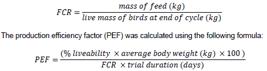
The differences between the standard cleaning programme and the trial cleaning programme were evaluated using the non-parametric unpaired Mann-Whitney U-test, and Pearson's correlations were calculated using IBM SPSS v26. The level of probability was set at P <0.05.
Results and discussion
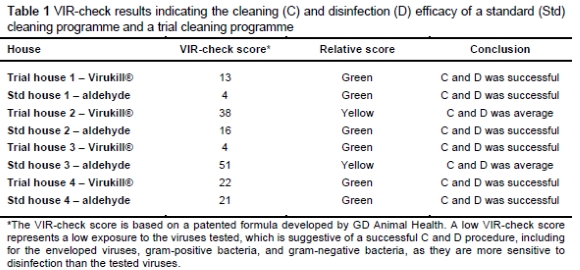
The VIR-check method was performed on cloacal swabs from seven-day-old birds from all four houses by GD Animal Health, to assess the effectiveness of the cleaning and disinfection processes performed (Table 1). The results indicated that only Trial house 2 and Standard house 3 had average cleaning and disinfection, whereas all other houses had successful cleaning and disinfection. The Virukill® cleaning and disinfection programme had lower mean scores but there was no statistical difference (P >0.05) between the cleaning efficacy using the standard disinfection programme and the cleaning efficacy of the continuous disinfection programme. This suggests that the tested disinfection programme is not less effective than the standard programme that is commonly used.
The VIR-check score is a score derived from a patented formula developed by GD Animal Health and based on the detection and viral load determination of five non-enveloped viruses in young chicks (GD Animal Health, n.d.). A lower score indicates that the birds were not exposed to these viruses, suggesting that the area was cleaned and sanitised effectively. This is a notable result as, historically, bacterial methods have been the industry standard for evaluating cleaning effectivity. These results suggest that using viral evaluation methods, such as the VIR-check system, may be more relevant to the poultry industry.
The first-week mortality rate is an essential measure for assessing the quality of the chicks, and sets the tone for the production cycle (Yassin et al., 2009). The normal seven-day mortality rate for broiler chicks has been shown to be around 1.4%, and for 'raised without antibiotics' or 'no antibiotics ever' broilers this may increase by 0.5-1% (Smith et al. 2020). Other estimates have indicated that the seven-day mortality rate should be around 1.54%, with a mortality rate of 0.48% per week maintained for the remainder of the growth cycle (Heier et al., 2002). Yassin et al. (2009) reported an average first-week mortality rate of 1.5%. The first-week mortality rate for Trial house 4 was high, at 3.78%, indicating that some major event may have contributed. This could have been house related, or may have been due to flock issues, hatchery issues, or transport-related issues (Heier et al., 2002; Yassin et al., 2009). Early mortality is a difficult challenge to overcome, and is generally assumed to be flock or hatchery related, rather than primarily caused by infection pressures within the chicken house (Yassin et al., 2009).
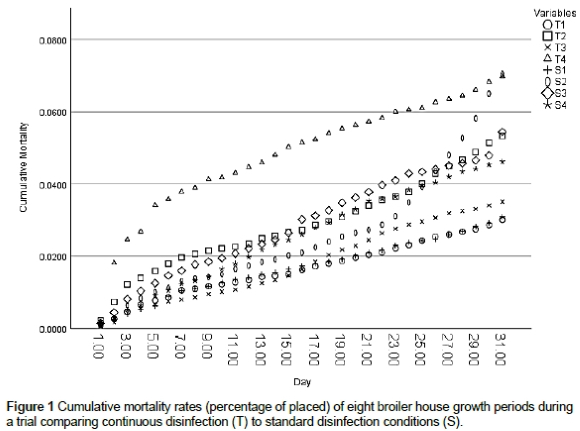
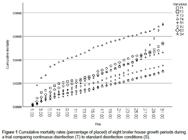
The cumulative mortality percentage is a valuable figure to producers as it indicates the biggest direct loss in normal production and is an indicator of the health status of the flock. The cumulative mortality percentage for each house is presented in Figure 1. In this trial, the highest cumulative mortality was seen in Standard house 2, followed by Trial house 4. Interestingly, Standard house 2 and Trial house 2 showed similar trends, with both having an increase in late mortality, from day 20 onwards. However, Trial house 2 had a much lower cumulative mortality than its standard counterpart. Trial house 3 also had a much lower end-mortality percentage than Standard house 3. It is notable that all houses, with the exception of Standard house 2 and Trial house 4, had cumulative mortality percentages below that of the reported average cycle in South Africa (6.7%) (SAPA, 2017). This is particularly notable because these statistics were not separated based on antibiotic use. All the houses represented in this work had no routine antibiotics included in their management, and are being compared against standards where antibiotic use is not specified. When testing the Virukill® continuous disinfection programme in a controlled trial, Bragg & Plumstead (2003) found reduced cumulative mortality compared to pens with pre-disinfection and pens with no disinfection treatment, with this decrease in mortality rate also being noted after seven days. The results obtained in this study suggest that the use of a continuous disinfection programme may be beneficial in reducing late mortality rates in broiler houses, and consequently reducing cumulative mortality.
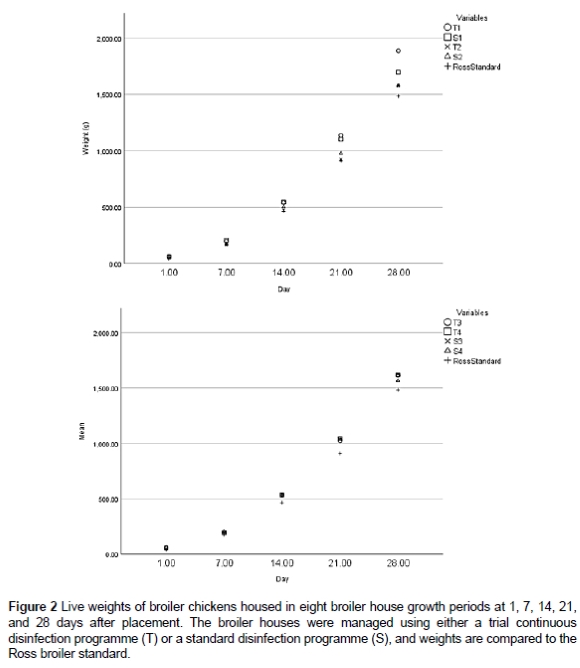
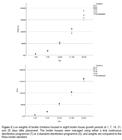
All the houses used in this study performed above the Ross standard specification for broiler growth (Figure 2). However, there was no notable difference in the mass alone between the standard disinfection programme and the continuous disinfection programme.
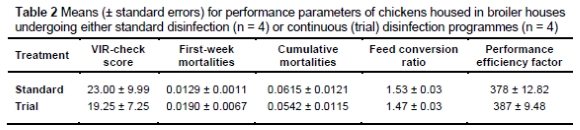
To evaluate the performance of the broilers, FCR and PEF values were determined, and these performance parameters were related to the cleaning effectivity results. In this study, performance advantages were seen in some trials where the continuous disinfection programme was administered, although these improvements were not statistically significant (Table 2). In cycle 1, the first set of houses had similar performances; however, Trial house 2 outperformed Standard house 2, having a lower FCR and a higher PEF. In cycle 2, the differences were much more pronounced, with Trial house 3 outperforming Standard house 3 by a large margin in terms of both the FCR (1.4 against 1.57) and PEF (426 against 362). Similarly, Trial house 4 outperformed Standard house 4 in both FCR and PEF, despite having a much higher cumulative mortality percentage. Therefore, in three of these four trials, the use of a continuous disinfection programme resulted in increased broiler production performance.
Bragg & Plumstead (2003) found an increase in average body mass when implementing a continuous disinfection programme, compared to a pre-disinfection programme with no further treatment. In addition, a lower FCR was observed for the continuous disinfection programme than for the pre-disinfection and no further treatment programme (Bragg & Plumstead, 2003). This study provides evidence to support a case for the improved performance of broilers undergoing the Virukill® continuous disinfection programme. Furthermore, there was a positive Pearson's correlation (0.730) between lower VIR-check scores and a lower (better) FCR, as well as between lower VIR-check scores and higher PEF values (0.726) (P <0.05), both of which indicate that improved cleaning results are associated with improved broiler performance. A significant correlation between lower cumulative mortalities and a lower FCR (P<0.05) was also observed.
A wide variety of factors can influence the performance of broilers, including heat, disease, feed, parent flock, biosecurity, genetics, and water quality (Ornelas-Eusebio et al., 2020; Van Limbergen et al., 2020). In this study it was shown that under some circumstances the benefits of a continuous disinfection programme are not immediately clear. However, when challenges were introduced, as illustrated by Trial house 2 and Standard house 2, the value of the continuous disinfection programme was more evident.
The improved performance seen with continuous disinfection may be as a result of a reduction in environmental infection pressure (Payne et al., 2005; Burbarelli et al., 2017). Burbarelli et al. (2017) proposed that a reduction in infection pressure may lead to an improved balance in the intestinal microbiota of broilers, and that this ultimately improves performance through improved nutrient uptake. Other authors, such as Collet (2020), have recently emphasised the need for a shift in thinking from the traditional approach of disease being caused by a specific organism that needs to be eradicated, to an approach in which the environment is considered as a factor that impacts the health status of the flock in a more holistic sense. Jiang et al. (2018) compared the effects of five disinfectants (ozone, available chlorine, QAC-salt, glutaraldehyde, and a mixture of aldehydes, QAC, and alcohol) on microbial communities in poultry houses. They found that when disinfectants are used, there is a significant decrease in airborne aerobic bacteria compared to houses where disinfectants were not used. The mixed disinfectant caused the largest reduction in the bacterial concentration, followed by the glutaraldehyde, QAC-salt, ozone, and available chlorine. This would suggest that using diverse disinfectant types has a beneficial effect on the reduction of bacteria in poultry houses. Jiang et al. (2018) also found that disinfectant use reduced the number of detected phyla, with a total of 32 phyla detected when no disinfectant was used, 21 phyla detected when ozone was used, 27 phyla detected when available chlorine was used, 28 phyla detected when QAC-salt was used, 17 phyla detected when glutaraldehyde was used, and 6 phyla detected when the mixed disinfectant was used. The distribution of bacterial genera was also affected by disinfection, with a reduction in Escherichia-Shigella, Bacillus, and Pseudomonas genera, which are known to be opportunistic pathogens (Jiang et al., 2018). Disinfection therefore has the beneficial effect of reducing bacterial diversity and, specifically, pathogen occurrence, in the growth environment.
In this study, two pairs of broiler production houses were subjected to a field trial to compare a novel disinfection programme to a standard disinfection programme, as applied in the industry. Gosling (2018) is of the opinion that studies of this nature are usually avoided because of the vast array of variables that are uncontrolled in the environment. Nevertheless, this is the closest to the actual environment in which the generated information will be applied, and these field trials are therefore highly valuable to farmers.
Current evidence suggests that some poultry pathogens have the potential to harbour multidrug resistance genes, including antibiotic and disinfectant resistance genes, on plasmids (Johnson et al., 2012; Newman et al., 2021). It is also known that benzalkonium chloride exposure co-selects for antibiotic and disinfectant resistance (Kim et al., 2018), especially when organisms are exposed to these disinfectants under non-optimal conditions. Using QACs in heavily-soiled poultry house environments may thus reduce their efficacy (Lin et al., 2020), and could result in the selection of antibiotic and disinfectant resistant strains. This type of use must therefore be carefully considered, and further research is needed into the development and causes of disinfectant resistance in production environments.
Conclusions
This study suggests that the modified QAC product tested may be a viable alternative to traditional aldehyde cleaning and disinfection programmes, as evaluated using viral methods. In addition, the study provides evidence of positive correlations between lower VIR-check scores (and therefore improved cleaning efficacy) and performance in broiler chickens in terms of their FCR. Finally, the study provides points of comparison for differences in the performances of individual houses when a continuous disinfection programme is applied.
Author's contributions
D.B. collected the data, conducted the statistical analysis, interpreted results and wrote the initial draft. R.R.B. developed the hypothesis and guided the research. S.M.C. provided and managed the materials and facilities and assisted in writing. All the authors approved the manuscript for publication.
Conflict of interest declaration
The authors declare that they have no conflicts of interest related to the content of this paper.
Acknowledgements
The authors thank the University of the Free State for its support, and the broiler farm for the use of their facilities.
References
-
Apata, D.F., 2009. Antibiotic resistance in poultry. International Journal of Poultry Science, 8(4):404-408. DOI: 10.3923/ijps.2009.404.408
» https://doi.org/10.3923/ijps.2009.404.408 - Bragg, R.R. & Plumstead, P., 2003. Continuous disinfection as a means to control infectious diseases in poultry. Evaluation of a continuous disinfection programme for broilers. Onderstepoort Journal of Veterinary Research, 219-229.
-
Burbarelli, M.F.C., Gustavo V.P., Lelis, K.D., Granghelli, C.A., Carão de Pinho, A.C., Almeida Queiroz, S.R., & Fernandes, A.M., 2017. Cleaning and disinfection programs against Campylobacter jejuni for broiler chickens: productive performance, microbiological assessment and characterization. Poultry Science, 96(9):3188-3198. DOI: 10.3382/ps/pex153
» https://doi.org/10.3382/ps/pex153 -
Burbarelli, M.F.C., Merseguel, C.E.B., Ribeiro, P.A.P., Lelis, K.D., Polycarpo, K.D., Carão, A.C.P., & Bordin, R.A., 2015. The effects of two different cleaning and disinfection programs on broiler performance and microbiological status of broiler houses. Revista Brasileira de Ciência Avícola, 17(4):575-580. DOI: 10.1590/1516-635X1704575-580
» https://doi.org/10.1590/1516-635X1704575-580 - Collet, S., 2020. Principles of disease prevention, diagnosis and control. In: Diseases of Poultry, 14th Edition. Ed: Swayne, D., Wiley Blackwell, New Jersey, USA. pp. 3-78.
-
Ewers, C., Li, G., Wilking, H., Kießling, S., Alt, K., Antáo, E.M., & Laturnus, C., 2007. Avian pathogenic, uropathogenic, and newborn meningitis-causing Escherichia coli: how closely related are they? International Journal of Medical Microbiology, 297(3):163-76. DOI: 10.1016/j.ijmm.2007.01.003
» https://doi.org/10.1016/j.ijmm.2007.01.003 -
Fate, M.A., Skeeles, J.K., Whitfill, C.E., & Russell, I.D., 1985. Evaluation of four disinfectants under poultry grow-out conditions using contact agar sampling technique. Poultry Science, 64(4):629-633. DOI: 10.3382/ps.0640629
» https://doi.org/10.3382/ps.0640629 -
Heier, B.T, Høgasen, H.R., & Jarp, J., 2002. Factors associated with mortality in Norwegian broiler flocks. Preventive Veterinary Medicine, 53(1-2):147-158. DOI: 10.1016/S0167-5877(01)00266-5
» https://doi.org/10.1016/S0167-5877(01)00266-5 - IBM Corporation, 2019. IBM SPSS Statistics for Windows, Version 26. IBM Corporation, Armonk, New York, USA.
-
Jiang, L., Li, M., Tang, J., Zhao, X., Zhang, J., Zhu, H., Yu, X., Li, Y., Feng, T., & Zhang, X., 2018. Effect of different disinfectants on bacterial aerosol diversity in poultry houses. Frontiers in Microbiology, 9:1-10. DOI: 10.3389/fmicb.2018.02113
» https://doi.org/10.3389/fmicb.2018.02113 -
Johnson, T.J., Logue, C.M., Johnson, J.R., Kuskowski, M.A., Sherwood, J.S., Barnes, H.J., & Debroy, C., 2012. Associations between multidrug resistance, plasmid content, and virulence potential among extraintestinal pathogenic and commensal Escherichia coli from humans and poultry. Foodborne Pathogens and Disease, 9(1):37-46. DOI: 10.1089/fpd.2011.0961
» 10.1089/fpd.2011.0961 -
Johnson, T.J., Wannemuehler, Y., Johnson, S.J., Stell, A.L., Doetkott, C., Johnson, J.R., Kim, K.S., Spanjaard, L.S., & Nolan, L.K., 2008. Comparison of extraintestinal pathogenic Escherichia coli strains from human and avian sources reveals a mixed subset representing potential zoonotic pathogens. Applied and Environmental Microbiology, 74(22):7043-7050. DOI: 10.1128/AEM.01395-08
» https://doi.org/10.1128/AEM.01395-08 - Kim, M., Weigand, M.R., Oh, S., Hatt, J.K., Krishnan, R., Tezel, U., Pavlostathis, S.G., & Konstantinidis, K.T., 2018.
-
Widely used benzalkonium chloride disinfectants can promote antibiotic resistance. Applied and Environmental Microbiology, 84(17):1-37. DOI: 10.1128/AEM.01201-18
» https://doi.org/10.1128/AEM.01201-18 -
Kirchhelle, C., 2018. Pharming animals: a global history of antibiotics in food production (1935-2017). Palgrave Communications, 4(1). DOI: 10.1057/s41599-018-0152-2
» https://doi.org/10.1057/s41599-018-0152-2 -
Lin, Q., Lim, J.Y.C., Xue, K., Yew, P.Y.M., Owh, C., Chee, P.L., & Loh, X.L., 2020. Sanitizing agents for virus inactivation and disinfection. View, 1(2). DOI: 10.1002/viw2.16
» https://doi.org/10.1002/viw2.16 -
Meroz, M. & Samberg, Y., 1995. Disinfecting poultry production premises. Revue Scientifique et Technique (International Office of Epizootics), 14(2):273-291. DOI: 10.20506/rst.14.2.839
» https://doi.org/10.20506/rst.14.2.839 -
Newman, D.M., Barbieri, N.L., de Oliveira, A.L., Willis, D., Nolan, L.K., & Logue, C.M., 2021. Characterizing avian pathogenic Escherichia coli (APEC) from colibacillosis cases, 2018. Poultry, 9:1-24. DOI: 10.7717/peerj.11025
» https://doi.org/10.7717/peerj.11025 -
Ornelas-Eusebio, E., García-Espinosa, G., Laroucau, K., & Zanella, G., 2020. Characterization of commercial poultry farms in Mexico: towards a better understanding of biosecurity practices and antibiotic usage patterns. PLoS ONE, 15:1-21. DOI: 10.1371/journal.pone.0242354
» https://doi.org/10.1371/journal.pone.0242354 -
Payne, J.B., Kroger, E.C., & Watkins, S.E., 2005. Evaluation of disinfectant efficacy when applied to the floor of poultry grow-out facilities. Journal of Applied Poultry Research, 14(2):322-329. DOI: 10.1093/japr/14.2.322
» https://doi.org/10.1093/japr/14.2.322 -
Roth, N., Käsbohrer, A., Mayrhofer, S., Zitz, U., Hofacre, C., & Domig, K.J., 2019. The application of antibiotics in broiler production and the resulting antibiotic resistance in Escherichia coli: a global overview. Poultry Science, 98(4):1791-1804. DOI: 10.3382/ps/pey539
» https://doi.org/10.3382/ps/pey539 -
South African Poultry Association (SAPA), 2017. Broiler Industry Stats Summary for 2017. [Online]. Available: chrome-extension://efaidnbmnnnibpcajpcglclefindmkaj/https://www.sapoultry.co.za/pdf-statistics/broiler-industry-summary.pdf
» chrome-extension://efaidnbmnnnibpcajpcglclefindmkaj/https://www.sapoultry.co.za/pdf-statistics/broiler-industry-summary.pdf - Smith, J.A., Boulianne, M., Owen, R.L., & Gingerich, E., 2020. Disease prevention and control in antibiotic-free production. In: Diseases of Poultry, 14th Edition. Ed: Swayne, D., Wiley Blackwell, New Jersey, USA. pp. 40-51.
-
Tablante, N.L., Myint, M.S., Johnson, Y.J., Rhodes, K., & Colby, M., 2002. A survey of biosecurity practices as risk factors affecting broiler performance on the Delmarva Peninsula. Avian Diseases, 2086. DOI: 10.1637/0005-2086(2002)046
» https://doi.org/10.1637/0005-2086(2002)046 -
Van Limbergen, T., Sarrazin, S., Chantziaras, I., Dewulf, J., Ducatelle, J., Kyriazakis, I., & McMullin, P., 2020. Risk factors for poor health and performance in European broiler production systems. BMC Veterinary Research, 16(1):1-13. DOI: 10.1186/s12917-020-02484-3
» 10.1186/s12917-020-02484-3 -
Yassin, H., Velthuis, A.G.J, Boerjan, M., & van Riel, J., 2009. Field study on broilers' first-week mortality. Poultry Science, 88(4):798-804. DOI: 10.3382/ps.2008-00292
» https://doi.org/10.3382/ps.2008-00292 - Zulki, I., Fauziah, O., Omar, A.R., Shaipullizan, S., & Siti Selina, A.H., 1999. Respiratory epithelium, production performance and behaviour of formaldehyde-exposed broiler chicks. Veterinary Research Communications, 23:91-99.
Accepted 23 June 2025
Published 18 July 2025