Factors Influencing Smallholder Farmers' Decision to Commercialise Vegetable Production in Alfred Nzo and O.R. Tambo Districts, Eastern Cape Province of South Africa
Abstract
The agricultural industry is developing in South Africa and worldwide. This suggests that smallholder vegetable farmers should shift from producing for consumption to producing mostly for the market. However, factors are impeding the commercialisation of vegetable production among smallholder farmers. This study investigates factors influencing smallholder farmers' decision to commercialise their vegetable production. The study used purposive-stratified random sampling and selected vegetable farmers as the target population. The two district municipalities were referred to as strata, and 108 vegetable farmers were randomly selected from each stratum, for a total of 216. The binary probit model was used to analyse the data. The analysis shows that factors such as educational levels, distance to market, access to credit, and farm income play a significant role in influencing their decision to commercialise. The significant positive relationship between education and commercialisation decisions indicates that higher levels of education among farmers are associated with more market-oriented practices. Increased farm income further motivates farmers to engage in commercial activities, as higher earnings from farm produce create an investment cycle. Policymakers should enhance policy frameworks that promote agricultural commercialisation in the two districts, thereby improving the livelihoods and resilience of smallholder farmers in South Africa.
Commercialisation; Smallholder Farmers; Socioeconomic; Vegetable Production
1. INTRODUCTION
Commercialisation is the process of transitioning farmers from subsistence agriculture to market-oriented production, aligning their practices with prevailing market demands (Nwafor & Westhuizen 2020). Jebesa (2019) indicated that this involves developing the capacity to compete and succeed effectively in the marketplace. Governments in most African countries, including South Africa, have recognised the potential of commercialising food crops as a strategy to alleviate poverty and improve the economic well-being of smallholder farmers (Ater, Mutai & Bett, 2021). This approach has also been a focal point for international development efforts aimed at reducing poverty and food insecurity (Ayele, Goshme & Tamiru, 2021). However, a fundamental shift in mindset is required, from prioritising consumption for household needs to production for market gain.
Despite efforts to encourage commercialisation through various support mechanisms, farmers' decisions to adopt this approach are influenced by a complex interplay of socioeconomic and institutional factors (Tirra et al., 2019). Additionally, achieving commercial success requires meeting specific market requirements regarding product quality and quantity (Maponya et al., 2018). Smallholder farmers are crucial to the development of rural economies in African countries, including South Africa (Kamara et al., 2019). The transition to commercialisation can have far-reaching impacts on various socioeconomic groups (Abdullah et al., 2019). This process is often associated with positive outcomes such as improved living standards, increased production, higher incomes, job creation, and poverty reduction (Endalew et al., 2020). Getahun (2020) defines smallholder farmers as those who keep few livestock and grow crops on less than two hectares of land. For this study, smallholder farmers are defined as those earning between R50 000 and R1 million annually (Statistics South Africa, 2020). While these farmers are increasingly linked to markets, they often face challenges in accessing formal markets and lack essential market information (Dangia, Dara and Daniel, 2019).
Vegetable production is a vital component of food security and nutrition, and its growing demand is driven by population growth and heightened awareness of the health benefits of vegetable consumption (Onyishi, 2021; Schreinemachers, Simmons, & Wopereis, 2018). This presents significant economic opportunities for farmers. To capitalise on this potential, it is expected that smallholder farmers should adopt improved crop varieties, advanced farming practices, and supportive infrastructure (Mariyono et al., 2020). Governments in countries like South Africa can play a crucial role in facilitating this transition through effective agricultural extension services.
Previous research has examined various aspects of vegetable production and commercialisation in South Africa, particularly in the Eastern Cape Province (Maponya et al., 2018; Mayekiso et al., 2019; Nkunjana & Zantsi, 2018; Sebetha, Oluwatayo & Ojo, 2021). While these studies have provided valuable insights, they have primarily focused on specific factors or regions, leaving gaps in understanding the broader challenges faced by smallholder vegetable farmers in commercialising their production. Moreover, research into the root causes hindering commercialisation in the Eastern Cape is limited. This article aims to address this knowledge gap by comprehensively investigating the factors impeding the commercialisation of vegetable production among smallholder farmers in two districts of the Eastern Cape Province. The article is organised into three sections: the theoretical background, the methodologies used in the study, and the main research findings and recommendations.
2. THEORETICAL FRAMEWORK
A researcher builds a theoretical framework, which is a logically developed and interconnected set of concepts and premises derived from one or more theories to support a study (Varpio et al., 2020). Various theories have been advanced over the years regarding the commercialisation of smallholder farmers. There are numerous ways in which entrepreneurial bricolage addresses resource scarcity. Bricolage is defined as the process by which entrepreneurs who possess local knowledge and resources are more likely to establish businesses using what they already have at hand than by expending excessive effort on qualities that are externally directed and require resources beyond reach (Preece, 2014). The discussion centres on three dimensions of entrepreneurial bricolage, such as familiness, pluriactivity and networking, that have more significance for the family business, even though the model identifies multi-level dimensions of this phenomenon (Tindiwensi et al., 2020). This study uses a collection of entrepreneurial bricolage behaviours in smallholder farms to explain the commercialisation of vegetable smallholder farmers in the study area.
Familyness, as introduced by Habbernshon and Williams in 1999, refers to the unique resources and capabilities a family brings to a business. It can impact a family business's competitive advantage and its ability to adapt to change (Belling, Pidun & Knyphausen-Aufseß, 2021; Cano-Rubio et al., 2016). Research has shown that familiness can positively influence outcomes such as creativity and performance (Belkhodja & Dahgfous, 2020; Pearson, Carr & Shaw, 2008; Tindiwensi et al., 2020). However, further exploration of this concept from different theoretical perspectives is needed (Zellweger, Eddleston & Kellermanns, 2010). Familiness can be a powerful tool for smallholder farms if managed effectively.
Pluriactivity involves farmers and their households engaging in additional economic activities beyond farming to manage risk and increase income (Bashiri et al., 2023; Igwe et al., 2020). It is a common strategy to mitigate agricultural risks (Ullah & Shivakoti, 2014) and has evolved over time, with farmers diversifying their income sources (Ceriani, Djouak, & Chaillard, 2023). Pluriactivity offers a risk management strategy and potential income diversification.
Other critical pillars for advancing the theory of commercialisation could include collaboration and networking. Collaboration and networking with other farmers and stakeholders can benefit smallholder farms by improving access to information, production practices, and product quality (Tindiwensi et al., 2020). Business network theory highlights the importance of relationships and networks in organisational success (Owen-Smith, 2020; Todeva, 2015). Farmers' groups can facilitate resource sharing and access to inputs (Sebuliba-Matumba, Kibwika & Kyazze, 2017). Ultimately, familiness, pluriactivity and networking are interconnected factors that influence the success and resilience of family farms. Networking is vital for accessing knowledge, resources and markets. Applying these concepts can inform strategies to support and strengthen smallholder agriculture.
3. RESEARCH METHODOLOGY
3.1. Research Area and Description
The study was conducted in the Alfred Nzo and O.R. Tambo district municipalities, located in the Eastern Cape Province of South Africa. The province is one of the poorest regions in the country, incorporating sizeable portions of the former homelands (O.R. Tambo District Municipality [ORTDM], 2022). The official unemployment rate in the Eastern Cape was 47.4%, while the expanded unemployment rate was 54.5% (Parliament of the Republic of South Africa [PRSA], 2022). However, the Eastern Cape's farming and forestry capabilities are exceptional. These two districts were chosen because of their rural nature with a considerable number of smallholder farmers (Nkunjana & Zantsi, 2018). The importance of agriculture as a non-formal rural-centred activity cannot be understated. After the district's rural-based farming is taken out of the equation, the industry becomes a key component of O.R. Tambo District's Local Economic Development framework by leveraging its capacity to improve community lives, generate employment opportunities, and combat the district's pervasive poverty. Additionally, it is recognised that the district's enormous farming industry potential can be effectively exploited through the right kinds of investment. The most cultivated crops in the districts are vegetables and maize.
3.2. Research Design
The research design that was used in this study was a survey. Surveys work by questioning numerous people about their opinions, attitudes and behaviours. Certain surveys report respondents' stated opinions and behaviours, while other survey research seeks connections between respondents' reported behaviours and opinions and their characteristics (Marczyk et al., 2010). The study used a quantitative research method. This research method was chosen because it would enable the study to use both open- and closed-ended questions to obtain satisfactory answers that would help achieve the specific objectives. Quantitative research is research that measures quantity or amount; for example, it involves the use of closed-ended questionnaires, surveys, or interviews (Ashley & Boyd, 2006).
3.3. Sample and Sampling Techniques
According to the Department of Rural Development and Agrarian Reform (DRDAR) statistics for the Eastern Cape Province in April 2022, there were 213 smallholder farmers in Alfred Nzo District and 255 in O.R. Tambo District, for a total of 468 farmers (DRDAR, 2021). It should be noted that this statistic is not static; it is updated quarterly as farmers continue to register with the DRDAR. This study made use of Yamane's method to calculate the size of the sample:
 , which represented the entire population. Where it was assumed that n is the sample size, N is the population, e is the acceptable sampling error at a 95% confidence level, and p = 0.05. The following is how the size of the sample was calculated:
 468 / (1 + 468(.05)2) = 216 farmers.
The study used purposive-stratified random sampling. These vegetable farmers were stratified by district municipality. The district municipalities were referred to as strata, and 108 vegetable farmers were chosen randomly from each stratum.
3.4. Research Instrument
Primary data on smallholder farmers were collected using a semi-structured questionnaire distributed in person to inform the study outcomes. The Department of Agriculture was approached and informed through physical visits and emails. With the assistance of the agricultural extension personnel, the researcher contacted vegetable farmers by phone to schedule appointments. Other farmers were scheduled for meetings with agricultural extension personnel, and questionnaires were distributed.
3.5. Reliability and Validity of the Study
The most essential criterion, validity, indicates how closely a tool measures what it is intended to measure. Validity can be viewed as the degree to which an estimating tool accurately reflects differences between the subjects of the test (Kothari, 2004), while reliability in research can be viewed as the consistency and stability of measurement, indicating that the same results would be obtained if the study were repeated under similar conditions (Krippendorf, 2009, p. 351).
Before data collection, the tool's validity and reliability were pre-tested at Mbashe Local Municipality. The Cronbach's coefficient alpha was used to assess the centre consistency reliability. The formula for Cronbach's coefficient alpha is α = nn-1 (σX2 - ∑i-1nσi2) / σX2, where n is the number of items, σX2 is the total test score variance, σi2 is the item variance. A score of 70 or higher is acceptable, while a score of 60 indicates an unacceptable score. Internal consistency reliability for each questionnaire section was assessed. According to the Cronbach's alpha test across sections, every item should be retained. The values attained for the first section were α = 73. The instrument for this study was deemed suitable for primary data collection based on the pre-test results.
3.6. Data Analysis
The study used descriptive statistics by means of percentages and frequencies to analyse the data on SPSS version 29.0 to profile the socioeconomic characteristics of the smallholder vegetable farmers. It adopted the Binary Probit Model (BPM) and was run in SPSS to identify factors influencing the commercialisation of certain vegetable crops. As articulated by Nagler (1994, p. 3) "The probit model constrains the estimated probabilities to be between 0 and 1 and relaxes the constraint that the effect of the independent variables is constant across different predicted values of the dependent variables". "The probit model assumes that although we observe the values of 0 and 1 for the variable Y, a latent, unobserved continuous variable Y* that determines the value of Y. The other benefit of the probit model is realistic probabilities" (Nagler, 1994, p. 3). As a result, the probit model was selected as the ideal option for this study. It appears that Y* can be expressed as follows:

And that:
Yi = 1 if Y* > 0
Yi = 0 Otherwise.
Where: x1, x2..., xk signify vectors of random variables, and υ signifies a random disturbance term (Nagler, 2002).
3.6.1. Model Specification
The probit model used in this study to analyse the farmers' decision to commercialise their products can be stated as follows:

Table 1 presents the dependent and independent variables described as influencing vegetable commercialisation among smallholders. Out of the 13 independent variables, eight are categorical (dummy variables), and five are continuous.
3.7. Ethical Considerations
This research required ethical consent from the University of Limpopo Turfloop Research Ethics Committee (TREC). The researcher applied for TREC permission to begin with the project, and the ethical clearance certificate was obtained (TREC/12/2023: PG). The respondents in this research participated voluntarily and could withdraw at any time if they no longer wished to continue. The collected data were used only for this research, including publication. Participants were given a consent form to sign if they agreed to participate, provided they understood the terms fully explained to them. The informed consent was written and signed. It was further explained verbally to the smallholder farmers who could not read.
4. FINDINGS AND DISCUSSION
4.1. Demographics
Tables 2 and 3 present the socioeconomic details of smallholder vegetable farmers in percentages and frequencies. The majority (59.7%) of the farmers were under 30 years of age, while 23.6% were between 30 and 40 years old (Table 2). According to Khoza et al. (2019), in the preliminary stages of one's involvement in a particular activity, there is often a steep learning curve. As individuals gain experience and expertise, their level of participation and productivity tends to increase. The data in Table 2 show that most of these smallholder vegetable farmers are male (60.2%), while females make up 39.8%. Table 2 presents results highlighting a significant prevalence of informal education among smallholder vegetable producers in the surveyed area. Specifically, 81.4% of them have informal education, while only 18.5% have formal education (Table 2). This highlights the need for improved formal education availability for farmers across the region.
4.2. Socioeconomic Factors
The family size of smallholder vegetable farmers, as shown in Table 3, ranged from 6 to 10 (54.6%). The findings reveal that the maximum distance travelled by smallholder vegetable farmers to reach the market was 2.9 kilometres, with the largest proportion of farms (31.0%) located at this distance (Table 3). Proximity enables more direct communication with market players, such as traders, buyers, and extension services, providing prompt and relevant market information (Abate, Mekie, & Dessie, 2022). Corresponding to the findings from Table 3, the greatest number of smallholder vegetable farmers used 1.1-3.0 hectares of their land for vegetable production. This suggests that the farmers have a small amount of arable land. The annual farm income earned by many smallholder vegetable farmers (45.4%) was between (100 001-500 000ZAR) per year (Table 3). The percentage (30.1%) of smallholder vegetable farmers with farming experience was between 5 and 10 years (Table 3).
4.3. Socioeconomic Factors Influencing Smallholder Farmer Commercialisation
A variety of socioeconomic characteristics influence smallholder farmers' decision to commercialise. According to Kahenge et al. (2019), factors that influenced crop commercialisation included gender, land size, access to credit, household size, off-farm income and distance to the markets. Certainly, these factors play crucial roles in influencing crop commercialisation among smallholder farmers. The results for the factors that influence the commercialisation of smallholder farmers are presented in Table 4.
4.3.1. Level of Education
The statistical results in Table 4 suggest a positive and meaningful relationship between the level of education (X3) and the decision to commercialise among smallholder vegetable farmers. The coefficient for the variable (X3) is 0.627. This indicates that an escalation in the education category suggests the prospect of smallholder vegetable farmers commercialising is moderate. The p-value associated with the level of education variable is 0.022. This p-value is below the standard significance level of 0.05, suggesting that the relationship between formal education and the decision to commercialise is statistically significant and strong. This, in simple terms, means that formally educated farmers are more likely to commercialise than those who are not.
The findings suggest that when more household heads are literate, production and market surplus tend to rise because educated household heads tend to implement effective methods to enhance their productivity, thereby increasing market supply (Endalew et al., 2020). Therefore, farmers with higher levels of education or different educational backgrounds are more likely to participate in commercial activities than those with lower levels or different backgrounds. In addition to the above-mentioned study, Anthony, Lenah, and Egerton (2020) also reported that the level of education attained by the farm head of household enhances the likelihood of adopting a market-oriented approach.
4.3.2. Distance to Market
According to Table 4, smallholder vegetable farmers' decisions to go commercial are significantly and negatively correlated with the distance to market (X6). The coefficient for the variable X6 is -0.210. This suggests that an increase in the distance farmers travel to the market reduces the likelihood of their commercialising. The p-value for the distance-to-market variable is 0.008. This p-value is lower than the conventional significance level of 0.05, indicating that the probability of a link between closeness to the market and the decision to commercialise is statistically significant and strong. This indicates that smallholder vegetable farmers near the market are more likely to commercialise than those farther away.
Subsequently, the coefficient is negative, and the link is statistically significant; it shows that a decrease in the distance travelled by smallholder vegetable farmers to the market is associated with an increase in the probability of commercialisation decisions. According to Anteneh and Endalew (2023), farmers living near the central market are more likely to engage in commercial agriculture than those living farther away, due to higher transportation costs associated with producing and selling over long distances. Summarising this data reveals a clear trend: as previously noted, individuals become more engaged in commercial activities as they live closer to urban areas (Belay et al., 2021).
4.3.3. Access to Credit
As shown in Table 4, smallholder vegetable farmers' decision to commercialise is positively and significantly influenced by their access to credit (X7). The coefficient for the variable X7 is 0.653. This suggests that the probability of commercialisation decisions could be made as finance becomes more widely available. The p-value linked to access to credit is 0.029. The p-value is lower than the conventional significance level of 0.05, suggesting that the association between the ability to access credit and the decision to commercialise is statistically significant and strong. This indicates that smallholder vegetable farmers with access to credit are more likely to commercialise than those without.
Hoang (2021) states that smallholders with access to credit programmes and participation in training courses are more likely to market their vegetable crops compared to those without such opportunities. The statistical significance and positive coefficient indicate a positive relationship between the probability that smallholder vegetable farmers make commercialisation decisions and the availability of funding. The outcome aligns with earlier research, reinforcing the significance of agricultural credit in easing household commercialisation, as seen in prior studies (Madududu et al., 2022). Similarly, the availability of credit increases farmers' use of advanced inputs, thereby boosting agricultural productivity.
4.3.4. Farm Income
The outcomes shown in Table 4 indicate that smallholder vegetable farmers' farm income (X12) is positively and significantly associated with their decision to commercialise. Farm income (X12) has a coefficient of 0.383. This means that an upsurge in farm income escalates the probability of commercialisation decisions. The p-value linked to access to credit is 0.012. This means that the p-value is lower than the conventional significance level of 0.05, indicating that the probability of a relationship between farm income and the decision to commercialise is statistically significant. This demonstrates that smallholder vegetable farmers with the highest farm income are more likely to commercialise, whereas those with lower farm income are less likely to do so.
The results show that as the farmer earns more income from selling farm produce, the likelihood of taking part in commercial activities increases (Ater et al., 2021). The results are consistent with those of Anthony et al. (2020), who found that households with higher earnings from selling are perceived as well-off, thereby strongly influencing smallholder farmers' decision to market their produce.
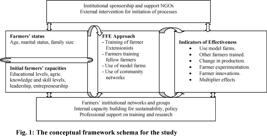
Given that the coefficient is positive and the link is statistically significant, it may be inferred that smallholder farmers' increased farm income is positively correlated with their increased likelihood or degree of commercialisation decisions. This suggests that as the farmer earns more income from selling farm produce, the likelihood of participating in commercial activities increases (Ater et al., 2021). The findings are consistent with those of Anthony et al. (2020), who found that households with higher earnings from selling are seen as well-off, strongly influencing smallholder farmers' choice to market their produce. The findings can be summarised in Figure 1.
5. CONCLUSION
Most farmers are in their prime working years, suggesting a productive, experienced workforce. The farmers come from small families, which may influence labour availability and household resource allocation. The farmers are located close to markets, facilitating easier access to buyers and reducing transportation costs. The average farm size is small, which can present challenges in terms of scale, resource access and income generation. The amount of arable land available for vegetable cultivation is also limited, impacting the scope of farming operations. The average farm income is low, indicating a need for interventions to improve the economic livelihoods of these farmers. The farmers possess significant farming experience, which can contribute to their agricultural knowledge and skills. Farmers with higher levels of education are more likely to adopt commercialisation practices, suggesting that education plays a crucial role in enhancing the knowledge and skills necessary for market-oriented farming. Proximity to markets is a significant factor influencing commercialisation decisions. Availability of credit is positively correlated with commercialisation. Access to financial resources can enable farmers to invest in improved inputs, technology, and infrastructure, enhancing their capacity to produce and sell larger quantities of crops. Higher farm income is associated with increased commercialisation. Farmers with higher incomes may have more resources to invest in commercialisation activities and can better absorb the risks associated with market-oriented farming.
6. RECOMMENDATIONS
Based on the findings from the study, the following recommendations are made:
Promote participation in microfinance programmes that offer small, low-interest loans specifically tailored to the needs of smallholder farmers.
Implement credit guarantee schemes to mitigate lenders' risk, encouraging them to provide loans to smallholder farmers with limited credit histories.
Develop tailored financial products for smallholder farmers, especially with the support of credit guarantee schemes.
Explore value chain financing models in which stakeholders, such as processing companies or retailers, can provide farmers with upfront credit, secured by future produce purchases.
Introduce strategies for agricultural extension personnel to use in adding small-scale livestock or poultry raising alongside vegetable production.
Train farmers on income-generating activities they could pursue during the off-seasons when vegetable production is limited.
7. DECLARATION OF INTEREST STATEMENT
We confirm that there are no relevant financial or non-financial competing interests to report.
8. ACKNOWLEDGMENT
We would like to acknowledge the University of Limpopo and its staff members, the National Research Foundation and the Eastern Cape Department of Agriculture (Alfred Nzo and O.R. Tambo Districts), for making this research possible. We thank the smallholder farmers for allowing us to pursue this research. We would like to acknowledge Prof V.M. Mmbengwa, Dr L.S. Gidi and Prof T.L. Tyasi for their assistance in data analysis.
REFERENCES
- ABATE, T.M., MEKIE, T.M. & DESSIE, A.B., 2022. Analysis of speed of improved maize (BH-540) variety adoption among smallholder farmers in Northwestern Ethiopia: Count outcome model. Heliyon., 8(10): e10916.
- ABDULLAH, F.R., RIAZ, A., SAJJAD, A., ABBAS, A.C., WAQAR, A., AASIR, I. & IZHAR, U.D., 2019. Determinants of commercialization and its impact on the welfare of smallholder rice farmers by using Heckman's two-stage approach. J. Saudi Soc. Agric. Sci., 18: 224-233.
- ANTENEH, A. & ENDALEW, B., 2023. Determinants of teff commercialisation among smallholder farmers: Beta Regression Approach. Cog. Soc. Sci., 9(1): 2209987.
- ANTHONY, M., LENAH, M. & EGERTON, K., 2020. Determinants of smallholder maize farmers' choice of selling point: A case of Kwanza District, Trans-Nzoia County, Kenya. J. Econ. Sust. Dev., 11(10): 147-151.
- ASHLEY, P. & BOYD, B.W.E., 2006. Quantitative and qualitative approaches to research in environmental management. Austra. J. Enviro. Managt., 13(2): 70-78.
- ATER, E.A., MUTAI, B.K. & BETT, H.K., 2021. Factors influencing commercialization of horticultural crops among smallholder farmers in Juba, South Sudan. J. Econo. Sust. Dev., 12(14): 45-54.
- AYELE, T., GOSHME, D. & TAMIRU, H., 2021. Determinants of cereal crops commercialization among smallholder farmers in Guji Zone, Ethiopia. Cog. Food Agric., 7(1): 1948249.
- BASHIRI, N., FARHADIAN, H., ABBASI, E., VAKILPOOR, M.H. & MOUMENI, H.H., 2023. Gap analysis of current and expected situation of the impact of rural tourism on sustainable livelihoods of rural households: A case study of Kalvan village. Village Dev., 26(3): 105-128.
- BELAY, A., DEMISSIE, T., RECHA, J.W., OLUDHE, C., OSANO, P.M., OLAKA, L.A. & BERHANE, Z., 2021. Analysis of climate variability and trends in Southern Ethiopia. Climate., 9(6): 96.
- BELKHODJA, O. & DAGHFOUS, A., 2020. Exploring the double-edged sword of familiness from a knowledge-based perspective. Baltic J. Manage., 16(1): 71-96.
- BELLING, M., PIDUN, U. & KNYPHAUSEN-AUFSEß, D., 2021. Unbundling strategic change in family firms: The influence of familiness on the strategic change process. Schmalenb. J. Busi. Resear., 73: 381-411.
- CANO-RUBIO, M., FUENTES-LOMBARDO, G., HERNÁNDEZ-ORTIZ, M.J. & VALLEJO-MARTOS, M.C., 2016. Composition of familiness: Perspectives of social capital and open systems. Europ. J. Fam. Busi., 6(2): 75-85.
- CERIANI, C., DJOUAK, A. & CHAILLARD, M., 2023. How do farmers' pluriactivity projects evolve? How do farmers' pluriactivity project evolve? Biob. Applied Eco., 12(1): 5-15.
- DANGIA, M., DARA, P.K. & DANIEL, G., 2019. Determinants of maize commercialization among smallholder farmers: The case of Nunu Kumba District, East Wollega Zone, Oromia Regional State, Western Ethiopia. Asian J. Agric. Ext. Eco. Soc., 37(4): 1-8.
- DEPARTMENT OF RURAL DEVELOPMENT AND AGRARIAN REFORM (DRDAR)., 2021. Eastern Cape agricultural economic transformation strategy 2016 - 2021. Government Printer.
- ENDALEW, B., AYNALEM, M., ASSEFA, F. & AYALEW, Z., 2020. Determinants of wheat commercialization among smallholder farmers in Debre Elias Woreda, Ethiopia. Adv. Agric., [Preprint]: 2195823.
- GETAHUN, A., 2020. Smallholder farmers agricultural commercialization in Ethiopia: A review. Agric. Fore. Fish., 9(3): 74-81.
- HOANG, H.G., 2021. Use of information and communication technologies by Vietnamese smallholders: Implications for extension strategies. Info. Dev., 37(2): 221-230.
- IGWE, P.A., HACK-POLAY, D., MENDY, FULLER, J.T. & LOCK, D., 2021. Improving higher education standards through reengineering in West African universities: A case study of Nigeria. Stud. High. Edu., 46(8): 1635-1648.
- JEBESA, S.R., 2019. Determinants of smallholder farmers market participation and outlet choice decision of agricultural output in Ethiopia: A review. Ameri. J. Agric. Fore., 7(4): 139-145.
- KAHENGE, Z., MUENDO, K. & NHAMO, N., 2019. Factors influencing crop commercialization among soybeans smallholder farmers in Chipata District, Eastern Zambia. J. Agric. Sci. Tech., 19(1): 13-28.
- KAMARA, A., CONTEH, A., RHODES, E.R. & COOKE, R.A., 2019. The relevance of smallholder farming to African agricultural growth and development. Afri. J. F. Agric. Nutri. Dev., 19(1): 14043-14065.
- KHOZA, T.M., SENYOLO, G.M., MMBENGWA, V.M. & SOUND, P., 2019. Socioeconomic factors influencing smallholder farmers' decision to participate in agro-processing industry in Gauteng province, South Africa. Cogent Soc. Sci., 5(1): 1664193.
- KOTHARI, C.R., 2004. Research methodology: Methods and techniques. New Delhi, India: New Age International Publishers.
- KRIPPENDORF, K., 2009. Testing the reliability of content reliability analysis. In K. Krippendorf & M. Brock (eds.), The content analysis reader. Thousand Oaks, CA: Sage, pp. 350-358.
- MADUDUDU, P., MADZOKERE, F., JAMB, N. & RUZHANI, F., 2022. Determinants of agricultural commercialization in smallholder farmers in Zimbabwe: The case of Zhombe North Rural District. J. Dev. Agric. Eco., 14(3): 95-104.
- MAPONYA, P., KEKANA, V., SENYOLO, G.M. & VENTER, S.L., 2018. Socioeconomic factors influencing market participation of horticultural smallholder farmers in the Alfred Nzo District, Eastern Cape, South Africa. J. Agribusi. Rur. Dev., 4(50): 421-427.
- MARCZYK, G.R., DEMATTEO, D. & FESTINGER, D., 2010. Essentials of research design and methodology (Vol. 2). Kanada: John Wiley & Sons.
- MARIYONO, J., ABDURRACHMAN, H., SUSWATI, E., SUSILAWATI, A.D., SUJARWO, M., WASKITO, J. & ZAINUDIN, A., 2020. Rural modernisation through intensive vegetable farming agribusiness in Indonesia. Rur. Soc., 116-133.
- MAYEKISO, A., BELETE, A., HLONGWANE, J.J., OLUWATAYO, I.B. & GIDI, L.S., 2019. An analysis of the factors influencing participation by smallholder farmers in indigenous leafy vegetables (ILVs) production: A case of Mapuzi village, Eastern Cape Province of South Africa. J. Hum. Eco., 68(1-3): 16-25.
- MUTOMBO, P. & MUSARANDEGA, H., 2023. Unpacking the determinants of climate-smart agriculture adoption by smallholder farmers in Ward 10, Zvimba District, Zimbabwe. Europ. J. Dev. Stud., 3(1): 74-84.
- NAGLER, J., 1994. Interpreting probit analysis. New York University.
- NAGLER, J., 2002. Interpreting probit analysis, 2nd edn. New York University.
- NKUNJANA, T. & ZANTSI, S., 2018. The degree and determinants of crop commercialisation among emerging smallholder farmers in the former homelands of the Eastern Cape Province of South Africa. Agricultural Economics Association of South Africa (AEASA) 2018 Annual Conference, September 25-27, Cape Town, South Africa.
- NWAFOR, C.U. & VAN DER WESTHUIZEN, C., 2020. Prospects for commercialization among smallholder farmers in South Africa: A case study. J. Rur. Soc. Sci., 35(1): 2.
- ONYISHI, C.N., 2021. Mixed method survey of vegetable farming and rural farmers' livelihood in Enugu State, Nigeria. J. Agric. Rur. Dev. Trop. Subtrop (JARTS)., 122(2): 279-288.
- O.R. TAMBO DISTRICT MUNICIPALITY (ORTDM)., 2022. Profile and annual integrated development plan 2022/27. Government Printer.
- OWEN-SMITH, J., 2020. Networks: The basics in big data and social science. Chapman and Hall/CRC.
- PARLIAMENT OF THE REPUBLIC OF SOUTH AFRICA (PRSA)., 2022. NCOP-provincial week 2022: Assessing state capacity to respond to the needs of communities. Government Printer.
- PEARSON, A.W., CARR, J.C. & SHAW, J.C., 2008. Toward a theory of familiness: A social capital perspective. Entrepre. Theo. Prac., 32(6): 949-969.
- PREECE, S.B., 2014. Social bricolage in arts entrepreneurship: Building a jazz society from scratch. Artivate., 3(1): 23-34.
- SCHREINEMACHERS, P., SIMMONS, E.B. & WOPEREIS, M.C., 2018. Tapping the economic and nutritional power of vegetables. Glob. Food Secu., 16: 36-45.
- SEBETHA, P., OLUWATAYO, I.B. & OJO, A.O., 2021. Assessment of factors hindering marketing among smallholder vegetable cooperative farmers in Polokwane Municipality, Limpopo Province, South Africa. Mesopot. J. Agric., 49(2): 45-55.
- SEBULIBA-MUTUMBA, R., KIBWIKA, P. & KYAZZE, F., 2017. Drivers of collective action and innovation adoption in successful poultry farmer groups in Wakiso District in Uganda. Afri. J. Rur. Dev., 2(3): 353-365.
- STATISTICS SOUTH AFRICA (STATS SA)., 2020. Census of commercial agriculture 2017: Financial and production statistics. Pretoria: Government Printer.
- TINDIWENSI, C.K., MUNENE, J.C., SSERWANGA, A., ABAHO, E. & NAMATOVU DAWA, R., 2020. Farm management skills, entrepreneurial bricolage and market orientation. J. Agribusi. Dev. Emerg. Eco., 10(5): 717-730.
- TIRRA, A.N., OLUOCH-KOSURA, W., NYANGANGA, H. & MWANG'OMBE, A.W., 2019. Factors influencing the level of commercialization among smallholder cassava farmers in Taita-Taveta and Kilifi Counties, Kenya. Afri. J. of Agric. Resear., 14(32): 1584-1592.
- TODEVA, E., 2015. Market-driven clusters as prerequisites and consequences of smart specialisation. J. Knowl. Eco., 6: 250-269.
- ULLAH, R. & SHIVAKOTI, G.P., 2014. Adoption of on-farm and off-farm diversification to manage agricultural risks: Are these decisions correlated? Outl. Agric., 43(4): 265-271.
- VARPIO, L., PARADIS, E., UIJTDEHAAGE, S. & YOUNG, M., 2020. The distinctions between theory, theoretical framework, and conceptual framework. Acad. Med., 95(7): 989-994.
- ZELLWEGER, T.M., EDDLESTON, K.A. & KELLERMANNS, F.W., 2010. Exploring the concept of familiness: Introducing family firm identity. J. Fam. Busi. Strat., 1(1): 54-63.