Determinants of the Barriers Preventing Smallholder Farmers from Adopting Conservation Agriculture in Hazyview, Mpumalanga, South Africa
Abstract
Conservation Agriculture (CA) offers significant potential for enhancing agricultural sustainability and productivity among smallholder farmers. Despite its benefits, the adoption of CA remains constrained by several barriers. This study investigates the key challenges hindering smallholder farmers in Hazyview from adopting CA practices. Using a random sampling technique, data were collected from 221 registered smallholder farmers through structured questionnaires. The analysis utilised descriptive statistics, including percentages and means, to evaluate the severity of the barriers. Results indicate that limited input availability, restricted information access, and insufficient financial resources are the most critical obstacles. To address these barriers, recommendations include improving input accessibility through subsidies and cooperatives, enhancing information dissemination via robust extension services and digital platforms, and facilitating access to affordable credit through microfinance and policy interventions. Addressing these challenges comprehensively can foster greater adoption of CA practices, ultimately improving agricultural sustainability and productivity for smallholder farmers in the region.
Conservation Agriculture; Smallholder Farmers; Barriers; Adoption; Hazyview; Mpumalanga
1. INTRODUCTION
The sustainability of agriculture is of paramount importance in the global economy, due to an unprecedented population growth and multiple environmental challenges (Gama & Thierfelder, 2011). Conservation Agriculture has emerged as a promising paradigm among the multiple approaches aimed at promoting sustainable agriculture. CA, characterised by minimal soil disturbance, crop residue retention, and diversified crop rotations, offers the potential to enhance soil health, increase crop yields, and reduce the environmental footprint of farming (Grabowski, 2011).
Conservation Agriculture is widely recognised as a sustainable and productive farming approach with the potential to address the growing challenges faced in agriculture (Kassam et al., 2009). However, its successful implementation depends on its alignment with specific socio-ecological niches (Baudron et al., 2014). Moreover, while CA offers sustainable farming advantages, its integration into mixed crop-livestock systems, common across Africa, requires careful adaptation rather than a blanket replacement of traditional practices.
However, like other African countries, South Africa has one of the lowest CA adoption rates globally (Gowing & Palmer, 2008; Langyintuo &Mekuria, 2005). The programme has not been widely adopted by African smallholder farmers, despite several promotion drives spanning nearly four decades (Ndah et al., 2014). While the programme's benefits are widely acknowledged, its widespread adoption remains a challenge, especially among smallholder farmers (Kassam et al., 2009). Its adoption, particularly by smallholder farmers, who constitute a significant portion of the global farming community, has been hindered by several unique barriers and constraints (Giller et al., 2015). These include limited availability of inputs, restricted access to information, insufficient financial resources, inadequate extension services, a lack of skills and technical knowledge, misconceptions about CA practices, and the preference for traditional farming methods (Baudron et al., 2014; Kassie et al., 2020; Mupangwa et al., 2021). Hence, there is a need for policymakers, researchers, and stakeholders to investigate and understand the reasons behind this low adoption rate, despite the numerous benefits CA offers in enhancing agricultural productivity (Giller et al., 2015).
Addressing these barriers is crucial for enhancing the adoption of CA and realising its full potential to contribute to agricultural sustainability and resilience. Hence, this study was conducted to assess the barriers hindering the adoption of CA among smallholder farmers in Hazyview.
2. THE AIM AND OBJECTIVES OF THE STUDY
2.1. Aim
The primary aim of this study is to explore and analyse the key determining factors that hinder the adoption of Conservation Agriculture among smallholder farmers within the study region.
2.2. Objectives
1) To identify and analyse the key factors limiting smallholder farmers' adoption of conservation agriculture.
2) To explore the specific challenges farmers encounter in their attempts to integrate CA practices into their farming systems.
3) To assess the relative severity of the identified barriers, providing a comprehensive understanding of their impact on CA adoption.
CA has emerged as a globally recognised sustainable farming system, designed to enhance soil health, boost crop yields, and mitigate the impacts of climate change (Kassam et al., 2009). Despite its numerous benefits, the adoption of CA among smallholder farmers in Africa, including South Africa, remains low due to various socioeconomic, technical, and institutional barriers (Giller et al., 2015). This section reviews existing literature on CA principles, adoption trends, and barriers to implementation.
3.1. Theoretical Framework: Diffusion of Innovation (DOI) Theory
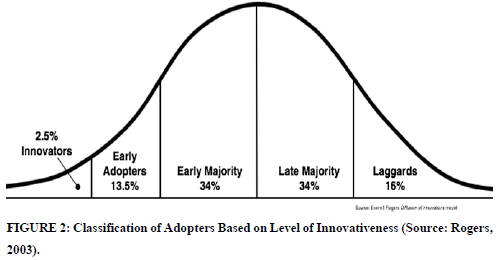
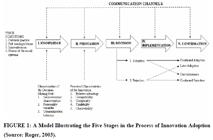
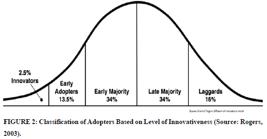
The study adopted the Diffusion of Innovation (DOI) theory, developed by Everett Rogers, which provides a comprehensive framework for understanding how new ideas and technologies spread within societies. This theory categorises adopters into five groups based on their adoption rate: innovators, early adopters, early majority, late majority, and laggards (Rogers, 2003). In agricultural research, DOI has been widely applied to analyse the factors influencing the adopting of sustainable farming practices, including CA (Dearing & Cox, 2018).
3.1.1. Application to Conservation Agriculture
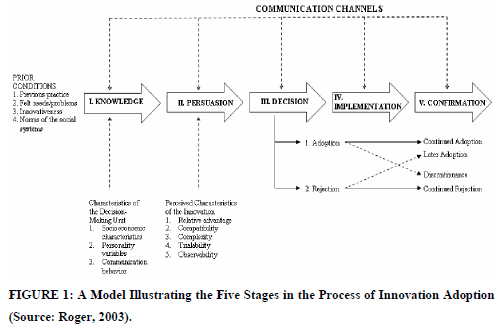
The adoption of CA is influenced by several stages outlined in the DOI theory: awareness, knowledge, persuasion, decision-making, and implementation (Rogers, 2003). Farmers' perceptions of CA's benefits, along with social systems, extension services, and institutional support, play a crucial role in their decision to adopt or reject CA (Mwaseba et al., 2006). Extension services and access to relevant information can accelerate adoption (Ndah et al., 2012; Kassam et al., 2019). For instance, effective extension programs can help farmers understand the benefits of CA, such as improved soil health and increased resilience to climate variability, thereby enhancing their willingness to adopt these practices.
3.1.2. Challenges in Adoption Based on DOI
The DOI framework highlights several challenges affecting CA adoption. One major issue is limited access to knowledge and training, which leads to uncertainty about CA's benefits (Wejnert, 2002). Socioeconomic barriers, such as the lack of financial resources and access to necessary inputs hinder adoption (Kaminski, 2011). Additionally, resistance to change is a significant obstacle, as many farmers associate ploughing with good yields and struggle to transition to minimal tillage, a core principle of CA (Oldenburg & Glanz, 2008). The pro-innovation bias inherent in the DOI theory can also pose challenges, as it assumes that all should adopt innovations, potentially overlooking the needs and constraints of less innovative farmers (Rogers, 1995; Van de Ban & Hawkins, 1988).
Moreover, the DOI theory emphasises the importance of social networks and interpersonal communication in the adoption process. For CA, early adopters can play a crucial role in influencing others through peer-to-peer learning and demonstration plots (Muzangwa et al., 2017). However, the theory's focus on individual adopter categories may overlook broader structural issues, such as land tenure and policy support, which are critical for widespread CA adoption (Langyintuo & Mekuria, 2005). Addressing these challenges requires a nuanced approach considering individual and systemic factors influencing CA adoption.
3.2. Principles of Conservation Agriculture
CA is founded on three core principles: minimal soil disturbance (no-tillage), permanent organic soil cover (mulching), and crop rotation and diversification (Thierfelder & Wall, 2011). These principles work synergistically to improve soil fertility, reduce erosion, and enhance resilience to climate variability (Twomlow et al., 2006). Achieving the full benefits of CA requires strict adherence to all three principles, which poses a challenge for many smallholder farmers (Wall, 2007). These principles enhance soil health and contribute to environmental sustainability by reducing soil erosion, improving water quality, and sequestering carbon (Montgomery, 2007; Lal, 2015).
3.3. Adoption of Conservation Agriculture in Africa
3.3.1. Slow Uptake of CA
Despite extensive promotion by governments, Non-governmental organisations, and research institutions, CA adoption in Africa remains below 1% of total agricultural land (Guto et al., 2011). Large-scale commercial farms have integrated particular CA practices more effectively than smallholder farmers, who face significant economic and structural constraints (Ngwira et al., 2012; Umar et al., 2011). The slow adoption rate among smallholders is attributed to limited access to resources and information and traditional farming practices (Wall, 2007).
3.3.2. Adoption in Southern Africa
Southern African countries like Zambia, Zimbabwe, and Malawi have implemented national CA programs to encourage adoption, with Zambia leading in adoption rates (Baudron et al., 2007). However, smallholder farmers in South Africa, Mozambique, and Namibia continue to face significant adoption challenges (Thierfelder et al., 2013). In South Africa, CA is more prevalent among commercial farmers than smallholders, with only 7% of cultivated land under no-tillage and a slow integration of crop rotation and soil cover (Smith et al., 2016).
3.3.3. CA Adoption in South Africa
South Africa is highly vulnerable to soil degradation and water scarcity, making CA a critical strategy for improving soil fertility and increasing crop yields (Ntshangase et al., 2018). However, the adoption rate remains low, with significant barriers to overcome. Research highlights that CA is more widely practised among commercial farmers than smallholders, underscoring the need for targeted interventions to support small-scale farmers (Blignaut et al., 2015).
3.4. Barriers to Conservation Agriculture Adoption
Several barriers hinder CA adoption among smallholder farmers in Africa, including economic, social, technical, and institutional constraints.
3.4.1. Economic Barriers
A primary barrier to CA adoption is the lack of financial resources and input access. CA requires initial investments in herbicides, mulching materials, and specialised equipment, which most smallholder farmers cannot afford (Giller et al., 2015). Additionally, the cost savings from reduced fuel and machinery use over time are often offset by initial investment costs (Hobbs et al., 2008).
3.4.2. Limited Access to Information and Extension Services
The effectiveness of extension services is crucial for promoting CA adoption. However, studies highlight gaps in farmer awareness and training, with over 73.8% of farmers citing inadequate extension support as a significant challenge (Qwabe et al., 2022). Farmers often lack explicit knowledge of CA principles, and extension officers are under-equipped to provide necessary training (Mupangwa et al., 2021).
3.4.3. Perception and Traditional Farming Practices
Farmers' mindset and resistance to change remain significant obstacles to CA adoption (Wall, 2007). Despite evidence supporting CA's benefits, many smallholder farmers believe ploughing is essential for high yields (FAO, 2011). Demonstration plots showcasing successful CA adoption can help shift these perceptions and encourage peer-led adoption (Muzangwa et al., 2017).
3.4.4. Lack of Equipment and Inputs
CA implementation is constrained by limited access to essential inputs and farm equipment (Bollinger et al., 2014). In South Africa, only a few farmers can access rippers, herbicides, and conservation farming tools (Kassam et al., 2011). Studies in Tanzania and Zambia found that farmers adopting CA often struggle with equipment shortages (Shetto & Owenya, 2007).
3.4.5. Labour Demands and Land Tenure Issues
Although CA reduces long-term labour costs, it requires significant initial input, particularly in weeding and mulching (Chiputwa et al., 2011). Furthermore, land tenure insecurity discourages farmers from investing in CA, as they lack long-term land rights to benefit from soil fertility improvements (Pannell et al., 2014).
4. METHODOLOGY
4.1. Study Area
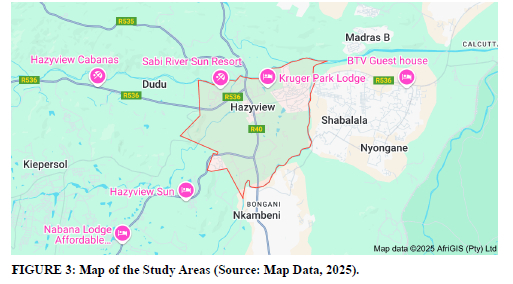
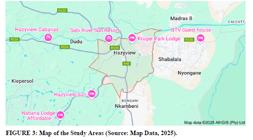
The study was conducted in Hazyview, a part of Mbombela's local municipality in Mpumalanga. According to StatsSA (2011), Hazyview is divided into six regions, among which four are classified as urban areas, namely Vakansiedorp, De Rust, Numbipark, and Hazyview SP, while the remaining two are categorised as rural areas, namely Sanbonani and Shabalala communities. The study focused specifically on these two rural communities. These areas were selected due to their substantial population of small-scale farmers. According to Udjo (2014), Hazyview has some of the best farming land in Mpumalanga, an attribute further supported by the region's significantly high location quotient for agriculture.
4.2. Research Design
This study employed a descriptive research design to explore the adoption of CA among smallholder farmers. The choice of this design was driven by its ability to systematically observe and document the current state of CA adoption and the factors influencing it. Descriptive research is particularly effective for answering questions about the frequency and extent of phenomena, making it ideal for understanding the prevalence and characteristics of CA practices among smallholder farmers (Siedlecki, 2020). This approach allowed for the collection of data without manipulating variables, providing a snapshot of existing practices and facilitating the identification of trends and correlations (Omair, 2015). The flexibility and efficiency of descriptive research in data collection and analysis also supported the rapid gathering of insights into CA adoption.
4.3. Data Collection
In this study, the population consisted of 330 registered smallholder farmers in Hazyview, specifically within the Shabalala and Sanbonani communities. The list of these farmers was sourced from the Department of Agriculture, Rural Development, Land and Environmental Affairs (DARDLEA) in the Mbombela regional office. A random sample of 221 farmers was selected for the survey, ensuring a robust analysis with a 5% margin of error and a 95% confidence level. Primary data were collected using structured questionnaires to identify factors hindering the adoption of CA practices. Before deployment, the questionnaire was pretested on a separate group of smallholder farmers to validate its effectiveness and neutrality. The following formula was utilised for the sample size calculation:
Sampling procedure

4.4. Data Analysis
The data collected from the study area underwent analysis using SPSS 29 (Statistical Package for the Social Sciences). Descriptive statistics, including frequency tables, percentages, and means, were employed to present a concise overview of the data. These methods were used to quantify and summarise the data related to barriers. The results of this analysis were presented in a table format, providing a clear overview of the findings.
5. RESULTS AND DISCUSSION
5.1. Barriers to the Adoption of CA
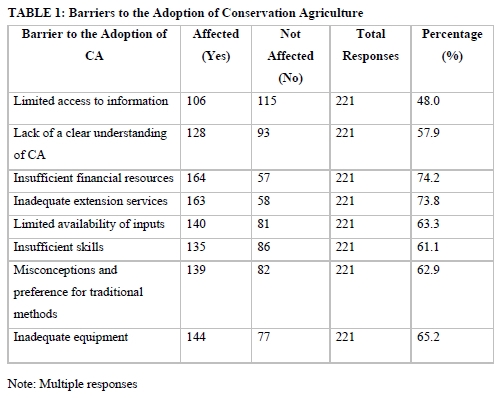
The study explored the primary barriers smallholder farmers in Hazyview encounter when attempting to adopt CA. Respondents were presented with a list of eight barriers and requested to indicate whether they experienced each one (graded as Yes (1) or No (2)). This report sheds light on these barriers, their prevalence, and potential implications for CA adoption.
As seen in Table 1, seventy-four percent (74.2%) of respondents underscored inadequate financial capital as the primary barrier impeding smallholder farmers from adopting CA practices. The significant prevalence of this barrier highlights the economic challenges smallholder farmers face in adopting CA. These findings are corroborated by Makate, Mango and Siziba (2019) and Abdulai (2016), whose studies emphasised providing substantial upfront investments for CA, including labour, equipment, and inputs. The lack of financial resources and cash flow poses considerable challenges for farmers, who cannot afford these investments, which significantly impedes the widespread adoption of CA.
A significant percent of respondents (73.8%) identified inadequate extension services as a barrier to adopting CA, highlighting a potential gap in the availability or the quality of the support necessary to facilitate the adoption of the relevant practices. This finding is confirmed by Qwabe et al.(2022), whose research indicated that while extension services are available, their effectiveness varies widely among farmers, with many expressing concerns about the quality and relevance of the advice provided by extension officers. Additionally, numerous farmers reported feeling neglected due to the infrequent nature of interactions with extension personnel, which limits the farmers' ability to successfully implement new practices (Qwabe et al., 2022). Similarly, Habanyati (2017) noted that several households in Zambia had not received extension services for over a year, highlighting the urgent need for improvements. These findings collectively suggest that, similarly to the situation in Zambia, South African farmers face considerable challenges related to the inadequacy and ineffectiveness of extension services. The lack of high-quality training and support can hinder their understanding and implementation of CA practices.
In the table above, 62.9% of respondents indicated a preference for indigenous farming, also called traditional farming, over CA and held misconceptions about CA. This suggests that several farmers find it challenging to fully transition from their traditional methods to CA practices. Indigenous farming refers to agricultural practices rooted in local knowledge and cultural traditions, passed down through generations, often focused on sustainable land management techniques (Guo, García-Martín, & Plieninger, 2021). Such methods typically include practices like mulching, organic fertilisation, and crop rotation, all of which align closely with the principles of CA, which emphasise soil health, moisture conservation, and ecological balance. However, traditional farming systems may differ from modern CA practices regarding the innovation and technical knowledge applied. As Giller et al. (2015) asserted, perception plays a significant role in CA adoption, with many farmers not fully recognising how their indigenous methods already embody key CA elements. Additionally, a substantial proportion of respondents (61.1%) cited a lack of skills as a barrier to adopting CA, indicating the need for targeted training programs. Such programs could enhance the farmers' understanding of how their traditional farming methods can be adapted or combined with CA principles for better sustainability and productivity. Chisenga (2015) similarly emphasised that skills development is crucial in promoting CA adoption, underlining the potential for integrating indigenous knowledge within modern sustainable practices.
Limited access to information and a lack of clear understanding of CA were barriers that 57.9% and 48% of respondents mentioned, respectively. While these barriers were not as prevalent as others, they still affect many respondents. This underscores the importance of disseminating information and increasing awareness about CA. Additionally, it suggests that alternative sources of information beyond formal channels, such as extension services or government-provided training programs, may play a crucial role in addressing these barriers. Formal channels typically include structured support from government agencies, agricultural extension officers, or formal training programs offered by agricultural institutions. In contrast, alternative sources of information may consist of peer-to-peer networks, community-based knowledge sharing, local farmer groups, and informal networks, where farmers exchange experiences and advice. Research by Mupangwa et al.(2021) has demonstrated that farmers often turn to these informal networks for practical and context-specific advice that can complement or sometimes replace formal agricultural extension services.
In conclusion, addressing the barriers to adopting CA requires targeted interventions to improve financial resources, enhance extension services, provide necessary equipment and inputs, address misconceptions, develop farmers' skills, and enhance access to information. By systematically addressing these barriers, smallholder farmers can overcome challenges and increase their adoption of conservation agriculture practices, ultimately contributing to sustainable and more productive agricultural systems. These findings provide valuable insights for policymakers, agricultural extension services, and organisations working in the agricultural sector, in a way that streamlines efforts to support and promote CA among smallholder farmers in the study area.
5.2. Severity Level of the Barriers to the Adoption of CA
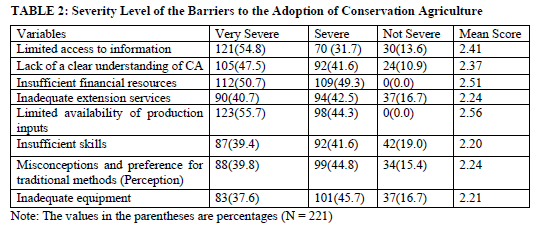
This research also gauged the degree of severity associated with these barriers. Table 2 illustrates the severity of various obstacles to the adoption of CA among smallholder farmers in the study area. The respondents rated the listed eight barriers on a 3-point Likert scale as Very Severe (3), Severe (2), or Not Severe (1). The rating scale employed led to the actual mean of 2.4 being selected as the cut-off criterion. Very severe is indicated by a mean above 2.4 and not severe by a mean below 2.4. Items with mean scores equal to the cut-off criterion may be considered severe. Mean scores (MS) were used to rank the severity level of barriers as indicated by the respondents. These findings shed light on farmers' challenges in implementing CA practices and provide insights into the factors that limit their adoption.
The study's findings indicate that a significant percentage of respondents perceive limited availability of inputs, restricted access to information, and insufficient financial resources as very severe barriers. These barriers received the highest mean scores among all the obstacles assessed. Specifically, "Limited availability of inputs" had a mean score of 2.56, "Insufficient financial resources" had a mean score of 2.51, and "Limited access to information" had a mean score of 2.41. These results are consistent with previous studies conducted by Nhamo and Lungu (2017) and Makate et al. (2019), which emphasised the unavailability of information and financial constraints as the most notable impediments to the adoption of CA.
Additionally, the data indicate that many farmers do not perceive a lack of clear understanding of CA, limited equipment, perception, poor extension service delivery, and lack of skills as severe barriers to the adoption of CA. These barriers had mean scores below the cut-off criterion of 2.4. Specifically, "Lack of clear understanding of CA" had a mean score of 2.37, and "Inadequate equipment" had a mean score of 2.21. "Perception" had a mean score of 2.24. "Poor delivery of extension services" had a mean score of 2.24, and "Lack of skills" had a mean score of 2.20. The findings also suggest that many farmers face challenges due to their limited understanding of CA, contributing to the low adoption rate. This finding aligns with the assertion made by Muzangwa, Mnkeni, and Chiduza (2017) that poor understanding, exacerbated by inadequate delivery of extension services, is a primary reason for farmers' limited awareness of CA. These findings highlight the multifaceted nature of the challenges faced by farmers in adopting CA. The availability of equipment, farmers' perceptions about the effectiveness of CA compared to traditional methods, deficiencies in the provision of extension services, and the need for enhanced skills are perceived as less severe barriers by the respondents. Table 2 provides valuable insights into the severity of various obstacles to adopting CA. It emphasises the need for targeted interventions that address specific issues such as access to inputs, information, financial resources, training, and improved extension services. By targeting these barriers, stakeholders can effectively support smallholder farmers in overcoming the challenges and promoting the broader adoption of CA practices.
6. CONCLUSION
Conservation agriculture has been advocated as a panacea to address low agricultural production and land degradation in smallholder African settings. The success of CA relies on the simultaneous application of three core principles, namely, minimal soil disturbance, mulching, and crop rotation. However, despite its potential, CA has experienced sporadic success due to internal and external barriers. In Hazyview, the main barriers to CA adoption among smallholder farmers include poor extension service delivery, inadequate equipment, and inadequate financial resources. Different studies have produced conflicting outcomes regarding the barriers to CA adoption in various countries. Knowledge gaps have been identified as a primary and severe hindrance to CA adoption, whereas addressing knowledge gaps alone does not lead to adoption. Providing knowledge and skills is crucial, but successful CA adoption requires adapting and modifying CA practices to suit local conditions.
7. RECOMMENDATION
Addressing these barriers is crucial to promoting the wider adoption of CA practices among smallholder farmers. Hence, the study recommends the following:
• Financial Support: Government agencies, Non-governmental organisations and financial institutions should collaborate to provide accessible and affordable financing options tailored to the needs of smallholder farmers for CA adoption.
• Extension Services Improvement: Agricultural extension services must be strengthened and made more accessible. Training programs should be developed to enhance the skills of extension workers in educating farmers on CA practices.
• Mechanisation and Input Access: Efforts should be made to provide smallholder farmers with access to affordable farm machinery and inputs, such as herbicides. Mechanisation and input support programs can significantly ease the adoption of CA.
• Education and Awareness: Promoting awareness and education about CA through multiple channels, including farmer field visits, radio programs, and community workshops, can help address misconceptions and improve understanding.
• Skills Development: Training programs focused on CA practices should be available to smallholder farmers to equip them with the necessary skills for successful implementation.
• Information Access: Facilitating access to information through digital platforms, mobile applications, and community training sessions can address the barriers to limited access to information and understanding.
The authors declare that there is no conflict of interest in this publication.
REFERENCES
9. ACKNOWLEDGEMENT
The authors acknowledge the study area's participants, smallholder farmers and Agricultural Advisors. NRF has also been recognised for funding this project.
3. LITERATURE REVIEW
- ABDULAI, A.N., 2016. Impact of conservation agriculture technology on household welfare in Zambia. Agric. Econ., 47(6): 729-741.
- BAUDRON, F., MWANZA, H.M., TRIOMPHE, B. & BWALYA, M., 2007. Conservation agriculture in Zambia: A case study of adoption and impact. Agric. Ecosyst. Environ., 119(1-2): 230-240.
- BLIGNAUT, J.N., MPANDELI, S., NEL, W., WILSON, K. & DE WET, B., 2015. The economics of conservation agriculture in South Africa. Renew Agr Food Syst., 30(3): 237-247.
- BOLLINGER, L., KIENZLER, K. & KIRSCHKE, D., 2014. How do conservation agriculture practices influence farm economic performance? A meta-analysis. J. Sustain. Dev., 7(1): 1-16.
- CHIPUTWA, B., WALL, P. & THIERFELDER, C., 2011. Adoption of conservation agriculture technologies in Zambia: Effects on household food security. J. Sustain. Dev., 4(4): 11-23.
- DEARING, J.W. & COX, J.G., 2018. Diffusion of innovations theory, principles, and practice. Health Aff., 37(2): 183-190.
- FAO., 2011. Save and grow: A policymaker's guide to the sustainable intensification of smallholder crop production. Rome: Food and Agriculture Organisation of the United Nations.
- GAMA, B.M. & THIERFELDER, C., 2011. Assessing the effects of conservation agriculture practices on soil properties in smallholder farming systems of Zimbabwe. J. Sustain. Dev., 4(4): 71-81.
- GILLER, K.E., WAIREGI, L.W.I., ANDERSSON, J.A. & SCOPEL, E., 2015. Steps towards sustainable intensification of smallholder farming systems in sub-Saharan Africa. Phil. Trans. R. Soc. B, Biol. Sci., 370(1666): 20120129.
- GOWING, J.W. & PALMER, M.W., 2008. Soil water balance under conservation agriculture in semi-arid Zimbabwe. Agric. Ecosyst. Environ., 128(3): 171-183.
- GRABOWSKI, P.P., 2011. Conservation agriculture in smallholder farming systems: A review of evidence from Tanzania. J. Sustain. Dev., 4(4): 131-144.
- GUTO, S. N., BAIJUKYA, F., OBAGA, M. & ODENDO, M., 2011. Adoption of conservation agriculture practices in the Lake Victoria basin of Kenya. J. Sustain. Dev., 4(4): 82-94.
- HOBBS, P.R., SAYRE, K. & GUPTA, R., 2008. The role of conservation agriculture in sustainable agricultural production. Phil. Trans. R. Soc. B, Biol. Sci., 363(1491): 543-555.
- KAMINSKI, J., 2011. Socioeconomic factors influencing the adoption of conservation agriculture practices by smallholder farmers in Malawi. J. Sustain. Dev., 4(4): 51-61.
- KASSAM, A., FRIEDRICH, T., DERPSCH, R., STREZ, T., LI, H. & GANA, A., 2019. Global spread of Conservation Agriculture. Int. J. Environ. Sci. Dev., 10(2): 39.
- KASSAM, A., FRIEDRICH, T., SHAXSON, T.F. & PRETTY, J.N., 2009. The spread of conservation agriculture: justification, sustainability and uptake. Int. J. Agric. Sustain, 7(4): 292-320.
- KASSAM, A.H., FRIEDRICH, T., SHAXSON, T.F. & PRETTY, J.N., 2011. Overview of the worldwide spread of conservation agriculture. Field Crops Res., 124(1): 3-14.
- KASSIE, M., STAGE, J., ERENSTEIN, O., MWANGI, M. & JIRSTRÖM, M., 2020. Adoption of climate-smart agricultural practices: evidence from a panel data analysis. J. Environ. Manage., 271: 110972.
- LAL, R., 2015. Restoring soil quality to mitigate soil degradation under intensified agriculture. Sustain., 7(5): 5762-5782.
- LANGYINTUO, A.S. & MEKURIA, M., 2005. Effects of land tenure systems on adoption of conservation agriculture practices in Ethiopia. J. Sustain. Dev. Afri., 7(2): 56-73.
- MONTGOMERY, D.R., 2007. Soil erosion and agricultural sustainability. Proc Natl Acad Sci., 104(33): 13268-13272.
- MUPANGWA, W., THIERFELDER, C., RUSINAMHODZI, L., NGWIRA, A.R. & MASVAYA, E. N., 2021. Conservation agriculture adoption in Malawi: Status, constraints and potential. Afr. J. Agric. Res., 17(4): 580-590.
- MUZANGWA, L., MVUMI, B.M. & NYAKATAWA, E.Z., 2017. Influence of social networks on adoption of conservation agriculture by smallholder farmers in Zimbabwe. J. Agric. Ext. Rural Dev., 9(7): 122-130.
- MWASEBA, D.L., LASWAI, H.S., MBOGONI, J.D. & TURUKA, F.M., 2006. Factors influencing adoption of improved maize technologies in the southern highlands of Tanzania. J. Agric. Ext., 9(1): 1-12.
- NDAH, H.T., MAFONGAYA, P.L. & VANLAUWE, B., 2012. Determinants of adoption of improved fallow and fertilizer technologies in smallholder maize production in Eastern Zambia. J. Sustain. Dev., 5(4): 101-114.
- NDAH, H.T., MAFONGAYA, P.L. & VANLAUWE, B., 2014. Adoption of integrated soil fertility management practices in smallholder maize production systems in Zambia. Nutr CyclAgroecosys., 95(1): 37-49.
- NGWIRA, A.R., AUNE, J.B., THIERFELDER, C. & R0NNING, O.I., 2012. Adoption of conservation agriculture practices among smallholder farmers in Malawi: Constraints and opportunities. J. Sustain. Dev., 5(4): 88-100.
- NTSHANGASE, N.Z., MUROIWA, E. & SIBANDA, M., 2018. Climate change awareness and adaptation strategies of small-scale farmers in the Eastern Cape Province, South Africa. Environ. Dev., 25: 24-34.
- OLDENBURG, R. & GLANZ, J., 2008. Improving health literacy: The role of the community. Am J Health Promot., 22(6): 375-378.
- OMAIR, A., 2015. Selecting the appropriate study design for your research: Descriptive study designs. Journal of Health Specialities., 3(3): 153-156.
- PANNELL, D.J., LLEWELLYN, R.S. & CORBEELS, M., 2014. The economics of conservation agriculture: A review and framework for analysis. Crop Pasture Sci., 65(12): 1059-1070.
- QWABE, Z.T., VAN NIEKERK, D. & MUDHARA, M., 2022. Factors influencing the adoption of conservation agriculture practices by smallholder farmers in KwaZulu-Natal, South Africa. Sustain., 14(3): 1654.
- ROGERS, E.M., 1995. Diffusion of innovations. New York: Free Press.
- ROGERS, E.M., 2003. Diffusion of innovations (5th edn.). Free Press.
- SHETTO, R.Z. & OWENYA, M.Z., 2007. Adoption of soil conservation technologies by smallholder farmers in Lushoto District, Tanzania. J. Appl. Sci., 7(22): 3495-3501.
- SIEDLECKI, S.L., 2020. Understanding descriptive research designs. Am J Crit Care., 29(5): 398-400.
- SMITH, A., THOMPSON, J. & SCOONES, I., 2016. Sustainable intensification in South Africa: Exploring multiple pathways for 'climate-smart' agriculture. J. South. Afr. Stud., 42(5): 985-1003.
- STATSSA., 2011. Population census 2011. Statistics South Africa.
- THIERFELDER, C., RUSINAMHODZI, L., NGWIRA, A.R. & MWUNGU, C., 2013. Adoption of conservation agriculture practices in Zimbabwe: A case study of smallholder farmers. J. Sustain. Dev., 6(4): 1-15.
- THIERFELDER, C. & WALL, P.C., 2011. Investigating conservation agriculture (CA) systems in Zambia and Zimbabwe: Long-term effects on soil quality and crop productivity. J. Sustain. Dev., 4(4): 40-50.
- TWOMLOW, S., MUGABE, F.T. & ROHRBACH, D.D., 2006. Conservation farming options for dryland maize production in Zimbabwe: cost-benefit analysis for smallholder farmers. Phys. Chem. Earth (PtA B,C)., 31(15-16): 841-850.
- UDJO, E.O., 2014. An analysis of the location quotient and its dynamics in Mpumalanga Province, South Africa. J. Econ. Behav. Studies., 6(8): 652-658.
- UMAR, A.S., KOLO, I.N. & JIBRIN, J.M., 2011. Determinants of adoption of conservation agriculture practices in Niger State, Nigeria. J. Sustain. Dev., 4(4): 157-165.
- VAN DE BAN, A.W. & HAWKINS, H.S., 1988. Agricultural extension. Longman Scientific & Technical.
- WALL, P.C., 2007. Conservation agriculture in Africa: Current status and research needs. Afr. J. Agric. Res., 2(1): 1-12.
- WEJNERT, B., 2002. Integrating models of diffusion of innovations: A conceptual framework. Annu. Rev. Sociol., 25(1): 297-326.