Socioeconomic Contribution of Working Equids: A Study of Peri- Urban Areas of Mogalakwena Local Municipality, Limpopo Province, South Africa
Abstract
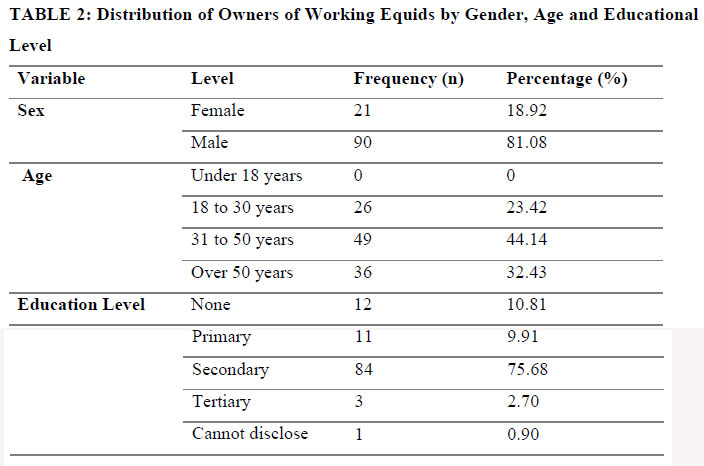
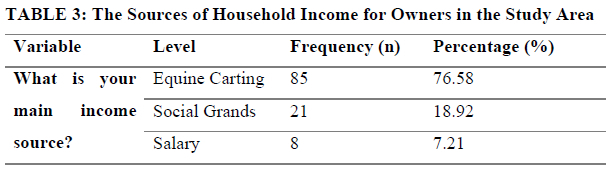
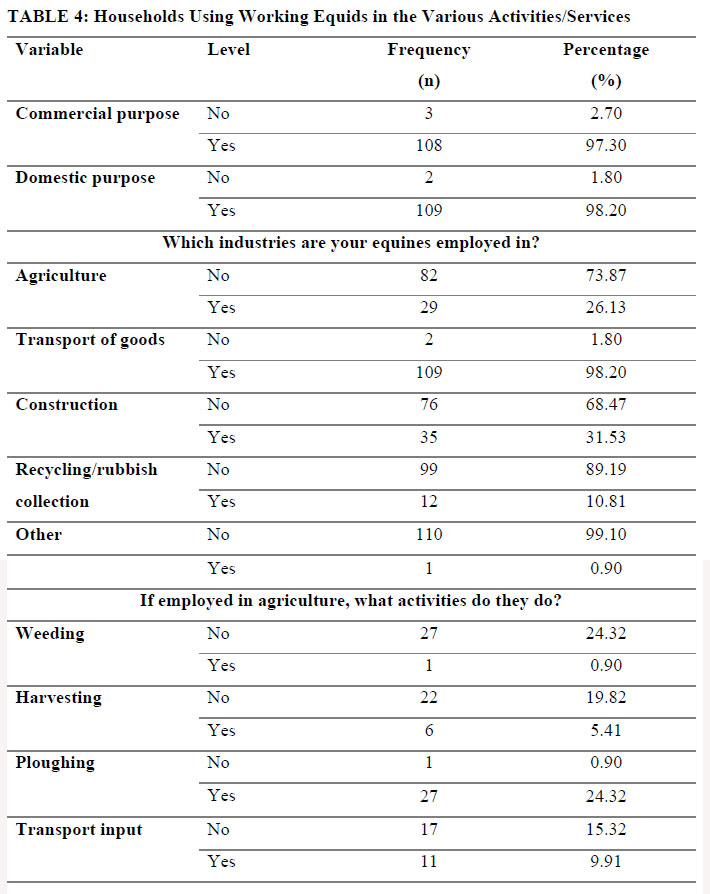
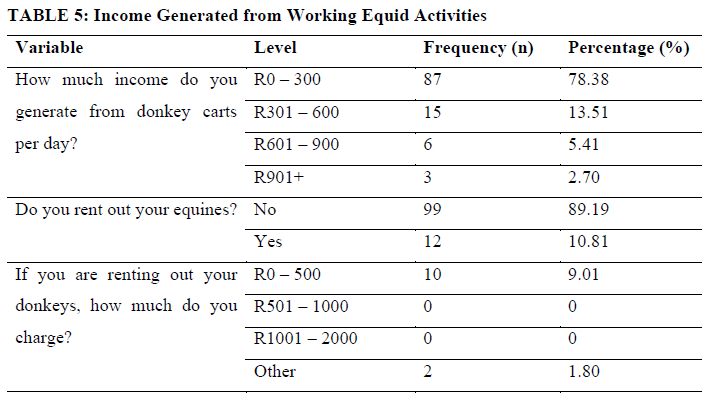
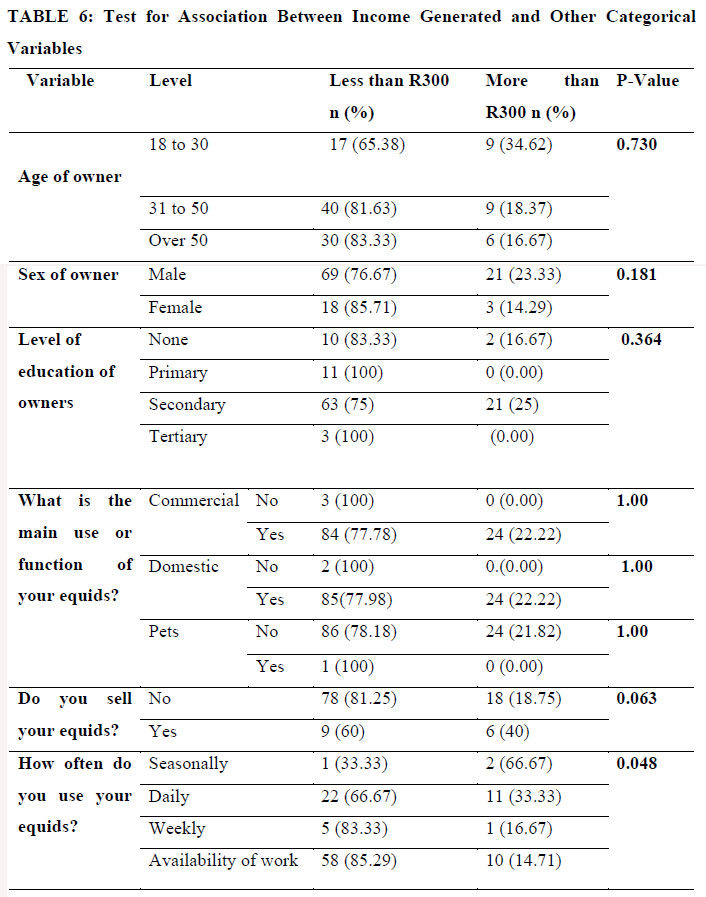
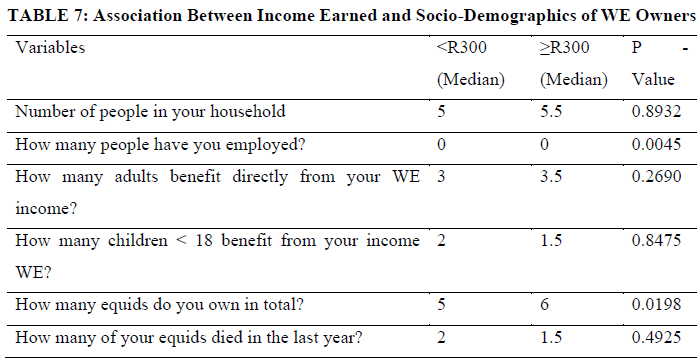
Is there still a case for supporting animal traction in peri-urban areas of the Mogalakwena Local Municipality, Limpopo, South Africa? While working Equids (WEs) continue to be vital to people's livelihoods in low-income communities, recent data on the roles and contributions of WEs to livelihoods, particularly in the peri-urban settings of the Mogalakwena Local Municipality, remain limited. This paper describes the socioeconomic aspects of animal traction in Limpopo Province. A cross-sectional study design using semi-structured face-to-face interviews was adopted in this study. A pre-tested questionnaire was used to collect data. All owners of WEs in the study area were invited to participate, and only those who agreed to participate were interviewed. Descriptive statistics and the Chi-Square Test were used to analyse the data. Significance was assessed at p-value< 0.05. The majority of WE owners were men (80.8%), and the majority were 31-50-year-olds (44.14%). Income from equine carting was the main source of income for the majority (76.58%) of WEs, compared with 18.92% and 7.21% who mainly depended on government social grants and salaries, respectively. Animal traction was found to be an affordable means of transport in the peri-urban areas. The main form of animal traction was donkey carts, with some WEs also used for planting, harvesting and transporting crops. A higher proportion of participants who used their equids seasonally (66.67%) earned >R300 per day compared with those who used the WEs only weekly (16.67%) or only when work was available (14.71%). Provision of veterinary care for WEs (p-value 0.008), purchasing medication to treat WEs if needed (p-value 0.046), and frequency of using WEs were significantly associated with earning a higher income from WEs. Given that most households that owned WEs derived their main income from their work with WEs, this illustrates the potential of owning WEs to reduce poverty in resource-poor communities. WEs, by generating revenue for their owners, enhance the chance to improve their standard of living and boost the monetary earnings of owners of WEs. This study identified the socioeconomic factors that predict income among owners of WEs. Policymakers should consider these findings when designing policies to strengthen WEs' role as a resource for resource-limited households.
Animal Traction; Working Equids; Donkeys; Peri-Urban and Rural Livelihoods; Limpopo Province; South Africa
 Thumbnail