Socioeconomic Contribution of Working Equids: A Study of Peri- Urban Areas of Mogalakwena Local Municipality, Limpopo Province, South Africa
Abstract
Is there still a case for supporting animal traction in peri-urban areas of the Mogalakwena Local Municipality, Limpopo, South Africa? While working Equids (WEs) continue to be vital to people's livelihoods in low-income communities, recent data on the roles and contributions of WEs to livelihoods, particularly in the peri-urban settings of the Mogalakwena Local Municipality, remain limited. This paper describes the socioeconomic aspects of animal traction in Limpopo Province. A cross-sectional study design using semi-structured face-to-face interviews was adopted in this study. A pre-tested questionnaire was used to collect data. All owners of WEs in the study area were invited to participate, and only those who agreed to participate were interviewed. Descriptive statistics and the Chi-Square Test were used to analyse the data. Significance was assessed at p-value< 0.05. The majority of WE owners were men (80.8%), and the majority were 31-50-year-olds (44.14%). Income from equine carting was the main source of income for the majority (76.58%) of WEs, compared with 18.92% and 7.21% who mainly depended on government social grants and salaries, respectively. Animal traction was found to be an affordable means of transport in the peri-urban areas. The main form of animal traction was donkey carts, with some WEs also used for planting, harvesting and transporting crops. A higher proportion of participants who used their equids seasonally (66.67%) earned >R300 per day compared with those who used the WEs only weekly (16.67%) or only when work was available (14.71%). Provision of veterinary care for WEs (p-value 0.008), purchasing medication to treat WEs if needed (p-value 0.046), and frequency of using WEs were significantly associated with earning a higher income from WEs. Given that most households that owned WEs derived their main income from their work with WEs, this illustrates the potential of owning WEs to reduce poverty in resource-poor communities. WEs, by generating revenue for their owners, enhance the chance to improve their standard of living and boost the monetary earnings of owners of WEs. This study identified the socioeconomic factors that predict income among owners of WEs. Policymakers should consider these findings when designing policies to strengthen WEs' role as a resource for resource-limited households.
Animal Traction; Working Equids; Donkeys; Peri-Urban and Rural Livelihoods; Limpopo Province; South Africa
1. INTRODUCTION
The Food and Agriculture Organisation (FAO) of the United Nations (FAOSTAT, 2021) estimates the population of equids in South Africa at 491,534, comprising 146,136 donkeys, 329,992 horses, and 15,406 mules. The term "working equids" (WEs) was recently defined by Haddy et al. (2020a) as equids that are used for animal traction, and includes only three equid species (i.e., horses (Equus caballus), donkeys (Equus asinus) and sterile hybrids such as mules or hinnies, the offspring of an Equus asinus and an Equus caballus). WEs are often selected for work because of their strength, endurance, and ease of management. In Africa, donkeys are the most common working equids (WEs) and could be regarded as indigenous African livestock, as they evolved in North Africa. They are often preferred as they are affordable to purchase and maintain (Mengistu et al., 2005). In addition, they are often a preferred alternative because they are gentle, learn faster, and are easy to handle (Nengomasha et al., 2000; Mengistu et al., 2005; Swai & Bwanga, 2008).
The roles of WEs differ across regions in social, cultural, and economic terms ('Under the skin', 2019). From a socioeconomic perspective, WEs play diverse roles. For example, they take on different values within capital categories, either as assets in themselves or as services provided through their use (Velázquez-Beltrán et al., 2011). According to Valette (2015), WEs can be subdivided into two categories: commercial (the provision of direct income through public transport) and domestic (contributing to agriculture, food security, or affordable transport). They are often owned by people in the most impoverished socioeconomic strata (Lanas et al., 2018). They contribute directly and indirectly to income generation for thousands of households, substantially supporting the livelihoods of people in low- to middle-income nations (Siegford et al., 2020). In addition to helping families afford food and other necessities, WEs also serve as a source of income (FAO, 2014). They play a fundamental role in advancing the United Nations Sustainable Development Goals (SDGs) 1, 2, 3, 5, and 6 (Grace et al., 2022).
Although they have been an integral part of South Africa's history, WEs are no longer used in the mining, transportation, or agricultural sectors due to technological advancements. As a result, their role, particularly in agriculture, transport and food security, has been overlooked. Consequently, there has been a reduction in the recognition of their role and contribution to the South African economy, particularly in rural and peri-urban areas, by government authorities, in agriculture and education, and in farming journals and agricultural curricula (Starkey, 1995). This has also led to their exclusion or absence from the policies and programmes of the provincial and national governments. For example, WEs have been excluded from critical governmental interventions such as disease eradication strategies, vaccination campaigns, primary animal health care programmes, and surveillance systems (Pearson et al., 1991).
Regardless of the crucial socioeconomic contribution they make to their owners, the welfare of these animals receives insufficient global attention. In this regard, WEs, and particularly donkeys, have always been viewed as harmful and unproductive animals that should be kept under control or even eradicated (Starkey, 1995). WEs tend to experience low welfare standards. Poor management, low social standing, a lack of feed, and ill health are common welfare problems for WEs (Legesse & Tonamo Tema, 2015). This is due to the absence of WEs-related disease control and prevention policies and legislation (Pearson et al., 1991). Additionally, the academic curricula of veterinary and para-veterinary programs, as well as those of agricultural extension specialists, exclude WEs, particularly donkeys and mules. The exclusion of WEs from veterinary programs has detrimental effects on their management and health, limiting their ability to support livelihoods and reducing their productivity (Swai & Bwanga, 2008).
Agricultural extension is based on the precept of face-to-face communication with farmers and rural inhabitants rather than top-down regulatory control (Van Niekerk et al., 2022). It is therefore important for veterinary and agricultural staff to work with the community on animal production, health, and welfare (McCrindle, 1998). In South Africa, extension officers and veterinary personnel fall under the same National and Provincial Department and frequently interact at the local level, particularly in low-income communities, to enhance livestock productivity and health. The mandate of those involved in veterinary extension in South Africa is to maintain the health, welfare, and affordability of livestock-related activities (Steyn et al., 2010). In terms of the Veterinary and Para-veterinary Professions Act (Act 19 of 1982, as amended), South African veterinarians and animal health technicians (AHTs) are mandated to maintain animal health and offer advice and assistance to animal owners at primary, as well as commercial levels in South Africa (SAVC, 2023). In South Africa, veterinary and para-veterinary staff fall under the same government department as agricultural extension officers and frequently interact at the livestock and wildlife levels to enhance productivity and health. While the curricula for agricultural extension officers include a variety of livestock species, they do not cover equine health and handling (Van Niekerk, von Maltitz & Davis, 2022).
WEs do not appear in most national agricultural or rural transport strategies and policies (FAO, 2014). In an attempt to bridge part of this gap, the South African government developed a policy in 2007 to promote economic growth in rural areas by integrating animal transportation into the overall transportation system, under the theme "Animals Too Are Part of the Transport Family" (Radebe, 2007). This policy prompted coordinated efforts to build cooperation between multiple parties, such as the Department of Agriculture and the National SPCA, with an emphasis on the health and welfare of animals used for drawn transportation (Radebe, 2007). There is, however, an implementation gap which stems from insufficient stakeholders' engagement, political factors, a lack of resources, and a lack of recognition of WEs.
The study investigates the socioeconomic impact of working equids (WEs) in low-income peri-urban and rural communities, with the aim of determining the role of WEs in income generation and the well-being of their owners.
2. METHODOLOGY
2.1. Study Area
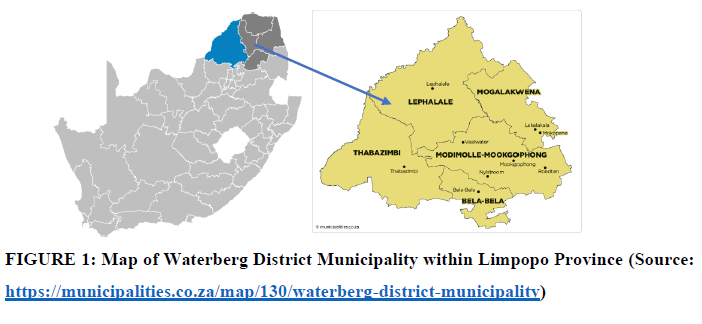
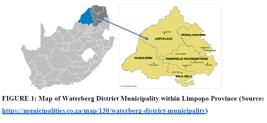
The Mogalakwena Local Municipality accounts for 45% of the total population of Waterberg District (IDP, 2020). The Mogalakwena Local Municipality, like most rural municipalities in the Republic of South Africa, is characterised by unemployment and poverty (IDP, 2016). The unemployment rate among the economically active population in the Mogalakwena Municipality ranges from 45% to 75%, making poverty a serious social issue (IDP, 2020). The local economy is based on mining and agriculture. Although the Municipality offers a variety of transportation options, buses, taxis, and donkey carts are the most popular (IDP, 2018).
The study area experiences hot, pleasant summers and mild winters, with temperatures ranging from 27 °C to the mid-30°C (IDP, 2016). Irregular, undulating lowlands with hills and low-lying mountains characterise the area's topography.
2.2. Study Population
The study population included all households in the 14 peri-urban areas of the Mogalakwena Local Municipality that owned WEs used for traction. An invitation to participate in the study was extended to all household heads, irrespective of age or gender. Alternatively, any person aged 18 or older living in the household could participate.
2.3. Household Selection
Due to a lack of data on the number of households that owned WEs in the peri-urban areas of the Mogalakwena Local Municipality, consultation with the local Society for the Prevention of Cruelty to Animals (SPCA) was conducted to identify the geographic areas where a sizable number of households that own equids were located. Thereafter, the "snowball" sampling method, as described by Valerio et al. (2016), was adopted to identify households within each selected peri-urban area that owned WEs. The interviewers, with assistance from the SPCA, established contact with one or two households that owned any species of WEs and requested them to help identify the next household with WEs. The identified households were then asked to nominate another household that owned WEs. This continued until all known households that owned WEs (n=111) were identified.
2.4. Study Design
This study employed a cross-sectional, questionnaire-based design using both qualitative and quantitative methods.
2.5. Data Collection
Data were also gathered through a one-on-one, semi-structured, face-to-face interview using a pre-tested questionnaire. The internal validity of the questionnaire was evaluated by equid experts with an understanding of the study topic to ensure it effectively captured the subject and to provide suggestions for improving the questionnaire before data collection commenced. Furthermore, the questionnaire's internal validity was enhanced by conducting a pilot study in townships within the Sedibeng District Municipality. The results from the expert assessment and pilot study were used to improve the questionnaire. The data from the pilot study were analysed but were not included in the final study. Structured interviews with the WE owners lasted between 30 and 45 minutes.
The following variables were included in the questionnaire: demographic profile of equid owners (e.g., gender, age, level of education, household income, household composition, income from equine services, number of equids owned), and roles of WEs.
Ethical approval to conduct the research was obtained from the Research Ethics Committee of the University of South Africa (2021/CAES_HREC/141). In addition, the Department of Agriculture granted authorisation to conduct the survey. There are no competing interests to declare. All research assistants involved in data collection signed a confidentiality agreement that prohibits them from sharing information with any other person.
2.6. Data Management
Data were entered into a Microsoft Excel spreadsheet (Microsoft Corp., Redmond, USA). The data was cleaned, coded, and analysed using SPSS Version 27.
2.7. Data Analysis
Numerical descriptive statistics were computed as percentages or proportions for categorical variables. Continuous variables were tested for normality using a histogram / normal probability plot, and summarised as means or medians depending on whether the data were normally distributed. A chi-square / Fisher's exact test was used to establish associations between "Income Generated" and other categorical variables at the farm level. The level of significance was set at <0.05.
3. FINDINGS AND DISCUSSION
3.1. Demographics of Owners of Working Equids
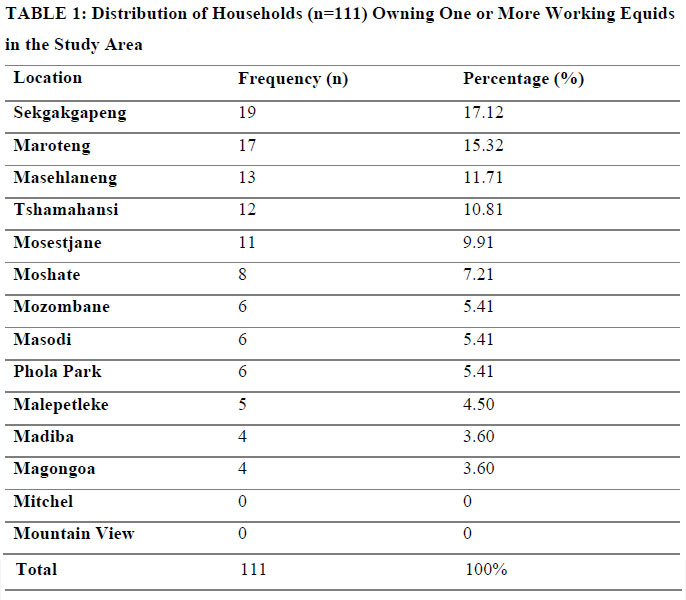
Fourteen (n=14) peri-urban areas around the Mogalakwena Local Municipality were surveyed, and the total number of participants who owned WEs and agreed to participate voluntarily in the study from each area is shown in Table 1 below.
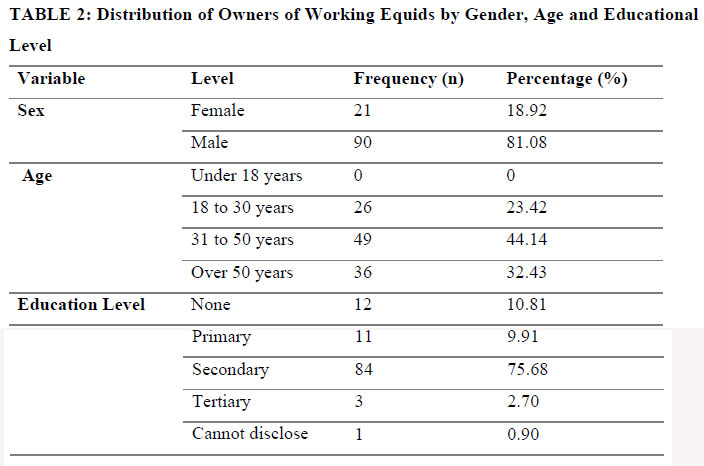
The Mogalakwena Municipality in the province of Limpopo has implemented several local economic development (LED) projects to reduce poverty in the Bakenberg region (Tjale, 2011). Women are encouraged to participate in such interventions primarily because they are regarded as a historically underprivileged population in South Africa. Because of this, their male counterparts frequently turn to equine carting as one of their few employment options. This could explain why, as shown in Table 2 below, only a small proportion of the people interviewed in this study were female, with the majority being male (80.8%). However, women's ownership of WEs has also been reported to be uncommon in other studies (Taylor, 1999).
As indicated in Table 2, the two largest age groups of the study respondents involved in equids carting were older than 31 years and together accounted for more than three-quarters (76.57%) of the study respondents. These findings suggest that middle-aged adult males dominate the equid carting business. The findings of the current study are in accord with the results of a study by Braimah et al. (2013), who observed in Kassena Nankan Municipality in the Upper East Region of Ghana that most respondents (73.12%) were aged 32 years and older. Given that this is the most economically active group, these findings suggest that equine carting contributes to job creation in the study area.
Various authors have reported on the education level of individuals involved in equid carting in rural/peri-urban areas. For example, Swai and Bwanga (2008), in their study conducted in Northern Tanzania, they found that just over half (57,2%) of the respondents were primary school leavers, while in South Africa, Marufu (2014) reported that just under 50% (46.48%) of the respondents had primary education. However, in a study reported by Braimah et al. (2013) conducted in Ghana, over half (58%) of WE owners had no formal education. On the contrary, in the current study, most respondents (75.68%) in the Mogalakwena indicated that they had completed secondary education. This difference could reflect the level of literacy in the two countries. South Africa is known to have a high literacy rate compared to other African countries (Zua, 2021).
3.2. Sources of Income for Study Participants
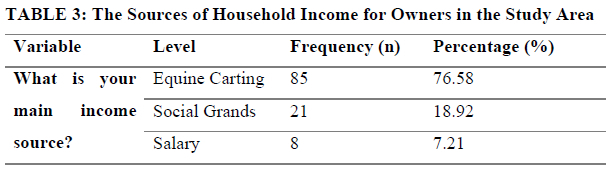
This study observed that most participants (76.58%) depend on equid carting as their primary source of income (Table 3). This might be attributed to the high unemployment rate in the Mogalakwena Municipality, which is almost double that of other municipalities, a fact that could be attributed to the reduction in mining activities in the area in recent years (IDP, 2020). The prevailing conditions force the residents of the study area to seek other sources of income, such as working WEs full-time. This is consistent with the findings of the survey conducted by Marufu (2014) in the peri-urban areas in the Eastern Cape Province of South Africa, which showed that the major source of income for donkey owners was carting (51%).
Zaman et al. (2014) in Uttar Pradesh, India, and Wells and Krecek (2001) in Moretele 1, North West Province of South Africa, also observed that the majority of respondents kept equids mainly as a source of income.
In addition to income generation, other major sources of income from WEs included salaries (7.21%) and government social grants (18.92%), such as disability, child support, and pension grants. However, the findings of the current study contrast with those reported by Hassan et al. (2013), who observed that in rural areas, donkey cropping and off-farm income in urban areas were the two largest sources of revenue in North West Nigeria.
As observed in the present study, Wells and Krecek (2001) and Marufu (2014) also noted that for some owners of WEs, salaries and social grants constituted their main sources of income. It can thus be concluded that, despite relying on other sources of income, owners of WEs also utilise their equids to supplement their household income and maintain their way of life.
3.3. Roles and Uses of Working Equids
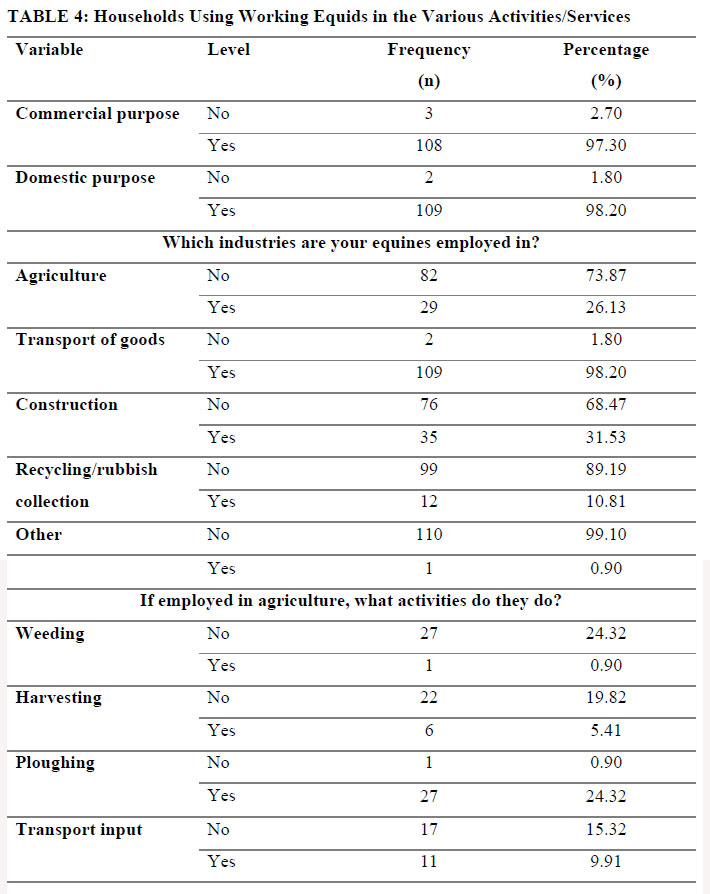
As shown in Table 4 above, the majority of respondents (99.10%) in the peri-urban areas of Mogalakwena Local Municipality use equids for small-scale commercial activities, particularly offering transport services to industries such as agriculture (26.13%), recycling (10.81%), construction (31.53%), and transport of goods (98.20%). Taylor (1999) conducted research in the Eastern Cape Province of South Africa and reported that many donkey users generated income by ploughing gardens on a commercial basis, and carting water and wood for other members of the community. According to Singh et al. (2021), direct income in India is generated by the sale of the equids, hiring working equids to provide services, and the transportation of wood and fodder. In summary, the findings reported in these studies are consistent with those of the current study, which showed that WEs help their owners earn income and improve financial stability for many households. As such, they can be viewed as a source of employment, given the cash generated directly by their work with animals.
In addition, WEs in the study area were also used for domestic purposes (98.20%). Meaning that WEs contributed to saving money and time on transportation, as well as generating income. The high unemployment rate in the study area means many residents cannot afford necessities such as water. As a result, WEs are used to handle such activities to make up for a lack of income. The use of WEs for domestic chores has also been reported by other authors. For example, in the study by Maggs et al. (2021), the authors found that 52% (15/29) of donkey owners in the Northern Ghanaian communities of Fielmon and Gia used their animals solely for domestic purposes.
As indicated in Table 4, just over a quarter (26.13%) of the respondents in the study area reported employing WEs to perform farm tasks such as weeding (0.9%), ploughing (24.32%), harvesting (5.42%), and transporting agricultural supplies (9.91%). While most respondents and community members would like to use tractors for ploughing, they sometimes cannot afford to do so; as a result, WEs are the only option available to them for ploughing their fields. For instance, Admassu and Shiferaw (2011) observed in their study conducted in Ethiopia that equids were employed in agricultural production to transport agricultural products and chemicals. According to Starkey (1995), donkeys, in particular, are a reliable resource for agriculture and transportation, especially for communities in rural, peri-urban, and metropolitan settings.
3.4. Income Generated from Working Equids Activities
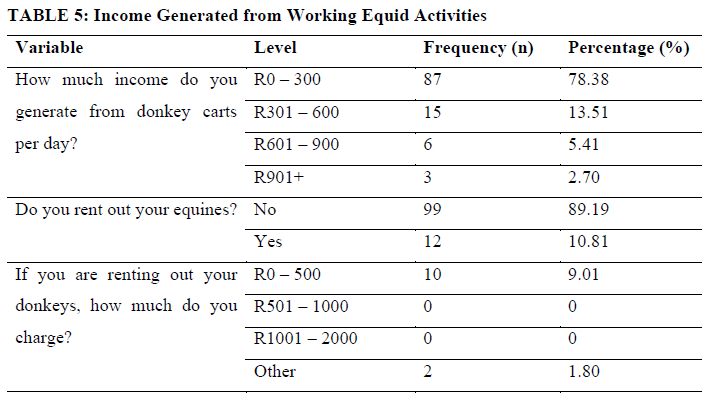
Working equines in the study area serve as financial assets, as they can be sold or rented out. The largest proportion of respondents (78.36%) earned R300 or less per day from activities involving the use of WEs (Table 5). This is projected to be about R1800 per household weekly on average. Similarly, in a study conducted in the Cape Flats by de Klerk et al. (2020), 60% of participants earned up to R300 per day before expenses were deducted. The information needed to estimate the annual profits of the owners of WEs is the number of days the animals worked per annum. However, a rough estimate indicates that the overall income obtained was sufficient to motivate the use of WEs in the study area.
On the other hand, relatively few respondents (n=12; 10.81%) rented out their equids for income generation (Table 5). A similar number of respondents (n=10; 9.01%) indicated that they charge up to R500 per day for equid rentals, while 1.80% (n=2) did not have an exact figure but indicated that they receive a certain percentage from the profit made by the lessee of the equids at the end of the working day.
The study also revealed that 13.51% (n=15) of the respondents sold donkeys for a living. It was not clear whether they sold older animals, bred and sold donkey foals, or acted as a sales agent for donkeys owned by others. According to Singh et al. (2021), direct income in India is generated by the sale of animals and by the hiring of working equids to provide services and transport wood and fodder.
The income generated from WEs-related activities in the study area was generally higher than that from local economic development (LED) projects. For example, a study by Tjale (2011) in the Mogalakwena Local Municipality found that members of the LED project received a minimum of R500 and a maximum of R1500 each month. Respondents in the current study receive various monthly social grants, including the R2105 old-age grant, the R2085 disability grant, the R1125 foster grant, and the 505 child support grant (South African Treasury, 2023). In light of this information, WEs carting has the potential to earn the owners a comparable income to that of government social grants and LED projects.
3.5. Factors Associated with the Income Generated from Equids Carting-Related Activities
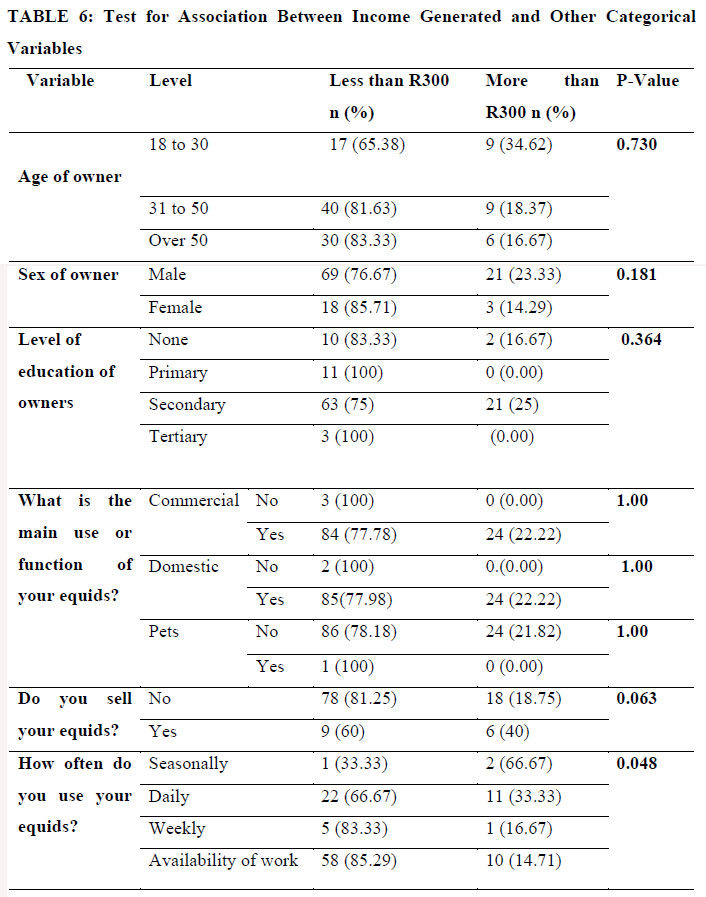
It can be seen from Table 6 above that a higher proportion of respondents aged 18 to 30 years (n=9; 34.62%) earned >R300 than other age groups. However, the association between the owner's age and income generated from WEs was not statistically significant (P-value = 0.730). This was unexpected, as it is believed that younger WE owners are likely to put in extra hours and work more quickly, which could improve turnaround times and customer service and enhance their earnings. This view is also supported by Alam et al. (2016), who observed that in Bangladesh, young and energetic farmers could earn more money than older farmers. Thus, contrary to the findings of the current study, these authors observed that income was independent of the farmer's age.
The study further revealed that female-headed households earned lower incomes than male-headed households. However, gender was not significantly associated with income from WEs (P-value = 0.181). Furthermore, contrary to expectations, there was no correlation between education level and income (P-value = 0.364). This contrasts with findings by Admassu and Shiferaw (2011), who observed that educational level and the age of the household head were significantly and positively associated with net equid usage in Ethiopia.
The variable "Do you sell your equids?" was marginally associated (P-value=0.063) with income generated, with a higher proportion of owners of WEs who indicated that they sold WEs (n=6; 40%) earning > R300 per day, compared to only 16% (n=18) who did not sell WEs. This was expected because in a study by Gichure et al. (2020) in Kenya, the authors observed that gross income from working donkeys can be increased by selling foals or adult donkeys as replacement stock. However, in the present study, further research is needed to determine whether these animals were sold as trained WEs, as young stock for future training or breeding (e.g., weaned foals), or for slaughter (e.g., aged, injured, or badly behaved WEs, i.e., uncastrated stallions).
The daily income from WEs was marginally associated with frequency of use (P-value = 0.048). Those who indicated that they used their equids seasonally had a higher proportion of people who earned >R300 per day (n=2; 66.67%) compared to those who used their WEs weekly (n=1; 16.67%) or depending on the availability of work (n=10; 14.71%). Owners of WEs gain daily access to more clients during winter and planting seasons due to increased demand for firewood and ploughing. Similar observations were made by Wells and Krecek (2001) in Moretele 1, North West Province, South Africa, they found that donkeys work harder from July to September than in other months.
Working donkeys are prone to parasitic infections, as well as several infectious and non-infectious diseases, malnutrition, lesions, and hoof problems. These may negatively impact their well-being and quality of life. Participants who cared for their WEs obtained a higher daily income. As a result, the variable "whether or not the equines are treated for external parasites" was highly correlated (P-value 0.008) with the income generated. Furthermore, income was marginally associated with whether owners buy medicine for equids when needed (p = 0.046). This was expected because WEs that received veterinary care are likely to be healthier and, in turn, able to work more and, in the process, earn their owners more.
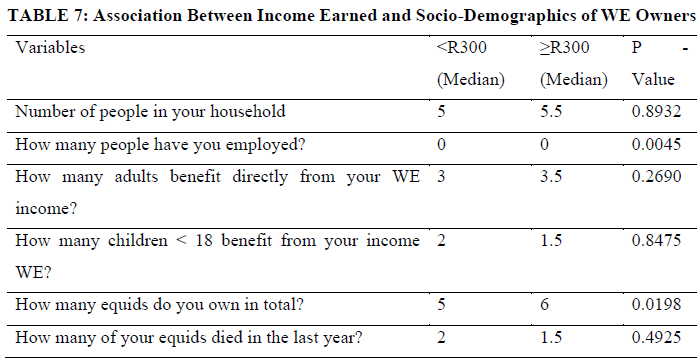
Carting WEs is a significant source of income for many owners, providing a steady income for large families of all ages. Nonetheless, there was no significant difference in the income earned per household. Results presented in Table 7 below revealed that, based on household size, there was no difference (P-Value = 0.08932) between the group that earned <R300 and the group that earned ≥R300 from WEs. The same was observed for the number of adults who benefited directly from income from WEs (P-value = 0.2690) and the number of Children < 18 who benefited from WEs (P-value = 0.8475). This might be a result of their work being seasonal and dependent on customer availability.
However, a statistically significant difference was observed between the group that earned <R300 and the group that earned ≥R300 from WEs, based on the number of people employed by the owners of WEs (P-value = 0.0198) and the total number of WEs owned by the participants (P-value = 0.0045). Gichure et al. (2020) in Kenya, also observed that the number of donkeys reared per farm had an impact on the income from working donkeys. Similarly, Hassan et al. (2013)reported in North West Nigeria that income from donkeys was positively correlated with the number of donkeys (p < 0.001).
4. CONCLUSIONS AND RECOMMENDATIONS
Working equines play an important role in reducing poverty in resource-poor communities by improving owners' standard of living and boosting their incomes. Working equines also have the potential to significantly improve the quality of life for households that rely on them to transport firewood and water by reducing the time, labour, and money otherwise required for these tasks. Furthermore, WEs have the potential to contribute to achieving the UN Sustainable Development Goals (SDGs) - fetching water and food production (SDG 1); providing edible products (SDG 2); accessing health services and products (SDG 3 and 5); and benefiting women (SDG 6). This study identified the socioeconomic factors that predict income among owners of WEs. Policymakers should consider these findings when designing policies to strengthen WEs' role as a resource for resource-limited households.
Management of traction animals must include parasite control and primary animal health care. This requires not only extension services but also the skills of registered Animal Health Technicians (AHTs) to promote animal health and welfare. As a result, it is recommended that extension officers and AHTs work together. The provision of extension services and health care can increase income from the use of WEs in areas where animal traction is still widely used. In South Africa, veterinary and para-veterinary staff fall under the same state department as the Agricultural Extension Officers and frequently interact at the level of livestock health in rural areas. Cooperation should be extended to the realm of traction animals, in particular working equids, because equines are not generally part of the curriculum of those trained as agricultural extension officers. Researchers have developed a new health and welfare assessment tool for working equids in Brazil (Raw et al., 2020); this could be modified for use in South Africa. Further in-depth research is strongly recommended to shed light on demographics and the health and welfare of working equids, as these factors are linked to the income-generating capacity of WEs in the study area.
5. ACKNOWLEDGEMENTS
We wish to extend our appreciation for the support and sponsorship from the University of South Africa (M&D bursary scheme) and the Department of Agriculture, Land Reform and Rural Development. CME McCrindle gratefully acknowledges partial funding by the National Research Foundation. We also thank the Directorate: Language Services at the University of South Africa for their assistance with editing the manuscript.
REFERENCES
-
ADMASSU, B. & SHIFERAW, Y., 2011. Donkeys, horses and mules: Their contribution to people's livelihoods in Ethiopia. Available from https://www.sarawak.gov.my/web/home/article_view/234/245/
» https://www.sarawak.gov.my/web/home/article_view/234/245/ - ALAM, M.P., BHUIYAN, M.S.A. & BHUIYAN, A.K.F.H., 2016. The socioeconomic status of horse owners in rural areas of Bangladesh. The Agriculturists., 13(1): 46-52.
- BRAIMAH, M.M., ABDUL-RAHAMAN, I. & OPPONG-SEKYERE, D., 2013. Donkey-cart transport, a source of livelihood for farmers in the Kassena Nankana Municipality in Upper East Region of Ghana. J. Biol. Agric. Healthc., 3: 127-137.
- DE KLERK, J.N., QUAN, M. & GREWAR, J.D., 2020. Socioeconomic impacts of working horses in urban and peri-urban areas of the Cape Flats, South Africa. J. S. Afr. Vet. Assoc., 91: 1-11.
-
FAO., 2013. In Genetika. Available from http://www.fao.org/88183899-4a6d-4bfa-a4e2-454a206e8d86
» http://www.fao.org/88183899-4a6d-4bfa-a4e2-454a206e8d86 -
FOOD AND AGRICULTURE ORGANISATION OF THE UNITED NATIONS (FAO)., 2014. The role, impact and welfare of working (traction and transport) animals. Animal Production and Health Report. No. 5. Rome. Available from https://openknowledge.fao.org/server/api/core/bitstreams/0cd63cd8-d185-4d0c-bc6e-00d7eb65360c/content
» https://openknowledge.fao.org/server/api/core/bitstreams/0cd63cd8-d185-4d0c-bc6e-00d7eb65360c/content -
FOOD AND AGRICULTURE ORGANISATION OF THE UNITED NATIONS., 2021. Statistical Database Website (FAOSTAT). Available from http://www.faostat.fao.org/
» http://www.faostat.fao.org/ - GICHURE, M., ONONO, J., WAHOME, R. & GATHURA, P., 2020. Factors associated with level of income derived from working donkeys for smallholder farmers in the central highlands of Kenya. East Afr. J. Sci. Technol. Innov., 1(4): 1-13.
- GRACE, D.C., DIALLO, O., SAVILLE, K., WARBOYS, D., WARD, P., WILD, I. & PERRY, B.D., 2022. The global contributions of working equids to sustainable agriculture and livelihoods in Agenda 2030. EcoHealth., 19(3): 342-353.
- HADDY, E., RODRIGUES, J.B., RAW, Z., BURDEN, F. & PROOPS, L., 2020. Documenting the welfare and role of working equids in rural communities of Portugal and Spain. Animals., 10(5): 790.
- HASSAN, M.R., STEENSTRA, F.A. & UDO, H.M., 2013. Benefits of donkeys in rural and urban areas in Northwest Nigeria. Afr. J. Agric. Res., 8(48): 6202-6212.
-
INTEGRATED DEVELOPMENT PLAN (IDP)., 2018. Mogalakwena Local Municipality Integrated Development Plan Review. Available from http://www.mogalakwena.gov.za/mogalakwena-admin/pages/sites/mogalakwena/documents/idp/2018-2019%20Final%20IDP.pdf
» http://www.mogalakwena.gov.za/mogalakwena-admin/pages/sites/mogalakwena/documents/idp/2018-2019%20Final%20IDP.pdf -
INTEGRATED DEVELOPMENT PLAN (IDP)., 2021. Mogalakwena Local Municipality Integrated Development Plan Review. Available from https://www.cogta.gov.za/cgta_2016/wp-content/uploads/2020/12/Mogalakwena-Final_IDP_2020-21-1.pdf
» https://www.cogta.gov.za/cgta_2016/wp-content/uploads/2020/12/Mogalakwena-Final_IDP_2020-21-1.pdf - KRACEK, R.C., STARKEY, P.H. & JOUBERT, A.B.D., 1994. Animal Traction in South Africa: Research priorities in Veterinary Science. Tydskr. S. Afr. Vet. Ver., 65(4): 150-153.
- LANAS, R., LUNA, D. & TADICH, T., 2018. The relationship between working horse welfare and their owners' socioeconomic status. Animal Welfare., 27(1): 47-54.
- MARUFU, M., 2014. Socioeconomic importance, health and welfare aspects of donkeys (Equus asinus) used for carting in a peri-urban area of South Africa. Masters thesis, University of Fort Hare.
- MCCRINDLE, C.M.E., 1998. The community development approach to animal welfare: An African perspective. Appl. Anim. Behav. Sci., 59(1-3): 227-233.
- MENGISTU, A., SMITH, D.G., YOSEPH, S., NEGA, T., ZEWDIE, W., KASSAHUN, W. G., TAYE, B. & FIREW, T., 2005. The effect of providing feed supplementation and anthelmintic to donkeys during late pregnancy and lactation on live weight and survival of dams and their foals in central Ethiopia. Trop. Anim. Health Prod., 37(Suppl 1): 21-33.
- MITCHELL, P., 2017. Why the donkey did not go South: Disease as a constraint on the spread of Equus asinus into Southern Africa. Afr. Archaeol. Rev., 34: 21-41.
-
NATIONAL TREASURY., 2023. Budget Speech 2023. Available from https://www.treasury.gov.za/documents/national%20budget/2023/speech/speech.pdf
» https://www.treasury.gov.za/documents/national%20budget/2023/speech/speech.pdf - NENGOMASHA, E.M., PEARSON, R.A. & GEBRE WOLD, A., 2000. Empowering people through donkey power into the next millennium. In P.G. Kaaumbutho, R.A. Pearson & T.E. Simalenga (eds.), Empowering Farmers with Animal traction. Proceedings of the workshop of the Animal Traction for Eastern and Southern Africa (ATNESA) held 20-24 September 1999, Mpumalanga, South Africa.
-
RADEBE, J.T., 2007. An animal drawn transportation policy for South Africa. Discussion document. Available from https://static.pmg.org.za/docs/2007/070912adtra.pdf
» https://static.pmg.org.za/docs/2007/070912adtra.pdf - RAW, Z., RODRIGUES, J.B., RICKARDS, K., RYDING, J., NORRIS, S.L., JUDGE, A., KUBASIEWICZ, L.M., Watson, T.L., LITTLE, H., HART, B., SULLIVAN, R., GARRETT, C. & BURDEN, F.A., 2020. Equid assessment, research and scoping (EARS): The development and implementation of a new equid welfare assessment and monitoring tool. Animals., 10(2): 297.
-
RSA GOVERNMENT., 2018. Animal-drawn transport. Draft White Paper on Roads Policy: Government Gazette No. 414882018/170 of 9 March, 2018. Available from https://archive.opengazettes.org.za/archive/ZA/2018/government-gazette-ZA-vol-633-no-41488-dated-2018-03-09.pdf
» https://archive.opengazettes.org.za/archive/ZA/2018/government-gazette-ZA-vol-633-no-41488-dated-2018-03-09.pdf -
SAVC., 2022. Rules and regulations for veterinarians and para-veterinarians in line with the provisions of the Veterinary and Para-Veterinary Professions Act, Act 19 of 1982 (as amended, 2022). Available from https://savc.org.za/public-infomation/legislation/#
» https://savc.org.za/public-infomation/legislation/# - SIEGFORD, J.M., UPJOHN, M.M., TADICH, T.A., HELESKI, C., WATSON, T.L., KUBASIEWICZ, L.M., CHAMBERLAIN, N., NYE, C., RAW, Z. & BURDEN, F.A., 2020. Cultural ``Blind Spots,'' social influence and the welfare of working donkeys in Brick Kilns in Northern India. Front. Vet. Sci., 1: 214.
- SINGH, A., PAL, Y., KUMAR, R., KUMAR, S., RANI, K. & PRASAD, J., 2021. Working equids: Their conditions, invisible earning and challenges- a review. Asian J. Agric. Ext. Econ. Sociol., 39(11): 357-364.
- STEYN, H.C., McCRINDLE, C.M.E. & DU TOIT, D., 2010. Veterinary extension on sampling techniques related to heartwater research. J. S. Afr. Vet. Assoc., 81: 160-165.
- STARKEY, P., 1995. Animal traction in South Africa: Empowering rural communities. Development Bank of Southern Africa, Halfway House, South Africa.
- SWAI, E.S. & BWANGA, S.J.R., 2008. Donkey keeping in northern Tanzania: Socioeconomic roles and reported husbandry and health constraints. Livest. Res. Rural Dev., 20(5).
-
PEARSON, R.A., NENGOMASHA, E. & KRECEK, R., 1991. The challenges in using donkeys for work in Africa. Available from https://citeseerx.ist.psu.edu/document?repid=rep1&type=pdf&doi=46e06f28a4188c0aa03a6a25c4ade5ae40b851a2
» https://citeseerx.ist.psu.edu/document?repid=rep1&type=pdf&doi=46e06f28a4188c0aa03a6a25c4ade5ae40b851a2 -
TAYLOR, D., 1999. The use of donkeys, horses and mules in the formers Ciskei region of the Eastern Cape South Africa. Centre for Tropical Veterinary Medicine, University of Edinburgh, UK. Available from http://r4d.dfid.gov.uk/PDF/Outputs/R6609h.pdf,
» http://r4d.dfid.gov.uk/PDF/Outputs/R6609h.pdf - TJALE, M.M., 2011. The impact of local economic development projects funded by the Department of Health and Social Development on poverty alleviation in Bakenberg Area of Mogalakwena Municipality, Limpopo Province. Master's thesis, University of Limpopo.
-
THE DONKEY SANCTUARY., 2019. Under the skin. Update on the global crisis for donkeys and the people who depend on them. Available from https://www.thedonkeysanctuary.org.uk/sites/uk/files/2017-11/under_the_skin_report.pdf
» https://www.thedonkeysanctuary.org.uk/sites/uk/files/2017-11/under_the_skin_report.pdf - VALERIO, M.A., RODRIGUEZ, N., WINKLER, P., LOPEZ, J., DENNISON, M., LIANG, Y. & TURNER, B.J., 2016. Comparing two sampling methods to engage hard-to-reach communities in research priority setting. BMC Med. Res. Methodol., 16: 146.
-
VALETTE, D., 2015. Invisible workers. The economic contributions of working donkeys, horses and mules to livelihoods. Available from https://www.energie-cheval.fr/wp-content/uploads/2017/01/invisible-workers-report.pdf
» https://www.energie-cheval.fr/wp-content/uploads/2017/01/invisible-workers-report.pdf - VAN NIEKERK, J.A., VON MALTITZ, L. & DAVIS, K., 2022. Investigating process skills and competency gaps in undergraduate agricultural extension curriculum in selected South African Universities. S. Afr. J. Agric. Ext., 50(2): 57-80.
- WELLS, D. & KRECEK, R.C., 2001. Socioeconomic, health and management aspects of working donkeys in Moretele 1, North-West Province, South Africa. J. S. Afr. Vet. Assoc., 72(1): 37-43.
- ZANTSI, S. & BESTER, B., 2019. Revisiting the benefits of animal traction to subsistence small holder farmers: a case study of Ndabakazi villages in Butterworth, Eastern Cape Province of South Africa. S. Afr. J. Agric. Ext., 47(3): 1-13.
- ZANTSI, S. & CHRISTIAN, M., 2023. Is there a case for supporting animal traction research, policy, and practice in Rural South Africa? - A Review. S. Afr. J. Agric. Ext., 51(1): 34-50.