Production Objectives, Selection and Culling Approach of Breeding Stock in Smallholder Goat Farming System in the Sedibeng District, Gauteng Province
Abstract
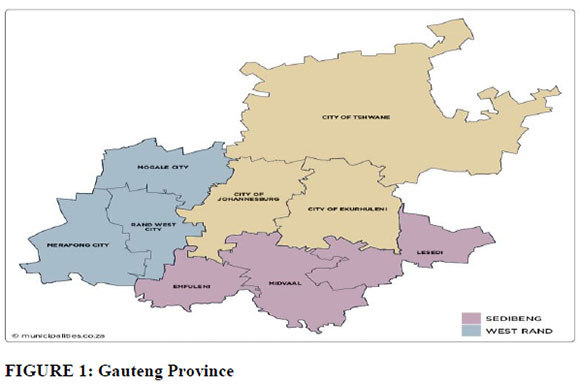
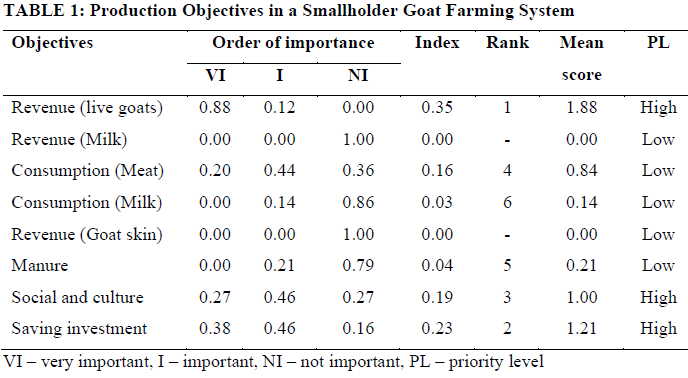
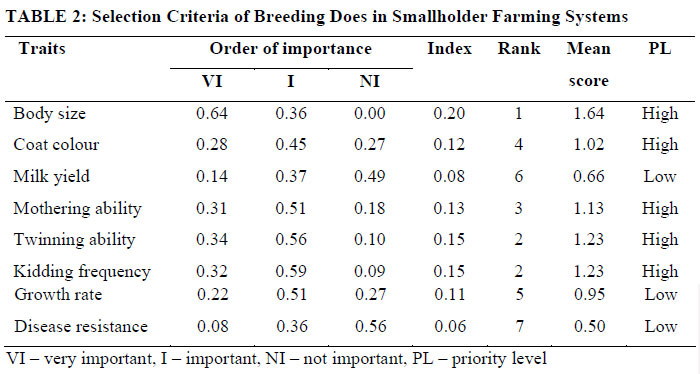
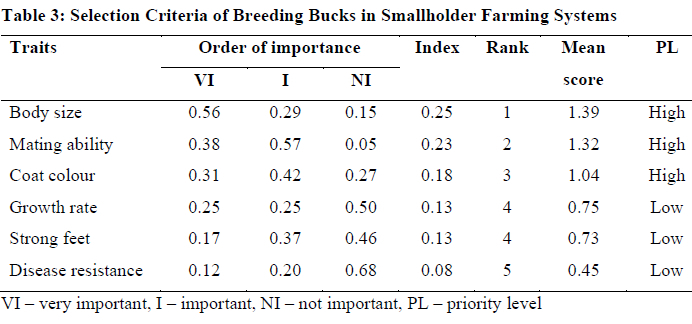
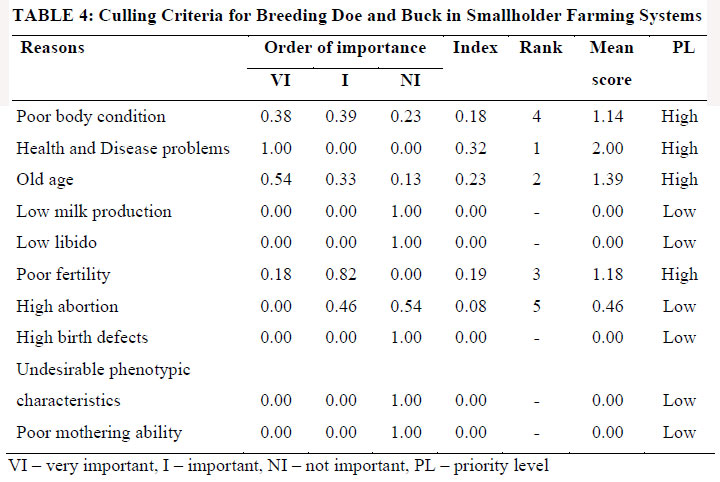
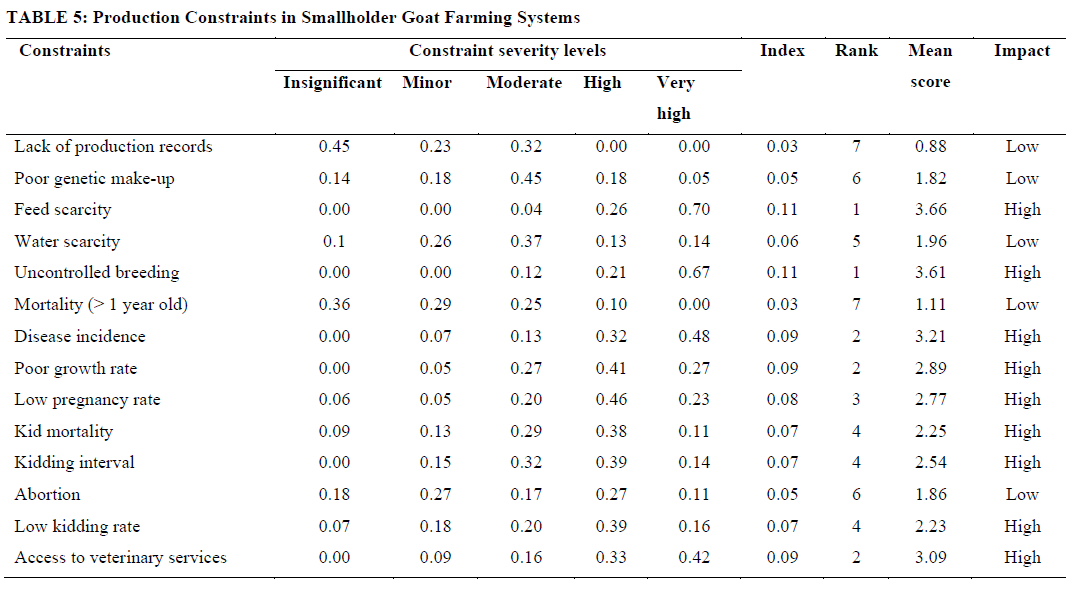
The study evaluated the production objectives, breeding selection, culling practices, and challenges faced by smallholder goat farmers in the Sedibeng district. The study included 56 actively engaged farmers selected through random sampling. Data was collected through a focus group meeting using a predetermined list of variables and Likert scales. An index and mean score were calculated to rank variables, determine the prioritised variables, and identify variables perceived to impact goat production. The study found that the top production objectives were the sale of goats, asset investment, and social/cultural events. Traits such as body size, twinning ability, kidding frequency, mothering ability, and coat colour were key factors in selecting breeding does. In contrast, body size, mating ability, and coat colour were important factors in choosing breeding bucks. Health issues, old age, poor fertility, and body condition were common reasons for culling breeding stock. Major constraints included feed shortages, uncontrolled breeding, disease prevalence, limited veterinary services, slow growth rates, low pregnancy rates, extended kidding intervals, low kidding rates, and high mortality rates among kids. To improve the health and productivity of smallholder goat farming systems, better management practices, access to resources, and appropriate training are essential.
Breeding Objectives; Selection Methods; Trait Preferences; Culling Criteria
 Thumbnail