Evaluating Farmers' Perceptions Towards Extension Service Delivery During the COVID-19 Pandemic in Ga-Mothapo Village, Polokwane Municipality of Limpopo Province, South Africa
Abstract
The study evaluated small-scale farmers' perceptions of extension service delivery during the COVID-19 pandemic, from hard lockdown level 5 to level 3, to inform policymakers on current extension service delivery and its challenges in Ga-Mothapo village. Agricultural extension is important for enhancing agricultural productivity and food security, and is generally provided through face-to-face contact. However, during the COVID-19 pandemic, restrictions on people's movement were put in place to control the virus. This challenged farmers and extension officers to perform their work correctly. The study was conducted in Ga-Mothapo Village, Polokwane Local Municipality, Limpopo Province. The study used a quantitative research methodology and applied Cochran's formula to determine the sample size, which yielded 73 farmers, from whom data were collected using a semi-structured questionnaire. Data was analysed using Statistical Package for Social Sciences (SPSS) IBM software version 29 (2022). The key findings revealed that small-scale farmers did not have direct, individual communication with extension officers. Furthermore, extension officers ceased disseminating information and knowledge, rendering extension services largely inaccessible. Despite the challenges, farmers have experience with information and communication technology (ICT) channels, and marketing programmes should be established to better support farmers in future pandemics. The study recommends that the Limpopo Department of Agriculture and Rural Development provide farmers with ICT tools such as cellular phones and vouchers.
Small-Scale Farmers; Extension Service; COVID-19 Pandemic
1. INTRODUCTION
The COVID-19 pandemic became a threat and affected service delivery to farmers and extension and advisory services. Providing extension and advisory services was challenging due to the South African government's restrictions on individual movement implemented in 2020. The concept of extension service is defined differently by various authors. For example, Hlatswayo and Worth (2019) described it as the entire set of organisations that support and facilitate people engaged in agricultural production in solving problems and obtaining information, skills, and technologies to improve their livelihoods and well-being. According to Agholor et al. (2013), providing agricultural extension services is one of the best ways to enhance agricultural production. The hard lockdown, which lasted 6 weeks, created a complex situation for small-scale and subsistence farmers. The nature of extension services is that farmers should consult the extension advisor when undertaking farming activities; therefore, it becomes the responsibility of the extension officer to guide and support the farmer with knowledge and skills. Small-scale farmers are sometimes equated with subsistence farming because of their mode of operation, whereas smallholder farmers include those who farm for household consumption and market the surplus of their produce (Agholor et al., 2013). During the COVID-19 pandemic, restrictions on people's movement were imposed to prevent the spread of the virus, creating a challenge for farmers and extension officers to find alternative ways to communicate and work together. Small-scale farmers and extension officers had limited direct access to one another due to travel restrictions and prohibitions on public gatherings (Bright et al., 2021). Furthermore, small-scale farmers were not permitted to continue farming during the hard lockdown in South Africa (Buthelezi et al., 2020), even though there are agricultural extension approaches to promote service delivery and agricultural development.
The COVID-19 pandemic presented a considerable challenge to these extension approaches used for providing services to small-scale farmers. According to Muvhuring et al. (2021), the COVID-19 pandemic disrupted the flow of agricultural commodities to markets and the implementation of agricultural extension services. Farmers' perceptions of the effectiveness of agricultural extension services were limited due to COVID-19 restrictions (Somanje et al., 2021). These restrictions meant that extension officers had to review how they provide services to small-scale farmers and adjust their approaches, methods, and tools to suit the pandemic situation. The study aimed to evaluate small-scale farmers' perceptions of extension service delivery during the COVID-19 pandemic, during hard lockdown levels 5 to 3. The study aims to inform policymakers about the current extension service delivery and its challenges in Ga-Mothapo village.
Objectives of the study are as follows:
i) To describe the perception of small-scale farmers towards extension service delivery during the COVID-19 pandemic from hard lockdown levels 5 to 3.
ii) To assess the accessibility of agricultural extension services during the COVID-19 pandemic from hard lockdown levels 5 to 3 by farmers.
iii) To identify and describe the methods of information and communication technology (ICT) channels used to deliver agricultural extension services during the COVID-19 pandemic, from hard lockdown level 5 to 3.
This study's question was to what extent extension officers adjusted their service delivery approaches to meet the needs of small-scale farmers in Ga-Mothapo village. Hence, the study evaluated farmers' perceptions towards extension service delivery during the COVID-19 pandemic.
2. RESEARCH METHODS
2.1. Study Area
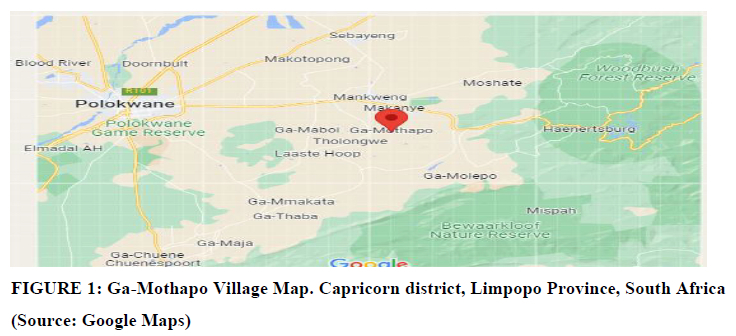
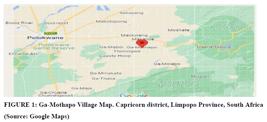
The study was conducted at Ga-Mothapo Village, located in the Polokwane Local Municipality. Agriculture is the primary source of food security for many households in the Polokwane Local Municipality. Ga-Mothapo is approximately 28 km east of Polokwane with a latitude of 23°52'0.02" and a Longitude of 29°43'0.01"(Geoview.infor, 2022). Some of the research areas are indicated in Figure 1.
2.2. Research Design and Sample Size
The study used a descriptive research design. Primary data collected through questionnaires and face-to-face interviews were used to evaluate farmers' perceptions of agricultural extension services during the COVID-19 pandemic, from hard lockdown level 5 to level 3. The purposive sampling method was applied. Sampling can be used to generalise the population based on existing theory (Taherdoost, 2016). The researcher purposively selected participants based on the availability of farmers willing to participate in the study, ensuring the study's timeline management. A questionnaire was used to collect data on farmers' perceptions of the accessibility of agricultural extension services during the COVID-19 pandemic. In addition, farmers' levels of satisfaction with agricultural extension service delivery during the COVID-19 pandemic were assessed. The study's target population was small-scale farmers in Ga-Mothapo village. The sample size of the study was 73 small-scale farmers, calculated using Cochran's formula (Cochran, 1977):
n = (z^2 Pq)/e^2
n = Sample size
Z = is Z- Value at 1.96
P = is the estimated proportion of the population
q = 1- p
e = Sample error 5% (0.05)
2.3. Data Collection
Both closed- and open-ended questions were used to collect data. The questionnaire was designed to gather information on farmers' perceptions of extension service delivery during the COVID-19 pandemic. Farmers who voluntarily participated in the study were interviewed face-to-face. The questionnaire consisted of three sections. Section A covered the methods and communication channels used to deliver extension services. Section B comprised a five-point Likert-type scale to evaluate respondents' perceptions of the accessibility of extension services. Response options were structured as follows: 1 = highly not accessible, 2 = not accessible, 3 = rarely accessible, 4 = accessible and 5 = highly accessible. The response options for the level of satisfaction with agricultural extension service delivery during the COVID-19 pandemic were structured as follows: 1 = very dissatisfied, 2 = dissatisfied, 3 = Undecided, 4 = satisfied, and 5 = very satisfied. Section C comprised the socio-economic characteristics.
2.4. Data Analysis
Descriptive statistical techniques were used in this study. The qualitative data were coded with arbitrary numbers, which were analysed using a frequency table and Pie Charts to illustrate the socio-economic characteristics of farmers, such as levels of education and employment status, represented as percentages. The Statistical Package for Social Sciences (IBM SPSS) software version 29 (2022) was used to determine means and standard deviations. Likert-type scale data were analysed utilising this mode. McLeod (2019) states that the mode is the most appropriate for simple interpretation. Data collected using the Likert scale were further analysed using descriptive statistics to obtain frequencies, standard deviations, and mean scores.
3. RESULTS AND DISCUSSION
3.1. Socio-Economic Characteristics of Small-Scale Farmers
3.1.1. Gender of Respondents
The study found that the majority of respondents (56%) were males (41), and 44% were females (32). This result indicates that fewer women than men are involved in farming activities. Nkosi et al. (2022) reported similar findings: more men than women were engaged in agricultural activities. This may be because women historically had greater difficulty acquiring agricultural resources than men did. Wegerif (2022) reported that women have greater difficulty accessing land and securing land rights. The involvement of women in farming activities will promote equality, help them support their families, and improve food security in many households.
3.1.2. Age of Respondents
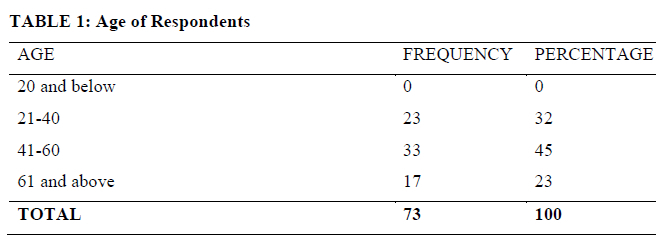
Age in farming plays an important role. The researcher observes that older farmers are conservative and are afraid of change. Young farmers, on the other hand, are full of energy and are willing to test innovations. The age of respondents is presented in Table 1.
Table 1 illustrates that small-scale farmers were older; the majority were 41 years or older (68%). Kom et al. (2022) reported that youth perceive agricultural activities as for older people, and older farmers are more comfortable with traditional farming methods than modern ones. Only 32% of small-scale farmers were between the ages of 21 and 40, with a frequency of 23. These results indicate that extension officers must encourage young people to participate in farming. Ntsiapane et al. (2023) reported that youth are unwilling to participate in agricultural activities, and there is a need to recruit youth to support the agricultural sector. No small-scale farmers aged 20 years and below participated in the study. Myeni et al. (2019) reported similar findings that young people are less involved in farming. Young people are more likely to adopt modern agricultural farming methods than older farmers, which can improve farm production and ensure food security amid the world's growing population.
3.1.3. Educational Status
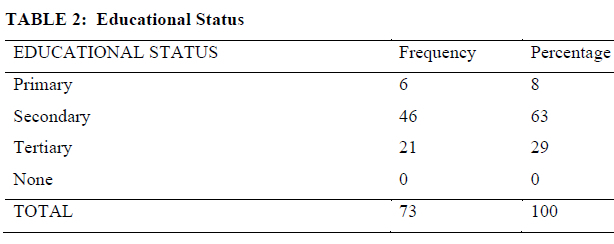
Farmers who can read and write have different perceptions of development because they can understand sophisticated innovations. Qwabe et al. (2022) reported that farmers with low levels of education cannot fully interpret market information that would assist them in properly planning production and marketing strategies. The educational status of respondents is presented in Table 2.
Table 2 shows that the standard of small-scale farmers in the study area was good, with 92% having at least secondary education. Most farmers have a secondary education level (63%). The level of education will assist extension officers in identifying the best approaches to deliver extension services to small-scale farmers. Ntsiapane et al. (2023) reported that educated farmers can easily access government funds and extension services to improve their farm productivity.
3.1.4. Employment Status in Other Professions
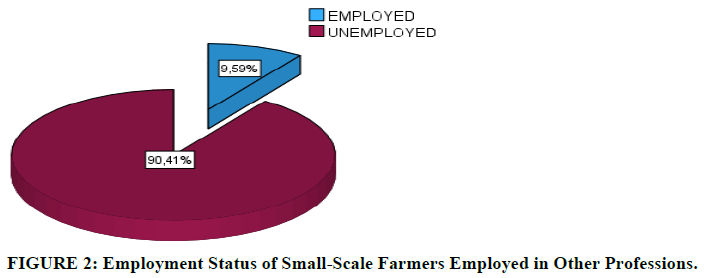
Agriculture is known to create jobs. According to the National Planning Commission (2010), agriculture can create more jobs (National Planning Commission, 2010). The employment status in other professions is presented in Figure 1.
Figure 1 shows that most small-scale farmers are not employed in other professions besides working as farmers. 90% of the small-scale farmers were unemployed, and only 10% were employed in other professions. Most small-scale farmers mentioned that farm income from their produce helps them care for their families and maintain themselves.
3.2. Farm Income and Production Cost
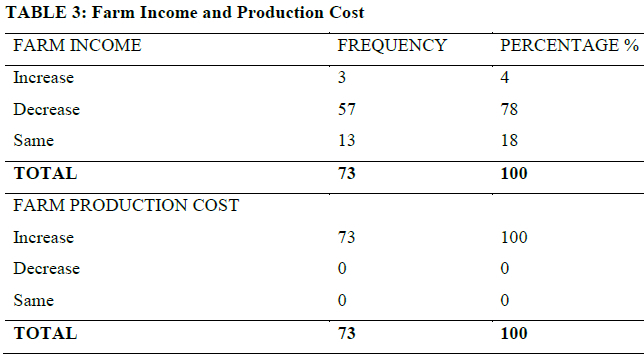
The researcher's observation is that farmers use mechanisms to reduce production, thereby increasing their profits. The status of farmers is presented in Table 3.
Table 3 illustrates the farm income and production costs of the farm products during the COVID-19 lockdown, from level 5 to level 3. The top part of Table 3 shows the frequency with which small-scale farmers reported increased farm income. A small number of (4%) small-scale farmers reported that the announcement of the COVID-19 pandemic hard lockdown found their farm products ready for market. Therefore, most local people bought from farm gates because they avoided long-distance travel to avoid contracting COVID-19. On the other hand, the majority of small-scale farmers who experienced a decrease in farm income during the COVID-19 hard lockdowns were reported to be 78%. Small-scale farmers were unhappy with extension services because there was a lack of assistance in obtaining permits to sell produce. Due to a lack of storage, they had to lower the prices of perishable products below their actual market value. Table 3 further indicated that all small-scale farmers experienced an increase in farm production costs during the COVID-19 pandemic due to higher prices of farm inputs such as seeds, fertilisers, feeds, herbicides, and livestock medication.
The emphasis is that small-scale farmers believe that if extension officers had assisted them with permits during the COVID-19 hard lockdowns, their farm income would not have decreased as much as it did. Mthembu et al. (2022) also reported similar findings: small-scale farmers lacked permits to travel to nearby towns and cities to access farm inputs. Wegerif (2022) reported that during the COVID-19 pandemic, farmers experienced a drop in demand for their produce due to customers' loss of income, which contributed to reduced buying. As a result, farmers experienced a decline in farm income. Siankwilimba et al. (2022) reported that agricultural input prices increased during the COVID-19 pandemic, posing challenges for farmers in sustaining farm production. Small-scale farmers need to purchase personal protective equipment (PPE) to prevent the spread of COVID-19, which has contributed to higher farm production costs.
3.3. Financial Support
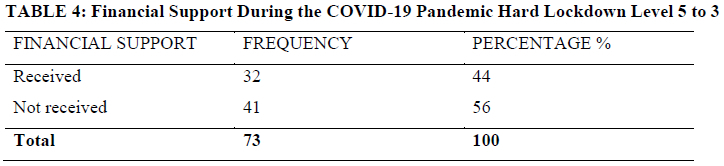
In any business, finances are important for sustainability, including buying inputs and marketing, as in agribusiness. The financial support situation is indicated in Table 4.
Table 4 shows that most small-scale farmers did not receive financial support during the COVID-19 hard lockdowns at levels 5 to 3, with frequencies of 41% and 56%, respectively. Mtero and Gumede (2023) reported that only a handful of farmers received vouchers, while others who applied did not receive anything or only a simple acknowledgement of their applications. However, Ms Thoko Didiza, who was the Minister of Agriculture, Land Reform and Rural Development (DALRRD), announced that a R1.2 billion fund from the Department's COVID-19 Agricultural Disaster Fund was put aside to relieve small-scale farmers who are financially distressed to ensure farm sustainability and to prevent food insecurity (DALRRD, 2020). The finding explicitly indicated that the Department's COVID-19 Agricultural Disaster Fund did not cover all the small-scale farmers. However, some small-scale farmers reported receiving farm inputs, including feeds, seeds, and fertilisers, post-COVID-19 from extension officers. Table 4 further indicated that 44% of small-scale farmers received financial support during the COVID-19 pandemic, during the hard lockdown levels 5 to 3.
3.4. Type of Financial Support
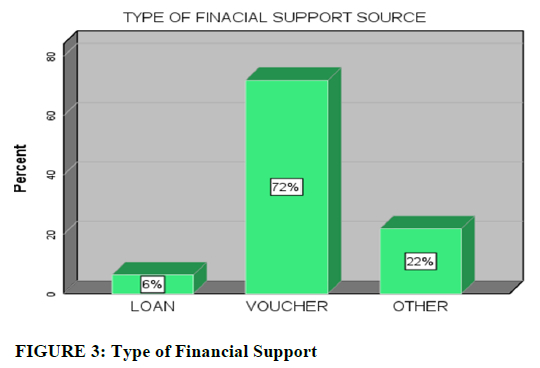
Respondents were asked to indicate the type of financial support they received. The results are indicated in Figure 2.
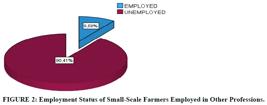
Figure 2 illustrates that 6% of the small-scale farmers received a loan to sustain their farms, which also helped them adapt to new farm operating practices following COVID-19 regulations. Myeni et al. (2019) reported that a minority of small-scale farmers had access to credit in South Africa, and this limited access was due to their low incomes. The majority (72%) received financial support from the Department of Agriculture, Land Reform and Rural Development (DALRRD) through vouchers.
There were complaints about those vouchers, such as restrictions on the stores they could purchase from, which resulted in long queues and prices above the market value of inputs when stores accepted vouchers. Loki et al. (2020) report that the voucher system did not address the farmers' needs because they were restricted to purchasing available inputs from selected distributors. Small-scale farmers reported that they were not allowed to purchase certain farm production inputs using vouchers. Some small-scale farmers reported that the vouchers helped them sustain their farming. Twenty-two percent (22%) received financial support from other sources, including family members and non-governmental organisations (NGOs).
3.5. Accessibility of Extension Services
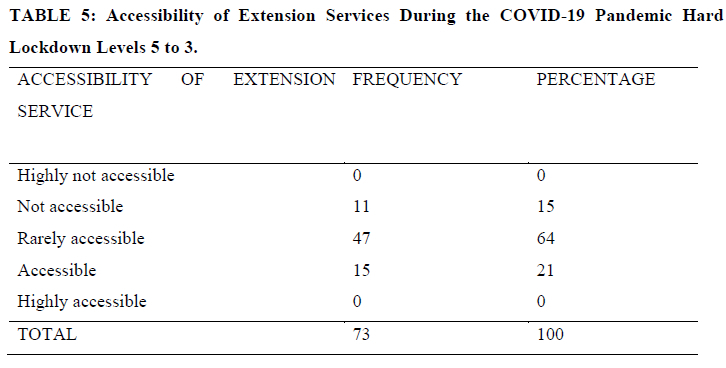
Respondents were asked to indicate their level of accessibility using a five-point Likert scale: 1 = highly not accessible, 2 = not accessible, 3 = rarely accessible, 4 = accessible and 5 = highly accessible. The findings are presented in Table 5.
Table 5 indicates that the minority (15%) of small-scale farmers selected the option not accessible coded option (2) on the five-point Likert scale. Qwabe et al. (2022) report that farmers had difficulty accessing information about market accessibility. Small-scale farmers reported that extension officers never visited their farms during the COVID-19 pandemic. This behaviour might be due to extension officers' fear of contracting COVID-19. Dlamini et al. (2021) reported that extension officers discontinued face-to-face dissemination of information and knowledge during COVID-19 to avoid its spread, and that there was no extension service delivery support system. However, Table 5 indicates that most small-scale farmers' (64%) perception of accessibility of extension services was recorded as rarely accessible, which was coded as option 3 using a five-point Likert scale.
Some small-scale farmers reported that the Department of Agriculture, Land Reform and Rural Development (DALRRD) and extension officers should have designed programmes to assist them in marketing their farm products, as they lost customers because of people losing income and street hawks were no longer buying their farm products because their operation was disrupted by the COVID-19 regulations, especially during lockdown levels 5 and 4. Table 5 further indicates that 21% of small-scale farmers reported that extension services were accessible. Still, farmers would seek them by joining farmer's groups and developing relationships with other farmers. They also noted that farmers' groups provided information on extension services available from governments and non-governmental organisations during the COVID-19 pandemic, at hard lockdown levels 5 to 3.
3.6. Level of Satisfaction
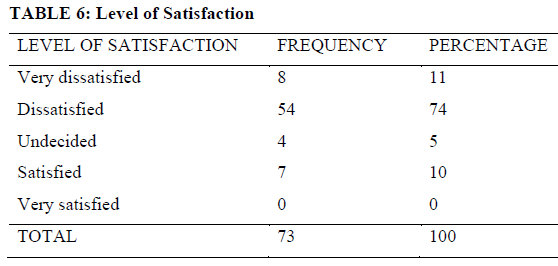
The respondents were asked to indicate their satisfaction with the extension service during the COVID-19 pandemic, from hard lockdown level 5 to level 3. A five-point Likert scale was used to rate satisfaction. The response options were as follows: 1 = very dissatisfied, 2 = dissatisfied, 3 = undecided, 4 = satisfied and 5 = very satisfied. The findings are presented in Table 6.
Table 6 presents the satisfaction of small-scale farmers with the extension services provided to them during the COVID-19 pandemic, level 5 to 3. Only 10% of small-scale farmers were satisfied with the extension services provided by agricultural extension officers. Most small-scale farmers were dissatisfied with the extension service; 11% were very dissatisfied, and 74% were dissatisfied, as indicated in Table 6. Small-scale farmers reported that during the COVID-19 hard lockdowns, from level 5 to 3, extension officers did not visit their farms to assist them with their challenges. They also noted that extension officers visited their farms before the COVID-19 hard lockdowns.
The COVID-19 pandemic regulations affected agricultural production; although the agricultural sector was considered essential, extension officers feared contracting COVID-19, which hindered the effective delivery of their services. Five percent of small-scale farmers were undecided about extension services because they had not tried to contact extension officers for assistance. Still, they were aware of agricultural extension services.
3.7. The Mean, Mode, and Standard Deviation of Small-Scale Farmer's Opinions on Accessibility and Satisfaction Towards Extension Services
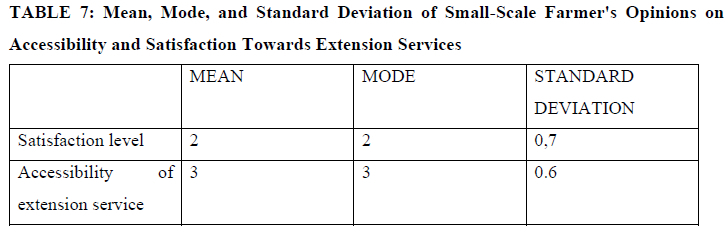
Table 7 indicates the satisfaction of small-scale farmers with the extension service during the COVID-19 pandemic, during the hard lockdown levels 5 to 3. Farmer's satisfaction is conceptualised as the fulfilment of farmer's expectations towards the quality of extension services (Elias et al., 2015). Table 7 indicates that most small-scale farmers were dissatisfied with the extension services. The dissatisfied point was coded with 2. Small-scale farmers reported that the Department of Agriculture, Land Reform and Rural Development (DARLRRD) did not assist them in accessing markets or in providing free personal protective equipment (PPE) during the COVID-19 pandemic, when hard lockdown levels 5 to 3 were in place.
Table 7 indicates the level of accessibility, with a standard deviation of 0.6, which slightly differs from the standard deviation (0.7) of satisfaction towards extension service. The accessibility of extension service mode (3) indicates that most small-scale farmers perceive that extension service delivery is rarely accessible, and three were coded as rarely accessible using a five-point Likert scale to measure the level of accessibility.
3.8. Methods Used to Communicate With Agricultural Extension Officers During the COVID-19 Pandemic Hard Lockdown Levels 5 to 3
Effective information and communication technology (ICT) channels used to deliver extension services significantly improve farm productivity (Ndimbwa et al., 2021). Small-scale farmers reported that extension officers stopped visiting their farms due to restrictions on movement during the COVID-19 pandemic, disrupting verbal communication between them and the extension officers. The minority of small-scale farmers in the study reported communicating with extension officers via WhatsApp and phone calls. Baffoe-Bonnie et al. (2021) report that during the COVID-19 pandemic hard lockdowns, Cell phone applications facilitated communication between agricultural extension officers and farmers. However, some small-scale farmers reported challenges with airtime costs.
Most small-scale farmers reported not having direct individual communication with extension officers during the COVID-19 pandemic hard lockdown levels 5 to 3. Information was sought through radio, television, and Facebook. Siankwilimba et al. (2022) reported that during the COVID-19 pandemic, farmers were encouraged to participate in agriculture through social media, radio, and television. Small-scale farmers faced different challenges with communication technologies (ICTs), such as the difficulty of catching information on the radio and television. Monica et al. (2020) reported the same finding: the major limitation for farmers in accessing extension services through radio and television was a lack of time for the programs.
3.9. Preferred Information and Communication Technology (ICT) Platforms for Accessing Extension Services
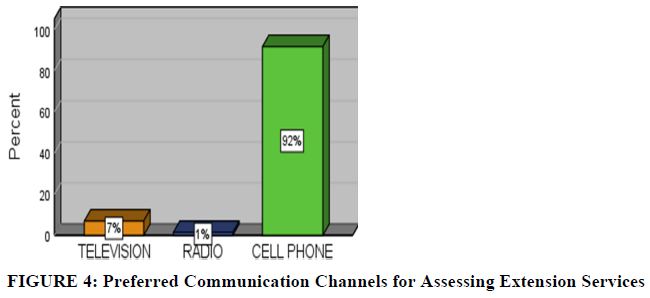
Information and communication technology channels help farmers communicate with extension officers. Their customers purchased farm inputs online. The researchers believe that ICT channels are most significant for communication, especially when there is a verbal communication barrier. Marsden et al. (2023) stated that information and communication technology channels also enabled farmers to make online purchases and market their farm produce, which assisted them during the COVID-19 pandemic, when face-to-face communication was at high risk. The results of the most preferred ICT channel are indicated in Figure 3.
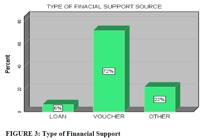
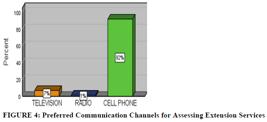
Figure 3 indicates that 1% of small-scale farmers prefer radio, the least preferred communication method. Yusuf et al. (2022) reported findings that differed from our conclusions. For example, he found that radio is an effective medium for communicating extension services to rural farming communities. The study found that small-scale farmers reported that programs on television and radio could be easily missed. Cell phones were the most preferred ICT for communicating information on extension services, with 92% of small-scale farmers preferring them. This indicates that most small-scale farmers own cell phones. Small-scale farmers also reported that cell phones are better because they are always on hand. Dlamini et al. (2021) reported that most people in developing countries have access to mobile phones and that these devices are multifunctional. Therefore, this can be considered one of the reasons that influenced small-scale farmers' decision to choose cell phones as their preferred ICT channel for delivering extension services.
Figure 3 shows that 7% chose television as their most preferred ICT channel. They mentioned that television exposes them to demonstrations that are not easy to forget. Small-scale farmers who prefer cell phones reported that programs on television and radio sometimes fail to address individual farmers' needs. They noted that high airtime costs sometimes hinder them from effectively selling their products and watching relevant, informative agricultural videos on YouTube channels. Therefore, some farmers reported that the Department of Agriculture, Land Reform and Rural Development (DALRRD) must provide free access to online channels where information and videos can be accessed without data charges. In their questionnaires, some small-scale farmers indicated that, to improve communication via ICT channels between farmers and extension officers, information about extension services must be sent to them via SMS, including updates on radio and television programs.
The COVID-19 pandemic disrupted the usual way of doing things, forcing people, institutions, and businesses to adopt the new normal, including agribusinesses. Small-scale farmers reported that during the COVID-19 pandemic, especially during lockdown level 5, they experienced a significant loss of customers due to COVID-19 regulations. Therefore, they were advertising their farm products on WhatsApp and Facebook groups. Marsden et al. (2023) reported that lockdowns severely hampered market access. Some farmers reported that during the COVID-19 pandemic, due to hard lockdowns, they lost their hawk customers who bought their farm products in bulk to resell. Neither themselves, as farmers and hawks, were given permits to sell their produce. However, some small-scale farmers reported adopting the method of taking orders online via phone, WhatsApp, SMS, and Facebook, and delivering them to customers' doorsteps.
Some small-scale farmers reported a loss of perishable farm produce because they could not deliver to other locals due to a lack of transport and poor storage facilities. Jaacks et al. (2021) reported that most farmers had to pay high transport prices during the COVID-19 pandemic lockdown, and the lack of storage facilities led to farm product losses.
4. CONCLUSION AND RECOMMENDATIONS
4.1. Conclusion
The COVID-19 pandemic's hard lockdown, from levels 5 to 3, disrupted small-scale farmers' markets and reduced their income due to limited marketing. The provision of extension services to farmers was insufficient for them to adopt and sustain their farm operations during the COVID-19 hard lockdown at levels 5 to 3. The study found that during the COVID-19 pandemic, production costs increased, leading to reduced farm income. This made it difficult for small-scale farmers to maintain their farm operations. Extension services were rarely accessible, and most small-scale farmers did not receive financial support during the COVID-19 hard lockdowns.
Small-scale farmers were dissatisfied with the lack of extension services received. The accessibility of extension services is directly proportional to small-scale farmers' satisfaction, as indicated by the study's standard deviation. Therefore, the study concludes that improving access to extension services will satisfy small-scale farmers. The impact of COVID-19 showed that small-scale farmers lack storage facilities. The vouchers given to farmers during the COVID-19 pandemic restricted their purchasing at certain stores, leaving them with only the available inputs.
The study concludes that cell phones are the most suitable information and communication technology (ICT) channel for extension officers, small-scale farmers, and their customers to communicate. The findings will assist extension officers and other extension providers in choosing the appropriate communication channels to deliver extension services.
4.2. Recommendations
Based on the results and discussion of this study, the following recommendations are made:
4.2.1. Adaptation to New Ways of Working
The COVID-19 Pandemic has demonstrated the importance of rapid adaptation to new ways of doing things; therefore, extension officers must recruit youth to participate in agricultural activities, as they can adopt agricultural innovations more readily than older farmers.
4.2.2. Responsibility of the Department of Agriculture, Land Reform and Rural Development
The Department of Agriculture, Land Reform and Rural Development, when supporting farmers with vouchers to buy farm inputs, should not restrict farmers' purchases to selected stores.
Small-scale farmers must be prioritised when issuing permits during lockdowns because they play an important role in ensuring food security and improving people's socio-economic status.
The government must create a policy that allows farmers to obtain free personal protective equipment (PPE) to reduce farm production costs.
Cell phones should be encouraged as the primary ICT channel for communicating information to farmers, such as sending videos of farming demonstrations and updating them on different agricultural programs.
4.2.3. Responsibility of Government
A government policy should be established to ensure market prices remain stable during pandemics.
Shared storage facilities could be established to address the lack of on-farm storage and reduce crop spoilage losses, especially during crises such as pandemics.
Governments, DALRRD, banks, and non-government organisations (NGOs) need to work together to find solutions to make financial support easily accessible to small-scale farmers.
5. ACKNOWLEDGMENTS
The authors gratefully acknowledge the support of the Centre for Rural Community Empowerment at the University of Limpopo, which enabled this study. I would like to thank Bakgaga ba Mothapo for granting permission to conduct this study. I appreciate Mr. E.M. Letsoalo's encouragement and guidance in completing this study. Furthermore, I would like to express my gratitude to the Ga-Mothapo farmers who volunteered to participate in the study.
REFERENCES
- AGHOLOR, I.O., MONDE, N., OBI, A. & SUNDAY, O.A., 2013. Quality of extension services: A case study of farmers in Amathole. J. Agric. Sci., 5(2): 1916-9752.
- BAFFOE-BONNIE, A., MARTIN, D.T. & MREMA, F., 2021. Agricultural extension and advisory services strategies during COVID-19 lockdown. Agric. Envir. Lett., 6: 20056.
- BRIGHT, M.P., KUDZAI, N.T. & NGAVAITE, C., 2021. The impact of COVID-19 on agricultural extension and food supply in Zimbabwe. Cog. F.Agric., 7(1): 1918428.
-
BUTHELEZI, N., KARRIEM, A., LEMKE, S., PAGANINI, N., STÖBER, S. & SWANBY, H., 2020. Invisible urban farmers and a next season of hunger: Participatory co-research during lockdown in Cape Town, South Africa. Available from https://criticalfoodstudies.org.za/wp-content/uploads/2021/11/Invisible-Farming-and-a-next-season-of-hunger_10062020_amended-1.pdf
» https://criticalfoodstudies.org.za/wp-content/uploads/2021/11/Invisible-Farming-and-a-next-season-of-hunger_10062020_amended-1.pdf - COCHRAN, W.G., 1977. Sampling Techniques. 3rd Edn. New York: John Wiley and Sons.
- DALRRD., 2020. A Message to the Agriculture and Food Sector of South Africa.
- DLAMINI, M.M., WORTH, S.H., & Ajayi, O.A., 2021. Towards an efficient post COVID-19 ICT based extension service delivery model for the sugar industry of eSwatini. S. Afr. J. Agric. Ext., 49(3): 31-45.
- ELIAS, A., NOHMI, M., YASUNOBU, K. & ISHIDA A., 2015. Farmers' satisfaction with agricultural extension service and its influencing factors: A case study in North West Ethiopia. J. Agric. Sci. Tech., 17: 39-53.
-
GEOVIEW.INFOR., 2022. Available from https://za.geoview.info › gamothapo,1003139.
» https://za.geoview.info - HLATSWAYO, P.P.K. & WORTH, S., 2019. Agricultural extension: Criteria to determine its visibility and accountability in resource-poor communities. S. Afr. J. Agric. Ext., 47(2): 13-20.
- JAACKS, L.M., VELUGURI, D., SERUPALLY, R., ROY, R., PRABHAKARAN, P. & RAMANJANEYULU, G.V., 2021. Impact of the COVID-19 pandemic on agricultural production, livelihoods, and food security in India: baseline results of a phone survey. F. Secur., 13: 1323-1339.
- KOM, Z., NETHENGWE, N.S., MPANDELI, N.S. & CHIKOORE, H., 2022. Determinants of small-scale farmers' choice and adaptive strategies in response to climatic shocks in Vhembe District, South Africa. Geo. J., 87: 677-700.
- LOKI, O., MUDHARA M. & PAKELA-JEZILE Y., 2020. Factors influencing farmers' use of different extension services in the Eastern Cape and Kwazulu-Natal Provinces of South Africa. S. Afr. J. Agric. Ext., 48(1): 84-98.
- MARSDEN, A.R., ZANDER, K.K. & LASSA, J.A., 2023. Smallholder Farming during COVID-19: A systematic review concerning impacts, adaptations, barriers, policy, and planning for future pandemics. Land., 12(2): 404.
-
MCLEOD, S.A., 2019. Likert scale. Simply Psychology. Available from https://www.simplypsychology.org/likert-scale.html.
» https://www.simplypsychology.org/likert-scale.html - MONICA, M., INGUSCI, E., SIGNORE, F., MANUTI, A., GIANCASPRO, ML., RUSSO, V., ZITO, M. & CORTESE, C.G., 2020. Wellbeing costs of technology use during Covid-19 remote working: An investigation using the Italian translation of the technostress creators scale. Sust., 12(15): 5911.
- MTERO, F., AND GUMEDE, N. (2023). COVID-19 impacts: Household food production, agroecology, rural livelihoods, and alternative food systems. Plaas Res. Rep., 58: 39-40.
- MTHEMBU, B.E., MKHIZE, X. & ARTHUR, G.D., 2022. Effects of COVID-19 pandemic on agricultural food production among small-scale farmers in Northern Drakensberg areas of Bergville, South Africa. Agro., 12(2): 531.
- MYENI, L., MOELETSI, M., THAVHANA, M., RANDELA, M. & MOKOENA, L., 2019. Barriers affecting sustainable agricultural productivity of smallholder farmers in the Eastern Free State of South Africa. Sust., 11(11): 3003.
- NATIONAL PLANNING COMMISSION., 2010. Publication of the revised green paper: National Planning Commission. Government Gazette No. 32928.
- NDIMBWA, T., MWANTIMWA, K. & NDUMBARO, F., 2021. Channels used to deliver agricultural information and knowledge to smallholder farmers. IFLA. J., 47(2): 153-167.
- NKOSI, N.Z., MAAKE, M.M.S., ANTWI, M.A., MASAFU, M.M. & RUBHARA, T.T., 2022. Access to extension and advisory services by emerging livestock farmers in uThungulu district municipality of KwaZulu-Nata. S. Afr. J. Agric. Ext., 50(2): 101-116.
- NTSIAPANE, A.D., SWANEPOEL, J.W. & NESAMVUNI, E.A., 2023. Farmer's perception on asset-based approach in agriculture: A case study of smallholder wool farming in Thaba Nchu and Botshabelo, Free State Province, South Africa. S. Afr. J. Agric. Ext., 51(2): 188-206.
- QWABE, Q.N., SWANEPOEL, J.W., ZWANE, E.M. & VAN NIEKERK, J.A., 2022. Nexus between the invisibility of agricultural extension services and rural livelihoods development: Assertions from rural farming communities. S. Afr. J. Agric. Ext., 50(2): 26-41.
- SIANKWILIMBA, E., HIDDLESTONE-MUMFORD, J., MUDENDA, B.H., MUMBA, C. & HOQUE, E., 2022. COVID-19 and the sustainability of agricultural extension models. Inter. J. App. Chem. and Bio. Sci., 3(1): 1-20.
- SOMANJE, A.N., MOHAN, G. & SAITO, O., 2021. Evaluating farmers' perception toward the effectiveness of agricultural extension services in Ghana and Zambia. Agric. F. Secur., 10: 53.
- TAHERDOOST, H., 2016. Sampling methods in research methodology: How to choose a sampling technique for research. Inter. J. Acade. Res. Man., 5(2): 2296-1747.
- WEGERIF, M., 2022. The impact of COVID-19 on black farmers in South Africa. Agrekon., 61(1): 52-66.
- YUSUF, S.F.G., POPOOLA, O.O. & YUSUF, F.T.O., 2022. Harnessing the use of alternative media for South Africa's agricultural extension service. S. Afr. J. Agric. Ext., 50(2): 137-155.