Evaluating the Adoption Intensity of Climate Smart Agri-Practices by Smallholder Farmers in the Eastern Cape Province
Abstract
Climate change poses substantial risks to smallholder farmers in Africa, leading to poor productivity and food insecurity. To combat these challenges, farmers are adopting Climate-Smart Agri-practices and productive food systems. However, low adoption persists due to socioeconomic and institutional barriers. Hence, this study seeks to investigate the factors influencing the adoption intensity of climate-smart Agri-practices by smallholder farmers in the Eastern Cape Province, by collecting data from 384 farmers through a semi-structured questionnaire and employing multi-stage sampling. The descriptive statistics showed male dominance, with an average age of 47 years and a family size of four. Membership in farm organisations and access to extension services facilitated adoption. Farmers use techniques such as mulching, crop rotation, irrigation, conservation agriculture, and organic and drought-tolerant crop varieties to mitigate the impacts of climate change. Inferential analysis revealed that adoption correlates with age, farm size, credit access, education level, and experience with climate change. In contrast, the truncated regression highlights the influence of education level, off-farm income, proximity to markets, and family size. The study recommends that policymakers increase the number of extension officers in rural areas to educate farmers through demonstrations and aid the adoption of climate-smart agricultural practices. Moreover, addressing socioeconomic barriers and offering incentives are crucial for transforming smallholder farming amidst climate change.
Adoption Intensity; Smallholder Farmers; Climate Change; Climate Smart Agri-Practices; Eastern Cape Province
1. INTRODUCTION
Approximately one billion individuals face food insecurity globally, with projections indicating a population increase of over two billion by 2050 (Serraj et al., 2019). The COVID-19 pandemic, along with the measures countries took to control it, made existing problems worse in 2020, undermining efforts to end hunger and malnutrition worldwide. (Mthethwa, 2023). As a result, the number of households experiencing moderate-to-severe hunger in South Africa has risen to nearly 23.6% (Mthethwa, 2023). As is well known, smallholder farming has been a backbone of development and food security since 1970, addressing food insecurity through its association with rural livelihoods, employment creation, income growth, and poverty reduction (Ramanyimi, 2019).
Despite the huge contribution, the smallholder agricultural sector faces numerous threats, including environmental degradation, resource depletion, and climate change, particularly affecting Sub-Saharan Africa (SSA), where agriculture is vital for both economic and social progress (Mdoda et al., 2022; Hellden et al., 202; Maggio & Sitko, 2019; Nsubuga et al., 2018). Smallholder farmers face several constraints, including recurrent droughts and unpredictable rainfall, which threaten food and livelihood security and necessitate transformative measures in agricultural systems. Consequently, this has left smallholder farmers anxious about how to increase productivity while minimising environmental impact. Innovations, such as Climate-Smart Agri-Practices (CSAP), can play a pivotal role in sustainable transitions, enhancing productivity, food security, and resilience while reducing greenhouse gas emissions.
Climate Smart Agri-Practices is a term developed by the Food and Agriculture Organisation (FAO), which is a strategy for improving the technical, policy, and investment conditions to reach sustainable agricultural development for food security under climate change (Diro, Tesfaye & Erko, 2022). The term combines the three dimensions of sustainable development, which include economic, social and environmental, by simultaneously addressing food security, ecosystem management and climate change constraints. CSAP encompasses three key pillars: sustainably increasing agricultural production and incomes, and adaptation and resilience to climate change (Diro, Tesfaye & Erko, 2022). These include proven practical practices such as mulching, intercropping, conservation agriculture, crop rotation, integrated crop-livestock farming, agroforestry, improved grazing, and improved water management techniques (Mutenje et al., 2019). According to Belay, Kebede, and Golla (2023), for any practice to be considered climate-smart, it must help maintain or improve productivity and achieve the objectives of climate-smart agriculture, such as resilience. A study conducted by Mujeyi, Mudhara, and Mutenje (2021) revealed that the use of CSAP can contribute to food security, economic development, and poverty reduction without having a significant impact on the climate. Therefore, an increase in agricultural production can subsequently improve the standard of living of smallholder farmers by increasing their farm income and improving their food security. Despite the potential benefits of CSAPs, adoption rates remain very low (Musafiri et al., 2022). The reasons advanced by these authors for this situation include high startup costs and technical requirements (Musafiri et al., 2022). Studies, such as one conducted in Ethiopia, suggest that household size, resource constraints, and climate-related factors influence adoption (Negera et al., 2022). Also, a study conducted by Loki et al. (2021) reported that factors such as education level, farm size, and income significantly influence farmers' access to extension services. It emphasised the need for tailored approaches to enhance service delivery across diverse farming communities.
Furthermore, the findings indicated that while extension officers possess general agricultural knowledge, there are notable skill gaps in specific CSAP areas. The study recommended targeted training programs to enhance extension services' capacity to promote and implement CSAPs effectively. Therefore, there's a pressing need to assess the adoption intensity of CSAPs among smallholder farmers across regions to develop strategies that enhance implementation and productivity, thereby addressing food security challenges.
1.1. Theoretical Framework
Adoption of Climate Smart Agri-Practices (CSAPs) refers to the uptake of emerging agricultural practices disseminated by various organisations and implemented by farmers, typically on a small scale. CSAPs encompass activities aimed at enhancing agricultural efficiency, homestead income, resilience, and environmental adaptation and mitigation by reducing greenhouse gas emissions and adapting to changing environmental conditions. Combining multiple practices allows farmers to maximise synergies among CSAPs, helping overcome challenges such as low soil fertility and climate change, as noted by Kangogo et al. (2021). This study focuses on the intensity and transmission of Climate Smart Agri-Practices adoption, addressing three perspectives.
Firstly, it considers theories that focus solely on the attributes of innovation and elucidate the circumstances under which dissemination and adoption occur, according to Rogers (2003). Factors such as investment in expertise, initial costs, and time requirements are crucial, as highlighted by Senyolo et al. (2018). Secondly, it examines theories such as the Theory of Planned Behaviour (TPB), which relates to farmers' intentions to adopt and their performance. Understanding farmers' attitudes towards innovative practices and their perceived benefits is essential for adoption. Lastly, it emphasises farmer efficiency by employing a random utility model.
Diffusion Theory, originating among rural academics in the United States of America, is instrumental in understanding the spread of new technologies, particularly among smallholder farmers in less developed nations. It comprises three stages: introduction, acceptance, and assimilation of new elements into the existing culture. Padel (2001) and Lamm et al. (2021) assert that this theory predicts farmers' behaviour and social interactions during the adoption of CSAPs, considering innovation attributes and social dynamics. Pejanović and Njegovan (2009) define innovation as novel production methods or products, highlighting how individuals share innovative information over time within a social framework. Characteristics of innovation, the relative advantage, complexity, compatibility, trialability, and observability all influence the diffusion of any innovation (Rogers, 2003).
Farmers undergo various phases in the innovation-decision process before adopting CSAPs, influenced by innovation attributes, individual characteristics, organisational structure, and external factors. Customised communication channels and strategies are essential for the effective dissemination of agricultural innovations (Moyo & Salawu, 2017). The incorporation of modern and indigenous knowledge is crucial for enhancing agricultural production and farm returns among smallholder farmers. Thus, the study aims to explore farmers' adoption of CSAPs through a comprehensive framework that encompasses innovation, decision-making processes, and social dynamics, thereby facilitating sustainable agricultural development.
2. METHODOLOGY
2.1. Conceptual Framework
The adoption of an innovation system is a critical global discourse, particularly amid the escalating decline in agricultural production, which exacerbates food insecurity and poverty, particularly in developing nations. Compounded by a burgeoning global population and evolving dietary preferences, the demand for food continues to surge. However, agricultural production faces challenges as crop yields plateau across various regions, ocean health deteriorates, and essential natural resources such as soil, water, and biodiversity decline alarmingly (Guo et al., 2021). Agriculture's vulnerability to temperature fluctuations further exacerbates this challenge, with climate change already manifesting as rising temperatures, erratic weather patterns, shifting agroecosystem boundaries, invasive species, and more frequent severe weather events (Reddy, 2015).
In addressing the intertwined issues of food security and accelerating climate change, the adoption of Climate Smart Agri-Practices (CSAP) emerges as a pivotal solution. CSAP aims to bolster agricultural productivity, enhance resilience, and curb emissions (Dinesh, 2016). Although various organisations worldwide have proposed CSAPAs as potential solutions to climate change, their adoption remains low, particularly in developing nations. Farmers were surveyed to identify agricultural production techniques that align with CSAP criteria, based on FAO recommendations and existing literature.
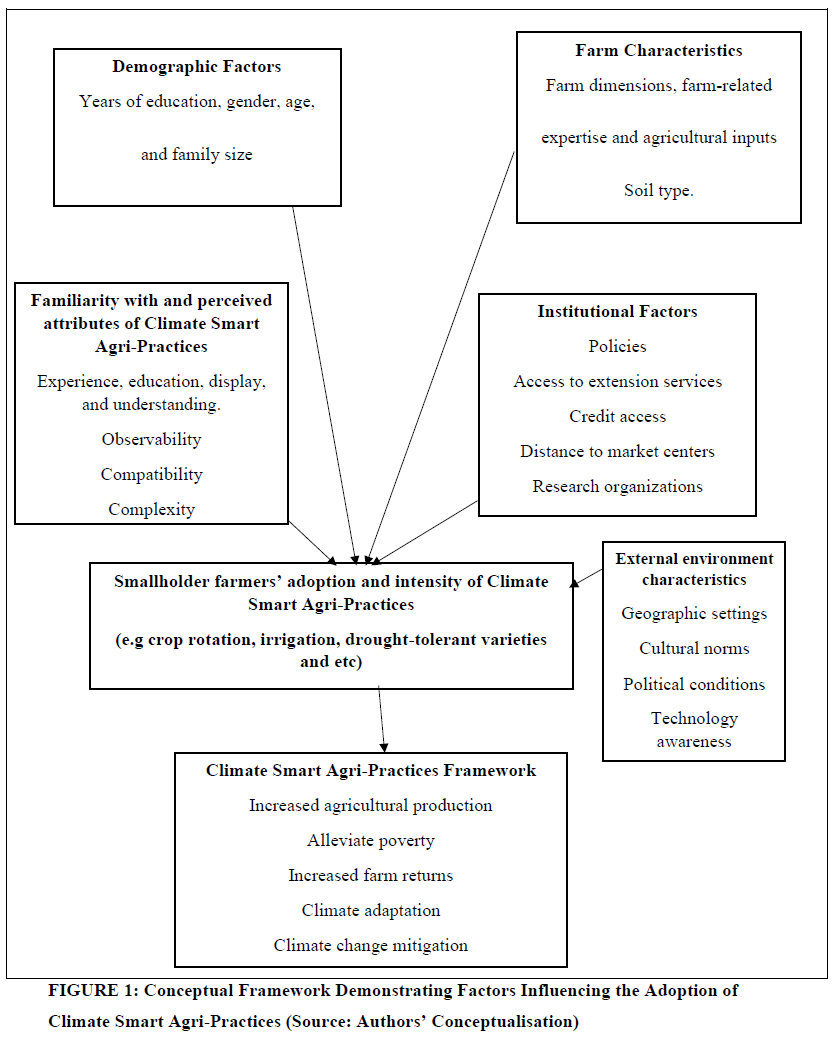
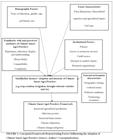
Figure 1 illustrates a schematic depicting drivers influencing the adoption and intensity of CSAP, and the resulting impact on agriculture and farmers' well-being. Key drivers include demographic and organisational elements, a person's knowledge and perception of CSAP qualities, farm features, and external ecological factors. The research posited that the acceptance level and concentration of CSAP yield diverse effects on smallholder farmers' welfare indicators, encompassing improved farm production, enhanced food security, poverty alleviation, increased farm income, and improved environmental adaptation and mitigation.
2.2. The Study Area
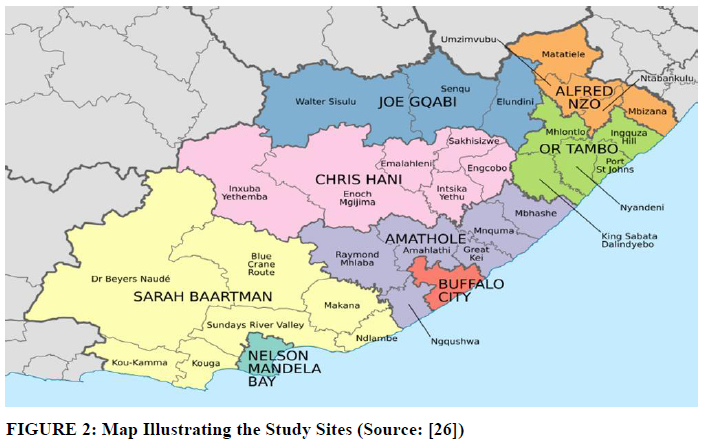
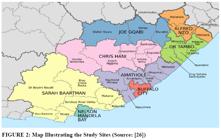
The research was carried out in the Eastern Cape Province of South Africa. Of the six district Municipalities in the Eastern Cape, five were selected as study sites: OR Tambo, Chris Hani, Alfred Nzo, Amathole, and Sara Bartman. The selection of these districts was based on the narrative that most households in these areas rely on smallholder agriculture as their main livelihood strategy and source of income (Mhlubulwana et al., 2021). Despite being the second-largest province, accounting for 9.7% of the total agricultural production in South Africa (Sihlobo, 2019), the province faces challenges due to its semi-arid climate, characterised by unpredictable and intense rainfall from October to March, followed by dry, cold weather from June to August, making agricultural practices complex (Bryndum, 2007). The soils in this region are highly prone to erosion, with low levels of essential nutrients such as Calcium (Ca), Potassium (K), and Phosphorus (P), and a pH that is often limited (Bryndum, 2007). Agricultural activities primarily revolve around crop cultivation, vegetable farming, citrus production, and Animal production.
2.3. Research Design
The study employed a mixed-methods approach, combining qualitative and quantitative methods to provide a more comprehensive understanding of the research topic. In this case, the complexity of the study's subject matter and concerns led the researchers to adopt a mixed-methods approach. This decision was made to ensure that the research captures a wide range of perspectives, beliefs, and problem-solving strategies employed by smallholder farmers regarding their agricultural practices. By using both quantitative and qualitative research methods, the researchers aimed to gather detailed, comprehensive information to gain a thorough understanding of the research context. Qualitative methods, such as interviews or focus groups, allow researchers to delve into the nuances of participants' experiences, attitudes, and behaviours, providing rich, detailed insights. On the other hand, quantitative methods, such as surveys or questionnaires, enable researchers to collect data from larger sample sizes and draw qualitative conclusions.
2.4. Sampling Technique, Frame, and Size
The study was conducted in the Eastern Cape Province of South Africa, chosen specifically for its potential for agricultural production and its history of climate variability, which has created an environment conducive to smallholder farmers adopting Climate Smart Agri-Practices to reduce the impacts of climate change, thereby enhancing production and farm incomes. To identify participants, the researchers obtained a database of Smallholder farmers from both extension officers and farm organisations serving within the province. The selection of participants followed a multi-stage sampling procedure. Initially, district municipalities were chosen to be part of the study: OR Tambo, Alfred Nzo, Amathole, Chris Hani, and Sara Bartman Districts, selected for their involvement in agriculture and the significant number of smallholder farmers. The subsequent stage involved choosing the specific Local Municipalities and wards within these districts where smallholder farmers were located. Finally, the researchers employed the snowball sampling method to determine the required sample size of smallholder farmers. A total sample of 384 participants, with 224 being adopters of Climate Smart Agri-Practices and 160 non-adopters. Data collection took place between March 2018 and September 2019, focusing on smallholder crop farmers as the unit of analysis.
2.5. Determination of the Sample Size
For sample size determination, the study used the Cochran (1963) formula, which is appropriate when the overall population size is unknown, as was the case for smallholder vegetable farmers in the research area.

Where:
n represents the total sample size;
Zα/2 is the critical Z-value equal to 1.96; σ is the population standard deviation;
E represents the anticipated margin of error, and α is the confidence level.
For this study, the preferred confidence level was 95%, with a precision of 5%. Since the disparity among smallholder farmers in the Eastern Cape Province was not identified by the researchers, the study accepted a variance of 0.5. The specified maximum variability level yielded a much more conservative sample size than the mean would suggest.

2.6. Data Collection
Both primary and secondary data were used as the data collection methods. Primary data were gathered through a survey using semi-structured interviews and closed-ended questionnaires. These questionnaires were designed to elicit complete data for both descriptive and inferential analysis of the study's empirical evidence. To ensure the questionnaire's effectiveness, a pilot study involving 40 smallholder farmers from Ntselamanzi and Gqumashe Locations was conducted; however, these participants were not included in the main study. This sample size aligns with recommendations by Moore et al. (2011) and Connelly (2008), who suggest a pilot study comprising 10% of the actual sample size. The purpose of this pilot study was to assess the suitability and effectiveness of the questions and to equip enumerators with an understanding of potential shortcomings that might be encountered during data collection. The collected primary data encompassed agricultural activities and related information from previous cultivation seasons, ensuring the dataset's homogeneity, consistency, and comprehensiveness. Information gathered from farmers included details on demographic and farm characteristics; awareness of climatic variations; knowledge of and access to Climate Smart Agri-Practices; challenges encountered in accessing these practices; and factors influencing their adoption intensity.
Additionally, secondary data was sourced from peer-reviewed academic journal papers, reports from the Department of Agriculture, and published government gazettes. This combination of primary and secondary data collection methods enriched the study's dataset and provided a comprehensive understanding of the research topic.
2.7. Data Analysis
The collected data were organised in Excel and then imported into Stata 13 for analysis. Descriptive statistics, including frequencies, percentages, t-tests, means, and pie charts, were employed to assess the demographic profiles of farmers, the adoption rates of Climate Smart Agri-Practices, and the challenges encountered by smallholder farmers in adopting these practices. Furthermore, Heckman regression analysis was conducted to analyse the factors influencing both the adoption and intensity of Climate Smart Agri-Practices among smallholder farmers in the research area.
2.8. Analytical Tool
Based on the assumption that several factors influence CSAP adoption intensity, the study employed a double-hurdle regression model to assess the correlation between the dependent and independent variables. This modelling approach, initially introduced by Cragg, distinguishes between two separate decisions made by farmers: whether to adopt CSAPs and the extent of their adoption, with each decision influenced by distinct sets of variables (Mujeyi, 2021; Aliyi et al., 2021). In the double-hurdle model, individuals are presumed to face two obstacles. The first hurdle involves deciding whether to adopt CSAPs, while the second concerns determining the extent of CSAP implementation. These decisions are modelled separately, with the Probit model used to assess participation and the Tobit model to evaluate the extent of adoption (Engel & Moffatt, 2014). This combined approach constitutes a joint Probit-Tobit estimator.
The model posits that smallholder farmers make two sequential decisions regarding adoption and utilisation levels, with each decision influenced by a diverse array of variables, including socioeconomic, market, and institutional factors (Engel & Moffatt, 2014).
The first hurdle in the model concerns the decision to adopt CSAPs, represented by a binary variable that indicates adoption status. This decision equation is modelled using a Probit model, in which the probability of adoption is determined by various explanatory factors.
Adoption Decision Model:
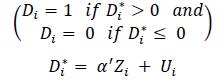
Where:
Di* is a latent variable that takes the value 1 if a farmer adopts the CSAPs and zero otherwise.
α is a vector of parameters, Z is a vector of household characteristics, and Ui is a constant.
The empirical model for farmers' decision to adopt CSAPs is specified as follows:
CSAPs Adoption (Di) = α0 + α1sex + α2age + α3yearspsentinschool + α4farmexperience + α5familysize + α6mstatus + α7distancemarket + α8accesstoextensionservices + α9accesstocreditaccess + α10membershipgrps + α11informationaccesss + α12weatherforecasts + Ui
The second aspect of the double-hurdle model, concerning the intensity of use, is modelled through a truncated regression expressed below:
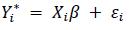
Yi = Yi* if Di = 1 and Yi* > 0 μi ≈ N 0,1; εi ≈ N (0, δ2) · corr(μi, εi) = ρ unobserved elements affecting adoption may affect the number of practices adopted.
Where:
Yi* denotes the observed number of practices adopted, and β denotes a vector of explanatory variables,
Xi represents a vector of parameters to be estimated, and εi is a random error term.
Empirically, the truncated regression model is specified for this study as follows:
Yi* = β0 + β1sex + β2age + β3yearsspentinschool + β4farmexperience + β5familysize + β6membershipgrps + β7accesssextension + β9weatherforecasts + β10farmsize + εi
Where:
Yi* is the number of CSAPs adopted by the ith farmer, β are coefficients of the explanatory variables, and εi is the random error term.
3. RESULTS AND DISCUSSION
This section deals with the study's findings, which are twofold. The first part deals with descriptive statistics, while the second part presents empirical results from econometric models.
3.1. Demographic Characteristics of Smallholder Farmers in the Study Area
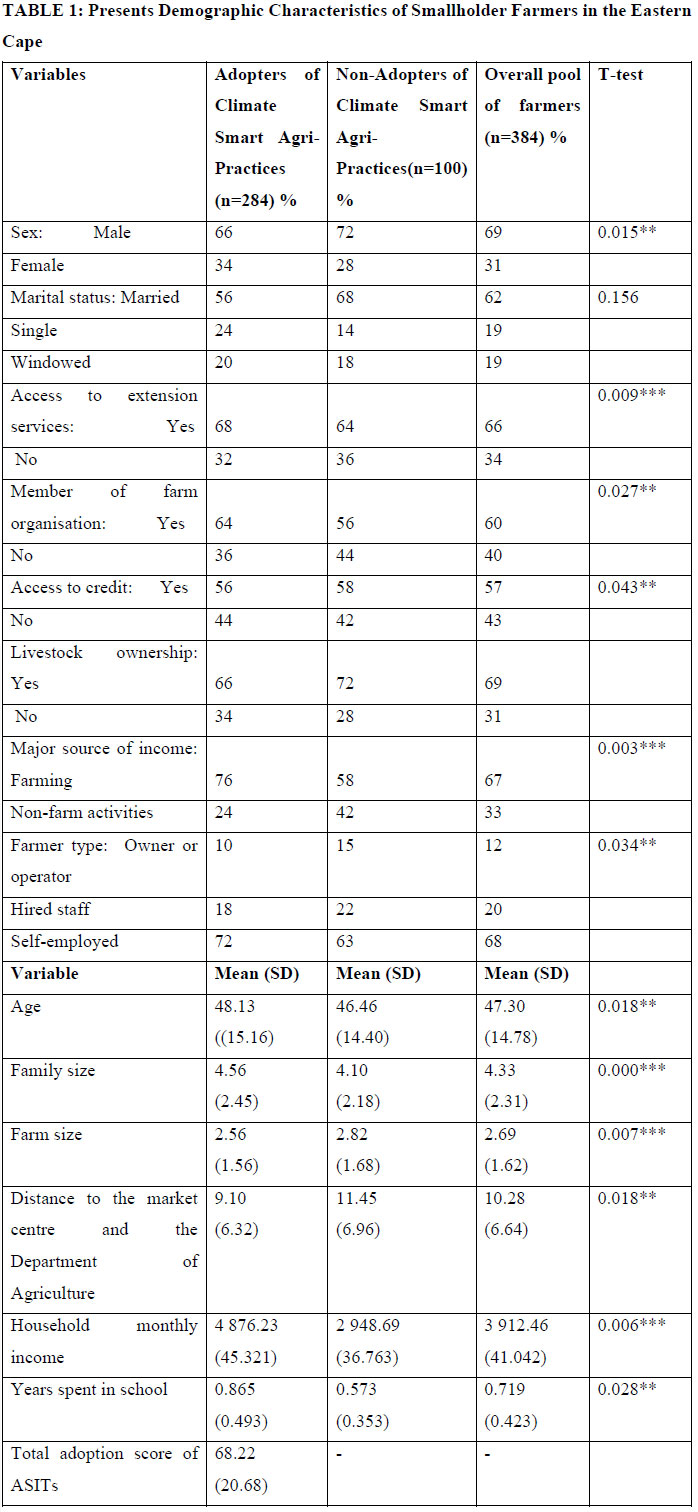
Table 1 below presents the descriptions and summary statistics of the resulting data. The analysis revealed that both categories of farmers were predominantly male, comprising 66% and 72% respectively. This observation aligns with previous research by Maseko (2021) and Nkhoma et al. (2017), which indicated that males dominate farming due to greater access to farmland and agricultural information than females. The average age of smallholder farmers in the study was 47 years, with a household size of 4, which served as a proxy for the availability of family labour. The findings are consistent with a study by Zakaria et al. (2020), who suggested that farming is predominantly undertaken by a relatively young population capable of adopting labour-intensive innovation practices to enhance technical efficiency and yields.
Additionally, the study found that a significant portion of the smallholder farmers were married, which is an added advantage for making sound farming decisions, as married individuals tend to consider their families' welfare (Anderson et al., 2017). On average, smallholder farmers had completed seven years of schooling, equivalent to secondary education. This educational background played a crucial role in facilitating the adoption of Climate Smart Agri-Practices (CSAPs) by enabling farmers to access and analyse information on innovative farming practices. These findings corroborate the studies by Qange and Mdoda (2020) and Makate et al. (2019), indicating that higher levels of education increase farmers' knowledge and understanding of the benefits of CSAPs, thereby enhancing the likelihood of adoption.
Furthermore, the average farm size was 3 hectares per smallholder farmer, with farmers predominantly owning their land rather than renting. This land was primarily utilised for crop farming, contributing significantly to household food provision and income generation. These results are consistent with findings from Atta-Aidoo et al. (2022) and Mdoda et al. (2022), highlighting that smallholder farmers typically operate on small farms, focus on subsistence farming, and sell surplus produce in markets. Additionally, the average monthly household income for farmers was ZAR 3,912.46, derived from both social security and farm income.
Moreover, the study revealed that most smallholder farmers had access to extension services (66%) and were members of farm organisations (60%), which played a pivotal role in improving farmers' awareness of and adoption of CSAPs. These platforms facilitated connections to production inputs and market access and Farmer Field Schools [FFS] for training in innovative agricultural practices (Zakaria et al., 2020). Furthermore, smallholder farmers engaged in livestock farming alongside crop production as part of their CSAPs strategies to enhance productivity. However, it is noteworthy that farmers travelled an average of 10 kilometres to access input or output markets, including the Department of Agriculture (DOA), reflecting the rural and remote nature of their locations.
3.2. Communication Asset Ownership by Smallholder Farmers
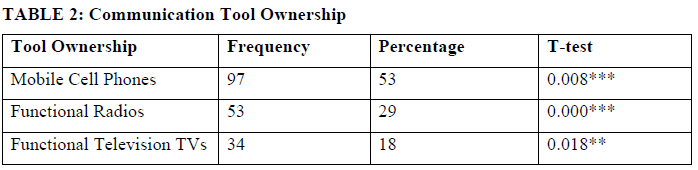
Effective communication is crucial for a farm enterprise; it serves as the primary tool for accessing information on agricultural practices and innovations. Table 2 below illustrates the communication tools possessed by smallholder farmers in the study. The findings indicate that mobile phones are the most prevalent communication tool among farmers, with 52% ownership. The widespread use of mobile phones allows farmers to contact extension officers, share information among themselves, and access apps that facilitate communication. Additionally, farmers utilise mobile phones to search for information and innovative agricultural practices, thereby enhancing productivity and facilitating the sale of their produce. These results are in line with the findings of Atiso, Folitse and Manteaw (2021), who noted that mobile phone use is spreading rapidly in developing countries. These authors further revealed that in many rural areas of the developing world, farmers utilise mobile cell phones to access agricultural information.
Following mobile phones, radios are the second most common communication asset, owned by 29% of farmers. Many farmers possess radios to access information from daily news broadcasts and agricultural shows aired on radio stations. Lastly, functional televisions are owned by 18% of smallholder farmers, serving as another means of accessing agricultural information through agricultural shows and news programs. Overall, these communication assets play a significant role in keeping smallholder farmers informed about agricultural practices and innovations, ultimately contributing to improved productivity and livelihoods.
3.3. Grouping of Respondents Based on the Level of Utilisation of Climate Smart Agri-Practices
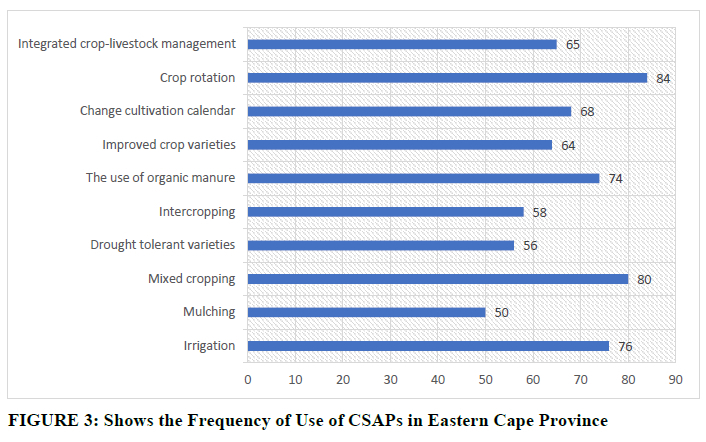
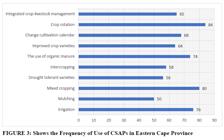
Figure 2 below shows the most frequently adopted climate-smart practices by smallholder farmers. The study findings show that smallholder farmers in the study area have embraced Climate Smart Agri-Practices (CSAPs) with an adoption rate of 68%. This suggests a proactive approach among farmers to adopt innovative techniques to enhance agricultural productivity, improve food security, and mitigate poverty. Among the CSAPs, crop rotation emerges as the most widely adopted practice, with 84% of farmers incorporating it into their farming methods. Farmers perceive crop rotation as accessible and cost-effective, requiring minimal expertise and financial investment.
Furthermore, mixed cropping (80%) and irrigation (76%) are prevalent CSAPs adopted by smallholder farmers. Farmers attribute the adoption of mixed cropping to its effectiveness in coping with prolonged drought and changing climate conditions, leading to improved yields. Similarly, the use of irrigation methods, alongside adaptation to altered rainfall patterns, has become imperative for farmers to mitigate the impact of erratic weather. The study also observes a notable shift among smallholder farmers towards using organic manure (74%) rather than synthetic fertilisers. This transition not only helps farmers reduce input costs but also enhances productivity. Additionally, adjusting planting dates (68%) has emerged as a common strategy among farmers to adapt to climatic shocks, aligning with findings by Zakaria et al. (2020), which highlight the efficacy of such adaptive measures in improving agricultural production.
Integrated crop-livestock management amounts (65%) and the adoption of improved crop varieties (64%) are also widespread among smallholder farmers. These practices contribute to sustainable agricultural practices and increased productivity. Lastly, although mulching is a relatively recent innovation for many farmers, its adoption is gradually increasing, resulting in notable production improvements for those who have embraced it. The high adoption rates of CSAPs among smallholder farmers underscore their willingness to adopt innovative farming techniques to address climate-change-related challenges and enhance agricultural productivity. These findings align with existing research and demonstrate the potential of CSAPs to drive sustainable agricultural development and improve livelihoods among smallholder farming communities.
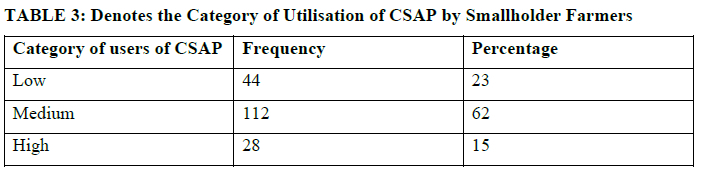
The evaluation of small-scale farmers' utilisation of Climate Smart Agri-Practices (CSAPs) was based on their feedback, resulting in the classification of farmers into three categories by CSAP usage: low, medium, and high. This categorisation is illustrated in Figure 1 above, with Table 3 below providing a breakdown of CSAP users by the number of practices adopted. The composite score analysis of the study indicates that a significant portion of smallholder farmers, accounting for 62%, fell within the medium usage category. Meanwhile, 23% of farmers were categorised as low users, and the remaining 15% as high users. These findings align with previous research by Abegunde et al. (2019), which also observed that most smallholder farmers employed CSAP to improve agricultural efficiency and farm returns.
3.4. Factors Influencing the Adoption and Intensity of Climate-Smart Agri-Practices By Smallholder Farmers in Eastern Cape Province
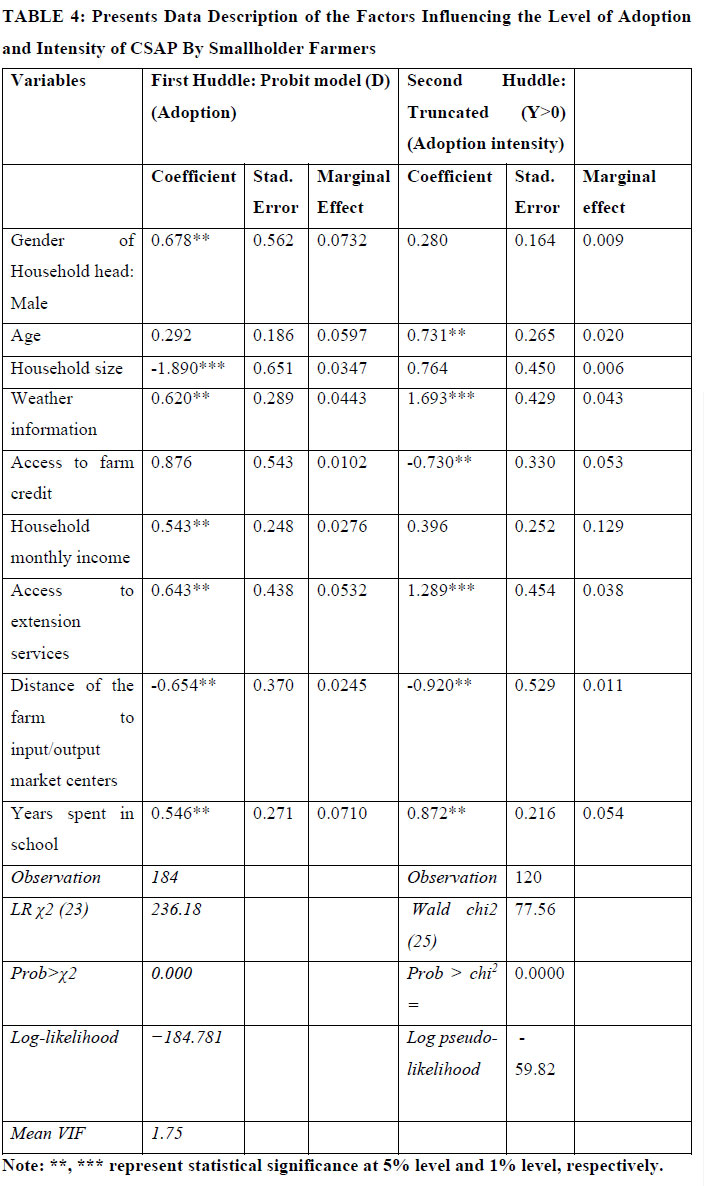
The results shown in Table 4 present the empirical findings from the double-hurdle model analysis, which aimed to estimate the parameters influencing the adoption and intensity of Climate Smart Agri-Practices (CSAP) among smallholder farmers in the Eastern Cape Province. The Pseudo R2 value, log-likelihood, and LR-Chi2 statistics indicate that both models fit the data well, and the descriptive variables included in the models collectively explain farmers' decisions regarding CSAP adoption and intensity of use. To address a minor issue of heteroscedasticity, robust standard error estimation was employed to determine the variance. Furthermore, measures such as contingency coefficients and variance inflation factors (VIF) were computed to assess multicollinearity. The VIF values for continuous variables were all below 10, indicating no significant multicollinearity. Similarly, contingency coefficients for categorical variables were less than 1.75, indicating no substantial collinearity issues among these variables.
The results suggest that distinct sets of variables influence decisions regarding CSAP adoption and its extent. This implies that adoption processes and use intensity are independent, highlighting the complexity of the factors influencing farmers' decisions to adopt and implement CSAP.
This section is structured into two parts, focusing on the factors influencing both the adoption and the intensity of Climate Smart Agri-Practices among smallholder farmers, and is analysed using the double hurdle model. The first segment examines the determinants affecting the initial decision to adopt CSAPs, while the subsequent part delves into the factors influencing the extent of their implementation.
3.4.1. First Huddle
The initial hurdle model employed a probit regression analysis to ascertain the factors influencing the adoption of Climate Smart Agri-Practices (CSAPs) among smallholder farmers. These findings indicate that several variables significantly impact the adoption of CSAPs, including the sex of the household head, family size, education level, access to extension services, availability of weather information, household income, and the distance to input/output markets.
Regarding the gender of the household head, the regression analysis revealed a positive and statistically significant coefficient at the 5% level. This suggests that households headed by male farmers are more likely to adopt CSAPs than those headed by females. The results align with previous studies, such as Branca and Perelli (2020), indicating that male-headed households tend to adopt innovative agricultural practices more readily than female-headed households, likely due to greater access to agricultural information and easier communication among male farmers. The marginal effect analysis further supports this finding, suggesting that a 1% increase in the proportion of male-headed households is associated with a 7% increase in the probability of CSAP adoption among smallholder farmers. These results underscore the importance of gender dynamics in agricultural decision-making and the need for targeted interventions to empower female farmers and enhance their access to agricultural resources and information.
The regression analysis revealed a negative and statistically significant coefficient for family size at the 1% level, indicating its influence on the adoption of Climate Smart Agri-Practices (CSAPs) among smallholder farmers. Specifically, the findings suggest that an increase in family size reduces the likelihood of CSAP adoption among smallholder farmers. This suggests that households with larger family sizes are less inclined to adopt innovative agricultural practices than those with smaller family sizes. These results are consistent with previous research by Zakaria et al. (2020) and Mdoda and Mdiya (2022), which similarly found that larger family sizes tend to inhibit the adoption of innovative practices to enhance agricultural production. The marginal effect analysis further supports this finding, indicating that each additional family member reduces the probability of CSAP adoption among smallholder farmers by 3%. The negative association between family size and adoption underscores the potential constraints that household demographics impose on the uptake of innovative agricultural practices. Addressing these challenges may require tailored interventions and support mechanisms to mitigate the barriers associated with larger family sizes and promote the adoption of CSAPs among smallholder farming households.
The regression analysis indicated a positive and statistically significant coefficient for years spent in school at the 5% significance level, suggesting a positive correlation between the level of education and the adoption of Climate Smart Agri-Practices (CSAPs) among smallholder farmers. This implies that each additional year of education increases the likelihood of smallholder farmers adopting CSAPs to improve their agricultural productivity. The positive association between education level and CSAP adoption can be attributed to the enhanced knowledge and awareness that farmers gain through formal education. With more years of schooling, farmers are better equipped to understand and interpret information about changes in the agricultural sector, particularly regarding innovative practices aimed at enhancing productivity and farm returns. These findings align with prior research by Branca and Perelli (2020), which similarly emphasised the benefits of education for farmers in interpreting climate-related information and adopting innovative practices to enhance production. Moreover, education enables farmers to make sound decisions and identify opportunities to maximise profits within their farming operations (Kassa & Abdi, 2022). The marginal effect analysis supports these findings, indicating that each additional year of schooling increases the probability of CSAP adoption by 7%. This underscores the importance of investing in education and training programs for smallholder farmers to facilitate the adoption of CSAPs and improve agricultural outcomes.
The study results have demonstrated a statistically significant positive coefficient for household monthly income at the 5% significance level, indicating a positive relationship between income level and the adoption of Climate Smart Agri-Practices (CSAPs) among farmers. This suggests that a 1% increase in monthly household income is associated with a higher likelihood of farmers adopting CSAP. The positive association between household income and CSAP adoption can be attributed to farmers' increased financial capacity. As household income rises, farmers have more resources to invest in their farms, including adopting CSAPs. With higher disposable income, farmers can allocate funds to implement innovative practices and acquire the necessary resources to adopt them. These findings are consistent with previous research by Abegunde et al. (2019), which found that higher household incomes facilitate adjustments to agricultural production systems and increase farm income. This suggests that improvements in income levels enable farmers to invest in CSAPs, thereby enhancing farm productivity and income generation. The marginal effect analysis supports these findings, indicating that each 1% increase in household monthly income is associated with a 2% increase in the probability of CSAP adoption. This underscores the importance of economic empowerment and income generation for farmers in facilitating the adoption of innovative agricultural practices.
The study results revealed a statistically significant positive coefficient for weather information access at the 5% significance level, indicating a positive correlation between access to weather information and the adoption of Climate Smart Agri-Practices. This suggests that a 1% increase in access to weather information is associated with a higher likelihood of farmers adopting Climate Smart Agri-Practices (CSAPs). The positive association between access to weather information and CSAPs adoption can be attributed to the valuable insights it provides to farmers. With better access to weather forecasts and information, farmers are equipped to anticipate and respond effectively to weather variations, enabling them to implement appropriate adaptation strategies to enhance agricultural productivity and optimise farm profitability. These findings align with the conclusions of Musafiri et al. (2022), who similarly observed that access to weather forecasts increased smallholder farmers' propensity to adopt Climate Smart Agri-Practices. This underscores the importance of weather information as a crucial resource for farmers to make informed decisions and implement adaptive measures to mitigate the impact of climate variability on agricultural activities. The marginal effect analysis supports these findings, indicating that each additional unit of access to weather information is associated with a 4% increase in the likelihood of CSAP adoption. This underscores the importance of enhancing farmers' access to accurate and timely weather information to promote the adoption of innovative agricultural practices and improve overall farm resilience.
Smallholder farmers' access to extension services had a positive coefficient and was statistically significant at the 5% level. This indicates that each additional unit increase in the frequency of interactions between agricultural extension officers and farmers increases the adoption of climate-smart Agri-Practices by 0.643 units. This implies that the availability of agricultural extension services is instrumental to smallholder farmers, as it facilitates their access to valuable guidance and support in implementing agricultural practices to enhance productivity and farm profitability. These findings corroborate the conclusions drawn by Mdoda and Mdiya (2022), Ngqulana and Obi (2019), Musafiri et al. (2022), and Mujeyi (2021), highlighting the pivotal role of access to extension officers and services in empowering farmers with practical knowledge of Climate Smart Agri-Practices. Agricultural extension officers not only impart essential skills to farmers but also train them in the effective use of these practices to maximise their benefits, including improved farm productivity and returns. The marginal effect analysis further underscores the significance of access to extension services, revealing that each additional unit of access is associated with a 5% increase in the likelihood of CSAP adoption. This underscores the importance of strengthening extension services and ensuring their accessibility to smallholder farmers as a strategic approach to promoting the widespread adoption of innovative agricultural practices, ultimately contributing to agricultural sustainability and food security.
The distance walked to reach input/output market centres by farmers had a negative coefficient and was statistically significant at the 5% level. This indicates that an additional 1 kilometre in the distance travelled by smallholder farmers to market centres results in a decrease in the adoption of Climate Smart Agri-Practices (CSAPs) by farmers. The study suggests that the geographical remoteness of many smallholder farmers' locations, situated far from urban centres and the Department of Agriculture, poses a significant barrier to CSAP adoption. The need for smallholder farmers to travel long distances to reach market centres imposes substantial transaction costs, which deter the adoption and use of innovative farming practices. These transaction costs contribute to farmers' overall reluctance to engage with CSAPs, as they perceive the associated expenses and effort as prohibitive. This finding is consistent with the conclusions drawn by Zakaria et al. (2020) and Mdoda and Mdiya (2022), who similarly observed that smallholder farmers, confronted with long distances to market centres and agricultural institutions, exhibit lower rates of adoption of innovative agricultural practices due to the elevated transaction costs involved. Moreover, extended travel distances limit farmers' access to farm activities and extension services, thereby impeding their exposure to new agricultural techniques and knowledge dissemination channels. The marginal effect analysis further underscores the impact of travel distance on CSAPs adoption, revealing that each additional kilometre travelled to market centres results in a 2% decrease in the likelihood of CSAPs adoption. This highlights the critical role of geographical accessibility in facilitating the adoption of innovative agricultural practices among smallholder farmers and underscores the importance of targeted interventions to mitigate the barriers posed by distance and transaction costs.
3.4.2. Second Hurdle
The farmer's age had a positive and statistically significant impact on the intensity of Climate Smart Agri-Practices (CSAPs) use. The marginal effect analysis indicates that a one-year increase in the farmer's age corresponds to a 2% increase in the intensity of CSAPs utilisation. This finding underscores the importance of accumulated knowledge and human capital acquired by smallholder farmers over years of farming experience in enhancing agricultural productivity. The results align with those of Mdoda et al. (2022), highlighting the pivotal role of farmers' age in technology adoption and in enhancing agricultural productivity. As farmers age, they typically accumulate practical insights and expertise in farm management, enabling them to effectively adopt innovative agricultural practices such as CSAPs. This underscores the significance of experience and agricultural acumen in driving the adoption and intensification of modern farming techniques, thereby improving productivity and farm outcomes.
Years spent in school had a positive and statistically significant effect on the intensity of Climate Smart Agri-Practices (CSAPs) use among smallholder farmers, at the 5% significance level. This indicates that education increases the likelihood of adopting Climate Smart Agri-Practices compared with smallholder farmers with little or no formal education. The marginal effect analysis revealed that for each additional year a farmer spends in school, there is a corresponding 5% increase in the intensity of CSAPs use. This underscores the notion that educated farmers possess a deeper understanding of innovative practices and strategies for adapting to changing climates and enhancing farm profitability. These findings are consistent with research by Thinda et al. (2020), Wanjira (2021), and Asfaw et al. (2018), which emphasised the pivotal role of education in technology adoption among smallholder farmers. Educated farmers are better equipped to understand and implement innovative agricultural practices, ultimately leading to increased agricultural productivity and higher farm income.
The smallholder farmers who had access to extension services exhibited a positive and statistically significant impact at the 1% level on the adoption intensity of Climate Smart Agri-Practices (CSAPs). The marginal effect analysis revealed that an increase in access to extension services could potentially increase the intensity of use by 3%. This suggests that greater interaction with extension officers increases the likelihood that farmers adopt more Climate Smart Agri-Practices compared with farmers with limited or no contact with extension services. The findings are consistent with those of Khanal et al. (2019), who emphasised the importance of access to extension services in facilitating the adoption of innovative agricultural practices. Farmers who have access to extension services benefit from training and information provided by extension officers, enabling them to learn and effectively implement innovative farming techniques.
Access to weather information exhibited a positive and significant influence at a 1% level on the intensity of Climate Smart Agri-Practices (CSAPs) use among smallholder farmers. The marginal effect analysis indicated that an increase in the farmer's access to weather information could increase adoption intensity by 4%. This suggests that improved access to weather information, whether obtained from fellow farmers, television, radio, or extension officers, plays a significant role in shaping farmers' decisions about adopting and using available Climate Smart Agri-Practices. The results are in line with those of Thinda et al. (2022), highlighting the importance of providing farmers with accessible weather information to encourage the adoption of practices that improve farm productivity and mitigate the impacts of climate variability.
Access to credits exhibited a negative and statistically significant impact at the 5% level on the intensity of Climate Smart Agri-Practices (CSAPs) used by smallholder farmers in the study area. The marginal effect analysis indicated that each 1-unit increase in poor access to farm credit among smallholder farmers could decrease the intensity of use by 5%. This suggests that the greater the lack of access to credit by farmers, the more likely they are to utilise innovative practices. The findings imply that farmers facing constraints in accessing credit may struggle to adopt innovative practices necessary to adapt to changing climatic conditions, as they lack the financial resources to purchase the required inputs. These results align with the findings of Ojo and Baiyegunhi (2019), highlighting the challenging dynamics between access to credit and the adoption of agricultural innovations.
The distance to input/output market centres exhibited a negative and statistically significant impact at 5% level on the intensity of Climate Smart Agri-Practices (CSAPs) used by smallholder farmers. The marginal effect analysis indicated that an increase in the distance the farmer travels to reach market centres could decrease the intensity of use by 1%. This suggests that farmers located farther from towns and extension officers were less inclined to use these practices. Such farmers are likely to incur higher transportation costs in acquiring inputs, which may deter them from adopting innovative practices. These findings align with the observations of Kunzekweguta (2017), indicating that the distance travelled by farmers to access inputs from market centres and information from government extension officers acts as a barrier to the adoption of practices due to the associated costs.
4. CONCLUSION
The study sought to evaluate the adoption intensity of climate-smart Agri-Practices among smallholder farmers in South Africa's Eastern Cape Province. The findings revealed that various Climate Smart Ari-Practices were acknowledged and embraced by smallholder farmers in the region. Notable among these practices were integrated crop-livestock management, improved crop varieties, organic manure application, use of drought-tolerant varieties, crop rotation, mulching, orange cultivation calendar, irrigation, mixed cropping, and intercropping. Such practices were observed to have a positive impact on efforts to address climate change, thereby improving agricultural productivity and farmers' financial returns within the study area. The results obtained from the first huddle model underscored the influence of several factors on the adoption of Climate Smart Agri-Practices by smallholder farmers. These factors included family size, sex of the household head, access to extension services, years of education, weather information, household monthly income, and the distance to input/output market centres for smallholder farmers. Conversely, the second huddle of the model identified socioeconomic variables such as the farmer's age, educational attainment, access to extension services and weather information, access to credit, and distance to input/output markets as influential factors on the adoption intensity of Climate Smart Agri-Practices. As a recommendation, it is imperative for governmental entities, particularly the Department of Agriculture, to intensify efforts to raise awareness among smallholder farmers about the benefits of adopting Climate Smart Agri-Practices. This could be facilitated through the utilisation of communication tools such as telephones and radios, which were found to be widely utilised in the study area. Additionally, policymakers should formulate policies to facilitate more demonstrations of Climate Smart Agri-Practices by extension officers to smallholder farmers, thereby enhancing their capacity and promoting adoption.
REFERENCES
- ABEGUNDE, V.O., SIBANDA, M. & OBI, A., 2019. Determinants of the adoption of climate-smart agricultural practices by small-scale farming households in King Cetshwayo District Municipality, South Africa. Sustainability., 12: 195.
- ALIYI, I., FARIS, A., AYELE, A., OLJIRRA, A. & MULUBRIHAN BAYESSA, M., 2021. Profitability and market performance of smallholder vegetable production: Evidence from Ethiopia. Heliyon., 7: e08008.
- ANDERSON, C.L., REYNOLDS, T.W. & GUGERTY, M.K., 2017. Husband and wife perspectives on farm household decision-making authority and evidence on intra-household accord in rural Tanzania. World Dev., 90: 169-183.
- ASFAW, A., SIMANE, B., BANTIDER, A. & HASSEN, A., 2019. Determinants in the adoption of climate change adaptation strategies: evidence from rainfed‑dependent smallholder farmers in north‑central Ethiopia (Woleka sub‑basin). Environ Dev Sustain., 21: 2535-2565.
-
ATISO, K., FOLITSE, B.Y. & MANTEAW, S.A., 2021. Mobile telephony and agriculture information communication in Ghana: The Ho West District under review. Available from https://cspace.csirgh.com/items/show/507
» https://cspace.csirgh.com/items/show/507 - ATTA-AIDOO, J., ANTWI-AGYEI, P., DOUGILL, A.J., OGBANJE, C.E., AKOTO-DANSO, E.K. & EZE, S., 2022. Adoption of climate-smart agricultural practices by smallholder farmers in rural Ghana: An application of the theory of planned behavior. PLOS Clim., 1(10): e0000082.
- BELAY, A.D., KEBEDE, W.M. & GOLLA, S.Y., 2023. Determinants of climate-smart agricultural practices in smallholder plots: Evidence from Wadla district, northeast Ethiopia. Int. J. Clim. Change Strateg. Manag., 15(5): 619-637.
- BRANCA, G. & PERELLI, C., 2020. 'Clearing the air': Common drivers of climate-smart smallholder food production in Eastern and Southern Africa. J. Clean. Prod., 270: 121900.
- BRYNDUM, S., BOYE, C., CHONGTHAM, I.R. & MONTAGNE, J., 2007. Present and future potentials of agriculture in Pepela village, Eastern Cape Province, South Africa. University of Copenhagen.
- CAMINADE, C., MCINTYRE, K.M. & JONES, A.E., 2019. Impact of recent and future climate change on vector‐borne diseases. Ann. N. Y. Acad. Sci., 1436(1): 157-173.
- COCHRAN, W.G., 1963. Sampling Technique. 2nd Edn. New York: John Wiley and Sons.
- CONNELLY, L.M., 2008. Pilot Studies. MEDSURG Nursing., 17: 411-412.
-
CRAGG, J.G., 1971. Some statistical models for limited dependent variables with application to the demand for durable goods. Econometrica., 829-844. http://dx.doi.org/10.2307/1909582.
» http://dx.doi.org/10.2307/1909582 - DINESH, D., 2016. Agricultural practices and technologies to enhance food security, resilience and productivity in a sustainable manner: Messages to the SBSTA 44 agriculture workshops. CCAFS Working Paper no. 146. Copenhagen, Denmark: CGIAR Research Program on Climate Change, Agriculture and Food Security (CCAFS).
- DIRO, S., TESFAYE, A. & ERKO, B., 2022. Determinants of adoption of climate-smart agricultural technologies and practices in the coffee-based farming system of Ethiopia. Agric. Food Secur., 11(1): 1-14.
- ENGEL, C. & MOFFATT, P.G., 2014. Dhreg, xtdhreg, and bootdhreg: Commands to implement double-hurdle regression. The Stata Journal., 14(4): 778-797.
- FIELD, C.B. & BARROS, V.R., 2014. Climate change 2014-Impacts, adaptation and vulnerability: Regional aspects. Cambridge University Press.
- GUO, C., BAI, Z., SHI, X., CHEN, X., CHADWICK, D., STROKAL, M., ZHANG, F., MA, L. & CHEN, X., 2021. Challenges and strategies for agricultural green development in the Yangtze River Basin. J. Integr. Environ. Sci., 18(1): 37-54.
- HANSEN, J., HELLIN, J., ROSENSTOCK, T., FISHER, E., CAIRNS, J., STIRLING, C., LAMANNA, C., VAN ETTEN, J., ROSE, A. & CAMPBELL, B. 2019. Climate risk management and rural poverty reduction. Agric. Syst., 172: 28-46.
- HELLDÉN, D., ANDERSSON, C., NILSSON, M., EBI, K.L., FRIBERG, P. & ALFVÉN, T., 2021. Climate change and child health: A scoping review and an expanded conceptual framework. Lancet Planet. Health., 5(3): 164-e175.
- KANGOGO, D., DENTONI, D. & BIJMAN, J., 2021. Adoption of climate-smart agriculture among smallholder farmers: Does farmer entrepreneurship matter? Land Use Policy., 109: 105666.
- KASSA, B.A. & ABDI, A.T., 2022. Factors influencing the adoption of climate-smart agricultural practice by small-scale farming households in Wondo Genet, Southern Ethiopia. SAGE Open., 12(3): 1-13.
- KEMP, L., XU, C., DEPLEDGE, J., EBI, K.L., GIBBINS, G., KOHLER, T.A., ROCKSTRÖM, J., SCHEFFER, M., SCHELLNHUBER, H.J., STEFFEN, W. & LENTON, T.M., 2022. Climate Endgame: Exploring catastrophic climate change scenarios. Proc. Natl. Acad. Sci., 119(34): 2108146119.
- KHANAL, U., WILSON, C., HOANG, V.N. & LEE, B., 2019. Impact of community-based organizations on climate change adaptation in agriculture: Empirical evidence from Nepal. Environ. Dev. Sustain., 21(2): 621-635.
- KUNZEKWEGUTA, M., RICH, K.M. & LYNE, M.C., 2017. Factors affecting adoption and intensity of conservation agriculture techniques applied by smallholders in Masvingo district, Zimbabwe, Agrekon., 56(40): 330-346.
- LAMM, K.W., HOLDER, M., RANDALL, N.L., EDGAR, D.W. & LAMM, A.J., 2021. Agricultural leadership development program participant personality and demographic characteristics: An empirical analysis. SAGE Open., 11(4).
- LOKI, O., ALIBER, M. & SIKWELA, M.M., 2021. Assessment of socioeconomic characteristics that determine farmers' access to agricultural extension services in the Eastern Cape, South Africa. S. Afr. J. Agric. Ext., 49(1): 198-209.
- MAKATE, C., MAKATE, M., MANGO, N. & SIZIBA, S., 2019. Increasing resilience of smallholder farmers to climate change through multiple adoption of proven climate-smart agriculture innovations. Lessons from Southern Africa. J. Environ. Manag., 231: 858e868.
- MALHI, G.S., KAUR, M. & KAUSHIK, P., 2021. Impact of climate change on agriculture and its mitigation strategies: A review. Sustainability., 13(3): 1318.
- MASAMBUKA-KANCHEWA, F., RODRIGUEZ, M.T., BUCK, E., NIEWOEHNER-GREEN, J. & LAMM, A.J., 2020. Impact of agricultural communication interventions on improving agricultural productivity in Malawi. J. Int. Agric. Ext. Educ., 27(3): 116-131.
- MASEKO, S., 2021. The impact of climate-smart technology adoption on farmers' welfare in Northern Zambia. Master's dissertation, University of Pretoria.
- MDODA, L. & MDIYA, L., 2022. Factors affecting the using information and communication technologies (ICTs) by livestock farmers in the Eastern Cape Province. Cogent Soc. Sci., 8(1): 2026017.
- MDODA, L., MUSHUNJE, A., OLAJIDE, A.K. & LESALA, M.E., 2020. Climate change effects on agricultural productivity in the smallholder farming systems of the Eastern Cape Province, South Africa. J Hum Ecol., 71(1-3): 236-244.
- MDODA, L., TSHOTSHO, A. & NONTU, Y., 2022. Adoption of mass media for agricultural purposes by smallholder farmers in the Eastern Cape Province of South Africa. S. Afr. J. Agric. Ext., 50(2): 117-136.
- MHLUBULWANA, B., BEZANA, T. & NDUDANE, S., 2021. Eastern Cape Farmer Support Programme - Crop Production. Eastern Cape: Economic Services Province.
- MISHRA, B., GYAWALI, B.R., PAUDEL, K.P., POUDYAL, N.C., SIMON, M.F., DASGUPTA, S. & ANTONIOUS, G., 2018. Adoption of sustainable agriculture practices among farmers in Kentucky, USA. Environ. Manag., 62(6): 1060-1072.
- MOORE, C.G., CARTER, R.E., NIETERT, P.J. & STEWART, P.W., 2011. Recommendations for planning pilot studies in clinical and translational research. Clin. Transl. Sci., 4(5): 332-337.
- MOYO, R. & SALAWU, A., 2017. An appraisal of factors influencing adoption of agricultural innovations: Insights from selected developing countries. J. Int. Agric. Ext. Educ., 24(1): 7-9.
- MTHETHWA, K.N., 2023. The determinants of adoption of climate-smart agricultural (CSA) practices and its effects on smallholder maize farmer's welfare. Doctoral dissertation, University of KwaZulu-Natal.
- MUJEYI, A., 2021. Adoption and impact of climate-smart agriculture technologies in integrated crop-livestock farming systems. Doctoral thesis, University of KwaZulu-Natal, South Africa.
- MUJEYI, A., MUDHARA, M. & MUTENJE, M., 2021. The impact of climate-smart agriculture on household welfare in smallholder integrated crop-livestock farming systems: Evidence from Zimbabwe. Agric. Food Secur., 10(1): 1-15.
- MUSAFIRI, C.M., KIBOI, M., MACHARIA, J., NG'ETICH, O.K., KOSGEI, D.K., MULIANGA, B., OKOTI, M. & NGETICH, F., 2022. Adoption of climate-smart agricultural practices among smallholder farmers in Western Kenya: Do socioeconomic, institutional, and biophysical factors matter? Heliyon., 8: e08677.
- MUTENJE, M.J., FARNWORTH, C.R., STIRLING, C., THIERFELDER, C., MUPANGWA, W. & NYAGUMBO, I., 2019. A cost-benefit analysis of climate-smart agriculture options in Southern Africa: Balancing gender and technology. Ecol. Econ., 163: 126-137.
- MYERS, S.S., SMITH, M.R., GUTH, S., GOLDEN, C.D., VAITLA, B., MUELLER, N.D., DANGOUR, A.D. & HUYBERS, P., 2017. Climate Change and Global Food Systems: Potential Impacts on Food Security and Undernutrition. Annu Rev Public Health., 38: 259-277.
-
NAIDOO, R. & FISHER, B., 2020. Reset sustainable development goals for a pandemic world. Available from https://www.nature.com/articles/d41586-020-01999-x
» https://www.nature.com/articles/d41586-020-01999-x - NEGERA, M., ALEMU, T., HAGOS, F. & HAILESLASSIE, A., 2022. Determinants of adoption of climate-smart agricultural practices among farmers in Bale-Eco region, Ethiopia. Heliyon., 8(7): e09824.
- NGQULANA, A. & OBI, A., 2019. The impact of extension intensities on income of sheep producers in the Eastern Cape Province of South Africa. S. Afr. J. Agric. Ext., 47(1): 54-60.
- NKHOMA, S., KALINDA, T. & KUNTASHULA, E., 2017. Adoption and impact of conservation agriculture on smallholder farmers' crop productivity and income in Luapula Province, Zambia. J. Agric. Sci., 9: 168.
- NKONYA, E., KOO, J., KATO, E. & JOHNSON, T., 2018. Climate risk management through sustainable land and water management in Sub-Saharan Africa. In L. Lipper, N. McCarthy, D. Zilberman, S. Asfaw & G. Branca (eds.), Climate-smart agriculture: Building resilience to climate change. Springer, Cham, pp. 445-476.
- NSUBUGA, F.W. & RAUTENBACH, H., 2018. Climate change and variability: A review of what is known and ought to be known for Uganda. Int. J. Clim. Change Strateg. Manag., 10(5): 752-77.
- OJO, T.O. & BAIYEGUNHI, L.J.S., 2019. Determinants of climate change adaptation strategies and its impact on the net farm income of rice farmers in south-west Nigeria. Land Use Policy., 103946.
- PADEL, S., 2001. Conversion to organic farming: A typical example of the diffusion of innovations. Sociologia Ruralis., 41: 40-61.
-
PAREEK, A., MEENA, B.M., SHARMA, S., TETARWAL, M.L., KALYAN, R.K. & MEENA, B.L., 2017. Impact of climate change on insect pests and their management strategies. Climate change and sustainable agriculture. Available from https://www.researchgate.net/publication/328476222_Impact_of_Climate_Change_on_Insect_Pests_and_Their_Management_Strategies
» https://www.researchgate.net/publication/328476222_Impact_of_Climate_Change_on_Insect_Pests_and_Their_Management_Strategies - PEJANOVIĆ, R. & NJEGOVAN, Z., 2009. Aktuelni problemi poljoprivrede isela Republike Srbije. Industrija., 37(1): 87-99.
- QANGE, S. & MDODA, L., 2020. Factors affecting subsistence farming in rural areas of Nyandeni Local Municipality in the Eastern Cape Province. S. Afr. J. Agric. Ext., 48(2): 92 -105.
- RAMANYIMI, N.D., 2019. Smallholder agriculture and food security in the City of Tshwane Municipality. Doctoral dissertation, University of the Free State.
- REDDY, P.P., 2015. Impacts of climate change on agriculture. In P.P. Reddy (ed.), Climate resilient agriculture for ensuring food security. New Delhi: Springer, pp.43-90.
- ROGERS, E.M. 2003. Diffusion of Innovations. 5th edn. New York: The Free Press.
- SENYOLO, M.P., LONG, T.B., BLOK, V. & OMTA, O., 2018. How the characteristics of innovations impact their adoption: an exploration of climate-smart agricultural innovations in South Africa. J. Clean. Prod., 172: 3825-3840.
- SERRAJ, R., KRISHNAN, L. & PINGALI, P., 2019. Agriculture and food systems to 2050: A synthesis. In R. Serraj & P. Pingali (eds.), Agriculture & Food Systems to 2050: Global trends, challenges and opportunities. World Scnetific and CGIAR, pp. 3-45.
- THINDA, K. T., OGUNDEJI, A. A., BELLEA, J.A. & OJO, T.O., 2020. Understanding the adoption of climate change adaptation strategies among smallholder farmers: Evidence from land reform beneficiaries in South Africa. Land Use Policy., 99: 104858.
- TUMWESIGYE, W., WAMBI, W., NAGAWA, G. & DANIEL, N., 2019. Climate-Smart Agriculture for improving crop production and biodiversity conservation: Opportunities and challenges in the 21st century: A narrative review. J. Water Resour. Ocean Sci., 8(5): 56-62.
-
WANDILE, S., 2019. A sleeping giant: The Eastern Cape and its agriculture. Agricultural Economics Today. Available from https://wandilesihlobo.com/2019/09/27/a-sleeping-giant-the-eastern-cape-and-its-agriculture/
» https://wandilesihlobo.com/2019/09/27/a-sleeping-giant-the-eastern-cape-and-its-agriculture/ - WANJIRA, J.K., MBURU, J.I., NZUVE, F.M., MAKOKHA, S., EMONGOR, R.A., TARACHA, C., 2021. Drivers of adoption intensity of climate-smart maize verities among small-scale farmers in Embu County, Kenya. ICAE 2021 International Conference of Agricultural Economics, 17-31 August, Online.
- ZAKARIA, A., AZUMAH, S.B., APPIAH-TWUMASI, M. & DAGUNGA, G., 2020. Adoption of climate-smart agricultural practices among farm households in Ghana: The role of farmer participation in training programmes. Technol. Soc., 63: 101338.