Socioeconomic and Agronomic Factors Influencing Irish Potato Productivity Among Low-Resource Farmers in Limpopo Province, South Africa
Abstract
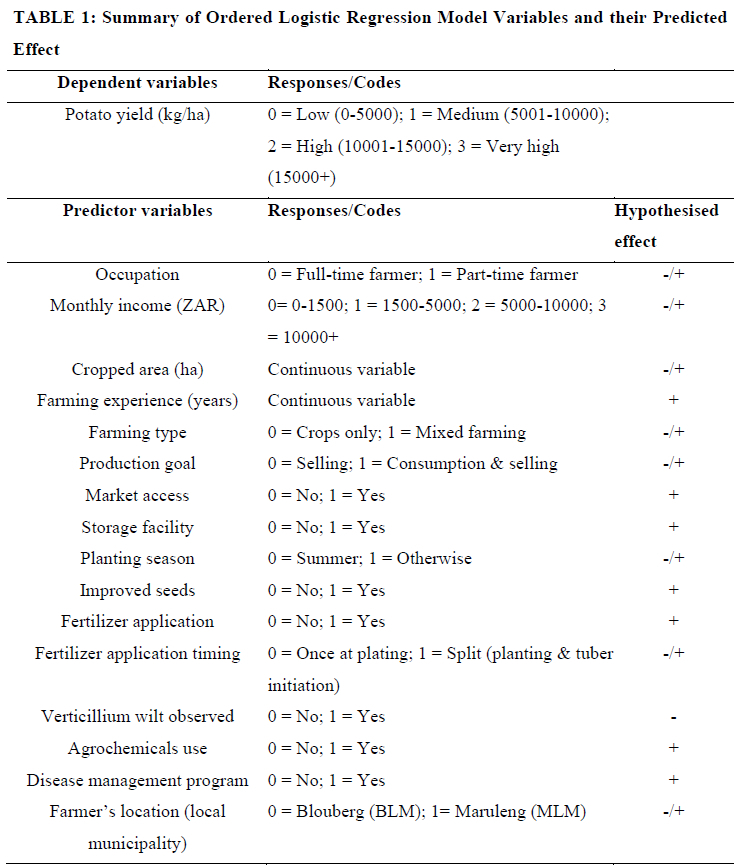
The potato crop (Solanum tuberosum L.) is critical to the rural livelihoods of Limpopo Province, where smallholder farmers are predominantly responsible for production. However, yields among smallholder farmers in South Africa often fall far below the national average, which has steadily increased from 30 to 50 tons ha-1 over the past two decades, due to compromised management. This study investigates the socioeconomic and agronomic factors influencing productivity among low-resource farmers in the Blouberg (BLM) and Maruleng (MLM) local municipalities of Limpopo Province. Data were collected through structured questionnaires and focus group discussions with 55 smallholder potato farmers in the two local municipalities. The study employed an ordered logistic regression model to analyse the determinants of potato yield (kg/ha). Potato yields (kg/ha) were categorised into low (0-5000), medium (5001-10000), high (10001-15000), and very high (15000+). Key findings reveal significant differences in socioeconomic attributes and farming practices between BLM and MLM. Farmers in BLM had larger farm sizes and higher incomes than those in MLM. The regression analysis identified six significant predictors of potato yield: farmer's occupation, monthly income, cropped area, access to storage facilities, use of agrochemicals, and disease management program (p < 0.05). The odds ratio suggests that higher income, storage facilities, and disease management programs significantly reduced the likelihood that farmers would obtain higher potato yield categories by 73.64%. These counterintuitive findings highlight the need for targeted interventions, such as timely access to inputs, knowledgeable extensionists and regular farmer training to enhance smallholder potato productivity. Addressing these challenges is crucial to improving rural livelihoods and transitioning smallholder potato farming to a commercially oriented model in the Limpopo Province.
Potato Productivity; Smallholder Farmer; Interventions; Access to Inputs; Extension Services
1. INTRODUCTION
Potato (Solanum tuberosum L.) is one of the most important non-grain crops globally. It serves as a staple food for millions of people and plays a critical role in addressing food security and nutrition (Rykaczewska, 2013; Devaux et al., 2021). Potatoes are the fourth most consumed food crop after wheat, rice, and maize (Thiele et al., 2010). Cultivated worldwide for human consumption, it has the potential to yield up to 30 t ha-1 under optimal conditions with good management practices (Thiele et al., 2010; Scott & Sourez, 2012). The global population is projected to grow from 8.6 billion in 2030 to 9.8 billion by 2050, with Africa and Asia accounting for 47% and 41%, respectively, of this growth (Silva, 2018). This obligates agricultural production to double its efforts to meet the rising food demand (UNDESA, 2017; Silva, 2018; FAO, 2017). This urgency has led to increased reliance on high-yielding crops such as potatoes, as well as improved agronomic practices and fertiliser application, to enhance productivity and ensure food security (Deng et al., 2022).
In South Africa, potato production is a vital component of the agricultural sector, with Limpopo Province among the leading producers, alongside the Free State and Mpumalanga (Potato SA, 2025; Van der Waals et al., 2016). Potato production is critical to ensuring food security and supporting rural livelihoods, particularly in provinces such as Limpopo, where agriculture is a primary economic activity (Marokane, 2023). Despite its importance, potato yields in some parts of South Africa remain sub-standard, often falling below the national and global averages (Mdoda et al., 2023). In South Africa, average potato yields have gradually increased from 30 tons/ha in 2001 to 50 tons/ha in 2023. The low yields among smallholder farmers have been attributed to a combination of socioeconomic, agronomic, and biotic challenges that influence production systems and outcomes. Socioeconomic constraints such as farmers' experience, access to resources, farm size, and market access significantly inhibit smallholder potato production among smallholder farmers in South Africa (Nwafor et al., 2015; Dhillon & Moncur, 2023; Shelembe et al., 2024). For instance, studies have shown that experienced farmers with better access to inputs and extension services tend to achieve higher yields due to improved management practices (Hazrana & Mishra, 2024). Similarly, agronomic practices, including planting methods, fertiliser application, and irrigation, are critical determinants of potato yield (Tandzi & Mutengwa, 2020). However, high input costs, limited access to quality seeds, and inadequate knowledge of best agronomic practices limit their productivity (Dhillon & Moncur, 2023; Mpandeli & Maponya, 2014).
The occurrence and management of diseases and pests further complicate potato yield, particularly among smallholders and emerging farmers. Potato crops are highly susceptible to diseases like late blight caused by Phytophthora infestans, early blight caused by Alternaria solani and Verticillium wilt caused by Verticillium dahliae. Potato crops are also prone to pests like tuber moths and aphids. Pests and diseases can cause yield losses of up to 50-60% in susceptible cultivars, especially when poorly managed (van der Waals & Krüger, 2020; Potato SA, 2018; Shreejana et al., 2023). For instance, V. dahliae, a soil-borne pathogen, thrives in conditions of high soil moisture and temperatures between 22-27°C, remaining dormant in the soil for over a decade. It infects the xylem tissue of plants, leading to wilting, necrosis, and reduced water uptake (Rowe & Powelson, 2002; Jing et al., 2018). Effective disease management, including the use of resistant varieties, timely application of agrochemicals, and integrated pest management strategies, is therefore essential for mitigating these risks (Kroschel et al., 2020).
This study examines the influence of farmers' socioeconomic attributes, agronomic practices, and disease occurrence and management programs on potato yield in Limpopo Province, South Africa, to identify key determinants of yield variability and provide evidence-based recommendations for improving potato production. Understanding these dynamics is critical for designing targeted interventions that address farmers' specific needs, enhance productivity, and contribute to the broader goals of food security and rural development in South Africa.
2. METHODOLOGY
2.1. Study Site
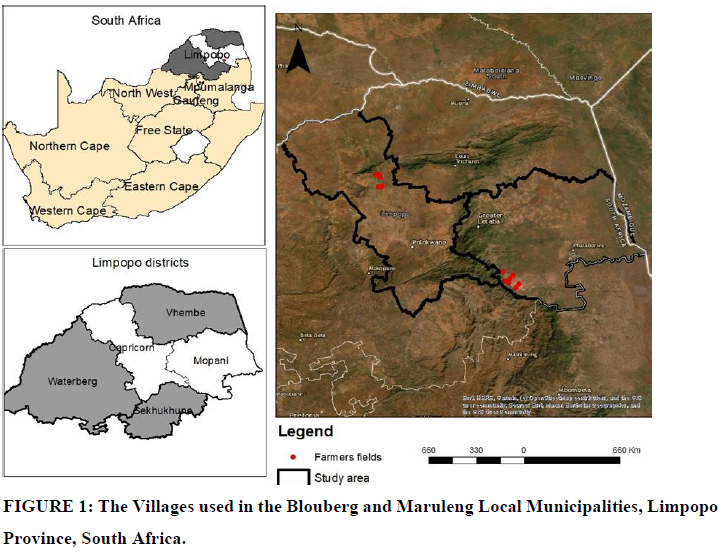
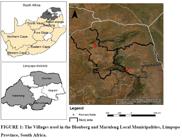
The study was conducted in the Blouberg Local Municipality (BLM) and the Maruleng Local Municipality (MLM) in South Africa's Limpopo Province (Figure 1). The two municipalities are in the Capricorn and Mopani districts, respectively. BLM covers an area of 9,248.44 km2, with an estimated population of 172,601. It is highly populated by the age range of 15-64 (56.5%) and under 15 (35%). It has 84.4 males per 100 females, with a household average of 5.32 members per family (Blouberg Local Municipality IDP, 2021). The BLM is classified as a semi-arid area (Mostert et al., 2008), with average temperatures ranging from 5 °C to 26 °C (Scholes, 1978). BLM forms part of the areas identified within the potato belt found in the Capricorn district. Furthermore, BLM is arguably the largest producer of tomatoes, onions, and potatoes within the Limpopo province. MLM, on the other hand, has an estimated population of 99,605. The population is distributed across 36 communities, with 9% residing on farms. Most of the population is within the age range of 15-65 years (60.3%) and under 15 years (34.4%). Maruleng is classified as a lowveld, with a semi-arid climate and an average annual summer rainfall of 401-600mm. The area experiences average winter temperatures of 5ºC and a maximum of 33ºC in summer. MLM has commercial farms where horticultural crops such as mangos and citrus fruits are cultivated. Potato production is carried out largely by smallholder farmers within the municipality. Crop production is predominantly carried out under rainfed conditions, and due to erratic rainfall, farmers prioritise maize production. Additionally, vegetable production, including tomatoes, onions, and other minor crops, has only recently been cultivated in the municipality.
2.2. Data Collection
A full enumeration of 55 smallholder potato farmers in two villages (Senwabarwana and Ga-Mashalane) in the Blouberg local municipality (BLM) and six villages (Ga-Sekororo, Ofcolaco, Madeira, Loraine, Sofaya, and Metz) in the Maruleng local municipality (MLM) was conducted. Smallholder farmers in South Africa are classified into subsistence, emerging and commercial categories, as per Zantsi et al. (2019). A three-phase data collection comprising structured questionnaires, focused group discussions, and in-depth interviews was employed to capture a holistic view of the smallholder potato farming system. In the first phase, face-to-face interviews were conducted with smallholder potato farmers at the Department of Agriculture offices. A structured questionnaire was used to collect information on the socioeconomic, demographic, agronomic, and management aspects of smallholder potato farming, as well as the challenges faced by these farmers. In the second phase, a subset of farmers from the face-to-face interviews, comprising emerging, experienced, active, and former potato farmers, were purposively selected for the focus group discussion. This group engaged in open-ended discussions to explore the challenges faced by smallholder potato producers. The conversational format allowed farmers to freely express their experiences without being constrained by predefined options. The third phase involved in-depth telephone interviews with extension officers from both municipalities to gain deeper insights into the challenges faced by smallholder potato farmers and to validate the information provided by farmers in Phases 1 and 2. Questionnaires and interview guides were prepared in English and translated into Sepedi to accommodate farmers who were not proficient in English. Before participation, farmers were informed of the voluntary nature of participation and their freedom to withdraw at any time without consequences. Participants were assured of the confidentiality of their personal information and contributions. Interviews and discussions were facilitated by researchers from the Centre for Global Change at the University of Limpopo.
2.3. Data Analysis
The Statistical Package for the Social Sciences (SPSS) version 28.0 and Stata version 17 were used to analyse the structured data, including socioeconomic factors and agronomic and management practices, using descriptive statistics such as frequencies, means, and percentages. Chi-square tests were used to assess differences between farmers in the Blouberg and Maruleng local municipalities with regard to their socioeconomic attributes, agronomic practices, and management regimes. The analysis employed an ordered logistic regression model (OLM) to examine the effects of smallholder potato farmers' demographic and socioeconomic attributes, agronomic practices, and management regimes on potato yield, which was categorised into ordered levels. An ordered logistic regression was used because the dependent variable, i.e., potato yield (kg/ha), is ordinal. Potato yields were categorised into low (0-5000 kg/ha), medium (5001-10000 kg/ha), high (10001-15000 kg/ha), and very high (15000+ kg/ha), as farmers could not recall the exact yield figures (Table 1). Socioeconomic factors such as occupation, income levels, and market access; production aspects such as production goal, cropped area, potato farming experience; farmers' agronomic practices such as use of improved seeds, chemical fertilisers, and timing of fertiliser application, disease occurrence and management; and farmers' geographic location (local municipality) on potato yield were the explanatory variables considered in this study. Table 1 shows the full list of model variables and their hypothesised effects.
The OLM is based on the proportional odds assumption. These odds assumptions posit that the relationship between each pair of outcome categories is consistent (Nwakuya & Mmaduka, 2019). This means that the coefficients describing the relationship between the lowest category of potato yield (i.e., low yields) and all higher categories are the same as those describing the relationship between the next-lowest category and all higher categories, and so on. The parallel regression or the proportional odds assumption was validated to ensure the appropriateness of the model. In OLM, the coefficients represent the change in the log-odds of being in a higher category of potato yield. Positive coefficients indicate that higher values of the predictor variables are associated with a greater likelihood of attaining higher categories of potato yield.
In contrast, negative coefficients suggest that higher values of the predictor variables are associated with a higher likelihood of being in the current or a lower yield category (Nwakuya & Mmaduka, 2019). The model also estimates cut points (thresholds) that define the boundaries between the ordered categories of potato yield. Cut points determine the probability of a farmer falling into a specific yield category as explanatory variables change. The overall model goodness-of-fit was assessed using the likelihood ratio chi-square test (p < 0.05), and pseudo-R2 was used to measure the model's explanatory power.
3. RESULTS
3.1. Socioeconomic and Demographic Attributes of Farmers
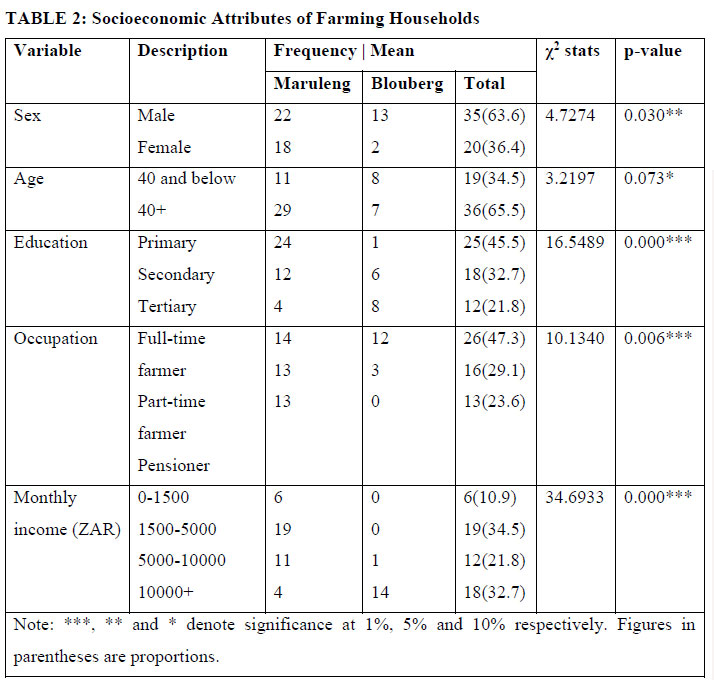
Results in Table 2 reveal significant differences (p≤0.05) in sex, age, education, occupation, and monthly income between smallholder farmers in the Blouberg and Maruleng local municipalities. Our findings demonstrated that a higher proportion of the potato farmers were male, adult, full-time farmers with a primary level of education (Table 2).
3.2. Smallholder Potato Farmers' Production and Management Practices
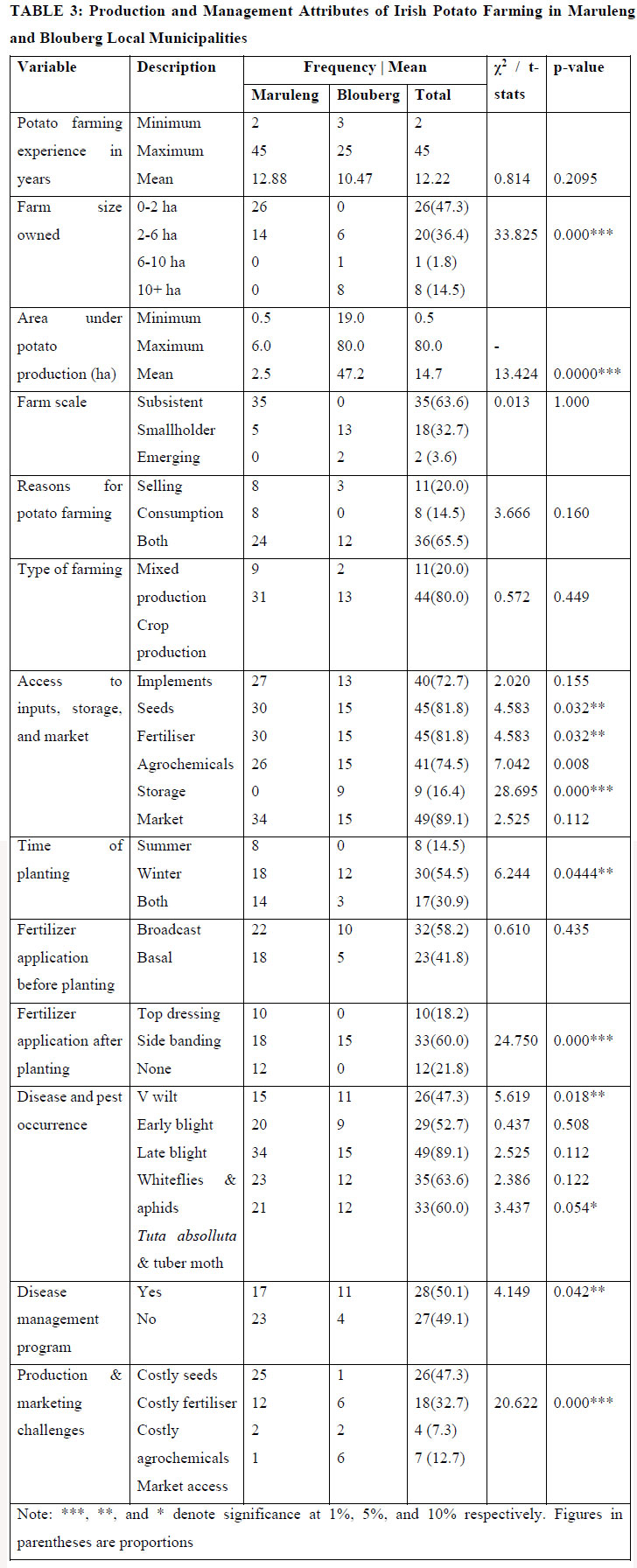
The contrast between the Maruleng and Blouberg local municipalities revealed several significant differences in production, agronomic, and management variables (Table 3). Maruleng local municipality had more subsistence potato farmers (87.5%), while smallholder commercial farmers (86.7%) dominated the Blouberg local municipality. In both municipalities, farming experience averaged 12 years, and almost half of the farmers operated on less than 2 ha. Farmers in both Maruleng and Blouberg predominantly practised crop production rather than mixed farming. Farmers generally had different levels of access to resources and inputs, with 85% in Maruleng reporting access to markets and 75% in the same municipality reporting access to seeds and fertiliser. All farmers in Blouberg had access to seeds, fertiliser, agrochemicals, and markets. Most farmers in both municipalities preferred planting in the winter season. Furthermore, both practised side banding of fertiliser during the second split application. Table 3 further highlights site-specific disparities in farming practices, resource access, and challenges, with farmers in BLM generally exhibiting more commercialised farming operations compared to the subsistence-oriented practices in MLM. Significant differences between farmers in BLM and MLM were observed in farm size, area under potato production, access to certain inputs, time of planting, method of fertiliser application, occurrence of verticillium wilt, disease management programs, and farming challenges experienced by farmers (p<0.05). Farmers in BLM had larger farm sizes (up to 10+ hectares) and a greater mean area under potato production (47.2 ha) compared to farmers in MLM. Most farmers in MLM practised subsistence farming, while BLM had more smallholder commercial and emerging farmers. Access to inputs such as seeds, fertiliser, and agrochemicals was generally high, but storage facilities were limited, especially in MLM. Diseases, including late and early blight and verticillium wilt, as well as pests such as whiteflies, were prevalent, with farmers in BLM more likely to implement disease management programs. Fertiliser application methods and planting seasons also varied significantly between MLM and BLM. Marketing and production challenges were prominent, with costly seeds and inorganic fertilisers being the primary constraints, particularly in MLM. Market access was not a significant challenge in BLM, while MLM farmers faced fewer issues in this regard.
3.3. Socioeconomic Factors and Agronomic Practices Influencing Potato Yield in MLM and BLM
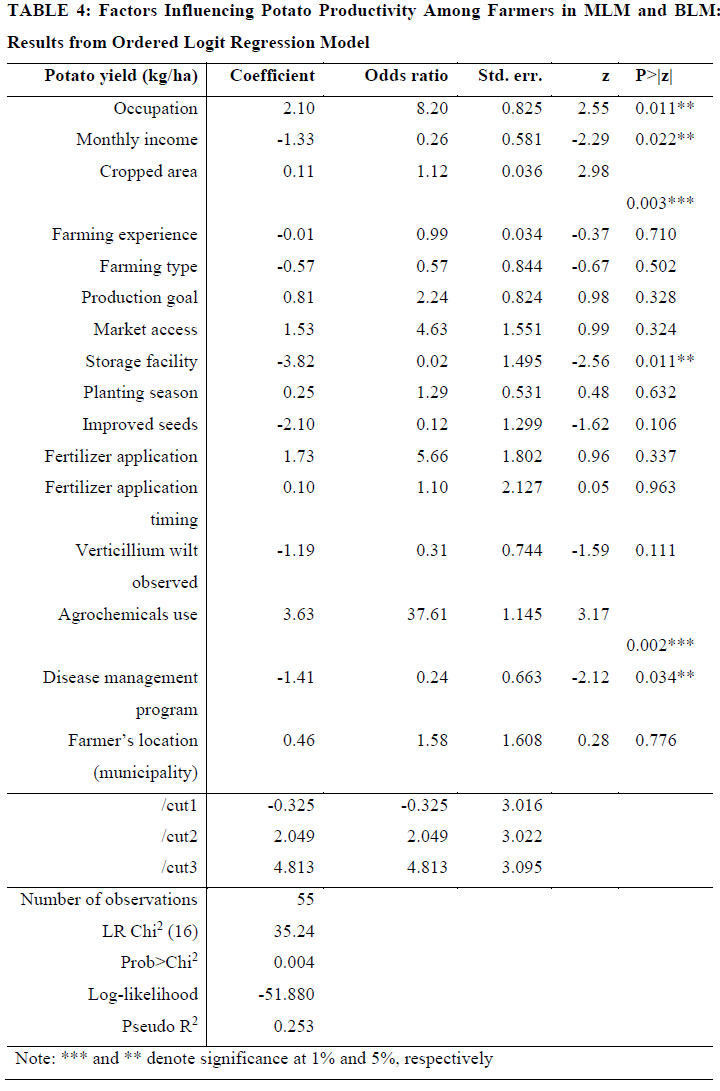
Table 4 shows the results of the ordered logistic regression model for the determinants of potato yield categories, i.e., low (0-5000 kg/ha), medium (5001-10000 kg/ha), high (10001-15000 kg/ha), and very high (15000+ kg/ha). The overall model was statistically significant (p = 0.004), and a pseudo-R2 of 0.253 indicates that it explains approximately 25% of the variance in potato yield among the surveyed farmers. The key findings revealed that 6 out of the 16 predictors of potato yield were significant at the 95% confidence interval. These were the farmer's main occupation, monthly income, cropped area, storage facilities, use of agrochemicals, and presence of a disease management program. The farmer occupation had a significant positive effect on potato yield, with a coefficient of 2.10 (p = 0.011). The odds ratio indicates that part-time farmers were 8.20 times as likely to be in higher potato yield categories as full-time farmers. Increasing the area under potato production significantly (p = 0.003) enhanced the odds of higher potato yield categories by 12%. The application of agrochemicals also revealed a positive effect on potato yield, with a coefficient of 3.6272 (p = 0.002). The odds ratio indicates that farmers who used agrochemicals were 37.61 times more likely to be in higher potato yield categories than those who did not use them (Table 4).
Monthly income showed a negative effect, with a coefficient of -1.33 (p = 0.022). The odds ratio further suggests that higher income levels reduced farmers' chances of obtaining higher potato yield categories by 73.64%. Surprisingly, access to potato storage facilities also had a significant negative effect on farmers' potato yield, with a coefficient of -3.82 (p = 0.011). The odds ratio indicates that access to storage facilities reduced the odds of higher potato yield categories by 97.81%. Another counterintuitive finding was that farmers with a disease management program in place had significantly lower chances (p = 0.034) of achieving higher potato yield categories. The odds ratio suggests that they were 75.6% less likely to obtain higher yields (Table 4). Key informants highlighted that storage facilities were unsuitable for long-term storage. Incorrect use of agrochemicals was also identified as a challenge limiting disease management programs and higher yields.
Other variables, including farming experience, farming type, production goal, market access, planting season, improved seeds, fertiliser application, timing of fertiliser application, verticillium wilt observed, and farmer's location, did not reveal any statistically significant effects on potato yield (p > 0.05). For example, farming experience had a coefficient of -0.0128 (p = 0.710), and market access had a coefficient of 1.5319 (p = 0.324), indicating that these factors did not significantly influence the categories of potato yield in this analysis.
4. DISCUSSION
The study examined the socioeconomic characteristics, production aspects, and agronomic practices of low-resource farmers in the Blouberg (BLM) and Maruleng (MLM) local municipalities. The findings revealed significant differences between the two local municipalities, highlighting the unique challenges and opportunities faced by farmers in each location. The ordered logistic regression model results provided further insights into the key factors influencing potato yield among low-resource farmers in developing countries, where agriculture often plays a critical role in livelihoods, food security, and economic development. The subsequent section below discusses the significant effects of socioeconomic characteristics, production aspects, and agronomic practices on potato yield, offering valuable insights for policymakers and agricultural practitioners.
4.1. Socioeconomic Characteristics and Agronomic Practices of Potato Farmers
The socioeconomic attributes and agronomic practices of potato farmers in the Maruleng (MLM) and Blouberg local municipalities (BLM) show notable disparities. The dominance of males (63.6%) and those aged 40 and above (65.5%) in potato farming highlights the historical challenges that inhibit women and young farmers from participating in farming (Okonya & Kroschel 2014; Mdoda et al. 2023). Tapera et al. (2021) argued that male dominance in potato production was driven by the economic responsibility of men to provide for their households. Many studies have shown that women dominate subsistence farming of staple crops in developing countries (Posel & Casale, 2001; Raidimi, 2014; Davis, 2023), implying that most of the potato farmers in this study were commercially oriented or did not consider it a staple crop. The low participation of young farmers in this study is attributed to the lack of capital and inputs such as tractors, planters, and irrigation systems (Mthi et al., 2021). This is consistent with Geza et al. (2021), as the lack of modern implements results in young people perceiving agriculture as a labour-intensive profession with minimal social status and economic return. Therefore, there is a need to adequately and timeously support low-resource farmers, particularly young people and women, with appropriate productive inputs.
Despite generally low education levels among the potato farmers, all farmers had at least primary education, and a significant proportion were full-time farmers (47.3%). Literacy has been shown to enhance farmers' ability to acquire farming knowledge, make decisions, and adopt best practices, often resulting in improved farm productivity (Mdoda et al., 2023). The higher income levels among farmers in BLM, compared with those in MLM, who mostly earned between ZAR1 500 and ZAR5 000 per month, suggest that the former had greater access to resources and investment opportunities. These differences in income, resources, and investment capacity could influence farmers' agronomic practices and crop productivity, as they facilitate or hinder access to costly inputs (Rapsomanikis, 2015; Kapari et al., 2023). Farmers with adequate financial resources can purchase improved inputs (e.g., seeds and agrochemicals) more readily than those without capital. This is supported by the predominance of subsistence farmers in MLM (87.5%), while those in BLM (86.7%) were more market-oriented. These findings are also consistent with results on the farm sizes and areas under potato production, which were significantly higher in BLM (47.2 ha) than in MLM (2.5 ha). The findings suggest that farmers in BLM operated on a more emerging commercial scale, allowing them to benefit from economies of scale and access to markets.
Farming experience averaged 12 years across the two local municipalities, suggesting that most of the farmers were knowledgeable about potato farming, including best agronomic practices. In addition, farmers' access to quality seeds, fertilisers, and agrochemicals was generally high, with all the farmers in BLM having access to these inputs. This was due to existing contracts with retailers, which assisted them with potato farming inputs, while others used their retirement funds to purchase durable farming equipment. Access to quality seeds and other essential inputs, such as fertiliser and agrochemicals to control pests and diseases, is essential for attaining high potato yields (Mugo et al., 2020; Wang et al., 2020; Ahmad & Sharma, 2023). This is particularly true, given that disease and pest management was a critical challenge among the potato farmers, as verticillium wilt, early blight, late blight, and pests such as whiteflies and aphids were common in both local municipalities.
With half of the surveyed farmers in both local municipalities implementing disease management programs, the findings further indicate the importance of sound pest and disease management in ensuring high yields among potato farmers (Valvert et al., 2022). However, the high proportion of farmers without a disease management program and the lack of appropriate storage facilities in MLM not only threaten potato yields but also further highlight the challenges faced by low-resource farmers. The lack of appropriate storage facilities can lead to significant post-harvest losses, as potatoes can spoil during storage. However, the high prevalence of pests and diseases underscores the need for integrated pest management (IPM) strategies and improved access to quality seeds and disease-resistant varieties (Valvert et al., 2022). This also requires knowledgeable extensionists to advise farmers on the correct use of agrochemicals. The observed differences in planting seasons and fertiliser application methods mainly reflect differences in resource endowments among farmers at the two locations. Nonetheless, these differences highlight the need for context-specific extension services to address farmers' operating environments and maximise production.
The production and marketing challenges reported by farmers in both local municipalities are common among many emerging and smallholder farmers in developing countries. Costly seeds and inorganic fertilisers were key constraints, particularly in MLM. Market access was also a challenge for some farmers in BLM, as they had greater potential to scale up production through more market-based operations. These challenges highlight a need for policies that reduce input costs, improve market linkages, and provide financial support, especially to smallholder and emerging farmers, to improve access to inputs, storage facilities, and disease management programs. Some studies have shown that tailored interventions, such as quality seeds, fertiliser subsidies, improved storage, and training in IPM practices, have enhanced yields and reduced post-harvest losses among farmers (Davis et al., 2012; Kangogo et al., 2024). Government extension programs need adequate funding to provide input support to deserving low-resource farmers and address these bottlenecks.
4.2. Determinants of Potato Yield of Low-Resource Farmers
The significant predictors of potato yield among the surveyed farmers include the farmer's occupation, monthly income, the area under potato farming, access to storage facilities, use of agrochemicals, and the disease management program. The discussion below highlights some important agricultural challenges and opportunities facing many low-resource farmers in developing countries.
The study highlights the significant influence of occupation and monthly income on potato yield. The positive effect of the farmer's occupation and the high odds ratio indicate that part-time farmers were 8.20 times more likely to achieve higher potato yield categories than full-time farmers. This finding contradicts our hypothesis and prior studies showing that full-time farmers achieve higher yields because they dedicate more time to farming (Ge et al., 2023). However, the findings in this study highlight the importance of livelihood diversification among low-resource farmers. For instance, part-time farmers often benefit from diversified income sources, enabling them to invest in high-yielding seeds, inorganic fertilisers, and agrochemicals. Farmers in this study, like many in developing countries, engaged in off-farm activities to supplement farm income, thereby financing their farming operations and coping with the rising cost of living (Shahbaz et al., 2021).
The current study shows that farming experience, farming type, production goal, market access, planting season, improved seeds, fertiliser application, timing of fertiliser application, verticillium wilt disease occurrence, and farmer's location did not reveal any significant influence on potato yield in the study area (p > 0.05). This was unexpected, given that limited access to quality inputs is a major constraint for low-resource smallholder farmers in developing countries (Mijena et al., 2022; Mdoda et al., 2023; Kangogo et al., 2024). The non-significance of these findings may suggest that potato farmers in this study had access to, or received government support for, some quality inputs too late to be synchronised with the correct timing of activities. Timely access to inputs is key, as agricultural activities, such as planting and the application of agrochemicals, are time-sensitive. Although farmers' locations may influence crop yields due to differences in soil types, pest and disease occurrence, management regimes, and local climate, this was not a significant factor in this study. However, the smaller population of smallholder potato farmers may have contributed to these results. Nonetheless, access to quality inputs such as hybrid seeds guarantees farmers a certain level of yield despite other challenges.
The smaller cropped areas in this study further suggest that part-time farmers can manage these farms intensively, resulting in higher productivity (Addo & Salhofer, 2022). On the other hand, the significant negative effect of monthly income, where higher-income farmers were 74% less likely to attain higher yield categories, is contrary to the hypothesised effect of monthly income on potato farmers' productivity. Some farmers in this study relied on pensions and government grants, which may give them a sense of income security and reduce their focus on farming activities (Mdoda et al., 2023). In addition, higher-income farmers (i.e., those earning ZAR10,000+ per month) often prioritise risk aversion over yield maximisation, leading to conservative farming practices. Nonetheless, there is a need for policies and programs to improve the availability and affordability of inputs for smallholder farmers. For instance, subsidies and input credit schemes could allow farmers to fully concentrate on farming without the need to engage in off-farm economic activities to finance their farming.
Cropped areas and storage facilities were the significant production factors influencing potato yield. The 12% increase in the probability of attaining higher potato yield categories per additional hectare of cropped area aligns with studies showing that larger cultivated areas can lead to economies of scale and higher total production (Mdoda et al., 2023). The positive effect of the area under potato cultivation on yield further underscores the importance of land allocation decisions toward alternative staple crops such as potatoes among smallholder farmers in developing countries, especially in Southern Africa. This is crucial to ensuring food security. While expanding the area under potato production can increase total production, this must be balanced with sustainable soil and water conservation practices to avoid soil degradation and erosion. Besides, large farms may experience inefficiencies in resource allocation and extension services, threatening farm productivity (Addo & Salhofer, 2022). In the case of arable land scarcity, sustainable intensification through improved technologies and agronomic practices could be more viable than expansion. Some studies have shown that smaller farms achieve higher yields when productive resources, such as labour and resource use, are intensified (Priegnitz et al., 2019; Shahbaz et al., 2021). Although smallholder farmers in many developing countries cultivate limited land, they often lack the resources to intensify production and maximise output per unit area. This indicates a need to support and enhance the capacity of subsistence and smallholder farmers to intensify production on the same pieces of land. Investing in small-scale irrigation schemes in rural areas would contribute to sustainable intensification while also mitigating the adverse effects of drought in semi-arid regions such as Limpopo province.
In contrast, there was a significant negative association between storage facilities and potato yield, where farmers with access to storage facilities were 98% less likely to achieve higher yield categories. In other words, farmers' potato yields discouraged the need for storage facilities (Akello et al., 2022). This counterintuitive finding is attributed to inappropriate or ineffective utilisation of existing storage facilities. For instance, some storage facilities do not allow long-term storage of potatoes, resulting in post-harvest losses or forcing farmers to immediately dispose of their yields after harvesting (Wasukira et al., 2017; Wauters et al., 2022). This argument is based on BLM, where farmers had access to poor storage facilities that did not permit long-term storage, prompting them to dispose of the potatoes after harvesting.
In some cases, the lower yields meant that investments in costly storage facilities were being underutilised and failed to reflect the true value of the infrastructure. Conversely, it could be argued that farmers lacked on-site storage facilities due to smaller areas under potato cultivation. For instance, in MLM, where most farmers were subsistence farmers, they saw no need for storage facilities. Nonetheless, storing potatoes under optimal conditions can maintain tuber quality for extended periods and allow farmers to release their harvest when market prices are most favourable (Wasukira et al., 2017; Wauters et al., 2022). Thus, access to storage facilities with adequate cool rooms could encourage farmers to increase their productivity to reduce post-harvest losses.
Among agronomic practices, agrochemicals have a very strong positive effect on potato yield, underscoring their critical role in potato production. The fact that farmers using agrochemicals are 37.61 times more likely to achieve higher yield categories than their counterparts is a very significant indicator of the importance of proper use of agrochemicals. Agrochemicals are critical in controlling pests and diseases such as Verticillium wilt, which can have devastating effects on potato yields (Kurek et al., 2017; Hossain et al., 2024; Maulidiyah et al., 2024). However, excessive or improper use of agrochemicals can cause adverse environmental and health impacts, underscoring the need for integrated pest management (IPM) practices (Valvert et al., 2022; Hossain et al., 2024; Maulidiyah et al., 2024). There is a need for proper farmer training and knowledgeable extensionists to advise farmers on the appropriate use of agrochemicals to ensure higher yields while ensuring healthy ecosystems.
Conversely, having a disease management program had a significant negative effect, as farmers implementing such programs were 76% less likely to achieve higher yield categories. Though unexpected, this result reflects the challenges, ineffectiveness, and inadequacies of disease management strategies among low-resource farmers. This is often due to limited access to quality inputs or comprehensive technical support (Hossain et al., 2024; Priegnitz et al., 2019). For instance, some farmers reported confusing Verticillium wilt with other diseases that exhibit similar symptoms, such as yellowing leaves and crop wilting. This may indicate that current extension services are inadequate or inappropriate for addressing farmers' knowledge gaps, as is the case in the Mphanama area in Limpopo Province (Mugari et al., 2025). The argument further supports the need for knowledgeable extensionists and regular farmer training to equip farmers with appropriate knowledge. There is also a need to integrate in-person advisory services with digital extension services to allow farmers in remote locations to access timeous advice from extensionists. Furthermore, low incomes and limited financial resources to implement integrated pest and disease management programs could discourage many low-resource farmers from scaling up potato production. At the same time, the impacts of climate change are exacerbating these challenges, as farmers cannot afford irrigation facilities to meet the crop's minimum water requirements (Van der Waals et al., 2016). All these challenges require more financial support for low-resource farmers, particularly in rural areas, through adequately resourced extension programs and knowledgeable extensionists.
The non-significant effect of fertiliser application on potato yield among the surveyed farmers contrasts with findings from other regions, where fertiliser use is a key driver of agricultural productivity (Wang et al., 2020). However, this is attributed to the common challenges faced by low-resource farmers in developing countries, including incorrect application rates, poor timing of application, and low-quality fertilisers (Mugo et al., 2020). However, these challenges are exacerbated by inadequate agricultural advisory services, including less knowledgeable or inaccessible extensionists. Adequately funded public extension programs and knowledgeable extensionists are key to the sustainability of smallholder farming. This allows smallholder farmers to readily access up-to-date information in real time to address emerging challenges. For instance, the number of smallholder farmers often exceeds the resources provided through public extension programs, and some inputs are received late. This effectively renders extension services ineffective, as the timing of key activities is affected by late access to inputs.
Several other factors did not show statistically significant effects on potato yield. For example, farming experience, production goals, timing of fertiliser application, market access, and the farmer's local municipality did not significantly influence yield, suggesting that these factors did not play a critical role in potato production among smallholder farmers in the Blouberg and Maruleng local municipalities. Similarly, improved seeds and Verticillium wilt did not have significant effects, possibly due to limited adoption of improved potato varieties or ineffective disease management practices. The lack of significance of these factors also reflects contextual and structural factors, such as the homogeneity of the surveyed farmers, i.e., the prevalence of subsistence farmers, where extension services are usually inadequate or play a lesser role in determining productivity.
5. LIMITATIONS
The study acknowledges limitations, including the small number of potato farmers and the predominance of subsistence farmers in the province. Smallholder potato farmers across the two local municipalities were very few in number, and despite considering all of them, the small population may have limited the influence of some variables, thereby limiting the generalizability of our findings. In addition, the study only focused on two local municipalities in Limpopo Province. Therefore, the results are context-specific and may not apply to other regions with different agricultural systems, climatic conditions, or socioeconomic contexts. Future research should address these limitations and explore new directions to build on the findings. For instance, other studies could consider other provinces with smallholder potato farmers and with diverse agro-ecological conditions to increase the number of participants. In addition, future studies could explore the specific drivers of these relationships and evaluate the effectiveness of different interventions in similar contexts.
6. CONCLUSION
The study examined the key socioeconomic, production, and agronomic factors influencing potato productivity among low-resource farmers in developing countries, focusing on two local municipalities in South Africa's Limpopo Province. The primary objective was to identify existing challenges and opportunities in potato production in Limpopo Province to influence decisions. The findings indicate that while some farmers benefited from larger farm sizes and greater access to resources, others faced challenges with market access and input costs. Farmer's main occupation, the area under potato production, and the use of agrochemicals were among the key determinants of higher potato yield categories. The negative effects of monthly income, access to storage facilities, and disease management programs were counterintuitive and unexpected. However, these were attributed to a lack of financial resources, inadequate storage facilities, poor use of agrochemicals, limited farmer knowledge, and inadequate extension services. This highlighted the need for knowledgeable extensionists and regular farmer training to address farmers' knowledge gaps. Integrating in-person with digital extension services could improve access to real-time extension services in remote areas. Overall, there is a need to support smallholder potato farmers in transitioning to more commercial farming practices through well-funded, targeted extension programs. Policy interventions, such as improving access to inputs through subsidies and input support schemes, promoting sustainable soil and water conservation measures, and strengthening disease management programs, should be a priority for policymakers, development agencies, and agricultural practitioners. Sustainable intensification practices must integrate these interventions, including addressing the inefficiencies of larger farms through targeted extension services to balance yield increases with environmental sustainability. This would enhance potato productivity, improve food security, and help secure rural livelihoods.
In conclusion, the threats posed by climate change to food systems demand climate-proof and climate-smart practices. Strategic and targeted policy interventions, grounded in evidence-based research, are key to safeguarding farming activities among low-resource farmers in developing countries. This would ensure sustainable intensification and contribute to both food and livelihood security.
REFERENCES
-
ADDO, F. & SALHOFER, K., 2022. Part-time farming and scale efficiency. GJAE., 71(1). https://doi.org/10.30430/gjae.2022.0195.
» https://doi.org/10.30430/gjae.2022.0195 - AHMAD, U. & SHARMA, L., 2023. A review of best management practices for potato crop using precision agricultural technologies. Smart Agr Technol., 4: 100220.
- AKELLO, R., TURINAWE, A., WAUTERS, P. & NAZIRI, D., 2022. Factors influencing the choice of storage technologies by smallholder potato farmers in Eastern and Southwestern Uganda. Agriculture., 12(2): 240.
- ALWANG, J., NORTON, G., LAROCHELLE, C., 2019. Obstacles to Widespread Diffusion of IPM in Developing Countries: Lessons From the Field. J. Integr. Pest Manag., 10(1).
- DAVIS, K., NKONYA, E., KATO, E., MEKONNEN, D.A., ODENDO, M., MIIRO, R. & NKUBA, J., 2012. Impact of farmer field schools on agricultural productivity and poverty in East Africa. World Dev., 40(2): 402-413.
-
DAVIS, V., 2023. Women produce up to 80% of food in developing countries. Food and Drink Digital. Available from https://fooddigital.com/articles/women-produce-up-to-80-of-food-in-developing-countries.
» https://fooddigital.com/articles/women-produce-up-to-80-of-food-in-developing-countries - DENG, J., HARRISON, M.T., LIU, K., YE, J., XIONG, X., FAHAD, S., HUANG, L., TIAN, X. & ZHANG, Y., 2022. Integrated crop management practices improve grain yield and resource-use efficiency of super-hybrid rice. Front. Plant Sci., 13: 851562-851562.
- DEVAUX, A., GOFFART, J.P., PETSAKOS, A., KROMANN, P., GATTO, M., OKELLO, J., SUAREZ, V. & HAREAU, G., 2021. Global food security, contributions from sustainable potato agri-food systems. In. H. Campos & O. Ortíz (eds.), The potato crop: Its agricultural, nutritional and social contribution to humankind. Cham: Springer, pp. 3-35.
- DHILLON, R. & MONCUR, Q., 2023. Small-scale farming: A review of challenges and potential opportunities offered by technological advancements. Sustainability., 15(21): 15478.
- FOOD AND AGRICULTURE ORGANISATION (FAO)., 2017. The future of food and agriculture - Trends and challenges. Rome.
- GE, D., KANG, X., LIANG, X. & XIE, F., 2023. The impact of rural households' part-time farming on grain output: promotion or inhibition? Agriculture., 13(3): 671.
- HAZRANA, J. & MISHRA, A.K., 2024. Effect of input subsidies and extension services: Evidence from rice productivity in Bangladesh. Food Policy., 125: 102628.
- HOSSAIN, M.Z., FERDOUS, F. & RAYHAN, M.I. 2024. Pesticide knowledge and attitude among the potato growing farmers of Bangladesh and determinant factors. FPUBH., 12: 1408096.
- JING, R., LI, H., HU, X., SHANG, W., SHEN, R., GUO, C., GUO, Q. & SUBBARAO, K.V., 2018. Verticillium wilt caused by Verticillium dahliae and V. non-alfalfae in potato in northern China. PDIS., 102(10): 1958-1964.
- KANGOGO, E., OTIENO, D.J., OKELLO, J., MWENYE, O. & KAPALASA, E., 2024. Impact of farmer training on potato yield: A case of smallholder potato farmers in Malawi. FSUFS., 8: 1496064.
- KAPARI, M., HLOPHE-GININDZA, S., NHAMO, L. & MPANDELI, S., 2023. Contribution of smallholder farmers to food security and opportunities for resilient farming systems. FSUFS., 7: 1149854.
- KROSCHEL, J., MUJICA, N., OKONYA, J. & ALYOKHIN, A., 2020. Insect pests affecting potatoes in tropical, subtropical, and temperate regions. In. H. Campos & O. Ortíz (eds.), The potato crop: Its agricultural, nutritional and social contribution to humankind. Cham: Springer, pp. 251-306.
- KUREK, M., BARCHAŃSKA, H. & TUREK, M., 2017. Degradation processes of pesticides used in potato cultivations. Rev. Environ. Contam. Toxicol., 242: 105-151.
- MAROKANE, R., 2023. Sustaining inclusive potato production in Limpopo. CHIPS., 37(4): 74-75.
- MAULIDIYAH, R., SALAM, M., JAMIL, M.H. & TENRIAWARU, A.N., 2024. Examining the effects of input allocation on potato production, production efficiency, and technical inefficiency in potato farming: Evidence from the Stochastic Frontier Model in search of sustainable farming practices. Sustain. Futures., 7: 100218.
- MDODA, L., OBI, A., TAMAKO, N., NAIDOO, D. & BALOYI, R., 2023. Resource use efficiency of potato production among smallholder irrigated farmers in the Eastern Cape Province of South Africa. Sustainability., 15(19): 14457.
- MIJENA, G.M., GEDEBO, A., BESHIR, H.M. & HAILE, A., 2022. Ensuring food security of smallholder farmers through improving productivity and nutrition of potato. J. Agric. Food. Res., 10: 100400.
- MOSTERT, T.H.C., BREDENKAMP, G.J., KLOPPER, H.J., VERWE, C., MOSTERT, R.E. & HAHN, N., 2008. Major vegetation types of the Soutpansberg Conservancy and the Blouberg Nature Reserve, South Africa. Koedoe., 50(1): 32-48.
- MPANDELI, S. & MAPONYA, P., 2014. Constraints and challenges facing the small-scale farmers in Limpopo Province, South Africa. J. Agric. Sci., 6(4): 135.
- MTHI, S., YAWA, M., TOKOZWAYO, S., IKUSIKA, O.O., NYANGIWE, N., THUBELA, T., TYASI, T.L., WASHAYA, S., GXASHEKA, M., MPISANA, Z. & NKOHLA, M.B., 2021. An assessment of youth involvement in agricultural activities in the Eastern Cape Province, South Africa. Agric. Sci., 12(10): 1034-1047.
- MUGARI, E., MATHEBULA, N., MOGALE, T.E., MAMABOLO, E., MASHALA, M.J., MABITSELA, K. & AYISI, K.K., 2025. Influence of public agricultural extension services on sustainable land management practice (SLMP) adoption among smallholder farmers in Fetakgomo Tubatse Local Municipality, South Africa. Front. Sustain. Food Syst., 9: 1618938.
- MUGO, J.N., KARANJA, N.N., GACHENE, C.K., DITTERT, K., NYAWADE, S.O. & SCHULTE-GELDERMANN, E., 2020. Assessment of soil fertility and potato crop nutrient status in central and eastern highlands of Kenya. Sci. Rep., 10(1): 7779.
- NWAFOR, C.U., 2015. Prospects of commercialisation among small-scale potato farmers in Bizana. Doctoral dissertation, Central University of Technology, Free State.
- NWAKUYA, M.T. & MMADUKA, O., 2019. Ordered logistic regression on the mental health of undergraduate students. IJPS., 8(1): 14-18.
- OKONYA, J.S. & KROSCHEL, J., 2015. A cross‐sectional study of pesticide use and knowledge of smallholder potato farmers in Uganda. BioMed Res. Int., 2015(1): 759049.
- POSEL, D. & CASALE, D., 2001. Gender aggregates: Women subsistence farmers affect the unemployment count. Agenda., 16(49): 82-88.
-
POTATO SOUTH AFRICA (PSA)., 2025. Transformation and the potato industry. Available from https://www.potatoes.co.za/transformation-and-the-potato-industry/.
» https://www.potatoes.co.za/transformation-and-the-potato-industry/ -
POTATO SOUTH AFRICA (PSA)., 2018. Verticillium wilt. Available from http://www.potatoes.co.za/research/factsheets.aspx.
» http://www.potatoes.co.za/research/factsheets.aspx - PRIEGNITZ, U., LOMMEN, W.J., ONAKUSE, S. & STRUIK, P.C., 2019. A farm typology for adoption of innovations in potato production in Southwestern Uganda. FSUFS., 3: 68.
- RAIDIMI, E.N., 2014. The roles and activities of women in the six selected agricultural projects in Thulamela Local Municipality of Vhembe District Municipality in the Limpopo Province. S. Afr. J. Agric Ext., 42(2): 10-23.
- RAPSOMANIKIS, G., 2015. The economic lives of smallholder farmers. Rome: FAO.
- ROWE, R.C. & POWELSON, M.L., 2002. Potato early dying: Management challenges in a changing production environment. Plant Dis., 86: 1184-1193.
- RYKACZEWSKA, K., 2013. The impact of high temperature during growing season on potato cultivars with different response to environmental stresses. Am. J. Plant Sci., 4(12): 2386-2393.
- SCHOLES, R.J., 1978. A Preliminary Ecological Survey of the Blouberg. Honours dissertation, University of the Witwatersrand, Johannesburg.
- SCOTT, G.J. & SUAREZ, V., 2012. The rise of Asia as the centre of global potato production and some implications for industry. Potato J., 39(1): 1-22.
- SHAHBAZ, P., UL HAQ, S., YILDIRIM, Ç., BOZ, I. & CEYHAN, V., 2020. Impact of full time and part time farming on rural households' labor productivity in Central Punjab, Pakistan. Custos e Agronegocio on Line., 16(3): 359-381.
- SHELEMBE, N., HLATSHWAYO, S.I., MODI, A., MABHAUDHI, T. & NGIDI, M.S.C., 2024. The association of socioeconomic factors and indigenous crops on the food security status of farming households in KwaZulu-Natal Province. Agriculture(Switzerland)., 14(3): 415.
- SHREEJANA, K.C., POUDEL, A., OLI, D., GHIMIRE, S., ANGON, P.B. & ISLAM, M.S., 2023. A comprehensive assessment of verticillium wilt of potato: Present status and future prospective. Int. J. Phytopathol., 12(2): 207-219.
- SHRESTHA, S., AMGAIN, L.P., PANDEY, P., BHANDARI, T. & KHATIWADA, S., 2024. Adoption status of integrated pest management (IPM) practices among vegetable growers of Lamjung district of Nepal. Heliyon., 10(18): e37999.
- SILVA, G., 2018. Feeding the world in 2050 and beyond-Part 1: Productivity challenges. Michigan State University.
- TANDZI, N.L. & MUTENGWA, S.C., 2020. Factors affecting yield of crops. Agronomy - Climate Change and Food Security.
- TAPERA, R., PHAMELA, D. & NYASHA C.N., 2021. An assessment of economic efficiency of smallholder Irish potato producers in Nyanga District of Zimbabwe. IJRISS., 5(2): 434-444.
- THIELE, G., THEISEN, K., BONIERBALE, M. & WALKER, T., 2010. Targeting the poor and hungry with potato science. Potato J., 37(3/4): 75 - 86.
- UNITED NATIONS, DEPARTMENT OF ECONOMIC AND SOCIAL AFFAIRS (UNDESA), POPULATION DIVISION., 2017. World Population Prospects: The 2017 Revision. New York: United Nations.
- VAN DER WAALS, J.E. & KRÜGER, K., 2020. Emerging potato pathogens affecting food security in southern Africa: Recent research. S. Afr. J. Sci., 116(11): 1-7.
- VAN DER WAALS, J.E., STEYN, J.M., FRANKE, A.C. & HAVERKORT, A.J., 2016. Grower perceptions of biotic and abiotic risks of potato production in South Africa. Crop Prot., 84: 44-55.
- VILVERT, E., STRIDH, L., ANDERSSON, B., OLSON, Å., ALDÉN, L. & BERLIN, A., 2022. Evidence-based disease control methods in potato production: A systematic map protocol. Environ Evid., 11(1): 1-8.
- WANG, C., ZANG, H., LIU, J., SHI, X., LI, S., CHEN, F. & CHU, Q., 2020. Optimum nitrogen rate to maintain sustainable potato production and improve nitrogen use efficiency at a regional scale in China. A meta-analysis. ASD., 40: 1-14.
- ZANTSI, S., GREYLING, J.C. & VINK, N., 2019. Towards a common understanding of 'emerging farmer' in a South African context using data from a survey of three district municipalities in the Eastern Cape Province. S. Afr. J. Sci., 47(2): 81-93.