Retrospective analysis of a surgical service in a rural district hospital in the Eastern Cape
Abstract
BACKGROUND: District hospitals (DHs) are essential providers of surgical care in low- and middle-income countries. Despite recommendations to strengthen DH surgical services, data on South African DH surgical capacity remain limited. This study describes the volume, scope and workforce of surgical services at a rural Eastern Cape DH over 7 years METHODS: A retrospective audit of all surgical procedures (January 2016-December 2022) was conducted using theatre register data. Patient demographics, procedure type and surgical provider were extracted to analyse trends in surgical volume, scope and workforce RESULTS: A total of 2616 operations were performed, predominantly in females (97%), with a median age of 25 years. Statistical process control analysis showed a significant upward shift in the mean monthly surgical volume from 27 to 41 procedures. The surgical scope expanded from 14 different types of procedures in 2016 to 25 in 2022, covering obstetrics, gynaecology, general surgery, orthopaedics and urology. Caesarean sections accounted for 82% of procedures. Family medicine registrars and specialists performed the highest number of procedures per person CONCLUSION: Surgical services expanded in both volume and scope, demonstrating the capacity of district-level facilities to meet essential surgical needs CONTRIBUTION: This study provides rare longitudinal data on rural South African DH surgical services, highlighting the critical role of decentralised family medicine training and senior staffing in supporting surgical expansion and strengthening district-level care
district hospitals; essential and emergency surgical care; surgical capacity; rural South Africa; training; surgical workforce; family physicians; surgical service delivery
Introduction
One-third of the global burden of disease necessitates surgical, obstetric or anaesthetic care.1223,4
South Africa's public sector health services are provided within a district health system, with the DH often being the first entry point for patients seeking surgical care. District hospitals constitute a heterogeneous category of healthcare institutions, exhibiting significant variations in staffing, infrastructure and capacity to deliver the package of surgical care suggested by global bodies and local regulators. Comprehensive data on the readiness of South African DHs to provide an essential surgical care package are lacking.56,7,8
To improve access to emergency and essential surgical care (EESC), global organisations such as the World Bank and the WHO have recommended specific surgical procedures which should be offered at DHs.3,9101112,1314,15
Our research aims to detail the surgical volume, scope and workforce at a rural DH in the Eastern Cape of South Africa. By examining changes in surgical service delivery over time, we seek to identify contextual factors that facilitate effective change. We hypothesise that improvements in the surgical volume and scope are achievable through a combination of relevant contextual factors and targeted local interventions, and that specific workforce cadres bear a disproportionate burden of these outputs.
Research methods and design
Clinical setting
This study was performed at Madwaleni District Hospital in South Africa's Eastern Cape, which has features likely to be representative of other rural DHs. It is a medium-sized, government-funded DH with 180 inpatient beds, a casualty unit and a busy outpatient department. The hospital serves approximately 100 000 people spread over a vast geographical area, making access an often lengthy and expensive task.16,1717
The hospital provides a wide range of clinical services, including adult medicine and surgery (inclusive of orthopaedics and trauma), paediatrics, neonatology and obstetrics. A single team of clinicians (doctors and clinical associates) provides clinical care across all these domains. In March 2017, a decentralised family medicine training programme was launched at the hospital, offering registrars in family medicine a 4-year specialisation based at this facility under the supervision of an accredited university. The primary referral centre is an academic hospital located 2 h away by poor-quality roads, posing significant economic and logistical barriers to accessing higher levels of care. There are no other public or private healthcare facilities offering surgical care in the vicinity.
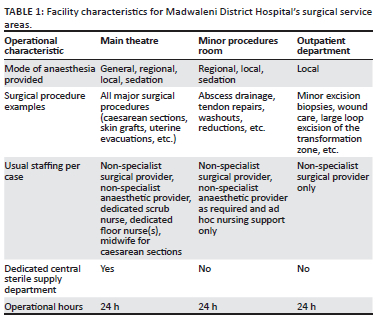
Surgical services at this facility are delivered across two primary locations. The main operating theatre is prioritised for major cases and obstetric emergencies (Caesarean sections [CSs]). To keep the main theatre available for emergencies, a dedicated 'minor procedures room' within the emergency unit functions as a sterile environment for other surgical procedures. Consequently, sterile cases such as tendon repairs, debridements and fracture washouts are frequently performed in this minor theatre.
Instrument and justification
We conducted a retrospective audit of operating theatre activity at Madwaleni District Hospital from January 2016 to December 2022. This 7-year timeframe was selected to capture variations in surgical volume and scope of procedures over time.
Data for this review were sourced exclusively from the official operating theatre register. The inclusion criterion was all surgical cases performed within the operating theatre and recorded in this register during the study period. Surgical procedures performed in other hospital areas, such as the casualty department, were not captured in the theatre register and were therefore explicitly excluded from this analysis. For the purposes of this study, a 'surgical procedure' was operationally defined as any clinical intervention requiring the use of the main operating theatre environment and subsequently recorded in the theatre register.
Descriptive data captured by theatre nursing staff during each theatre case were extracted from the register. The variables collected included the procedure date, patient age, patient sex, cadre of the primary surgeon, cadre of the anaesthetist, start and finish times and the type of procedure. Data regarding surgical assistants were not routinely recorded in the theatre register and were therefore not included in the analysis. Clinician and patient data were de-identified. Any inconsistencies in the data were clarified by cross-referencing with clinical records and other service-level data sources. Data for each case were limited to the primary procedure listed in the register. In cases where multiple procedures were recorded (e.g. a CS and a bilateral tubal ligation [BTL]), only the primary procedure (the CS) was extracted for this analysis. Standalone procedures, such as a BTL performed as the primary operation, were recorded as such.
Supplementary data were obtained and verified by the internal human resources department and the District Health Information System. This included the annual medical staff complement and their professional cadre. Local census data from Statistics South Africa were used to estimate population size.16
The WHO SAT was used to comprehensively evaluate the hospital's infrastructure, human resources, interventions, equipment and supplies.13
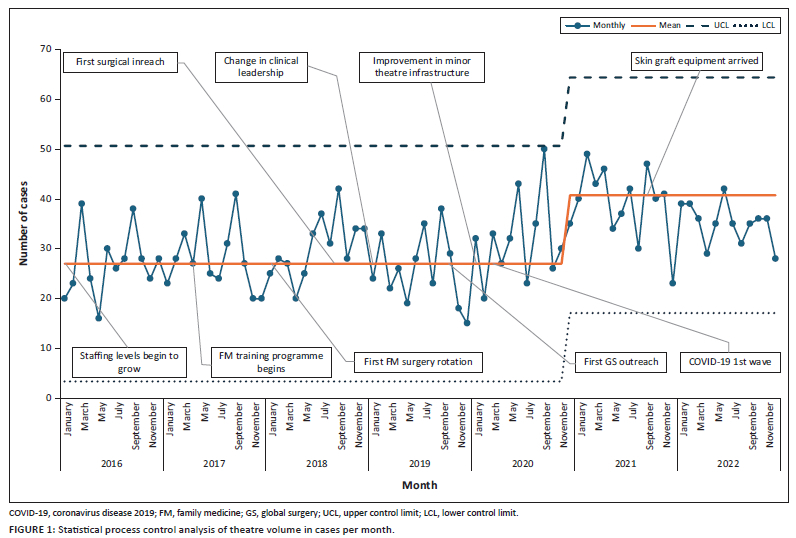
Data were checked, cleaned, aggregated and analysed using Microsoft Excel. A statistical process control (SPC) analysis of case volume was conducted and is graphically represented. Shifting means adjusted after eight successive points on the same side of the mean, denoting the central tendency. Upper and lower control limits were set at three standard deviations. This analysis technique is used widely in quality improvement projects and allows for changes in outcomes to be correlated with sentinel events which may affect outputs. The Pearson correlation coefficient (R) was used to assess the strength of relationships of normally distributed data.
A variable, 'staff years', was created to depict the relative contribution of each cadre of staff to the surgical service. It was calculated as a product of the cadre of each staff member and the number of years each staff member worked in that cadre over the study period.
Data were stored in a password-protected Google Drive folder, with access granted to a limited number of investigators.
Ethical considerations
This study received approval from the University of Cape Town's Human Research Ethics Committee (reference HREC 158/2023), as well as from the Eastern Cape Health Research Committee and the National Health Research Database (EC_202307_011). The hospital chief executive officer granted authorisation for data collection. Informed consent was waived as this was a retrospective review of hospital records; it was anonymised, with no direct patient contact or risk to participants.
Results
Surgical infrastructure
The hospital's infrastructure was analysed using the WHO SAT.13
Surgical interventions are performed in three distinct areas: the main theatre - a dedicated environment for surgery only; the minor procedures room - an area within the emergency unit where complex resuscitations and minor procedures are performed; and the outpatient department rooms - consulting rooms where short, limited procedures are performed. Further details of the surgical facilities are provided in Table 1.
Surgical service delivery
Patient demographics
Of the surgeries conducted in the main theatre at the facility, 97% were performed on female patients. The median patient age was 25 years (range 2-89), with 10% of patients being minors (18 years old or younger).
Surgical volume
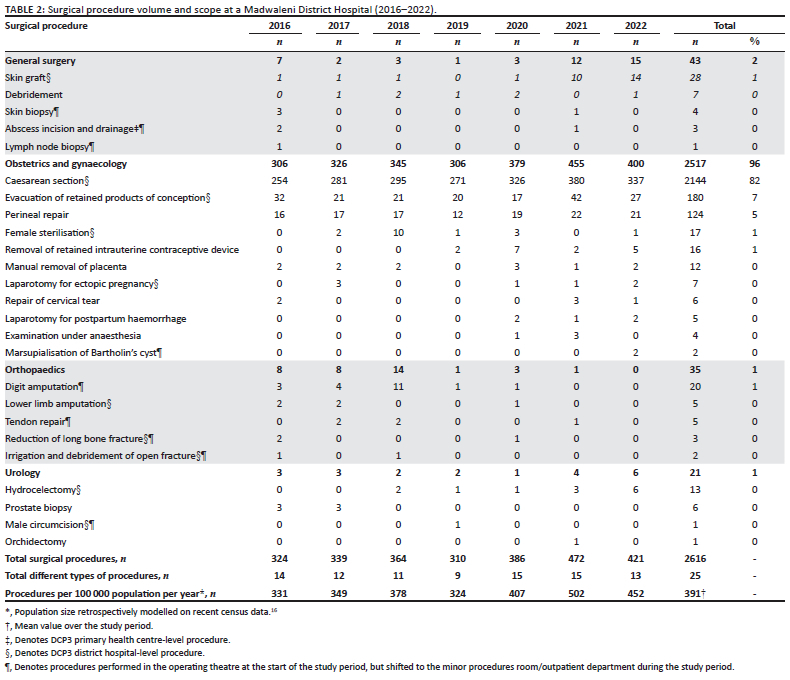
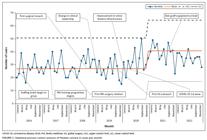
The trends in the volume of surgical procedures are shown in Table 2. A total of 2616 individual surgical cases were performed over the 7-year period. The volume of cases has increased over time, as visualised in the SPC analysis (Figure 1). The SPC analysis showed a significant upward shift in the mean monthly surgical volume, with the process mean shifting from an initial 27 operations to a new, sustained mean of 41 operations (as shown in Figure 1). Although multiple favourable local factors were present over the study period (such as intentional acquisition of surgical skills and equipment), the inflection points in case volume are not immediately preceded by any specific intervention or event. The caseload was predominantly comprised of CSs but also included 180 uterine evacuations, 124 perineal repairs following birth trauma and 28 skin grafts.
Surgical scope
Table 2 summarises the scope of surgical cases performed over the 7 years. A total of 25 different types of procedures were conducted. There were 14 different procedures performed in the first year, with an additional 11 different procedures performed over the remainder of the study period.
Surgical workforce
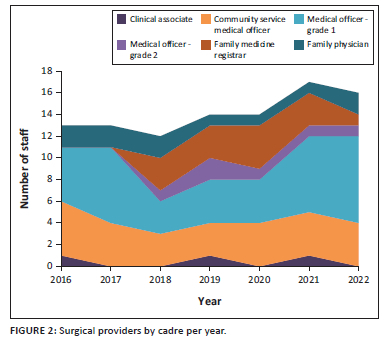
Figure 2 illustrates the composition of staffing over the study period. There was a statistically significant correlation between the number of cases performed and the total number of doctors employed (r = 0.86, p = 0.01). Whilst the number of junior staff (clinical associates, community service medical officers and grade one medical officers) remained relatively static, the number of senior staff (grade two medical officers, family medicine registrars and family physicians) increased. This qualitative change in staff coincided with the introduction of the family medicine training programme.
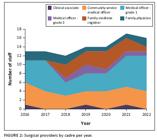
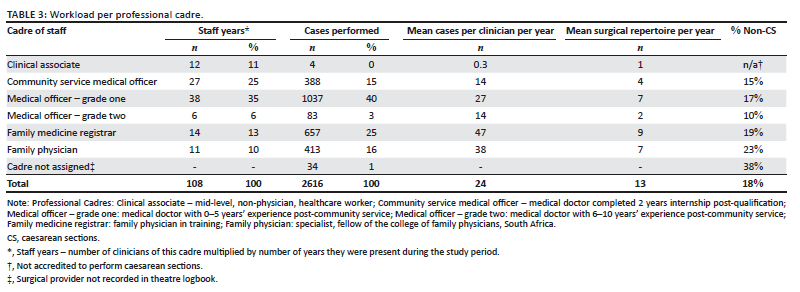
Table 3 shows the surgical volume per cadre per year, highlighting the relative contribution of different staff cadres to the surgical service. Family medicine registrars and family physicians conducted the most surgeries per clinician per year. Family medicine registrars provided the broadest range of surgical procedures, averaging nine different procedures per clinician per year.
Theatre usage
An average of 1.02 cases per day was recorded over the study period. The operating theatre, available 24 h per day, was utilised for only 3% of the total available time. The median operative time for CS was 43 min, whilst the median operative time for all other cases was 31 min. Only six of the 24 non-CS procedures exhibited a longer median operating time than CSs. These procedures included wound debridement, skin grafts, laparotomy for ectopic pregnancies, orchidectomy, tendon repair and lower limb amputations.
Discussion
Our study presents a detailed analysis of the surgical outputs of a rural DH in South Africa, showcasing the expanding surgical scope provided by a team of generalist practitioners. Between 2016 and 2022, the surgical service expanded in both the volume of cases performed and surgical scope. Whilst CSs predominate (82% of surgical volume), a wide range of surgical care has been provided to patients aged 2-89 years. These procedures account for eight of the 28 procedures in the World Bank's Disease Control Priority 3 (DCP3) DH surgical basket of care. Furthermore, the WHO SAT analysis identified another five DCP3 procedures that were performed at the facility outside of the main theatre.3
Capacity for change
Caesarean sections dominated the theatre output at this facility, mirroring trends seen across South Africa and sub-Saharan Africa, where obstetric surgery typically accounts for 26% - 82% of procedures.5,18,19,20122122
Despite the expansion of the surgical service at this facility, the overwhelming predominance of obstetric and gynaecological procedures (96% of total volume) highlights a critical deficiency in the provision of general surgical, orthopaedic and trauma care. With only 99 non-obstetric and gynaecology procedures performed over 7 years, and in the absence of other district-level hospitals in the immediate catchment area, it is evident that the non-obstetric surgical burden is not being met locally. This implies that patients are either transferred to distant tertiary referral centres - placing strain on higher levels of care - or face barriers that leave their health needs unmet. This disparity identifies a major gap in local responsiveness to the community's broader burden of disease.
We have shown that at this DH, there is a significant positive correlation between the number of surgical providers and the volume of surgeries performed. This highlights the critical role of workforce capacity in meeting surgical demands. Exploring the role of clinical associates in expanding surgical services at DHs in South Africa could be an important step in addressing limited staffing capacities in these settings. Although CS competency often predicts broader surgical capability,1220,23
Drivers of change
Staff
Staff numbers are widely acknowledged as critical to surgical service delivery.224,25,26,2728
In 2017, the health sciences faculty of the nearest university instituted a decentralised family medicine specialisation programme, changing the training model by facilitating training at DHs rather than urban university hospitals. These specialists in training are tied to their DHs for 4 years, creating continuity and building experience. They are incentivised to grow skill sets through logbooks and competency requirements, and the curriculum deliberately targets systems' improvement skill sets such as leadership and quality improvement methodology. In the study hospital, this cadre of staff members, in combination with the scaffolding and incentives for growth in their programme, have been influential in expanding surgical services.
Our findings suggest that the introduction of this family medicine training programme was a primary driver of the observed expansion in surgical volume and scope. Whilst we cannot quantify a specific lag time or prove direct skills transfer without further qualitative research, the high individual productivity of these registrars (performing 25% of cases) suggests their contribution was critical to the service.
Accessibility of the next procedure
There have been multiple local and international attempts to define a basket of surgical care appropriate for DHs, but because they represent a heterogeneous group of healthcare facilities with no standardised definition in terms of size or services offered, consensus on a set of surgical norms that is practical and implementable has proven elusive and sometimes contradictory.3,9,1129
Lessons learned and capacity gained with the introduction of a novel procedure can create a platform for systems towards the provision of ever more complex care. Choosing the next procedure to introduce requires balancing the capacity of the staff and facility against the impact of a particular procedure on patient-specific outcomes and the local disease burden. Contextual factors are important and may make specific procedures attractive targets despite their complexity, as occurred in another rural DH where a preponderance of hip joint arthritis drove the introduction of hip arthroplasty surgery.3031
Other strategies for facilitating surgical repertoire expansion include supervised exposure to cases through specialist outreach to the rural facility or visits by DH staff to urban referral centres, retention of senior doctors in rural DHs and short courses in surgery.32,33
Measuring change
Staff
District hospitals are essential vehicles for improving access to surgery.2,3,342,5,28,352
Procedures
National and international bodies have called for countries to collect and compile data on the number and types of surgical procedures conducted to inform policy and improvement initiatives. South Africa lacks a systematic method for gathering this information.25,3436
Limitations
This study, whilst adding valuable longitudinal data to the sparse literature on DH surgical services, has several limitations inherent to its retrospective design and data source. Firstly, the quantitative analysis relied exclusively on the main operating theatre register. Consequently, surgical activity performed in other clinical areas - such as the casualty unit and outpatient consultation rooms - was not captured. This includes procedures such as orthopaedic reductions, tendon repairs, open fracture washouts and biopsies. Notably, some of these procedures were performed in the main theatre at the start of the study period but were subsequently shifted to these alternative settings to improve efficiency. Their disappearance from the register therefore represents a change in workflow rather than a cessation of service, leading to an underestimation of the total facility volume and an apparent reduction in the recorded scope.
Secondly, the data extraction was limited to the 'primary procedure' recorded for each case. Secondary procedures performed concurrently (such as bilateral tubal ligations during CSs) were not quantified. This further contributes to the under-reporting of the total surgical output.
Thirdly, the exclusive use of the main theatre register resulted in a marked under-representation of trauma-related procedures, which are frequently managed in the casualty unit or referred directly to tertiary care. As a result, this study does not capture the surgical burden related to trauma in this region.
Finally, we did not record quality of care measures, patient outcomes, or complication rates. As a result, our understanding of the effect of the expansion of this DH surgical service is limited to volume and scope, rather than quality.
Without robust mechanisms to describe the total community demand for surgery or the rates of referral to tertiary centres, we cannot fully quantify the unmet need. However, the low absolute volume of non-obstetric surgery suggests a significant reliance on referral networks for general surgical and trauma care.
Conclusion
District hospitals are uniquely positioned to play a critical role in the delivery of EESC in LMICs. Their geographical proximity to communities, the prevalence of functioning operating theatres and the availability of appropriately skilled staff make them vital components of the surgical ecosystem.
In South Africa, however, there is a lack of quality data to guide the expansion of surgical services at DHs. Key gaps include an understanding of the determinants of successful surgical service expansion and its impact on both communities and other clinical services in the already overburdened DHs and referral facilities.
Our findings suggest that two key interventions - the introduction of a decentralised family medicine training programme and the availability of an adequate and experienced workforce - may have been key interventions for increasing surgical volume and scope at this DH. With proper support, and by aligning comprehensive service delivery with decentralised training, DHs have the potential to provide scalable, context-driven solutions to bridge the significant gap between met and unmet surgical needs in resource-limited settings.
AI-assisted technology was used for language editing and formatting purposes only. No content generation, data analysis or interpretation of results was performed using AI.
Competing interests
The authors declare that they have no financial or personal relationships that may have inappropriately influenced them in writing this article.
CRediT authorship contribution
Jessica M. Westwood: Conceptualisation, Methodology, Formal analysis, Investigation, Writing - original draft, Visualisation, Project administration, Data curation, Resources, Writing - review & editing. Jocelyn Park-Ross: Conceptualisation, Methodology, Formal analysis, Investigation, Visualisation, Project administration, Resources, Writing - review & editing, Supervision. Rowan Duys: Conceptualisation, Methodology, Formal analysis, Investigation, Writing - original draft, Visualisation, Project administration, Data curation, Resources, Writing - review & editing, Supervision. All authors reviewed the article, contributed to the discussion of results, approved the final version for submission and publication and take responsibility for the integrity of its findings.
Funding information
This research received no specific grant from any funding agency in the public, commercial or not-for-profit sectors.
Data availability
Raw data were generated at Madwaleni Hospital. Derived data supporting the findings of this study are available from the corresponding author, Jessica M. Westwood, on reasonable request.
Disclaimer
The views and opinions expressed in this article are those of the authors and are the product of professional research. It does not necessarily reflect the official policy or position of any affiliated institution, funder, agency, or that of the publisher. The authors are responsible for this article's findings, and content.
Acknowledgements
This article is based on research originally conducted as part of Jessica M. Westwood's Master's thesis titled 'Improving access to surgery in low- and middle-income countries through improved emergency and essential surgical care provision at district hospitals', submitted to the Department of Surgery, University of Cape Town, in 2024. The thesis is currently unpublished and not publicly available. The thesis was supervised by Jocelyn Park-Ross and Rowan Duys. Part of the thesis was reworked, revised and adapted into a journal article for publication. The authors confirm that the content has not been previously published or disseminated and complies with ethical standards for original publication.
References
-
1. Shrime MG, Bickler SW, Alkire BC, Mock C. Global burden of surgical disease: An estimation from the provider perspective. Lancet Glob Health. 2015;3(Suppl 2):S8-S9. https://doi.org/10.1016/S2214-109x(14)70384-5
» https://doi.org/10.1016/S2214-109x(14)70384-5 -
2. Meara JG, Leather AJM, Hagander L, et al. Global surgery 2030: Evidence and solutions for achieving health, welfare, and economic development. Lancet. 2015;386(9993):569-624. https://doi.org/10.1016/j.surg.2015.02.009
» https://doi.org/10.1016/j.surg.2015.02.009 - 3. Debas HT, Donkor P, Gawande A, Jamison DT, Kruk ME, Mock CN. Disease control priorities: Volume 1. Essential surgery. 3rd ed. Washington, DC: World Bank; 2015.
- 4. Laing GL, Skinner DL, Bruce JL, et al. Auditing surgical service provision at a South African tertiary institution: Implications for the development of district services. S Afr J Surg. 2017;55(4):31-35.
-
5. Naidu P, Chu KM. District hospital surgical capacity in Western Cape Province, South Africa: A cross-sectional survey. S Afr Med J. 2021;111(4):343-349. https://doi.org/10.7196/SAMJ.2021.v111i4.15281
» https://doi.org/10.7196/SAMJ.2021.v111i4.15281 - 6. South Africa. Saving mothers 2017-2019: Seventh triennial report on confidential enquiries into maternal deaths in South Africa. Pretoria: Department of Health; 2020.
-
7. Wall SL, Velin L, Abbas A, et al. Who tells the story of burns in low-and-middle income countries? - A bibliometric study. Burns. 2023;49(4):854-860. https://doi.org/10.1016/j.burns.2022.06.003
» https://doi.org/10.1016/j.burns.2022.06.003 -
8. Bishop D, Dyer RA, Maswime S, et al. Maternal and neonatal outcomes after caesarean delivery in the African Surgical Outcomes Study: A 7-day prospective observational cohort study. Lancet Glob Health. 2019;7(4):e513-e522. https://doi.org/10.1016/S2214-109X(19)30036-1
» https://doi.org/10.1016/S2214-109X(19)30036-1 -
9. World Health Organization. Surgical care at the district hospital [homepage on the Internet]. Geneva: WHO; 2003 [cited 2023 Dec 13]. Available from: https://www.who.int/publications-detail-redirect/9241545755
» https://www.who.int/publications-detail-redirect/9241545755 -
10. Albutt K, Sonderman K, Citron I, et al. Healthcare leaders develop strategies for expanding national surgical, obstetric, and anaesthesia plans in WHO AFRO and EMRO regions. World J Surg. 2019;43(2):360-367. https://doi.org/10.1007/s00268-018-4819-z
» https://doi.org/10.1007/s00268-018-4819-z - 11. National Department of Health, South Africa. A district hospital service package for South Africa: A set of norms and standards. Pretoria: Department of Health - South Africa; 2002.
-
12. O'Neill KM, Greenberg SLM, Cherian M, et al. Bellwether procedures for monitoring and planning essential surgical care in low- and middle-income countries: Caesarean delivery, laparotomy, and treatment of open fractures. World J Surg. 2016;40(11):2611-2619. https://doi.org/10.1007/s00268-016-3614-y
» https://doi.org/10.1007/s00268-016-3614-y -
13. World Health Organization. Integrated Management for Emergency & Essential Surgical Care (IMEESC) toolkit. Tool for situational analysis to assess emergency and essential surgical care [homepage on the Internet]. 2018. [cited 2024 Aug 12] Available from: https://www.who.int/publications/i/item/integrated-management-for-emergency-and-surgical-care-(-imeesc)-toolkit
» https://www.who.int/publications/i/item/integrated-management-for-emergency-and-surgical-care-(-imeesc)-toolkit -
14. Rowe SY, Ross-Degnan D, Peters DH, Holloway KA, Rowe AK. The effectiveness of supervision strategies to improve health care provider practices in low- and middle-income countries: Secondary analysis of a systematic review. Hum Resour Health. 2022;20(1):1. https://doi.org/10.1186/s12960-021-00683-z
» https://doi.org/10.1186/s12960-021-00683-z -
15. Newton-Lewis T, Munar W, Chanturidze T. Performance management in complex adaptive systems: A conceptual framework for health systems. BMJ Glob Health. 2021;6(7):e005582. https://doi.org/10.1136/bmjgh-2021-005582
» https://doi.org/10.1136/bmjgh-2021-005582 -
16. Mbhashe Local Municipality - Demographic [homepage on the Internet]. [cited 2023 Dec 19]. Available from: https://municipalities.co.za/demographic/1006/mbhashe-local-municipality
» https://municipalities.co.za/demographic/1006/mbhashe-local-municipality - 17. Winkel C. Perceptions of people living in the catchment area of Madwaleni Hospital, South Africa regarding the health and social problems facing their community. Dresden: Dresden University of Technology; 2010.
-
18. Tefera A, Lutge E, Sartorius B, Clarke D. The operative output of district hospitals in KwaZulu-Natal Province is heavily skewed toward obstetrical care. World J Surg. 2019;43(7):1653-1660. https://doi.org/10.1007/s00268-019-04985-1
» https://doi.org/10.1007/s00268-019-04985-1 -
19. Kushner AL, Groen RS, Kingham TP. Percentage of Cesarean sections among total surgical procedures in sub-Saharan Africa: Possible indicator of the overall adequacy of surgical care. World J Surg. 2010;34(9):2007-2008. https://doi.org/10.1007/s00268-010-0653-7
» https://doi.org/10.1007/s00268-010-0653-7 -
20. Gajewski J, Dharamshi R, Strader M, et al. Who accesses surgery at district level in sub-Saharan Africa? Evidence from Malawi and Zambia. Trop Med Int Health. 2017;22(12):1533-1541. https://doi.org/10.1111/tmi.12989
» https://doi.org/10.1111/tmi.12989 -
21. Chu KM, Dell AJ, Moultrie H, et al. A geospatial analysis of two-hour surgical access to district hospitals in South Africa. BMC Health Serv Res. 2020;20(1):744. https://doi.org/10.1186/s12913-020-05637-0
» https://doi.org/10.1186/s12913-020-05637-0 - 22. Van As AB, Brey Z, Numanoglu A. Improving operating theatre efficiency in South Africa. S Afr Med J. 2011;101(7):444-448.
-
23. Stewart BT, Gyedu A, Gaskill C, et al. Exploring the relationship between surgical capacity and output in Ghana: Current capacity assessments may not tell the whole story. World J Surg. 2018;42(10):3065-3074. https://doi.org/10.1007/s00268-018-4589-7
» https://doi.org/10.1007/s00268-018-4589-7 -
24. Holmer H, Shrime MG, Riesel JN, Meara JG, Hagander L. Towards closing the gap of the global surgeon, anaesthesiologist, and obstetrician workforce: Thresholds and projections towards 2030. Lancet. 2015;385(Suppl 2):S40. https://doi.org/10.1016/S0140-6736(15)60835-2
» https://doi.org/10.1016/S0140-6736(15)60835-2 -
25. Chu KM, Naidu P, Hendriks HJ, et al. Surgical care at rural district hospitals in low- and middle-income countries: An essential component of universal health coverage. Rural Remote Health. 2020;20(2): 5920. https://doi.org/10.22605/RRH5920
» https://doi.org/10.22605/RRH5920 -
26. Chu K, Rosseel P, Gielis P, Ford N. Surgical task shifting in sub-Saharan Africa. PLoS Med. 2009;6(5):e1000078. https://doi.org/10.1371/journal.pmed.1000078
» https://doi.org/10.1371/journal.pmed.1000078 -
27. McQueen KAK, Parmar P, Kene M, et al. Burden of surgical disease: Strategies to manage an existing public health emergency. Prehosp Disaster Med. 2009;24(Suppl 2):s228-s231. https://doi.org/10.1017/s1049023x00021634
» https://doi.org/10.1017/s1049023x00021634 -
28. Cheelo M, Brugha R, Bijlmakers L, Kachimba J, McCauley T, Gajewski J. Surgical capacity at district hospitals in Zambia: From 2012 to 2016. World J Surg. 2018;42(11):3508-3513. https://doi.org/10.1007/s00268-018-4678-7
» https://doi.org/10.1007/s00268-018-4678-7 -
29. Bentounsi Z, Lavy C, Pittalis C, et al. Which surgical operations should be performed in district hospitals in East, Central and Southern Africa? Results of a survey of regional clinicians. World J Surg. 2021;45(2):369-377. https://doi.org/10.1007/s00268-020-05793-8
» https://doi.org/10.1007/s00268-020-05793-8 -
30. Fredlund VG. Total hip replacement for Mseleni Joint Disease undertaken in a rural hospital: Five-year follow-up. S Afr Fam Pract. 2003;45(9):10-14. https://doi.org/10.4102/safp.v45i9.1879
» https://doi.org/10.4102/safp.v45i9.1879 - 31. Gawande A. Complications: A surgeon's notes on an imperfect science. New York, NY: Metropolitan Books; 2003.
- 32. Reid SJ, Chabikuli N, Jaques PH, Fehrsen GS. The procedural skills of rural hospital doctors. S Afr Med J. 1999;89(7):769-774.
-
33. Porter DC, Bezuidenhout J, Du Toit RS, Adefuye AO. Surgical skills deficiencies and needs of rural general practitioners in South Africa. S Afr Med J. 2018;108(3):210-216. https://doi.org/10.7196/samj.2018.v108i3.12611
» https://doi.org/10.7196/samj.2018.v108i3.12611 -
34. Price R, Makasa E, Hollands M. World Health Assembly Resolution WHA68.15: 'Strengthening emergency and essential surgical care and anesthesia as a component of universal health coverage' - Addressing the public health gaps arising from lack of safe, affordable and accessible surgical and anesthetic services. World J Surg. 2015;39(9):2115-2125. https://doi.org/10.1007/s00268-015-3153-y
» https://doi.org/10.1007/s00268-015-3153-y -
35. Gyedu A, Stewart B, Gaskill C, et al. Improving benchmarks for global surgery: Nationwide enumeration of operations performed in Ghana. Ann Surg. 2018;268(2):282-288. https://doi.org/10.1097/SLA.0000000000002457
» https://doi.org/10.1097/SLA.0000000000002457 -
36. National Department of Health Data Dictionary [homepage on the Internet]. [cited 2024 Aug 26]. Available from: https://dd.dhmis.org/index.html
» https://dd.dhmis.org/index.html

Accepted: 27 Nov. 2025
Published: 19 Feb. 2026