Oral health professionals' knowledge, perceptions, and practices regarding community engagement in rural South Africa
Abstract
BACKGROUND: Oral health remains a significant public health concern globally, particularly in developing countries such as South Africa (SA). Oral health professionals (OHPs) continue to endure the burden of oral diseases particularly in rural communities due to oversight of oral health in all levels of healthcare system and lack of initiatives that promote oral health and quality of life. Oral health community engagement activities (OHCEAs) are mechanisms for achieving the key goals of the national oral health policy and strategy for delivering oral health services in rural communities. This initiative is a purpose-driven collaborative effort involving OHPs, nurses, community healthcare workers (CHWs), community leaders, and members, aimed at promoting oral health, increasing access to oral health services, and improving the general health of underserved populations in rural SA. AIM AND OBJECTIVES: The study aimed to explore the knowledge, perceptions, and practices of OHPs regarding OHCEAs in a South African rural setting. METHODS: This was a mixed-methods cross-sectional study. A self-administered questionnaire of closed and open-ended questions was used to collect information among 32 OHPs providing oral healthcare services in a public healthcare sector. Quantitative data were analysed using SPSS version 29.0 (IBM Corp, USA), while qualitative was analysed thematically using ATLAS.ti software version 7.1.3. RESULTS: The response rate of the study was 100% (n=32). More than half (56.3%) agreed that there was no active availability of OHCEAs in the surrounding communities, while nearly half (46.9%) expressed uncertainty regarding the monitoring and evaluation. Half (50%) of the participants believed that introduction of OHCEAs enhanced oral health awareness among rural community members, while 78.1% of participants perceived OHCEAs as a long-term and ongoing strategy for promoting oral health. Some of main emergent themes included: resource constraints and infrastructural challenges; and integrated oral health and curative care approaches. CONCLUSION: The study demonstrated that OHPs had sound knowledge of OHCEAs and positive perspectives regarding their impact on implementation. However, this initiative remains poorly implemented, with service provision predominantly confined to curative care owing to challenges arising from various levels of the public healthcare system.
INTRODUCTION
Oral health is a key indicator of an individual's overall health, well-being, and quality of life.1-3 Nevertheless, the prevalence of oral diseases continues to pose a public health challenge, affecting an estimated 3.5 billion individuals worldwide.4567
These diseases can be effectively prevented through the establishment of supportive environments, adequate access to Primary Health Care (PHC) resources, sufficient financial resources, mindful health behaviours, and increased awareness of oral health.8,9 However, the current healthcare system in SA faces significant challenges in adequately meeting the healthcare demands of its population.10-12 These challenges include the maldistribution and shortage of OHPs, as the country only has 6,350 dentists, 898 dental therapists, and 1,252 oral hygienists1361415-17
Social support is a key initiative endorsed by the World Health Organization (WHO),18192021,22. However, this effort faces several challenges, including a lack of competencies among OHPs to conduct CE6232425
Furthermore, these communities frequently encounter significant obstacles in accessing and utilizing high-quality public oral health services.26272828-30. Furthermore, there is a noticeable trend of community dentistry specialists relocating from rural to metropolitan areas,1230
To address these challenges, there is an increasing global demand for strategies to reduce the prevalence of oral diseases, particularly in rural communities. These strategies include, but are not limited to, the adoption of e-health approaches31-33, implementation of interprofessional and collaborative practice15,33-35, introduction of incentives for OHPs for rural practice6,36-38, and training and distribution of CHWs16,39,40. Despite these initiatives, OHPs are still heavily burdened by the high prevalence of oral diseases in rural communities. Therefore, this study aimed to explore the knowledge, perceptions, and practices of OHPs regarding OHCEAs in the Vhembe District of Limpopo Province.
METHODOLOGY
Study design and setting
This mixed-methods cross-sectional study was conducted to investigate the extent of OHPs' knowledge, perceptions, and practices related to OHCEAs, which are integral to promoting oral health in rural communities. The study was conducted in the Vhembe district, one of the five districts in Limpopo Province in SA. The study population was drawn from 12 healthcare facilities, including seven hospitals and five community health centers, all of which provided oral healthcare services to rural communities in the district.
Sampling and selection criteria
A whole population approach was used to identify the participants in the district. The study participants (n=32) comprised OHPs, including dentists (n=22), dental therapists (n=3), and oral hygienists (n=7) who provided oral health services in the district. The inclusion criteria for participation in the study were based on the assumption that all OHPs were engaging and interacting with rural community individuals in terms of oral health care service provision. The study excluded all professionals who did not consent to participate in the study.
Participant recruitment
Following the receipt of approval to conduct the study from the Human Resource Development Office of each healthcare facility, meetings were organized with OHPs. These meetings were led by clinical managers, who serve as the leaders of the oral health team at each facility, to apprise them of the study's objectives. The researcher ensured that information sheets, informed consent forms, and questionnaires were left with the clinical managers for distribution to those who were willing to participate. The researcher emphasized that participation in the study was entirely voluntary. Weekly follow-ups were done, and all signed informed consent forms and completed questionnaires were collected from the managers. Recruitment process was conducted between November 2023 and February 2024.
Data collection
The self-administered questionnaire consisted of both open- and closed-ended questions, which were adapted from previous studies30,41-43 and validated through pretesting to eliminate any ambiguities and refine the questions. The questionnaire included 24 questions systematically organized into two sections. The first section of the questionnaire focused on the demographic characteristics of the participants, including age, sex, profession, highest level of education, and experience in the public sector. The second section of the questionnaire was divided into three subsections: the first addressed knowledge, the second examined perceptions, and the third explored practices related to OHCEAs in the rural communities of the Vhembe district.
Knowledge-related questions included the following closed-ended questions: leadership and management ensure long-term sustainability of OHCEAs; OHCEAs supported by adequate infrastructure, financing, and resources; sufficient OHPs available to conduct OCHEAs; active availability of OHCEAs in surrounding rural communities; existence of other established oral health initiatives; lengthy implementation of OHCEAs in rural communities and monitoring and evaluation system. The question regarding the challenges experienced was open-ended.
Perception-related questions included the following closed-ended questions: OHCEAs increased oral health awareness among rural community members; healthcare facility managers prioritize oral health promotion through OHCEAs; sufficient support for OHPs development to conduct OHCEAs and OHCEAs as a long-term intervention strategy. The question on strategies that could be integrated to enhance the implementation of OHCEAs was open-ended.
Practice-related questions included the following open-ended questions: What types of oral health services do OHPs provide during community engagement? What other strategies do you integrate in your facility that build up to advance OHCEAs in rural communities?
All closed-ended questions were structured using a Likert scale, allowing participants to indicate their level of agreement with the following options: (1) Strongly Agree, (2) Agree, (3) Unsure, (4) Disagree, and (5) Strongly Disagree. Similarly, all open-ended questions permitted participants to elaborate on their responses, thereby enabling them to express their perspectives and provide insights without any constraints. To ensure participant anonymity, each returned questionnaire was assigned an alphanumeric code (e.g., P1).
Data analysis
Close-ended data were first cleaned and coded and then each response to each question was captured onto an Excel spread sheet and analysed using the Statistical Package for Social Sciences (SPSS) Version 29.0 (IBM Corp, USA). The data analysis included descriptive statistics such frequencies, and percentages, which were used to describe the characteristics of the study participants, as well as Knowledge and Perceptions scores, and thereafter results are presented in tables.
Open-ended data were entered into an Excel spreadsheet. Thematic analysis was employed for the open-ended questions. The responses were initially read multiple times by the primary author to gain familiarity with the data (to establish connections within the data). For the subsequent steps, the data were uploaded into ATLAS.ti software (version 7.1.3) to facilitate coding and categorization, enabling assessment and comparison of emergent themes for possible associations, and to enhance the efficiency of the data analysis process. Confirmability was established by including actual verbatim quotations from the participants.
Ethical approval
Ethical approval was obtained from the Biomedical Research Ethics Committee at an institution of higher education and training in the Western Cape, SA (BM23/6/16) and the Limpopo Department of Health (LP_2023-10-006). Additionally, the Vhembe district municipality granted gatekeeper permission to recruit participants (S5/4/2/3). An information sheet detailing the purpose of the study was distributed to all participants, and informed consent was obtained from all participants who agreed to participate in the study. The participants were informed that they could withdraw from the study at any time, without penalty. The institution's name and data were anonymized to ensure confidentiality. Data reporting was conducted with caution to safeguard participants' identities. The raw data were securely stored in a locked cupboard, and the electronic data were protected by passwords, with access restricted to the researchers.
RESULTS
Demographic characteristics of participants
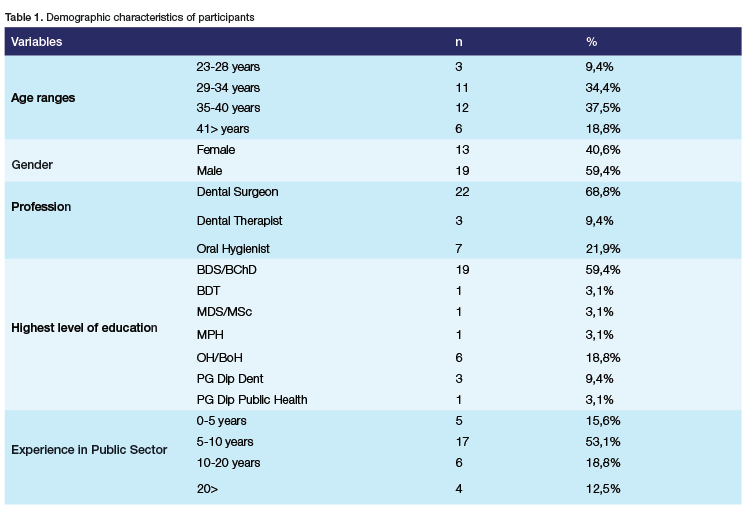
The study achieved a complete response rate of 100% (n=32). Approximately 37.5% of the participants were aged between 35 and 40 years old. Most participants were male (59.4%). The predominant professional background of the participants was dental surgery, with 68.8% identifying as dental surgeons. Furthermore, 59.4% of the participants held BDS/BChD degrees as their highest level of education. Slightly more than half (53.1%) of the participants reported possessing 5-10 years of experience in public sector. Other demographic characteristics of participants are listed in Table 1.
Knowledge
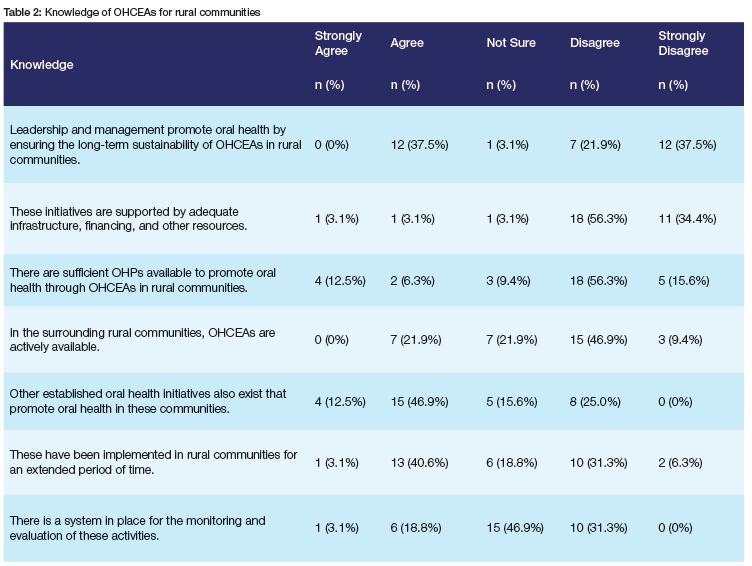
More than half (59.4%) of the participants disagreed that leadership and management support for the long-term viability of the OHCEAs in promoting oral health in rural communities existed. Furthermore, an overwhelming majority of participants (90.1%) disagreed that there was adequate infrastructure, financing, and other resources necessary to support these activities (Table 2).
In response to whether there were sufficient OHPs to conduct OHCEAs in rural communities, the majority (71.9%) of the participants disagreed with the distribution of such personnel. This shortage posed a challenge to surrounding rural communities, as more than half (56.3%) of the participants disagreed that OHCEAs were actively available in these settings.
More than half (59.4%) of the participants agreed that there are other established oral health initiatives that promoted oral health in rural communities. Furthermore, 43.7% of the participants agreed that these initiatives had been implemented in rural communities for a longer period. However, almost half (46.9%) of the participants were uncertain about the monitoring and evaluation of all these initiatives.
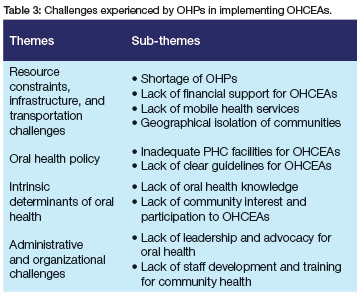
Several emerging themes were identified in response to the following question: What challenges do you experience in implementing OHCEAs? Table 3 shows the themes and subthemes of the challenges experienced by OHPs in implementing OHCEAs.
Resource constraints, infrastructure, and transportation challenges
Participants highlighted that the scarcity of OHPs poses a significant barrier to the effective implementation of OHCEAs designed to promote oral health in rural communities.
"There are very limited resources, particularly dental professionals, available in order to provide wholesome community engagement initiatives" (P27)
Participants indicated that insufficient financial support constrains OHPs' capacity to expand their reach and effectively engage with underserved communities through OHCEAs.
"Lack of financial support to make those initiatives possible on a large scale and this leaves the practitioners not functioning fully" (P13)
Participants emphasized the need for mobile oral health services in rural communities, noting that the current mobile dental units are frequently in substandard condition. This challenge impedes service delivery and restricts the implementation of OHCEAs beyond teeth extractions.
"Lack of functional mobile clinic to service remote areas, when we do go, we only offer single treatment to the patients which is only extractions" (P22)
Participants highlighted geographical isolation as a major challenge in implementing effective OHCEAs. They emphasized that the remote locations required significant travel over long distances on bad roads to reach the nearest community.
"We have challenges with transportation to go to the communities, particularly regarding distance and bad roads which makes us compromise the service provision" (P23)
Oral health policy
Participants expressed the necessity of revising oral health policy to improve the integration of oral health services into PHC. This need arises from the existing inadequacies in PHC facilities, which currently hinder the effective organization and implementation of OHCEAs aimed to promote preventive oral health.
"Lack of infrastructure, such as not having a good physical structures, such as primary health care facilities that support oral health" (P14)
The need for guiding principles in community oral health initiatives, particularly concerning the implementation of OHCEAs in rural communities, remains a significant challenge. It has been identified as both relevant and essential for adoption to establish a framework for oral health promotion, as current initiatives are sporadic and typically conducted as and when.
"Lack of proper strategy to reach out to the communities. We do not have any guidelines or strategies other than conducting oral health awareness campaigns during oral health months" (P26)
Community members knowledge and attitude
Participants identified poverty as a significant barrier to the effective implementation of OHCEAs because of its substantial impact on educational attainment. Limited access to educational opportunities leads to low health literacy, resulting in poor oral health knowledge uptake. This challenge is central to the low participation rates in the OHCEAs.
"Lack of knowledge about oral health as they are people who are poor…" (P31)
"Lack of basic education that can help enhance oral health education" (P24)
Participants observed that community members held unfavourable perspectives regarding oral health, emphasizing the need for a paradigm shift to stress the significance of oral health and its association with overall health. This concern has been recognized due to strong cultural beliefs, inadequate response and low participation rate in OHCEAs.
"Oral health is not seen as a priority. There is a lack of interest and participation from community members, their turn up is low and they do not find it necessary to listen to us and practice what we teach them. Communities strongly guided by cultural beliefs" (P16)
Administrative and organizational challenges
Participants highlighted a significant lack of advocacy for oral health, as healthcare services predominantly focus on medical care, neglecting the integration of OHCEAs. This persistent fragmentation within healthcare services fosters the misconception that oral health is separate from overall health and well-being.
"Lack of support from the district leadership including facility managers because they prioritize medical care instead" (P29)
Participants expressed the need for additional training and development for OHPs to enhance their competencies in community health services, particularly for the effective implementation of OHCEAs. Nonetheless, a significant challenge persists owing to insufficient leadership support for professionals seeking to acquire these skills.
"Strengthen oral health services by training dental professionals for community services" (P08)
"Lack of interest from government in terms of staff support, growth and involvement…" (P09)
Perceptions
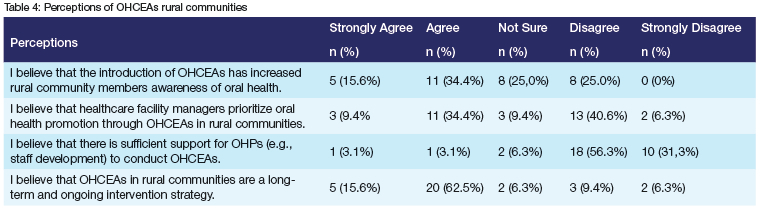
When asked for their opinions, half (50%) of the participants agreed that the introduction of OHCEAs increased awareness of oral health among rural community members. In contrast, one-fourth (25%) of the participants remained uncertain about its impact. In response to whether healthcare facility managers prioritize oral health promotion through OHCEAs in rural communities, nearly half (46.9%) of the participants expressed disagreement (Table 4).
Regarding the availability of staff support, a significant majority (87.6%) of participants expressed disagreement with the assertion that adequate support was provided for further training in oral health. A significant proportion (78.1%) of participants expressed agreement with the assertion that OHCEAs in rural communities constitute a long-term and on-going intervention strategy.
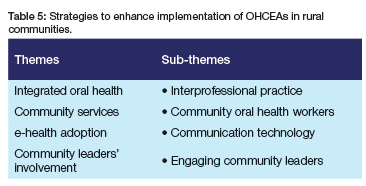
Several emerging themes were identified in response to the following question: What strategies do you think can be integrated to enhance implementation of OHCEAs in rural communities? Table 5 shows the themes and sub-themes of strategies to enhance implementation of OHCEAs in rural communities.
Integrated oral health
Participants demonstrated a strong belief in the importance of an integrated approach to oral health, highlighting the need to introduce oral health education training for nurses. This initiative aims to foster interprofessional practice, a collaboration that believed to have potential to improve OHCEAs and consequently improve overall health and well-being.
"Education facility managers e.g., Nurses particularly in PHC/CHC about the importance of oral health and the emphasis of how oral health relates and directly affects overall general health, so that we can work hand in hand" (P07)
Community services
Participants believed that there is a critical need for the training and deployment of community oral health care workers to enhance collaboration, bridge the gap between rural communities and OHPs, and facilitate the implementation of OHCEAs. These workers are believed to be deeply connected with the communities and are knowledgeable about of local contexts.
"By training and placing community oral health workers in the deep rural areas, as oral health professionals can work with them in the promotion and awareness of oral health…they knowledgeable about the communities" (P27)
e-Health adoption
The adoption of e-health, particularly integration of communication technologies such as the WhatsApp mobile application, is considered by participants as a promising strategy for engaging and reaching members of rural communities. The participants believed that this method could enhance the implementation of OHCEAs, thereby improving oral health promotion.
"Improving our ways of reaching people…there can be WhatsApp groups created in the communities to convey messages when the oral health outreach personnel go for visits so that people can be there in numbers" (P16)
Community leaders' involvement
Participants believed that rather than imposing community oral health interventions, a more effective strategy might involve consistent meetings with community leaders to introduce oral health in a broader context. This strategy can improve community members' participation in OHCEAs.
"Organise and conduct frequent community meetings which involve community leaders and introduce them to oral health education" (P02)
Practices
An emerging theme was identified in response to the following question: What types of oral health services do OHPs provide during community engagement?
Curative care approach
Participants reported performing more dental extractions than any other dental procedure, and this is often at the request of patients, which impedes OHPs from implementing preventive and promotive measures through OHCEAs.
"Extraction of teeth is done more than preventing and promote oral health services" (P08)
"…unless we are providing extractions, they are not interested in any other procedure or even oral health education and screening" (P27)
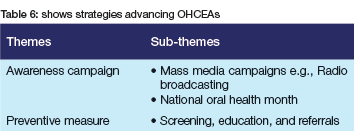
Two emerging themes were identified in response to the following question: What other strategies do you integrate in your facility that build up to advance OHCEAs in rural communities? Table 6 shows strategies advancing OHCEAs.
Awareness campaign
The participants indicated the incorporation of mass media campaigns to advance oral health. This medium facilitates communication between OHPs and community members, thereby enhancing the dissemination of oral health information and increasing participation in OHCEAs through community radio stations.
"Getting word out there, through health talks e.g., a session at a community radio station to have oral health talks where people can also call and ask advice" (P16)
Participants highlighted leveraging national oral health month as a strategic opportunity to promote OHCEAs and encourage community members to prioritize oral health. This initiative emphasizes the significance of preventive and promotional strategies for enhancing oral health outcomes.
"We extend oral health services during oral health month" (P08)
Preventive measures
Participants noted their involvement in delivering various oral health services, with a particular focus on preventive strategies such as screenings, oral health education, and referrals within healthcare settings. These efforts are supplementary activities designed to bolster OHCEAs, typically executed by dentists and oral hygienists.
"Oral hygienist in PHC in the rural communities provide oral health screenings, education, referrals, while Dentist provide extractions, oral health education, and screenings at various clinics" (P26)
DISCUSSION
The aim of this study was to explore the knowledge, perceptions, and practices of OHPs regarding OHCEAs using a mixed-method approach guided by closed and open-ended self-administered questionnaires. Mixed-method research provides a robust framework for exploring complex problems by combining the strengths of both quantitative and qualitative approaches within a single study.44,45 As a result, a mixed-methods approach was utilized in this study to allow the researchers to gain a more detailed and nuanced understanding of OHCEAs in rural communities among OHPs. As a result, this study holds significant potential to inform OHPs, administrative structures (facility, district, and provincial managers), dental education, and policymakers in the pursuit of the SDGs and UHC. It can also serve as a beneficial resource for other districts seeking to implement OHCEAs in their oral health initiatives, particularly considering the current numerous challenges faced nationwide.
Knowledge
Overall, the participants in this study exhibited sound knowledge of OHCEAs for oral health promotion in rural communities, with more than half (56.3%) disagreeing about the active availability of OHCEAs in the surrounding communities. This finding aligns with a recent review study that highlighted a lack in the effective implementation of OHCEAs in rural communities, attributed to a lack of knowledge regarding its content and a poor understanding of its impact.246
Furthermore, the findings of this study indicated that nearly half (46.9%) of the participants expressed uncertainty regarding the monitoring and evaluation of oral health service delivery, including OHCEAs. This finding is not unexpected, given that slightly more than half (53.1%) of the participants had work experience ranging from 5 to 10 years. This duration is considerably shorter than the period since the national oral health survey was conducted,6,46 thereby suggesting that these participants may not recognize its significance in terms of facilitating informed decision-making, resource distribution, monitor progress, identify key performance for improvement, and ensure accountability.47
However, these participants identified the challenges that impede effective implementation of OHCEAs in rural communities. For instance, this study revealed that resource constraints remain a significant challenge, with 90.1% of participants disagreeing that there was adequate infrastructure, financing, and other resources necessary to support OHCEAs, and 71.9% of participants disagreed that there was a sufficient distribution of OHPs to conduct these activities. These oral health challenges are not unexpected; rather, they have progressed beyond the stage of novelty, yet they continue to afflict individuals worldwide.48-51
Amid these constraints, mobile oral healthcare services have the potential to broaden the reach and accessibility of oral health services in rural communities. These services are particularly advantageous for socioeconomically disadvantaged populations.52-54 However, the findings of the present study indicate a lack of availability of these services, with participants reporting infrequent maintenance and suboptimal conditions of mobile dental units. Additionally, participants highlighted the considerable challenge posed by the necessity of traveling long distances on poorly maintained roads, which impedes the effective implementation of OHCEAs. This observation aligns with previous studies that identified geographical location5556
Following years of neglect and inadequate attention from policymakers concerning the review and amendment of the national oral health policy, a recent update from the Ministry of Health highlighted the need to integrate oral health care into PHC and chronic disease management.66,14-16,57 The present study reflects this ambiguity, as the participants emphasized the absence of guiding principles for the implementation of OHCEAs, resulting in their sporadic execution. Additionally, participants noted a lack of suitable PHC facilities to address the oral healthcare needs of the rural population and support the establishment of OHCEAs for oral health promotion. In light of these challenges, the pursuit of SDGs and UHC in oral health remains elusive and seemingly unattainable in rural communities.
The findings of this study revealed that a low level of basic education leads to low health literacy and influences the uptake of oral health education among the rural population. This finding aligns with a previous study that demonstrated that rural communities are frequently linked with lower educational attainment, which has been associated with low health literacy and suboptimal utilization of healthcare services.5859-61
The absence of leadership and advocacy in oral health is not merely an administrative oversight at the provincial or district level; rather, it reflects systemic issues within the broader healthcare system at the macro level. This challenge became apparent when oral health was excluded from the SA public health agenda, particularly during discussions on the National Health Insurance Bill.662,63 This prioritization perpetuates the flawed notion that dentistry is an ancillary branch of healthcare.64
Perceptions
A study conducted in Saudi Arabia indicated that oral health providers perceived community oral health initiatives as instrumental in fostering positive oral health attitudes and behaviours within society.65et al.6624
This study highlights the critical need to adopt the WHO's recommendations for interprofessional education & collaborative Practice in healthcare. This approach aims to address the isolation often observed in professional practice, which tends to operate independently or competitively, thereby fostering collaborative efforts to enhance healthcare delivery,6768-70 The results of this study resonate with these findings, as the participants believed that further oral health educational training for healthcare professionals, particularly nursing professionals, could facilitate the adoption of this approach and improve collaborative healthcare service delivery, particularly for the effective implementation of OHCEAs.
While further prospective studies, clinical trials, and cost analyses are necessary to fully understand the impact of e-oral health in rural communities, current evidence indicates that e-oral health is linked to enhanced patient satisfaction and serves as an effective and dependable approach736674-76
The findings of this study suggest that participants believed that, instead of imposing community oral health interventions, engaging in frequent and continuous consultations with community leaders to introduce oral health initiatives and emphasize their significance may be a more effective approach for increasing the reception of OHCEAs in rural communities for oral health promotion. This approach takes into an account the preceding findings regarding poor attitudes towards oral health and cultural entrenchment. The rationale for this approach may have been shaped by multiple factors, such as the acknowledgment of these cadres as pivotal gatekeepers within their communities.7778,79 Furthermore, they have the authority to shape community health beliefs.80
Practices
The WHO advocates for interventions specifically designed to meet the unique needs of communities. This approach highlights the significance of comprehending local contexts, behaviours, and cultural nuances to enhance health outcomes. By utilizing insights derived from behavioural and cultural studies, the WHO advocates for customizing services, policies, and communication strategies to effectively address the different needs of different populations.81828384
Moreover, this study highlights the need to implement innovative strategies to promote oral health in a cost-effective manner, advance OHCEAs, and incorporate community volunteer peer-led initiatives, given the constraints posed by resource shortages.85248687
Study limitations
This study provides baseline data that can be used to develop a framework to guide oral health promotion in rural communities. Additionally, it can contribute to the restructuring of district healthcare services. However, this study had several limitations. The participants' keenness to participate in the study may have been influenced by their lengthy experience with the challenges inherent in the district healthcare system. Consequently, self-reported data may be subject to social desirability bias, which could compromise validity of the findings. The primary author may have had a significant influence on the study due to their strong interest in the topic, potentially introducing bias in the formulation of research questions. The study's focus on a single district introduced potential bias, as it may not fully represent the diversity of the entire province. However, considering that the majority of participants faced similar challenges and likely had analogous oral health-related demands, the findings of the study may be applicable to other national districts.
CONCLUSION
The overall findings of this study revealed that OHPs are aware of the merits and impacts of OHCEAs as well as limitations hindering their effective implementation. In addition, the professionals show positive perspectives of OHCEAs, believing that their district healthcare system has potential to support strategies that would improve OHCEAs' implementation for health oral health promotion. However, their practices are limited to curative care services, hindering effective implementation of OHCEAs. This is due to various challenges stemming from public healthcare system levels. At the micro-level, challenges include community knowledge and attitudes, cultural beliefs, and poor reception of OHCEAs. At the meso-level, issues arise from poor oral health policy implementation, lack of interprofessional and collaborative practice, and dental education training, particularly regarding the inadequate preparation of graduates to conduct CE. At the macro-level, obstacles include the lack of national oral health policy amendments, lack of oral health representation in ministerial health discussions, and poor resource distribution. These challenges impede the realization of the SDGs and UHC, continuing unabated even though the WHO has characterized the situation of oral health as "alarming" and has called for prompt intervention from all relevant stakeholders.48
DECLARATIONConflict of interest
The authors declare that there is no conflict of interest.
Funding
No funding was sourced for this study.
Acknowledgment
The authors express their gratitude to all participants who dedicated their time and effort to contribute to this study.
REFERENCES
- 1. Petersen PE, Kwan S. The 7th WHO Global Conference on Health Promotion-Towards Integration of Oral Health, Nairobi, Kenya, 26-30 October 2009.
- 2. Vujicic M, Atun R, Benzian H, Listl S, Ryan M, Tsakos G. The economic rationale for a global commitment to invest in oral health. InWorld Economic Forum. White paper. May 2024.
-
3. World Health Organization. Oral Health [internet]. Geneva: WHO [cited 2025 April 02]. Available from: https://www.who.int/health-topics/oral-health#tab=tab_1
» https://www.who.int/health-topics/oral-health#tab=tab_1 - 4. Kassebaum NJ, Smith AGC, Bernabé E, Fleming TD, Reynolds AE, Vos T, et al. GBD 2015 Oral Health Collaborators. Global, Regional, and National Prevalence, Incidence, and Disability-Adjusted Life Years for Oral Conditions for 195 Countries, 1990-2015: A Systematic Analysis for the Global Burden of Diseases, Injuries, and Risk Factors. J Dent Res. 2017; 96(4):380-7.
- 5. Regional Committee for Africa, 66. Regional oral health strategy 2016-2025: addressing oral diseases as part of noncommunicable diseases: report of the Secretariat. World Health Organization. Regional Office for Africa, 2016
-
6. Naidoo S, Benzian H. Decades of neglect: Oral health crisis demands urgent policy reform and action [Internet]. South Africa: Daily Maverick; [posted 2025 March 25; cited 2025 April 02]. Available from: https://www.dailymaverick.co.za/article/2025-03-20-decades-of-neglect-oral-health-crisis-demands-urgent-policy-reform-and-action/
» https://www.dailymaverick.co.za/article/2025-03-20-decades-of-neglect-oral-health-crisis-demands-urgent-policy-reform-and-action/ -
7. World Health Organization. Oral Health South Africa 2022 country profile [internet]. South Africa: WHO; [cited 2025 April 02]. Available from: https://cdn.who.int/media/docs/default-source/country-profiles/oral-health/oral-health-zaf-2022-country-profile.pdf?sfvrsn=a28a9d3d_7&download=true
» https://cdn.who.int/media/docs/default-source/country-profiles/oral-health/oral-health-zaf-2022-country-profile.pdf?sfvrsn=a28a9d3d_7&download=true - 8. Varenne B, Petersen PE, Ouattara S. Oral health behaviour of children and adults in urban and rural areas of Burkina Faso, Africa. Int Dent J. 2006; 56(2): 61-70.
- 9. Wetterhall S, Burrus B, Shugars D, Bader J. Cultural context in the effort to improve oral health among Alaska Native people: the dental health aide therapist model. Am J Public Health. 2011; 101(10): 1836-40.
- 10. Coovadia H, Jewkes R, Barron P, Sanders D, McIntyre D. The health and health system of South Africa: historical roots of current public health challenges. Lancet. 2009; 374(9692): 817-34.
- 11. Department of Health. Annual Report 2013/14. Pretoria: DoH; 2014
- 12. Ramphoma KJ. Oral Health in South Africa: Exploring the role of dental public health specialists. South African Dental Journal. 2016; 71(9): 402-3.
- 13. Health Professions Council of South Africa. Health Professions Council of South Africa Annual Report 2023/2024. Pretoria: HPCSA; 2024
- 14. Mukhari-Baloyi NA, Bhayat A, Madiba TK, Nkambule NR. A review of the South African national oral health policy. South African Dental Journal. 2021; 76(9): 551-7.
- 15. Kolisa Y. Assessment of oral health promotion services offered as part of maternal and child health services in the Tshwane Health District, Pretoria, South Africa. Afr J Prim Health Care Fam Med. 2016; 8(1): e1-8.
- 16. Ramphoma K, Rampersad N, Singh N, Mukhari-Baloyi N, Naidoo S. The proposed need for integrated maternal and child oral health policy: A case of South Africa. Front Oral Health. 2022; 3: 1023268.
- 17. Thema LK, Singh S. Integrated primary oral health services in South Africa: The role of the phc nurse in providing oral health examination and education: Open forum. African Journal of Primary Health Care and Family Medicine. 2013; 5(1): 1-4.
- 18. World Health Organisation. Increasing access to health workers in remote and rural areas through improved retention: Global policy recommendations. Geneva: WHO; 2010
- 19. World Health Organization. WHO community engagement framework for quality, people-centred and resilient health services. Geneva: WHO; 2017
- 20. World Health Organization. Community engagement: a health promotion guide for universal health coverage in the hands of the people. Geneva: WHO; 2020
- 21. Hobdell M, Petersen PE, Clarkson J, Johnson N. Global goals for oral health 2020. Int Dent J. 2003; 53(5): 285-8.
- 22. World Health Organization. WHO Discussion Paper: Draft Global Oral Health Action Plan (2023-2030). Geneva: WHO; 2022
- 23. Ogunbodede EO, Kida IA, Madjapa HS, Amedari M, Ehizele A, Mutave R, et al. Oral Health Inequalities between Rural and Urban Populations of the African and Middle East Region. Adv Dent Res. 2015; 27(1): 18-25.
- 24. Nghayo HA, Palanyandi CE, Ramphoma KJ, Maart R. Oral health community engagement programs for rural communities: A scoping review. PLoS One. 2024; 19(2): e0297546.
- 25. Foláyan MO, Bernard OT, Titus OS, Alade O, Aliyu TK, Bhayat A, et al. Cultural practices, oral health service utilisation and oral health policy and guidelines development in Africa: insights from the yorùbá ethnic group. Front Oral Health. 2025; 6: 1539827.
- 26. Lambert RF, Yu A, Orrell C, Haberer JE. Perceived oral health interventions by medical providers in Gugulethu, South Africa. PLoS One. 2020; 15(5): e0233437.
-
27. Statistics South Africa. Five facts about poverty in South Africa [Internet]. South Africa: StatsSA [cited 2025 April 03]. Available from: https://www.statssa.gov.za/?p=12075
» https://www.statssa.gov.za/?p=12075 - 28. Thema KL, Singh S. Oral health service delivery in Limpopo Province. South African Dental Journal. 2017; 72(7): 310-4.
- 29. Thema LK, Singh S. Epidemiological profile of patients utilising public oral health services in Limpopo province, South Africa. Afr J Prim Health Care Fam Med. 2017; 9(1): e1-e5.
- 30. Thema L, Singh S. A conceptual framework to guide public oral health planning in Limpopo province. Health SA. 2019; 24: 1109.
-
31. World Health Organization. Improving oral health through use of digital technology [Internet]. Geneva: WHO; [cited 2025 April 03]. Available form: https://www.who.int/news/item/17-09-2021-improving-oral-health-through-use-of-digital-technology
» https://www.who.int/news/item/17-09-2021-improving-oral-health-through-use-of-digital-technology - 32. Emami E, Kadoch N, Homayounfar S, Harnagea H, Dupont P, Giraudeau N, et al. Patient satisfaction with E-Oral Health care in rural and remote settings: a systematic review protocol. Syst Rev. 2017; 6(1): 174.
- 33. Chew C, Rosen D, Watson K, D'Alesio A, Ellerbee D, Gloster J, et al. Implementing a Community Engagement Model to Develop a Community-Driven Oral Health Intervention. Prog Community Health Partnersh. 2024; 18(1): 67-77.
- 34. McNeil DW, Pereira DB, Ensz OS, Lukose K, Harrell G, Feller DB. Toward a Comprehensive Model of Medical-Dental-Behavioral Integration. JDR Clin Trans Res. 2024; 9(1_suppl): 23S-31S.
- 35. FDI World Dental Federation. Optimal oral health through inter-professional education and collaborative practice. Geneva: FDI World Dental Federation; 2015
- 36. Noochpoung R. The Impact of Financial Incentives on Urban-Rural Disparities in Dental Supply: Evidence from Thailand (Doctoral dissertation, University of South Carolina).
- 37. Luo H, Moss ME, Basu R, Grant FT. Rural-Urban Differences in Use of Dental Services and Procedures Among Medicare Beneficiaries in 2018. Public Health Rep. 2023; 138(5): 788-795.
- 38. Dewanto I, Koontongkaew S, Widyanti N. Characteristics of Dental Services in Rural, Suburban, and Urban Areas Upon the Implementation of Indonesia National Health Insurance. Front Public Health. 2020; 8: 138.
- 39. Barnett T, Hoang H, Stuart J, Crocombe L. Non-dental primary care providers' views on challenges in providing oral health services and strategies to improve oral health in Australian rural and remote communities: a qualitative study. BMJ Open. 2015; 5(10): e009341.
- 40. Eskandari A, Abolfazli N, Lafzi A, Golmohammadi S. Oral Health Knowledge and Attitudes of Community Health Workers in East Azerbaijan, Iran. J Dent (Shiraz). 2016; 17(4): 297-300.
- 41. Reddy M, Singh S. Viability in delivering oral health promotion activities within the Health Promoting Schools Initiative in KwaZulu-Natal. South African Journal of Child Health. 2015; 9(3): 93-7.
- 42. Reddy M, Singh S. The promotion of oral health in health-promoting schools in KwaZulu-Natal Province, South Africa. South African Journal of Child Health. 2017; 11(1): 16-20.
- 43. Glassman P, Harrington M, Namakian M. Promoting oral health through community engagement. Journal of the California Dental Association. 2014; 42(7): 465-70.
- 44. Venkatesh V, Brown SA, Bala H. Bridging the qualitative-quantitative divide: Guidelines for conducting mixed methods research in information systems. MIS quarterly. 2013; 1: 21-54.
- 45. Dawadi S, Shrestha S, Giri RA. Mixed-methods research: A discussion on its types, challenges, and criticisms. Journal of Practical Studies in Education. 2021; 2(2): 25-36.
- 46. The National Department of Health Report: National Children's Oral Health Survey. South Africa; 2003; 1-18
- 47. Verdugo-Paiva F, Urquhart O, Matanhire-Zihanzu CN, Martins-Pfeifer CC, Booth E, Booth HA, et al. Barriers to and facilitators for creating, disseminating, implementing, monitoring and evaluating oral health policies in the WHO African region: A scoping review. Community Dent Oral Epidemiol. 2024; 52(6): 775-785.
- 48. World Health Organization. Global oral health status report: towards universal health coverage for oral health by 2030. Geneva: WHO; 2022.
- 49. Boniol M, Kunjumen T, Nair TS, Siyam A, Campbell J, Diallo K. The global health workforce stock and distribution in 2020 and 2030: a threat to equity and 'universal' health coverage? BMJ Glob Health. 2022; 7(6): e009316.
- 50. Wen PYF, Chen MX, Zhong YJ, Dong QQ, Wong HM. Global Burden and Inequality of Dental Caries, 1990 to 2019. J Dent Res. 2022; 101(4): 392-399.
- 51. Jain N, Dutt U, Radenkov I, Jain S. WHO's global oral health status report 2022: Actions, discussion and implementation. Oral Dis. 2024; 30(2): 73-79.
- 52. Bourke L, Humphreys JS, Wakerman J, Taylor J. Understanding rural and remote health: a framework for analysis in Australia. Health Place. 2012; 18(3): 496-503.
- 53. Alston M. Globalisation, rural restructuring and health service delivery in Australia: policy failure and the role of social work? Health Soc Care Community. 2007; 15(3): 195-202.
- 54. Uguru N, Onwujekwe O, Ogu UU, Uguru C. Access to Oral health care: a focus on dental caries treatment provision in Enugu Nigeria. BMC Oral Health. 2020; 20(1): 145.
- 55. Vashishtha V, Kote S, Basavaraj P, Singla A, Pandita V, Malhi RK. Reach the unreached - a systematic review on mobile dental units. J Clin Diagn Res. 2014; 8(8): ZE05-8.
- 56. Patel J, Hearn L, Gibson B, Slack-Smith LM. International approaches to Indigenous dental care: what can we learn? Aust Dent J. 2014; 59(4): 439-45.
- 57. Molete M, Stewart A, Moolla A, Igumbor JO. Perceptions of provincial and district level managers' on the policy implementation of school oral health in South Africa. BMC Health Serv Res. 2021; 21(1): 18.
-
58. Booysen F, Burger R, Du Rand G, Von Maltitz M, Van Der Berg S. Trends in poverty and inequality in seven African countries [Internet]. SSRN Electronic Journal; [Published 2007 Jan 1; cited 2025 April 03]. Available from: https://doi.org/10.2139/ssrn.3173170
» https://doi.org/10.2139/ssrn.3173170 - 59. Kikwilu EN, Frencken JE, Mulder J. Utilization of toothpaste and fluoride content in toothpaste manufactured in Tanzania. Acta Odontol Scand. 2008; 66(5): 293-9.
- 60. Varenne B, Petersen PE, Ouattara S. Oral health behaviour of children and adults in urban and rural areas of Burkina Faso, Africa. Int Dent J. 2006; 56(2): 61-70.
- 61. Bayne A, Knudson A, Garg A, Kassahun M. Promising practices to improve access to oral health care in rural communities. Rural Evaluation Brief. 2013; 7: 1-6.
- 62. Kassebaum NJ, Bernabé E, Dahiya M, Bhandari B, Murray CJ, Marcenes W. Global burden of untreated caries: a systematic review and metaregression. J Dent Res. 2015; 94(5): 650-8.
- 63. Wang TT, Mathur MR, Schmidt H. Universal health coverage, oral health, equity and personal responsibility. Bull World Health Organ. 2020; 98(10): 719-721.
- 64. Wood NH. Reimagining dental care funding in South Africa: A call for equitable healthcare. South African Dental Journal. 2024; 79(5): 235-7.
- 65. Shubayr MA, Kruger E, Tennant M. Oral health providers' views of oral health promotion in Jazan, Saudi Arabia: a qualitative study. BMC Health Serv Res. 2023; 23(1): 214.
- 66. Niranjan VR, Kathuria V, Venkatraman J, Salve A. Oral Health Promotion: Evidence and Strategies. Insights into Various Aspects of Oral Health. IntechOpen. 2017; 10: 195-217.
- 67. World Health Organization. Framework for Action on Interprofessional Education & Collaborative Practice. Geneva: WHO, 2010.
- 68. Gilles I, Filliettaz SS, Berchtold P, Peytremann-Bridevaux I. Financial Barriers Decrease Benefits of Interprofessional Collaboration within Integrated Care Programs: Results of a Nationwide Survey. Int J Integr Care. 2020; 20(1): 10.
- 69. Ndibu Muntu Keba Kebe N, Chiocchio F, Bamvita JM, Fleury MJ. Profiling mental health professionals in relation to perceived interprofessional collaboration on teams. SAGE Open Med. 2019; 7: 2050312119841467.
- 70. Ho JT, See MTA, Tan AJQ, Levett-Jones T, Lau TC, Zhou W, Liaw SY. Healthcare professionals' experiences of interprofessional collaboration in patient education: A systematic review. Patient Educ Couns. 2023; 116: 107965.
- 71. Makgetla LM, Molete MP. The knowledge and participation of community health care workers in oral health promotion. South African Dental Journal. 2022; 77(2): 73-6.
- 72. Khan MA, Okeah BO, Mbivnjo EL, Kisangala E, Pritchard AW. The role of community health workers in oral health promotion and the impact of their services in sub-Saharan Africa: a systematic review. South African Dental Journal. 2022; 77(5): 284-93.
- 73. Emami E, Harnagea H, Shrivastava R, Ahmadi M, Giraudeau N. Patient satisfaction with e-oral health care in rural and remote settings: a systematic review. Syst Rev. 2022; 11(1): 234.
- 74. Pubalan S, Zi Hong O, Yongxian T, Mabel L. Assessing effectiveness of WhatsApp messaging program in oral hygiene care for orthodontic patients: A randomised controlled trial. J Orthod. 2024; 51(4): 407-14.
- 75. Wan Abd Manan WNH, Abg Abd Mohd Rizal DNS, Borhan FW, Lestari W, Ismail A, Che Musa MF, et al. Impact of WhatsApp on improving denture care knowledge and the awareness of the relationship between edentulism and general health. J Prosthet Dent. 2024; 29: S0022-3913(24)00740-6.
- 76. Al-Ak'hali MS, Halboub ES, Asiri YM, Asiri AY, Maqbul AA, Khawaji MA. WhatsApp-assisted Oral Health Education and Motivation: A Preliminary Randomized Clinical Trial. J Contemp Dent Pract. 2020; 21(8): 922-925.
- 77. Seale H, Harris-Roxas B, Heywood A, Abdi I, Mahimbo A, Chauhan A, Woodland L. The role of community leaders and other information intermediaries during the COVID-19 pandemic: insights from the multicultural sector in Australia. Humanities and Social Sciences Communications. 2022; 9(1). 1-7
- 78. Bénit-Gbaffou C, Katsaura O. Community Leadership and the Construction of Political Legitimacy: Unpacking Bourdieu's 'Political Capital' in Post-Apartheid Johannesburg. International Journal of Urban and Regional Research. 2014; 38(5): 1807-32.
- 79. Berenschot W. Informal democratization: brokers, access to public services and democratic accountability in Indonesia and India. Democratization. 2019; 26(2): 208-24.
- 80. Holden K, Akintobi T, Hopkins J, Belton A, McGregor B, Blanks S, Wrenn G. Community Engaged Leadership to Advance Health Equity and Build Healthier Communities. Soc Sci. 2016; 5(1): 2.
- 81. World Health Organization. A guide to tailoring health programmes: using behavioural and cultural insights to tailor health policies, services and communications to the needs and circumstances of people and communities. Copenhagen: WHO Regional Office for Europe; 2023
- 82. Goldberg E, Eberhard J, Bauman A, Smith BJ. Mass media campaigns for the promotion of oral health: a scoping review. BMC Oral Health. 2022; 22(1): 182.
- 83. Banakar M, Lankarani KB, Vali M, Tabrizi R, Taherifard E, Akbari M. The effect of mass media campaigns on oral health knowledge: A systematic review and meta-analysis. Int J Dent Hyg. 2024; 22(1): 15-23.
- 84. Gholami M, Pakdaman A, Montazeri A, Jafari A, Virtanen JI. Assessment of periodontal knowledge following a mass media oral health promotion campaign: a population-based study. BMC Oral Health. 2014; 14: 31.
- 85. Bhayat A, Chikte U. Human Resources for Oral Health Care in South Africa: A 2018 Update. Int J Environ Res Public Health. 2019; 16(10): 1668.
- 86. Barron P, Mahomed H, Masilela TC, Vallabhjee K, Schneider H. District Health System performance in South Africa: Are current monitoring systems optimal? S Afr Med J. 2023; 113(12): 13.
- 87. Matolengwe A, Murray D, Okafor UB. The Challenges of Implementing a Health Referral System in South Africa: A Qualitative Study. Risk Manag Healthc Policy. 2024; 17: 855-864.

Authors contributions
1. HA Nghayo - conceptualization, data collection, data analysis, writing and final editing
2. KJ Ramphoma - conceptualization, data analysis, final editing, supervision
3. R Maart - conceptualization, data analysis, final editing, supervision