Potential of clove of Syzygium aromaticum in development of a therapeutic agent for periodontal disease: A review
Abstract
INTRODUCTION: Clove (Syzygium aromaticum) is a plant-derived spice that has been traditionally used as a natural medicine for the treatment for various ailments including dental diseases. AIM AND OBJECTIVE: To present a comprehensive report on the properties of clove based on an analysis of contemporary scientific and professional literature in order to explore the prospects for its application in the treatment of plaque-induced periodontal diseases. METHODS: An online search was performed in PubMed and Google Scholar using a combination of key words which included clove buds, clove essential oil, eugenol, Eugenia caryophyllata, spices, medicinal plant, chemical composition, biological effect, therapeutic use, anti-bacterial, anti-fungal, anti-viral, anti-oxidant, anti-inflammatory, anaesthetic, periodontal, dental, and periodontitis. RESULTS: In vitro studies have shown Syzygium aromati-cum to have bacteriostatic, bactericidal, anti-viral, anti-mycotic, anti-oxidant, anti-carcinogenic, anaesthetic and analgesic properties. Clove oil has a specific anti- inflammatory property as it inhibits the cyclo-oxygenase-2 and lipo-oxygenase enzymes. CONCLUSION: Clove and its derivatives have a definite potential to be used as specific anti-plaque and anti-inflammatory agents for the treatment of periodontal disease. Future research should concentrate on designing new formulations based on clove derivatives in the form of local drug delivery system or topical agents for the treatment of periodontal diseases.
Syzygium aromaticum; periodontitis; biofilm; non-surgical periodontal therapy
INTRODUCTION
Periodontitis is a multifactorial inflammatory disease process that leads to the destruction of the tissues supporting the teeth.11,2 These bacteria elicit an immune response that results in periodontal breakdown, causing destruction of soft tissues and bone. The primary goal of periodontal therapy is to remove periodontal pathogens by providing patients with adequate oral hygiene methods combined with professional mechanical plaque control.345 6
Down the ages natural products such as essential oils and other extracts of plants have evoked interest in their possible application in the treatment of oral diseases.7-9 Natural plant products represent a significant source of substances for managing plaque-related diseases such as gingivitis and periodontitis.8,9 The World Health Organization observed that the use of traditional medicine for primary healthcare is more popular in many populations than hospital-based conventional care.1011
Clove is a spice obtained from the dried flower bud of the clove tree, Eugenia caryophyllata Thunb. (syn. Syzygium aromaticum, Eugenia aromaticum, Family: Myrtaceae).11 11 Syzygium aromaticum by steam or water distillation. Traditionally clove leaf oil has been used to treat burns and cuts and even in dental care for alleviating tooth ache and infection.121312,14Eugenol, the primary component of clove oil, displays antioxidant and anti- inflammatory properties.11,15 The aim of this review is to explore the pharmacological effects of clove and its active components in order to identify the potential for the development of a therapeutic agent in treating periodontal disease.
SEARCH STRATEGYMEDLINE/PubMed (National Library of Medicine, Bethes-da, Maryland) and Google-Scholar was searched for appropriate articles using the following keywords in various combinations: "clove", ''Syzygium aromaticum", ''eugenol'', ''clove essential oil'', ''Eugenia caryophyllata", "spices", ''medicinal plant'', ''herbal medicine'' "chemical composition", "biological effect", "therapeutic use", "antioxidant", "anti-inflammatory", "anti-bacterial", "anti-viral", "anti-mycotic". "periodontal", "periodontitis" and "dental". All articles on human, animal, in vitro and in vivo studies and reviews published in English were selected. Preference was given to articles that described the composition, pharmacological effects and toxicity of clove. Titles and abstracts of articles that satisfied the eligibility criteria were screened and checked for agreement. The full text of the articles judged by title and abstract to be relevant were read and independently assessed by two reviewers (SJP and SN).
HISTORY OF SYZYGIUM AROMATICUM
The West Indies, Madagascar, Tanzania and Zanzibar are major producers of clove. However, Asian countries such as Indonesia, India, Malaysia and Sri Lanka produce clove in greater quantities.1611,12,14 Clove oil was used medicinally in France for the first time(1640), as a remedy for treating toothache and was documented in 'Practice of Physic'.171812,19 Clove has been used in clinical dentistry in root canal therapy, surgical dressings, pulp capping agents, cavity liners and in temporary fillings.13,20
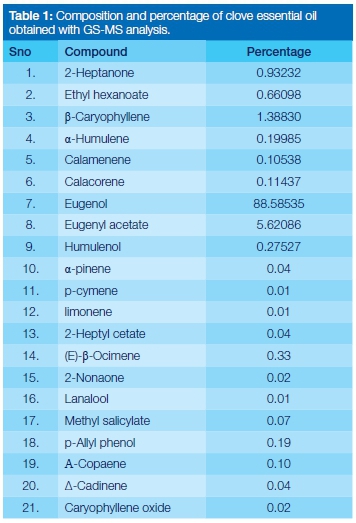
COMPONENTS OF CLOVEThree essential oils are available from clove spices: clove bud oil, clove stem oil and clove leaf oil. Each has a different chemical composition and flavour. The major components of clove oil are eugenol, β-caryophyllene, eugenol acetate and in lesser amounts, benzyl alcohol, chavicol, acetyl salicylate and humulenes.14,21Table 1.
Chaieb, Hajlaoui, Zmantar et al.1420et al.222321
PHARMACOLOGICAL EFFECTS OF CLOVEAntibacterial activity
Natural remedies have been used for a long time for the treatment of various bacterial infections. In the recent practice of medicine, the misuse of antibiotics has led to the development of bacterial resistance. Therefore there is a need for identifying novel antibacterial agents against which there is minimal or no bacterial resistance. Studies on clove oil or its extract may contribute to the development of novel antimicrobial agents to offset the effects of resistance to antibiotics. Essential oils have anti-quorum sensing activity which might be important in reducing the virulence and pathogenicity of drug-resistant bacteria.24,25 (Quorum sensing is a means of bacterial intercellular communication. Anti-quorum sensing interrupts that process). A combination therapy of clove with antibiotics could be another method of overcoming bacterial resistance.
Several studies have shown the effectiveness of clove against numerous strains of bacteria.26-35 Clove oil and eucalyptus oil exhibited antibacterial properties against the most common oral pathogen S. Mutans.27-29Cai and Wu13 Porphyromonas gingivalis, Streptococcus mutans, Actinomyces viscosus and Prevotella intermedia. Several other studies have confirmed the in vitro antibacterial activity of clove against gram negative bacteria like Escherichia coli, Klebsiella pneumonia, Pseudomonas aeruginosa, Proteus vulgaris, Campylobacter jejuni, and Salmonella enteritidis, and gram-positive bacteria like Bacillus subtilis and Staphylococcus aureus.30-35Duraipandiyan, Ayyanar and Ignacimuthu.36Bacillus subtilis, Staphylococcus epidermidis, Enterococcus faecalis, Escherichia coli, Ervinia sp, and Proteus vulgaris. Clove oil exhibited antibacterial activity against five strains of S. epidermidis (reference strains CIP106510, E13, S27, S23 and S38) which is mainly attributed to the presence of eugenol,1237in vitro and in mice infected with Klebsiella pneumoniae.38,3940Listeria monocytogenes strains were significantly reduced by treatment with 1% and 2% clove oil. Furthermore Ogunwande, Olawore, Ekundayo et al.41Staphylococcus aureus, while the leaf oil inhibited the growth of Bacillus cereus, with an MIC of 39mg/ mL. Hospital-acquired infections are important due to presence of methicillin-resistant Staphylococcus aureus (MRSA) and its ability to cause severe soft tissue, bone or implant infections.4243,44 The antibacterial property of clove is due to the damaging effect it has on the bacterial cell membrane.37
Several authors have investigated the synergistic interaction of clove oil molecule together with a conventional antibiotic.45-47 Time - kill studies have been used to evaluate the effect of interaction between eugenol together with ampicillin and with gentamicin. The hydrophilic antibiotics such as vancomycin and β-lactam antibiotics have a marginal activity on gram negative bacteria but exhibit enhanced antibacterial activity when pre-treated with eugenol.12,46 This synergistic effect could be explained by the fact that eugenol is able to damage the membrane of bacteria allowing increased penetration of vancomycin and β-lactam antibiotics and therefore effecting a greater antimicrobial effect.4645 48,49 Clove was found to be less effective when compared with cinnamon oil.49
No clinical studies were identified which had evaluated the effect of eugenol or any of clove extracts on periodonto-pathogenic microorganism.
Anti- Inflammatory activity
Bacteria are responsible for the initiation of periodontal disease, but it is the host immune-inflammatory response which is responsible for the progression of the disease and destruction of the periodontal attachment. One of the pathways is through the synthesis and release of prostaglandin and other arachidonic acid metabolites locally within the periodontal tissue. Tissue damage leads to the production of free arachidonic acid, which is further metabolized via either the cycloxygenase (COX) pathway to the prostaglandin (PGE2), prostacyclin and thrombaxane or the lipoxygenase (LOX) pathway to the leukotrienes. Therefore it is recognised that potential COX and leukotrienes inhibitors be considered as anti-inflammatory agents.
Few authors have investigated eugenol and acetyl eugenol for potential anti-inflammatory action on COX-2 and LOX enzymes.50,51 Eugenol appeared to directly inhibit COX-2 enzyme activity, possibly through complete i nhibition of PGE2, suppression of the nuclear factor kappa B (NF-κΒ) pathway and inhibition of interleukin (IL) - 6 production.525354555657
Antioxidant property
The reactive oxygen species (ROS) produced by our body are responsible for tissue damage and cell death and can inhibit normal function of cellular lipids, proteins, DNA and RNA. This can lead to many chronic diseases such as heart disease, cancer and even periodontitis.58 Clove has been identified as a potent anti-oxidant. Antioxidant activity of clove might be due to the higher concentration of phenolic compounds such as eugenol (71.56%), eugenol acetate (8.99 %) and thymol.59,60 The antioxidant activity of clove extract was comparable to that of the natural antioxi-dant, α-tocopherol (vitamin E) and butylated hydroxyl toluene (BHT).20,61,62Syzygium aromaticum derivatives can prevent injury by ROS by scavenging free radicals, by chelation of transition metal ions, by inhibition of oxidant enzymes or by regeneration of α-tocopherol from α-tocopheroxyl radical. 12,14,59,60
The anti-oxidant capacity of clove was present when measured by the metal chelating activity, by bleomycin dependant DNA oxidation, by diphenyl-p-picryl hydrazyl (DPPH) radical scavenging activity and by the ferric reducing antioxidant power (FRAP).59,60Syzygium aromaticum showed the highest antioxidant activity among 19 different extracts from Thai medicinal plants.6359,60 Clove also showed increased ability to inhibit metal-ion induced LPO.59,60 Some of the earlier in vitro studies have demonstrated that flavonoids can scavenge O2, OH and per-oxyl radicals, and inhibit LPO in different systems.64-66 High DPPH scavenging activity as well as O2 radical scavenging activity and metal chelating activity may be responsible for the marked antioxidant action of cloves. Thus the antioxidant properties of spices may be attributed to various mechanisms, which include prevention of chain initiation, chelation of transition metal ion catalysts, decomposition of peroxides, prevention of continued hydrogen abstraction, reductive capacity and radical scavenging activity.59
The effect of eugenol is concentration dependant. At low concentrations it has anti-oxidant and anti-inflammatory effects, whereas at high concentrations it acts as a prooxidant, leading to tissue damage resulting from the enhanced generation of free radicals.12,60 Clove exhibited a higher bleomycin-dependent DNA oxidation activity indicating a prooxidant effect.60
Antifungal activity
Clove possesses fungicidal characteristics in vitro and in vivo due to its phenolic components, carvacrol and eugenol.67,68 The potential drawback in the treatment of fungal diseases is the possibility of the development of antimicrobial resistance. Combination therapy with clove could form an alternative treatment method especially in treating fluconazole-resistant or multi-drug resistant fungal diseases. Studies have shown synergistic interaction with the use of eugenol and/or methyl-eugenol or either in combination with fluconazole or amphotericin B.69
Antifungal activity has been seen against Candida albicans and Trichophyton mentagrophytes,70,71 Onychomycosis,72 73747576in vitro activity against C. albicans cells within biofilms.777879
Antiviral activity
Viruses are highly sensitive to the components of essential oils. The antiviral activity of eugenol has been tested against the herpes simplex-1 (HSV-1) and HSV-2 viruses.80,81 Hussein, Miyashiro, Nakamura et.al82Syzygium aromaticum extract was highly active at inhibiting replication of the hepatitis C virus. Synergistic interaction between acy-clovir and eugenol combination has been seen.
Analgesic activity
For many ages eugenol has been used as a natural remedy for relieving tooth pain. Similarly this technique in modern dental practice has been adopted by many clinicians, in which eugenol can act as an analgesic agent. Eugenol exhibited an analgesic effect in different experimental pain models in mice.83,84 Kurian and co-workers8484 85
Anaesthetic activity
Eugenol is cheap and is an easily available topical anaesthetic. It is relatively user-friendly and can be used effectively in lower concentrations than other local anaesthetics.868788
OTHER ACTIVITY OF SYZYGIUM AROMATICUM
Anti-tumour activity
Clove essential oil has been reported to show anti-carcinogenic and anti-mutagenic potential.12Syzygium aromaticum were investigated as potential anticarcinogenic agents.11141489
Cardiovascular activity
The consumption of polyphenol-rich foods like clove can lower the risks for cardiovascular disease, arterial sclerosis and other disease related to oxidative stress.90-92 Eugenol produces dose-dependent, reversible vasodilator responses, negative inotropic effects in heart muscle, hypotensive effects and smooth muscle relaxant effect.93-95
POTENTIAL OF CLOVE (SYZYGIUM AROMATICUM) FOR TREATMENT OF PERIODONTAL DISEASE
Periodontal disease initiation and progression occurs as a consequence of the host response to microorganisms present in dental biofilm.1,2 The pathogens stimulate the host response resulting in the release of harmful by-products such as cytokines and prostaglandins by leukocytes, fibroblasts or other host tissue-derived cells and enzymes. These break down extracellular matrix components, such as collagen, as well as host cell membranes, consequently leading to periodontal attachment loss and bone resorption.2
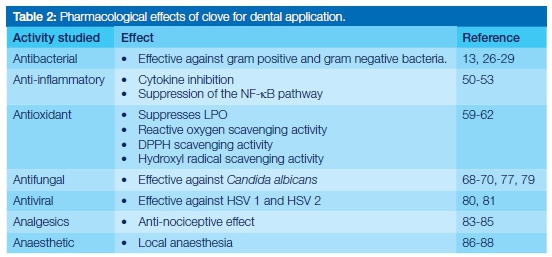
Host modulation therapeutic strategies are aimed at inhibition of the progression of inflammatory bone loss associated with periodontitis.5Table 2 describes the therapeutic use of clove for dental application.
Clove exhibited antibacterial activity against gramnegative anaerobic periodontal pathogens, including Porphyromonas gingivalis and Prevotella intermedia.13 52-55 Besides its anti-inflammatory properties, clove also has antioxidant property.59,60,62 It has an important property for reducing the oxidative stress which is often seen in periodontal disease. It promotes DPPH scavenging activity, hydroxyl radical scavenging and inhibits lipid peroxidation.59-62 It exhibits antifungal activity against Candida albicans68-70,77and antiviral activity against Herpes Simplex virus (HSV) 1 and 2.80,81 Analgesic83-85 and anaesthetic properties8796
All these studies demonstrated that therapy with clove and its active components like eugenol can be beneficial for the treatment of periodontal disease as a natural anti-plaque or anti-gingivitis agent. Research has been particularly lacking in the areas of periodontal disease control. Clove can be effectively incorporated in therapeutic agents formulated against periodontal diseases in the form of mouthwashes, tooth pastes, topical agents and local drug delivery devices.
CYTOTOXICITY OF CLOVEClove oil and its components are generally recognized as 'safe', but the in vitro study by Prashar et al.22229717
CONCLUSION
Clove has many properties which have been identified in both basic and specific disease- targeted research that could be of benefit in the treatment of periodontal disease. Yet the review shows glaring gaps in research which is specific to inflammatory periodontal disease. Eugenol, an important constituent of clove, has important anti-microbial and anti-inflammatory properties which could be harnessed and designed for the control and cure of periodontal disease. The fast developing fields of pharmaceutical and nano-technology are bound to impact on the designing of eugenol/clove extract formulations. There are opportunities wherein specific cell or tissue- targeting technology could effectively deliver the natural remedies in appropriate quantities and form. This will also negate the few cytotoxic properties of these compounds. Concerted effort is needed, as revealed by this review, to initiate investigations which could bring the findings hidden on the research benches to effective clinical use. Interdisciplinary research especially between pharmacy and clinical periodontics is seriously advocated. This paper suggests that there will be merit in the return to natural medicine for the treatment of periodontal diseases.
ACRONYMSBHT: butylated hydroxyl toluene
DPPH: diphenyl-p-picryl hydrazyl
FRAP: ferric reducing/ antioxidant power
LPO: LOX-catalysed lipid peroxidation
MIC: minimum inhibitory concentration
ROS: reactive oxygen species
References
- 1. Apatzidou DA, Riggio MP, Kinane DF. Quadrant root planing versus same day full mouth root planing II. Microbiological findings. J Clin Periodontol 2004; 31:141-8.
- 2. Haffajee AD, Socransky SS. Microbial etiological agents of destructive periodontal diseases. Periodontol 2000 1994, 5:78-111.
- 3. Apatzidou DA, Kinane DF. Nonsurgical mechanical treatment strategies for periodontal disease. Dent Clin North Am 2010; 54:1-12.
- 4. Bonito AJ, Lux L, Lohr KN. Impact of local adjuncts to scaling and root planing in periodontal disease therapy: a systematic review. J Periodontol 2005; 76:1227-36.
- 5. Preshaw PM. Host response modulation in periodontics. Periodontol 2000 2008;48:92-110.
- 6. Kumar P, Ansari SH, Ali J. Herbal remedies for the treatment of periodontal disease--a patent review. Recent Pat Drug Deliv Formul 2009; 3:221-8.
- 7. Newman DJ, Cragg DM. Natural products as sources of new drugs over the last 25 years. J Nat Prod 2007; 70:461- 77.
- 8. DiSilvestro RA, DiSilvestro DJ, DiSilvestro DJ. Pomegranate extract mouth rinsing effects on saliva measures relevant to gingivitis risk. Phytother Res 2009; 23:1123-7.
- 9. Namiranian H, Serino G. The effect of a toothpaste containing aloe vera on established gingivitis. Swed Dent J 2012; 36:179-85.
- 10. Surathu N, Kurumathur AV. Traditional therapies in the management of periodontal disease in India and China. Periodontol 2000 2011; 56:14-24.
- 11. Zheng GQ, Kenney PM, Lam LKT. Sesquiterpenes from clove (Eugenia caryophyllata). J Nat Prod 1992; 55: 999-1003.
- 12. Kamatou GP, Vermaak I, Viljoen AM. Eugenol from the remote Maluku Islands to the international market place: a review of a remarkable and versatile molecule. Molecules 2012; 17:6953-8.
- 13. Cai L, Wu CD. Compounds from Syzygium aromaticum possessing growth inhibitory activity against oral pathogens. J Nat Prod 1996;59:987-90
- 14. Chaieb K, Hajlaoui H, Zmantar T, Kahla-Nakbi AB, Rouabhia M, Mahdouani K, Bakhrouf A. The chemical composition and biological activity of clove essential oil, Eugenia caryophyllata (Syzigium aromaticum L. Myrtaceae): a short review. Phytother Res 2007;21:501-6.
- 15. Pramod K, Ansari SH, Ali J. Eugenol: a natural compound with versatile pharmacological actions. Nat Prod Commun 2010; 5:1999-2006.
- 16. Chomchalow N. Spice production in Asia-An overview. Presented at IBC Asian Spice Markets Conference, Singapore, 27-28 May 1996.
- 17. Hartnoll G, Moore D, Douek D. Near fatal ingestion of oil of cloves. Arch Dis Child 1993; 69: 392-3
- 18. Kim HM, Lee EH, Hong SH, Song HJ, Shim MK, Kim SH, et al. Effect of Syzygium aromaticum extract on immediate hypersensitivity in rats. J Ethnopharmacol 1998; 60: 125-31.
- 19. Lee KYM, Patterson A, Piggot JR, Richardson GD. Origins of flavour in whiskies and a revised flavour wheel: A review. J Inst Brew 2001; 107: 287-313.
- 20. Lee KG, Shibamoto T. Antioxidant property of aroma extract isolated from clove buds (Syzygium aromaticum (L.) Merr. Et Perry). Food Chem 2002; 74: 443-8.
- 21. Alma HA, Ertas M, Nitz S, Kollmannsberger H. Chemical composition and content of essential oil from the bud of cultivated Turkish clove (Syzygium aromaticum L.). BioResources 2007; 2:265-9.
- 22. Prashar A, Locke IC, Evans CS. Cytotoxicity of clove (Syzygium aromaticum) oil and its major components to human skin cells. Cell Prolif 2006; 39: 241-8.
- 23. Pawar VC, Thaker VS. In vitro efficacy of 75 essential oils against Aspergillus niger. Mycoses 2006; 49: 316 -23.
- 24. Khan MS, Zahin M, Hasan S, Husain FM, Ahmad I. Inhibition of quorum-sensing regulated bacterial functions by plant essential oils with special reference to clove oil. Lett Appl Microbiol. 2009; 49:354-60.
- 25. Dorman HJ, Deans SG. Antimicrobial agents from plants: antibacterial activity of plant volatile oils. J Appl Microbiol 2000; 88:308-16.
- 26. Prabuseenivasan S, Jayakumar M, Ignacimuthu S. In vitro antibacterial activity of some plant essential oils. BMC Complement Altern Med 2006; 6:39-47.
- 27. Chaudhari LK, Jawale BA, Sharma S, Sharma H, Kumar CD, Kulkarni PA. Antimicrobial activity of commercially available essential oils against Streptococcus mutans. J Contemp Dent Pract 2012; 13:71-4.
- 28. Rahim ZH, Khan HB. Comparative studies on the effect of crude aqueous (CA) and solvent (CM) extracts of clove on the cariogenic properties of Streptococcus mutans. J Oral Sci 2006; 48:117-23.
- 29. Uju DE, Obioma NP. Anticariogenic potentials of clove, tobacco and bitter kola. Asian Pac J Trop Med 2011;4:814-8.
- 30. Burt SA, Reinders RD. Antibacterial activity of selected plant essential oils against Escherichia coli O157:H7. Lett Appl Microbiol 2003; 36: 162-7.
- 31. Feres M, Figueiredo LC, Barreto IM, Coelho MN, Araujo MW, Cortelli SC. In vitro antimicrobial activity of plant extracts and propolis in saliva samples of healthy and periodontally-involved subjects. J Int Acad Periodontol 2005; 7: 90-6.
- 32. Larhsini M, Oumoulid L, Lazrek HB, Wataleb S, Bousaid M, Bekkouche K, et al. Antibacterial activity of some Moroccan medicinal plants. Phytother Res. 2001;15:250-2.
- 33. Friedman M, Henika PR, Mandrell RE. Bactericidal activities of plant essential oils and some of their isolated constituents against Campylobacter jejuni, Escherichia coli, Listeria monocytogenes, and Salmonella enterica. J Food Prot 2002; 65: 1545-60.
- 34. Magina MD, Dalmarco EM, Wisniewski A Jr, Simionatto EL, Dalmarco JB, Pizzolatti MG, Brighente IM. Chemical composition and antibacterial activity of essential oils of Eugenia species. J Nat Med 2009; 63:345-50.
- 35. Keskin D, Toroglu S. Studies on antimicrobial activities of solvent extracts of different spices. J Environ Biol 2011; 32:251-6.
- 36. Duraipandiyan V, Ayyanar M, Ignacimuthu S. Antimicrobial activityof some ethno-medicinal plants used by Paliyar tribe from Tamil Nadu, India. BMC Complement Altern Med 2006 17; 6:35-42.
- 37. Devi KP, Nisha SA, Sakthivel R, Pandian SK. Eugenol (an essential oil of clove) acts as an antibacterial agent against Salmonella typhi by disrupting the cellular membrane. J Ethnopharmacol 2010; 130:107-15.
- 38. Fabio A, Cermelli C, Fabio G, Nicoletti P, Quaglio P. Screening of the antibacterial effects of a variety of essential oils on microorganisms responsible for respiratory infections. Phytother Res 2007; 21:374-7.
- 39. Saini A, Sharma S, Chhibber S. Induction of resistance to respiratory tract infection with Klebsiella pneumoniae in mice fed on a diet supplemented with tulsi (Ocimum sanctum) and clove (Syzgium aromaticum) oils. J Microbiol Immunol Infect 2009; 42:107-13.
- 40. Mytle N, Anderson GL, Doyle MP, Smith MA. Antimicrobial activity of clove (Syzgium aromaticum) oil in inhibiting Listeria monocy-togenes on chicken frankfurters. Food Control 2006; 17: 102-7.
- 41. Ogunwande IA, Olawore NO, Ekundayo O, Walker TM, Schmidt JM, Setzer WN. Studies on the essential oils composition, antibacterial and cytotoxicity of Eugenia uniflora L. Int J Aromather 2005; 15: 147-52.
- 42. Neely AN, Maley MP. Survival of enterococci and staphylococci on hospital fabrics and plastic. J Clin Microbiol 2000; 38: 724-6.
- 43. Warnke PH, Becker ST, Podschun R, Sivananthan S, Springer IN, Russo PA, Wiltfang J, Fickenscher H, Sherry E. The battle against multi-resistant strains: Renaissance of antimicrobial essential oils as a promising force to fight hospital-acquired infections. J Craniomaxillofac Surg 2009; 37:392-7.
- 44. Enzo AP, Susan JS. Antibacterial activity of Australian plant extracts against methicillin-resistant Staphylococcus aureus (MRSA) and vancomycin-resistant enterococci (VRE). J Basic Microbiol 2002; 42: 444-8.
- 45. Moon SE, Kim HY, Cha JD. Synergistic effect between clove oil and its major compounds and antibiotics against oral bacteria. Arch Oral Biol 2011; 56:907-16.
- 46. Hemaiswarya S, Doble M. Synergistic interaction of eugenol with antibiotics against gram negative bacteria. Phytomedi-cine 2009; 16:997-1005.
- 47. Mayaud L, Carricajo A, Zhiri A, Aubert G. Comparison of bac-teriostatic and bactericidal activity of 13 essential oils against strains with varying sensitivity to antibiotics. Lett Appl Microbiol 2008; 47:167-73.
- 48. Pei RS, Zhou F, Ji BP, Xu J. Evaluation of combined antibacterial effects of eugenol, cinnamaldehyde, thymol, and carvacrol against E. coli with an improved method. J Food Sci 2009; 74:M379-383.
- 49. Gupta C, Kumari A, Garg AP, Catanzaro R, Marotta F. Comparative study of cinnamon oil and clove oil on some oral microbiota. Acta Biomed 2011; 82:197-9.
- 50. d' Avila Farias M, Oliveira PS, Dutra FS, Fernandes TJ, de Pereira CM, de Oliveira SQ, et al. Eugenol derivatives as potential anti-oxidants: is phenolic hydroxyl necessary to obtain an effect? J Pharm Pharmacol 2014; 66:733-46.
- 51. Daniel AN, Sartoretto SM, Schmidt G, Caparroz-Assef SM, Bersani-Amado C.A, Cuman RKN. Anti-inflammatory and antinociceptive activities of eugenol essential oil in experimental animal models. Rev Bras Farmacogn 2009; 19: 212-7.
- 52. Lee YY, Hung SL, Pai SF, Lee YH, Yang SF. Eugenol suppressed the expression of lipopolysaccharide-induced proin-flammatory mediators in human macrophages. J Endod 2007;33:698-702.
- 53. Bachiega TF, de Sousa JP, Bastos JK, Sforcin JM. Clove and eugenol in noncytotoxic concentrations exert immunomodu-latory/anti-inflammatory action on cytokine production by murine macrophages. J Pharm Pharmacol 2012; 64:610-16.
- 54. Thompson D, Eling T. Mechanism of inhibition of prostaglandin H synthase by eugenol and other phenolic peroxidase substrates. Mol Pharmacol 1989; 36:809-17.
- 55. Raghavenra H, Diwakr BT, Lokesh BR, Naidu KA. Eugenol--the active principle from cloves inhibits 5-lipoxygenase activity and leukotriene-C4 in human PMNL cells. Prostaglandins Leukot Essent Fatty Acids 2006; 74:23-7.
- 56. Naidu KA. Eugenol - an inhibitor of lipoxygenase-dependent lipid peroxidation. Prostaglandins Leukot Essent Fatty Acids 1995; 53:381-3.
- 57. Koh T, Murakami Y, Tanaka S, Machino M, Sakagami H. Re-evaluation of anti-inflammatory potential of eugenol in IL-1X-stimulated gingival fibroblast and pulp cells. In Vivo 2013;27:269-73.
- 58. Nibali L, Donos N. Periodontitis and redox status: a review. Curr Pharm Des 2013; 19:2687-297.
- 59. A.S.Yadav and D. Bhatnagar, Modulatory effect of spice extracts on iron-induced lipid peroxidation in rat liver. BioFactors 2007; 29: 147-57.
- 60. Yadav AS, Bhatnagar D. Free radical scavenging activity, metal chelation and antioxidant power of some of the Indian spices. Biofactors 2007;31:219-27.
- 61. Yoshimura M, Ito H, Miyashita K, Hatano T, Taniguchi S, Amakura Y, Yoshida T. Flavonol glucuronides and C-gluco-sidic ellagitannins from Melaleuca squarrosa. Phytochemistry 2008;69:3062-9.
- 62. Jirovetz L, Buchbauer G, Stoilova I, Stoyanova A, Krastanov A, Schmidt E. Chemical composition and antioxidant properties of clove leaf essential oil. J Agric Food Chem 2006; 54: 6303-7.
- 63. Makchuchit S, Itharat A, Tewtrakul S. Antioxidant and nitric oxide inhibition activities of Thai medicinal plants. J Med Assoc Thai 2010;93:S227-S235.
- 64. Gülçin İ. Antioxidant activity of food constituents: an overview. Arch Toxicol 2012;86:345-391.
- 65. Lotito SB, Fraga CG. (+)-Catechin prevents human plasma oxidation. Free Radic Biol Med 1998;24:435-41.
- 66. Morel I, Lescoat G, Cillard P, Cillard J. Role of flavonoids and iron chelation in antioxidant action. Methods Enzymol 1994;234:437-43.
- 67. Chaieb K, Zmantar T, Ksouri R, Hajlaoui H, Mahdouani K, Abdelly C, et al. Antioxidant properties of the essential oil of Eugenia caryophyllata and its antifungal activity against a large number of clinical Candida species. Mycoses 2007;50:403-6.
- 68. Chami N, Bennis S, Chami F, Aboussekhra A, Remmal A. Study of anticandidal activity of carvacrol and eugenol in vitro and in vivo. Oral Microbiol Immunol 2005;20:106-11.
- 69. Khan MS, Malik A, Ahmad I. Anti-candidal activity of essential oils alone and in combination with amphotericin B or fluconazole against multi-drug resistant isolates of Candida albicans. Med Mycol 2012;50:33-42.
- 70. Tampieri MP, Galuppi R, Macchioni F, Carelle MS, Falcioni L, Cioni PL, Morelli I. The inhibition of Candida albicans by selected essential oils and their major components. Mycopathologia 2005;159:339-45.
- 71. Núñez L, D'Aquino M, Chirife J. Antifungal properties of clove oil (Eugenia caryophylata) in sugar solution. Braz J Microbiol 2001; 32: 123-6.
- 72. Gayoso CW, Lima EO, Oliveira VT, Pereira FO, Souza EL, Lima IO, et al. Sensitivity of fungi isolated from onychomycosis to Eugenia cariophyllata essential oil and eugenol. Fitoterapia 2005;76:247-9.
- 73. Chami F, Chami N, Bennis S, Bouchikhi T, Remmal A. Oregano and clove essential oils induce surface alteration of Saccharomyces cerevisiae. Phytother Res 2005; 19: 405- 8.
- 74. Lopez P, Sanchez C, Batlle R, Nerin C. Solid- and vapor-phase antimicrobial activities of six essential oils: susceptibility of selected foodborne bacterial and fungal strains. J Agric Food Chem 2005; 53: 6939-46.
- 75. Pawar VC, Thaker VS. In vitro efficacy of 75 essential oils against Aspergillus niger. Mycoses 2006; 49: 316 -23.
- 76. Pinto E, Vale-Silva L, Cavaleiro C, Salgueiro L. Antifungal activity of the clove essential oil from Syzygium aromaticum on Candida, Aspergillus and dermatophyte species. J Med Microbiol 2009;58:1454-62.
- 77. He M, Du M, Fan M, Bian Z. In vitro activity of eugenol against Candida albicans biofilms. Mycopathologia 2007;163:137-43.
- 78. Garg A, Singh S. Enhancement in antifungal activity of eugenol in immunosuppressed rats through lipid nanocarriers. Colloid Surface B 2011; 87: 280-8.
- 79. Marcos-Arias C, Eraso E, Madariaga L, Quindós G. In vitro activities of natural products against oral Candida isolates from denture wearers. BMC Complement Altern Med 2011;11:119-21.
- 80. Benencia F, Courrges mC. In vitro and in vivo activity of eugenol on human herpesvirus. Phytother. Res 2000; 14: 495-500.
- 81. Tragoolpua Y, Jatisatienr A. Anti-herpes simplex virus activities of Eugenia caryophyllus (Spreng.) ( Bullock & S. G. Harrison) and essential oil, eugenol. Phytother Res 2007; 21: 1153-8.
- 82. Hussein G, Miyashiro H, Nakamura N, Hattori M, Kakiuchi N, Shimotohno K. Inhibitory effects of Sudanese medical plant extracts on hepatitis C virus (HCV) protease. Phytother Res 2000; 14: 510-16.
- 83. Daniel AN, Sartoretto SM, Schmidt G, Caparroz-Assef SM, Bersani-Amado CA, Cuman RKN. Anti-inflammatory and an- tinociceptive activities of eugenol essential oil in experimental animal models. Rev Bras Farmacogn. 2009; 19: 212-7.
- 84. Kurian R, Arulmozhi DK., Veeranjaneyulu A, Bodhankar SL. Effect of eugenol on animal models of nociception. Indian J. Pharmacol 2006; 38: 341-5.
- 85. Guenette SA, Beaudry F, Marier JF, Vachon P. Pharmacokinetics and anesthetic activity of eugenol in male Sprague-Dawley rats. J Vet Pharmacol Ther 2006;29:265-70.
- 86. Keene JL, Noakes DLG, Moccia RD, Soto CG. The efficacy of clove oil as an anaesthetic for rainbow trout, Oncorhynchus mykiss (Walbaum). Aquacult Res 1998; 29: 89-101.
- 87. Rapp C. Clove oil as effective as topical anesthetic. Herbal Gram 2007; 74: 26.
- 88. Markowitz K, Moynihan M, Liu M, Kim S. Biologic properties of eugenol and zinc oxide-eugenol. A clinically oriented review. Oral Surg Oral Med Oral Pathol 1992; 73: 729- 37.
- 89. Kaur G, Athar M, Alam MS. Eugenol precludes cutaneous chemical carcinogenesis in mouse by preventing oxidative stress and inflammation and by inducing apoptosis. Molecular Carcinogenesis 2010; 49: 290-301.
- 90. Manach C, Mazur A, Scalbert A. Polyphenols and prevention of cardiovascular diseases. Curr Opin Lipidol 2005;16:77-84.
- 91. Auclair S, Silberberg M, Gueux E, Morand C, Mazur A, Milenk-ovic D, Scalbert A.J. Apple polyphenols and fibers attenuate atherosclerosis in apolipoprotein E-deficient mice. Agric Food Chem 2008 ;56:5558-63.
- 92. Scalbert A, Manach C, Morand C, Rémésy C, Jiménez L. Dietary polyphenols and the prevention of diseases. Crit Rev Food Sci Nutr 2005;45:287-306.
- 93. Criddle DN, Madeira SV, Soares de Moura R. Endothelium-dependent and -independent vasodilator effects of eugenol in the rat mesenteric vascular bed. J Pharm Pharmacol 003;55:359-65.
- 94. Sensch O, Vierling W, Brandt W, Reiter M. Effects of inhibition of calcium and potassium currents in guinea-pig cardiac contraction: comparison of beta-caryophyllene oxide, eugenol, and nifedipine. Br J Pharmacol 2000; 131:1089-96.
- 95. Damiani CE, Rossoni LV, Vassallo DV. Vasorelaxant effects of eugenol on rat thoracic aorta. Vascul Pharmacol 2003; 40:59-66.
- 96. Karmakar S, Choudhury M, Das AS, Maiti A, Majumdar S, Mitra C. Clove (Syzygium aromaticum Linn) extract rich in eugenol and eugenol derivatives shows bone-preserving efficacy. Nat Prod Res 2012; 26:500-9.
- 97. Sarrami N, Pemberton MN, Thornhill MH, Theaker ED. Adverse reactions associated with the use of eugenol in dentistry. Brit Dent J 2002; 193: 257-9.
SJ Pulikkotil
International Medical University, School of Dentistry
Kuala Lumpur, Malaysia 57000
Fax number: +603 8656 7229
Email: