Radiographic exposure during pregnancy
S Naidoo
BDS (Lon), LDS.RCS (Eng), MDPH (Lon), DDPH.RCS (Eng), MChD (Comm Dent), PhD (US), PG Dip! Int Research Ethics (UCT), DSc (UWC). Senior Professor and Principal Specialist, Faculty of Dentistry, University of the Western Cape, Department of Community Dentistry, Private Bag X1, tygerberg 7505. e-mail:
SCENARIOA 28 year old woman in her first trimester of pregnancy attends the dental surgery as a new patient. She presents with a periapical abscess on her first molar tooth and expresses concern about the numerous unfilled cavities that may cause problems during her pregnancy. She had last visited a dentist over five years ago and brought a set of radiographs taken during one of those appointments. The proposed current treatment plan was explained together with the need to update the type and number of the radiographs that were required. She said that she was worried about the risk of miscarriage and could her old radiographs not be used instead of taking new ones?
COMMENTARYPregnancy induces various changes to a mother's body including the oral cavity. Pregnant women develop physical signs and symptoms that can affect their health, their perceptions and interactions with others and they may require various levels of support including medical monitoring, preventive care, and physical and emotional help.12
The developing foetus has been shown to be susceptible to the effects of radiation, particularly during the first 2 to 18 weeks of development. The level of radiation will determine the damage that may result in miscarriages, birth defects or mental impairment. However, dental radiation exposure of the foetus is negligible.33-5 A lead shield/protective apron, thyroid collar and current standards of radiation safety must be maintained to minimize harm to the foetus. In addition, the use of high-speed film, filtration and long cone rectangular collimation significantly decrease radiation exposure. Digital radiography may further decrease any potential risk.
In the above-mentioned scenario, the dentist is placed in a dilemma by the patient's request - and needs to carefully consider the ethical principles of respecting autonomy, non-maleficence (doing no harm) and beneficence (doing good). Questions the dentist may need to consider include whether it is safe to provide treatment in the first trimester of her pregnancy? How urgent is her dental treatment? Can treatment be delayed? The respect for patient autonomy is critical in obtaining valid informed consent. Autonomy refers to the right of every individual to make decisions for him/herself and this would entail allowing the patient to make the final decision regarding his/her treatment options, after having been provided with all the necessary and relevant information.
Before subjecting a patient to any diagnostic investigations, it is an ethical and a legal requirement that their agreement and consent is obtained. Consent must be voluntary and it is essential that the patient be given all the relevant information related to the procedure or treatment, and in language that is easily understandable.6 6
The "best interest" of patients means that professional decisions of proposed treatments and any reasonable alternatives proposed by the dentist must consider patients' values and personal preferences. To do this dentists need to carefully communicate with their patients, but listening is also important. There are instances when patient desires conflict with professional recommendations. Patients must be informed of possible complications, alternative treatments, advantages and disadvantages of each, costs of each, and expected outcomes. Together, the risks, benefits, and burdens can be balanced. It is only after such consideration that the "best interests" of patients can be assured.6
CONCLUDING REMARKS
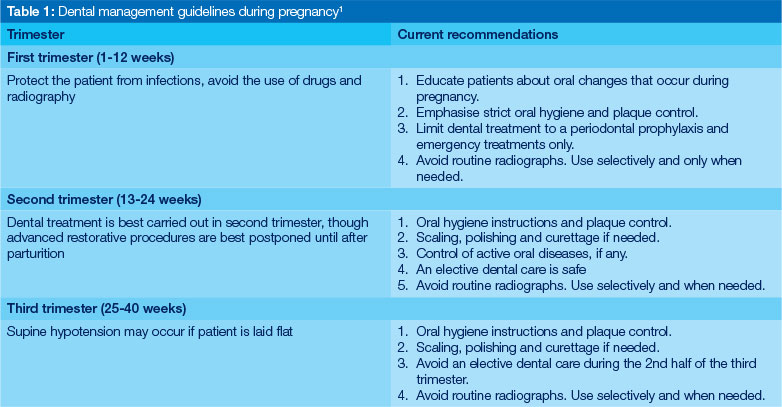
Pregnancy is an ideal time to begin educating the mother on prevention. It is best if as much treatment as possible is postponed until after parturition and the reasons for this are twofold. Firstly, the developing child is at a greatest risk from teratogens during organogenesis74 Table 1 provides a guideline for dental management during pregnancy.18
References
- 1. Hemalatha VT, Manigandan T, Sarumathi T, Aarthi Nisha V, Amudhan A. Dental considerations in pregnancy - A critical review on the oral care. J Clin Diagn Res. 2013 May; 7(5): 948-53.
- 2. Lakshman S, Radfar L. Pregnancy and lactation. Oral Surg Oral Med Oral Pathol. Oral Radiol Endod. 2004; 97:672-82.
- 3. Richards AG. Dental X-ray protection. Dent Clin North Am. 1968:631-41.
- 4. Nayak AG, Denny C, Veena KM. Oral health care considerations for the pregnant woman. Dent Update. 2012; 39(1):51-4.
- 5. Singh M. The pregnant dental patient. J Mass Dent Soc. 2012;60(4):32-4
- 6. Moodley K, Naidoo S. Ethics for the Dental Team. Van Schaik Publishers, Pretoria, 2010.
- 7. Chaveli Lopez B, Sarrion Perez MG, Jimenez Soriano Y. Dental considerations in pregnancy and menopause. J Clin Exp Dent. 2011; 3(2):e135-44.
- 8. Horner K. Radiographic selection criteria: new guidelines, old challenges. British Dental Journal 2013; 214: 201-3.