Dental practitioners' knowledge of healthcare waste management in the Greater Tshwane region
Abstract
INTRODUCTION: The healthcare waste management (HCWM) practices undertaken at dental healthcare facilities are of pivotal importance due to the infectious and hazardous nature of the waste generated at these facilities. Of particular importance is the risks associated with healthcare waste on the environment, including public health. Relevant knowledge of healthcare waste management regulations, with the emphasis on the individual responsibility of each dental healthcare team member, is paramount to ensure effective and efficient HCWM practices. The aim of the study is intended to contribute to the development of a HCWM plan specifically for dental healthcare facilities and as a basis for minimising risks to the health and well-being of the practitioners and people as well as the environment. The main aim of this study is to explore dental healthcare waste management to identify knowledge strengths, -weaknesses, and -opportunities in the dental healthcare facilities in the Greater Tshwane region. OBJECTIVE: To explore the dental health practitioners' knowledge of healthcare waste management. DESIGN: The study was based on a descriptive and cross-sectional explorative study. METHOD: Data were collected from 52 respondents using a questionnaire, which probed their knowledge, towards HCWM. The study centred on public and private dental healthcare facilities in central, eastern, western and northern Tshwane as well as one academic training institution in northern Tshwane. RESULTS AND CONCLUSIONS: The results were positively indicative that dental healthcare staff consider they have sufficient knowledge of HCWM.
Waste management; dental healthcare workers; knowledge; dental practitioners/assistants
1. INTRODUCTION
The dental healthcare sector generates growing quantities of healthcare waste while rendering dental healthcare procedures at their facilities. This waste includes both general waste and healthcare risk waste (HCRW), which presents associated health- and environmental risks.1234
5.1 Unsafe management of hazardous healthcare waste, particularly in its disposal, may increase the risk of needle stick injuries, transmission of infectious agents and expose unsuspecting parties to unnecessary and entirely preventable risks. The severity of the risk associated with such exposures may be difficult to quantify, and such exposures should be prevented.
5.2 Healthcare waste entering the normal domestic waste stream will end up being disposed of in municipal landfill sites. When healthcare waste is placed in landfills or buried, contamination of groundwater may occur and may result in the spread of infectious pathogens, such as E-Coli, and unacceptably high Chemical Oxygen Demand (COD) readings.
5.3. Many smaller landfill sites are not fenced off and have poor security. This results in unwanted tip-face picking and scavenging. If healthcare waste is disposed on such a site, there is a risk of exposure to people scavenging on the sites.
5.4 The irresponsible and illegal dumping of hazardous healthcare waste in South Africa, as intermittently reported in the media, is a matter or serious concern. It also places an unacceptably high financial and human resources burden on health authorities to manage the problem.
5.5 The burning of healthcare waste as opposed to incineration is not recommended as it pollutes the environment, especially through the formation of dioxins. Incineration should only be used where it meets specifications that avoid secondary pollutant emissions.
The possibility of experiencing a healthy environment is unpleasantly affected when waste generation without proper management is encountered. Without appropriate knowledge and management of healthcare waste generated at dental healthcare facilities, the dental healthcare staff, people in the immediate vicinity, the waste handlers and the public at large can be adversely affected due to the production of toxins and cross-contamination caused by human pathogens from oral secretions.567
1.1 Risks associated with dental healthcare waste
In human lives good health and wellness are core essences.891011,12 Infectious waste management remains the biggest challenge in developing countries with re-occurring infectious diseases like diarrhoea and typhoid which demands effective healthcare waste management.1314
The reuse of materials at a healthcare facility has provoked much debate, in particular, concern over the reuse of single-use medical devices. In general, the use of non-disposable items for medical procedures should be encouraged, especially when sterilisation cleaning can be demonstrated to minimise infection transmission to acceptably low levels.15
Furthermore, a study on the management of HCRW, conducted by the World Health Organization161718
Dental healthcare workers have been identified to be at increased risk of cross-contamination with infection after needle-stick injuries. Their chances of infection with hepatitis B are 6 - 30% after a single needle-stick incident.1619202121211616
The report on post-exposure management among dental assistants indicated that almost a quarter of the respondents (23%) failed to report exposures and injuries.22222425
The transmission of infection and its control is well explained by the "chain of infection", which consists of an infectious agent, reservoir, portal of exit, mode of transmission, portal of entry and susceptible host. It is essential that healthcare workers understand the significance of each link and how the chain of infection can be interrupted. Hence, good HCRW management can be viewed as an infection control procedure. Control measures for HCRW are most often directed at the mode of transmission stage in the chain of infection, although it is also important to note that breaking any link in the chain will prevent infection.26
It is imperative for infection control to be seen as a key element in providing a safe environment for patients and staff within a dental healthcare facility.27, 28 Dental healthcare facilities are supposed to be places of caring/healing, but instead, can become places where infections are spread because of poor healthcare waste management.293029
A risk associated with dental restorative materials is posed using dental amalgam, as it contains mercury. Mercury can corrode, has a low flame point and is a reactive, oxidizing explosive as well as being highly toxic, especially in its elemental form or as methylmercury. It may be fatal if inhaled and is harmful if absorbed through the skin or mucous membrane. Roughly 80% of the inhaled mercury vapour is absorbed into the blood through the lungs, which can then lead to the nervous, digestive, respiratory, immune systems and kidneys as well as the lungs being harmed.31293131
According to a survey conducted by the WHO in 22 developing countries in 2002, it was found that 18% - 64% of HCF did not use proper waste disposal methods and these practices are common in many developing countries.3234, 35
A combination of continuous education, the desire for lifelong learning and professional training, including the drive of all dental team members and relevant stakeholders are required for an efficient dental healthcare waste management (HCWM) system to be achieved. Relevant knowledge of healthcare waste management regulations, with the emphasis on the individual responsibility of each team member, is paramount to ensure effective and efficient HCWM practices.3610
1.2 Inclusion and exclusion criteria
A convenience sampling strategy was followed. Thus, all participants willing to partake in the study and completed the questionnaire were included in the study. Inclusion: We conducted the study based on a voluntary basis - we did not have specific criteria except that the dental healthcare facility had to be in the Greater Tshwane region and perform routine oral healthcare procedures. Exclusion: Only respondents that could understand, speak and read fair English were selected.
2. MATERIALS AND METHODS
Healthcare waste management practices at dental healthcare facilities in the greater Tshwane region were explored. A questionnaire was used to collect data. Data analysis, reliability, validity, limitations and ethical considerations are also outlined. This study forms part of a larger study that also included attitude and practices toward HCWM. Only the knowledge toward HCWM was highlighted in this article.
2.1 Study location and sample size
South Africa has a total of 257 municipalities, 8 of which are metropolitan municipalities.3737
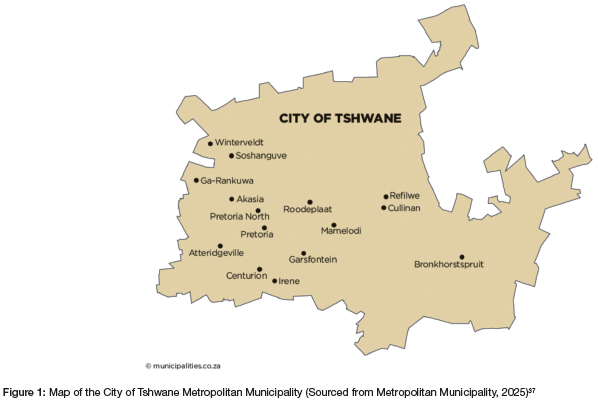
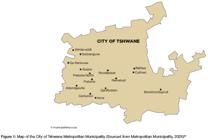
Figure 1 shows the geographical map of Greater Tshwane, including some of the surrounding towns. The questionnaires were distributed within this study area.
2.2 Study design
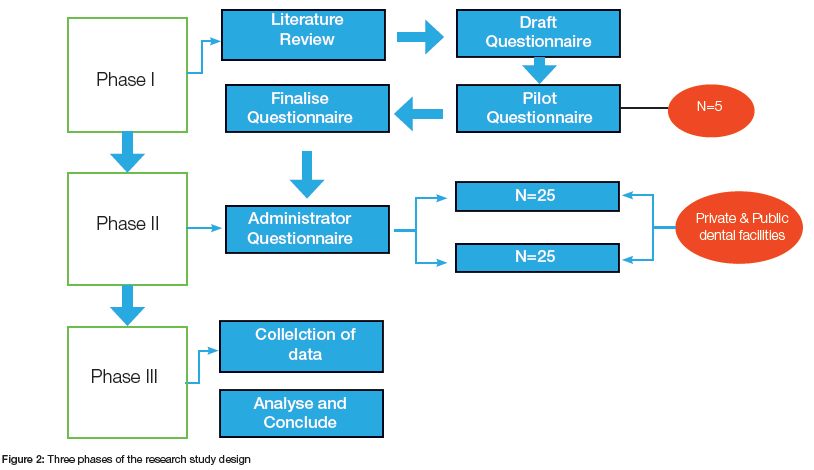
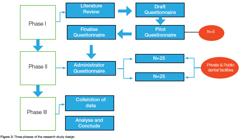
The study was based on a descriptive and cross-sectional explorative study. A survey was conducted to investigate the relationship between risk factors and outcomes of interest, for a given population, with the purpose aimed at public health planning. The study was conducted in three phases:
Phase I Planning
Review of the literature on dental healthcare waste management knowledge, attitudes and practices;
Draft questionnaire to address healthcare waste management;
Pilot of the questionnaire to assess the reliability and validity; and
Finalise questionnaire
Phase II Administration of questionnaire
Issue and administer the questionnaire to dental healthcare practitioners, assistants and facility managers at dental healthcare facilities to explore the knowledge, determine attitudes and evaluate the healthcare waste management practices of staff working at dental healthcare facilities.
Phase III Data collection, analysis and interpretation
Collect data;
Capture the data in the questionnaire and then analyse; and
Report and make recommendations to improve the current policies and evaluate the possibility of developing an integrated healthcare waste plan for dental healthcare facilities.
The three phases of the methodological approach to the research study design illustrated in Figure 2.
3. ETHICAL CLEARANCE AND CONFIDENTIALITY
Ethical clearance was obtained from the University of the Free State: Health Sciences Research Ethics Committee prior to collection of data (UFS-HSD2018/0782/2711). The study was approved by the Faculty and Institutional Research Committees of the Central University of Technology, Free State. To safeguard the respondent's information and privacy, the researcher observed standard professional and ethical principles. In addition, the Gauteng Department of Health (GP_201810_054) gave permission to conduct the research in the City of Tshwane.
Confidentiality was recognised under all circumstances and all communication was conducted in English to ensure clarity and understanding of factual data.
4. ASSESSMENT QUESTIONNAIRE
The questionnaire was designed, using closed ended questions. The draft questionnaire was reviewed by five panel members, which consisted of the researcher's two supervisors, a waste management specialist, one dental practitioner and a person from outside the dental healthcare field. The purpose of the questionnaire review was to refine the questionnaire. The final validity and reliability of the questionnaire was established by a pilot study group.38
The results of the pilot study were not included in the results of the study but merely utilised to refine and improve the questionnaire. The data obtained in the pilot study was furthermore subjected to statistical analysis processes to measure the reliability and validity of the draft dental healthcare waste management questionnaire. The results of the statistical tests were used to make further refinements to the draft questionnaire.38
Several dental healthcare waste management themes were identified for the main framework of the questionnaire, including:
Section 1: Demographic Information of Respondents.
Section 2: Dental Healthcare Waste Management Training and Continuous Professional Development.
Section 3: Classification of Dental Healthcare Waste (General, Chemical, Sharps, Infectious and Pathological).
Section 4: Generation and Minimisation.
Section 5: Segregation and Storage.
Section 6: Waste Administration.
Section 7: Transport.
Section 8: Waste Disposal.
Section 9: Waste Treatment.
Section 10: General Views of Dental Healthcare Waste Management.
4.1 Administration of the questionnaire
Out of the 58 questionnaires issued, 6 started but did not complete the survey and 52 respondents eventually completed the survey. The questionnaire was distributed in two manners: the first batch of questionnaire were distributed electronically using QuestionPro® online survey software program Version 15 that was accessed online through the Central University of Technology (CUT) institutional licence from https://www.questionpro.com/v15/ and the second batch were distributed in hard copies.
4.2 Study population
The study population comprised of healthcare professionals employed in both public and private at dental healthcare facilities across the Tshwane region. The participants were aged between 18 and 65.
5. RESULTS
5.1 Biographical information results
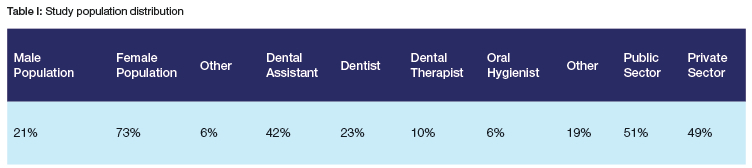
Information was obtained from 52 respondents, including dental assistants (42%), dentists (23%), dental therapists (10%), oral hygienists (6%), and other support staff, including a professional nurse in dental theatre (19%). Results from study in public healthcare facilities in Gauteng Province, South Africa stated healthcare facilities appoint a dedicated person, mainly environmental health practitioners, to manage healthcare waste.39Table I). The facilities included in the research were Sefako Makgato Oral Health Centre, Kalafong Hospital, Folateng Hospital (Pretoria West) and K.T. Motubatse Clinic as well as some private dental healthcare facilities that requested to remain anonymous and not have their practice names mentioned.
5.2 Knowledge of healthcare waste management at dental healthcare facilities
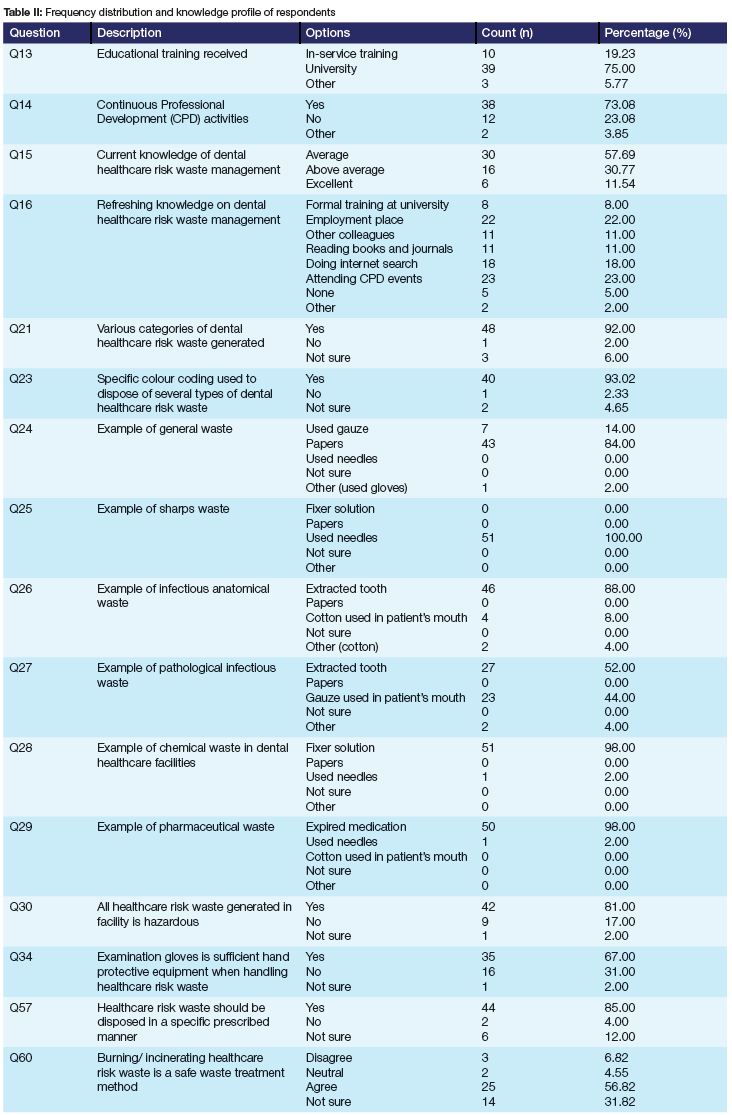
The knowledge of healthcare waste management at dental healthcare facilities referred to the participating respondent's understanding of the given topic or question. In this study, the participating respondents ranged from dentists, dental therapists, oral hygienists, dental assistants, and a nurse with formal Higher Education training to those dental healthcare staff members who had only received in-service training. Table II provides the frequency distribution and knowledge profile of the respondents, of whom 75% had formal University qualifications. It is, however, very alarming that despite these formal qualifications, almost the same percentage of respondents were unaware that examination gloves are insufficient as hand protective equipment when handling healthcare risk waste.
5.3 Continuous Professional Development activities and knowledge refreshment (Q12, 14 and 16)
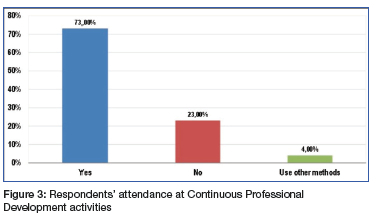
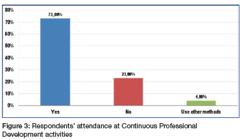
Most respondents (n=38) indicated that they regularly attend CPD activities, less than a quarter (n=12) of the respondents indicated that they do not attend, while only two respondents indicated that they are not obliged to attend (Fig. 3). One of these two respondents indicated that they assisted a periodontist from time to time and sometimes did online activities, while the other felt no need to attend CPD activities.
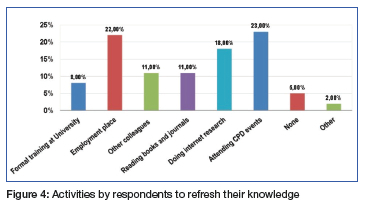
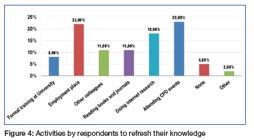
On the other hand, one respondent made the remark: "I believe it is important to give dental personnel more training and improve the way of taking care of the dental waste." Respondents further indicated they refreshed their knowledge of dental HCRW management by attending formal training at university (8%) and 22% refreshed their knowledge at their places of employment (Figure. 3). Some respondents (11%) refreshed their knowledge from information shared with colleagues, by reading books and journals while less than a fifth (18%) from searches on the internet. Most (23%) was from attending CPD events with 5% by other methods. Only one respondent did not feel the need to refresh their knowledge (Figure 4).
5.4 Personal rating of dental HCWM knowledge (Q15)
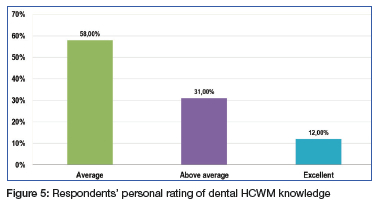
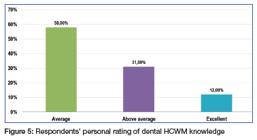
Most of the respondents, almost two-thirds, felt that their knowledge of dental HCWM is only average. More than a third of the respondents felt confident with above average knowledge and just above a tenth with excellent knowledge (Figure 5).
5.5 Knowledge of HCRW categories (Q21)
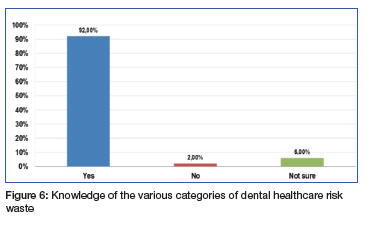
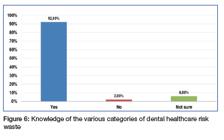
Most of the respondents (n=48) knew that there are various categories of dental HCRW, only one was unaware of this fact, while three respondents indicated that they were not sure about this (Figure 6).
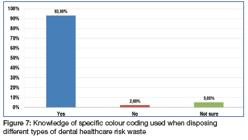
5.6 KNOWLEDGE OF HCRW DISPOSAL COLOUR CODING (Q23)
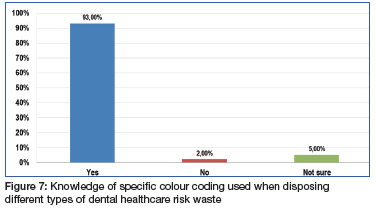
Most respondents (n=49) knew that distinct colour coding is used to dispose of HCRW. However, one respondent did not know and two were not sure of the HCRW disposal colour coding system (Figure 7).
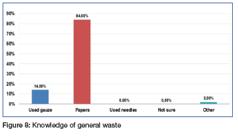
5.7 Knowledge of types of HCRW (Q24 - 29)
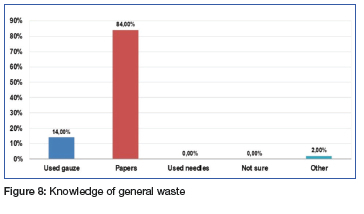
Most respondents (83.31%) said paper was an example of general waste. However, seven respondents (13.73%) incorrectly identified used gauze as general waste and one respondent named used gloves as general waste (Figure 8).
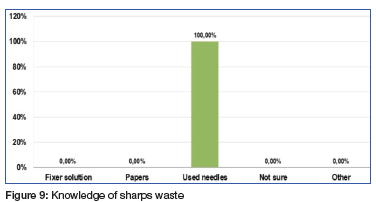
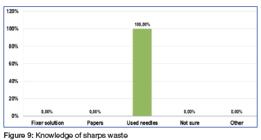
All respondents were familiar with the example of sharps waste that included used needles (Figure 9).
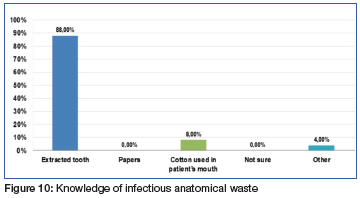
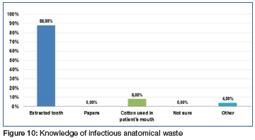
Most respondents (88.46%) identified the example of infectious anatomical waste as an extracted tooth, but four (7.69%) included cotton used for patient care and two (3.85%) included cotton under other (Figure 10). Thus, it is safe to say all respondents correctly identified infectious waste, however, some respondents incorrectly included cotton used for patient care as anatomical waste.
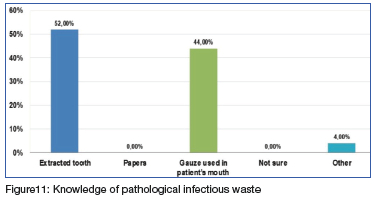
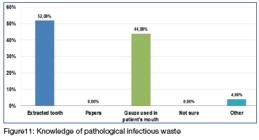
Of the respondents, 27 (51.92%) identified an example of pathological infectious waste as the extracted tooth, 23 (44.23%) included gauze used for patient care and two respondents (3.85%) included the extracted tooth under other (Figure 11).
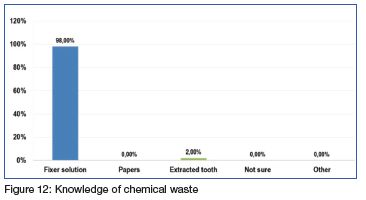
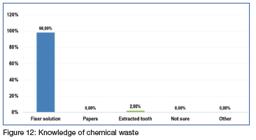
Most of the respondents (98%) said an example of chemical waste at the dental healthcare facility is fixer solution, while 2% thought it was the extracted tooth (Figure 12).
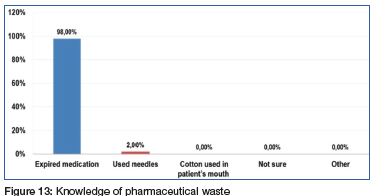
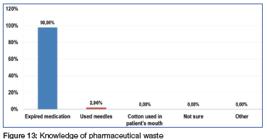
The same 98% of the respondents said an example of pharmaceutical waste is expired medication and 2% thought it was used needles (Figure 13).
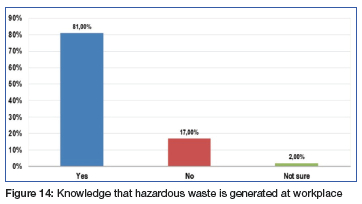
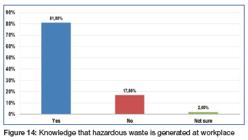
Most of the respondents (81%) felt that the healthcare waste generated at their workplace is hazardous, while the minority (17%) felt the contrary and 2% were not sure (Figure 14).
5.8 Knowledge of HCRW disposal and treatment (Q57 and 60)
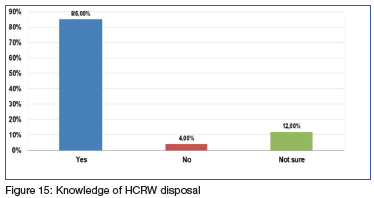
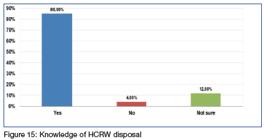
Most respondents (85%) said HCRW should be disposed in a specific prescribed manner, 4% said HCRW did not require a specific method of disposal and above 12% were not sure (Figure 15).
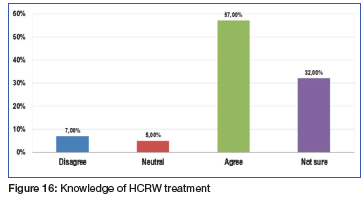
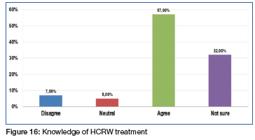
More than half (57%) of the respondents agreed that burning/incineration was a safe waste treatment method for HCRW, about a third (32%) of the respondents were not sure about the matter and 7% disagreed. This information is an indication that there is a lack of knowledge (Figure 16).
6. DISCUSSION
More than a quarter of the respondents, who were dental assistants, had in-service training, while most of the respondents had been to university. However, it should be noted that the in-service training might be bias towards the trainer's knowledge or preferences. Research studies show that experience alone is not sufficient to effectively manage healthcare waste.36, 41
This study's results indicated that the majority of the dental healthcare staff felt that they have sufficient knowledge of healthcare waste management and the score on knowledge proved that. The percentage of healthcare workers who had knowledge on dental waste disposal was higher than the one for those who were not knowledgeable, which had the similar results as this research study by Vumase.3640, 41
More than two third of the respondents were aware of the different healthcare waste categories with the examples and colour coding as well as treatment and disposal of HCW. The only concern is that 12% of the respondents were not sure of their knowledge on healthcare waste disposal. Meanwhile these respondents practice disposal of dental healthcare waste in their day-to-day activities and they also received instruction as part of their education and training.
Gaps can be identified in the HCWM knowledge, and it is necessary to develop plans to close these gaps. It is expected that staff members possess the necessary knowledge for them to dispose of dental healthcare waste according to the national guidelines.3542
The recommendations include staff training at the start of their new employment and when new infection prevention and control equipment is purchased or taken in for use. The HPCSA accredited training on HCWM is to serve as a reminder. The results of this study provide a baseline for the knowledge of dental healthcare staff regarding HCWM of dental waste. It is suggested that this baseline be used by dental healthcare facilities to develop a plan to improve and address the identified gaps. The need to routinely educate all categories of dental healthcare staff members to ensure that appropriate and standard execution of healthcare waste management practices is affected, is of greater importance than what participants perceived.
7. CONCLUSION
Healthcare workers perform a critical role in the clinical management of patients and in addition, providing adequate infection control and prevention precautions and waste management procedures in healthcare facilities. Aleanizy and Alqahtani stated staff appreciated the importance of their role in infection control, monitoring of ongoing safety for patients, their facilities and communities. The lack of waste management knowledge related to the policies, standard operating procedures and plans can be addressed with appropriate training to prevent improper waste segregation and non-compliance to legislations and regulations governing HCRW1944
7.1 SWOT Analysis of dental healthcare waste management knowledge
The SWOT analysis provides an opportunity to improve dental healthcare waste management knowledge. An attempt has been made to identify both the weaknesses and strengths of the internal analysis as well as the opportunities and presumable threats facing those working in healthcare waste management within the dental profession.
Internal Analysis - part of the internal environment that can be influenced and controlled
Strengths
1. Continuous development of technologies and materials used in practice.
2. Possible access to innovations in conventional and non-conventional methods and technologies.
3. Teamwork with dental professionals and professionals from other fields.
4. Job satisfaction of dental professionals.
5. Patient satisfaction with dental services.
8. Job satisfaction as specialist in the waste management focus area of infection prevention and control.
9. Possibilities for private initiative and independent activity.
10. Lifelong learning and professional training.
11. Practical use and application of medical waste management services in the work process with dentists and patients.
12. Demand for dental infection prevention and control specialists in the labour market.
Weaknesses
1. Lack of upgrading training for the specialty "waste management focus area in infection prevention and control."
2. Lack of communication and teamwork training.
3. Absence of regulation for continuing education.
4. Absence of a regulation for carrying out infection prevention and control.
5. Lack of training for successful practice management.
6. Insufficient knowledge of the normative documents of professional organisations.
7. Insufficient activity of the professional organisations regarding the continuing training of working waste management focus area in infection prevention and controls.
8. Need for investments to create, maintain, and guarantee safe and healthy working conditions.
9. Need for large investments to create and maintain modern equipment and/or devices and consumables.
10. Uneven distribution of practical training: they are concentrated mostly in big urban areas.
External Analysis - should be taken into consideration but cannot be directly influenced
Opportunities
1. Introduction of regulation on continuing education in correspondence with South African practices.
2. Continuous training to improve qualifications and acquire new skills and competencies.
3. Professional development in accordance with new technologies and materials in practice through courses or on-the-job training (mentoring).
4. Introduction of regulation for organising training for workers in the "waste management focus area in infection prevention and control" specialty.
5. Expanding the services for the National Health Insurance targeting dental activities by including new medical devices to improve health care for the population across all age groups.
6. Development of project activities for financing the practical training and continuing education of waste management focus area in infection prevention and controls.
7. Involvement of distinguished specialists in continuing education.
8. Introduction of upgrading training in the "waste management focus area of infection prevention and control".
9. Necessary actions by the professional organisations and training institutions to organise continuing education.
10. Proper distribution of financial resources and purchase of modern equipment and/or devices and consumables.
Threats
1. Unsatisfactory and uneven development of science and practice related to "waste management focus area in infection prevention and control" in different countries and regions.
2. Constantly increasing demands from dentists.
3. Constantly increasing demands from patients.
4. Lack of necessary financial resources for the purchase of new and modern equipment and/or devices and consumables.
5. Necessity of large expenses for continuous theoretical and practical training in "waste management focus area in infection prevention and control."
6. Lack of sufficient financial resources among users of dental services.
7. Slow return on investment.
8. Shortage of dental infection prevention and control specialists, leading to problems in providing necessary and timely healthcare risk waste management in some regions.
9. Lack of good face-to-face communication within the dental team.
10. Possible exposure to risks to human health and to the environment associated with healthcare waste management when not properly treated, incorrectly disposed or transported over distances.
Further studies on dental healthcare waste management are recommended to include larger geographical populations. The questionnaire can be utilised to survey the knowledge, attitudes and practices towards dental healthcare waste management in the future. Furthermore, the questionnaire can also be applied to future research investigating the knowledge, attitudes and practices towards dental healthcare waste management. Expanded to a broader data base, the questionnaire can enable researchers to also associate findings from similar studies conducted on provincial, national and international levels.
Abbreviations
HCRW : Healthcare risk waste
HCW : Healthcare waste
HCWM : Healthcare waste management
Thank you Prof. Koos Engelbrecht for contributing towards the success of this study and the Environmental Health Practitioner (Tshwane University of Technology) for assisting with the research. Special thanks to the respondents of this study and the dental staff of the Sefako Makgato Oral Health, Kalafong Hospital, Folateng Hospital, K.T. Motubatse clinic and the private practices for participating in the research.
Conflict of interest statement
The authors declare that they have no competing interests.
Funding sources
The authors acknowledge the Central University of Technology and Tshwane University of Technology for resources and financial support to conduct this research.
Author Contributions
T Mutibi master's research candidate. T Mutibi conducted research and captured the data HCL Gleimius and J Oosthuysen conceptualised the research design under the guidance of Prof. Annabel Fossey.
T Mutibi, J Oosthuysen and HCL Gleimius conducted data analysis and drafted figures and tables. T Mutibi, HCL Gleimius, & J Oosthuysen drafted the manuscript. All authors critically reviewed and approved the submission of the manuscript.
Acknowledgements
A sincere thank you to Prof. Annabel Fossey (Former Head of Department Life Sciences and supervisor, Central University of Technology, Free State) for her support, inspiration, valuable inputs and advice.
REFERENCES
-
1. Jansen, K.E.; Kocks, D.J. and Roberts H. Healthcare risk waste and waste legislation in South Africa. Occup Heal South Africa [Internet]. 2017;23(6):15-7. Available from: http://www.who.
» http://www.who -
2. Chartier, Y., Emmanuel, J., Pieper, U., Prüss, A., Rushbrook, P., Stringer R. Safe management of wastes from health-care activities. World Health Organisation. WHO Publ [Internet]. 2014;329. Available from: http://apps.who.int/iris/bitstream/10665/85349/1/9789241548564_eng.pdf
» http://apps.who.int/iris/bitstream/10665/85349/1/9789241548564_eng.pdf -
3. Padmanabhan KK, Barik D. Health hazards of medical waste and its disposal [Internet]. Energy from Toxic Organic Waste for Heat and Power Generation. Elsevier Ltd.; 2018. 99-118 p. Available from: https://doi.org/10.1016/B978-0-08-102528-4.00008-0
» https://doi.org/10.1016/B978-0-08-102528-4.00008-0 -
4. HPCSA. Guidelines for the management of health care waste Booklet 12. HPCSA Bookl 12 [Internet]. 2024;(June). Available from: http://www.hpcsa.co.za
» http://www.hpcsa.co.za - 5. Singh H, Bhaskar D, Dalai DR, Rehman R, Khan M. Dental Biomedical Waste Management Categories of Waste Generated in Dental Practises. Int J Sci Study, H, Bhaskar, D, Dalai, D R, Rehman, R, Khan, M (2014) Dent Biomed Waste Manag Categ Waste Gener Dent Pract Int J Sci Study, 2(4), 66-68. 2014;2(4):66-8.
- 6. Govan P. Waste management in dental practice. SADJ. 2014;69(4):178-81.
- 7. Republic of South Africa National Department of Health. Draft practical manual for implementation of the national infection prevention and control strategic framework. 2020;(March):1-214.
- 8. Das SK, Jha A. Global Health- Wellness & Bio-Waste Management To Attain Sustainable Development Goals. 2024;(November).
- 9. Nations U. Take Action for the Sustainable Development Goals. United Nations Sustain Dev. 2015;1-7.
- 10. Islam MT, Rafi MA, Hasan MJ. Knowledge, attitude and practice of health care workers on solid medical waste management in two urban hospitals of Bangladesh: a mixed-method study. J Heal Popul Nutr. 2025;44(1).
- 11. Patel DA, Gupta PA, Kinariwala DM, Shah HS, Trivedi GR, Vegad MM. An investigation of an outbreak of viral hepatitis B in Modasa town, Gujarat, India. J Glob Infect Dis. 2012;4(1):55-9.
- 12. Singh J, Bhatia R, Gandhi JC, Kaswekar AP, Khare S, Patel SB, et al. Outbreak of viral hepatitis B in a rural community in India linked to inadequately sterilized needles and syringes. Bull World Health Organ. 1998;76(1):93-8.
- 13. Msibi PF. Healthcare risk waste management knowledge and practices among healthcare workers in Ekurhuleni North district primary healthcare facilities, Gauteng South Africa. Vol. 180. Masters of Public Health, University of Johannesburg; 2023. 74 p.
- 14. Mitsika I, Chanioti M, Antoniadou M. Dental Solid Waste Analysis: A Scoping Review and Research Model Proposal. Appl Sci. 2024;14(5).
- 15. Olaniyi FC, Ogola JS, Tshitangano TG. Efficiency of health care risk waste management in rural healthcare facilities of south africa: An assessment of selected facilities in vhembe district, limpopo province. Int J Environ Res Public Health. 2019;16(12):3-4.
-
16. WHO. Implementing the global health sector strategies on HIV, viral hepatitis and sexually transmitted infections, 2022-2030 Report on progress and gaps [Internet]. 2024. 2022-2030 p. Available from: https://iris.who.int/.
» https://iris.who.int/ - 17. Hauri AM, Armstrong GL, Hutin YJF. The global burden of disease attributable to contaminated injections given in health care settings. Int J STD AIDS. 2004;15(1):7-16.
- 18. Cook E, Woolridge A, Stapp P, Edmondson S, Velis CA. Medical and healthcare waste generation, storage, treatment and disposal: a systematic scoping review of risks to occupational and public health. Crit Rev Environ Sci Technol. 2023;53(15):1452-77.
- 19. Motlatla M, Maluleke TX. Assessment of knowledge about healthcare risk waste management at a tertiary hospital in the northern Cape Province, South Africa. Int J Environ Res Public Health. 2021;18(2):1-15.
- 20. Xu J, Pan P, Song F, Gu Y, Xiong Q, Liu Z, et al. Analyzing the occupational exposure risks of dental healthcare workers from the perspective of repeated occupational exposure. BMC Health Serv Res. 2024;24(1):1377.
- 21. Makhura RR, Matlala SF, Kekana MP. Medical waste disposal at a hospital in Mpumalanga Province, South Africa: Implications for training of healthcare professionals. South African Med J. 2016;106(11):1096-102.
- 22. Nemutandani MS. Occupational exposures among dental assistants in Limpopo dental clinics A research report submitted to the Faculty of Health Sciences, University of the Witwatersrand, Johannesburg. Masters de. University of the Witwatersrand, Johannesburg; 2007.
- 23. Janik-Karpinska E, Brancaleoni R, Niemcewicz M, Wojtas W, Foco M, Podogrocki M, et al. Healthcare Waste-A Serious Problem for Global Health. Healthc. 2023;11(2):1-14.
-
24. Affordofe M, Udofia EA, Akyeampong E, Koranteng FO, Tettey P, Botwe PK, et al. Knowledge and practice of solid healthcare waste management among waste handlers in hospitals in Southern Ghana: a qualitative study. BMC Public Health [Internet]. 2025; Available from: https://doi.org/10.1189/s12889-025-21874-6
» https://doi.org/10.1189/s12889-025-21874-6 - 25. Gabela SD, Knight SE. Healthcare waste management in clinics in a rural health district in KwaZulu-Natal. South African J Epidemiol Infect. 2010;25(1):19-21.
-
26. Sandquist M R. Chapter 4: Adhere to Principles of Infection Control. Oncol Nurs Forum [Internet]. 2022;47(2):155-64. Available from: https://www.ncbi.nlm.nih.gov/books/NBK599388/
» https://www.ncbi.nlm.nih.gov/books/NBK599388/ -
27. Upendran A, Geiger Z. Dental Infection Control. StatPearls [Internet]. 2020;1-6. Available from: http://www.ncbi.nlm.nih.gov/pubmed/29261939
» http://www.ncbi.nlm.nih.gov/pubmed/29261939 - 28. Smith A, Creanor S, Hurrell D, Bagg J, McCowan M. Management of infection control in dental practice. J Hosp Infect. 2009;71(4):353-8.
-
29. World Health Organization. Healthcare Waste: Key Facts. WHO [Internet]. 2022;(February):1-4. Available from: https://www.who.int/news-room/fact-sheets/detail/health-care-waste
» https://www.who.int/news-room/fact-sheets/detail/health-care-waste -
30. Oosthuysen J. Infection prevention and control audit-feedback instrument for oral health care in South Africa. 2015; Available from: http://ir.cut.ac.za/handle/11462/669
» http://ir.cut.ac.za/handle/11462/669 - 31. Galligan C. Occupational Exposure to Elemental Mercury in Odontology / Dentistry. Univ Massachusetts Lowell. 2012;1-20.
-
32. Sudi S, Naidoo S. Perspectives on the Minamata Convention and dental amalgam waste management in South Africa. SADJ [Internet]. 2024;79(10 November):P542-546. Available from: https://doi.org/10.17159/sadj.v79i10.19172
» https://doi.org/10.17159/sadj.v79i10.19172 - 33. Thakur V, Ramesh A. Healthcare waste management research: A structured analysis and review (2005-2014). Waste Manag Res. 2015;33(10):855-70.
- 34. Udofia E, Nriagu J. Health Care Waste In Africa: A Silent Crisis? Glob Heal Perspect. 2013 Mar 27;1:3-10.
- 35. Claxton G, Hosie P, Sharma P. Toward an effective occupational health and safety culture: A multiple stakeholder perspective. J Safety Res. 2022;82(December 2021):57-67.
- 36. Vumase, Bongane S. An Evaluation of Operational and Administrative Procedures for Health Care Waste Management in Public District Hospitals of South Africa Sipho Bongane Vumase Doctors Degree of Technology: 2009;(November):1-253.
- 37. Akkajit P, Romin H, Assawadithalerd M. Assessment of Knowledge, Attitude, and Practice in respect of Medical Waste Management among Healthcare Workers in Clinics. J Environ Public Health. 2020;2020:23-4.
-
38. DCoG, DTA. Municipalities in South Africa. Dep Coop Gov Tradit Aff [Internet]. 2022;3-6. Available from: https://www.cogta.gov.za/index.php/2022/08/01/municipalities-in-south-africa/
» https://www.cogta.gov.za/index.php/2022/08/01/municipalities-in-south-africa/ - 39. Gleimius H, Schoonwyk P. Development and Validation of a Questionnaire That Surveyed Dental Assistants' Knowledge, Attitude and Practices of Infection Prevention and Control Measures Within South African Oral Healthcare Facilities. J New Gener Sci. 2023;21(2):15-32.
-
40. Ramodipa T, Engelbrecht K, Mokgobu I, Mmereki D. Status of health care waste management plans and practices in public health care facilities in Gauteng Province, South Africa. BMC Public Health [Internet]. 2023;23(1):1-12. Available from: https://doi.org/10.1186/s12889-023-15133-9
» https://doi.org/10.1186/s12889-023-15133-9 - 41. Tilahun D, Donacho DO, Zewdie A, Kera AM, Haile G. Healthcare waste management practice and its predictors among health workers in private health facilities in Ilu Aba Bor Zone, Oromia region, South West Ethiopia: a community-based cross-sectional study. BMJ Open. 2023;13(2).
- 42. Siimane TM, Nts'ihlele ME. Healthcare waste management knowledge, attitudes and practices of laboratory workers at a regional hospital, Lesotho. Afr J Lab Med. 2024;13(1):1-8.
- 43. Aja AM. Bridging the Gap in Medical Waste Management: A Comparative Analysis of Government and Private Healthcare Facilities in Abuja, Nigeria. 1935;
- 44. Aleanizy FS, Alqahtani FY. Awareness and knowledge of COVID-19 infection control precautions and waste management among healthcare workers: Saudi cross-sectional study. Med (United States). 2021;100(21):E26102.
- 45. Wilmott S, Pasdeki-Clewer E, Duane B. Responsible waste management: using resources efficiently (Part 1). Br Dent J. 2023;235(6):393-7.
Dr HCL Gleimius
Central University of Technology (CUT), Free State, Private Bag X20539, Bloemfontein 9300, South Africa. Tel.: +27 51 507 3809; E-mail address:

Contributing Authors
1. T Mutibi - 40%
2. HCL Gleimius - 30%
3. J Oosthuysen - 30%