Methotrexate-induced oral mucositis in patients with rheumatoid arthritis: A case series and literature review
Abstract
INTRODUCTION: Methotrexate is used as both an antineoplastic drug and disease-modifying anti-rheumatic drug. In both cases, methotrexate use may result in oral mucositis. Dentists are likely to manage patients with rheumatoid arthritis and should consider this adverse drug event when mouth ulcers are observed. AIMS AND OBJECTIVES: This study aims to report on five patients with rheumatoid arthritis who presented with methotrexate-induced oral mucositis (MIOM) and to perform a literature review of the condition. DESIGN/METHODS: The clinical history, oral mucosal features and results of special investigations of five patients who presented to the Oral Medicine Clinic with MIOM were recorded. Upon identification of methotrexate use as the cause of oral ulceration, the patients were managed collaboratively with their respective physicians. RESULTS: These cases demonstrate that dentists should recognise that chemotherapy-induced oral mucositis may also be seen among patients with rheumatoid arthritis, and not necessarily only within the traditional context of cancer treatment. Dentists should consider the possibility of drug reactions and interactions that may result in oral ulcers. CONCLUSIONS: Dentists play a pivotal role in the diagnosis and treatment of mouth ulcers. Careful history taking and suspicion of adverse drug events described here may facilitate a clinical diagnosis, which can be further supported through special investigations. Collaboration with the treating medical clinician is imperative in the management of a patient who presents with MIOM, as treatment modification is required.
Methotrexate; oral ulceration; mucositis; DMARD; pancytopenia; rheumatoid arthritis
INTRODUCTION
Methotrexate (MTX) was originally developed to treat malignant diseases.16 75
Despite the emergence of numerous targeted therapies, MTX remains pivotal in RA treatment due to its effectiveness and tolerability,4,6 favourable safety profile and fewer reported toxicities compared to other DMARDs.88
Oral mucositis is one of the ADRs associated with LDMTX use that may require treatment discontinuation. Here, we report on five cases that presented to the Oral Medicine Clinic of the University of Pretoria's Oral Health Centre in which LDMTX therapy for RA resulted in MTX-induced oral mucositis (MIOM).
Permission was obtained from the University of Pretoria, Faculty of Health Sciences, Research Ethics Committee clearance number 507/2024, following informed consent from the participants.
Case 1
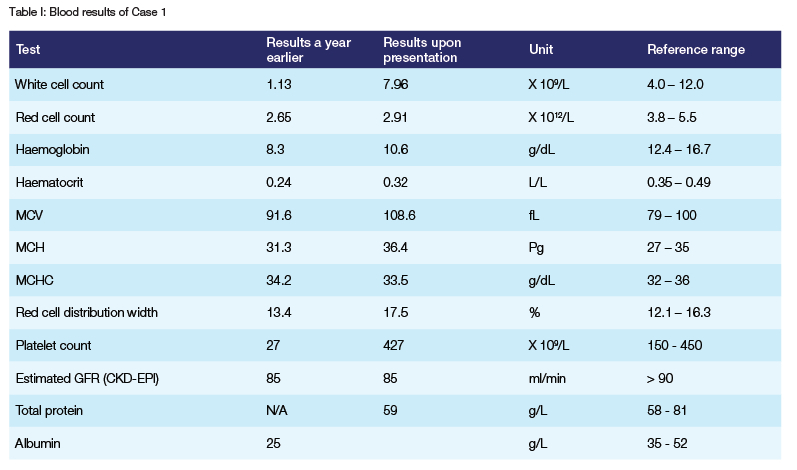
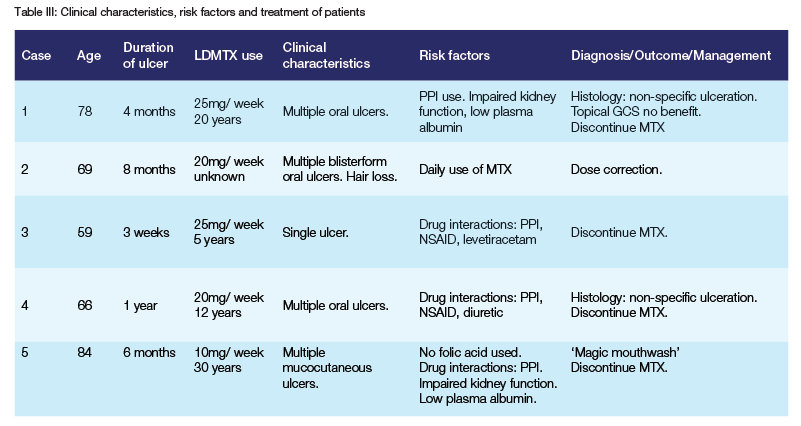
A 78-year-old woman presented with a four-month history of worsening mouth ulcers, leaving her unable to eat. A biopsy three months prior indicated a non-specific ulcer with reactive atypia. She had RA, hypertension, depression and a gastric ulcer, treated with MTX (25mg/week for 20 years), folic acid (5mg), nifedipine, enalapril, pantoprazole and sertraline. A year earlier, she was hospitalised for pancytopenia, with slightly impaired kidney function, unassessed liver function and a serum MTX level of <0.02umol/ml (see Table I).
Subsequent blood tests showed megaloblastic anaemia, increased RDW, impaired kidney function and low serum albumin.
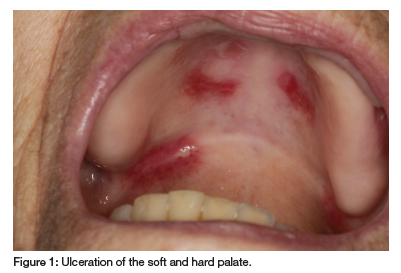
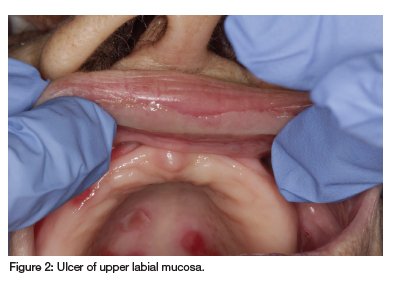
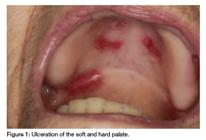
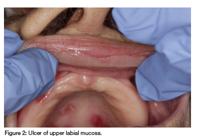
Oral examination revealed erosions and ulcers on the hard and soft palate and labial mucosa, covered by a fibrinopurulent membrane (see Figure 1 and Figure 2). Vesicullobullous diseases, such as mucous membrane pemphigoid and pemphigus vulgaris, were considered, but MTX's immunosuppressive effects made these conditions less likely. Thus, a diagnosis of MIOM was made. The patient was managed with topical glucocorticosteroids (betamethasone suspension mouthrinse and clobetasol ointment) and her rheumatologist was informed of this ADR. Symptomatic relief was minimal until MTX discontinuation, after which the ulcers healed.
The patient's earlier blood results suggest that reduced e-GFR, possibly exacerbated by concurrent PPI and ACE inhibitor use, led to ineffective MTX clearance. Combined with low albumin levels, this resulted in an effective MTX overdose.
Case 2
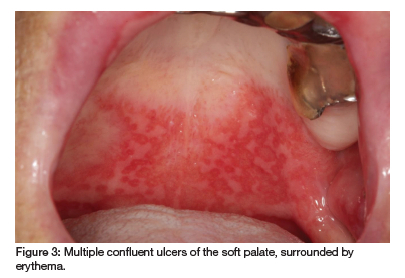
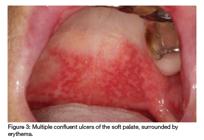
A 69-year-old woman presented with persistent oral ulcers over the past eight months and recent hair loss. Previously diagnosed with recurrent aphthous ulcers or pemphigus vulgaris, she received unsuccessful treatment with antibiotics and antifungals. Suffering from RA with noticeable hand deformities, she takes prednisone (10mg), MTX (20mg/week) and folic acid (5mg). However, she recently began taking MTX daily due to a pharmacy error. Diffuse ulcers and erosions on her soft palate, buccal and labial mucosa, which became confluent and covered by a fibrinopurulent membrane, were observed (see Figures 3 and 4). Returning to weekly MTX dosing led to the healing of the MIOM.

Case 3
A 59-year-old woman was referred by an oral surgeon for a painful oral ulcer on the lower labial mucosa, persisting for three weeks and unresponsive to her usual miconazole treatment for recurrent ulcers. She had a stroke 15 years ago and is being treated for RA, fibromyalgia, depression, hyperlipidemia, hypertension, hypothyroidism and GERD. Her medications include MTX (25mg/week for Ave years), folic acid (5mg), levothyroxine, liothyronine, tiotropium inhaler, buffered Vitamin C, warfarin, Stilpane (paracetamol, promethazine, codeine phosphate), sulphasalazine, celecoxib, pantoprazole, montelukast, salmeterol/ fluticasone, salbutamol, torasemide, bisoprolol, betahistine, aspirin, atorvastatin, Calciferol, levetiracetam, ezetimibe, alprazolam, amitriptyline, pregabalin, ziprasidone, zolpidem, topiramate and loratadine.
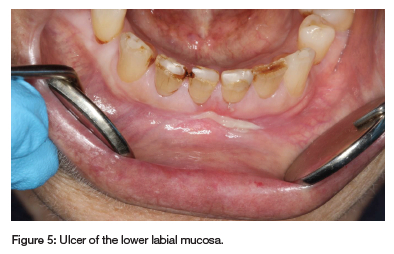
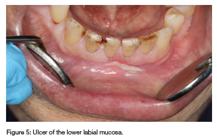
A solitary ulcer, covered by a fibrinopurulent membrane, was observed on the lower labial mucosa (see Figure 5). A biopsy was contraindicated due to her elevated INR of 8, and MIOM was suspected. Drug interactions were likely, given her extensive medication regimen, particularly involving NSAIDs, pantoprazole and levetiracetam. Her rheumatologist stopped MTX treatment, leading to ulcer resolution. An FBC was unremarkable. The patient's recurrent oral ulcers have since diminished, but she was cautioned against using miconazole and warfarin concurrently due to the risk of adverse drug interactions.
Case 4
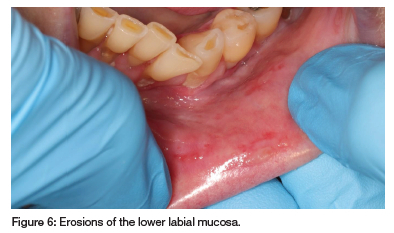
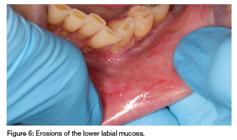
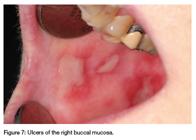
A 66-year-old woman was referred by an oral surgeon for recurrent oral ulcerations that have worsened over the past year and were unsuccessfully treated with glucocorticosteroid and doxycycline mouth rinse. The patient has RA, hypertension, depression, gout, asthma and migraine, and has been taking MTX (20mg/week for 12 years), folic acid (5mg), prednisone (5mg), betahistine, Ultracet (tramadol and paracetamol), ferrous bisglycinate chelate, leflunamide, furosemide, celecoxib, allopurinol, salbutamol inhaler, Theoplus, potassium chloride, desloratadine, salmetrol/fluticasone inhaler, minair, Zolpidem, esomeprazole, domperidone, nifedipine, indapamide, topiramate and eletriptan as needed. Multiple ulcers with irregular borders, covered by a fibrinopurulent membrane and surrounded by erythema, were observed on the buccal and labial mucosa (see Figures 6 and 7). A differential diagnosis of vesiculobullous diseases was considered but deemed unlikely due to her immunosuppressive treatment and lack of response to topical corticosteroids. MIOM was suspected, but a biopsy was performed to rule out other pathologies. Histopathology confirmed the ulcer was non-specific. Recent blood tests showed decreased WCC, increased RDW, gamma-glutamyl transferase, aspartate transferase and normal eGFR and albumin. Increases in liver enzymes are common in long-term LDMTX therapy.9
Drug interactions likely contributed to MTX toxicity, with celecoxib, esomeprazole, indapamide and furosemide displacing MTX from albumin and reducing its renal clearance.
The rheumatologist discontinued the patient's LDMTX, leading to the ulcers healing without complications.
Case 5
An 84-year-old woman was referred by an oral surgeon for the assessment of recurrent oral ulcerations, which have become persistent over the past six months.
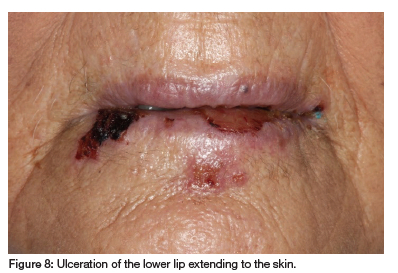
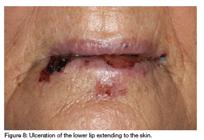
The patient has RA, hypertension, hypothyroidism, insomnia, restless leg syndrome, GERD and had a myocardial infarction and pulmonary embolism two years ago. She takes MTX (10mg/week for 30 years), carvedilol, clopidogrel, quetiapine fumarate, levothyroxine sodium, simvastatin, pramipexole, paracetamol, enalapril, probiflora, pyridoxine (vitamin B6) and pantoprazole. Clinical examination revealed irregular ulcers with fibrinopurulent membranes surrounded by erythema on the buccal and labial mucosa, extending to the lip vermillion and skin (see Figures 8, 9 and 10). As the patient had not supplemented with folic acid, but admittedly had not done so for 30 years, a diagnosis of MIOM was made.
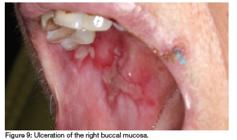
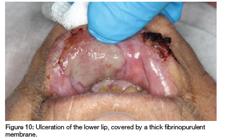
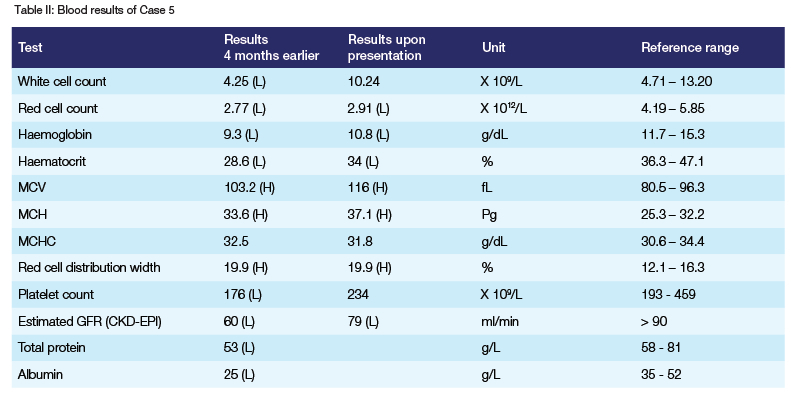
Blood tests conducted four months prior and at presentation (see Table II) indicated impaired kidney function, limiting MTX excretion and low plasma albumin, increasing the free fraction of MTX. Additionally, drug interactions with enalapril and pantoprazole likely further hindered MTX excretion.
The patient was conclusively diagnosed with MIOM, prompting the discontinuation of MTX and supplementation with 10mg folic acid/week. Symptomatic treatment with topical lidocaine facilitated uneventful healing of the ulcers.
DISCUSSION
Mechanism of action of MTX: antineoplastic and anti-inflammatory effects
Methotrexate (MTX) is a widely used first-line therapy for rheumatoid arthritis (RA), despite ongoing debate regarding its anti-inflammatory effects.4,10 Some evidence suggests that MTX exerts both anti-inflammatory and anti-proliferative effects by inhibiting enzymes involved in folate, methionine, adenosine and de novo nucleotide synthesis pathways.9,11 MTX works by irreversibly binding to and competitively inhibiting dihydrofolate reductase (DHFR), which in turn inhibits the conversion of dihydrofolate (DHF) to tetrahydrofolate (THF), resulting in reduced nucleic acid synthesis.6,8,9
However, the inhibition of aminoimidazole carboxamide ribonucleotide transformylase (AICART), an enzyme involved in nucleotide biosynthesis, has been found to have the greatest anti-inflammatory effect.109,10,12
Moreover, thymidylate synthase (TS) inhibition results in the depletion of deoxythymidine triphosphate, leading to cell death due to thymine starvation.12
Pharmacokinetics of MTX
MTX is actively absorbed in the proximal jejunum by the reduced folate carrier 1 (RFC1) transporter.13,14 Maximum plasma concentrations are reached within 0.75 to 2 hours of administration, which may be delayed but not reduced, by food intake.13,14 Because of the variable absorption, oral bioavailability ranges from 30%-90%,131014
MTX is moderately plasma protein bound (35%-50% is bound to albumin),10141414
MTX is efficiently transported within erythrocytes, white blood cells, hepatocytes and synoviocytes by RFC1, where it undergoes polyglutamation to form MTX-polyglutamate (PG). This process establishes an intracellular reservoir of MTX, allowing for weekly dosing, but also renders these cells more susceptible to the effects of MTX.13,14 Measuring MTX-PG levels in red blood cells (RBCs) is a more accurate way to estimate the effective MTX dose, as RBCs cannot produce MTX-PG and it is indicative of MTX levels in the bone marrow during erythroblast maturation.10
Renal excretion is the primary route of elimination for MTX, with more than 80% excreted intact in urine.10,13 However, there is significant inter-individual variability due to differences in tubular secretion and reabsorption, which may become saturated.13,14
Furthermore, long-term MTX administration can decrease renal clearance of both MTX and creatinine, as the increase in plasma adenosine concentrations may affect adenosine receptors in the kidneys.13,14 The remaining MTX dose is eliminated through bile.13
Adverse effects associated with MTX use
MTX is generally considered a safe drug, with a favourable side-effect profile in which serious adverse effects are rarely encountered.15,16 The frequency and severity of adverse effects of LDMTX vary depending on factors such as dosage, renal and hepatic dysfunction, and individual patient tolerance.1717
Pathogenesis of oral mucositis due to MTX use
The antiproliferative effect of MTX renders rapidly dividing mucosal and bone marrow cells susceptible to common side effects like myelosuppression and mucositis.9,18 MTX may exacerbate oral mucosal toxicity through salivary secretion, with salivary MTX levels potentially predicting oral ulceration.319
The outdated view that basal epithelial cell death and lack of renewal alone cause atrophic, ulcerated mucosa has been replaced by a five-phase model explaining oral mucositis development.19-22 During the initiation phase, reactive oxygen species (ROS) and oxidative stress develop, inducing transcription factors NF-kB and STAT3, which activate genes transcribing tissue-damage-mediating cytokines.2019,20
In the primary damage response phase, DNA strand breaks lead to direct cell death.202019,20
Signal amplification and biological feedback sustain a cascade of damaging mediators. TNF stimulates NF-kB, pro-inflammatory cytokines activate the metalloproteinase pathway, and cellular cross-talk persists.19,20
Chemotherapy's apoptotic and necrotic effects halt epithelial proliferation, leading to mucosal erosions and ulcerations. Bacteria colonise the ulcers, attracting more inflammatory cells and stimulating macrophages to produce additional pro-inflammatory cytokines.20
Finally, healing occurs as extracellular matrix signalling stimulates epithelial proliferation, migration and differentiation.20
Risk factors which influence susceptibility to adverse effects of MTX use
Various factors may affect a patient's susceptibility to the adverse effects of LDMTX.
A lack of folate can increase the toxicity of MTX in the oral mucosa, and inadequate supplementation with folic acid during treatment can further increase the risk of oral mucositis.7,17,3,16-18,23 Supplementation with folic acid can reduce MTX-induced mucosal side effects by 79% and significantly reduce the risk of pancytopenia.24,25 While Case 5 did not supplement with folic acid, her development of MIOM after 30 years suggests that folate deficiency was not the cause. All of the other cases took 5mg of folic acid daily. There is no dose-response relationship between adverse effects and the weekly dose or duration of LDMTX use.25,16 However, the majority of studies report on short-term toxicity, making it unclear to what extent these findings can be extrapolated to extended use of MTX.16
Inadvertent MTX overdosing due to daily, instead of weekly, use is another common cause of LDMTX oral toxicity,17,18,23,26,27 as was seen in Case 2. Given the risk of pancytopenia with daily dosing, it would have been prudent to perform a full blood count.2827
Other than these treatment errors, the strongest predictor of experiencing adverse effects is renal impairment. Renal impairment causes MTX to be eliminated ineffectively, leading to increased systemic exposure to the drug.25,29-31 With advancing age and extended use of MTX, renal excretion of MTX tends to slow down.3131 3125
MTX is subject to various drug interactions that alter its renal clearance, liver metabolism and pharmacodynamics, necessitating cautious use at low doses and with careful supervision.17,31 These interactions include non-steroidal anti-inflammatory drugs (NSAIDs) such as aspirin and ibuprofen, antimicrobials such as penicillin, amphotericin, aminoglycosides, ciprofloxacin and trimethoprim-sulfamethoxazole, sedatives, anticonvulsants, cyclosporine and probenecid.3,32,5,17,31,14,33 NSAIDs reduce renal blood flow and glomerular filtration, competitively inhibit active tubular secretion of MTX, and displace MTX from albumin, and may therefore contribute to myelosuppression.2531313417
Finally, the susceptibility of an individual to methotrexate MIOM may be influenced by polymorphisms in genes encoding proteins and enzymes involved in MTX transport, metabolism, folate metabolism or neutralisation of reactive oxygen species (ROS).30,31 The indirect inhibition of methylenetetrahydrofolate reductase (MTHFR) by MTX, an enzyme involved in folate-dependent DNA synthesis, may result in increased MTX toxicity due to missense mutations in genes that encode this enzyme.31,35 Additionally, mutations in the ARID5B gene have been associated with altered MTX processing, toxicity, albumin levels and liver toxicity.36,37 Genetic variations in the UGT1A1 gene, which encodes the enzyme responsible for bilirubin metabolism, may also increase MTX systemic exposure and bilirubin production.30 20,38,39 Epigenetic mechanisms, such as DNA methylation, histone modifications and non-coding RNA regulation, also play a critical role in regulating gene activity and impacting MTX metabolism and toxicity.31
ORAL FEATURES OF METHOTREXATE-INDUCED ORAL MUCOSITIS
Grading of oral mucositis
The World Health Organisation (WHO) and National Cancer Institute (NCI) scales are widely employed for grading the severity of oral mucositis.404142
Prevalence and clinical characteristics
Oral mucositis is the fourth most frequent side effect of LDMTX use, accounting for approximately 3% of patients who discontinue treatment.29,7 A recent systematic review and meta-analysis revealed an 8% prevalence of MIOM in patients receiving treatment for RA,43744-46 The studies included in the systematic review by Lalani et al in 2020 primarily relied on patients self-reporting their ulcer experience,4346
The oral mucositis of LDMTX treatment can manifest as frank ulceration, redness and pain,44,45 ranging from WHO grades 1 to 4.27,44,47 These ulcers are often deep and irregular, appearing either as localised or generalised, non-healing ulcers, or exhibiting features of aphthous-like ulcers and lichenoid lesions.7,44 Skin involvement and systemic symptoms may be present.47
It is important to note that the mucositis associated with LDMTX use is less severe than the widespread, acute toxic reactions typically observed with high-dose MTX treatment,7 3 1718
Oral mucositis resulting from LDMTX use can occur rapidly, within five days to one month, due to incorrect daily administration,27,47-50 or much later.7,46 As a result, the condition may not always be identified as the cause,75,7,51 erythema multiforme (EM),49,52 and atypical herpes simplex virus mucocutaneous infection53
It is possible that MTX may not be solely responsible for all of the observed mucosal lesions, as it may also have prevented the healing of traumatic ulcers, lichenoid drug reactions or infections.75,7,23,47,54 with a median healing time of 19.9 days reported by Chomorro et al 2019,32319
Diagnosis of methotrexate-induced oral mucositis
MIOM diagnosis depends on the patient's clinical presentation, medical history, drug history and may be supplemented with special investigations.47,55 It is important to verify the patient's MTX dose since accidental overdosing is common.3,47 All the patients presented in this study had RA and had been taking LDMTX for varying periods, in conjunction with a variety of pharmacological agents to manage both their RA and other comorbidities. The ulcers in these patients were painful, distributed widely over the non-keratinised and keratinised mucosa, surrounded by erythema, covered by a fibrinopurulent membrane, and appeared to be preceded by vesicles (see Table III).
Special investigations are often employed to rule out alternative explanations for oral mucosal ulceration or to gather additional evidence related to MTX toxicity. These investigations should include a FBC to evaluate bone marrow function,4732827,25 These assessments were particularly useful in the management of Cases 1 and 5, where reduced eGFR and hypoalbuminemia likely played a role in MTX toxicity.
Biopsies with histopathological assessment are usually performed infrequently (29%)37,47 as was seen in Case 1 and 4. Some may argue against performing invasive investigations before the FBC is assessed, given the risk of thrombocytopenia and neutropenia.
Treatment of MTX-induced oral mucositis
Mucositis, specifically MIOM, lacks a universally accepted protocol for treatment.19,3,56 As per a recent review by Chomorro et al (2019), most patients are typically treated by either discontinuing MTX alone, or by adding folic acid, topical corticosteroids and antibiotics.344,46
Symptomatic relief may be provided to patients while the ulcers heal spontaneously following MTX withdrawal, with topical analgesics such as 2% viscous lidocaine, corticosteroids, covering and antiseptic agents,7,27 essentially replicating the "magic mouthwash" protocols used by oncology units.2020192121
Topical corticosteroids are frequently employed to treat immune-mediated oral mucosal diseases, and they may be utilised to treat drug-induced oral ulcers if mediated by an immune mechanism.57et al (2019) reported that topical clobetasol led to significant reductions in pain, mucositis score, ulcer size and number within a week, while continuing with LDMTX treatment.565656
MIOM essentially mimics folate deficiency.1,58 Supplementation with exogenous folate during MTX therapy for RA can reduce gastrointestinal and hepatic side effects, as well as the risk of patient withdrawal. Additionally, it appears to protect against the risk of MIOM, although this has not been conclusively proven, while still maintaining the effectiveness of MTX in treating RA.597,58
Folinic acid is fully metabolically active and does not require DHFR.581,27,58 Intravenous leucovorin is administered to manage LDMTX-induced pancytopenia,2860
However, according to Endresen (2001), not all patients may require folate supplementation, as dietary intake may be sufficient.58et al (2010), who were not taking folic acid, presented with oral mucositis,4628 58
The folate-to-MTX ratio can be increased to 3:1 if necessary,58586128
Before starting LDMTX treatment, it is essential to obtain an FBC and assess liver and kidney function.24 25,28
CONCLUSION
These clinical cases illustrate the necessity for dentists to identify the manifestations of MIOM. Oral mucositis can emerge after extensive use of LDMTX, due to adverse drug interactions, medication errors and compromised liver and kidney function. MIOM gives rise to severe oral discomfort, hindering patients from consuming food and liquids as they typically would. The oral mucosa may exhibit numerous ulcers, distributed haphazardly, which can mimic vesiculobullous diseases, such as mucous membrane pemphigoid. It is crucial for dentists to collaborate closely with the patient's rheumatologist for dose adjustments or drug substitutions, and to monitor the systemic consequences of MTX toxicity. Dentists may provide symptomatic relief, and assist with mechanical and chemical plaque removal while the patient is unable to perform personal plaque control, thereby reducing the oral microbial burden which may exacerbate disease progression.
REFERENCES
- 1. Deeming GM, Collingwood J, Pemberton MN. Methotrexate and oral ulceration. Br Dent J. 2005;198(2):83-5
- 2. Bykerk VP, Akhavan P Hazlewood GS, Schieir O, Dooley A, Haraoui B, et al. Canadian Rheumatology Association recommendations for pharmacological management of rheumatoid arthritis with traditional and biologic disease-modifying antirheumatic drugs. J Rheumatol. 2012;39(8):1559-82
- 3. Chamorro-Petronacci C, García-García A, Lorenzo-Pouso AI, Gómez-García FJ, Padín-Iruegas ME, Gándara-Vila P, et al. Management options for low-dose methotrexate-induced oral ulcers: A systematic review. Med Oral Patol Oral Cir Bucal. 2019;24(2):e181-e9
- 4. Singh JA, Saag KG, Bridges SL, Jr, Akl EA, Bannuru RR, Sullivan MC, et al. 2015 American College of Rheumatology Guideline for the Treatment of Rheumatoid Arthritis. Arthritis Rheumatol. 2016;68(1):1-26
- 5. Katsoulas N, Chrysomali E, Piperi E, Levidou G, Sklavounou-Andrikopoulou A. Atypical methotrexate ulcerative stomatitis with features of lymphoproliferative like disorder: Report of a rare ciprofloxacin-induced case and review of the literature. J Clin Exp Dent. 2016;8(5):e629-e33
- 6. Bedoui Y Guillot X, Sélambarom J, Guiraud P, Giry C, Jaffar-Bandjee MC, et al. Methotrexate an Old Drug with New Tricks. Int J Mol Sci. 2019;20(20)
- 7. Kalantzis A, Marshman Z, Falconer DT, Morgan PR, Odell EW. Oral effects of low-dose methotrexate treatment. Oral Surg Oral Med Oral Pathol Oral Radiol Endod. 2005;100(1):52-62
- 8. Torres RP, Santos FP, Branco JC. Methotrexate: Implications of pharmacogenetics in the treatment of patients with Rheumatoid Arthritis. ARP Rheumatol. 2022;1(3):225-9
- 9. Chan ES, Cronstein BN. Methotrexate - how does it really work? Nat Rev Rheumatol. 2010;6(3):175-8
- 10. Inoue K, Yuasa H. Molecular basis for pharmacokinetics and pharmacodynamics of methotrexate in rheumatoid arthritis therapy. Drug Metab Pharmacokinet. 2014;29(1):12-9
- 11. Horn HM, Tidman MJ. The clinical spectrum of dystrophic epidermolysis bullosa. Br J Dermatol. 2002;146(2):267-74
- 12. Dervieux T, Furst D, Lein DO, Capps R, Smith K, Walsh M, et al. Polyglutamation of methotrexate with common polymorphisms in reduced folate carrier, aminoimidazole carboxamide ribonucleotide transformylase, and thymidylate synthase are associated with methotrexate effects in rheumatoid arthritis. Arthritis Rheum. 2004;50(9):2766-74
- 13. van Roon EN, van de Laar MA. Methotrexate bioavailability. Clin Exp Rheumatol. 2010;28(5 Suppl 61):S27-32
- 14. Maksimovic V, Pavlovic-Popovic Z, Vukmirovic S, Cvejic J, Mooranian A, Al-Salami H, et al. Molecular mechanism of action and pharmacokinetic properties of methotrexate. Mol Biol Rep. 2020;47(6):4699-708
- 15. Lopez-Olivo MA, Siddhanamatha HR, Shea B, Tugwell P, Wells GA, Suarez-Almazor ME. Methotrexate for treating rheumatoid arthritis. Cochrane Database Syst Rev. 2014;2014(6):Cd000957
- 16. Mazaud C, Fardet L. Relative risk of and determinants for adverse events of methotrexate prescribed at a low dose: a systematic review and meta-analysis of randomized placebo-controlled trials. Br J Dermatol. 2017;177(4):978-86
- 17. Dervisoglou T, Matiakis A. Oral Ulceration Due to Methotrexate Treatment: A Report of 3 Cases and Literature Review. Balkan Journal of Dental Medicine. 2015;19
- 18. Goodman SM, Cronstein BN, Bykerk VP. Outcomes related to methotrexate dose and route of administration in patients with rheumatoid arthritis: a systematic literature review. Clin Exp Rheumatol. 2015;33(2):272-8
- 19. Sonis ST. The pathobiology of mucositis. Nat Rev Cancer. 2004;4(4):277-84
- 20. Sonis ST. Oral mucositis. Anticancer Drugs. 2011;22(7):607-12
- 21. Lalla RV, Brennan MT, Gordon SM, Sonis ST, Rosenthal DI, Keefe DM. Oral Mucositis Due to High-Dose Chemotherapy and/or Head and Neck Radiation Therapy. J Natl Cancer Inst Monogr. 2019;2019(53)
- 22. Sonis ST. Pathobiology of oral mucositis: novel insights and opportunities. J Support Oncol. 2007;5(9 Suppl 4):3-11
- 23. Hanakawa H, Orita Y, Sato Y, Uno K, Nishizaki K, Yoshino T. Large ulceration of the oropharynx induced by methotrexate-associated lymphoproliferative disorders. Acta Med Okayama. 2013;67(4):265-9
- 24. Ortiz Z, Shea B, Suarez-Almazor ME, Moher D, Wells GA, Tugwell P. The efficacy of folic acid and folinic acid in reducing methotrexate gastrointestinal toxicity in rheumatoid arthritis. A metaanalysis of randomized controlled trials. J Rheumatol. 1998;25(1):36-43
- 25. Mori S, Hidaka M, Kawakita T, Hidaka T, Tsuda H, Yoshitama T, et al. Factors Associated with Myelosuppression Related to Low-Dose Methotrexate Therapy for Inflammatory Rheumatic Diseases. PLoS One. 2016;11(4):e0154744
- 26. Yélamos O, Català A, Vilarrasa E, Roé E, Puig L. Acute severe methotrexate toxicity in patients with psoriasis: a case series and discussion. Dermatology. 2014;229(4):306-9
- 27. Shrestha R, Ojha SK, Jha SK, Jasraj R, Fauzdar A. Methotrexate-Induced Mucositis: A Consequence of Medication Error in a Rheumatoid Arthritis Patient. Cureus. 2023;15(9):e46290
- 28. Ajmani S, Preet Singh Y, Prasad S, Chowdhury A, Aggarwal A, Lawrence A, et al. Methotrexate-induced pancytopenia: a case series of 46 patients. Int J Rheum Dis. 2017;20(7):846-51
- 29. Attar SM. Adverse effects of low dose methotrexate in rheumatoid arthritis patients. A hospital-based study. Saudi Med J. 2010;31(8):909-15
- 30. Yang Y Liu Z, Chen J, Wang X, Jiao Z, Wang Z. Factors influencing methotrexate pharmacokinetics highlight the need for individualized dose adjustment: a systematic review. Eur J Clin Pharmacol. 2024;80(1):11-37
- 31. Li W, Mo J, Yang Z, Zhao Z, Mei S. Risk factors associated with high-dose methotrexate induced toxicities. Expert Opin Drug Metab Toxicol. 2024;20(4):263-74
- 32. Colebatch AN, Marks JL, van der Heijde DM, Edwards CJ. Safety of nonsteroidal antiinflammatory drugs and/or paracetamol in people receiving methotrexate for inflammatory arthritis: a Cochrane systematic review. J Rheumatol Suppl. 2012;90:62-73
- 33. Uwai Y, Saito H, Inui K-i. Interaction between methotrexate and nonsteroidal anti-inflammatory drugs in organic anion transporter. European Journal of Pharmacology 2000;409(1):31-6
- 34. Tao D, Wang H, Xia F, Ma W. Pancytopenia Due to Possible Drug-Drug Interactions Between Low-Dose Methotrexate and Proton Pump Inhibitors. Drug Healthc Patient Saf. 2022;14:75-8
- 35. Yousef AM, Farhad R, Alshamaseen D, Alsheikh A, Zawiah M, Kadi T. Folate pathway genetic polymorphisms modulate methotrexate-induced toxicity in childhood acute lymphoblastic leukemia. Cancer Chemother Pharmacol. 2019;83(4):755-62
- 36. Csordas K, Lautner-Csorba O, Semsei AF, Harnos A, Hegyi M, Erdelyi DJ, et al. Associations of novel genetic variations in the folate-related and ARID5B genes with the pharmacokinetics and toxicity of high-dose methotrexate in paediatric acute lymphoblastic leukaemia. Br J Haematol. 2014;166(3):410-20
- 37. Xu M, Wu S, Wang Y, Zhao Y, Wang X, Wei C, et al. Association between high-dose methotrexate-induced toxicity and polymorphisms within methotrexate pathway genes in acute lymphoblastic leukemia. Front Pharmacol. 2022;13:1003812
- 38. Hahn T, Zhelnova E, Sucheston L, Demidova I, Savchenko V, Battiwalla M, et al. A deletion polymorphism in glutathione-S-transferase mu (GSTM1) and/or theta (GSTT1) is associated with an increased risk of toxicity after autologous blood and marrow transplantation. Biol Blood Marrow Transplant. 2010;16(6):801-8
- 39. Ambrosone CB, Tian C, Ahn J, Kropp S, Helmbold I, von Fournier D, et al. Genetic predictors of acute toxicities related to radiation therapy following lumpectomy for breast cancer: a case-series study. Breast Cancer Res. 2006;8(4):R40
- 40. Sonis ST, Elting LS, Keefe D, Peterson DE, Schubert M, Hauer-Jensen M, et al. Perspectives on cancer therapy-induced mucosal injury: pathogenesis, measurement, epidemiology, and consequences for patients. Cancer. 2004;100(9 Suppl):1995-2025
- 41. World Health O. WHO handbook for reporting results of cancer treatment. Geneva: World Health Organization; 1979
-
42. Institute NIoHNC. National Cancer Institute. Common Terminology Criteria for Adverse Events (CTCAE): U.S.DEPARTMENT OF HEALTH AND HUMAN SERVICES; 2009 [updated June 2010. 4.0:[Available from: http://evs.nci.nih.gov/ftp1/CTCAE/CTCAE_4.03_2010-06-14_QuickReference_5x7.pdf
» http://evs.nci.nih.gov/ftp1/CTCAE/CTCAE_4.03_2010-06-14_QuickReference_5x7.pdf - 43. Lalani R, Lyu H, Vanni K, Solomon DH. Low-Dose Methotrexate and Mucocutaneous Adverse Events: Results of a Systematic Literature Review and Meta-Analysis of Randomized Controlled Trials. Arthritis Care Res (Hoboken). 2020;72(8):1140-6
- 44. Magdy E, Ali S. Stratification of methotrexate-induced oral ulcers in rheumatoid arthritis patients. Spec Care Dentist. 2021;41(3):367-71
- 45. Ince A, Yazici Y, Hamuryudan V, Yazici H. The frequency and clinical characteristics of methotrexate (MTX) oral toxicity in rheumatoid arthritis (RA): a masked and controlled study. Clin Rheumatol. 1996;15(5):491-4
- 46. Pedrazas CH, Azevedo MN, Torres SR. Oral events related to low-dose methotrexate in rheumatoid arthritis patients. Braz Oral Res. 2010;24(3):368-73
- 47. Troeltzsch M, von Blohn G, Kriegelstein S, Woodlock T, Gassling V, Berndt R, et al. Oral mucositis in patients receiving low-dose methotrexate therapy for rheumatoid arthritis: report of 2 cases and literature review. Oral Surg Oral Med Oral Pathol Oral Radiol. 2013;115(5):e28-33
- 48. Hocaoglu N, Atilla R, Onen F, Tuncok Y. Early-onset pancytopenia and skin ulcer following low-dose methotrexate therapy. Hum Exp Toxicol. 2008;27(7):585-9
- 49. Rampon G, Henkin C, Jorge VM, Almeida HL, Jr. Methotrexate-induced mucositis with extra-mucosal involvement after acidental overdose. An Bras Dermatol. 2018;93(1):155-6
- 50. Nam JW. Perforation in Submucous Cleft Palate Due to Methotrexate-Induced Mucositis in a Patient With Rheumatoid Arthritis. J Craniofac Surg. 2018;29(3):772-3
- 51. Horie N, Kawano R, Kaneko T, Shimoyama T. Methotrexate-related lymphoproliferative disorder arising in the gingiva of a patient with rheumatoid arthritis. Aust Dent J. 2015;60(3):408-11
- 52. Omoregie FO, Ukpebor M, Saheeb BD. Methotrexate-induced erythema multiforme: a case report and review of the literature. West Afr J Med. 2011;30(5):377-9
- 53. Alghamdi N, Albaqami A, Alharbi A. Atypical Presentation of Herpes Simplex Virus Infection in an Immunocompromised Patient. Cureus. 2023;15(4):e37465
- 54. Warner J, Brown A, Whitmore SE, Cowan DA. Mucocutaneous ulcerations secondary to methotrexate. Cutis. 2008;81(5):413-6
- 55. Scully C, Sonis S, Diz PD. Oral mucositis. Oral Dis. 2006;12(3):229-41
- 56. Ahmed EM, Ali S, Gaafar SM, Rashed LM, Fayed HL. Evaluation of topical human platelet lysate versus topical clobetasol in management of methotrexate-induced oral ulceration in rheumatoid arthritis patients: Randomized-controlled clinical trial. Int Immunopharmacol. 2019;73:389-94
- 57. González-Moles MA, Scully C. Vesiculo-erosive oral mucosal disease-management with topical corticosteroids: (1) Fundamental principles and specific agents available. J Dent Res. 2005;84(4):294-301
- 58. Endresen GK, Husby G. Folate supplementation during methotrexate treatment of patients with rheumatoid arthritis. An update and proposals for guidelines. Scand J Rheumatol. 2001;30(3):129-34
- 59. Shea B, Swinden MV, Tanjong Ghogomu E, Ortiz Z, Katchamart W, Rader T, et al. Folic acid and folinic acid for reducing side effects in patients receiving methotrexate for rheumatoid arthritis. Cochrane Database Syst Rev. 2013;2013(5):Cd000951
- 60. Schelzel G, Palicherla A, Tauseef A, Millner P Low-dose methotrexate toxicity leading to pancytopenia: leucovorin as a rescue treatment. Proc (Bayl Univ Med Cent). 2024;37(2):339-43
- 61. Dhir V, Sandhu A, Kaur J, Pinto B, Kumar P, Kaur P, et al. Comparison of two different folic acid doses with methotrexate - a randomized controlled trial (FOLVARI Study). Arthritis Res Ther. 2015;17(1):156
Author's contribution
1. Dr J Fourie - introduction, conclusion, case studies, pathogenesis of oral mucositis, revision of manuscript
2. Dr D Laubscher - pathogenesis, risk factors, use of MTX as DMARD
3. Mr Simelane - diagnosis and treatment