
 Preventing crime and violence through work and wages: The impact of the Community Work Programme
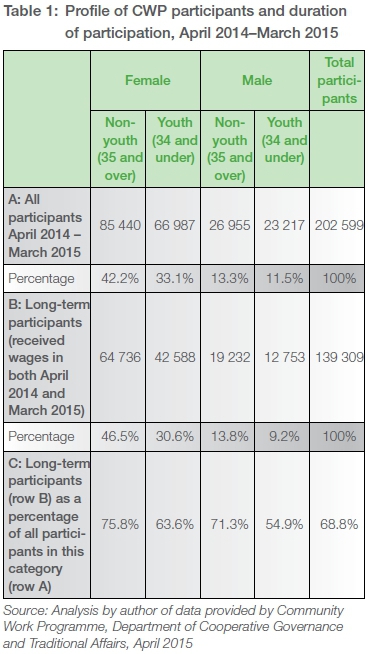
The article offers an analysis of the potential impact of the Community Work Programme (CWP) on crime and violence. The CPW is a public employment programme that was formally established within the government in 2010. The CWP may have an impact on crime and violence through a number of different 'pathways'. One of these, the focus of this article, is through wages provided to the participants, 75% of whom are women. Notable here is the likely impact of these wages on the households of participants, including on their children and intimate partner relations. Whereas the CWP may have a beneficial impact on children in a household, there appears to be the potential that the CWP may aggravate the risk of violence, particularly for female participants who have unemployed partners. The article argues that if the crime prevention potential of the CWP is to be optimised, this motivates for providing 'gender training' to participants who may be at risk of intimate partner violence. In addition, limited male participation may reinforce a pattern of male exclusion, motivating for increasing the participation of men within the CWP.
The Centre for Law and Society at the University of Cape Town, Institute for Security Studies (Pretoria)
Institute for Security Studies, P. O. Box 1787, Brooklyn Square, Pretoria, Gauteng, ZA, 0075, Tel: +27 12 346 9500, Tel: +27 12 346 9502 -
E-mail: pretoria@issafrica.org