
 Improving the efficiency of evidence-based interventions: The strengths and limitations of randomised controlled trials
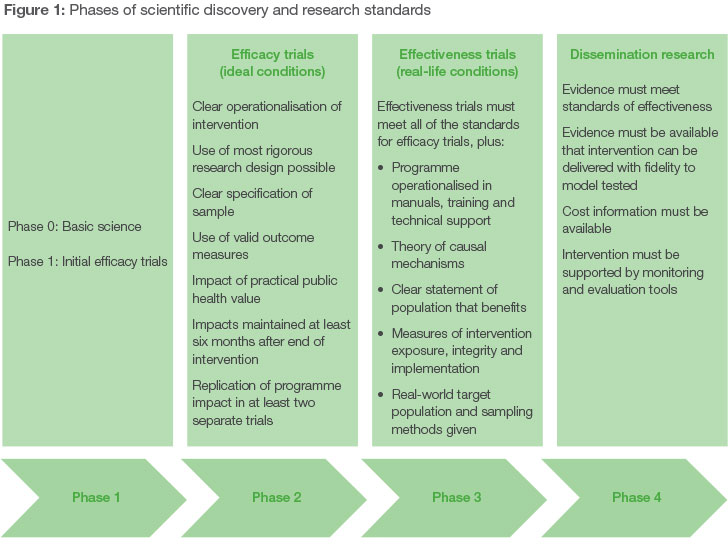
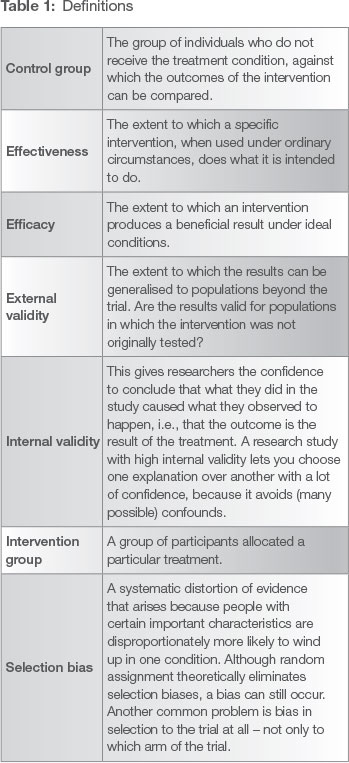
Globally, randomised controlled trials (RCTs) are increasingly seen as the gold standard of programme evaluation, representing the best way to determine whether new interventions are effective - but they are not without limitations. In this article, we discuss the phases of scientific discovery and the research standards that are necessary before scaling up interventions. We also outline the core characteristics of RCTs, such as randomisation, efficacy and effectiveness, and discuss the benefits of using the RCT as the standard of intervention evaluation. We discuss how 'realist' evaluation contributes to what policymakers need to know in order to make a decision about an evaluation and alternatives to the RCT, such as stepped wedge, regression discontinuity, non-randomised cohort, and time series designs.
 Thumbnail
The Centre for Law and Society at the University of Cape Town, Institute for Security Studies (Pretoria)
Institute for Security Studies, P. O. Box 1787, Brooklyn Square, Pretoria, Gauteng, ZA, 0075, Tel: +27 12 346 9500, Tel: +27 12 346 9502 -
E-mail: pretoria@issafrica.org