Utilisation of antibiotics in a community pharmacy: A case from north-west, South Africa
Abstract
BACKGROUND: Antibiotic utilisation is a growing public health issue due to antimicrobial resistance. Community pharmacies are a key access point for antibiotics; thus, an evaluation of dispensing records will provide insights into their use AIM: To describe the utilisation of antibiotics in a private community pharmacy SETTING: This study was undertaken in a private pharmacy located in the North West province of South Africa METHODS: A retrospective, cross-sectional study reviewed electronic dispensing records of oral antibiotics from January 2022 to August 2024, categorising them according to the World Health Organizations (WHO) Access, Watch and Reserve categories, generic status, diagnosis and payment methods RESULTS: A total of 10 468 antibiotic dispensing records were analysed. Adults (18-64 years) accounted for the majority of prescriptions (80.7%; n = 8446). Overall, Access antibiotics were mostly dispensed (56.5%; n = 5910); however, azithromycin, a Watch antibiotic, was the most dispensed antibiotic (n = 1849). Notably, 82% (n= 8584) of prescriptions were linked to non-specific International Classification of Diseases, 10th Revision codes. Generic medicines constituted 92.6% (n = 9694) of prescriptions. Although most patients (72.8%) used medical aid, cash-paying patients were more likely to be dispensed a generic antibiotic CONCLUSION: Antibiotic prescribing largely aligned with WHO guidelines; however, the high rate of Access antibiotics dispensed highlights the need for targeted interventions to improve prescribing practices and guideline adherence CONTRIBUTION: This case study indicates that dispensing records contribute to improved understanding of local antibiotic usage patterns that can help combat antimicrobial resistance within a community
antibiotic; antibiotic utilisation; community pharmacy; private healthcare; antimicrobial stewardship; AWaRe classification; dispensing patterns; medicine usage
Introduction
The irrational use of antibiotics is a global challenge, with developing countries like South Africa being particularly vulnerable. One of the major consequences of irrational antibiotic use is the rise in antimicrobial resistance (AMR), which significantly contributes to increased morbidity, mortality and healthcare costs.12
To address this issue, antibiotic utilisation studies play a vital role in assessing patterns of use and identifying areas for improvement. The World Health Organization (WHO) has developed the Access, Watch, and Reserve (AWaRe) classification system to guide the appropriate use of antibiotics and mitigate AMR.2Access category includes essential antibiotics for treating common infections with a lower risk of resistance such as amoxicillin and doxycycline. The goal is for at least 60% of all antibiotics prescribed to come from the Access group (WHO).2Watch category includes antibiotics with a higher resistance risk, which should be used cautiously for specific infections such as azithromycin and ciprofloxacin. The Reserve category consists of 'last-resort' antibiotics like linezolid, which are critical for treating multidrug-resistant infections and should be used only when necessary.2
Misdiagnosis and empirical prescribing without proper diagnostic confirmation contribute to the misuse of antibiotics, accelerating the development of AMR. A study analysing antibiotic prescribing among South African general practitioners found that 45.4% of antibiotic prescriptions were inappropriate, highlighting the need for improved diagnostic accuracy and stewardship.345
The public healthcare sector in South Africa has made progress in promoting antimicrobial stewardship programmes, which are designed to improve antibiotic prescribing and reduce misuse. These programmes emphasise adherence to evidence-based Standard Treatment Guidelines, monitoring antibiotic use and educating healthcare providers on the risks of overprescribing.3637
Antibiotic utilisation studies are essential for gaining a comprehensive understanding of prescribing practices in real-world healthcare settings. By examining these patterns, such studies can help identify areas where improvements are needed.88
This study aimed to explore antibiotic prescribing practices in a private community pharmacy in the north-west province of South Africa. Specifically, it sought to identify the commonly prescribed antibiotics, the conditions for which they were prescribed and dosage forms. The study also examined whether these prescriptions, along with their associated ICD-10 codes, were aligned with the recommendations outlined in the South African Standard Treatment Guidelines (STGs), Primary Health care (PHC) Level. The STGs are the national guidelines developed by the South African Department of Health to ensure equitable access to healthcare, and promote rational use of medicines by ensuring that the medicines provided are cost-effective, appropriate and aligned with the burden of diseases in South Africa.99
Research methods and design
Study design
This study was a quantitative descriptive retrospective, cross-sectional drug utilisation study. The study reviewed electronic prescriptions for oral antibiotics that were dispensed by the pharmacy from 01 January 2022 to 31 August 2024.
Setting
The study was conducted in a community pharmacy in a town in the north-west province of South Africa. The population of this town is less than 50 000 and is surrounded by numerous towns and villages. Many residents rely on the town for essential services, including healthcare, education and shopping. The pharmacy in question offers a wide range of services including dispensing of prescriptions and over-the-counter medicines and basic health screens through the clinic such as blood pressure and blood glucose monitoring. The pharmacy also plays a vital role in facilitating access to Primary Health care in an area where public health facilities are often overburdened.
Study population and sampling strategy
All patients, adults and children, who received oral antibiotics during the study period from January 2022 to August 2024, were included. A total of 10 468 prescriptions were analysed. Records were excluded if the antibiotics were not administered orally as well as if there were incomplete patient records, for example, missing demographic data.
Data collection
De-identified prescription data were extracted by the gatekeeper from their dispensing software and were provided to the researchers in a Microsoft® Excel spreadsheet. The variables extracted included the date when the prescription was dispensed, patient gender, date of birth, whether the dispensed antibiotic was the originator brand or generic, product description, dosage form, strength, pack size, ICD-10 code, payment method (cash or medical aid) and levy charged.
Data analysis
The extracted data underwent coding and cleaning to remove incomplete records, duplicates and any prescriptions that did not meet the inclusion criteria. The cleaned dataset was then exported to Stata version 18 for analysis, by a statistician. All antibiotics were categorised according to the WHO's AWaRe classification system which divides antibiotics into three: Access, Watch and Reserve.2
The dataset was numerical in nature, where the overall counts of patients receiving antibiotics were determined according to specific parameters. Descriptive statistics were used to summarise the data, with results presented as frequencies and percentages. To assess associations between patient characteristics (such as age group and payment method) and the likelihood of generic medicine use, Inferential Statistical Methods were applied. Specifically, logistic regression analysis was used to estimate odds ratios (ORs) with 95% confidence intervals (CIs) and p-values were reported to determine statistical significance, with p < 0.05 considered significant.
Ethical considerations
Prior to the commencement of the study, gatekeeper approval was obtained from the owner of the pharmacy. Ethical clearance to conduct this study was obtained from the University of KwaZulu-Natal's Biomedical Research Ethics Committee, (No. BREC/00006684/2024). The data received from the gatekeeper were de-identified, neither patient names nor identification numbers were provided; no information was provided relating to the prescriber.
Results
The original dataset consisted of 15 014 antibiotics dispensed between 01 January 2022 and 30 August 2024. After removing records that did not meet the inclusion criteria, a total of 10 468 dispensing records were assessed.
Overview of participant demographics
The prescriptions comprised 1.6% (n = 165) of patients less than 2 years of age, 8.5% (n = 889) were between the ages of 3 and 11 years, 2.8% (n = 294) were between the ages of 12 and 17 years, 80.7% (n = 8446) were between the ages of 18 and 64 years, and 6.4% (n = 674) of the prescriptions were for patients who were 65 years and above. Just more than half the antibiotics dispensed were to female patients (53.5%; n = 5596).
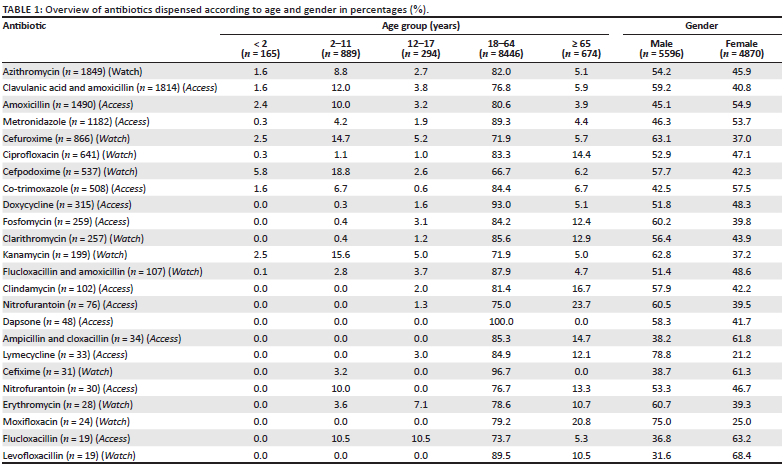
Table 1 presents the number of antibiotics dispensed in the study, categorised according to the WHO's AWaRe Classification System (Access, Watch and Reserve), and stratified by age group and gender.
In this study, the top 60% of prescribed antibiotics were azithromycin (17.7%), amoxicillin/clavulanic acid (17.3%), amoxicillin (14.2%) and metronidazole (11.3%). Most of the antibiotics were from the Access category 54.5% (n = 5910), while the remaining 43.5% (n = 4558) were from the Watch category. There were no antibiotics dispensed from the Reserve category.
Reviewing the commonly prescribed Watch category antibiotics in greater detail found that azithromycin (17.7%) was the most prescribed. It was further observed that ciprofloxacin was also commonly prescribed (6.1%), of which eight prescriptions were under the ICD-10 code A49.9 for unspecified bacterial infections.
Upon review of antibiotics used in paediatric patients, it was observed a few antibiotics were dispensed despite these typically being avoided in this population. There were 15 patients under the age of 18 years, who received ciprofloxacin. Two patients, between the ages of 2 and 11 years, were prescribed doxycycline and lymecycline.
Indication of antibiotics
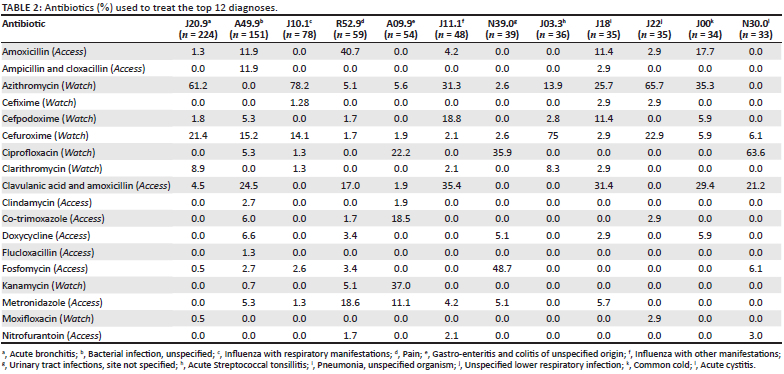
All antibiotics dispensed had a correlating ICD-10 code. A total of 200 ICD-10 codes were identified within the dataset. The majority of prescriptions (82%; n = 8565) dispensed were associated with Z codes, which generally describe health encounters or conditions not tied to specific diseases (e.g., routine exams, preventive care). A total of 17 different Z codes were recorded. The remaining 18% (n = 1884) were associated with non-Z ICD-10 codes. Of these, prescriptions with human immunodeficiency virus (HIV)-related ICD-10 code (B24) were excluded for further analysis (n = 203, 1.9%), as they typically reflect prophylactic or therapeutic use of antibiotics for opportunistic infections in HIV-positive patients. Within this excluded group, cotrimoxazole (n = 192) and dapsone (n = 8) were the most frequently prescribed antibiotics. From the remaining prescriptions, the 12 most frequently prescribed codes were presented in Table 2 and were selected for detailed analysis. These were chosen as they provided a cross-sectional view of the primary clinical reasons for antibiotic prescribing beyond the Z-related and HIV-related codes.
A review of prescriptions by ICD-10 codes revealed that the most commonly prescribed antibiotic overall was azithromycin (Watch category), particularly for respiratory-related diagnoses, such as influenza with respiratory manifestations (J10.1, 78.2%), unspecified acute lower respiratory infection (J22, 65.7%) and the common cold (J00, 35.3%). Cefuroxime (Watch) was also widely used, especially for acute Streptococcal tonsillitis (J03.3, 75.0%) and bacterial infections of unspecified origin (A49.9, 15.2%). Among Access category antibiotics, amoxicillin was the most frequently prescribed, notably for pain (R52.9, 40.7%) and the common cold (J00, 17.7%). Ciprofloxacin (Watch) and fosfomycin (Access) were predominantly used for urinary tract infections (N39.0 and N30.0), with ciprofloxacin accounting for 63.6% of prescriptions for acute cystitis (N30.0) and fosfomycin accounting for 48.7% for urinary tract infections (site not specified).
Antibiotics prescribed per season
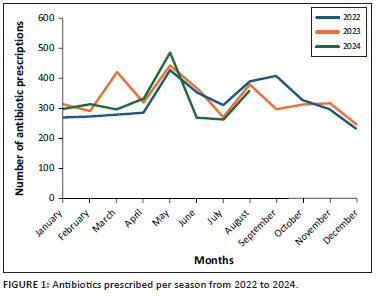
Figure 1 illustrates the monthly variations in antibiotic prescriptions over the study period, highlighting seasonal trends. On average, 327.13 (range: 246-488) antibiotic prescriptions were issued per month over the study period. Peaks in antibiotics use were seen during autumn (March-May, n = 3298), which is 31.5% and winter (June-August, n = 2967), which is 28.3%. In contrast, spring (September-November) had the lowest number of prescriptions (n = 1960), which is 18.7%. In all the 3 years, the highest number of antibiotics were dispensed in May (average: 452; range: 427-488).
Choice of antibiotic and payment method
There were more generic antibiotics dispensed, 92.61% (n = 9694) as opposed to originator brands, 7.39% (n = 774). Antibiotics, such as amoxicillin (n = 1490), co-trimoxazole (n = 508), doxycycline (n = 315), clarithromycin (n = 257), flucloxacillin and amoxicillin combination (n = 107), clindamycin (n = 102), erythromycin (n = 28), moxifloxacin (n = 24), flucloxacillin (n = 19) and levofloxacin (n = 19) were exclusively prescribed as generics. While only the originator brands for kanamycin (n = 199) and dapsone (n = 48) were dispensed as there is currently no generics available for those in the market. Both generic and originator brands for fosfomycin (originator, n = 102; generic, n = 157) and nitrofurantoin (originator, n = 62; generic, n = 62) were dispensed.
Both male and female patients frequently opted for generics, with male patients demonstrating a stronger preference (91.4%) for generics compared to female patients. This was statistically significant, with an odds ratio of 1.49 (95% CI: 1.29-1.74, p < 0.001).
Patients aged 18-64 years (OR = 1.92, 95% CI: 1.20-3.09, p = 0.01) and those 65 years or older (OR = 1.97, 95% CI: 1.13-3.45, p = 0.02) were significantly more likely to use generics compared to those less than 2 years old. There were no significant differences in generic use for age groups 2-11 years (p = 0.74) and 12-17 years (p = 0.45).
Medical aid transactions were the dominant payment method, accounting for 72.8% (n = 7617) of the total transactions as compared to cash patients at 27.2% (n = 2851). Of those transactions which were paid by medical aid, 40.0% (n = 3133) of these claims incurred no levy, while the highest levy paid was ZAR R1 131.74. From the patients who were paying cash, the highest amount paid was ZAR R892.83. Patients paying with cash were twice as likely to use generics compared to those on medical aid (OR = 1.90, 95% CI: 1.56-2.30, p < 0.001).
Discussion
This study reviewed 10 468 dispensing records for oral antibiotics dispensed from January 2022 to 31 August 2024. The data revealed a wide age distribution of antibiotic prescriptions, with most prescriptions (80.7%) being for patients aged 18 to 64 years. Only 12.9% of prescriptions were for paediatric patients (< 18 years). This skewed distribution towards adults reflects the higher incidence of infections requiring antibiotics in this age group, potentially due to occupational exposures and lifestyle factors.
Despite the lower percentage of paediatric prescriptions, the prescribing practices in this age group warrant attention, especially regarding inappropriate prescriptions of antibiotics such as ciprofloxacin, doxycycline and lymecycline, which are contraindicated in younger patients. Ciprofloxacin, for example, is associated with the risk of musculoskeletal toxicity, particularly tendon damage, in children, which may lead to irreversible joint and cartilage damage. A study by Menschik et al.10in vitro. While this study was conducted on adult cartilage, it raises concerns about the potential effects of ciprofloxacin on cartilage in younger populations. Similar caution has been emphasised in global guidelines and clinical research, such as a study in India that reported inappropriate prescribing of ciprofloxacin for paediatric patients despite the availability of safer alternatives.1112
Doxycycline is known to deposit in growing bones and teeth, leading to growth retardation, discolouration and enamel hypoplasia. Studies emphasise that tetracyclines, including doxycycline, should be avoided in children under 12 years, except in cases of severe or life-threatening infections such as rickettsial diseases or anthrax.1314
Inappropriate antibiotic use in children also contributes to the growing problem of AMR. Misuse of antibiotics for viral infections, or in situations where the benefits do not outweigh the risks, can promote the development of resistant strains of bacteria, leading to infections that are harder to treat in the future.15
The AWaRe classification framework highlights the necessity for prudent antibiotic use to address the global challenge of AMR.2Access antibiotics (56.5%) are predominantly prescribed, although this falls slightly short of the recommended 60.0% threshold set by the WHO for optimal antibiotic use in clinical practice.216,1718
The frequent use of azithromycin (n = 1849), which falls within the Watch category, mirrors trends reported in other settings. For instance, a study in Pakistan found a similar over-reliance on macrolides like azithromycin for infections with unclear bacterial aetiology, raising concerns about resistance development.1920,21
Similarly, ciprofloxacin, also categorised under the Watch list, was frequently prescribed (eight prescriptions) for non-specific ICD-10 codes like A49.9. This reflects a broader challenge noted in countries like Vietnam, where ciprofloxacin was often prescribed without microbiological evidence.222324
Interestingly, no prescriptions for Reserve antibiotics were recorded in this study. This finding aligns with observations from other regions, such as Nepal, where Reserve category antibiotics like linezolid were rarely available in community pharmacies.25Reserve category antibiotics, indicating a minimal use in that setting.26Reserve category were < 1%.27Reserve antibiotics is generally low in various settings. The limited use is encouraging as it reflects the appropriate restriction of last-resort antibiotics, a key strategy in mitigating the risk of antimicrobial resistance.
Certain diagnoses, such as R52.9 (pain) and J00 (common cold), are typically not associated with bacterial infections and therefore do not require antibiotic treatment.228Watch category antibiotic, was the most commonly used, despite the fact that antibiotics are not routinely indicated for A09.9 as per STGs.9
Conditions like J20.9 (acute bronchitis) and J10.1 (influenza with respiratory manifestations) are typically viral in origin, and antibiotics are generally not recommended unless a secondary bacterial infection occurs.9292
For conditions where antibiotics are warranted, for example, J18 (pneumonia, unspecified organism) showed prescriptions of amoxicillin (11.4%), azithromycin (25.7%), cefuroxime (2.9%) and clavulanic acid/amoxicillin (31.4%). For J03.3 (acute Streptococcal tonsillitis), the predominant antibiotics were cefuroxime (75.0%) and azithromycin (13.9%), while Access antibiotics like amoxicillin and doxycycline were minimally prescribed or absent. In cases of N30.0 (acute cystitis), ciprofloxacin (63.6%) and clavulanic acid/amoxicillin (21.2%) were most frequently prescribed, with lower use of Access antibiotics such as fosfomycin (6.1%) and nitrofurantoin (3.0%). For N39.0 (urinary tract infection, unspecified), fosfomycin accounted for 48.7% of prescriptions, followed by ciprofloxacin (35.9%) and doxycycline (5.1%). While antibiotic use is justified for these infections, the marked preference for broad-spectrum Watch antibiotics, such as azithromycin, cefuroxime and ciprofloxacin, over narrower-spectrum Access antibiotics raises concerns about adherence to STG recommendations. This also emphasises the need for improved antimicrobial stewardship to reduce the risk of antimicrobial resistance. Access antibiotics, such as amoxicillin and doxycycline, should be the preferred first-line treatment.2
The high use of Watch antibiotics across several diagnoses, including those that are often viral or self-limiting, suggests potential overuse and highlights the need for strengthened antimicrobial stewardship. In contrast, Access antibiotics were underutilised in some instances where they may have been more appropriate according to STGs. This trend raises concerns about the practices in the private healthcare sector, where prescribers often have more autonomy and can prescribe according to their discretion, rather than strictly adhering to the STGs.3030
The dataset reveals seasonal variations in antibiotic prescriptions. This aligns with studies documenting similar seasonal trends, such as Degnan et al.,313032
The overwhelming preference for generic antibiotics (92.61%) aligns with global cost-saving trends, as generic entry into the market has been shown to influence prescribing practices. A study found that the introduction of generic ciprofloxacin led to an increase in consumption, suggesting that affordability significantly influences prescribing and dispensing patterns.2933
Payment methods also impact the likelihood of generic antibiotic use. While medical aid was the dominant payment method (72.8%), patients paying with cash were twice as likely to use generics (OR = 1.90), likely due to cost considerations. Cash-paying patients also bore a higher financial burden, with the highest payment recorded at ZAR R892.83. This aligns with studies that highlight the economic motivations behind generic substitution and the potential for increased financial strain on patients paying out-of-pocket.34
Patient demographics significantly influence generic antibiotic use. Male patients were more likely to use generics than female patients (OR = 1.49), and patients aged 18-64 years and ≥ 65 years had higher odds of using generics compared to those < 2 years. This suggests that affordability and accessibility shape prescribing patterns. In contrast, younger children (< 2 years) had the lowest percentage of generic use (87.9%), most likely due to the limited availability of paediatric formulations among generics.35,36
The findings of this study highlight several key challenges and opportunities for improving antibiotic stewardship. The inappropriate use of antibiotics for conditions like viral infections and non-specific ICD-10 codes contributes to antimicrobial resistance and unnecessary healthcare costs.37
To address these challenges, coordinated interventions are essential. These include mandatory prescription audits,38,39439439181840414243
These findings highlight the broader relevance of pharmacist-led antimicrobial stewardship programmes in LMIC settings, especially when supported by local leadership, education models such as Train-the-Trainer and regular performance feedback. Future efforts should build on these models and explore context-specific barriers and enablers to expand the reach and sustainability of stewardship programmes across African primary and community healthcare sectors.
Limitations
This study was limited to retrospective dispensing records, where clinical outcomes or rationales for prescriptions were not assessed. Future research should consider prospective audits where clinical data and interventions could be incorporated.
Although the results provide valuable insight to the study site upon which antibiotic interventions could be built, the data may not be transferable to other private pharmacies, especially those outside the area.
Conclusion
This study underscores the value of reviewing local dispensing records as a critical tool for informing targeted interventions to optimise antibiotic use and combat antimicrobial resistance (AMR). By analysing real-world dispensing patterns, healthcare systems can identify key areas for improvement, such as aligning prescribing practices with AWaRe Guidelines and addressing inconsistencies in paediatric antibiotic use. Strengthening the use of ICD-10 codes in prescribing can further enhance data accuracy, supporting more precise monitoring and intervention efforts. Improving adherence to these coding standards and refining paediatric prescribing practices will not only promote rational antibiotic use but also contribute to better patient outcomes and a more effective response to AMR.
Competing interests
The authors declare that they have no financial or personal relationship(s) that may have inappropriately influenced them in writing this article.
Authors' contributions
Z.N. conceptualised the research, conducted the literature review, designed the methodology, collected and analysed the data and wrote the article. D.J. and V.B. provided guidance on the study design, supervised the research process and contributed to the critical review and editing of the article.
Funding information
This research received no specific grant from any funding agency in the public, commercial or not-for-profit sectors.
Data availability
The data that support the findings of this study are available from the corresponding author, Z.N., upon reasonable request.
Disclaimer
The views and opinions expressed in this article are those of the authors and are the product of professional research. It does not necessarily reflect the official policy or position of any affiliated institution, funder, agency or that of the publisher. The authors are responsible for this article's results, findings and content.
Acknowledgements
The authors wish to thank Catherine Connolly (Biostatistician) for her support in the statistical analysis of the results. This article is partially based on the author Z.N.'s thesis titled "Evaluation of the use of antibiotics in a private community pharmacy in the north-west province" towards the degree of Master of pharmacy in the School of Health Sciences, University of KwaZulu-Natal, South Africa in 2025, with supervisors Prof. Varsha Bangalee and Dr Deanne Johnston.
References
-
1. Meštrović T, Robles Aguilar G, Swetschinski L, et al. The burden of bacterial antimicrobial resistance in the WHO European region in 2019: A cross-country systematic analysis. Lancet Public Health. 2022;7(11):e897-e913. https://doi.org/10.1016/S2468-2667(22)00225-0
» https://doi.org/10.1016/S2468-2667(22)00225-0 -
2. World Health Organization (WHO). WHO AWaRe (Access, Watch, Reserve) classification of antibiotics for evaluation and monitoring of use. 2023 [cited 2025 Feb 5]. Available from: https://www.who.int/publications/i/item/WHO-MHP-HPS-EML-2023.04
» https://www.who.int/publications/i/item/WHO-MHP-HPS-EML-2023.04 -
3. Mendelson M, Balasegaram M, Jinks T, Pulcini C. Antibiotic resistance: Calling time on the 'silent pandemic'. JAC Antimicrob Resist. 2022;4(2):dlac016. https://doi.org/10.1093/jacamr/dlac016
» https://doi.org/10.1093/jacamr/dlac016 - 4. World Health Organization. AWaRe classification of antibiotics for evaluation and monitoring of use. Geneva: WHO; 2023.
-
5. Chua K-P, Fischer MA, Linder JA. Appropriateness of outpatient antibiotic prescribing among privately insured US patients: ICD-10-CM based cross-sectional study. Br Med J. 2019;364:k5092. https://doi.org/10.1136/bmj.k5092
» https://doi.org/10.1136/bmj.k5092 -
6. Gasson J, Blockman M, Willems B. Antibiotic prescribing practice and adherence to guidelines in primary care in the Cape Town Metro District, South Africa. S Afr Med J. 2018;108(4):304-310. https://doi.org/10.7196/SAMJ.2017.v108i4.12564
» https://doi.org/10.7196/SAMJ.2017.v108i4.12564 -
7. Davies J, Davies D. Origins and evolution of antibiotic resistance. Microbiol Mol Biol Rev. 2010;74(3):417-433. https://doi.org/10.1128/MMBR.00016-10
» https://doi.org/10.1128/MMBR.00016-10 -
8. Lambert M, Smit CCH, De Vos S, et al. A systematic literature review and meta-analysis of community pharmacist-led interventions to optimise the use of antibiotics. Br J Clin Pharmacol. 2022;88(6):2617-2641. https://doi.org/10.1111/bcp.15254
» https://doi.org/10.1111/bcp.15254 -
9. National Department of Health. Standard treatment guidelines and essential medicines list for South Africa - Primary healthcare level [homepage on the Internet]. Pretoria: National Department of Health; 2020 [cited 2025 Feb 10]. Available from: http://www.health.gov.za
» http://www.health.gov.za -
10. Menschik M, Neumüller J, Steiner CW, et al. Effects of ciprofloxacin and ofloxacin on adult human cartilage in vitro. Antimicrob Agents Chemother. 1997;41(11): 2562-2565. https://doi.org/10.1128/AAC.41.11.2562
» https://doi.org/10.1128/AAC.41.11.2562 -
11. Mandal P, Asad M, Biswas M. Assessment of use of World Health Organization access, watch, reserve antibiotics and core prescribing indicators in pediatric outpatients in a tertiary care teaching hospital in Eastern India. Perspect Clin Res. 2023;14(2):71-75. https://doi.org/10.4103/picr.picr_22_22
» https://doi.org/10.4103/picr.picr_22_22 -
12. Food and Drug Administration (FDA). FDA updates warnings for fluoroquinolone antibiotics on risks of mental health and low blood sugar adverse reactions [homepage on the Internet]. U.S. Department of Health and Human Services; 2018 [cited 2025 Feb 5]. Available from: https://www.fda.gov/news-events/press-announcements/fda-updates-warnings-fluoroquinolone-antibiotics-risks-mental-health-and-low-blood-sugar-adverse
» https://www.fda.gov/news-events/press-announcements/fda-updates-warnings-fluoroquinolone-antibiotics-risks-mental-health-and-low-blood-sugar-adverse -
13. Thompson AD, Neville DN, Chapman LL, et al. Increased usage of doxycycline for young children with Lyme disease. Front Antibiot. 2024;3:1388039. https://doi.org/10.3389/frabi.2024.1388039
» https://doi.org/10.3389/frabi.2024.1388039 -
14. Sohaili A, Asin J, Thomas PPM. The fragmented picture of antimicrobial resistance in Kenya: A situational analysis of antimicrobial consumption and the imperative for antimicrobial stewardship. Antibiotics (Basel). 2024;13(3):197. https://doi.org/10.3390/antibiotics13030197
» https://doi.org/10.3390/antibiotics13030197 - 15. World Health Organization. Antimicrobial resistance. Geneva: WHO; 2020.
- 16. South Africa. Department of Health. General regulations made in terms of the Medicines and Related Substances Act, 1965 (Act 101 of 1965). Government Gazette No. 41064. Pretoria: Government Printer; 2017.
- 17. South Africa. Department of Health. Consolidated schedules: Medicines and Related Substances Act, 1965 (Act 101 of 1965). Government Gazette No. 43443. Pretoria: Government Printer; 2020.
-
18. Brink AJ, Messina AP, Feldman C, Richards GA. Antimicrobial stewardship across 47 South African hospitals: An implementation study. Lancet Infect Dis. 2016;16(9):1017-1025. https://doi.org/10.1016/S1473-3099(16)30012-3
» https://doi.org/10.1016/S1473-3099(16)30012-3 - 19. Saleem Z, Hassali MA, Hashmi FK, et al. Pattern of antibiotic dispensing at pharmacies according to the WHO Access, Watch, and Reserve (AWaRe) classification: A reflection on antibiotic stewardship efforts in Pakistan. BMC Res Notes. 2018;11(1):618.
-
20. Rather IA, Kim BC, Bajpai VK, Park YH. Self-medication and antibiotic resistance: Crisis, current challenges, and prevention. Saudi J Biol Sci. 2017;24(4):808-812. https://doi.org/10.1016/j.sjbs.2017.01.004
» https://doi.org/10.1016/j.sjbs.2017.01.004 -
21. Ayukekbong JA, Ntemgwa M, Atabe AN. The threat of antimicrobial resistance in developing countries: Causes and control strategies. Antimicrob Resist Infect Control. 2017;6:47. https://doi.org/10.1186/s13756-017-0208-x
» https://doi.org/10.1186/s13756-017-0208-x -
22. Nguyen KV, Thi Do NT, Chandna A, et al. Community-level consumption of antibiotics according to the WHO's Access, Watch, Reserve (AWaRe) classification in rural Vietnam. JAC Antimicrob Resist. 2020;2(3):dlaa048. https://doi.org/10.1093/jacamr/dlaa048
» https://doi.org/10.1093/jacamr/dlaa048 -
23. Schellack N, Benjamin D, Gous AGS, Messina AP, Lalloo R. A situational analysis of antimicrobial stewardship programmes in South Africa's private healthcare sector. S Afr J Infect Dis. 2022;37(1):1-7. https://doi.org/10.1080/21548331.2022.2114251
» https://doi.org/10.1080/21548331.2022.2114251 -
24. National Pathology Group. National Pathology Group guideline [homepage on the Internet]. 2011 s[cited 2025 May 16]. Available from: https://npg.co.za/images/20110608135826.2011-02%20NPG%20GUIDELINES%20v4.2.pdf
» https://npg.co.za/images/20110608135826.2011-02%20NPG%20GUIDELINES%20v4.2.pdf -
25. Jha N, Thapa B, Pathak SB, Kafle S, Mudvari A, Shankar PR. Availability of Access, Watch, and Reserve (AWaRe) group of antibiotics in community pharmacies located close to a tertiary care hospital in Lalitpur, Nepal. PLoS One. 2023;18(11):e0294644. https://doi.org/10.1371/journal.pone.0294644
» https://doi.org/10.1371/journal.pone.0294644 - 26. Tesfamariam EH, Gebretekle GB, Alemayehu BA, et al. Antibiotic prescribing practice using WHO Access, Watch and Reserve classification and its determinants among outpatient prescriptions dispensed to elderly population in six community chain pharmacies in Asmara, Eritrea: A cross-sectional study. PLoS One. 2023;18(7):e0287654.
- 27. Mokhele M, Mabuza A, Mothiba TM. Antibiotic consumption by Access, Watch and Reserve index in public sector of Limpopo province, South Africa: 2014-2018. J Public Health Res. 2022;11(1):jphr.2022.2323
-
28. World Health Organization (WHO). Antimicrobial resistance: global report on surveillance 2014 [homepage on the Internet]. Geneva: WHO; 2014 [cited 2025 Feb 10]. Available from: https://apps.who.int/iris/bitstream/10665/246208/1/9789241549165-V1-eng.pdf
» https://apps.who.int/iris/bitstream/10665/246208/1/9789241549165-V1-eng.pdf -
29. Jensen US, Muller A, Brandt CT, et al. Effect of generics on price and consumption of ciprofloxacin in primary healthcare: The relationship to increasing resistance. J Antimicrob Chemother. 2010;65(6):1286-1291. https://doi.org/10.1093/jac/dkq112
» https://doi.org/10.1093/jac/dkq112 -
30. Alabi ME, Essack SY. Antibiotic prescribing amongst South African general practitioners in private practice: An analysis of a health insurance database. JAC Antimicrob Resist. 2022;4(4):dlac101. https://doi.org/10.1093/jacamr/dlac101
» https://doi.org/10.1093/jacamr/dlac101 -
31. Degnan KO, Cluzet V, David MZ, et al. Development and validation of antibiotic stewardship metrics for outpatient respiratory tract diagnoses and association of provider characteristics with inappropriate prescribing. Infect Control Hosp Epidemiol. 2022;43(1):56-63. https://doi.org/10.1017/ice.2021.44
» https://doi.org/10.1017/ice.2021.44 -
32. Suda KJ, Hicks LA, Roberts RM, Hunkler RJ, Taylor TH. Trends and seasonal variation in outpatient antibiotic prescription rates in the United States, 2006 to 2010. Antimicrob Agents Chemother. 2014;58(5):2763-2766. https://doi.org/10.1128/AAC.02239-13
» https://doi.org/10.1128/AAC.02239-13 -
33. Gothe H, Schall I, Saverno K, et al. The impact of generic substitution on health and economic outcomes: A systematic review. Appl Health Econ Health Policy. 2015;13(1):21-33. https://doi.org/10.1007/s40258-014-0147-0
» https://doi.org/10.1007/s40258-014-0147-0 -
34. O'Neill J. Tackling drug-resistant infections globally: final report and recommendations. Review on Antimicrobial Resistance [homepage on the Internet]. 2016 [cited 2025 Feb 10]. Available from: https://amr-review.org/sites/default/files/160518_Final%20paper_with%20cover.pdf
» https://amr-review.org/sites/default/files/160518_Final%20paper_with%20cover.pdf - 35. Rossiter D, editor. South African medicines formulary. 13th ed. Cape Town: South African Medical Association; 2020.
-
36. Mahmood RK, Gillani SW, Saeed MW, Hafeez MU, Gulam SM. Systematic review: Study of the prescribing pattern of antibiotics in outpatients and emergency departments in the Gulf region. Front Pharmacol. 2020;11:585051. https://doi.org/10.3389/fphar.2020.585051
» https://doi.org/10.3389/fphar.2020.585051 -
37. Palms DL, Hicks LA, Bartoces M, et al. Comparison of antibiotic prescribing in retail clinics, urgent care centers, emergency departments, and traditional ambulatory care settings in the United States. JAMA Intern Med. 2018;178(7):1061-1069. https://doi.org/10.1001/jamainternmed.2018.1632
» https://doi.org/10.1001/jamainternmed.2018.1632 -
38. Cassim J, Essack SY, Chetty S. An audit of antibiotic prescriptions: An antimicrobial stewardship pre-implementation study at a tertiary care public hospital. JAC Antimicrob Resist. 2025;7(1):dlae219. https://doi.org/10.1093/jacamr/dlae219
» https://doi.org/10.1093/jacamr/dlae219 -
39. Centers for Disease Control and Prevention. Core elements of hospital antibiotic stewardship programs [homepage on the Internet]. Atlanta, GA: U.S. Department of Health & Human Services; 2023 [cited 2025 Feb 10]. Available from: https://www.cdc.gov/antibiotic-use/hcp/core-elements/hospital.html
» https://www.cdc.gov/antibiotic-use/hcp/core-elements/hospital.html -
40. Otieno PA, Campbell S, Maley S, Arunga TO, Okumu MO. A systematic review of pharmacist-led antimicrobial stewardship interventions in Sub-Saharan Africa. JAC Antimicrob Resist. 2022;4(3):dlac069. https://doi.org/10.1155/2022/3639943
» https://doi.org/10.1155/2022/3639943 -
41. Nyoloka N, Richards C, Mpute W, et al. Pharmacist-led antimicrobial stewardship programme in two tertiary hospitals in Malawi. Antibiotics. 2024;13(6):480. https://doi.org/10.3390/antibiotics13060480
» https://doi.org/10.3390/antibiotics13060480 - 42. Maina M, Mwaniki P, Odira E, et al. Evaluating the implementation of an antimicrobial stewardship programme in Kenyan public hospitals: A qualitative study. Antimicrob Resist Infect Control. 2020;9(1):1-8.
- 43. Akande TM, Afolabi MO, Adebayo AM. Effect of pharmacist-led antimicrobial stewardship interventions in a tertiary hospital in Nigeria. Ann Afr Med. 2021;20(4):311-316.

Accepted: 31 May 2025
Published: 23 July 2025