Self-reported knowledge, attitude and mental health status of in-school adolescents in Nigeria
Abstract
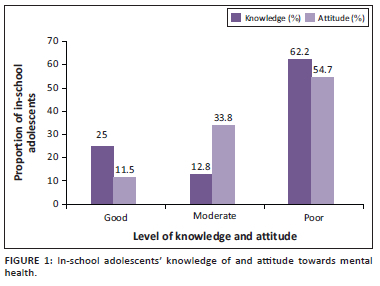
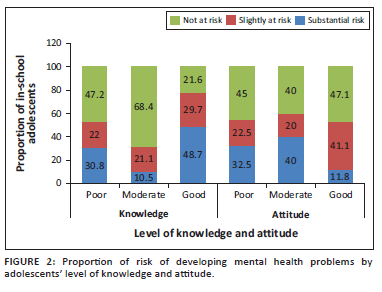
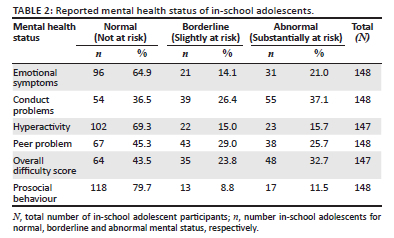
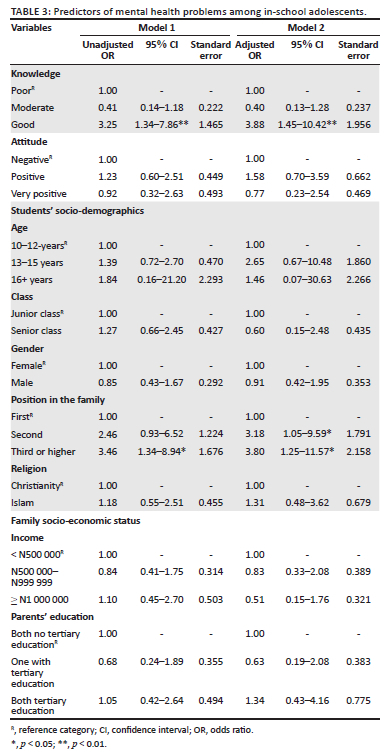
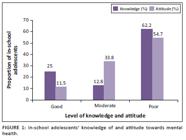
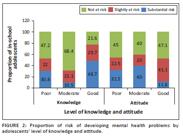
BACKGROUND: The global rise in adolescent mental health conditions highlights the need for preventive interventions particularly in schools for timely access to young people, building on inherent strengths and competencies AIM: The study aims to determine the knowledge, attitude, mental health status and the predictors of mental health status of in-school adolescents SETTING: The study was conducted in government-owned secondary schools in Lagos State, Nigeria. Simple random sampling was used to select one of three senatorial districts; one junior and one senior secondary school with a nurse-led school clinic were purposively selected from the sampled district METHODS: Within a cross-sectional survey design, a self-administered questionnaire was used to obtain data from a sample of in-school adolescents aged 10-19 years (n = 148), enrolled in junior and senior classes RESULTS: Most in-school adolescents reported poor knowledge (62.2%; n = 92) and poor attitude (54.7%; n = 81) towards mental health; 37.2% (n = 55) reported being substantially at risk of conduct problems. A high proportion (79.7%) indicated normal prosocial behaviours. Level of knowledge (odds ratio [OR] = 3.25; p < 0.05; 95% confidence interval [CI] = 1.34-7.86) as well as third or higher birth order (OR = 3.46; p < 0.05; 95% CI = 1.34-8.94) were significant predictors of mental health status CONCLUSION: Most in-school adolescents lack knowledge, have a poor attitude towards mental health and are more likely to display conduct problems impacting their mental health status CONTRIBUTION: The study provides baseline evidence for designing in-school programmes with a mental wellness focus to promote the mental health of adolescents, leveraging professional and parental networks
knowledge; attitude; mental health; mental health status; in-school adolescents
 Thumbnail
 Thumbnail