The effect of phlebotomy training on blood sample rejection and phlebotomy knowledge of primary health care providers in Cape Town: A quasi-experimental study
Abstract
BACKGROUND: There is an increasing amount of blood sample rejection at primary health care facilities (PHCFs), impacting negatively the staff, facility, patient and laboratory costs. AIM: The primary objective was to determine the rejection rate and reasons for blood sample rejection at four PHCFs before and after a phlebotomy training programme. The secondary objective was to determine whether phlebotomy training improved knowledge among primary health care providers (HCPs) and to develop a tool for blood sample acceptability. STUDY SETTING: Two community health centres (CHCs) and two community day centres (CDCs) in Cape Town. METHODS: A quasi-experimental study design (before and after a phlebotomy training programme. RESULTS: The sample rejection rate was 0.79% (n = 60) at CHC A, 1.13% (n = 45) at CHC B, 1.64% (n = 38) at CDC C and 1.36% (n = 8) at CDC D pre-training. The rejection rate remained approximately the same post-training (p > 0.05). The same phlebotomy questionnaire was administered pre- and post-training to HCPs. The average score increased from 63% (95% CI 6.97‒17.03) to 96% (95% CI 16.91‒20.09) at CHC A (p = 0.039), 58% (95% CI 9.09‒14.91) to 93% (95% CI 17.64‒18.76) at CHC B (p = 0.006), 60% (95% CI 8.84‒13.13) to 97% (95% CI 16.14‒19.29) at CDC C (p = 0.001) and 63% (95% CI 9.81‒13.33) to 97% (95% CI 18.08‒19.07) at CDC D (p = 0.001). CONCLUSION: There is no statistically significant improvement in the rejection rate of blood samples (p > 0.05) post-training despite knowledge improving in all HCPs (p < 0.05).
Introduction
There is an increasing amount of blood sample rejection at primary health care facilities (PHCFs) which impacts negatively the staff, facility, patient and laboratory and results in high health care costs. Patient care and safety has become increasingly more important in laboratory medicine.123,4
Approximately 70% - 80% of diagnoses are made in conjunction with laboratory tests. A delay in laboratory test results may result in delayed diagnoses, inappropriate or unnecessary treatment, increased risk to patient safety, high health care costs and waste of time.56
Studies reported the following preanalytical errors: patient identification (labelling errors, no test specified on request form, illegible request, no ward specified); sample collection (clotting, insufficient blood volume, incorrect sample tube, haemolysis); and sample transport (storage conditions i.e. incorrect temperature, sample lost or not received by the laboratory).1,3
Majority of blood samples are rejected as a result of preanalytical errors, and this accounts for up to 70% of laboratory errors.7,8,91011
A pilot audit at Vanguard Community Health Centre (CHC) in August 2012 (unpublished) showed that blood sample rejection is predominantly related to incorrect phlebotomy technique. This contributes significantly to preanalytical errors, as primary health care nurses do not receive formal phlebotomy training as part of their undergraduate training.
In a recent retrospective audit conducted at Tygerberg Hospital in Cape Town, 481 of 32 910 samples (1.46%) were rejected during the 2-week study period.11
Haemolysis refers to the release of haemoglobin and intracellular components from erythrocytes into the surrounding plasma when the cell membrane is either damaged or disrupted.12121
The low rate of repeating blood samples of rejected samples and the delay in repeating the blood sample are also a concern as laboratory results can influence clinical decisions and inherent patient care.131
The evaluation of the reasons for blood sample rejection and its impact on health care costs as well as costs to the staff and most importantly to the patient is a form of assessing health systems performance. This provides role players in the health system with policy options and practical information that can be used to improve the health care system performance.1415
The quality of a service can be determined by evaluating the success with which a service is delivered.1617
Phlebotomy can also be of high cost if blood samples are rejected because of various reasons. It was found that blood samples drawn by trained laboratory personnel/phlebotomists have lower blood sample rejection rates when compared to HCPs who have not received training (99.6% success vs 97.9%; p = 0.002). Even with trained personnel, haemolysis, clotting and insufficient blood volume were the main causes for blood sample rejection.10
Laboratory medicine plays a vital role in everyday clinical practice as well as in the long term follow-up of our patients. Only appropriate samples received by the laboratory can be analysed.1810
A study conducted at a government hospital in Bhavnagar showed that incorrect phlebotomy technique was the main reason for blood sample rejection. In order to improve the quality of samples that reach the laboratory, the authors of the above study suggest that phlebotomists and laboratory staff develop a manual on proper phlebotomy technique for HCPs.18
Aims and objectives
The aim was to assess the effect of phlebotomy training on blood sample rejection rate and knowledge among primary HCPs at four facilities in Cape Town.
The primary objective of this study was to determine the rejection rate and reasons for blood sample rejection at four selected PHCFs pre- and post-phlebotomy training. The secondary objective was to determine whether phlebotomy training improved phlebotomy knowledge among primary HCPs and to develop a tool for blood sample acceptability.
Study design and methods
Study design
We performed a quasi-experimental study (before and after a phlebotomy training programme). We measured HCPs' knowledge on phlebotomy technique and laboratory blood sample rejection rates before and after a phlebotomy training programme. All blood samples received and rejected by the NHLS during the month of May 2014 (pre-training) and July 2014 (post-training) were included in the study. A 2-hour Phlebotomy training programme was conducted at each facility during the month of June 2014. Phlebotomy knowledge pre- and post-phlebotomy training was assessed on the same day with each HCP completing the same phlebotomy questionnaire pre- and post-training.
Any sample processed by the laboratory that was not blood was excluded from the study.
Intervention
The phlebotomy training programme was developed based on the 'NHLS Western Cape Regional Laboratories Specimen Sampling Manual 2013'. The programme was developed using the information in the manual regarding health and safety measures of phlebotomy, proper venepuncture technique, the correct way to handle blood samples and phlebotomy equipment such as needles and syringes, the correct storage and transport of blood samples as well as the correct completion of the NHLS sample request form.
HCPs were assigned to receive phlebotomy training as our intervention of interest. The phlebotomy training session was approximately 2 hours long and was conducted at each of the four facilities (CHC A, CHC B, community day centre [CDC] C and CDC D) at a pre-determined day and time during the month of June 2014. All HCPs who attended the training session received a copy of the 'NHLS Western Cape Regional Laboratories Specimen Sampling Manual 2013'.
The same pre- and post-training questionnaires were completed by each HCP in attendance at the training to assess if their knowledge had improved post-training. There was no pass mark; however, pre- and post-training scores determined whether knowledge around phlebotomy increased.
Setting
The study was a multicentre study performed at four facilities in Cape Town, two 24-hour CHCs (CHC A and B) and two 8-hour CDCs (CDC C and D).
A community health facility (CHC and CDC) is a public PHCF funded by the government. It provides health care that covers a range of health promotion, disease prevention, curative and rehabilitative services to the community.19,20
The facilities included CHC A and B, which were large 24-hour facilities serving between 150 000 and 300 000 patients,21,2223
Study population and sampling strategy
The HCPs for the 2-hour phlebotomy training session were recruited by seeking their permission through the assistance of the facility managers and family physicians of the four facilities. There was a total of 23 HCPs who attended the training programme. Convenience sampling of HCPs was done. There were five HCPs from CHC A, seven from CHC B, seven from CDC C and four from CDC D. These HCPs were trained as trainers and were expected to train other HCPs at their respective facilities.
Data collection
The data for May 2014 (pre-training) and July 2014 (post-training) were extracted from the NHLS DISALAB at the data warehouse in Johannesburg. The data were captured onto Microsoft® Excel®. The variables extracted included the total number of routine blood samples performed, the number of blood samples rejected, the name of the test that was rejected (e.g. full blood count) and the reason for rejecting a blood sample (e.g. clotted sample).
Data from the data capture sheets were captured onto Microsoft Excel and was backed up on an external USB storage device, which was only accessible to the principal investigator and the research team. The data were encrypted and password protected within Microsoft Excel.
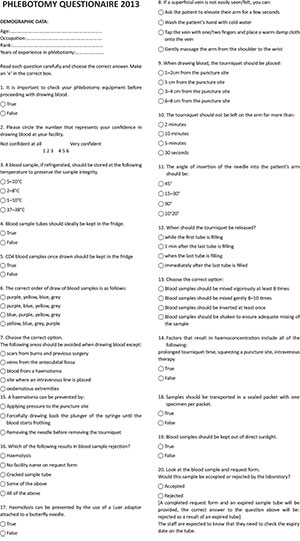
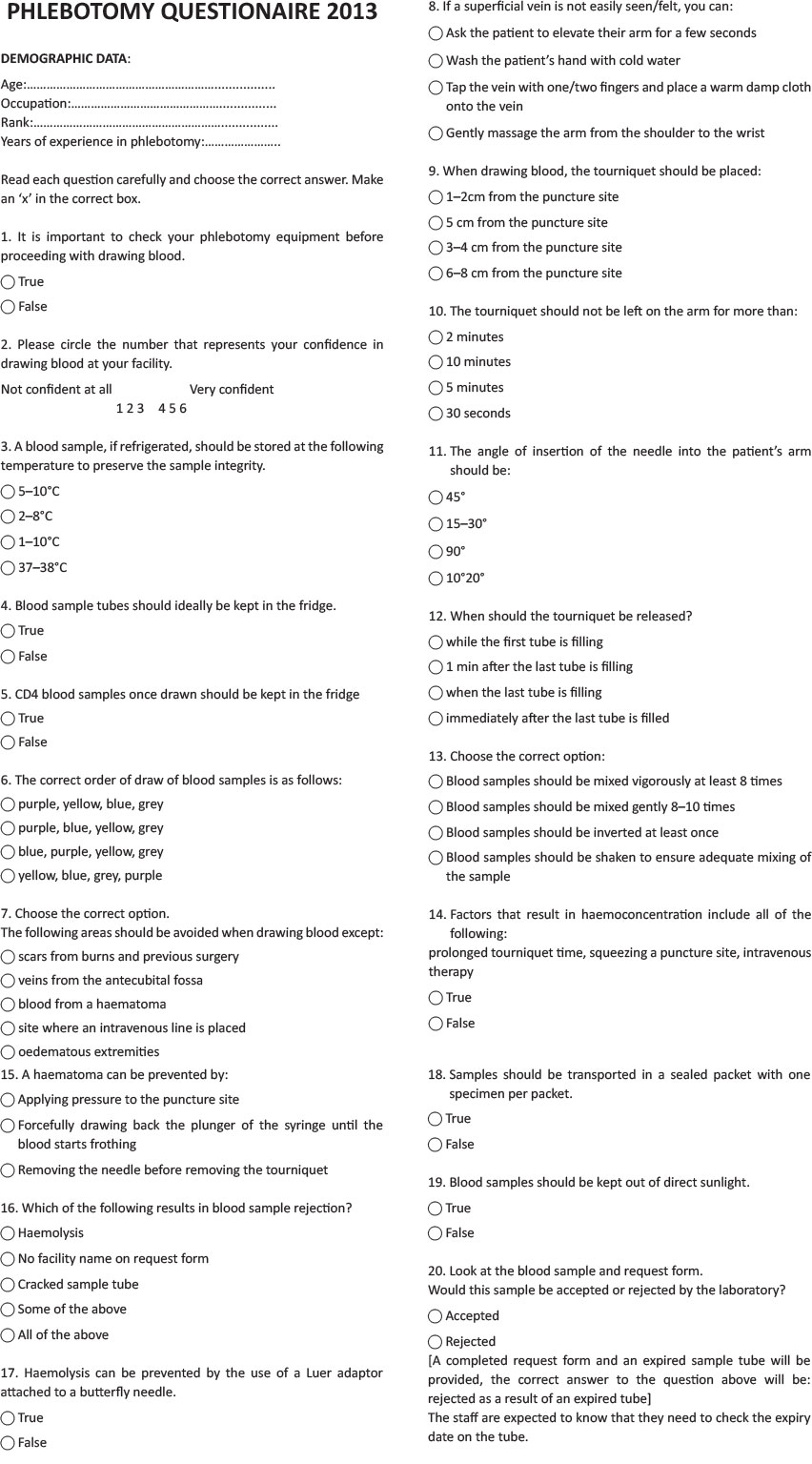
A questionnaire with 20 closed ended questions (see Appendix A) was developed based on the NHLS phlebotomy training manual 2013 and input from experts working in PHCFs. The questionnaire was piloted by staff ordering blood investigations or involved in phlebotomy at Vanguard CHC and amended where necessary. The questionnaire was either in English or Afrikaans.
Appendix
Data analysis
STATISTICATM version 14 was used for data analysis. The summary statistics was used to describe the variables. A test of proportion was performed to assess the effect of the intervention on the rejection rate of blood samples before and after training. The Wilcoxon signed-rank test and the paired t-test were used to analyse the pre- and post-training questionnaire data. A p-value of < 0.05 represented statistical significance.
Results
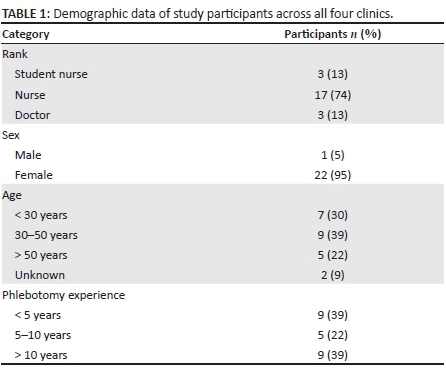
Approximately 6-10 HCPs participated at these different sites. There were 23 study participants (Table 1) who attended the phlebotomy training session across all the facilities. The age, sex and level of phlebotomy experience of each HCP who attended the training were recorded. There were no exclusion criteria for the above variables of age, sex and level of experience. Most of the HCPs were aged between 30 and 50 years. There was only 1 male participant and 22 females. There were 3 student nurses, 17 nurses and only 3 doctors. The phlebotomy experience across participants varied, with nine participants having less than 5 years' experience, five having 5-10 years' experience and nine having more than 30 years' experience.
Box 1 describes the tool that was developed to facilitate the phlebotomy training, listing all the criteria for laboratory blood sample acceptability.

The total number of blood samples included in the study during May 2014 (pre-training): 7557 from CHC A, 3973 from CHC B, 2321 from CDC C and 589 from CDC D. The total number of blood samples included in the study during July 2014 (post-training): 10 218 from CHC A, 4114 from CHC B, 2279 from CDC C and 630 from CDC D.
During the month of May 2014 (Table 2): 60 of 7557 blood samples (0.79%) were rejected pre-training at CHC A and 79 of 10 218 blood samples (0.77%) post-training (p = 0.971). CHC A is the largest of the four facilities. Only 8 of 589 blood samples (1.36%) were rejected pre-training at CDC D and 7 of 630 blood samples (1.11%) post-training (p = 0.696). CDC D is the smallest of the four facilities.
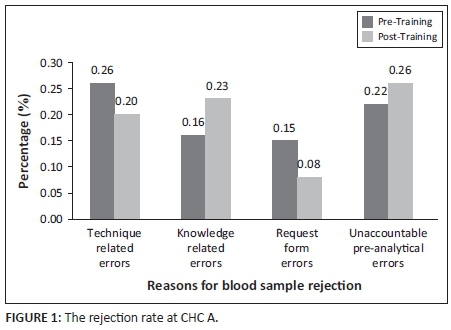
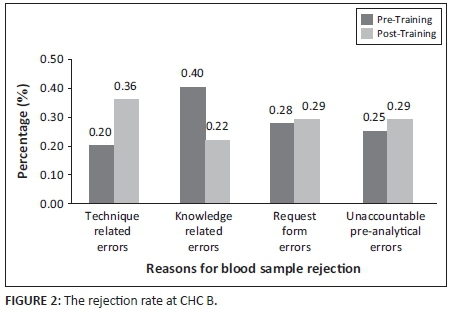
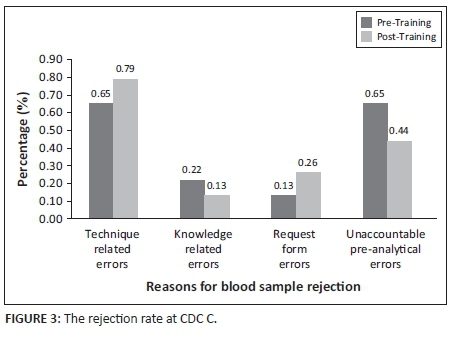
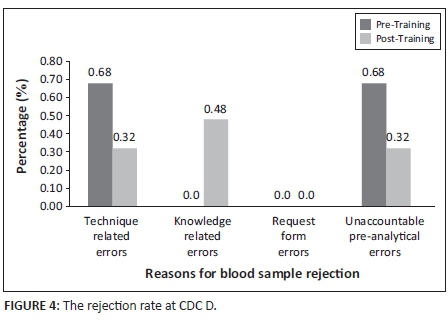
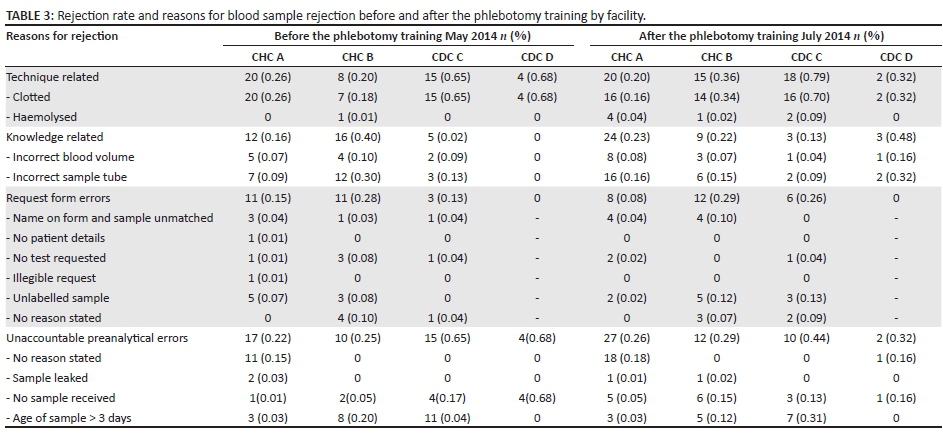
The reasons for blood sample rejection were grouped into four main categories including technique related, knowledge related, request form related and unaccountable preanalytical errors. Technique-related errors include samples that were clotted or haemolysed. Knowledge related errors include errors because of incorrect blood volume or the incorrect blood sample tube used. Request form errors include any error in the completion of the request form such as no patient details indicated, illegible requests, name on sample tube and request form unmatched, no test requested or an unlabelled sample. Unaccountable preanalytical errors include all errors that are not accounted for by the above but that occur in the preanalytical phase of laboratory testing of blood samples. These include samples with missing reasons for rejection, samples older than 3 days, samples that leaked in transit as well as samples that were not received by the laboratory.
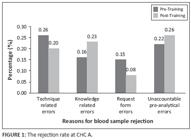
Table 3 shows a detailed summary of rejection rates and related reasons by facility. At CHC A, many samples were rejected because of clotting, 20 (0.26%) were rejected pre-training and 16 (0.16%) post-training (Table 3). Request form errors improved post-training from 11 (0.15%) pre-training to 8 (0.08%) post-training. There was an increase in the rejection rate of samples because of unaccountable preanalytical errors, 17 (0.22%) pre-training to 27 (0.26%) post-training (Figure 1).
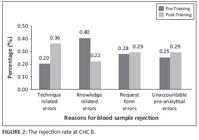
At CHC B, knowledge related errors reduced from 16 (0.40%) rejected samples pre-training to 9 (0.22%). Twelve samples (0.16%) were rejected because of 'incorrect sample tube'. This was reduced by half (0.15%) post-training. However, all other reasons for blood sample rejection increased post-training (Figure 2).
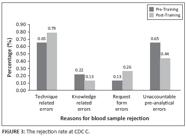
At CDC C, many samples were rejected because of clotting pre- and post-training with the rejection rate increasing post-training. Knowledge related errors reduced from five (0.02%) rejected samples pre-training to three (0.13%). Request form errors doubled from three (0.13%) rejected samples pre-training to six (0.26%). Unaccountable preanalytical errors, because of 'age of sample > 3 days' also contributed to many of the blood sample rejections, 11 (0.04%) rejected samples pre-training and 7 (0.31%) post-training (Figure 3).
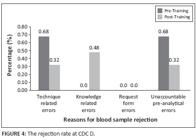
CDC D is a smaller 8-hour facility compared to CDC C and only had 4 out of 589 (0.68%) samples rejected because of clotting pre-training, which was reduced to 2 (0.32%). Unaccountable preanalytical errors reduced by half post-training. There were no request form errors pre- or post-training (Figure 4).
The overall rejection rate, irrespective of facility, showed an increase in the rejection rate post-training, which was not statistically significant (Table 4).
The pre- and post-training questionnaire scores showed an improvement in phlebotomy knowledge post-training as the average percentage score increased across all clinics. The average score increased from 63% (95% CI 6.97‒17.03) to 96% (95% CI 16.91‒20.09) at CHC A (p = 0.039), 58% (95% CI 9.09‒14.91) to 93% (95% CI 17.64‒18.76) at CHC B (p = 0.006), 60% (95% CI 8.84‒13.13) to 97% (95% CI 16.14‒19.29) at CDC C (p = 0.001) and 63% (95% CI 9.81‒13.33) to 97% (95% CI 18.08 - 19.07) at CDC D (p = 0.001).
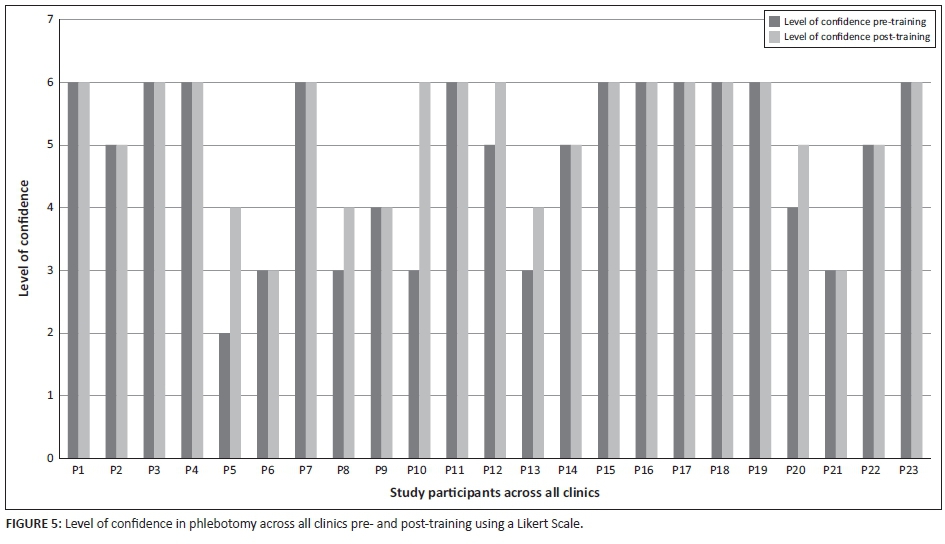
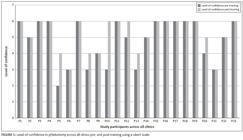
Participants were asked to grade their level of confidence in phlebotomy on a Likert scale from 1 to 6, with 1 being 'not confident at all' and 6 being 'very confident'. All participants' level of confidence either remained the same or increased post-phlebotomy training (Figure 5).
Ethical consideration
This study has been approved by the Health Research Ethics Committee (HREC) of the University of Cape Town (HREC REF: 549/2013) as well as by the Provincial Government of the Western Cape (REF: 2013RP190). The study was conducted according to the Declaration of Helsinki.
Discussion
The study found that an appropriate intervention such as phlebotomy training has improved knowledge regarding phlebotomy (CHC A, p = 0.039; CHC B, p = 0.006; CDC C, p = 0.001; CDC D, p = 0.001). The study results show no statistically significant improvement in the rejection rate of blood samples sent to the laboratory by each of the four PHCFs (CHC A, p = 0.876; CHC B, p = 0.886; CDC C, p = 0.971; CDC D, p = 0.696) post-phlebotomy training. The overall rejection rate also showed no statistical significance in the rejection rate post-training (technique related errors, p = 0.38; knowledge related errors, p = 0.74; request form errors, p = 0.85; unaccountable preanalytical errors, p = 0.73).
The sample rejection rate was 0.79% at CHC A, 1.13% at CHC B, 1.64% at CDC C and 1.36% at CDC D pre-training. The rejection rates remained approximately the same post training. This could possibly be explained by other factors not explored in this quasi-experimental study. These factors include the phlebotomy experience of the primary HCPs, the same group of participants who received training were not followed up, and participants who did not receive training were involved in phlebotomy post-training which may have affected the study results.
A large number of blood samples in this study were rejected because of clotting, which was also seen in a similar study in 2011 at Tygerberg Hospital.1412Table 4), the leading cause of sample rejection was clotting which is related to phlebotomy technique, followed by unaccountable preanalytical errors. It is difficult to correct unaccountable preanalytical errors, as we do not always know why and how these errors occur.
Because approximately 60% of clinical decisions are influenced by laboratory results,1324
It was interesting that there was only 1 male participant out of the 23 participants. Only 3 out of 23 participants were doctors. This may be because of the high patient volumes and insufficient time to attend a 2-hour training programme, or they may not feel they will learn something new as phlebotomy training is part of the undergraduate training programme as a medical student. For each of the 23 participants, the pre- and post-training questionnaire scores improved. All participants' level of confidence had improved or remained the same.
Strengths and limitations
HCPs who did not participate in the training were involved in blood sample collection post-training, which may have adversely affected the study results. Reasons for some of the rejected blood samples were not provided in the NHLS database. There is also an underestimation of haemolysis as a cause of blood sample rejection as many haemolysed samples are still processed and only the potassium is rejected; therefore, the rejection rate might be higher than reported on in this study.
Implications or recommendations
Increased knowledge in phlebotomy does not in itself influence practice. We recommend that primary HCPs receive phlebotomy training in order to reduce the rejection rate of laboratory blood samples and that any training at primary level facilities be accompanied by support from managers and that regular monitoring and evaluation of systems be done. The above recommendation is supported by similar audits conducted at other PHCFs.25,26
Conclusion
The study results show no statistically significant improvement in the rejection rate of blood samples sent to the laboratory by each of the four PHCFs (p > 0.05) post-phlebotomy training despite an increase in the knowledge of phlebotomy in all HCPs (p < 0.05).
Competing interests
The authors declare that they have no financial or personal relationship(s) with the NHLS and the four study sites that may have inappropriately influenced them in writing this article.
Authors' contributions
M.A. was the principal investigator of the study and responsible for conception, data acquisition, data analysis and drafting of the manuscript. M.N. was the main supervisor for the study. F.K.M was the co-supervisor for the study. All authors made substantial contributions to the conception, design, data analysis and interpretation of the results. All authors read and critically revised the draft and approved the final manuscript.
Acknowledgements
We would like to acknowledge the NHLS with special reference to Mr Mogamed Davids and the Data Warehouse in Johannesburg for assisting with accessing data. Sister Petersen of the Cape Town NHLS is thanked for assisting with phlebotomy training. Dr Tasneem Allie and Dr Mireille Porter are thanked for their assistance with data analysis.
References
-
1. Jacobsz LA, Zemlin AE, Roos MJ, Erasmus RT. Chemistry and haematology sample rejection and clinical impact in a tertiary laboratory in Cape Town. Clin Chem Lab Med. 2011;49(12):2047-2050. https://doi.org/10.1515/CCLM.2011.743
» https://doi.org/10.1515/CCLM.2011.743 -
2. O'Kane M. The reporting, classification and grading of quality failures in the medical laboratory. Clin Chem Acta. 2009;404(1):28-31. https://doi.org/10.1016/j.cca.2009.03.023
» https://doi.org/10.1016/j.cca.2009.03.023 -
3. Erasmus RT, Zemlin AE. Clinical audit in the laboratory. J Clin Path. 2009;62:593-597. https://doi.org/10.1136/jcp.2008.056929
» https://doi.org/10.1136/jcp.2008.056929 -
4. Sciacovelli L, Plebani M. The IFCC Working Group on laboratory errors and patient safety. Clin Chem Acta. 2009;404(1):79-85. https://doi.org/10.1016/j.cca.2009.03.025
» https://doi.org/10.1016/j.cca.2009.03.025 - 5. Howanitz PJ. Errors in laboratory medicine: Practical lessons to improve patient safety. Arch Path Lab. 2005;129(10):1252-1261.
-
6. Green SF. The cost of poor blood specimen quality and errors in preanalytical processes. Clin Biochem. 2013;46:1175-1179. https://doi.org/10.1016/j.clinbiochem.2013.06.001
» https://doi.org/10.1016/j.clinbiochem.2013.06.001 -
7. Lippi G, Guidi GC, Mattiuzzi C, Plebani M. Preanalytical variability: The dark side of the moon in laboratory testing. Clin Chem Lab Med. 2006;44(4):358-365. https://doi.org/10.1515/CCLM.2006.073
» https://doi.org/10.1515/CCLM.2006.073 - 8. Plebani M, Carraro P. Mistakes and stat laboratory: Types and frequency. Clin Chem. 1997;43:1346-1351.
- 9. Szeesi PB, Odum L. Error tracking in a clinical biochemistry laboratory. Clin Chem Lab Med. 2009;47(10):1253-1257.
- 10. Dale JC, Novis DA. Oupatient phlebotomy success and reasons for specimen rejection: A Q-probes study. Arch Pathol Lab Med. 2002;126:416-419.
-
11. Lippi G, Guidi GC. Risk management in the preanalytical phase of laboratory testing. Clin Chem Lab Med. 2007;45:720-727. https://doi.org/10.1515/CCLM.2007.167
» https://doi.org/10.1515/CCLM.2007.167 -
12. Lippi G, Blanckaert N, Bonini P, et al. Haemolysis: An overview of the leading cause of unsuitable specimens in clinical laboratories. Clin Chem Lab Med. 2008;46(6):764-772. https://doi.org/10.1515/CCLM.2008.170
» https://doi.org/10.1515/CCLM.2008.170 - 13. Forsman RW. Why is the laboratory an afterthought for managed care organizations? Clin Chem. 1996;42:813-816.
-
14. Barron P, Buthelezi G, Edwards J, Makhanya N, Palmer N. Health systems research a manual [homepage on the Internet]. 1997 [cited 2013 Mar 16]. Available from: www.healthlink.org.za/uploads/files/hsr_man.pdf
» www.healthlink.org.za/uploads/files/hsr_man.pdf -
15. Health research: Essential link to equity in development [homepage on the Internet]. 1990 [cited 2013 May 20]. Available from: www.cohred.org/publications/open-archive/1990-commission-report/
» www.cohred.org/publications/open-archive/1990-commission-report/ - 16. Berte LM, Nevalainen DE. Quality systems for the laboratory. Bethesda, MD: American Association of Blood Banks, 2000; p. 254.
- 17. 2000-2001 Comprehensive Accreditation Manual for Pathology and Clinical Laboratory Services. Accreditation policies, standards, intent statements, scoring, aggregation rules, decision rules. Oakbrook Terrace, IL: Joint Commission on Accreditation of Healthcare Organizations, 1999; 1-12.
- 18. Goswami AP, Roy SS, Goswami NN. Evaluation of specimen rejection rate in Haematology Laboratory. J Dent Med Sci. 2014;13(9):1-4.
-
19. Ontario Ministry of Health and Long Term Care. Public information [homepage on the Internet]. 2013 [cited 2013 Apr 7]. Available from: http://www.health.gov.on.ca/english/public/contact/chc/chc_mn.html
» http://www.health.gov.on.ca/english/public/contact/chc/chc_mn.html -
20. Cullinan K. Health services in South Africa: A basic introduction [homepage on the Internet]. 2006 [cited 2013 Apr 7]. Available from: http://www.health-e.org.za/uploaded/cb1f388f3b351708d915c12cfb4fc3cf.pdf
» http://www.health-e.org.za/uploaded/cb1f388f3b351708d915c12cfb4fc3cf.pdf -
21. Mitchells Plain Community Health Centre, info4africa [homepage on the Internet]. 2015 [cited 2015 Dec 24]. Available from: http://search.info4africa.org.za/
» http://search.info4africa.org.za/ -
22. Hanover Park Community Health Centre Launches a New ARV (RAP) Clinic [homepage on the Internet]. 2013 [cited 2015 Dec 24]. Available from: https://www.westerncape.gov.za/news/hanover-park-community-health-centre-launches-new-arv-rap-clinic
» https://www.westerncape.gov.za/news/hanover-park-community-health-centre-launches-new-arv-rap-clinic -
23. Heideveld Community Health Centre [homepage on the Internet]. 2015 [cited 2015 Dec 24]. Available from: http://www.samefoundation.org.za/heideveld-chc/
» http://www.samefoundation.org.za/heideveld-chc/ -
24. Plebani M. Exploring the iceberg of errors in laboratory medicine. Clin Chem Acta. 2009;404(1):16-23. https://doi.org/10.1016/j.cca.2009.03.022
» https://doi.org/10.1016/j.cca.2009.03.022 -
25. Essel V, van Vuuren U, De Sa A, et al. Auditing chronic disease care: Does it make a difference? Afr J Prim Health Care Fam Med. 2015;7(1):1-7. https://doi.org/10.4102/phcfm.v7i1.753
» https://doi.org/10.4102/phcfm.v7i1.753 -
26. Govender I, Ehrlich R, Van Vuuren U, et al. Clinical audit of diabetes management can improve the quality of care in a resource-limited primary care setting. Int J Qual Health Care. 2012;24(6):612-618. https://doi.org/10.1093/intqhc/mzs063
» https://doi.org/10.1093/intqhc/mzs063
Accepted: 18 Nov. 2016
Published: 13 Apr. 2017