The relationship between physical activity, body fatness and metabolic syndrome in urban South African school teachers: The sympathetic activity and ambulatory blood pressure in Africans study
Abstract
BACKGROUND: Globally, the prevalence of metabolic syndrome (MS) is rising because of increased levels of physical inactivity and obesity. In South Africa, information about teachers' physical activity (PA), body fatness and MS is limited AIM: To assess the relationship between PA, body fatness and MS in urban South African teachers SETTING: The study setting was in Dr Kenneth Kaunda District in the North West province of South Africa METHODS: A cross-sectional study was conducted using secondary data drawn from the sympathetic activity and ambulatory blood pressure in Africans (SABPA) study of 216 teachers (aged 25-65 years). Variables included anthropometry, biochemical measurements, objectively measured PA and lifestyle behaviours RESULTS: Twenty-nine percent of the total participants were classified with MS, with 46% in men compared to 13% in women; 33% were sedentary and 67% participated in light activity. A weak significant negative relationship was found between the mean 7-day awake metabolic equivalent of tasks (METs) and triglycerides (r = −0.29; p = 0.02) and gamma-glutamyl transferase (r = −0.25; p = 0.06), activity energy expenditure (r = −0.24; p = 0.06) and PA level (r = −0.23; p = 0.07). After adjusting for age, self-reported smoking and alcohol use or consumption, a weak significant negative relationship between mean 7-day awake METs and triglycerides (r = −0.28; p < 0.01) was observed CONCLUSION: In the teachers with MS, only one MS marker (triglycerides) showed a negative association with PA. Physical activity could therefore be beneficial in the regulation of triglycerides. Participation in regular PA could be beneficial in the regulation of triglycerides. Focused PA interventions in school teachers that advocate the benefits of PA and healthy lifestyle choices to reduce dietary fat intake (and alcohol) are recommended
body fatness; metabolic syndrome; physical activity; SABPA study; teacher
Background
The global incidence of metabolic syndrome (MS) is rising and becoming a clinical and public health concern.1,2 Persons diagnosed with MS are at risk for developing cardiovascular heart diseases (CVD) in the next 5-10 years, and MS will increase the risk of all-cause mortality by 1.5 times compared with apparently healthy individuals.1,3 Metabolic syndrome is referred to as a complex cluster of metabolic risk factors in the development of CVD and type two diabetes that includes elevated blood pressure (BP), triglyceride and total cholesterol levels, low high-density lipoprotein (HDL) levels and increased levels of central obesity.1,4,5
Globally, the prevalence of MS is estimated to be 17% - 25%.66789101
Physical inactivity (i.e. represents the non-achievement of physical activity [PA] guidelines) is a key risk factor in developing MS and leads to an increase in the risk of developing MS by 73%.11,12 The increasing prevalence of physical inactivity and obesity may lead to an increased global prevalence of MS.1,9 Physical inactivity is inversely associated with health outcomes.1314,15 and objective data,13,16 low levels of PA are reported to be associated with MS. Abdominal obesity is a common sign in a person presenting with MS.117
With the increasing global prevalence of MS and the dire health consequences thereof, the risk factors of MS across the population need to be well understood.13
Teachers are considered to be physically inactive and spend most of their working time in sedentary or light energy-cost activities.18191918
Methods
Study design
This cross-sectional study used secondary data from the SABPA prospective cohort study (N = 409).20,21 The initial SABPA study (phase 1) was conducted in 2008-2009; however, the follow-up data (phase 2), as was used in this study, was collected during 2011-2012.20202020
Study population and sampling
Phase 1 of the SABPA study used convenient sampling; all teachers in the Dr Kenneth Kaunda District were recruited to form part of the SABPA study.20N = 216) were included. Detailed methodology of the SABPA study has been published elsewhere.2020
Ambulatory dysfunction2223,24 were used to obtain relative effect sizes based on differences in biological profiles and genotyping HPA axis variation. This resulted in sample sizes of 50-416 to explain biological differences and to detect SNPs with a statistical power of 0.8 and a level of significance of 0.05.22, 23,24
This study formed a part of the SABPA cohort study by virtue of the group size of 50-416 selected participants who met the inclusion criteria.
Data collection
All data used for this study were collected during the initial SABPA cohort study.20
Anthropometric measurements
Anthropometric data were collected in the original SABPA study20252526
Biochemical measurements
A sterile winged infusion set was used to obtain blood samples from the antebrachial vein branches of the right arm by a registered nurse before 09:00, handled according to standardised procedures and stored at -80 °C until blood analyses were performed. All blood samples were obtained from never-thawed serum, plasma and citrate samples. Sodium fluoride (NaF), HDL, gamma-glutamyl transferase (GGT) and triglycerides were measured and analysed using the Konelab 20i sequential multiple analyser computer (SMAC) (Thermo Scientific, Vantaa, Finland) and Unicel DXC 800 (Beckman and Coulter, Germany) at accredited independent laboratories as described in SABPA study.20
Lifestyle behaviours
Lifestyle behavioural factors used in the study were based on available data from closed-ended questions (yes or no) to determine smoking habits and alcohol usage of the participants. The lifestyle questionnaire was conducted in private at the research facility of the North-West University. The questionnaire was explained by trained research personnel to each participant before the completion thereof. The participants completed the questionnaire on a hard copy and were encouraged to ask questions if they did not understand a specific question. Secondary smoking was included in the participants' smoking habits. Objectively measured GGT was also used as a measure of alcohol usage.
Blood pressure
Professionally trained personnel (i.e. nurse or physiologist) measured resting BP in a semi-recumbent position with a sphygmomanometer (1.3MTM Littman® II S.E. Stethoscope 2205, Reister CE 0124, No. 1010-108 Diplomat-presameter®, Germany) on the non-dominant arm using the Rica/Rocci Korotkoff method. After 5 min, the BP measurement was repeated and the second measurement value was used for the MS criteria for BP.1
Metabolic syndrome
The JIS classification was used to determine the prevalence of MS. Participants were classified as presenting with MS when three or more risk factors for MS were present.11271
Physical activity
The PA of participants was measured over seven consecutive days using an ActiHeart (GNO/67703, CamNtech Ltd., Cambridgeshire, United Kingdom) combined heart rate and accelerometer device. A registered nurse performed a resting 12-lead electrocardiogram (Norav Medical Ltd PC 1200, software version 5.030, Kiryat Bialik, Israel). From the electrocardiogram, the participants' resting heart rate was captured. Sleep heart rate was calculated as resting heart rate minus 10 beats per minute. Sleep heart rate was required by the ActiHeart programme when the device was fitted to the participants.
The individual step test calibration of the ActiHeart could not be performed because of the participants' high cardiovascular risk profile and time constraints during data collection, as there were a large number of participants; however, a biokineticist (clinical exercise physiologist) trained in PA behaviour thoroughly questioned the participants regarding their PA behaviour in order to choose a PA level to programme the ActiHeart. Heart rate, the MET (1 MET regarded as being asleep) and activity level were used to differentiate sleeping time from time awake. When a gradual decrease in heart rate was measured during the evenings (with 15 or more epochs) to below average heart rate in a sedentary awake-time sample period, and the activity level was equal to zero, the participant was considered asleep. The end of sleeping time was identified as an immediate increase in the participant's heart rate of more than 10-20 beats per minute relative to the given sleeping heart rate, together with an increased MET and activity level. The distribution of PA intensity was expressed as sedentary (< 1.5 METs), time spent in light PA (1.5-3 METs) and time spent in moderate-to-vigorous PA (> 3 METs).2829
Data analysis
Data were analysed using the Statistical Package for Social Sciences (SPSS) version 26 (Inc., Chicago, IL, United States [US]). The data distribution was evaluated using histograms and quantile-quantile plots. Descriptive statistics (means, standard deviations) were calculated for PA, body fatness (i.e. BMI, WC and WHtR) and MS. Frequencies for percentages were calculated. The independent t-test for normally distributed data were used to determine the differences amongst groups. Chi-square was used to determine significant differences between the expected frequencies and the observed frequencies in one or more categories. For data that were not normally distributed, the Mann-Whitney U test was used to compare significant differences between two independent groups when the dependent variable was either ordinal or continuous. To study the relationship between PA, body fatness (i.e. BMI, WC and WHtR) and MS, correlation coefficients were calculated and partial correlation controlled for age, sex and lifestyle behaviour (smoking and alcohol drinking [GGT]) for the entire group and for those with MS and without MS. Correlation coefficient values were classified as follows: between < 0.10 and 0.29 indicates a weak or small correlation, 0.30-0.5 indicates a moderate correlation and ≥ 0.50 indicates a large correlation. Statistical significance was set at p ≤ 0.05.30
Ethical considerations
Ethical clearance was obtained from the Health Research Ethics Committee (HREC) of North-West University (NWU-00036-07-S6), and the study conformed to the ethical principles outlined in the Declaration of Helsinki (revised 2004). Permission for this study was obtained from the North West Department of Education, as well as the South African Democratic Teachers' Union. Before recruitment, participants were informed about the study and assistance was available to participants who preferred to receive the information in their home language. Participants were allowed to refuse data collection and were not contacted again. The anonymity and confidentiality of participants were assured throughout the study by allocating a coded number to each participant.
Results
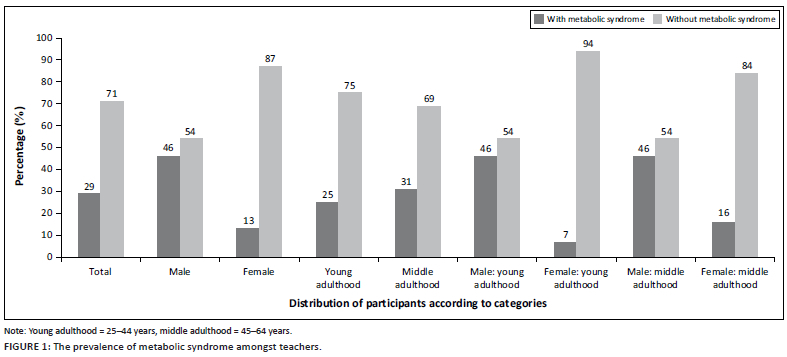
From a total of 216 teachers (males; n = 104; females; n =112), 29% were classified with MS, with almost half of the male teachers (46%) classified with MS (Figure 1). After dividing the participants into age groups according to the guidelines suggested by Statistics: Provisional Guidelines on Standard International Age Classification of 1982 (UNDESA),31
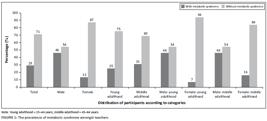
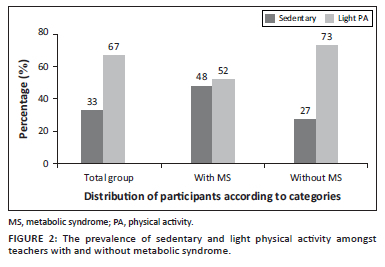
Figure 2 depicts the PA amongst the entire group of teachers and according to classification as presenting with or without MS. In the entire group of teachers, 33% were sedentary and 67% were classified as lightly active. In the teachers with MS, almost half (48%) were classified as sedentary and 52% were classified as participating in light PA. In persons who did not present with MS, 73% of the participants were considered to be lightly active.
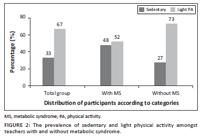
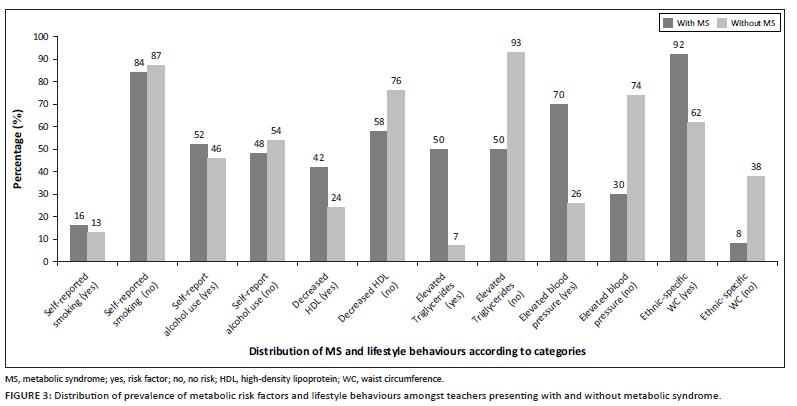
Figure 3 indicates the prevalence of metabolic risk factors and lifestyle behaviours amongst teachers presenting with MS and without MS. Amongst the teachers presenting with MS, the risk factor with the highest prevalence (92%, 58/63) was having a WC larger than the ethnicity-specific cut-points developed by Prinsloo and colleagues.271p = 0.008) than in those without MS. Also, elevated triglycerides and BP were both significantly higher in teachers presenting with MS (Mann-Whitney U: 2681.50 and 2349.00, p < 0.001) than in those without MS. The teachers classified in the MS category (n = 58) had significantly higher WC (Mann-Whitney U, 3375.33, p < 0.001) than those without MS (n = 5).
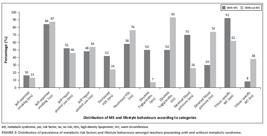
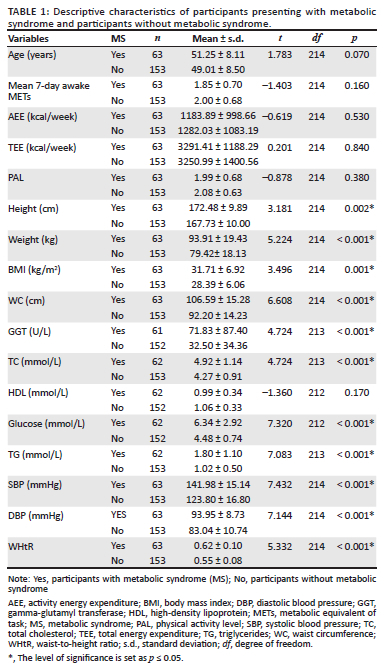
Table 1 depicts the characteristics of the teachers according to diagnosis of MS. Teachers with MS were significantly taller (p < 0.002; 172.48 ± 9.89 cm vs 167.73 ± 10.00 cm) and heavier (p < 0.001; 93.91 ± 19.43 kg vs 79.42 ± 18.13 kg) than those without MS and had significantly greater BMI (p = 0.001; 31.71 ± 6.92 kg/m22p < 0.001; 0.62 ± 0.10 vs 0.55 ± 0.08). Gamma-glutamyl transferase in teachers with MS (71.83 ± 87.40 U/L) was more than double than that of the teachers without MS (32.50 ± 34.36 U/L). Total cholesterol (p < 0.001; 4.92 ± 1.14 mmol/L vs 4.27 ± 0.91 mmol/L), triglyceride (p < 0.001; 1.80 ± 1.10 mmol/L vs. 1.02 ± 0.50 mmol/L) and glucose values (6.34 ± 2.92 mmol/L vs. 4.48 ± 0.74 mmol/L) were significantly higher in teachers with MS than those without MS. Systolic BP (p < 0.001; 141.98 ± 15.14 mmHg vs. 123.80 ± 16.80 mmHg) and DBP (p < 0.001; 93.95 ± 8.73 vs 83.04 ± 10.74 mmHg) were also significantly higher in teachers with MS.
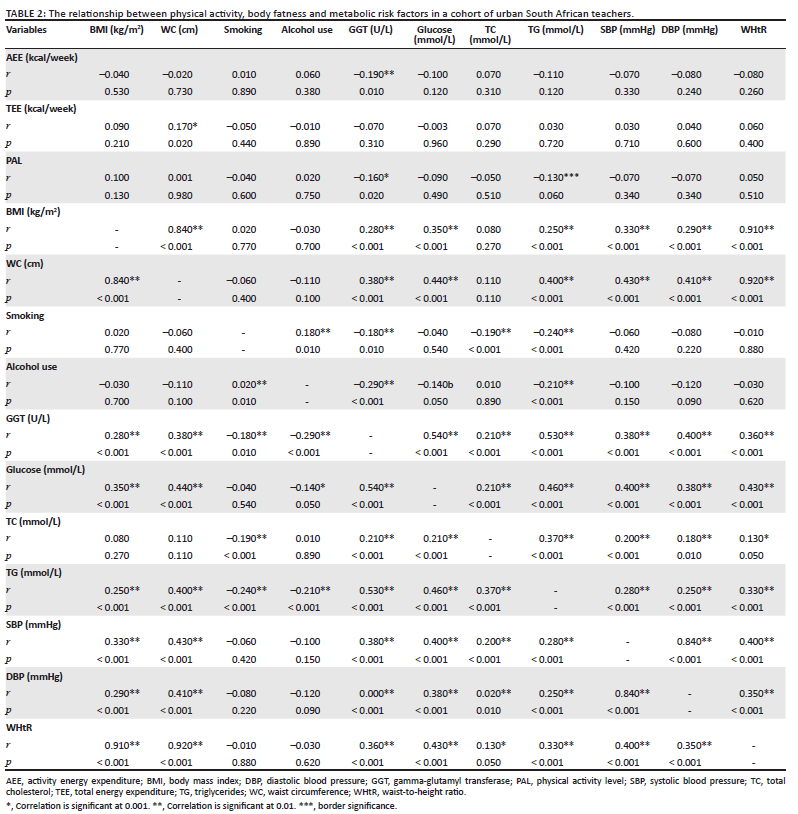
Table 2 depicts the relationship between PA, body fatness (i.e. BMI, WC and WHtR) and metabolic risk factors in the total group of teachers. In the relationship between PA and the anthropometric variables (BMI, WC and WHtR), a weak significant positive relationship was found between TEE and WC (r = 0.17; p = 0.02). Regarding the relationship between PA and the metabolic risk factors, AEE (r = −0.19; p = 0.01) and PAL (r = −0.16; p = 0.02) showed a weak significant negative relationship with GGT. Furthermore, an inconclusive weak borderline negative relationship was found between PAL and triglycerides (r = −0.13; p = 0.06). Regarding the relationship between the anthropometric variables and the metabolic risk factors, weak significant positive relationships were found between BMI and GGT (r = 0.28, p < 0.001); triglycerides (r = 0.25; p < 0.001); and DBP (r = 0.29; p < 0.001; and moderate significant relationship between glucose (r = 0.35; p < 0.001); SBP (r = 0.33; p < 0.001). Moderate significant positive relationships were observed between WC and GGT (r = 0.38; p < 0.001); glucose (r = 0.44; p < 0.001); triglycerides (r = 0.40; p < 0.001); SBP (r = 0.43; p <0.001) and DBP (r = 0.41; p < 0.001). Between WHtR and the metabolic risk factors, moderate significant positive relationships were observed with GGT (r = 0.36; p < 0.001); glucose (r = 0.43; p < 0.001); triglycerides (r = 0.33; p < 0.001); SBP (r = 0.40; p < 0.001) and DBP (r = 0.35; p < 0.001).
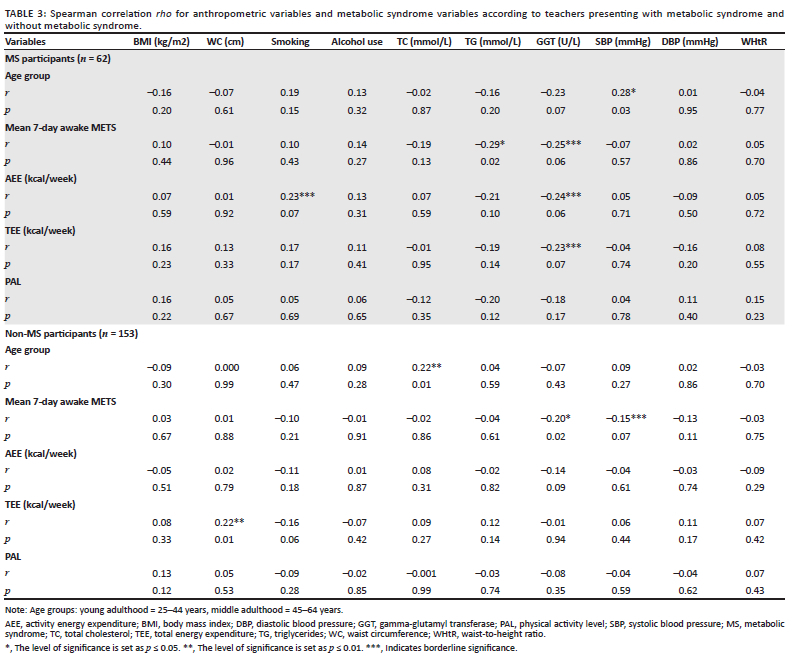
Table 3 depicts the Spearman's correlation matrix (rho) for anthropometric variables and metabolic risk factors according to teachers presenting with MS and teachers without MS. Regarding the relationship between PA and the metabolic risk factors in teachers with MS, a weak significant negative relationship between mean 7-day awake METs and triglycerides (r = −0.29; p = 0.02) was found which was not present in those without MS. An inconclusive weak borderline significant negative relationship was found between GGT and mean 7-day awake METs (r = −0.25; p = 0.06); AEE (r = −0.24; p = 0.06) and TEE (r = −0.23; p = 0.07). However, in teachers without MS, only a weak significant negative relationship between mean 7-day awake METs and GGT (r = −20; p = 0.02) was observed. An inconclusive weak borderline significant positive association between AEE and self-reported smoking (r = 0.23; p = 0.07) was found in teachers with MS, which was not present in those without MS.
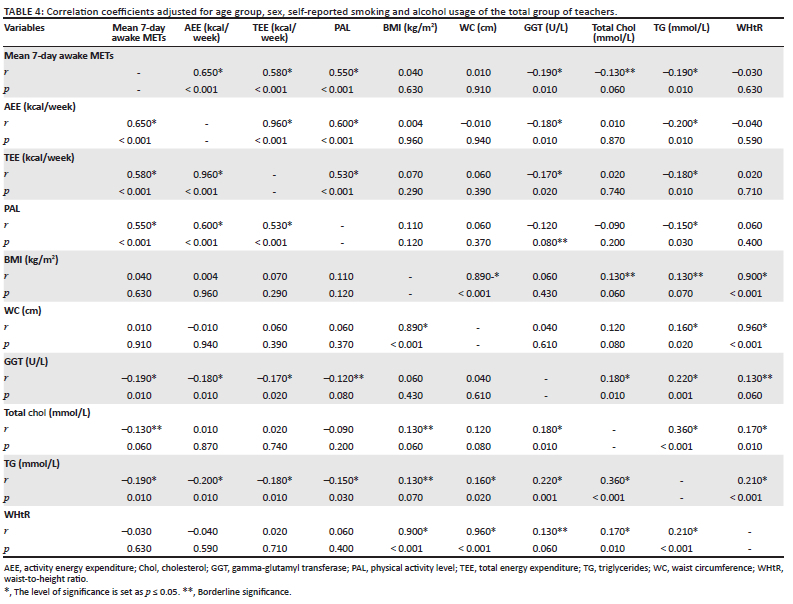
Table 4 depicts the correlation coefficients (adjusted for age group, sex, self-reported smoking and alcohol usage) of the entire group of participants. Regarding the relationship between PA measurements and the metabolic risk factors, weak significant negative associations were found between mean 7-day awake METs and GGT (r = −0.19; p = 0.01) and triglycerides (r = −0.19; p = 0.01). In addition, TEE was weakly and negatively related with GGT (r = −0.17; p = 0.02) and triglycerides (r = −0.18; p = 0.01). Also, PAL was weakly negatively associated with triglycerides (r = −0.15; p = 0.03). An inconclusive weak borderline significant relationship was found between mean 7-day awake METs and total cholesterol (r = −0.13; p = 0.06). A weak significant negative relationship was found between GGT and AEE (r = −0.18; p = 0.01) and AEE and triglycerides (r = −0.20; p = 0.01). Weak significant negative relationships were found between TEE and GGT (r = −0.17; p = 0.02) and TEE and triglycerides (r = −0.18; p = 0.01). Regarding the relationship between the anthropometric variables and the metabolic risk factors, a weak significant positive relationship between WC and triglycerides (r = 0.16; p = 0.02) was found. Amongst the relationships with WHtR, a weak significant positive relationship with cholesterol (r = 0.17; p = 0.01) and triglycerides (r = 0.21; p < 0.001) was found. An inconclusive weak borderline significant association was also found between WHtR and GGT (r =0.13; p = 0.06). Furthermore, inconclusive weak borderline significant relationships were found between BMI and triglycerides (r = 0.13; p = 0.07), and cholesterol (r = 0.13; p = 0.06).
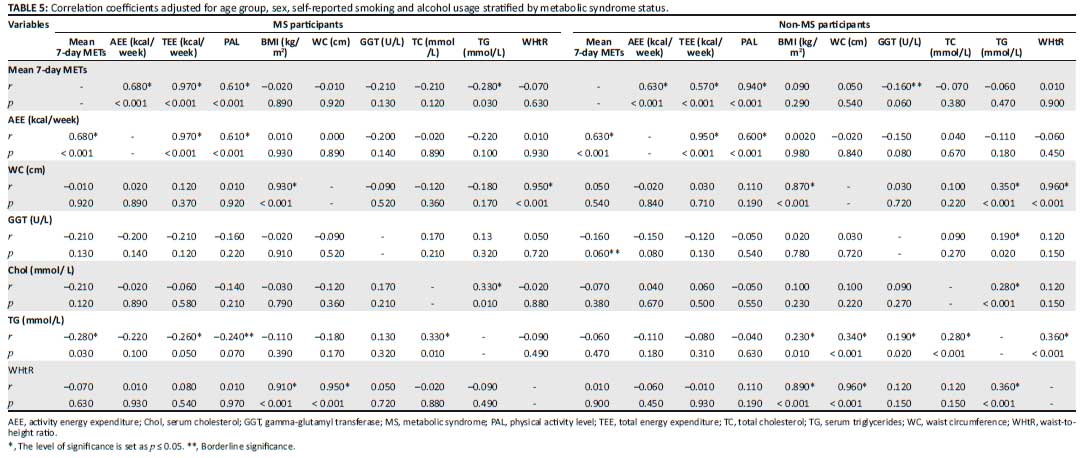
Table 5 depicts the correlation coefficients adjusted for age group, sex, self-reported smoking and alcohol usage according to teachers with MS and without MS. Regarding the relationship between PA and metabolic risk factors amongst teachers with MS, a weak significant negative association was found between mean 7-day awake METs and triglycerides (r = −0.28; p = 0.03) which was not present in teachers without MS. In addition, a weak significant negative relationship was found between TEE and triglycerides (r = −0.26; p = 0.05), whilst an inconclusive weak borderline significant negative association was found between PAL and triglycerides (r = −0.24; p = 0.07). No statistically significant relationships were found between anthropometric variables and metabolic risk factors in teachers with MS. However, in teachers without MS, an inconclusive weak borderline significant negative association was found between GGT and mean 7-day awake METs (r = −0.16; p = 0.06). Triglycerides was moderately and positively associated with WC (r = 0.34; p < 0.001) and WHtR (r = 0.36; p < 0.001) in teachers without MS.
Discussion
The study aimed to determine the relationship between PA, body fatness (i.e. WC, BMI and WHtR) and MS in urban South African teachers. In these relationships, WC was moderately and positively correlated with triglycerides in all the participants. Furthermore, our results showed a weak significant negative relationship between TEE and triglycerides amongst teachers classified with MS and an inconclusive weak borderline negative association between PAL and triglycerides. Also, a weak significant negative association between mean 7-day awake METs and triglycerides amongst the teachers classified with MS after adjustment for age group, sex, self-reported smoking and alcohol use was found.
The prevalence of MS was 29% in the total population, 46% in male teachers and 13% in female teachers according to the JIS for diagnosis of MS.132856
The high prevalence of MS in this study may be because of the age of the participants (mean age in teachers with MS 51.25 ± 8.11 years vs. without MS 49.01 ± 8.50 years), as the prevalence of MS increases linearly with age.411,12 In this study, an extremely high prevalence (92%) of abdominal obesity in persons with MS was observed, as indicated by the ethnicity-specific WC cut-point developed by Prinsloo and colleagues.27
The observed weak relationship between WC (i.e. JIS ethnic-specific cut-points clearly articulated WC as a contributor to MS1333435,36 patients with increased VAT characteristically present with an increased level of low-density lipoprotein (LDL) cholesterol, which is associated with an increased fasting triglyceride level.35
In this study, a weak significant negative relationship between the PA variables (mean 7-day awake METs, TEE and AEE) and GGT in the total participants was found, indicating that participants who expend more energy have lower GGT levels. This result is in contradiction to a systematic review on PA and alcohol consumption that stated that higher rates of alcohol consumption were associated with higher levels of PA.37383839
However, after adjusting for age group, sex, self-reported smoking and alcohol consumption, this relationship in persons with MS was diminished but still existed in non-MS participants.
A weak significant negative relationship was found between triglycerides and mean 7-day awake METs, TEE and PAL; this is in contradiction with other studies on PA and dyslipidaemia that found no significant correlation between triglycerides and PA.40,41 Reasons for the disparity may be that in this study, the participants' triglyceride levels were not classified as dyslipidaemia; however, a high prevalence of elevated triglycerides could have contributed to this result, indicating that participating in PA may be beneficial to triglyceride levels in people with MS. This relationship, however, was not present in the teachers who were not diagnosed with MS; the low prevalence of elevated triglycerides may be a possible explanation.
The strengths of the study were the inclusion of a unique group of teachers and highly standardised, objectively measured experimental protocols. A possible limitation to this substudy was the cross-sectional design, which may not infer causality. This study is limited by its sample size because of the strict adherence to the wearing time of the ActiHeart device. Therefore, the results cannot be generalised to the teachers of North West province or the entire population of South African teachers. Larger sample sizes and the inclusion of teachers from other provinces of South Africa would enable clinical comparisons. Another limitation of the study was that the individual step test calibration could not be performed because of the large number of participants in the larger study, the metabolic risk profiles of the participants and time constraints; however, a biokineticist (clinical exercise physiologist) thoroughly interviewed the participants about their weekly PA patterns before programming the ActiHeart device. Another limitation to consider in the interpretation of this findings is the dietary habits role in the observed relationships, which was not available during the analysis of current data. Given the significant role of diet to MS and PA, the authors recommend that future studies should include dietary patterns.
Conclusion
There is an alarmingly high prevalence of MS amongst teachers in North West province of South Africa, as reflected by the prevalence of metabolic risk factors in the study participants. Most participants were classified as inactive or participating in light PA. The significant, although weak, relationship between mean 7-day awake METs and triglycerides in teachers with MS could indicate that PA may be beneficial in lowering triglyceride levels. Future studies should focus on developing adequate PA interventions for teachers to participate in and educating teachers about the risk factors that contribute to MS. Teachers should be made aware of the benefits of participating in regular PA.
Competing interests
The authors declare that they have no financial or personal relationships that may have inappropriately influenced them in writing this article.
Authors' contributions
T.V. wrote the manuscript. T.V. and M.A.M. were involved in the data analyses, interpretation of the data, drafting the manuscript and editing the final version of the article. M.S. made a contribution to data collection, interpretation of data and critical editing of the manuscript. J.S.B. was involved in the critical revision of the manuscript and data interpretation. All authors read and approved the final version of the manuscript.
Funding information
The SABPA study is funded by Hypertension in Africa Research Team (HART) (North-West University); North West province Education Department; the Medical Research Council of South Africa; the National Research Foundation, South Africa; Roche Diagnostics, South Africa; and the Metabolic Syndrome Institute, France. The funding institutions played no role in the design and conduct of the study; collection, management, analysis, and interpretation of the data; or preparation of the manuscript. The views expressed in this article are those of the authors and not necessarily the funding bodies.
Data availability
The authors confirm that the data supporting the findings of this study are available within the article.
Disclaimer
The views and opinions expressed in this article are those of the authors and do not necessarily reflect the official policy or position of any affiliated agency of the authors.
Acknowledgements
The authors would like to acknowledge the assistance of all members of the SABPA research team. Importantly, the authors are indebted to the principal investigator of the SABPA study, Professor Leone Malan, for her unwavering support in the study.
References
-
1. Alberti KG, Eckel RH, Grundy SM, et al. Harmonizing the metabolic syndrome: A Joint Interim Statement of the International Diabetes Federation Task Force on Epidemiology And Prevention; National Heart, Lung, and Blood Institute; American Heart Association; World Heart Federation; International Atherosclerosis Society; and International Association for the Study of Obesity. Circulation. 2009;120(16):1640-1645. https://doi.org/10.1161/CIRCULATIONAHA.109.192644
» https://doi.org/10.1161/CIRCULATIONAHA.109.192644 -
2. He D, Xi B, Xue J, Huai P, Zhang M, Li J. Association between leisure time physical activity and metabolic syndrome: A meta-analysis of prospective cohort studies. Endocrine. 2013;46:231-240. https://doi.org/10.1007/s12020-013-0110-0
» https://doi.org/10.1007/s12020-013-0110-0 -
3. Mottillo S, Filion KB, Genest J, et al. The metabolic syndrome and cardiovascular risk: A systematic review and meta-analysis. JACC. 2010;56(14):1113-1132. https://doi.org/10.1016/j.jacc.2010.05.034
» https://doi.org/10.1016/j.jacc.2010.05.034 -
4. Kirk EP, Klein S. Pathogenesis and pathophysiology of the cardiometabolic syndrome. J Clin Hypertens. 2009;11(12):761-765. https://doi.org/10.1111/j.1559-4572.2009.00054.x
» https://doi.org/10.1111/j.1559-4572.2009.00054.x - 5. Motala AA, Mbanya JC, Ramaiya KL. Metabolic syndrome in sub-Saharan Africa. Ethn Dis. 2009;19:S2-S8.
-
6. Okafor C. The metabolic syndrome in Africa: Current trends. Indian J Endocrinol Metab. 2012;16(1):56-66. https://doi.org/10.4103/2230-8210.91191
» https://doi.org/10.4103/2230-8210.91191 -
7. Van Zyl S, Van der Merwe LJ, Walsh CM, Groenewald AJ, Van Rooyen FC. Risk-factor profiles for chronic diseases of lifestyle and metabolic syndrome in an urban and rural setting in South Africa. Afr J Prim Health Care Fam Med. 2012;4(1):1-10. https://doi.org/10.4102/phcfm.v4i1.346
» https://doi.org/10.4102/phcfm.v4i1.346 -
8. George JA, Norris SA, Van Deventer HE, Crowther NJ. The association of 25 hydroxyvitamin D and parathyroid hormone with metabolic syndrome in two ethnic groups in South Africa. PLoS One. 2013;8(4):e61282. https://doi.org/10.1371/journal.pone.0061282
» https://doi.org/10.1371/journal.pone.0061282 -
9. Grundy SM. Metabolic syndrome pandemic. Arterioscler Throm Vas. 2008;28(4):629-636. https://doi.org/10.1161/ATVBAHA.107.151092
» https://doi.org/10.1161/ATVBAHA.107.151092 -
10. Camarillo-Romero E, Dominguez-Garcia MV, Amaya-Chavez A, et al. Effects of a physical activity program on markers of endothelial dysfunction, oxidative stress, and metabolic status in adolescents with metabolic syndrome. ISRN Endocrin. 2012;2012:970629. https://doi.org/10.5402/2012/970629
» https://doi.org/10.5402/2012/970629 -
11. Edwardson CL, Gorely T, Davies MJ, et al. Association of sedentary behaviour with metabolic syndrome: A meta-analysis. PLoS One. 2012;7(4):e34916. https://doi.org/10.1371/journal.pone.0034916
» https://doi.org/10.1371/journal.pone.0034916 -
12. Strasser B. Physical activity in obesity and metabolic syndrome. Ann N Y Acad Sci. 2013;1281(1):141-159. https://doi.org/10.1111/j.1749-6632.2012.06785.x
» https://doi.org/10.1111/j.1749-6632.2012.06785.x -
13. Bankoski A, Harris TB, McClain JJ, et al. Sedentary activity associated with metabolic syndrome independent of physical activity. Diabetes Care. 2011;34(2):497-503. https://doi.org/10.2337/dc10-0987
» https://doi.org/10.2337/dc10-0987 -
14. Baceviciene M, Luksiene D, Cesnaitiene V, Raubaite S, Peasey A, Tamosiunas A. Dose-response association between physical activity and metabolic syndrome. Open Med. 2013;8(2):273-282. https://doi.org/10.2478/s11536-012-0123-8
» https://doi.org/10.2478/s11536-012-0123-8 -
15. Turi BC, Codogno JS, Fernandes RA, Monteiro HL. Low levels of physical activity and metabolic syndrome: Cross-sectional study in the Brazilian public health system. Cienc Saude Coletiva. 2016;21(4):1043-1050. https://doi.org/10.1590/1413-81232015214.23042015
» https://doi.org/10.1590/1413-81232015214.23042015 -
16. Scheers T, Philippaerts R, Lefevre J. SenseWear-determined physical activity and sedentary behavior and metabolic syndrome. Med Sci Sports Exerc. 2013;45(3):481-489. https://doi.org/10.1249/MSS.0b013e31827563ba
» https://doi.org/10.1249/MSS.0b013e31827563ba -
17. Chu AH, Moy FM. Association between physical activity and metabolic syndrome among Malay adults in a developing country, Malaysia. J Sci Med Sport. 2014;17(2):195-200. https://doi.org/10.1016/j.jsams.2013.04.003
» https://doi.org/10.1016/j.jsams.2013.04.003 -
18. Ainsworth BE, Haskell WL, Herrmann SD, et al. 2011 compendium of physical activities: A second update of codes and MET values. Med Sci Sports Exerc. 2011;43(8):1575-1581. https://doi.org/10.1249/MSS.0b013e31821ece12
» https://doi.org/10.1249/MSS.0b013e31821ece12 -
19. Laurence EC, Volmink J, Esterhuizen TM, Dalal S, Holmes MD. Risk of cardiovascular disease among teachers in Cape Town: Findings of the South African PaCT pilot study. S Afr Med J. 2016;106(10):996-1001. https://doi.org/10.7196/SAMJ.2016.v106i10.10869
» https://doi.org/10.7196/SAMJ.2016.v106i10.10869 -
20. Malan L, Hamer M, Frasure-Smith N, Steyn HS, Malan NT. Cohort profile: Sympathetic activity and Ambulatory Blood Pressure in Africans (SABPA) prospective cohort study. Int J Epidemiol. 2015;44(6):1814-1822. https://doi.org/10.1093/ije/dyu199
» https://doi.org/10.1093/ije/dyu199 -
21. Veldsman T, Swanepoel M, Monyeki MA, Brits JS, Malan L. Relationship between physical activity and carotid intima-media thickness among teachers in South Africa: The SABPA study. Cardiovasc J Afr. 2020;31(6):304. https://doi.org/10.5830/CVJA-2020-024
» https://doi.org/10.5830/CVJA-2020-024 - 22. Kohara K, Nishida W, Maguchi M, Hiwada K. Autonomic nervous function in non-dipper essential hypertensive subjects. Evaluation by power spectral analysis of heart rate variability. Hypertension (Dallas, TX: 1979). 1995;26(5):808-814.
-
23. Rogausch A, Kochen MM, Meineke C, Hennig J. Association between the BclI glucocorticoid receptor polymorphism and smoking in a sample of patients with obstructive airway disease. Addict Biol. 2007;12(1):93-99. https://doi.org/10.1111/j.1369-1600.2006.00045.x
» https://doi.org/10.1111/j.1369-1600.2006.00045.x -
24. Sato N, Suzuki N, Sasaki A, et al. Corticotropin-releasing hormone receptor 1 gene variants in irritable bowel syndrome. PLoS One. 2012;7(9):e42450. https://doi.org/10.1371/journal.pone.0042450
» https://doi.org/10.1371/journal.pone.0042450 - 25. Stewart A, Marfell-Jones M, Olds T, De Ridder JH. International standard for anthropometric assessment. 3rd ed. Wellington, New Zealand: International Society for the Advancement of kinanthropometry (ISAK); 2011, p. 137.
-
26. Ashwell M, Hsieh SD. Six reasons why the waist-to-height ratio is a rapid and effective global indicator for health risks of obesity and how its use could simplify the international public health message on obesity. Int J Food Sci Nutr. 2005;56(5):303-307. https://doi.org/10.1080/09637480500195066
» https://doi.org/10.1080/09637480500195066 -
27. Prinsloo J, Malan L, De Ridder JH, Potgieter JC, Steyn HS. Determining the waist circumference cut off which best predicts the metabolic syndrome components in urban Africans: The SABPA study. Exp Clin Endocrinol Diab. 2011;119(10):599-603. http://doi.org/10.1055/s-0031-1280801
» http://doi.org/10.1055/s-0031-1280801 -
28. Assah FK, Ekelund U, Brage S, Wright A, Mbanya JC, Wareham NJ. Accuracy and validity of a combined heart rate and motion sensor for the measurement of free-living physical activity energy expenditure in adults in Cameroon. Int J Epidemiol. 2011;40(1):112-120. https://doi.org/10.1093/ije/dyq098
» https://doi.org/10.1093/ije/dyq098 -
29. Westerterp KR. Control of energy expenditure in humans. Eur J Clin Nutr. 2017;71(3):340-344. https://doi.org/10.1038/ejcn.2016.237
» https://doi.org/10.1038/ejcn.2016.237 - 30. Cohen JW. Statistical power analysis for behavioural sciences. 2nd ed. Hillsdale, NJ: Lawrence Erlbaum Associates; 1988.
- 31. United Nations Department of International Economic and Social Affairs (UNDESA). Statistics: Provisional guidelines on standard international age classification of 1982. Statistics Papers Series M No 74. New York, NY: Publishing Service United Nations; 1982, p. 28.
-
32. Aguila M, Bhuket T, Torres S, Liu B, Wong RJ. Prevalence of the metabolic syndrome in the United States, 2003-2012. JAMA. 2015;313(19):1973-1974. https://doi.org/10.1001/jama.2015.4260
» https://doi.org/10.1001/jama.2015.4260 -
33. Christian AH, Mochari H, Mosca LJ. Waist circumference, body mass index, and their association with cardiometabolic and global risk. J Cardiometab Syndr. 2009;4(1):12-19. https://doi.org/10.1111/j.1559-4572.2008.00029.x
» https://doi.org/10.1111/j.1559-4572.2008.00029.x - 34. Despres JP, Lemieux I. Abdominal obesity and metabolic syndrome. Nature. 2006;444(7121):881-887.
-
35. Tchernof A, Lamarche B, Prud 'Homme D, et al. The dense LDL phenotype: Association with plasma lipoprotein levels, visceral obesity, and hyperinsulinemia in men. Diabetes Care. 1996;19(6):629-637. https://doi.org/10.2337/diacare.19.6.629
» https://doi.org/10.2337/diacare.19.6.629 -
36. McNamara JR, Jenner JL, Li Z, Wilson PW, Schaefer EJ. Change in LDL particle size is associated with change in plasma triglyceride concentration. Arterioscler Thromb. 1992;12(11):1284-1290. https://doi.org/10.1161/01.ATV.12.11.1284
» https://doi.org/10.1161/01.ATV.12.11.1284 -
37. Dodge T, Clarke P, Dwan R. The relationship between physical activity and alcohol use among adults in the United States: A systematic review of the literature. Am J Heal Promot. 2017;31(2):97-108. https://doi.org/10.1177/0890117116664710
» https://doi.org/10.1177/0890117116664710 -
38. Piazza-Gardner AK, Barry AE. Examining physical activity levels and alcohol consumption: Are people who drink more active? Am J Health Promot. 2012;26(3):95-105. https://doi.org/10.4278/ajhp.100929-LIT-328.
» https://doi.org/10.4278/ajhp.100929-LIT-328 -
39. Sun K, Ren M, Liu D, Wang C, Yang C, Yan L. Alcohol consumption and risk of metabolic syndrome: A meta-analysis of prospective studies. Clin Nutr Elsevier Ltd. 2014;33(4):596-602. https://doi.org/10.1016/j.clnu.2013.10.003
» https://doi.org/10.1016/j.clnu.2013.10.003 -
40. Chu AHY, Moy FM. Associations of occupational, transportation, household and leisure-time physical activity patterns with metabolic risk factors among middle-aged adults in a middle-income country. Prev Med (Baltim). 2013;57(Suppl):14-17. https://doi.org/10.1016/j.ypmed.2012.12.011
» https://doi.org/10.1016/j.ypmed.2012.12.011 -
41. Mohan V, Gokulakrishnan K, Deepa R, Shanthirani CS, Datta M. Association of physical inactivity with components of metabolic syndrome and coronary artery disease - The Chennai Urban Population Study (CUPS no. 15). Diabet Med. 2005;22(9):1206-1211. https://doi.org/10.1016/j.ypmed.2012.12.011
» https://doi.org/10.1016/j.ypmed.2012.12.011

Accepted: 07 Apr. 2022
Published: 30 May 2022