Influence of climate change on adolescents and young adults' mental health in Southern Africa: Scoping review
Abstract
BACKGROUND: Prioritising the mental health of adolescents and young adults during climate change is essential to their overall wellbeing. In 2021, the World Health Organization (WHO) included preventing and treating non-communicable diseases and mental health conditions as part of the 10 global health issues to track. Evidence regarding the effect of climate change on mental health conditions in Southern Africa is lacking. AIM: This scoping review aims to document the influence of climate change on adolescents and young adults' mental health. SETTING: The review was conducted according to the Preferred Reporting Items for Systematic reviews and Meta-Analyses extension for Scoping Reviews (PRISMA-ScR). METHODS: There were 14 electronic bibliographic databases that were searched together with a grey literature search. Two reviewers independently screened and appraised identified articles. All relevant data were extracted and mapped according to three categories: (1) type of climate change, (2) impact and loss experience and (3) health promotion interventions. RESULTS: We identified seven studies showing the influence of climate change on adolescents and young adults' mental health in Southern Africa. Three (n = 3), 50%, of the studies appear to indicate the influence of climate change on mental health as being more long-lasting signified by symptoms of traumatisation. CONCLUSION: Higher rates of depression were associated with the type of climate disaster such as those found in those who experienced drought and floods. CONTRIBUTION: Our review also highlighted a gap for future studies indicating health promotion interventions as being mostly social support and minimal indication of health system interventions. Future research may be necessary to provide multi-sectorial interventions of support.
mental health; climate change; adolescents; young adults; Southern Africa
Introduction
Globally, climate change remains one of the most prevalent public health challenges and poses threats to humanity.1,23,4,56768,9 People and communities are becoming more vulnerable to various mental and physical illnesses, housing issues, infrastructure issues, agricultural problems and natural ecological calamities as a result of climate change.34106
Children are likely to be the population that is most affected by climate change.611331213
The purpose of this scoping review was to comprehensively map the existing literature on the influence of climate change on the mental health of adolescents and young adults, synthesise the current state of knowledge and identify research gaps. There are no similar prior reviews on this topic to our knowledge. Thus, knowing the breadth and magnitude of the impacts of climate change is the first step towards designing and implementing mental health therapies to treat or prevent the mental health consequences of climate change.10,13
Research methods and design
Study design
This study employed the methodological framework by Arksey and O'Malley1414151617
Inclusion and exclusion criteria
We followed the PCC (Population, Concept, Context) framework of the Joanna Briggs18,19,20,21,22,23,2425
Search strategy
This scoping review includes literature from January 2013 to June 2023. Relevant articles and literature were searched from EBSCOhost, Academic Search Ultimate, Africa-Wide Information, APA PsycArticles, APA PsycInfo, Applied Science & Technology Source Ultimate, Cumulative Index to Nursing and Allied Health Literature (CINAHL) with Full Text, Communication & Mass Media Complete, Health Source: Nursing or Academic Edition, Humanities Source Ultimate, MEDLINE, Sociology Source Ultimate, Business Source Ultimate, GreenFILE and Google Scholar. The researchers consulted literature to ensure they include the relevant words that speak on climate change. An academic search of search words was conducted using full and partial keywords related climate change (climate* change, global warming, climate crisis, climate emergency, greenhouse gas, global heat, temperature change, severe weather, catastrophic weather and extreme weather), AND youth (adolescent, teen, young adult and youth) AND mental health (mental health, mental wellness, depression and anxiety). The university librarian assisted in finalising the key term search strategy and in obtaining relevant study documents which were not easily accessible to the researchers.
Study selection
The screening of the studies was done by the researchers of this study. Two researchers (Tandrea Carter and Martie Thompson) screened the title and abstract, then they screened the full text of studies that could be potentially eligible. Disagreements were resolved upon discussion with a third researcher (Mutshidzi Mulondo). Seven studies met all inclusion criteria.18,19,20,21,22,23,24
Data extraction and analysis
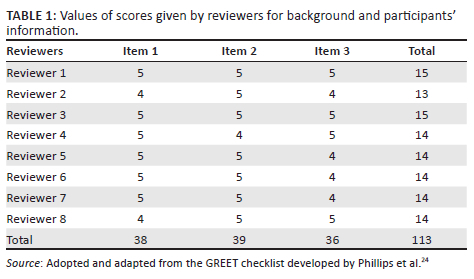
The data extraction table includes authors, year of publication, purpose of study, year study was conducted, study design, geographical location of study, age of population, measure of climate change, mental health impacts and protective factors. Data extraction was conducted by two researchers (Martie Thompson and Tandrea Carter). A research assistant conducted an initial review of the search results identifying duplicates and studies which did not meet inclusion criteria based upon article content and location of study sample. Martie Thompson and Tandrea Carter reviewed any studies identified for possible deletion and made the final determination regarding inclusion. Martie Thompson and Tandrea Carter independently reviewed the remaining articles to determine which ones met the full inclusion criteria (empirical research, location and age of study participants, assessment of the relationship of climate change and mental health). Martie Thompson and Tandrea Carter independently extracted data from the included studies and then jointly reviewed their findings to create the final data extraction table. The completed data extraction sheet has been included as a Table 1.
Ethical considerations
The study received ethical approval from the University of the Free State under ethics number UFS-HSD2023/0356/2803.
Results
The database search resulted in 317 titles and abstracts. Grey literature search included unpublished theses and non-empirical works that were accessed through the identified databases but did not result in any additional included studies. Once duplicates were removed, 285 studies remained which were then screened for eligibility. Of the titles and abstracts screened, 26 studies were included from the original search along with 12 additional studies drawn from search the bibliography and references in empirical and reviewing articles from the study pool. After screening the full text, seven studies were included in the review. This is indicated in the PRISMA flowchart (Figure 1).
Study characteristics
All studies took place in Southern Africa, specifically Botswana (2), South Africa (1), Zimbabwe (1), Namibia (1) and Tanzania (2). The most used study design was a cross-sectional design (n = 4, 67%). The age group of participants in the studies is from 8 years to 23 years. The types of climate change were droughts and floods (n = 5, 83%) and increased temperature (n = 1, 17%). A majority of the mental health effect and loss experiences were characterised as post-traumatic stress disorder (PTSD) (n = 2, 33%), followed by traumatic symptoms (n = 1, 17%), depressive symptoms (n = 1, 17%), fatigue or low concentration and sleepiness (n = 1, 17%) and not specified (n = 1, 17%). The studies did not indicate clear health promotion interventions, instead coping strategies could be classified as personal positive coping strategies (n = 2; 33%) and social support and religious support (n = 2; 33%), while two studies did not specify any health promotion interventions (Table 1). Figure 2 provides an overview per study of the associations of climate change with mental health.
Discussion
In this article, we gave an overview of the effects of climate change on adolescents and young adults' mental health in Southern Africa. We found that the type of climate change event has the potential to elicit a particular mental health response from adolescents and young adults, for example, drought and floods could lead to depressive symptoms and high temperatures could lead to cognitive malaise. The mental health response also appears to be extended with cases of PTSD symptoms. Climate change is associated with various mental health experiences, such as emotional responses (sadness), heightened suicide ideation, ecological grief and loss of one's identity.26,27,283,6
Climate change factors contributing to mental health
Findings showed that various climate factors (EWEs) contribute significantly to increased mental health challenges among adolescents and young people, and these include drought, floods and increased temperature in adolescents and young adults. Changes in temperature has been found to be another contributing factor to increased mortality rate in populations, and poses a much higher risk on child death rate.293031323333343035
Consequences in South Africa
Climate change greatly influences the frequency and seriousness of occurrence of the previously mentioned hazardous EWEs.36363733,38
Psychological impacts of climate change on adolescents and young adults' mental health
Findings of this study revealed that adolescents and young adults experience various severe psychological effects as a result of climate change. These findings are supported by a South African study by Subramaney et al.,305,6 It is possible that these influences of EWEs capture both direct physiological processes as well as the psychological impact of traumatic events and losses. There is a need to conduct research to be able to understand the experiences of climate change and mental health of adolescents and young people from their perspective in Southern Africa to make sense of the psychological impacts of climate change on their mental health.
Health promotion interventions
According to the study findings, there were no clear or specific health promotion interventions that are currently implemented by Southern Africa countries in respect to alleviating the impact of climate change on mental health of adolescents and young adults. Nkrumah39384041
This review was not without any limitations. Methodologically, some literature sources indicated 'children' instead of 'adolescents' and the ages differ per countries. There remains a need for reviews that focus on each identified EWE and its relation to climate change and mental health among adolescents and young people and not always review all EWEs under one review as this limits the depth of reporting on each EWEs. There was a further lack of literature sources from most countries in Southern Africa, and this limited the depth of this review. Strengths of this review included a rigorous review process through applying the PRISMA-ScR guidelines, which enabled authors to identify appropriate and relevant articles to include and exclude in the final synthesis.
Conclusion
Climate change remains one of the most prevalent global public health challenges and poses threats to humanity. Climate change is also a psychological and not just an environmental challenge. There is a growing attention with regard to the impact of climate change on mental health. Adolescents and young adults are also susceptible to the consequences of climate change. The EWEs are said to be the entry point in which children's mental health and overall health are affected by climate change, particularly those who reside in at-risk areas. There remains a literature gap on health promotion interventions as it pertains to how young people cope with climate change as one of the main psychological stressors. Furthermore, there is a need for further research to be conducted in South Africa and other LMICs.
Competing interests
The authors, Mutshidzi Mulondo; Tandrea Carter; Martie Thompson and Sithembiso Ndlovu, declare that they have no financial or personal relationships that may have inappropriately influenced them in writing this article.
CRediT authorship contribution
Mutshidzi Mulondo: Funding acquisition, Project administration, Supervision, Writing - review & editing. Tandrea Carter: Conceptualisation, Funding acquisition, Methodology, Writing - original draft. Martie Thompson: Data curation, Writing - review & editing. Sithembiso Ndlovu: Visualisation, Writing - original draft. All authors reviewed the article, contributed to the discussion of results, approved the final version for submission and publication and take responsibility for the integrity of its findings.
Funding information
The study was completed with financial support from the United States Embassy and Consulates.
Data availability
The authors confirm that the data supporting the findings of this study are available within the article.
Disclaimer
The views and opinions expressed in this article are those of the authors and are the product of professional research. They do not necessarily reflect the official policy or position of any affiliated institution, funder, agency or that of the publisher. The authors are responsible for this article's results, findings and content.
Acknowledgements
The authors would like to thank Cole Gilbert and Shraddha Mayur Selani (research assistants) for their contribution to this publication.
References
-
1.Watts N, Adger WN, Agnolucci P, et al. Health and climate change: Policy responses to protect public health. Lancet. 2015;386:1861-1914. https://doi.org/10.1016/S0140-6736(15)60854-6
» https://doi.org/10.1016/S0140-6736(15)60854-6 -
2.World Economic Forum. WHO Coronavirus (COVID-19) Dashboard. 2018 [cited 2023 Nov 17]. Available from: https://covid19.who.int
» https://covid19.who.int -
3.Burke SEL, Sanson AV, Van Hoorn J. The psychological effects of climate change on children. Curr Psychiatry Rep. 2018:20(5):35. https://doi.org/10.1007/s11920-018-0896-9
» https://doi.org/10.1007/s11920-018-0896-9 -
4.Cianconi P, Betrò S, Janiri L. The impact of climate change on mental health: A systematic descriptive review. Front Psychiatry. 2020;11:74. https://doi.org/10.3389/fpsyt.2020.00074
» https://doi.org/10.3389/fpsyt.2020.00074 -
5.Clayton S. Mental health risk and resilience among climate scientists. Nat Clim Change. 2018;8:260-261. https://doi.org/10.1038/s41558-018-0123-z
» https://doi.org/10.1038/s41558-018-0123-z -
6.Clayton S. Climate anxiety: Psychological responses to climate change. J Anxiety Disord. 2020;74:102263. https://doi.org/10.1016/j.janxdis.2020.102263
» https://doi.org/10.1016/j.janxdis.2020.102263 -
7.WHO Coronavirus (COVID-19) Dashboard. COVID-19 Cases, World [homepage on the Internet]. [cited 2023 Nov 17]. Available from: https://covid19.who.int
» https://covid19.who.int -
8.Berry HL, Bowen K, Kjellstrom T. Climate change and mental health: A causal pathways framework. Int J Public Health. 2010;55:123-132. https://doi.org/10.1007/s00038-009-0112-0
» https://doi.org/10.1007/s00038-009-0112-0 -
9.Bourque F, Willox AC. Climate change: The next challenge for public mental health? Int Rev Psychiatry. 2014;26:415-422. https://doi.org/10.3109/09540261.2014.925851
» https://doi.org/10.3109/09540261.2014.925851 -
10.Palinkas LA, Wong M. Global climate change and mental health. Curr Opin Psychol. 2020;32:12-16. https://doi.org/10.1016/j.copsyc.2019.06.023
» https://doi.org/10.1016/j.copsyc.2019.06.023 -
11.Faustini P. The challenges of climate change: Children on the front line [homepage on the Internet]. 2014 [cited 2023 Nov 28]. Available: https://www.unicef-irc.org/e-book/Climate-Ch-web-D215/files/assets/basic-html/index.html#page8
» https://www.unicef-irc.org/e-book/Climate-Ch-web-D215/files/assets/basic-html/index.html#page8 -
12.Scholes R, Engelbrecht F. Climate impacts in southern Africa during the 21st century [homepage on the Internet]. Earthjustice and the Centre for Environmental Rights: 2021; p. 9. Available from: https://cer.org.za/reports/climate-impacts-in-southern-africa-during-the-21st-century
» https://cer.org.za/reports/climate-impacts-in-southern-africa-during-the-21st-century -
13.Grolnick WS, Schonfeld DJ, Schreiber M, et al. Improving adjustment and resilience in children following a disaster: Addressing research challenges. Am Psychol. 2018;73:215-229. https://doi.org/10.1037/amp0000181
» https://doi.org/10.1037/amp0000181 -
14.Arksey H, O'Malley L. Scoping studies: Towards a methodological framework. Int J Soc Res Methodol. 2007;8(1). https://doi.org/10.1080/1364557032000119616
» https://doi.org/10.1080/1364557032000119616 -
15.Tricco AC, Lillie E, Zarin W, et al. PRISMA Extension for Scoping Reviews (PRISMA-ScR): Checklist and explanation. Ann Intern Med. 2018;169:467-473. https://doi.org/10.7326/M18-0850
» https://doi.org/10.7326/M18-0850 -
16.Page MJ, McKenzie JE, Bossuyt PM, et al. The PRISMA 2020 statement: An updated guideline for reporting systematic reviews. BMJ. 2021;372:n71. https://doi.org/10.1136/bmj.n71
» https://doi.org/10.1136/bmj.n71 -
17.Mulondo M, Hege A, Tsoka-Gwegweni J, Ndirangu J. Effect of climate change on the health and nutritional status of children and their families in Africa: Scoping review. PLoS Glob Public Health. 2025;5(7):e0004897. https://doi.org/10.1371/journal.pgph.0004897
» https://doi.org/10.1371/journal.pgph.0004897 -
18.Bidassey-Manilal S, Wright C, et al. Students' perceived heat-health symptoms increased with warmer classroom temperatures. Int J Environ Res Public Health. 2016;13:566. https://doi.org/10.3390/ijerph13060566
» https://doi.org/10.3390/ijerph13060566 -
19.Sifelani I, Matsikure M, Songo S, Kwembeya M, Kudejira D. Cyclone Idai-related losses and the coping strategies of adolescent survivors in the Odzi community of Manicaland Province, Zimbabwe. S Afr J Psychol. 2022;52:423-435. https://doi.org/10.1177/00812463221077608
» https://doi.org/10.1177/00812463221077608 -
20.Taukeni S, Chitiyo G, Chitiyo M, Asino I, Shipena G. Post-traumatic stress disorder amongst children aged 8-18 affected by the 2011 northern-Namibia floods. JÀMBÁ. 2016;8:6 pages. https://doi.org/10.4102/jamba.v8i2.169
» https://doi.org/10.4102/jamba.v8i2.169 -
21.Prencipe L, Houweling TA, Van Lenthe FJ, Palermo TM, Kajula L. Exploring multilevel social determinants of depressive symptoms for Tanzanian adolescents: Evidence from a cross-sectional study. J Epidemiol Community Health. 2021;75:944-954. https://doi.org/10.1136/jech-2020-216200
» https://doi.org/10.1136/jech-2020-216200 -
22.Prencipe L, Houweling TAJ, Van Lenthe FJ, Kajula L, Palermo T. Climate distress, climate-sensitive risk factors, and mental health among Tanzanian youth: A cross-sectional study. Lancet Planet Health. 2023;7:e877-e887. https://doi.org/10.1016/S2542-5196(23)00234-6
» https://doi.org/10.1016/S2542-5196(23)00234-6 -
23.Zeligman M, Majuta AR, Shannonhouse LR. Posttraumatic growth in prolonged drought survivors in Botswana: The role of social support and religious coping. Traumatology. 2020;26:308-316. https://doi.org/10.1037/trm0000237
» https://doi.org/10.1037/trm0000237 -
24.Shannonhouse LR, Bialo JA, Majuta AR, et al. Conserving resources during chronic disaster: Impacts of religious and meaning-focused coping on Botswana drought survivors. Psychol Trauma. 2019;11:137-146. https://doi.org/10.1037/tra0000420
» https://doi.org/10.1037/tra0000420 -
25.Pollock D, Davies EL, Peters MDJ, et al. Undertaking a scoping review: A practical guide for nursing and midwifery students, clinicians, researchers, and academics. J Adv Nurs. 2021;77:2102-2113. https://doi.org/10.1111/jan.14743
» https://doi.org/10.1111/jan.14743 -
26.Cunsolo WA, Stephenson E, Allen J, et al. Examining relationships between climate change and mental health in the Circumpolar North. Reg Environ Change. 2015;15:169-182. https://doi.org/10.1007/s10113-014-0630-z
» https://doi.org/10.1007/s10113-014-0630-z -
27.Ellis NR, Albrecht GA. Climate change threats to family farmers' sense of place and mental wellbeing: A case study from the Western Australian Wheatbelt. Soc Sci Med. 2017;175:161-168. https://doi.org/10.1016/j.socscimed.2017.01.009
» https://doi.org/10.1016/j.socscimed.2017.01.009 -
28.Cunsolo A, Ellis NR. Ecological grief as a mental health response to climate change-related loss. Nat Clim Change [serial online]. 2018 [cited 2023 Nov 17]. Available from: https://www.nature.com/articles/s41558-018-0092-2
» https://www.nature.com/articles/s41558-018-0092-2 -
29.Helldén D, Andersson C, Nilsson M, Ebi KL, Friberg P, Alfvén T. Climate change and child health: A scoping review and an expanded conceptual framework. Lancet Planet Health. 2021;5:e164-e175. https://doi.org/10.1016/S2542-5196(20)30274-6
» https://doi.org/10.1016/S2542-5196(20)30274-6 -
30.Subramaney U. Climate change and mental health implications in South Africa. Wits J Clin Med. 2022;4(3):151-156. https://doi.org/10.18772/26180197.2022.v4n3a4
» https://doi.org/10.18772/26180197.2022.v4n3a4 -
31.Stanke C, Kerac M, Prudhomme C, Medlock J, Murray V. Health effects of drought: A systematic review of the evidence. PLoS Curr. 2013;5:ecurrents.dis.7a2cee9e980f91ad7697b570bcc4b004. https://doi.org/10.1371/currents.dis.7a2cee9e980f91ad7697b570bcc4b004
» https://doi.org/10.1371/currents.dis.7a2cee9e980f91ad7697b570bcc4b004 -
32.Vins H, Bell J, Saha S, Hess JJ. The Mental health outcomes of drought: A systematic review and causal process diagram. Int J Environ Res Public Health. 2015;12:13251-13275. https://doi.org/10.3390/ijerph121013251
» https://doi.org/10.3390/ijerph121013251 -
33.Council on Environmental Health. Global climate change and children's health. Pediatrics. 2015;136:992-997. https://doi.org/10.1542/peds.2015-3232
» https://doi.org/10.1542/peds.2015-3232 -
34.Mugeere A, Magimbi P. Climate change and young people in Uganda: A literature review. J Environ Dev. 2021;30(4):344-368. https://doi.org/10.1177/10704965211047159
» https://doi.org/10.1177/10704965211047159 -
35.Crandon TJ, Scott JG, Charlson FJ, Thomas HJ. A social-ecological perspective on climate anxiety in children and adolescents. Nat Clim Chang. 2022;12:123-131. https://doi.org/10.1038/s41558-021-01251-y
» https://doi.org/10.1038/s41558-021-01251-y -
36.Devonald M, Jones N, Yadete W. 'The first thing that I fear for my future is lack of rain and drought': Climate change and its impacts on adolescent capabilities in low- and middle-income countries [homepage on the Internet]. GAGE; 2020 [cited 17 Nov 2023]. Available from: https://www.gage.odi.org/publication/the-first-thing-that-i-fear-for-my-future-is-lack-of-rain-and-drought-climate-change-and-its-impacts-on-adolescent-capabilities-in-low-and-middle-income-countries/
» https://www.gage.odi.org/publication/the-first-thing-that-i-fear-for-my-future-is-lack-of-rain-and-drought-climate-change-and-its-impacts-on-adolescent-capabilities-in-low-and-middle-income-countries/ -
37.Barnwell G. The psychological and mental health consequences of climate change in South Africa [homepage on the Internet]. Johannesburg: Centre for Environmental Rights, 2021 [cited 2023 Nov 17]; p. 1-33. Available from: https://cer.org.za/wp-content/uploads/2021/09/CER-Export-Report-Garret-Barnwell-Final-30-August-2021-2.pdf
» https://cer.org.za/wp-content/uploads/2021/09/CER-Export-Report-Garret-Barnwell-Final-30-August-2021-2.pdf -
38.Diwakar V, Lovell E, Opitz-Stapleton S, Shepherd A, Twigg J. Child poverty, disasters, and climate change: Investigating relationships and implications over the life course of children. In: ODI: Think change [homepage on the Internet]. 2019 [cited 2023 Nov 17]. Available: https://odi.org/en/publications/child-poverty-disasters-and-climate-change-investigating-relationships-and-implications-over-the-life-course-of-children/
» https://odi.org/en/publications/child-poverty-disasters-and-climate-change-investigating-relationships-and-implications-over-the-life-course-of-children/ -
39.Nkrumah B. Beyond tokenism: The 'Born Frees' and climate change in South Africa. Int J Ecol. 2021;2021:e8831677. https://doi.org/10.1155/2021/8831677
» https://doi.org/10.1155/2021/8831677 -
40.Pereznieto P, Masson VL, George R, Marcus R. Ending violence against children while addressing the global climate crisis. In: ODI: Think change [homepage on the Internet]. 2020 [cited 2023 Nov 17]. Available from: https://odi.org/en/publications/ending-violence-against-children-while-addressing-the-global-climate-crisis/
» https://odi.org/en/publications/ending-violence-against-children-while-addressing-the-global-climate-crisis/ -
41.Ma T, Moore J, Cleary A. Climate change impacts on the mental health and wellbeing of young people: A scoping review of risk and protective factors. Soc Sci Med. 2022;301:114888. https://doi.org/10.1016/j.socscimed.2022.114888
» https://doi.org/10.1016/j.socscimed.2022.114888

Accepted: 19 Feb. 2026
Published: 29 June 2026