Contextualising knowledge translation in nursing homes: A transdisciplinary online workshop
Abstract
Few studies describe workshops as a method for obtaining and integrating diverse participant perspectives for contextualisation. This article describes an online workshop as a transdisciplinary data collection method for contextualising theoretical elements of a framework for knowledge translation to improve wound care in South African nursing homes. Knowledge translation can be more effective when the theoretical components are contextualised and aligned with the specific needs in the context. The online workshop was conducted with 10 participants involved with wound care and change processes in nursing homes across South Africa. The participants consisted of healthcare professionals, family members of those in care and nursing home management staff. Participatory design principles were applied during the online workshop, which was hosted on BlackBoard CollaborateTM Ultra. In this qualitative study, live polls, facilitated discussion, virtual whiteboard posts, and breakaway activities were used to collect the data. The data were analysed and integrated using both deductive and inductive processes for a comprehensive understanding. The workshop enabled the researchers to ascertain integrated perspectives to contextualise the knowledge translation framework's elements. Barriers to evidence-based wound care in nursing homes and nine values for dignified care for older persons were identified. TRANSDISCIPLINARY CONTRIBUTION: This article shows how an online workshop was conducted with a group of participants from various healthcare disciplines, family members and institutional management to achieve a contextualised and pragmatic description of theoretical elements. Contextualisation aims to enhance the effectiveness of a knowledge translation framework for use in nursing homes.
data collection method; knowledge translation; nursing homes; participatory design; South Africa; transdisciplinary; workshop; wound care
Introduction
There is a growing interest in transdisciplinary research because of its capacity to generate pragmatic, evidence-based solutions to complex problems and to facilitate knowledge translation into practice.122,345,6,78,910,113
Workshops, as a data collection method, can provide a platform for transdisciplinary research and knowledge generation involving stakeholders from diverse disciplines.121312,13,14,15
Workshops are increasingly being recognised as a valuable research method across various disciplines, including social sciences, education, business and information science and design.12,16,17131819
Workshops in health sciences consisting of a multidisciplinary team and vested stakeholders have the advantage that participants are encouraged to think beyond the boundaries of their disciplines. Mutual learning is promoted and diverse knowledge and experiences are valued and integrated. In addition, workshops create an environment that fosters consensus building and shared understanding, which are critical for dealing with complex health problems. Workshops often give rise to tangible outcomes in the form of policy recommendations, interventions, new health solutions and recommendations for further research. Notwithstanding these advantages, the use of workshops in transdisciplinary research also faces certain obstacles. Logistical complexities encountered in organising and conducting workshops, varying levels of participant engagement and communication barriers among participants from different disciplines and with different levels of interest may influence the success of this data collection method. Hence, the use of workshops requires effective strategies during the planning phase, clear communication of the purpose of the workshops and the objectives of the study, and the use of skilled facilitators to close gaps between disciplines.20
Certain difficulties, such as the need for flexibility in accommodating participants who are geographically dispersed, can be mitigated through the utilisation of technology to conduct workshops online. Technology changes the way we are able to interact; this includes how organisations approach the training of employees, how educators teach students and how researchers collect data.21,22
Despite the application and advantages of workshops, few articles have delineated the structural aspects, strengths and limitations of utilising an online workshop as a research data collection method in transdisciplinary healthcare.12
Research design and methods
Study design
An online workshop was used as the data collection method for this qualitative study. Given the need for a flexible approach in this qualitative study, where data from the discussions, virtual whiteboard posts and the live polls were integrated, pragmatism was considered suitable. Pragmatism allows for a focus on generating pragmatic evidence for use in a real-world situation using the best method to answer the research question.23,24,25
Participatory design principles emphasise democracy, valuing participants' expert knowledge, mutual learning and collective creativity.26,27,2826
Study population and sampling strategy
It was important to include healthcare professionals from multiple disciplines for alignment to an interprofessional approach when brainstorming solutions for improving evidence-based wound care. Wound prevention and treatment among older persons with numerous co-morbidities are complex processes requiring an interprofessional approach.29
Purposive and snowball sampling was used to sample for representation from each of the 13 most important stakeholder categories. The aim was to conduct a workshop with between 7 and 13 participants for inclusion of the various stakeholders and for data quality, because too many or too few would negatively influence active participation.13,3031
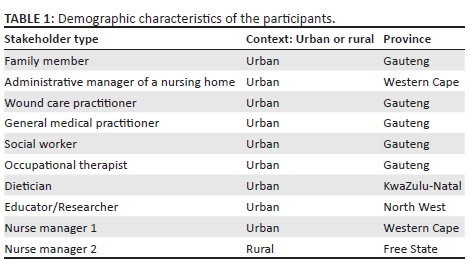
A total of 10 participants took part in the workshop. They included a family member, an administrative manager of the nursing home, a wound care practitioner, a general medical practitioner, a social worker, an occupational therapist, a dietician, a researcher in the field of aged care who also had an educator role and two nurse managers, one from a rural and one from an urban nursing home. Participants to represent the resident and the physiotherapy stakeholder categories were not available after several attempts of recruitment. The participant representing the medical insurance company category withdrew just before the workshop and another participant could not be recruited at such short notice. The participants were from five provinces in South Africa and mostly from nursing homes in urban areas. Most nursing homes in South Africa are in urban areas, with the majority in Gauteng province.8Table 1 presents the demographic characteristics of the participants. Several participants had experience as family members of nursing home residents with wounds.
Data collection
The workshop was used as the data collection method and was hosted online in August 2021 because of COVID-19 restrictions at the time. The workshop structure, platform, facilitator roles and the workshop process are described next.
Workshop structure
Various workshop structures can be used, namely a structured guideline-based workshop, a less structured workshop but with pre-designed activities and roles, or an open format where facilitators intervene only in the case of unforeseen circumstances.13
The workshop platform and facilitator roles
The researchers utilised BlackBoard CollaborativeTM Ultra32
The involvement of the independent facilitator was essential to avoid overemphasis on the researcher's agenda and to uphold the principle of mutual learning.13
Workshop process
The process involved the preparation of participants, the workshop data collection process and a follow-up member-checking.
The participant and informed consent forms were emailed to the participants. Preparatory online sessions were held with the IT specialist, the researcher and each participant to test their audio and video settings and orient them to the online platform. Additionally, participants were prepared regarding the content. They were required to read a scenario on knowledge translation concepts applicable to a wound care and nursing home context. The participants were informed of the time that the workshop would take. They were assured that regular breaks will be integrated to reduce fatigue. Participants agreed on the format and timeframe.
The workshop consisted of two phases, namely a first workshop lasting 2 h and conducted on a Friday afternoon and a second workshop lasting 5 h and held on the next day. Three data sets were collected during these two workshops: the first related to barriers to change for evidence-based wound care in nursing homes, the second was a set of values and the third was comprised of perspectives on the theoretical elements for contextualisation. The barriers activity was deliberately scheduled for the beginning of the workshop to acknowledge participants' expert knowledge of the context and as an icebreaker to initiate collaborative discussion because experiences are easier to talk about than perspectives on the abstract knowledge translation concepts. The second data set relating to values was important for the development of a value-integrated framework and establishment of a common ground for discussion.
A combination of data collection methods was used. To collect the first data set (barriers to change), the online platform's virtual whiteboard was used, followed by a facilitated discussion of the whiteboard posts. For the second data set (values), an initial anonymous online survey was completed prior to the workshop using the System for Survey-based Evaluation in Education (EvaSys©) version v8.0 (Electric Article Evaluation System GmbH). This survey was followed by discussions, polls and a second survey during the first workshop. Participants elected to continue the discussion on the value set. For this purpose, a Google Word document was created for the value set and their delineations. Six participants agreed with the value set and refined the delineations. The other four participants did not respond after reminders were sent.
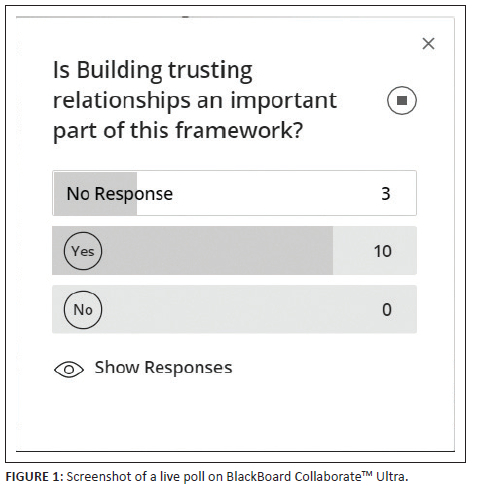
For contextualisation of the framework elements (the third data set), discussions and poll responses were used and one activity included a virtual breakaway session on the BlackBoard CollaborateTM Ultra platform. Yes/no and Likert scale polls were utilised to obtain consensus and feedback from participants. Facilitated discussion followed the polls to explore opinions or alternatively polls followed the discussion to obtain consensus. Some of the polls were pre-planned, while others were posted as requested by the participants, allowing for flexibility in the data collection process. A screenshot of the live polls was taken and saved, while all the participant information remained anonymous. Figure 1 shows an example of such a screenshot of a live poll. Note that the 'no responses' are for the three facilitators. During the main session, participants were video and audio recorded, with consent.
The draft framework developed after the workshop was further shared and discussed with six participants during telephonic interviews. These participants confirmed the framework's value, fit for purpose and comprehensiveness and suggested minor adaptations.
Data analysis
To manage the large volume of data, the researcher labelled the sections of the recordings according to the discussion topic. Each of these sections was subsequently transcribed verbatim. Codes were allocated to participants to maintain confidentiality, and all names were removed from the transcripts.
In deductive cases such as the virtual whiteboard posts, the values or where the live poll responses showed consensus for inclusion in the framework, qualitative data were used to confirm the posts, the values and the poll's consensus. The qualitative data also provided insight for the contextualised delineation of the framework elements and preferences for the framework elements' positions in the framework. For inductive approaches, patterns were identified in the data and compared with the systematic literature review findings in the previous phase of the study to confirm or add framework elements. The researcher coded the transcripts using ATLAS.ti (v.9), and the data were co-coded.
Ethical considerations
An application for full ethical approval was made to a South African University's Health Sciences Research Ethics Committee, with ethics consent being received on 19 May 2019 and renewed on 21 April 2021 under the ethics approval number UFS-HSD2019/0600/2506-0001. Written informed consent was obtained from all participants. All the data were de-identified to protect participant confidentiality.
Results
Sections of the three workshop data sets are presented, showing how the participant perspectives enhanced a multidisciplinary, comprehensive and integrated understanding of knowledge translation components in nursing homes.
The first data set: Barriers to change for evidence-based wound care
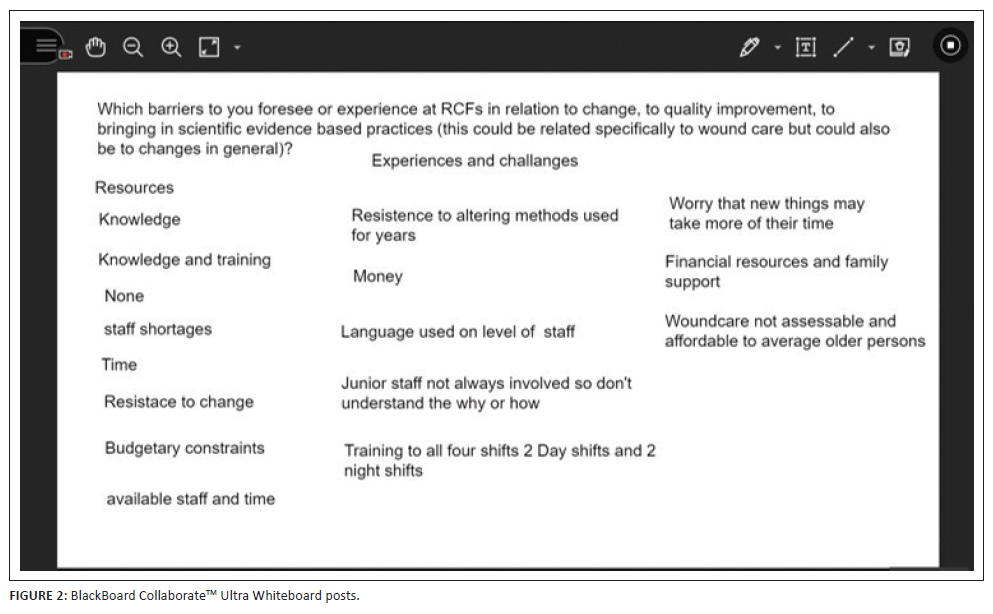
For the first data set, five themes representing barriers to change for evidence-based wound care in nursing homes were identified from the whiteboard data and supported with verbatim quotes from a follow-up discussion. These themes were: (1) a lack of knowledge of and training in wound care, (2) resistance to change, (3) shortage of staff, (4) lack of resources for wound care and (5) not engaging all staff members. A sixth theme, namely, a lack of standards for wound care, was added from the discussions of the first data set. Similar barriers were experienced despite the different roles of participants, as is evident from the similar posts on the whiteboard (Figure 2).
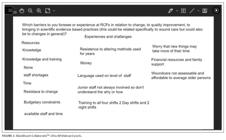
The posts on the whiteboard aided further discussion. Participants confirmed one another's views but contributed from the vantage point of their own professional background, work or personal experiences. For example, with regard to resource limitations, the general manager argued from a systems perspective, indicating the increased demand placed on nursing homes over the years, with these now required to provide advanced wound care. The social workers added to the general manager's argument from the perspective of the older person and their family's financial situation, affecting their access to care. Securing access to care is a key role of social workers in practice:
'[A] couple of years ago I think you would have been able to send them [older people] to a hospital with wounds where they can be treated and then they will actually come back better … but now the roles have become reversed and we have to treat those wound … that is my experience. So we are under more pressure as far as medical care, medical aspects of care is concerned, than we would have been in the past. Mainly because of what I consider to be the break down in your health service or your health system.' (Administrative manager, male, urban)
'[B]ut at the end of the day it is so important to have an affordable and accessible effective wound care model in our old age homes and that is what [name replaced: the general manager] said about the poor elderly, but nowadays the average older person in a residential care facility, even can't afford proper wound care ….' (Social worker, female, urban)
The family member provided her personal experiences of the financial difficulties experienced:
'I think that is another thing what I have experienced, the moment that we actually got into the practical situation then we realised, oh we thought that was included, or we thought that was it and you don't think about it when you actually applied for a place or even when my parents stay in a retirement resort, we never thought about all these details [costs].' (Family member, female, urban)
Nurse managers perceived the availability of the wound care products to be a problem, especially in rural areas, indicating the problems experienced on the operational management level:
'[F]or example, Pretoria has got much more wound care products available and maybe they can afford it but in the rural areas, there is no way, it is back to the basics and sometimes the basics is not available. So that is also a problem.' (Nurse manager 2, female, rural)
The data show how the various perspectives articulated by the participants were integrated to develop a comprehensive understanding of the challenges. Barriers to change in the real-world context of nursing homes are important indicators for the multifaceted implementation strategies needed and were incorporated in the design of the framework.
The second data set: A value system
The initial anonymous survey gave rise to a list of 21 values; this set of values was further refined through discussions. Discussions allowed participants to justify their choices and to gain a deeper understanding of one another's perspectives. The meaning of the values was explored and in cases where values were similar, the value that was most representative of the group's perspectives was selected - for example, teamwork was preferred to cooperation:
'I feel as soon as you have teamwork, co-operation will follow.' (Nurse manager 1, female, urban)
'[I]f you are going to have good teamwork, then automatically it means you've probably got good relationships and so a lot of them I could put together.' (Occupational therapist, female, urban)
The discussion was followed by a second survey because participants wished to rank the importance of the values, showing application of the democracy principle of participatory design. This ranking resulted in the 10 most important values of which participants had a similar understanding. However, participants expressed their wish to confirm and adapt the delineations for each of the values. This was achieved through the past-workshop Google Word document. The final value set contained nine fundamental values for the provision of holistic, dignified and quality care to older people residing in nursing homes, namely respect, competence, commitment, teamwork, family involvement, accountability, autonomy, cost-effectiveness and compassion and patience (the latter being a single value). This value set was integrated in the foundation of the framework to guide knowledge translation projects. An integration of values from different stakeholders enhances collaboration and can be used to resolve conflict during evidence implementation projects.26,33
The third data set: contextualised framework elements
The framework elements were confirmed through consensus, and delineations were contextualised. Additionally, the qualitative findings informed the structural framework adaptations. A detailed report of the framework and its delineations is not provided in this article, but the transdisciplinary nature of results in relation to some of the framework elements is shown.
One of the initial processes in knowledge translation is the introduction of evidence into practice,34
'[F]irst ask the staff what are they doing and hear what they are doing and then see what correlates with what the best evidence practice says and see the things that differ, then the researcher have the rational of why the evidence shows it is maybe better to do it in another way.' (Researcher, female, urban)
'In our case … it depends on your resources, if you have minimum staff and resources is not available, you really appreciate the assistance and the professional help of universities, so it depends on a lot of other factors, your available resources.' (Social worker, female, urban)
Another entry point for evidence is through policies and standard operating procedures (SOPs), as the absence of SOPs is a barrier to evidence-based wound care in nursing homes. The healthcare professionals specifically emphasised the importance of wound care SOPs for a good standard and consistency of care among members of the multidisciplinary team. The need to take account of the resource-restricted context in the development of SOPs was emphasised by more than one participant and is an important consideration in the context of South African nursing homes, where there are many resource restrictions at the system, organisational, family and resident level:
'So absolutely a protocol and SOPs is [sic] vital.' (Dietician, female, urban)
'I can just agree on how important an SOP and a protocol is in any situation and facility because I am not there all the time, obviously, and then the other thing that one should keep in mind is that nursing staff is rotated all the time. So the nurse, or the wound care sister or whoever who sees the patient today might not be dressing the wounds in two or three days' time again.' (General medical practitioner, female, urban)
'I agree with her, … maybe have like two options, one for patients maybe with medical aid, and the other one for patients that maybe a little bit more affordable through the government.' (Researcher, female, urban)
Co-design of interventions, for example SOPs, was an important framework element, and its contextual relevance was further explored. Perceptions varied: for example, the general manager and a nurse manager were concerned that members may not all have the required knowledge to design effective, evidence-based interventions. However, others, such as the occupational therapist and dietician, felt co-design to be essential for buy-in from all role players and for reducing expensive consultations with private practitioners such as themselves:
'[Y]ou are more likely to carry it out and understand why people are saying this is how it is has to be done. I just think it is important that the whole team is involved where possible in whatever decision is taken.' (Occupational therapist, female, urban)
'[F]or us to come into a unit as a dietitian and it is costly and it is not always practical, whereas if we can help design an SOP and help train the staff that are there permanently, you actually can eliminate some professional roles to a degree, and then we just need to be called in for the emergencies and not necessarily all the time.' (Dietician, female, urban)
This discussion then flowed naturally into a discussion on role clarification and task shifting. Role clarification was not an element specifically identified from the literature, but was introduced through this discussion, thus making the framework relevant to the South African context. Task shifting, where tasks of highly qualified professionals become the responsibility of less qualified healthcare workers, is a potential solution in light of the staff shortage in South Africa.35
All 10 participants agreed that an interprofessional approach is important, but were concerned about the ability to achieve it, especially in rural areas. Interprofessional wound care is the evidence-based approach and prescribed in international clinical practice guidelines. However, the nurse manager from a rural nursing home expressed her concern about the availability of specialists. Furthermore, because of resource limitations, there are only a limited number of permanently employed healthcare professionals other than nurses in South African nursing homes. The other nurse manager explained how some of the challenges were overcome through the use of WhatsApp or telephonic conversations. Therefore, both challenges and solutions were presented, informing contextualised delineations of the framework elements and suggesting strategies to overcome the challenges.
During the breakaway activity, implementation strategies in response to the main barriers were presented to participants and then discussed in small groups of three to four participants. Innovative combinations of these strategies were proposed, augmented with new suggestions. For example, to overcome the lack of engagement of all stakeholders, a combination of three strategies (three overlapping circles) was proposed based on trusting relationships, namely: (1) a centralised point (person) to consolidate all communication, (2) an interprofessional team and (3) local needs assessments and discussions with all stakeholders.
Discussion
The discussion focusses on the key findings and the limitations and strengths of the workshop as data collection method in transdisciplinary research.
The findings from the workshop provided insight into the perspectives of multiple stakeholders regarding barriers to change for evidence-based wound care in nursing homes, the values necessary to maintain holistic and dignified care for older persons and how the framework elements could be contextualised. Involving the various professionals, family members and nursing home managers allowed for the expression of a range of perspectives and enhanced insight into the real-world context. Through the workshop approach, several key findings emerged from the perspectives, including the importance of the involvement of healthcare professionals in the co-design of wound care SOPs and interventions. Trusting relationships should be built for commitment to change in practice. Trusting relationships are key to collaborative processes, especially in the context of wound care in nursing homes with a number of stakeholders involved.36,373826,33,39
Limitations of the workshop as data collection method
As with other research endeavours, limitations were experienced. Because of the inclusion criteria of access to a computer, basic computer skills, competency in speaking English and willingness to participate in the full workshop, it was not possible to recruit residents. Furthermore, the recruited medical insurance company representative withdrew at the beginning of the workshop, limiting the potential funding perspective on change processes related to wound care in nursing homes.
While BlackBoard CollaborateTM Ultra was deemed usable, but it lacked recording functionality for simultaneous breakaway sessions at the time, as each breakaway room had to be recorded separately, which did not work as planned. Furthermore, while the researchers had contingency plans in place for technical and internet issues, not all the participants did; as a result, some participants experienced connectivity problems and the rest had to wait for them to return online before continuing.
The data analysis was time-consuming because of the large amount of qualitative data. The responses provided in the live poll guided the decisions to include framework elements and provided a clear consensus, whereas the qualitative data enhanced the contextual delineation of elements.
Strengths of the workshop as data collection method
While this method had its limitations, it had strengths as well. This endeavour proved that a workshop could be used as a viable method for data collection and for contextualisation of abstract theoretical elements. The workshop platform allowed for a flexible approach through both pre-planned discussion topics (framework elements) and a natural flow of discussions augmenting the elements and their delineations. Most participants agreed on the importance of all elements, and on the basis of their unique personal and professional experiences provided a nuanced perspective on what could work best. These perspectives allowed for an integration of the various perspectives and the development of a framework more suitable and acceptable to those it would affect in practice. Schmidt et al.40
The combination of data collection methods, namely the facilitated discussions, polls, whiteboard use and breakaway sessions, offered variation and helped to maintain participants' focus and attention. Furthermore, allowing a semi-structured approach and the influence of participants on the data collection process ensured a democratic process for framework development. Democracy and knowledge integration showed respect for the legitimacy of context-specific practice knowledge, a requirement to meet the substantive objective of transdisciplinary research.40
Strengths in relation to the technical aspects included the orientation sessions, which helped to ensure that each participant's system was working and put participants more at ease with use of the online platform. The researchers' presence in the same venue during the workshop facilitated more rapid and efficient communication and led to more rapid and effective problem-solving. The presence of an IT specialist assisted in resolving technological problems faster. Furthermore, hosting the workshop from the computer laboratory guaranteed a stable connection, with a backup generator in place in case of power failures. The use of BlackBoard CollaborativeTM Ultra assisted in limiting connectivity problems, as participants were able to join easily via a web link. The use of gaming headsets for the researchers and IT specialists worked well and limited outside noise while being more comfortable to wear than regular headsets or earphones.
Conclusion
Technology has become vital to the way in which research is conducted. Despite certain flaws and limitations, technology can assist in the hosting of an engaging and effective workshop as a means to collect data. While not everyone has access to a wide variety of digital platforms, researchers can start by looking at those freely available to them and improvise so as to nevertheless present an effective and engaging workshop.
The aim of the study was to develop a contextualised framework to guide knowledge translation in nursing homes based on values for holistic, dignified and quality care. This article contained a description of how a workshop was hosted and facilitated online during the COVID-19 pandemic to achieve that aim. The workshop was effective in engaging geographically dispersed stakeholders from different disciplines who are key to wound care and practice change in nursing homes across South Africa.
Using a combination of polls and discussions was effective in guiding decision-making, reaching consensus and achieving a deeper understanding of the context, despite some limitations. This flexible and somewhat messy process of data collection was successfully guided because of the involvement of the IT facilitator, independent facilitator and the researcher. Preparatory orientation sessions, the presence of researchers and an IT specialist in the same venue and the use of reliable technology facilitated effective communication, problem-solving and data collection. The article shows the workshop method to have been viable and beneficial, and that it allowed for a participatory and transdisciplinary approach to framework development, involving various healthcare professionals and other stakeholders. The methodology allowed for a democratic process in framework development and maintained participant engagement through a variety of interactive elements. Strengths of the online workshop as data collection method may encourage the adoption of a similar method in future research studies, especially by researchers interested in the co-design of frameworks and iKT.
This article is partially based on the author's thesis entitled 'A framework for wound care knowledge translation in residential aged care facilities' towards the degree of Doctor of Philosophy in Nursing in the School of Nursing, Faculty of Health Sciences, University of the Free State on 15 November 2022, with supervisors Y. Botma and M. Mulder.
Competing interests
The authors declare that they have no financial or personal relationships that may have inappropriately influenced them in writing this article.
Authors' contributions
G.C.B. served as the principal investigator, conceptualising both the study and the workshop method and procedure. G.C.B. was also responsible for planning, coordinating and primarily drafting various sections of the manuscript. G.H.v.R. contributed to the conceptualisation of the article, authored sections pertaining to the workshop as a data collection method and provided critical feedback on the manuscript. B.S.B. wrote sections related to the technological aspects of the workshop method and critically reviewed the manuscript. G.C.B., G.H.v.R. and B.S.B all played a role in facilitating the workshop and participated in the data collection process.
Funding information
Fundings were received from the University of the Free State, Postgraduate School Doctoral Bursaries for PhD tuition fees and the University of South Africa, Academic Qualification Improvement Programme to cover research expenses.
Data availability
Raw data were generated online as part of a PhD study conducted through the University of the Free State. Derived data supporting the findings of this study are available from the corresponding author G.C.B. upon reasonable request.
Disclaimer
The views and opinions expressed in this article are those of the authors and are the product of professional research. The article does not necessarily reflect the official policy or position of any affiliated institution, funder, agency or that of the publisher. The authors are responsible for this article's results, findings and content.
Acknowledgements
Professor Yvonne Botma and Professor Magda Mulder are acknowledged for their supervision of the PhD study during which the workshop took place. We express our gratitude for the valuable contributions made by the participants.
References
-
1.Archibald MM, Lawless MT, De Plaza MAP, Kitson AL. How transdisciplinary research teams learn to do knowledge translation (KT), and how KT in turn impacts transdisciplinary research: Health research policy and systems - A realist evaluation and longitudinal case study. J Transdiscipl Res S Afr. 2023;21(1):20. https://doi.org/10.1186/s12961-023-00967-x
» https://doi.org/10.1186/s12961-023-00967-x -
2.Lawrence MG, Williams S, Nanz P, Renn O. Characteristics, potentials, and challenges of transdisciplinary research. One Earth. 2022;5(1):44-61. https://doi.org/10.1016/j.oneear.2021.12.010
» https://doi.org/10.1016/j.oneear.2021.12.010 -
3.Van Zyl I. Editorial - Transdisciplinarity as engaged scholarship. J Transdiscipl Res S Afr. 2023;19(1):a1411. https://doi.org/10.4102/td.v19i1.1411
» https://doi.org/10.4102/td.v19i1.1411 -
4.Dryden-Palmer K, Parshuram CS, Berta WB. Context, complexity and process in the implementation of evidence-based innovation: A realist informed review. BMC Health Serv Res.. 2020;20(1):81. https://doi.org/10.1186/s12913-020-4935-y
» https://doi.org/10.1186/s12913-020-4935-y -
5.Beeckman D, Campbell KE, LeBlanc K, et al. Best practice recommendations for holistic strategies to promote and maintain skin integrity [homepage on the Internet]. Wounds International. 2020 [cited 2024 Aug 01]. Available from: https://www.woundsinternational.com/resources/details/best-practice-recommendations-holistic-strategies-promote-and-maintain-skin-integrity
» https://www.woundsinternational.com/resources/details/best-practice-recommendations-holistic-strategies-promote-and-maintain-skin-integrity -
6.Hoversten KP, Kiemele LJ, Stolp AM, et al. Prevention, diagnosis, and management of chronic wounds in older adults. Mayo Clinic Proc. 2020;95(9):2021-2034. https://doi.org/10.1016/j.mayocp.2019.10.014
» https://doi.org/10.1016/j.mayocp.2019.10.014 -
7.Sherman DW, Kamel G. An introduction to skin as an interface: Implications for interprofessional collaboration and whole-person care. Adv Skin Wound Care. 2019;32(6):E1. https://doi.org/10.1097/01.ASW.0000558512.26370.b7
» https://doi.org/10.1097/01.ASW.0000558512.26370.b7 -
8.Mahomedy Y. Residential facilities for older persons [homepage on the Internet]. Who Owns Whom (Pty) Ltd - African Business Information; 2021 [cited 2024 Aug 01]. Available from: https://www.whoownswhom.co.za/store/info/4495?segment=Community+and+Personal+services
» https://www.whoownswhom.co.za/store/info/4495?segment=Community+and+Personal+services -
9.Carey N, Boersema GC, Du Toit H. Improving early detection of infection in nursing home residents in South Africa. Int J Afr Nurs Sci. 2021;14:100288. https://doi.org/10.1016/j.ijans.2021.100288
» https://doi.org/10.1016/j.ijans.2021.100288 -
10.Lee YN, Kwon DY, Chang SO. Bridging the knowledge gap for pressure injury management in nursing homes. Int J Environ Res. 2022;19(3):1400. https://doi.org/10.3390/ijerph19031400
» https://doi.org/10.3390/ijerph19031400 -
11.McArthur C, Bai Y, Hewston P, et al. Barriers and facilitators to implementing evidence-based guidelines in long-term care: A qualitative evidence synthesis. Implement Sci. 2021;16(1):70. https://doi.org/10.1186/s13012-021-01140-0
» https://doi.org/10.1186/s13012-021-01140-0 - 12.Storvang P, Mortensen B, Clarke AH. Using workshops in business research: A framework to diagnose, plan, facilitate and analyze workshops. In: Freytag P, Young L, editors. Collaborative research design. Singapore: Springer, 2018; p. 155-174.
-
13.Ørngreen R, Levinsen K. Workshops as a research methodology. Electron J e-Learn [serial online]. 2017 [cited 2024 Jan 18];15(1):70-81. Available from: https://www.ejel.org.
» https://www.ejel.org -
14.Caretta MA, Vacchelli E. Re-thinking the boundaries of the focus group: A reflexive analysis of the co-production of knowledge in cross-cultural research. Qual Res J [serial online]. 2015 [cited 2024 May 15];15(1):22-38. Available from: https://doi.org/10.5153/sro.3812
» https://doi.org/10.5153/sro.3812 -
15.Egid B, Ozano K, Hegel G, et al. Can everyone hear me? Reflections on the use of global online workshops for promoting inclusive knowledge generation. Qual Res. 2023;23(2):195-216. https://doi.org/10.1177/14687941211019585
» https://doi.org/10.1177/14687941211019585 -
16.Tarr J, Gonzalez-Polledo E, Cornish F. On liveness: Using arts workshops as a research method. Qual Res J. 2018;18(1):36-52. https://doi.org/10.1177/1468794117694219
» https://doi.org/10.1177/1468794117694219 -
17.Thoring K, Mueller R, Badke-Schaub P. Workshops as a research method: Guidelines for designing and evaluating artifacts through workshops [homepage on the Internet]. 2020 [cited 2024 Feb 21]. Available from: http://hdl.handle.net/10125/64362
» http://hdl.handle.net/10125/64362 -
18.Buelo A, Kirk A, Jepson R. A novel research method for workshops and co-production of interventions: Using a secret Facebook group. Pilot Feasibility Study. 2020;6:168. https://doi.org/10.1186/s40814-020-00711-0
» https://doi.org/10.1186/s40814-020-00711-0 -
19.Hall KL, Vogel AL, Stipelman B, Stokols D, Morgan G, Gehlert S. A four-phase model of transdisciplinary team-based research: Goals, team processes, and strategies. Transl Behav Med. 2012;2(4):415-430. https://doi.org/10.1007/s13142-012-0167-y
» https://doi.org/10.1007/s13142-012-0167-y -
20.Bennett LM, Gadlin H. Collaboration and team science: From theory to practice. J Investig Med. 2012;60(5):768-775. https://doi.org/10.2310/JIM.0b013e318250871d
» https://doi.org/10.2310/JIM.0b013e318250871d -
21.Beer P, Mulder RH. The effects of technological developments on work and their implications for continuous vocational education and training: A systematic review. Front Psychol. 2020:11:918. https://doi.org/10.3389/fpsyg.2020.00918
» https://doi.org/10.3389/fpsyg.2020.00918 -
22.Haleem A, Javaid M, Qadri MA, Suman R. Understanding the role of digital technologies in education: A review. Sustain Oper Comput. 2022;3:275-285. https://doi.org/10.1016/j.susoc.2022.05.004
» https://doi.org/10.1016/j.susoc.2022.05.004 -
23.Kelly LM, Cordeiro M. Three principles of pragmatism for research on organizational processes. Methodol Innov. 2022;13(2):2059799120937242. https://doi.org/10.1177/2059799120937242
» https://doi.org/10.1177/2059799120937242 -
24.Maarouf H. Pragmatism as a supportive paradigm for the mixed research approach: Conceptualizing the ontological, epistemological, and axiological stances of pragmatism. Int Bus Res. 2019;12(9):1-12. https://doi.org/10.5539/ibr.v12n9p1
» https://doi.org/10.5539/ibr.v12n9p1 -
25.Thoun DS, Kirk M, Sangster-Gormley E, Young JO. Philosophical theories of truth and nursing: Exploring the tensions. Nurs Sci Q. 2019;32(1):43-48. https://doi.org/10.1177/0894318418807945
» https://doi.org/10.1177/0894318418807945 -
26.Frauenberger C, Good J, Fitzpatrick G, Iversen OS. In pursuit of rigour and accountability in participatory design. Int J Hum Comput Stud. 2015;74:93-106. https://doi.org/10.1016/j.ijhcs.2014.09.004
» https://doi.org/10.1016/j.ijhcs.2014.09.004 -
27.Vandekerckhove P, De Mul M, Bramer WM, De Bont AA. Generative participatory design methodology to develop electronic health interventions: Systematic literature review. J Med Internet Res. [1438-8871]. 2020;22(4):e13780. https://doi.org/10.2196/13780
» https://doi.org/10.2196/13780 - 28.Van der Velden M, Mörtberg C. Participatory design and design for values: Handbook of ethics, values, and technological design: Sources, theory, values and application domains. Dordrecht: Springer; 2015.
-
29.Heerschap C, Nicholas A, Whitehead M. Wound management: Investigating the interprofessional decision-making process. Int Wound J. 2019;16(1):233-242. https://doi.org/10.1111/iwj.13017
» https://doi.org/10.1111/iwj.13017 - 30.Gray JR. Qualitative research methods. Burns & Grove's The practice of nursing research: Appraisal, synthesis, and generation of evidence. 9th ed. St Louis, MO: Elsevier; 2021, p. 314-357.
-
31.Egid B, Ozano K, Hegel G, et al. Can everyone hear me? Reflections on the use of global online workshops for promoting inclusive knowledge generation. Qual Res J. 2021;23(2):295-216. https://doi.org/10.1177/14687941211019585
» https://doi.org/10.1177/14687941211019585 -
32.Blackboard Incorporated. Blackboard Collaborate [homepage on the Internet]. 2021 [cited 2024 May 20]. Available from: https://www.blackboard.com/en-mea/teaching-learning/collaboration-web-conferencing/blackboard-collaborate
» https://www.blackboard.com/en-mea/teaching-learning/collaboration-web-conferencing/blackboard-collaborate -
33.Shelton R, Cooper BR, Stirman SW. The sustainability of evidence-based interventions and practices in public health and health care. Ann Rev Public Health. 2018;39(1):55-76. https://doi.org/10.1146/annurev-publhealth-040617-014731
» https://doi.org/10.1146/annurev-publhealth-040617-014731 -
34.Zych MM, Berta WB, Gagliardi AR. Initiation is recognized as a fundamental early phase of integrated knowledge translation (IKT): Qualitative interviews with researchers and research users in IKT partnerships. BMC Health Serv Res. 2019;19:772. https://doi.org/10.1186/s12913-019-4573-4
» https://doi.org/10.1186/s12913-019-4573-4 -
35.Limbani F, Thorogood M, Gómez-Olivé FX, Kabudula C, Goudge J. Taskshifting to improve the provision of integrated chronic care: Realist evaluation of a lay healthworker intervention in rural South Africa. BMJ Glob Health. 2019;4(1):e001084]. https://doi.org/10.1136/bmjgh-2018-001084
» https://doi.org/10.1136/bmjgh-2018-001084 - 36.Moullin JC, Dickson KS, Stadnick NA, et al. Exploration, preparation, implementation, sustainment (EPIS) framework. In: Nilsen P, Birken SA, editors. Handbook on implementation science. Northampton, MA: Edward Elgar Publishing; 2020, p. 32-61.
-
37.Kong EH, Kim H, Kim H. Nursing home staff's perceptions of barriers and needs in implementing person-centred care for people living with dementia: A qualitative study. J Clin Nurs. 2022;31(13-14):1896-1906. https://doi.org/10.1111/jocn.15729
» https://doi.org/10.1111/jocn.15729 - 38.Harvey G, Kitson A. Promoting action on research implementation in health services: The integrated-PARIHS framework. In: Nilsen P, Birken SA, editors. Handbook on implementation science. Northampton, MA: Edward Elgar Publishing; 2020, p. 114-143.
-
39.Metz A, Louison L, Burke K, Albers B, Ward C. Implementation support practitioner profile: Guiding principles and core competencies for implementation practice [homepage on the Internet]. Chapel Hill, NC: National Implementation Research Network, University of North Carolina; 2020 [cited 2022 Sept 01]. Available from: https://www.researchgate.net/publication/346562157_Implementation_Support_Practitioner_Profile_-_Guiding_Principles_and_Core_Competencies_for_Implementation_Practice
» https://www.researchgate.net/publication/346562157_Implementation_Support_Practitioner_Profile_-_Guiding_Principles_and_Core_Competencies_for_Implementation_Practice -
40.Schmidt L, Falk T, Siegmund-Schultze M, Spangenberg JH. The objectives of stakeholder involvement in transdisciplinary research: A conceptual framework for a reflective and reflexive practise. Ecol Econ. 2020;176:106751. https://doi.org/10.1016/j.ecolecon.2020.106751
» https://doi.org/10.1016/j.ecolecon.2020.106751

Accepted: 07 Aug. 2024
Published: 11 Oct. 2024