Digital transformation of small and medium enterprises in sub-Saharan Africa: A scoping review
Abstract
The economic activities of the small and medium enterprises (SMEs) in sub-Saharan Africa (SSA) drive much of the region's economic growth and development. Despite their importance, SMEs tend to fail in their first two years of operation compared to macro enterprises. Digital transformation (DT) of organisations fosters resilience; however, DT of SMEs in SSA has been slow because of several impediments. The objective of this article is to establish how SMEs in the context of SSA can develop comprehensive strategies for integrating digital technologies into their operations to build resilience. Arksey and O'Malley's systematic scoping review (SR) is used to identify and map articles over a 5 year period using inclusion and exclusion criteria. A total of 44 articles were included for in-depth analysis to address the issue under investigation. The results indicate toward economy-based, market-based and sociotechnical contextual factors emerging as themes that impede DT of SMEs in the SSA region. In the SSA context, SMEs face numerous regional constraints that create barriers in their operations, such as limited access to profitable and value-added markets. TRANSDISCIPLINARITY CONTRIBUTION: To develop strategies for integrating technologies, it is critical to have a thorough understanding of SMEs' operational context. This is vital if SMEs in the SSA region are to fully realise the transformative potential of integrating digital technologies into their business operations and gain long-term resilience. Through digitally enabled resilience, SMEs can continue to play their critical role in the economic growth and development of the SSA region.
small and medium enterprises; digital transformation; sub-Saharan Africa; resilience; economy
Introduction
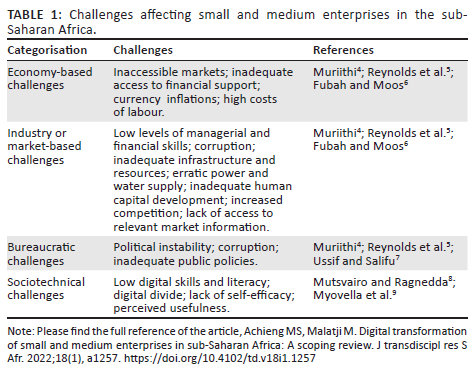
The significance of small and medium enterprises (SMEs) in the economic growth and development of sub-Saharan Africa (SSA) region is widely recognised and documented across the literature.1,2,34,5Table 1. The situation is exacerbated further by a rapidly changing market environment driven by globalisation, technological advancements and market pressures. These challenges have negative implications on the ability of SMEs to develop resilience capabilities critical for their survival. As a result, the critical role of SMEs in the economic growth and development of the SSA region is constantly jeopardised.
It is therefore imperative that SSA SMEs, in collaboration with various stakeholders in government and civil society, devise strategies to overcome some of the challenges they face to remain resilient in uncertain times. The strategies should be aimed at promoting the growth and development of SMEs in the region. With businesses starting to rely more on data analytics, digital tools and automation, resilience of the digitally enabled businesses is becoming an increasingly important component of SMEs' survival.101112
Digital transformation of SMEs using technologies has the potential to rapidly expand customer and supplier bases, provide new business models aimed at improving business operations, products and services for value creation and revenue generation. The discourse on technology adoption among SMEs further indicates that the use of technologies is more likely to increase mobility and cross-border trade and improve interconnectedness with other SMEs. This is critical for SMEs in the SSA region with the enactment of the African Continental Free Trade Area (AfCFTA) agreement that promises to open Africa's markets and advance opportunities for digitally enabled economic growth.13
As a result, the Organisation for Economic Co-operation and Development (OECD)1415Table 1. To find appropriate solutions, all relevant stakeholders, including government and civil society, must work together. The solutions should aim to promote an enabling business environment that is conducive for the growth and development of SMEs and thus the socio-economic development of SSA.
Due to the 'simple' nature of their business structures, one of the major challenges SMEs face when integrating technologies into their operations is a lack of business strategic planning and business information structures. As result, developing comprehensive strategies for integrating digital technologies into business operations and objectives has been a challenge.161717
The distinctive characteristics of SMEs of the SSA region necessitate careful consideration of the operational context in the pursuit of digitally enabled business resilience. Building digitally enabled business resilience capabilities often requires a holistic approach for reengineering business operations, culture and structure.18
Aims and objectives
This article aims to explore the status of DT of SMEs in the SSA context. The objectives are as follows: (1) identify digital technology use by SMEs and the contextual factors that influence technology adoption and SMEs profit drives and (2) outline guidelines on how SMEs in the SSA context can develop comprehensive strategies for integrating digital technologies into their business operations to build resilience.
Small and medium enterprises in sub-Saharan Africa
Given the heterogeneous nature of SMEs, there seems to be no consensus in extant literature on a universal definition of SMEs.19,20212223
Sub-Saharan African SMEs typically range from small microbusinesses run by one or two persons to medium-sized enterprises capable of employing several workers. A majority of the small businesses are often informally operated, while the medium businesses generally operate in the formal sector. These two sectors (formal and informal) account for an estimated 80% of the employment and economic activities in Africa. As a result, SMEs contribute significantly to the region's gross domestic product (GDP).2425
However, SSA SMEs' productivity and thus contributions to the region's GDP have dropped significantly in recent years. This is largely because of the challenges listed in Table 1 that deter their growth and development.26
Furthermore, the United Nations (UN) has previously stated that globalisation of value chains (of products and services) is one of the most significant challenges that African SMEs face. To this, Igwe et al.27Table 1, are often a reflection of the business environment in which SMEs operate. In this case, an enabling business environment would consist of a set of policies, institutions (such as financial) and other factors that shape the opportunities and incentives for businesses to invest productively, create employment and develop.28
To boost and foster small businesses, entrepreneurship and start-ups, some countries in the SSA region have formulated several reforms and initiatives to support SMEs' growth and development. For example, initiatives such as innovation hubs and business incubator programmes have been set up to support creativity and innovativeness.2930
Tech hubs and business incubators play an important role, not only in assisting entrepreneurs and other small business owners on the continent but also in the economic growth and development of the region. Tech hubs teach new skills that are critical for business owners' survival in the digital ecosystem. Furthermore, a tech hub provides entrepreneurs and small business owners with access to funding opportunities and a global network of other business owners. In recent developments, the formulation and enactment of the AfCFTA memorandum of agreement may provide new hope for the African business environment. The African continental free trade area is expected to boost intra-African trade and Africa's trading position in the global market.13
Market access, which has been a key issue for SSA SMEs, is one of the most significant opportunities provided by the AfCFTA. As a result, SMEs are a key beneficiary of the AfCFTA, as the free-trade zone offers significant opportunities for growth. However, for such as policy to successfully work, SMEs must firstly be aware of it; secondly, they must understand its purpose in the business environment. In other words, its grassroots implementation would be critical to its success and for small businesses across the continent to realise its benefits. Furthermore, institutional challenges such as lack of financial support, political instability, corruption and inadequate infrastructure must be addressed. Globalisation of value chains is changing the traditional business strategies, and these are also being fundamentally reshaped by technological advancements, necessitating adaptation by SMEs to remain competitive in a global digital economy.
The concept of digital transformation
Digital transformation is viewed as a multifaceted phenomenon that affects all aspects of human activity, including technology, the economy, politics and society. From a broad perspective, authors such as Kaplan et al.31323334
Other aspects of DT that emerge in literature include digital skills, data security and privacy, among others. Digital skills are required in terms of use, which Lankshear and Knobel353436
Digital transformation and small and medium enterprises
In recent years, scholarly interest in SME-focused digitalisation and DT has grown significantly. However, the existing literature has primarily either focused on DT in macro enterprises or SMEs in high-income countries, as well as DT antecedents and outcomes in those regions. For example, Bin and Hui37
In SSA, improved mobile telecommunication infrastructure and the Internet, particularly mobile broadband networks, provide a bedrock for the upsurge in digital initiatives. These have fundamentally changed the way people work, communicate, access government services and do business.383940
Example of digital technologies emerging in this review that are typically used by SMEs include information and communication technologies (ICT); computer and mobile technologies and applications (e.g. e-mail); electronic commerce; websites; cloud computing; electronic payment gadgets; social media platforms; and other technologies such as IoTs. To ensure successful transformation in SMEs, continuous innovation is necessary. In addition, the ability to respond quickly to the changes in the business environment and the ability to capitalise on challenges and opportunities are vital. The discourse on DT indicates that successful transformation is heavily influenced by the geographical context of an organisation.41
To adapt to available technologies, the DT process causes a continuous shift in business operations, models and competencies. Thus, when it comes to DT, a certain level of motivation, inventiveness and awareness of the consequences is required. Based on these perspectives, DT for SMEs, particularly those in the SSA region, requires support from all sectors, including government, private sector and civil societies. Such assistance must include DT technology roadmaps and ecosystems to ensure a stable business environment. For example, in Africa's context, the Africa Union (AU) recently formulated the DT Strategy (2020-2030).4242
Transformation induced by digital technology use among small and medium enterprises in sub-Saharan Africa
Examples of businesses using digital technology, such as Twiga (an e-commerce platform) used in Kenya, show how DT of SMEs in the SSA context can help them achieve the Sustainable Development Goals (SDGs), particularly SDGs 1, 2 and 3. The transformative potential of digital technologies can enable overall optimisation of business process, efficient and cost-effective production of quality products and services, increased product or service range by responding faster to market changes and product customisation. Through these improvements in their business operations, SMEs would gain competitive advantage, allowing them to reposition themselves as socio-economic drivers of the region.
Digital transformation of SMEs using digital technologies is critical to their internal operations, and they are used for a variety of purposes, including communication (e-mails), transactions, sales recording and processing, automation, production planning and stock control, document management, general accounting and finance, marketing and so on. Digital transformation via electronic commerce (e-commerce) is well established in certain countries in the SSA region, with retailers such as Twiga, Jumia, Takealot and Konga being already prominent. Websites that offer buyers and sellers the opportunity to transact on the site are also commonly used to display products and services. Digital transformation via social media platforms such as Facebook, YouTube and Instagram is also visible in SMEs in the SSA region. They use such platforms to engage their customers and market their goods and services with fewer resources.4344,45
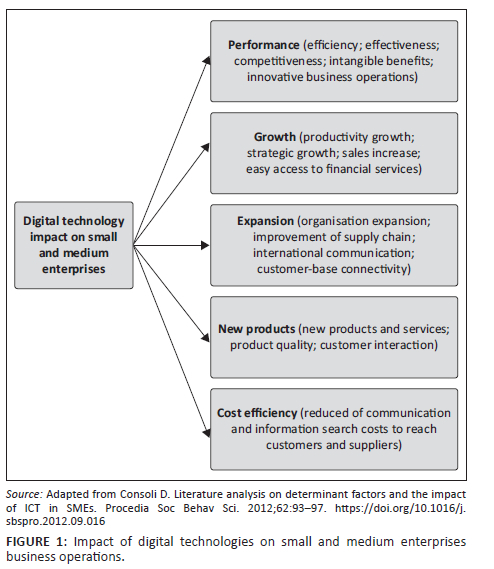
Examples of disruptive digital technologies that can be applied in SMEs business operations include pervasive computing technologies, novel delivery models (cloud computing) and digital tools and techniques of exploiting data. Furthermore, in comparison to other regions, digital innovations in the SSA context are notable in terms of digital financial inclusion, as evidenced by the widespread use of mobile money or digital wallet services systems in some countries.4639Figure 1 shows the impact DT can have on SMEs business operations.
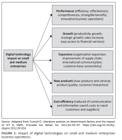
To fully realise the transformative potential of digital technologies, governments and other relevant stakeholders in the SME sector have a responsibility to enforce policies that enable DT to promote inclusive socio-economic growth. It is argued that strategic DT has the capability to address competitiveness gaps in the business environment as well as being a source of building resilience among SSA SMEs.
The concept of organisational resilience
The literature on the term 'resilience' reveals it to be a multifaceted construct that has been applied in many disciplines at the individual (human), system and organisational levels. Its field of origin, however, is disputed in the literature, with some scholars and authors claiming it originated in the field of physics, while others claim it originated in the field of ecology, and still others claim it originated in the field of psychology, among other disciplines. Regardless of the discipline or context, there is some agreement on the description of 'resilience' as the ability to recover or bounce back from a difficult situation.50
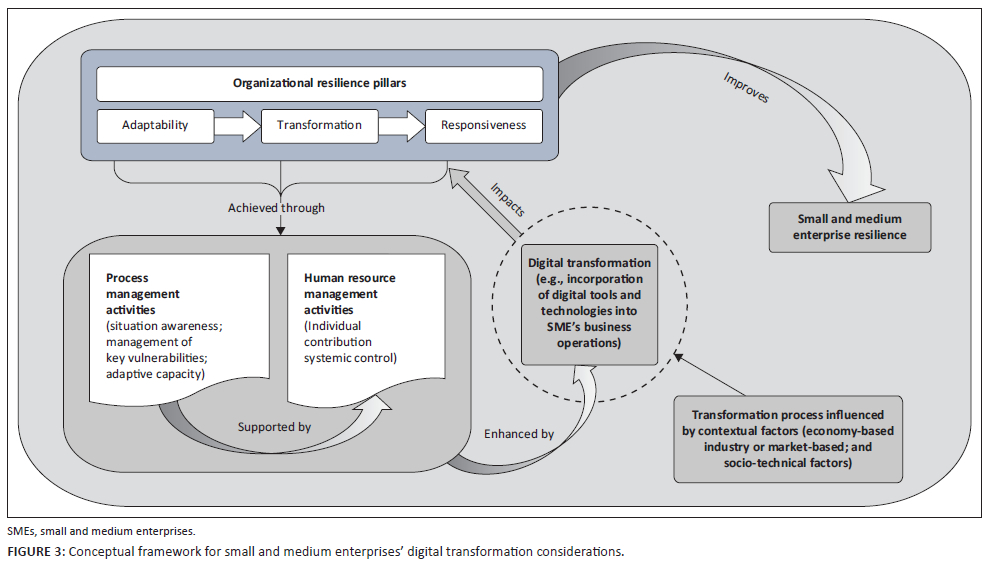
In a more recent description of organisational resilience, this article adopts Williams et al.'s51adaptability, responsiveness and transformation.
The adaptability pillar refers to an organisation's ability to develop strategies to adjust to market disruptions or uncertainties. In other words, it is the ability of an organisation to prepare for uncertain times and disruptions. The responsiveness pillar, derived from the concept of crisis management, refers to an organisation's ability to return to 'normalcy' following a period of disruption(s), while the transformation pillar refers to the ability of an organisation to make deliberate efforts to improve its ability to deal with market uncertainties and disruptions.5252
He et al.53process and human resource management. In process management, the key elements include situation awareness, management of key vulnerabilities and adaptive capacity. In situation awareness, an organisation is expected to have the ability to assess and measure its operation environment. From the analysis of the operation environment, organisations can then make informed decisions to potential disruptions or prepare for uncertainties. The management of keystone vulnerabilities aspect of process management involves an organisation identifying and managing its key functional areas.535354
In support of the process management aspect of achieving organisational resilience, human resource management provides two key important aspects, namely individual contribution and systemic control.5352
In summary, resilience is the ability for organisations such as SMEs in the SSA context to maintain business operations despite adversities in their market environments. To achieve this, SMEs must possess the three pillars of resilience: adaptability, responsiveness and agility to make deliberate efforts to successfully transform. Acquiring these capabilities requires SMEs' thorough understanding and management of their business processes and human resource competencies. In this article, the authors suggest that a combination of digital tools and technologies, managerial best practices and agility can foster a business environment for resilience development. If done right, DT can facilitate long-term resilience by increasing market access, providing efficiency in workforce productivity and stability.55
Research methods and design
A scoping review (SR), which is a subset of systematic literature reviews, was conducted for this study. The emphasis of SR is on an iterative process in which researchers begin with a broad search and then refine it as they become acquainted with the breadth of literature.5656
Stage 1: Identification of research questions or objectives. Aiming to investigate DT in SMEs in the SSA context, the research question posed was: How can SMEs in the SSA context develop comprehensive strategies for incorporating digital technologies into business operations to build resilience? To address this question, the following objectives were derived. Firstly, the researchers set out to identify digital technologies commonly used by SMEs. Secondly, contextual factors that influence technology adoption and use by SMEs in the SSA context were identified and discussed.
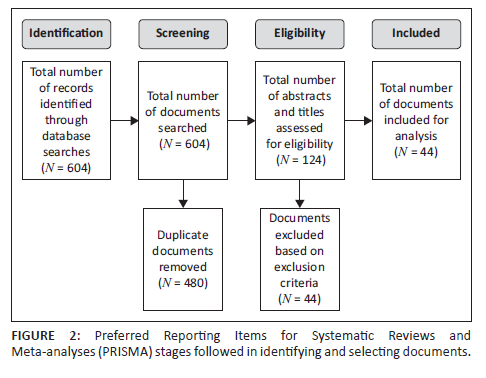
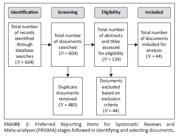
Stage 2: Identification of relevant studies in literature. The researchers employed the Preferred Reporting Items for Systematic Reviews and Meta-analyses (PRISMA) (Figure 2) as a guideline to identify relevant studies in literature that relate to the research questions and objectives. The researchers established a search criterion based on the keywords and timeframe.
Search criteria and identification of sources
The researchers searched the Google Scholar and Scopus databases for relevant peer-reviewed journal articles and other documents on SMEs' digital technology adoption and use as sources for this review. Multiple iterations of searches were conducted to identify the relevant publications within a timeframe of five years (2017-2022). The main search terms were combined into a single query, with SSA and SMEs as delimiters. Below are strings of the search keywords used:
• 'Technology' AND 'small and medium businesses' AND 'SSA'
• 'Information and communication technology (ICT)' AND 'small and medium businesses' AND 'SSA'
•' Digital technology' AND 'small and medium businesses' AND 'SSA'
•' Digital transformation' AND 'small and medium businesses' AND 'SSA'
Exclusion and inclusion criteria
The researchers established inclusion and exclusion criteria to retain the relevant publications and articles from the produced publications. After screening and reading through the titles and abstracts, the retrieved publications were deemed relevant if they met the pre-established inclusion criteria: (1) all publications were in English; (2) studies addressed digital technology or ICT use by SMEs in SSA; (3) studies addressed DT in SMEs in the SSA context; (4) studies focused on contextual factors that influence DT or digital technology or ICT use by SMEs in SSA; (5) studies had sound scientific and empirical design (qualitative or quantitative or mixed-methods); (6) reviews and meta-analyses focused on DT in SMEs in the SSA context; and (7) studies were published within the specified timeframe. For the exclusion criteria, publications that were written in other languages, studies undertaken outside the SSA context, non-open access publications, theses and dissertations were excluded from the study.
Stage 3: Selection of relevant publications. All abstracts were screened against the inclusion and exclusion criteria before proceeding to the full-text screening stage. The screening was carried out by the researchers using Mendeley citation software (Elsevier, Amsterdam, Netherlands). The publications that passed the full-text screening served as the primary data sources for this review.
Using the search keywords 'small and medium businesses', 'digital technology', 'use' and 'SSA' yielded 42 publications. 'Small and medium businesses', 'technology', 'adoption', 'use' and 'SSA' yielded 373 publications. While a combination of search keywords 'small and medium businesses', 'ICT', 'adoption', 'use' and 'SSA' yielded 189 publications. A total of 604 publications were retrieved from the databases used in this study (Google Scholar and Scopus). After removing 480 duplicates, 124 unique titles and abstracts remained. A total of 80 publications did not meet the inclusion criteria based on the titles and abstracts. As a result, a total of 44 articles were included for in-depth analysis. Of the 44 articles included for analysis based on the inclusion criteria, 12 of the articles focused on factors or determinants of digital technology adoption and use by SMEs in SSA.
Stage 4: Charting the retried data. The full-text articles that met the inclusion criteria were reviewed further at this stage. This required the use of an analytical criteria which entails synthesising and interpreting data. This was carried out by sifting through and sorting extracted material (data) based on the key objectives on the topic under investigation. This necessitated the use of a thematic analysis framework. The extracted data included the names of the authors, the year of publication, the purpose of the study, the location or context of the study and the main findings.
Stage 5: Summarising and reporting results. This stage is divided into three steps: analysing the data, reporting results and considering the study results in a broader context. To provide meaningful understanding of the topic under investigation, the synthesised extracted data were first analysed and summarised based on the outlined objectives. For the first objective, through the review, several digital technologies used by SMEs in SSA were identified. This is mainly addressed in the Transformation induced by digital technology use among small and medium enterprises in sub-Saharan Africa section of the article. For the second objective, the results were categorised into three main themes (economy-based, industry or market-based and sociotechnical contextual factors) that spoke to contextual factors that influence digital technology adoption and use by SMEs in the SSA region.
The last two steps of this stage encompass the findings and discussions, which are presented separately in the sections that follows.
Results and analysis
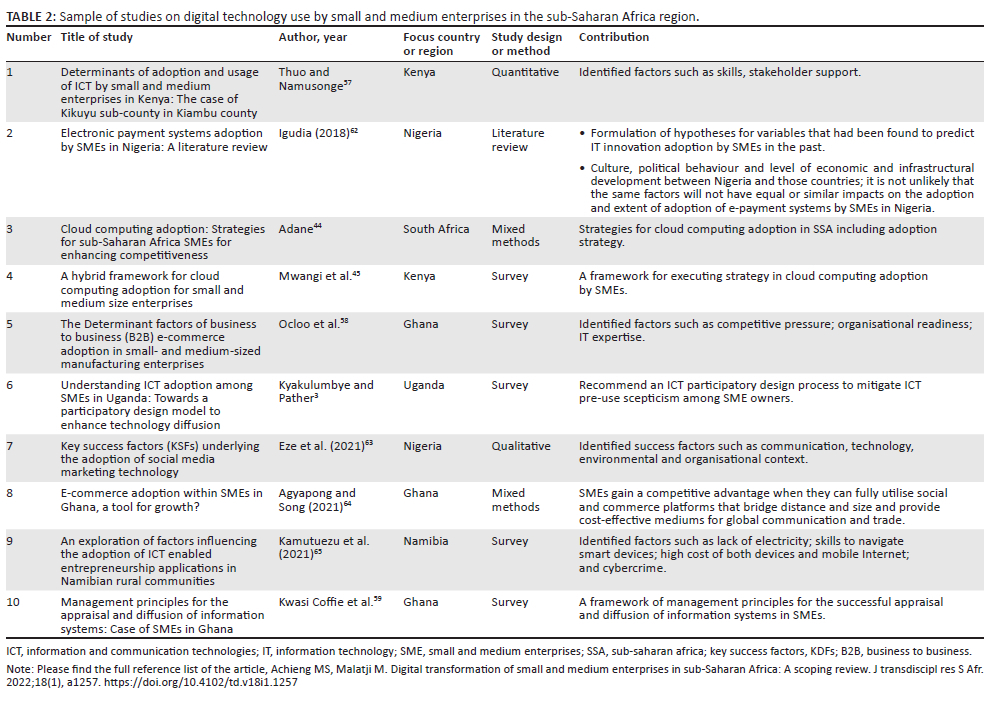
To address the first objective, through the review process, several studies on digital technologies adoption and use by SMEs in SSA were identified. Extant literature indicates that the adoption of digital technologies by SMEs in the SSA context remains low.15Table 2 provides examples of studies conducted on the use of digital technology by SMEs in the SSA region over the last 5 years.
The results of the second objective's analysis of the retrieved articles were classified into three main themes that addressed contextual factors that influence digital technology adoption and use by SMEs in the SSA region. The following discussions present findings on contextual factors influencing SMEs' adoption and use of digital technology in the SSA context. According to the researchers, digitally enabled resilience in SMEs should consider factors specific to the operating environment. These factors, in most cases, limit the ability of SMEs in the SSA context to firstly adopt digital technologies and secondly to be resilient in today's highly competitive global digital economy.
There were 12 articles reviewed in terms of contextual determinants of digital technology adoption and use by SMEs in SSA. To understand the SMEs' lack of or slow adoption of digital technologies (including ICTs and e-commerce technologies), it is necessary to examine the context in which they operate. Because of the SSA region's uniqueness, SMEs face numerous regional constraints. It is critical to examine these contextual factors to gain a better understanding and provide possible solutions to overcoming the barriers. The identified keywords were grouped into three broad themes: economy-based, industry or market-based and sociotechnical contextual factors.
Industry or market-based contextual factors
Inadequate infrastructure and resources are one of the key industry-based issues addressed in literature that influence digital technology use by SMEs in the SSA region and, by extension, DT.4,5,657
Another factor raised in the reviewed literature is access to financial support and financial skill. For most SMEs, particularly those in the informal sector, access to financial support from the traditional banking sector has been a constant challenge.4,5,6
Yet another issue in the SMEs sector is human capital development. Often with DT, SMEs are forced to consider new skills that are required to operate in a digital economy. Reskilling and/or recruiting skilled human resource personnel can be costly for SMEs, particularly those in the informal sector of the economy. However, advanced human capital is required to enable DT in SMEs. In addition, high costs attached to software and hardware of some of the disruptive digital technologies have been a deterrent for adoption and use in some SMEs.
Adequate financial and human capital, as well as adequate infrastructure and resources, are required for successful DT. Unfortunately, many SMEs in the SSA context face significant challenges in obtaining these critical resources to fully realise the transformative potential of digital technologies. In addition, some countries in the SSA region have imposed controversial tax laws for operating on digital platforms. Such laws prohibit some SMEs from using digital services in their business operation due to the fees attached to their use.
Other considerations that influence SSA SMEs' growth and development in factors such as market pressures are customer demand for new experiences triggered by continental trade agreements and globalisation. For example, the AfCFTA agreement promises to integrate Africa's markets into 'a single market for goods, services, facilitated by movement of persons in order to deepen the economic integration of the African continent…'13
Economy-based contextual factors
SMEs generally tend to be more prone to the effects of abrupt disruptions and risks in the global market economy. Global economic disruptions, such as those caused by the COVID-19 pandemic, exacerbated the SSA region's economic distress. Furthermore, geopolitical instabilities in certain regions of SSA have had a negative effect on economic activities in the region.7,8,9
According to a Centre for Strategic and International Studies (CSIS) report from 2021, a setback for SMEs, particularly those that operate informally, is a lack of access to financial institutions and government entities that can offer financial assistance during economic turmoil.2424
Sociotechnical contextual factors
Sociotechnical factors in digital technology use continue to be a persistent challenge in the SSA region. This is because of a variety of issues, including disparities in digital infrastructure, self-efficacy, perceived usefulness and challenges with digital skills and literacy. This translates to ineffective use of (or inability to use) digital tools and technology in the context of SMEs. For most SMEs located in areas without mobile network connectivity, the digital divide becomes a critical determinant of access to critical infrastructure resources. In this context, the digital divide extends beyond the possession of digital resources such as smartphones to access the Internet. It entails multiple dimensions such as individual usage, technical access, digital literacy and skills and so on.8,58,59,60
Language and communication emerge as additional social context barriers to effective digital technology use in SSA. Often illiteracy and language barriers increase the digital gap, not because of lack of access to technology but because the intended users lack basic literacy and language skills to make timely, independent ownership decisions and effective use. Therefore, digital initiatives in the SME sector in SSA must embody the expressions of the different dialects in the region. This is especially true for SMEs that use digital platforms to gain access to market, customers and financial data. Other social factors considered in this review include individuals' characteristics that affect their ability to effectively use digital technology.3
These findings on contextual factors may not necessarily be unique to the SSA context; however, the uniqueness of the SSA economic environment precludes generalisation of such barriers when it comes to DT. For example, challenges that are prevalent in the region include illiteracy and language barriers; lack of infrastructure (e.g. scarcity of power supply); political instability; stringent government laws; and socio-economic inequalities. These difficulties frequently reflect the social, cultural and political contexts in which most digital initiatives are implemented. According to Heeks et al.61
The researchers in this article conclude that it is only when the issues raised here are addressed that SMEs in the SSA region can truly benefit from the transformative potential of digital technology use. Furthermore, from a strategic decision-making viewpoint, developing digital policies and free trade agreements, such as the AfCFTA, is critical to understand the contextual factors that influence DT in SSA SMEs discussed in this article. The issues highlighted here necessitate intentional strategies and investments to mitigate some of the historical, structural and institutional barriers that have faced the African economies. The African continent has taken a step in the right direction with the recent enactment of the DT Strategy initiated by the AU to support the emerging digital ecosystem. However, it is still not clear how such a strategy would harmonise with individual countries' policies and regulations. In addition, the impact such a strategy may have on DT in SMEs in the SSA region is yet unknown.
Discussion
This section presents a discussion on strategies for digital technologies integration into SMEs' business operations to build resilience. Integrating digital technologies into SMEs' business operations have the potential to change how they operate and increase their competitiveness. As a result, SMEs must be more adaptable or flexible to accommodate changes in a volatile business environment. The ability of SMEs to respond quickly to changing situations is critical for competitive advantage in dynamically changing business environment.
Figure 3 depicts the proposed conceptual framework for DT considerations for long-term resilience. The conceptual framework highlights the interrelations between the DT of process and the organisational resilience pillars. This interrelation is influenced by contextual factors that are inherent to the business environment in which SMEs operate. These interactions ultimately inform whether SMEs can build long-term resilience to survive in a global economy.
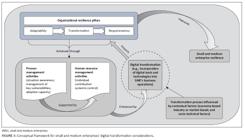
With the ability to adapt, SMEs are more likely to build resilience by timeously responding to opportunities, threats and changes. For example, the advancements of digital technology require that SMEs have an adoption strategy that can aid in developing a better understanding of their operations.58,59,60
Attaining the resilience pillars requires that SMEs reengineer their business operations, organisational culture, and structures through process and human resource management. Using digital technologies at their disposal, SSA SMEs can, for example, expand and diversify their customer and supplier base, offer digitised payment options and use digital marketing options such as social media platforms. All of these could directly or indirectly contribute to competitiveness and new ways of generating revenue and value. For SMEs to successfully achieve this, they would require a roadmap to allow them to integrate digital technologies with measurable benefits. As a result, an adoption strategy should consider the contextual factors discussed in the findings section that need to be addressed to create an enabling business environment.
Achieving digitally enabled resilience through the process management aspect requires a situation awareness strategy. Small and medium enterprises in the SSA context can be well prepared to deal with the contextual factors in their settings and make informed decisions on a response plan. For instance, having timely information on changes in customer expectations or advancement in technology can enable SMEs to adapt to the situation quickly. Small and medium enterprises can prepare for this through the analysis and management of their key vulnerabilities and adaptive capacity appropriate for a specific situation. However, situation awareness as a strategy cannot be viewed outside context relevance and value. This means that for SSA SMEs, having an awareness of their values and needs as well as relevance of digital technologies in their business operations is vital in the context of their operation. The researchers conclude that the situation awareness strategy fosters a business environment that enables responsiveness, a pillar of organisational resilience. Situation awareness as a strategy can also assist SMEs in the SSA context in reallocating and focusing resources where they are most needed, as well as exploring new business opportunities.
A third strategy the SMEs can develop to facilitate the integration of digital technologies is that of identifying and managing key vulnerabilities in their operations. This involves having in-depth understanding of its key operational and managerial aspects that drive their businesses and how digital technologies can support those processes. For instance, digital initiatives like mobile or digital wallets have transformed financial services and unlocked new payment models for SMEs. Thus, it is vital for SMEs to have insight on the impact of embedding such an initiative in their operational process. For example, SME owners and employees must have knowledge and understanding of data privacy and cybercrime issues. These issues become especially thorny with the use of online platforms and social networks, and it is critical that SMEs in the SSA context identify and deal with such issues that might make them vulnerable.
Furthermore, digital initiatives may require the upskilling of individuals with the right skills to use such technology to add value to the business. Having insight into their operational environments and keystone vulnerabilities, SMEs should assess their capabilities to adjust to the changes in their market environment. Combining digital technologies, managerial best practises, market insight and agility should forge resilience capabilities in SMEs for long-term survival.
Conclusion and recommendations
Small and medium enterprises in the SSA context are regarded as the economic drivers of the region. However, most SMEs fail in their first two years of operations or remain stagnant. Literature indicates that most SMEs' digital initiatives often fail because of their inability to recognise the link between digital technologies and their profit drivers. The purpose of this article was to identify how SMEs in the SSA context can develop comprehensive strategies for integrating digital technologies into their business operations to build resilience, as well as improve their profit drivers. The researchers deduce that this is because of a lack of strategies that align SMEs' business needs, goals, context and available digital technologies. The researchers argue that by developing comprehensive strategies, SMEs can foster an environment that allows for adaptability, responsiveness and transformation that is appropriate for the nature of their business.
Digital transformation is an ongoing process that necessitates the complete reengineering of an organisations' business processes. It is thus socially and culturally constructed, with traditions and cultures shaping its understanding and application at the same time. This requires comprehensive strategies to assist SMEs realise the transformative potential of digital technologies. In the SSA context, SMEs face numerous regional constraints that create barriers in their operations. To develop strategies for integrating technologies, it is critical to have a thorough understanding of the operational context. The reviewed literature revealed economic, industry or market and socio-technical factors as contextual. These contextual factors limit SMEs' ability to adopt and use digital technologies and develop digitally enabled resilience to compete in a competitive global digital economy.
Based on the researchers' analysis of the reviewed literature, SMEs in the SSA context require an adoption strategy. This strategy can aid in better understanding of SMEs' operations, needs and relevance of digital technologies. Furthermore, the researchers contend that it is critical for SMEs to have a situation awareness strategy that can assist them deal with contextual factors in their environment and globally, as well as make informed decisions and response plans. A third strategy identified and advocated for in this article is identification and management of key vulnerabilities, which can be used to better manage the key vulnerabilities of SMEs. Building digitally enabled resilience requires a thorough understanding of its key vulnerabilities, whether they are operational or managerial in nature.
The researchers argue that these strategies can be a source of competitive advantage that are crucial in a highly competitive global digital economy. However, all these require governments and other relevant stakeholders to enact policies that promote an enabling business environment for SMEs in the SSA context. This is necessary if SMEs in the SSA region are to fully realise the transformative potential of integrating digital technologies into their business operations and gain long-term resilience. The contributions this article make can be beneficial to those with interests in sustainable growth, development and social emancipation of the SSA region through SMEs' economic activities.
Competing interests
The authors declare that they have no financial or personal relationships that may have inappropriately influenced them in writing this article.
Authors' contributions
M.S.A. and M.M. contributed equally to the conceptualisation of the manuscript. M.S.A. contributed to the development of the introduction, background literature, method and discussion section, while M.M. supervised the writing.
Ethical considerations
This article does not contain any studies involving human participants performed by any of the authors.
Funding information
This research received no specific grant from any funding agency in the public, commercial, or not-for-profit sectors.
Data availability
Data sharing is not applicable to this article, as no new primary data were created or analysed in this study. The study is a review of openly accessible articles in online journal databases.
Disclaimer
The views expressed in the submitted article are solely of the authors and not an official position of the affiliated institution or the publisher.
References
Acknowledgements
Literature review
-
1.Fatoki O. The impact of entrepreneurial resilience on the success of small and medium enterprises in South Africa. Sustainability. 2018;10(7):2527. https://doi.org/10.3390/su10072527
» https://doi.org/10.3390/su10072527 -
2.Abisuga-Oyekunle O, Patra S, Muchie M. SMEs in sustainable development: Their role in poverty reduction and employment generation in sub-Saharan Africa. Afr J Sci Technol Innov Dev. 2019;12(4):405-419. https://doi.org/10.1080/20421338.2019.1656428
» https://doi.org/10.1080/20421338.2019.1656428 -
3.Kyakulumbye S, Pather S. Understanding ICT adoption amongst SMEs in Uganda: Towards a participatory design model to enhance technology diffusion. Afr J Sci Technol Innov Dev. 2021;14(1):49-60. https://doi.org/10.1080/20421338.2020.1802843
» https://doi.org/10.1080/20421338.2020.1802843 - 4.Muriithi S. African small and medium enterprises (SMEs) contributions, challenges and solutions. Eur J Res Reflect Manag Sci. 2017;5(1):1-14.
-
5.Reynolds A, Fourie H, Erasmus L. A generic balanced scorecard for small and medium manufacturing enterprises in South Africa. South Afr J Entrep Small Bus Manag. 2019;11(1):a193. https://doi.org/10.4102/sajesbm.v11i1.193
» https://doi.org/10.4102/sajesbm.v11i1.193 -
6.Fubah C, Moos M. Exploring COVID-19 challenges and coping mechanisms for SMEs in the South African entrepreneurial ecosystem. Sustainability. 2022;14(4):1944. https://doi.org/10.3390/su14041944
» https://doi.org/10.3390/su14041944 - 7.Ussif R, Salifu K. Contributions of small & medium to economic developments in sub-Saharan Africa. Int J Acad Account Financ Manag Res. 2020;4(3):63-78.
-
8.Mutsvairo B, Ragnedda M. Does digital exclusion undermine social media's democratizing capacity? New Glob Stud. 2019;13(3):357-364. https://doi.org/10.1515/ngs-2019-0035
» https://doi.org/10.1515/ngs-2019-0035 -
9.Myovella G, Karacuka M, Haucap J. Determinants of digitalization and digital divide in Sub-Saharan African economies: A spatial Durbin analysis. Telecomm Policy. 2021;45(10):102-224. https://doi.org/10.1016/j.telpol.2021.102224
» https://doi.org/10.1016/j.telpol.2021.102224 - 10.Elgazzar Y, El-Shahawy R, Senousy Y. The role of digital transformation in enhancing business resilience with pandemic of COVID-19. In: Magdi D, Helmy Y, Mamdouh M, Joshi A, editors. Digital transformation technology lecture notes in networks and systems. Singapore: Springer, 2021; p. 323-333.
-
11.Rupeika-Apoga R, Bule L, Petrovska K. Digital transformation of small and medium enterprises: Aspects of public support. J Risk Financ Manag. 2022;15(2):45. https://doi.org/10.3390/jrfm15020045
» https://doi.org/10.3390/jrfm15020045 -
12.Disaster Resilience: A national Imperative [homepage on the Internet]. Washington, DC: The National Academies Press; 2012. [cited 2022 May 12]. Available from: https://nap.nationalacademies.org/catalog/13457/disaster-resilience-a-national-imperative
» https://nap.nationalacademies.org/catalog/13457/disaster-resilience-a-national-imperative -
13.African Union. Agreement establishing the African continental free trade area [homepage on the Internet]. No date [cited 2022 May 10]. Available from: https://au.int/en/treaties/agreement-establishing-african-continental-free-trade-area
» https://au.int/en/treaties/agreement-establishing-african-continental-free-trade-area -
14.OECD SME and Entrepreneurship Outlook. Policy highlights [homepage on the Internet]. 2019 [cited 2019 Oct 4]. Available from: http//www.oecd.org/industry/smes/SME-Outlook-Highlights-FINAL.pdf
» http//www.oecd.org/industry/smes/SME-Outlook-Highlights-FINAL.pdf - 15.OECD. Productivity growth in the digital age, OECD going digital policy note. Paris: OECD; 2019.
-
16.Afolayan AO, De La Harpe AC. The role of evaluation in SMMEs' strategic decision-making on new technology adoption. Technol Anal Strateg Manag. 2020;32(6):697-710. https://doi.org/10.1080/09537325.2019.1702637
» https://doi.org/10.1080/09537325.2019.1702637 -
17.Madichie NO. The business of saving lives in sub-Saharan Africa (SSA)-a social imperative? Insights from 'the global soap project'. J Enterp Communities People Places Glob Econ. 2016;10(3):321-342. https://doi.org/10.1108/JEC-11-2014-0025
» https://doi.org/10.1108/JEC-11-2014-0025 -
18.Casalino N, Żuchowski I, Labrinos N, Munoz Nieto ÁL, Martín JA. Digital strategies and organizational performances of SMEs in the age of coronavirus: Balancing digital transformation with an effective business resilience. Law Econ Yrly Rev J. 2019;8(pt_2):347-380. https://doi.org/10.2139/ssrn.3563426
» https://doi.org/10.2139/ssrn.3563426 -
19.Morakanyane R, Grace AA, O'reilly P. Conceptualizing Digital Transformation in Business Organizations: A Systematic Review of Literature. In: 30th bled econference: digital transformation - from connecting things to transforming our lives (june 18 - 21, 2017, bled, slovenia). Bled, Slovenia: AIS Electronic Library (AISeL); 2017. pp. 428-444. Available from: http://aisel.aisnet.org/bled2017/21?
» http://aisel.aisnet.org/bled2017/21? -
20.Dlamini B, Schutte DP. An overview of the historical development of small and medium enterprises in Zimbabwe. Small Enterp Res. 2020;27(3):306-322. https://doi.org/10.1080/13215906.2020.1835704
» https://doi.org/10.1080/13215906.2020.1835704 - 21.Nyathi KA, Nyoni T, Nyoni M, Bonga WG. The role of accounting information in the success of small & medium enterprises (SMEs) in Zimbabwe: A case of Harare. J Bus Manag. 2018;1(1):1-15.
- 22.Keskġn H, Ġentürk C, Sungur O, Kġrġġ HM. The importance of SMEs in developing economies. In: 2nd international symposium on sustainable development, June 8-9. Sarajevo; 2010. p. 183-192.
-
23.Leopoulos VN, Kirytopoulos KA, Malandrakis C. Risk management for SMEs: Tools to use and how. Prod Plan Control. 2006;17(3):322-332. https://doi.org/10.1080/09537280500285136
» https://doi.org/10.1080/09537280500285136 -
24.Runde D, Suvoy C, Staguhn J. Supporting small and medium enterprises in sub-Saharan Africa through blended finance [homepage on the Internet]. Csis.org. 2021 [cited 2022 Apr 8]. Available from: https://www.csis.org/analysis/supporting-small-and-medium-enterprises-sub-saharan-africa-through-blended-finance
» https://www.csis.org/analysis/supporting-small-and-medium-enterprises-sub-saharan-africa-through-blended-finance -
25.The World Bank Group. Enterprise surveys. [homepage on the Internet]. World Bank Database; 2018 [cited 2022 Apr 8]. Available from: http://microdata.worldbank.org/index.php/catalog/enterprise_surveys/about
» http://microdata.worldbank.org/index.php/catalog/enterprise_surveys/about -
26.Abdulaziz-Al-Humaidan A, Ahmad N-H, Islam MS. Investigating the mediating relationship between sustainability orientations and sustainable performance in the SME context of Tunisia. Vision. 2021;26(3): 369-381. https://doi.org/10.1177/09722629211000481
» https://doi.org/10.1177/09722629211000481 - 27.Igwe PA, Onjewu AE, Nwibo SU. Entrepreneurship and SMEs' productivity challenges in sub-Saharan Africa. In: Dana LP, Ratten V, Honyenuga B, editors. African entrepreneurship. Cham: Palgrave Macmillan, 2018; p. 189-221.
- 28.Herrera S, Kouame W. Productivity in the non-oil sector in Nigeria: Firm-level evidence. Policy research working paper no. 8145. Washington, DC: World Bank; 2017
-
29.Atiase VY, Kolade O, Liedong TA. The emergence and strategy of tech hubs in Africa: Implications for knowledge production and value creation. Technol Forecast Soc Change. 2020;161:120307. https://doi.org/10.1016/j.techfore.2020.120307
» https://doi.org/10.1016/j.techfore.2020.120307 -
30.Active tech hubs in Africa: The backbone of Africa's tech ecosystem [homepage on the Internet]. No date [cited 2022 Jun 10]. Available from: https://briterbridges.com/618-active-tech-hubs
» https://briterbridges.com/618-active-tech-hubs - 31.Kaplan B, Truex D, Wastell D, Wood-Harper AT, DeGross JI (eds.) Information systems research: relevant theory and informed practice. 2004. Boston: Kluwer Academic Publishers.
- 32.Schallmo D, Williams CA, Boardman L. Digital transformation of business models-best practice, enablers, and roadmap. Int J Innov Manag. 2017;21(8):1-17.
-
33.Ebert C, Duarte CHC. Digital transformation. IEEE Softw. 2018;35(4):16-21. https://doi.org/10.1109/MS.2018.2801537
» https://doi.org/10.1109/MS.2018.2801537 -
34.Bharadwaj A, El Sawy OA, Pavlou PA, Venkatraman NV. Digital business strategy: Toward a next generation of insights. MIS Q. 2013;37(2):471-482. https://doi.org/10.25300/MISQ/2013/37:2.3
» https://doi.org/10.25300/MISQ/2013/37:2.3 - 35.Lankshear CJ, Knobel M. Introduction: digital literacies: concepts, policies and practices. In: Lankshear, Colin, and Knobel, Michele, (eds.) Digital literacies: concepts, policies and practices. Peter Lang Publishing, New York, USA, 2008 pp. 1-16.
-
36.Lasi H, Fettke P, Kemper H-G, Feld T, Hoffmann M. Industry 4.0. Bus Inf Syst Eng. 2014;6(4):239-242. https://doi.org/10.1007/s12599-014-0334-4
» https://doi.org/10.1007/s12599-014-0334-4 - 37.Bin M, Hui G. A systematic review of factors influencing digital transformation of SMEs. Turkish J Comput Math Educ. 2021;12(11):1673-186.
-
38.GSMA. The mobile economy sub-Saharan Africa [homepage on the Internet]. 2021 [cited 2022 May 10]. Available from: https://www.gsma.com/mobileeconomy/sub-saharan-africa/
» https://www.gsma.com/mobileeconomy/sub-saharan-africa/ - 39.Lukonga I. Harnessing digital technologies to promote SMEs in the MENAP region. International Monetary Fund; 2020. (1). Report No.: 135.
-
40.Revolutionizing African retail [homepage on the Internet]. No date [cited 2022 Jun 10]. Available from: https://twiga.com/
» https://twiga.com/ - 41.Ulez'ko A, Demidov P, Tolstykh A. The effects of the digital transformation. In: Proceedings of the International Scientific and Practical Conference "Digital agriculture-development strategy" 21-22 March (ISPC 2019). Ekaterinburg: Atlantis Press; 2019. pp. 125-129.
-
42.African Union. The digital transformation strategy for Africa (2020-2030) [homepage on the Internet]. 2020 [cited 2022 Jun 1]. Available from: https://au.int/en/documents/20200518/digital-transformation-strategy-africa-2020-2030
» https://au.int/en/documents/20200518/digital-transformation-strategy-africa-2020-2030 -
43.Urban B, Maphathe TL. Social media marketing and customer engagement: A focus on small and medium enterprises (SMEs) in South Africa. J Contemp Manag. 2021;18(1):48-69. https://doi.org/10.35683/jcm20065.96
» https://doi.org/10.35683/jcm20065.96 -
44.Adane M. Cloud computing adoption: Strategies for sub-Saharan Africa SMEs for enhancing competitiveness. African J Sci Technol Innov Dev. 2018;10(2):197-207. https://doi.org/10.1080/20421338.2018.1439288
» https://doi.org/10.1080/20421338.2018.1439288 -
45.Mwangi IK, Okeyo GO, Kimwele MW. A hybrid framework for cloud computing adoption for small and medium size enterprises. Int J Sci Adv Inf Technol. 2018;7(4):1-6. https://doi.org/10.30534/ijsait/2018/01742018
» https://doi.org/10.30534/ijsait/2018/01742018 - 46.Ndung'u NS. Harnessing Africa's digital potential: New tools for a new age. Washington D.C: Brookings Institution; 2018.
-
47.Consoli D. Literature analysis on determinant factors and the impact of ICT in SMEs. Procedia Soc Behav Sci. 2012;62:93-97. https://doi.org/10.1016/j.sbspro.2012.09.016
» https://doi.org/10.1016/j.sbspro.2012.09.016 - 48.Banga K, te Velde D. Digitalization and the future of manufacturing in Africa. London: Overseas Development Institute (ODI), Supporting Economic Transformation (SET) Programme. 2018.
- 49.Sy NA, Maino R, Massara A, Prez-Saiz H, Sharma P. Fintech in sub-saharan african countries: A game changer? Tech. Rep. 19/04, International Monetary Fund, African Department. 2019
-
50.Sutcliffe KM, Vogus TJ, Dane E. Mindfulness in organisations: A cross-level review. Annu Rev Organ Psychol Organ Behav. 2016;3(1):55-81. https://doi.org/10.1146/annurev-orgpsych-041015-062531
» https://doi.org/10.1146/annurev-orgpsych-041015-062531 -
51.Williams TA, Gruber DA, Sutcliffe KM, Shepherd DA, Zhao EY. Organisational response to adversity: Fusing crisis management and resilience research streams. Acad Manag Ann. 2017;11(2):733-769. https://doi.org/10.5465/annals.2015.0134
» https://doi.org/10.5465/annals.2015.0134 - 52.Page SJ. Tourism management. 5th ed. London, UK: Routledge: Taylor & Francis; 2014. p. 488.
- 53.He Z, Huang H, Choi H, Bilgihan A. Building organizational resilience with digital transformation. J Serv Manag. 2022;ahead of print (December): 1-25
-
54.McManus S, Seville E, Vargo J, Brunsdon D. Facilitated process for improving organisational resilience. Nat hazards Rev. 2008;9(2):81-90. https://doi.org/10.1061/(ASCE)1527-6988(2008)9:2(81)
» https://doi.org/10.1061/(ASCE)1527-6988(2008)9:2(81) - 55.Close K, Grebe M, Andersen P, Khurana V, Franke MR, Kalthof R. The digital path to business resilience. Boston Consulting Group Report. Boston; 2020.
-
56.Arksey H, O'Malley L. Scoping studies: Towards a methodological framework. Int J Soc Res Methodol. 2005;8(1):19-32. https://doi.org/10.1080/1364557032000119616
» https://doi.org/10.1080/1364557032000119616 - 57.Thuo SN, Namusonge M. Determinants of adoption and usage of ICT by small and medium enterprises in Kenya: The case of Kikuyu sub-county in Kiambu county. Eur J Bus Strateg Manag. 2017;2(1):15-28.
-
58.Ocloo CE, Xuhua H, Akaba S, Shi J, Worwui-Brown DK. The determinant factors of business to business (B2B) e-commerce adoption in small- and medium-sized manufacturing enterprises. J Glob Inf Technol Manag. 2020;23(3):191-216. https://doi.org/10.1080/1097198X.2020.1792229
» https://doi.org/10.1080/1097198X.2020.1792229 -
59.Kwasi Coffie CP, Zhao H, Yeboah FK, Otim Emuron AS. Management principles for the appraisal and diffusion of information systems: Case of SMEs in Ghana. Int J Inf Syst Supply Chain Manag. 2022;15(3):1-17. https://doi.org/10.4018/IJISSCM.290015
» https://doi.org/10.4018/IJISSCM.290015 -
60.Ateba BB, Prinsloo JJ, Gawlik R. The significance of electricity supply sustainability to industrial growth in South Africa. Energy Rep. 2019;5:1324-1338. https://doi.org/10.1016/j.egyr.2019.09.041
» https://doi.org/10.1016/j.egyr.2019.09.041 - 61.Heeks R, Mirta A, Nishant S, Kintu R. Inclusive innovation: Definition, conceptualisation and future research priorities. Development Informatics Working paper No. 53. Manchester: University of Manchester; 2013.
- 62.IGUDIA OP. Electronic Payment Systems Adoption by SMEs in Nigeria: A Literature Review. Niger J Manag Sci Vol. 2018;6(2).
- 63.Eze SC, Chinedu-Eze VCA, Awa HO. Key Success Factors (KSFs) Underlying the Adoption of Social Media Marketing Technology. SAGE Open. 2021;11(2):1-15.
- 64.Sarfo CA, Song H. E-commerce adoption within SME's in Ghana, a tool for growth? Int J Electron Bus. 2021;16(1):32-51.
-
65.Kamutuezu EU, Winschiers-Theophilus H, Peters A. An Exploration of Factors Influencing the Adoption of ICT Enabled Entrepreneurship Applications in Namibian Rural Communities. In: Masiero S, Nielsen P, editors. IFIP 94 2021 - 1st Virtual Conference Conference Theme: Resilient ICT4D May 25th - 28th, 2021 [Internet]. IFIP Working Group 9.4: Implications of Information and Digital Technologies for Development; 2021. pp. 468-480. Available from: http://arxiv.org/abs/2108.09789
» http://arxiv.org/abs/2108.09789

Accepted: 25 Aug. 2022
Published: 20 Dec. 2022