Systematic review: Decentralised health information systems implementation in sub-Saharan Africa
Abstract
Globally the health space is being revolutionised by rapid digital transformation to support care activities, promote healthier lifestyles and ensure informed decision making to improve service delivery. However, many health systems in sub-Saharan Africa are yet to realise the full potential of health information systems (HIS) as a digital transformation initiative. The objective of this article is to establish how the sociotechnical challenges in Africa's health systems can be addressed by recommending a fitting approach to implement HIS relevant to the context of the continent. The Preferred Reporting Items for Systematic Reviews and Meta-Analyses (PRISMA) technique was applied to search, identify and filter articles over a 10-year period by applying inclusion and exclusion criteria accordingly. Only 42 articles satisfied the objective of this article. The emergent themes include contextual factors, coordination and collaboration, data complexity, organisation structure, accountability and stakeholders' perspectives. The results indicated that less attention has been given to how the implementation approach could impact the output of health systems. In conclusion, the authors argue that a decentralised approach to the implementation of HIS is more appropriate for Africa's health systems. The premise of the authors' argument is informed by the tiered structure of health systems, varying levels of infrastructural development and use of large volumes of health-related data for resources allocation at the national level. Future studies should investigate the processes for formulation and evaluation of health policies to actively redress the administrative issues associated with the current functional HIS in each African country. TRANSDISCIPLINARITY CONTRIBUTION: The paper contributes to the practical implications of implementing HIS in sub-Saharan African health systems by highlighting the contextual realities and data governance complexities that support a decentralised approach towards ensuring resilience and health security.
health information systems; decentralised approach; IT implementation; centralised approach; sub-Saharan Africa; health systems
Introduction
The World Health Organization (WHO) describes a health care system as encompassing all the activities that promote and maintain a wholesome state of well-being by preventing and treating disease outbreaks.123,4
The organised structure could be regional, local, national or international, with variables that include health indicators, financial expenditure, skilled workforce, enabling infrastructure and technological innovations.5
In Africa, health care systems are usually subdivided into private and public sectors, which are regulated by the government.2,6781,9
To redress the impact of resource constraints, especially in managing health-related information, HISs have been adopted in most health care systems.6,1011
Health care information systems implementation
One of the lessons learnt from the emergence of and experiences from the coronavirus disease 2019 (COVID-19) pandemic is that the health care systems in Africa need to be revamped. Public health systems in Africa are already plagued by multiple recurring challenges, and as a result of this, the potential benefits that HIS present have not been fully realised.61213
The unsuccessful implementation of EHRs is usually associated with infrastructural, social and regulatory factors.14151617,18
There are existing peer-reviewed studies that have discussed centralised and decentralised approaches to HIS implementation.19,20,2122
Aim and objectives
This article seeks to explore the impact of the current status of HISs in Africa's health care systems in terms of the availability, accessibility and use of health-related information to support quality and safe service delivery in African health care systems. This study seeks to contribute a proposed conceptual framework for decentralised HIS implementation in the African context.
The primary goal of a health care system is to improve health outcomes through the provision of quality health care services. Globally, health care systems usually have distributed structures consisting of health care facilities such as hospitals, clinics and community health centres that provide different types of care services to the populace.323
Interoperability issues with implementation of health care information systems in sub-Saharan Africa
The lack of interoperability can be attributed to the use of different software vendors to develop and implement the HIS in individual health care facilities.2425
The suggestion for an adequate approach to implementing HISs in Africa is closely associated with understanding and addressing the recurrent issues that result from lack of interoperability. This could be in the forms of accessing, monitoring or analysing of health data232626
The system architecture of HIS is usually informed by e-health strategies, normative standard frameworks and related health policies.27,28
To realise standardisation and interoperability of health data, an issue most health care systems in Africa struggle with, Higman et al.293030,31,32
Centralised versus decentralised approaches to health care information system implementation
In the centralised 'top-down' architecture approach, a primary HIS is implemented and used in the information management of health-related data nationally.33
Firstly, the inability of a central HIS to support the peculiar needs and requirements of local health care facilities.3033
A bigger challenge associated with a centralised HIS is security and privacy of health-related data.24,25,343424
In the decentralised 'bottom-up' approach, HIS are often implemented at regional levels or in individual health care facilities. Transfer of authority to individual health care facilities or regional government health organisation means that all health-related information would be stored and maintained locally.33
Enabling technologies to establish decentralised health care information systems in sub-Saharan Africa
Enabling technologies ensure that any security risks or breach to a decentralised HIS are localised and can be addressed without disruption to the continuous transmission, sharing and storage of health-related information. Examples of enabling technologies that can be used to implement a decentralised HIS in the health systems of sub-Saharan Africa include blockchain technologies, satellite technologies, cloud computing and the Internet of Things (IoT). For instance, blockchain technologies have demonstrated the value and benefits obtainable in securing the transmission of health-related data in decentralised information systems. Cloud computing systems enable secured remote access to health-related information, reduce the costs to establish multiple infrastructures across several health institutions and mitigate any forms of implementation incompatibilities in HISs.3637,38
The two prominent approaches of HIS implementation have been discussed to highlight their advantages and disadvantages, particularly how they support health care systems to manage and analyse data for decision making. Subsequently, the authors attempt to establish which of the architectures between centralised and decentralised approach to HIS implementation is suitable for the African contexts and its peculiarities by conducting a systematic literature review (SLR) of existing studies on African health systems and their efforts to implement HISs.
Method
To ensure that the search and retrieval process was unbiased and accurate, this article used a SLR. Systematic literature review as an approach and procedure for undertaking literature reviews was proposed in the information systems field. A systematic literature review's most noticeable distinct feature is a protocol that prescribes how researchers should identify, select, assess and synthesise evidence from literature sources.3940
Therefore, SLRs as an approach aim to advance policy formation and practice by providing the best evidence available from literature. Boell and Cecez-Kecmanovic39
Search criteria and identification of sources
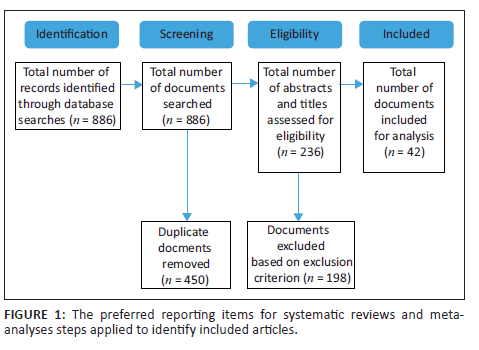
To source documents for this article, the authors queried Google Scholar and Scopus databases, which offer an extensive array of relevant peer-reviewed journal articles and other documents covering HIS adoption, implementation and use. The authors conducted multiple iterations of searches to identify the relevant publications within a time frame of 10 years (2012-2021). The time frame for the search was between July and September 2021. The authors applied the preferred reporting items for systematic reviews and meta-analyses (PRISMA)41Figure 1.
Using PRISMA approach, a combination of keywords was used to query the two scholarly databases: (1) healthcare OR HIS implementation and Africa, (2) decentralised healthcare or HIS. A supplementary search was performed using a combination of search keywords: (1) centralised and (2) decentralised HIS architecture. To delineate the search, articles cited in the retrieved articles were also considered but limited by relevance and timeline, dated from 2012 to 2021. These search results yielded 886 peer-reviewed academic journal articles, conference proceedings, book chapters and books.
Exclusion and inclusion criteria
The results generated from the two database queries were screened and filtered by thoroughly reading through the titles and abstracts. The filtering involved screening of document abstracts to identify relevant articles based on the following inclusion criteria: (1) all publications were written in English; (2) studies addressed HIS implementation in Africa; (3) studies focused on decentralisation of HISs in Africa; (4) studies that had empirical design (qualitative, quantitative or mixed methods); and (5) studies that highlighted the advantages and disadvantages of centralised and decentralised approaches of HIS implementation.
On applying the exclusion criteria, the authors discarded: (1) articles written in other languages; (2) articles that do not focus on HIS adoption, implementation and use with particular focus on Africa; and (3) books or book chapters that were not openly accessible. Subsequently, the included 42 documents were imported into Mendeley, a reference software programme designed to easily extract search results and manage reference citations. Figure 1 presents the article selection process. The final articles were consolidated and analysed to identify findings that illustrate the merits and demerits of decentralised implementation of HISs given the contextual peculiarities of the African context and the health care systems within the continent.
Ethical considerations
This article followed all ethical standards of research without direct contact with human or animal subjects.
Results and analysis
A total of 886 articles were identified in the review based on the keywords used in the search. A total of 531 articles were identified from Google Scholar, while 355 were retrieved from Scopus. After removing 450 duplicates, 236 unique titles and abstracts remained. Using the exclusion criteria, 198 articles were excluded after screening their titles and abstracts. The authors read through the remaining 236 articles, and in the end, 42 publications were included in the synthesis. Given the aim and objectives of the article and based on the summary of the studies (n = 42) included in the analysis, three interest areas were formed and categorised as follows: (1) overview of health systems (n = 18),1,2n = 10)6,14,30n = 14).22,29
In analysing the purposes for which HISs are implemented, the researchers first determined the status quo of public health care systems in Africa.4,92,4,42
Subsequently, HISs have been implemented by virtue of their ability to enhance the management and coordination of health-related data and information and increase health care workers' productivity3,2415,43
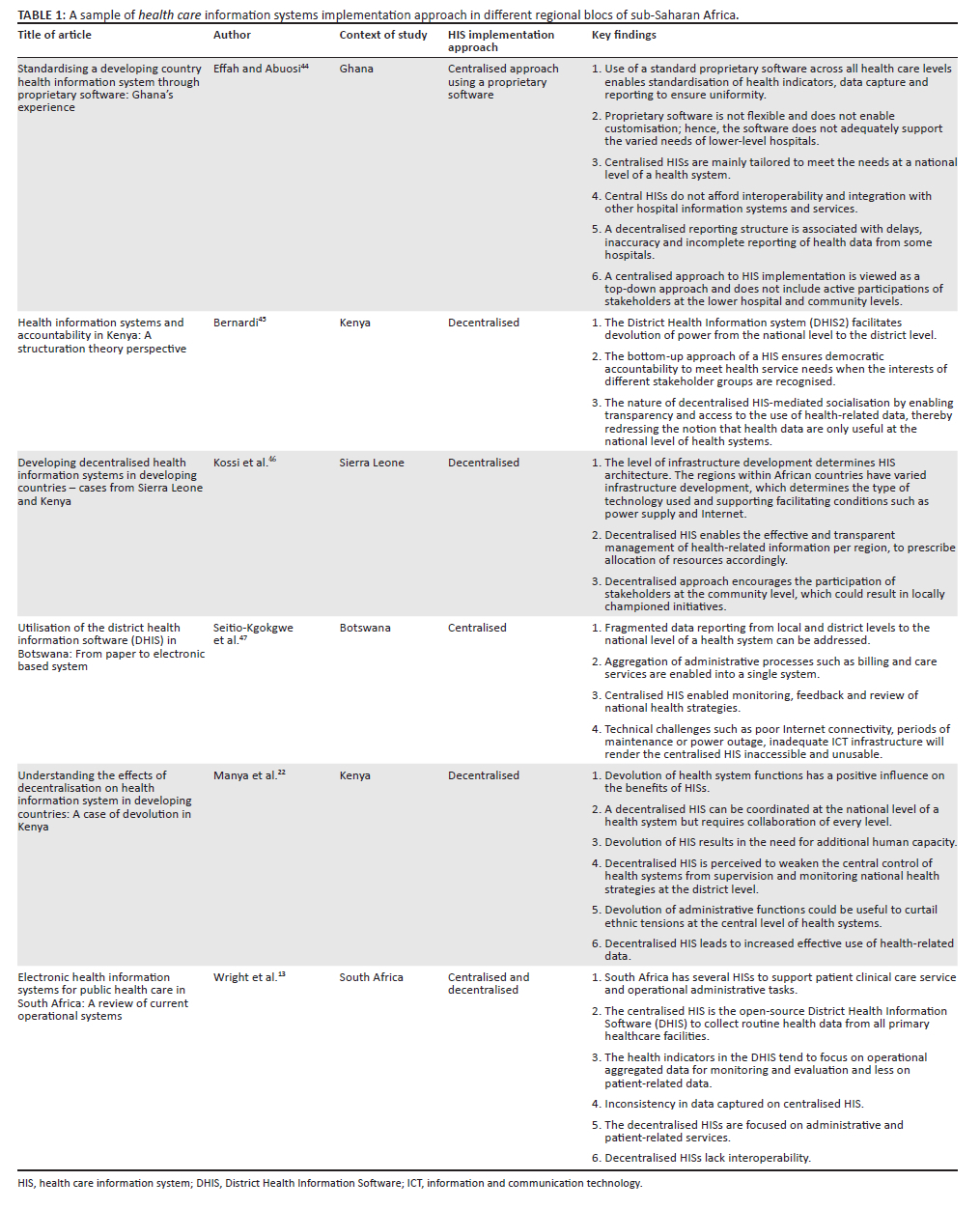
Considering the nature and scope of HISs, their implementations are considered within the context of e-health architectures embedded in most e-health strategies. The review identified 19 articles that fit the criteria of 'centralised and decentralised' and 'HISs' with a central focus on sub-Saharan Africa.22,44 The e-health architecture is essential, as it not only informs the activities during implementation but also how health-related data would be collected, processed and stored. Table 1 gives a summary of African countries such as Ghana, Kenya and South Africa that have implemented HISs adopting either a centralised or decentralised approach (or both) and the resulting outcomes.
The methodological limitation of this article is that articles that were not openly accessible could not be included. Hence, this review might not highlight the holistic picture of HIS implementation approaches. In the next section, the authors synthesise the findings extracted from the resulting articles particularly on decentralised HIS implementation in health systems in the African context.
Discussion
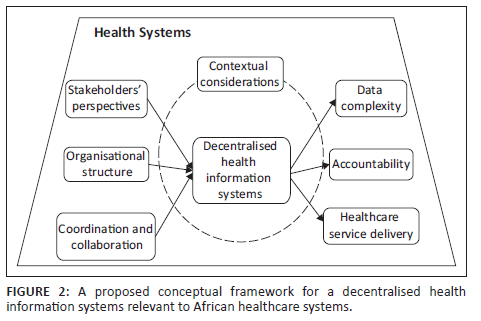
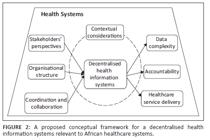
This section centres on the concepts of a decentralised HIS and their impact on public health care service delivery. These concepts are used to propose a conceptual framework that could be associated with an adequately functioning decentralised HIS in an African context. The concepts identified are contextual considerations, organisation culture, stakeholders' perspectives, accountability, accessibility, data complexity, coordination and collaboration. The outcomes of the interplay between these concepts can be used to inform the implementation of a decentralised HIS that would meet the dynamic needs and infrastructure requirements for health care systems in Africa especially at the community level.
A review of literature has revealed that a decentralised approach to the implementation of HISs in sub-Saharan Africa's health systems is more viable and would result in more robustness and scalability, interoperability and standardisation of data. All these attributes are more appropriate in the African context, as systems are customised to fit the local needs and requirements of country-specific health systems and to ensure democratic accountability for the delivery of quality and safe delivery of services.45Figure 2 illustrates that in a health system, stakeholders' perspectives, organisational structure, coordination and collaboration informs the attributes and functionality of a decentralised HIS such as data complexity and accountability to influence efficient health care service delivery.
Contextual considerations
The review of literature shows that emphasis has been put on HIS implementation failures attributed to technical factors such as software and hardware issues, as opposed to complex and dynamic contextual factors. In the African context, the outcomes of the current implementation approaches attributed to technical factors are well documented across literature. For example, outcomes such as lack of information system customisation to fit local needs and requirements is attributed to varying levels of infrastructure development, disparity in funding opportunities, over-reliance on external vendors and choice of software.44
Considering the peculiarity of challenges that are associated with health systems in Africa and their negative effects on data quality and health information flow, the use of decentralised HISs is advocated to enable uniformity in standards of capturing and storage of health data.30356
Contextual complexities such as industrial strike actions by health care practitioners that plague public health care systems in Africa further emphasise the need for decentralised HISs.224
Organisational structure
Organisational structure in health care differs from other sectors because of the scope, dynamics and complexities of clinical and administrative activity coordination. The organisational structure defines the functions carried out across a health care system to achieve its objectives, including decisions relating to the acquisition and implementation of health technologies.488,49
The implementation of HISs in the different tier structures very much depends on the scope of the implementation initiative and the purpose of systems.6,8
In addition, HIS at the community level focuses on subject and task-based systems such as electronic medical records. The misalignment between planning, budgeting and maldistribution of resources, persistent in many African public health systems, could potentially be addressed by adopting a decentralised approach to HIS implementation that is fitting for the tiered structures. Considering the purpose of HISs and organisational structures, a decentralised HIS could promote accountability, standardisation of data and accessibility of quality health information.
Stakeholders' involvement
Diversity of stakeholders within a health system adds to the complexities of HIS implementation and use.5045
It is important to understand the dynamics of different stakeholders involved in the different stages of HIS, from acceptance to infusion, by identifying their needs within health care settings. These needs should be tailored to fit not only the purpose and objectives for a decentralised HIS but also the peculiar needs of stakeholders. This would result in equitable infrastructure resource allocation and reskilling of health care practitioners.822
Accountability
Accountability is a major issue in many sub-Saharan Africa health care systems and involves the obligation of all stakeholders to accept responsibility. Democratic accountability ensures that data use and resource allocation are transparent.452246
Care coordination and collaboration
To realise the full benefits of decentralised HIS, collaboration and coordination between the health care organisational structures is essential. Coordination and collaboration are products and necessities of tiered health care systems where different specialities are involved in the care delivery process and information sharing is indispensable. The application of IoTs and cloud computing can be used to facilitate remote access, monitoring, sharing and storage of health records during care coordination and collaboration. For example, in the tiered levels of Africa's health systems, a referral system is used to transfer trauma cases between hospitals, depending on the severity and clinical care service required. The enabling technologies guarantee time-efficiency of service delivery in a decentralised HIS. Manya et al.22
Data complexity
The goal of health-related data and information is to inform decision making either at a macro or micro level. In a decentralised HIS, health data is generated, stored and maintained locally.3362223,24,35
Implications and recommendations
The review of literature reveals that many health systems in Africa adopt a mix of decentralised and centralised approaches to HIS implementation. The authors argue that while a centralised approach to HIS implementation may ensure that the health system of a country is coordinated and monitored from a national level, a decentralised HIS is more appropriate for a tiered health system. Within African countries, there is disparate infrastructural development and Internet connectivity; thus, a decentralised approach is more appropriate to avoid the resulting delays of a single point failure in a continent already characterised by many socio-economic challenges. The devolution of administrative duties associated with a decentralised HIS will guarantee the effective budgeting and management of health-related data such that resource allocation, detection and prevention of public health crises can quickly be managed. Therefore, the authors argue that a decentralised approach to HIS implementation adds more relevance and value to the African context.
Conclusion
This study contributes to the conceptualisation of decentralised HISs as an approach suitable to strengthen health systems in Africa, because of the continent's peculiar characteristics and tiered health care services. A decentralised HIS is ideal for Africa's health care sector because it enables localised management of health indicators, autonomy of administrative roles and duties and government-led decisions that involve resource allocation. A decentralised approach would ensure that the HIS serves local, regional and national health care service needs in a well-coordinated and collaborative manner. Otherwise, the health systems in African countries might not be resilient during a public health crisis such as the coronavirus disease 2019 (COVID-19) pandemic.
It is recommended that a decentralised approach be adopted as a standard to implement HISs. A decentralised HIS would provide a measure for the realisation of accountability at the different tiers in the public health care systems of sub-Saharan African countries and can be useful to manage expectations required to fund accessibility and availability of health care services from a national perspective. With regard to security measures, adopting a decentralised approach to implementing HISs would mitigate the effects of breaches to patient records and prevent the resulting legal implications. Challenges of data quality and data reporting could be addressed in HISs with a decentralised approach, as live up-to-date information can be exchanged through a bottom-up strategy that caters for the inclusion of all relevant stakeholders.
Based on reflections from this literature study, future studies in the aspects of decentralised HIS can investigate the processes for formulation and evaluation of health policies adopted or developed by the governments of African countries. In practice, the policies would serve as a blueprint for direct stakeholders, including hospital managers, industry vendors and software application developers. In this way, government can regulate technology applications and optimally leverage the benefits of a fully automated and digitised health care system to promote, prevent and manage the persistent burden of diseases in Africa.
Competing interests
The authors have declared that no competing interest exist.
Authors' contributions
O.O.O. and M.S.A. contributed equally to the conceptualisation and writing of the manuscript. The introduction section was written by O.O.O. while M.S.A wrote the background and methods section. The results section was jointly written by M.S.A. and O.O.O. The discussion section was written by O.O.O. and the conceptual framework was developed by O.O.O.
Funding information
This research received no specific grant from any funding agency in the public, commercial, or not-for-profit sectors.
Data availability
Data sharing is not applicable to this article, as no new primary data were created or analysed in this study. The study is a review of openly accessible articles in online journal databases.
Disclaimer
The views expressed in the submitted article are solely of the authors and not an official position of the affiliated institution.
References
Acknowledgements
Literature review
-
1.Durrani H. Healthcare and healthcare systems: Inspiring progress and future prospects. mHealth. 2016;2(2):3. https://doi.org/10.3978/j.issn.2306-9740.2016.01.03
» https://doi.org/10.3978/j.issn.2306-9740.2016.01.03 -
2.Katuu S. Healthcare systems: Typologies, framework models, and South Africa's health sector. Int J Health Gov. 2018;23(2):134-148. https://doi.org/10.1108/IJHG-10-2017-0054
» https://doi.org/10.1108/IJHG-10-2017-0054 -
3.Panda B, Thakur HP. Decentralization and health system performance - A focused review of dimensions, difficulties, and derivatives in India. BMC Health Serv Res. 2016;16(suppl. 6):1-14. https://doi.org/10.1186/s12913-016-1784-9
» https://doi.org/10.1186/s12913-016-1784-9 -
4.Oleribe OO, Momoh J, Uzochukwu BSC, et al. Identifying key challenges facing healthcare systems in Africa and potential solutions. Int J Gen Med. 2019;2019(12):395-403. https://doi.org/10.2147/IJGM.S223882
» https://doi.org/10.2147/IJGM.S223882 -
5.Amadu I, Ahinkorah BO, Afitiri AR, et al. Assessing sub-regional-specific strengths of healthcare systems associated with COVID-19 prevalence, deaths and recoveries in Africa. PLoS One. 2021;16(3):1-20. https://doi.org/10.1371/journal.pone.0247274
» https://doi.org/10.1371/journal.pone.0247274 -
6.Koumamba AP, Bisvigou UJ, Ngoungou EB, Diallo G. Health information systems in developing countries: Case of African countries. BMC Med Inform Decis Mak. 2021;21(1):1-11. https://doi.org/10.1186/s12911-021-01597-5
» https://doi.org/10.1186/s12911-021-01597-5 -
7.Richards DB, Jacquet GA. Analysis of referral appropriateness in the Western Cape, South Africa, and implications for resource allocation. Afr J Emerg Med. 2012;2(2):53-58. https://doi.org/10.1016/j.afjem.2012.03.006
» https://doi.org/10.1016/j.afjem.2012.03.006 -
8.Muinga N, Magare S, Monda J, et al. Digital health systems in Kenyan public hospitals: A mixed-methods survey. BMC Med Inform Decis Mak. 2020;20(1):1-14. https://doi.org/10.1186/s12911-019-1005-7
» https://doi.org/10.1186/s12911-019-1005-7 -
9.Nuche-Berenguer B, Kupfer LE. Readiness of sub-Saharan Africa healthcare systems for the new pandemic, diabetes: A systematic review. J Diabetes Res. 2018;2018:9262395. https://doi.org/10.1155/2018/9262395
» https://doi.org/10.1155/2018/9262395 -
10.Reichertz PL. Hospital information systems - Past, present, future. Int J Med Inform. 2006;75(3-4):282-299. https://doi.org/10.1016/j.ijmedinf.2005.10.001
» https://doi.org/10.1016/j.ijmedinf.2005.10.001 -
11.Cilliers L, Flowerday SV. Health information systems to improve health care: A telemedicine case study. S Afr J Inf Manag. 2013;15(1):1-5. https://doi.org/10.4102/sajim.v15i1.541
» https://doi.org/10.4102/sajim.v15i1.541 -
12.Katurura MC, Cilliers L. Electronic health record system in the public health care sector of South Africa: A systematic literature review. Afr J Prim Health Care Fam Med. 2018;10(1):1-8. https://doi.org/10.4102/phcfm.v10i1.1746
» https://doi.org/10.4102/phcfm.v10i1.1746 -
13.Wright G, O'Mahony D, Cilliers L. Electronic health information systems for public health care in South Africa: A review of current operational systems. J Health Inform Afr. 2017;4(1):51-57. https://doi.org/10.12856/JHIA-2017-v4-i1-164
» https://doi.org/10.12856/JHIA-2017-v4-i1-164 - 14.Ilorah AI, Sello N, Mokwena SN, Ditsa GEM. Issues and challenges of implementing mobile e-healthcare systems in South Africa. Afr J Biomed Res. 2017;20(3):249-255.
-
15.Achieng M, Ruhode E. A critical analysis of the implementation of health information systems for public healthcare service delivery in resource-constrained environments: A South African study. In: Nielsen P, Kimaro HC, editors. Information and communication technologies for development strengthening southern-driven cooperation as a catalyst for ICT4D 2019. IFIP advances in information and communication technology, Cham: Springer, 2019;551:568-578. https://doi.org/10.1007/978-3-030-18400-1_47
» https://doi.org/10.1007/978-3-030-18400-1_47 -
16.Choi DD, Laughlin B, Schultz A. Mobile communication technology and national identity in sub-Saharan Africa [homepage on the intetrnet]. c2021 [updated 2021 Jun 27; cited 2022 Jan 19]. Available from: https://www.dhdannychoi.com/files/CLS_TechnologyID.pdf
» https://www.dhdannychoi.com/files/CLS_TechnologyID.pdf -
17.Madon S, Krishna S, Michael E. Health information systems, decentralisation and democratic accountability. Public Adm Dev. 2010;30(4):247-260. https://doi.org/10.1002/pad.571
» https://doi.org/10.1002/pad.571 -
18.Ogundaini O, De La Harpe R. The interplay between technology performativity and health care professionals in hospital settings: Service design approach. JMIR Form Res. 2022;6(1):1-2. https://doi.org/10.2196/23236
» https://doi.org/10.2196/23236 -
19.Hugoson MÅ. Centralized versus decentralized information systems: A historical flashback. IFIP Adv Inf Commun Technol. 2008;303:106-115. https://doi.org/10.1007/978-3-642-03757-3_11
» https://doi.org/10.1007/978-3-642-03757-3_11 - 20.Quantin C, Coatrieux G, Fassa M, et al. Centralised versus decentralised management of patients' medical records. Stud Health Technol Inform. 2009;150:700-704.
-
21.Mbondji PE, Kebede D, Soumbey-Alley EW, Zielinski C, Kouvividila W, Lusamba-Dikassa P-S. Health information systems in Africa: Descriptive analysis of data sources, information products and health statistics. J R Soc Med. 2014;107(1 suppl.):34-45. https://doi.org/10.1177/0141076814531750
» https://doi.org/10.1177/0141076814531750 - 22.Manya A, Sahay S, Braa J, Shisia B. Understanding the effects of decentralization on health information systems in developing countries: A case of devolution in Kenya. 2018 IST-Africa Week Conference IST-Africa; 2018 May 09; Gaborone, Botswana; IEEE. p. 1-11.
-
23.Dhillion V. Designing decentralized ledger technology for electronic health records. Telehealth Med Today. 2016;1(2):1-13. https://doi.org/10.30953/tmt.v1.77
» https://doi.org/10.30953/tmt.v1.77 - 24.Reen GS, Mohandas M, Venkatesan S. Decentralised patient centric e-health record management system using blockchain and IPFS. 2019 IEEE Conference on Information and Communication Technology; 2019 Dec 06; Allahbad, India: IEEE. p. 1-7.
- 25.Suhasini M, Singh D. Blockchain based framework for secure data management in healthcare information systems. Ann Romanian Soc Cell Biol. 2021;25(6):16933-16946.
- 26.De La Cruz E, Lopez DM, Uribe G, Gonzalez C, Blobel B. A reference architecture for integrated EHR in Colombia. Studies in Health Technology Informatics. 2011;169(4):305-309.
-
27.Foster R. Assessing the development process of the eHealth strategy for South Africa against the recommendations of the WHO/ITU National eHealth Strategy Toolkit. J Int Soc Telemed eHealth [serial online]. 2013 [2013 Aug 04];1(2):62-72. Available from: https://www.semanticscholar.org/paper/Assessing-the-development-process-of-the-eHealth-of-Foster/7c0bc54db812560710e74e735b7c759779421293
» https://www.semanticscholar.org/paper/Assessing-the-development-process-of-the-eHealth-of-Foster/7c0bc54db812560710e74e735b7c759779421293 -
28.Darcy N, Elias M, Swai A, Danford H, Rulagirwa H. eHealth strategy development: A case study in Tanzania. J Health Inform Afr. 2014;2(2):36-43. https://doi.org/10.12856/JHIA-2014-v2-i2-107
» https://doi.org/10.12856/JHIA-2014-v2-i2-107 -
29.Higman S, Dwivedi V, Nsaghurwe A, et al. Designing interoperable health information systems using enterprise architecture approach in resource-limited countries: A literature review. Int J Health Plan Manage. 2019;34(1):e85-e99. https://doi.org/10.1002/hpm.2634
» https://doi.org/10.1002/hpm.2634 - 30.Mudaly T, Moodley D, Pillay A, Seebregts CJ. Architectural frameworks for developing national health information systems in low and middle income countries. Proceedings of the First International Conference on Enterprise Systems: ES 2013; 2013 Nov 01-09; Cape Town, South Africa: IEEE.
-
31.AlJarullah A, El-Masri S. A novel system architecture for the national integration of electronic health records: A semi-centralized approach. J Med Syst. 2013;37(4):9953. https://doi.org/10.1007/s10916-013-9953-4
» https://doi.org/10.1007/s10916-013-9953-4 -
32.Fragidis LL, Chatzoglou PD, Aggelidis VP. Integrated nationwide electronic health records system: Semi-distributed architecture approach. Technol Health Care. 2016;24(6):827-842. https://doi.org/10.3233/THC-161231
» https://doi.org/10.3233/THC-161231 - 33.Zaied ANH, Elmogy M, Elkader SA. A proposed cloud-based framework for integrating electronic health records. INFOS '16: Proceedings of the 10th International Conference on Informatics and Systems; 2019 May 09; Giza, Egypt: Association for Computing Machinery (ACM). p. 139-145.
- 34.Patil HK, Seshadri R. Big data security and privacy issues in healthcare. 2014 IEEE International Congress on big data; 2014 Jun 27; Anchorage, AK, USA: IEEE. p. 762-765.
-
35.Dwivedi AD, Srivastava G, Dhar S, Singh R. A decentralized privacy-preserving healthcare blockchain for IoT. Sensors. 2019;19(2):1-17. https://doi.org/10.3390/s19020326
» https://doi.org/10.3390/s19020326 - 36.Mgozi T, Weeks R. The impact of cloud computing on the transformation of healthcare system in South Africa. Proceedings of 2015 ITU Kaleidoscope: Trust in the Information Society (K-2015); 2015 Dec 02; Barcelona, Spain: IEEE; 2016.
-
37.Boakye A, Olumide OB. The role of internet of things to support health services in rural communities. A case study of Ghana and Sierra Leone. Transnatl Corp Rev. 2021;13(1):43-50. https://doi.org/10.1080/19186444.2020.1849937
» https://doi.org/10.1080/19186444.2020.1849937 - 38.Mukati N, Namdev N, Dilip R, Hemalatha N, Dhiman V, Sahu B. Healthcare assistance to COVID-19 patient using internet of things (IoT) enabled technologies. Materials Today: Proceedings. In press 2021.
-
39.Boell SK, Cecez-Kecmanovic D. A hermeneutic approach for conducting literature reviews and literature searches. Commun Assoc Inform Syst. 2014;34(1):257-286. https://doi.org/10.17705/1CAIS.03412
» https://doi.org/10.17705/1CAIS.03412 -
40.Okoli C, Schabram K. A guide to conducting a systematic literature review of information systems research [homepage on the Internet]. c2010 [update n.d.; cited 2021 Oct]. Available from: https://asset-pdf.scinapse.io/prod/1539987097/1539987097.pdf
» https://asset-pdf.scinapse.io/prod/1539987097/1539987097.pdf -
41.Liberati A, Altman DG, Tetzlaff J, et al. The PRISMA statement for reporting systematic reviews and meta-analyses of studies that evaluate health care interventions: explanation and Elaboration. J Clin Epidemiol. 2009;62(10): e1-e34. https://doi.org/10.1136/bmj.b2700
» https://doi.org/10.1136/bmj.b2700 -
42.Gebremeskel AT, Otu A, Abimbola S, Yaya S. Building resilient health systems in Africa beyond the COVID-19 pandemic response. BMJ Glob Health. 2021;6(6):2-6. https://doi.org/10.1136/bmjgh-2021-006108
» https://doi.org/10.1136/bmjgh-2021-006108 -
43.Tsegaye T, Flowerday S. A system architecture for ensuring interoperability in a South African national electronic health record system. S Afr Comput J. 2021;33(1):79-110. https://doi.org/10.18489/sacj.v33i1.838
» https://doi.org/10.18489/sacj.v33i1.838 - 44.Effah J, Abuosi A. Standardizing a developing country health information system through proprietary software: Ghana's experience. J Health Inform Dev Ctries. 2013;7(2):113-127.
-
45.Bernardi R. Health information systems and accountability in Kenya: A structuration theory perspective. J Assoc Inform Syst. 2017;18(12):931-957. https://doi.org/10.17705/1jais.00475
» https://doi.org/10.17705/1jais.00475 -
46.Kossi EK, Sæbø JI, Braa J, Jalloh MM, Manya A. Developing decentralised health information systems in developing countries - Cases from Sierra Leone and Kenya. J Community Inform. 2013;9(2); Special Issue: Community Informatics for Improving Health. https://doi.org/10.15353/joci.v9i2.3164
» https://doi.org/10.15353/joci.v9i2.3164 - 47.Seitio-Kgokgwe O, Mashalla Y, Seloilwe E, Chida N. Utilization of the District Health Information Software (DHIS) in Botswana: From paper to electronic based system. 2016 IST - Africa Week Conference; 2016 May 11; Durban, South Africa: IEEE. p. 1-10.
-
48.Hwabamungu B, Brown I, Williams Q. Stakeholder influence in public sector information systems strategy implementation - The case of public hospitals in South Africa. Int J Med Inform. 2018;109:39-48. https://doi.org/10.1016/j.ijmedinf.2017.11.002
» https://doi.org/10.1016/j.ijmedinf.2017.11.002 - 49.Kobusinge G, Pessi K, Koutskouri D, Mugwanya R. An implementation process of interoperability: A case-study of Health Information Systems (HIS). Proceedings of the 27th International Conference on Information Systems Development: Designing Digitalization, 2018 Aug 22-24; Lund, Sweden: ISD; 2018.
- 50.Adebesin F, Kotze P, Ritz D, Foster R, Van Greunen D. Method for Selecting E-Health Standards to Support. IST-Africa Conference Proceedings of the Interoperability of Healthcare Information Systems; 2014 May 06; Mauritius: IEEE.

Accepted: 09 June 2022
Published: 30 Aug. 2022