Metallurgical bottlenecks in artisanal gold cyanidation: The impact of mercury amalgamation on percolation vat leaching
Abstract
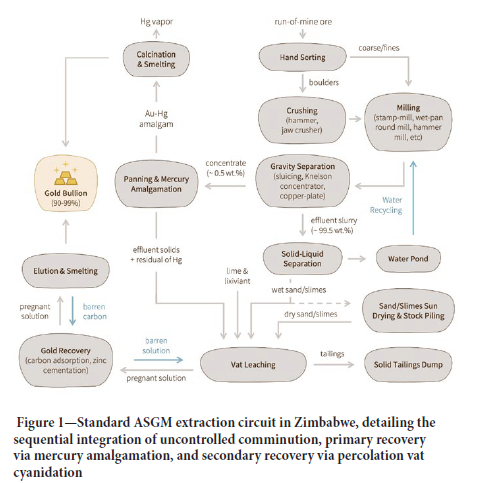
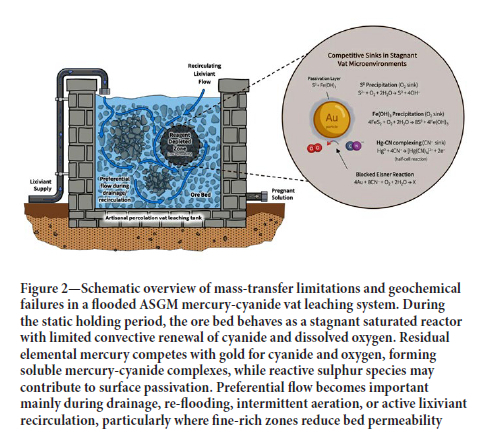
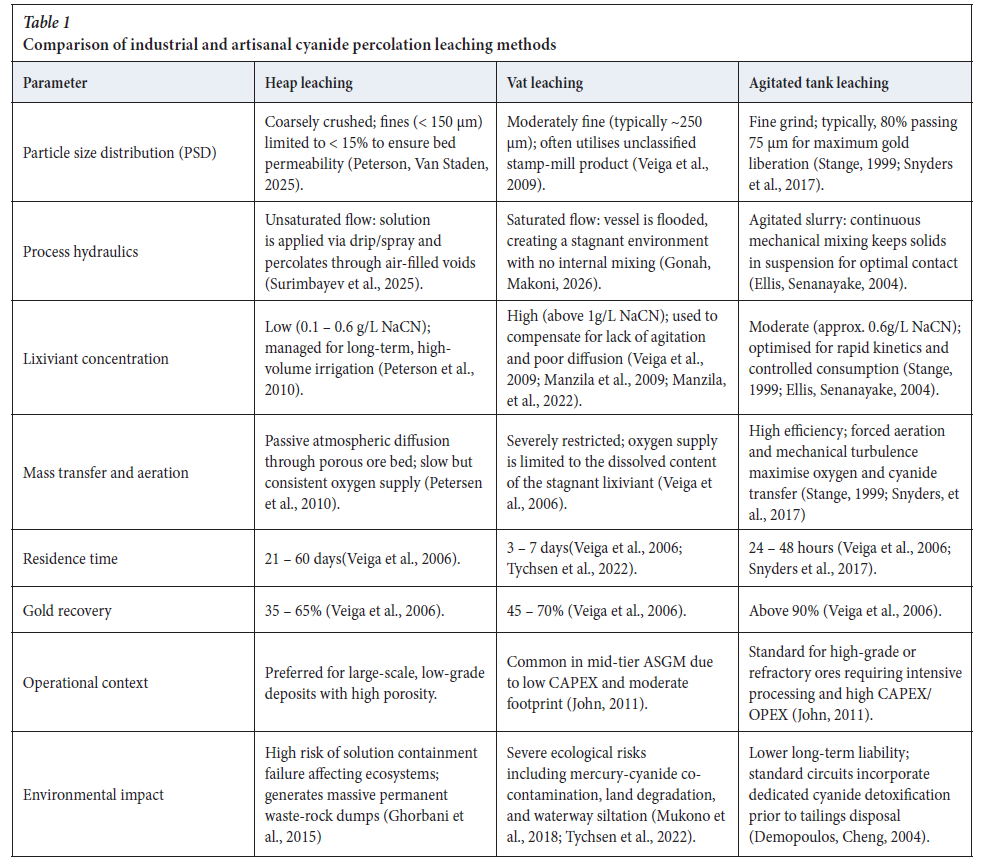
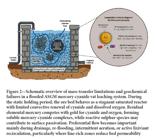
Percolation vat leaching offers mid-tier artisanal and small-scale gold mining a practical compromise between heap and agitated tank systems. However, the common practice of sequentially using mercury amalgamation and cyanidation causes severe metallurgical and environmental failures. This review demonstrates that static artisanal and small-scale gold mining vats suffer critical oxygen starvation, triggering cascading geochemical hazards. Residual elemental mercury (Hg0) acts as an aggressive reagent sink, rapidly exhausting localized cyanide to generate highly mobile, toxic mercury-cyanide complexes. Concurrently, oxygen depletion retards sulphide ore oxidation, precipitating elemental sulphur (S0) and polysulfides that passivate the native gold surface. To mitigate these bottlenecks, this paper proposes low-complexity interventions: solid oxygen-release compounds (CaO2), hypochlorite pre-oxidation, and trace lead nitrate to sequester sulphur. Ultimately, equipping fabricators and policymakers with this empirical data is crucial; formalising the sector requires the absolute decoupling of amalgamation from cyanidation and a transition toward modular, mercury-free vat systems.
Artisanal and small-scale gold mining; percolation vat leaching; cyanidation; amalgamation; geochemical passivation; hydrometallurgy
 Thumbnail
 Thumbnail