Metallurgical bottlenecks in artisanal gold cyanidation: The impact of mercury amalgamation on percolation vat leaching
Abstract
Percolation vat leaching offers mid-tier artisanal and small-scale gold mining a practical compromise between heap and agitated tank systems. However, the common practice of sequentially using mercury amalgamation and cyanidation causes severe metallurgical and environmental failures. This review demonstrates that static artisanal and small-scale gold mining vats suffer critical oxygen starvation, triggering cascading geochemical hazards. Residual elemental mercury (Hg0) acts as an aggressive reagent sink, rapidly exhausting localized cyanide to generate highly mobile, toxic mercury-cyanide complexes. Concurrently, oxygen depletion retards sulphide ore oxidation, precipitating elemental sulphur (S0) and polysulfides that passivate the native gold surface. To mitigate these bottlenecks, this paper proposes low-complexity interventions: solid oxygen-release compounds (CaO2), hypochlorite pre-oxidation, and trace lead nitrate to sequester sulphur. Ultimately, equipping fabricators and policymakers with this empirical data is crucial; formalising the sector requires the absolute decoupling of amalgamation from cyanidation and a transition toward modular, mercury-free vat systems.
Artisanal and small-scale gold mining; percolation vat leaching; cyanidation; amalgamation; geochemical passivation; hydrometallurgy
Introduction
Gold extraction remains a cornerstone of the global economy, particularly in mineral-rich developing regions across Southern Africa. Traditionally, the academic and industrial focus has been directed towards large-scale, formal mining operations that utilise highly optimised, continuous processing circuits involving gravity separation, flotation, and agitated tank cyanidation. However, a massive proportion of global gold output is currently driven by the artisanal and small-scale mining (ASGM) sector (Perks, et al., 2025). Because this sector operates largely within the informal economy, it relies on fundamentally different, low-cost extraction methods (Lay, Tafese, 2024). The choice of downstream processing technology is therefore not just a matter of ore mineralogy, but also a direct reflection of an operations scale, capital, and regulatory oversight.
Within this context, gold cyanidation via percolation vat leaching occupies a critical middle ground. Unlike heap leaching, which commonly treats run-of-mine or coarsely crushed ore over long irrigation cycles, percolation vat leaching generally processes finer crushed or milled material in a contained batch vessel. This finer feed improves gold liberation and solid-liquid contact, allowing potentially higher recoveries and shorter leach times than coarse-ore heap leaching, while avoiding the higher capital expenditure and energy demands of agitated tanks. Consequently, vat leaching has become a dominant chemical extraction method for mid-tier and small-scale operators. While it is a metallurgically viable technique when strictly controlled, its informal and unregulated application present severe operational and environmental challenges. In countries such as Zimbabwe, vat leaching is frequently applied to tailings that have already been processed with mercury (PACT, 2015; Tychsen, 2022).
Formalising the ASGM sector and eliminating mercury use requires both high-level policy and on-the-ground engineering solutions. The United Nations Environment Programme (UNEP) provides the critical international guidelines for reducing mercury reliance (UNEP, 2021). To practically implement these environmental goals, organisations such as PACT strongly advocate for the local manufacturing of safe, alternative extraction equipment (PACT, 2015). However, stimulating local equipment manufacture is practically impossible without a deep, fundamental understanding of the actual processes involved. Local engineers and workshops find it difficult to safely design, scale, or optimise percolation vats without a thorough understanding of the underlying fluid mechanics, mass transfer limitations, and geochemical reactions that dictate the extraction.
While existing literature thoroughly covers the optimised routes of formal industrial gold production, there is a distinct lack of critical analysis regarding the mechanistic realities of rudimentary technologies like percolation vat leaching as they actually operate in the field. Therefore, this paper provides an in-depth technical evaluation of the ASGM vat leaching flowsheet, specifically focusing on the widespread sequential use of mercury amalgamation and cyanidation. By systematically analysing the restrictive hydrodynamics of static vats and the cascading geochemical hazards introduced by residual amalgamation tailings, most notably aggressive reagent consumption, sulphur passivation, and the formation of highly toxic, highly mobile mercury-cyanide complexes (Seney, et al., 2020), this review exposes the critical metallurgical failure points of current artisanal operations. Synthesising these technical challenges is essential in equipping local equipment fabricators, metallurgical engineers, and policymakers with the empirical foundation required to design targeted process interventions, rehabilitate legacy mine sites, and successfully transition the mid-tier ASGM sector toward safer, formalised, and mercury-free extraction practices.
Gold processing in the ASGM sector: a Zimbabwean context
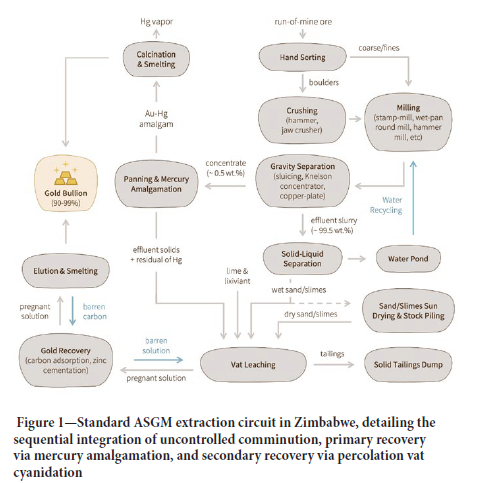
The metallurgical flowsheet utilised in the artisanal and small-scale gold mining (ASGM) sector diverges significantly from formal industrial operations. Driven by capital constraints and the need for immediate economic returns, informal miners follow a hybridised extraction process that sequentially uses mercury amalgamation and percolation vat leaching. This is shown in Figure 1, which illustrates a typical gold process flow-diagram utilised by artisanal miners in Zimbabwe. The standard ASGM process is distinctly divided into primary recovery via gravity concentration and mercury amalgamation, followed by secondary recovery via percolation vat cyanidation.
The process initiates with the extraction of run-of-mine (ROM) ore, which undergoes preliminary manual classification through hand sorting to remove oversized boulders. The remaining ore is then subjected to primary crushing utilising basic hammer or jaw crushers to produce a coarse-fines mixture. This crushed material is fed into secondary comminution circuits. In Zimbabwe, this stage is heavily dominated by the use of locally manufactured stamp-mills, although wet-pans, round mills, or hammer mills are also often utilised. Unlike industrial closed-circuit grinding, these rudimentary milling techniques lack precise classification, producing a slurry with a highly uncontrolled particle size distribution that often leaves fine gold partially encapsulated within the host rock.
Following milling, the ore slurry is routed to primary gravity separation. Zimbabwean miners typically utilise sluicing techniques, copper-plates, or occasionally centrifugal devices such as Knelson concentrators. This step physically splits the process stream. The vast majority of the processed material, approximately 99.5 wt.%, is discharged as an effluent slurry. The remaining heavy concentrate, which contains the liberated free-milling gold, is isolated for immediate primary recovery. This high-grade concentrate is subjected to panning and direct amalgamation with liquid elemental mercury (an older and highly environmentally damaging method). The resulting gold-mercury (Au-Hg) amalgam is manually recovered and thermally decomposed through calcination and smelting. This vaporises the mercury (releasing highly toxic Hg-vapor into the atmosphere) and yields a primary gold bullion with a purity of 90% -99%. This localised amalgamation step is, however, inefficient as panning effluents usually contain unrecovered fine gold, reactive solids, and significant droplets of residual macroscopic mercury.
To maximise total extraction, miners usually employ a secondary vat cyanidation step to process the amalgamation waste. The residual panning effluents, which are heavily contaminated with elemental mercury, are recombined with the 99.5 wt.% effluent slurry from the initial gravity separation. This combined stream undergoes basic solid-liquid separation. The recovered water is recycled back to the milling circuit via a water pond, while the resulting wet sand and slimes are diverted for preparation. Before cyanidation, these wet slimes are spread for sun drying and stockpiling, a common sight at mid-tier Zimbabwean processing centres. Once converted to dry sand/slimes, the material is manually loaded into percolation vats. An alkaline lixiviant, balanced with lime for protective alkalinity, is applied to the vat to dissolve the remaining gold. The process generates a pregnant leach solution (PLS) that is transferred to a gold recovery circuit utilising either carbon adsorption or zinc cementation, followed by final elution and smelting to produce a secondary gold bullion.
However, this specific processing introduces a significant metallurgical limitation. By recombining the panning effluents with the bulk tailings stream, residual elemental mercury is directly incorporated into the wet/dry slimes. Introducing this mercury-laden material into the static, unagitated environment of a percolation vat establishes the competing geochemical reactions and mass-transfer constraints that ultimately inhibit overall gold recovery within the ASGM sector.
Cyanidation and percolation leaching methods
Once gold is liberated from run-of-mine ore through communition, cyanidation is usually employed to dissolve it into a pregnant leach solution (PLS). This process has remained the global industry standard for both ASGM and industrial gold mining for over a century due to its efficiency and relative selectivity (Marsden, House, 2006; Adams, 2016). Although some artisanal miners still rely solely on direct mercury amalgamation, cyanidation has become increasingly dominant within the informal sector to extract residual values. Cyanide solutions are exceptionally effective leaching agents due to their ability to form stable water-soluble gold-cyanide complexes, specifically [Au(CN)2]_ and [Au(CN)4]_ (Marsden, House, 2006). During cyanidation, a dilute alkaline sodium cyanide (NaCN) solution is used to dissolve the solid gold into the PLS, under high pH conditions and in presence of dissolved oxygen. The overall stoichiometry of this reaction is universally described by Elsner's equation (Fleming, 1992).

Subsequent thermodynamic studies have demonstrated that this cyanidation mechanism actually proceeds through two primary stages. Initially, oxygen is reduced at the cathodic gold surface, leading to formation of hydrogen peroxide (H2O2) as an intermediate (Equation 2). This is followed by reduction of the hydrogen peroxide itself, which acts as a facilitator to drive further gold dissolution as described by Equation 3. (Senanayake, 2005; Senanayake, 2008).

In industrial agitated tank cyanidation, continuous mechanical aeration ensures a steady supply of oxygen (O2) to sustain both stages of this reaction. However, the reality is vastly different in ASGM. Because introducing active air aeration or chemical oxidants during on-site cyanidation is economically and logistically impractical for artisanal miners in remote locations, ASM vat leaching operates under severe O2-limited conditions as it only depends on atmospheric O2 dissolved into the ore bed. In a flooded, static percolation vat, the initial dissolved O2 within the lixiviant solution is rapidly consumed by the first stage of the reaction mechanism (Equation 2), as well as by competing reagent sinks like residual mercury during cyanidation of amalgamation tailings. Because there is no mechanical agitation or chemical supplies to replenish O2 concentration in the vat, it (i.e., O2 concentration) quickly falls below stoichiometric requirements, thus limiting Elsner's reaction. Consequently, the generation of the critical H2O2 intermediate halts, and the entire dissolution mechanism is severely hindered, leaving significant unrecovered gold in the tailings.
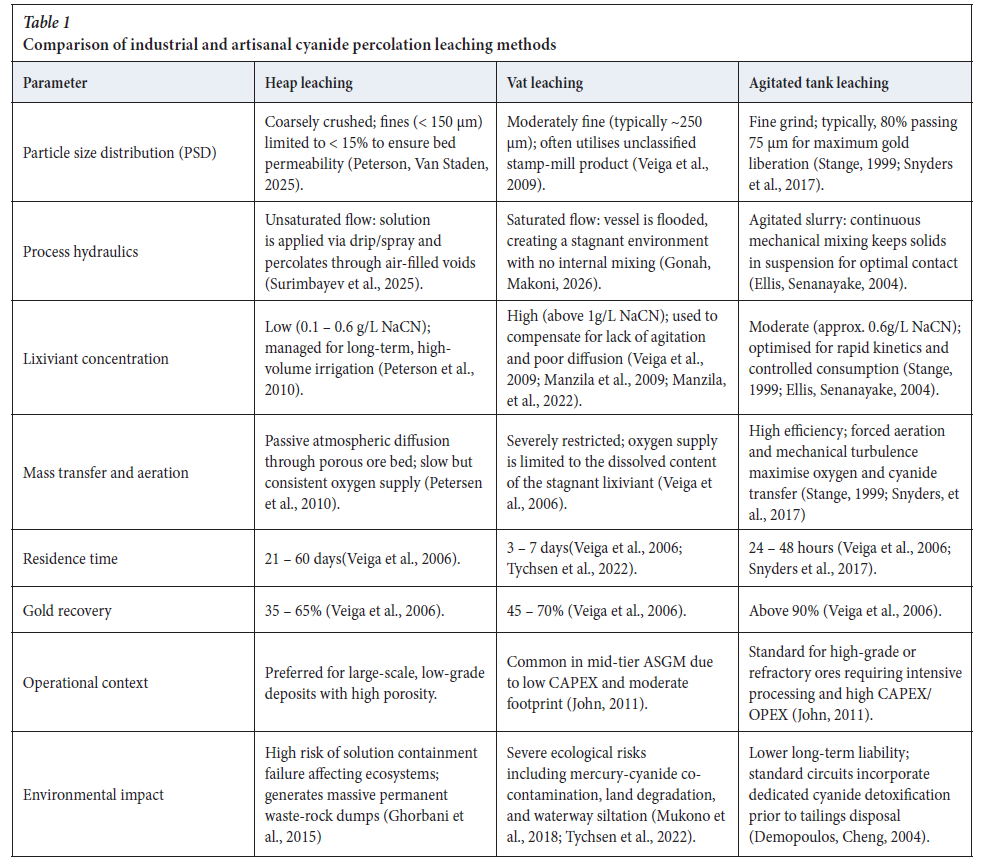
Ultimately, the efficiency of this two-stage gold dissolution mechanism depends on how much O2 can be delivered to the gold metal interface. While agitated tanks actively pump air to sustain O2 demands, static percolation in vats and heaps rely entirely on the natural permeability (hydraulic conductivity) of the ore bed, creating severe limitations in lixiviant and oxygen distribution. Because the physical design of the leaching system directly dictates these chemical kinetics, the choice of leaching equipment is critical. Depending on the ore grade, particle size distribution, and available capital, cyanidation is formally conducted using one of three primary methods: heap leaching, percolation vat leaching, or agitated tank leaching. Table 1 provides a critical technical comparison of these methods, highlighting how percolation vat leaching occupies a middle ground between the low-capital requirements of heap leaching and high-recovery rates of agitated tank leaching, justifying its wide-spread adoption in the ASGM sector (Tychsen et al., 2022).
The operational differences between heap, vat, and agitated tank leaching are primarily governed by feed particle size distribution (PSD), system hydrodynamics, and mass transfer efficiency. Specifically, heap leaching requires coarsely crushed ore to maintain bed permeability, whereas vat leaching utilises a moderately finer feed, and agitated tank systems require a fine grind to ensure the complete mechanical suspension of solids (Stange, 1999; Veiga et al., 2009; Petersen, Van Staden, 2025). This progressive reduction in particle size directly enhances both gold liberation and the available solid-liquid interfacial area. Consequently, this drives a significant reduction in necessary residence times, decreasing from 21 - 60 days in heap leaching to 24 - 48 hours in agitated tanks.
Both heap and vat leaching rely on the percolation of lixiviant through a packed, porous ore bed. The static hydrodynamic conditions in these systems inherently generates localised oxygen and pH gradients. However, these gradients diverge based on fluid saturation. While the flooded environment of vat leaching partially mitigates extreme pH gradients compared to heaps, it severely restricts the incorporation of atmospheric oxygen in the bed (Gonah, Makoni, 2026). In contrast, agitated tank systems eliminate these spatial gradients entirely through continuous mechanical mixing, which ensures a homogeneous suspension of solids and maximises mass transfer (Stange, 1999).
Despite their lower extraction efficiencies, heap and vat leaching remain strategically viable for low-grade deposits, smaller ore bodies, or regions characterised by high geopolitical risk, owing to their substantially lower capital (CAPEX) and operating (OPEX) expenditures. They frequently function as initial, low-barrier processing pathways to generate early cash flow prior to transitioning toward more capital-intensive agitated leaching circuits (John, 2011).
However, these economic advantages are offset by distinct environmental risks that depend strongly on the level of containment, reagent control, and effluent treatment incorporated into the overall flowsheet. Heap leaching presents risks associated with massive, open-air solution inventories that are vulnerable to containment failure and adjacent hydrological contamination, particularly where liner systems, solution collection ponds, and closure controls are inadequate. (Ghorbani et al., 2015). Furthermore, the widespread adoption of vat leaching within the informal ASGM sector frequently correlates with unregulated reagent handling, the co-contamination of circuits with residual mercury, and severe land degradation, including the siltation of local waterways (Tychsen et al., 2022). Conversely, the lower environmental liability commonly associated with industrial agitated tank circuits does not arise from cyanidation chemistry itself, but from the broader engineered plant context in which such circuits normally operate. Formal tank-leaching operations typically include containment systems, reagent monitoring, cyanide destruction, effluent treatment, and regulated tailings management. In principle, similar control units could be added to heap or vat leaching operations; in practice, they are rarely implemented in informal ASGM settings because of cost, weak regulation, and limited technical capacity (Demopoulos, Cheng, 2004).
Hydrodynamics and mass transfer limitations in vat systems
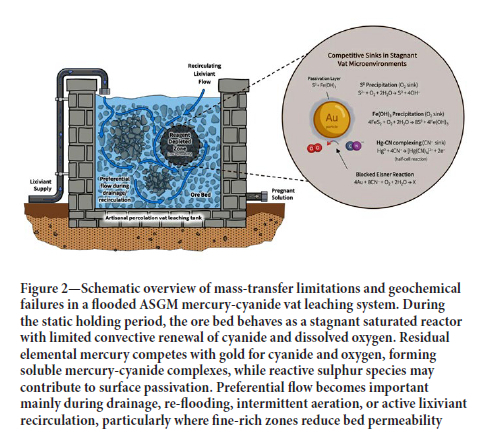
While industrial precious metal heap leaching utilizes controlled agglomeration to bind fine ore particles (slimes) into stable and permeable pellets, ASM operations frequently bypass this pre-treatment, leading to severe bed compaction and stratification (Bouffard, 2005; Tychsen et al., 2022). In industrial heap leaching, agglomeration with cement is fundamental to maintain structural integrity and prevent bed blinding (Bouffard, 2005). However, in the context of ASM percolation vats, such specialised equipment and binders are almost entirely absent. These vats, constructed from brick-and-mortar or high-density polyethylene (HDPE)-lined earthen ponds, behave primarily as static saturated batch reactors (Marsden, House, 2006). During the flooded holding period, the dominant limitation is not continuous bulk flow through the ore bed, but the absence of convective renewal of cyanide and dissolved oxygen. As gold, residual mercury, and reactive sulphide minerals consume these reagents locally, concentration gradients develop within the stagnant pore solution. Ore-bed permeability becomes critical mainly during vat filling, drainage, intermittent aeration, or when operators attempt to actively recirculate lixiviant through the bed to overcome these diffusion and reagent-renewal limitations.
In the absence of these industrial preparations, poor particle-size control and high slime contents reduce the hydraulic performance of the ASGM ore bed. Preferential flow and solution channelling are well established in percolating ore beds, particularly in heap leaching and other systems where solution is actively moving through a packed bed (Ghorbani et al., 2015). In a fully flooded static vat, however, the holding period is better described as a stagnant saturated system rather than a continuously flowing percolation system. Under these conditions, the dominant limitation is poor convective renewal, which allows cyanide and dissolved-oxygen gradients to develop as reagents and are consumed locally by gold, residual mercury, and reactive sulphide minerals. Channelling becomes important mainly during drainage, re-flooding, intermittent aeration, or active lixiviant recirculation, especially where high slime contents reduce bed permeability and leave fine-rich zones poorly contacted. Under drainage or recirculating conditions, preferential flow can also be aggravated by fine particles migrating downward and reducing permeability around the drainage media at the base of the vat.
To overcome these hurdles without industrial agglomerators, artisanal miners often resort to manually removing slimes before charging the vats or blending the slimes with river sand to increase porosity. While these practices improve the percolation rate, they significantly increase manual labour costs and lead to inadvertent loss of fine-grained gold typically associated with the discarded slimes (Veiga et al., 2014). Furthermore, sand blending dilutes the head grade of the material, requiring higher volumes of lixiviant for lower gold returns.
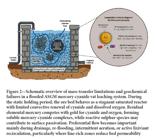
Beyond ore bed permeability, the saturated nature of the flooded vat environment imposes severe oxygen shortage, which is often the primary bottleneck in gold extraction kinetics. According to the stoichiometry of Elsner's equation (Equation 1), the dissolution of gold is an aerobic process requiring the simultaneous presence of cyanide (CN-) and dissolved O2; however, the solubility of O2 in aqueous solutions is remarkably low, typically peaking at approximately 8 mg/L - 9 mg/L under ambient conditions (Bouffard, 2005; Marsden, House, 2006). In industrial agitated tanks, this limitation is mitigated through continuous mechanical aeration or introduction of pure oxygen to maintain concentrations above required levels; however, in a static ASM vat, the dissolved O2 within stagnant waterbed is rapidly depleted upon onset of the cyanidation reaction. Because the vat is operated as a fully saturated (flooded) bed as shown in Figure 2, there is no natural atmospheric diffusion of O2 into the lower depths of the ore bed, creating an anaerobic environment where gold dissolution ceases regardless of cyanide concentrations (Kondos et al., 1996; Adams, 2016).
Consequently, the leaching process in these vats becomes strictly diffusion-controlled, where the rate of extraction is limited by the speed at which fresh, oxygenated solution can penetrate the compacted ore (Ghorbani et al., 2015). To mitigate this, artisanal miners often use extended leach times before draining the vats in order to improve recoveries. These leach cycles often involve manually (i.e., with shovels and wheelbarrows) draining the vats completely to draw atmospheric air into the dead zones of the ore bed, allowing for surface oxidation of gold particles and replenishment of oxygen levels before reintroducing the cyanide solution. While this "intermittent aeration" can theoretically improve leaching kinetics, the lack of standardised equipment and timing in unregulated ASM sites means cycles are often too short or infrequent to overcome the mass transfer resistance (Tychsen et al., 2022). [R2.1]A more controlled approach, suggested by Manzila, et al. (2022), is bottom-to-top lixiviant recirculation, where solution is drained from the base of the vat and reintroduced at the top. If the returning stream is splashed, sprayed, or aspirated with air, recirculation can improve oxygen transfer compared with a purely static flooded system. However, this approach remains dependent on adequate bed permeability, as high slime contents may still promote preferential flow and leave fine-rich zones poorly contacted. As a result, gold particles remain in an O2-deprived state for much of the leaching duration, which explains the high amounts of unrecovered gold frequently reported in ASGM tailings (UNEP, 2021).
Geochemical hazards of the mercury-cyanide treatment sequence
The most profound technical failure and environmental risk associated with ASGM processing is the sequential use of mercury amalgamation and cyanidation. To secure immediate return, miners initially process crushed ore through gravity concentration followed by direct amalgamation with elemental mercury (Hg°). This method leaves significant fine gold encapsulated within solid tailings, alongside residual macroscopic mercury droplets lost through poor handlings (Spiegel, Veiga, 2010). When these contaminated tailings are loaded into a cyanidation vat, the introduction of the alkaline cyanide lixiviant triggers a competitive dissolution reaction involving both gold and residual elemental mercury. Under alkaline cyanidation conditions, elemental mercury can be oxidised and complexed by cyanide according to a reaction analogous to gold cyanidation:

This reaction (Equation 4) shows that residual mercury is not merely a contaminant, but a direct competitor for the same free cyanide and dissolved oxygen required for gold dissolution. In the stagnant pore solution of the flooded vat, residual mercury and reactive sulphur species introduce competing geochemical reactions that reduce reagent availability at the gold surface. Mercury acts primarily as a reagent sink through cyanide complexation, while sulphur species may contribute to surface passivation, thereby limiting effective lixiviant access to gold particles, as illustrated in Figure 2.
Interestingly, hydrometallurgical literature presents an apparent paradox regarding mercury's role in gold cyanidation. Studies have demonstrated that the presence of trace mercuric ions (Hg2+) at micro-molar concentrations (10-5 M) can actually intensify gold cyanide leaching. At these trace levels, mercury ions prevent the formation of insoluble AuCN and Au(OH)x membranes, roughening the gold surface and catalytically enhancing dissolution rates (Li et al., 2010; Zhong et al., 2018). However, these controlled industrial findings cannot be easily extended to ASGM. While mercury concentrations can be controlled to trace levels in industrial cyanidation, the ASGM vat is flooded with massive, macroscopic quantities of unreacted elemental mercury (Hg°) due to the prior amalgamation step. This bulk residual mercury can consume cyanide and dissolved oxygen through mercury-cyanide complexation, creating localised reagent depletion even where cyanide is added at relatively high bulk concentrations. The stagnant nature of the flooded vat does not cause mercury dissolution directly; rather, it prevents rapid replenishment of cyanide and dissolved oxygen after they have been consumed (Figure 2) (Seney et al., 2020). Consequently, gold dissolution may stall because the available reagents are preferentially consumed by mercury and other reactive species before they can effectively sustain cyanidation of the remaining gold.
The interference of reactive sulphur species
This chemical failure is ultimately finalised by the specific mineralogy of the ore. The processing of sulphide-bearing ores introduces reactive sulphur species, such as sulphide ions (S2-) and polysulphides (Sn2-), into the alkaline pore water. Ab-initio quantum modelling using density functional theory (DFT) reveals that the tendency of sulphur species to passivate gold is fundamentally governed by the ratio of their hydration energies to their binding energies (Zia et al., 2019). Research indicates that reactive sulphide ions, polysulphides, and sulphite (SO32-) exhibit exceptionally strong interaction energies with the gold surface, directly contributing to the formation of passivating films.
In a well-aerated and well-controlled industrial system, reactive sulphur species may be progressively oxidised towards more stable sulphate species, depending on pH, redox potential, dissolved oxygen availability, mineralogy, and residence time (Marsden, House, 2006; Liu, Yen, 1995). However, within the static, oxygen-depleted microenvironments of an ASGM vat, this oxidation pathway is limited by poor reagent renewal and the competing consumption of oxygen by mercury and other reactive species. Under prolonged alkaline cyanidation conditions, partially oxidised sulphur species, elemental sulphur, and polysulphide-type surface species may accumulate near reactive mineral and gold surfaces. These species can chemisorb onto gold or contribute to surface films that restrict access of cyanide and dissolved oxygen, thereby slowing the Elsner dissolution reaction (Liu, Yen, 1995; Zia et al., 2019).
In a well-aerated and well-controlled industrial system, sufficient dissolved oxygen is available to progressively oxidise these reactive sulphur species into more stable sulphates (SO42-) species, depending on pH, redox potential, dissolved oxygen availability, mineralogy, and residence time (Liu, Yen, 1995; Marsden, House, 2006). However, within the static, oxygen-depleted micro-environments of an ASGM vat, this critical oxidation step is severely retarded, which is also aggravated by both poor physical diffusion and the massive mercury reagent sink (Figure 2). Instead of oxidising fully to sulphate, the sulphide-containing ions undergo intermediate decomposition. Under prolonged alkaline cyanidation conditions, this incomplete oxidation leads to the direct precipitation of elemental sulphur allotropes (S0) and the chemisorption of polysulphide layers directly onto the anodic gold surface (Liu, Yen, 1995; Zia et al., 2019). This forms a dense, insulating film that completely covers the finely dispersed gold metal. Once this sulphur layer forms, it acts as a strict physical and electrochemical barrier, permanently blinding the gold from further contact with the cyanide lixiviant, consequently halting the Elsner reaction.
Furthermore, sulphur species with lower interaction energies with gold, such as thiosulphate (S2O32-) and thiocyanate (SCN-), should not be treated as purely deleterious, since both can participate in gold complexation under suitable chemical conditions. Thiosulphate-based systems, in particular, are used as alternative non-cyanide lixiviants for gold. However, in an uncontrolled ASGM cyanidation circuit, their formation still indicates diversion of oxidant and sulphur chemistry away from the intended cyanide-based dissolution pathway. Without controlled pH, redox potential, reagent dosage, and solution monitoring, these species are unlikely to provide a stable and selective leaching environment comparable to engineered thiosulphate systems, and may still contribute indirectly to reduced cyanidation efficiency (Marsden, House, 2006; Zia et al., 2019).
Furthermore, even sulphur species that exhibit lower interaction energies with gold, such as thiosulphate (S2O32-) and thiocyanate (SCN-), should not be treated as purely deleterious, since both can participate in gold complexation under suitable chemical conditions. Thiosulphate-based systems, in particular, are used as alternative non-cyanide lixiviants for gold. However, in an uncontrolled ASGM cyanidation circuit, their formation still indicates diversion of oxidant and sulphur chemistry away from the intended cyanide-based dissolution pathway. Without controlled pH, redox potential, reagent dosage, and solution monitoring, these species are unlikely to provide a stable and selective leaching environment comparable to engineered thiosulphate systems, and may still contribute indirectly to reduced cyanidation efficiency (Marsden, House, 2006; Zia et al., 2019).
ASGM technological interventions
The catastrophic failure mechanisms inherent to the artisanal percolation vat, i.e., oxygen starvation, mercury-driven reagent sinks, and sulphur passivation, cannot be resolved through simple increases in lixiviant concentration or retention time. However, transitioning the informal sector directly to capital-intensive, agitated tank leaching is rarely socio-economically feasible. Therefore, mitigating these losses requires ASGM-friendly, low-complexity technological interventions that specifically target the disrupted mass transfer and hostile geochemistry of the static vat environment.
Hydrodynamic and mass transfer optimisation
To overcome the physical oxygen starvation in static ASGM vats, interventions must improve both oxygen supply and the vat's solution flow dynamics without relying on continuous mechanical agitation. Passive or low-pressure aeration networks, such as perforated PVC pipes placed at the base of the vat prior to ore loading can dramatically improve the upward diffusion of atmospheric oxygen, however, the effectiveness of this approach depends strongly on bed permeability. Where the ore contains excessive fines or slimes, air and solution may move through preferential pathways rather than uniformly through the bed. Therefore, aeration should be coupled with feed preparation measures such as fines control, screening, blending, or low-cost agglomeration to maintain permeability. A more effective low-complexity option is bottom-to-top lixiviant recirculation with air aspiration, as suggested by (Manzila et al., 2022). In this approach, solution is drained from the base of the vat and returned to the top through a splashing, spraying, or venturi-type arrangement that entrains atmospheric oxygen into the recirculating stream. This improves reagent renewal compared with a purely static flooded system, although adequate bed permeability remains essential to prevent preferential flow and poor contact with fine-rich zones. From a chemical perspective, the use of solid oxygen-release compounds (ORC) such as alkali and alkali-earth metal peroxides offers a viable strategy for vat oxygenation. The localised addition of solid peroxides, particularly calcium peroxide (CaO2), which is inexpensive and readily available, to the agglomerated ore bed provides a slow, sustained release of highly soluble and reactive oxygen directly into the stagnant dead-zone regions (Ball et al., 1988). Unlike direct hydrogen peroxide (H2O2) injection, which decomposes too rapidly in alkaline environments and presents significant handling challenges, CaCh bypasses the physical diffusion limitations of the static ore bed by steadily supplying oxygen to revive the stalled Elsner reaction, especially where the dead-zones occur.
However, the implementation of these oxygen-release compounds must be coupled with rigorous alkalinity control. ASGM operators frequently overdose lime (CaO or Ca(OH)2) to maintain protective alkalinity and prevent the volatilisation of hydrogen cyanide gas. While controlled calcium peroxide functions as an excellent, slow-release oxidant, an excess of free calcium ions from over-liming can fundamentally alter the system's precipitation kinetics. Improper control of lime (CaO) addition can lead to the precipitation of dense CaO2 films alongside calcium carbonate (CaCO3) directly onto the cathodic regions of the gold surface (Han et al., 2024). This creates a secondary physical passivation layer that negates any benefits gained from the added oxygen. Therefore, proper stoichiometric control of lime addition is strictly necessary to minimise the formation of these localised films, in order to ensure that the CaO2 remains a beneficial dissolved oxygen provider.
Mitigatinggeochemicalpassivation through chemicalpre-treatment
Addressing severe sulphur passivation requires targeted chemical interventions that neutralise reactive sulphur species before they can chemisorb onto the gold surface. One highly accessible and scalable intervention is chemical pre-oxidation using sodium hypochlorite (NaOCl). Hydrometallurgical literature on mildly refractory sulphide ores demonstrates that hypochlorite acts as a potent oxidant capable of aggressively degrading passivating sulphide films prior to cyanidation (Hasab et al., 2014). For the ASGM and mid-tier sectors, this is particularly advantageous; rather than relying on the prohibitive logistics of importing unstable industrial oxidants, sodium hypochlorite can be reliably synthesised on-site from brine or seawater via localised, pilot-scale electrolytic plants.
Flooding the vat with a hypochlorite wash prior to cyanidation may promote oxidation of reactive sulphides (S2-) and polysulphides towards more stable sulphate (SO42-) species, thereby reducing the tendency of sulphur species to passivate the gold surface. However, oxidation of reduced sulphur species to sulphate is not automatically beneficial in calcium-rich alkaline systems. Where excess Ca2+ is present from lime addition or calcium peroxide use, sulphate formation may promote gypsum precipitation:
Such precipitation could reduce bed permeability, coat reactive surfaces, or obstruct drainage media. Therefore, sulphur pre-oxidation strategies must be coupled with controlled lime dosing and small-scale vat or column trials before field implementation.
Furthermore, the controlled application of heavy-metal chemical intensifiers, such as lead nitrate (Pb(NO3)2), has been reported to reduce sulphur-related passivation during the cyanidation of some sulphide-bearing gold ores (Deschenes et al., 2000). In an ASGM context, doping the lixiviant with trace lead salts allows the lead to act as a sacrificial precipitant. As established by Deschenes, et al. (2000), under controlled alkaline leaching conditions, lead ions (Pb2+) may react with dissolved sulphur species to form stable, insoluble lead sulphide (PbS), thereby reducing the availability of reactive sulphur species that can passivate the gold surface. However, Pb(NO3)2 should not be presented as an uncontrolled field additive for informal ASGM operations, because its effectiveness and environmental safety depend on controlled dosing, reagent monitoring, and effluent management. In the ASGM context, lead nitrate is therefore better considered as a potential option for formalised modular plants or controlled pilot-scale operations, rather than as a simple artisanal remedy.
Conclusion
While percolation vat leaching offers a practical transition toward higher extraction efficiencies for artisanal and small-scale gold mining (ASGM), its effectiveness in the field is heavily restricted by informal processing practices. This review highlights that the widespread underperformance of ASM vats is driven by a combination of severe mass-transfer limitations and competing geochemical reactions. Specifically, the cyanidation of amalgamation tailings introduces macroscopic elemental mercury (Hg0) into the vat, creating a primary reagent sink that rapidly depletes localised cyanide and dissolved oxygen. This oxygen starvation is worsened by the static hydrodynamics of the ore bed. Under these oxygen-deprived conditions, reactive sulphide minerals fail to oxidise completely, resulting in the chemisorption of sulphur and polysulphide layers that physically and chemically passivate the native gold.
To improve recovery rates and mitigate the environmental toxicity of these operations, interventions must target these specific chemical bottlenecks using accessible, low-complexity technologies. Practical strategies include controlled oxygenation through solid oxygen donors such as calcium peroxide (CaO2), improved lixiviant renewal through bottom-to-top recirculation with air aspiration, and feed preparation measures that maintain bed permeability. Chemical pre-oxidation may also help reduce sulphur-related passivation, but it must be coupled with controlled lime dosing because sulphate formation in calcium-rich systems may promote gypsum precipitation. Lead nitrate should not be treated as a simple informal ASGM additive; rather, it is better considered only for formalised modular or pilot-scale systems where reagent dosing, monitoring, and effluent management can be properly controlled.
However, chemical intensification alone is insufficient if the foundational flowsheet remains flawed. The absolute decoupling of amalgamation from cyanidation is an engineering necessity. By eliminating elemental mercury from the vat circuit and transitioning toward standardised, modular leaching systems, the mid-tier ASGM sector can move toward a more formalised, efficient, and environmentally responsible metallurgical standard. Ultimately, the successful adoption of these interventions requires more than just metallurgical proof. Future research and policy initiatives must prioritise rigorous techno-economic feasibility assessments, evaluating the critical balance between local capital expenditure, reagent supply chain logistics, and projected increases in gold recovery to ensure these intensified systems are genuinely viable for artisanal communities.
References
- Adams, M. 2016. Gold Ore Processing: Project Development and Operations. Amsterdam: Elsevier.
- Ball, S., Monhemius, J., Wyborn, P. 1988. The use of inorganic peroxides as accelerators for gold heap leaching. In: M. Jha & S. Hill, eds. Proceedings of Precious Metals '89. Warrendale: The Minerals, Metals & Materials Society, pp. 149-164.
- Bouffard, S.C. 2005. Review of Agglomeration Practice and Fundamental in Heap Leaching. Mineral Processing and Extractive Metallurgy Review, vol. 26, no. 3-4, pp. 233-294.
- Demopoulos, G., Cheng, T. 2004. A case study of CIP tails slurry treatment: comparison of cyanide. The European Journal of Mineral Processing and Environmental Protection, Volume 4, pp. 1-9.
- Deschenes, G. et al. 2000. Effect of lead nitrate on cyanidation of gold ores: progress on the study of the mechanisms. Minerals Engineering, vol. 13, no. 12, pp. 1263-1279.
- Ellis, S., Senanayake, G. 2004. The effects of dissolved oxygen and cyanide dosage on gold extraction from a pyrrhotite-rich ore. Hydrometallurgy, vol. 72, no. 1-2, pp. 39-50.
- Fleming, C. 1992. Hydrometallurgy of precious metals recovery. Hydrometallurgy, vol. 30, no. 1-3, pp. 127-162.
- Ghorbani, Y., Franzidis, J.-P., Petersen, J. 2015. Heap Leaching Technology-Current State, Innovations, and Future Directions: A Review. Mineral Processing and Extractive Metallurgy Review, vol. 37, no. 2.
- Gonah, T., Makoni, T. 2026. Some Notes on Gold Extraction: A practical Guide on Gold Processing for the African Small Scale Miner. Raleigh: Lulu Press.
- Han, J. et al. 2024. Technology for Aiding the Cyanide Leaching of Gold Ores. Separations, vol. 11, no. 8, pp. 228.
- Hasab, M.G., Rashchi, F., Raygan, S. 2014. Chloride-hypochlorite leaching and hydrochloric acid washing in multi-stages for extraction of gold from a refractory concentrate. Hydrometallurgy, vol. 142, pp. 56-59.
- John, L.W. 2011. The art of heap leaching - the fundamentals. The Southern African Institute of Mining and Metallurgy, pp. 17-43.
- Kondos, P., Griffith, W.F., Jara, J.O. 1996. The Use of Oxygen in Gold Cyanidation. Canadian Metallurgical Quarterly, vol. 35, no. 1, pp. 39-45.
- Lay, J., Tafese, T. 2024. Decent Work in Global Supply Chains (Sustainable Global Supply Chains Annual Report 2024), Hamburg: Research Network Sustainable Global Supply Chains.
- Li, Q. et al. 2010. Co-intensification of cyanide leaching gold by mercury ions and oxidant. Transactions of Nonferrous Metals Society of China, vol. 20, no.8, pp. 1521-1526.
- Liu, G., Yen, W. 1995. Effects of sulphide minerals and dissolved oxygen on the gold and silver dissolution in cyanide solution. Minerals Engineering, vol. 8, no. 1-2, pp. 111-123.
- Manzila, A.N., Moyo, T., Petersen, J. 2022. A Study on the Applicability of Agitated Cyanide Leaching and Thiosulphate Leaching for Gold Extraction in Artisanal and Small-Scale Gold Mining. Minerals, vol. 12, no. 10.
- Marsden, J., House, C. 2006. The Chemistry of Gold Extraction. Littleton: Society for Mining, Metallurgy, and Exploration.
- Mukono, T. et al. 2018. Strategies for sustainable gold processing in the artisanal and Small-scale mining sector in Zimbabwe, Harare: The Chamber of Mines of Zimbabwe.
- PACT. 2015. A golden opportunity: Scoping Study of artisanal and small-scale gold mining in Zimbabwe, Washington: Twenty- First Century Schools.
- Perks, R. et al. 2025. Achieving Sustainable and Inclusive Artisanal and Small-Scale Mining (ASM): A Renewed Framework for World Bank Engagement, Washington: The World Bank.
- Petersen, J., Van Staden, P. 2025. Heap Leaching: Process, Principles, and Practical Considerations. In: Treatise on Process Metallurgy. Oxford: Elsevier, pp. 333-345.
- Petersen, J., Minnaar, S., Plessis, C. d. 2010. Carbon dioxide and oxygen consumption during the bioleaching of a copper ore in a large isothermal column. Hydrometallurgy, vol. 104, 3-4, pp. 356-362.
- Senanayake, G. 2005. Kinetics and reaction mechanism of gold cyanidation: Surface reaction model via Au(I)-OH-CN complexes. Hydrometallurgy, vol. 80, no. 1-2, pp. 1-12.
- Senanayake, G. 2008. A review of effects of silver, lead, sulfide and carbonaceous matter on gold cyanidation and mechanistic interpretation. Hydrometallurgy, vol. 90, no. 1, pp. 46-73.
- Seney, C.S. et al. 2020. Reaction of Cyanide with Hg0-Contaminated Gold Mining Tailings Produces Soluble Mercuric Cyanide Complexes. Chemical Research in Toxicology, vol. 33, no. 11, pp. 2834-2844.
- Snyders, C., Akdogan, G., Bradshaw, S., Wyk, A.V. 2017. Gold CIP and CIL process optimization in a capital constraint environment. Journal of the South African Institute of Mining and Metallurgy, vol. 117, no. 8, pp. 8119-828.
- Spiegel, S.J., Veiga, M.M. 2010. International guidelines on mercury management in small-scale gold mining. Journal of Cleaner Production, vol. 18, no. 4, pp. 375-385.
- Stange, W. 1999. The process design of gold leaching and carbon- in-pulp circuits. The South African Institute of Mining and Metallurgy, pp. 13-26.
- Surimbayev, B. et al. 2025. Technology Development of Gold Heap Leaching in Kazakhstan: An Overview. Mineral Processing and Extractive Metallurgy Review, vol. 4, no. 2, pp. 226-253.
- Tychsen, J.B.M.J., C.J. 2022. Artisanal and Small-Scale Mining Handbook for Southern African Region. Copenhagen: Geological Survey of Denmark and Greenland & Geological Survey of Portugal.
- Tychsen, J., Batista, M. Carvalho, J. 2022. Artisanal and Small-Scale Mining Handbook for Southern Africa Region. Maputo: BDQ Grafica. Maputo. Mozambique.
- UNEP. 2021. Sound Tailings Management in Artisanal and Small- Scale Gold Mining, Nairobi: United Nations Environment Programme.
- Veiga, M.M. et al. 2006. Manual for Training Artisanal and. Global Mercury Project.
- Veiga, M.M. et al. 2009. Mill leaching: a viable substitute for mercury amalgamation?. Journal of Cleaner Production, vol. 17, 15, pp. 1373-1381.
- Veiga, M.M., Angeloci-Santos, G., Meech, J.A. 2014. Review of barriers to reduce mercury use in artisanal gold mining. The Extractive Industries and Society, vol. 1, no. 2, pp. 351-361.
- Zhong, Q. et al. 2018. Intensification Behavior of Mercury Ions on Gold Cyanide Leaching. Metals, 8(1), p. 80.
- Zia, Y., Mohammadnejad, S., Abdollahy, M. 2019. Gold passivation by sulfur species: A molecular picture. Minerals Engineering, Volume 134, pp. 215-221.
Revised: 29 Nov. 2025
Accepted: 27 Mar. 2026
Published: Aug. 2026
ORCiD:
O.P. Oladijo https://orcid.org/0000-0003-1650-6244
V. Moyo https://orcid.org/0009-0004-1622-9616
G. Danha https://orcid.org/0000-0001-6853-8112
C. Lebudi https://orcid.org/0000-0001-7946-4788