Using short deflections in evaluating a narrow tabular UG2 Reef platinum group element mineral resource
Abstract
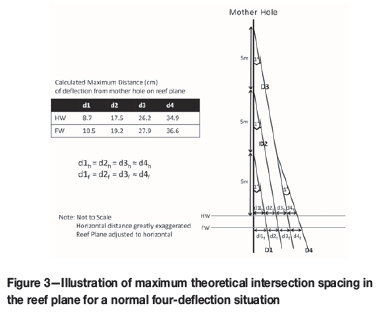
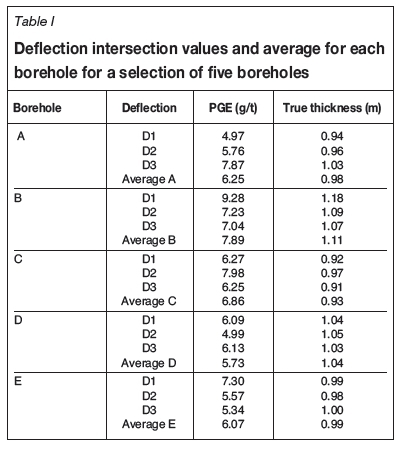
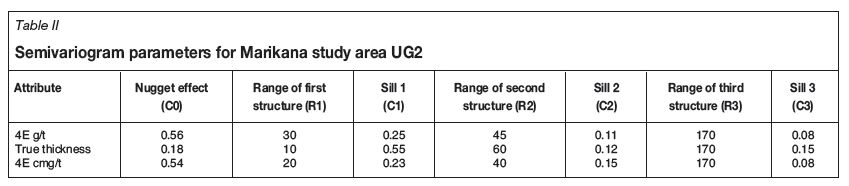
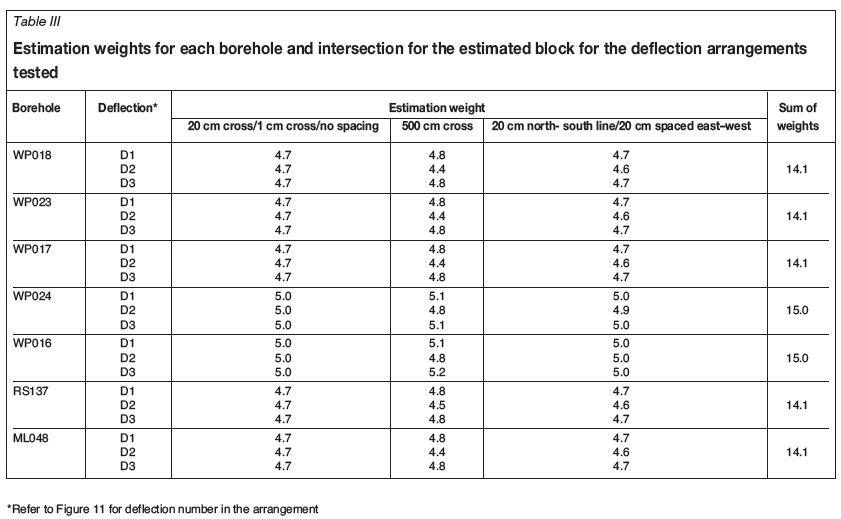
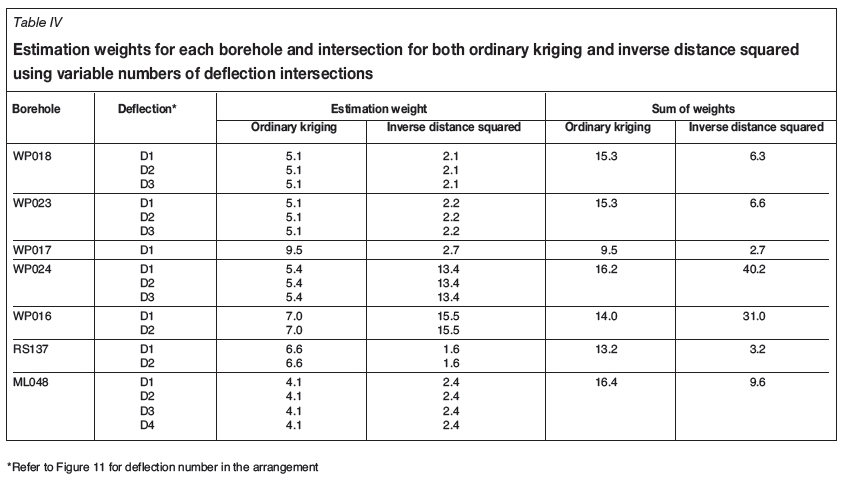
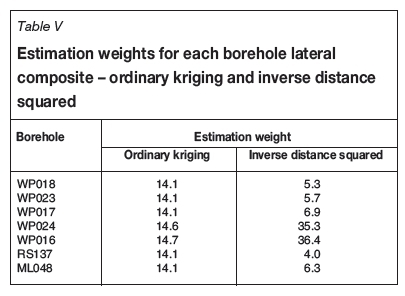
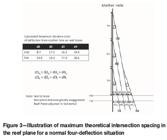
Narrow tabular platinum group element deposits in the Bushveld Complex of South Africa are typically evaluated by diamond core drilling from surface. Several short deflections are drilled from each mother hole in order to obtain multiple intersections at a close spacing (less than 1 m). Examination of the intersections from deflection drilling revealed the importance of these deflections in understanding the representivity of the borehole, obtaining an estimate of the nugget effect, and mitigating the undesirable effect of the high grade variability at the ultra-short range that is a characteristic of these deposits. The use of deflections in estimation was investigated by means of a number of techniques and scenarios in order to find the most appropriate way to use them in an estimate. A significantly improved level of confidence was gained from using multiple close-spaced intersections rather than a single borehole intersection.
resource evaluation; deflection drilling; grade variability; nugget effect
 Thumbnail
 Thumbnail
 Thumbnail
 Thumbnail
 Thumbnail
 Thumbnail
 Thumbnail
 Thumbnail
 Thumbnail
 Thumbnail
 Thumbnail
 Thumbnail