Evaluating the corrosion resistance of different materials used in friction rock stabilisers in different underground environments
Abstract
This study investigated the corrosion rates of various steel types and coatings used for friction rock stabilisers in a deep-level gold mine under diverse underground environmental conditions. Testing was conducted in situ within ramps, intake airways, and exhaust airways, and through simulated laboratory experiments. Results revealed that environmental variations significantly influence the corrosion performance of different materials and coatings. Duplex coatings, made up of galvanised steel with an organic paint layer, demonstrated the highest corrosion resistance. Zinc-based coatings provided moderate protection, while 3CR12 stainless steel and uncoated S420 carbon steel exhibited comparatively poor resistance under both aqueous and atmospheric conditions.
friction rock stabilisers; corrosion; coupon tests
Introduction
Ground stabilisation support elements used in most deep underground mines are susceptible to corrosion due to the harsh environmental conditions. These harsh conditions are a result of the wet conditions due to groundwater, the presence of corrosive ions such as chloride (Cl-) and sulphate (SO42-), and the high temperatures and high humidity due to mining depth and high virgin rock temperatures. According to Preston, et al. (2019), the high atmospheric temperatures, combined with the presence of pollutants and high humidity, promote the corrosion of exposed ground support elements.
Corrosion of ground stabilisers is of great concern as it causes deterioration of ground support elements, which may cause support failure. Support failure contributes significantly to falls of ground, which then adversely impact the mining operations. Dorion, et al. (2009), described the corrosion of support systems as a major safety and economic concern in underground hard rock mines. According to Potvin, et al. (2001), corrosion is responsible for 25% of all cable bolt failures and 29% of all rock bolt failures in the Australian mining industry. Potvin, et al. (2001) also discovered that 27% of the rockfalls where support had been installed, were supported using friction stabilisers. The corrosion resistance of ground stabilisers plays a crucial role in determining support regimes for mining operations.
This study was conducted at a South African underground gold mine where friction rock stabilisers and yielding mechanical hybrid rockbolts serve as primary ground reinforcement. The friction rock stabilisers being used are susceptible to corrosion due to their design and support mechanism. According to Tilman, et al. (1984), the large surface area, thin tube wall, full column contact with the rock mass, and lack of protective grouting make friction rock stabilisers prone to corrosion failure. This corrosion compromises the structural integrity of rock bolts, leading to loss of support capacity, bolt failure, and rock falls. The mine faces challenges with falls of ground, some of which have been attributed to localised corrosion of ground support. Of the five falls recorded in 2018, one was attributed to support element failure due to corrosion.
The importance of determining the corrosion rates for various metals and coatings has long been recognised in the mining industry. Preston, et al. (2019), evaluated the effectiveness of several coatings, carbon steel alternatives, barrier protection, and combinations of these in different mining environments. Chen, et al. (2022), have also evaluated the impact of different coatings in protecting rock bolts from stress corrosion cracking in underground mines. Hadjigeorgiou, et al. (2023), focused on the impact of rock bolt properties such as chemical composition, configuration, and material hardness on the corrosion resistance of friction rock stabilisers. It is recognised that different coatings lead to different corrosion in different conditions, as established by Hadjigeorgiou, et al. (2019), when investigating the corrosion resistance of six proprietary coatings used for expandable bolts.
In South Africa, several materials, including S420 carbon steel, 3CR12 stainless steel, and galvanised steel are used in the manufacture of friction rock stabilisers. S420 carbon steel is one of the most common materials, but it suffers from poor corrosion resistance. S420 steel is a high-strength low-carbon steel that contains small amounts of alloying elements such as manganese (1.6%), silicon (0.5%), carbon (0.12%), phosphorus (0.025%), and sulphur (0.015%), which improve its strength and other mechanical properties (Thomas, 2013). As pointed out by Pedeferri (2018), the porous and non-protective rust layer formed on the surface of S420, owing to its carbon steel composition, makes it susceptible to atmospheric corrosion. In contrast, 3CR12 stainless steel is a preferable choice for challenging acidic environments due to the chromium content, which reacts with oxygen to establish a protective oxide layer (Pedeferri, 2018). The 3CR12 was originally developed by Columbus Stainless, which designated the registered trademark '3CR12'. Official designations of this grade include UNS S40977/S41003 and 1.4003, ASME SA240 grades, ASTM A240/A240M grades and EN 10088.2. According to Azo Materials (2014), 3CR12 stainless steel is a low-cost grade chromium-containing corrosion resisting ferritic steel fabricated by modifying the properties of grade 409 steel. Its composition typically includes chromium (11.6%), titanium (0.2%), nickel (0.6%), carbon (0.025%), silicon (0.4%), manganese (0.5%), phosphorus (0.025%), and sulphur (0.020%) (Thomas, 1981). Some compositions of 3CR12 have molybdenum, which further enhances corrosion resistance due to molybdenum's effectiveness in improving pitting and crevice corrosion resistance, (Schweitzer, 2007). However, this stainless-steel variant is susceptible to pitting corrosion in the presence of chloride solutions and oxidising agents (Mursalo, et al., 1988). To mitigate corrosion, zinc-based coatings are increasingly being used on friction rock stabilisers, due to Zn exhibiting a corrosion rate 10 to 30 times lower than that of carbon steel, contingent on environmental conditions (Pedeferri, 2018). Zinc coatings also provide dual protection consisting of barrier and sacrificial protection, and are also more resistant to mechanical damage, (Kania, 2022). Despite the protective nature of galvanised coatings, caution should be exercised regarding their effectiveness in reducing corrosion rates in that it is limited to short-term periods due to the inherent thinness of the coatings (Stimpson, 1998).
Experimental procedure
Due to the wide variety of rock bolts used and the differences in underground mining environments, it has been difficult to gather enough information to inform different mines on their choice of the best coatings for support elements to suit different conditions. The objective of the research described in this paper was to assess corrosion rates for different types of materials used for friction rock stabilisers in diverse underground environments. The goal was to provide valuable insights for mines in selecting appropriate support elements based on specific conditions.
The research utilised both quantitative and qualitative methodologies aimed at quantifying the corrosion resistance of various steel types and coatings used in the manufacturing of friction rock stabilisers in South Africa, (Chidakwa, 2023). The study consisted of underground corrosion testing conducted at an underground gold mine, and testing at an external laboratory under controlled conditions referred to as simulated underground corrosion testing (SUCT). These two tests aimed to evaluate corrosion under atmospheric and aqueous environments, respectively.
Underground testing was confined to coupon testing, whilst the SUCT was expanded to include both rock bolt and coupon testing. Coupon testing is a widely accepted procedure for the determination of the type and rate of corrosion in underground environments. It can be described as an in-line monitoring method where coupons are placed directly in the process stream and later removed for assessment; an approach that offers a direct measurement of metal loss, enabling the calculation of the general corrosion rate (Orth, 1997). This method was used by Hadjigeorgiou, et al. (2008), in Quebec underground mines, whilst Villaescusa, et al. (2007), used it in Australian underground mines.
The final evaluation of corrosion for the different materials was based on visual qualification of corrosion, weight loss analysis, and corrosion rate.
Underground corrosion testing procedure
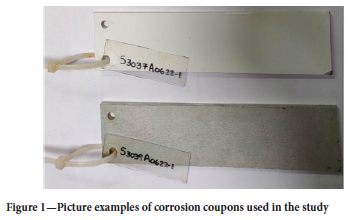
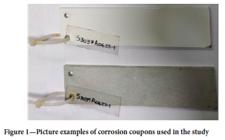
Corrosion testing underground was designed to test for atmospheric corrosion. Six different types of steel and coatings were selected for testing in three different types of underground environments i.e., ramps, intake airways, and exhaust airways. These were identified as having distinct atmospheric conditions impacting corrosion. Corrosion coupons made from the materials under investigation were sourced from four different local suppliers who manufacture friction rock stabilisers. The coatings investigated were all proprietary coatings designed in-house by the suppliers. These coupons were manufactured as rectangular slabs measuring approximately 120 mm x 30 mm x 3 mm, as shown in Figure 1.
A total of 288 coupons, made of the different materials under investigation, were installed in 12 different underground locations distributed equally among ramps, intake airways, and return airways. Each location had four sets of coupons from each of the different materials, securely attached to the hanging wall using cable ties.
The materials selected for investigation were:
> Hot dip galvanised S420 carbon steel ('hot dip galvanised').
> S420 carbon steel with a black paint coating ('black paint').
> Hot-dip galvanised S420 carbon steel with a powder coating ('powder coating').
> Zinc electroplated S420 carbon steel.
> 3CR12 stainless steel (hot rolled with a black finish).
> Uncoated S420 carbon steel.
Coupon retrieval was done at 6-, 12-, and 24-month intervals. After retrieval, the coupons were mechanically cleaned to remove dust, photographed at high resolution, and analysed visually before being bagged individually and despatched to an external laboratory for further analysis. At the laboratory, the coupons were chemically cleaned according to (ISO 9226, 2012) and (ASTM G1-03(2017)e1, 2017), standards before the assessment of mass loss and dimensional changes due to corrosion. Microstructure evaluation was also conducted to determine the nature and extent of the corrosion.
Simulated underground coupon testing (SUCT) procedure
The SUCT was created to assess aqueous corrosion in an environment where temperature, humidity, and water chemistry were controlled. The experiments took place in a custom-built corrosion test chamber at an external laboratory. The environmental conditions for the SUCT were maintained at a temperature of 30 ± 2°C and humidity of 95 ± 5%. An electrolyte solution to simulate underground mine water was used and it comprised 3.5% sodium chloride (NaCl), 2% sodium sulphate (Na2SO4), 0.1% calcium chloride (CaCl2), 0.01% sodium carbonate (Na2CO3), and 0.01% sodium nitrate (NaNO3). The average pH of the solution was 8.27 with a 1.7 range. It is important to note that, whilst there has been water testing conducted at the mine for other projects, there was no water testing conducted for this particular investigation.
A total of 136 coupons and 138 friction rock stabilisers were used for the investigation, distributed across six different materials as follows:
> Hot-dip galvanised S420 carbon steel ('hot dip galvanised'). Thermal-diffusion Zn-Fe coated S420 carbon steel ('Distek').
> White (Duplex) coated galvanised S420 carbon steel.
> Zinc electroplated S420 carbon steel.
> 3CR12 stainless steel (hot rolled with a black finish).
> Uncoated S420 carbon steel.
The duplex coating investigated consists of a galvanised S420 carbon steel with a layer of white organic paint. Villa (2012), describes a duplex system as consisting of steel protection with a zinc coating and a non-metallic coating such as paint applied on top to provide additional protection where galvanising alone does not provide the required corrosion durability. The galvanising acts as both a barrier and sacrificial coating, whilst the paint acts as an additional barrier coating.
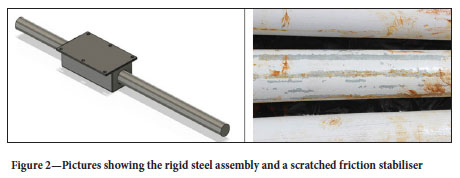
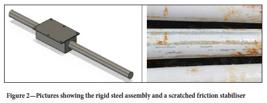
During friction rock stabiliser installation, the outer layer comes into contact with drilled hole walls, causing potential damage that may impact the rate and type of corrosion. Thus, half of the rock bolts in each category were pressed through a custom-made rigid steel assembly containing compacted stone to simulate scuffing or scratching that occurs during underground installation, as shown in Figure 2.
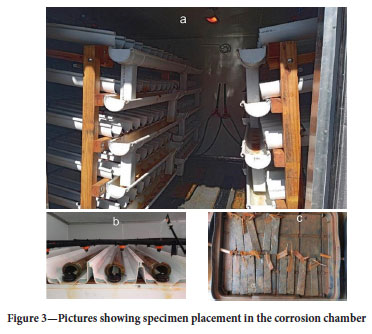
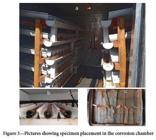
Before placement in the test chamber, coupons were tagged, weighed, and measured. Specimens, including both coupons and bolts, were then exposed to a controlled environment in the test chamber for a total of 1440 hours, divided into six ten-day cycles. The friction rock stabilisers were subjected to water spray conditions, whilst the test coupons were completely submerged in water in plastic pans on the floor as shown in Figure 3. The friction rock stabiliser test specimens underwent daily rotation, with regular water sample collection to monitor various parameters. After each cycle, at least two coupons for each material type were retrieved, chemically cleaned, and measured according to ASTM G1 procedures. The rest of the coupons and rock bolts were analysed visually. Visual classification of both coupons and friction rock stabilisers was done according to the European rust scale. Microscopic analysis was also conducted on friction rock stabilisers at the end of the investigation.
Visual corrosion qualification
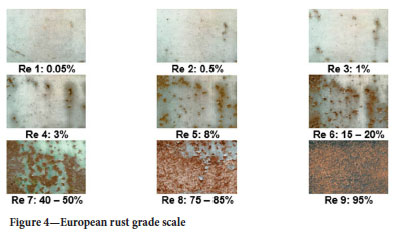
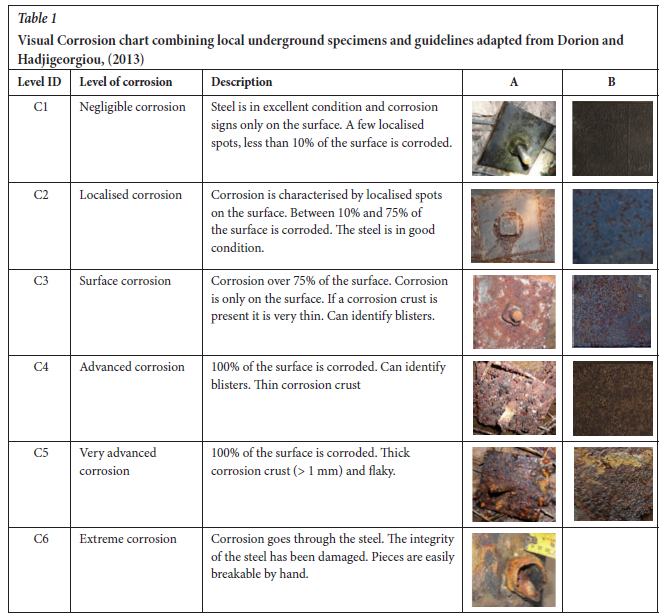
Visual corrosion evaluation for all coupons and friction rock stabilisers was conducted based on the European Rust Grade Scale (ASTM D610) and a chart by Dorion and Hadjigeorgiou (2013). These charts were used to provide a reference point to compare the severity of corrosion for the coupons and rock bolts under investigation. The rust scale and the visual corrosion chart are presented in Figure 4 and Table 1, respectively.
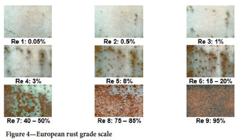
The rust scale assigns a corrosion grade based on the percentage of surface corroded as well as the degree of corrosion. A rust grade of 5 means that approximately 8% to 14% of the surface is corroded, whilst a rust grade of 9 means that 95% to 100% of the surface is corroded.
The visual corrosion chart was used to assign a corrosion level based on the percentage of the surface corroded as well as the nature of that corrosion and corrosion product. It assigns a corrosion level on a scale of C1 to C6, with C6 being the last or highest level representing extreme corrosion. The chart is comprised of examples adapted from Dorion and Hadjigeorgiou (2013) in column A, and comparable underground coupon specimens obtained from the mine corrosion investigation in column B.
Quantifying the rate of corrosion
The rates of corrosion for the different types of steel and coatings were determined using the following equation, where:

CR is the corrosion rate (mm/y), W is the weight loss (g); K is the constant (8.75*104) when the area is in square centimetres (cm2), ρ is the alloy density (g/cm3), A is the exposed area (cm2), and T is the exposure time (hrs).
Results and discussion
The study involved the investigation of corrosion properties of different materials under different environmental conditions underground, and under simulated conditions at an external laboratory.
Environmental impact on corrosion
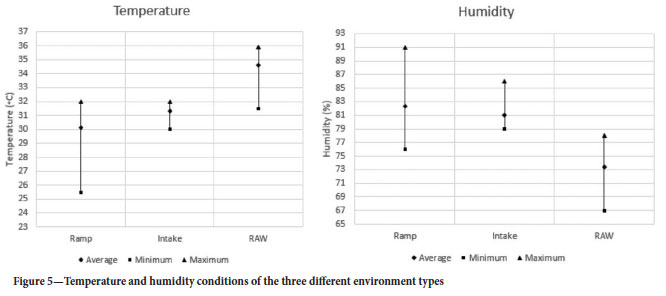
Temperature and humidity measurements were taken by the mine environmental department in all the underground locations under investigation. Two measurements were done in each location throughout the study. The average temperature and humidity are shown in Figure 5.
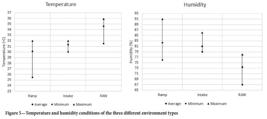
The study established that the different underground environments, i.e., intake airways, ramps, and return airways were sufficiently distinct in terms of temperature and humidity. Return airways (RAW) had the highest average temperature and the lowest relative humidity. Intake airways and the ramps only showed a small variation in terms of average conditions, however, both temperature and humidity were more varied in the ramp areas. It needs to be noted that these conditions are not static and likely fluctuate with mining activities such as a change in ventilation fan locations and capacity, as well as changes in the designated roadways for trackless mobile machinery, among other operational factors.
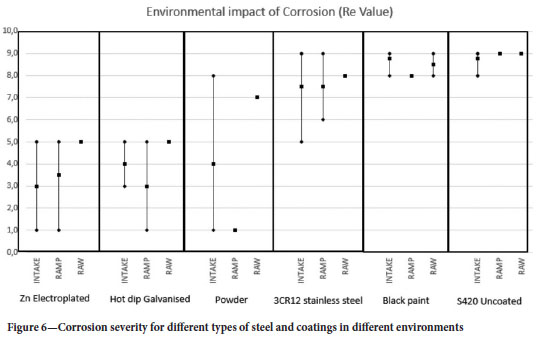
The corrosion severity of the different materials after 24 months in the different underground environments is shown in Figure 6.
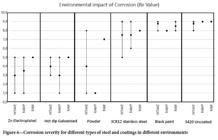
Corrosion severity was the highest in the return airways for all materials. The conditions in the return airways impacted more aggressively on all materials, compared to those in the ramps and intake airways. However, galvanised materials, i.e., zinc electroplated, hot-dip galvanised, and powder coated hot-dip galvanised surfaces were the most affected. However, 3CR12 stainless steel, black paint coated, and S420 uncoated steel materials did not show much variation between environments. Overall, the galvanised materials exhibited the best corrosion performance in all environments after 24 months.
Corrosion behaviour under atmospheric conditions
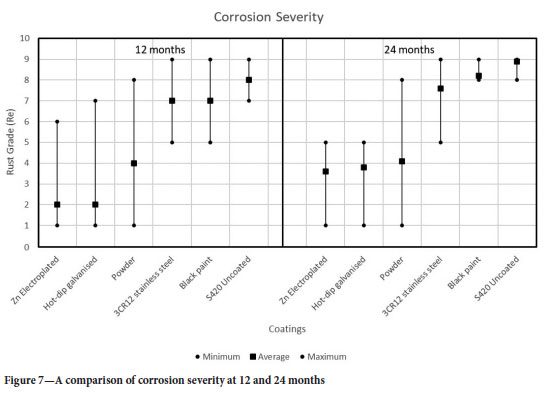
Corrosion coupons installed underground were retrieved after 12 and 24 months, and subjected to visual and laboratory testing. The corrosion severity of the different materials based on the visual corrosion scale is shown in Figure 7.
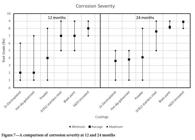
All materials, except the hot-dip galvanised with a powder coating, experienced a significant increase in corrosion severity with time. Zinc electroplated, hot-dip galvanised, and powder coated materials demonstrated the highest corrosion resistance. The 3CR12 stainless steel and black paint coatings performed much worse compared to the Zn-based coatings, but slightly better than S420 uncoated steel, which exhibited the worst corrosion performance. There is also a notable decrease in the rate of corrosion when comparing corrosion severity at 12 and 24 months, which could be as a result of the accumulated corrosion product acting as a protective barrier against further corrosion.
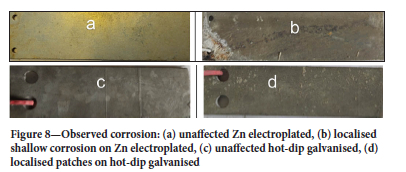
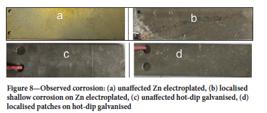
Zn electroplated coatings exhibited varying degrees of corrosion, ranging from being completely unaffected, to small patches of shallow pitting corrosion. Localised shallow corrosion with a whitish-to-greenish-white corrosion product (zinc hydroxide) was also observed. Hot-dip galvanised coatings displayed corrosion ranging from tiny localised patches of shallow corrosion with no product buildup, to localised corrosion with a whitish corrosion product buildup. The corrosion of both zinc electroplated and hot-dip galvanised coupons is shown in Figure 8.
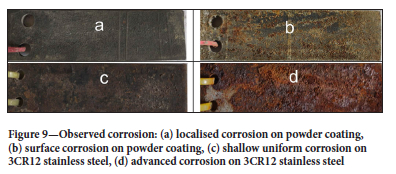
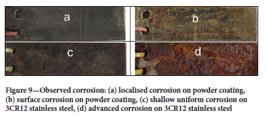
Powder coated coupons exhibited corrosion ranging from spot or localised corrosion to shallow corrosion with a yellowish-brown product, progressing to surface corrosion with a reddish-black corrosion product. The 3CR12 stainless steel coupons showed corrosion mechanisms ranging from shallow uniform corrosion to advanced deep corrosion with an accumulation of a reddish-brown corrosion product. Figure 9 shows the difierent corrosion levels for powder coated and 3CR12 coupons.
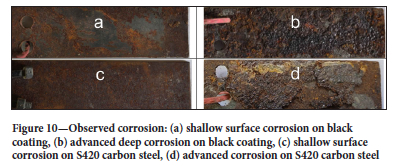
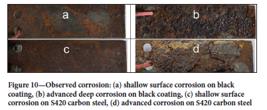
Both black paint coated coupons and S420 uncoated coupons experienced corrosion mechanisms ranging from extensive shallow surface corrosion to advanced deep corrosion with a reddish-black corrosion product. S420 uncoated steel also exhibited very advanced deep corrosion with a layer of corroded material flaking off, Figure 10 shows the different forms of corrosion on black painted coupons and S420 uncoated carbon steel.
Weight loss analysis for atmospheric corrosion
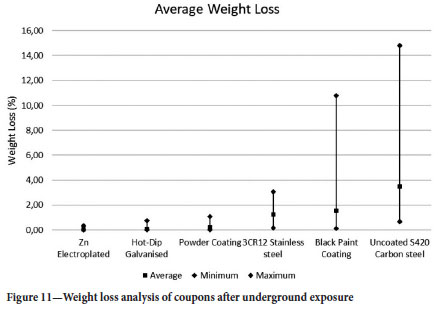
A weight loss analysis was conducted on the coupons from underground. The average weight loss was calculated for each type of coating and steel, providing a quantitative measure of the extent of corrosion of each material.
The average weight loss for the different types of coatings and substrate materials is shown in Figure 11.
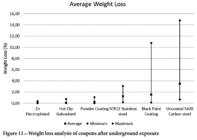
The results of the weight loss analysis showed that the Zn electroplated coating displayed the smallest average percentage weight loss, indicating the best corrosion resistance. The galvanised and powder coatings exhibited similar performance, whilst the uncoated S420 carbon steel showed the highest average percentage weight loss, indicating the worst corrosion resistance.
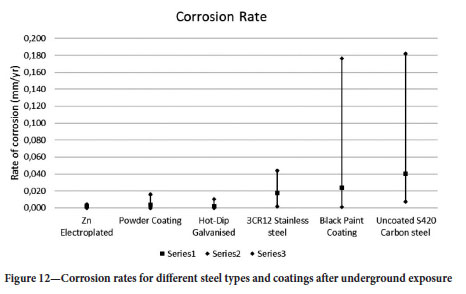
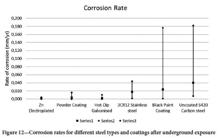
Corrosion rates were calculated for each steel type and coating, and are presented in Figure 12. Uncoated S420 steel displayed the worst rate of corrosion, whilst Zn electroplated coating showed the lowest rate of corrosion, followed by powder coated hot-dip galvanised steel and then hot-dip galvanised steel. However, to note is the wider range in the corrosion rate of black paint coated and uncoated S420 carbon steel specimens, with some coupons experiencing mild corrosion whilst some experienced advanced corrosion with serious loss of metal, as can be seen in Figure 10(d), which shows a layer or metal flaking off due to corrosion.
Summary of atmospheric corrosion testing
All three Zinc coatings, i.e., Zn electroplated, Zn hot-dip galvanised, and Zn hot-dip galvanised with a powder coating, provided effective protection against corrosion in the short term. The corrosion resistance of 3CR12 is generally expected to be significantly better than that of S420 carbon steel, due to its chromium content.
However, in this testing, the performance of 3CR12 was only slightly better than S420 carbon steel, which could be a result of its chemical composition, surface finish, and manufacturing quality control. What is important to note is that all coatings tested in this study were applied to an S420 carbon steel substrate, which has lower corrosion resistance than 3CR12 stainless steel. Therefore, the rate of corrosion is expected to increase significantly after the initial coating deteriorates.
Corrosion behaviour under aqueous conditions
The simulated underground corrosion test was conducted to evaluate the performance of different types of steel and coating under aqueous conditions.
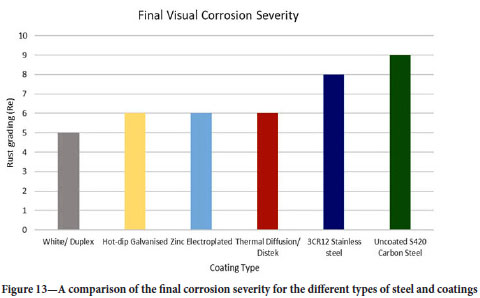
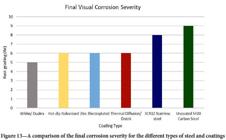
Figure 13 shows the final corrosion severity for coupons from the different types of steel and coatings, based on the rust scale grading system. The white (Duplex) coating was the best coating based on visual observation, followed by the trio of zinc-based coatings, i.e., zinc electroplated, thermal diffusion (Distek) coating and hot-dip galvanised. The 3CR12 stainless steel and S420 carbon steel were the worst performers, with 3CR12 stainless steel being slightly better at a rust grade of 8 compared to S420, which reached the maximum rust grade of 9 with very advanced corrosion.
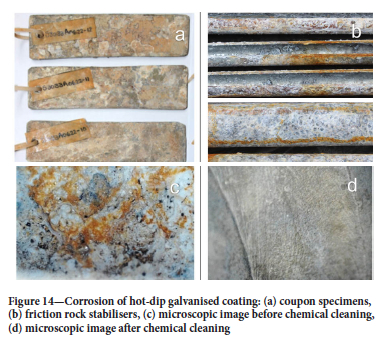
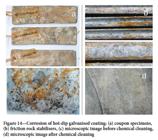
Hot-dip galvanised specimens exhibited corrosion ranging from light to moderate, characterised by white and red rust and staining progressing to severe reddish-brown rust. Microscopic analysis of rock bolts indicates localised corrosion with black oxide deposits and slight pitting. The level of corrosion for both coupons and rock bolts is shown in Figure 14.
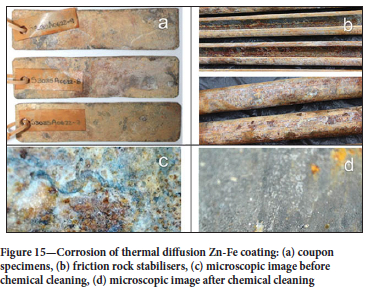
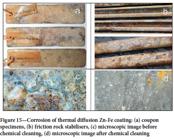
Thermal diffusion Zn-Fe coated samples displayed corrosion from moderate to severe rusting, featuring reddish-brown rust and white rust/staining. Evidence of localised corrosion and slight pitting was observed through microscopic evaluation of rock bolts. Figure 15 shows the corrosion of thermal diffusion ZN-Fe coupons and rock bolts.
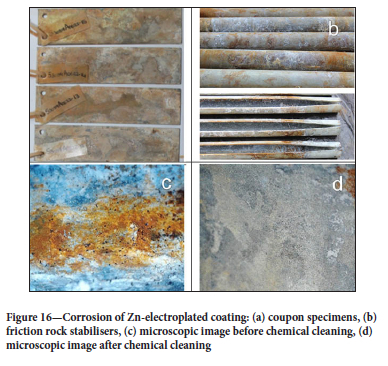
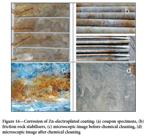
Zinc electroplated specimens demonstrated varying corrosion mechanisms, from moderate rusting and staining to severe rusting and staining. Microscopic observations on rock bolts show localised corrosion, reddish-black oxide deposits, and slight to moderate pitting corrosion. The corrosion mechanisms for zinc electroplated coupons and rock bolts are shown in Figure 16.
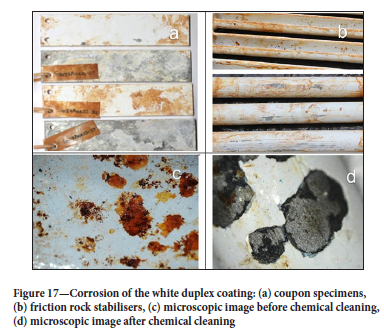
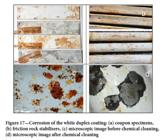
The duplex coated samples were affected by corrosion, ranging from very light rusting to light rusting with reddish-black oxide. Coating delamination was observed after 480 hours, in the form of blistering and flaking of the white paint coating. Localised corrosion, slight pitting corrosion, and the presence of black oxide deposits were also observed during the microscopic analysis of rock bolts. This can be seen in Figure 17, which shows the corrosion of both white duplex coated coupons and rock bolts.
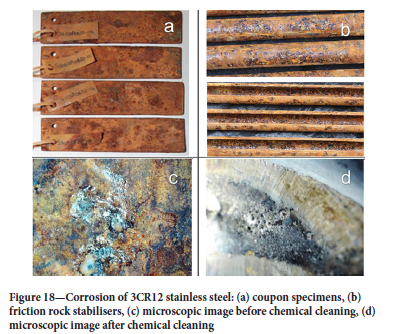
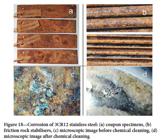
3CR12 stainless steel displayed corrosion initiation in the form of severe red rust and staining, evolving into deep advanced uniform corrosion, pitting corrosion, and notable metal loss after 1200 hours. Microscopic analysis of rock bolts indicates deep advanced corrosion and severe pitting corrosion. Figure 18 shows the advanced corrosion of coupons and rock bolts for 3CR12 stainless steel. Pitting corrosion can be seen clearly in Figure 18d.
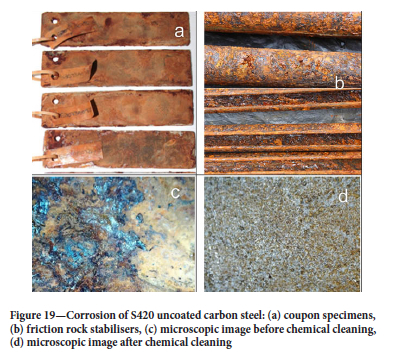
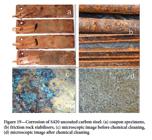
Uncoated S420 carbon steel exhibited corrosion starting as severe red rusting, progressing to advanced deep corrosion with signs of pitting and metal loss, which can be observed in Figure 19. Microscopic analysis revealed severe deep penetrative general and pitting corrosion, which can be seen in Figure 19c, along with exfoliation of the steel surfaces.
Weight loss analysis
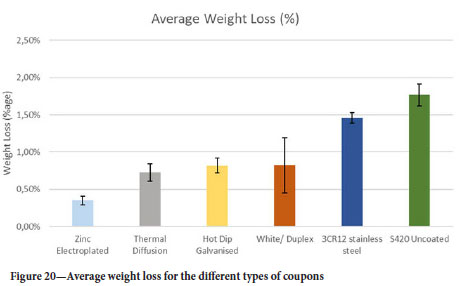
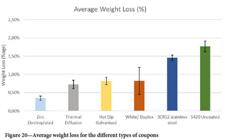
After the removal of the corrosion product, S420 carbon steel experienced the biggest loss of material, whilst Zn electroplated exhibited the smallest loss, which can be seen in detail in Figure 20. However, to note is that the loss of weight for the white duplex coating was a combination of corrosion and the paint flaking off, thus it is exaggerated and not representative of its performance.
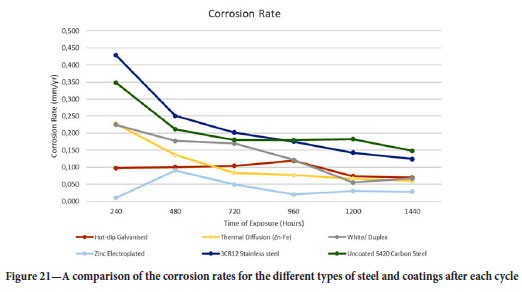
Corrosion rates for the different types of coatings were subsequently calculated. Figure 21 shows the corrosion rates for the difierent types of steel and coatings after each 10-day cycle.
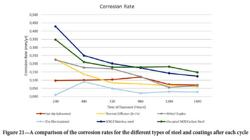
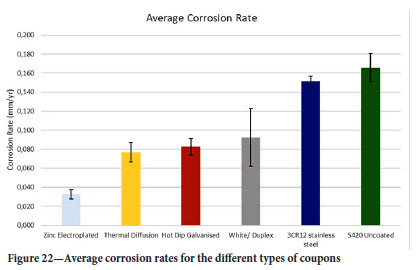
There is a gradual decline in the rate of corrosion over time for most of the coatings and steel types. The average rates of corrosion after 1440 hours are shown in Figure 22.
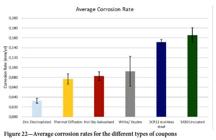
Zinc-based coatings performed the best overall. Zinc electroplated steel had the lowest corrosion rate. The next best was thermal diffusion (Zn-Fe) coating, followed by hot-dip galvanised and white duplex coating, all of which exhibited significantly higher corrosion rates than the Zn electroplated coating. In contrast, 3CR12 stainless steel showed very poor performance. Whilst it performed worse than all the Zn-based coatings, it was slightly better than S420 carbon steel, which exhibited the poorest corrosion resistance, registering a rate 9% higher than 3CR12 stainless steel, and 80% higher compared to zinc electroplated coating.
Impact of surface damage on friction rock stabilisers
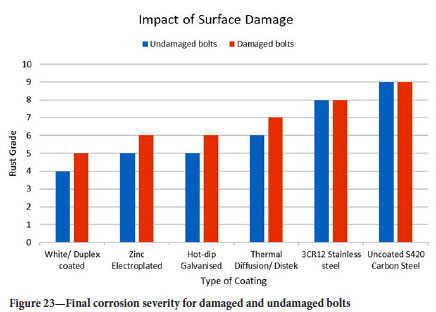
Coating damage, simulated to replicate abrasion encountered during underground installation, adversely affected the corrosion resistance of coated materials, as depicted in Figure 23. Conversely, the impact on uncoated materials, namely 3CR12 stainless steel, and uncoated S420 carbon steel, was found to be insignificant. It is noteworthy that while surface damage may not significantly impact uncoated materials, it could potentially trigger other forms of corrosion, such as crevice corrosion for some materials. This, in turn, has the potential to accelerate the corrosion rate for both coated and uncoated materials.
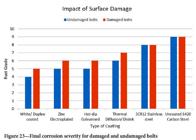
The diminished corrosion resistance observed in coated materials following surface damage is attributed to the exposure of the weaker S420 carbon steel substrate to corrosive elements. Hadjigeorgiou, et al. (2019), also noted that scratching or mechanical damage allows exposure of the underlying substrate to corrosion. Uncoated bolts like 3CR12 and S420 carbon steel exhibit limited susceptibility to abrasion damage, as their surface material is of the same composition as the substrate. Nevertheless, surface damage fosters alternative corrosion forms, notably crevice corrosion, which may not be immediately apparent. Pedeferri (2018), noted that crevice corrosion can arise as a result of the presence of gaps and cracks on a metal surface and that this type of corrosion is a concern for active-passive alloys such as stainless steel in chloride containing solutions.
Approximately 10% to 15% of the bolt surfaces were damaged in this experiment. If damage surpasses this threshold during underground installations, the corrosion resistance of coated bolts is expected to decline rapidly, given the poor corrosion resistance of the exposed S420 carbon steel substrate. In such instances, the zinc electroplated bolt is anticipated to be the most affected due to its thin coating. Conversely, the white duplex coated bolt is expected to perform better due to its dual coating mechanism, as the paint coating, which forms the outer layer, is likely to suffer most of the surface damage, whilst still leaving the galvanised coating to protect the bolt. According to Jaroslav, et al. (2021), the duplex system has a longer service life than both service lives of two coatings applied separately, thus, in the duplex system, there is a mutual synergistic effect of the zinc coating and organic paint coating. Additionally, 3CR12 stainless steel bolts are expected to outperform S420 carbon steel owing to their superior corrosion resistance.
Summary of aqueous corrosion testing
A ranking of the corrosion resistance of diverse steel types and coatings was conducted after 1440 hours of exposure, considering factors like final corrosion severity, corrosion nature, type, and impact on coating damage for both coupons and friction rock stabilisers rock bolts. The white duplex coating exhibited the best performance due to its dual protective mechanism combining galvanising and painting. Electroplated zinc coating performed slightly better than the other zinc coating methods, including
hot-dip galvanising and thermal diffusion zinc coatings. While the latter two offered thicker, more adherent, more durable coatings, and were expected to have better resistance to aqueous corrosion, inconsistent quality control during manufacturing might explain the electroplated coating's superior performance. The 3CR12 stainless steel performed worse than all the galvanised coatings, but slightly better than S420 carbon steel, which exhibited the worst performance.
Comparison of corrosion rates under aqueous conditions and atmospheric conditions
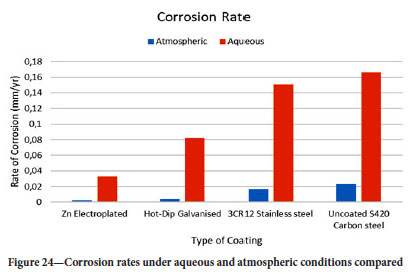
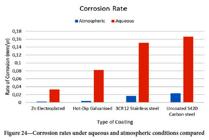
Four steel types and coatings were tested under both atmospheric and aqueous conditions. These were Zn electroplated, Zn hot-dip galvanised, 3CR12 stainless steel, and uncoated S420 carbon steel. All coatings corroded at a faster rate under aqueous conditions, as shown in Figure 24.
Conclusions
This study examined different steel types and coatings to identify the best options for corrosion resistance of friction rock stabiliser support in various underground environments. The results obtained determined that the different environments have a quantifiable impact on the corrosion rates of the various steel types and coatings. Corrosion rates were consistently higher in the return airways, compared to ramps and intake airways. This can be attributed partly to the higher dust content in the exhaust air. According to Schweitzer (2007), dust on metallic surfaces, especially in the presence of moisture, can accelerate corrosion by creating hygroscopic galvanic or differential cells. Particles, such as chlorides, sulphates, carbon compounds, and metal oxides in the dust, combine with moisture to initiate corrosion.
When exposed to atmospheric corrosion, the Zn electroplated coating offered the best corrosion resistance, followed by hot-dip galvanised steel and then hot-dip galvanised steel with powder coating. All three displayed good resistance, with some coupons remaining unaffected after 24 months. Hassell (2008), claimed that zinc offers triple protection by acting as a physical barrier, preferentially corroding to shield the underlying metal, and forming a protective film from its corrosion by-products. The protective film consists of basic salts such as carbonates as a form of resistance to atmospheric corrosion, (Schweitzer, 2007). The 3CR12 stainless steel performed poorly, with most coupons experiencing advanced corrosion within the same period. Uncoated S420 carbon steel displayed the worst resistance, with most specimens reaching very advanced corrosion after 24 months.
In the test for aqueous corrosion, the white duplex coating performed best, followed by all zinc-based coatings (electroplated, thermal-diffusion Zn-Fe-coated, and hot-dip galvanised), which all demonstrated good corrosion resistance. The 3CR12 stainless steel performed slightly better than uncoated S420 carbon steel, but both reached very advanced corrosion after 24 months. The corrosion rates for all steel types and coatings were much higher under aqueous conditions compared to atmospheric conditions.
Overall, considering both atmospheric and aqueous conditions, the duplex coating is considered the overall best option due to its double protection mechanism only if the paint layer application is improved to reduce delamination. Zinc-based coatings also offered comparable protection. Thus, several factors such as cost, availability, damage susceptibility during installation, and impact on support capacity should be considered in selecting the best material for use. All zinc-based coatings are suitable for permanent structures like accessways and workshops of which their lifespan is long. However, to note is that zinc galvanised coatings have been proven to be ineffective in acidic environments (Preston, et al., 2019). Both 3CR12 and S420 carbon steel are not suitable for permanent excavations with a long lifespan and highly corrosive environments, however, both can be used for low to moderately corrosive settings in temporary excavations such as production areas.
Lastly, coating damage during installation significantly affects corrosion resistance. Coatings that are thicker, harder, and have better adhesion to the substrate are expected to offer more protection to the substrate due to better damage resistance during the installation of friction rock stabilisers. Further research could explore optimised zinc-based coating options and specific environmental factors influencing corrosion.
Credit author statement
TPC: conceptualisation, methodology, investigation, validation, formal analysis, writing of original draft, visualisation, project, TRS: writing: review and editing preparation, supervision. University of the Witwatersrand: resources, project administration, funding acquisition.
Acknowledgements
This paper is an extract from the extensive corrosion research conducted at South Deep Gold Mine with funding from the Wits-Goldfields bursary for postgraduate students. South Deep Gold Mine is thanked for its permission to publish this paper.
References
-
Arunachalam, N. 2002. Photograph Booklet of European Scale of Rusting for Anti-corrosive Paints. [Online] Available at: https://www.scribd.com/document/497829787/RE-code
» https://www.scribd.com/document/497829787/RE-code -
ASTM International. 2017. ASTM G1-03 (2007)e1: Standard Practice for Preparing, Cleaning, and Evaluating Corrosion Test Specimens. [Online] Available at: www.astm.org
» www.astm.org -
Azo Materials. 2014. Stainless Steel - Grade 3CR12 (UNS S40977). [Online] Available at: https://www.azom.com/article.aspx?ArticleID=11048
» https://www.azom.com/article.aspx?ArticleID=11048 - Chen, H. 2022. The environmentally induced corrosion failure of cable bolts in underground coal mines. Wollongong. Proceedings of the 2022 Resource Operators Conference (ROC 2022), University of Wollongong.
- Chidakwa, T. P. 2023. Ground Support Corrosion - Case Study: South Deep Mine, Johanessburg: University of the Witwatersrand.
- Dorion, J. F., Hadjigeorgiou, J. 2013. Corrosion considerations in the design and operation of rock support systems. Mining Technology: Transactions of the Institutions of Mining and Metallurgy: Section A, vol. 123, (2014 - Issue 2), pp. 59-68.
- Dorion, J.F., Hadjigeorgiou, J., Ghali, E. 2009. Quantifying the rate of corrosion in selected underground mines. Toronto, Proceedings of the 3rd CANUS Rock Mechanics Symposium.
- Hadjigeorgiou, J., Dorion, J.F., Ghali, E. 2008. Support system performance under different corrosion conditions. The Southern African Institute of Mining and Metallurgy, vol. 108, no. 6, pp. 359-365.
- Hadjigeorgiou, J., Savguira, Y., Thorpe, S.J. 2019. Comparative Susceptibility to Corrosion of Coated Expandable Bolts. Rock Mechanics and Rock Engineering, vol. 52, pp. 2665-2680.
- Hadjigeorgiou, J., Thorpe, S.J., Cole, K.M. 2023. Quality assurance considerations for friction rock stabilizers. Mining Technology, vol. 132, no. 1, pp. 17-29.
- Hassell, R.C. 2008. Corrosion of Rock Reinforcement in Underground Excavations, Perth: Curtin University of Technology.
-
International Organization for Standardization. 2012. ISO 9226:2012 Corrosion of metals and alloys - Corrosivity of atmospheres - Determination of corrosion rate of standard specimens for the evaluation of corrosivity. [Online] Available at: https://www.iso.org/
» https://www.iso.org/ - Jaroslav, L., Votava, J., Smak, R. 2021. Duplex Anti-Corrosion Protection of Steel Using a Combination of Hot-Dip Galvanising and Water-Soluble Paints. Acta Technologica Agriculturae, vol. 3, pp. 129-135.
- Kania, H. 2022. Structure and Corrosion Resistance of Coatings Obtained by the Batch Double Hot Dip Method in Eutectoid ZnAl Bath with the Addition of Mg and Si. Coatings, vol. 12, no. 1207.
-
Martinez, C. 2012. New approaches and technologies to manage external corrosion and CUI. [Online] Available at: https://www.icorr.org/wp-content/uploads/2020/06/Shell-Icorr-Presentation-28-05-2014
» https://www.icorr.org/wp-content/uploads/2020/06/Shell-Icorr-Presentation-28-05-2014 - Mursalo, N., Tullmin, M., Robinson, F.P.A. 1988. The corrosion behaviour of mild steel, 3CR12, and AISI type 316L in synthetic minewaters. Journal of the Southern African Institute of Mining and Metallurgy, vol. 88, no. 8, pp. 249-256.
-
National Paints. 2003. Decorative Coatings General Technical Data Sheet. [Online] Available at: https://www.aeconline.ae/13/resourcefile/30/53/05/Sec-a-2.pdf
» https://www.aeconline.ae/13/resourcefile/30/53/05/Sec-a-2.pdf - Orth, J.E. 1997. Corrosion coupon testing. Water Management International, pp. 47-50.
- Pedeferri, P. 2018. Corrosion Science and Engineering. 1st ed. Milan: Spinger.
- Potvin, Y. 2001. Toward the elimination of rockfall fatalities in Australian mines, East Perth: MERIWA.
- Preston, R., Roy, J., Bewick, R. 2019. Rusty Bolts: Planning for Corrosion of Ground Support in Underground Mines. Sudbury, Ontario, Canada. Proceedings of the Ninth International Symposium on Ground Support in Mining and Underground Mine Construction Australian Center for Geomechanics, pp. 423-436.
- Schweitzer, P.A. 2007. Fundamentals of Metallic Corrosion: Atmospheric and Media Corrosion of Metals. 2nd ed. Boca Raton Florida: CRC Press Taylor Francis Group.
- Stimpson, B. 1998. Split set fiction stabilizers: An experimental study of strength distribution and the effect of corrosion. Canadian Geotechnical Journal, vol. 34, no. 4, pp. 678-683.
- Thomas, C. R. 1981. SX 3CR12 - A material for abrasion-corrosion control. Journal of the Southern African Institute of Mining and Metallurgy, vol. 81, no. 10, pp. 298-302.
-
Thomas, G. P. 2013. Structural Steel 420 - Chemical Composition, Mechanical Properties and Common Applications. [Online] Available at: https://www.azom.com/article.aspx?ArticleID=8071
» https://www.azom.com/article.aspx?ArticleID=8071 - Tilman, M.M., Jolly III, A. F., Neumeier, L.A. 1984. Corrosion of Friction Rock Stabilizers in Selected Uranium and Copper Mine Waters, Washington: United States Department of the Interior, Bureau of Mines.
- Villa, C. S. 2012. Specifications for corrosion protection in the copper mining industry in Chile. Salvador Bahia, INTERCORR 2012.
- Villaescusa, E., Hassel, R., Thompson, A. 2007. Corrosion of Rock Reinforcement in Underground Excavations, East Perth: MERIWA.
Revised: 6 Oct. 2024
Accepted: 24 Feb. 2025
Published: March 2025