Underground mine stope boundary optimisation using a hybrid network flow-particle swarm algorithm
Abstract
This study introduces a new hybrid algorithm designed to optimise stope boundaries in sublevel-stoping mines. Stopes were delineated based on the raises' locations and relevant constraints, including minimum and maximum stope dimensions, stope overlaps, and geotechnical considerations. Particle swarm optimisation was used to determine the optimal locations of raises, while a network-flow algorithm applied constraints and generated stopes surrounding each raise, defining their size and shape. The hybrid algorithm was implemented on a copper deposit in Chile at a depth of 1,000 meters below the surface. A comparative analysis against the network-flow and maximum-value neighborhood algorithms showed that the economic value of stopes produced by the hybrid algorithm exceeds that of the network-flow algorithm by about 4% and exceeds that of the maximum-value neighborhood algorithm by about 7.5%. Moreover, the proposed algorithm was able to produce stable stope layouts for large-scale problems within a reasonable solution time. These findings are promising, particularly given the growing prevalence of high-tonnage, low-grade deposits in the mining industry.
Stope boundary optimization; operation research; hybrid algorithm; underground minnig
Introduction
The uptrend in the use of underground mining methods, driven by the depletion of surface and near-surface mineral reserves Copland, Nehring (2016), and the rising costs associated with development, rock breakage, and handling in underground mines have made stope boundary optimisation (SBO) more essential than ever (Nhleko et al., 2018). In underground mining, optimisation of stope boundaries, access networks, and production planning stands out as critical, collectively influencing project profitability. Among these, SBO is particularly significant as it serves as a prerequisite for optimising other critical aspects.
To address SBO, researchers have proposed various models that primarily use either mathematical logic or a local-search (heuristic) approach Ataee-Pour (2000). The main concerns with these models are extended solution times and suboptimal outcomes. Hence, a model providing optimal solutions within shorter time frames would be valuable. For this, hybrid algorithm combinations of two or more algorithms have been proposed.
Hybrid algorithms have been effectively employed to address a range of mining-engineering problems, including production planning Zaidan et al.(2019), scheduling Lamghari et al.(2015), SBO Nikbin et al. (2019), and pushback design Tolouei et al.(2020). The strong performance of hybrid algorithms in optimisation tasks makes them well suited for solving mining engineering problems, and their increasing adoption by researchers, particularly in recent years, underscores their value. For instance, Nikbin et al. (2019) introduced a hybrid approach combining dynamic programming and greedy algorithms to solve the SBO problem. The results obtained from the proposed model outperformed existing three-dimensional (3D) SBO models.
In the present study, sublevel stoping is employed as the mining method for SBO. Sublevel stoping is recognised for its high production efficiency, characterised by accessing the orebody from the side through inclined ramps known as declines and a shaft from the surface Sari and Kumral (2020). This method is specifically designed for the progressive extraction of specified ore blocks between pillars of surrounding material Villaescusa (2014).
The optimal stope layout in underground mines represents the area where mining operations yield the highest economic value. While models based on mathematical logic can derive optimal solutions, they often face limitations in accommodating numerous constraints, leading to longer solution times as problem size grows. Various studies Riddle (1977), Ovanic (1998), Jalali and Araee-Pour (2004), and Bai et al. (2013) have introduced mathematically-based algorithms tailored either to specific methods or limited to one- or two-dimensional (1D or 2D) problems, whereby solution times rise with larger problem volumes.
Therefore, heuristic algorithms have been proposed to optimise underground mining by considering a broader range of constraints and reducing runtime. Heuristic algorithms can accommodate more constraints than mathematical models but do not guarantee optimal solutions. Notable examples include those proposed by Alford (1996), Ataee-Pour (2004), Topal and Sens, (2010), Sandanayake et al. (2015), and Matamoros and Kumral (2017).
Mmola et al. (2019) introduced a distinct model for SBO, marking the first use of the particle swarm optimisation (PSO) algorithm for this purpose. Their model demonstrates the capability to manage extraction constraints and provides a feasible approach, though it does not guarantee the true optimal solution. Esmaeili et al. (2023) proposed another model focusing on the Mining Rock Mass Rating (MRMR) classification system, which establishes stable stopes and employs the Network Flow Algorithm (NFA) to delineate stope boundaries at each level.
Ataee-Pour (2000) introduced a maximum-value neighbourhood (MVN) algorithm, akin to the floating-stope algorithm, which optimises operations by probing neighbouring blocks with the highest economic value while considering stope geometry across one, two, and three dimensions.
Recently, some researchers have used hybrid algorithms for solving SBO problems, e.g., studies by Nikbin et al. (2019), Sari and Kumral (2020), and Nikbin et al. (2020).
Nikbin et al. (2019) presented a combined dynamic-greedy programming model that addresses complexities in SBO problems by reducing the number of variables and inequalities. Meanwhile, Sari and Kumral (2020) introduced a dynamic-greedy programming hybrid algorithm tailored for sublevel mining area optimisation, aimed at reducing solution time and memory usage for larger problems.
Nhleko and Musingwini (2022) introduced the dual interchange algorithm (DIA), a hybrid approach that combines PSO and genetic algorithm (GA) components to generate near-optimal solutions. A hybrid model peresented by Nikbin et al. (2020) uses a greedy heuristic approach to solve the main problem by first transforming selected two-dimensional subregions of the main economic-block model into unit blocks. This reduction converts the original three-dimensional problem into a secondary one-dimensional subproblem. A novel dynamic programming algorithm is then applied to determine the optimal boundaries within this subproblem. Among the resulting scenarios, the best one is chosen according to the greedy criterion, and the blocks corresponding to that solution are added back to the solution of the original problem. The model yields a solution that is close to optimal and practically acceptable. However, the approach does not account for geomechanical constraints, cannot generate stopes with varying dimensions, and does not consider the heights of the stopes. Additionally, the presented model is a holistic model, whereas the proposed model is a fine-grained, part-based algorithm. This means that optimisation is performed separately for each level, eliminating the possibility of a stope being located in the middle of a level.
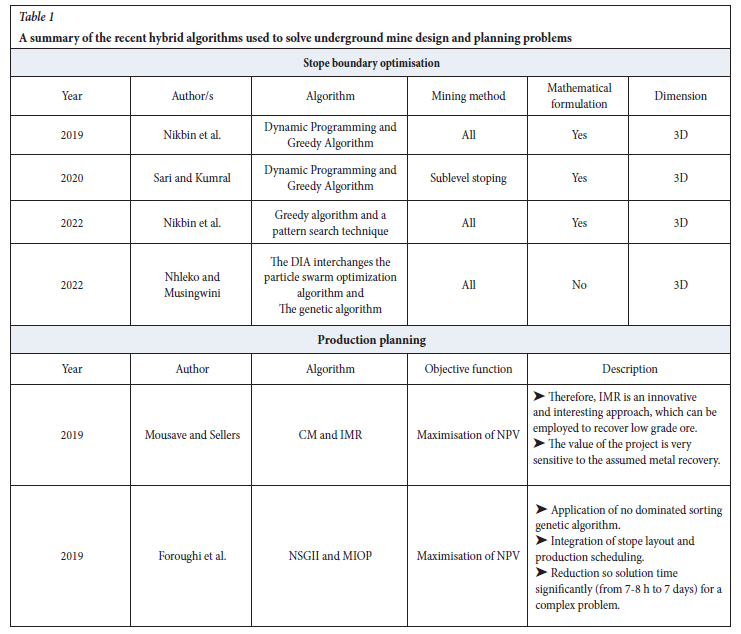
Recent advancements in hybrid algorithms for underground mine design and planning problems are summarised in Table 1. As Tolouei et al. (2020) noted, hybrid algorithms are versatile in solving a variety of optimisation problems in the mining industry, although their application to SBO remains relatively limited due to a lack of suitable platforms for presenting algorithms.
Following here are additional summaries of research conducted in the field of optimising the extraction boundaries of underground mines:
Jalali and Hosseini (2009) simulated a two-dimensional block model of the mineral using a graph and then employed Dijkstra's greedy algorithm to find the path with the highest weight on the graph. The path determined by Dijkstra's algorithm represents the optimal boundaries of underground mining stopes in two-dimensional sections. This approach effectively illustrates how graph theory can be applied to optimise extraction strategies in underground mining operations. Nelis et al. (2016) proposed a mathematical model aimed at achieving geomechanical stability in designed stopes. Basiri and Pourrahimian (2018) developed a mathematical model for finding the optimal stope layout and production scheduling in the sublevel stoping method. This model focuses on optimising both the stope layout and production timing based on the entire block model as well as on individual levels of the block model, addressing the impact of level separation on layout and scheduling.
Villalba Matamoros and Kumral (2019) proposed a three-stage stochastic optimisation model using GA to account for ore-grade uncertainty. The first stage assesses uncertainty in the stope layout, the second stage develops average designs and evaluates feasibility, creating the initial population for the GA, and the third stage uses GA to improve this population over successive generations. This approach yields higher profitability, reduced planned dilution, and more robust stopes less sensitive to grade fluctuations. Hou et al. (2019) examined the simultaneous optimisation of stope boundaries and the placement of openings, though they only considered shafts among the various types of primary openings. Mmola et al. (2019b) proposed a model for optimising stope boundaries but acknowledged that it cannot yield the true optimal solution. This highlights the challenges of balancing geological complexity and operational constraints in underground mining. Shami-Qalandari et al. (2022) employed the floating-stope algorithm to determine optimal stope boundaries in block caving, taking ore-grade uncertainty into account. Furtado e Faria et al. (2022) introduced a stochastic integer programming model incorporating ore-grade uncertainties and the costs of mining openings in stope-boundary design. Due to the high number of decision variables, this model faces significant computational time challenges, limiting its use in large-scale problems. Morales et al. (2022) proposed a heuristic algorithm for determining stope boundaries in the sublevel mining method by reducing the number of variables through eliminating geotechnically unstable stopes, thereby accelerating solving time. However, as a heuristic, it does not guarantee optimality. Mutandwa and Musingwini (2024) provided the latest review on optimal boundary determination methods for underground mining stopes, critically analysing topics, concepts, trends, and spatial information from prior work.
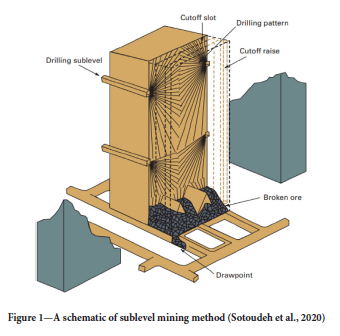
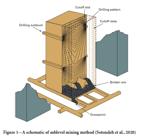
A schematic of the sublevel stoping mining method is depicted in Figure 1. In the present study, the SBO problem for sublevel stoping mines is addressed using a hybrid network-flow-PSO algorithm. The proposed model conducts optimisation for each level, enhancing the accuracy of the optimisation process.
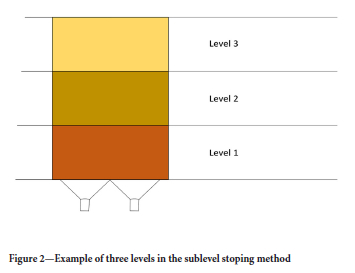
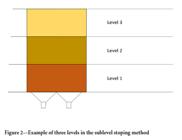
In the sublevel mining method, the mining area is divided into levels of varying heights based on host rock mass quality and machinery specifications. Figure 2 illustrates the stope boundaries of an underground mine across different levels.
The implementation of a hybrid algorithm in the proposed model also addresses the problem of raise location optimisation. Unlike the model proposed by Bai et al. (2013), which overlooks geotechnical constraints, the present model prioritises these constraints as crucial factors. By considering geotechnical constraints, the optimised stopes exhibit varied dimensions, preventing the mining of economically unjustifiable sections. The proposed model comprises two primary components:
> Utilising the PSO algorithm, the model identifies raise locations for each stope, maximising economic value.
> The NFA determines the range of blocks surrounding the raises, while accounting for existing constraints.
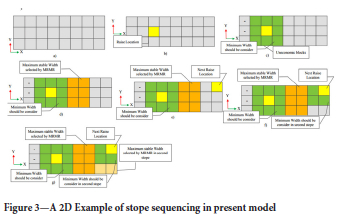
The proposed model is implemented on an economic block model, excluding blocks with negative economic value for the selection of the raise's location (Figure 3). While it is possible that blocks with negative economic value may fall within the stope boundaries, the aim is to ensure that these blocks have the minimal possible negative value. The method for selecting the stope sequencing in this study is based on the selection of a "raise" location. The search does not initiate from the position of the first block; instead, a random location (coordinates x, y, z) is selected, which serves as the raise's position. Subsequently, all blocks that fall within a minimum width range are identified. After that, the blocks are evaluated using the MRMR classification system to determine the maximum stable width. The mining of these blocks is then carried out according to the precedences outlined in the manuscript. Finally, the stope boundaries are established. This process continues until the entire block model has been searched using the algorithm, taking into account the constraints of block and stope overlap. Below is an example of stope sequencing.
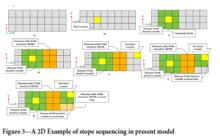
> Represent a 2D block model
> Randomly selected the Raise location
> Determine blocks located in minimum width
> Determine maximum width and its blocks (note negative blocks doesn't selected)
> Selected the second raise location for determine boundary of second stope
> Represent the blocks in minimum width
> Shown maximum width and its blocks
*The overlapping constraint is considered in this method.
Methodology
Network flow algorithm
In solving SBO problems, the use of algorithms with a reasonable solution speed is important. The NFA stands out for its ability to maintain low solution times, even as the model size increases, as noted by Bai et al. (2013). The NFA uses the concept of graph theory, initially introduced by Johnson (1968), for determining the ultimate pit limit (UPL). Picard (1976) introduced a new interpretation of the network flow algorithm, shifting the focus from maximum flow to minimum closure. In Picard's revised network structure, source (s) and sink (t) nodes are incorporated at the start and end, respectively, facilitating efficient problem resolution. In the weighted graph G, V represents the weighted blocks, while E represents the relationship between the blocks.
In Picard's (1976) revised graph, add to source (so) and sink (si) node to start and end of graph and blocks that have positive economic value are linked to the (so), while blocks with negative economic value (adjusted to their absolute value) are connected to the (si). Solving the network-flow problem entails employing algorithms designed for solving the maximum-closure problem. Examples include the Fork-Fulkerson algorithm used by Nabi et al. (2017) and the push-relabel algorithm utilised by Bai et al. (2013).
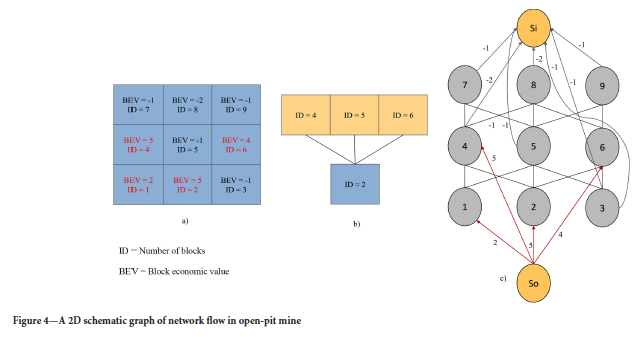
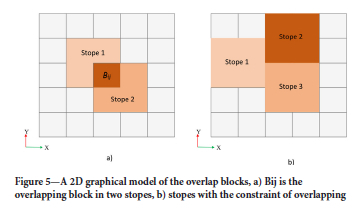
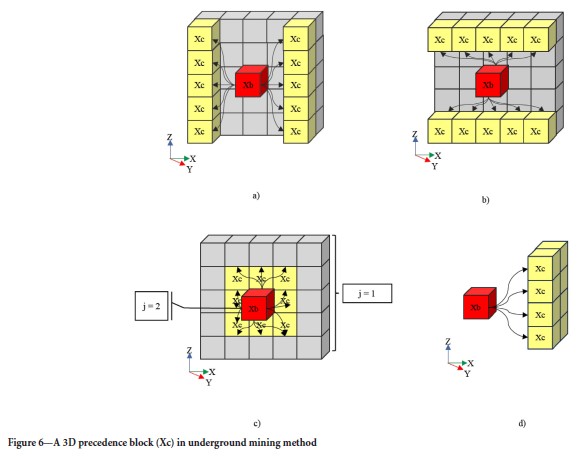
In the present study, the push-relabel algorithm, recognised as one of the common and capable algorithms for solving the maximum flow problem, is employed. Figure 3 shows the block relationships in an open pit mine with a 45-degree slope. Figure 4 (a - c) depict a 2D block model along with surface mining constraints for each block. Figure 5 (a) showcases a 2D overlapping of stopes denoted by Bij positioned between every two stopes, while Figure 5 (b) illustrates three non-overlapping stopes. Figure 6 (a - d) present the primary blocks for each block in the sub-surface mining method. Figure 6 (a, b) show the surrounding blocks, Figure 6 (c) showcases the surrounding blocks behind, and Figure 6 (d) illustrates the blocks in front of the desired block.
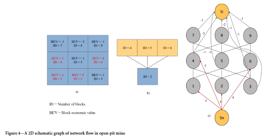
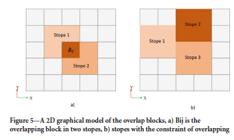
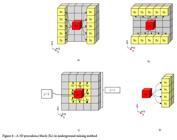
One advantage of the NFA is its capability for optimising stope boundary in three dimensions while adhering to mathematical logic, enabling the attainment of true optimal solutions. The constraints employed in this study to optimise the stope boundary include:
> Maximum and minimum stope width
In underground mines, a minimum width is considered for each stope based on the 'physical and mechanical' properties of the host rock. This minimum width ensures adequate space for blasted rock material to settle on the stope floor. Additionally, each stope has a maximum width determined by technical, economic, and geotechnical considerations. The selection of the maximum width aims to ensure stope stability while maximising the objective function.
> Maximum and minimum working height
Minimum height requirements in underground mine levels are controlled by the machinery used for drilling, loading, and hauling operations. Determining maximum height involves considering technical and economic factors, such as geological conditions, hydrogeology, lithology, host rock properties, and ore body depth as noted by Jakubec and Laubscher (2000). Heights may vary across levels.
> Overlapping stopes
Addressing stope boundary optimisation necessitates considering stope overlap, wherein part of one stope encroaches into another (Sandanayake et al., 2015). As shown in Figure 4, overlapping occurs when multiple high-grade blocks are shared among two or more stopes, potentially leading to negative economic value for all affected stopes. The floating stope algorithm fails to account for stope overlap and may struggle to find satisfactory solutions for large-scale problems.
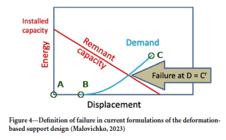
> Geotechnical conditions
Geotechnical considerations play a crucial role in stope boundary optimisation. These conditions control the maximal stope span for stability and maximal height. The proposed algorithm integrates the MRMR classification system, recommended by Esmaeili et al. (2023), to identify stable stopes based on geotechnical criteria.
PSO algorithm
The PSO algorithm stands out as one of the most efficient optimisation algorithms, praised by designers for its simplicity and minimal parameter requirements, as noted by Wang et al. (2018).
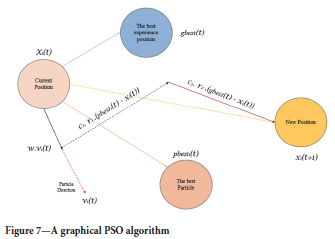
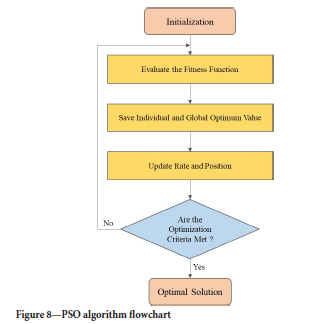
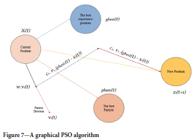
The PSO algorithm begins with the random generation of an initial population, where each member is characterised by velocity and position vectors within the search space. Each particle evaluates the target function as its current position, then determines a direction to move, based on its own best position (pbest) and the best position found by the swarm (gbest). This process repeats iteratively until the desired solution is achieved. Figure 7 illustrates the optimisation process facilitated by the PSO algorithm. Key parameters of the PSO algorithm include inertia weight and its adjustment rate, personal learning coefficient, and collective learning coefficient.
While the PSO algorithm has found application in various optimisation problems within the mining context, such as blasting optimisation by Zhang et al. (2020), production planning in open pit mining by Khan and Niemann Delius, (2014a: 2014b), Click or tap here to enter text., and underground mining by Zhao et al. (2022), its utilisation in SBO remains relatively limited. Additionally, PSO has been employed for identifying unstable zones, as demonstrated by Mahdevari and Khodabakhshi (2021).
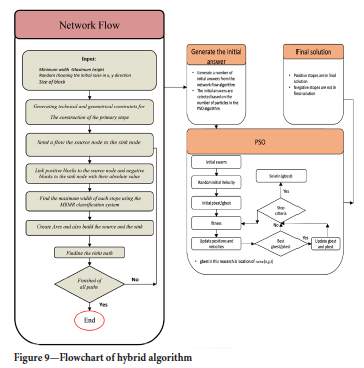
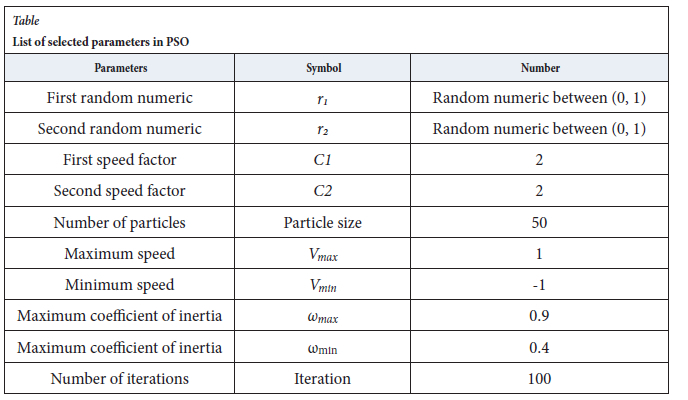
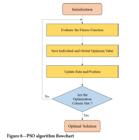
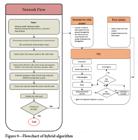
In the present study, the PSO algorithm is employed to optimise the location of raises, with the particle size set equal to the number of initial solutions. Fifty initial solutions are generated for the model, which serve as the number of particles in the algorithm. Each particle's initial location corresponds to one of the initial solutions, with the objective of improving these solutions iteratively through updates to particle velocity; position, and the inertia weight (ω) selected in Table 2. The optimal particle location corresponds to the central raise location in each stope, a critical factor influencing project profitability. Figure 8 provides a graphical depiction of the PSO algorithm and its associated variables. Raises are pivotal in the proposed model, as determining their locations is essential for stope delineation. Figure 9 outlines the flowchart of the proposed hybrid algorithm.

In Equation 1, wi represents the coefficient of inertia, where i is the maximum iteration. In Equation 2, r1 and r2 are two random vectors with values between 0 and 1. c1 and c2 are the learning parameters, typically set to c1 = c2 = 2 yielding the new velocity. Equation 3 determined the new position of particle.
Mathematical modelling
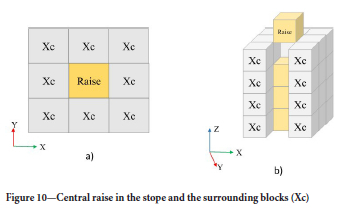
A hybrid model is proposed to incorporate all inherent constraints of the sublevel mining method while optimising the stope boundary. The model is centred around central raises; pivotal in the optimisation process. The blocks surrounding each raise, forming mining stopes, are shown in Figure 10.
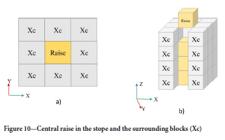
In the present study, two algorithms are employed to optimise the stope boundary. The first algorithm utilises the constraints outlined in the aforementioned to determine the initial raise location and subsequently locates subsequent raises based on this initial position. This is achieved using a PSO algorithm. Next, incorporating the inherent constraints of the sublevel mining method and considering geotechnical constraints to determine the maximal stable span for every stope, the stope boundary for each level is obtained using the network flow algorithm.
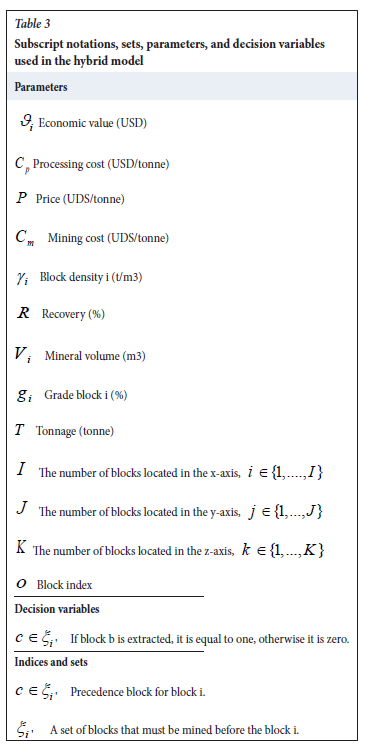
Formulating concise constraints is a key strategy to reduce solution time in optimisation problems. Table 3 presents the symbols, sets, parameters, and decision variables used in the model.

The hybrid model developed is as follows:
Objective function:
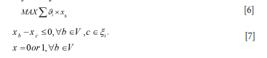
Subject to:

Equation (4) is employed to determine the tonnage of a block i, where V denotes the number of nodes, xb represents the desired block, and xc signifies a set of precedence blocks for each block. Equation (5) converts the grade block model to the economic block model. Equations (8 - 16) determine all precedence blocks surrounding each raise. Note again that the primary objective of this research is to maximise economic value. This objective is followed by sub-goals such as maximising the recovery of mined blocks, as depicted in Equation 17.

Case study
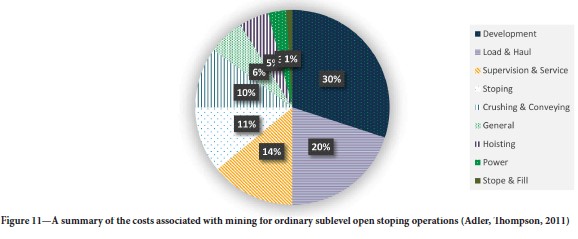
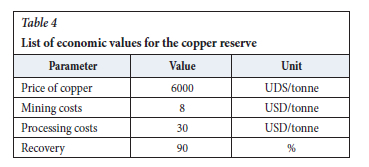
The proposed algorithm was applied to a case study of an underground copper mine in Chile, with the deposit located 1,000 m below ground level. The study used data for 4,100 blocks, each measuring 10 m × 10 m × 10 m, corresponding to a single mine level (Figure 11). The economic parameters are listed in Table 4. After the PSO algorithm determined the location of the raises, the network flow was used to delineate the stope boundary.
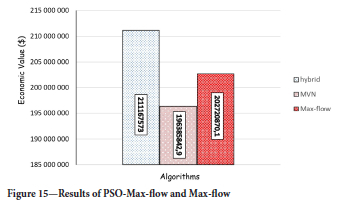
The results from the model are presented in Table 5. For validation, these results were compared with those obtained from the network-flow, hybrid, and MVN algorithms. Notably, the MVN algorithm, a commercial method that accounts for the overlapping constraint and is applicable to all underground mining methods, performed satisfactorily, yielding a 4% increase in network flow and approximately a 7.5% improvement in MVN. Consequently, it was incorporated into the new model.
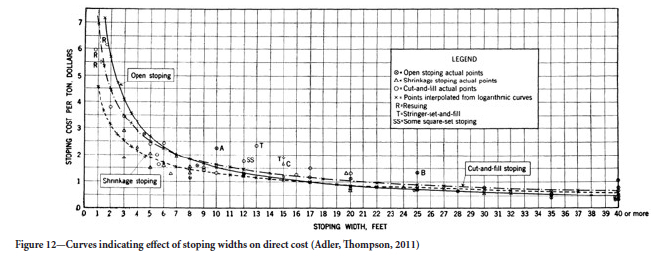
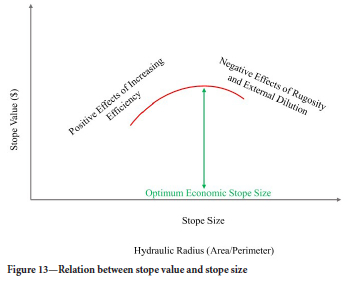
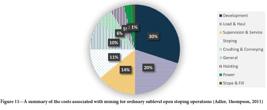
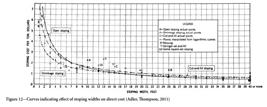
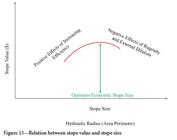
An important issue in underground mining is preparation costs. In the sublevel stoping mining method, the height of the sublevels and the size of the stopes play a crucial role in reducing these costs. Optimising these parameters can lead to substantial reductions in drilling, blasting, and other preparatory activities associated with mining operations. As shown in Figure 12, more than 30% of development and backfilling costs in underground mines employing sublevel stoping are significant. Consequently, increasing the number of stopes raises development costs. In addition, a larger number of stopes also increases drilling and blasting costs because more holes must be drilled and blasted to create the initial space for extraction. Therefore, having fewer stopes can lower development costs, which can be achieved by enlarging stope dimensions. However, larger stope dimensions do not automatically translate into greater economic value. Figure 13 shows that there is an economically optimal stope size; beyond this point, larger sizes have a negative impact. The aim of this study is to determine the extraction stope boundaries with the maximum economically optimal size that yields the highest economic value and stability. In the case study, all stope heights were set at 40 metres, as determined by the MRMR classification system. The levels and stope heights are assumed to be equal; by increasing the stope height and reducing the number of levels, development costs can be lowered.
In sublevel stoping and other underground mining methods, the majority of production costs are incurred during stoping, contributing significantly to the total cost of ore production. Therefore, it is crucial to estimate the cost per tonne of ore mined; this can be misleading if the cost per unit of metal recovered is overlooked. Dilution, which arises during loading, hauling, hoisting, and processing, can affect the cost per unit of metal produced. A strategy that minimises cost per tonne may, in some cases, lead to ore losses or excessive dilution with waste, resulting in suboptimal economics for a given scenario. The optimal approach should balance ore recovery, dilution, and unit costs to identify the most economical solution for the deposit.
Figure 12 shows direct stoping costs for several underground mining cases using open stoping, shrinkage stoping, and cut-and-fill (C&F) stoping. These costs are expressed on a per-tonne basis and illustrate the effect of stope span (in feet) on direct stoping cost per tonne of ore. Higher costs in narrow stopes arise from lower tonnes broken per foot, drilled and reduced output per man-shift. The curves also highlight other cost factors. In open stoping, operating costs are particularly high, as indicated by region A in Figure 12, due to ore-body irregularity, frequent displacements of the ore body, and mining of thin ore near the margins. A higher-than-usual cost occurs when stopes are about 25 feet wide, but much of the ore is very thin, as shown at B. Costs for C&F stoping are higher than normal at points labeled SS, T, and T. The two T labels illustrate underground mines employing a stringer-and-fill method with substantial timbering under very heavy hanging-wall conditions, requiring cautious extraction. The higher cost is associated with substantial square-set stoping relative to C&F stoping, as shown at SS. Hence, stope width affects costs. It is worth noting that very large stope spans are not always advantageous, as Figure 13 shows. It is important to design stopes with spans that provide both stability and maximum economic value. Because the model uses an MRMR classification system, it can identify stopes with the maximum stability span. As Figure 13 indicates, if the stope size exceeds the optimum, external dilution may increase; if it is smaller than the optimum, the maximum economic value is not obtained.
By running the model on an economic block model, mineable stopes were identified that exhibit high stability and economic value. Table 4 presents the parameters of economic value of copper reserve, while Table 5 details the number of mineable stopes and the economically unjustified stopes left unmined.
The PSO algorithm played a crucial role in identifying optimal raise locations. Reducing the number of raises can potentially lower costs associated with maximising both stope stability and economic value. Incorporating a geotechnical constraint into the model allows production stopes to be developed up to their maximum stable dimensions. As stope dimensions increase, the number of raises decreases, leading to reduced operational costs. This constraint yields stopes with varying dimensions, a feature not commonly addressed in existing models.
Results and discussion
In this study, the primary objective was to maximise economic value while solving the SBO problem within a reasonable timeframe. The optimum location obtained from the hybrid algorithm is presented in Table 5.
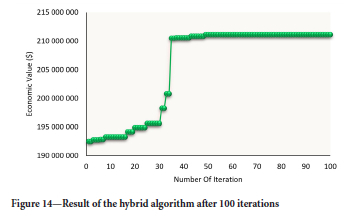
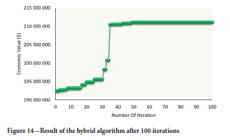
After 100 iterations, an economic value of USD211,167,572 was achieved, accompanied by an ore recovery of 93.58%, as shown in Figure 14. However, of the 18 stopes created, only 13 were deemed mineable. While the networkflow algorithm generated an economic value of USD202,720,870, representing a 4% decrease compared to the hybrid algorithm, the MVN algorithm yielded USD196,385,832, a decrease of 7.5%.
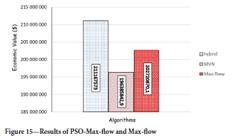
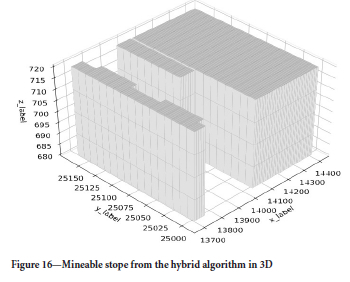
Utilising the networkflow algorithm for stope-boundary optimisation, complemented by the PSO heuristic for raise-location optimisation, the proposed model successfully approximates the optimal solution. The resulting stope layout, visualised in 3D in Figure 16, shows stopes with maximum economic value.
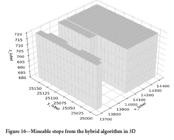
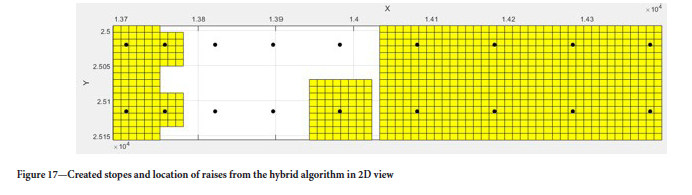
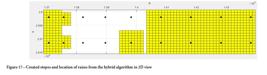
Figure 17 illustrates the locations of raises and mineable stopes. Each black dot denotes a raise location on a level. The stopes surrounding these raises vary in size, yielding a diverse range of stope dimensions. For clarity, Figure 18(a) presents all unmined and mineable stopes with different average grades, while Figure 18(b) highlights mineable and unmined stopes.
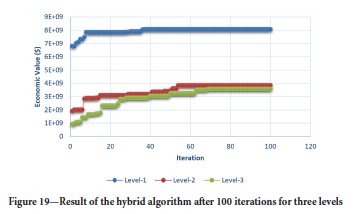
Additionally, applying the model to a copper deposit comprising 56,953 blocks across three levels demonstrated its scalability and efficacy. Figure 19 provides an overview of the economic value achieved at each level after 100 iterations. Notably, Table 6 compares the solution times of the networkflow and the hybrid algorithm; the networkflow algorithm exhibits significantly shorter solution times, while the hybrid method's solution time is influenced by the number of stopes generated. In open stoping methods, minimising the number of stopes can enhance profitability due to the high costs involved. Across the first, second, and third levels, the algorithm produced 44, 40, and 36 stopes, respectively, of which only a subset was deemed mineable.
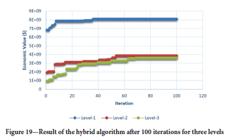
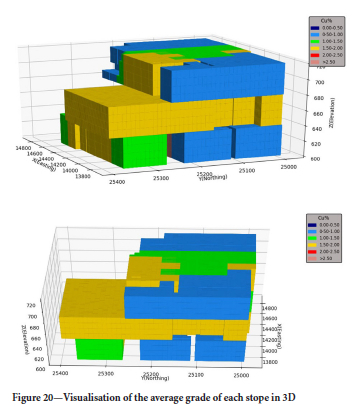
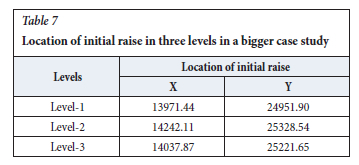
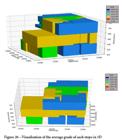
Table 7 provides details on the locations of initial raises across the three levels of the larger case study. Figure 20 presents the stope layout and highlights the impact of geotechnical constraints on stope dimensions, with each stope colour-coded to represent its average grade.
Conclusion
Determining an optimal stope boundary is a critical aspect of underground mine design and planning, directly affecting project profitability. However, the complex constraints inherent to underground mining pose substantial challenges to developing efficient optimisation algorithms. Among these constraints, geotechnical conditions play a pivotal role in ensuring stope stability. This study presents a hybrid model to address the SBO problem within the sublevel stoping method, accommodating each level of the mine. Central raises within each stope form the basis of the proposed model and significantly influence its optimisation. The PSO algorithm is used to optimise the location of these raises, yielding near-optimal solutions.
Comparative analysis shows that the hybrid model outperforms both the MVN and network-flow algorithms in terms of economic value, achieving approximately 4% and 7.5% higher economic values, respectively. Notably, the hybrid model offers versatility, capable of optimising both regular and irregular block models in 3D space. Although PSO is heuristic, it demonstrates remarkable efficiency by delivering fast, feasible solutions close to optimality. While the network flow providing a solid mathematical basis for potentially true optimal be limited in practice by its computational complexity, the hybrid model presented here offers a promising solution to the challenging problem of stope boundary optimisation in underground mining, illustrating the benefits of integrating heuristic methods with mathematical optimisation models.
CRediT authorship contribution statement
Ahmadreza Esmaeili: Methodology, software, visualisation, investigation, writing - original draft. Jafar Khademi Hamidi: Writing - review and editing, conceptualisation. Amin Mousavi: Writing - review and editing, conceptualisation
References
- Adler, L., Thompson, S.D. 2011. Mining methods classification system. SME Mining engineering handbook pp. 349-355.
- Alford, C. 1996. Optimisation in underground mine design, in: International Journal of Rock Mechanics and Mining Sciences and Geomechanics Abstracts. p. 220A.
- Ataee-Pour, M, 2004. Optimisation of stope limits using a heuristic approach. Mining Technology vol. 113, pp. 123-128.
- Ataee-Pour, M. 2000. A heuristic algorithm to optimise stope boundaries.
-
Bai, X., Marcotte, D., Simon, R. 2013. Underground stope optimization with network flow method. Computers and Geoscience 52, pp. 361-371. https://doi.org/10.1016/J.CAGEO.2012.10.019
» https://doi.org/10.1016/J.CAGEO.2012.10.019 - Basiri, Z., and Pourrahimian, Y. (2018). "Application of mathematical programming for stope layout and production schedule optimization in sublevel stoping". Mining Optimization Laboratory, vol. 8, no. 1, pp. 235-245.
- Copland, T., Nehring, M. 2016. Integrated optimization of stope boundary selection and scheduling for sublevel stoping operations. Journal of the Southern African Institute of Mining and Metallurgy. vol. 116, pp. 1135-1142.
- Esmaeili, A., Hamidi, J.K., Mousavi, A. 2023. Determination of sublevel stoping layout using a network flow algorithm and the MRMR classification system. Resources Policy 80, pp. 103265.
- Furtado e Faria, M., Dimitrakopoulos, R., Pinto, C. 2022. Stochastic stope design optimisation under grade uncertainty and dynamic development costs. International Journal of Mining, Reclamation and Environment. vol. 36, pp. 81-103.
- Hou, J., Xu, C., Dowd, P.A., Li, G. 2019. Integrated optimisation of stope boundary and access layout for underground mining operations. Mining Technology 128, pp. 193-205.
- Jakubec, J., Laubscher, D.H. 2000. The MRMR rock mass rating classification system in mining practice, in: Proceedings of the 3rd International Conference and Exhibition on Mass Mining, Brisbane, Australia. pp. 413-421.
- Jalali, S.E., Ataee-Pour, M. 2004. A 2D dynamic programming algorithm to optimize stope boundaries, in: Proceedings of the 13th Symposium on Mine Planning and Equipment Selection, Rotterdam, Balkema. pp. 45-52.
- Jalali, S.E., Hosseini, H. 2009. Optimization of Extraction Range in Underground Mining Using a Greedy Algorithm. Journal of Science and Research in Mining Engineering 4, pp. 1-11.
- Johnson, T.B. 1968. Optimum open pit mine production scheduling. University of California, Berkeley.
- Khan, A., Niemann-Delius, C. 2014a. Production scheduling of open pit mines using particle swarm optimization algorithm. Advances in Operations Research 2014.
- Khan, A., Niemann-Delius, C. 2014b. Application of particle swarm optimization to the open pit mine scheduling problem, in: Proceedings of the 12th International Symposium Continuous Surface Mining-Aachen 2014. Springer, pp. 195-212.
- Lamghari, A., Dimitrakopoulos, R., Ferland, J.A. 2015. A hybrid method based on linear programming and variable neighborhood descent for scheduling production in open-pit mines. Journal of Global Optimization 63, pp. 555-582.
- Mahdevari, S., Khodabakhshi, M.B. 2021. A hybrid PSO-ANFIS model for predicting unstable zones in underground roadways. Tunnelling and Underground Space Technology 117, pp. 104167.
- Matamoros, M.E.V., Kumral, M. 2017. Heuristic stope layout optimisation accounting for variable stope dimensions and dilution management. International Journal of Mining and Mineral Engineering. vol. 8, pp. 1-18.
- Mmola, T.M., Nhleko, A.S., Atherfold, J.M. 2019a. Application of Particle Swarm Optimization Algorithm to Optimize Stope Layout for Underground Mines, in: Widzyk-Capehart, E., Hekmat, A., Singhal, R. (Eds.), Proceedings of the 27th International Symposium on Mine Planning and Equipment Selection - MPES 2018. Springer International Publishing, Cham, pp. 213-221.
- Mmola, T.M., Nhleko, A.S., Atherfold, J.M. 2019b. Application of particle swarm optimization algorithm to optimize stope layout for underground mines, in: Proceedings of the 27th International Symposium on Mine Planning and Equipment Selection-MPES 2018. Springer, pp. 213-221.
- Morales, N., Mancilla, D., Miranda, R., Vallejos, J. 2022. A fast method to develop an optimal operational sublevel stope design. Resources Policy 77, pp. 102670.
- Mutandwa, B., Musingwini, C. 2024. Insights and future research directions from a bibliometric mapping of studies in stope layout optimisation. International Journal of Mining, Reclamation and Environment. vol. 38, pp. 577-595.
- Nabi Rebaz M., Azad, R., Saeed, S., Nabi Rebwar, M. 2017. Optimization Algorithm's Problems: Comparison Study. Kurdistan Journal of Applied Research 2, pp. 25-31.
- Nelis, G., Gamache, M., Marcotte, D., Bai, X. 2016. Stope optimization with vertical convexity constraints. Optimization and Engineering 17, pp. 813-832.
- Nhleko, A.S., Musingwini, C. 2022. Optimisation of Three-Dimensional Stope Layouts Using a Dual Interchange Algorithm for Improved Value Creation. Minerals 12, vol. 501.
- Nhleko, A.S., Tholana, T., Neingo, P.N. 2018. A review of underground stope boundary optimization algorithms. Resources Policy 56, pp. 59-69.
-
Nikbin, V., Ataee-pour, M., Shahriar, K., Pourrahimian, Y. 2020. A 3D approximate hybrid algorithm for stope boundary optimization. Computers and Operations Research 115, vol. 104475. https://doi.org/10.1016/j.cor.2018.05.012
» https://doi.org/10.1016/j.cor.2018.05.012 - Nikbin, V., Ataee-pour, M., Shahriar, K., Pourrahimian, Y., MirHassani, S.A. 2019. Stope boundary optimization: A mathematical model and efficient heuristics. Resources Policy 62, pp. 515-526.
- Ovanic, J. 1998. Economic optimization of stope geometry. Michigan Technological University.
- Picard, J.-C. 1976. Maximal closure of a graph and applications to combinatorial problems. Management science. 22 , pp. 1268-1272.
- Riddle, J.M. 1977. A dynamic programming solution of a block-caving mine layout, in: Proceedings The 14th APCOM
- Symposium, Society of Mining Engineers-American Institute of Mining, Metallurgy, and Petroleum Engineers, New York. pp. 767-780.
-
Sandanayake, D.S.S., Topal, E., Ali Asad, M.W. 2015. A heuristic approach to optimal design of an underground mine stope layout. Applied Soft Computing. vol 30, pp. 595-603. https://doi.org/10.1016/J.ASOC.2015.01.060
» https://doi.org/10.1016/J.ASOC.2015.01.060 - Sari, Y.A., Kumral, M. 2020. A planning approach for polymetallic mines using a sublevel stoping technique with pillars and ultimate stope limits. Engineering Optimization 52, pp. 932-944.
- Shami-Qalandari, M., Rahmanpour, M., Mirabedi, S.M. 2022. Determining a resilient stope boundary for underground mass mining projects. Rudarsko-geolosko-naftni zbornik 37, pp. 103-116.
- Sotoudeh, F., Nehring, M., Kizil, M., Knights, P., Mousavi, A. 2020. Production scheduling optimisation for sublevel stoping mines using mathematical programming: A review of literature and future directions. Resources Policy 68, pp. 101809.
- Tolouei, K., Moosavi, E., Tabrizi, A.H.B., Afzal, P., Bazzazi, A.A. 2020. Improving performance of open-pit mine production scheduling problem under grade uncertainty by hybrid algorithms. Journal of Central South University 27, pp. 2479-2493.
-
Topal, E., Sens, J. 2010. A new algorithm for stope boundary optimization. Journal of Coal Science and Engineering (China) 16, pp. 113-119. https://doi.org/10.1007/s12404-010-0201-y
» https://doi.org/10.1007/s12404-010-0201-y - Villaescusa, E. 2014. Geotechnical design for sublevel open stoping. CRC Press.
- Villalba Matamoros, M.E., Kumral, M. 2019. Underground mine planning: stope layout optimisation under grade uncertainty using genetic algorithms. International Journal of Mining, Reclamation and Environment. vol. 33, pp. 353-370.
-
Wang, D., Tan, D., Liu, L. 2018. Particle swarm optimization algorithm: an overview. Soft computing 22, pp. 387-408. https://doi.org/10.1007/s00500-016-2474-6
» https://doi.org/10.1007/s00500-016-2474-6 -
Zaidan, A.A., Atiya, B., Abu Bakar, M.R., Zaidan, B.B. 2019. A new hybrid algorithm of simulated annealing and simplex downhill for solving multiple-objective aggregate production planning on fuzzy environment. Neural Computing and Applications 31, pp. 1823-1834. https://doi.org/10.1007/s00521-017-3159-5
» https://doi.org/10.1007/s00521-017-3159-5 -
Zhang, X., Nguyen, H., Bui, X.-N., Tran, Q.-H., Nguyen, D.-A., Bui, D.T., Moayedi, H. 2020. Novel Soft Computing Model for Predicting Blast-Induced Ground Vibration in Open-Pit Mines Based on Particle Swarm Optimization and XGBoost. Natural Resources Research 29, pp. 711-721. https://doi.org/10.1007/s11053-019-09492-7
» https://doi.org/10.1007/s11053-019-09492-7 -
Zhao, Y., Chen, J., Yang, S., Chen, Y. 2022. Mining Plan Optimization of Multi-Metal Underground Mine Based on Adaptive Hybrid Mutation PSO Algorithm. Mathematics 10, pp. 2418. https://doi.org/10.3390/math10142418
» https://doi.org/10.3390/math10142418
Revised: 06 Nov. 2025
Accepted: 10 Aug. 2026
Published: Sep. 2026