Early success indicators at a South African university: A data-centric approach to understanding and promoting student success behaviours
Abstract
Over the past two decades, the field of analytics for student success has evolved significantly, especially with the emergence of learning analytics as a formal research domain, pioneered by Siemens and colleagues in 2013. However, the use of data to inform decision-making concerning planning, intervention, and teaching and learning practices is not a new concept. Despite this, many institutional strategies to support student success remain siloed and often narrowly focused on specific barriers, rather than adopting a holistic view. This article introduces the concept of 'early success indicators' - a framework designed to integrate the diverse elements of institutional support into a cohesive, data-informed model. Unlike traditional approaches that emphasize deficit-oriented terminology such as 'at-risk indicators' or 'early warning systems', this approach adopts a strengths-based perspective. We ask, "What conditions must be in place for students to reach their full potential?" To answer this, we map key moments across the student lifecycle - from pre-registration through to final assessments - identifying relevant data points and support mechanisms. This work is grounded in the insights of Academic Success Coaches (also known as Faculty Student Advisors), institutional leaders, and data scientists, enabling a multi-stakeholder, interdisciplinary approach to student success. Our findings underscore the importance of institutional collaboration, a culture of data transparency, responsive support systems, and timely, targeted interventions. This conceptual article contributes to the shift from reactive to proactive student success support strategies, aiming to enhance throughput rates and overall student outcomes.
Academic advising; student lifecycle; early success indicators; holistic student support; early warning systems; student success
Abstract
Kuleminyaka engamashumi amabili edlule, inkundla yokuhlaziywa kwempumelelo yabafundi iye yaguquka kakhulu, ikakhulukazi ngokuvela kohlaziyo lokufunda (learning analytics) njengenkundla yocwaningo esemthethweni, eyaqalwa nguSiemens nozakwabo ngo-2013. Nokho, ukusetshenziswa kolwazi ukweluleka ekuthathweni kwezinqumo mayelana nokuhlela, ukungenelela kanye nezindlela zokufundisa nokufunda akuwona umqondo omusha. Noma kunjalo, amasu amaningi ezikhungo okweseka impumelelo yabafundi asahlukahlukene, avame ukugxila ezinhlakeni ezithile zezithiyo kunokuba amukele aqonde izinhlaka zonke. Leli phepha lethula umqondo weZinkomba Zokuqala Ezikhombisa Ukuphumelela - uhlaka oluhloselwe ukuhlanganisa izingxenye ezahlukene zokwesekwa abafundi esikhungweni ukuze lube yisu elihlangene eliqhutshwa ngolwazi. Ngokuphambene nezindlela zendabuko ezigcizelela amagama agxile ekuntulekeni afana 'nezinkomba zobungozi' noma 'izinhlelo zokuxwayisa kusenesikhathi', indlela yethu yamukela umbono ogxile emandleni omfundi. Sibuza umbuzo othi, "Yiziphi izimo okufanele zibe khona ukuze abafundi bafinyelele emandleni abo aphelele?" Ukuze siphendule lo mbuzo, sibeka imephu yezikhathi ezisemqoka kuyo yonke impilo yomfundi esasesikhungweni sezemfundo, kusukela ngaphambi kokuba abhalisa kuze kufikele ekuhlolweni kokugcina, sibheka ulwazi ngaye kanye nezindlela ezifanele zokwemeseka. Lesi sifundo sisuselwa ekuqondeni komsebenzi wabaQeqeshi beMpumelelo Yezemfundo abaziwa nangokuthi abeluleki babafundi bomkhakha, abaholi besikhungo, nososayensi bolwazi, ekwenzeni indlela ehlanganisa ababambiqhaza futhi eqa imikhakha emining yolwazi olumayelana nokuphumelela kwabafundi. Imiphumela yethu igcizelela ukubaluleka kokubambisana ngaphakathi esikhungweni, isiko lokusebenzisa ulwazi ngokusobala, izinhlelo zokweseka ezishintsha ngokuphuthuma kanye nokungenelela ngesikhathi okuhlosiwe. Lo mqondo osemusha waleliphepha unikela ekuguqulweni amasu okusekela impumelelo yabafundi ngendlela ehlosiwe hayi evikelayo ngokusekwenzekile, ngenhloso yokwandisa amazinga okuphothula kanye nemiphumela yabafundi iyonke.
Ukwelulekwa kwezemfundo; umjikelezo wokufunda womfundi; izinkomba zokuqala ezikhombisa ukuphumelela; ukwesekwa komfundi okuphelele; izinhlelo zokuxwayisa kusenesikhathi; impumelelo yomfundi
Introduction
In South Africa's post-apartheid higher education landscape, institutions face the dual imperative of promoting academic excellence while addressing historical inequities. The quest for inclusive student success has become even more urgent in light of massification, systemic inequalities, and differentiated preparedness (Ogude et al., 2021). Within this context, the need to adopt student-centered, data-informed approaches has grown (Cele, 2021).
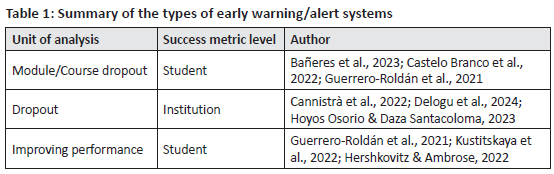
Much development and activity in the field of education data mining and learning analytics have largely been on the development of effective early warning/alert systems (Akçapınar et al., 2019). The two concepts of early warning systems and early alert systems have been used to mean the same thing in literature. 'Early warning systems' are institution-wide technology-based solutions that use data to detect potential student attrition and notify staff to act preemptively (Patterson et al., 2023). These systems have been used for many different purposes, including mitigating course dropout (Bañeres et al., 2023; Castelo Branco et al., 2022; Guerrero-Roldán et al., 2021); university dropout (Cannistrà et al., 2022; Delogu et al., 2024; Hoyos Osorio & Daza Santacoloma, 2023); increased learner performance (Guerrero-Roldán et al., 2021; Kustitskaya et al., 2022); identification of weaknesses in cognitive skills (Cabezas et al., 2024); nudges (Kay & Bostock, 2023); detecting non-thriving students (Hershkovitz & Ambrose, 2022); development of student subjectivity (Liu, 2024); estimating the probability of graduating (Attewell et al., 2019); and predicting end-of-term performance (Akçapınar et al., 2019). See the summary below in Table 1.
As shown in Table 1, the types and purposes of early warning systems vary greatly and each has a specific focus. Even so, analogous to the discussion on student success metrics, these early warning/alert systems have two foci; they are either focusing on (1) student dropout, or (2) dropout or failure in the module. The former is at the institutional-level and the latter at the student-level. Globally, learning analytics have gained traction as a tool to improve student outcomes through early detection of at-risk behaviours. Siemens (2013) and Ferguson (2012) argue that data, when ethically applied, can support timely, tailored interventions. In the South African context, however, scholars such as Boughey and McKenna (2021) caution against overreliance on quantitative data, warning that it can obscure systemic inequalities unless interpreted through a contextual lens.
Recent South African studies emphasize the need for frameworks that address the complexity of the student experience. Wilson-Strydom (2015) uses the capabilities approach to explore access and success as issues of justice and agency. Similarly, the Council on Higher Education (2013) and the Department of Higher Education and Training (2021) highlight persistent disparities by race, gender, and school quintile. These call for a student development perspective, for example Baxter Magolda (2001), that recognises learning as both cognitive and psychosocial. The following literature review was conducted through Scopus and Web of Science using the key phrases "early warning system" and "education", as well as "early alert system" and "education". No meaningful literature was found when the phrases "early success indicator" and "education" were used.
This article introduces the concept of early success indicators (ESI), a proactive framework grounded in the belief that students do not fail in isolation but within ecosystems that can be made more enabling through data-informed strategies such as academic advising. Focusing on a South African research-intensive university, this article proposes a data analytics framework that can be used to identify and map key data points in the student journey to signal academic success or risk behaviour, triggering early intervention through targeted academic advising support. The study is underpinned by Siemens' Learning Analytics Model (2013) and the Action, Inclusion, Responsiveness, and Reflexivity (AIRR) Framework (Stilgoe et al., 2013). Moreover, this study positions ESIs at the intersection of learning analytics and student development theory, proposing that early engagement, academic behaviour, and social integration are critical in shaping resilient student pathways. Finally, Student Development Theory offers a critical lens through which to understand the holistic growth and progression of university students beyond mere academic achievement. It encompasses cognitive, psychosocial, and identity development, providing insight into how students make meaning of their university experiences and respond to institutional interventions (Young, 2016). Unlike learning analytics, which focuses primarily on behavioural and performance data, Student Development Theory foregrounds the internal processes that shape a student's capacity to engage, persist, and thrive.
One foundational perspective is Baxter Magolda's (2001) theory of self-authorship, which highlights students' developmental journey towards becoming internally driven learners capable of critical reflection and personal agency. This theory is especially relevant in South Africa's diverse higher education landscape, where students often navigate complex transitions marked by social inequality, cultural dissonance, and varying levels of academic preparedness. Complementing this, Sanford's (1967) Challenge and Support Theory posits that student development occurs most effectively when individuals are simultaneously challenged and supported - principles that align directly with the ethos of ESIs. These indicators do not only serve as tools to flag risk but also as mechanisms to initiate timely support that is attuned to students' developmental stages and unique contexts.
In the South African context, Wilson-Strydom (2015) has argued for a capabilities-oriented model of student development, which recognises that student success requires nurturing agency, resilience, and belonging. This approach underscores the need for institutions to move beyond instrumental success metrics and attend to the lived realities that shape students' capacity to succeed. By integrating student development theory with data-centric models such as Siemens' Learning Analytics Model, this study affirms that understanding and enhancing student success requires a multidimensional framework - one that leverages predictive and prescriptive insights while fostering the personal growth and autonomy of students.
Purpose of the study
This study uses a student-centric approach as a lens to deepen the understanding of how the factors discussed above affect the student lifecycle at key stages in a programme. We advocate for a deeper look at both the critical data points that span the student journey, the challenges that a student faces and the existing institutional support that can be matched or aligned to each phase of the student lifecycle in a degree programme. An in-depth look into the phases of the student lifecycle, that is student behaviours, helps institutions to identify a wide variety of barriers that students may encounter, put measures in place in anticipation, and proactively address these. This article constitutes a mapping of data points along the student lifecycle as an indicator of early success or failure. The mapping is facilitated by revisiting and unpacking existing institutional data and data points as well as student support activities and systems towards conceptualising a framework which can be used to identify the presence or absence of success indicators necessary for progression in a module or programme.
This study contributes to the progressing field of learning analytics - a body of knowledge that seeks to revitalise how the practice of academic advising can proactively leverage data to inform decision-making, and enables agile and proactive planning and support, fostering holistic student access and success. Learning Analytics is defined as "the measurement, collection, analysis, and reporting of data about learners and their contexts, for the purposes of understanding and optimizing learning and the environments in which it occurs" (Siemens, 2013, p. 3).
In conducting this research, we sought to answer the primary research questions:
1. What constitutes indicators that signal success or failure along the student journey?
2. What interventions can be put in place to respond to each indicator to foster success?
We wished to understand data points that signalled success along the student journey from the data that the institution collects and to identify concomitant support that could be triggered by these indicators, ensuring that students receive timely support to improve their academic and developmental outcomes.
Theoretical framework
This study draws on two key theoretical frameworks: Siemens' Learning Analytics Model (2013) and the AIRR Framework (Stilgoe et al., 2013). Siemens conceptualises learning analytics as a process involving the collection, analysis, and use of student data to optimise learning outcomes. His model emphasizes actionable insights and systemic responsiveness, aligning well with the institution's aim to identify early success indicators. The AIRR Framework complements Siemen's model by foregrounding institutional behaviour. It posits that responsible innovation in education requires systems that are action-oriented, inclusive, responsive to stakeholder input, and reflexive in adapting to change. When applied to student success, AIRR demands that institutions not only respond to risk but continuously learn from their data and practices.
The Learning Analytics Model by Siemens (2013), focuses on the process of learning analytics while the Action, Inclusion, Responsiveness, Reflexivity (AIRR) Framework stems from the responsible research and innovation framework, which is defined by Stilgoe et al. (2013, p. 3) as "taking care of the future through collective stewardship of science and innovation at present". AIRR is the overarching framework at an institutional level, guiding the multi-stakeholder discourse in developing an early success indicator system, whereas learning analytics provide a framework to practically develop and implement an early warning system.
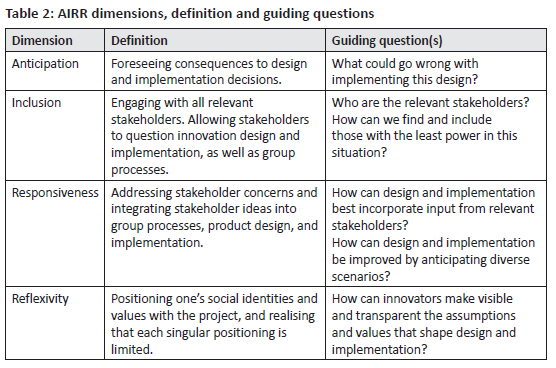
AIRR has four dimensions: (1) anticipation, (2) reflexivity, (3) inclusion, and (4) responsiveness (Stilgoe et al., 2013). This framework was developed from the key questions that scientists have to answer regarding a new innovation at hand, considering the product, the processes involved, and its purpose (Stilgoe et al., 2013). Such questions include: "what other impacts can we anticipate (product), how should standards be drawn up and applied (process), and why are researchers doing it (purpose)" (Stilgoe et al., 2013, p. 3). These questions (and others) seek to elicit any risks pertaining to the (technological) innovation and gauge if processes had any ethical considerations, especially when living subjects (men or animals) were involved (Stilgoe et al., 2013). Table 2 below from Patterson et al. (2023) further shows how AIRR is of importance in developing technological solutions such as the ESI.
The development of an holistic early success indicators system cannot happen in isolation. A framework such as AIRR ensures that all impacted stakeholders are considered and all voices are heard (inclusion and responsiveness).
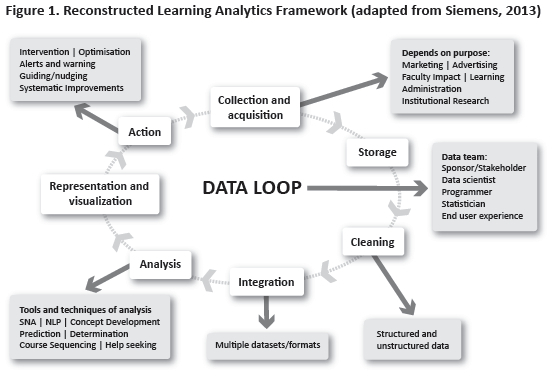
The practical development of an early success system is framed using the learning analytics framework in Figure 1, which is a typical approach to data science and educational data mining in how data collected about the student can be used to develop alerts or interventions. The framework opens up with (a) data collection from various sources and tools, this is then followed by (b) storing it somewhere on a server, (c) then the data cleaning process happens to achieve the desired format, (d) the clean data is then transformed to desired formats or integrated with other sources, (e) the analysis then begins by using appropriate tools and techniques, (f) the outcomes of the analysis are communicated/presented, (g) and this leads to the intended action.
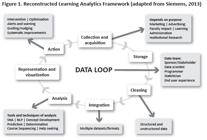
In this study, Siemen's model has informed the design of the data infrastructure and identification of student risk indicators, while AIRR has guided the institutional strategy in deploying these insights through support structures and feedback loops. These two frameworks have informed and continue to inform the further development of the early success indicators at our university.
Methods
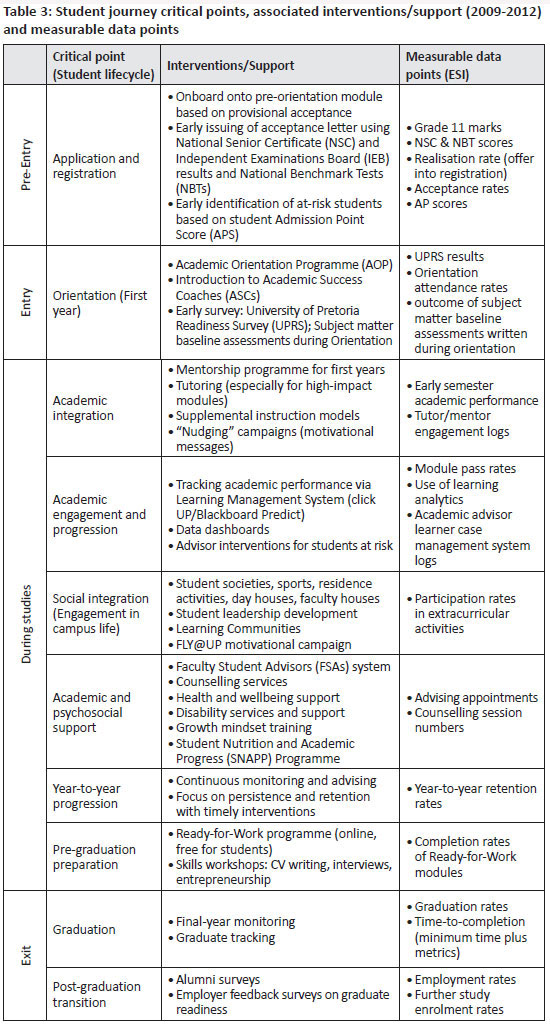
In developing the first iteration of the early success indicators system, this study was informed by the previous support and institutional interventions as shown in Table 3, which lists the institutional initiatives from 2009-2012 and the literature on early warning/alerts systems. The gap between 2019 to 2024 was filled by data scientists and system developers based on the dashboards and tools that they provided to various stakeholders to support timely interventions (Naidoo & Lemmens, 2015).
Mapping the student academic journey
According to Kilfoil (2021), the university has, over time, achieved maturity in support initiatives provided to students. Table 3 below maps key phases in the student lifecycle, the support provided, and data points associated with each phase. Further support initiatives to close equity gaps have been introduced over time. Some of these include wrap-around support for targeted cohorts of students, specifically students who are funded by the National Student Financial Aid Scheme (NSFAS) and the missing-middle students. It is easy to map these initiatives in a timeline but, until now, these important interventions have been run randomly, in isolation, not linked to critical moments when students most need them. Analysing data has the potential to highlight the trends and patterns and help academic advisors to make informed decisions in terms of which interventions are necessary to whom and when.
The goal is to map out all activities that are associated with a student and potential barriers at each stage of the student journey and match each stage with the institutional support/intervention. This promotes data-informed interventions, improves collaboration among staff and maximises the impact. Secondary to this, the goal is to map stakeholders who are involved at each point, their activities, resources, technology, and the data they collect. Already, at the writing of this article, the institution had initiated an Institutional Student Success Committee to have all the role players who interface with students and those who support student-facing activities and infrastructure around the table.
In mapping the student journey, it is also important to consider the diversity in the groups of students to develop an effective and inclusive system. The outlook of the university comprises the following three clusters of students: first-time entering, returning and transferring; undergraduate, postgraduate, and non-degree; and local and international. In addition to these clusters, students have nuanced personal skills development needs that require attention. It is therefore important to anticipate and distinguish between the generic and unique support for students and provide that in a timely manner.
Results and discussion
In a quest for a fresh take on early warning/alert systems that are holistic, we ventured to use the terminology, 'early success indicators (ESI)'. Contrary to the concept, 'early warning systems', which carries a negative connotation analogous to the 'at-risk' concept. Early success indicators take a positive and constructive perspective that is easy to communicate and advocate. This term, 'early success indicator', is not common in education literature, with no results on Web of Science and one result in education on Scopus by (Stout et al., 2021) titled: 'Basic Skills Assessment as an Early Success Indicator in College Math Course' when searched on 28 April 2025, using 'early success indicator'. Even so, the wealth of literature on early warning/alert systems provides insights on previous global strategies towards ensuring the success of an institution and that of the student.
Consistent early intervention through co-curricular support activities (e.g. mentorship, academic tutoring) correlates with higher progression rates. Siemens' Learning Analytics Model (2013) confirms the value of actionable analytics, that is, students who were flagged in ESI models, benefited from targeted interventions. In terms of the AIRR Framework (Stilgoe et al., 2013), the institution can demonstrate responsiveness by expanding support offerings based on feedback loops. Reflexivity is fostered through iterative programme adjustments. For instance, students who express feeling marginalised due to socio-economic barriers can subsequently be targeted with tailored financial literacy and peer-support interventions. These insights demonstrate that ESIs are not only predictive tools, but also catalysts to cultivate inclusive, developmental learning environments.
Limitations, recommendations and future research
In further developing ESI, it is recommended that consultation in the form of surveys or interviews with all relevant stakeholders should be considered. While the study has laid a solid foundation, future research should incorporate consultations with academic advisors and other stakeholders to capture evolving practices. Additionally, expanding the literature review to include studies on at-risk students, irrespective of specific terminology, could enrich the understanding of effective support systems.
Conclusion
This study has provided a comprehensive overview of student success as an evolving concept in higher education institutions, considering both institutional and student-level metrics. The quest to conceptualise a framework of early success indicators and associated support interventions across a student-life journey, underscores the complexity of student success, which is influenced by a confluence of academic, psychosocial, and systemic factors. The research report by the Universities South Africa (USAf) Transformation Strategy Group, titled Reshaping Universities to Create a Student Centred Higher Education System in South Africa, underscores the complexity, highlighting a student-centred university or higher education system as a multi-layered, multidimensional context underpinned by the values of interconnectedness, human dignity and equitable access (USAf, 2021). The report highlights student formation and ultimately student success as influenced by a reciprocal interaction between students and their multidimensional contexts of development.
The authors acknowledge that there have been significant strides by higher education institutions and associated advisory and regulatory bodies to bring student-interest to the fore as a key stakeholder that enables processes to enhance the student experience. These include, for example, a framework for a student-centred higher education system in South Africa by the USAf Transformation Strategy Group (USAf, 2021).
The adoption of ESIs as proactive and positive indicators marks a shift from traditional deficit-based early warning systems, focusing instead on fostering conditions conducive to student achievement. Key conclusions drawn from the study include:
Holistic measurement of student success: Institutions increasingly recognise that student success extends beyond academic outcomes to include factors such as wellbeing, connectedness, and access to resources (USAf, 2021). Metrics at both the institutional and student levels are essential for capturing this multifaceted concept.
Role of institutional adaptability: The capacity of institutions to adapt through digital transformation and inclusive leadership significantly impacts their effectiveness and efficiency in supporting student success. Agile strategies and data-informed decision-making are crucial in meeting the diverse needs of the student body.
Importance of early success indicators: The shift to ESI from traditional early warning systems reflects a more constructive approach, promoting timely, data-driven interventions tailored to various stages of the student lifecycle. This proactive stance facilitates the anticipation of barriers and the deployment of targeted support.
Collaborative support frameworks: The integration of academic, co-curricular, and psychosocial support services is vital. Effective student success strategies require coordinated efforts across diverse institutional stakeholders, emphasizing inclusion, responsiveness, and reflexivity as outlined in the AIRR framework.
Data utilisation for enhanced decision-making: Leveraging learning analytics enables institutions to identify trends, predict potential challenges, and implement timely interventions. Data not only supports academic advising and student development but also informs institutional policies and resource allocation.
Addressing equity gaps: A critical dimension of student success involves closing equity gaps related to demographic and socio-economic disparities. Tailored interventions, such as wrap-around support for underrepresented student cohorts, play a significant role in promoting equity in educational outcomes.
This study contributes to a growing recognition of the need for student-centred, data-informed institutional strategies in South African higher education. Early success indicators, when used responsibly and contextually, can enhance anticipatory support and promote inclusive student development. The proposed frameworks resonate with USAf's (2021) call for reshaping universities into student-centred systems and DHET's (2020) national framework for student success. Ultimately, data must not replace human judgement, but rather amplify our capacity to create equitable, responsive, and empowering student experiences.
In conclusion, this study contributes to the ongoing discourse on student success, offering insights into how data-driven, inclusive, and proactive strategies can enhance educational outcomes. By fostering environments that anticipate challenges and support diverse student needs, institutions can better fulfil their mission of promoting holistic student development and success.
Ethics statement
This study did not require ethical clearance, as it relied solely on previously published research literature, national reports, and university publications regarding student success.
Potential conflict of interests
The authors declare that there are no conflicts of interests relevant to this research.
Funding acknowledgementNo funding was received for the conduct of this research or the preparation of this publication.
Acknowledgements
We would like to thank Thabiso Mqondisi Gumede for introducing the concept of early success indicators and for providing valuable insights into student success analytics.
References
- Akçapınar, G., Altun, A., & Aşkar, P. (2019). Using learning analytics to develop early-warning system for at-risk students. International Journal of Educational Technology in Higher Education, 16(1), 40. https://doi.org/10.1186/s41239-019-0172-z
- Attewell, P., Maggio, C., Tucker, F., Brooks, J., Giani, M. S., Hu, X., Massa, T., Raoking, F., Walling, D., & Wilson, N. (2019). Early indicators of student success: A multistate analysis [Meeting proceedings]. 2019 AERA annual meeting. https://doi.org/10.3102/1441353
- Baxter Magolda, M. B. (2001). Making their own way: Narratives for transforming higher education to promote self-development. Stylus Publishing.
- Boughey, C., & McKenna, S. (2021). Understanding higher education: Alternative perspectives. African Minds. https://www.africanminds.co.za/understanding-higher-education/
- Cabezas, F., Burgos, L., Darrigol, J., & Zúñiga, M. (2024). Implementation of an early alert system in quizzes of a high complexity subject in higher education: Improvement of student performance and teacher perception. Education and Information Technologies, 29(15), 19321-19341. https://doi.org/10.1007/s10639-024-12610-5
- Castelo Branco, U. V., Jezine, E., Santos Diniz, A. V., & Silva, G. T. (2022). Sistema de alerta para la identificación de posibles factores de deserción de estudiantes de grado en período de pandemia en Paraíba (Brasil). Research in Education and Learning Innovation Archives, (29), 83-101. https://doi.org/10.7203/realia.29.24219
- Council on Higher Education (CHE). (2013). A proposal for undergraduate curriculum reform in South Africa: The case for a flexible curriculum structure. CHE. https://che.ac.za/publications/research/proposal-undergraduate-curriculum-reform-south-africa-case-flexible
- Delogu, M., Lagravinese, R., Paolini, D., & Resce, G. (2024). Predicting dropout from higher education: Evidence from Italy. Economic Modelling, 130, 106583. https://doi.org/10.1016/j.econmod.2023.106583
- Department of Higher Education and Training (DHET). (2021). Monitoring and evaluation report on the implementation of student support services in public HEIs. DHET.
- Ferguson, R. (2012). Learning analytics: Drivers, developments and challenges. International Journal of Technology Enhanced Learning, 4(5/6), 304-317. https://doi.org/10.1504/IJTEL.2012.051816
- Hershkovitz, A., & Ambrose, A. (2022). Insights of instructors and advisors into an early prediction model for non-thriving students. Journal of Learning Analytics, 9(2), 202-217. https://doi.org/10.18608/jla.2022.7509
- Kay, E., & Bostock, P. (2023). The power of the nudge: Technology driving persistence. Student Success, 14(2), 8-18. https://doi.org/10.5204/ssj.2848
- Kilfoil, W. (2021), A systemic approach to student success. In W. Kilfoil (Ed.), Student success at the University of Pretoria, 2009-2019: A systemic, intentional and data-informed strategy (pp. 1-44). https://repository.up.ac.za/items/b3cee9f0-8a96-48e2-bec1-edfdb0d16a25
- Liu, C. (2024). An empirical study on the construction of sample branches in colleges and universities in promoting the development of students' subjectivity. Applied Mathematics and Nonlinear Sciences, 9(1), 20241804. http://archive.sciendo.com/AMNS/amns-2024-1804.open-issue/amns-2024-1804/amns-2024-1804.pdf
- Naidoo, A., & Lemmens, J. (2015). Faculty intervention as support for first-year students. Journal of Student Affairs in Africa, 3(2), 17-32. https://doi.org/10.14426/jsaa.v3i2.133
- Ogude, N. A., Majozi, P. C., Mathabathe, K. C., & Mthethwa, N. (2021). The management of student success in extended curriculum programmes: A case study of the University of Pretoria's Mamelodi Campus, South Africa. South African Journal of Higher Education, 35(4), 237-252. https://dx.doi.org/10.20853/35-4-4242
- Patterson, C., York, E., Maxham, D., Molina, R., & Mabrey, P. (2023). Applying a responsible innovation framework in developing an equitable early alert system: A case study. Journal of Learning Analytics, 10(1), 24-36. https://doi.org/10.18608/jla.2023.7795
- Sanford, N. (1967) Where colleges fail: A study of the student as a person. Jossey-Bass.
- Siemens, G. (2013). Learning analytics: The emergence of a discipline. American Behavioral Scientist, 57(10), 1380-1400. https://doi.org/10.1177/0002764213498851
- Stout, M., Park, J. W., Dogan, A., & Teixeira, R. (2021). Basic skills assessment as an early success indicator in college math courses. The International Journal of Assessment and Evaluation, 28(1), 67-77. https://doi.org/10.18848/2327-7920/CGP/v28i01/67-77
- Universities South Africa (USAf). (2021). Reshaping universities to create a student-centred higher education system in South Africa. USAf. Retrieved from https://www.usaf.ac.za/wp-content/uploads/2023/05/USAf_ResearchReport_StudentCentredUniversities.pdf
- Wilson-Strydom, M. (2015). University access and success: Capabilities, diversity and social justice. Routledge. https://doi.org/10.4324/9781315780214
- Young, D. G. (2016). The case for an integrated approach to transition programmes at South Africa's higher education institutions. Journal of Student Affairs in Africa, 4(1), 17-32. https://doi.org/10.14426/jsaa.v4i1.142
Accepted 29 September 2025
Published 18 August 2026