Conceptualising Ubuntu in Life Sciences teacher education: A model for integrating values within scientific concepts
Abstract
This study develops a model grounded in the principle of interconnectedness to conceptualise how Ubuntu is embedded in Life Sciences concepts. This is used to explore how pre-service teachers can be equipped to use these concepts as vehicles for promoting Ubuntu values in their future classrooms. Situated within values pedagogy and Ubuntu as theoretical lenses, the study employed a qualitative intervention case study design. Data was generated from policy documents, participants' pre- and post- intervention assignments and teacher educators' teaching resources. Data analysis was conducted using a 6-step thematic qualitative analysis with a hybrid of deductive and inductive approaches. Findings reveal that while many of the participants identified values, these were often concept-independent and not enacted in teaching; others recognised concept-embedded values but failed to make them explicit during microteaching. Only a small group of participants articulated concept-embedded values that were enacted while teaching Life Sciences concepts. These patterns expose a persistent gap between conceptual awareness and pedagogical enactment. Therefore, an interconnectedness model is proposed that makes visible the intrinsic links between scientific concepts (e.g. interdependence, systems) and Ubuntu values. The study concludes by proposing a framework for teacher education to support pre-service teachers' progression from identifying concept-embedded values to integrating them within disciplinary teaching. The study contributes to rethinking Life Sciences teacher education by foregrounding values-integrated pedagogy as essential for cultivating ethically responsive and socially conscious learners as a means of ameliorating social ills.
Ubuntu values; Life Sciences; pre-service teachers; values pedagogy; teacher education
Introduction
Ubuntu is the "worldview of Black people of Africa from where they derive relational, communal, societal, environmental and spiritual knowledges, values and practices" (Mugumbate et al., 2024, p. 1125). Ubuntu values, underscored by the principle of interconnectedness, include-but are not limited to-service to others, justice, respect, sustainability, collective responsibility, and non-racism (Dixon, 2024; Mugumbate et al., 2024). Nonetheless, well-known social ills including gender-based violence (Roy et al., 2022), inequality (Mukumbang et al., 2020), substance abuse (Mbunge, 2020), violent crime (Hoosen et al., 2022), and social injustice (Govender, 2016) are prevalent among youths in South Africa. Social ills generate anti-social behaviour, and values are known to be a defining factor in shaping such behaviours (Türkkahraman, 2014). Solutions to social ills are frequently sought in legal systems (Appell, 2009), politics, and economics (Tisdell, 2020) but rarely in formal education. Yet, teachers have been blamed for not "convey[ing] a positive value system to learners, thus perpetuating the problem of a society in decline" (Bayaga & Jaysveree, 2011, p. 199).
Ubuntu has significantly influenced the constitutional jurisprudence of the Republic of South Africa (Dube, 2020, 2023; Ramose, 1999; Republic of South Africa, 1996). It is a fundamental value enshrined in the country's post-apartheid Constitution (Department of Education [DoE], 2001; Dube, 2020, 2023; Republic of South Africa, 1996). Ubuntu is an overarching or foundational constitutional value that informs, gives content to, or underpins the interpretation and application of the Constitution's founding values and the Bill of Rights (Dube, 2023). Closely associated with Indigenous knowledge systems (IKS), Ubuntu is embedded within cultural, ethical, and spiritual worldviews (Ngubane & Makua, 2021). Although generally recognised as a transformative philosophy within educational contexts, Ubuntu is usually considered at the conceptual or curricular level in the literature (Le Grange, 2016). This may be attributed to the disconnect in contextual realities between IKS and Western scientific systems. There is also limited attention to how Life Sciences can serve as avenues for values integration, especially in relation to how Ubuntu's principle of interconnectedness is embedded within its concepts (Magadza et al., 2024). More so, with the way colonialism has shaped educational institutions and knowledge hierarchies causing frequent tensions between Indigenous and Western knowledge systems (Smith, 2021).
Thus, the integration of Indigenous values in science teaching has remained implicit or disconnected from core science concepts. Despite calls for integrating IKS into science education (Aikenhead, 2006; Aikenhead & Jegede, 1999; Lotz-Sisitka et al., 2015; UNESCO, 2020), this has remained at a philosophical or policy level, with little or no attention to how the interconnectedness aspect of Ubuntu can be enacted within specific disciplinary contexts such as Life Sciences (Le Grange, 2016). Furthermore, research indicates that while pre-service teachers may identify values, they often struggle to explicitly enact them in classroom practice, highlighting a gap between conceptual awareness and pedagogical implementation (Loughran, 2019). Additionally, intervention-based studies and theoretically grounded models that elucidate how the Ubuntu principle of interconnectedness can be conceptualised as embedded within scientific concepts, especially within science education, are scarce (Lotz-Sisitka et al., 2015). This study addresses these gaps by proposing a model grounded in the principle of interconnectedness to conceptualise how Ubuntu is embedded within Life Sciences concepts. The following research questions guided this study:
1. How can the principle of interconnectedness be conceptualised to explain the embedding of Ubuntu values within Life Sciences concepts?
2. How can an interconnectedness-based model inform teacher education practices for supporting pre-service teachers' development of values-integrated pedagogy in Life Sciences?
3. How did pre-service Life Sciences teachers identify Ubuntu values within Life Sciences concepts before a structured intervention (pre-intervention)?
4. How did pre-service Life Sciences teachers identify Ubuntu values within Life Sciences concepts after a structured intervention (post-intervention)?
5. To what extent do pre-service Life Sciences teachers explicitly integrate Ubuntu values within Life Sciences concepts in their teaching following an intervention?
Within the African context, the philosophy of Ubuntu, often encapsulated in the notion of "I am because we are" (Dixon, 2024; Mugumbate et al., 2024) has been foregrounded as a transformative Indigenous lens for rethinking values education (Waghid, 2014). The South African Department of Basic Education (DBE, 2011, p. 3) stated that "from the start of democracy we have built our curriculum on the values that inspired our Constitution (Act 108 of 1996)." Dube (2020) argues that these values collectively express the country's constitutional vision to create a society founded on justice, fairness, dignity, equality, and freedom. Despite this, and even with value-driven curriculum transformations, the country continues to experience significant social ills-especially among youths, which is of great concern (Struwig, 2013). Moral degeneration and social ills pose serious challenges not only in South Africa but globally (Freeman et al., 2024). Ubuntu offers practical avenues for curbing social ills through societal and community development, social justice and cohesion, and interconnectedness (Danielsen et al., 2025; Mugumbate et al., 2024).
The integration of Ubuntu as a social value within IKS in South African science education has gained increasing attention (Le Grange, 2016; Lotz-Sisitka et al., 2015). This is consistent with global calls for integrating IKS into science education (Lotz-Sisitka et al., 2015; UNESCO, 2020). These scholars have called for more socially responsive and culturally grounded pedagogies, particularly within teacher education. Studies have shown that integrating IKS can enhance learners' cultural relevance and engagement with science (Aikenhead, 2006; Aikenhead & Jegede, 1999). But other studies report that teachers often struggle to integrate IKS because of limited pedagogical knowledge and curriculum constraints (Mkhwebane, 2024; Mlotshwa & Tsakeni, 2024). These studies have, however, paid relatively little attention to how Ubuntu values could be conceptualised within Life Sciences concepts, a gap that the present study seeks to address.
Scholars have also argued that the integration of IKS into science education is shaped by epistemological tensions between Indigenous and Western traditions (Blackie, 2024). These tensions usually arise from claims that Western science generally has universal validity characterised by empirical inquiry, while IKS is relational and context-specific (Battiste, 2002; Blackie, 2024). Thus, the tendency is to place Indigenous knowledge as inferior to Western knowledge in terms of science learning (Owusu-Ansah & Mji, 2013). Ubuntu is consequently often positioned at a curriculum or philosophical level, and not at the level of classroom enactment through the teaching of disciplinary concepts, such as in Life Sciences (Maphalala & Nkosi, 2025).
The disconnect between Indigenous and Western science knowledge systems arises from fundamental differences in the epistemological, ontological, and methodological assumptions underpinning them (Battiste, 2002; Magadza et al., 2024; Smith, 2021). Consequently, limited attention is given to values that underpin Indigenous forms of science, and attempts to integrate these into science curriculum frequently remain superficial. However, as Owusu-Ansha and Mji (2013, p. 1) argued: "Knowledge or science, and its methods of investigation, cannot be divorced from a people's history, cultural context and worldview." These authors further contend that all cultures and Indigenous ways of knowing should be valued as a unique form of identity. Ubuntu offers a valuable philosophical lens for addressing the epistemological divide by foregrounding relationality, interconnectedness, care, and communal responsibility. Conceptualising Ubuntu within Life Sciences teacher education provides an opportunity to foster plurality in epistemology while supporting meaningful engagement with scientific concepts and values-based sustainability education.
Education plays a fundamental role in restoring and transforming people's frame of mind- especially those who live in post-conflict (e.g. caused by apartheid) countries such as South Africa (Rubagiza et al., 2016). Curriculum materials and teachers' knowledge of them are essential tools that teachers need to draw upon to organise instruction and facilitate student learning (Ajayi, 2021). Moreover, values pedagogy and values are fundamental to both the theory and practice of education and the various activities that take place within school environments (O'Flaherty & Mccormack, 2022). Values pedagogy relates to the "orientation of the learning discourse being around values, the values inherent in curriculum content, rather than merely the 'facts and figures' or most easily measurable features of the content" (Lovat, 2019, p. 7). The Curriculum and Assessment Policy Statement (CAPS) that stipulates policy on teaching and learning in the schooling sector in South Africa indicates recognition of the role that formal education can play in mitigating social ills (DBE, 2011). As one of its aims, the CAPS counts as paramount the "equipping [of] learners . . . with the knowledge, skills and values necessary for self-fulfilment, and meaningful participation in society as citizens of a free country" (DBE, 2011, p. 4).
The Manifesto on Values, Education and Democracy (MVED; DoE, 2001) explicitly argues that education should promote democratic values, social responsibility, and ethical citizenship. The central role that teachers play in integrating such values into teaching and learning for nurturing them in learners, is also emphasised in the MVED (Ajayi, 2023). As stakeholders within educational contexts, teachers are seen as agents of socially transformative change (Rubagiza et al., 2016). Teachers also play a role in mitigating social ills by nurturing in learners a consciousness of exhibiting appropriate behavioural traits (Van Stekelenburg et al., 2025). The crucial roles that pre-service teachers can play in addressing social ills have also been reported (Palmer & Larey, 2016). This role can be accomplished when pre-service teachers are adequately equipped by integrating values into their teaching.
Despite its critical importance, preparation of pre-service teachers to integrate values into their teaching has been identified as an underdeveloped area in teacher education (Darling-Hammond, 2017; Loughran, 2019). According to these authors, while pre-service teachers may recognise the importance of values in education, they frequently struggle to translate this awareness into classroom practice. Therefore, a need arises for the development of value-integrated teaching competences through pedagogical frameworks that may offer new and structured learning experiences. Yet, practical models that demonstrate how such integration can occur within science disciplines remain scarce. In the context of Life Sciences, concepts such as ecosystems, interdependence, and biological systems inherently reflect principles of interconnectedness, which resonate strongly with Ubuntu philosophy. However, these connections are seldom made explicit in teaching, resulting in missed opportunities for meaningful values integration. In this study, value-integrated teaching competence is examined through conceptualising how the principle of interconnectedness in Ubuntu can be used to integrate values within Life Sciences concepts by adapting the lens of values pedagogy.
Theoretical framework: Values pedagogy and Ubuntu as theoretical lens
This study is underpinned by the complementary theoretical perspectives of values pedagogy and Ubuntu guided by Shulman's (1986, 1987) Pedagogical Content Knowledge (PCK).
Values pedagogy pertains to shifting the focus of learning from only factual content knowledge prescribed in the curriculum to the values embedded within the cirriculum and disciplinary content (Lovat, 2019). Values pedagogy provides a pedagogical and theoretical framework that considers the intentional incorporation of values within teaching and learning. This framework considers that education is not only about acquiring knowledge but also about nurturing values that may elicit appropriate value-expressive behaviours in the transmittee (Skimina et al., 2019). Values pedagogy thus enables learners to critically engage with scientific knowledge while developing the value traits required to make informed and responsible decisions in diverse social and environmental contexts (Reiss, 2020; Skimina et al., 2019; UNESCO, 2020). According to Skimina et al., (2019, p. 3), value traits "are similar to personality traits-their role can be discerned in patterns of behaviors aggregated over time and occasions."
Therefore, values pedagogy provides a theoretical lens for this study in the recognising cognitive, affective, and behavioural dimensions of learning Life Sciences In essence, it encompasses a theoretical perspective, which helps the study visualise how the value of interdependence embedded within the philosophy of Ubuntu can be conceptualised in relation to Life Sciences concepts. Hence, rather than treating Life Sciences as standalone disciplinary knowledge, values pedagogy recognises interconnectedness (of all the concepts) in Life Sciences as inspired in the philosophy of Ubuntu. Moreover, Shulman's (1986, 1987) PCK framework provides a useful lens for conceptualising the professional competence required by pre-service teachers to integrate Ubuntu values within Life Sciences teaching. PCK extends beyond knowledge of biological concepts or general pedagogical strategies by emphasising teachers' capacity to transform disciplinary knowledge into meaningful learning experiences. In the context of the present study, this transformation includes identifying opportunities for embedding Ubuntu values within scientific concepts. However, this must be in ways that preserve the epistemological integrity of Life Sciences while using it to foster value-driven socially responsible citizenship.
Ubuntu provides the philosophical foundation for the above pedagogical approach by articulating the Indigenous African value that is foregrounded in the study. Ubuntu is rooted in the sayings, "I am a person because you are, I am because I share and participate" and "I am because of others" (Mupedziswa et al., 2019, as cited in Chigangaidze et al., 2021, p. 2). This philosophy is deeply rooted in principles of relationality, interconnectedness, human dignity, communal responsibility, care, and respect for both people and the natural environment (Mlondo, 2022). Ubuntu offers an Indigenous epistemic lens through which Life Sciences concepts can be understood and taught in relation to the notion of interconnectedness. In this study, Ubuntu informs which values are embedded within Life Sciences concepts, while values pedagogy informs how these values are intentionally integrated into classroom practice. The integration of these perspectives enables scientific concepts to be taught in a way that nurtures socially responsive values in learners. Through this, and as facilitators and final implementers of the curriculum, scientifically literate teachers can be developed to nurture ethical reasoning, sustainability, and responsible citizenship in learners. This can help foster traits in learners that promote, among others, values towards curbing social ills. Values pedagogy and Ubuntu are therefore operationalised together as the guiding theoretical lens in the study. Values pedagogy operationalises Ubuntu by translating its philosophical principles into pedagogical practices that guide lesson planning, classroom interactions, and the integration of values within Life Sciences teaching.
Methodology
Research setting and participants
The study site was a university in South Africa where the authors (Authors 1 and 2) are teacher educators who taught an exit methodology course to pre-service Bachelor of Education students. The participants were 60 3rd- and 4th-year pre-service Life Sciences teachers registered for the course.
Data collection
Data collection was done in three phases: pre-intervention, intervention, and post-intervention. Data were collected from the following three sources: teacher educators' teaching and learning resources comprising lecture PowerPoints and policy documents (CAPS for Life Sciences and MVED), participants' pre- and post-intervention assignments of lesson plans, and microteaching videos.
Pre-intervention phase data collection
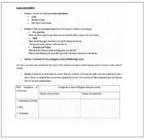
This took place during the first block of the session. The participants were given an assignment that required them to prepare lesson plans for classroom teaching some Life Sciences topics of their choice selected from CAPS for Life Sciences. The submitted lesson plans formed the first batch of data. The lesson plan template used for the assignment is shown in Appendix 1. Of particular interest and focus was Section 2 (Subsection on "Attitudes and values") of the lesson plan where participants needed to state the values intended to be nurtured in learners while teaching their chosen topics.
Intervention phase data collection
This phase took place during the second block of the session. This phase focused on how the participants were taught to conceptualise the principle of interconnectedness in Ubuntu while teaching Life Sciences concepts.
Post-intervention data collection
The participants were given an assignment that required them to prepare a lesson plan for a given Life Sciences topic/concept (selected from CAPS for Life Sciences) using the same template that they had used for the pre-intervention assignment. All 60 participants were also engaged in microteaching activities during which they used the prepared lesson plans to teach different Life Sciences topics to their peers. The authors observed and assessed the microteaching activities using a rubric. Of particular importance was how what was stated under the "Attitudes & Values" subsection of their lesson plans reflected their microteaching. That is, how participants were able to integrate the values mentioned under this subsection into their teaching.
Data analysis
Data were analysed using Naeem et al.'s (2023) six-step thematic qualitative analysis, with a hybrid of deductive and inductive approaches (Fife & Gossner, 2024). The six steps comprised "(i) Transcription, familiarisation with the data, and selection of quotations; (ii) keyword identification; (iii) code selection; (iv) theme development; (v) conceptualisation through the interpretation of keywords, codes, and themes; and, finally, (vi) the development of a conceptual model" (Naeem et al. 2023, p. 2).
Ethical clearance statement
Ethical approval for this study was obtained from the University of the Witwatersrand Human Research Ethics Committee (Reference No: H25-02-01) prior to the commencement of data collection. Although the participants were students in the university, participation was voluntary, and they all received an information sheet outlining the purpose of the study, the nature of their involvement, and their right to withdraw at any stage without penalty. Written informed consent was obtained from all participants before data collection. The participants' privacy was protected through anonymising their lesson plans and microteaching videos using participant codes, and all identifying information was removed from the dataset. Electronic data were stored securely on password-protected devices accessible only to the research team and will be retained and disposed of in accordance with institutional research ethics guidelines.
Results
The results are presented using Themes 1-5 in relation to the research questions which guided the study.
RQ 1: How can the principle of interconnectedness be conceptualised to explain the embedding of Ubuntu values within Life Sciences concepts?
Theme 1: Conceptualising the principle of interconnectedness in Life Sciences concepts
The following are examples of illustrations used to teach pre-service teachers how to conceptualise the principle of interconnectedness to explain the embedding of Ubuntu values within Life Sciences concepts.
Discussion points
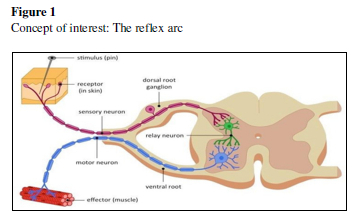
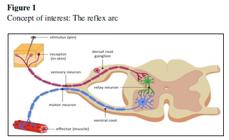
• A reflex arc (see Figure 1) consists of five parts: (1) Receptor: Detects a stimulus, (2) Sensory neuron: Transmits the signal to the central nervous system (CNS), (3) Integration centre (usually in the CNS): Processes the signal, (4) Motor neuron: Carries the signal from the CNS to an effector, (5) Effector: Muscle or gland, which produces the response.
• There must be coordination/understanding among the various parts.
• The reflex arc cannot be actualised without interconnectedness among all the parts.
• Each part is responsible or accountable for a particular function.
• Values incorporated in the concept: Accountability/responsibility, respect.
• Values incorporated in relation to the conceptual model: Ubuntu-responsibility, Ubuntu-accountability, Ubuntu-respect, Ubuntu-coordination.
Discussion points
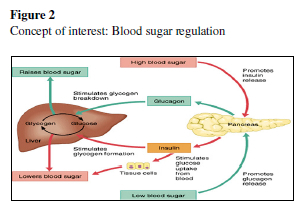
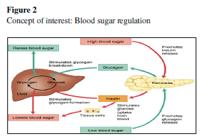
• The main components of blood sugar regulation (see Figure 2) are: (1) Pancreatic hormones insulin and glucagon: Work in opposition to control glucose levels, (2) Liver: Stores glucose as glycogen, (3) Brain: Contains glucose-sensing neurons.
• There must be coordination/understanding among the components.
• Blood sugar regulation cannot be actualised without interconnectedness among all the parts.
• Each part is responsible or accountable for a particular function.
• Biological law: Insulin lowers blood sugar by helping cells absorb glucose, while glucagon raises it by signalling the liver to release stored glucose.
• Values incorporated in the concept: Rule of law, reconciliation accountability/responsibility, respect.
• Values incorporated in relation to the conceptual model: Ubuntu-rule of law, Ubuntu- accountability, Ubuntu-reconciliation, Ubuntu-coordination.
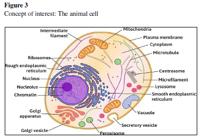
Discussion points
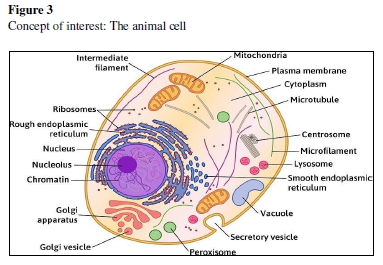
• The main components of the animal cell (see Figure 3) are the organelles: (1) Nucleus: Contains the cell's hereditary material (DNA) and controls cell growth and reproduction, (2) Mitochondrion: Generate the energy currency of the cell, ATP, through cellular respiration, (3) Ribosome: Synthesises proteins, (4) Lysosome: Contains enzymes to digest waste materials and cellular debris, etc.
• There must be coordination/understanding among the components.
• Proper functioning of the cell cannot be actualised without interconnectedness among the organelles.
• Each part is responsible or accountable for a particular function.
• Values incorporated in the concept: Democracy, accountability/responsibility, respect, equality.
• Values incorporated in relation to the conceptual model: Ubuntu-equality, Ubuntu-accountability, Ubuntu-democracy, Ubuntu-coordination.
RQ 2: How can an interconnectedness-based model inform teacher education practices for supporting pre-service teachers' development of values-integrated pedagogy in Life Sciences?
Theme 2: Developing an interconnectedness-based conceptual model
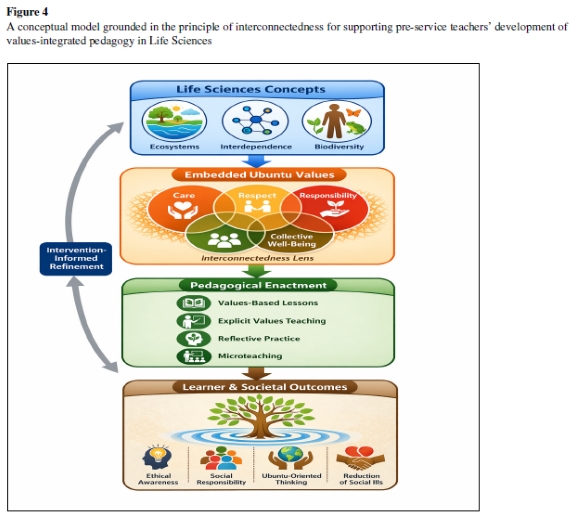
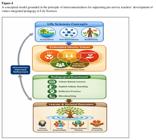
The proposed model conceptualises how Life Sciences concepts can serve as vehicles for embedding Ubuntu values within teacher education. At its core is the principle of interconnectedness, illustrating the relational links between scientific knowledge and human values. The model integrates three key components: values pedagogy, Ubuntu (the two forming the basis for a theoretical foundation in which the model is grounded), and an empirical intervention. It demonstrates how concepts such as ecology, genetics, and human biology can be mapped onto values like compassion, respect, and community. The model ultimately provides a coherent pathway for developing values-integrated pedagogy, positioning Life Sciences education as a transformative space for nurturing ethically responsive, socially conscious learners aligned with Ubuntu principles.
RQ 3: How did pre-service Life Sciences teachers identify Ubuntu values within Life Sciences concepts before a structured intervention (pre-intervention)?
Theme 3: Articulation of concept-independent values
This theme is based on the participants' responses to the "Attitudes and Values" section (Section 2, sub-bullet 3) of their submitted pre-intervention lesson plans. Excerpts 1-3 are examples of participant's responses derived from the section (P 20, for example represents pre-service teacher, Number 20).
Excerpt 1: P 20 (Topic: Life processes in plants and animals):
This lesson intends to promote the development of scientific process skills in order to uphold the values of social transformation through access to quality and higher education as expressed in the CAPS document (DBE, 2011) . . . This lesson also aims to promote collaboration, inclusivity, and respect among learners through the utilisation of group work within the diverse classroom setting.
Excerpt 2: P 57 (Topic: Support systems in animals):
So with the use of different learning styles, I will promote fairness. Another thing that the lesson promotes as being fair and just is respect; to achieve this classroom rules will be set, there will be respect between the learners and teacher, every learner will get the same kind of treatment there will be no exceptions, this will promote a positive attitude that encourages camaraderie in the classroom.
Excerpt 3: P15 (Topic: DNA-The code of life):
Support for one another and for the needs of the learners by catering for the different needs of learners, whether it be physically, emotionally (considering the stress, pressure, and anxiety that learners may experience in Grade 12), or mentally. The diversity of learners in South Africa is also considered. Content is not biased to one race, religion or gender but values all learners. Respect for each other, the teacher, and the materials/apparatus that learners work with is fundamental in learning comfortably.
P 20 stated the significance of teaching the topic to develop scientific process skills in learners for promoting the value of social transformation through access to quality education. The pre-service teacher also listed the promotion of the values of collaboration, inclusivity, and respect among learners through the pedagogical strategy of peer collaboration when teaching the topic in question. For teaching the topic indicated, P 57 identified the value of fairness with respect to using different teaching styles in engaging with the learners. Also, the pre-service teacher suggested that the value of mutual respect could be promoted through ensuring adequate classroom management. P 15 listed the values of support, diversity, and respect as important while teaching the stated topic. This is in terms of meeting the physical or emotional needs of a wide range of learners. Mutual respect is also stated as significant in terms of the teacher providing necessary teaching and learning resources to make "learning comfortable" while the learners respect the teacher in return for doing such. The values articulated above are classified as concept-independent values.
RQ 4: How did pre-service Life Sciences teachers identify Ubuntu values within Life Sciences concepts after a structured intervention (post-intervention)?
Theme 4: Articulation of concept-embedded values
In the post-intervention lesson plans, the participants were able to state or identify specific values in relation to how they are incorporated within content of the concepts. Excerpts 4-6 are examples of the pre-service teachers' responses along this line.
Excerpt 4: P 35 (Topic: Animal tissues):
Ubuntu sometimes translated as "I am because we are" is valued in the main topic of animal tissues. The different types of tissues (epithelial, muscle, connective, and nervous) are grouped together to form different organs which have different functions carrying different life processes that allow the animal to grow, reproduce, etc. and live as a whole. If these different tissues were not supporting each other, the animal/body would malfunction or die. That is how Ubuntu is valued when teaching the topic of animal tissues
Excerpt 5: P 22 (Topic: Gaseous exchange):
Accountability: . . . each system . . . and organ are responsible for their part of gaseous exchange, and without each part or participation, gaseous exchange is not successful, which damages the entire organism suffers. The Rule of Law: Each component of the ventilation system must follow the routine and system. If any organ or cell deviates from the plan and rules, then gaseous exchange will fail. Respect: Each component, organ, and cell play an important role, none is less significant or less needed than the other.
Excerpt 6: P 7 (Topic: Cell division-Meiosis):
Respect and acceptance of difference because our unique looks and physical features are owed to this biological process of meiosis. Also, there's people whose meiosis did not occur normally and as a result they may suffer from conditions like Down syndrome so in that case I'll encourage my learners to show sensitivity and kindness to these people and be able to see them, their humanness beyond their physical impediments.
The values stated by the participants are in direct relation to how they are embedded within the concepts in question. P 35 cited the value of Ubuntu in relation to how the interdependence of life operates in the proper functioning of an organism. Hence, the value of Ubuntu is incorporated within the topic of "animal tissues." In this regard, all the different types of tissues mentioned come together to form organs, and must work together for proper coordination of the body. For the topic of gaseous exchange, P 22 presented the values of accountability, rule of law, and respect. Therefore, each of the organs in the respiratory system is responsible for specific function. Additionally, the diaphragm, for example, operates through a biological rule that it becomes dome-shaped when relaxed, and flattened when it contracts. Regarding the concept of cell division, P 7 listed the values of respect and acceptance necessary to appreciate.
RQ 5: To what extent do pre-service Life Sciences teachers explicitly integrate Ubuntu values within Life Sciences concepts in their teaching following an intervention?
Theme 5: Incorporating Ubuntu values during microteaching activities
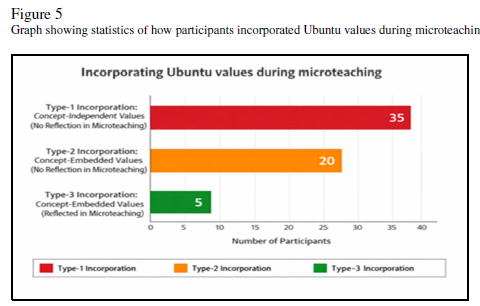
The different ways in which the participants incorporated values or not in their teaching during the microteaching activities are as follows:
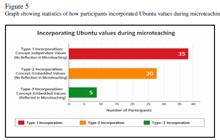
• Type-1 incorporation: These involved 35 participants (58.3%) who articulated concept-independent values in their lesson plans. For this group of participants, nothing reflected during their microteaching to showcase how Ubuntu values are incorporated in the topic taught.
• Type-2 incorporation: These involved 20 participants (33.3%) who articulated concept-embedded values in their lesson plans. Although these participants stated in the "Attitudes and Values" section of their lesson plans certain values in relation to how they are incorporated within content of the concepts, this did not reflect in their microteaching. That is, their teaching of the topic was devoid of how the Ubuntu values are incorporated within the topic.
• Type-3 incorporation: The 5 participants (8.3%) involved articulated concept-embedded values in their lesson plans. Their teaching of the topic reflected how the values stated or identified are incorporated within the topic.
Figure 5 represents graph showing statistics of how participants incorporated Ubuntu values during microteaching.
Excerpt 7 below presents comments made by one of the authors in their observations notes for a Type-3 situation while observing microteaching activities on the topic of stem cells.
Excerpt 7: (Author 1).
Explicitly incorporate a discussion of values in the lesson in alignment with the content that was taught. After explaining what stem cells are, the different types and what they are used for, a question was posed to the class: "What values can we learn from this content?" Fascinating answers were contributed by the "learners," e.g. "There are different types of stem cells, each with a different role in the treatment of diseases and hence in promoting the well-being of an individual," "None is more important than the other, same with us, we are different with different capabilities," "We should be allowed to contribute according to our capabilities without being made to feel less important and others more important." The student was able to note values of mutual respect of individuals from the content taught.
Discussion
Interconnectedness in Ubuntu and Life Sciences concepts
Against the backdrop of Ubuntu being harnessed to address social ills (Dixon, 2024; Padayachee et al., 2023), the study presents suggestions on how pre-service teachers can be taught to use the teaching of Life Sciences concepts to promote the African philosophy. The study focused on developing a conceptual model that positions biological interconnectedness as a pedagogical entry point for integrating Ubuntu values into the teaching and learning of Life Sciences concepts. We consider that biological interconnectedness within Life Sciences concepts relates to the perspective of interconnectedness that inspires the philosophy of Ubuntu (Mugumbate et al., 2024). Le Grange (2012) argues that Ubuntu expresses a relational ontology in which humans are inseparable from the wider community of life. According to Chigangaidze et al. (2022), Ubuntu, as a worldview, indicates a pattern of interconnectedness between people.
This expresses a position that considers an individual as nothing without the community while the community is also nothing without the individual (Ngubane & Makua, 2021).
Philosophical interconnectedness vs biological interconnectedness
The study suggests that Ubuntu's philosophical interconnectedness is conceptually consistent with the biological interconnectedness represented by the hierarchical organisation of life in Life Sciences. We view biological interconnectedness in the hierarchical organisation of life as a way in which biological systems are organised into nested layers, where each layer depends on and influences others. In essence, none of the levels exist autonomously, instead, each one is structurally, functionally, and ecologically interconnected to the next. Considering this, biological interconnectedness is represented through the hierarchical organisation of life, where cells, tissues, organs, organisms, populations, communities, ecosystems, and the biosphere are understood as nested and interdependent systems. This interconnectedness is explained scientifically through empirical relationships among living systems. Therefore, this provides a pedagogical platform for engaging learners with Ubuntu's philosophical emphasis on relational existence, mutual dependence, and responsibility without conflating scientific explanations with philosophical interpretation (Le Grange, 2012; Ramose, 1999). This conceptual compatibility provides a pedagogical basis and analytic lens for integrating Ubuntu values within Life Sciences concepts in the study. Consequently, although different epistemological paradigms inspire the biological concept of interconnectedness and Ubuntu's philosophy of relationality, they express critical conceptual consistency.
Model of conceptualising Ubuntu in Life Sciences concepts
The DBE (2011, p. 10) stated that "when teaching Life Sciences, it is very important to help learners to recognise the links between related topics so that they acquire a thorough understanding of the nature and interconnectedness of life." Dube (2020) averred that Ubuntu functions as a value whose underlying perspective of interconnectedness provides a normative framework that promotes justice, fairness, human dignity, and social cohesion. As a new contribution to literature, this perspective underlies the conceptual model (Figure 4) we developed in the study related to how Ubuntu can be conceptualised for integrating values within Life Sciences education. The model provides teachers with a framework that can assist their thinking about teaching not only the content of Life Sciences but using this to equip their learners with social values. Therefore, inspired by values pedagogy, we employed intentional pedagogical designs that showed how social values are integrated within scientific concepts. Through this, we argue how the interconnections between biological systems are consistent with interconnectedness in human relationships as exemplified by Ubuntu (Ewuoso & Hall, 2019). According to Danielsen et al. (2025, p. 12), "the ethic of Ubuntu is fundamental, showcasing how collective well-being is synergetic with individual well-being." We propose that the ethic of interconnectedness in Ubuntu can be viewed from the perspective of the hierarchy of organisation in organisms, in which case smaller components combine to form larger more complex systems.
Ubuntu and the hierarchy of organisation of life
In Life Sciences education, smaller components usually combine to form larger more complex systems, while both the former and latter interconnect for the structural and functional operation of the organism (Li et al., 2021). Similar to how the cell forms the basic structural and functional unit of life, this study proposes that the ethic of Ubuntu can be likened to the foundation of the hierarchy depicted in the cell-tissue-organ-system-organism organisation. Li et al. (2021, Abstract, para. 1) stated that through the cell, "intracellular biomolecular processes and multicellular tissue behavior" are well understood. Certain molecules form the building blocks of the cell while its overall performance is dependent on the proper functioning of the organelles present in it. Thus, the hierarchy of organisation leads to interconnectedness among the systems in organisms. Similarly, the ethic of Ubuntu stating that "I am because we are; and since we are, therefore, I am" (Mbiti, 1969, p. 106); stipulates that the collective well-being of a person (individual well-being) is commensurate with well-being of the community (collective well-being). In Life Sciences, the functioning of one system in an organism is not independent of the proper functioning of the other systems for the collective well-being of the organism (Campbell et al., 2021).
Concept-independent vs concept-embedded articulation
A central insight arising from the study revealed that pre intervention, the pre-service teachers perceived values as nominal in terms of how they are incorporated within Life Sciences concepts. Thus, the pre-service teachers perceived or articulated values not directly derived from within the content of concept in question (concept-independent articulation). For example, according to P20, "This lesson also aims to promote collaboration, inclusivity, and respect among learners through the utilisation of group work within the diverse classroom setting." The values indicated are implications of the teaching strategy used by the teacher.
However, post intervention, some of the pre-service teachers began to articulate values in terms of how they are espoused by Life Sciences concepts (concept-embedded articulation). In other words, how the concepts reflect Ubuntu principles of interconnectedness as embodied in the conceptual model. For example, P22 stated "The Rule of Law: Each component of the ventilation system must follow the routine and system. If any organ or cell deviates from the plan and rules, then gaseous exchange will fail." This metamorphosis suggests that the values-based pedagogical approach fostered the participants' awareness of how Ubuntu values are embedded within Life Sciences concepts and how to make them explicit in science classrooms (Hill et al., 2024; Koster & de Regt, 2020). Additionally, this is a strong indication of the effectiveness of interventions in teacher education (König et al., 2025).
Concept-embedded articulation during microteaching
However, of the pre-service teachers who identified Ubuntu values as incorporated within Life Sciences concepts (see Theme 5), only 5% of the participants made these values explicit while teaching their selected concepts during the microteaching activity. The following are suggested as reasons for this occurrence:
• Limited conceptual understanding of how values may be integrated into Life Sciences teaching because of viewing the subject as only content-based
• The intervention phase did not cover this aspect; hence the pre-service teachers lack explicit training in values pedagogy on how to connect Life Sciences concepts to the values dimension.
• Some of the pre-service teachers may not yet see a connection between Indigenous frameworks and scientific content knowledge. This is because of the contextual disconnect between Indigenous knowledge and Western scientific systems. Magadza, et al. (2024) advocated for a blend of Indigenous knowledge systems and Western science as conceptualised in their study.
Limitations of the intervention
In view of the above, notwithstanding the effectiveness of the intervention, the disparity between post-intervention lesson plans and microteaching performance suggests that conceptual understanding of how values are embedded within Life Sciences concepts does not automatically translate into how this is pedagogically implemented. This is an indication that although the participants began to understand how values are embedded in Life Sciences concepts, many (91%) had not yet developed the pedagogical competence required to implement them in classroom teaching contexts. The relatively short duration of the intervention may have contributed to this gap given that meaningful changes in pedagogical approaches typically require sustained opportunities for rehearsal, reflection, and formative feedback. This is consistent with observations in the teacher education and professional learning literature (Darling-Hammond et al., 2017; van der Merwe, 2025). In future interventions, it is recommended that longer implementation periods be incorporated, with repeated cycles of practice including structured monitoring. This will support the transmission of pedagogical knowledge into genuine teaching practice.
Conclusion
In this study Ubuntu is conceptualised as both a philosophical foundation and a pedagogical resource for integrating values within Life Sciences teaching. This accounts for a contribution to the growing scholarship on decolonising science education through engaging Indigenous perspectives and theoretical frameworks. A model is proposed which considered philosophical interconnectedness versus biological interconnectedness embedded within Ubuntu and Life sciences concepts, respectively. The model extends existing understandings of values pedagogy by demonstrating how an Indigenous African value can be operationalised within scientific concepts without compromising disciplinary integrity. This has implications for teacher education policy, suggesting that teacher education should intentionally embed Ubuntu-informed values pedagogy within curriculum design, pedagogical preparation, and teaching practice. The study proposes that teacher education programmes focus more on methodologies that enhance structured reflection on how pre-service teachers can recognise the implicit values embedded in Life Sciences topics (e.g., respect for life, sustainability, justice etc.). In addition, pre-service teachers need to be guided on how such values can be integrated into real-time Life Sciences teaching. Türkkahraman (2014, p. 633), stated that "teaching values is the most important item of social control mechanisms, as well as becoming an essential part of social integrity, teaching values is a realistic solution for any existing or potential problems both in social and global scale."
Hence, the approach adopted in this study has the potential to prepare teachers who are scientifically competent, ethically responsive, and capable of promoting socially and environmentally responsible citizenship. Moreover, while education alone cannot be the panacea to social ills, the intentional development of Ubuntu-informed values within Life Sciences education can be used to nurture appropriate values in learners. These learners are more likely to demonstrate empathy, social responsibility, ethical judgement, and respect for human and ecological well-being within society. Ultimately, over time, the intentional cultivation of these dispositions can contribute to strengthening social cohesion and fostering collective action for addressing the root causes and consequences of many contemporary social challenges. For further studies, the authors aim to explore not only how Ubuntu values are embedded, but how concepts in other scientific endeavours (e.g. physics, chemistry etc.) can be used to promote the teaching of Ubuntu values.
References
Aikenhead, G. S. (2006). Science education for everyday life: Evidence-based practice. Teachers College Press.
Literature review
- Aikenhead, G. S., & Jegede, O. J. (1999). Cross-cultural science education: A cognitive explanation of a cultural phenomenon. Journal of Research in Science Teaching, 36(3), 269-287. https://doi.org/10.1002/(SICI)1098-2736(199903)36:3%3C269::AID-TEA3%3E3.0.CO;2-T
- Ajayi, E. J. (2021). Exploring the nature, and teachers' understanding, of the National Curriculum Statement (NCS, Grades R-12): Navigating the changing landscape of science education through the Curriculum Assessment and Policy Statement (CAPS) in post-apartheid South Africa. In D. Geelan, K. Nichols, & C. V. McDonald (Eds.), Complexity and simplicity in science education (pp. 11-35). Springer. https://doi.org/10.1007/978-3-030-79084-4_2
- Appell, A. R. (2009). The pre-political child of child-centered jurisprudence. Houston Law Review, 46, 703-757. https://ssrn.com/abstract-1468933
- Battiste, M. (2002). Indigenous knowledge and pedagogy in First Nations education: A literature review with recommendations. National Working Group on Education and Indian and Northern Affairs Canada.
- Bayaga, A., & Jaysveree, L. (2011). Moral degeneration: Crisis in South African schools? Journal of Social Sciences, 28(3), 199-210. https://doi.org/10.1080/09718923.2011.11892945
- Campbell, N. A., Urry, L. A., Cain, M. L., Wasserman, S. A., Minorsky, P. V., & Reece, J. B. (2021). Campbell biology (12th ed.). Pearson.
- Chigangaidze, R. K., Matanga, A. A., & Katsuro, T. (2022). Ubuntu philosophy as a humanistic-existential framework for the fight against the COVID-19 pandemic. Journal of Humanistic Psychology, 62(3), 319-333. https://doi.org/10.1177/00221678211044554
- Danielsen, J., Makombore, L., & Farley, J. (2025). The power of the commons. Sustainability, 17(6), 2512. https://doi.org/10.3390/su17062512
- Darling-Hammond, L., Hyler, M. E., & Gardner, M. (2017). Effective teacher professional development. Learning Policy Institute. https://learningpolicyinstitute.org/product/effective-teacher-professional-development-report
- Department of Education. (2001). Manifesto on values, education and democracy. https://www.gov.za/sites/default/files/gcis_document/201409/manifesto0.pdf
- Department of Basic Education. (2011). Curriculum and assessment policy statement (CAPS): Life Sciences Grades 10-12. https://www.education.gov.za/Portals/0/CD/National%20Curriculum%20Statements%20and%20Vocational/CAPS%20FET%20_%20LIFE%20SCIENCES%20_%20GR%2010-12%20Web_2636.pdf
- Dube, F. (2020). The South African Constitution as an instrument of doing what is just, right and fair. In die Skriflig/In Luce Verbi, 54(1), Article a2601. https://doi.org/10.4102/ids.v54i1.2601
- Dube, F. (2023). Ubuntu: An underutilised foundational constitutional principle of South African environmental law. Journal of Law, Society and Development, 10(1), 1-15. https://doi.org/10.25159/2520-9515/13512
- Govender, J. (2016). Social justice in South Africa. Civitas: Revista de Ciências Sociais, 16(2), 237-258. https://doi.org/10.15448/1984-7289.2016.2.23076
- Hill, J. L., van Driel, J., Seah, W. T., & Kern, M. L. (2024). Students' values in science education: A scoping review. Studies in Science Education. Advance online publication. https://doi.org/10.1080/03057267.2024.2412456
- Hoosen, P., Adams, S., Tiliouine, H., & Savahl, S. (2022). Youth and adolescents' perceptions of violence in post-apartheid South Africa: A systematic review of the literature. Child Indicators Research, 15(3), 885-911. https://doi.org/10.1007/s12187-021-09890-5
- König, J., Großschedl, J., & Jost, J. (2025). Effectiveness of interventions in teacher education: Curricular and methodological innovations. Zeitschrift für Erziehungswissenschaft, 28, 1337-1344. https://doi.org/10.1007/s11618-025-01355-7
- Koster, E., & de Regt, H. W. (2020). Science and values in undergraduate education. Science & Education, 29(1), 123-143. https://doi.org/10.1007/s11191-019-00093-7
- Le Grange, L. (2012). Ubuntu, ukama, environment and moral education. Journal of Moral Education, 41(3), 329-340. https://doi.org/10.1080/03057240.2012.691631
- Le Grange, L. (2016). Decolonising the university curriculum. South African Journal of Higher Education, 30, 2, 1-12. https://doi.org/10.20853/30-2-709
- Li, Y., Tang, W., & Guo, M. (2021). The cell as matter: Connecting molecular biology to cellular functions. Matter, 4(6), 1863-1891. https://doi.org/10.1016/j.matt.2021.03.013
- Loughran, J. (2019). Pedagogical reasoning: The foundation of the professional knowledge of teaching. Teachers and Teaching, 25, 5, 523-535. https://doi.org/10.1080/13540602.2019.1633294
- Lovat, T. (2019). Values as the pedagogy: Countering instrumentalism. In K. Tirri (Ed.), Pedagogy and pedagogical challenges (pp. 1-14). IntechOpen. https://doi.org/10.5772/intechopen.86823
- Magadza, T. T., Coetzee, C., & Kruger, L. (2024). The relativity of perspective: Exploring the disconnect between Indigenous and Western paradigms of disaster risk perception. Disaster Prevention and Management: An International Journal, 33(6), 43-56. https://doi.org/10.1108/DPM-07-2024-0175
- Maphalala, M. C., & Nkosi, N. (2025). Fostering Ubuntu in teacher education for South African higher education. Journal of Education and Learning Technology, 6(1), 10-25. https://doi.org/10.38159/jelt.2025612
- Mbiti, J. S. (1969). African religions and philosophy. Heinemann.
- Mbunge, E. (2020). Effects of COVID-19 in South African health system and society: An explanatory study. Diabetes & Metabolic Syndrome: Clinical Research & Reviews, 14(6), 1809-1814. https://doi.org/10.1016/j.dsx.2020.09.016
- Mkhwebane, L. N. (2024). Life sciences teachers' integration of indigenous knowledge: A vision for making science classrooms culturally responsive. Eurasia Journal of Mathematics, Science and Technology Education, 20(8), Article em2483. https://doi.org/10.29333/ejmste/14859
- Mlondo, N. (2022). Umuntu ngumuntu ngabantu (a person is a person because of/or through others) and the notion of inclusive education. In M. O. Maguvhe & M. M. Masuku (Eds.), Handbook of research on creating spaces for African epistemologies in the inclusive education discourse (pp. 1-13). IGI Global. https://doi.org/10.4018/978-1-6684-4436-8.ch001
- Mlotshwa, N., & Tsakeni, M. (2024). Challenges experienced by teachers when integrating Indigenous knowledge systems in Natural Sciences practical work. African Journal of Research in Mathematics, Science and Technology Education, 28(2), 300-313. https://doi.org/10.1080/18117295.2024.2414160
- Mugumbate, J. R., Mupedziswa, R., Twikirize, J. M., Mthethwa, E., Desta, A. A., & Oyinlola, O. (2024). Understanding Ubuntu and its contribution to social work education in Africa and other regions of the world. Social Work Education, 43(4), 1123-1139. https://doi.org/10.1080/02615479.2023.2168638
- Mukumbang, F. C., Ambe, A. N., & Adebiyi, B. O. (2020). Unspoken inequality: How COVID-19 has exacerbated existing vulnerabilities of asylum-seekers, refugees, and undocumented migrants in South Africa. International Journal of Equity Health, 19, 141. https://doi.org/10.1186/s12939-020-01259-4
- Ngubane, N. I., & Makua, M. (2021). Ubuntu pedagogy: Transforming educational practices in South Africa through an African philosophy: From theory to practice. Inkanyiso: Journal of Humanities and Social Sciences, 13(1), 12. https://doi.org/10.4102/ink.v13i1.9
- O'Flaherty, J., & Mccormack, O. (2022). Values education: The understanding of values across Irish educational legislation, policies and curriculum. Teachers and Teaching: Theory and Practice, 28(7), 773-795. https://doi.org/10.1080/13540602.2022.2103531
- Padayachee, K., Maistry, S., Harris, G. T., & Lortan, D. (2023). Integral education and Ubuntu: A participatory action research project in South Africa. South African Journal of Childhood Education, 13(1), Article a1298. https://doi.org/10.4102/sajce.v13i1.1298
- Palmer, J. M., & Larey, D. P. (2016). Pre-service teachers' leading and teaching for social justice. International Journal of Educational Sciences, 13(1), 9-17. https://doi.org/10.31901/24566322.2016/13.01.02
- Ramose, M. B. (1999). African philosophy through Ubuntu. Mond Books.
- Republic of South Africa. (1996). Constitution of the Republic of South Africa, 1996. https://www.gov.za/documents/constitution/constitution-republic-south-africa-1996-04-feb-199
- Roy, C. M., Bukuluki, P., Casey, S. E., Jagun, M. O., John, N. A., Mabhena, N., Mwangi, M., & McGovern, T. (2022). Impact of COVID-19 on gender-based violence prevention and response services in Kenya, Uganda, Nigeria, and South Africa: A cross-sectional survey. Frontiers in Global Women's Health, 2, Article 780771. https://doi.org/10.3389/fgwh.2021.780771
- Rubagiza, J., Umutoni, J., & Kaleeba, A. (2016). Teachers as agents of change: Promoting peacebuilding and social cohesion in schools in Rwanda. Education as Change, 20(3), 202-224. https://doi.org/10.17159/1947-9417/2016/1533
- Shulman, L. S. (1986). Those who understand: Knowledge growth in teaching. Educational Researcher, 15, 2, 4-14. https://doi.org/10.3102/0013189X015002004
- Shulman, L. S. (1987). Knowledge and teaching: Foundations of the new reform. Harvard Educational Review, 57, 1, 1-22. https://doi.org/10.17763/haer.57.Lj463w79r56455411
- Skimina, E., Cieciuch, J., Schwartz, S. H., Davidov, E., & Algesheimer, R. (2019). Behavioral signatures of values in everyday behavior in retrospective and real-time self-reports. Frontiers in Psychology, 10, Article 281. https://doi.org/10.3389/fpsyg.2019.00281
- Smith, L. T. (2021). Decolonizing methodologies: Research and Indigenous peoples (3rd ed.). Zed Books. https://doi.org/10.5040/9781350225282
- Struwig, J., Roberts, B., Gordon, S., Davids, Y. D., Sithole, M. M., Weir-Smith, G., & Mokhele, T. (2013). Towards a social cohesion barometer for South Africa. In F. B. Nyamnjoh, U. Pillay, G. Hagg, & J. D. Jansen (Eds.), State of the nation: South Africa: 2012-2013 (pp. 399-421). HSRC Press. https://hdl.handle.net/20.500.11910/3039
- Tisdell, C. A. (2020). Economic, social and political issues raised by the COVID-19 pandemic. Economic Analysis and Policy, 68, 17-28. https://doi.org/10.1016/j.eap.2020.08.002
- Türkkahraman, M. (2014). Social values and value education. Procedia: Social and Behavioral Sciences, 116, 633-638. https://doi.org/10.1016/j.sbspro.2014.01.270
- UNESCO. (2020). Education for sustainable development: A roadmap. https://doi.org/10.54675/YFRE1448
- van der Merwe, D. (2025). Facilitating practice and reflection in cyclic lesson design: Insights from South African teacher educators. African Journal of Teacher Education and Development, 4(1), Article a78. https://doi.org/10.4102/ajoted.v4i1.78
- Van Stekelenburg, L., Smerecnik, C., Sanderse, W., & De Ruyter, D. J. (2025). Teachers' ideas about what and how they contribute to the development of students' ethical compasses: An empirical study among teachers of Dutch universities of applied sciences. Journal of Academic Ethics, 23(1), 65-86. https://doi.org/10.1007/s10805-024-09525-8
Accepted: 4 August 2026