Pre-service teachers' class challenges used to tackle pedagogical reasoning through tacit knowledge: A university-community partnership
Abstract
Pre-service teachers (PSTs) are expected to engage in teaching practice (TP), a component of work-integrated learning within teacher preparation programmes for those pursuing a teaching qualification. This engagement aims to develop the necessary expertise for the teaching profession. However, while TP allows PSTs to observe and emulate their mentors, many face difficulties in accessing the tacit knowledge and pedagogical reasoning that inform their mentors' classroom decisions. Consequently, this often leads to superficial learning that overlooks the rationale behind pedagogical actions. The dissonance between university preparation and the complex realities of school contexts, particularly in under-resourced communities, further limits PSTs' readiness for professional practice. Drawing on the theory of decoloniality, this article advocates for a reimagined approach to teacher preparation that focuses on reflective practice and contextualised reasoning. The study aims to investigate the challenges experienced by PSTs through a university-community partnership, with the goal of enhancing PSTs' pedagogical reasoning by making tacit knowledge explicit and contextually grounded. This initiative seeks to bridge the gap between theory and practice by fostering reflective, context-responsive teachers who are equipped to address diverse learner needs. We employed a case study design to implement the project at one of the university campuses. To generate data, a focus group discussion was conducted at the end of the term, during which participants reflected on their experiences, incorporating narratives into the conversation. Findings indicate that PSTs encountered challenges related to non-conducive learning environments, multigrade classrooms, and a lack of resources. This paper contributes to the discourse on the experiences of PSTs within work-integrated learning and proposes creative approaches for consideration by the Department of Basic Education and universities.
pre-service teachers; teaching practice; pedagogical reasoning; tacit knowledge; teacher preparation
Introductory background
Teachers are consistently confronted with situations that necessitate prompt decision-making within their classrooms (Tajeddin & Blouri, 2023), whether pertaining to content delivery or classroom management. Tacit knowledge, in conjunction with pedagogical reasoning, serves as the foundational principle for effective decision-making during these critical moments. Scholars contend that, although frequently implicit and unarticulated, the capacity for pedagogical reasoning constitutes the cornerstone of a teacher's professional knowledge (Loughran, 2019). For pre-service teachers (PSTs), cultivating this skill entails learning to differentiate between merely replicating lessons observed from experienced educators and mastering the art of teaching through engagement with tacit knowledge and the application of reflective, context-specific thinking (Rusznyak & Bertram, 2021).
Pedagogical reasoning refers to the intricate, often obscured cognitive processes that underpin informed professional practice, enabling educators to make sound judgements and decisions across diverse classroom contexts (Kahn & Nyamupadengedengu, 2022; Langsford, 2020; Loughran, 2019). Tacit knowledge, conversely, denotes the practical knowledge accrued through experience, grounded in individual skills, intuition, and comprehension, which renders it challenging to articulate (Langsford, 2020). Consequently, for PSTs, practical experience is indispensable. Engagement in lesson design, observation and analysis of teaching practices, and reflection on one's own experiences and those of others are critical for the development of tacit knowledge and the enhancement of pedagogical reasoning skills (Langsford, 2021).
Students pursuing a teaching qualification are consequently expected to spend a stipulated amount of time in classroom settings during a period referred to as teaching practice (TP) (Rusznyak, 2022). TP is a fundamental component of initial teacher education programmes, with its primary purpose being to provide PSTs with direct, hands-on experience in authentic classroom environments (Kahn & Nyamupadengedengu, 2022; Rusznyak, 2022). During this period, PSTs have opportunities to observe experienced teachers, as well as to plan, teach, and reflect on their own lessons. This includes making split-second decisions, selecting among alternative methods to convey subject matter, interacting appropriately with diverse learners, and addressing classroom challenges (Tajeddin & Blouri, 2023). Thus, direct engagement with practice facilitates the development of tacit knowledge, which is crucial for learning to teach and enhancing pedagogical reasoning skills (Langsford, 2020).
Despite extensive research on teachers' professional knowledge and pedagogical reasoning, there is limited insight into the lived experiences of PSTs during their TP. As Loughran (2019) argues, much of the discourse surrounding professional knowledge does not accurately reflect how teachers think as they construct the knowledge that informs their actions in the classroom. This disconnect is particularly significant for PSTs, who may struggle to comprehend the underlying reasoning behind the decisions made by their mentor teachers (Rusznyak & Bertram, 2021). Instead of engaging with the tacit, context-driven thinking that shapes expert teaching, PSTs may observe only the superficial aspects of practice, concentrating on what is done rather than the rationale behind it (Rusznyak & Bertram, 2021).
Tsotetsi et al.: Pre-service teachers' class challenges used to tackle pedagogical reasoning . . .
This study, therefore, examines the challenges experienced by PSTs during TP, and explores how a university-community partnership can support the development of their pedagogical reasoning by making tacit knowledge more explicit and contextually grounded. The study seeks to illuminate how PSTs interpret and engage with the reasoning underlying pedagogical decision-making in authentic, under-resourced classroom contexts, thereby moving beyond surface-level observation and imitation towards reflective and context-responsive professional learning. The study is distinctive in its integration of tacit knowledge, pedagogical reasoning, authentic TP in under-resourced classrooms, and a university-community partnership to assist PSTs in progressing from mere observation and imitation of teaching towards a deeper understanding and reflection on the reasoning underlying pedagogical decision-making.
Aim and research question of the study
The study aims to examine the challenges encountered by PSTs through a university-community partnership, with the objective of enhancing the pedagogical reasoning of PSTs by rendering tacit knowledge explicit and contextually grounded. To achieve this aim, the study posed the following primary question: "What are the challenges experienced by pre-service teachers through a university-community partnership?"
Conceptualising pedagogical reasoning in teacher education
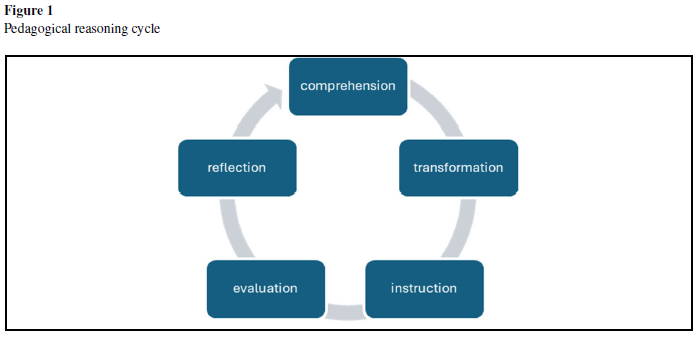
According to Yang and Tambunan (2021), Shulman (1987) introduced the concept of pedagogical reasoning as part of his model of pedagogical reasoning and action. Pedagogical reasoning refers to the complex and often hidden thought processes that support effective teaching, enabling teachers to make thoughtful decisions in various classroom situations to enhance teaching and learning (Kahn & Nyamupadengedengu, 2022; Langsford, 2020; Loughran, 2019). Yang and Tambunan explain that pedagogical reasoning is the process through which teachers convert subject matter knowledge into content that can be effectively taught, taking into consideration learners' diverse abilities and needs. This is a skill that PSTs are expected to develop during their teacher preparation programmes. In his model, Shulman elaborates that pedagogical reasoning develops through five interrelated phases: comprehension, transformation, instruction, evaluation, and reflection. Langsford emphasises that this is a cyclical process, as shown in Figure 1 below, where one phase leads to a refinement of the preceding and subsequent phases. This occurs as teachers reflect on what they are doing and why, drawing from their tacit knowledge, which progressively improves pedagogical reasoning.
Each phase of Shulman's (1987) model embodies a distinct yet interconnected facet of pedagogical reasoning. Comprehension involves the teacher's profound grasp of the subject matter, encompassing its structure and significance. Transformation pertains to the conversion of this knowledge into instructional forms, such as the selection of representations, examples, and strategies tailored to learners. Instruction signifies the implementation of these decisions in practice, where teachers execute and adjust their methods in real-time. Evaluation involves the assessment of both learners' comprehension and the efficacy of the teaching techniques employed. Lastly, reflection encompasses a critical examination of one's teaching experiences to enhance future practice.
As Langsford (2020) posits, these phases are not linear but iterative, with each stage informing and reshaping the others, thereby progressively enhancing pedagogical reasoning. Langsford argues that pedagogical reasoning is pivotal to cogitation, with each phase demanding it. This reasoning is particularly important in contexts where teachers are required to respond to diverse learner needs and unpredictable classroom circumstances. In such situations, teachers must draw not only on explicit theoretical and subject matter knowledge but also on practical knowledge developed through experience.
Tacit knowledge and learning to teach
Tacit knowledge refers to practical knowledge acquired through experience and rooted in individual skills, intuition, and understanding, rendering it challenging to articulate (Langsford, 2020). Although tacit knowledge is often unseen and unspoken, it plays a significant role in shaping teachers' professional judgement and pedagogical decision-making (Loughran, 2019). For PSTs, the development of such knowledge necessitates opportunities to engage with authentic teaching experiences and to reflect on the relationship between what teachers do and the rationale behind their actions. Exposure to practice through lesson design, observation, and analysis of teaching practices, and reflection on one's own experiences and those of others is essential for PSTs to cultivate tacit knowledge and enhance their pedagogical reasoning skills (Langsford, 2021). In this process, experience does not merely provide PSTs with opportunities to observe teaching; it also creates avenues for developing an understanding of the context-specific knowledge that informs the pedagogical decisions of their mentor teachers.
However, the challenge lies in the fact that tacit knowledge is not always readily accessible or transferable between experienced teachers and PSTs. PSTs may observe the actions of experienced teachers without necessarily comprehending the reasoning that underpinnings those actions. As Rusznyak and Bertram (2021) contend, PSTs may concentrate on what experienced teachers do rather than on the rationale for those actions. This situation poses a risk that TP becomes an exercise in observation and imitation rather than a space for cultivating the professional reasoning that underlies effective teaching. Consequently, the development of tacit knowledge necessitates more than mere exposure to classroom practice. PSTs require structured opportunities to interrogate teaching decisions, reflect on classroom experiences, and engage in dialogue regarding the reasoning that informs pedagogical actions.
The theory-practice divide in pedagogical reasoning
Building on the centrality of pedagogical reasoning, evidence suggests that PSTs frequently encounter difficulties in enacting these phases during TP. Although they may demonstrate conceptual understanding, translating this knowledge into responsive classroom action remains challenging, particularly across the phases of comprehension, transformation, and instruction (Darling-Hammond, 2006; Korthagen, 2010). The dynamic and unpredictable nature of classroom contexts often shifts their focus towards immediate concerns, such as classroom management and lesson completion, thereby limiting opportunities for deliberate instructional reasoning (Flores & Day, 2006). Furthermore, as pedagogical reasoning is largely tacit, student teachers may struggle to make their thinking visible, especially in relation to evaluation and reflection (Loughran, 2019; Shulman, 1987). Inadequate mentoring and limited scaffolding during TP further restrict engagement with the deeper cognitive work of teaching (Grossman et al., 2009). This disconnection between theoretical emphasis and practical enactment points to a persistent theory-practice divide in teacher education. PSTs often rely on procedural or surface-level approaches rather than informed and adaptive pedagogical decisions, particularly when navigating unfamiliar classroom situations (Darling-Hammond, 2006; Korthagen, 2010).
Moreover, constrained opportunities for structured reflection and feedback diminish their capacity to interrogate their teaching choices and refine their practice. As a result, progression through the phases of pedagogical reasoning remains fragmented, underscoring the need for more intentional support within teacher education programmes to cultivate this essential competence. The literature suggests that the development of pedagogical reasoning requires more than the acquisition of theoretical knowledge or observation of experienced teachers. PSTs need opportunities to engage with the tacit, context-specific knowledge that informs pedagogical decisions and to interrogate this knowledge through reflection, dialogue, and authentic classroom experience. This gap provides the basis for the present study, which examines the challenges experienced by PSTs during TP and explores how a university-community partnership can support the development of their pedagogical reasoning by making tacit knowledge more explicit and contextually grounded.
Theoretical framework: Decoloniality theory
Decoloniality theory challenges the notion that Western knowledge serves as the compass and benchmark for understanding (Omodan, 2025). Rather, it acknowledges and values multiple forms of knowledge, including non-Western and Indigenous epistemologies. From a decolonial perspective, knowledge is not exclusively produced by those positioned as experts; instead, it can emerge from the lived experiences, voices, and contextual realities of individuals and communities. This perspective is particularly pertinent to teacher education, where the knowledge and experiences of PSTs may be overlooked in favour of the formally recognised knowledge of university lecturers or experienced educators.
A further principle of decoloniality concerns the positioning of research participants. Participants should benefit from research rather than being treated solely as information providers, akin to resources that are extracted and utilised by researchers. Consequently, decolonial approaches emphasise collaborative and ethical research practices in which participants are recognised as active contributors to knowledge generation. This necessitates that researchers create opportunities for meaningful and equitable participation and challenge hierarchical relationships between researchers and participants. In this sense, decoloniality advocates for a flattening of traditional power relations and for research practices that acknowledge participants' knowledge, experiences, and voices as valuable sources of knowledge.
Lopes and Stará (2022) further argue that decoloniality theory should encourage PSTs to be recognised as epistemic beings who contribute to knowledge generation and whose reflections and experiences are significant. PSTs should not be positioned as passive vessels awaiting the infusion of knowledge from lecturers or experienced teachers. Instead, their existing knowledge and lived experiences should be acknowledged as legitimate and valuable. Thus, decolonial approaches challenge binary distinctions that privilege the knowledge of lecturers or experienced educators while marginalising the knowledge of PSTs. Such approaches seek to contest practices that undermine PSTs and position them in a passive role.
Applicability of decoloniality theory to the study
Decoloniality theory is applicable to this study because it offers a framework for understanding PSTs as active holders and contributors of knowledge in the development of pedagogical knowledge rather than passive recipients of information from university lecturers, mentor teachers, or researchers. This positioning is particularly significant in a study focused on pedagogical reasoning and tacit knowledge because PSTs' lived experiences during TP represent a crucial source of insight regarding how pedagogical decisions are understood, interpreted, and enacted within authentic classroom contexts.
From a decolonial perspective, the study does not presuppose that knowledge concerning effective teaching resides exclusively with university lecturers or experienced educators. Instead, it acknowledges that PSTs possess knowledge derived from their own experiences, interactions, observations, and reflections during TP. Consequently, their experiences and interpretations are regarded as valuable for understanding the processes through which pedagogical reasoning is developed. This perspective enabled the researchers to create opportunities for PSTs to articulate their experiences and reflect on how they understood and engaged with the pedagogical decisions encountered in their teaching contexts.
The applicability of the theory extends to the study's focus on the university-community partnership. The partnership was not conceived as a one-directional process wherein the university imparted knowledge to schools and PSTs. Rather, it was approached as a collaborative space in which the knowledge and experiences of PSTs, mentor teachers, schools, communities, and university researchers could interact and contribute to the learning process. In this regard, collaboration was facilitated through engagement and negotiation with the two participating schools, PSTs, and researchers to identify arrangements that accommodated the needs and circumstances of those involved. The intention was to challenge hierarchical relationships and establish a more reciprocal environment for knowledge exchange.
The decolonial perspective further informed the ethical orientation of the study. PSTs were treated with respect and afforded opportunities to provide authentic reflections on their experiences and their perceptions of the project's benefits for their professional learning. Their participation was therefore not intended solely to generate data for the researchers; rather, the study aimed to ensure that their voices, experiences, and reflections were valued as integral components of the knowledge-generation process. Similarly, the two participating schools were regarded as partners in the initiative, whose contexts and needs required acknowledgment, rather than mere sites from which data could be extracted.
Thus, the applicability of decoloniality theory is evident in the study's positioning of PSTs and community partners as active contributors to knowledge, its emphasis on collaboration and reciprocal engagement, and its challenge to hierarchical understandings of whose knowledge is deemed legitimate. More specifically, the theory provides a lens for interpreting the findings by questioning whose knowledge is acknowledged, whose voices are heard, and how power relations influence the development and exchange of pedagogical knowledge. It enables the study to explore whether PSTs are positioned as passive recipients who merely replicate the practices of experienced teachers or as active participants in the creation of knowledge who actively interpret, question, and contribute to pedagogical knowledge. In this manner, decoloniality theory supports an understanding of pedagogical reasoning as a process that can be cultivated through reciprocal engagement with the knowledge and experiences of PSTs, mentor teachers, schools, communities, and universities.
Research methodology and methods
Research paradigm, approach, and design
The interpretive paradigm underpins the study because it centres on understanding how PSTs perceive the tacit knowledge shared between themselves and their mentor teachers during TP. The interpretive paradigm posits that the construction of reality, shaped through language and social interaction, is fundamental. Consequently, this perspective is pertinent for examining pedagogical reasoning, which encompasses teachers' contextual judgments and the adaptation of instructional practices to dynamic classroom and community environments (Pervin & Mokhtar, 2022). The study employs a qualitative research approach, enabling the researchers to investigate second-year PSTs in relation to the phenomenon under scrutiny (Casteel & Bridier, 2021). Additionally, the adoption of a qualitative approach affords researchers the opportunity to explore the challenges PSTs encounter in the university-community setting and how these challenges inform their pedagogical reasoning. In this study, given that knowledge is co-constructed among the participants-that is, the PSTs and the university-community partnership-it is the researchers' responsibility to play an active role in interpreting participants' reflections and in the development and application of tacit knowledge. The interpretive paradigm permits an in-depth exploration of how PSTs make sense of their experiences and how these experiences contribute to their growth as reflective and responsive future educators.
The study employs a case study design to provide detailed and in-depth information about PSTs' lived experiences regarding the development of tacit knowledge during their TP. A case study is suitable as it facilitates the generation of detailed, relevant, and contextually informed findings. It allows researchers to focus on a specific phenomenon: understanding, from the students' perspectives, their comprehension of the mentor's pedagogical reasoning development (Zhang & Kevern, 2021). The case study thereby facilitates the generation of detailed, relevant, and contextualised information.
Population, sampling, and sampling technique
Population in research refers to the targeted group of individuals who share common characteristics within a specific context and are pertinent to a particular study (Ahmad et al., 2023). In this investigation, the population comprised 10 second-year PSTs from the Faculty of Education, specifically those instructing subjects in the intermediate phases at a South African university. Purposive sampling was utilised to select the appropriate PSTs for the study, namely, those teaching the subjects that the project concentrated on (Robinson, 2024).
Data collection
The study employed focus group discussions (FGDs) as a method of data collection from selected preservice teachers at two primary schools within the Maluti-A-Phofung Municipality in the Eastern Free State Province, with the aim of exploring the challenges encountered during their TP. While data were generated through reflections and FGDs in the project, this study presents only the data derived from the FGDs. The FGD serves as a qualitative approach that facilitated participants, numbering between six and 10, to convene and share their experiences regarding the challenges they faced during their TP and the strategies they employed to navigate such challenges (Longhurst & Johnston, 2023). The study selected 10 PSTs in their second year, based on their specialisations and willingness to participate. These 10 participants were divided into two groups, with five from each school. At the time of data generation through FGDs, seven participants were involved; Participants 1 to 3 were from School A, while Participants 4 to 7 were from School B. Given that FGDs are a structured method of data collection that emphasises the social context of meaning-making, PSTs were afforded a platform to articulate how their tacit knowledge and contextually grounded experiences in real classrooms informed their decision-making processes (Tracy & Gist-Mackey, 2024).
Conversely, reflection entails a process in which participants engage in either narrative or written forms of expression (Khan & MacEachen, 2022). One of the advantages of incorporating reflection in the study was the opportunity for participants to document and provide comprehensive, in-depth information. Furthermore, narrative reflection facilitated participants in clearly articulating their challenges, perceptions, and opinions.
Data analysis: Thematic
The study adopted the six steps of thematic analysis as outlined by Caulfield (2020) to assign meaning to the collected data. Step 1 of the six-step process involves familiarisation: researchers must become acquainted with the data by reading and listening to the recordings repeatedly. Step 2 is coding, where researchers ensure that themes are accurately coded. Step 3 involves generating themes related to pedagogical reasoning. Step 4 is reviewing themes, followed by Step 5, which is defining themes. Step 6 is the final step, where researchers interpret the data and compile a report that aligns with the research questions and theoretical framework of the study. The data were recorded and transcribed by the researcher's assistant (Lochmiller, 2021). Firstly, the researchers listened to the recordings repeatedly to familiarise themselves with them, coded the themes, generated themes in line with pedagogical reasoning, reviewed and defined each theme, and finally, interpreted and assigned meanings to the themes as they aligned with both the research questions and the theoretical framework adopted in the study.
Ethical considerations
This paper is one of the outputs from a larger project funded by the National Research Foundation. The project applied for ethical consideration with the Faculty of Education Ethics Committee at the University of the Free State, under registration number UFS-HSD2024/0365. The study adhered to all ethical principles, including informing participants that their participation is voluntary. For instance, the study used FGDs as one of the data collection tools, providing PSTs with consent forms to complete and sign. The study maintained confidentiality and used pseudonyms to replace participants' names.
Trustworthiness
Trustworthiness is essential in research for ensuring its authenticity and validity. The enhancement of PSTs' pedagogical reasoning through the development of tacit knowledge within a university-community partnership can be systematically facilitated by addressing the dimensions of credibility, transferability, dependability, and confirmability.
This study establishes the credibility of the data obtained from participants by confirming its accuracy and authenticity through rigorous engagement and a comprehensive data collection process (Hayre, 2021). Additionally, it employs member checking to validate participants' interpretations (Haq et al., 2023). The alignment of the study's content and context serves to affirm transferability, while confirmability is attained by recognising the researcher's biases, utilising reflective notes, and incorporating participants' genuine experiences of tacit knowledge development (Adler, 2022). Collectively, these strategies ensure that the processes and outcomes of the study are both trustworthy and robust (Ahmed, 2024).
Presentation of findings
The PSTs highlighted several challenges they encountered, including multigrade teaching, the physical conditions of the classroom, learners' differing learning styles, academically struggling learners, language barriers, mixed feelings about mentors, the use of textbooks and chalk, and issues with class discipline. We will discuss each of these themes below.
Multigrade teaching
PSTs indicated their unfamiliarity with multigrade classes. In a multigrade class, one teacher instructs more than one grade. The main issue was that the two grades that used to be taught by one teacher in a single class now had to be taught by two PSTs in the same class. PSTs faced challenges, as indicated below:
The teacher told us to teach at the same time. And we had to talk and teach at the same time. And I found that very disturbing because now how can you focus? We had to read a story. I had to read a story and she also had to read a story at the same time. (Participant 4B)
And when we were teaching, we would talk at the same time and I don't think it's right to let two people talk at the same time. (Participant 5B)
I was anxious. I had a lot of anxiety before my first lesson because I had never been exposed to multigrade classes. (Participant 5B)
Based on the insights from the excerpts, some of the PSTs had never been exposed to multigrade classes, which caused them some anxiety. Furthermore, they taught in one classroom simultaneously, leading to their voices crossing over each other. This resulted in a lack of clarity for the learners, as the PSTs' voices interfered with one another. The PSTs had to learn from real-life situations to effectively manage teaching in a multigrade class. According to decoloniality theory, context matters; thus, the PSTs needed to adjust to their specific contexts to ensure the success of their lessons.
I will pick the one that has two classes in the same classroom. How can I say, two grades in one class? For me, it was a big challenge because the lesson was not clearly conducted to the learners because while I am focusing on a certain grade, a certain grade is busy with their topic or lesson. While I am driving the lesson, my students or my learners keep on and cross the lesson from another grade. For me, it was difficult because I couldn't get them to focus in the whole hour. It was a challenge. (Participant 1A)
While Participant 2A was teaching the lesson for Grade 4 and my students would turn their eyes on that content. (Participant 1A)
PSTs attested that part of the cause of multigrade class was as a result of insufficient classrooms.
Yes, we were short of classrooms. (Participant 1A)
Further challenges included learners in one of the grades in the same class disturbing the other grade which was being taught by the PST. The following participant's narrative attests to this challenge:
So that is what disturbs the class because we now have to focus on the Grade 5 learner that is making the noise. (Participant 2A)
Based on the above utterances, other challenges included learners' attention being split between two simultaneous lessons. Inappropriate behaviour, such as noisy learners, spills over into the disciplined class. Since the PSTs were also unprepared for multigrade classes, they experienced anxiety. This resulted in pedagogical challenges for both PSTs and learners. The PSTs' lessons failed to reach learners as effectively as they would have in non-multigrade classes. Similarly, learners' attention and their comprehension of the content being taught were disrupted. A study in Turkey also demonstrated that PSTs face challenges in executing their work in multigrade classes (Kartal & Güven Demir, 2023). The teacher education curriculum did not equip them for multigrade classes. According to decoloniality theory, the context in which teaching and learning takes place must be taken into account; monograde classes are quite different from multigrade ones.
The physical conditions of the classrooms
PSTs highlighted the lack of maintenance as a challenge, which results in physical conditions that are not favourable to teaching and learning:
And the other challenge is that it was very cold in that classroom. It was very cold. There was no door and there were no windows because they were broken windows. So sometimes you will teach and then you will find a learner sitting like this because that learner is cold. So whenever you are cold or you are not comfortable, you cannot be able to concentrate on what is being taught. (Participant 5B)
The physical condition of the classroom. In the classroom, there was no door, no windows, so it was very cold in the classroom. (Participant 3A)
It was also uncomfortable for me, and also for my learners, during that time. (Participant 3A)
The first challenge I came across, it was the classroom. The classroom had the holes, like on the floor. So this other time, I nearly fell, yes. (Participant 4B)
The classrooms are very cold for the learners. You can see that they felt very cold during the lessons. (Participant 4B)
And the toilets are not . . . even the teacher's toilets. . . . Uhh, it's the issue of water. I think they use the Jojo tank but sometimes. . . . Sometimes there is no water in the tank. (Participant 7B)
Based on the above, the physical environment presents potential safety hazards for both learners and PSTs (Participant 4B confirms this, stating, "I nearly fell"). Another challenge arises from infrastructure issues, particularly with windows and doors, causing PSTs and learners to divert their attention to dealing with weather conditions instead of focusing on teaching and learning. A study in South Africa by Onaolapo et al. (2023) indicated that poor infrastructure remains a challenge for PSTs. In the sub-Sahara, a study conducted by Thaanyane and Jita (2025) found a lack of infrastructure even in Lesotho, which negatively affects PSTs.
The water shortage, leading to the school's reliance on water tankers, can result in teacher dissatisfaction and some learners being absent due to hygiene and health concerns. The teaching and learning conditions mentioned above are inconsistent with decoloniality theory, which advocates for socially just conditions to facilitate quality education.
Different learning styles
PSTs appeared to be unprepared for learners with different learning styles:
And then the other challenge that I came across, it was the different learning styles of learners because it was my first time teaching. Because during January, during observation in January, I didn't get a chance to teach and those things. So now it was my first time teaching, so I learned that these learners learn differently. (Participant 4B)
Also, using different strategies, I struggled because you find that I have only one way of teaching a particular topic. (Participant 7B)
Furthermore, some mentors did not support PSTs as they were trying to find ways of providing individual attention to learners.
There is this learner who could not understand anything at all and I was trying to explain to that learner and then the educator noticed that I was spending a lot of time with that learner and asked me what was happening and then when I explained she said, "Ai leave that one she is like that vele. Just move on." And I was there like, kanjani . . . (Participant 6B)
Based on the utterances above, PSTs were not adequately prepared to deal with learners who have diverse learning styles. This suggests that the institution of higher learning and the observations PSTs underwent did not sufficiently equip them for working with such students. Different strategies are necessary for teachers and PSTs to effectively reach varied learners. Furthermore, it is noteworthy that some mentors were not supporting PSTs as they attempted to assist learners who required individualised attention. This lack of support may lead to the normalisation of exclusion for these learners. It is unfortunate that some mentors do not support PSTs who are striving to provide individualised assistance for a quality and equitable education, as advocated by decolonial theory. A one-size-fits-all approach may not be effective for all learners. The instance of a PST trying to help a learner, as indicated above, demonstrates some level of critical thinking on the part of this student. Darling-Hammond (2006) and Korthagen (2010) argue that PSTs often follow instructions without being innovative. In this case, it is the mentor who failed the PST by indicating that the learner should not receive any individual assistance due to cognitive challenges. Whitman (2023) argues that there is no evidence to suggest that matching learning styles to teaching methods would improve learning outcomes.
Learners who struggle academically
Our findings indicate that some learners struggle to grasp the content. PSTs had to spend additional time explaining certain concepts to academically challenged learners who require individual attention, as illustrated below:
Like some learn quickly, some learn slowly. And the other thing is that one thing I noticed in the school that there are learners, those learners who do have special needs, those who need to go to schools that are dealing with learners with special needs. So it was a challenge because sometimes you have to focus on those learners and then neglect others. (Participant 4B)
Some of the learners were not grasping information very fast and that was another challenge. (Participant 5B)
But there was a time where I was teaching . . . I was teaching life . . . life skills, because it was Grade 1 and there was that one learner the teacher just told me not to entertain that learner, I was not even . . . she told me to not even give that learner a book, just teach the other learners. (Participant 6B)
Based on the above, normalising the academic exclusion of learners and not supporting them when they need individual attention emerged as one of the challenges that PSTs had to confront, as guided by their mentors. Another challenge involved learners who were unable to write their names and could not complete their homework because they stayed in hostels without parental assistance to monitor and support their work.
And they find that even with Grade 2 and Grade 3, they don't even know to write their names. (Participant 5B)
School A's learners are struggling, they are really struggling because allegedly, they are staying in the hostels, so I feel like they don't have people to help them with their studies. Most of them are in one class and they are struggling. They are even struggling to write their own names. (Participant 6B)
We would teach the learners and ask if they understand but when they have to write it's like yoh, they don't even know what they are talking about, they struggle to take the information what we were talking about and apply it. (Participant 7B)
I would present the lesson and give them the activity, when they write the activity they get them right. Then they have to write the test, on the test yoh yoh . . . bengathi it is their first time seeing that thing. They failed the test because I was the one marking the test. But when I was giving them class activities, they were doing them well. (Participant 7 B)
The above findings indicate that learners lack foundational literacy skills, with some students in Grades 2 to 3 unable to write their own names. This highlights a systemic challenge in the education sector. Another issue is the lack of parental support for students residing in hostels, where there are no immediate guardians available to provide monitoring and assistance. The final challenge pertains to learners' performance in both informal and formal assessments. This discrepancy may be due to the fragmented approach and limited scope of informal activities. In formal assessments, students appear to struggle, suggesting they may have only superficially grasped the content and performed better in informal assessments. A study by Rowan et al. (2019) suggests that PSTs in various parts of the globe appear less prepared for learners with different backgrounds.
Language barrier
The knowledge of Sesotho as the learners' dominant mother tongue language was considered a barrier for them to understand some of the concepts presented by PSTs in English:
And the other thing was the language barrier. Because they are Sotho speaking. But then for me it worked into my advantage because I am able to speak Sotho. (Participant 2A)
But for Mr. Nzimande it was very difficult because he is Zulu speaking. So whenever you try to explain the concept to the learners, they don't understand some English words. So you have to try and tell them in the Sotho way. (Participant 2A)
The above excerpts highlight the importance of PSTs having knowledge of the dominant language used by learners at the primary school level. Pedagogical content knowledge alone in the early years of schooling may not be sufficient if PSTs do not understand the dominant language used by learners. PSTs must code-switch to make the content accessible to students (Shulman, 1987; Yang & Tamburan, 2021). If they do not, learners may struggle to understand the content or perform poorly in assessments due to language barriers. Conversely, some authors, such as Makena and Mpahla (2021), encourage both learners and PSTs to develop knowledge of different languages because multilingual competence may facilitate content acquisition.
Mentorship gaps and the burden of improvisation
The lack of guidance and insufficient time to plan for the upcoming lesson session emerged as one of the challenges that PSTs had to face:
We came to the school and she just gave us the question papers and she told us to help the learners to help them write. So that was the challenge because some of the questions I didn't understand some of the questions. So we have to come up with maybe . . . we had to use our own data to try and look for possible answers for that particular question. (Participant 6B)
In the same way that PSTs had to carry the financial burden of using their own data, they also had to have airtime and call their mentors who did not have WhatsApp.
Yes in Grade 6, my mentor did not have WhatsApp, so we were supposed to call her sometimes I don't have airtime to ask so bengibona mengfika. (Participant 5B)
Furthermore, some mentors fail to provide PSTs with the content to plan a day earlier.
We did text her on Wednesdays for what we will teach, and she always said, "Ai we will see on that day." (Participant 6B)
PSTs had had to carry the financial burden of having data to look for answers.
The teacher told us to download the lessons, any lesson. (Participant 6B)
She told us to come to the class and she would give us papers and tell us today this is what we are going to do. Even though we would have texted her the day before to say, Okay, ma'am, what are we doing tomorrow, she would just say I will see you tomorrow. (Participant 6B)
The teacher only sent us the lesson plan the day before. It was simple, actually. (Participant 3A)
From the above extracts, it is evident that some mentors did not provide the necessary guidance to PSTs. As Grossman et al. (2009) argue, mentoring is crucial for the success of PSTs as they prepare for the world of work. Similarly, Ntshangase and Nkosi (2022) found that once PSTs were dispatched to schools, they received inadequate support from their mentor teachers and lecturers. Thaanyane and Jita (2025) also found that there was insufficient supervision and mentorship for PSTs by their mentors in a study conducted in Lesotho.
Textbooks and chalk
PSTs faced challenges such as a lack of chalk, students without textbooks, and mentors delaying the provision of necessary materials for class preparation.
They said they were having a shortage of textbooks. (Participant 3A)
And the other challenge is that there was a shortage of materials, many materials. Learners had no textbooks. (Participant 4B)
The only challenge that I experienced is that the teacher did not give us the materials to prepare. (Participant 6B)
And the other one, there was no chalk. Like we had to write with a small piece of chalk. (Participant 4B)
And the other one is limited resources, they did not have textbooks, maybe I will have to use my textbook as the teacher and show them that this is what I am talking about. I didn't have a chance to write on the board because there was no chalk. (Participant 7B)
And the other problem was that there was a learner who lost his books, he lost his books in the hostel, they take each other's books . . . they hide them. (Participant 7B)
From the statements made by the PSTs, it is evident that a shortage of teaching and learning resources exists, which compels PSTs to improvise and restricts certain engagements. Furthermore, this scarcity exacerbates the situation, as learners resort to stealing from one another in hostels. Mentors also play a role in this matter by failing to provide PSTs with materials in a timely manner, which affects their class preparation negatively. The deficiency of teaching and learning materials impedes learners from studying at home, and PSTs must exercise caution when utilising resources such as chalk due to their limited availability. It is imperative for PSTs to demonstrate adaptability and proficiency in teaching across various contexts, including those that are under-resourced (Langsford, 2020; Rusznyak & Bertram, 2021).
Class discipline
Class discipline and noise were hindrances to teaching and learning, which also resulted from multigrade classes, causing frustration for the PSTs:
Learners make a lot of noise and I ended up having a headache. (Participant 4B)
Unsupervised classes in multigrade classes appeared as a challenge when there was only one PST offering a lesson:
Ms. Thwala was busy with the Grade 3s. The Grade 2s would obviously be doing some work, but they would be making noise. Because no one is attending to them, that's how it goes. (Participant 4B)
The day of the week also appeared as a contributing factor to ill-discipline.
Yes, the challenge that I experienced is the classrooms that are many; they don't have order. I don't know, maybe because it is Friday and they are all casual because they are kids, because even if we try by all means, ukhuthi siba discipline, like they don't listen. (Participant 7B)
In a combined class, older learners appear to disturb other ongoing classes.
There was also the external noise outside, which was disturbing. The time I was teaching the learners, due to the broken windows, that school is a combined school, so Grade 12s are moving around the veranda, so they are busy making noise, while we are in the class teaching. (Participant 3A)
Based on the above narrative, issues such as the day of the week, unsupervised learners in multigrade classes, and the general ill-discipline of learners emerged as challenges that were even frustrating for PSTs. This frustration among PSTs due to ill-discipline highlights the need for mentors and lecturers to listen to them and better prepare them for the world of work. The situation of broken windows underscores the necessity for improved conditions in various schools, enabling learners to access the quality education required by the decoloniality theory. Hart et al. (2025) attribute PSTs' inability to manage ill-discipline to weaknesses in the teacher preparatory programmes. PSTs are expected to practise teaching without universities adequately preparing them for classroom management.
Concluding remarks
Through this project, several challenges were identified that hindered PSTs. Multigrade teaching emerged as the first challenge, highlighting the need for institutions of higher learning and mentors to better prepare PSTs for the workforce and to provide quality teaching. The second challenge is the unsuitable physical conditions of the classroom, such as broken windows, which make the learning process uncomfortable for both learners and PSTs. Tertiary institutions and mentors must better equip PSTs to address learners' varied learning styles, assist those who struggle academically, and tackle the lack of teaching and learning resources, such as textbooks, as well as issues related to class discipline.
We used ChatGPT to explore possible perspectives regarding the data we generated. The authors independently verified the direction they wanted to take in the interpretation, discussion, and conclusion of the findings based on the data they had gathered. The authors take ownership and full responsibility for the interpretation, discussion, and conclusions reached.
References
Acknowledgements
This work is based on research supported by the University of the Free State and the National Research Foundation of South Africa (Grant Number CSUR23041392526-PR-2024). Any opinions, findings, conclusions, or recommendations expressed in this material are those of the authors. The university and NRF do not accept any liability in this regard.
Literature review
- Adler, R. H. (2022). Trustworthiness in qualitative research. Journal of Human Lactation, 38(4), 598-602. https://doi.org/10.1177/08903344221116620
- Ahmad, N., Alias, F. A., & Abdul Razak, N. A. (2023). Understanding population and sample in research: Key concepts for valid conclusions. SIG e-Learning@ CS, 19-24. https://appspenang.uitm.edu.my/sigcs/2023-2/Articles/20234_UnderstandingPopulationAndSampleInResearch.pdf
- Casteel, A., & Bridier, N. L. (2021). Describing populations and samples in doctoral student research. International Journal of Doctoral Studies, 16(1), 339-362. https://doi.org/10.28945/4766
- Caulfield, J. (2020, August 14). How to do thematic analysis. Scribbr. https://www.scribbr.com/methodology/thematic-analysis
- Darling-Hammond, L. (2006). Powerful teacher education: Lessons from exemplary programs. Jossey-Bass. https://doi.org/10.15581/004.12.25329
- Flores, M. A., & Day, C. (2006). Contexts which shape and reshape new teachers' identities: A multi-perspective study. Teaching and Teacher Education, 22(2), 219-232. https://doi.org/10.1016/j.tate.2005.09.002
- Hart, K. C., Poznanski, B., & Cramer, E. D. (2025). Preparing teacher candidates in classroom management prior to entering the teaching profession. Journal of Emotional and Behavioral Disorders, 33(1), 3-16. https://doi.org/10.1177/10634266231209988
- Hayre, C. M. (2021). Data analysis and trustworthiness in qualitative research. In C. M. Hayre & X. Zheng (Eds.), Research methods for student radiographers: A survival guide (pp. 145-169). CRC Press. https://doi.org/10.1201/9780367559311-10
- Kartal, A., & Güven Demir, E. (2023). Multi-grade teaching: Experiences of teachers and preservice teachers in Turkey. Hungarian Educational Research Journal, 13(2), 170-188. https://doi.org/10.1556/063.2022.00132
- Khan, T. H., & MacEachen, E. (2022). An alternative method of interviewing: Critical reflections on videoconference interviews for qualitative data collection. International Journal of Qualitative Methods, 21, 1-12. https://doi.org/10.1177/16094069221090063
- Kahn, R. R., & Nyamupadengedengu, E. (2022). Investigating opportunities for integrating methodology when teaching a life science topic (meiosis) to fourth-year pre-service teachers: A case study. Journal of Education, 1(86), 65-83. http://dx.doi.org/10.17159/2520-9868/i86a04
- Langsford, D. H. (2020). "Those who can think, teach": The pedagogical reasoning of pre-service teachers from different initial teacher education pathways [Doctoral dissertation, University of the Witwatersrand]. https://wiredspace.wits.ac.za/items/9436f705-e8fe-4b20-abbd-1a61f573b1a1
- Langsford, D. H. (2021). Coping in complex, changing classroom contexts: An investigation of the bases of pre-service teachers' pedagogic reasoning. Journal of Education, 1(83), 54-67. http://dx.doi.org/10.17159/2520-9868/i83a03
- Lochmiller, C. R. (2021). Conducting thematic analysis with qualitative data. The Qualitative Report, 26(6), 2029-2044. https://doi.org/10.46743/2160-3715/2021.5008
- Longhurst, R., & Johnston, L. (2023). Semi-structured interviews and focus groups. In N. Clifford, M. Cope, T. Gillespie, & S. French (Eds.), Key methods in geography (4th ed., pp. 168-183). SAGE.
- Lopes, J. C., & Stará, J. (2022). Reflective portfolios as decolonial pedagogical practices. Educar em Revista, 38. http://dx.doi.org/10.1590/1984-0411.85774
- Loughran, J. (2019). Pedagogical reasoning: The foundation of the professional knowledge of teaching. Teachers and Teaching: Theory and Practice, 25(5), 523-535. https://doi.org/10.1080/13540602.2019.1633294
- Makena, B., & Mpahla, N. (2021). Multilingualism: Impact and teacher perspectives as opposed to language learning. PONTE International Journal of Science and Research, 77(9), 52-59. https://doi.org/10.21506/j.ponte.2021.9.4
- Ntshangase, S. Z., & Nkosi, Z. P. (2022). Effective mentoring: Understanding factors affecting the holistic development of pre-service teachers during teaching practice. South African Journal of Education, 42(4), 1-10. https://doi.org/10.15700/saje.v42n4a2062
- Onaolapo, A. A., Makhasane, S. D., & Adebola, O. O. (2023). Rethinking teachers' training process: Preservice teachers' experiences of teaching in South African rurally located schools. Journal of Educational and Social Research, 13(4), 178-187. https://doi.org/10.36941/jesr-2023-0100
- Pervin, N., & Mokhtar, M. (2022). The interpretivist research paradigm: A subjective notion of a social context. International Journal of Academic Research in Progressive Education and Development, 11(2), 419-428. https://doi.org/10.6007/IJARPED/v11-i2/12938
- Robinson, R. S. (2024). Purposive sampling. In A. C. Michalos (Ed.), Encyclopedia of quality of life and well-being research (pp. 5645-5647). Springer. https://doi.org/10.1007/978-3-031-17299-1_2337
- Rowan, L., Brownlee, J. L., & Ryan, M. (2019). Teaching teachers: What should teacher educators "know" and "do" and how and why it matters. Asia-Pacific Journal of Teacher Education, 47(3), 210-215. https://doi.org/10.1080/1359866X.2019.1601837
- Rusznyak, L. (2022). Teacher choices in action: An emergent pedagogical response and intervention. In E. Walton & R. Osman (Eds.), Pedagogical responsiveness in complex contexts (pp. 1-10). Springer. http://dx.doi.org/10.1007/978-3-031-12718-2_7
- Rusznyak, L., & Bertram, C. (2021). Conceptualising work-integrated learning to support pre-service teachers' pedagogic reasoning. Journal of Education, 1(83), 34-53. https://doi.org/10.17159/2520-9868/i83a02
- Shulman, L. S. (1987). Knowledge and teaching: Foundations of the new reform. Harvard Educational Review, 57(1), 1-21. https://people.ucsc.edu/~ktellez/shulman.pdf
- Tajeddin, Z., & Bolouri, M. (2023). Decision making in English language teaching: Unpacking novice teachers' pedagogical reasoning. Language Teaching Research Quarterly, 33, 115-131. https://doi.org/10.32038/ltrq.2023.33.06
- Thaanyane, M., & Jita, T. (2025). The impact of teaching practice on preservice teachers' professional development in the Lesotho context. Pakistan Journal of Life & Social Sciences, 23(1). https://doi.org/10.57239/PJLSS-2025-23.1.0025
- Whitman, G. M. (2023). Learning styles: Lack of research-based evidence. The Clearing House: A Journal of Educational Strategies, Issues and Ideas, 96(4), 111-115. https://doi.org/10.1080/00098655.2023.2203891
- Yang, K.-L., & Tambunan, S. N. (2021). The tools related to mathematics teachers' pedagogical reasoning: Critical review. In HEAd 2021-7th International Conference on Higher Education Advances (pp. 129-136). Universitat Politècnica de València. https://doi.org/10.4995/HEAd21.2021.12698
Accepted: 25 August 2026