The Lesotho basic education system in the era of polycrisis: A critical policy analysis of the LBECP 2021
Abstract
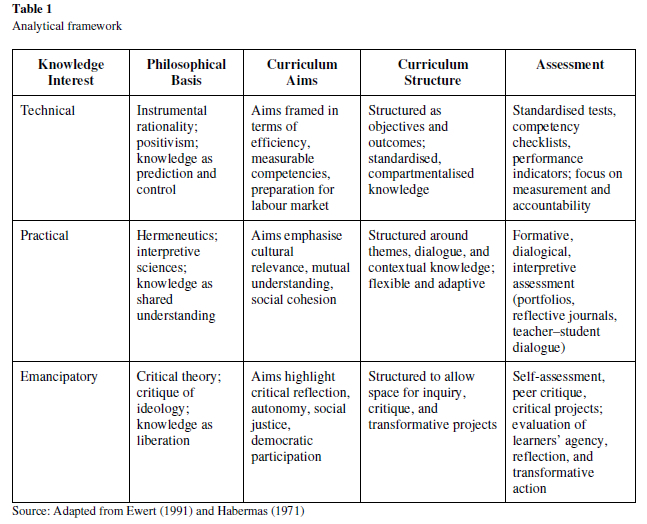
Following the global shifts towards competency-based education during a polycrisis, the Lesotho Basic Education Curriculum Policy (Ministry of Education and Training, 2021) aims to equip learners with competences for a rapidly changing world. However, there is a lack of clarity on how the policy establishes internal coherence, risking the fragmented implementation that characterised the previous education reform. Using qualitative document analysis, this study adopts critical policy analysis to examine the policy's internal logic through the lenses of Habermas's knowledge interests and Biesta's educational functions. The findings reveal a critical tension: pedagogy emphasises practical paradigm, while curriculum structure and assessment prioritise technical rationalities. This tension can lead to policy practice gaps, highlighting the need to revise the policy to ensure internal coherence within it. Although limited to deductive document analysis, this study introduces a novel critical policy approach to Lesotho's educational landscape. Further research, using an inductive approach, could investigate how teachers navigate these systemic tensions.
nature of knowledge; critical policy analysis; curriculum policy; learner-centred pedagogy; holistic education; polycrisis