Reflecting on reflections of pre-service teachers' application of theory in practice
Abstract
This paper explores the role of the Maths4Primary Teachers (Roberts et al., 2023) module in enhancing Foundation Phase pre-service teachers' (PSTs) understanding of additive relations through an analysis of their reflections. Grounded in cultural historical activity theory (CHAT), the study examines the PSTs' reflections to understand how structured mathematical interventions support them in developing conceptual knowledge essential for teaching early numeracy. The findings contribute to the discourse on supporting initial teacher education by showcasing how, through harnessing deep and iterative reflection using CHAT, teacher educators can strengthen mathematical proficiency among future educators.
initial teacher education; additive relations; Foundation Phase mathematics; cultural historical activity theory (CHAT)
Introduction
The preparation of Foundation Phase (FP) teachers in South Africa requires a strong emphasis on both content knowledge and pedagogical skills, particularly in mathematics education. Responsive teacher education plays a crucial role in equipping pre-service teachers (PSTs) with the necessary competencies to effectively teach early mathematics. This paper examines the role of the Maths4Primary Teachers module (Roberts et al., 2023), specifically focusing on additive relations, in supporting third-year Bachelor of Education (BEd) PSTs in their journey towards becoming proficient FP mathematics educators. By engaging with structured lesson design and implementation tasks, the PSTs are provided with opportunities to develop their mathematical reasoning, refine their instructional strategies, and critically reflect on their teaching practice.
The study is situated within the broader framework of strengthening initial teacher education (ITE) in mathematics, aligning with general pedagogical standards that emphasise effective lesson planning, consideration of learner knowledge, engagement in mathematics, and the promotion of a balanced mathematics curriculum. The importance of this focus is underscored by South Africa's persistent challenges in mathematical attainment. International benchmarking studies, such as the Trends in International Mathematics and Science Study (TIMSS), consistently place South African learners among the lowest-performing in mathematics. Spaull & Kotze (2015) highlighted the phenomenon of many learners in South Africa "starting behind and staying behind," where foundational gaps in early mathematical understanding persist throughout schooling and hinder overall educational progression.
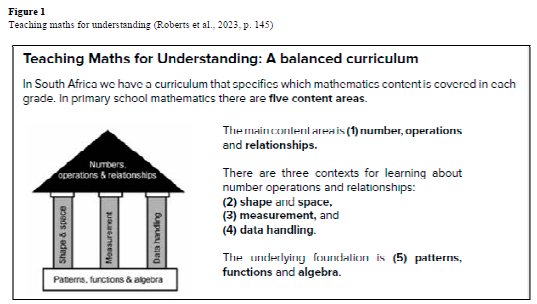
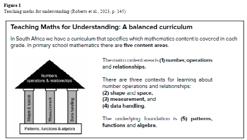
The Maths4Primary Teachers module aims to develop PSTs' understanding of additive relations, focusing on the operations of addition and subtraction (Roberts et al., 2023). Within this module, 28 groups of third-year FP BEd PSTs undertook a lesson design task that required them to create a Grade 2 mathematics lesson based on the structured guidance provided in Section 4 of the additive relations manual. Section 4 of the manual outlines critical learning objectives including the observation of, and critical reflection on, lessons through the lens of two pathways into number, planning and adapting lesson sequences to suit practical contexts, and designing age-appropriate mathematical learning resources. Additionally, PSTs are expected to implement their lesson plans during their teaching practice, engaging learners productively while taking into account their prior knowledge, language, and developmental levels (Roberts et al., 2023). The final stage of the task involved reflecting on the effectiveness of their teaching, with a particular focus on their ability to foster mathematical proficiencies that support a balanced curriculum (refer to Figure 1).
Given the urgent need to improve early mathematics instruction in South Africa, this study contributes to ongoing discussions on enhancing mathematics teacher education by examining how structured lesson design and reflection activities within the Maths4Primary Teachers module influence the development of ITE. By exploring how PSTs reflect on their engagement with the module's pedagogical content, this paper seeks to provide insights into effective strategies for strengthening the mathematical and instructional competence of future FP educators in South Africa, ultimately working towards mitigating the early learning deficits that contribute to the country's poor mathematics outcomes. Of particular value, this paper infers that ITE needs an additional layer of becoming reflective practitioners, which is achieved through reflecting on reflection.
Reflective practice is not a new phenomenon in teacher education and is closely associated with the notion of ongoing learning through refining and reforming. Darling-Hammond, (2020) described the critical role of reflective practice in its capacity to bridge the divide between theory and practice. They argued that reflective practice enables educators to critically analyse their teaching methods, assess the effectiveness of theoretical approaches in real-world settings, and adapt strategies to meet diverse PSTs' needs. This continuing cycle of reflection and adaptation fosters the development of teaching practices that are both theoretically informed and practically effective. By engaging in reflective practice, teachers can transform abstract concepts into actionable strategies, thereby enhancing ITE learning outcomes and professional growth.
Schön's (1983) The Reflective Practitioner described key points about professional knowledge and reflection with the understanding that most professional challenges are often complex, interconnected, and exist in turbulent environments; practitioners frequently face conflicts of values, goals, and competing views of professional practice. Schön's model is synonymous with the practices of reflecting-in-action and reflecting-on-action, which involve thinking about what we're doing while doing it, allowing practitioners to refine practice, uncover understanding of tacit actions, and make sense of uncertainty around daily practice. When reflecting whilst in the process of action, practitioners become researchers in practice, constructing new approaches and reframing problems into workable solutions.
Furthermore, Schön (1983) addressed a common concern about reflection-in-action and reflection-on-action, namely, the fear that if we start reflecting on our actions, we might fall into an endless loop of reflecting on our reflections, becoming paralysed by overthinking. Schön argued that this fear stems from an artificial separation of thought and action. When we mistakenly view thinking as merely preparation for action, and action as merely implementation of thought, we create a false dichotomy that suggests reflection could trap us in endless thinking. Instead, Schön proposed that in authentic reflection-in-action and reflection-on-action, thinking and doing exist in a complementary, cyclical relationship whereby doing extends thinking through experimental actions that test ideas. In such a manner, reflection draws insights from these actions and their results. Each process feeds into and sets boundaries for the other. Action grounds reflection in concrete experience, while reflection guides action. Rather than being separate domains, they function as integrated parts of a continual process of professional practice. In essence, Schön reframed the relationship between thought and action, showing how they work together in a productive cycle that enhances professional practice rather than hindering it through paralysis by analysis. Although Schön didn't focus specifically on ITE, his concepts of reflection-in-action and reflection-on-action have been developed as broadly applicable theories about professional practice across many fields.
Within a South African context, Graven (2005) and Butchart et al. (2017) maintained that reflective practice should be a pivotal component in the professional development of FP mathematics teachers, fostering continual improvement in instructional strategies and enhancing ITE learning outcomes. Graven (2005) argued that, whilst the benefits of reflective practice are well documented, less in known about how to develop reflective practice in ITE. In a similar vein, Williams and Nel (2023) conducted a study using self-reflection through video-simulated recall, and their findings revealed that the teachers were more inclined to speak about general pedagogical strategies and avoided any in-depth reflection on mathematical content per se. While South African educational policy may not explicitly mandate reflective practice, academic research highlights its critical role in enhancing teaching effectiveness and integrating theoretical knowledge with practical application in the FP.
Recent literature demonstrates the significance of reflection in early childhood mathematics education. A study on reflective practice conducted on South African early childhood mathematics teacher education by Kortjass (2019), emphasised that engaging in reflective self-study enables teachers to critically assess and refine their teaching methodologies, leading to improved pedagogical approaches and better PST engagement. Collaboration with colleagues and PSTs during this reflective process was found to be instrumental in fostering a deeper understanding of effective teaching practices. Research indicates that reflective practice enables teachers to effectively meet the diverse learning needs of their PSTs by allowing them to adjust and respond to various classroom challenges. It also assists teachers in becoming more aware of their underlying beliefs and assumptions about teaching and learning (Chikiwa & Graven, 2023). Interestingly, Chikiwa and Graven discovered disparate views among FP teacher educators and PSTs regarding the nature, purpose, and implementation of reflection in teacher education programmes. For teacher educators and PSTs alike, reflection is primarily seen as a technical tool for improving teaching methods rather than a critical approach to situating education within a broader social context. This suggests a need for more purposeful exploration and integration of reflective practices within teacher education curricula to foster continuing professional development and transformative learning.
Mathematics education for PSTs in South Africa
Mathematics education in South Africa continues to face significant challenges that require focused attention and innovative approaches, particularly at the level of teacher preparation (Graven, 2005; Roberts et al., 2022). South Africa consistently ranks among the lowest performers in international mathematics assessments. The 2019 TIMSS (Mullis et al., 2020) results showed South African learners performing well below the international average. This poor performance has deep roots in historical inequalities in the education system, inadequate teacher preparation in mathematics, limited content knowledge among many practising teachers, and pedagogical approaches that often emphasise procedural knowledge over conceptual understanding (Spaull & Kotze, 2015). The weak performance in mathematics across South Africa creates a cycle that needs intervention at multiple levels, with teacher education being a critical point of leverage (McDermott & Rafgokong, 2020).
The critical role of progressive ITE
Teacher educators have a multiplier effect, ultimately impacting hundreds of PSTs throughout their career. Studies have described the importance of strengthening mathematics education at a foundation level with many focusing on breaking the cycle of poor mathematics performance (Venkat & Askew, 2018). Many PSTs enter education programmes with weak mathematics backgrounds themselves, and there is mounting pressure for teacher educators to address these gaps while simultaneously developing pedagogical skills. In addition, in South Africa, PSTs need to be made more sensitive to the impact of cultural responsiveness in mathematics education, which must acknowledge the diverse South African context and develop approaches that connect with learners' lived experiences and linguistic challenges (Adler & Essien, 2023).
Theoretical framework
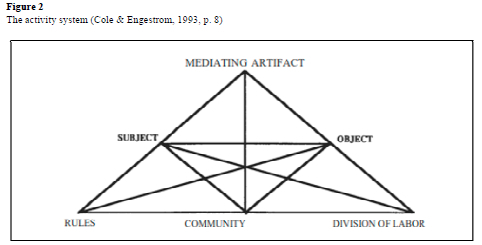
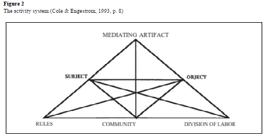
Socio-cultural theory provides a critical lens for understanding pedagogy and the dynamics of classrooms as activity systems. Rooted in Vygotskian (1978) principles, this perspective emphasises the social and cultural contexts in which learning occurs, highlighting the role of interaction, mediation, and cultural tools in cognitive development. Classrooms are not isolated environments but complex systems where knowledge is co-constructed through participation, dialogue, and shared practices. By examining teaching and learning through a socio-cultural framework, researchers and educators can gain deeper insights into how instructional strategies, classroom structures, and social relationships shape learning experiences. Cultural historical activity theory (CHAT) extends Vygotsky's socio-cultural theory by providing a structured framework for analysing human activity within social and cultural contexts. Developed by Cole and Engeström (1993), CHAT views learning and development as mediated by tools, rules, community, and division of labour within an activity system (refer to Figure 2). Unlike traditional cognitive approaches that focus on individual learning, CHAT examines how collective human activity is shaped by interactions within and across systems.
A key contribution of CHAT is its emphasis on contradictions-internal tensions that emerge when different components of an activity system misalign. These tensions can arise from conflicting goals, shifts in institutional policies, or the introduction of new tools and practices. Rather than viewing contradictions as obstacles, CHAT positions them as drivers of transformation, prompting adaptation and innovation within educational settings (Foot, 2014). Understanding these misalignments in classrooms provides valuable insights into how pedagogical practices evolve and how systemic challenges can be addressed to improve learning outcomes.
Research design
This study is qualitative in essence with meaning-making emerging through deep analysis of the PSTs' reflective essays. With the support of the CHAT activity system model, the design offers a unique duality that addresses both theoretical and methodological dimensions simultaneously. At its core, the analysis process focuses on identifying and analysing contradictions to guide and structure the qualitative analysis. This approach examines elements and their relationships to understand the dynamics of human activity.
The analysis process begins by identifying the specific activity or activities under study. The next step involves recognising the operating elements within the activity system, including the subject (teachers), the object (learners and learning), the tools/mediation (physical and conceptual resources), rules (explicit or implicit guidelines), community (social context), and division of labour (task distribution among participants; Cole & Engeström, 1993). After identifying these elements, the analysis proceeds to map the relationships between them. For instance, researchers might examine how tools shape or mediate learning processes, or how established rules influence teaching styles.
Research questions
The objective of the study was to understand the nature of transfer of pedagogical content knowledge from the coursework covered into teaching practice lesson design. The objectives were realised through investigating the transfer through analysing 3rd-year PSTs' reflections to explore how Maths4Primary Teachers materials support pedagogical planning skills. Three questions report on how the Addition and Subtraction (A&S) 1 Module (Roberts et al., 2023) supports PSTs' lesson planning:
• How effectively does A&S Module 1 prepare PSTs to apply mathematical teaching in practical classroom settings?
• What challenges do PSTs reflect on when they apply content knowledge to their teaching practice?
• How can these challenges be addressed?
Sampling
The sampling process employed a purposive strategy to select six out of 28 groups for analysis during the first iteration of the study. This selection was deliberately stratified according to academic performance levels to ensure representation across the achievement spectrum. Specifically, two high-achieving groups (scoring 75% or above), two moderate-achieving groups (scoring between 55% and 74%), and two low-achieving groups (scoring below 55%) were identified for detailed examination of their reflections. This balanced sampling approach allowed for an investigation into potential variations in reflective practices across different performance levels while maintaining a manageable data set for in-depth qualitative analysis.
The purposive nature of the sampling supported the study's aim to understand how achievement levels might correlate with particular patterns or qualities in group reflections. Consequently, the study narrowed its analytical focus to only two group sets, despite the initial sampling of six groups across three performance tiers. This methodological decision was deliberately made to accommodate the rich and complex data generated through the CHAT framework. The two selected groups represent the performance spectrum extremes- one high-achieving group (75% +) and one low-achieving group (below 55%)-specifically chosen because they exhibited particularly informative variations in both the depth and nature of their reflective practices.
Data collection
The source of the data was solely the PSTs' reflections on teaching additive relations. These reflections functioned as the culminating component of their group assignment, offering critical insights into their pedagogical experiences and challenges. The reflections underwent a systematic coding process that identified thematic patterns, with particular analytical attention directed toward language choices and emotive descriptors that frequently signal tensions within the CHAT framework (refer to Figure 2). The reflection process was deliberately structured through two comprehensive prompts provided to the PSTs.
The first document, "Questions to Guide Reflections" established a dual-perspective approach that encouraged PSTs to consider both the learners' experiences and their own pedagogical development. This prompt directed PSTs to examine aspects like learner engagement, resource effectiveness, behavioural dynamics, and achievement of learning objectives. Simultaneously, it prompted self-assessment of teaching comfort, pedagogical content knowledge, classroom management strategies, and personal growth opportunities.
The second document, "Linking Content on Additive Relations," provided content-specific scaffolding, outlining the mathematical progression from fundamental counting concepts through to more complex additive relations. This structured content framework-organised into units covering counting pathways, calculation strategies, and conceptual "big ideas"- served as a reference point against which PSTs could evaluate their teaching effectiveness and identify specific areas of pedagogical challenge.
Data analysis
In the context of ITE, CHAT provided a valuable framework for analysing how teacher educators navigate the complexities of teaching additive relations. By situating their reflections within an activity system, it became possible to identify contradictions that influence their pedagogical decisions and classroom interactions. In this study, teacher educators' reflections on their additive relations lessons were examined as integral components of the activity system, where the object of activity was the development of FP PSTs' mathematical understanding. Their reflections revealed tensions at multiple levels- such as mismatches between curriculum expectations and PSTs' prior knowledge, challenges in using digital or concrete resources effectively, and constraints imposed by institutional structures or time limitations. These contradictions highlighted areas where pedagogical approaches, assessment methods, or resource availability needed adaptation.
The thematic coding of these reflections revealed how PSTs articulated tensions between their pedagogical intentions and classroom realities. Emotive language often emerged when discussing disparities between anticipated and actual outcomes, particularly in relation to learner responses to specific calculation strategies or conceptual difficulties with mathematical operations. The analysis of these linguistic patterns through the CHAT framework revealed systemic contradictions between the PSTs' developing pedagogical tools, classroom rules, community expectations, and division of labour-particularly in relation to the varying achievement levels previously identified in the sampling process.
This methodologically rigorous approach to analysing reflections provided valuable insights into how differently performing PST groups navigated and articulated the complex challenges of mathematics instruction, while simultaneously revealing how structured reflection processes themselves function as mediating tools within the teacher development activity system. By analysing these tensions, the study not only deepened the understanding of how teacher educators mediate mathematical knowledge but also provided insights into ways of refining instructional strategies to better support PSTs' learning.
Ethical considerations
The study was conducted in accordance with the ethical standards set out by the British Educational Research Association (https://www.bera.ac.uk/). Although the intervention was described by its originators as "low stakes," the dual role of the researcher as both lecturer and investigator rendered the case closer to "medium stakes," because the inherent power dynamics had the potential to influence participants' perceptions of voluntariness. To mitigate these risks, the PSTs were fully briefed prior to the intervention to reduce the likelihood of performance anxiety and were reminded that the tasks contributed only a small proportion of their overall course grade, thereby limiting unnecessary pressure. While participation was embedded within coursework requirements, they retained the right to withdraw their data from the research without penalty or impact on their assessment outcomes. Clear communication emphasised that the PSTs themselves were not the subjects of evaluation; rather, the focus was on understanding how learners solved problems and on assessing the effectiveness of the intervention. These measures ensured that participant autonomy was respected, risks of emotional or academic harm were minimised, and the study maintained ethical integrity throughout.
Findings
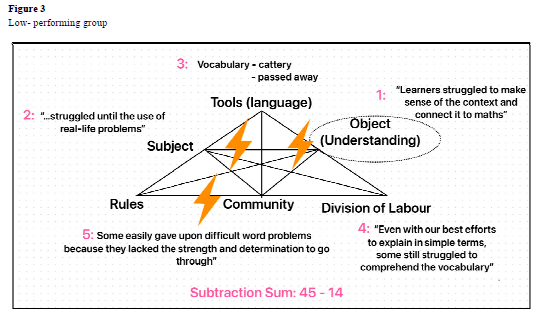
The activity system diagram presented in Figure 3 offers insight into mathematics education challenges within the South African context, where socioeconomic realities significantly impact learners' linguistic and conceptual frameworks. In communities characterised by pervasive poverty, limited resources, and constrained living conditions, certain vocabulary terms employed in mathematical word problems create substantial cognitive barriers for young learners.
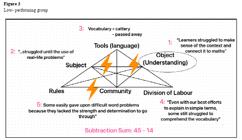
The concept of a "cattery" represents a particularly problematic linguistic tool within this educational context. In South African townships and rural areas where families struggle with basic necessities, the notion of specialised animal care facilities remains entirely foreign to many children's lived experiences. Animals in these communities typically serve functional purposes or survive independently, without the luxury of dedicated care facilities. This unfamiliarity creates a fundamental disconnect between the mathematical problem's scenario and the learners' contextual understanding, preventing them from accessing the underlying mathematical principles. Similarly, the euphemistic expression "passed away" introduces complexity beyond mere vocabulary. For 7-year-old children, regardless of cultural background, the concept of death remains developmentally challenging to comprehend in its permanence and finality. Within South African communities where children may experience death more frequently due to various socioeconomic factors, the abstracted terminology of "passing away" potentially obscures rather than clarifies, creating additional cognitive barriers when attempting to translate life experiences into mathematical understanding.The tensions illustrated between Subject (learners) and Tools (language) within the activity system highlight how this linguistic disconnect fundamentally impedes mathematical cognition. When learners encounter terminology outside their experiential framework, they struggle to construct meaningful pathways to the Object (understanding). The lightning bolt connecting Rules and Community further suggests that institutional educational expectations may conflict with communal realities, creating additional tensions within the learning environment. This analysis illustrates why, as noted in Point 5, some learners "easily gave up on difficult word problems because they lacked the strength and determination to go through." What might appear as a motivational deficit actually represents a profound cognitive barrier-when fundamental vocabulary remains inaccessible, persistence becomes exceedingly difficult regardless of effort.
Although CHAT primarily highlights tensions and challenges, there are some implicit positive aspects regarding how the PSTs planned mathematics lessons as indicated in Point 2 that mentions they "struggled until the use of real-life problems," suggesting that the PSTs recognised the value of contextualising mathematics and attempted to incorporate authentic problems into their teaching. Additionally, there was a commitment to simplifying concepts. Point 4 indicates "best efforts to explain in simple terms," showing PSTs were consciously trying to make mathematics accessible by simplifying complex concepts. The lightning bolts in the diagram indicate tensions or contradictions between elements of the activity system. While the diagram focuses on challenges, these identified tensions can serve as opportunities for growth and improvement in mathematics education planning.
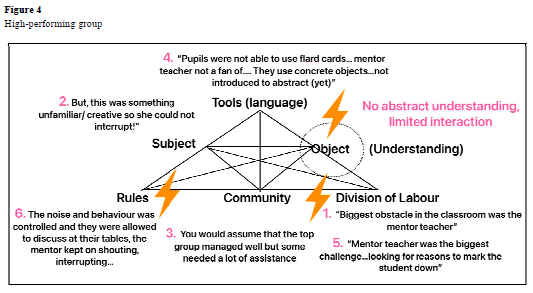
The activity system presented in Figure 4 illustrates the complex tensions within teacher education settings, specifically highlighting power dynamics between mentor teachers and PSTs. The diagram centres on Tools (language) with several key tensions (represented by lightning bolts) appearing between Tools and Object (understanding), labelled, "No abstract understanding, limited interaction." These tensions also appear between Subject and Rules, and Community and Division of Labour.
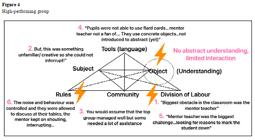
The activity system reveals a problematic mentor-PST relationship. The PST identifies the mentor teacher as the "biggest obstacle in the classroom," creating an environment where pedagogical innovation is constrained. In one instance, the PST notes that when attempting something unfamiliar or creative, the mentor teacher "could not interrupt," suggesting rare moments where innovation was possible. Figure 4 reveals classroom management tensions where the PST allowed controlled discussion at tables while "the mentor kept on shouting, interrupting," creating a contradictory learning environment. This inconsistency in approach likely confused learners and undermined the PST's agency. Pedagogical differences emerge clearly, as learners were "not able to use flard cards" because the mentor teacher disapproved, preferring concrete objects instead of introducing abstract concepts. This resistance to alternative teaching methodologies creates barriers to implementing contemporary educational approaches.
The activity system in Figure 4 also highlights possible evaluation concerns, as the mentor teacher was "looking for reasons to mark the student down," suggesting an assessment approach focused on fault-finding rather than developmental support. This evaluative tension is particularly problematic given the uneven power dynamic, where the mentor holds significant authority over the PST's professional assessment.
There are, however, some implicit positives revealed through the CHAT framework. Most notable was the PSTs recognition of the importance of learner collaboration at tables (Point 6) as well as the use of concrete objects showing an appropriate developmental approach that builds on concrete understanding before moving to abstract concepts (Point 4) and also later recognition of developmental stages. The note about learners "not introduced to abstract (yet)" shows awareness of developmental progression in mathematical understanding from concrete to abstract. There were also signs of valuing the role of differentiated support, indicating there was awareness of different ability levels and at least some attempt to provide additional support to struggling learners.
Discussion
An additional iteration is required in order to create a deeper understanding of how reflection can create a meta-cognitive layer to the learning process-reflecting on reflection itself by mirroring or presenting these findings back to the PSTs. This additional dimension can deepen understanding and promote transformative practice in mathematics education.
The power of collective reflection
The activity system analysis illustrated various tensions within the teaching of additive relations but sharing these findings with the PSTs forming part of this system creates an opportunity for collective meaning-making. This collaborative reflection process could allow participants to see how their individual experiences connect to systemic patterns and contradictions. PSTs may recognise themselves in certain observations while gaining new perspectives on challenges they faced.
From tensions to transformations
The lightning bolts indicated within the CHAT activity systems highlight areas of tension- between concrete and abstract understanding, between teaching approaches and PST needs, and within classroom power dynamics. Rather than viewing these tensions negatively, we can reframe them as catalysts for growth. Should PSTs engage with these findings, they could participate in reimagining solutions. What might happen if PSTs proposed alternative approaches to vocabulary introduction? How might classroom discussions change if the relationship between mentor and PSTs were restructured? This collective problem-solving could transform passive recipients of education into active co-creators of educational practices.
Bridging theory and practice
This reflective cycle embodies the theoretical-methodological duality of activity theory itself. By analysing classroom experiences, extracting patterns, and then bringing those insights back to participants, we complete a full circle of praxis-where theory and practice mutually inform each other. For PSTs preparing to become mathematics educators, this process models the type of reflective practice that will serve them throughout their careers. It demonstrates that teaching is not a static application of methods but a dynamic, responsive process constantly informed by systematic reflection.
Cultivating agency in future educators
Perhaps most importantly, this meta-reflective process cultivates agency among future mathematics educators. When PSTs see their experiences systematically analysed and validated, they develop confidence in their observations and insights. By participating in discussions about these findings, they practise the critical thinking and collaborative problem-solving essential for effective mathematics teaching. This approach has potential to empower them to become change agents rather than mere implementers of curriculum-educators who can identify tensions in their future classrooms and address them thoughtfully.
Conclusion
The challenge in the South African educational context lies not merely in teaching mathematics, but in bridging vast experiential divides through culturally responsive pedagogical approaches that acknowledge and address these socioeconomic and linguistic realities. In conclusion, the three research questions are answered as follows.
How effectively does A&S Module 1 prepare PSTs to apply mathematical teaching in practical classroom settings?
The activity system analysis revealed that the module provided the PSTs with foundational knowledge but they still face implementation challenges in practical settings. While PSTs develop theoretical understanding of mathematics pedagogy, the transition from theory to practice exposes significant gaps. The tension between tools (mathematical language) and objects (PSTs' understanding) suggests that preparation could be enhanced by more explicitly addressing vocabulary barriers and abstract concept development. The module appears to prepare PSTs with creative approaches and real-world problem strategies but doesn't adequately equip them for the complex dynamics they encounter with mentor teachers and diverse learner needs in South African classrooms.
What challenges do PSTs reflect on when they apply content knowledge to their teaching practice?
The PSTs consistently reflected on several key challenges when applying their mathematical content knowledge in classroom settings. Firstly, they struggled with bridging mathematical vocabulary and concepts to learners' lived experiences, as evidenced by learners' difficulty connecting context to mathematical understanding. Secondly, the mentor-PST relationship created significant tensions, with mentors sometimes undermining teaching efforts rather than supporting the development thereof. Thirdly, PSTs face challenges in scaffolding the transition from concrete to abstract mathematical thinking, particularly in diverse classrooms where learners progress at different rates. Finally, classroom management and maintaining productive mathematical discourse presented ongoing challenges, especially when attempting innovative teaching approaches.
How can these challenges be addressed?
Addressing these challenges requires multi-layered interventions within the ITE preparation programme. Firstly, Module 1 could incorporate more explicit training on mathematical vocabulary development, including strategies for introducing terminology in accessible ways that connect to PSTs' prior knowledge and cultural contexts. Secondly, teaching practice should strengthen the mentorship framework with clear guidelines for mentor-PST relationships, possibly including joint training sessions to align expectations and teaching philosophies. Thirdly, PSTs need more practice-based opportunities to develop pedagogical content knowledge-specifically focusing on how to bridge concrete and abstract mathematical understanding through carefully sequenced learning experiences. Finally, creating reflective communities of practice where PSTs can collectively analyse classroom challenges and co-create solutions would transform individual struggles into opportunities for systemic improvement in mathematics education.
The potential for meta-reflective processes initiated through sharing these findings with PSTs represents a powerful approach to addressing these challenges. By engaging PSTs in analysing the very systems they participate in could foster the critical awareness and agency needed to navigate, and ultimately transform, mathematics education in South African classrooms.
References
Adler, J., & Essien, A. A. (2023). Supporting the development of content-specific, language-responsive mathematical teaching practices in multilingual classrooms in Africa. In A. A. Essien (Ed.), Multilingualism in mathematics education in Africa (pp. 115-146). Bloomsbury.
Butchart, T., Pournara, C., & Barmby, P. (2017). Reflective learning: Using a diagnostic assessment-as-learning conceptual-thread approach in addressing acquired learning deficits in mathematics in South Africa. In EDULEARN 2017 Proceedings (pp. 6828-6838). IATED. https://doi.org/10.21125/edulearn.2017.2574
Literature review
- Chikiwa, S., & Graven, M. (2023). Exploring the development of South African pre-service teachers' reflective practice. Pythagoras, 44(1), Article a678. https://doi.org/10.4102/pythagoras.v44i1.678
- Cole, M., & Engeström, Y. (1993). A cultural-historical approach to distributed cognition. In G. Salomon (Ed.), Distributed cognitions: Psychological and educational considerations (pp. 1-46). Cambridge University Press.
- Foot, K. A. (2014). Cultural-historical activity theory: Exploring a theory to inform practice and research. Journal of Human Behavior in the Social Environment, 24(3), 329-347. https://doi.org/10.1080/10911359.2013.831011
- Graven, M. (2005). Dilemmas in the design of in-service education and training for mathematics teachers. In R. Vithal, J. Adler, & C. Keitel (Eds.), Researching mathematics education in South Africa: Perspectives, practices and possibilities (pp. 206-232). HSRC Press.
- Kortjass, M. (2019). Reflective self-study for an integrated learning approach to early childhood mathematics teacher education. South African Journal of Childhood Education, 9(1), 1-11. https://doi.org/10.4102/sajce.v9i1.576
- McDermott, L., & Rafgokong, L. (2020). EXCELL in teaching mathematics (2nd ed.). Kagiso Education.
- Mullís, I. V. S., Martin, M. O., Foy, P., Kelly, D. L., & Fishbein, B. (2020). TIMSS 2019 international results in mathematics and science. Boston College, TIMSS & PIRLS International Study Center. https://timssandpirls.bc.edu/timss2019/international-results/
- Roberts, N., Porteus, K., & Jooste, Z. (2022). Maths4Primary Teachers. Zenex Foundation.https://tdd.sun.ac.za/downloads/D.-Roberts-Moloi-2022-Overview-of-Primted-TDD-10-Nov-2022.-v3.pdf
- Roberts, N., Porteus, K., Morrison, S., & Jooste, Z. (2023). Maths4Primary Teachers: Addition and subtraction. Unpublished.
- Schön, D. A. (1983). The reflective practitioner: How professionals think in action. Basic Books.
- Venkat, H., & Askew, M. (2018). Mediating primary mathematics: Theory, concepts, and a framework for studying practice. Educational Studies in Mathematics, 97(), 71-92. https://doi.org/10.1007/s10649-017-9776-1
- Vygotsky, L. S. (1978). Mind in society: The development of higher psychological processes. Harvard University Press.
Accepted: 20 September 2025