Mobile knowings: Balancing spatial inequities in South African higher education
Abstract
In this paper, I explore students' knowledge of informal spaces in higher education in post-apartheid South Africa. Drawing on Alexander Calder's kinetic mobiles as both an analytical tool and a visual metaphor, I reveal how students continually rebalance between external forces, such as family expectations, institutional structures and finances, and their own internal equilibrium of aspirations and desires. Findings from an arts-based enquiry, including student-co-produced photographs, imaginative mapping, and exhibitions, were analysed through the mobile metaphor into paired couplets suspended on the mobile's branches. Students' voices hang like leaves on these branches, revealing tensions between practices of immobilising and mobilising, controlling and freeing, studying and planning, reflecting and dreaming, and belonging and becoming. Inequality is not just inscribed in space. It emerges through how students must constantly rebalance these entangled forces. Background (past socioeconomic contexts, family expectations), foreground (aspirations and desires), and present campus realities all act simultaneously. This framework allowed me to advance spatial justice theory by showing how interventions must address configurations of entangled forces rather than isolated elements, thus offering systemic insights for reimagining South African universities that better support diverse student journeys.
arts-based methods; Higher Education; spatial justice; visual metaphor
Background: Anchor points
The transformative moment in the fallist movements in South Africa and abroad awakened colonial ghosts (Constandius et al., 2024) of the past that continue to haunt us in the present through artefacts and spaces of higher education (HE). This moment reminded me that students' financial and epistemic struggles were not over in the new democratic dispensation. During these demonstrations, I questioned why students' frustrations about the lack of transformation were primarily directed at symbols of colonial heritage, while the physical infrastructure itself, a product of colonial and apartheid legacies, remained largely unchallenged. This observation led me to explore in my PhD (Horner, 2021) how contemporary students came to know and make meaning of campus spaces, particularly considering that these same buildings and spaces had historically excluded students of a particular race, gender, and class and continued to silently exclude them through perpetuating inequities.
As an architect and lecturer at a historically white, English-speaking university in South Africa, I became concerned with the subtle mechanisms of spatial exclusion in university environments. The seemingly neutral infrastructure revealed patterns of exclusion and marginalisation, particularly in informal spaces serving students' material needs (food, accommodation, and transport). Differences in how students access campus by public transport, university transport, on foot, or by car establish varying privileges. Similarly, different dining and accommodation arrangements create distinct privileges and social encounters.
I sought to understand what students learn about themselves and others in these higher education spaces and whether they recognise the spatial injustices I observed. Drawing from Soja's (2009) concept of spatial injustice, I examined how unequal resource distribution manifests in structures of privilege, such as when university management provides seating only where students consume goods from specific retail outlets. Students with expendable income gain ready access, while others remain on the periphery, denied both amenities and social interactions. However, students are not merely passive recipients; some actively negotiate these challenges through networking and learning the area's language, while others do not. Student social practices are crucial in maintaining, integrating, or marginalising themselves or others.
Similarly, the informal campus spaces are not just containers for activities but active participants in student exclusion, inclusion, and suppression. My research explored how informal food, accommodation, and transport spaces enable or disable spatial justice, moving beyond welfarist notions of merely providing for student needs. I examined how students knowings of these spaces influence their actions and behaviours and how they negotiate boundaries to shape their futures within and beyond higher education. My wanderings on campus helped establish the research question of what students know of campus spaces and whether this knowing enables or inhibits, while my research and teaching practice in architecture aided in informing the arts-based methodology I adopted. To make sense of the findings, I employed the visual metaphor of a mobile, derived from Calder's elegant kinetic sculptures. In this article, I draw on this aspect of my PhD study to explicate how the visual metaphor is explored for its potential significance in terms of data analysis, representation, and theorising.
Orientation and structure
The article is structured into five parts, each hung as a branch of the mobile to explain the chronology of the paper, the analytical process of unravelling the data, and to serve as a visually represented interconnection between the parts. The first branch addresses the student voices that this research represents and then explores how visual metaphors and mobility as root metaphor are understood in higher education literature. I then turn to the theoretical frameworks underpinning the study. On the second branch hangs Lefebvre's (1991) theory of the social production of space in counterbalance with Soja's (2009) spatial justice. Lefebvre established that space is socially constructed, never neutral, and always marked by conflict and contradiction. Soja's spatial justice extends this by revealing how these conflicts produce uneven geographies that privilege some students while marginalising others. Calder's mobile offers a dynamic analytical framework for understanding how students navigate these unjustly produced spaces, in capturing the fluid and relational nature of spatial experience and the constant rebalancing required as students respond to many competing forces. The third branch explains the arts-based methodology, which is premised on the idea that visual approaches yield a deeper understanding of the subject matter. Data was collected through repeated interviews, focus groups, and student-produced photographs, which were presented to focus groups and displayed at an exhibition for further interpretation by a broader student body. The volume and complexity of data that emerged from these numerous engagements initially overwhelmed me. In grappling with how to represent the interconnected yet distinct dimensions of students' spatial experiences, the mobile metaphor emerged not only as an analytical perspective but as a possible solution to the representational challenge. In the fourth branch, I trace this emergence, showing how the mobile served as an analytical device to identify and organise six thematic strands, each weighted differently and all interconnected. The last branch addresses the limitations of metaphorical analysis, which can lead to interpretations that may be incorrect or even misleading. I extend the discussion to explore how the mobile functioned as a representational device, ensuring the arts-based approach informed connections between form and content, despite some challenges. Finally, I explain how Calder's interpretation of the mobile enriched my theoretical understanding of students' spatial knowing.
Branch one: Students and metaphors of mobility
South African students' voices reproduced in the media over the period of #FeesMustFall,1 and during data collection [2018-2019] for this research, reflected a view from a particular sector of the student body about students knowings,2 of the university, its space, and infrastructure. The view expressed by students at that time was one of dissatisfaction. Many of them were poor students whose expectations can be traced to growing up in welfare-supported families and expecting such support to continue when they attended university. They believe that the state, which is duty-bound to reverse past oppression, can resolve the many problems (economic, social, and educational) they face (Ndelu, 2017).
Jansen (2017) argued that, even with university and government support, poor students do not directly feel the benefit of welfare funding. He notes that the National Student Financial Aid Scheme grant is insufficient to meet the full cost of university studies. The three standard costs of tuition, accommodation, and books might be covered entirely by this grant. However, students still need to cover other expenses, such as food, medical visits, trips home between semesters, and other costs, including unforeseen ones. So, although formal access to university had improved for students, this did not come with sufficient financial support, nor to the extent that students from previously disadvantaged sectors needed it.
The dissatisfaction felt during this time was entirely equated with the moving bodies participating in protest actions, their voices represented by the rhetoric of student leadership, leaving no space for those of the student body, which remained silent through non-representation or non-participation. It was the voice of the average, everyday student, not those on the front lines, that I wanted to hear through my research, and I actively sought them out by setting up opportunities for participatory interactions on campus to recruit them. Once these students were co-opted, they became part of an arts-based research project that employed visual methods, including co-producing photographs, an exhibition, and imaginative mapping, to generate students' responses.
Central to this arts-based approach was the need for an analytical framework that could capture the complexity and dynamism of students' spatial experiences, one that moved beyond static categories to represent the fluid, interconnected nature of their everyday realities. Visual metaphors offered a particularly productive avenue for this work, enabling both analytical depth and representational richness.
Conventional and poetic metaphors (Lakoff, 1993) provide insightful ways to explain unfamiliar phenomena through more familiar objects across diverse fields. Metaphors have explored students and space (Botha, 2009) in education, student geography, urban design and architecture. Diverse metaphors have been employed including those of ants' nests (Gordon & Lahelma, 1996), journeys (Gale & Parker, 2015), bridges (Briggs et all., 2012), containment (Clark et al., 2002), and borders (Honeyford & Vander Zanden, 2013).
The mobile metaphor contributes to understanding students in higher education spaces and making sense of their everyday lived experiences. Drawing from Lefebvre's extensive use of metaphors, Cresswell explained that metaphor "can be understood as a mode of thought and action that is implicated in everyday life. This extends metaphor beyond rhetoric or theoretical understanding and into the realm of practice and experience" (1997, p. 333). This understanding is crucial for researching students' spatial knowing in higher education. Students do not simply observe campus spaces; they actively navigate, negotiate, and make meaning within them through everyday practices such as waiting at bus stops, sleeping in cars, and walking along campus paths. These embodied experiences reveal deeper spatial realities. A visual metaphor, such as the mobile, operates in this realm of practice and experience, capturing the dynamic, relational nature of how students constantly rebalance and adjust within institutional structures in mirroring their lived spatial knowledge rather than merely describing it.
As the research unfolded, the mobile emerged as a powerful organising metaphor for making sense of the data. Calder's kinetic sculpture provided a recognisable image for the concept of mobility (Mariaye, 2012) that ran through students' photographs of and narratives about navigating higher education space. The notion of mobility, as temporal, fluid, and disrupted, resonated with the emerging findings of students' understandings of campus spaces. Mobility as a root metaphor refers to a system of thoughts about movement and flow encapsulated in the mobile discourse (Botha, 2009). It encompasses the movement of physical bodies, minds, goods, information, skills, ideas, social practices, networks, and identities (Sheller & Urry, 2006). Movement may be self-directed, guided, forced, or coerced (Albertsen & Diken, 2013), experienced individually or collectively, and can be fluid, erratic, accelerating or decelerating in capturing various facets of rhythm, speed, space, time, and distance (Cresswell, 2010). Temporally, mobility involves cyclical, perpetual movement or inertia. Spatially, it involves retracing known routes, mapping new trajectories, and transgressing or reaffirming boundaries (de Certeau, 2002). Mobility discussions are also located in "non-places" like airport lounges, where interaction is fleeting (Larsen & Jacobsen, 2016),
Mobility understanding offers a rich basis from which to analyse students knowings of campus spaces. For students and campus spaces, mobility is connected to becoming and knowing, a concept once associated with elite truth-seeking explorations of new territories (Van Damme, 2006). Modern conceptions view knowledge as transferable between and among places, people, or things rather than seeing it as being place-bound. Mobility carries positive connotations (progress, freedom, creativity, opportunity) but also connects to inequality (Larsen & Jacobsen, 2016), where ability and access to enabling resources vary. Negative connotations include deviance and shiftlessness, entrenched in what Creswell (2006) distinguishes as sedentarist metaphysics (valuing place attachment) versus nomadic metaphysics (celebrating flow and boundary transgression). The latter links mobility to subaltern power through De Certeau's (2002) walker, Deleuze and Guattari's (2010) nomadology, and Braidotti's (2011) intellectual nomadism.
Educational literature discusses mobility across scales, from domestic immobility (Finn & Holton, 2019) to national and international student movements (Byram & Dervin, 2008). Cognitive mobility appears in experiences of otherness in universities, while mobile learning (Pimmer, 2016) explores flexible learning spaces. Mobility was interpreted as a "socially produced motion" (Cresswell, 2006, p. 3) which employed the relational aspects of being observable, experienced, embodied, and representational, in that the movement itself carries meaning. These varying concepts of mobility provide insightful means for exploring the phenomenon of students knowings of higher education spaces.
Branch Two: Theoretical and analytical framing
My research draws on several theoretical frameworks to understand students' spatial knowing in higher education. Lefebvre's (1991) theory of the social production of space reveals how space is simultaneously produced by and productive of social relations, existing across three dialectical dimensions: spatial practices (the physical university environment); representations of space (how planners and administrators conceive the campus); and representational spaces (students' lived experiences). This reveals how university spaces are shaped by power relations while also shaping students' daily practices and possibilities. Soja's (2009) concept of spatial justice extends this by foregrounding how university spaces are produced unevenly, creating differential access and experiences that privilege some students while marginalising others. This is pertinent in the postcolonial, post apartheid landscape, where colonial ghosts of the past adorn walls and stand as silent sculptures, reminding students from marginalised backgrounds that this space was not designed for them. Even more so, discriminating cultural practices, based on how language is used in naming and social events, particularly in student residences, limit the potential for student integration and belonging (Davids & Fataar, 2022). Coloniality of power (Ndlovu-Gatsheni, 2019) is still inscribed in these spaces, albeit masked by the appearances of transformation. For students to establish a place for themselves in these spaces, they need to acquire adaptive responses to environmental cues (Davids & Fataar, 2022).
Lefebvre's (1991) spatial triad and Soja's (2009) spatial justice provide powerful frameworks for understanding how space is produced and experienced through dialectical processes. However, the mobile serves as an analytical device to capture the simultaneous, interdependent nature of students' spatial negotiations. Where dialectical frameworks often imply movement toward resolution or synthesis, the mobile holds contradictions in a state of tension. Calder's (Taylor, 2012) kinetic mobiles offer a framework for understanding higher education spaces as fluid, relational, and responsive, capturing movement, balance, and the interplay between agency and constraint within structured environments. Calder's work is best described in a poem he penned in French for the Abstraction-Création group magazine in 1932. I offer the English translation (Guggenheim et al., 1979, p. 318) of the poem.
How can art be realised?
Out of volumes, motion, spaces bounded by the great space, the universe.
Out of different masses, tight, heavy, middling-indicated by variations of size or colour-directional line-vectors which represent speeds, velocities, accelerations, forces, etc. . . .-these directions making between them meaningful angles, and senses, together defining one significant conclusion or many.
Spaces, volumes, suggested by the smallest means in contrast to their mass, or even including them, juxtaposed, pierced by vectors, crossed by speeds.
Nothing at all of this is fixed.
Each element able to move, to stir, to oscillate, to come and go in its relationships with the other elements in its universe.
It must not be just a fleeting moment but a physical bond between the varying events in life.
Not extractions But abstractions
Abstractions that are like nothing in life except in their manner of reacting
Calder's poem refers to the relationship between the parts of the mobile and how, independently and collectively, they establish varying trajectories. The mobile is constantly in motion, reacting to its environment, with no purpose or intent other than to respond. Jean-Paul Sartre's description of Calder's mobiles (Galloway, 2002, p. 4) captures the diametrically opposed characteristics of the mobile since
'mobile' does not 'suggest' anything: it captures genuine living movements and shapes them. 'Mobiles' have no meaning; make you think of nothing but themselves. . . The 'mobile'. . . never [has] precision and efficiency. . . [it] weaves uncertainty, hesitates and at times appears to begin its movement anew, as if it had caught itself in a mistake. . . . At moments they seem endowed with intention; a moment later they appear to have forgotten what they intended to do, and finish by merely swaying inanely. . . [and mobiles] do not seek to imitate anything because they do not 'seek' any end whatever, unless it to create scales and chords of hitherto unknown movements.
Sartre described mobiles as being suspended between inanimate and animate, erratic and fluid, purposeful and indifferent. He personified the mobile in giving it human characteristics that elevate the artwork beyond a mere object suspended in space. Sartre further alluded to the fragile yet resilient nature of the mobile as it responds to surrounding forces, reminding us of its responsive, rather than agentic, nature.
The mobile's doings or actions are a direct consequence of the materiality and tectonics3 of the structure. Wire was Calder's medium of choice, and in the utilisation thereof, he transferred the concept of the line from drawing into sculpture. Calder (1929, p. 1) termed this "three-dimensional line drawing." The line now garnered a third (depth) and fourth (time) dimension as it ascended from the page, emerging as a kinetic wire sculpture. The assembly of the parts made the interconnection between them clearly visible and carefully balanced in relation to one another. Calder's contextual responsiveness to the environment in which his sculptures are placed is evident in the mostly transparent wire sculptures, which allow other objects and the surrounding environment to remain visible. In reference to this phenomenon, he said
that objects behind other objects should not be lost to view but should be shown through the others by making the latter transparent. The wire sculpture accomplishes this in a most decided manner (p. 2).
These descriptions of the mobile highlight the relationship between background and foreground, as well as the external forces of context that act upon the mobile. The mobile's transparency, which allows both the background and foreground to remain visible simultaneously, suggests potential for understanding the complex temporal and spatial dimensions of students knowings. These theoretical frameworks informed both my research design and analytical approach, with their fuller implications explored through the findings presented in this article.
Branch Three: Methodology and visual methods
My creative research experience in drama (Horner et al., 2016) and collaborative teaching practice fostered a commitment to co-production and embodied knowledge, which has fundamentally shaped my approach to this research project. As an architect, I was trained to perceive space as an aesthetic object and a container for human activities, conceptualised first in the mind, then manifested through drawings and models before physical realisation. My Master's dissertation (Maclachlan, 2000) in Space Syntax methodology upended these conceptions in presenting space as a set of relations (spatial configurations) that shape social interaction. This perspective holds that space has an intelligible social logic, where relationships among occupants are enabled or disabled through spatial arrangement. Space is thus primarily relational, except where it is disrupted by architectural elements creating borders and thresholds between users of a space.
I draw from St. Pierre (2017) who advocated for "break[ing] the habit of rushing to preexisting research methodologies. . . to follow the provocation that come from everywhere in the inquiry that is living and writing" (p. 1). For me, inquiry was not just about writing an aside to "think-write" (2017, p. 3), but about slipping between methodologies and methods to do-write, where doing (co-producing photographs, facilitating exhibitions, engaging students) was itself a mode of thinking and knowledge generation. In undertaking my PhD research, I sought alternative ways (Honan & Bright, 2016) of conducting research and representing findings that transcended traditional PhD conventions. I wanted to gain a deeper understanding of students and higher education spaces, learning collaboratively while remaining open to possibilities rather than being constrained by conventional approaches to data collection, analysis, or representation. Arts-based research appealed to me because it enables deeper, different ways of knowing (Liamputtong & Rumbold, 2008) and provides valuable insights into phenomena (Eisner, 2008). I recognised this approach, particularly in education (O'Donoghue, 2011), as a valid form of knowledge production.
[T]he idea that art and art-making are forms of knowledge production and sites of knowledge in and of themselves underpins the theorisation of art practice as research (p. 640)
O'Donoghue suggested that valid research practice lies in the inquiry process through art-making, the art itself, and its dissemination. The art form's ability to reach broader audiences for further meaning-making is significant for data production. Complementing this approach, visual methodology enabled insightful ways of seeing the relations between students and HE spaces (Berger, 1972; Harper, 2002, Prosser, 1988), wherein relations are continually produced through the making and interpreting of visuals (Winton, 2016). Visual sociology and anthropology hold that we gain authentic insight into society by observing and analysing visual manifestations (Pauwels, 2011). These methodologies also reduce hierarchies inherent in research, giving participants greater control over outcomes and self-representation (Gubrium & Harper, 2013, cited in Switzer, 2018). Visual production and discussion reformulate the one-way flow of information (Switzer, 2018), enabling deeper inquiry into what is seen, unseen, and why. This was particularly important since students might have felt constrained when responding to me as an institutional employee. The visuals were co-produced based on knowledge being dispersed throughout society, empowering co-producers (Verschuer et al,. 2012) and challenging academic norms (Bell & Pahl, 2018).
I employed the two visual methods of environmental photographs and imaginative campus mapping.4 Students were photographed in campus spaces that held meaning for them, and the process became a tangible outlet for creativity and meaning making. Photographs held value for both participants and for me, particularly in terms of imagination and time. Winton (2016) argued that image-making provides a view into people's imagination and interior life worlds, while reminiscence and contemplation are more strongly associated with photography. In this study, photographs enabled students to reflect on past and present HE experiences while embedding projective expectations of what HE could be. The photograph thus creates an authentic space, simultaneously embedding past, present, and future, which is relevant for theorising the phenomenon and aligns with the visual metaphor of the mobile representing all three temporal dimensions. These creative methods effectively engaged participants throughout the data collection process, enabling me to connect empathetically with them. Visual representation became central to knowledge production, and these photographs were revisited very often with different readers.
Students were involved in a rigorous data production process requiring a number of meetings to deepen my understanding of each participant's relationship to campus spaces. Nine core students generated 21 photographs, which were then exhibited to the broader student body, prompting 24 additional interviews. The core group participated in at least three individual interviews and a focus group discussion. First, they discussed their knowledge of campus spaces related to food, accommodation, and transport; second, they explored the meaning of their selected spaces and how to visually interpret them photographically; and third, they reflected on the resulting photographs and their naming. Some students participated in a fourth session that involved imaginative mapping of campus spaces. This iterative engagement deepened my understanding of each student's nuanced contribution to the phenomenon, further enriched through a focus group discussion during which the number of images was refined and exhibited later for wider meaning-making. In both instances, students were asked to reflect on the visuals and consider what it means to be a student in a higher education institution in post-apartheid South Africa.
While students contributed substantially to data production, they did not participate in the research design, data analysis, conceptualisation of the mobile metaphor, or determination of its representational use in the thesis. This analytical work was my own struggle to make sense of the data. The mobile metaphor was explicitly discussed with only one student, who recognised the counterbalancing forces at play.
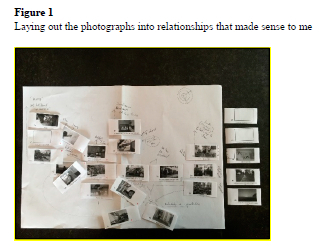
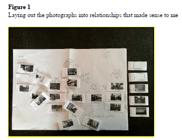
The diverse data collected through participant engagements, repeated interviews, photograph discussions, focus groups, exhibitions, and imaginative campus mapping generated an overwhelming amount of information. While trying to formulate a coherent argument from conversations about the 24 images, I found myself drowning in textual overload. In desperation, I cut out thumbnails of all 24 photographs and began arranging them in relation to one another. These photographs represented what I think of as the fulcrum of my data collection-both the pivotal outcome of individual research interviews and crucial triggers for subsequent conversations. They functioned as artefacts (Fasoli, 2003), both emerging from the research and generating data through continued reading by different students and by me.
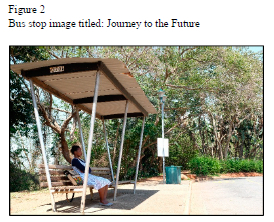
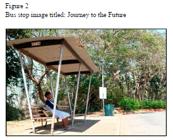
I intuitively placed the photographs (see Figure 1) based on my understanding from transcript readings, embedding the students' meaning making in the body of the photographs themselves. This photograph of a young woman sitting alone at a bus stop (see Figure 2) evoked a number of interpretations from students who connected this to other images and their embedded text from various perspectives. The bus stop image evoked the following ideas:
Looking back - Reflecting
So she is probably trying to plan her day. She is thinking, oh, what's the next thing? This is probably one of the few times she has in a day to herself. To just breathe and be with herself.
Looking forward - Future aspirations
Students spend a lot of time waiting for the bus, but it's different from just waiting and being idle. They are waiting toward something. It's kind of like metaphorical in the sense that you are waiting for this car or this vehicle to take you to the next place where you can achieve your dreams.
Loneliness
I take transport every day, so I think that is one of the reasons why I am always alone. When you get to travel every day, you hardly get to make any friends.
The bus stop photograph became a pivot for building connections between and among students' thoughts. Once arranged on the board, the photographs led to students generating associations that suggested a more meaningful connected whole. Relations between them revealed a continuum of views instead of singular understandings. For example, the bus stop served as both a literal symbol of public transportation and a metaphor for the journey, while the lone figure in the image was interpreted through the loneliness experienced when taking public transportation every day since then one does not have time to make friends. Connections formed between the bus stop and other images that built upon these ideas and extended them. One photograph showed a girl sitting in her car, which she uses to drive to university and in which she slept in between lectures. The car became a space of solitary work necessitated by her lack of friends. Another image captured the same student walking alone in the deserted back section of campus, visually expressing her loneliness and isolation. A young man photographed beside car wheels noted that travelling by car reduced his daily anxiety compared to using public transport. Another student appeared in silhouette against the rising sun, speaking of finding his passion, which, for this student, was outside the campus. A young man's wrist, adorned with a traditional leather bracelet, reflected on a table surface, suggested the need for quiet reflection. A young woman sitting at her desk was interpreted as reflecting on and planning her future. The web of connections between the bus stop and other images grew outward and coalesced in the initial stages around themes of reflection, loneliness, solitude, aspirations, and becoming.
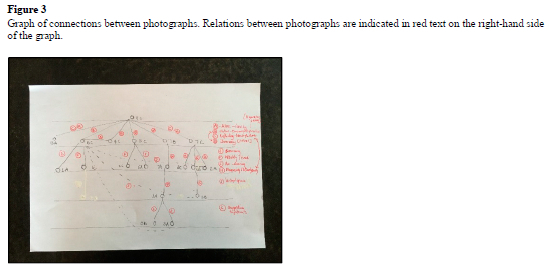
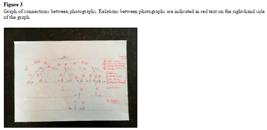
Drawing on my Space Syntax experience, I created a justified graph (see Hillier and Hanson, 1984) to capture the relationship network between photographs. Starting with what I thought of as the root photograph [8C] of the woman at the bus stop, I mapped connections to all other images in the dataset (See Figure 3). Circles represent photographs, lines show relationships conveyed by students' readings, and dotted lines indicate potential further connections. An asymmetrical five-stranded diagram of student voices illustrates these emerging complementary and contradictory themes.
Alone and loneliness
I can tell you I do not think any of the people in my class ever recognise me, but I can recognise all of them.
I am so content sitting on the grass, reading my book, studying a bit, and I like that the campus provides like you don't always have to be in a space, that like, meaningful doing something constructive like, you could just be sitting around you know?
Studying, sharing accommodation and virtual space
. . . sometimes of course, like it is a bit of an invasion of your personal area, but then you have to remind yourself that. . . you all share this space, and we all have to get along, and that is where we get most of our work done.
The moment I got earphones on don't talk to me.
Dreams, aspirations and becoming
It's the future. It's looking at the bigger picture literally small steps to get to the bigger picture. But all these steps add up.
Journey and mobility
Yeah its like its our primary mode of transport so like you are always there so if you are not on campus you are on the bus, if you are not on the bus you are at res.
Reflecting
I find peace and comfort every time I'm gonna be sitting there . . . [he sits with earphones on] . . . and I have a whole perspective on what is currently going on in my academic performance and everything.
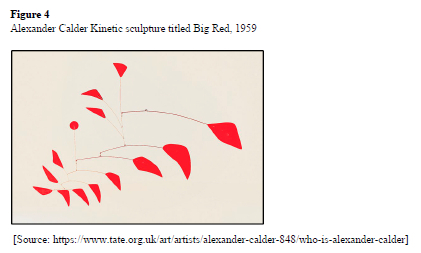
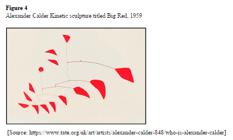
The diagram illustrated the interconnectivity of elements, showing potential for a continuum of ideas through strands and links between thoughts. However, this two-dimensional representation lacked the depth and movement I perceived in the students' experiences. Students' embodied experiences revealed deeper spatial realities, such as waiting at bus stops, sleeping in cars, and walking alone along campus paths. Alexander Calder's (1929) elegant kinetic sculptures came to mind, his mobiles carefully balanced to stay suspended in the air, moving when touched or in response to air currents (See Figure 4). Artist Marcel Duchamp coined the term mobile (Taylor, 2012), which, in French, means both motive and motion. The cause and action responsiveness of the mobile served as an analytical device to understand not only student's movement, but what was directing that movement and the range of agency.
Branch Four: Developing concepts and themes
Through my exploring Calder's work, the mobile emerged as a metaphor. The mobile became the device upon which I could literally hang themes in relation to one another to test their potential for balance as paired couplets on each branch in relation to one another. Some sub-themes, such as loneliness and being alone, were evident from the start. However, they later fell under higher-order concepts of belonging and becoming. Other branches and their corresponding couplets emerged later through the analysis process. The mobile, as an analytical device, allowed me to recognise the dynamic relationships between conceptual elements rather than seeing them independently. Furthermore, it maintained tensions between what would be perceived as opposing forces (alone and lonely) without conflating them into one theme. The mobile allowed for two further contributions to understanding how configurations shift based on conditions external to the mobile and the preservation of student agency within structural constraints. The mobile revealed interdependencies that hierarchical or linear frameworks obscure or only draw reference to, such as agency, structure, or change. The dialectical relations of space and power that my theoretical framework invokes set up dualities in opposition to one another. The mobile then allowed me to hold many forces in tension with one another simultaneously.
The mobile was not the only analytical device I used to explain the data; initially I employed critical discourse analysis (Van Leeuwen, 2008) and presentational analysis (Freeman, 1996) to dig deeper into the data by acknowledging my understanding of language as a social construct, drawing from linguistics to recognise inherent power relations embedded in discourse that can produce, reproduce, and change hierarchies of power. However, while these approaches proved helpful in generating finer-grained analysis, they failed to explain the relations emerging from the data. However, I lacked a vehicle to articulate them until I chose the mobile.
Drawing themes from the data was not a straightforward process and required the repeated assembly of photos and student voices on the mobile in an attempt to strike a balance between and among the themes and the concepts that constituted the themes. Photographs were analysed independently of one another based on their readings across the methods of engagement with students and in relation to one another for recurring themes. For example, a photograph of a girl at her desk at home with a calendar on the wall is titled "Messy, but I think there is method in the madness." The initial readings of the image lead to the theme Chaos and Order. Below is an extract from a student's reading of the image, followed by a descriptive analysis of this reading and others.
As you can see now, she is back home. Maybe took a bath or something, and she has to go back to school and think. She has a chaotic life, lots of things she has to do. She has to come back to reality and stop thinking and start doing now! That's the stressful part.
The reader of the image reiterates the aspect of production, in saying "lots of things she has to do", and "start doing now." Another reader remarked that a consequence of not working or figuring things out for oneself is failure, "flop." Two further readers refer to student life as chaotic, while another refers to it as "so much happening around even at school", which suggests that life outside of campus impacts students just as much as life on campus. These interpretations do not suggest anything about excelling; they are only about production. Spatially, readers locate this image as being related to accommodation, home, or residence, but also between the world outside the university and the university itself, where the boundaries have become permeable and the happenings of one spill over and have consequences for the other. Only one reader referred to the calendar on the wall above her desk as a mechanism for order in terms of sorting out work and assignments that are due, and as a representative of getting into the HE system.
The second photograph shows a student in his room at the campus residence, pointing at notes on the wall. The photograph is titled "The future background". His image was initially associated with the theme Planning and Control. Here I offer an example of a reading relating to this image.
The sad thing about the process that it cannot show that that is actually my room . . . here on campus . . . most of the time I spent my time here on campus and I do not have such personal space where I could do all my plannings and why did I title it 'future background' is because most of the items on that border are in my own way what I perceive to be my perspectives in search of the current affairs and the problems that I wish to somehow interactively deal with when I get out of this institution.
The temporal and the spatial are quite clearly articulated in this author's description of his room and in the relevance of what is noted on the wall. He qualifies that he spends most of his time in his room on campus since there is no other personal space in which he can do his "planning." What is on the wall is both a road map for himself as well as an explanation to others, at some future date, to understand the decisions or actions he is going to make or take once he "gets out of this institution." The latter wording suggests that he is incarcerated here against his will.
Only when these two photographs and their readings are brought into conversation with one another, through the mobile, did the theme of Studying and Planning emerge. Studying refers to the practice of maintaining curriculum outcomes and expectations, while planning involves the discovery of new practices and knowledge that can contribute to new learning relationships and future possibilities in life. An extract from a student's reading of the two images articulates the relationship between the two concepts of studying and planning.
. . . this is sort of related to, um, the beginning of your semester. That's studying [girl at the desk], but this is also planning ahead in my mind [student pointing to the notes on the wall] . . . this is when you plan throughout your life, essentially, and your semester as a student.
What the reading of the two accommodation spaces in relation to one another reveals is how residential spaces invoke both trauma and places to dream, albeit that the physical space is limited. A girl at her chaotic home desk responds to institutional and family demands to study. Studying is then a present reality, controlled by external expectations. Conversely, a student notes how he is mapping his self-directed future, planning for when he leaves. In doing so, he frees himself from both institutional structures and family control, allowing himself to dream of becoming his imagined self. These counterbalancing practices operate across temporal registers (present demands and future aspirations) and remain interdependent. Studying enables planning, controlling necessitates freeing, managing studying enables belonging, and planning allows for becoming. Shifts in one force reverberate across other themes on the mobile.
Thus, a branch called "Studying and Planning," along with many sub-themes as leaves, was hung on the mobile. I redrew Calder's Big Red (see Figures 4 and 5) and began transferring the concepts I had been grappling with onto the leaves of the mobile, locating these on opposite ends of the wire branches. Relationships began to form through a process of trial and error. Filling in the space surrounding the mobile with what I understood as external forces (institutional timetables, family responsibility, financial constraints) that have an impact on students clarified another kind of connection. Slowly, the form representing the data began to take shape and assume a life of its own. The structure of the mobile became a device on which to hang the concepts emerging from the data and with which to make sense of the information.
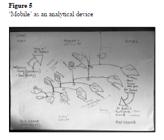
I returned to the mobile repeatedly, each time testing whether a branch could bear the weight of student voices or whether this needed to be redistributed. Touch one branch and the entire structure adjusts. Remove an external force, and new configurations emerge. This analytical process mirrors students' negotiations of HE space that are dynamic, responsive, and interdependent in ways that static frameworks cannot capture.
Originally, the varied complementarities and contradictions of layered students' experiences of HE emerged as paired couplets.
Studying and Planning,
Dreaming and Reflecting,
Alone and Lonely,
Mobile and Immobile,
Connected [social media] and Disconnected [mentally],
Becoming and Folding,
Observing and Participating,
Supported and Led astray/weakened by others,
Be on a Path and on a Journey,
Comfortable/content and Uncomfortable,
Belonging and Alienated,
Knowing and Not Knowing. . .
As I arranged these concepts physically on drawn branches, certain combinations proved unsustainable. Observing and Participating, for instance, was more about students' transition into HE, and these then became part of a new theme of Freeing and Controlling. Similarly, Knowing and Not Knowing manifested across all themes rather than standing alone. The mobile's requirement for balance forced me to distinguish between primary themes that could sustain their own branches and secondary concepts that operated across the structure.
The iterative process of testing arrangements revealed which pairings created redundancy. Be on a Path and on a Journey addressed both movement through HE space and time; the mobile showed that they belonged in the broader dynamic of Immobilising and Mobilising. Comfortable/content and Uncomfortable, Alone, and Lonely collapsed into Belonging and Becoming. Connected and Disconnected merged with Belonging and Becoming as well since social media connections were described as mechanisms of belonging or isolation.
Through this process of suspension, testing, and adjustment, six themes emerged that could be held in equilibrium.
1. Immobilising and Mobilising
2. Controlling and Freeing
3. Planning and Studying
4. Reflecting and Dreaming
5. Belonging and Becoming
6. Foregrounding
Save for one, the themes were composed of two concepts. The concepts denoted practices (actions) enacted by or through students as an elaboration of Lefebvre's (1991) notion of spatial practice that refers to the everyday actions that occur in spaces or places. These paired concepts may seem to suggest that they are contradictory or complementary, but they are neither opposites nor in cooperation; they exist along a continuum and are mutually entangled (interrelated) practices related to the same phenomenon of students knowings of HE spaces. This is the contribution of the mobile.
Foregrounding stood alone without a paired couplet because it represented imaginative data generated from another method and because it spoke to students' futures, how their past informed these, and the present. The foregrounding's theme operated differently from the continuums set up in the other five branches.
The concepts are entangled (Barad, 2007) first in another meaningfully related concept as a pair, and then in the phenomenon of students knowings itself. The pairing of the concepts is in relation to the sharing of a common idea linked to mobility such as spatial mobility [Immobilising and Mobilising] (Christie, 2007), mobilising independence [Controlling and Freeing] (Holdsworth, 2009), mobilising practices in education [Studying and Planning] (Amulya, 2011), identity construction in transitioning to and through HE [Belonging and Becoming] (Palmer et al., 2009) and finally, the mobility of aspirations as desired and/ or as realised [Reflecting and Dreaming, Foregrounding] (Appadurai, 2004; Skovsmose et al., 2008).
The themes themselves are also not mutually exclusive, and the boundaries between concepts and themes are permeable, most specifically in the last three themes [Reflecting and Dreaming; Belonging and Becoming; Foregrounding] as the concepts begin to address practices related to aspirations and imagination.
The mobile's transparency and weightlessness enabled visible connections between the background, the environment, and the objects behind it, similar to the foreground, moving toward but never reaching. The delicate nature brings both the background and foreground into dialogue with the mobile in one space, conceptually linking past and future in the present through the form of the mobile. Situated between past and future, the mobile moves in the continuous present, subject to the forces acting on it as well as the agency of its own internal equilibrium. In my working with the metaphor of the mobile and the emerging concepts related to the research, the mobile relationship between past, present, and future took shape. In doing so, it sets up how the themes are grouped into three sets to reflect different timespace relations.
The first three themes [Immobilising and Mobilising; Controlling and Freeing; Studying and Planning] address students' lived experience of campus spatiality in the present as a consequence of their backgrounds, and the last two themes [Reflecting and Dreaming; Belonging and Becoming] address the aspirations for their journeys through the spatiality of HE based on their present realities. The last theme [Foregrounding] includes imagined future possibilities for the spatiality of the campus.
The use of paired concepts illustrates the entangled nature of the process of students negotiating their different routes, paths, or trajectories through HE. They further represent the academic self in dialogue with the non-academic self. The academic self explores university life as lived, in the social reproduction of spaces (Lefebvre, 1991), and in the consumption of knowledge toward an academic qualification (as noted in the concepts of Immobilising, Controlling, Studying, Reflecting, and Belonging). The non-academic self is the future imagined self, purposefully seeking out spaces and alternative resources of knowledge for their own purposes, seeing the unrealised or yet-to-be-realised potentials within the campus space (as noted in the concepts of Mobilising, Freeing, Planning, Dreaming, Becoming, and Foregrounding).
The mobile rotates both in space and in time between its background and foreground (Skovsmose, 2016). The background is represented by what students carry into HE, their context as in their socio-economic and cultural affiliations, their family expectations and their school identity. The foreground is the external factors that produce, reproduce, or disrupt students' HE. These factors are affected by the people students meet, the financial issues they face, the space of the home or residence in which they stay, and the HE context itself, as well as the institutional structures of control, namely, progression and exclusion rules, timetabling of lectures and bus schedules, to which students are subjected.
The mobile's rotation between background and foreground relates to the sixth theme, which is Foregrounding. Foregrounds are considered to be the imagined future possibilities based on students' lived spatiality, both in relation to their past [background] and their present experience of the HE context (Skovsmose, 2016). The relationships between students' backgrounds and foregrounds are not directly causal (Skovsmose, 2012) in nature; in other words, students' backgrounds do not necessarily inform their foregrounds. Again, the relationships between backgrounds and foregrounds are not linear, but are entangled within and across each other.
The mobile, rotating at many points yet fixed at one point, embodies the contradictions of mobility and fixity caught in an in-between space and time. It thereby encompasses the contradictions, complexities, and complementarities inherent in the mobile. Stuckness was symptomatic of the disciplinary trajectory of performance reproduction, with the alternative being a more nuanced journey of self-discovery and achieving dreams, a mythological journey opposed to the technological rational journey mentioned above. The mobile was a metaphor for mobility, yet at the same time represented spatio-temporal and social relations as lived in the process of becoming a student of HE.
Branch five: Limitations of the mobile metaphor
As noted earlier, the metaphor of mobile or any other metaphor for that matter holds certain meanings that could limit the understanding of the phenomenon or position it in a certain light that is not truthful. Since the mobile is suspended at one point and moves when force is applied to it, it could be incorrectly understood that no agency exists on the part of students to change or disrupt their experience of HE. Furthermore, the metaphor assumes that mobility is the norm and stasis is not, which might lead to the erroneous conclusion that students wish to be mobile, or are forced to move permanently at the whim of external forces. Being mobile also implies having no boundaries or the transgression of boundaries, which does not allow students to establish their own boundaries, whether real, perceived, or experienced. Related to this is the assumption of integration or connection between and among related or unrelated parts or places, as if all spaces and relations are perceived equally. This was not the case since each student's mobility and spatiality, as experienced in the space of HE, were different.
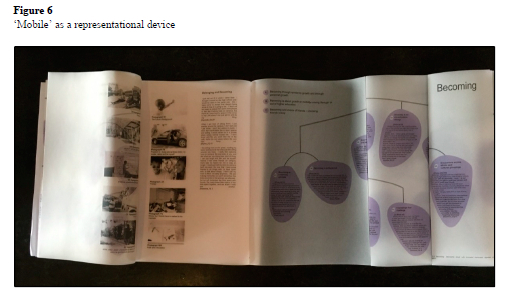
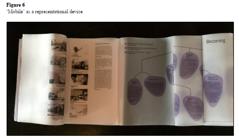
The representational use of the mobile thus does not attempt to comprehend all students as one but serves, rather, as a means of capturing all aspects of the phenomenon of students knowings of HE spaces in one structuring device. The representation of the mobile was also intended to serve the further purpose of being a didactic device for the reader. In immersing the reader in the descriptive contents of the findings, the potential to discover new or further interpretations of mobility and the phenomenon itself is possible. Interaction with the reader was facilitated through the process of unfolding the sheets and placing the transparent pull-out sheets one on top of the other, layer by layer (see Figure 6). The layers below will become visible through the layer above, thereby creating the possibility for new readings to emerge through the inter-visibility between layers. This, however, proved less effective in the digital version of the thesis, which was distributed to examiners because of COVID-19 restrictions on handling hard copies. As one examiner noted,
The candidate used the mobile as a representational and analytical device, whose unfolding was impeded by the digital format, affecting the unfolding of the data, the composition of the students knowings, and the meanings generated. What was also negatively impacted was the depth and fluidity of the data unfolding. In addition, the intended visual layering of diagrams was not replicable in the digital format.
Implications of the findings
The mobile framework advances spatial justice theory by revealing how inequality operates not simply through fixed spatial configurations but through dynamic instability. Students continually rebalance as they move across interconnected spaces while responding to many external forces. These forces could include institutional timetables, transport schedules, financial constraints, and family expectations. Traditional spatial justice frameworks tend to locate power in the built environment, highlighting inadequate residences, insufficient study spaces, and limited access to food, and poor transportation. The mobile revealed that power operates through the relationships between spaces, the distance between residence and campus, the timing of transport systems, and the contrast between formal and informal food systems. Inequality is not just inscribed in space. It emerges through how students must constantly rebalance competing spatial demands and structural pressures acting simultaneously upon them. This theoretical reframing carries operational implications. Understanding campus space as mobile rather than fixed suggests that interventions must address configurations rather than isolated elements. Improving residence halls without addressing transport timing simply moves the problem since students still cannot access campus resources when they need them. Adding library study spaces while ignoring food insecurity creates new burdens because students cannot concentrate when they are hungry, regardless of the quality of the facility. The mobile framework thus points toward systemic rather than additive interventions that acknowledge how spatial elements and external forces interact to shape students' navigation of HE space.
References
- Albertsen, N., & Diken, B. (2013). Mobility, justification, and the city. Nordisk Arkitekturforskning, 14(1), 12-25. Retrieved January 10, 2025, from https://www.researchgate.net/publication/237621458_'Mobility_Justification_and_the_City
- Amulya, J. (2011, May). What is reflective practice? Communityscience.com. Retrieved October 20, 2019, from http://www.communityscience.com/images/file/What%20is%20Reflective%20Practic.pdf
- Appadurai, A. (2004). The capacity to aspire: Culture and the terms of recognition. In V. Rao & M. Walton (Eds.), Culture and public action (pp. 59-84). Stanford University Press.
- Barad, K. (2007). Meeting the universe halfway: Quantum physics and the entanglement of matter and meaning. Duke University Press.
- Barcio, P. (2016). Alexander Calder mobile art and its many forms. IDEEL Art. Retrieved March 8, 2025, from https://www.ideelart.com/magazine/alexander-calder-mobile
- Berger, J. (1972). Ways of seeing. Penguin.
- Byram, M., & Dervin, F. (2008). Introduction. In M. Byram and F. Dervin [Eds.], Students, staff and academic mobility in higher education (pp. 1-22). Cambridge Scholars Publishing.
- Calder, A. (1929) Statement on wire sculpture. Retrieved December 9, 2025, from https://calder.org/wp-content/uploads/bibliography//Calder_Statement-on-Wire-Sculpture.pdf
- Confavreux, J. (2022). Decolonial anxieties in a postcolonial world: An interview with Achille Mbembe. Postcolonial Studies, 25(1), 18-135. https://doi.org/10.1080/13688790.2022.2050587
- Cresswell, T. (1997). Weeds, plagues, and bodily secretions: A geographical interpretation of metaphors of displacement. Annals of the Association of American Geographers, 87(2), 330-345. https://doi.org/10.1111/0004-5608.872056
- Cresswell, T. (2006). On the move: Mobility in the modern Western world. Routledge.
- Cresswell, T. (2010). Towards a politics of mobility. Environment and Planning D: Society and Space, 28(1), 17-31. https://doi.org/10.1068/d11407
- de Certeau, M. (2002). Spatial stories. In A. Ballantyne [Ed.], What is architecture? (pp. 72-87). Routledge.
- Deleuze, G., & Guattari, F. (2010). Nomadology: The war machine. Wormwood Distribution.
- Eisner, E. (2008). Art and knowledge. In J. G. Knowles, & A. L. Cole (Eds.), Handbook of the arts in qualitative research: Perspectives, methodologies, examples, and issues (pp. 3-12). SAGE.
- Finn, K., & Holton, M. (2019). Everyday mobile belonging: Theorising higher education student mobilities. Bloomsbury Publishing.
- Freeman, D. (1996). "To take them at their word": Language data in the study of teacher's knowledge. Harvard Educational Review, 66(4), 732-761. https://doi.org/10.17763/haer.66.4.3511321j38858h69
- Gale, T., & Parker, S. (2015). Calculating student aspiration: Bourdieu, spatiality and the politics of recognition. Cambridge Journal of Education, 45(1), 81-96. https://doi.org/10.1080/0305764X.2014.988685
- Galloway, A. (2002). Going anywhere, being everywhere: Metaphors of mobility for ubiquitous computing. [Position paper] UbiComp 2002, Concepts and Models for Ubiquitous Computing Workshop. Seattle, United States.
- Gordon, T., & Lahelma, E. (1996). School is like an ant's nest': Spatiality and embodiment in schools. Gender and Education, 8(3), 301-310. https://doi.org/10.1080/09540259621548
- Guggenheim, P., Barr, A. H., & Vidal, G. (1979). Out of this century: Confessions of an art addict. Universe Books.
- Harper. (2002). Talking about pictures: A case for photo elicitation. Visual Studies, 17(1), 13-26. https://doi.org/10.1080/14725860220137345
- Hillier, & Hanson. (1984). The social logic of space. Cambridge University Press.
- Honan, E., & Bright, D. (2016). Writing a thesis differently. International Journal of Qualitative Studies in Education, 29(5), 731-743. https://doi.org/10.1080/09518398.2016.1145280
- Honeyford, M., & Vander Zanden, S. (2013). Bending boundaries: A critical spatial analysis of student's texts and identity work. Critical Literacy: Theories and Practices, 7(1), 17-32. Retrieved January 10, 2025, from https://www.academia.edu/3100145/Honeyford_M_and_Vander_Zanden_S_2013
- Jansen, J. D. (2017). As by fire: The end of the South African university. Tafelberg.
- Lakoff, G. (1993). The contemporary theory of metaphor. Retrieved December 10, 2024, from eScholarship: Open Access Publications from the University of California https://escholarship.org/uc/item/54g7j6zh
- Larsen, & Jacobsen. (2016). Metaphors of mobility-inequality on the move. In T. Ohnmacht, H. Maksim, & M. Bergman (Eds.), Mobilities and inequality (pp. 75-98). Ashgate.
- Lefebvre, H. (1991). The production of space. Basil Blackwell Inc.
- Liamputtong, P., & Rumbold, J. (2008). Knowing differently: Setting the scene. In P. Liamputtong & J. Rumbold (Eds.), Knowing differently: Arts-based and collaborative research methods (pp. 1-24). Nova Science Publishers, Inc.
- Ndelu, S. (2017). A Rebellion of the poor' : Fallism at the Cape Peninsula University of Technology. In M. Langa, #Hashtag: An analysis of the #FeesMustFall movement at South African universities (pp. 13-32). Johannesburg: Centre for the Study of Violence and Reconciliation.
- Ndlovu-Gatsheni, S. (2019). Discourses of decolonization/decoloniality. Papers on Language and Literature, 55(3), 201-226. Retrieved November 28, 2025, from efaidnbmnnnibpcajpcglclefindmkaj/https://www.blacfoundation.org/pdf/Ndlovu-Gatsheni-16.pdf
- O'Donoghue, D. (2011). Doing and disseminating visual research: Visual art-based approaches. In E. Margolis, & L. Pauwels (Eds.), The Sage handbook of visual research methods (pp. 639-650). SAGE.
- Pauwels, L. (2011). An integrated conceptual framework for visual social research. In Margolis, & Pauwel (Eds.), The Sage handbook of visual research methods (pp. 3-23). SAGE.
- Pimmer, C. (2016). Mobile learning as boundary crossing: an alternative route to technology-enhanced learning? Interactive Learning Environments, 24(5), 979-990. https://doi.org/10.1080/10494820.2015.1128211
- Prosser, J. (1988). Image-based research: A sourcebook for qualitative researchers. Falmer Press.
- Sheller, M., & Urry, J. (2006). The new mobilities paradigm. Environment and Planning A, 38, 207-226. https://doi.org/10.1068/a37268
- Skovsmose, O. (2016). Meaning in mathematics education: A political issue. REVEMAT: Filosofia da Educação Matemática, 36-46. https://doi.org/10.5007/1981-1322.2016v11nespp36
- Soja. (2009). The city and spatial justice. Justice spatial/Spatial justice, 1(1), 1-5. Retrieved March 21, 2019, from https://www.jssj.org/
- St. Pierre, E. A. (2017). Writing post qualitative inquiry. Qualitative Inquiry, 24(9), 1-6. https://doi.org/10.1177/1077800417734567
- Van Damme, S. (2006). The world is too large: Philosophical mobility and urban space in seventeenth- and eighteenth-century Paris. French Historical Studies, 29(3), 379-406. http://dx.doi.org/%2010.1215/00161071-2006-004
- Van Leeuwen, T. (2008). Discourse and practice new tools for critical discourse analysis. Oxford University Press.
Accepted: 4 December 2025
2 I deliberately use the words students knowings as a verbal adjective functioning as a noun [i.e., a gerundive] to refer to the abstracted conceptualisation of the meaning makings by students as a collective.
3 Materiality refers to the materials used and their associated meaning which has a direct bearing on the tectonics, which is the nature of assembly of the component parts. Tectonic structures allow their component parts and the method of assembly to be visible. Tectonic structures are also understood as didactic because of the visibility of the construction technologies.
4 I do not discuss this here.