Dramatistic Criticism of the African National Congress's January 8th Statements Pre-and-Amid Democracy in South Africa
Abstract
This article examines the rhetoric of political party founding anniversary speeches delivered by the African National Congress before and during democracy in South Africa. While scholars have analysed a range of artifacts using diverse research methods, South African political party founding anniversary speeches have not previously been examined through a dramatistic criticism framework. Adopting this approach, the study employed a pentadic analysis method to uncover the underlying motives of a corpus of eight purposively selected January 8th statements delivered by the African National Congress across two political junctures. The findings reveal that the January 8th statements delivered during the apartheid era privileged scene to agitate the masses against the apartheid regime and to purify the party of guilt (1972); to praise and celebrate the strides of anti-apartheid forces while simultaneously demonstrating political power to the enemy (1985); to coordinate mass action and construct the party's national identity, conceptualised in this study as "ANCness" (1990); and to advance a particular ideological position and standpoint on political transition (1993). Similarly, in the democratic era, the African National Congress privileged scene to shape understandings of the attained democracy and reconstruct its identity (1995 and 2002); to repair identification with its audiences (2016); and to defend its status as the ruling party (2024). Based on these findings, the study concludes that the African National Congress used its founding anniversary speeches to induce audiences' susceptibility to its construance and framing of political contexts in response to specific political demands faced at the time of each address.
African National Congress (ANC); anniversary speeches; dramatistic criticism; January 8th statement; pentadic analysis
INTRODUCTION
The founding of the African National Congress (ANC) on 8 January 1912 marked an important moment in South African history (Von den Steinen,1999:11): a political party that later rose to governing party status after the demise of the colonial apartheid system in 1994 (Musitha and Mafukata, 2018:2). Since 1972, the ANC has celebrated its founding day by delivering an annual January 8th statement to its followers (South African History Online, 2024). Pityana (2020) asserts that the ANC uses the January 8th statement as a platform to articulate its annual strategic vision and priorities. While the motive(s) of the January 8th statement may appear straightforward and not bothering, Makoro (2018:4) urges that politician's use of language in these speeches must be interrogated so audiences can be alert to susceptibility of language manipulation.
According to Khambule et al. (2019:5), the ANC has experienced a decline in electoral support since 2019, when the party secured only 57.5% of the votes, making it the first instance of falling below the 60% threshold status since assuming power in 1994. This trend persisted in the 2024 general election where the ANC secured 40.18% votes, marking the political party's loss of its solo governing party status since 1994 (IEC, n.d). Although the ANC's electoral support is declining, the party still commands significant support relative to other political parties in South Africa. Among other factors contributing to this public support, such as the legacy of being a liberation movement, Sukendar (2023:183) warns not to overlook or underestimate speeches, as they can function as tools capable of mobilising a targeted audience. In particular, anniversary speeches can build a strong bond between the speaker and listeners, creating a sense of community (Gyamera et al, 2021). This highlights the role that the January 8th statement may be playing in shaping South Africa's socio-political landscape, yet its communicative dynamics remain largely understudied.
RESEARCH OBJECTIVETo reveal the underlying motives of the ANC's January 8th statements pre- and amid democracy in South Africa.
Theoretical framework
The present study approaches understanding of the phenomenon from the lens of dramatism theory developed by Kenneth Burke. At its core, this theory answers the question of "What is involved when we say what people are doing and why they are doing it?" (Aniskova, 2020:12). Applied to the context of the ANC's January 8th statement, the question is, "What is involved when we say a member(s) of the NEC (National Executive Committee) delivers a January 8th statement, and why are they delivering it?" An answer to these questions in Burke's terms brings us to the speech's "motive" - the explanation of a person's actions or why they acted in a particular way (Aniskova, 2020:14).
Burke's dramatism theory posits that human life can be understood through the lens of the elements of drama (Son, 2021:2; Burke, 1969). Language, according to Burke, is not merely a means of communication but a strategic tool that individuals use to respond to situations, and analysing the language used by people can reveal underlying motives (Nair, 2018:8). The theory comprises three key concepts: identification/substance, pentad and the guilt-redemption cycle. Identification refers to the shared qualities between a speaker and the audience that facilitate persuasion (Tendean, 2022:238). As an example, a speaker can identify with an audience through race, language, status and various other things. Burke holds that no persuasion may occur where identification is absent (Tendean, 2022:238). The pentad serves as an analytical tool for uncovering the motive of a speech, and it consists of five elements, namely act, agent, agency, scene and purpose (Cholid et al, 2019:256). These elements collectively speak to what has occurred (act), who performed the action (agent), the tools used (agency), the context (scene) and the implicit or explicit goals of the action (purpose) (Bourgonjon et al, 2011:93).
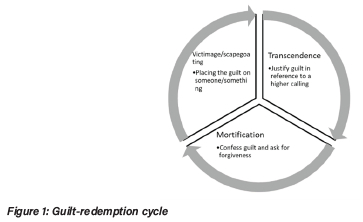
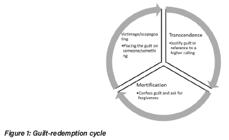
The guilt-redemption cycle explains that rhetorical communication can aim to purge guilt through mortification, victimage/scapegoating or transcendence (Regmi, 2023:15). Guilt encompasses feelings of shame, embarrassment, anxiety or tension, which individuals seek to alleviate through rhetorical means (Scheibel, 2002:305). Figure 1 illustrates the process of purging guilt, which begins with the existence of the feeling of guilt that gets resolved through three strategies: victimage/scapegoating, which is pushing the blame to others or something, mortification, which is confessing wrongdoing and asking for forgiveness and justification through divine power, which is transcendence (Kuypers, 2000:153).
Understanding anniversary speeches and their rhetoric nature
In rhetoric, anniversary speeches fall under the epideictic genre, defined by praise or blame orientation (Makamani, 2018:124). Mordhorst (2014:121) adds that anniversaries are also characterised by recurring features, positive messaging and they are focused on historical narratives that resonate with a targeted audience. According to Adams et al. (2019:23), they usually allude to sad and unhappy moments of the past, but induce pride, joy and benignity, especially when they celebrate founding moments. So, it must be somewhat an intuitive expectation for the audience to be entertained in founding anniversaries. However, these speeches extend beyond the salient intents to entertain; they function as platforms for demonstration of political power, legitimisation of political party policies and making commitments (Brown, 2019:55-56). This communication dynamic can be observed as empirically true in an analysis of George W. Bush's 60th anniversary of Allied victory against Japan, showing that Bush used memories of World War II to promote war in Iraq and counter criticism of his policies (Bostdorff, 2011). Undoubtedly, choosing a certain moment from many others to specifically inflect a certain memory for pursuance of one's own motives implies that anniversary speeches are rhetorical. Nasakina et al. (2020:336) urge that we must search for rhetoric in speeches from the rhetor's employment of rhetorical proofs or techniques in the speech for the purpose of persuasion. In this light, rhetoric can be referred to as usage of symbols to induce desired actions from others, who are by nature symbol users (Wagner, 2018:16).
Empirical studies
Research outside Africa consistently reveals that anniversary speeches are used to construct national identity (Ardeleanu, 2019; Edu-Buandoh and Nkansah, 2018; Klymenko, 2015; Rousvoal, 2020; Sherzer, 2020). One also observes in studies focusing on European contexts that anniversaries construe and frame nation history in ways that can sustain desired national narratives and ideological positions (Lentz, 2013; Marinho, 2012). Commemorative rhetoric has similarly been shown in Asian contexts to advance ideological consolidation, political exceptionalism and soft power, with leaders strategically shaping remembrance to suit present political demands (Hobbs et al, 2025; Jacob and Subba, 2022; Mosler, 2020). Furthermore, these speeches are discovered to deploy humour, storytelling and personal imaging to promote unity and reinforce political party identity (Manik and Yanti, 2025; Sukendar, 2023).
Within Africa, Independence Day anniversaries and related commemorative speeches across West and southern Africa have also been shown to construct national identity, reinforce power relations and promote unity through strategic linguistic and rhetorical choices (Edu-Buandoh and Nkansah, 2018; Lentz, 2013; Willems, 2013). Studies in the field of linguistics and discourse analysis have employed CDA (Critical Discourse Analysis), SFL(Systemic Functional Linguistics), speech act theory and politeness theory to reveal how modality, transitivity, lexical patterning and pragmatic strategies encode authority, obligation, solidarity and ideological positioning (Adegbenro, 2022; Adukpo, 2023; Atta-Asamoah and Asare, 2025; Adekunle and Adebayo, 2017; Danquah, 2020; Ndiaye and Ngom, 2020; Uduma, 2012). Similarly, rhetorical criticism grounded in Aristotelian frameworks shows that African leaders use commemorative speeches to foster identification, consubstantiality, nation building and to shape democracy (Mwetulundila and Mlambo, 2021; Nanyeni, 2018).
Clearly, extant research shows that anniversary speeches serve more as rhetorical sites than celebratory events of the past. Noteworthy, there are prevailing gaps in the scholarship. First, founding political party anniversary speeches have received little attention. Second, while existing studies adopt CDA, SFL, narrative analysis and neo-Aristotelian approaches, dramatistic criticism has not been systematically applied to political party anniversary speeches. To address these gaps, the present study employed Kenneth Burke's dramatistic criticism approach to offer an in-depth understanding of the motives of political party founding anniversary speeches in South Africa.
METHODOLOGY
The study employed a qualitative research approach, characterised by a range of methodologies which facilitate in-depth investigation of phenomena through the analysis of non-numerical data (Basias and Pollalis, 2018:94). This approach was ideal for this study because qualitative research enables in-depth understanding, aligning with the aim of this study (Rahman, 2016:104). However, the downfall of qualitative research is the tendency to use small sample sizes, which may restrict the generalisability of findings to a specific sample rather than the broader population (Wang, 2018:123).
The study selected data using a purposive sampling method, defined as an intentional sample selection based on specific characteristics aligned with the study's objectives (Burkholder et al, 2019). The selected speeches from the apartheid era included the 1972 and 1985 speeches by Oliver R. Tambo, and the 1990 and 1993 speeches by Nelson R. Mandela. The selected speeches from the democracy era included the 1995 speech by Nelson R. Mandela, 2002 speech by Thabo M. Mbeki, 2016 speech by Jacob G. Zuma and the 2024 speech by Cyril M. Ramaphosa. Each speech was copied verbatim from the ANC's official website and converted into PDF (portable document format) to preserve the originality of the texts. The data for this study were collected from the official website of the ANC (ANC, n.d.).
The significance of the selected speeches lies in their symbolic uniqueness within each year in a specific era. The 1972, 1985, 1990 and 1993 speeches from the apartheid era represent pivotal moments: the inception of the January 8th statement (1972), the peak of ANC liberation struggle (1985), the unbanning of the ANC and beginning of negotiations with the apartheid regime (1990) and the anticipation of freedom (1993). Similarly, the 1995, 2002, 2016 and 2024 speeches represent pivotal moments in democracy: the dawn of a democratic settlement (1995), the consolidation of early democracy and resurgence of African renaissance ideology (2002), the peak of service delivery unrests, disillusionment, the ANC's political and economic legitimacy issue (2016) and political manoeuvres to remove ANC from power (2024). Collectively, these speeches are crucial cases that offer valuable insights into the motives of the January 8th statement over two different political junctures.
To analyse the data, the study employed a rhetorical criticism method, specifically Kenneth Burke's pentad. This qualitative and interpretative method comprises five key elements - act, agent, agency, scene, and purpose - offering a comprehensive framework for scrutinising textual data (Cholid et al, 2019:256). The application of the pentad proves particularly adept in analysing January 8th statements, given its efficacy in unveiling the underlying motives of speeches (Rowland, 2016:41).
The analytical process involves a two-step approach. First, the researcher labels the pentadic elements from each speech. This entails identifying, through words or phrases, the nature of the act, the agent responsible, the agency employed, the scene in which the act occurs and the purpose behind the act (Rowland, 2016:45). The labelling can take an internal or external approach, with internal labelling focused on the content of the speech and external labelling drawing on external or general knowledge relevant to the speech (Gilmore, 2018:370). Alluding to conventional research terms, internal labelling is inductive, while external labelling is deductive. The study adhered to Foss's recommendation, adopting the internal or inductive labelling approach, which facilitates a deeper understanding from the rhetors' perspective (Foss, 1989).
The second step in the analysis involves pentadic ratios. This process, as outlined by Rowland (2016:41), enables the judgement of which element among the five is emphasised by the rhetor over others. The formation of ratios involves systematically pairing each element with another, resulting in 20 ratios: scene-act, scene-agent, scene-agency, scene-purpose, act-scene, act-agent, act-agency, act-purpose, agent-scene, agent-act, agent-agency, agent-purpose, agency-scene, agency-act, agency-agent, agency-purpose, purpose-scene, purpose-act, purpose-agent and purpose-agency (Knutsen and Knutsen, 2020:679). Through a series of "yes" or "no" and "unclear" answers to the question "Does a specific element determine the nature of another in the artifact?'! the researcher assesses the influence of one element on another within each ratio (Crittenden and Crittenden, 2022). The element receiving the most "yes" responses symbolises the motive of the speech (Rowland, 2016:41). In rare instances where not one element predominates, it suggests either privileging of all the elements as equally important or a deliberate choice to avoid highlighting a specific aspect for some reason (Foss, 1989).
RESULTS AND DISCUSSION
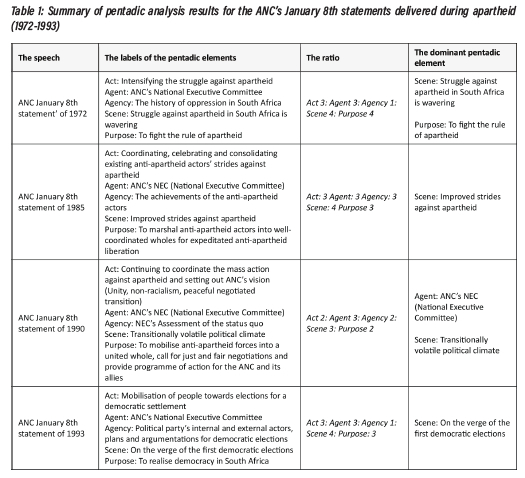
This section describes and discusses the results of the speeches delivered during the apartheid era. The analysis revealed both "scene" and "purpose" as the dominant pentadic elements in the 1972 speech. The logic for labelling "scene" and "purpose" as shown in Table 1 emanates from the utterances of the rhetors (NEC) highlighted below.
(Scene): What accounts for the fact that we, the first to rise as a national liberation movement in Africa, are now, 60 years later, counted among the very last few whose colonial status has still not altered in centuries? Why have we so far, and after so long, failed to wipe out and liquidate the source of our daily misery, persecution and humiliation, and replace it with our own power and our own sense of human justice?
(Purpose): January 8, 1972, is a significant milestone. It should, as it did 60 years ago, re-vitalise us, and accelerate the spread of revolutionary action to every part of the racist regime and to wherever an oppressed and exploited man is to be found.
The 1972 January 8th statement sought to present a worrisome status quo of the ANC as far as the pace and momentum of liberation was concerned in 1972 (scene) and to stir up the fight against the rule of apartheid (purpose).
Existing research has shown that rhetors can strategically allude to memories of past events during anniversaries to evoke conflict and advance their policies (Bostdorff, 2011). Complementing this view, the findings of this study indicate that in 1972 the NEC employed rhetorical questions to prompt remembrance of the ANC's founding ideals, juxtaposed against the worrisome 1972 status quo. This rhetorical manoeuvre appears to have fostered hostility towards the apartheid regime, militantly pursuing the ANC ideals without having to explicitly incite violence.
While above is one possible motive, analysis through the guilt-redemption cycle reveals an additional motive. The rhetors' reflection on the 1972 status quo (scene), particularly in relation to the stalled liberation struggle, can be understood as an attempt to purge guilt. This is evident in the rhetor 's lamentation over the 60 years during which the ANC appeared to have failed to deliver the promised democracy to the masses, a failure framed as shameful. Although it is difficult to identify the specific guilt-redemption strategy employed, the dramatistic framework unearths guilt purification as a plausible motive underlying the 1972 speech.
For the 1985 January 8th statement, "scene" emerged as the dominant pentadic element. The labelling for "scene" as shown in Table 1 is informed by the words of the rhetors when stating the following.
(Scene): The defeat of the enemy's plans in August expressed our common assertion that apartheid cannot be reformed. By boycotting the apartheid elections we denounced Botha's "reform" programme as a sham.
Here the analysis suggests that the rhetors' motive concerned reporting the achievements (scene) of the liberation movement following the clarion call for mass action, which was intended to heighten pressure on the apartheid regime. This finding supports previous research showing that founding anniversaries often recall painful moments from the past to evoke a sense of pride and shared joy (Adams et al, 2019:23). Furthermore, the findings reinforce the view that anniversaries function to either praise or blame (Makamani, 2018:124); in this instance, the 1985 speech appears to praise the masses. As Brown (2019:55-56) postulates, anniversaries may extend beyond celebration to function as platforms for displaying political power. This study argues that the 1985 speech not only praised the masses but also sought to demonstrate the ANC's political power in 1985.
From the 1990 January 8th statement, the analysis revealed "scene" and "agent" as the dominant elements. The labels for these elements as shown in Table 1 can be supported by the data as shown below.
(Scene): The continuing bloodbath in Natal poses an urgent challenge to all of us to intensify our efforts to bring about peace.
(Agent): We have put forward and defended the idea that South Africa belongs to all who live in it, black and white, and that no government can justly claim authority unless it is based on the will of all the people.
Like the 1972 speeches, part of the rhetors' motive in the 1990 speech was to present a somewhat worrisome status quo, particularly concerning the mass action alliance's lack of proper organisation and not more about the ANC as an independent entity. Insofar as the ANC NEC itself was concerned (agent), the rhetors sought to promote the standpoint of the ANC leadership (NEC) on issues of transition and political violence.
Converging with previous studies that account for commemorative rhetoric as a means of reinforcing party ideology, political exceptionalism and soft power in response to political demands (Hobbs et al, 2025; Jacob and Subba, 2022; Mosler, 2020), the present study reveals that the rhetors used the speech to strategically map the scene to acknowledge prevailing political pressures. In doing so, they reinforced the ANC's ideological position (e.g. "South Africa belongs to all who live in it"), promoted its political exceptionalism and soft power while simultaneously downplaying those of competing actors. Accordingly, as highlighted in the literature, the anniversary was used to construct an ANC national identity, framed in this study as "ANCness" while reinforcing existing local and international power relations as well as promoting unity (Edu-Buandoh and Nkansah, 2018; Lentz, 2013; Willems, 2013).
Analysis of the 1993 January 8th statement revealed "scene" as the dominant element. As appearing in Table 1, the logic for the label of the element scene can be supported by expressed sentiments of the rhetors below.
(Scene): This historic moment in the transition to people's power will express itself through a general election which must be held before the end of 1993.
History shows that for South Africa the 1989-1993 period was marked by intense political violence between the ANC and the Inkatha Freedom Party (IFP), in which hundreds of people died and 20 000 were displaced. This was often reported by the media as "Black-on-Black" violence (Van Baalen and Höglund, 2019; Zuma, 2021:27). In spite of this volatile context, analysis of the 1993 January 8th statement suggests that the rhetors' primary motive was to frame the holding of elections as an urgent matter within that year. This raises a fundamental question for the study: what was at stake for the ANC in emphasising the urgency of elections in this speech? Drawing on Burke's theory of dramatism, persuasion is more possible when there is identification between the rhetor(s) and the audience (Tendean, 2022:238). The outcome of the first democratic election, where the ANC commanded 60% of the vote (Khambule et al, 2019:5), suggests that the party had already established the necessary identification with a majority of the electorate. Consequently, the urgency surrounding the call for elections can be interpreted as a strategic move grounded in the ANC's awareness of its favourable rhetorical and political identity (ANCness) in 1993.
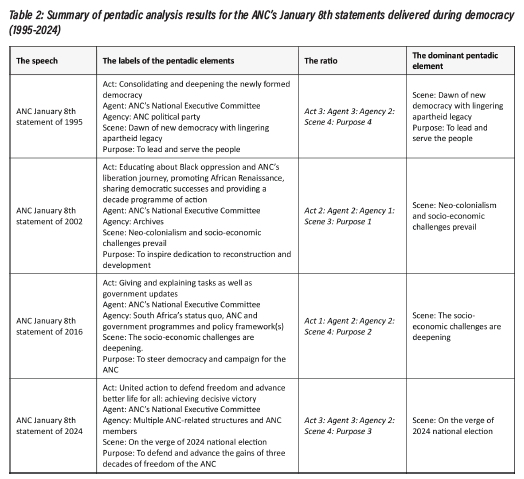
Like the 1972 speech, the pentadic analysis of the 1995 January 8th statement revealed the pentadic elements "scene" and "purpose" as the dominant elements. However, as reflected in Table 2, the labels for these elements post-apartheid vary from the 1972 speech and can be supported by excerpts from the speeches below.
(Scene): For us the democratic revolution is a thorough-going process of transformation, of overcoming the political, social and economic legacy of apartheid colonialism, of racism, sexism and class oppression.
(Purpose): Nineteen ninety-five shall be a year in which we foster, throughout our ranks, a new kind of activism, a new kind of cadre, rooted in the oldest of our ANC traditions: service and devotion to the people.
While it could have been intuitively thought by audiences that the 1995 speech would be filled with euphoria for ANC's victory in 1994, the analysis reveals that the rhetors dedicated the speech to construing the state of the new settlement as a struggle continuity rather than a destination (scene) and reorienting ANC cadres towards a democratic political identity compatible with the newly formed democratic order. In line with Mwetulundila and Mlambo (2021) and Nanyeni (2018), the analysis of the study supports their view that after attaining independence African leaders use the anniversaries to build the nation and shape democracy.
Analysis of the 2002 January 8th statement revealed "scene" as the dominant element. As in Table 2, the label for the element is logical if connecting it to the rhetors' sentiments below.
(Scene): What is at stake is the rebirth of a Continent, the Renaissance of Africa. We have to overcome the enormous racial, gender and geographic disparities that continue to exist in the distribution of wealth, income and opportunity. These disparities are themselves a fetter on the growth and expansion of the economy and wealth in our society
Similarly, the rhetors delivered the statement to sketch the state of the post-apartheid settlement and, by so doing, highlight the status of liberation from apartheid and colonial legacies. Mapping the post-apartheid scene served to reinforce framing of the democratic dispensation as a continuation of the liberation struggle rather than a destination. Here, the ANC was also reconstructing its identity within the democratic order, presenting itself not as a hegemonic or sovereign actor over the affairs of the democratic settlement, but as a participant in a phased struggle against neo-colonialism and the enduring legacy of apartheid. This positioning was crucial to maintaining shared ideological standpoint (identification) between the ANC and its heterogeneous audiences, thereby enabling the party to pursue its nation-building project of responding to the demands of the new political system.
Analysis of the 2016 January 8th statement also revealed "scene" as the dominant element. The label for the element as reflected in Table 2 can be supported by sentiments of the rhetors highlighted below.
(Scene): The ANC must address corruption and wastage, perceptions of corruption and all other tendencies that affect the standing of the Movement.
Here, it is evident that the rhetors dedicated the speech to addressing an expanding socio-political and economic crisis that was increasingly calling into question the ANC's legitimacy and credibility. This period was marked by heightened community service delivery protests, student movements such as #RhodesMustFall and #FeesMustFall, as well as "Pay Back the Money" picketing by opposition parties in Parliament. These developments suggest that identification between the ANC and its audiences had deteriorated during this period, and that the ANC's rhetorical aim was therefore oriented towards rebuilding that identification with all audiences.
Lastly, analysis of the 2024 speech also revealed the element "scene" as the dominant element. As presented in Table 2, the label for this element can be supported by words of the rhetors below.
(Scene): We know that there are social and political forces that are working hard to undermine the gains of freedom made over the last three decades. They want to stop the march towards a united, non-racial, non-sexist, democratic and prosperous country that truly belongs to all.
In 2024, South Africa held a national election, during which the ANC faced a sustained decline in electoral support that had been evident since 2019 (Khambule et al., 2019: 5). In the 2024 January 8th statement, the rhetors dedicated the speech to addressing political dynamics surrounding the ANC's electoral fate, with particular emphasis on the political siege it confronted. In this study, political siege refers to the period during which political and social forces actively negotiated strategies to dislodge the ANC from power. Through the January 8th statement, the ANC construed and framed this political siege as a potential reversal of the gains achieved under ANC governance since the advent of democracy. In so doing, the ANC sought to downplay the opposition's aspirations and to defend its status as the ruling party.
CONCLUSION
This study aimed to unearth the underlying motives of the ANC's January 8th statements delivered by the NEC before and during democracy. Across all the analysed speeches, the pentadic element of scene emerged as the dominant element, with the additional prominence of purpose in the 1972 and 1995 speeches and agent in the 1990 speech. The labels, or meanings, assigned to these elements varied across the speeches. These variations in the labelling of scene reveal that political founding anniversary speeches construe, frame and present political contexts in ways that advance a party's strategic goals. In support of this argument, the study found that the ANC used the scene in January 8th statements delivered under apartheid to agitate the masses against the apartheid regime and to purify itself of guilt (1972); to praise and celebrate anti-apartheid forces for their strides while simultaneously demonstrating political power to the enemy (1985); to coordinate mass action and construct the party's national identity, conceptualised in the study as "ANCness" (1990); and to advance a particular ideology and political standpoint (1993). Similarly, in the democratic era, the ANC used the scene to shape understandings of the attained democracy and reconstruct its identity (1995 and 2002); to recover or repair identification with its audiences (2016); and to defend its status as the ruling party (2024). While these findings largely align with existing scholarship on political anniversaries, this study contributes novel insights by analysing the ANC's founding anniversary rhetoric through a dramatistic criticism framework.
REFERENCES
LITERATURE
- Adams, T. & Vinitzky-Seroussi, V. (2019). "On Cloud Nine": Positive memories in American presidential speeches (1945-2017). Memory Studies, 12(1):11-26.
- Adegbenro, E.J. (2022). A lexico-thematic analysis of selected speeches of former Nigerian President Goodluck Jonathan. NIU Journal of Humanities, 7(4):119-125.
- Adekunle, O.G. & Adebayo, O.S. (2017). Politeness in selected independence anniversary speeches of Nigerian heads of government. Open Journal of Modern Linguistics, 7(6):290-310.
- Adukpo, J., 2023. Construing political history: Transitivity analyses of the process types in selected Ghanaian presidential independence anniversary speeches under the fourth republic. Doctoral dissertation, University of South Africa.
-
African National Congress(ANC). (n.d.). Home. [online] Available from: https://www.anc1912.org.za/
» https://www.anc1912.org.za/ - Aniskova, A. (2020). Stakeholders' perceptions of purpose-driven brands: The case of Nike's "Dream Crazy" advertising Campaign. Master's thesis, Lund University.
- Ardeleanu, O. (2019). National identity in King Michael's anniversary speech in the Romanian Parliament. Bulletin of the Transilvania University of Braşov, Series IV: Philology & Cultural Studies, 12(1):3-14.
- Atta-Asamoah, O. & Asare, E. (2025). Linguistic markers of modality in Ghanaian Presidential Independence Day speeches. Legon Journal of the Humanities, 36(1):1-33.
- Basias, N. & Pollalis, Y. (2018). Quantitative and qualitative research in business & technology: Justifying a suitable research methodology. Review of Integrative Business and Economics Research, 7(1):91-105.
- Bostdorff, D.M. (2011). Epideictic rhetoric in the service of war: George W. Bush on Iraq and the 60th anniversary of the victory over Japan. Communication Monographs, 78(3):296-323.
- Bourgonjon, J., Rutten, K., Soetaert, R. & Valcke, M. (2011). From counter-strike to counter-statement: using Burke's pentad as a tool for analysing video games. Digital Creativity, 22(2):91-102.
- Brown, K. (2019). Political commemoration and peacebuilding in ethno-national settings: the risk and utility of partisan memory. Peacebuilding, 7(1):51-70.
- Burke, K. (1969). A rhetoric of motives. University of California Press.
- Burkholder, G.J., Cox, K.A., Crawford, L.M. & Hitchcock, J.H. (2019). Research design and methods: an applied guide for the scholar-practitioner. United States: SAGE Publications.
- Cholid, C., Choiriyati, W. &Al Khazim, I. (2019). Rhetoric narrative in Prabowo national speech 2019. In First International Conference on Administration Science (ICAS 2019). Atlantis Press, 253-258.
- Crittenden, V. and Crittenden, W. (2022). The power of language to influence people: Mary Kay Ash the entrepreneur. Journal of Research in Marketing and Entrepreneurship, 25(3):349-373.
- Danquah, G.K. (2020). A critical discourse analysis of three speeches of Nana Addo Dankwa Akufo-Addo. Doctoral dissertation, University of Education, Winneba.
- Edu-Buandoh, D.F. & Nkansah, N.B. (2018). National identity construction in Independence Day speeches of anglophone West Africa. Journal of Pan African Studies, 12(1):250-272.
- Foss, S.K. (1989). Rhetorical criticism: exploration and practice. United States: Waveland Press.
- Gilmore, A. (2018). To ensure a smooth and successful transition. In F. Sonja. Rhetorical criticism. 5th ed. United States: Waveland Press.
- Gyamera, S., Sekyi, J.A., Fenyi, D.A. & Dadzie, S. (2021). Rhetorical structure of anniversary speeches in the senior high schools in Ghana: A case of Wesley Girl's High School and St. Augustine's College in the Central Region. Innovare Journal of Education, 9(5):22-32.
- Hobbs, M., Li, M., Huang, Z.A. & Desmoulins, L. (2025). Storytelling and grand strategy in public diplomacy: a case study of the speeches of President Xi Jinping. Public Relations Review, 51(4):1-9.
-
Independent Electoral Commission (IEC). (n.d.). Home. [online] Available from: https://results.elections.org.za/home/
» https://results.elections.org.za/home/ - Jacob, J.T. & Subba, B.B. (2022). Towards exceptionalism: The communist party of China and its uses of history. China Report, 58(1):7-27.
- Khambule, I., Nomdo, A., Siswana, B. & Fokou, G. (2019). Coexistence as a strategy for opposition parties in challenging the African National Congress' one-party dominance. South African Journal of Political Studies, 46(1):1-15.
- Klymenko, L. (2015). World War II or great patriotic war remembrance? Crafting the nation in commemorative speeches of Ukrainian presidents. National Identities, 17(4):387-403.
- Knutsen, K. & Knutsen, I. (2020). Performative historical competence: use-of-history as symbolic action. Journal of Curriculum Studies, 52(5):673-684.
- Kuypers, J. A. (2000). From science, moral-poetics: Dr James Dobson's response to the fetal tissue research initiative. Quarterly Journal of Speech, 86(2):146-167.
- Lentz, C. (2013). The 2010 independence jubilees: the politics and aesthetics of national commemoration in Africa. Nations and Nationalism, 19(2):217-237.
- Makamani, R. (2018). Harambee prosperity plan: a corpus-driven rhetorical and postcolonial reading. African Journal of Rhetoric, 10(1):122-141.
- Makoro, S.J. (2018). Political rhetoric in public speaking: stylistic analysis of selected political speeches. Doctoral dissertation, University of Limpopo.
- Manik, N. & Yanti, A. (2025). Emotional engagement in Megawati's speech at the Golkar anniversary. International Journal of English Learning and Applied Linguistics (IJELAL), 5(2):117-126.
- Marinho, C. (2012). Celebrating the April Revolution in the Portuguese parliament: discursive habits, constructing the past and rhetorical manipulation. Doctoral dissertation, Loughborough University.
- Mordhorst, M. (2014). Arla and Danish national identity-business history as cultural history. Business History, 56(1):116-133.
- Mosler, H.B. (2020). The contested political remembrance of the Kwangju Uprising and presidential speeches in South Korea. S/N Korean Humanities, 6(1):47-92.
- Musitha, M.E. & Mafukata, M.A. (2018). An investigation whether the deputy president of the African National Congress can be the successor to the president during the National Elective Conference. Africa's Public Service Delivery and Performance Review, 6(1):1-9.
- Mwetulundila, R. & Mlambo, N. (2021). An analysis of rhetoric of identification and consubstantiality in President Hage Geingob's 30th Independence Day anniversary and inaugural speech. Journal of the University of Namibia Language Centre, 6(2):22-29.
- Nair, N. (2018). Gender, economic agency, and social class: a rhetorical analysis of Pearl Buck's The House of Earth Trilogy through the dramatistic pentad of Kenneth Burke. Doctoral dissertation, Texas Woman's University.
- Nanyeni, F.N. (2018). Hifikepunye Pohamba's rhetorical presidency: inauguration and independence anniversary speeches. Doctoral dissertation, University of Cape Town.
- Nasakina, SV, Kolisnichenko, N., Rohalska-Yakubova, I.I. & Chepelyuk, N.I. (2020). Rhetoric strategies in the presidents speeches: Ukrainian versus English. Arab World English Journal. Special Issue on the English Language in Ukrainian Context: 330-341.
- Ndiaye, M.S. & Ngom, D. (2020). Linguistic and pragmatic features in Yaya JammehS political speech during the 49th Independence Anniversary: a critical discourse analysis. Doctoral thesis, University of South Africa.
- Pityana, S.M. (2020). The constitution as the embodiment of the values of the liberation struggle. The Thinker, 52(1):54-57
- Rahman, M.S. (2016). The advantages and disadvantages of using qualitative and quantitative approaches and methods in language "testing and assessment" research: a literature review. Journal of education and learning, 6(1):102-122.
- Regmi, A. (2023). A dramaturgic trajectory of hiding oneself in Eat Pray Love. Doctoral thesis. Florida: University of Florida.
- Rousvoal, N. (2020). Commemorating Britishness during the centennial of the First World War: a comparative analysis of political commemorative speeches in Northern Ireland and in Scotland. European Journal of English Studies, 24(2):115-129.
- Rowland, L. (2016). English in the Japanese linguistic landscape: a motive analysis. Journal of Multilingual and Multicultural Development, 37(1):40-55.
- Scheibel, D. (2002). The cat with the "strat" comes back: a Burkeian Weickian primer for organizing narrative. Southern Journal of Communication, 67(4):303-318.
- Sherzer, A. (2020). The Jewish past and the 'birth' of the Israeli nation state: the case of Ben-Gurion's Independence Day speeches. Middle Eastern Studies, 57(2):310-326.
- Son, J. (2021). Setting the scene for racism: a Burkean analysis of Twitter in the time of Covid-19. Master's dissertation, Nova Southeastern University.
-
South African History Online (SAHO). (2024). ANC January 8th Statements. 29 January. Available from: https://www.sahistory.org.za/article/anc-january-8th-statements
» https://www.sahistory.org.za/article/anc-january-8th-statements - Sukendar, M.U. (2023). Political communication and personal imaging. Study of Giring Ganesha's Political Speech at Indonesian Solidarity Party Anniversary. Komuniti: Jurnal Komunikasi dan Teknologi Informasi, 15(2):180-194.
- Tendean, M.J.E. (2022). A dramatistic analysis of Indonesian influencers' statements in responding to sexual harassment allegations. International Journal of Communication and Society, 4(2):235-249.
- Uduma, E.O. (2012). African political speeches and pragmatic meanings: a study of President Goodluck Jonathan's 50th independence speech. África, 31(32):65-79.
- Van Baalen, S. & Höglund, K. (2019). "So, the killings continued": wartime mobilization and post-war violence in KwaZulu-Natal, South Africa. Terrorism and Political Violence, 31(6):1168-1186.
- Von den Steinen, L. (1999). Soldiers in the struggle: aspects of the experiences of Umkhonto we Siswe's rank and file soldiers - the Soweto generation and after. Doctoral dissertation, University of Cape Town.
- Wagner, N. (2018). Rhetorical being: a metaphysics of freedom and essence. Doctoral dissertation, Georgia State University.
- Wang, J. (2018). Qualitative research in English language teaching and learning. Indonesian EFL Journal: Journal of ELT, Linguistics, and Literature, 4(2):116-132.
- Willems, W. (2013). "Zimbabwe will never be a colony again": changing celebratory styles and meanings of independence. Anthropology Southern Africa, 36(1-2):22-33.
- Zuma, B. (2021). From apartheid to empire: how (post) apartheid South Africa became an anti-poor black society. Psychology in Society, (62):25-45.
Accepted March 2026