Prioritization of the barriers to integrated modular buildings (IMBs) in developing countries: Nigerian construction professionals' perspectives
Abstract
Integrated modular building (IMBs) enhance construction performance, quality, and productivity. However, in developing economies, adoption is impeded by challenges that hinder efficiency and sustainability. The study investigated and prioritized the barriers associated with IMBs through purposive sampling of experienced construction professionals in IMBs. Of the various statistical analyses, the fuzzy synthetic evaluation (FSE) indicated that perception-related barriers are the most significant barrier to IMBs, among other barriers, namely skill-related, cost-related, technical-related, and regulation-related. The study holds significant implications for construction stakeholders to intensify efforts in addressing the identified barriers and raising awareness to facilitate more IMBs adoption. The study underscores the importance of tailored strategies aligned with these priorities to effectively address these barriers. Furthermore, enhancing awareness and implementing targeted interventions are crucial steps towards promoting IMBs and advancing sustainability in the construction sector. Additionally, the prioritization of the barriers gives a logical order of required actions for construction stakeholders.
barriers; construction industry; developing economies; integrated modular buildings; prioritization
1. INTRODUCTION
In a bid for improvement in the construction industry, modern construction techniques such as modular construction and prefabrication have increasingly emerged as viable alternatives to traditional construction method (Jiang et al., 2019). Thus, the construction industry is undergoing a paradigm shift with the increasing adoption of integrated modular buildings (IMBs), which offer improved efficiency, cost-effectiveness, and sustainability (Akinradewo et al., 2023; MacAskill et al., 2021; Wuni and Shen, 2020). The decreased accumulation of material waste, reduced environmental impact, and the speed of construction gives credence to adopting IMBs with attendant success in developed nations (Schoenborn, 2012). Meanwhile, construction industry in developing nations that provides considerable percentage of employment to drive economy often lag behind in embracing innovativeness (Oladinrin et al., 2012; Osuizugbo et al., 2020). For the Nigerian construction industry, innovations such as IMBs has gradually found its way into the Nigerian construction operations, though at an infinitesimal rate (Sholanke et al., 2019; Ogunde et al., 2016). Meanwhile, traditional on-site construction methods have long been criticized for low productivity, poor quality, safety-related issues, cost overrun, and large quantities of waste which has bedevilled the Nigerian construction industry (Ojo and Ogunsemi, 2019; Wahab and Lawal, 2011).
Considering the intent of IMBs which is to deliver a manufactured structure where most of the construction is performed in a regulated environment before assembly to the site (Egege 2018) to improve the performance, quality and productivity of construction (Pan and Zhang, 2023), one would expect construction industry in developing nations to embrace it. However, the adoption of IMBs in the Nigerian construction industry faces various challenges, ranging from construction stakeholders and the industry at large (Bello et al., 2023). Previous studies have investigated the barriers to embracing IMBs in developing countries such as Ghana (Wuni and Shen, 2019), Nigeria (Akinradewo et al., 2023; Bello et al., 2023), Egypt (Ali et al., 2023), and South Africa (Dupwa, 2017). These studies have outlined a comprehensive understanding of the barriers within their respective contexts, laying the groundwork for developing integrated strategies to promote wider adoption of IMBs. Bello et al. (2023) compares the opinions of construction professionals in South Africa and Nigeria on various barriers, highlighting regional differences. Meanwhile, Akinradewo et al. (2023) developed a model for adoption emphasizing the need to systematically address critical obstacle when devising effective adoption strategies.
Given the rarity of prioritizing IMBs barriers in the Nigerian construction industry, further research is warranted to systematically categorize and rank these barriers-based on their impact and frequency. This approach is essential for effectively addressing barriers and facilitating the seamless implementation of IMBs in developing countries. The lack of a comprehensive understanding of the relative significance of these barriers can hinder the development of targeted strategies and solutions, posing a critical problem that necessitates in-depth investigation and prioritization for the successful mainstreaming of integrated IMBs techniques in the construction sector. Therefore, the aim of this study is to rigorously examine the barriers to the adoption of IMBs and to provide a prioritized plan that will guide industry stakeholders, policymakers, and researchers in overcoming these challenges. The following objectives were considered in the study:
• identify and categorize the barriers hindering the adoption of IMBs;
• prioritize the identified barriers according to their categories
• to offer insights and practical implications for construction stakeholders, policymakers, and researchers to facilitate the seamless integration of IMBs
2.1 Overview of modular buildings
Modular buildings could be traced to about 3000 years ago when King Solomon built the temple of God in Jerusalem. As revealed in the Bible, the sanctuary was constructed with prefabricated stones such that neither the sound of sledge, hatchet nor any device of iron heard in the construction site (1 Kings 6:7, New international version). In fact, the tabernacle of God of Israel erected in the days of Moses about 3500 years ago could be assembled and disassembled as well (Exodus 40:17, New international version). This historical context provides intriguing insights into early forms of prefabrication. The modern concept of IMBs has evolved significantly with the advancements in technology, engineering, and manufacturing (Abdelmageed and Zayed, 2020) in which entire building sections or modules in manufactured in controlled factory settings and transported to the construction sites for final assembly (Sholanke et al., 2019). Concurrently manufacturing modules off-site and preparing the construction site significantly reduce the overall construction time (Jabar et al., 2013). In addition to the acceleration of project timelines, IMBs enhance sustainability (Akinradewo et al., 2023). The controlled factory setting ensures optimal use of materials, reduces waste, and minimizes the environmental impact compared to traditional construction methods (Kamali and Hewage, 2016; Wuni and Shen, 2022; Pan and Zhang, 2023). The ability to relocate modules also contributes to sustainability, offering a level of flexibility that aligns with evolving societal and environmental needs. Therefore, IMBs are emerging as a compelling and adaptable alternative, redefining the way structures are designed, constructed, and utilized.
2.2
Modular buildings in developing economyModular buildings have emerged as a significant innovation to the construction challenges, particularly faced by developing economies. Their ability to reduce construction time, improve quality, and enhance sustainability makes them an attractive option for addressing housing shortages and infrastructure needs (Akinradewo et al., 2023). While there are challenges to widespread adoption, ongoing efforts by governments and industry stakeholders to promote modular construction are paving the way for its increased use in developing regions (Wuni and Shen, 2019). As these efforts continue, modular buildings have the potential to play significant role in the future construction in developing economies (Wuni and Shen, 2022). According to a study by Lawson et al. (2014), modular buildings can reduce construction time up to 50%, which is crucial in rapidly urbanizing areas where housing demand is high. Modular buildings contribute to sustainability goals. The adoption of modular buildings in developing economies faces several challenges. These include a lack of awareness and expertise, logistical issues, and resistance to change from traditional construction practices (Wuni and Shen, 2019; Akinradewo et al., 2023; Bello et al., 2023). However, with increasing urbanization and the need for rapid, cost-effective construction solutions, modular buildings present a promising avenue for addressing housing shortages and improving infrastructure in developing countries.
2.3
Barriers to integrated modular buildingsBarriers can be seen as situations and characteristics that hold back actions or obstruct progress towards attaining objectives (Abraham and Gundimeda, 2018). Barriers are often present in construction works due to its nature and hence can obstruct the success of construction project. The attitude of the housing building industry towards IMBs are a frequently occurring barrier whenever the issue of its adoption is brought to the fore (Wuni and Shen, 2022). Several barriers to the widespread adoption of IMBs in Nigeria exist, hindering the full realization of their potential in the construction industry. These barriers encompass various aspects. For instance, Agapiou (2022) suggested that barriers due to perception was singled out as being one of the three most significant barriers to IMBs. In support of this assertion. Pinney et al. (2017) identified that previous negative experience with the convectional on-site construction methods have tarnished positive perceptions and instead, influenced negative attitudes towards modular construction.
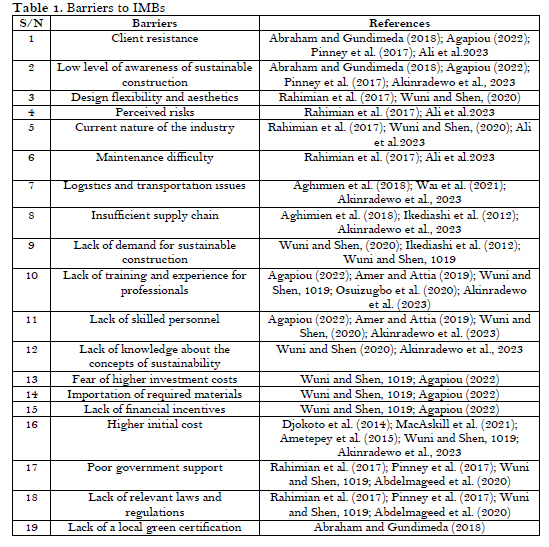
Abraham and Gundimeda (2018) identified barriers such as client resistance, low level of awareness of sustainable construction, lack of culture on sustainable concept and tendency to maintain current practices. Also, Rahimian et al., (2017) and Ali et al. 2023 identified design flexibility, perceived risks, and the current nature of the industry and maintenance difficulty as potential barriers in the Nigerian construction industry. Worries about the design flexibility and visual appeal of modular structures may impede the acceptance of IMBs, especially in projects where aesthetic is a critical factor (Wuni and Shen, 2020). Nigeria has a long-standing tradition of conventional construction methods using on-site labour and materials (Oladinrin and Ojo, 2021). Therefore, acceptance of new construction methods, such as IMBs, may be hindered by a strong attachment to traditional practices (Wuni and Shen, 2020). Hence, cultural and historical preferences for certain construction methods may lead to resistance and scepticism toward modular building techniques.
The lack of requisite technicalities is also considered an important barrier to the adoption of modular construction by the construction industry (Agapiou, 2022; Wuni and Shen, 2019). Many of the modalities of construction are done without a proper technical outline towards modular construction. Some researchers have carried out consistent studies on these technicalities towards modular and sustainable construction with the aim of identifying and curtailing its excesses (Amer and Attia, 2019; Akinradewo et al., 2023). For instance, Aghimien et al. (2018) identified lack of infrastructure, lack of planning, lack of machineries and logistics and insufficient supply chain as potential technical issues as potential barriers to sustainable construction approaches. Also, Ikediashi et al. (2012) found out that lack of labelling, inadequate institutional structures, lack of strategy to promote sustainable construction and lack of demand for sustainable construction hinders the use of IMBs. On the part of Wai et al. (2021), transportation limitations render IMBs impractical in specific areas due to concerns about the weight of the modules, as the existing roads were not constructed to transport such heavyweight.
The need to address skills shortage is frequently identified as a significant perceived barrier to the wider adoption of modular construction (Ikediashi et al., 2012; Wuni and Shen, 2020). For example, in their study, 87% of participants considered this to be a significant barrier. Osuizugbo et al. (2020) and Wuni, and Shen (2019) highlighted the perceived concerns over the lack of training and experience of construction professionals such as builders, contractors, developers, architects and engineers. These barriers are responsible to the functionality of the off-site construction in Nigeria (Akinradewo et al., 2023). Agapiou (2022) also suggested fear of higher investment costs, importation of required materials, lack of financial incentives, higher initial cost and long pay back periods from sustainable practices as prevalent impediments towards the use of IMBs. In reality, cost is a major barrier in embracing sustainable construction process (Djokoto et al., 2014; Wini and Shen, 2019; MacAskill et al., 2021). Although sustainable construction costs are higher on average, the difference is not statistically significant than conventional buildings when based on lifecycle computation. In addition, the perceived higher costs of sustainable construction often may result in the increase of the consultant's fees and indirectly from the unfamiliarity of the design team and contractors with sustainable construction methods (Ametepey et al., 2015; Akinradewo et al., 2023). Ametepey et al. (2015) noted that, sustainable construction practices are projected to increase initial capital cost within the range of 1 to 25% which is compensated by humongous savings in the operational costs and user comfort in the long run.
The absence of supports from relevant policy making quarters are partly the reason modular construction fails to stand a huge chance in Nigeria in particular (Rahimian et al., 2017). Meanwhile, other studies opined that poor government support and lack of relevant laws and regulations to drive sustainable construction are crucial regulatory barriers (Pinney et al., 2017; Abdelmageed et al., 2020). On the other hand, Abraham and Gundimeda (2018) identified lack of a local green certification and weak enforcement of national building codes as key barriers that needs to be spearhead by government.
3. METHODOLOGY
3.1 Research design and sampling process
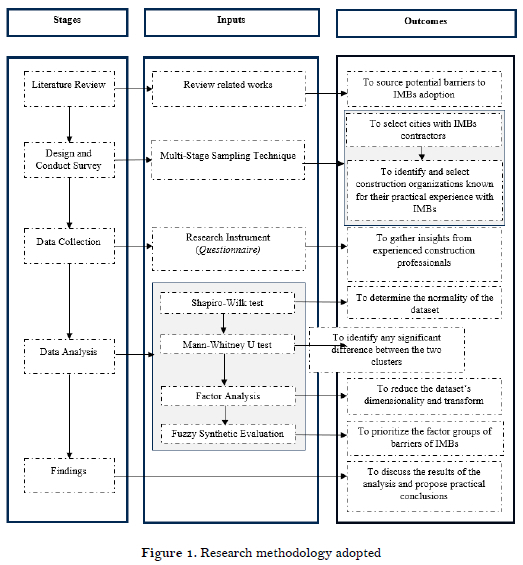
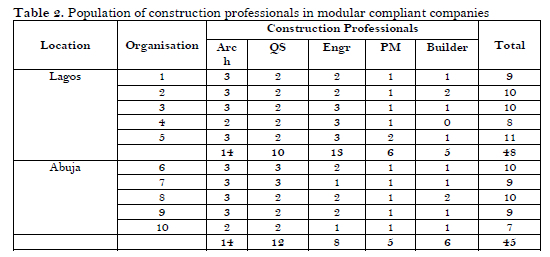
In acquiring the perspectives of experienced construction professionals on barriers to IMBs in the Nigerian construction industry, a quantitative research design was adopted. In this investigation, a multistage sampling technique was used. The study locations, Lagos State and Abuja in Nigeria, were chosen via cluster sampling first. These two clusters are adjudged ideal and most advantageous due to the abundance of IMBs compliant companies in comparison to other Nigerian States (Ogunde et al., 2016). Due to the lack of an official directory of construction firms that apply MiC techniques on construction projects in both Lagos and Abuja, a purposive sample technique was used to select construction organizations with practical experience in IMBs procedures. In identifying construction firms proficient in IMBs, criteria such as track record of executing over 20 IMBs projects, official registration with the Corporate Affairs Commission (CAC) of Nigeria, and the presence of current and informative websites about their professional services were utilized in the study.
Ten modular construction companies were identified for this study, evenly distributed between Lagos and Abuja-five from each city. The focus of the study is to obtain opinions from construction professional in the ten organizations with practical involvement in IMBs, as outlined in Table 2. This selection is crucial to ensuring the data collected effectively captures the professional perspectives on IMBs within the Nigerian construction sector. To reach the target respondents, a representative from each organization was reached out to via LinkedIn. The 10 staff members facilitated the distribution of the electronic questionnaire to the target professionals within their respective organizations.
3.2 Questionnaire development and data collection
The questionnaire used to extract the opinion of the target respondents was divided into two sections: 1) background information, and 2) barriers to IMBs extracted from extant literature. The questions on the barriers were asked on a five-point Likert scale, with 1 representing "strongly disagree", 2 representing "disagree", 3 representing "neither agree or disagree", 4 representing "agree", and 5 representing "strongly agree" (Vagias, 2006). A total of 93 questionnaires were issued to construction experts in the ten construction companies, with 48 copies distributed to the five companies in Lagos State and the remaining 45 distributed to the other five companies in Abuja.
Thirty-four questionnaires were returned out of the forty-eight issued to the five MiC practicing construction companies in Lagos state, showing a 70.83% response rate, while twenty-six were obtained from Abuja construction firms, giving a response percentage of 57.78% (see Table 3). Sixty questionnaires were received in all, with an overall response rate of 64.52%. The response rate was deemed adequate because it was higher than the 20-30% commonly recommended in construction-related studies (Pallant, 2011). To verify the legitimacy of the data, the data was thoroughly reviewed for incompletely filled items in any of the sections or responses with the same rating across the survey.
3.3 Methods of data analysis
The data received were analyzed with both descriptive and inferential statistics. The background information of the respondents was analyzed using percentage and frequency distribution. The mean and standard deviation was carried out on the barriers of IMBs for all data retrieved. Shapiro-Wilk normality test was first conducted to determine if parametric or non-parametric test would be appropriate to identify any significant difference in the dataset (Moyanga et al., 2023; Corder and Foreman, 2014). Based on the results of the Shapiro-Wilk test in which the p-values obtained are less than 0.05, a non-parametric test, i.e., Mann-Whitney U test was used to identify the significant difference between two clusters.
Thereafter, principal component analysis (PCA) was employed to assess the barriers, aiming to reduce the dataset's dimensionality and transform correlated variables into orthogonal components known as principal components (Mishra et al. 2017). The suitability of the data for factor analysis was determined by assessing the factorability through the Kaiser-Meyer-Olkin (KMO) measure of sampling adequacy and Bartlett's test of Sphericity. The collected barrier data was deemed appropriate for factor analysis, given that the KMO value surpassed the recommended minimum threshold of 0.600 (Shrestha, 2021). The internal consistency of the derived components was measured with Cronbach's alpha coefficient.
Finally, fuzzy synthetic evaluation (FSE) was carried out to prioritize the factor groups of barriers of IMBs. The first step in FSE computation involves setting up the FSE index system (Xu et al., 2010). For instance, the first-level evaluation index system for five-factor grouping in a principal component was defined as K = (k1, k2, k3, k4, k5), where k1, k2, k3, k4, and k5 represents the principal components generated respectively. The second level evaluation index within each principal factor was described as; kl = (kll, kl2, kl3..., kln), where n refers to the number of variables constituting u1. The rating scale used to evaluate the variables was defined as V = (1,2,3,4,5). The second step involves computing the weighting (W) of the variables and the principal factors using equation (2) and expressed in the order of the rating scale.

The third step entails determining the membership function (MF) of each barriers variables and the principal components generated in factor analysis. The weights assigned by the respondents to each barrier were used to derive the MF of each variable using equation (3), where MFmv represents the MF of a variable mv: Xtmv (t= 1, 2, 3, 4, 5) represents the percentage of a score the respondents assigned to a variable mv; and Xtmv / Mt explains the relation between Xtmv and its associated grade alternative based on the rating scale.

The MF of a principal component (Pi) is calculated as a product of fuzzy matrix of the MFs (Ri) of its associated variables and the weighting indices. Both Pi and Ri can be computed using equation (4) and (5) respectively.
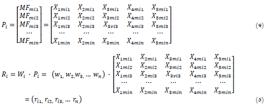
Quantifying the principal component study's significance indices for prioritizing is the final stage in the FSE technique. By using equation (6), the fuzzy evaluation matrix (Ri) is multiplied by the grade rating scale (Mi) to determine the primary component's significance index.

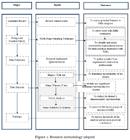
A diagramatical illustration of the methodology employed to achieve the aim of this study is presented in Figure 1.
4. RESULTS
4.1 Background information of respondents
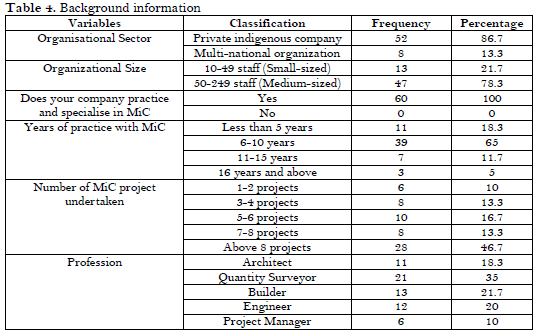
Table 4 entails the background information of the respondents to the study. It contains the profession of the respondents, the organizational sector and size of where they work, the number of years they practiced and the number of projects they have undertaken. From the descriptive analysis, Quantity surveyors (35.0%), builders (21.7%), engineers (20.0%), architects (18.3%), and project managers (10.0%) participated in this study. The majority of respondents (86.7%) work in a private indigenous organization, whereas 13.3% work in multi-national organizations (see Table 4). The majority of respondents (78.3%) work in medium-sized enterprises (i.e., organizations with 50-249 employees), while others work in small businesses (Kale, 2019). Furthermore, the majority of respondents had an average of five years of experience working on MiC projects, and 46.7% have completed more than eight MiC projects. This suggests that the information provided by the responders can be trusted.
4.2 Rating of barriers to integrated modular buildings in Nigeria
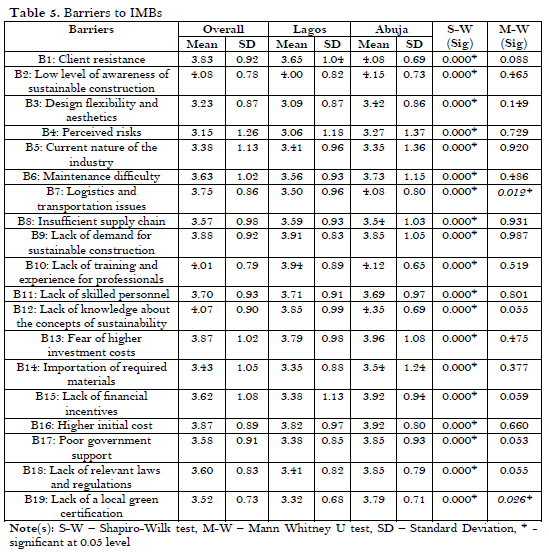
The p-value of the Shapiro-Wilk test, mean values and standard deviations of the barriers of the overall respondents, the respondents working in Lagos and Abuja are shown in Table 5. Based on the results of the overall respondents, low level of awareness of sustainable construction (B2) had the highest mean score of 4.08, lack of knowledge on concepts of sustainability (B12) ranked second with mean score 4.07, lack of training and experience for professionals (B10) ranked third with mean value of 4.01, while perceived risk (B4) had the least mean value of 3.15.
The barriers with the highest mean value according to the respondent in Lagos is also low level of awareness of sustainable construction (B2), followed by lack of training and experience for professionals (B10) and lack of demand for sustainable construction respectively, while perceived risk (B4) also ranked the least with mean value of 3.06. On the other hand, lack of knowledge on the concept of sustainability (B12) ranked the highest in the data from Abuja, followed by low level of awareness of sustainability (B2) and lack of training and experience for professionals (B10) of 4.15 and 4.12 respectively. The Mann-Whitney U test conducted on respondents from Lagos and Abuja identified significant disparities in opinions regarding logistics and transportation issues (p=0.012) and lack of local green certification (p=0.026), among nineteen barrier variables analysed. Factors such as the contrasting urban infrastructures of the cities, varying levels of economic activities, divergent environmental concerns, and distinct government policies likely contribute to this difference. Lagos, characterised by high population density and intense economic activities, faces more pronounced logistical challenges compared to Abuja, the purpose-built capital (Adewolu, 2023). Additionally, environmental awareness and adherence to green practices may differ between the cities, influencing perceptions regarding green certifications (Ogunkan, 2022). Understanding these nuances is vital for policy makers to design targeted interventions addressing the specific challenges faced by each location effectively.
4.3 Categorization of barriers to IMBs in Nigeria
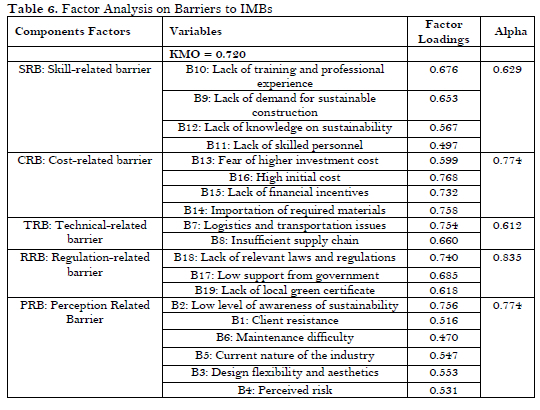
The barriers to IMBs were factor analysed by varimax rotation. The adequacy of the dataset revealed a KMO of 0.720 as showed in Table 6. Based on the results of KMO and significant sampling adequacy obtained, the items of the dataset can be adjudged significant (Shen and Liu, 2003; Oladinrin et al., 2022). Cronbach's alpha value for internal consistency was also used to test the dataset grouping's dependability. The alpha values of the five groups are 0.629, 0.774, 0.612, 0.835, and 0.774 which are higher than minimum benchmark of 0.6; thus, they can be considered satisfactory (Hair et al., 2010).
Giving names to factors generated in the factor analysis is majorly subjective and more of art (Yong and Pearce, 2013). However, factors can be named based on similar constituting items in the factor (Oladinrin and Ojo, 2022), or by common theme established in previous studies (Leung et al., 2019). Based on the result in Table 6, the names given to the factors generated are skilled-related barrier (SRB), cost-related barrier (CRB), technical-related barrier (TRB), regulation-related barrier (TRB), and perception-related barrier (PRB).
4.4 Prioritization of barriers to integrated modular buildings in Nigeria
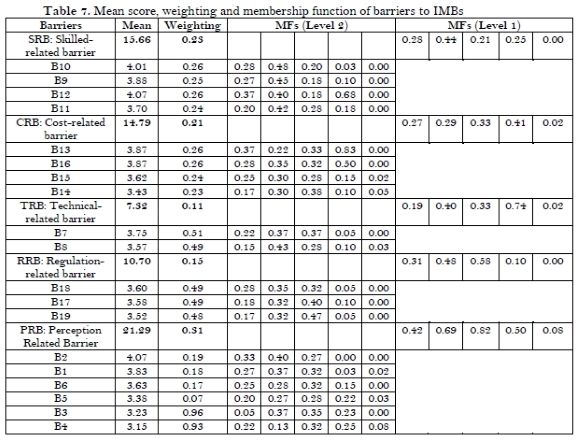
Table 7 shows the mean score of the items that constitutes the principal components, the main components with their corresponding weightings. The mean score and the weighting values of the variables was compute using equations (1) and (2). The mean score of the principal components is the summation of all the mean values of the constituting variables, e.g., the technical related barrier (TRB) is the addition of the mean scores of logistics and transportation issues (B7) and insufficient supply chain (B8). Based on the computation using equation 2, the weighting value of the survival variables and the principal components were obtained.
The FSE of the variables of the barriers and their factors are also presented in Table 7. For example, the percentage of the respondents rating for variable lack of training and experience for professionals (B10) are 28%, 48%, 20%, 3%, and 0% respectively, thus, the MF of B10 calculated using equation (3) are (0.26, 0.48,0.20, 0.03 and 0.00). the MF of the five principal components describing the barriers was also computed using equations (4) and (5). The MF of skilled related barrier (SRB) generated (0.28, 0.44, 0.21, 0.25, 0.00); cost related barrier (CRB) generated (0.27, 0.29, 0.33, 0.41, 0.02); technical related barrier (TRB) generated (0.19, 0.40, 0.33, 0.74, 0.02); regulatory related barrier (RRB) generated (0.31, 0.48, 0.58, 0.10, 0.00); while perception related barrier (PRB) generated (0.42, 0.69, 0.82, 0.50, 0.08).
Table 8 shows the computation of the significant index, and the ranks of the principal components depicting the barriers using equation (6). Based on the calculation in Table 8, perception related barriers (PRB) ranked the highest among the factors with significant index of 6.66, followed by technical related barrier (TRB) with significant index of 5.04, while skilled related barrier (SRB) has the least significant index of 2.79.
5. DISCUSSION
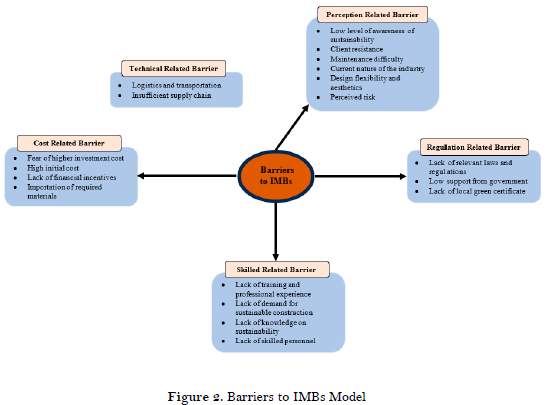
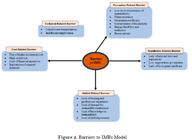
In this section, the discussion is presented in the order of the significant index of the factors, and the barriers to IMBs based on the significant index category distribution is illustrated in Figure 2.
5.1 Perception-related barrier
The barrier related to perception is ranked as the foremost challenge, given high priority among various obstacle to the integration of modular buildings. This category of barriers encompasses variables such as limited understanding of sustainability, resistance from clients, challenges in maintenance, the existing nature of the industry, limitations in design flexibility and aesthetics, and perceived risk. The significance of perception is a paramount in introducing a novel concept into any field (Olawumi and Chan, 2020). To successfully incorporate a new technology or technique, it is crucial for end users to widely accept and embrace it. The integration of modular buildings into the construction is no exception, requiring construction practitioners to possess comprehensive awareness and a positive perception of the technology (Abdelmageed and Zayed, 2020). This underscores the fact that a lack of favorable perception among key stakeholders possess a significant hinderance to its widespread adoption in the construction industry. Additionally, there are assertions that construction professionals and stakeholders exhibit a tendency to be slower in embracing innovations within their work processes (Stewart et al., 2004) which may be linked to wrong perception as well.
5.2
Technical-related barrierThe category of barriers related to technical aspects holds the second position, indicating high priority based on the findings from the FSE. This technical grouping involves factors such as logistics and transportation challenges and an inadequate supply chain. These barriers pertain to the processes through which inputs are manufactured and delivered to construction sites. The level of technical sophistication in the utilization of modular buildings in the study area is notably insufficient (Akinradewo et al., 2023) and also denoted as worthy of consideration in Europe and Belgium (Amer and Attia, 2019). An illustrative example is the subpar state of roads networks in Nigeria, presenting considerable difficulties for transportation, even for standard vehicles (Afolayan and Abidoye, 2017). This challenge assumes particular significance within the context of modular buildings, given their reliance on off-site construction and subsequent on-site installation. The intricate supply chain involved, from the factory to the construction site, can be severely impacted by the prevalent issues of poor transportation systems and road conditions in Nigeria (Bello et al., 2023). Consequently, the inadequacy of the supply chain becomes a substantial barrier to the effective implementation of modular buildings practices in the study area, thereby impeding its integration into construction procedures.
5.3
Cost-related barrierAccording to the FSE conducted during the analysis, the barriers associated with costs are identified as the third most significant, indicating a medium priority. This category reveals obstacles related to the financial aspects of modular building, encompassing variables such as concerns about higher investment costs, initial expenses, absence of financial incentives, and the need to import necessary materials. In reality, costs are an inherent and pivotal consideration, playing a foundational role in construction activities (Rahman, 2014; MacAskill et al., 2021). This underscores the inevitability of financial challenges encountered during the implementation of modular building. Such challenges can be attributed to the elevated initial costs associated with acquiring machinery, technologies, expertise, and essential logistics required for the successful adoption of modular building technique (Schoenbom, 2012). The novel nature of modular building often results in a scarcity of supportive facilities and infrastructures, contributing to the considerable expenses incurred in embracing IMBs. The principal economic hurdle lies in the higher initial costs incurred in IMBs compared to the conventional methods also act as a deterrent for clients and private investors as well. Moreover, the significant investment required for IMBs can also become a key issue for construction companies in Nigeria since most of them are small and medium-sized enterprises (Saka and Chan, 2020). Thus, cost factor poses a formidable barrier to IMBs in the Nigerian construction industry.
5.4
Regulation-related barrierIn the evaluation conducted through FSE, regulation-related barriers to IMBs secured the fourth position, indicating a medium priority. This category contains obstacles associated with the necessary regulations, encompassing the absence of pertinent laws and regulations, limited government support, and the lack of green certification. Introducing any new technology inherently involves regulatory compliance, and presently, the regulatory bodies governing construction in Nigeria lack the essential amendments to integrate techniques like modular building (Akinradewo et al., 2023). There is an absence of regulations dictating the appropriate use of modular building methods for construction projects, and even the Nigerian Building Code (NBC) is not strictly adhered to, let alone the creation and approval of a code specifically addressing modular building (Anigbogu and Anunike, 2014). Adherence to laws and regulations is a considerable challenge in Nigeria, with the government often displaying a lax attitude towards compliance. Hence, the dearth of regulations significantly hampers the prospects for the acceptance of IMBs in the Nigerian construction industry.
5.5 Skilled-related barrier
Lastly, the group of barriers related to skills is positioned at the least significant, ranking the fifth among the obstacles to IMBs, indicating a low priority. This grouping contains the barriers relating to the skill set of the respondents. The barriers under this grouping are: lack of training and professional experience, lack of demand for sustainable construction, lack of knowledge on sustainability and lack of skilled personnel. While these barriers are important and should be addressed, they may not have as immediate or critical an impact as other barriers such as perception-related or technical barriers. Nonetheless, improving skills and knowledge in these areas remains essential for the successful implementation of integrated modular building practices. The skill requirement for the use of modular buildings is highly technology related which is in consonance with past studies (Xu et al., 2020; Lee and Lim, 2012). For instance, the application of key machineries controlled by software involve a lot of technical know-how (Akinradewo et al., 2023) in which there is a great deficiency of such skillfulness for IMBs in the Nigerian construction industry. This necessitated the frequent use of traditional building techniques that is regularly prone to errors and inadequacies. Also, the consent of the respondents to the lack of demand for sustainable construction is a testament to the above assertion (Wuni and Shen, 2020). Many construction professionals do not have the level of knowledge in sustainability in construction given that MiC is a sustainable approach to construction. This is detrimental to the clamor for its adoption as a construction technique. It is disheartening to know that despite the benefits accruing from the use of modular buildings, very many practitioners in the construction industry still falls short of skill sets needed (Akinradewo et al., 2023; Xu et al., 2020). This is a major bottleneck in the way of adopting modular buildings in the processes of construction.
6. RECOMMENDATIONS AND PRACTICAL IMPLICATIONS
6.1 Recommendations
Based on the findings of this study, the following recommendations are given: For the perception-related barriers, massive sensitization of construction professionals should be embarked on by stakeholders in order to lure them positively into embracing IMBs. Also, the wrong information and myths surrounding the use of modular buildings should be rebranded by inviting experts that have successfully made use of IMBs techniques, to host workshops and symposiums. For the technical-related barriers, government should as a matter of urgency, embark on quality road construction in all localities to ensure easy transport of modular elements to construction sites. Also, the supply chain should be made easier for construction companies to navigate through. This can be done by the inclusion of sustainable means for supply chain distribution.
For the cost-related barriers, there should be a partnership with international construction organizations for knowledge transfer and acquisition, trainings, machineries and equipment acquisition to ensure massive implementation process of IMBs. The trainings required for the implementation of IMBs could be subsidized by the government to encourage its massive adoption in construction projects. On the regulatory-based barriers, there should be an amendment and massive implementation and enforcement of regulations to enhance sustainable construction. Furthermore, there should be provision of the requisite enabling environment by the relevant authorities.
For the skill-related barriers, massive awareness campaigns should be initiated in all strata of the society as well as among construction stakeholders and professionals on the need for technology usage in construction activities. There should be trainings and workshops organized for construction professionals in the usage of new techniques such as IMBs.
6.2
Theoretical ContributionsThe study's outcome will enhance existing literature on IMBs, providing deeper insights into the diverse barriers associated with their adoption, and the order of their importance. Additionally, the findings will assist construction professionals and stakeholders in understanding the challenges that could impede the advancement of IMBs. This understanding will empower them to make informed decisions and strategize effectively to overcome these constraints, ultimately facilitating the successful implementation of integrated construction.
6.3
Managerial ImplicationsThe research holds significant implications for construction managers and project leaders. Firstly, it underscores the need for these managers to intensify their efforts in addressing the identified barriers. Secondly, it emphasizes the role of managers in educating and raising awareness among their subordinates about these barriers, aiming to facilitate the successful implementation of IMBs within the construction industry at large.
6.4
Societal ImplicationsThe adoption of IMBs can significantly benefit the society by improving availability and quality. Faster and cost-effective construction methods can address housing shortages, providing more people with safe and reliable homes. Additionally, IMBs can stimulate economic development by creating jobs and fostering skills development in modular construction techniques. The sustainability benefits of IMBs, such as reduced waste and lower carbon emissions, contribute to environmental preservation. Overall, promoting the use of IMBs can enhance living standards, support economic growth, and advance sustainable development in developing economies.
7. CONCLUSION
The research's primary goal was to determine and prioritize the barriers hindering the seamless the integration of IMBs techniques in Nigerian construction sector. The study categorized the barriers associated with IMBs in Nigeria into five groups; skilled related, cost related, technically related, regulatory related, and perception related barrier. The study also revealed that among the various obstacles found, the perception-related barrier is the most dominant. Other barriers/inhibitors are financial-related, perception-aligned, regulation-based or can be some other intrinsic yet deplorable barriers. In order to promote construction sustainability in accordance with globally acceptable practices, this is sufficient motivation for its inclusion, adoption, and implementation in all construction sites throughout the nation. The study offers valuable insight into the prioritization of barriers to IMBs, thereby providing a road map for industry stakeholders, policy makers, and researchers aiming to advance the use of IMBs for a more sustainable built environment. The study was restricted to the viewpoints of construction professionals participating in modular buildings, opinions of end users and case studies on modular building performance can be taken into account in future studies. Also, the study was only limited to respondents in two locations in Nigeria. Therefore, the findings cannot be generalized for all scenarios.
DECLARATION OF INTERESTWe declare that we have no financial and personal relationships with other people or organizations that can inappropriately influence our work, there is no professional or other personal interest of any nature or kind in any product, service and/or company that could be construed as influencing the position presented in, or the review of, the manuscript entitled, "Prioritization of the Barriers to Integrated Modular Buildings (IMBs) in a Developing Economy".
REFERENCES
Abdelmageed, S., Abdelkhalek, S., and Zayed, T. (2020). Benefits and challenges of modular integrated construction in Hong Kong: A literature review. Proceedings of the 8th International conference on construction engineering and project management, Hong Kong.
2. LITERATURE REVIEW
- Abdelmageed,S. and Zayed, T. (2020). A study of literature in modular integrated construction - Critical review and future directions. Journal of Cleaner Production, 277, 124044.
- Abraham, P. S. and Gundimeda, H., (2018). 'Greening' the buildings - An analysis of barriers to adoption in India. Cities and the Environment (CATE), Article 10, 10(1), 1-20 houses. In Proceedings of the 8th Windsor Conference, Windsor, UK.
- Adewolu, A.O. (2023). Infrastructure growth and sustainable development review of Lagos city profie. International Journal of Engineering Inventions, 12(5), 253-276
- Agapiou, A. (2022). Barriers to offsite construction adoption: A quantitative study among housing associations in England. Buildings, 12, 283.
- Aghimien, D., Aigbavboa, C., Oke, A. and Musenga, C., (2018). Barriers to sustainable construction practices in the Zambian construction industry. Proceedings of the International Conference on Industrial Engineering and Operations Management, Paris, France, July 26-27, 2383-2392.
- Akinradewo, O., Aigbavboa, C., Aghimien, D., Oke, A., and Ogunbayo, B. (2023). Modular method of construction in developing countries: The underlying challenges. International Journal of Construction Management, 23(8), 1344-1354.
- Ali A. H., Kineber, A. F., Elshaboury, N., Arashpour, M. and Daoud, A. O. (2023). Analysing multifaceted barriers to modular construction in sustainable building projects: a comprehensive evaluation using multi-criteria decision making. International Journal of Construction Management, DOI: 10.1080/15623599.2023.2299557
- Ametepey, O., Aigbavboab, C. and Ansahb, K., (2015). Barriers to successful implementation of sustainable construction in the Ghanaian construction industry. Procedia Manufacturing, 3,1682-1689.
- Amer, M., and Attia, S. (2019). Identification of sustainable criteria for decision-making on roof stacking construction method. Sustainable Cities and Society, 47, 101456.
- Bello, A. O., Khan, A. A., Idris, A., and Awwal, H. M. (2023). Barriers to modular construction systems implementation in developing countries' architecture, engineering and construction industry. Engineering, Construction and Architectural Management. Doi 10.1108/ECAM-10-2022-1001.
- Dupwa, R. P. (2017). Investigation of the utilization of modular construction in South Africa. Research Report, University of the Witwatersrand, Gauteng, South Africa.
- Egege, C. O. (2018). Off-site modular construction as a method of improving construction quality and safety. International Journal of Structural and Civil Engineering Research, 7(3), 259-268.
- Ekanayake, E.M.A.C., Shen, G., Kumaraswamy, M. and Owusu, E.K. (2022). A fuzzy synthetic evaluation of vulnerabilities affecting supply chain resilience of industrialized construction in Hong Kong. Engineering, Construction and Architectural Management, 29(6), 2358-2381.
- Hair, J.F., Black, W.C., Babin, B.J. and Anderson, R.E. (2010). Multivariate data analysis, (7th Ed.), Prentice Hall, Pearson, Upper Saddle River, NJ.
- Jiang Y., Zhao D., Wang D., and Xing Y. (2019). Sustainable performance of buildings through modular prefabrication in the construction phase: a comparative study. Sustainability, 11, 5658.
- Kamali M. and Hewage K.N. (2015). Performance indicators for sustainability assessment of buildings. 5th international/11th construction specialty conference, Vancouver, British Columbia: June 8-10. 32
- Khan, A., Yu, R., and Liu, T. (2021). A Systematic Review of Risks in Modular Integrated Construction Practice. Proceedings of the 44th AUBEA Conference, Geelong, Australia, 27-29 October; pp. 344-354.
- Lee, C. J., and Lim, S. H. (2012). Study on the Application of Modular Technologies to Han-ok. Journal of the Korean housing association, 23(4), 49-57.
- MacAskill, S., Mostafa, S., Stewart, R. A., Sahin, O., and Suprun, E. (2021). Offsite construction supply chain strategies for matching affordable rental housing demand: A system dynamics approach. Sustainable Cities and Society, 73, 103093.
- Mishra, S., Sarkar, U., Taraphder, S., Datta, S. and Saikhom, R. (2017). Multivariate statistical data analysis - principal component analysis. International Journal of Livestock Research, 7(5), pp 60-78.
- Moyanga, D.T., Ojo, L.D., Awodele, O.A., and Ogunsemi, D.J (2023). Prioritizing the survival determinants of quantity surveying firms in economic contraction. Engineering, Construction and Architectural Management, DOI 10.1108/ECAM-01-2023-0024
- Ogunde, A., Selekere, T.E., Joshua, O., Kuboyi, P.O., and Omuh, I.O. (2016). Prefabrication method of building construction in Lagos state, Nigeria. International Journal of Engineering Technology and Computer Research, 4(1), 88-100.
- Ogunkan, D.V. (2022). Achieving sustainable environmental goverance in Nigeria: A review for policy consideration. Urban Governanc, 2(1), 212 - 220.
- Oladinrin O., Ogunsenmi D.R. and Aje O.I. (2012). Role of construction in economic growth: empirical evidence from Nigeria. FUTY Journal of the Environment, 7(1), 50-60.
- Oladinrin, T.O. and Ojo, L.D. (2021), Characterization of the drivers of environmental management system implementation, Engineering, Construction and Architectural Management, 29(10), 3868-3892.
- Osuizugbo, I. C., Oyeyipo, O., Lahanmi, A., Morakinyo, A. and Olaniyi, O. (2020). Barriers to the Adoption of Sustainable Construction, European Journal of Sustainable Development, 9(2), 150-162.
- Pallant, J. (2011). SPSS survival manual. 4th ed. Crow's Nest (Australia): Allen and Unwin. S0003497598001581[pii]
- Pan, W., and Zhang, Z. (2023). Benchmarking the sustainability of concrete and steel modular construction for buildings in urban development. Sustainable Cities and Society, 90, 104400.
- Pinney, R., Boothman, C., and Higham, A. (2017). Main contractor perspectives on the drive for increased offsite manufacture. Welcome to Delegates IRC, 884.
- Rahimian, F.P., Goulding, J., Akintoye, A. and Kolo, C (2017). Review of motivations, success factors, and barriers to the adoption of offsite manufacturing in Nigeria. Procedia Engineering, Elsevier, Creative Construction Conference, (CCC), 19-22 June 2017.
- Rahman, M. M. (2014). Barriers of implementing modern methods of construction. Journal of Management in Engineering, 30(1), 69-77.
- Saka, A. B., and Chan, D. W. (2020). Profound barriers to building information modelling (BIM) adoption in construction small and medium-sized enterprises (SMEs) An interpretive structural modelling approach. Construction Innovation, 20(2), 261-284.
- Shen, L.; Song, X.;Wu, Y.; Liao, S. and Zhang, X. (2021). Interpretive Structural Modeling based factor analysis on the implementation of Emission Trading System in the Chinese building sector. Journal of Cleaner Production, 127, 214-227.
- Sholanke A.B., Opoko A.P., Onakoya A.O., and Adigun T.F. (2019). Awareness level and adoption of modular construction for affordable housing in Nigeria: Architects' perspective. International Journal of Innovative Technology and Exploring Engineering, 8(9), 251-257
- Shrestha, N. (2021). Factor analysis as a tool for survey analysis. American Journal of Applied Mathematics and Statisitics, 9(1), pp. 4-11.
- Singh, Y. (2006). Fundamental of Research methodology and statistics. New Delhi: New age International Ltd.
- The Holy Bible - New international version. (2023). 1 Kings 6-7 NIV - Solomon Builds the Temple - In the four - Bible Gateway.
- Vagias, W.M. (2006). Likert-Type Scale Response Anchors. Clemson International Institute for Tourism and Research Development, Department of Parks, Recreation and Tourism Management. Clemson University, Clemson.
- Wai, C. T., Wai Yi, P., Ibrahim Olanrewaju, O., Abdelmageed, S., Hussein, M., Tariq, S., and Zayed, T. (2023). A critical analysis of benefits and challenges of implementing modular integrated construction. International Journal of Construction Management, 23(4), 656-668.
- Wang, Z.; Wang, T.; Hu, H.; Gong, J.; Ren, X. and Xiao, Q. (2018). Blockchain-based framework for improving supply chain traceability and information sharing in precast construction. Automated Construction, 111, 103063.
- Wuni, I. Y., and Shen, G. Q. (2019). Making a case for modular integrated construction in West Africa: rethinking of housing supply in Ghana. 10th Proceedings of the West Africa Built Environment Research (WABER) Conference, Accra, Ghana, (pp. 771-787).
- Wuni, I.Y. and Shen, G.Q. (2020). Barriers to the adoption of modular integrated construction: systematic review and meta-analysis, integrated conceptual framework, and strategies. Journal of Cleaner Production, 249, 119347.
- Wuni, I.Y. and Shen, G.Q. (2021). Exploring the critical production risk factors for modular integrated construction projects. Journal of Facility Management, 21, 56- 69.
- Xu, Y., Yeung, J.F.Y., Chan, A.P.C., Chan, D.W.M., Wang, S.Q. and Ke, Y. (2010). Developing a risk assessment model for PPP projects in China - a fuzzy synthetic evaluation approach. Automation in Construction, 19(7), 929-943.
- Xu, Z., Zayed, T., and Niu, Y. (2020). Comparative analysis of modular construction practices in mainland China, Hong Kong and Singapore. Journal of Cleaner Production, 245, 118861.