Attitudes and Practices of Households toward Waste Management and Recycling in Nelson Mandela Bay
Abstract
South Africa faces a growing population and a rapidly increasing rate of urbanisation that has resulted in increased waste generation, thus further contributing to problems of pollution, health hazards and resource conservation. The main aim of this article was to assess the attitudes and practices of households towards recycling of household waste. A quantitative research paradigm was followed. A survey was conducted and self-administered questionnaires were distributed to a convenient sample of 150 selected respondents within the designated population. The attitudes of consumers towards household waste management were found to be neutral or indifferent and strongly dependent on knowledge and awareness about recycling as well as socioeconomic factors. The results further indicated that the main influencing factors for more positive attitudes and increased recycling participation is that household waste management should be convenient, cost-effective and not time-consuming, waste disposal and recycling sites should be easily accessible and incentives would encourage individuals to recycle. The results of this study could assist both households and local municipalities in developing appropriate strategies for managing household waste.
Consumer attitudes; household waste management practices; recycling
1. INTRODUCTION AND BACKGROUND
This article sets out to highlight the attitudes and practices of households regarding waste management and recycling within a large metropole of South Africa. There has been an increasing concern about the environment in which man lives (Adeleye, Adewunmi, Ologundudu & Ololade 2012:22). Waste can be defined as a manifestation of the inefficient use of resources or the root cause of pollution and associated environmental degradation (Tyagi, Garg & Paudel 2014:1491-1492). One of the issues of greatest concern is the impact of environmental pollution caused by solid waste (Kumar 2016:1). Globally, waste generation rates are rising. Due to urbanisation and rapid population growth, municipal waste generation is expected to increase to 2.2 billion tonnes by 2025 (World Bank 2018:Internet). Kumar (2016:29) states that in most developing countries, the largest source of municipal solid waste (MSW) generation is from private households. Waste produced by households are substantial and expected to grow, making the recycling of household wastes a key part of efforts developed to meet this environmental challenge (Arsova, van Haaren, Goldstein, Kaufman & Themelis 2008:Internet). Household recycling requires that at least one (1) household member collect, sort, store, and in some cases, transport waste materials to recycling centres (Berglund, Hage & Soderholm 2009:155). The waste industry in South Africa consists primarily of waste collection and landfilling with a limited amount, approximately 10%, of recycling (Statistics South Africa 2018).
South Africa's commitment to sustainable development is aimed at balancing social and economic challenges of a developing and unequal society, with a focal point on protecting environmental resources. In order to achieve this, the waste sector in South Africa aims to ensure that care is given to product design, waste prevention, raw material use, resource efficiency and minimisation where avoidance cannot be achieved (Department of Environmental Affairs 2012:3). Municipal solid waste generation has become an inevitable consequence of lifestyles and daily living. However, the quantity and quality of the waste varies and is extremely dependent upon the manner in which waste production is managed (Kumar 2016:39-40). Naidoo (2009) states that increasing practices of littering, dumping and burning of solid waste by households in South Africa has led to the conclusion that MSW is being irresponsibly managed. In this regard, it becomes necessary to investigate the attitudes and practices of consumers toward solid waste practices, which further incorporate mitigating measures such as reducing, reusing and recycling for the generation of solid waste. It is envisaged that the practical guidelines provided in this article could assist both households and local municipalities to develop appropriate strategies and practices regarding waste management and recycling.
The first part of the articles covers aspects such as introduction and background, problem statement and research objectives. This is followed by a comprehensive literature study on waste management and recycling, research methodology and design adopted for this study and the main empirical results. Lastly, some recommendations and managerial implications and conclusions are outlined.
2. PROBLEM STATEMENT
Household waste forms part of MSW which is challenging to control due to its diversity and heterogeneity. South Africa currently faces a growing population and a rapidly increasing rate of urbanisation which has resulted in increased waste generation, therefore, further contributing to problems of pollution, health hazards and resource conservation (Makau 2006:2). Furthermore, Oelofse and Nahman (2013:80) state that household waste continues to put pressure on South Africa's ever filling landfill sites, but by improving the recovery of recyclables at household level the pressure on these sites would be significantly reduced. According to Crouth (2016:Internet), research done by the Council for Scientific and Industrial Research indicates that on a national scale, South Africans tend to have negative attitudes towards recycling, citing a lack of space, time, knowledge of what to recycle, the perceived uncleanliness associated with waste and inconvenient recycling facilities. This is a major cause for concern as the participation of consumers is vital to the success of any domestic recycling programme (Bendak & Attili 2017:Internet).
Very limited research has been done on the attitudes and practices of consumers towards the recycling of household waste in Nelson Mandela Bay (NMB). Without a clear reference point, it cannot be assumed that local consumers have either positive or negative attitudes, or have useful practices in place. This creates a barrier for the success of recycling initiatives in NMB, as public attitudes about and willingness to participate in recycling are the main driving forces behind improved waste management (Makau 2006:4). Therefore, it is crucial that research is conducted in NMB in order to gauge the awareness and attitudes of its residents towards such issues. Reddy (2011:38) states recycling involves the processing of waste into usable raw materials or products, thus enabling materials to have an extended life in addition to reducing resource consumption and avoiding disposal costs, ultimately providing environmental and economic benefits.
Further, according to Treevolution (2018:Internet), South Africa currently lacks the infrastructure for collecting recyclable material. With no proper collection for recyclables, households who may want to recycle their waste have to separate it themselves and take the recyclables to a buy-back or municipal drop-off centre, which requires a substantial amount of knowledge, time and effort and, consequently, people are discouraged. Therefore, it is important that this research should identify what recycling practices, if any, NMB consumers are participating in, but also evaluate whether consumers are aware of the recycling practices available to them. The main research question to be addressed in this study is: What are the attitudes and practices of households toward waste management and recycling in NMB?
3. RESEARCH OBJECTIVES
3.1
Primary objectiveThe primary objective of this study is to investigate the attitudes and practices of NMB households towards household waste management and recycling.
3.2
Secondary objectivesIn order to achieve the primary objective, the following secondary objectives are addressed:
• To conduct a literature study regarding household waste management.
• To empirically assess levels of awareness and practices of individuals toward household waste management in NMB.
• To provide households and the local municipality with effective guidelines regarding waste management practices.
3.3
Methodological objectives• To undertake a theoretical investigation of the attitudes and practices of NMB households towards the recycling of household waste.
• To determine the appropriate research methodology to address the identified research problem and research objectives.
• To develop an appropriate measuring instrument that to empirically test the influence of the independent variables on the dependent variable.
• To source primary data from a sample of NMB households and to statistically analyse the data.
• To provide conclusions and recommendations based on the findings of this research, which could assist NMB residents in improving their household waste recycling attitudes and practices
4. THEORETICAL OVERVIEW OF RECYCLING AND WASTE MANAGEMENT
4.1
Clarification of key concepts• Waste
According to the South African Waste Information Centre (2016:Internet) and the Organisation of Economic Cooperation and Development (OECD) (2003:Internet), waste is characterised as any material, object or substance that is undesirable, abandoned, rejected, disposed of or discarded, by the holder of the material, object or substance regardless of whether such substance, material or object can be recycled, reused or recovered.
• Municipal solid waste
Ajitha (2014:59) and Kumar (2016:29) define MSW as waste that consists of everyday items useful for public use that have been discarded - thus solid waste from houses, roads, public places, shops, workplaces, and hospitals.
• Household waste
Kumar (2016: 29) and Chandra (2015:30) define household waste as the day-to-day rubbish, garbage and other waste originating from daily household consumption - thus waste material generated in the residential households.
• Domestic waste disposal
Miller (2002:518-519) and Chandra (2015:30) define domestic waste disposal as all exercises embraced to evacuate domestic waste through arranging, gathering, transporting and discarding it in assigned areas for treatment, reusing or recycling.
4.2
History of waste management and recyclingThe poor state of solid waste management (SWM) in urban areas of developing countries is currently an ecological issue as well as a noteworthy social impair (Srivastava, Singh & Singh 2014:1). The generation of waste has been part of history since the earliest times of mankind. With the unavailability of proper waste management systems, large amounts of waste were released back into groundwater, creating a significant environmental impact. The root of waste management was planted as early in 1751 by Corbyn Morris in London (Kumar 2016:17). For over three (3) decades recycling has been occurring in South Africa. Godfrey and Oelofse (2017:2) identified four phases through which the South African recycling and waste sector has progressed in the course of recent decades:
• Phase 1: "Age of landfilling" began approximately at the beginning of 1989.
• Phase 2: "Emergence of recycling" began in 2001 with the publication of the Polokwane Declaration and the emergence of prohibiting of single-utilise plastic bags.
• Phase 3: "Flood of regulation" is a period beginning in 2008 with the announcement of the Waste Act (Act 59 of 2008) which brought about an influx of new waste regulations and legislation.
• Phase 4: "Drive for extended producer responsibility" began in 2012 with the publication of the Integrated Industry Waste Tyre Management Plan (IIWTMP) intended to fulfil tyre producers' responsibilities for end-of-life waste tyres (Godfrey & Oelofse 2017:2).
4.3 Theory of planned behaviour
An understanding is required of the recycling choices made by householders and of the factors that underpin these choices. The theory of planned behaviour (TPB) (Ajzen 1985) is a widely used psychological theory for explaining environmental behaviour and has become popular in studies on recycling. Psychological and situational variables as well as environmental attitudes have been recognised as important predictors of recycling behaviour, however, in order to further investigate the influence of these factors, a theoretical framework for systematically identifying the determinants of household recycling behaviour is required (Tonglet, Phillips & Read 2004). As noted by Ajzen (1991), the TPB provides a theoretical framework for systematically investigating the factors which influence behavioural choices. According to Ioannou, Zampetakis and Lasaridi (2013:Internet), the TPB provides one of the most robust theoretical frameworks for identifying the determinants of a variety of behaviours, in both non-environmental and environmental domains. The TPB assumes that there is a certain degree of conscious reasoning involved when individuals develop intentions to carry out a certain behaviour, this idea forms the bases of the TPB. Furthermore, an intention to act in a particular way influences behaviour (Ioannou et al. 2013:Internet). According to the TPB, the intention of an individual to act can be predicted by three specific factors: attitude towards the behaviour; subjective norms and perceived behavioural control (Du Toit, Wagner & Fletcher 2015:Internet). Thus, if an individual's attitude towards a certain behaviour is positive, there is enough peer-pressure and they believe they are able to perform the behaviour, then their intention to perform that behaviour (in this case the recycling of household waste) should be strong (Ajzen 2006:Internet).
4.4 Integrated waste management approach
According to McDougall, White, Franke and Hindle (2001:21), previous choices relating to the structure of waste management systems relied heavily on the waste management hierarchy. The hierarchy approach gave general guidelines on the relative desirability of the different waste management options (Van Ewijk & Stegemann 2016:122). McDougall et al. (2001:21) further expressed that the only way to ensure environmental impacts are kept to a minimum is to measure these throughout the waste life cycle. Therefore, a more holistic approach to waste management is to recognise that all disposal options have a role to play in an integrated waste management system. The integrated waste management (IWM) approach involves a hierarchal and coordinated group of actions that aims to maximise the recovery of recyclable and reusable waste, protects environmental and human health and reduces pollution (Medina 2010).
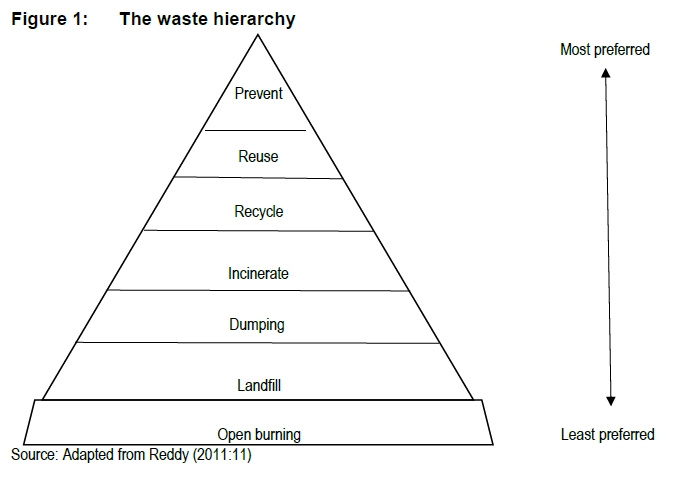
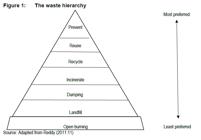
According to the waste hierarchy (refer to Figure 1), prevention, reuse and recycling have the highest priority on the waste hierarchy, while open burning, dumps and landfills are the least preferable. Therefore the actions which result in the most harmful impacts on the environment are the least acceptable ones. Waste management systems should be designed to create the most useful benefits from products in order to generate the minimum amount of waste, and the options available are sorted according to their desirability in terms of waste minimisation (Reddy 2011:10).
Waste minimisation thus involves a number of processes, mechanisms and stakeholders in the production, marketing, packaging, selling and consumption of goods that produce waste at all stages of the consumption cycle. According to Makgae (2011), this will require a conscious, comprehensive and intentional decision and effort by all role players to ensure that waste can be reduced through waste minimisation. This may involve additional mechanisms and processes such as:
• Improving product and packaging designs to reduce resource consumption;
• Changing marketing and sales approaches to influence consumer behaviour;
• Changing procurement policies and practices that could encourage environmentally-aware production and manufacturing;
• Encouraging waste separation, streaming and diversion practices;
• Creating infrastructure to enable waste to be diverted from landfill sites;
• Developing infrastructure for processing waste for reuse/recycling; and
• Developing markets for recycled materials and products.
4.5 Effect of individual attitudes toward recycling household waste
According to Yusof (2004:54), a persons' attitude toward and knowledge about recycling play a major role in determining whether they recycle or not. Therefore, a positive attitude towards and efficient knowledge about recycling is essential for the successful implementation of an effective solid waste management system. According to Thomas, Slater and Yoxon (2003:1), people's attitudes and behaviour towards recycling are influenced by the need for and importance of information about recycling and a is a key factor to increasing the rate of recycling. Lack of awareness about and a regular consideration for recycling issues, rather than a lack of concern for the environment, has a greater impact on people's attitudes and behaviours towards recycling their waste.
Similarly, Kumar (2016:35) found that in developing countries, lack of awareness and interest in waste management also negatively impacted recycling attitudes and behaviours. However, additional socio-economic factors, such as illiteracy, poverty, and irresponsible waste management also play a role. Strydom (2012:2) recognises three (3) main areas affecting people's attitudes and behaviours towards recycling namely, knowledge, convenience and barriers to recycling. South Africa is a developing nation with an extremely diverse society, therefore it is important to take into account a number of socio-economic factors when implementing any waste management system (Poswa 2004:1). The recognition and evaluation of how various socio-economic factors may influence public participation and cooperation with waste management projects are an important aspect of effective solid waste management. Previous studies also have indicated that there is often a correlation between an individual's attitudes towards recycling and their socio-economic status (Yusof 2004:25).
Strydom (2012:2) states that a recycling and solid waste collection system must be designed to meet the needs of all the individuals in the community for whom it is intended. The reason for this is that a convenient way of recycling household waste for some people may not be equally as convenient for others whom may face different circumstances (Miafodzyeva, Brandt & Olsson 2010:340-346). Local authorities must therefore ensure an effective waste management service is provided to the public, therefore, taking a number of factors into consideration when deciding the most suitable waste management approach for a community. Such factors include: subsidies or grants available, affordability, accessibility due to location, potential benefits, on-site storage facilities, potential pollution, level of education, and available facilities and infrastructure Council for Scientific and Industrial research (CSIR) (2000:11).
4.6 Importance of recycling household waste
Rapid urbanisation, increasing population growth and industrialisation have caused dramatic increases in the amount of waste generated by societies. Increased consumption of food and electricity, as well as changing lifestyles have led to a massive increase in the volume of domestic waste, thus creating a serious problem for both developing and developed countries (Kamara 2006). Most of the developing countries face serious issues with regard to their waste management systems. Two of the major issues are the unsuitable final disposal of waste and insufficient collection services. Most domestic waste is either burned or disposed of in landfill sites or on vacant land. The inadequate disposal of waste generated and insufficient collection of waste has led to significant problems of pollution and risks to human health and the environment (Medina 2010).
According to Lehmann (2011:161), it is difficult to distinguish between different waste management system approaches in purely economic terms as they are subjected to many variables. However, when comparing recycling, incineration and landfill, recycling shows substantial economic value (PETCO 2018:Internet). Separating waste for recycling requires separate storage and collection facilities, after collection, the waste is sent to recycling facilities and then to re-processors where the materials are processed and made into new products. Although this creates considerable costs for local authorities, domestic waste disposal and landfill costs are reduced and money generated from the new products produced when recycled and sold can be fed back into the waste management system (PETCO 2018:Internet). Furthermore, in the absence of regulations, stringent rules and strong government commitment, individuals tend to dumb their household waste as conveniently and quickly as possible.
4.7 Waste management practices with regards to household waste management
4.7.1 Prevention
According to Medina (2010), the highest priority in an integrated waste management system is given to waste prevention. It is a preventative action seeking to lessen the amount of waste generated by individuals, businesses and households. The concept behind prevention is that one should limit the number of purchases you make, by buying only what you need in the correct amounts, in order to simply create "less" waste. Individuals can reduce waste at household level through various methods, such as buying items in bulk or as refills in order to reduce packaging waste, engaging in opportunities to operate their home more efficiently, using rechargeable batteries and buying local products to reduce the negative environmental impacts from transportation (Waste Management 2017:Internet).
4.7.2 Reuse
Reuse means passing an item along to another person for continued use or purchasing non-disposable items (Williams 2005). People are accustomed to think of things that are empty, old, broken, worn, or marred, as useless, so they dispose of them without thinking about the consequences. Therefore, the process of reusing begins with the assumption that used materials can be a resource rather than refuse. Individuals can reuse materials at household level through various methods, such as reusing shopping bags, donating old items to charities ultimately, reusing preserves resources, saves money, and satisfies the human urge to be creative (Abdul-Rahman 2014:2). Williams (2005) recognises that despite the fact that reuse can be financially beneficial it may not always be attractive as environmental and economic expenses of reuse in terms of cleaning, energy use, recovery, and transportation may outweigh its benefits.
4.7.3 Recycling
After the re-use of products and materials, recycling follows in the integrated waste management hierarchy. Recycling is a solid waste management strategy that entails the conversion of discarded consumer products, i.e. waste, into useful or environmentally-friendly products (Williams 2005:63). Recycling involves the collecting, processing and manufacturing of materials in order for customers to purchase new products made from recycled materials. Various items can be recycled at household level, such as metals, glass, textiles, paper, organics, plastic etc. (AVERDA 2018). Recycling takes place differently in developing countries as municipalities usually lack recycling programmes. However, this does not mean recycling does not exist. Informal recycling is the most practiced form of recycling and is common in developing countries where most recycling is carried out by hunters (Medina 2010).
4.8 Challenges of waste management in developing countries
In developing countries waste disposal occurs unscientifically with insufficient planning. This causes source segregation to be a challenge for sustainable waste management systems. Individuals living in urban areas rarely separate their waste, leaving waste collectors in charge of the sorting of waste (Tasherzadeh & Richards 2016:63-64). A shortage of educational programmes with regards to solid waste management has caused improper waste management systems and many municipal employees do not have the knowledge or lack exposure to effective waste management systems (Ramachandra 2009:32).
Provision for current human resources regarding waste management are often inadequate with employees being uneducated or lack necessary technical training to handle complex environmental issues (Kumar 2016:83-84). Reddy (2011:59) concurs that inadequate attention is given to the collection and analysis of municipal waste data and thus there are limited opportunities for administrators of waste management to become specialists and to develop and implement waste management plans that are tailored for local waste management issues. Local authorities often face many difficulties when required to provide sustainable services to households and it is thus also vital to encourage the involvement of the private sector (Joseph & Nagendran 2007). Lohri (2014) suggests that an alliance between private organisations and the municipality is necessary for providing financial resources for the MSW system. Zurbrugg (2003:Internet) added that a limited part of the urban population in developing countries has access to waste collection thus leaving low-income people residing in peri-urban areas without waste collection. According to Medina (2010), non-collection of waste often taking place in low-income communities, leading to dumping in public open spaces and on vacant land or even the burning of waste posing health hazards.
Giusti (2009) states that disposal methods, treatment and handling of waste have an indirect and direct effect on human health. Waste is regularly thrown onto streets and further spread by animals searching for food and rag pickers searching for of recyclables. This waste often clogs the drains resulting in stagnant water conditions which is favourable for mosquitoes and insects to breed which could cause health diseases such as as lymphatic filariasis, malaria and other diseases (Castro, Kanamori, Kannady, Mkude & Killeen 2010).
4.9 Impact of COVID-19 pandemic on waste management
United Nations Conference on Trade and Development (UNCTAD) (2020) alleges that despite the COVID-19 pandemic reported to led to reduced air and noise pollution levels as well as improved biodiversity, the impact of lock-down and other preventive measures on waste management are alarming. Failure to effectively manage waste generated by households could escalate the spread of COVID-19 via secondary transmissions. Local waste problems also have occurred as many local municipalities suspended their recycling activities over fears of virus transmission. Sarkodie and Owusu (2020) also state that efficient waste management during the COVID-19 pandemic is paramount. This could ensure the continuity and functionality of waste services and workers, health protection of employees and adjustments of recycling practices by consumers to embrace safety measures as to contain the spread of the virus during waste collection. COVID-19 has also exposed several environmental threats due to plastic pollution, attributable to unsustainable use of single-use plastics. Ikiz, Maclaren, Alfred and Sivanesan (2020) concur that the COVID-19 pandemic has had numerous environmental consequences, including impacts on municipal waste management systems. Changes in household consumption and waste disposal patterns and behaviours during the lockdown period have produced new challenges for solid waste management and waste diversion activities.
5. RESEARCH DESIGN AND METHODOLOGY
5.1
Research paradigm and approachA positivistic methodology by means of quantitative research was followed. A descriptive research approach was used to obtain the relevant data needed to determine the attitudes and practices of consumers toward household recycling in NMB.
5.2
Population and samplingFor the purpose of this study, the research population consists of all consumers or households in NMB. Non-probability sampling was used, namely convenience and judgemental/purposive sampling. A convenience sample is chosen purely on the basis of availability, while judgement sampling is when a sample is chosen on the basis of expert judgement, where specialists in the subject of the survey choose what they believe to be the best sample for that specific study (Struwig & Stead 2013:116). Respondents were also selected, based on fieldworker's own experience and assessment of the situation. Hundred and fifty households or consumers were approached during the survey. A total of 120 useable questionnaires were obtained from NMB consumers or households (effective response rate of 80%).
5.3
Data collection• Secondary data
Secondary data is data that is not directly gathered, but is already available. Sources of secondary data included annual reports, journal articles, newspaper articles, government publications and business reports (Wilson 2010:170).
• Primary data
For the purpose of this study, convenience sampling was used as a sampling technique to conduct the research due to the ease of access to consumers in NMB, as well as the fact that there are currently no databases of all consumers in NMB. Consumers in NMB was approached by field-workers during a survey, where a self-administered structured questionnaire was handed out to willing participants and upon completion, the field-workers collected the completed questionnaires.
5.4
Questionnaire designThe measuring instrument or questionnaire was developed using items from existing scales and some items were self-developed, based on the literature study. The questionnaire consists of four sections:
• Section A of the questionnaire focused on the general perceptions regarding environmental sustainability, consisting of 15 items or variables. A five-point Likert-type ordinal scale was used.
• Section B of the questionnaire investigated consumers' attitudes toward household waste management and consists of 20 items, using a five-point Likert-type ordinal scale.
• Section C investigated practices regarding household waste by means of a five-point Likert-type ordinal scale (15 items).
• Section D of the questionnaire focused on the biographical information of respondents using a nominal scale and consisting of eight variables.
5.5
Pilot studyZikmund, Babin, Carr and Griffon (2010:65) indicate that a pilot study is a small-scale research project that collects data from respondents similar to those to be used in the full study as to ensure comprehension of the items used. The researchers conducted a pilot study through distributing 10 self-administered questionnaires among potential respondents in order to determine whether the questionnaire is understandable with the correct wording and layout.
5.6
Data analysisThe primary data collected was captured in Microsoft Excel and analysed by means of the Statistica computer programme. Descriptive statistics was utilised to analyse the data collected by the quantitative study. These statistics includes measures of central tendency of (mean) and dispersion (standard deviation) as well as frequency distributions.
5.7
Validity of the measuring instrumentValidity is defined as the accurateness of inferences made, based on test or performance data. It also addressed whether a measure accurately and completely represents what was intended to be measured (Landy & Conte 2007:73). Face validity is when a scale's content logically appears to reflect what was intended to be measured, while content validity is the degree that a measure covers the breath of the domain of interest (Zikmund et al. 2010:307). A pilot study, along with expert opinion and a comprehensive literature study on waste management and recycling were utilised, in order to assess the face and content validity of the measuring instrument.
6. EMPIRICAL RESULTS
6.1 Demographic profile of respondents
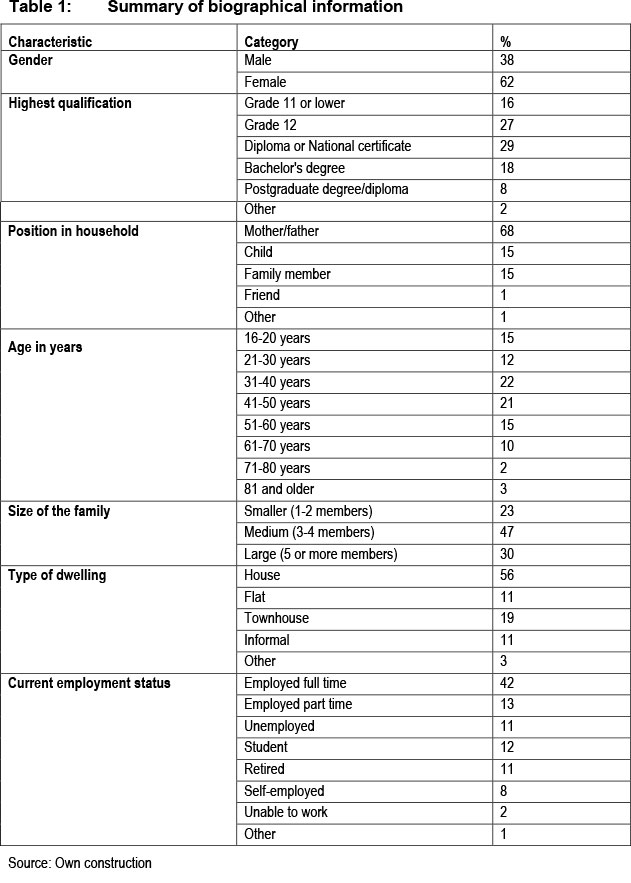
Table 1 indicates the demographic profile of the respondents.
It appears from Table 1 that the majority of the respondents were females (62%) and 38% males with the highest educational qualification being a diploma/certificate or degree (47%). Most of the respondents held the position of a farther or mother in the household (68%), child (15%) and family member (15%). In terms of age group, the majority were between 41 and 60 years (36%) and 21 and 40 years (34%) from medium-sized households (47%). It also appears that most of the respondents reside in a free standing house (56%) or town house (19%) and are full-time employed (42%) or part-time (13%).
6.2 General perceptions regarding environmental sustainability
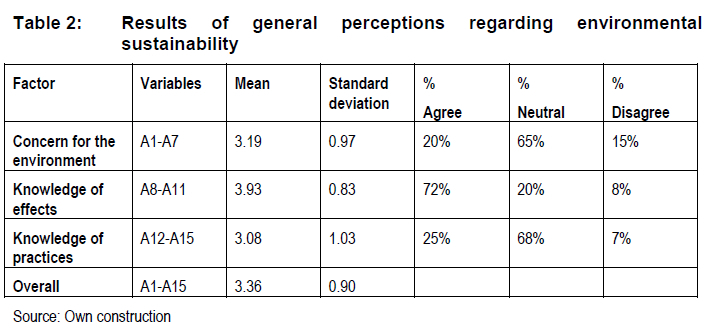
Table 2 shows the descriptive statistics for the general perceptions of households regarding environmental sustainability.
The overall mean score of 3.36 indicates that the data lies in the "neutral" range of the five-point scale and there were not too much variation around the mean score (overall 0.90). The results indicate that respondents tend to be neutral regarding the statements about a concern for the environment (mean 3.19) and 15% disagreed with these statements. It appears that respondents tend to agree slightly (mean score of 3.93) with the statements regarding the knowledge of effects of excessive waste on sustainability (72% agreed). Knowledge of waste practices obtained the lowest mean score (3.08) and 68% of respondents were neutral towards these statements This is a cause for concern, as according to Palm (2012:Internet), the sorting and separating of recyclable material at the household level is crucial and strongly depends on public participation. Oelofse and Strydom (2010) examined drivers of recycling both in a household- and industry context and found higher participation levels amongst households where members were better educated and more environmentally-conscious. Strydom (2012:2) also states that individuals need knowledge of how a recycling scheme works, how to sort recyclables and where to recycle their waste (site). Bolaane (2006:731-740) also confirms that the success of recycling is dependent on individuals experience and knowledge about recycling coupled with a change in attitude towards such issues.
6.3 Consumer attitudes regarding household waste management
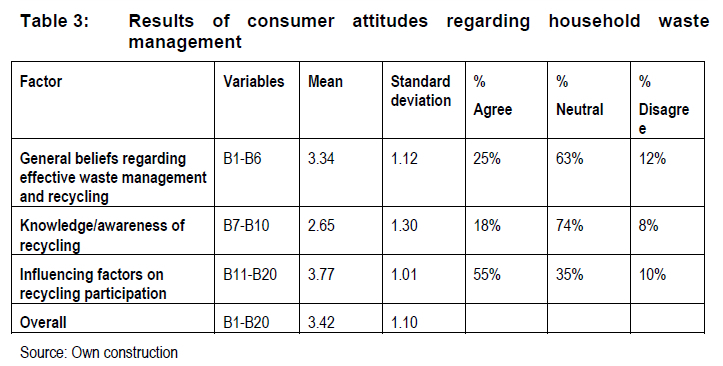
Table 3 shows the descriptive statistics for consumer attitudes regarding household waste management.
The overall mean was 3.42 and the standard deviation 1.10 for statements B1-B20. This indicates that the data tend to cluster around the neutral range. The standard deviation score of 1.10 indicates that there is a relatively large dispersion of the data values around the mean score. The highest mean score was obtained for influencing factors on recycling participation (3.77) with which 55% of respondents tend to agree slightly with. The majority of respondents (74%) were neutral regarding the statements about knowledge or awareness of recycling (lowest mean score of 2.65). Literature, as outlined in Section 4.1 of the National Domestic Waste Collection Standards, indicate that municipalities must provide an enabling environment for households to recycle domestic waste which could include kerbside collection and/or a well-kept drop-off centre within easy reach (Department of Environmental Affairs 2011:16). Kumar (2016:35) also found that in developing countries, lack of awareness and interest in waste management, negatively impacted recycling attitudes and behaviours. Furthermore, these results correlates with the research by Nelson Mandela Metropolitan Municipality (2005:Internet), stating that very little waste separation currently occurs in NMB, as most households have very little awareness about recycling and being environmentally conscious. Individuals taking personal responsibility for recycling activities are vital for the successful implementation of the Waste Act (Strydom 2012:1).
6.4 Perceptions regarding household waste practices
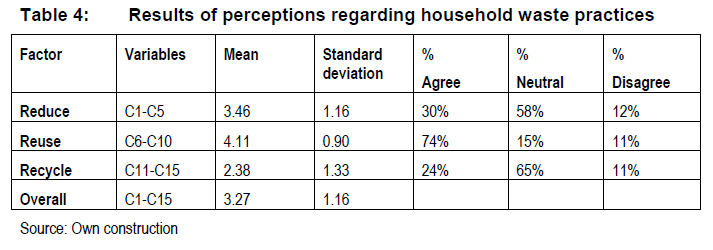
Table 4 shows the descriptive statistics for perceptions regarding household waste practices.
It appears that the overall mean score relating to the general perceptions regarding household waste management practices cluster around the neutral point (3.27) on the five-point Likert-scale with a large variation around the mean scores (standard deviation of 1.16). It appears that respondents agree mostly with reusing practices (highest mean score of 4.11) thus agreeing slightly (74%). The results reflect that most of the respondents (65%) are neutral towards the statements about recycling practices and obtained the lowest mean score (2.38). Regarding reduce practices, 58% of the respondents were neutral and obtained a mean score of 3.46. Engledow (2005) confirms that if it is possible to reduce the amount of waste generated initially, then it would be less of a problem to dispose of it. Furthermore, Medina (2010) states that the highest priority in an integrated waste management system is often given to waste prevention. These results correlate with research done by Abdul-Rahman (2014:2) stating that the process of reusing begins with the assumption that used materials can be a resource rather than refuse and that individuals can reuse materials at household level through various methods, such as reusing shopping bags, donating old items to charities. These results strongly correlate with Yusof (2004:54), indicating that a persons' attitudes toward and knowledge about recycling play a major role in determining whether they recycle or not. Therefore, a positive attitude towards and efficient knowledge about recycling is essential for the successful implementation of an effective solid waste management system.
7. RECOMMENDATIONS AND MANAGERIAL IMPLICATIONS
According to Yusof (2004:54), a positive attitude towards and efficient knowledge about recycling is essential for the successful implementation of an effective solid waste management system. A key finding of the research done by Thomas et al. (2003:1) on people's attitudes and behaviour towards recycling is the need for and importance of information about recycling, stating that it is one of the main influences on people's attitudes and behaviour towards recycling and a key factor to increasing the rates of recycling.
Additionally, Bolaane (2006:731-740) confirms that the success of recycling initiatives is dependent on individuals experience and knowledge about recycling coupled with a change in attitude towards such issues. Furthermore, as South Africa is a developing nation it is important to take into account a number of socio-economic factors when implementing any waste management system (Poswa 2004:1).
Regarding general perceptions of environmental sustainability, it is recommended that households: develop a deep concern for environmental issues and realises that mankind is often abusing the environment; enlighten themselves by viewing news articles regarding waste management and environmental problems; view waste management as an essential part of their daily living; realise that insufficient collection of waste could lead to significant problems (e.g. pollution and health risks) and be mindful for the impact of their daily living with regards to the generating and/or disposing of household waste.
Based on attitudes regarding household waste management, consumers and households should:
• Strive to recycle, reduce and reuse products in their daily living as far as possible.
• Recognise recycling as a positive and efficient solution to the on-going environmental issues mankind face.
• Realise that they could be mentally and emotionally rewarded through the act of recycling as being regarded as a custodian of the environment.
• Refrain from dumping in public open spaces/vacant land or the burning of waste during non-collection of waste.
• Have sufficient knowledge about household waste management by being informed (e.g. how to sort recyclables and where to recycle waste).
• Know and adhere to all regulations and laws regarding waste management.
• Strive to make household waste conveniently, cost-effective and time-saving.
• Realise that household waste disposal is not the sole responsibility of the local authorities only but rather a co-responsibility to be shared with all role players.
• Be sensitive and alert that socio-economic factors (e.g. illiteracy, poverty, and irresponsible waste management) have the potential to impact on an individuals' attitudes towards recycling and waste management.
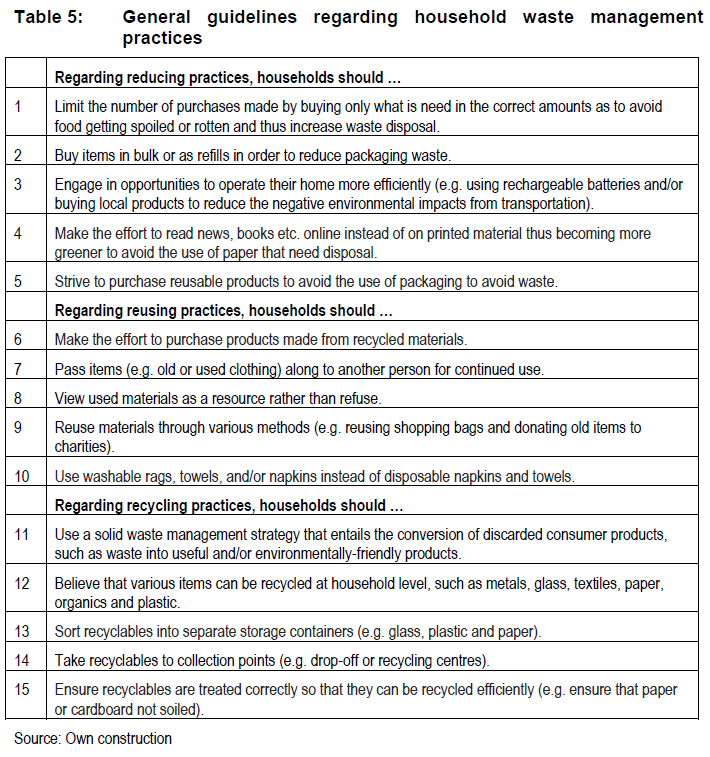
Table 5 provides some general guidelines regarding household waste management practices.
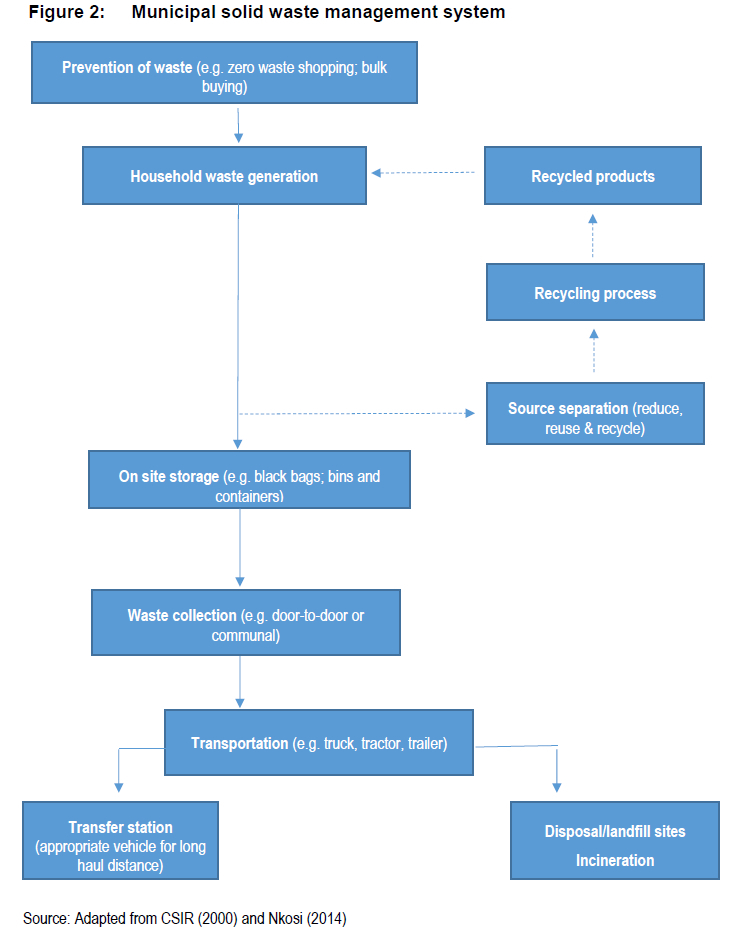
Figure 2 illustrates and provides a suggested model for a municipal solid waste management system from waste generation to landfill sites and the role that individuals or households could play in the waste cycle. The ideal scenario being the prevention of waste through various practices such as zero waste shopping and bulk purchasing (large order of the same item). Good (2014:Internet) explains that zero waste shopping is concerned with the elimination of all unnecessary waste during an individual's shopping experience and is ultimately a form of waste prevention practiced by consumers.
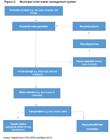
It is thus clear from the waste cycle that households play a key role in waste generation, the recycle process and on-site storage. The municipality role's begins at the waste collection stage. It is therefore important that waste is collected from all sources as efficiently as possible, and disposed of in controlled disposal facilities.
8. SHORTCOMINGS OF THE RESEARCH
The study was undertaken solely within NMB, situated in the Eastern Cape region of South Africa and is therefore not a reflection of all areas, particularly smaller towns and rural areas in South Africa. Another major shortcoming of this research relates to the collection of primary data. The database from which the sample was randomly selected was not necessarily representative of all households in all residential areas of NMB. Furthermore, several individuals were reluctant to complete the questionnaire and several of the respondents did not complete the questionnaire.
9. CONCLUSIONS
Previous studies have indicated that there is often a correlation between an individual's attitudes towards recycling and their socio-economic status. Factors such as rapid urbanisation, increasing population growth and industrialisation, increased consumption of food and electricity, as well as changing lifestyles have caused dramatic increases in the amount of waste generated by societies, thus creating a serious problem for both developing and developed countries. The recycling of household waste can have a significant effect on reducing these problems and help move societies towards sustainable living. Recycling reduces the need for raw materials and thereby contributes to saving raw materials and lessening humans' impact on the environment.
Main findings from the empirical investigation are outlined below:
• Overall results indicated that consumers or households generally have neutral perceptions (indifferent) regarding environmental sustainability.
• Knowledge of effects obtained the highest mean score of the variables regarding perceptions of sustainability, showing that households agree slightly with the possible damaging effects of not managing household waste effectively.
• It appears that respondents are indifferent regarding aspects of having a concern for the environment and having knowledge of waste management practices. Future educational programmes and campaigns should thus focus on enlightening households on these aspects of environmental sustainability.
• Overall results show that households have neutral perceptions regarding consumer attitudes towards household waste management.
• Influencing factors on recycling participation obtained the highest mean score and indicates that households tend to agree slightly with aspects such as: waste management should be convenient, recycling should be cost-effective for individuals, waste disposal and recycling sites should be easily accessible, household waste management should not be a time consuming activity and incentives would encourage individuals to recycle.
• General beliefs regarding effective waste management and recycling and knowledge/awareness of recycling obtained the lowest mean scores and shows that households are indifferent towards these aspects.
• It appears that respondents agree mostly with aspects of reusing witch obtained the highest mean score whilst it shows that households are neutral towards aspects of recycling and reducing practices.
It thus appears that waste management in South Africa has in the past been uncoordinated and poorly funded. Key issues that need to be addressed include: inadequate waste collection services for a large portion of the population, illegal dumping, unlicensed waste management activities (including unpermitted disposal facilities), a lack of airspace at permitted landfills, insufficient waste minimisation and recycling initiatives, a lack of waste information, lack of regulation and enforcement of legislation and limited waste-related legislation. The steps in the waste management hierarchy, which is the overall approach that informs waste management in South Africa, consists of options for waste management during the lifecycle of waste, arranged in descending order of priority: waste avoidance and reduction, re-use and recycling, recovery, and treatment and disposal as the last resort. The rapidly changing social and environmental landscape imply that traditional mechanised methods of waste collection have to be rethought and adapted to changing times. Rapid urbanisation, population growth and the ability of people to pay for the service are also major influencing factors. Improvements in community health and demands for a better service, linked to environmental concerns, are factors that could significantly impact on waste management. Tripathi, Tyagi, Vivekanand, Bose and Suthar (2020) conclude that it should be clear that the COVID-19 pandemic conditions have influenced the collection and disposal of waste requiring stringent and flexible waste disposal policies to prevent the transmission of the virus through solid waste produced from households.
The following extract seems to be appropriate to conclude this article with:
"Solid waste mismanagement is a growing environmental hazard ... human activities generate waste and how these wastes are handled, stored, collected and disposed of could pose risks to the environment and to public health... general consensus in literature that household solid waste generation is directly linked to an area's socio-economic indicators ... inefficiency of most growing cities' waste management systems can be partly attributed to insufficient information on waste production, handling and sorting. Households are at the centre of solid waste generation... Research into the effects of both household demographics and socio-economic factors and their important link with household waste management behaviour is key to understanding the vulnerability of any city to solid waste mismanagement and environmental hazards." (Tsheleza, Ndhleve, Kabiti, Musampa & Nakin 2019:632)
ACKNOWLEDGEMENTS
Recognition is hereby given to Mr J Hancocks and Mr G Dawson for conducting the empirical study.
REFERENCES
- ABDUL-RAHMAN F. 2014. Reduce, reuse and recycle: Alternatives for waste management. New Mexico: New Mexico State University.
-
ADELEYE A, ADEWUNMI A, OLOGUNDUDU, A & OLOLADE IA. 2012. Effects of household wastes on surface and underground waters. International Journal of Physical Sciences 4(1):22-29. (DOI:https://doi/org/10.1007/s10930-020-09890-4; downloaded on 15 May 2018.
» https://doi/org/10.1007/s10930-020-09890-4 - )
- AJITHA PS. 2014. A study on the effectiveness of solid waste management of municipalities in Kerala. Mahatma Gandhi University: Kottayam.
-
AJZEN I. 1991. The theory of planned behaviour. Organisational Behaviour Human Decision Process 50:179-211. (DOI:https://doi/org/10.1016/0749-5978(91)90020-T; downloaded on 15 May 2018.
» https://doi/org/10.1016/0749-5978(91)90020-T -
)
» https://doi.org/10.1016/j.resconrec.2008.11.003 -
AJZEN I. 2006. Constructing a Theory of Planned Behavior Questionnaire: Conceptual and methodological considerations. [Internet:www.people.umass.edu/aizen/pdf/tpb.measurement.pdf; downloaded on 28 May 2018.
» www.people.umass.edu/aizen/pdf/tpb.measurement.pdf -
]
» https://doi/org/10.1371/journal.pntd.0000693 -
ARSOVA L, VAN HAAREN R, GOLDSTEIN N, KAUFMAN SM & THEMELIS NJ. 2008. The state of garbage in America. BioCycle 49(12):22. [Internet:www.biocycle.net/images/art/1010/bc101016_s.pdf; downloaded on 21 April 2018.
» www.biocycle.net/images/art/1010/bc101016_s.pdf -
]
» www.iol.co.za/dailynews/consumer/recycling-starts-at-home-1981130 - AVERDA. 2018. How to recycle properly. Centurion: Averda.
-
BENDAK S & ATTILI AB. 2017. Consumer attitude and behavior towards domestic waste recycling in developing countries: A case study. OMICS International. [Internet:www.omicsonline.org/open-access/consumers-attitude-and-behavior-towards-domestic-waste-recycling-indeveloping-countries-a-case-study-2475-7675-1000124.pdf, downloaded on 10 March 2018.
» www.omicsonline.org/open-access/consumers-attitude-and-behavior-towards-domestic-waste-recycling-indeveloping-countries-a-case-study-2475-7675-1000124.pdf -
]
» https://doi/org/10.1080/13549839.2018.156165 - )
-
BOLAANE B. 2006. Constraints to promoting people centred approaches in recycling. Habitat International 30:731-740. (DOI:https://doi/org/10.1016/j.resconrec.2008.11.003; downloaded on 16 March 2018.
» https://doi/org/10.1016/j.resconrec.2008.11.003 -
)
» https://doi/org/10.3390/resources6040057 -
)
» https://doi.org/10.1016/j.resconrec.2020.105111 - CHANDRA R. 2015. Environmental waste management. Boca Raton: CRC Press.
- ]
- COUNCIL FOR SCIENTIFIC AND INDUSTRIAL RESEARCH (CSIR). 2000. Guidelines for human settlement planning and design: Solid waste management. Pretoria: CSIR Building and Construction Technology.
- DEPARTMENT OF ENVIRONMENTAL AFFAIRS. 2011. Addressing challenges with waste service provision in South Africa, National Domestic Waste Collection Standards. Cape Town: Department of Environmental Affairs.
- DEPARTMENT OF ENVIRONMENTAL AFFAIRS (DEA). 2012. National waste information baseline report. Pretoria: Department of Environmental Affairs.
-
)
» https://doi/org/10.1177/0734242X09351331 -
DU TOIT J, WAGNER C & FLETCHER L. 2015. Factors affecting household recycling behaviour in townhouses in Pretoria, South Africa. [Internet:www.irbnet.de/daten/iconda/CIB_DC28835.pdf; downloaded on 10 June 2018.
» www.irbnet.de/daten/iconda/CIB_DC28835.pdf - ]
-
GIUSTI L. 2009. A review of waste management practices and their impact on human health. Waste Manage 29(8):2227-2239. (DOI:https://doi/org/10.1016/j.wasman.2009.03.028; downloaded on 18 April 2018.
» https://doi/org/10.1016/j.wasman.2009.03.028 -
)
» http://doi/org/10.1177/0734242X12457117 -
)
» www.issuu.com/glen.t/docs/wastecon_2012_low_res -
GOOD K. 2014. What in the world is a zero waste grocery store and why does the U.S. need one (or many)? [Internet:www.onegreenplanet.org/environment/america-needs-a-zero-waste-grocery; downloaded on 02 December 2020.
» www.onegreenplanet.org/environment/america-needs-a-zero-waste-grocery - ]
- )
-
IOANNOU T, ZAMPETAKIS A & LASARIDI K. 2013. Psychological determinants of household recycling intention in the context of the theory of planned behaviour. Fresenius Environmental Bulletin 22(7a):2035-20141. [Internet:www.academia.edu/23722893/Psychological_determinants_of_household_recycling_intention_in_the_context _of_the_theory_of_planned_behaviour; downloaded on 19 April 2018.
» www.academia.edu/23722893/Psychological_determinants_of_household_recycling_intention_in_the_context _of_the_theory_of_planned_behaviour -
]
» www.sawic.environment.gov.za/?menu=46 - JOSEPH K & NAGENDRAN R. 2007. Top down and bottom up approach for sustainability of waste management in developing countries. Sardinia, Italy: Environmental Sanitary Engineering Centre.
- KAMARA AJ. 2006. Household participation in domestic disposal and recycling in the Tshwane metropolitan area: An environmental perspective. Unpublished MEd thesis. Pretoria: University of South Africa.
- LANDY FJ & CONTE JM. 2007. Work in the 21st century: An introduction to industrial and organisation psychology. 2nd edition. Australia: Blackwell Publishing.
-
LEHMANN S. 2011. Optimizing urban material flows and waste streams in urban development through principles of zero waste and sustainable consumption. Sustainability 3(1):155-183. (DOI:https://doi/org/10.3390/su3010155; downloaded on 18 April 2018.
» https://doi/org/10.3390/su3010155 -
)
» https://doi/org/10.4102/jamba.v11i1.632 -
LOHRI. 2014. Financial sustainability in municipal solid waste management - costs and revenues in Bahir Dar, Ethiopia. Waste Management 34:542-552. (DOI:https://doi/org/10.1016/j.wasman.2013.10.014; downloaded on 18 April 2018.
» https://doi/org/10.1016/j.wasman.2013.10.014 -
)
» https://unctad.org/news/environmental-impacts-coronavirus-crisis-challenges-ahead - MAKAU ME. 2006. A household solid waste recycling programme in Stellenbosch: Householders attitudes and willingness to participate. Unpublished dissertation for degree of Master of Arts, University of Stellenbosch.
- MAKGAE M. 2011. Key areas in waste management: A South African perspective. Integrated waste management. London: IntechOpen.
- MCDOUGALL FR, WHITE PR, FRANKE M & HINDLE P. 2001. Integrated solid waste management: A life cycle inventory. Oxford: Blackwell Science.
- MEDINA M. 2010. Solid wastes, poverty and the environment in developing country cities. WIDER Working Paper 2010/023. Helsinki, Finland: World Institute for Development Economics Research.
- )
- MILLER G. 2002. Living in the environment: Principles, connections and solution. 12th Edition. Australia: Brooks/Cole.
-
NELSON MANDELA METROPOLITAN MUNICIPALITY. 2005. Integrated waste management plan 2005-2010. [Internet:www.http://sawic.environment.gov.za/documents/263.pdf; downloaded on 19 April 2018.
» www.http://sawic.environment.gov.za/documents/263.pdf - ]
- NKOSI LF. 2014. An evaluation of the municipal waste management system within the city of Tshwane Metropolitan Municipality in Mamelodi East Township, Gauteng Province, South Africa. University of Pretoria. (Unpublished Master of Public Health dissertation.
- )
-
ORGANISATION OF ECONOMIC COOPERATION AND DEVELOPMENT (OECD). 2003. Glossary of statistical terms: Waste. [Internet:www.stats.oecd.org/glossary/detail.asp?ID=2896; downloaded on 20 May 2016.
» www.stats.oecd.org/glossary/detail.asp?ID=2896 - ]
- )
- OELOFSE S & STRYDOM WF. 2010. The trigger to recycling in a developing country - in the absence of command-and-control instruments. Proceedings Waste 2010: Waste and resource management - Putting strategy into practice. Stratford-upon-Avon, Warwickshire, England, 28-29 September 2010.
- ]
-
PETCO. 2018. Where will you recycle? [Internet:www.petco.co.za/where-will-you-recycle/; downloaded on 15 May 2018.
» www.petco.co.za/where-will-you-recycle/ - ]
- )
- RAMACHANDRA TV. 2009. Municipal solid waste management. New Delhi: TERI Press:
-
SARKODIE SA & OWUSU PA. 2020. Impact of COVID-19 pandemic on waste management. Environment, Development & Sustainability. (DOI:www.doi.org/10.1007/s10668-020-00956-y; downloaded on 13 December 2020.
» www.doi.org/10.1007/s10668-020-00956-y - )
- ]
-
SRIVASTAVA V, SINGH P & SINGH R. 2014. Urban solid waste management in the developing world with emphasis on India: challenges and opportunities. Reviews in Environmental Science and Bio/Technology 14(2):317-337. (DOI:https://doi/org/10.1007/s11157-014-9352-4; downloaded on 13 March 2018.
» https://doi/org/10.1007/s11157-014-9352-4 - )
- STATISTICS SOUTH AFRICA. 2018. Only 10% of waste recycled in South Africa. Pretoria: Stats SA.
- STRUWIG FW & STEAD G. 2013. Research: Planning, designing and reporting. 2nd edition. Cape Town: Pearson.
- STRYDOM WF. 2012. The continued quest to better recycling behaviour. Proceedings WasteCon 2012. East London: Institute of Waste Management of Southern Africa. 9-12 October 2012.
- TASHERZADEH M & RICHARDS T. 2016. Resource recovery to approach zero municipal waste. Boca Raton: CRC Press.
- THOMAS C, SLATER R & YOXON M. 2003. What makes people recycle? An evaluation of attitudes and behaviour in London Western Riverside. Melbourne, Australia. (International Solid Waste Association World Congress, 9-14 November 2003.
- )
-
TONGLET M, PHILLIPS PS & READ AD. 2004. Using the theory of planned behaviour to investigate the determinants of recycling behaviour: A case study from Brixworth, UK. Resources, Conservation and Recycling 41:191-214. (DOI:http://doi/org/10.1016/j.resconrec.2003.11.001; downloaded on 13 March 2018.
» http://doi/org/10.1016/j.resconrec.2003.11.001 - )
-
TREEVOLUTION. 2018. Guide to recycling in South Africa. [Internet:www.treevolution.co.za/guide-to-recycling-in-sa/; downloaded on 13 March 2018.
» www.treevolution.co.za/guide-to-recycling-in-sa/ - ]
-
TRIPATHI A, TYAGI KV, VIVEKANAND V, BOSE P & SUTHAR S. 2020. Challenges, opportunities and progress in solid waste management during COVID-19 pandemic. Case Studies in Chemical and Environmental Engineering 2:1-7. (DOI:https://doi/org/10.1016/j.cscee.2020.100060; downloaded on 02 December 2020.
» https://doi/org/10.1016/j.cscee.2020.100060 - )
- )
-
TYAGI S, GARG N & PAUDEL R. 2014. Environmental degradation: Causes and consequences. European Researcher81(8-2):1491-1492. (DOI:https://doi/org/10.13187/er.2014.81.1491; downloaded on 13 March 2018.
» https://doi/org/10.13187/er.2014.81.1491 - )
- ]
-
VAN EWIJK S & STEGEMANN J. 2016. Limitations of the waste hierarchy for achieving absolute reductions in material throughput. Journal of Cleaner Production 132:122-128. (DOI:https://do/.org/10.1016/j.jclepro.2014.11.051; downloaded on 18 April 2018.
» https://do/.org/10.1016/j.jclepro.2014.11.051 - )
-
WASTE MANAGEMENT. 2017. Reduce. [Internet:http://www.wm.com/location/california/san-diego/city/environment/reduce.jsp; downloaded on 21 April 2018.
» http://www.wm.com/location/california/san-diego/city/environment/reduce.jsp - ]
- WILSON J. 2010. Essentials of business research. New Delhi: Sage Publications.
- WILLIAMS P. 2005. Waste treatment and disposal. 2nd edition. Chichester: John Wiley & Sons.
- YUSOF MBM. 2004. The effects of socio-economic characteristics on household wastes in Johor Bahru district. University of Technology Malaysia. (Unpublished DPhil thesis.
- )
-
WORLD BANK. 2018. What a waste 2.0: A global snapshot of solid waste management to 2050. Washington: International Bank for Reconstruction and Development / The World Bank. [Internet:www://openknowledge.worldbank.org/handle/10986/30317; downloaded on 13 Mach 2018.
» www://openknowledge.worldbank.org/handle/10986/30317 - ]
- ZIKMUND WG, BABIN BJ, CARR JC & GRIFFON M. 2010. Business research methods. 8th edition. SouthWestern: Cengage Learning.
-
ZURBRUGG C. 2003. Solid waste management in developing countries. Dübendorf: SANDEC/EWAG. [Internet:www.eawag.ch/fileadmin/Domain1/Abteilungen/sandec/publikationen/SWM/G eneral_Overview/Zurbruegg_2002_SWM_DC.pdf; downloaded on 18 April 2018.
» www.eawag.ch/fileadmin/Domain1/Abteilungen/sandec/publikationen/SWM/G eneral_Overview/Zurbruegg_2002_SWM_DC.pdf