The entrepreneurial orientation of college students in a struggling economy context
Abstract
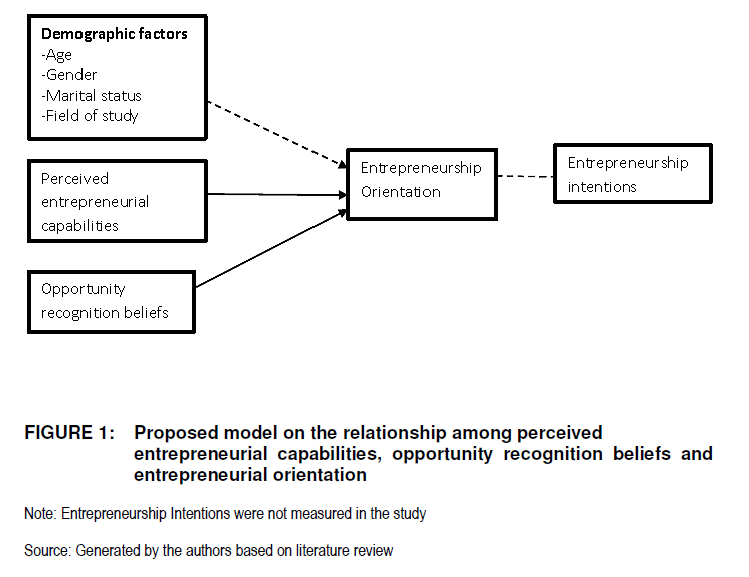
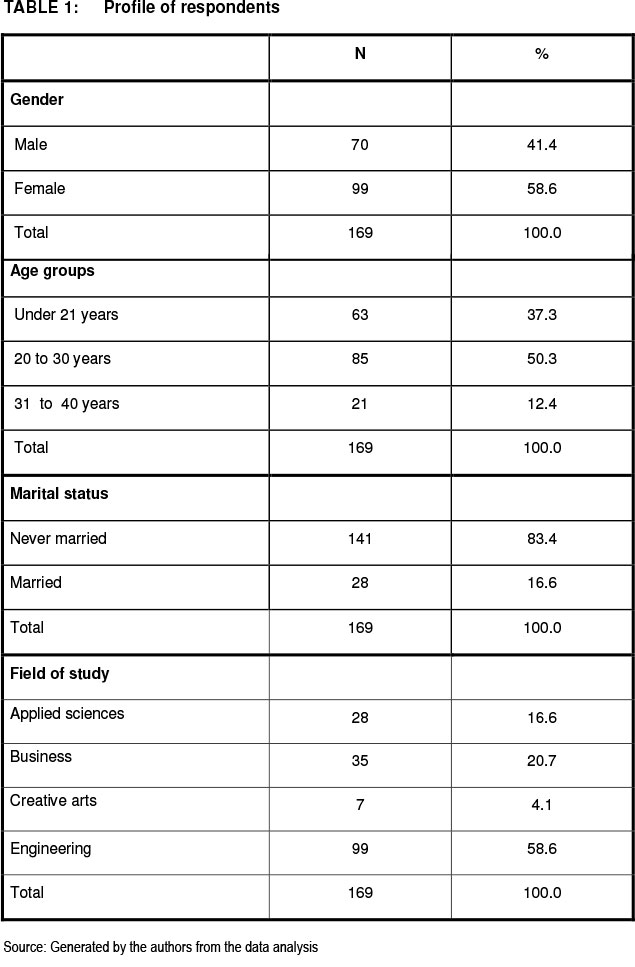
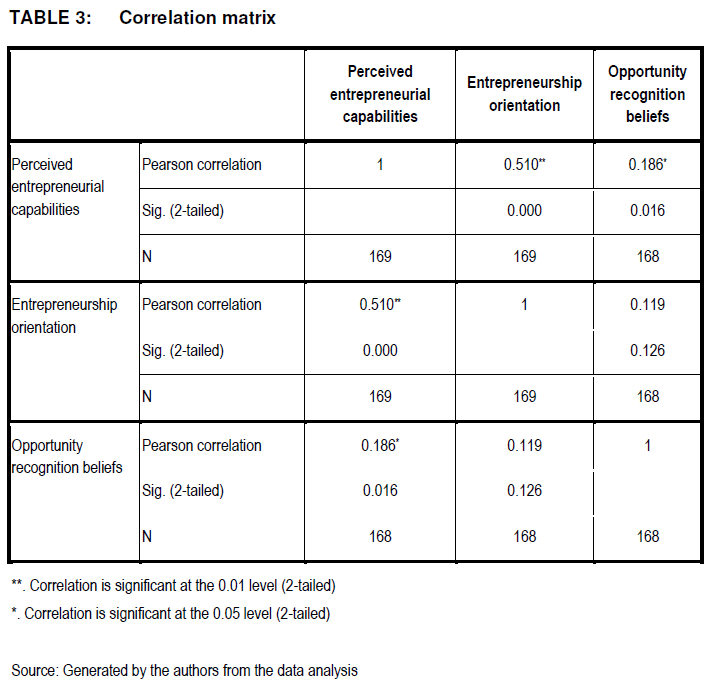
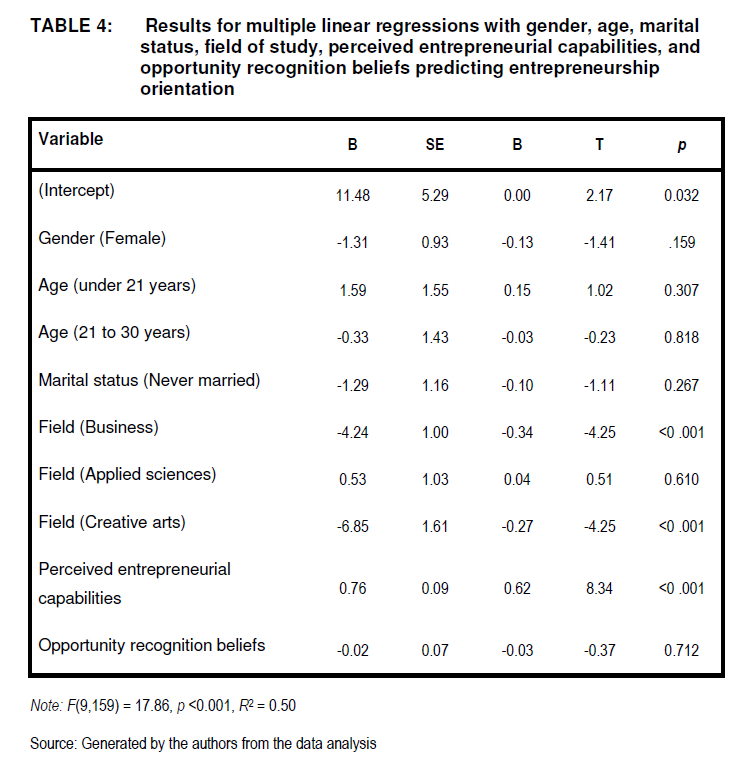
This study investigates the influence of perceived entrepreneurial capabilities and opportunity recognition beliefs on the entrepreneurial orientation of Technical and Vocational Education and Training (TVET) students at a particular polytechnic college in Zimbabwe. A quantitative survey was conducted among 169 polytechnic college students to establish their perceived entrepreneurial capabilities, opportunity recognition beliefs, and entrepreneurial orientations. Correlation and multiple regression analysis were used to analyse the corpus of quantitative data. The results partially confirmed the researchers' postulation that students' entrepreneurial orientations were directly linked to their perceived entrepreneurial capabilities and opportunity recognition beliefs. An implication for entrepreneurship educators and policy-makers is that the effectiveness of entrepreneurship education interventions for future entrepreneurs depends on the capacity of training programmes to integrate and focus on perceived entrepreneurial capabilities and opportunity recognition beliefs of students. The originality of the study lies in the re-constitution of individual opportunity recognition beliefs and perceived entrepreneurial capabilities concepts and a focus on potential entrepreneurs (that is, students) enrolled at a TVET institution in an economically distressed country. This is a previously unexplored research area since much research on entrepreneurial orientation has focused on firms in the developed world as their unit of analysis.
emerging economies; entrepreneurship education; entrepreneurship orientation; opportunity recognition beliefs; perceived entrepreneurial capabilities
 Thumbnail