'This thing is alive': Cosmic encounter and epistemic liberation in Wesens (2020)
Abstract
This article examines Wesens (Muller 2020), a South African found-footage film set during the Space Race, as a site of Afrofuturist critique and decolonial inquiry. It argues that the film reconfigures the UFO encounter from a narrative of extraterrestrial rupture into an ontological confrontation with suppressed indigenous cosmologies. Drawing on Afrofuturist theory, film studies, and decolonial thought, the analysis situates Wesens within the Cold War techno-scientific imaginary, where outer space is framed as a frontier of conquest and progress. Against this, the film deploys archival aesthetics, mediated visuality, and sonic dissonance to expose regimes of surveillance, epistemic control, and apartheid-era anxieties around race, power, and sovereignty. The enigmatic object at the centre of the narrative is read not as alien intrusion, but as ancestral return, with the emergence of Khoisan figures whose appearance destabilises distinctions between alienness, indigeneity, and being itself. This process culminates in the appearance of a Khoisan woman who identifies herself as Kaang, staging a decolonial rupture that challenges colonial notions of knowledge, being, and historical time. In this way, Wesens demonstrates how Afrofuturism in African cinema functions as a form of epistemic disobedience, reclaiming suppressed pasts to imagine alternative, decolonial futures.
Afrofuturism; decoloniality; South African cinema; found footage film; Khoisan cosmology; epistemic disobedience
Introduction
A decade after District 9 (Blomkamp 2009) reimagined the extraterrestrial encounter through the figure of the alien "prawn", Wesens (Muller 2020) turns the question of alienness inward. Set in apartheid1 South Africa during the Space Race, the film initially appears to mobilise familiar speculative fiction conventions: a mysterious object crashes onto a remote Karoo farm, and a State-commissioned investigative unit arrives to examine its possible extraterrestrial origins. Yet Wesens gradually destabilises the very category of the alien. Unlike the explicitly extraterrestrial visitors of District 9, the enigmatic presence in Wesens becomes increasingly entangled with ontological questions. The very title signals this slippage. "Wesens" carries multiple meanings in Afrikaans, including "beings", "creatures", "nature", and "essence" (Kromhout 2000:165). The authoritative HAT further defines "wese" as 'that which exists' (Odendaal & Gouws 2005:1390). While the film initially invokes the second definition through the suggestion of alien "beings", it ultimately becomes a meditation on ontology: on what it means to exist and to inhabit the world.
This article argues that Wesens reconfigures the unidentified flying object (UFO) encounter from a narrative of extraterrestrial rupture into an ontological confrontation with suppressed indigenous cosmologies. Drawing on Afrofuturism, decolonial theory, and film studies, I argue that the film transforms the speculative encounter into a form of "epistemic disobedience" (Mignolo 2011:9) in Walter Mignolo's (2011:120) sense, 'delinking from the magic of the Western idea of modernity, ideals of humanity, and promises of economic growth and financial prosperity'. Wesens unsettles colonial distinctions between the human and alien, modernity and myth, science and cosmology. In doing so, it 'opens a parallel road to knowing, sensing, believing, and living' (Mignolo 2011:161) that reframes speculative cinema as a site through which indigenous futurity and alternative modes of being might emerge.
Jean-Pierre Bekolo's (2023:382) conception of cinema as a speculative medium also situates Wesens within a broader Afrofuturist tradition. Mark Dery (1993) famously defines Afrofuturism as speculative fiction that addresses black experience and historical erasure through the language of technoculture and imagined futures, questioning whether communities whose histories have been 'deliberately rubbed out' (Dery 1993:736) can imagine possible futures at all. Afrofuturism has subsequently expanded beyond Dery's original formulation to encompass a broad range of artistic practices that reimagine black histories, identities, and futures through speculative modes.2 As Adriano Elia (2015:83) notes, Afrofuturist texts challenge dominant historical narratives by recovering suppressed pasts and constructing alternative futures in which people of African descent occupy central rather than marginal positions:
Afrofuturism challenges the Western stereotype of African backwardness and the notion of Africa as a dystopia. The habitual exclusion of people of African descent from discourses regarding technology and the future is the result of intimidating and pessimistic predictions of the African social reality in the decades to come held by a part of the Western white establishment (Elia 2015:85)
From this perspective, both District 9 and Wesens employ the figure of the alien to interrogate histories of exclusion, although they do so in markedly different ways. In District 9, the extraterrestrial "prawns" operate as an overt allegory for racialised and migrant Others in post-apartheid South Africa, exposing the persistence of colonial segregation and xenophobia. District 9 was a global commercial success, introducing mainstream audiences to South African speculative cinema (James 2009).3 Although often celebrated for its critique of apartheid and contemporary xenophobia, its representation of Nigerians reproduces problematic racialised stereotypes, associating them with organised crime, exploitation, and occult practices (Heller-Nicholas 2011:139).
Wesens, however, complicates this framework by turning the alien encounter inward. Rather than presenting alterity as external or extraterrestrial, the film refracts alienness through Khoisan cosmology and, finally, the figure of Kaang, foregrounding indigenous epistemologies historically erased by colonial modernity. The question is no longer how humanity responds to the alien Other, but whether colonial modernity has rendered aspects of humanity itself alien to its own history. In this sense, Wesens mobilises Afrofuturist speculation not through techno-utopian futurity, but through the recovery of suppressed cosmologies and alternative modes of being. Yet Wesens does not engage questions of alienness in an abstract sense. The film situates its ontological inquiry within a specific historical moment: the late 1960s Space Race, when the superpowers imagined outer space as the ultimate frontier of scientific progress, technological mastery, and geopolitical competition.
By locating its narrative within this Cold War imaginary, Wesens places indigenous cosmology into direct confrontation with the dominant futurity of the period, one grounded in technoscientific modernity and the conquest of new frontiers. During a ground test rehearsal in January 1967, a fire inside the Apollo I capsule killed all three astronauts (Neill 2023). As Major Martinus Viljoen (Rayno von Schlicht) reads the newspaper report aloud while the four-person field team drives along a dusty Karoo road toward Sakkie's farm, the comparison between the confined capsule and the cramped interior of the vehicle becomes striking. 'We choose to go to the Moon, not because it is easy, but because it is hard,' Martinus reads in English, quoting American President John F. Kennedy's 12 September 1962 speech (Bizony 2019).
Wesens consequently frames technoscientific modernity not through triumphal spectacle, but through precarity, confinement, and epistemic uncertainty.4 Rather than presenting UFOs as objects of transcendence or wonder, the film foregrounds the dangers and limitations accompanying humanity's attempts to encounter the unknown. This framing situates Wesens within the broader legacy of speculative fiction cinema, a genre long concerned with encounters between humanity and the unknown, whether through extraterrestrial contact, technological transformation, or visions of alternative futures. Films such as Close Encounters of the Third Kind (Spielberg 1977) exemplify what David Hartwell (1984:54) identifies as the genre's 'sense of wonder', presenting alien encounter as a moment of revelation and transcendence.5 Wesens initially appears to participate in this tradition through its mysterious object and extraterrestrial premise. However, rather than culminating in contact with an external alien intelligence, the film redirects the encounter toward suppressed indigenous histories and cosmologies. The unknown is not located in outer space, but within the colonial archive itself.6
The tension between technoscientific aspiration and ideological containment is reflected in Muller's use of found footage, which gives the viewer the impression that the events on-screen are real and were recorded incidentally (Dercksen 2020). Found-footage film presents fictional events as supposedly recovered recordings, later shown to the audience with minimal mediation. Closely associated with mockumentary filmmaking and popularised by films such as The Blair Witch Project (Myrick & Sánchez 1999), the form frequently foregrounds instability, limited perspective, and the illusion of authenticity by framing fictional narratives as documentary records and through stylistic devices such as handheld camerawork, static long takes, amateur framing, surveillance imagery, and simulated documentary footage, thereby destabilising the boundary between the film and the surrounding world (Sayad 2016:43). Often linked to horror and speculative fiction, found footage destabilises conventional cinematic realism by blurring the boundary between archival evidence and constructed narrative.
Wesens extends this instability through its paratextual framing.7 A fictitious media statement on the film's official website8 recounts how a vintage camera collector acquired a box of old 8 mm and 16 mm film reels and audio spools from a deceased estate. According to the statement, the footage documents Republic Intelligence agents investigating a mysterious object that landed on a Karoo farm on 3 December 1967, before it was confiscated by the National Intelligence Agency (NIA), which imposed a global ban on its release. The archive consequently becomes a site of epistemic control, reflecting what Aníbal Quijano (2007:171) terms the 'coloniality of power', which refers to the persistence of colonial structures of power beyond the end of formal colonialism, particularly through racial classification and the unequal organisation of knowledge, labour, and social relations. The film's technical strategies reinforce this illusion of archival authenticity. The alternating use of the film gauges reflects the differing viewpoints of Kuyper and Conradie, while Dutch-tilt compositions destabilise visual orientation, so that characters rarely occupy a coherent cinematic frame. Simulated film leaders, muted colour grading, and grainy textures further create the impression of recovered historical footage (Van Nierop 2020).9The result is a film in which events do not always 'fit neatly, as in a "normal" movie' (Van Nierop 2020). These techniques are not merely aesthetic; they foreground the instability of perception itself and align form with the film's broader interrogation of knowledge, authority, and truth.
Wesens simultaneously maintains a reflexive dialogue with South Africa's media history and speculative fiction cinema. Muller notes that Wesens uniquely merges the Karoo landscape with speculative fiction (Dercksen 2020). This positioning is significant within apartheid South Africa's mediated isolation, where access to global popular culture became entangled with anxieties surrounding exclusion from the international community (Loader 2024:97). The film consequently gestures toward an Afrofuturist politics of reimagination in which suppressed histories are not simply recovered but reframed through speculative encounter. Kuyper's discussion of the Moon landing in relation to humanity's inability to reach the nearest star reinforces this tension between technological aspiration and existential limitation. The Space Race, the Cold War competition between the United States and the Soviet Union to achieve milestones in space exploration, may promise futurity and transcendence, yet Wesens repeatedly returns this cosmic ambition to the confined political realities of apartheid South Africa, exposing the limits of both technoscientific modernity and ideological isolationism.
From the farm to the moon
The film's opening movement establishes the epistemic tensions that will structure the encounter. Wesens initially unfolds inside the field-unit car en route to investigate a mysterious object on the farm of Sakkie Haarhoff (Albert Maritz). One of the film's most striking images is Kuyper's 16 mm camera lens pointed directly at the viewer. When Kuyper turns his camera toward the viewer, the subsequent scene is through Conradie's 8 mm lens (Figure 1).
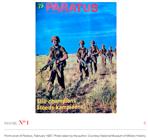
The viewer's perspective is doubly mediated by the in-diegesis 8 mm camera and the film's editing frame. The lens's round shape mirrors the unidentified object (Figure 2), and initiates an ongoing interrogation of surveillance and the supposed neutrality of technological observation.

The visual echo between the camera and the object hints at an unsettling parallel. Both embody forms of State surveillance and alien unknowability, each opaque in their claims to truth. Wesens implicates the viewer in the act of observing and mediating. The interplay between cameras and perspectives generates a compelling dynamic among the four men: Kuyper first films Martinus (passenger) and Andries (driver), then pans left to reveal Conradie, adjusting sound equipment. He lowers his camera, and the next shots are captured by Conradie's smaller 8 mm camera.
Wesens juxtaposes spaceflight and futurity with the persistence of the past. Kuyper remarks that 'Boesmanne' inhabited the area 300 years earlier. Now recognised as a derogatory term, 'Bushmen' was the colonial designation for the Khoisan, Southern Africa's earliest hunter-gatherers (Badsha 2019). Colonial regimes exerted power through naming and categorisation, imposing racialised hierarchies that dehumanised indigenous peoples and legitimised dispossession, forced labour, and cultural erasure. Kuyper's reflection, 'Hierdie was hulle wereld' ('This was their world'), gestures toward a prior ecological and ontological relation to the land. As Mignolo (2011:334) argues, 'epistemic decolonization' is necessary to challenge Eurocentric knowledge systems and re-centre marginalised worldviews. This framing prepares the ground for the film's later reconfiguration of the "unknown" as something already embedded within the landscape.
The colonial narrative positions European arrival as the origin of knowledge and civilisation. Relegated to insignificance, the Khoisan are now recognised as one of humanity's oldest populations. Martinus's remark, 'Julle wetenskaplikes het ons in dieselfde kategorie as ape en orangoetangs en wat nog alles' ('You scientists have placed us in the same category as apes and orangutans and whatnot'), is persistent racialised scientific discourse. As "Man" [sic] plans to land on the moon as an evolutionary apex, 'die ape ... onder in die bome rondswaai' ('the apes ... swing in the trees'). The juxtaposition exposes the contradictions of a modernity that claims progress while reproducing dehumanising hierarchies.
Objects and Others
It is through the figure of the object that these tensions between history and epistemology begin to materialise most clearly. A major connection to the object occurs when Groep Twee's rendition of the traditional Afrikaans folk song 'Die Oukraalliedjie' (1967) starts to play on Andries's portable radio. The song is about a familiar campsite atop Pêrelberg, known as Oukraal, where farmers grazed cattle during the day and gathered them at the oukraal at night to protect them from wild animals (De Villiers & De Villiers 2022). The song reflects a nostalgia for simpler times, with lyrics evoking rural life, community, and a connection to the land (all characteristics of the former Khoisan).
What is notable about the campsite is how it comprises "n byna kringvormige bos van olienhoutbome met'n groot, byna eiervormige granietrots aan die westekant van die bos' ('a nearly circular grove of olive trees with a large, almost egg-shaped granite rock on its western side' (De Villiers & De Villiers 2022). The circular grove and ovoid rock at Oukraal become a prefiguration or ancestral echo of the alien object, subtly tying the landscape, memory, and encounter together. This is an inversion of the traditional "flying saucer", a term coined by Kenneth Arnold (cited by Geppert 2012b:336) when, on 24 June 1947, he reported '[n]ine bright saucer-like objects flying at "incredible" speed'. The object, then, does not signify rupture, but recognition; a return of what has been rendered invisible within colonial epistemologies.
Sakkie recounts sitting on the stoep with a brandy late one Friday night when a glowing object silently appeared in the sky. He fired two shots from his shotgun, causing the object to crash-land on the far side of the farm. The next morning, he and farm labourer Julie (Salmon van der Vyver) set out to investigate the site. What Sakkie describes is a classic UFO sighting, referred to as a 'close encounter' (Hynek 1972:115). With UFOs sighted as early as 1947, and quickly becoming 'a dominant theme in modern culture' (Petrescu et al 2017:81), the phenomenon is linked to the start of the Cold War, the possibility of nuclear extinction, and the dream of spaceflight post-Sputnik (Geppert 2012a:336).
Sakkie's encounter is grounded in speculative fiction tropes or militarised paranoia, but in a nostalgic song about rural life and a landscape imbued with symbolic resonance. Muller entangles the speculative with the material and cultural realities of the Karoo. The film thus reframes the alien through the lens of local memory and meaning, unsettling the colonial epistemology that separates the technological and extraterrestrial from indigenous life and landscape. The egg shape, evocative of birth and potential, can be read as a metaphor for decolonial futurity itself: unfamiliar not because it comes from elsewhere, but because the dominant (Western) gaze has forgotten or excluded its origins.
The field unit stabilises the encounter through familiar procedural and linguistic frameworks, interviewing all parties connected to the incident. Sakkie is informed to deliver his statement in English; Martinus assumes the role of the coloniser, demanding linguistic conformity to a standard of rationality and scientific authority that erases local context. Once the cameras roll, English becomes the language of legitimacy: of science, governance, and international diplomacy. The Cold War setting reinforces this logic, with the Russians as the Other and America symbolising technological supremacy.
The field unit encounters a 'large, almost egg-shaped granite rock' (De Villiers & De Villiers 2022) nestling in the landscape. Constable Botha admits, 'Ons kan nie kop of stert van hierdie ding uitmaak nie, julle' ('We cannot make head or tail of this thing, you guys'). Republic Intelligence, anticipating a Soviet threat, is equipped with a Geiger counter, signalling Cold War anxieties. Unexpectedly high radiation readings prompt the team to don protective gear and gas masks. Transformed into astronaut-like figures, Muller uses a familiar speculative fiction trope to reinforce ambiguity and epistemic disruption. The object is measured in feet, as South Africa only adopted the International Metric System (SI) on 5 July 1974, indicating its international isolation (Phillips 2014). By anchoring the object in scientific discourse, the field unit renders the unexplainable legible within a framework of American technoscientific hegemony. However, it reveals less about the object itself than about the limits of the epistemological systems brought to bear upon it.
Yet it is in Kuyper's response to the object that the film's most profound epistemic shift emerges. While the round, rock-like object discovered in the field does not resemble the glowing object Sakkie claimed to see hovering above his farmhouse, its inscrutability evokes the mystery surrounding UFOs and their cultural resonance. The scene recalls what Darko Suvin (1979:4) famously terms 'cognitive estrangement', the defamiliarising effect of speculative fiction that provokes wonder when confronting the strange and the unknown. This sense of wonder often transmutes into a desire for transcendence, particularly in the context of the Space Race, when the UFO phenomenon became entangled with both the promises and failures of cosmic exploration (Geppert 2012a:351). Geppert (2012a:339) states that 'the UFO phenomenon arose at the very beginning of what has sometimes been hailed as the "Golden Age of Spaceflight," and must be considered an integral element of a comprehensive, all-encompassing astroculture'.
Wesens reframes this legacy. Space exploration is not simply a scientific project, but an existential search for meaning; Kuyper's actions are an epistemic rupture. After setting up his camera, he removes his protective mask and slowly presses his face against the object's surface (Figure 3). Observation gives way to encounter, and knowledge is displaced by experience. This intimate bodily contact breaks with the field unit's rationalist, observational stance. It is an 'epistemic delinking' (Mignolo 2011:54) that resists intelligibility.10 The encounter is not with a foreign invader or celestial machine, but with transformation itself. Kuyper states: 'This thing is alive'. He uses English because he is recounting his experience for the official record:
I touched it. And there was just this silence. It was just black all around me ...And it was as if I was breaking through something. And I was breaking through ... And it was just this bright white light . all around me.
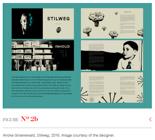
He confronts a form of being that unsettles the frameworks through which he has understood existence. In this moment, the film gestures toward Heidegger's concept of Dasein, not simply "being", but a mode of attunement in which humans interpret and situate themselves within the world (Gorner 2007:3). 'Being-in-the-world' (Gorner 2007:35) is thus not spatial but relational, an indivisible condition shaped by history and encounter. Kuyper's contact with the object, unmasked and unmediated, fractures his epistemic certainties and opens a space of unknowing. He does not observe the object; he enters its field of meaning. He does not name it; he experiences it. The film's title, Wesens ("Beings"), pluralises this moment, invoking not only the object's presence but the possibility of multiple ontologies. The encounter thus translates a philosophical question into cinematic form: how does one apprehend being when the structures of understanding begin to dissolve? It is the inverse of Wikus van der Merwe's encounter with an alien substance in District 9, which slowly transforms him into a "prawn" and a target of the State (Brodmerkel 2015). Wesens does not foreground such visible bodily metamorphosis. Instead, Kuyper's contact with the object destabilises the epistemic boundaries through which human and nonhuman difference are recognised in the first place. By the film's conclusion, when a San man and woman emerge from the object, the distinction between "being" and "Other" remains unresolved, suggesting that the encounter has transformed not the body itself, but the structures through which alterity is perceived and interpreted.
Conradie listens to 'Gisteraand' ('Last Night') by Die Briels on the radio, which introduces a register of longing and connection that echoes Kuyper's encounter; the "call" of the beloved becomes, for him, the call of the object.11 The radio announcer's remark, 'En nou vir n bietjie musiek uit die Ooste' ('And now for a bit of music from the East'), invokes a familiar Orientalist framing. As Edward Said argues, the "Orient" functions not merely as a geographic category but as a Western construction of alterity, cast as exotic and inferior (Said 1978:1). This underpins Mignolo's (2011:54) 'colonial matrix of power', in which non-Western cultures are rendered both alluring and subordinate. Yet the object resists such categorisation, remaining embedded within the landscape and refusing the epistemological distance upon which such distinctions depend.
The "Eastern" music that follows, Jonathan Goldman's 'The Divine Name: I AM' (Muller 2020), reinforces this logic of exoticisation. Positioned in contrast to the sentimental familiarity of Die Briels, it is framed as alien and suspect. Goldman's harmonic chanting accompanies the first glimpse of the object through a veil of vegetation. Crucially, the object does not oppose the landscape but emerges from it, its immanence resisting the logic of intrusion. UFOs typically signify epistemological rupture, objects without precedent that resist comprehension. In Wesens, however, the object's apparent ordinariness unsettles this expectation. Kuyper's second encounter is almost tender; he removes his gloves and leans into it, drawn by a sound only he can hear. The trance-like state induced by the object finds an auditory parallel in Goldman's conception of the Divine Name as a universal sound capable of creating oneness and fostering planetary healing (Goldman 2010:178). This appeal resonates across temporalities, from contemporary ecological crisis to apartheid South Africa's insular condition, and anticipates the cosmic consciousness central to Afrofuturist thought (Hsu 2021). Mark Sinker's (1992) question, 'What does it mean to be human?', is echoed in Kuyper's silent communion with an incomprehensible presence.
The field unit identifies calcium carbonate and magnesium, harmless elements that allow Martinus to declare: 'our initial observations suggest the object is neither Russian nor Communist in origin'. The distinction portrays Cold War anxieties and apartheid paranoia. Yet while the team seeks to stabilise meaning, Kuyper recognises that the object exceeds their instruments and ideologies. This epistemic shift extends into a broader reflection on knowledge and human relation to the environment. Kuyper invokes the Khoisan's ecological attunement and artistic legacy, their rock paintings stretching 'oral in die berge al die pad tot by die Zambezi' ('everywhere in the mountains all the way to the Zambezi'). He notes a worldview not structured by quantification, where "many" and "countless" replace numerical abstraction. This reflection implicitly critiques modernity's extractive logic, linking the erasure of indigenous knowledge to the contemporary ecological crisis. Yet his admiration risks reproducing the 'Noble Savage' trope (Ellingson 2001 :xiii), an idealisation that obscures the violence of colonial dispossession (Adhikari 2010:19).
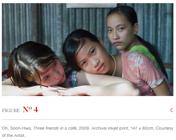
The sequence also destabilises simplistic constructions of alien otherness. Rather than presenting a single extraterrestrial entity, the film introduces distinct beings whose relationship remains unresolved: ancestral figures, extraterrestrials, manifestations of Khoisan cosmology, or an unstable convergence of all three. In this sense, Wesens departs from more direct allegorical speculative fiction such as District 9, where the extraterrestrial "prawns" clearly operate as racialised and migrant Others. Wesens instead refracts alienness itself through ontology and cosmology, asking not simply who the alien is, but how colonial modernity produces forms of being that become alienated from history and humanity itself.
This moment of emergence directly confronts the colonial myth of terra nullius by reasserting an indigenous presence that predates and resists erasure. The Khoisan woman appears not as an extraterrestrial invader, but as a figure reconstituted from the land itself, transforming the object from a site of ambiguity into one of ontological confrontation. In the context of apartheid South Africa, where indigenous histories and Coloured identities were systematically marginalised within settler narratives of belonging, her emergence gestures both backwards toward dispossessed ancestral claims and forward toward contested questions of land and futurity.
The cracked, egg-like object evokes both birth and return, a reawakening of histories rendered invisible by colonial modernity. Sitting on a nearby rock, the woman examines a praying mantis, a significant figure within Khoisan cosmology associated with Kaang or /Kaggen, a complex creator figure linked to transformation, ambiguity, and the origins of humanity (Schmidt 2018:64, Lewis-Williams 1997:195). The mantis is not merely symbolic but epistemologically disruptive, unsettling Western distinctions between human and nonhuman, divine and animal, myth and reality. As J.D. Lewis-Williams argues, Kaang's manifestations exceed fixed representation; the figure is simultaneously benevolent and deceptive, sacred, and paradoxical (2015:63). This ambiguity mirrors Kuyper's encounter with the object itself, which resists stable interpretation and instead stages what Sigrid Schmidt describes as 'humankind's confrontation with the numinous' (2018:71).
Kaang of the World
Conradie speculates that the Khoisan woman is 'dalk van Julie se mense' ('perhaps Julie's people'), immediately racialising and othering her within the logic of apartheid taxonomy. His remarks invoke familiar colonial anxieties around racial mixing, primitivism, and sexual deviance, reducing the encounter to a discourse of contamination and impurity. When Conradie jokes that Kuyper 'knyp die kat in die donker' ('gets up to mischief in the dark'), the implication is not merely sexual impropriety, but the transgression of racial boundaries themselves. The woman's appearance is thus interpreted not as revelation but as a moral and ontological threat.
The object, once framed as a technological anomaly, becomes increasingly feminised and naturalised: an egg-like structure associated with birth, sexuality, and forbidden knowledge. Yet the film resists reducing the woman to allegory alone. Her emergence instead destabilises the epistemological categories through which the field unit attempts to understand the encounter. Neither fully human nor conventionally extraterrestrial, she occupies an ambiguous ontological position that exceeds the racial and scientific frameworks imposed upon her. Martinus's return violently forecloses this ambiguity. Having already killed the Khoisan man who first emerged from the object, Martinus then shoots the woman. The act functions not simply as physical violence but as an assertion of colonial authority at the threshold of epistemic rupture. In decolonial terms, Martinus enacts what Sylvia Wynter (2003:260) describes as the 'Coloniality of Being/Power/Truth/ Freedom' policing the limits of what may be recognised as human, knowable, and real.12 Kaang's declaration gestures toward an indigenous cosmo-epistemology irreducible to Cartesian rationality or Christian colonial order; Martinus responds with the only logic available to the settler state: elimination.
Kuyper's response is more ambivalent but no less revealing. Cradling the dying woman, he repeatedly asks: 'Wie is jy? ... Wat is jy?' (Who are you? ... What are you?'). She replies: 'Kaang.' Unlike Martinus, Kuyper seeks understanding rather than destruction, yet his questions still reproduce the colonial desire to render alterity legible within familiar epistemological terms. Kaang offers no such resolution. Like the mantis figure associated with her earlier appearance, she remains elusive, paradoxical, and resistant to stable interpretation. The encounter ultimately leaves not revelation, but ontological uncertainty: a confrontation with forms of being and histories of belonging that colonial modernity cannot fully comprehend.
Conclusion
In the end, Wesens stages not merely an encounter with the alien, but with the alienated: those cosmologies, bodies, and histories rendered unintelligible within colonial modernity. The film's speculative register allows indigenous being to momentarily rupture the settler state's ontological order, only to be violently recontained through the reflexive logic of colonial authority. Yet the encounter leaves a residue. Kaang's final utterance resists closure, persisting as a cosmological trace that continues to haunt the limits of colonial rationality and historical certainty. In this sense, Wesens extends the speculative project undertaken by District 9 in post-apartheid South African cinema. Whereas District 9 externalises apartheid and xenophobic violence through the figure of the extraterrestrial "prawn", Wesens turns the question of alienness inward, tracing contemporary structures of exclusion back to the longer histories of colonial dispossession and indigenous erasure upon which South African modernity was founded.
Released in 2020, amidst ongoing debates around land, identity, decolonisation, and historical memory in South Africa, the film's return to Khoisan cosmology is more than speculative allegory. It reopens unresolved questions about belonging, sovereignty, and whose histories are permitted to shape the future. The film ultimately leaves us not with resolution, but with epistemological humility. Kuyper's final reflections on humanity's fragile existence 'op hierdie klip wat in die ruimte dryf' ('on this rock floating in space') reframe the encounter not as conquest or discovery, but as a confrontation with the limits of human knowledge itself. The speculative threshold opened by Wesens is therefore not simply futuristic, but decolonial: an invitation to imagine forms of being and relation beyond the epistemic frameworks inherited from colonial modernity.
Notes1 Apartheid, meaning 'apartness' in Afrikaans, was South Africa's system of institutionalised racial segregation and white minority rule, formally introduced by the National Party after its election victory in 1948. It entrenched racial discrimination through legislation designed to preserve white political and economic dominance over the country's non-white population (South African History Online 2011).
2 Afrofuturism has subsequently expanded beyond literature into music, film, and visual art, influencing a wide range of contemporary creators. Nnedi Okorafor distinguishes her work as Africanfuturist rather than Afrofuturist: 'Africanfuturism is specifically and more directly rooted in African culture, history, mythology and point-of-view as it then branches into the Black Diaspora, and it does not privilege or center the West' (2019).
3 District 9 coincided with a broader resurgence of African speculative fiction. In the same period, Pumzi (Kahiu 2009) became the first Kenyan speculative Action film and won Best Short Film at the 2010 Cannes Film Festival. Nnedi Okorafor became the first writer of African descent to win the World Fantasy Award for Who Fears Death (2014), while Lauren Beukes became the first African recipient of the Arthur C. Clarke Award for Zoo City (2010). This period also saw the publication of AfroSF: Science Fiction by African Writers (Hartmann 2012), the first Pan-African speculative Action anthology (Bould 2013:7). As Mark Bould (2013:7) observed, 'If African sf has not arrived, it is certainly approaching fast'.
4 Technoscience refers to the idea that science and technology are best understood as a single 'dynamic system of simultaneously making knowledge and producing commodities' (Geppert 2012b:220).
5 Close Encounters was released in South Africa three years after the Soweto Uprising, juxtaposing Hollywood visions of extraterrestrial contact with the realities of apartheid society (Harris 2024:45-46). The Soweto Uprising was a student-led protest that began on 16 June 1976 in Soweto against the apartheid government's education policies, including the compulsory use of Afrikaans alongside English as a medium of instruction in Black schools. The state's violent response sparked widespread protests across South Africa, marking a significant turning point in the struggle against apartheid and contributing to the political changes that culminated in the country's democratic transition in 1994 (South African History Online 2013).
6 One is reminded of the Colonial Film Unit established in 1939 (Smyth 1988:185) as part of an unprecedented propaganda campaign across Africa during the Second World War. The Ministry of Information in London coordinated the activities of information offices in the colonies (Smyth 1988:285).
7 Gérard Genette (1997:2) defines "paratexts" as supplementary elements accompanying a text, including titles, forewords, epigraphs, and publishers' jacket copy. These shape the relationship between text, author, publisher, and reader. Although developed in relation to literature, the concept has also been applied to film and film criticism.
8 www.wesens.co.za.
9 The impression of film stock is aided by the fact that the film was colour graded 'to temper and dim the bright, hell-hard Karoo sun', especially as it was shot without traditional lighting (Van Nierop 2020), which probably means it was filmed digitally to produce the required muted colour palette and slightly grainy end product (Smith 2021).
10 'Epistemic delinking' refers to the decolonial process of disengaging from Eurocentric frameworks of knowledge and recovering alternative epistemologies marginalised by colonialism (Mignolo 2011:118).
11 Muller uses music by Die Briels and Groep Twee to convey nostalgia for the Afrikaner way of life (Van der Merwe 2017:76-77).
12 For Wynter (2003:268), coloniality is sustained by the overrepresentation of 'Man' as the universal model of the human. Decolonial thought must therefore challenge both colonial power and the assumptions about humanity on which it rests.
References
- Adhikari, M. 2010. A total extinction confidently hoped for: the destruction of Cape San society under Dutch colonial rule, 1700-1795. Journal of Genocide Research 12(1-2):19-44.
-
Badsha, O. 2019. The San. [O]. Available: https://www.sahistory.org.za/article/san Accessed 21 March 2024.
» https://www.sahistory.org.za/article/san -
Bekolo, J. 2023. Afrofuturism. The Comparatist 47(1):379-388. https://doi.org/10.1353/com.2023.a911949
» https://doi.org/10.1353/com.2023.a911949 - Beukes, L. 2010. Zoo city. Angry Robot: London.
-
Bizony, P. 2019. "We choose to go to the Moon": Read JFK's Moon speech in full. [O]. Available: https://www.sciencefocus.com/space/we-choose-to-go-to-the-moon-read-jfks-moon-speech-in-full Accessed 21 March 2024.
» https://www.sciencefocus.com/space/we-choose-to-go-to-the-moon-read-jfks-moon-speech-in-full - Blomkamp, N (dir). 2009. District 9. [Film]. Sony Pictures: USA.
-
Boezak, W. 2017. The cultural heritage of South Africa's Khoisan, in Indigenous Peoples' Cultural Heritage, edited by A Xanthaki, S Valkonen, L Heinämäki & P Nuorgam. Brill Nijhoff: 253-272. https://doi.org/10.1163/9789004342194_013
» https://doi.org/10.1163/9789004342194_013 -
Boisen, C. 2013. The changing moral justification of empire: from the right to colonise to the obligation to civilise. History of European Ideas (39)3:335-353. https://doi.org/10.1080/01916599.2012.716603
» https://doi.org/10.1080/01916599.2012.716603 - Bould, M. 2013. Africa sf: Introduction. Paradoxa (25):7-15.
-
Brodmerkel, R. 2015. District 9. [O]. Available: https://www.horrorreview.com/district-9/. Accessed 26 May 2026.
» https://www.horrorreview.com/district-9/ -
De Villiers, M & De Villiers, A. 2022. FAK post. [O]. Available: https://www.facebook.com/FAK01/posts/in-1967-het-groep-twee-n-treffer-met-die-oukraalliedjie-gehad-maar-eintlik-is-di/8025921977479534/ Accessed 22 March 2024.
» https://www.facebook.com/FAK01/posts/in-1967-het-groep-twee-n-treffer-met-die-oukraalliedjie-gehad-maar-eintlik-is-di/8025921977479534/ -
Dercksen, D. 2020. Writer-director Derick Muller makes waves with WESENS. [O]. Available: https://writingstudio.co.za/writer-director-derick-muller-makes-waves-with-wesens/ Accessed 12 March 2024.
» https://writingstudio.co.za/writer-director-derick-muller-makes-waves-with-wesens/ -
Dery, M. 1993. Black to the future: interviews with Samuel R. Delany, Greg Tate, and Tricia Rose. The South Atlantic Quarterly 92(4):735-778. https://doi.org/10.1215/00382876-92-4-735
» https://doi.org/10.1215/00382876-92-4-735 - Elia, A. 2015. The languages of Afrofuturism. Lingue e Linguaggi 12:83-96.
- Ellingson, T. 2001. The myth of the noble savage. Berkeley: University of California Press
- Genette, G. 1997. Palimpsests: literature in the second degree. Lincoln: University of Nebraska Press
- Geppert, ACT. 2012a. Extraterrestrial encounters: UFOs, science and the quest for transcendence, 1947-1972. History and Technology 28(3):335-362.
- Geppert, ACT. 2012b. Rethinking the space age: astroculture and technoscience. History and Technology 28(3):219-223.
- Goldman, J. 2010. The divine name: sounds of the god code. Boulder, Colorado: Sounds True.
- Gorner, P. 2007. Heidegger's being and time: an introduction. Cambridge: Cambridge University Press.
-
Harris, A. 2024. Concurrent whiteness: science fiction film's close encounters in apartheid South Africa, in History and Speculative Fiction, edited by JL Hennessey. London: Palgrave Macmillan:45-64. https://doi.org/10.1007/978-3-031-42235-5_3
» https://doi.org/10.1007/978-3-031-42235-5_3 - Hartmann, IW. 2012. AfroSF: science fiction by African writers. San José: Story Time.
- Hartwell, DG. 1984. Age of wonders: exploring the world of science fiction. New York: Tor.
- Heller-Nicholas, A. 2011. From District Six to District 9: apartheid, spectacle and the real. Screen Education 61:137-142.
- Hennessey, JL (ed). 2024. History and Speculative Fiction. London: Palgrave Macmillan.
-
Hsu, H. 2021. How Sun Ra taught us to believe in the impossible. [O]. Available: https://www.newyorker.com/magazine/2021/07/05/how-sun-ra-taught-us-to-believe-in-the-impossible. Accessed 31 March 2024.
» https://www.newyorker.com/magazine/2021/07/05/how-sun-ra-taught-us-to-believe-in-the-impossible - Hynek, JA. 1972. The UFO experience: a scientific inquiry. Chicago: H. Regnery
-
James, F. 2009. Nigerians upset by depiction as cannibals in 'District 9' movie. [O]. Available: https://www.npr.org/sections/thetwo-way/2009/09/nigerians_upset_by_their_depic.html. Accessed 10 June 2024.
» https://www.npr.org/sections/thetwo-way/2009/09/nigerians_upset_by_their_depic.html - Kahiu, W. 2009. Pumzi. [Film]. One Fine Day Films.
- Kromhout, J. 2000. Afrikaans-English / English-Afrikaans Dictionary New York: Hippocrene Books.
- Kuper, H. 1964. The colonial situation in Southern Africa. The Journal of Modern African Studies 2(2):149-164.
- Lewis-Williams, JD. 1997. The mantis, the eland and the meerkats: conflict and mediation in a nineteenth-century San Myth. African Studies 56(2):195-216.
- Lewis-Williams, JD. 2015. Myth and meaning: San-Bushman folklore in global context. Walnut Creek: Left Coast Press.
-
Loader, R. 2024. Broadcasting change: an aerial overview of South African television debates in an age of constant transition. Critical Studies in Television 19(10):94-118. https://doi.org/10.1177/17496020231194465
» https://doi.org/10.1177/17496020231194465 - Mignolo, W. 2011. The darker side of western modernity: global futures, decolonial options. Durham: Duke University Press.
- Muller, D (dir). 2020. Wesens. [Film]. Cape Town: The Suits Communications.
- Myrick, D & Sánchez, E (dirs.). 1999. The Blair Witch Project. [Film]. Haxan Films.
-
Neill, C. 2023. What caused the Apollo 1 launch disaster? [O]. Available: https://www.historyhit.com/apollo-1-launch-pad-flre/ Accessed 21 March 2024.
» https://www.historyhit.com/apollo-1-launch-pad-flre/ - Odendaal, FF & Gouws, RH. 2005. HAT: verklarende handwoordeboek van die Afrikaanse taal. Pearson: South Africa.
-
Okorafor, N. 2019. Africanfuturism defined. [O]. Available: https://nnedi.blogspot.com/2019/10/africanfuturism-deflned.html Accessed 18 December 2023.
» https://nnedi.blogspot.com/2019/10/africanfuturism-deflned.html - Okorafor, N. 2014. Who fears death. London: Penguin.
-
Oliver, E & Oliver, WH. 2017. The colonisation of South Africa: A unique case. HTS Theological Studies 73(3):1 -8. https://doi.org/10.4102/hts.v73i3.4498
» https://doi.org/10.4102/hts.v73i3.4498 -
Petrescu, RV, Aversa, R, Akash, B, Corchador, J, Apicelle, A & Petrescu, FI. 2017. What is a UFO? Journal of Aircraft and Spacecraft Technology 1(2):80-90. https://doi.org/10.3844/jastsp.2017.80.90
» https://doi.org/10.3844/jastsp.2017.80.90 -
Phillips, D. 2014. Know your era, know your data. AfricaGEO Proceedings. [O]. Available: https://africageoproceedings.org.za/wp-content/uploads/2014/06/156_Phillips.pdf. Accessed 4 July 2026.
» https://africageoproceedings.org.za/wp-content/uploads/2014/06/156_Phillips.pdf -
Quijano, A. 2007. Coloniality and modernity/rationality. Cultural Studies 27(2-3):168-178. https://doi.org/10.1080/09502380601164353
» https://doi.org/10.1080/09502380601164353 - Said, EW. 1978. Orientalism. London: Routledge and Kegan Paul.
-
Sayad, C. 2016. Found-footage horror and the frame's undoing. Cinema Journal 55(2):43-66. https://doi.org/10.1353/cj.2016.0003
» https://doi.org/10.1353/cj.2016.0003 - Schmidt, S. 2018. The praying mantis in Namibian folklore. Southern African Humanities 31(1):63-77.
-
Sinker, M. 1992. Loving the alien in advance of the landing. [O]. Available: http://web.archive.org/web/20060209100352/http://www.thewire.co.uk/archive/essays/black_science_fiction.html. Accessed 17 March 2024.
» http://web.archive.org/web/20060209100352/http://www.thewire.co.uk/archive/essays/black_science_fiction.html -
Smith, J. 2021. Wesens, an analysis by Jessica Smith - LitNet. [O]. Available: https://www.litnet.co.za/wesens-an-analysis-by-jessica-smith/ Accessed 9 June 2024.
» https://www.litnet.co.za/wesens-an-analysis-by-jessica-smith/ - Smyth, R. 1988. The British Colonial Film Unit and sub-Saharan Africa, 1939-1945. Historical Journal of Film, Radio, and Television 8(3):285-298.
-
South African History Online. 2013. The Soweto uprising. [O]. Available: https://sahistory.org.za/article/june-16-soweto-youth-uprising. Accessed 5 July 2026.
» https://sahistory.org.za/article/june-16-soweto-youth-uprising -
South African History Online. 2011. Apartheid. [O]. Available: https://sahistory.org.za/article/apartheid. Accessed 5 July 2026.
» https://sahistory.org.za/article/apartheid - Spielberg, S (dir). 1977. Close Encounters of the Third Kind. [Film]. Columbia Pictures.
- Suvin, D. 1979. Metamorphoses of science fiction: On the poetics and history of a literary genre. New Haven: Yale University Press.
- Van der Merwe, SD. 2017. On record: Music and society in recorded popular Afrikaans music records, 1900-2015. Stellenbosch: African Sun Media.
-
Van Nierop, L. 2020. Wesens: Review. [O]. Available: https://www.wesens.co.za/reviews Accessed 12 March 2024.
» https://www.wesens.co.za/reviews - Wynter, S. 2003. Unsettling the coloniality of being/power/truth/freedom: towards the human, after man, its overrepresentation-an argument. CR: The New Centennial Review (3)3:257-337.
- Xanthaki, A, Valkonen, S, Heinämäki, L & Nuorgam, P (eds). 2017. Indigenous Peoples' Cultural Heritage. Leiden: Brill Nijhoff.
Accepted: 2026-06-08
Published: 2026-09-04