When the revolution comes, tell them it was craft: A sociopolitical critique of AI
In this essay, I aim to explore artificial intelligence from a sociocultural and sociopolitical perspective within the context of visual culture. In "The work of art in the age of its technological reproducibility" (1936), philosopher and cultural critic Walter Benjamin observed that technological inventions such as photography and film, and the way in which an increasingly massified audience received these, threw into perspective undercurrents of changes in the sociopolitical fabric itself. Such observation and analysis of the drivers of change in the production and reception of art is, in Benjamin's words, 'useful for the formulation of revolutionary demands in the politics of art' (Benjamin 2002:102). A Benjaminian approach to analysing AI enables a deeper socio-political critique that goes beyond ethical red flags such as nonconsensual data collection, ecological calamity, and the perpetuation of cultural bias. Lastly, I explore the status of craft as a possible revolutionary counter-practice in the face of cannibalistic and dehumanising aspects of AI with reference to Benjamin's essay "Some remarks on folk art" (1929) and Tarkko Oksala and Tufan Orel's essay "On the persistence of craft" (2022).
Critique of generative AI; Walter Benjamin; craft as counter-practice
When the revolution comes, tell them it was craft: A sociopolitical critique of AI
Runette Kruger
School of the Arts, University of Pretoria, Pretoria, South Africa. https://orcid.org/0000-0001-9855-4471)
ABSTRACTIn this essay, I aim to explore artificial intelligence from a sociocultural and sociopolitical perspective within the context of visual culture. In "The work of art in the age of its technological reproducibility" (1936), philosopher and cultural critic Walter Benjamin observed that technological inventions such as photography and film, and the way in which an increasingly massified audience received these, threw into perspective undercurrents of changes in the sociopolitical fabric itself. Such observation and analysis of the drivers of change in the production and reception of art is, in Benjamin's words, 'useful for the formulation of revolutionary demands in the politics of art' (Benjamin 2002:102). A Benjaminian approach to analysing AI enables a deeper socio-political critique that goes beyond ethical red flags such as nonconsensual data collection, ecological calamity, and the perpetuation of cultural bias. Lastly, I explore the status of craft as a possible revolutionary counter-practice in the face of cannibalistic and dehumanising aspects of AI with reference to Benjamin's essay "Some remarks on folk art" (1929) and Tarkko Oksala and Tufan Orel's essay "On the persistence of craft" (2022).
Keywords: Critique of generative AI, Walter Benjamin, craft as counter-practice.
Prompt
At the 2023 Exploring Visual Cultures conference,1 a presenter made a comment about AI-generated art that illuminated the reason for my deep reservations about the phenomenon in a way I had not been able to articulate up to that moment. Their statement that AI-generated art is data, not art, serves as a prompt for the current discussion of AI as a problematic sociocultural and sociopolitical development. This position is unpacked by briefly clarifying what AI is and highlighting ethical challenges perpetuated and compounded through generative AI (gAI), before exploring counter-narratives to the benefits of AI.
What is AI?
In an attempt to clarify what AI is and is not, and thus demystify it, it is useful to historicise it in relation to big data. Firstly, issues raised about big data, for instance by Michael Chen (2024), overlap with concerns about AI; secondly, historicising AI highlights that certain challenges and apparent opportunities that seemed to explode with the arrival of gAI in 2022 precede the current AI eruption.
Big data is defined as petabytes of 'extremely large and complex data sets that cannot be easily managed or analy[s]ed', aggregated from diverse sources such as machinery fitted with sensors, financial transactions and, more recently, our engagement with social media (Chen 2024). Chen (2024) notes that although the concept of big data is new, the existence of large data sets dates back 'to the 1960s and '70s, with the first data centers' and that '[a]round 2005, people began to reali[s]e just how much data users generated through Facebook, YouTube, and other online services'. This data may be used to drive business strategy and for more nefarious purposes, discussed below, and has recently become increasingly monetised. Lastly, big data sets are used to train language models, referred to as Large Language Models (LLMs) for AI (Chen 2024).
It is important to differentiate between AI as an umbrella phenomenon and gAI. Technologist Greg Pavlik (2023) notes that 'traditional AI, which has been quietly automating and adding value to commercial processes for decades' has been in use to perform repetitive tasks in manufacturing assembly lines and accounting or in the financial industry to detect credit card fraud, for instance. GAI, on the other hand, became broadly accessible when 'the first gAI consumer chatbot was released to the public in [late] 2022' (Pavlik 2023). GAI creates content in response to prompts in the form of requests or questions in output formats as diverse as audio, image, and video, but, according to Pavlik (2023), 'it is text-oriented conversational AI that has fired imaginations'. In response to the assertion that gAI has 'fired imaginations', it is possible to make the counter-suggestion that it, in fact, caters to users who are not interested in or capable of accessing their own imaginations. Despite claims about the technology's potential, such as "unleashing" productivity and creativity, I argue that the primary pioneering aspect of gAI is that it has exponentially expanded the domain of what can be exploited and by whom, bringing exploitation within easy reach of the ordinary consumer.
It is furthermore apparent that the mechanism by which text-based gAI functions is far removed from what can be described as actual intelligence. Pavlik (2023) explains the process as follows: LLMs are fed 'enormous volumes of text to process and tasked to make simple predictions, such as the next word in a sequence or the correct order of a set of sentences'. This explains the disconcertingly unoriginal output: what is generated is merely the most likely sequence of words, based on their frequency in the training data. In effect, gAI is geared to perpetuate and deepen convergence (sameness) rather than divergence (originality). However, one does not need to know how gAI technically works to be aware of this as a creative practitioner or an educator. Besides the position taken here that gAI is the opposite of a technology that enhances creativity, the following section briefly touches on the ethical challenges that surround the phenomenon.
AI-ling ethics
Ecological concerns
The pressure among Silicon Valley companies, including Google, Meta, Microsoft and Amazon, to remain competitive amid developments in AI is straining existing infrastructure and exponentially increasing demand for polluting energy sources, in direct contravention of the actions needed to avert a climate disaster.2 Climate reporter Alexa St. John (2024) notes that while Google set an ambitious target in 2021 to achieve a net-zero energy balance by 2030 by removing as much climate-changing gas, such as CO2, from the air as it emitted, its emissions grew by 13% between 2022 and 2023. The company 'cited artificial intelligence and the demand it puts on data centres, which require massive amounts of electricity', as the reason for the emission growth (St. John 2024). By 2023, Microsoft's greenhouse gas emissions had similarly grown by 29% from 2020 (St. John 2024). The increase in electricity demand is accompanied by the need for large amounts of water to cool the data centres. Lastly, the costs of increased energy needs and the infrastructure required to accommodate and cool data centres are being recovered from consumers and small businesses rather than from the technology giants themselves (Halper & O'Donovan 2024).
Bias
Perpetuation and exacerbation of existing racial, gender and class biases and inequality are further concerns raised by gAI. Pavlik (2023) notes that '[i]f a gAI model is trained on biased data, ranging from gaps in perspectives to harmful and prejudicial content, those biases will be reflected in its output'. This statement suggests that there is potential to train AI on non-biased data, but this is contestable; it would be a challenge to identify sources of non-biased data in a world so significantly skewed toward currently ascendant western and also patriarchal cultures. A simple example is the dominance of English, followed by other major European languages in terms of the quality or accuracy of AI output. In his article "ChatGPT is cutting non-English languages out of the AI revolution", Paresh Dave (2023) notes that there is evidence that 'ChatGPT and its rival chatbots' lack capacity in 'languages other than English', and computer scientists Thien Huu Nguyen and Pascale Fung (cited in Dave 2023) report that the veracity of ChatGPT output was substantially poorer when responding in languages other than English and that it was more likely to hallucinate information in non-English languages (a phenomenon described in more detail below). The reality is that
[i]f the tools continue to work the best in English, they could increase the pressure to learn the language on people hoping to earn a spot in the global economy. That could further a spiral of imposition and influence of English that began with the British Empire (Dave 2023).
Race and gender biases are similarly amplified (Lazaro 2022). These biases emerge from both the training data and from overt or covert/unconscious biases hidden in prompts. Nor are the apparent solutions needed to overcome biases in AI output straightforward, as exemplified by the low representation of Black women on the internet and in other data repositories used to train AI. The Gender Shades study conducted by Joy Buolamwini and Timnit Gebru (2018) indicates the lowest level of accuracy in determining the correct race and gender for photographs of Black women by AI powered gender classification software, with 65,3% and 79,2% accuracy rates by IBM and Microsoft software respectively, compared to accuracy rates for white male faces at 99,7% (IBM) and 100% (Microsoft). See Figure 1.
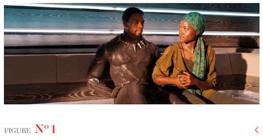
These findings indicate the prevalence of white male representation in the feeding data. Greater representation of Black women and other underrepresented groups seems to be the logical solution to biased AI results. In contradiction to this apparent remedy, Alex Hanna, Director of Research at the Distributed AI Research Institute,3 notes that 'facial recognition itself is a racist technology, because it is disproportionately leveraged in communities of colo[u]r, in the Global South and at the borders', with the implication that both the problem and its imagined corrective harbour 'racist [and harmful] outcome[s]' (Hanna in Lazaro 2022).
Inaccuracy, risk and scamming
GAI is not only not creative - that is, original in a way that adds value not quantifiable in terms of revenue or so-called productivity alone - but also unreliable in tasks requiring factual accuracy, to the point of causing tangible harm to businesses and individuals. The polite term for this is hallucination. Pavlik (2023) notes that '[g]enerative AI models make inaccurate claims, sometimes hallucinating completely fabricated information'. A less polite and more descriptive term for what gAI churns out is 'botshit' (McCarthy, Hannigan & Spicer 2024). Botshit is defined as 'made-up, inaccurate, and untruthful chatbot content that humans uncritically use for tasks [posing] epistemic risks' (McCarthy et al. 2024).
An easily spotted and hence less potentially harmful example of unusable AI output is shown in Figure 2. A screenshot of the response to the author's question 'Can people see when you look at their updates on WhatsApp' is answered by AI as follows: 'No, people cannot see when you view their updates on WhatsApp. You can see who viewed your WhatsApp status, but you can't see who views yours'.
The response contains inaccurate information (you can see when your contacts have viewed your status, depending on your and their settings), and two instances of contradiction, the second blatant: 'People cannot see ... you can see ... you can't see'. The response also provides no actionable information to address the issue at hand, a function of the facile, generic nature of gAI output. Botshit has caused financial and reputational damage in corporate settings, legal courts and the media: when Google launched its chatbot Bard (later re-launched as Gemini) in 2023, it generated a major factual error during its inaugural demonstration,4 costing Google a 9% ($100 billion) loss to the stock price of its parent company; in New York in 2023 two lawyers were fined for submitting legal documents containing non-existent technology generated cases and legal citations, and in 2022 the publication Sports Illustrated created fake journalists (including their profile images which were purchased off the internet), and AI-generated articles (McCarthy et al. 2024). These disappeared when the publication was questioned about the chimerical journalists.
In the creative industries, the use of AI has led to instances such as the 2024 Glasgow event, the Willy Wonka Chocolate Experience, which was marketed as an immersive encounter with the magical Wonka Chocolate Factory originally featured in the children's novel Charlie and the Chocolate Factory (Roald Dahl, published in 1964) and in three mainstream films between 1971 and 2023. The marketing materials and actor scripts for the 2024 event, subsequently referred to as Wonkagate, were AI-generated, and the offering was so bleak and devoid of tangible interactive experiences or services that it caused an uproar serious enough for police to be summoned (Davis 2024). Figures 3 and 4 compare the marketing materials with the event.


The scripts provided to the actors the evening before the event comprised '15 pages of AI-generated gibberish' (Hibberd 2024), an actor hired for the event noting it 'feels like an insult to artists and creative[s] alike, especially considering their budget. It wouldn't have been that hard to hire some real artists' (Davis 2024). More positively, the chaotic event inspired a real musical with actors, scriptwriters, songwriters, producers and directors, and Wonkagate might also spawn a possible horror film (McGowan & Wong 2024). The example highlights the use of AI for unethical purposes: an organised event launched to make money without investment in the creative industry. The publishing industry has also been affected by low-quality and potentially harmful outputs generated by AI (Hall 2025).
Further aspects of ethical overreach addressed in this section relate to intellectual property, privacy, and the nonconsensual collection of data, which are of great concern to artists and creatives whose livelihoods depend on protecting their IP. Pavlik (2023) notes that LLMs are trained on external data that may lead to 'potential ethical and legal issues, such as plagiarism and copyright infringement ... Regulatory bodies may create new rules over time', but for now, gAI is an unregulated enterprise.
In November 2024, safety, privacy, and intellectual property concerns were at the centre of discontent when X, formerly Twitter, announced changes to its blocking policy. Effectively disabling this function provided unlimited access to any account for stalkers, harassers, content scrapers and, significantly, X's own AI, Grok (Pegoraro 2024). A vast number of X users rejected this invasive strategy. When X announced on 16 October 2024 that the block function would be deactivated, 1,2 million users flocked to its rival, Bluesky, in 48 hours (Grey Journal 2024). However, the financial benefit of feeding Grok original data created by X users presumably outweighs the loss of premium subscribers, millions of users migrating to other platforms, and advertisers withdrawing their revenue, which begs the question of what the function of X really is, in business or other terms, for its CEO, Elon Musk.
Social engineering
Aside from the frenzied monetisation of X, Musk's political aspirations should not be disaggregated from AI's potentially harmful use. Musk, having been amenable to illegally swaying the 5 November 2024 US election by signing off on million-dollar checks at a time for Trump supporters (Montgomery 2024), has also resorted to posting demeaning, AI-generated video footage of Trump's political rival, Kamala Harris, on X (Robins-Early & Leingang 2024). Thus, AI appears to be posing a threat to democracy (Easterly, Schwab & Conley 2024), with Silicon Valley seemingly embracing such ends. The X example is preceded by the Facebook Cambridge Analytica controversy, which exposed an intersection of political manipulation, social media privacy violation and data mining of a highly unethical nature (Harbath & Fernekes 2023). Cambridge Analytica has worked with the Brexit campaign in the UK and with the Donald Trump election campaign before the 2016 election.5 More recently (July 2025), the tweaking of Grok's responses to align with Musk's ideology (Patel 2025) is an unsurpassably clear example of how hazardous Silicon Valley, in combination with AI, can be to the global social fabric.
In summary, the risks posed, and the current realities actively created by, the unregulated eruption of lucrative gAI include ecological concerns; the perpetuation and deepening of existing sociocultural biases and material inequality; inaccuracy leading to reputational and financial damage, misguided decisions, legal exposure and harmful outcomes for human safety; plagiarising and pirating of the creative output of ordinary artists by big technology; privacy breaches in the service of politicians and, lastly, threats to democratic processes and systems. Beyond these quantifiable and documented risks, the following section attempts a deeper analysis of developments in high technology from a Benjaminian perspective.
A sociocultural and sociopolitical critique of AI
In the nineteen-thirties, German philosopher and cultural critic Walter Benjamin (18921940) wrote about the effects of changes in the modes of production on art in his essay "The work of art in the age of its technological reproducibility" (1936) (Benjamin 2002). Emphasising the importance of understanding the driving forces behind changes in the arts, Benjamin (2002:101) notes that 'defining the developmental tendencies of art can . contribute to the political struggle in ways that it would be a mistake to underestimate'. Benjamin subsequently clarifies how new developments in the arts and cultural industries are manifestations of specific changes in the economic and political base of the capitalist system, and argues that accurately diagnosing these changes and their effects makes it possible to challenge an exploitative dispensation.
This section attempts to apply Benjamin's diagnostic and analytical method, developed almost a century ago, to a reading of current developments in gAI. Refusing the seemingly limitless advocacy for and investment in AI for its military, surveillance, and commercial uses, which, as it turns out, appear to converge, I adopt Benjamin's declaration that
the concepts which are introduced [here] differ from those now current in that they are completely useless for the purposes of fascism. On the other hand, they are useful for the formulation of revolutionary demands in the politics of art (Benjamin 2002:102).
The focus of Benjamin's analysis is the mass reproduction of art made possible by the invention of lithographic printing in the early nineteenth century - a technology with a pace similar to 'movable-type printing', in turn surpassed over the next half century by photography,6 which enabled image reproduction at the pace of speech (Benjamin 2002:102). Several decades later, the technological reproduction of sound was also a reality so that, by the cusp of the twentieth century, 'technological reproduction ... had reached a standard that permitted it to reproduce all known works of art, profoundly modifying their effect' (Benjamin 2002:102, emphasis in original).
According to Benjamin, elitist objection to the reproduction of artworks derives from the fact that a reproduction cannot carry with it the original artwork's existence in a particular time (which is the current moment in which it is experienced, but which is inclusive of its history, which gives it its authority), and place (its physical proximity). These qualities of an original, unique work of art are what make high art elitist, as the ability to experience such art is a privilege granted to the wealthy (in the context of the nineteenth- and early-twentieth centuries). In contrast, a reproduction, of, for instance, an orchestral performance, can be sampled at multiple future times and in a place where the original artwork/ performance is not, including in one's own home, or by a mass amount of "ordinary" working-class people. These concepts address the authenticity of a work of high art, which is lost in its reproduction.
Benjamin goes on to argue that the loss of authenticity of the artwork refers to its loss of authority, or its aura, and notes that this process, of the loss of authenticity, authority and aura of an artwork, 'is symptomatic; its significance extend[ing] far beyond the realm of art' to signify nothing short of a 'shattering of tradition which is the reverse side of the present crisis and renewal of humanity' (Benjamin 2002:104). This loss of aura (or rather the attendant loss of power inherent in the monetary value of high art which accrues to its owner) was bemoaned by the upper classes who subscribed to the ideology of art for art's sake, a veritable 'theology of art' (Benjamin 2002:106).
The working and lower-middle classes had no such misgivings about the popularisation of art, a process that altered their perception of it. Benjamin links changes in the modes of art production and subsequent changes in the perception of art to a generalisable democratisation of society, with emancipatory ramifications. For Benjamin (2002:105-106), it is significant that 'the advent of the first truly revolutionary means of reproduction', namely photography, 'emerged at the same time as socialism' and he describes this positive confluence as '[t]he alignment of reality with the masses'. This process of democratisation of culture, having started with photography, culminated in film, massification's 'most powerful agent' as the artform 'most capable of ... [the] radical renunciation of eternal value' or the cultic, elitist function of high art (Benjamin 2002:104, 109, emphasis in original).
However, in a process of appropriation, a well-documented strategy for the systemic negation of dissent and radicalism, film itself eventually becomes cannibalised by the apparatus of capitalism, and the aura, or cult value, of the actor is reinstated and tirelessly promoted by the industry, for commercial purposes. Benjamin (2002:113) notes: 'Film capital uses the revolutionary opportunities implied by [the mass appeal of film] for counterrevolutionary purposes, [cultivating] the magic of . personality' which is in fact 'the putrid magic' of commodification and corruption.
Importantly, Benjamin brings these developments back to class struggle, which sees the potential for 'new social opportunities ... being clandestinely exploited in the interests of a property-owning minority', an endeavour on par with 'fascism in general' (Benjamin 2002:115). Class exploitation in the mode of fascism is clarified as follows:
Fascism attempts to organize the newly proletarianized masses while leaving intact the property relations which they [the proletariat] strive to abolish. [Fascism operates by] granting expression to the masses - but on no account granting them rights (Benjamin 2002:120-121, emphasis added).
Benjamin refers to this strategy of distraction - of promises of tantalising social freedom and freedom of expression while leaving skewed economic relations intact and in fact preparing the ground for deepened exploitation - as the 'aestheticizing of political life ... as practiced by fascism', with the supreme culmination of this drive in '[w]ar, and only war' (Benjamin 2002:121-122, emphasis in original).
Thus, the emancipatory potential of the massification of art was appropriated for opposite, fascistic ends. But if aestheticised politics degrades social equality, the antidote is to politicise art (Benjamin 2002:121-122). This strategy of politicising art is, as I argue, where the concept of the revolutionary potential of craft becomes relevant.
Craft as counter-practice
Taking into consideration the numerous human-rights and ethical issues that emerge from the AI/Silicon Valley nexus discussed above, it is possible to make the case that the purported massification of "creativity" and innovation through gAI is a red herring distracting the populus from the politically disruptive intentions of the billionaire class and that current developments in this regard manifest the same pattern of fascistic social engineering and exploitation observed by Benjamin in relation to the commodification of film, a century ago.
But if gAI, and the big data expropriated in service thereof, is the 'new oil' (Cappa, Oriani, Peruffu & McCarthy 2021:63), that which is immune to expropriation constitutes a kind of anti-fascist "anti-oil", and I argue that it is craft that can fulfil this significant cultural and political role. In craft we come full circle to return to the aura, that 'strange tissue of space and time: the unique apparition of a distance, however near it may be' (Benjamin 2002:104-105). Here, the aura does not signify the authority of high art, but, on account of its closeness to everyday life, precisely evades high art's status and elitism. This is its political potential.
In his essay "Some remarks on folk art" (1929), Benjamin writes appreciatively about folk art and kitsch: artefacts and objects commonly found and unselfconsciously produced and utilised by the ordinary populace. Craft displays the same insouciance, or light-hearted unconcern, that Benjamin identifies in folk art and kitsch. For Benjamin, there is an energy or life force in folk art and craft that speaks to what it means to be human at a fundamental level. He notes:
Folk art and kitsch ought for once to be regarded as a single great movement that passes certain themes from hand to hand, like batons, behind the back of what is known as great art. They ... apply what they have taken [from great art] in their own way and in the service of their own 'goals,' their Kunstwollen (Benjamin 1999:278, emphasis in original).
And what is this will or particularised quality that inheres in every-day creative practice? The ontologically determined propensity of folk art and craft, a quality that can neither be mechanically reproduced nor commodified, is that it 'incorporates the human being within itself' (Benjamin 1999:278). In using a crafted artefact, such as a handmade jug, we are brought into relation with the maker, specifically with the maker's human quality, which connects us to the human quality within ourselves. Benjamin describes this as a kind of déjà vu that conjures up the sensation 'that this space and this moment and this position of the sun must have existed once before' (Benjamin 1999:278). As a former practising ceramist, the examples in Figures 5 and 6 embody this quality for me most directly: I am aware of exactly how the maker held their hands to pull and shape the spouts from the soft clay of the rim and of the motion used to pull and create the handle. As I grasp the handle, so the potter had placed their fingers on it to give it form. In this way, the object creates a kind of ontological space or arena where we - unknown to each other - momentarily exist together in a converged spacetime.

Benjamin (1999:278) describes this awareness as a 'situation' one might envelop oneself in, 'like a favo[u]rite old coat', a mental action and physical sensation that is the 'basic feature [by which] all folk art may be perceived'. It is this particular un-mechanisable quality in craft that ultimately differentiates it from high art, and Benjamin notes that '[a]rt teaches us to look into objects', (an objectifying stance), whereas '[f]olk art . [allows] us to look outward from within the objects' at ourselves and at one another (Benjamin 1999:279).
It is this that also buffers craft from the seemingly insatiable will and capacity of late-capitalism to reduce all in its path to its basest commodity value, and that moved creatives like William Morris to adopt craft as the sign and road to his anti-industrialist utopia, Nowhere, in the last decade of the nineteenth century.7 Tarkko Oksala and Tufan Orel (2022:38-39) acknowledge the nineteenth-century resurgence of craft in the face of mechanisation and homogenisation 'of human gestures and tastes' as a countermovement against the sociopolitical and sociocultural effects of the first industrial revolution and they note that '[i]n that century of revolution, the craft problem resurfaces', positively positioning craft as a kind of "trouble".
Over the course of the twentieth century, the association of craft with hobbies, tourism, and the art of the so-called "other" has continued to diminish its status in terms of who makes, values, and uses it: women, Black and Brown communities, and the working class. Yet, despite its ongoing stigmatisation, Oksala and Orel (2022:40) observe that in the early twenty-first century, craft is becoming "actual" again, a description that recalls Benjamin's positioning of the development of early film as the 'alignment of reality with the masses'. This re-emerging 'actuality' of craft designates for the authors a 'complex and contemporary persistence' that goes beyond individualistic trends in lifestyle choices, or, craft as absorbed into "bubbles" of privilege insulated against the aesthetic and other ravages of commerce (Oksala & Orel 2022:40-41). Behind this resurgence in the popularity of craft, aligned with consumer culture whilst disavowing consumerism, Oksala and Orel (2022:46-47, emphasis in original) detect a more subtle 'craft sensibility' which can manifest 'as a spontaneous revolt - as dissidence or as disobedience'. The power and agency of craft is thereby ascribed to an uncanny prowess, a kind of 'craftiness', that has allowed it to stealthily and unexpectedly persist into the present (Oksala & Orel, 2022:52), despite (but actually, because of) its lowly status.
For the purposes of this paper, and of general political praxis, I amplify Benjamin's conceptualisation of craft, echoed by Oksala and Orel's framing a century later. For Benjamin, craft is that which ultimately humanises; for Oksala and Orel, craft's superpower is its surreptitious persistence. In addition to these framings, I wish to emphasise the potency of craft as an overtly political and revolutionary endeavour. The subtle persistence of craft seems to me an avenue open to ordinary people to smash the totalitarianism of the current high-tech moment. This growing fascism has seen big data, big technology, big billionaires and big autocrats heading up so-called big democracies, and smaller ones, leverage their consolidated power against the ability to opt out of the junk cycle, to choose not to consume, to refuse to support the military-surveillance-industrial complex in its manufacture and exportation of arms with the taxes of ordinary citizens.
Given the pressure on the military-industrial complex to monetise our every secret to feed the fires of commerce and war (which turn out to be the same inferno), and given the agency that inheres in craft, it is not inconceivable that, somewhere in the future, it will become illegal to make things by hand. Until then, or perhaps especially once this has happened, one more satisfaction that can be counted among the pleasures of making and using craft lies in its unique ability to spitefully resist exploitation and, through this, the robotification of humankind.
Conclusion
This paper makes the case for craft as revolutionary praxis by analysing current developments in AI from a Benjaminian perspective. Benjamin's analysis, first, of the potentially liberating aspects of the reproduction of art as manifested in film, and then of the appropriation of such potential for commerce, is applied to a reading of the current manifestation of gAI. The intertwining of regressive political agendas with the commercial interests of technology billionaires aligned with military purposes exposes the dark side of big data, which may turn out to be its only side. The unexpected and unlikely hero in this dystopic narrative is argued to be craft, with its humanising aura and its subtle evasion of commerce - a kind of inverted invisible hand of the market that might have the last say, but quietly.
Notes1 The conference (A)Gender matters: Arts education, heritage and visual arts practice as social touching points was hosted by Exploring Visual Cultures and the School of the Arts, Faculty of Humanities, University of Pretoria, from 19 to 22 September 2023.
2 For instance, a data centre 'can consume an entire city's worth of power' (Halper & O'Donovan 2024).
3 The Distributed AI Research Institute is an unaffiliated interdisciplinary and community-based initiative. See https://www.dair-institute.org/. Their research philosophy is 'to benefit communities which are typically not served by AI and create pathways to refuse, interrogate, and reshape AI technologies together' (Distributed AI Research Institute 2022:2).
4 During its launch, Bard was asked to list the discoveries made by NASA's James Webb Space Telescope and responded that it had taken the first photograph of a planet outside Earth's solar system. However, the first photograph of such a planet was taken by the European Southern Observatory's Very Large Telescope in 2004 (Quach 2023).
5 See Carole Cadwalladr and Emma Graham-Harrison (2018).
6 The daguerreotype, a permanently fixed likeness requiring an exposure time of 30 minutes, rather than the 8 hours needed for an impermanent image captured by the camera obscura, had been invented by 1837 and by 1851 the collodion process was developed which reduced exposure time to seconds (Bellis 2024).
7 Morris's utopia is outlined in his 1890 novel titled News from Nowhere.
References
-
Bellis, M. 2024. History of photography timeline. [O]. Available: https://www.thoughtco.com/photography-timeline-1992306. Accessed 8 November 2024.
» https://www.thoughtco.com/photography-timeline-1992306 - Benjamin, W. 1999. Some remarks on folk art, in Walter Benjamin selected writings Volume 2 Part 1 1927-1930, edited by MW Jennings, H Eiland & G Smith. Cambridge, Massachusetts: Harvard University Press:278-280.
- Benjamin, W. 2002. The work of art in the age of its technological reproducibility, in Walter Benjamin selected writings Volume 3 1935-1938, edited by H Eiland & MW Jennings. Cambridge, Massachusetts: Harvard University Press:101-133.
-
Brooks, L. 2024. Glasgow Willy Wonka experience called a 'farce' as tickets refunded. The Guardian, 27 February. [O]. Available: https://www.theguardian.com/uk-news/2024/feb/27/glasgow-willy-wonka-experience-slammed-as-farce-as-tickets-refunded Accessed 6 November 2024.
» https://www.theguardian.com/uk-news/2024/feb/27/glasgow-willy-wonka-experience-slammed-as-farce-as-tickets-refunded -
Buolamwini, J & Gebru, T. 2018. How well do IBM, Microsoft, and Face++ AI services guess the gender of a face? [O]. Available: http://gendershades.org/overview.html Accessed 6 November 2024.
» http://gendershades.org/overview.html -
Cadwalladr, C & Graham-Harrison, E. 2018. Revealed: 50 million Facebook profiles harvested for Cambridge Analytica in major data breach. The Guardian, 17 March. [O]. Available: https://www.theguardian.com/news/2018/mar/17/cambridge-analytica-facebook-infiuence-us-election Accessed 11 November 2024.
» https://www.theguardian.com/news/2018/mar/17/cambridge-analytica-facebook-infiuence-us-election -
Cappa, F, Oriani, R, Peruffu, E & McCarthy, I. 2021. Big data for creating and capturing value in the digitalized environment: Unpacking the effects of volume, variety and veracity on firm performance. Journal of Product Innovation Management 38:49-67. https://doi.org/10.1111/jpim.12545
» https://doi.org/10.1111/jpim.12545 -
Chen, M. 2024. What is big data? [O]. Available: https://www.oracle.com/za/big-data/what-is-big-data/ Accessed 21 October 2024.
» https://www.oracle.com/za/big-data/what-is-big-data/ -
Dave, P. 2023. ChatGPT is cutting non-English languages out of the AI revolution. [O]. Available: https://www.wired.com/story/chatgpt-non-english-languages-ai-revolution/ Accessed 4 November 2024.
» https://www.wired.com/story/chatgpt-non-english-languages-ai-revolution/ -
Davis, B. 2024. 'Where dreams went to die': Wonka actor reveals chaos behind Glasgow Willy's Chocolate Experience. The Independent, 2 March. [O]. Available: https://www.independent.co.uk/news/uk/home-news/willy-wonka-experience-glasgow-unknown-b2505821.html Accessed 6 November 2024.
» https://www.independent.co.uk/news/uk/home-news/willy-wonka-experience-glasgow-unknown-b2505821.html -
Distributed AI Research Institute. 2022. DIAR research philosophy V1.0. [O]. Available: https://www.dair-institute.org/research-philosophy/ Accessed 31 October 2025.
» https://www.dair-institute.org/research-philosophy/ -
Easterly, J, Schwab, S & Conley, C. 2024. Artificial Intelligence's threat to democracy: How to safeguard US elections from AI-powered misinformation and cyberattacks. [O]. Available: https://www.foreignaffairs.com/united-states/artificial-intelligences-threat-democracy Accessed 6 November 2024.
» https://www.foreignaffairs.com/united-states/artificial-intelligences-threat-democracy - Eiland, H & Jennings, MW (eds). 2022. Walter Benjamin selected writings Volume 3 1935-1938. Cambridge, Massachusetts: Harvard University Press.
-
Grey Journal. 2024. Why are users flocking to Bluesky after X's surprising change? [O]. Available: https://greyjournal.net/news/x-blocking-policy-sparks-bluesky-user-surge/ Accessed 5 November 2024.
» https://greyjournal.net/news/x-blocking-policy-sparks-bluesky-user-surge/ -
Hall, R. 2025. 'Dangerous nonsense': AI-authored books about ADHD for sale on Amazon. The Guardian, 4 May. [O]. Available: https://www.theguardian.com/technology/2025/may/04/dangerous-nonsense-ai-authored-books-about-adhd-for-sale-on-amazon Accessed 14 July 2025.
» https://www.theguardian.com/technology/2025/may/04/dangerous-nonsense-ai-authored-books-about-adhd-for-sale-on-amazon -
Halper, E & O'Donovan, C. 2024. As data centers for AI strain the power grid, bills rise for everyday customers. The Washington Post, 1 November. [O]. Available: https://www.washingtonpost.com/business/2024/11/01/ai-data-centers-electricity-bills-google-amazon/ Accessed 4 November 2024.
» https://www.washingtonpost.com/business/2024/11/01/ai-data-centers-electricity-bills-google-amazon/ -
Harbath, K & Fernekes, C. 2023. History of the Cambridge Analytica controversy. [O]. Available: https://bipartisanpolicy.org/blog/cambridge-analytica-controversy/ Accessed 11 November 2024.
» https://bipartisanpolicy.org/blog/cambridge-analytica-controversy/ -
Hare & Wilde. 2024. Handmade stoneware jug. [O]. Available: https://hareandwilde.co.uk/products/wheel-thrown-stoneware-jug Accessed 11 November 2024.
» https://hareandwilde.co.uk/products/wheel-thrown-stoneware-jug -
Hibberd, J. 2024. Willy Wonka actor at Glasgow fiasco speaks out: "The script was AI gibberish". Hollywood Reporter, 24 February. [O]. Available: https://www.hollywoodreporter.com/news/general-news/willy-wonka-disaster-fan-event-interview-1235838211/ Accessed 6 November 2024.
» https://www.hollywoodreporter.com/news/general-news/willy-wonka-disaster-fan-event-interview-1235838211/ - Jennings, MW, Eiland, H & Smith, G (eds). 1999. Walter Benjamin selected writings Volume 2 Part 1 1927-1930. Cambridge, Massachusetts: Harvard University Press.
-
Lazaro, G. 2022. Understanding gender and racial bias in AI. [O]. Available: https://www.sir.advancedleadership.harvard.edu/articles/understanding-gender-and-racial-bias-in-ai Accessed 6 November 2024.
» https://www.sir.advancedleadership.harvard.edu/articles/understanding-gender-and-racial-bias-in-ai -
McCarthy, IP, Hannigan, TR & Spicer, A. 2024. The risks of botshit. Harvard Business Review, 25 July. [O]. Available: https://hbr.org/2024/07/the-risks-of-botshit Accessed 4 November 2024.
» https://hbr.org/2024/07/the-risks-of-botshit -
McGowan, C & Wong, V. 2024. Viral Willy Wonka Glasgow event to be turned into musical. BBC News, 16 March. [O]. Available: https://www.bbc.com/news/uk-68574299 Accessed 6 November 2024.
» https://www.bbc.com/news/uk-68574299 -
Montgomery, B. 2024. Elon Musk's global political goals. The Guardian, 22 October. [O]. Available: https://www.theguardian.com/global/2024/oct/21/elon-musk-global-political-goals Accessed 5 November 2024.
» https://www.theguardian.com/global/2024/oct/21/elon-musk-global-political-goals - Oksala, T & Orel, T. 2022. On the persistence of craft, in Craft, technology and design, edited by T Oksala, T Orel, A Mutanen, M Friman, J Lamberg & M Hintsa. Hämeenlinna: Häme University of Applied Sciences:30-76.
- Oksala, T, Orel, T, Mutanen, A, Friman, M, Lamberg, J & Hintsa, M (eds). 2022. Craft, technology and design. Hämeenlinna: Häme University of Applied Sciences.
-
Patel, F. 2025. Grok 4 AI chatbot turns to Elon Musk for some answers. The Citizen, 14 July. [O]. Available: https://www.citizen.co.za/lifestyle/technology/grok-4-ai-chatbot-elon-musk-answers/ Accessed 14 July 2025.
» https://www.citizen.co.za/lifestyle/technology/grok-4-ai-chatbot-elon-musk-answers/ -
Pavlik, G. 2023. What is Generative AI (GenAI)? How does it work? [O]. Available: https://www.oracle.com/za/artificial-intelligence/generative-ai/what-is-generative-ai/ Accessed 21 October 2024.
» https://www.oracle.com/za/artificial-intelligence/generative-ai/what-is-generative-ai/ -
Pegoraro, R. 2024. X just gave us another good reason to delete the app. [O]. Available: https://www.pcmag.com/news/xs-new-rules-blocked-posts-will-no-longer-be-hidden-tweets-will-train-ai Accessed 5 November 2024.
» https://www.pcmag.com/news/xs-new-rules-blocked-posts-will-no-longer-be-hidden-tweets-will-train-ai -
Quach, K. 2023. Google's AI search bot Bard makes $120b error on day one. [O]. Avaialble: https://www.theregister.com/2023/02/08/alphabet_bard_mistake/#:~:text=Google's%20AI%20search%20bot%20Bard%20makes%20$120b%20error%20on%20day%20one & text=About%2010%20percent%20of%20Alphabet's,info%20scraped%20from%20the%20internet Accessed 12 March 2026.
» https://www.theregister.com/2023/02/08/alphabet_bard_mistake/#:~:text=Google's%20AI%20search%20bot%20Bard%20makes%20$120b%20error%20on%20day%20one & text=About%2010%20percent%20of%20Alphabet's,info%20scraped%20from%20the%20internet -
Robins-Early, N & Leingang, R. 2024. Elon Musk is Trump's biggest cheerleader. How could he affect election results? The Guardian, 18 October. [O]. Available: https://www.theguardian.com/us-news/ng-interactive/2024/oct/18/elon-musk-trump-election-influence Accessed 5 November 2024.
» https://www.theguardian.com/us-news/ng-interactive/2024/oct/18/elon-musk-trump-election-influence -
St. John, A. 2024. Google falling short of important climate target, cites electricity needs of AI. AP News, 2 July. [O]. Available: https://apnews.com/article/climate-google-environmental-report-greenhouse-gases-emissions-3ccf95b9125831d66e676e811ece8a18 Accessed 4 November 2024.
» https://apnews.com/article/climate-google-environmental-report-greenhouse-gases-emissions-3ccf95b9125831d66e676e811ece8a18 -
TMZ. 2024. Willy Wonka pop-up factory experience a bust... parents outraged. [O]. Available: https://www.tmz.com/2024/02/27/wonka-experience-pop-up-tour-glasgow-uk-parents-refund-outrage/ Accessed 6 November 2024.
» https://www.tmz.com/2024/02/27/wonka-experience-pop-up-tour-glasgow-uk-parents-refund-outrage/
Accepted: 2026-03-27
Published: 2026-06-15