Design and implementing gamified learning in a digital literacy course at an open distance university in South Africa
Abstract
Gamification has the potential to enhance learner engagement and learning in Distance Education. However, there exists a notable gap in the literature regarding a comprehensive gamified framework tailored for assisting lecturers integrate gamification in their modules. Towards addressing this gap, the study investigates the design and implementation of a gamified framework to develop a course on African Digital Literacy, based on the Analysis, Design, Development, Implementation and Evaluation (ADDIE) model, aimed at supporting module developers to effectively gamify modules and courses. The ADDIE model served as the foundational framework for designing a course, emphasising the integration of cultural narratives and game elements such as badges and leaderboards to enhance engagement. The findings underscore the successful integration of game elements and cultural narratives to enhance student engagement and collaboration. Recommendations include the adoption of a multidisciplinary approach in designing gamified online courses to create stimulating and culturally relevant learning environments. Educators, instructional designers, and policymakers seeking to leverage gamification to enrich online learning environments will find guidance in this research, which bridges the gap between traditional learning approaches and culturally immersive, engaging educational experiences.
Gamified framework; distance learning; gamification; online education; student engagement
INTRODUCTION
Students at Open Distance eLearning (ODeL) institutions encounter distinct challenges, including feelings of isolation and a lack of engagement that often lead to low course completion rates and high dropout rates. One promising strategy to address these challenges is the integration of gamification into online courses. Gamification is defined as the process of applying game-design elements and game principles in non-game contexts to enhance user engagement, organisational productivity, learning, and other outcomes (Bockle & Michael, 2018; Deterding et al., 2011). This approach leverages the motivational dynamics of games to solve problems and engage users in learning and other activities, often incorporating elements such as point scoring, competition, and rules of play (Antonaci, Klemke & Specht, 2019). While gamification has been shown to potentially enhance engagement and learning outcomes, its application frequently relies on extrinsic motivators such as points, badges, and leaderboards, thus failing to fully leverage its potential (Antonaci et al., 2019; Kapp, 2014; Lee & Hammer, 2011; Mora, Riera, Gonzalez & Morena, 2015; Nicholson, 2012, 2015). The literature reveals a significant gap: a lack of structured models that support educators in effectively gamifying courses, particularly in distance learning contexts where student motivation often dwindles.
This study examines the development of a gamified framework conceptualised within the Academic Development Open Virtual Hub (ADOVH) at the University of South Africa. Drawing on the Analysis, Design, Development, Implementation, and Evaluation (ADDIE) model as a structured instructional design process, the research highlights its application as a practical framework to ensure a coherent and comprehensive design approach. While ADDIE provides the procedural foundation for the framework, the theoretical underpinnings of gamification are grounded in Self-Determination Theory (SDT) and Flow Theory. These theories offer a lens to understand how gamification influences learner engagement and motivation, elucidating the mechanisms by which specific game elements, such as autonomy, competence, relatedness (SDT), and optimal challenge (Flow Theory), enhance the learning experience. This dual emphasis integrates ADDIE's systematic design principles with the motivational insights of SDT and Flow Theory, ensuring the framework is both pedagogically robust and contextually relevant for designing engaging gamified online courses. This study aims to provide a robust framework for educators, instructional designers, and policymakers, offering practical guidance for integrating gamification effectively into online learning environments.
This study seeks to explore the essential processes and components that should be included in a framework to assist lecturers in creating and developing gamified online courses aimed at boosting student engagement and improving learning outcomes. The theoretical foundation of this research is built on established game design models and principles that facilitate the creation of compelling gamified experiences. The paper first outlines the process of identifying key gamified elements and integrating them into the ADDIE model, synthesising insights from existing literature to propose a novel framework tailored for enhancing online learning environments. Second, it examines the implementation of the proposed framework, Gamified Online Learning Framework (GOLF), through a case study of a Massive Open Online Course (MOOC), titled the African Gamified Digital Literacy Course. Through this approach, the study contributes to bridging the existing gap in the literature and offers a refined strategy for leveraging the full potential of gamification in distance education.
Designing for Gamification
By integrating game-like features, such as points, badges, leaderboards, and challenges, gamified courses can create more immersive and interactive learning experiences that resonate with modern learners (Alsawaier, 2018; De la Peña, Lizcano & Martínez-Álvarez, 2021; Subhash & Cudney, 2018). These game elements have been shown to increase student motivation, foster a sense of achievement, and promote active participation, all of which are crucial for the success of distance education programs (Alsawaier, 2018; Chou, 2018). A well-designed and structured approach to integrating gamification into higher education, particularly for distance learning, is essential to maximise its potential benefits.
The literature suggests a variety of tools and methodologies that enhance student engagement through game-like incentives, including badges, achievements, and levels. These elements serve as both milestones of progress and indicators of valued skills within a course (Rivera & Garden, 2021 ; Zainuddin, Chu, Shujahat & Perera, 2020). Such elements, along with quests, narratives, virtual currencies, and avatars which are drawn from the realm of role-playing games enable educators to create engaging narratives where students actively participate in their learning journey (Naik & Kamat, 2015). This approach aligns with instructional design principles that advocate for multiple learning pathways, competency demonstration, and a safe environment for risk-taking, highlighting the pedagogical potential of gamification (Adam & Du Preez, 2021).
Gamification has proven effective in engaging and motivating students in higher education, enhancing informal learning spaces, particularly in digital transformation contexts, by boosting student motivation and uncovering their creative and professional potential (Sadovets, 2022). When integrated into a Learning Management System (LMS), gamification significantly improves student motivation, engagement, and performance (Limantara, 2023). Furthermore, a comprehensive review of the literature on gamified learning highlights its potential to bolster student engagement, motivation, and performance in higher education (Khaldi, Bouzidi & Nader, 2023). Collectively, these findings advocate for gamified learning designs that prioritise contextual relevance, showcasing its value as an educational tool.
Integrating gamification elements into educational settings promises to increase student engagement and motivation. However, educators and developers must invest considerable effort and strategic planning to integrate gamification in the curriculum (Domínguez et al., 2013). Researchers such as Vargas-Enriquez et al. (2015) have documented a range of outcomes from these endeavours. In higher education contexts specifically, certain implementations have produced minimal or even counterproductive results, underscoring the complexities of effectively applying gamification strategies (Murillo-Zamorano et al., 2023). While platforms like Khan Academy and Quest to Learn have demonstrated the benefits of gamification, critics argue that merely adding game elements such as points and badges does not inherently make learning experiences engaging or fun (Schöbel, Janson & Söllner, 2020). This critique underscores the need for a thoughtful design process as essential to successful gamification. Numerous case studies have documented the ad hoc application of gamification without established design protocols. Scholars such as O'Donovan, Gain & Marais (2013) argue that the costs, time commitments, and challenges associated with designing and implementing these processes often outweigh the anticipated benefits. Therefore, there is a discernible need for structured frameworks to effectively guide and optimise the design processes of gamification.
At the University of South Africa where the study was conducted, the Africanisation of course content aligns with the demographics of its students and has been empirically demonstrated to significantly enhance student engagement and academic outcomes. This method proves particularly effective when integrated with gamification strategies, such as experience points, levels, badges, challenges, and leaderboards, which have been shown to augment learning experiences (Barata, 2013; Cahyani, 2016; Tsay, 2018). Additionally, embedding African narratives, themes, and examples not only creates a culturally relevant and engaging environment but also bridges the gap between traditional online learning modalities and the students' cultural heritage (Aura, Hassan & Hamari, 2021). The importance of contextual relevance in gamification is underscored by its ability to reflect the cultural norms, preferences, and learning styles of African students, potentially leading to enhanced engagement and learning outcomes. Key elements such as storytelling, group-based activities, and visuals that resonate with local aesthetic sensibilities further augment the effectiveness of these gamified educational initiatives (Mohamad, Sazali & Salleh, 2018).
Overall, the literature on gamification in education underscores the need for a comprehensive understanding of the design and development processes involved in integrating gamification elements into online courses. By addressing support systems for integrating gamification in educational settings, this study aims to contribute to the broader discourse on enhancing online learning through innovative pedagogical approaches.
THEORETICAL PERSPECTIVESKey theories that underpin the efficacy of gamification in education include Self-Determination Theory (SDT), which emphasises the importance of intrinsic motivation, the Cognitive Load Theory and Flow Theory, which posits that optimal engagement occurs when an individual's skills are well-matched to the challenges presented (Alsawaier, 2018). These theories suggest that the incorporation of gamification elements, such as clear goals, immediate feedback, and an appropriate level of difficulty, can foster a sense of autonomy, competence, and relatedness among learners, thereby enhancing their overall engagement and learning outcomes (Alsawaier, 2018). Gamification elements, such as choice, challenge, and feedback, can fulfil these needs and foster intrinsic motivation among distance learners.
According to SDT, relatedness encompasses one's involvement in society, feeling connected to others, and being valued (Chukwu, 2024; Deci & Ryan, 2013). Ryan, Rigby and Przybylski (2006) suggest that intrinsic motivation thrives with a sense of relatedness, which fosters security. Relatedness involves forming vital connections, meeting the need to belong, and is fulfilled through personal goals, meaningful groups, stories, and social situations (Huang et al., 2020). In educational settings, students' relatedness needs can be addressed through social elements such as peer cooperation or competition, enhancing their intrinsic motivation to learn (Csikszentmihalyi, 1990; Kam & Umar, 2018). Moreover, Kam and Umar (2018) observe a positive correlation between relatedness and social interaction among students, facilitating idea sharing and enhancing social status. This underscores the importance of satisfying relatedness needs for improving intrinsic learning motivation.
Flow Theory, as proposed by Csikszentmihalyi (1 990), informed the framework by highlighting the importance of creating challenges aligned with students' abilities to facilitate optimal engagement and enjoyment. Flow Theory provides critical insights into the psychological states that occur when learners engage in challenging tasks within gamification. The core of the flow experience encompasses intense focus, pleasure, and intrinsic motivation, all of which gamification can successfully promote. In gamified settings, learners achieve a flow state marked by profound concentration and enjoyment, leading to significant learning enhancements and a heightened sense of achievement. Gamification employs several elements to cultivate an ideal flow state, including well- matched challenges and skills, explicit goals, effective feedback mechanisms, and a feeling of autonomy. The alignment of challenges with skills, a fundamental aspect of Flow Theory, is essential (Guhl & Cordeiro, 2017; Robertson, 2010). Educators design gamified activities that align challenges with learners' skill levels, ensuring engagement and fostering skill growth. This strategy prevents learners from feeling overwhelmed or underwhelmed, instead keeping them appropriately challenged and progressing towards mastery.
Cognitive Load Theory, developed by Sweller (1988), played a crucial role in managing cognitive resources during the design process. This theory guided educators in optimising learning efficiency and effectiveness by considering the cognitive load imposed on students when interacting with gamified elements. Strategies such as chunking information and minimising extraneous cognitive load were implemented to enhance the overall learning experience within the gamified online courses.
Towards A Gamified Online Learning Design (GOLD) Framework
The conceptual framework for this study was derived through a systematic extraction of key concepts and theories from existing game design models, principles for crafting engaging gamified experiences, and critiques of gamification approaches. By synthesizing insights from SDT, Flow Theory, and Cognitive Load Theory, the study aimed to develop a theoretical foundation tailored for online learning environments.
The integration of these theories into the well-established ADDIE instructional design model provided a comprehensive approach to designing gamified online courses with the aim to inform the teaching and learning strategy (Wang et al., 2021). This theoretical framework was then adapted and applied to the African Gamified Massive Open Online Course (MOOC) developed by the ADOVH project team at the University of South Africa, serving as a case study for the research.
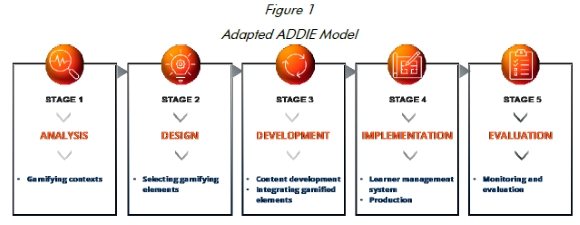
The adapted model as illustrated in Figure 1 below builds on the traditional ADDIE framework, which is a cornerstone in instructional design, encompassing five critical phases: Analysis, Design, Development, Implementation, and Evaluation. This enhancement integrates gamification into each phase to enrich the instructional design process and elevate student engagement throughout the learning experience.
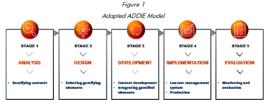
The adaptation begins with 'Gamifying Contexts' during the Analysis phase and continues with 'Selecting Gamifying Elements' in the Design phase. The Development phase sees these elements woven into the educational content, leading to the 'Production Stage' during Implementation, where gamified tools are utilised within the Learning Management System (LMS). Finally, the 'Monitoring and Evaluation' phase evaluates the effectiveness of these gamification strategies. This strategic incorporation of gamification sustains the foundational principles of the ADDIE model while significantly enhancing its applicability and effectiveness in contemporary educational settings.
The merging of gamification concepts into the ADDIE model involves enriching each phase with gamification strategies to create a comprehensive approach to designing gamified courses. This integration ensures that learning objectives are met while engaging students in a meaningful and motivating online learning environment.
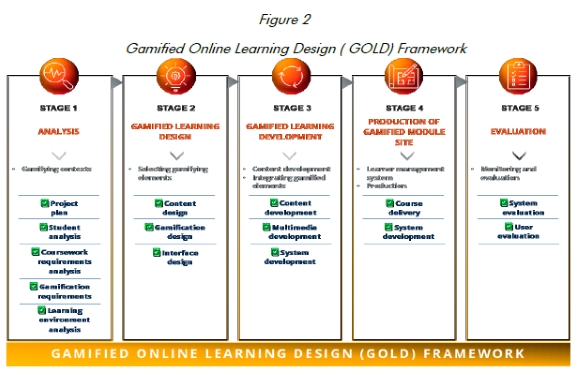
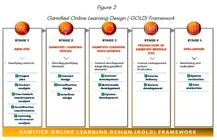
The Gamified Online Learning Design (GOLD) Framework, as depicted in Figure 2, is an innovative extension of the traditional ADDIE model that incorporates gamification elements to enhance online educational experiences. This framework provides a detailed structure for educators and instructional designers to address the complexities of gamifying learning environments. Figure 2 illustrates the GOLD Framework which systematically integrates gamification across five distinct phases: (i) Analysis, (ii) Gamifying Learning Design, (iii) Gamified Learning Development, (iv) Production of Gamified Module Site, and (v) Evaluation. Each phase is broken down into critical components such as project planning, student analysis, and content development, along with the integration of multimedia elements and interface design. This framework ensures a robust approach to developing educational modules, focusing on enhancing learner engagement and educational outcomes through strategic gamification across all stages of course development and delivery.
This research is based on a case study of a Gamified Digital Literacy Massive Open Online Course (MOOC) with its focus on instructional design and development. This MOOC, designed by the researcher and a collaborative team from the ADOVH, integrates fundamental digital literacy skills at an introductory NQF level 5, with the potential to scaffold to higher cognitive skills through advanced gamification strategies.
The MOOC aims to equip students with essential digital literacy skills, critical for navigating modern educational and professional environments. It involves teaching basic computer literacy, online communication, and information management. The course also incorporates problem-solving and critical thinking tasks, designed to elevate students' engagement from basic skill acquisition to higher- order thinking through gamified elements such as problem-solving quests and scenario-based challenges.
The study adopted a design-based research approach which included multiple cycles of design, implementation, and refinement. Initially, the development team, including the researcher, five content developers, and two educational technologists, drafted the course framework. This framework underwent several iterations based on ongoing reflections, stakeholder feedback, and real-time adjustments during the implementation phase. Each cycle consisted of planning, action, observation, and reflection, characteristic of an action research methodology.
Student feedback was systematically collected at the end of implementation through survey questionnaire, and direct observation during course activities. This feedback was crucial for adjusting gamification elements to better suit the educational needs and cognitive capabilities of the students. The study utilised comprehensive data collection methods including document analysis (reviewing project documentation, minutes of meetings, and course materials), observations (documenting team interactions and decision-making processes), and recordings and minutes from regular team meetings conducted on Microsoft Teams. These methods provided a rich dataset for analysing the intricacies of the design and development process, ensuring a comprehensive evaluation of the gamified learning experiences.
The iterative nature of this design-based research emphasised active stakeholder involvement, fostering collaboration and continuous enhancement of the educational interventions. Insights gained from the team's experiences and student interactions during online meetings offered valuable perspectives on challenges and solutions encountered, which were instrumental in refining the gamification framework.
Through documenting and analysing the development process, this study aims to provide adaptable strategies and insights for enhancing gamified learning experiences across various educational settings. The methodology employed aligns with the goal of developing effective instructional theories adaptable to diverse contexts, with a particular focus on scaling cognitive engagement through gamification in digital literacy education.
CASE STUDY: IMPLEMENTATION OF THE FRAMEWORK IN THE GAMIFIED DIGITAL LITERACY MOOC
Stage 1: Analysis phase
During the Analysis phase of the ADDIE model for developing a digital literacy course at the University of South Africa, a baseline assessment was conducted to identify the specific needs of the student body in terms of digital literacy skills. Utilising an online survey tool, feedback from 4080 students revealed essential areas requiring support, including foundational concepts, navigation, content creation, content sharing, and collaboration. Based on this data, the course learning outcomes were meticulously defined to directly address these needs.
To ensure the course was culturally relevant and engaging for students predominantly from Africa the design incorporated an African storyline. Stakeholders, including content creators, instructional designers, and subject matter experts, collaborated closely, each with clearly defined roles, to integrate an authentic African narrative into the course structure. This narrative was inspired by African myths and popular culture, notably the film The Gods Must Be Crazy. The course setting was creatively depicted as an African game reserve, with animal characters guiding students through the learning units. This thematic approach not only made the learning experience more relatable and engaging but also ensured it was imbued with cultural significance, enhancing the educational impact and relevance for the students.
Stage 2: Learning Design
Animal characters were intricately integrated into the storyline to guide students on their digital literacy journey. This narrative approach not only enriched the learning experience with captivating storytelling but also closely linked gamification elements to the storyline, thereby enhancing the educational impact. For instance, students earned points, symbolised as marulas, as they progressed through the course, with higher value assigned for achieving mastery on initial attempts. Additionally, successful completion of each unit rewarded students with ingredients for a marula health beer, symbolising their advancement and directly tying their accomplishments to the narrative.
The selection of Moodle as the LMS was driven by its flexibility in incorporating essential gamified elements like badges, leaderboards, and progress bars. This choice facilitated the seamless integration of the course's narrative with its gamification strategy, overseen by an education technologist within the project team. The syllabus, structured around five core digital literacy topics, was meticulously crafted using a storyboard approach to ensure that content, video materials, and interactive activities were aligned effectively with the learning objectives.
Furthermore, the course presentation capitalised on its African context to engage students by integrating narratives, badges, leaderboards, and progress bars as central gamified elements. Each learning unit featured an animal character leading the lessons, with badges awarded upon lesson completion serving as ingredients for the marula beer. This innovative storytelling and gamification approach not only motivated students through a sense of achievement and healthy competition but also provided a culturally immersive learning experience that was both engaging and educational.
The integration of these elements within the learning design phase exemplified a thoughtful and effective approach to gamifying the digital literacy curriculum. By embedding educational content within a compelling narrative and leveraging gamification to enhance learning outcomes, the course offered students a dynamic and interactive learning experience that was both enriching and engaging.
Stage 3: Gamified Learning Development
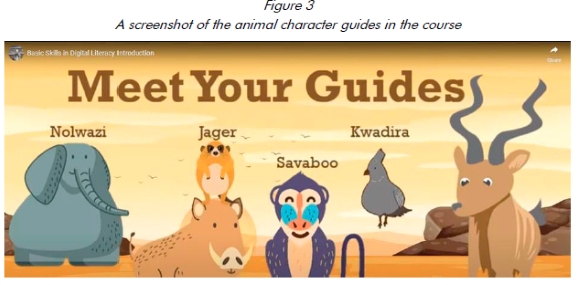
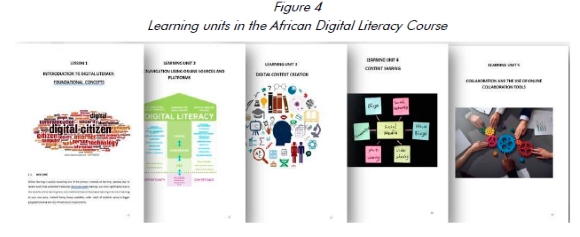
During the development phase, a detailed storyboard was created to guide the structured delivery of content across five distinct learning units: Foundational Terms, Basic Navigation, Productivity Applications, Content Sharing, and Communication and Collaboration. Animal characters as illustrated in Figure 3 below were introduced at the beginning of each unit to guide students through the material, enhancing engagement and contextualising digital literacy within an African cultural setting.

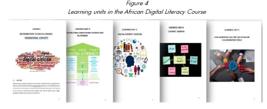
This phase involved the technical integration of Moodle LMS functionalities and the utilisation of HTML 5 Package (H5P) to create interactive, engaging elements that enhance the learning experience. Gamification strategies were also embedded within each unit to increase learner engagement and motivation. These included the use of experience points, badges, and leaderboards, which were seamlessly incorporated through H5P's enhanced gamification capabilities. The comprehensive planning and design ensured that each learning unit as depicted in Figure 4 below was not only informative but also interactive and enjoyable, catering to the diverse learning preferences of students. This approach leveraged both the robust features of Moodle for course management and delivery, and the dynamic content creation possibilities of H5P, ensuring a rich, engaging, and effective learning environment.
Stage 4: Production of Site
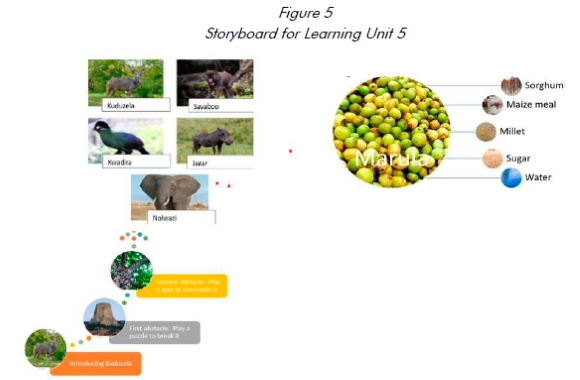
The Production stage of the GOLD framework is crucial for integrating digital media into the learning environment. This stage involved the structured deployment of course materials on the Moodle platform, enriched with an engaging African narrative. Key elements included video recordings and interactive activities designed to enhance the digital competencies of students through gamified learning scenarios. The Production stage in Learning Unit 5 is illustrated in Figure 5 below, where students explore the Kruger National Park virtually. They engage with the character Kuduzela, a Kudu who guides them in the task of collecting marulas to brew traditional beer. This immersive experience is supported by various gamified elements such as quizzes and H5P activities, which are aligned with the learning objectives to ensure educational efficacy and student engagement.
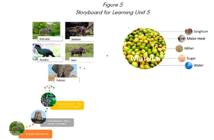
Students navigate through meticulously designed challenges, such as puzzles and quizzes depicted in the figure, which simulate obstacles such as towering structures and thorn trees. These activities are crucial for progression and are integrated with the learning objectives of the unit. For instance, overcoming the thorn tree involves collaborative tasks using Microsoft Teams, enhancing both the narrative immersion and students' teamwork skills.
Successful completion of these tasks rewards students with marulas, which are symbolic of their achievements. Accumulating enough marulas allows students to earn badges, such as the prestigious Maize badge and ultimately the Sorghum badge in the final unit. This gamification strategy not only makes the learning process engaging but also ensures a deeper understanding of the content.
The culmination of this unit is a group effort among the students and their animal friends to gather ingredients like maize meal, represented in the figure, to complete the brewing of the marula beer. This final collaborative activity celebrates the collective learning journey, reinforcing teamwork and achieving the course's educational goals. The Moodle platform's optimised features support these interactive and gamified elements, ensuring a seamless and effective learning experience.
Stage 5: Evaluation
The evaluation of the African Gamified MOOC as the final stage of the framework aimed to optimise instructional design and delivery through evidence-based decisions, thereby enriching the learning experience for students. To ensure transparency and ethical compliance, the study obtained ethical clearance from the University of South Africa's Ethics Review Committee prior to conducting the evaluation. Informed consent was obtained from all participants, with students providing clear explanations regarding the purpose of the research, their voluntary participation, and assurances of anonymity and confidentiality. A comprehensive survey, comprising both quantitative and qualitative questions, was distributed to all 150 students enrolled in the MOOC. The survey was designed to assess the course's effectiveness and identify areas for improvement. These measures reflect the commitment to ethical research practices throughout the study.
The survey results indicated a high level of overall satisfaction with the course, with 87% of students satisfied with the content, though 5% were dissatisfied and 7% remained neutral. Regarding the course material, 72% of participants deemed it relevant and engaging, but feedback suggested a need for more real-life examples (18%) and adjustments for those finding the material too challenging (10%). Instructor effectiveness was positively reviewed by 80% of respondents, who valued the instructors' knowledge and support; however, there was a call for more interactive sessions (13%) and personalised feedback (7%). In terms of technical support, 87% expressed satisfaction, but some faced challenges with accessing materials (8%) and recommended faster response times to technical queries (5%). These insights highlight areas of strength as well as opportunities for enhancing the course's design and delivery.
The course had a 62% completion rate, with 93 students successfully finishing and earning badges. Analysis indicated that active engagement in discussions and assignments correlated with higher completion rates. Conversely, students facing technical issues or those challenged by the course's difficulty were less likely to complete the course. Recommendations included offering more support for those with technical difficulties and adjusting task difficulty levels to accommodate varying student abilities. Additionally, provision of optional challenge levels and supplementary materials such as tutorials or extra practice exercises were suggested to help students complete the course successfully and earn badges.
Following these insights and recommendations, the Digital Literacy MOOC underwent substantial revisions to improve content accessibility, increase student engagement, and cater to diverse student needs, ultimately aiming to boost completion rates and badge distribution. These changes included adjusting the difficulty of certain tasks, expanding interactive elements, and enhancing support resources to address the challenges identified during the evaluation phase.
DISCUSSION OF FINDINGS
The analysis of the case study provided valuable insights into the design and development process of integrating gamification elements into educational settings. The collaborative development of the Gamified Digital Literacy MOOC by the ADOVH project team at the University of South Africa highlighted the potential of gamified learning experiences to enhance student engagement and create interactive online learning environments (Lee & Hammer, 2011). This finding aligns with existing literature that emphasises the importance of gamification in education and its potential to transform traditional learning experiences (Barata, 2023).
One key finding of the study was the successful integration of game elements such as Progression, Rewards, Rules, Social, Competition, and Communication into the course design. These elements were identified as essential components that could motivate students and foster collaboration within the learning environment (Lee & Hammer, 2011). By incorporating these game elements, the gamified MOOC was able to create a dynamic and engaging learning environment that encouraged active participation and interaction among students.
The incorporation of an African narrative throughout the course design, inspired by cultural contexts and popular references, aimed to enhance student engagement and cultural relevance (Guhl & Cordeiro, 2017). This cultural immersion not only made the learning experience more meaningful for students but also highlighted the importance of incorporating diverse perspectives and narratives in educational content to cater to a wide range of learners.
The structured phases of the GOLD Framework ensured that gamification was not treated as an add- on but was seamlessly integrated and thought of from the initial design phase and carried through the entire process. The GOLD Framework provided a systematic approach to design the gamified course. By meticulously aligning gamification elements with each phase of the ADDIE model, the framework ensured that learning objectives were effectively addressed while upholding the core principles of instructional design. This holistic and integrated approach to gamification design not only enriched the educational experience for students but also established a replicable framework that could be tailored to various educational contexts.
Furthermore, the methodology, grounded in design-based research principles, as advocated by Nicholson (2012, 2015) and other scholars, facilitated a comprehensive understanding of the complexities involved in gamified systems. By engaging stakeholders in the research process and addressing real-world challenges, the study not only developed effective instructional theories but also offered adaptable strategies for enhancing gamified learning experiences across diverse educational contexts (Saleem, Noori & Ozdamli, 2022).
This collaborative and multidisciplinary approach to designing gamified online courses highlights the value of teamwork and expertise in creating engaging and interactive educational experiences (Patrício, Moreira & Zurlo, 2021).
In conclusion, the study highlights the importance of a multidisciplinary approach to designing gamified online courses. The successful integration of gamification elements, the emphasis on cultural relevance, and the structured framework for gamified course design all underscore the potential of gamified learning to transform online courses into engaging and effective learning environments (Aguiar-Castillo et al., 2021). By addressing the challenges and opportunities associated with integrating gamification elements into online platforms, educators can enhance student engagement and participation, ultimately improving the overall quality of online learning experiences in higher education settings. Overall, the findings underscore the potential of gamified learning to transform online courses into engaging and effective learning environments.
RECOMMENDATIONS FOR POLICY, PRACTICE, AND HIGHER EDUCATION INSTITUTIONS
Based on the insights gained from the development of the Gamified Digital Literacy MOOC and the collaborative efforts of the ADOVH project team, several recommendations can be proposed for designing and implementing gamified online courses effectively:
• Policy Development: Educational policymakers should consider integrating gamification principles into curriculum design guidelines to promote innovative and engaging learning experiences.
• Establishing policies that support the implementation of gamified elements in online courses can enhance student engagement and motivation.
• Institutional Support: Higher education institutions should invest in technological infrastructure that supports gamified learning environments. Providing resources for the development and implementation of gamified courses can help educators create dynamic and interactive online learning experiences.
• Professional Development: Practitioners in the field of education should undergo training programs focused on gamification techniques and strategies. Continuous professional development opportunities can equip educators with the skills and knowledge needed to effectively integrate game elements into their teaching practices.
• Collaboration and Interdisciplinary Teams: Encouraging collaboration among instructional designers, information technology specialists, content experts, and evaluation professionals is essential for the successful implementation of gamified online courses. Higher education institutions should foster interdisciplinary teams to ensure that gamified learning experiences are technologically advanced, visually engaging, and educationally sound.
• Evaluation and Assessment: Practitioners should prioritise the evaluation of gamified courses to assess their impact on student engagement and learning outcomes. Implementing robust assessment strategies can provide valuable insights into the effectiveness of gamification in online education and guide future course design improvements.
• Research and Innovation: Higher education institutions should support research initiatives that explore the potential of gamified learning environments. Investing in research on gamification in education can lead to the development of best practices and innovative approaches to enhance online learning experiences.
• Student-Centred Design: Practitioners should adopt a student-centred approach to gamification design, considering the diverse needs and preferences of learners. Customising gamified elements to align with students' interests and learning styles can increase engagement and promote a positive learning experience.
• Continuous Improvement: Practitioners and higher education institutions should prioritise continuous improvement in gamified course design. Regularly updating and refining gamification strategies based on feedback and evaluation results can ensure that online courses remain relevant, engaging, and effective.
By implementing these recommendations, policymakers, practitioners, and higher education institutions can harness the potential of gamified learning to create dynamic and interactive online educational experiences that enhance student engagement, motivation, and learning outcomes.
LIMITATIONS OF THE STUDY:
The two limitations of this study are:
• Generalisability: The findings and recommendations of the study may be specific to the context of Distance Education, such as the University of South Africa and may not directly apply to other educational settings without adaptation. The unique cultural and institutional factors that influenced the design and implementation of the gamified MOOC may limit the generalisability of the study's outcomes to diverse educational contexts or settings. Additionally, implementing a gamified framework like GOLD requires technological resources, including specific Learning Management System (LMS) functionalities (e.g., Moodle and H5P), and support from educational technologists. For institutions with limited technological infrastructure or support staff, replicating this model could be challenging.
• Limited Scope of Evaluation: The study utilised student surveys to assess user satisfaction, yet it did not examine the impact on digital literacy competencies. The evaluation was narrowly scoped, concentrating mainly on the design and development phases and the delivery of the gamified online course and less on assessing its effects on student learning outcomes. Implementing a more robust evaluation framework that incorporates both quantitative and qualitative measures of student engagement, motivation, and academic performance would offer more detailed insights into how effective gamification is in enhancing online education.
Acknowledging these limitations is essential for future research and practice in gamified online education to address emerging challenges, refine implementation strategies, and enhance the overall quality of online learning experiences for students.
CONCLUSION
The study on gamifying online courses illuminated the transformative potential of integrating gamification to enhance student engagement and create interactive learning environments in higher education. Through the collaborative development of the Gamified Digital Literacy MOOC by the ADOVH project team, the benefits of a multidisciplinary approach and stakeholder collaboration in designing innovative online courses have been exemplified.
By seamlessly integrating game elements, contextual relevance, and a structured framework into the course design, the study has showcased how gamification can revolutionise traditional online learning experiences into dynamic and engaging educational platforms. The findings underscore the importance of following structured frameworks such as the GOLD framework to ensure that gamification is not merely an add-on but a core component integrated from the initial design phase and carried through the entire process.
While the recommendations provided, aim to guide educators, institutions, and policymakers in effectively implementing gamified online courses it is crucial to address the identified limitations and continue refining gamification strategies to meet the evolving needs of students and the educational landscape. The study emphasises the significance of ongoing research, professional development, and collaboration to advance the field of gamified learning and make online education more interactive, engaging, and effective for learners in the digital age.
In conclusion, the study on gamifying online courses has shed light on the potential of gamification to enhance student engagement and create interactive learning environments in higher education. By embracing the principles of gamification and leveraging structured frameworks, educators and institutions can create immersive and impactful online learning experiences that cater to the diverse needs and preferences of modern learners. The collaborative development of the Gamified Digital Literacy MOOC by the ADOVH project team exemplified the benefits of a multidisciplinary approach and stakeholder collaboration in designing innovative online courses.
By integrating game elements, contextual relevance, and a structured framework into the course design, the study demonstrated how gamification can transform traditional online learning experiences into dynamic and engaging educational platforms.
Overall, the study contributes valuable insights to the field of educational innovation and underscores the potential of gamified learning to revolutionise online education, making it more interactive, engaging, and effective for learners in the digital age.
REFERENCES
- Adam, S. & Du Preez, J. (2021). Gamification in instructional design: A comprehensive approach. Journal of Educational Technology, 15(3), 34-45.
- Aguiar-Castillo, L., Clavijo-Rodriguez, A., Hernández-López, L., De Saa-Pérez, P. & Pérez-Jiménez, R. (2021). Gamification and deep learning approaches in higher education. Journal of Hospitality, Leisure, Sport & Tourism Education, 29, 100290. https://doi.org/10.1016/j.jhlste.2020.100290
- Alsawaier, R. S. (2018). The effect of gamification on motivation and engagement. The International Journal of Information and Learning Technology, 35(1), 56-79. https://doi:10.1108/IJILT-02-2017-0009
- Antonaci, A., Klemke, R. & Specht, M. (2019). The effects of gamification in online learning environments: A systematic literature review. Informatics, 6(3), 32.
- Aura, I., Hassan, L. & Hamari, J. (2021). Teaching within a story: Understanding storification of pedagogy. International Journal of Educational Research, 106, 101728
- Barata, G. (2013). Engaging students with gamification: An empirical study in higher education. Computers in Human Behavior, 28(4), 23-34.
- Bockle, C. & Michael, S. (2018). Gamification in online education: Implementation challenges and opportunities. Online Learning Journal, 22(3), 50-67.
- Cahyani, H. (2016). Enhancing online education through the Africanization of content. International Journal of Educational Development, 48(2), 11-18.
- Chou, Y. K. (2018). Actionable gamification: Beyond points, badges, and leaderboards. Learning Technologies, 19(2), 44-56.
- Chukwu, S. (2024). Self-Determination Theory in online learning: Enhancing motivation through gamification. Journal of Applied Educational Psychology, 12(2), 76-89.
- Csikszentmihalyi, M. (1990). Flow: The psychology of optimal experience. Harper & Row.
- Deci, E. L., & Ryan, R. M. (2013). Intrinsic motivation and self-determination in human behavior. Springer Science & Business Media.
- De la Peña, D., Lizcano, D. & Martínez-Álvarez, I. (2021). Learning through play: Gamification model in university-level distance learning. Entertainment Computing, 39, 100430.
- Deterding, S., Dixon, D., Khaled, R. & Nacke, L. (2011). From game design elements to gamefulness: Defining gamification. In Proceedings of the 15th International Academic MindTrek Conference, Tampere, Finland, 28-30 September (pp.9-15). Association for Computing Machinery. https://doi.org/10.1145/2181037.2181040
- Domínguez, A., Saenz-de-Navarrete, J., De-Marcos, L., Fernández-Sanz, L., Pagés, C. & Martínez- Herráiz, J. J. (2013). Gamifying learning experiences: Practical implications and outcomes. Computers & Education, 63, 380-392.
- Guhl, A., & Cordeiro, C. M. (2017). National culture in gamification design: A conceptual approach [Doctoral dissertation]. University of Gothenburg, Sweden.
- Huang, R., Ritzhaupt, A.D., Sommer, M., Zhu, J., Stephen, A., Valle, N. Hampton, J. & Li, J. (2020). The impact of gamification in educational settings on student learning outcomes: A meta- analysis. Education Tech Research Dev, 68, 1875-1901.
- Kapp, K. M. (2014). The gamification of learning and instruction: Game-based methods and strategies for training and education. Wiley. San Francisco, United States of America.
- Khaldi, A., Bouzidi, R. & Nader, F. (2023). Gamification of e-learning in higher education: A systematic literature review. Smart Learning Environments, 10(1), 10.
- Lee, J. J. & Hammer, J. (2011). Gamification in education: What, how, why bother? Academic Exchange Quarterly, 15(2), 1-5.
- Limantara, N., Meyliana, Gaol, F. L. & Prabowo, H. (2023). Designing gamified learning management systems for higher education. International Journal of Information and Education Technology, 13(1).
- Mora, A., Riera, D., Gonzalez, C. & Morena, L. (2017). Gamification: A systematic review of design frameworks. Journal of Educational Technology Systems, 45(2), 23-47.
- Naik, A., & Kamat, M. (2015). Role-playing elements in gamified education: Case studies from the field. Education and Information Technologies, 20(3), 431-448.
- Nicholson, S. (2012). A user-centered theoretical framework for meaningful gamification. In C. Martin, A. Ochsner & K. Squire (Eds.), Games+Learning+Society 8.0 Conference, Madison, WI, June 13-15 (pp. 223-229). Carnegie Mellon University, ECT Press.
- O'Donovan, S., Gain, J. & Marais, P. (2013). A case study in the gamification of a university-level games development course. In K. Bradshaw, P. Machanick, & M. Tsietsi (Eds.), Proceedings of the South African Institute for Computer Scientists and Information Technologists Conference (SAICSIT), '13, East London, South Africa, October 7-9, 2013 (pp.242-251). Association for Computer Machinery. https://doi.org/10.1145/2513456.25134
- Patrício, R., Moreira, A. C. & Zurlo, F. (2021). Enhancing design thinking approaches to innovation through gamification. European Journal of Innovation Management, 24(5), 1569-1594.
- Ryan, R. M., Rigby, C. S. & Przybylski, A. (2006). The motivational pull of video games: A self-determination theory approach. Motivation and Emotion, 30(4), 347-363.
- Sadovets, O., Martynyuk, O., Orlovska, O., Lysak, H., Korol, S. & Zembytska, M. (2022). Gamification in the Informal Learning Space of Higher Education (in the Context of the Digital Transformation of Education). Postmodern Openings, 13(1), 330-350.
- Saleem, A. N., Noori, N. M. & Ozdamli, F. (2022). Gamification applications in E-learning: A literature review. Technology, Knowledge and Learning, 27(1), 139-159.
- Schöbel, S. M., Janson, A. & Söllner, M. (2020). Capturing the complexity of gamification elements: A holistic approach for analysing existing and deriving novel gamification designs. European Journal of Information Systems, 29(6), 641-668.
- Subhash, S. & Cudney, E. A. (2018). Gamified learning in higher education: A systematic review of the literature. Computers in Human Behavior, 87, 192-206.
- Robertson, M. (2010). Can't play, won't play Hide & Seek. 10 October 2010. Retrieved 10 June 2014 from https://www.hideandseek.net/2010/10/06/cant-play-wont-play/
- Sweller, J. (1988). Cognitive load during problem solving: Effects on learning. Cognitive Science, 12(2), 257-285.
- Tsay, C. H. (2018). Culturally relevant pedagogy and gamification: Enhancing student engagement in online courses. Educational Media International, 55(4), 314-328.
- Vargas-Enriquez, J., Garcia-Mundo, L., Genero, M. & Piattini, M. (2015, September). A systematic mapping study on gamified software quality. In 2015 7th International Conference on Games and Virtual Worlds for Serious Applications (VS-Games), Skövde, Sweden, 16-18 September. (pp.1-8). IEEE.
- Wang, Z. J., Kale, A., Nori, H., Stella, P., Nunnally, M. E., Chau, D., Vorvoreanu, M., Vaughan, J. W., & Caruana, R. (2021, December 6). GAM Changer: Editing Generalized Additive Models with Interactive Visualization. ArXiv, abs/2112.03245. https://doi.org/10.48550/arXiv.2112.03245
- Zainuddin, Z, Chu, S., Shujahat, P. & Perera., K. (2020). Gamification in learning: A case study on student engagement. Journal of Educational Computing Research, 58(3), 104-126.
Date of Review Outcome: 9 December 2024
Date of Acceptance: 21 January 2025