Teaching African-the med video games design through participatory culture framework
Abstract
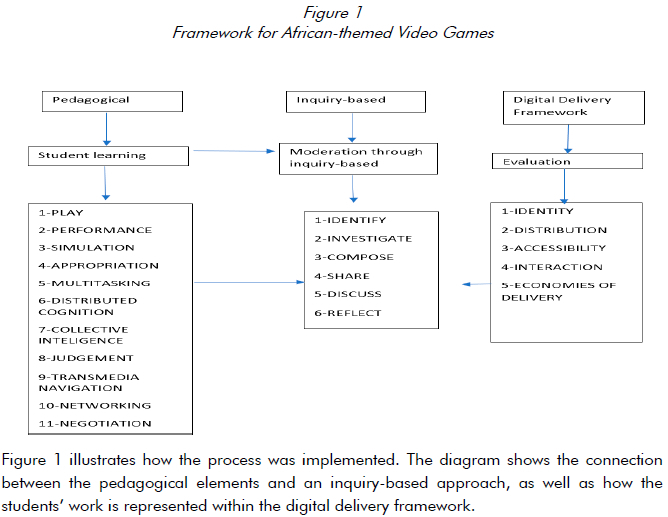
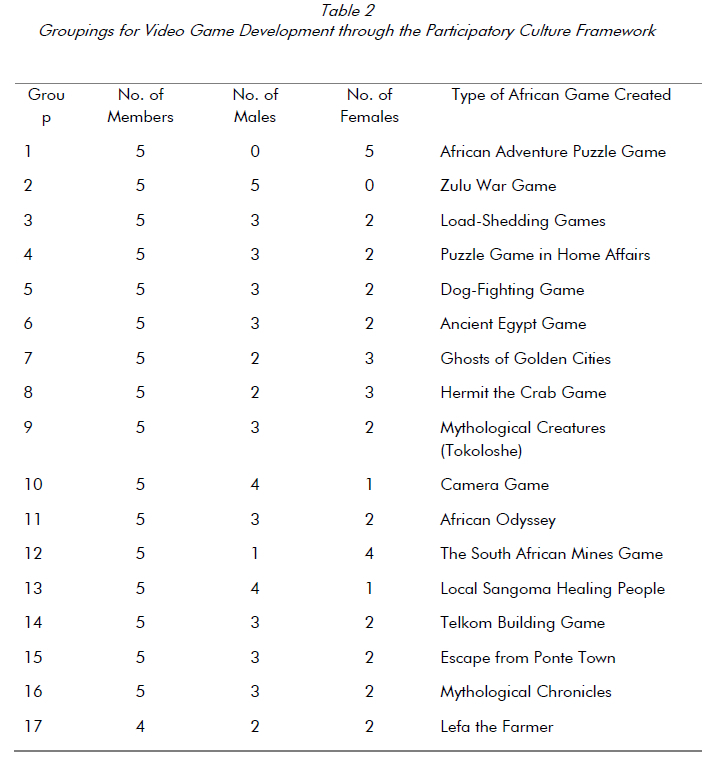
This article reflects how the participatory culture framework and inquiry-based assessment model were used in the development of African-themed video games for a game design course at a South African university. The study employed the participatory culture framework in a classroom environment that supports learning through tradition and digital settings. To assess the effectiveness of the framework, Porter's (2009) theoretical framework for digital delivery, which includes identity, accessibility, distribution, interaction, and economics, was employed to elicit valuable feedback from students' reflections. Three video games with African themes were examined as a case study to demonstrate the framework's effectiveness as a tool for inclusive education. The study concluded that the framework enabled students in developing social skills and prioritising community involvement over individual expression.
game studies; participatory culture; digital storytelling; African video games; pedagogy
 Thumbnail