Desired attributes of undergraduate tourism students: An international Delphi academic perspective
Abstract
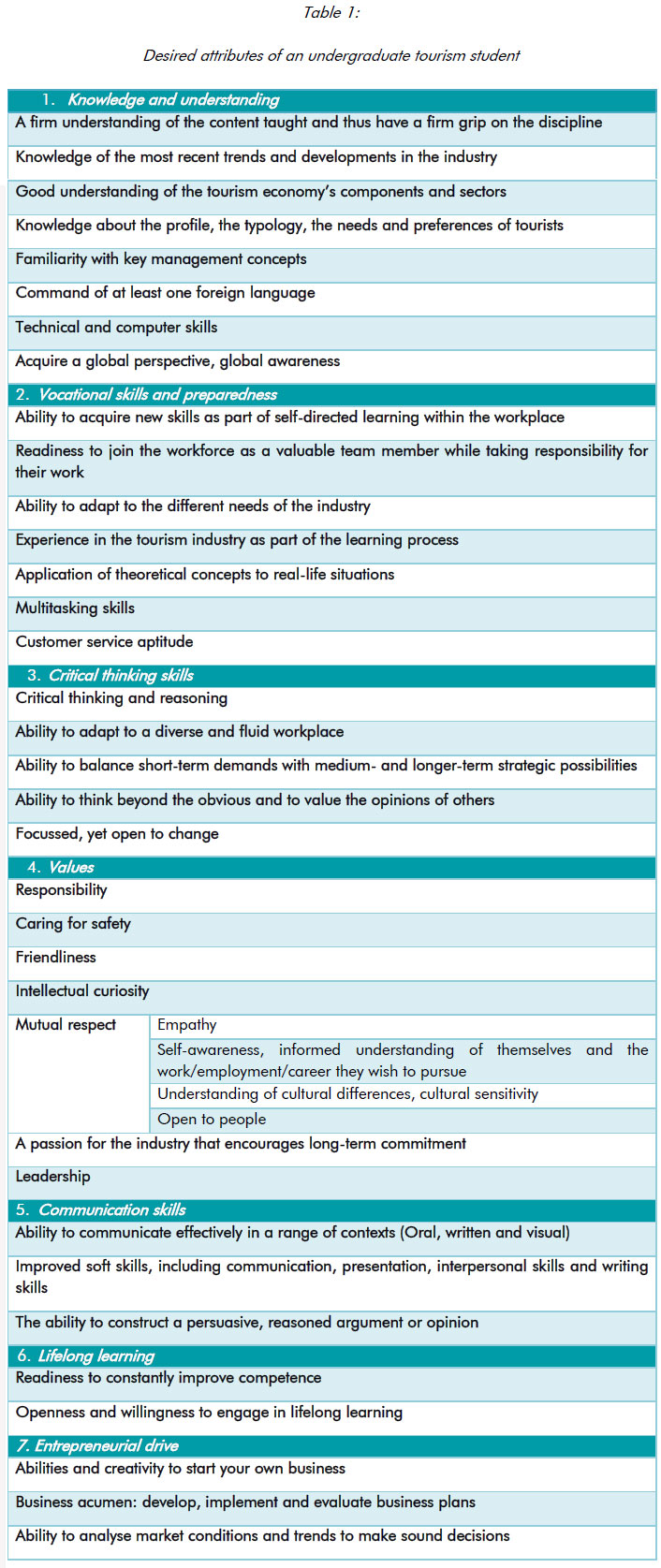
Higher Education Institutions (HEIs) play a critical role in preparing students for the complexities of the modern workforce. While existing research has explored graduate attributes from industry and policy perspectives, limited attention has been given to the views of lecturers, who are central to curriculum design and implementation. This study addresses this gap by employing a qualitative Delphi approach to identify the attributes considered essential for undergraduate tourism students, drawing on insights from an international panel of academic experts. Seven core attributes emerged as fundamental for equipping graduates with the competencies required for professional practice, further study, continuous development and lifelong learning. These findings not only reinforce existing theoretical frameworks but also provide empirical input for curriculum development and transformation. Moreover, they offer a foundation for future research and practice-based inquiry aimed at enhancing the alignment between tourism education and the evolving demands of the global industry.
undergraduate tourism curriculum; learning outcomes; graduate attributes; curriculum transformation; Delphi