Desired attributes of undergraduate tourism students: An international Delphi academic perspective
Abstract
Higher Education Institutions (HEIs) play a critical role in preparing students for the complexities of the modern workforce. While existing research has explored graduate attributes from industry and policy perspectives, limited attention has been given to the views of lecturers, who are central to curriculum design and implementation. This study addresses this gap by employing a qualitative Delphi approach to identify the attributes considered essential for undergraduate tourism students, drawing on insights from an international panel of academic experts. Seven core attributes emerged as fundamental for equipping graduates with the competencies required for professional practice, further study, continuous development and lifelong learning. These findings not only reinforce existing theoretical frameworks but also provide empirical input for curriculum development and transformation. Moreover, they offer a foundation for future research and practice-based inquiry aimed at enhancing the alignment between tourism education and the evolving demands of the global industry.
undergraduate tourism curriculum; learning outcomes; graduate attributes; curriculum transformation; Delphi
INTRODUCTION
It is said that the success of any country's economy is intrinsically linked to the quality of its education system (Gardner, 2021). With the consistent growth of the tourism industry, there has been an equivalent growth in the provision of tourism educational programmes, often emerging in high school curricula and culminating in doctoral qualifications at universities (Airey, 2018). These curricula are offered in both the public and private sectors of education and are designed to adequately prepare graduates for the demands of the tourism industry. We believe that a curriculum should encompass more than just the development of content-aligned and discipline-specific industry knowledge. A curriculum should encompass the full journey that the student undertakes during their studies (Hermann, 2023) and beyond (Su, 2018). A curriculum should also be designed with a view to promoting the holistic development of the student, as Slabbert et al. (2009) refer to it, for the 'real world of work'. This holds that the curriculum should incorporate the promotion of required skills and abilities. These skills and abilities, referred to as graduate attributes, have been the topic of tourism curriculum development discourse, albeit from a predominantly policy and vocational-needs perspective and rarely viewed from a curriculum transformation perspective. Against this background, this study sought to explore the desired attributes of undergraduate tourism students through a Delphi study, considering the perspectives of an international panel of academic experts.
Tourism and higher education
The tourism industry necessitates heightened consideration not only towards the quality of product and service provision but also towards the calibre of human resources who are required to deliver these products and services. These human resources, in turn, constitute one of its principal assets, given its inherently people-centric service nature (Wang, Ayres & Huyton, 2009; Madera et al., 2017). Consequently, a high-quality workforce is imperative for bolstering competitiveness, fostering innovation, enhancing employment opportunities, encouraging repeat tourism and stimulating economic expansion. However, this workforce is often recruited arbitrarily, and graduates who have completed tourism-related qualifications are frequently overlooked in favour of other graduates who have mastered fundamental soft skills over hard skills (Derco & Tometzová, 2023). Therefore, they not have adequately developed the required skills.
Tourism graduates in the industry are required to be adept at leveraging technology, exhibiting professionalism and demonstrating sociability, which are identified as their foremost competencies (Wakelin-Theron, Ukpere & Spowart, 2019). However, Wakelin-Theron, Ukpere and Spowart (2019) also indicate a deficiency in entrepreneurial skills among graduates, which Dias, Hallak and Patuleia (2024) deem essential. However, aspects such as practical experience, negotiation prowess and career planning ranked poorly in terms of actual proficiency levels among tourism graduates in their sample. These discernible gaps in knowledge and skills underscore a shortfall in the educational framework required to inform the curriculum of tourism qualifications, which, when addressed, could substantially augment recruitment, training and professional development efforts within the industry (Wakelin-Theron, Ukpere & Spowart, 2019).
Kim and Jeong (2018) provide a futuristic perspective on the landscape of tourism higher education. They observe internationalisation and the advancement of technology as key forces affecting the industry, alongside demographic shifts. The industry is therefore driven to seek competent employees who are agile in responding to these changes and who are able to lead others, shaped by socio-economic and technological forces that have become key factors in the industry's sustainability (Kongtaveesawas & Prasarnpanich, 2020). Higher Education Institutions (HEIs) serve as a fundamental pillar in the development of human capital for the industry (Eusébio et al., 2022) and should inherently be adaptive to the needs of the industry by taking cognisance of these continued transformational factors. Thus, to remain competitive, HEIs offering tourism programmes must continuously transform their curricula to meet the industry's innovative demands.
The role of tourism higher education
The role of universities and other HEIs (including vocational colleges) has evolved, from institutions formerly only focusing primarily on the provision of educational offerings to an increasing requirement to contribute to a research-focused agenda in the contemporary world. This fosters an increasing responsibility towards engagement within the communities surrounding HEIs and the industries they serve, as well as the environment. HEIs provide curricula that should effectively develop professionals for the real world of work where meaningful contributions are realised (Oraison, Konjarski & Howe, 2019; Chankseliani & McCowan, 2021). Clarke (2018) alludes to the post-modern need for HEIs to transform their role in higher education. This involves moving away from a purely outcomes-based focus, or as Gardner (2021) refers to as 'core-knowledge', to one that includes other critical factors such as the development of graduate attributes and behaviours that may contribute to graduate employability and their abilities to make constructive inputs and to engage with the environment in which they work and live. These attributes extend beyond the mere need for content-based learning of core knowledge to one where curricula proactively offer opportunities for students to be empowered for employability and professionalism, serving as performance indicators of such curricula (Sin, Tavares, & Amaral, 2017; Oraison, Konjarski, & Howe, 2019). HEI curricula should, therefore, promote the development of students who not only master the vocational requirements of the industry but also do so with a desire for professional development, thereby meeting the sustainability needs of the 21st century.
This empowerment of students may, in turn, promote their own engagement with the real world of work and their living environment, where effective constituency-building and the enhancement of beneficiation towards society at large, economy and the environment are sought and which contribute to the potential development of so-called 'learning communities' (Brouwer & Jansen, 2019). From a global governance perspective, the United Nations has enshrined the Sustainable Development Goals, which strive to promote and achieve sustainable societies, environments and economies. One of these goals (namely Goal 4) focuses on the provision of quality education for all and stipulates the important role that HEIs play in the achievement of 'inclusive and equitable quality education and the promotion of lifelong learning' (UN, 2024).
Undergraduate attributes in tourism
Curricula at HEIs are guided towards the achievement of set learning outcomes. Learning outcomes may also be considered the desired knowledge and skills that a student is required to master upon completing their studies (Martin & Mahat, 2017), which equip graduates with the necessary competence for their professional careers (Barrie, 2004). Beyond these traditional outcomes, students are now increasingly required to master additional graduate attributes, which could also be considered modern graduate competencies (Hill, Walkington & France, 2016). These outcomes extend beyond merely developing employable graduates who are ready for the vocational needs of the industry, as they also encompass additional attributes that contribute more broadly to a country's socio-economic needs (Hill, Walkington & France, 2016). These secondary outcomes have also been referred to as student competencies, generic attributes, qualities, transferable capabilities, employability/soft skills, core capabilities (Barrie, 2004) and skill-based learning outcomes (Clarke, 2018). These attributes are considered the overarching framework of the skills, attitudes, values, and knowledge that graduates should have acquired upon completion of their formal studies (Hill, Walkington, & France, 2016). With the embodiment of professional development, they should result in perpetual learning beyond a formal HEI curriculum. For the purposes of consistency, we use the term 'graduate attributes' as an overarching concept.
These graduate attributes, and their associated achievements by the student, should align with the increased need for global citizenship, teamwork and communication, provide greater emphasis on student independent learning, critical thinking and problem-solving and the fundamental foundational skills of effective communication, both written and spoken (Oliver & Jorre de St Jorre, 2018), as integrated in the authentic world of work. Continuous review of these attributes is essential to ensure fitness for purpose in our rapidly changing environment.
Although graduate attributes have been identified as essential in curriculum and instructional design, the successful advancement of these attributes by students is often not actively measured (Martin & Mahat, 2017). Oliver and Jorre de St Jorre (2018) highlight the need for HEIs to enhance the visibility of their graduate attributes to the public and especially to students. These institutions should actively embed these attributes in curricula, which should be accompanied by authentic assessment thereof. Although the latter is often a challenge, as attributes are habitually included as curricular outcomes but seldom actively incorporated at the subject level in instructional design and assessment (Martin & Mahat, 2017). In addition, continuous measurement of stakeholder perceptions regarding graduate attributes and their inclusion in curricula should be followed results, so that necessary improvements may be implemented.
Purpose of attributes
In South Africa, the Council on Higher Education (CHE, 2013) outlines graduate attributes as adaptable to various disciplines and fields, encompassing technical competencies, attitudes, critical thinking abilities, ethical and professional behaviour, values and the ability to apply learning beyond the academic setting. Similarly, the Australian Higher Education Standards Framework (2015) emphasises that upon course completion, students should demonstrate the specified learning outcomes, which are assessed at the unit, course, or integrated level. These outcomes must include generic skills essential for employability and further study, as well as independent and critical thinking skills conducive to lifelong learning (Commonwealth of Australia, 2015).
In addition to fostering critical thinking and lifelong learning, employability analyses suggest that employers prioritise graduates who have mastered applied competencies for professional practice and 21st-century skills, such as communication and problem-solving (Oraison, Konjarski & Howe, 2019). From a higher education perspective, institutions commonly seek to develop graduate attributes, including critical thinking (e.g., intellectual curiosity, problem-solving abilities, reflective judgment and analytical thinking), leadership and teamwork competencies, effective communication, research and inquiry skills and information and digital literacy. Personal attributes such as autonomy, creativity, flexibility, self-awareness, and self-confidence are also valued, along with ethical, moral, and social responsibility, cross-cultural awareness, sensitivity and integrity (Hill et al., 2016). Additionally, there is an increasing emphasis on fostering knowledge-sharing through learning communities (Brouwer & Jansen, 2019) and advancing understanding through constructivist approaches to meaning-making.
The academic discourse on graduate attributes in literature and policy frameworks often provides a generalised, high-level overview of these competencies, which are typically not tailored to specific industries or disciplines. While discussions on graduate attributes exist within tourism higher education, the field appears to be under-researched and is emerging as a distinct area of inquiry. Hsu (2018), for example, contends that although general module outcomes associated with tourism-specific subjects are of vital importance, there is a need for enhanced incorporation of higher-level soft skills into contemporary curricula, such as problem solving, critical thinking, innovation, entrepreneurship (also supported by Ntshangase & Ezeuduij, [2023]) and lifelong learning as fundamental graduate attributes. Hsu (2018) mentions that these soft skills have previously been acknowledged in discourse and are commonly included as graduate attributes within various curricula. Considering the current dynamic socio-economic, natural, technological, and political environments, as well as the constantly evolving dynamics of the tourism industry, these competencies are important for tourism professionals at all levels of career progression, rather than becoming increasingly significant as graduates progress along their career trajectories. These desired attributes may therefore be understood as being transferable from undergraduate learning environments to vocational learning environments and potentially beyond that to postgraduate study. Given the multifaceted nature of the tourism industry and the increasing career mobility of professionals across its various sectors and into other industries, it has become imperative for graduates to develop critical competencies. These include analytical skills, the capability to analyse and interpret big data, an understanding of legal systems and the capacity to address contemporary challenges such as climate change (Hsu, 2018). Additionally, enhanced proficiency in navigating online teaching and learning environments (Agyeiwaah et al., 2022) and the continuous development of digital literacy skills (Adeyinka-Ojo et al., 2020) are increasingly essential. Personal and professional graduate attributes required for the vocational needs of industry could be developed as part of work-integrated learning opportunities (Rowe & Zegwaard, 2017; Schreck, Theron-Weibach & Reitsema, 2020). Moreover, the disruptions resulting from unplanned events and natural disasters necessitate that graduates in the tourism industry develop advanced critical thinking skills to effectively mitigate the impacts of such occurrences (Scarpino & Gretzel, 2014).
Graduate attributes have faced criticism in academic discourse, primarily for being overly centred on graduate employability, with some scholars arguing for a greater emphasis on fostering lifelong learning grounded in personal responsibility and the development of individual and social attributes (Haig & Clifford, 2011). Additionally, graduate attributes are increasingly seen as essential for addressing concerns related to self- and social awareness, particularly regarding the planet's wellbeing (Haig & Clifford, 2011; Slabbert et al., 2009). Barkathunnisha et al. (2019) advocate for tourism education to incorporate discussions on spiritual development, aiming to cultivate global citizens who recognise their roles as socio-cultural and environmental stewards. Consequently, tourism graduates should not only be equipped for immediate industry demands but also prepared to engage meaningfully with the broader tourism environment, aligning their professional responsibilities with real-world social and environmental challenges.
The Tourism Education Futures Initiative (TEFI) framework advocates for the development of values-aligned tourism curricula. The TEFI framework proposes a set of values that should be embedded in such curricula, which include ethics, stewardship, knowledge, professionalism, and mutual respect (Sheldon, Fesenmaier & Tribe, 2011). This initiative aims to achieve the goals of responsible and sustainable tourism by aligning tourism curricula with the aforementioned core values. While these values may not qualify as attributes in themselves, the actions necessary to realise them can be incorporated into graduate attributes. Another major contribution to delineating graduate attributes in tourism was the discourse around the development and promotion of lifelong learning in the discipline, as exemplified in the edited work of Cuffy, Airey and Papageorgiou (2018) entitled Lifelong learning for tourism: Concepts, policy and implementation. In this publication, the often-overlooked attribute of lifelong learning in tourism curricula is highlighted, which is one of the most commonly identified, if not the most commonly recurring, attributes in the discourse surrounding this topic.
HEIs frequently articulate their purpose by emphasising the values they aspire for their graduates to embody. Additionally, HEIs are known to, in some instances, advertise their vision to prospective students by incorporating graduate attributes into marketing campaigns (Wong et al., 2022). However, the alignment between these desired values and the graduate attributes realistically achievable remains ambiguous and such values are not universally recognised or representative across diverse societal contexts (Bouwer et al., 2022; Page, Trudgett & Bodkin-Andrews, 2019). While Wong et al. (2022) identify attributes such as lifelong learning, employability, self-awareness and professional development, global citizenship and engagement and academic and research literacy as essential for realising HEIs' stated values, they also highlight the need for further exploration of what constitutes the 'ideal graduate'. This process may necessitate a nuanced understanding specific to particular disciplines or industries, underscoring the importance of examining graduate attributes through the perspectives of multiple stakeholders.
Lately, there have been major shifts in and beyond the curricular landscape of HEIs (Oliver & Jorre de St Jorre, 2018) and, therefore, also within the discourse around graduate attributes. The demand-driven funding system of higher education as a case in point has increased the quantity and diversity of students wishing to access higher education in countries such as Australia (Norton, 2013) and in South Africa, coupled with an associated increase in the supply of tourism-related qualifications, with the latter seemingly on the brink of promoting quantity over quality education due to social and neo-liberal economic pressures (Slocum, Dimitrov & Webb, 2019; Mlambo, Mlambo & Adetiba, 2021). This rapid increase in the provision of qualifications on offer may increase students' difficulty in developing these desired attributes and making a meaningful impact if HEIs do not highlight the development of quality curricula. In addition, the number and diversity of HEIs globally have increased, disputing the traditional higher education landscape, especially regarding non-university providers (Oliver & Jorre de St Jorre, 2018).
In countries such as Australia, the revised Australian Higher Education Standards Framework has introduced stricter requirements which mandate all HEIs to provide evidence of the achievement of learning outcomes, including skills critical for attaining graduate employment and lifelong learning (Commonwealth of Australia, 2015). Simultaneously, rapid technological advancements have significantly disrupted traditional learning landscapes in higher education, introducing new challenges and opportunities (Adeyinka-Ojo et al., 2020; Ng'ambi et al., 2016). Additionally, the complexities of the current predominant Generation Z student cohort, characterised by their unique learning preferences, digital fluency, and diverse expectations, further complicate the attainment of graduate attributes within modern HEIs (Cilliers, 2017; Tankovic, Kapeš & Benazić, 2022).
If graduate attributes are deemed so reliable to the success of student development and vocational readiness, then why are these attributes still considered 'sought after' and not proactively included in HEI curricula? Hill et al. (2016) and Mosho et al. (2024) allude to the potential difficulties that could be encountered when attempting to facilitate learning in a way that ensures the inclusion of graduate attributes in tourism and hospitality curricula. It is known that lecturers generally regard initiatives to develop graduate attributes with apathy and even resistance (Holmes, 2000), or lecturers do not have the 'time' to include attributes in their curricula, and thus they often do not proactively encourage the development of students in this respect (Olivier, 2013). The aforementioned may be coupled with a dearth in lecturer training in this regard (Mosho et al., 2024). Instead of lecturer training, as is commonly used, we prefer to refer to lecturer professional development. This construct is aligned with professionalism and lecturer identity formation. Graduate attributes may also not have been proactively embedded in the curricula of HEIs and as a result academic staff such as lecturers do often not actively pursue the achievement of these outcomes (Holmes, 2000; Trevealen & Voola, 2008) in learning environments, they are not actively included in the learning outcomes of subjects (Martin & Mahat, 2017) or not effectively included in HEI policy and agenda due to confusion over the conceptualisation and implementation of these attributes (Green, Hammer & Star, 2009). Thus, there is a need for constructively aligned curricula that actively incorporate the development of these desired attributes. However, interventions are needed that empower academic staff, and they need to be emboldened with enhanced awareness of their important role in fostering these important skills through the design of appropriate learning opportunities for students (Trevealen & Voola, 2008). There should thus be a move away from teacher-centred to student-centred learning opportunities and from passive to active, participatory learning environments (Barrie, 2004; Kemp, 2012). In this enhanced student-centred approach, De Boer, Du Toit, and Bothma (2015) propose better opportunities for reciprocal learning that benefit both the student and the lecturer.
MATERIALS AND METHODS
To gather the empirical evidence required for this study, a constructivist exploratory qualitative research approach was adopted, utilising the Delphi method for data collection. The Delphi method is a structured process for developing consensus by collecting data from a panel of experts through iterative rounds of feedback and refinement (Olsen et al., 2021). In this approach, an initial report is generated from participants' inputs, analysed and redistributed to the panel for review and additional contributions. This iterative process continues until a consensus is achieved (Vogel et al., 2019).
The constructivist approach was deemed appropriate as it acknowledges that a single, objective reality may not always exist (Given, 2008). This aligns with the study's goal of exploring and interpreting the collective knowledge generated through social interactions with participants, providing a deeper interpretive understanding (verstehen) of the phenomena under investigation.
The target population consisted of international experts with at least two years of lecturing experience in tourism qualifications, ensuring they had sufficient lived experience to offer insights and generalisations across at least two student cohorts. Participants were recruited through TRINET, a global mailing list for tourism academics. Fifteen individuals expressed interest, and 10 actively contributed, representing South Africa (2), New Zealand (2), Australia (2), Poland (1), the United Kingdom (1), Portugal (1) and Greece (1).
Data collection involved distributing a survey via Survey Monkey. This survey consisted of seven questions related to curriculum transformation. For the purposes of this paper, the focus was more specifically on the question: 'Considering graduate attributes, vocational preparedness and competencies related to real-life settings, how would you describe the ideal undergraduate tourism student upon completion of studies?' Responses were analysed using thematic analysis, which involved identifying, organising and interpreting patterns within the data to capture key themes relevant to the study objective. The preliminary themes and interpretations were compiled into a Microsoft Word document and shared with participants during the second round via email for feedback and refinement. Participants were invited to comment and suggest adjustments, ensuring that their perspectives were accurately represented. After incorporating these contributions, a final consensus was achieved following two iterative rounds of review, at which point no further amendments were made by participants. Data collection occurred between April and September 2023 and ethical approval for the study was granted by the University of Pretoria Research Ethics Committee (approval number EDU133/20).
FINDINGS AND DISCUSSION
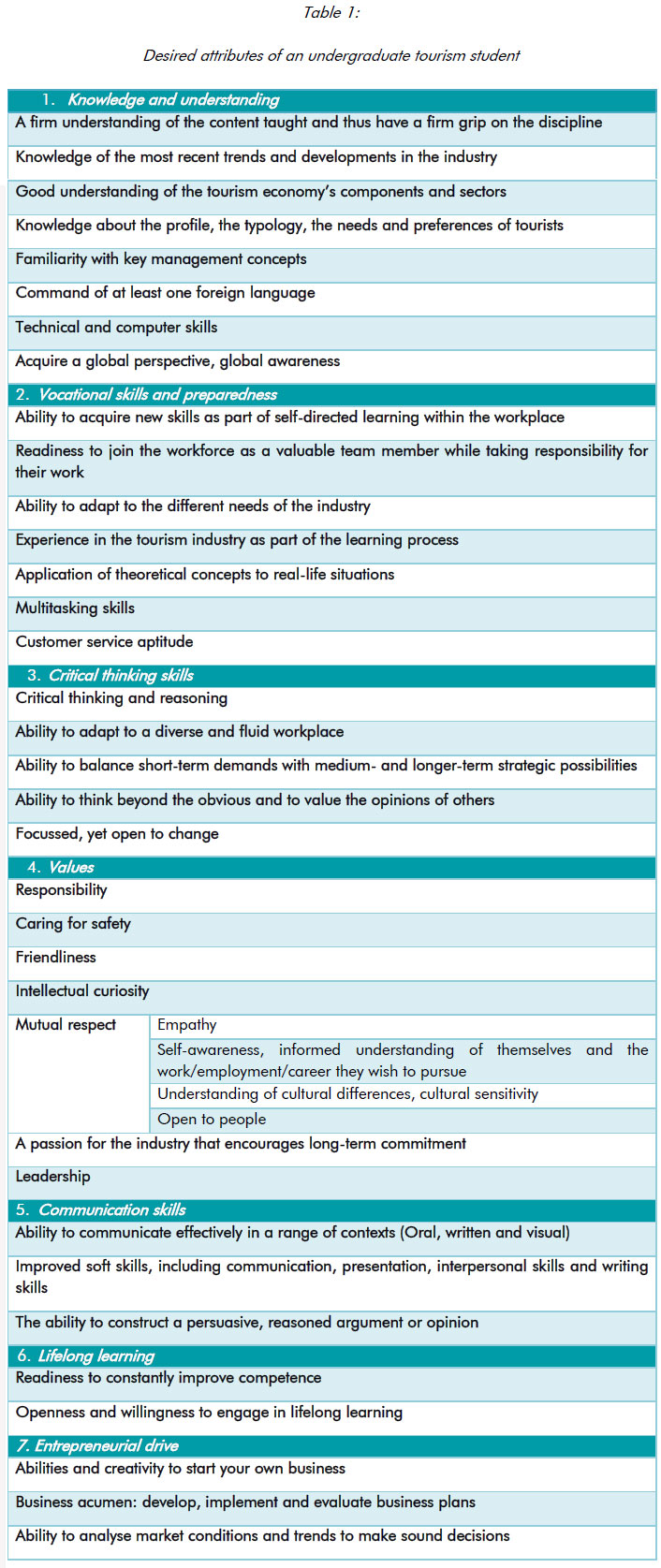
Seven main themes of graduate attributes were identified through a Delphi study involving ten participants. The findings have been grouped into the following main themes, which are presented in Table 1 along with their associated codes.
Participants identified a range of essential attributes for undergraduate tourism students to develop prior to graduation. The first theme, knowledge and understanding, was the only one directly tied to disciplinary content, underscoring the necessity of foundational theoretical knowledge for workplace readiness. This includes a strong grasp of core tourism concepts, familiarity with industry trends and developments, and comprehension of tourism's economic components and sectors. Understanding tourist profiles and typologies, as well as their diverse needs and preferences, was also deemed essential. In addition, competence in management principles, technical literacy and computer skills was considered critical for industry engagement.
Language proficiency emerged as a central theme, with emphasis placed on foreign language acquisition. However, several participants noted that English functions as a foreign language in many contexts, a concern echoed in the literature (Uysal & Seçilmiş, 2019). This highlights the importance of tailoring language requirements to the linguistic landscape of particular regions. Scholars such as Bouwer et al. (2022) and Page et al. (2019) advocate for flexible curricula that accommodate localised needs. In South Africa, for instance, where English often serves as a second language, students may need to master a third language that is neither indigenous nor English to meet the expectations of international visitors. Developing global awareness and a broader perspective were also emphasised as tourism increasingly operates within a globalised framework. Students must be equipped to interpret international developments and their potential impact on domestic tourism contexts.
The significance of vocational skills and job preparedness is well-established in both vocational and liberal academic programmes (Oktadiana & Chon, 2017). This study confirms the continued relevance of such competencies. Key attributes include self-directed learning, practical industry experience, and readiness for teamwork. To address these needs, experiential learning should be integrated into academic programs, allowing students to apply theoretical knowledge in real-world industry settings.
Participants also emphasised the importance of adaptability, given the tourism industry's sectoral diversity. A flexible and agile curriculum is vital, allowing graduates to navigate career shifts between sectors. Practical abilities such as multitasking, responsiveness to customer needs and a strong service orientation are also essential, given the dynamic nature of the tourism environment.
Critical thinking was another recurring theme. Drawing on Zhang and Lambert (2008), participants acknowledged the dual dimensions of critical thinking: skills and disposition. While students may possess analytical tools, they must also be motivated to engage with them (Dehghanzadeh & Jafaraghaee, 2018). The study participants highlighted key cognitive competencies, including reasoning, perspective-taking, long-term planning, creativity and openness to change. However, the findings suggest that curricula often emphasise cognitive processes without cultivating the disposition necessary for sustained critical engagement. Therefore, academic programmes should foster environments that promote both skill development and the disposition to think critically, encouraging students to integrate reflective practices into their academic and professional routines.
In line with this, values-based education also emerged as an integral component of graduate readiness. Although the Tourism Education Futures Initiative (TEFI) values ethics, stewardship, knowledge, professionalism and mutual respect, were not explicitly highlighted by participants (Sheldon, Fesenmaier & Tribe, 2011), the findings revealed additional, locally nuanced values. One such value is introspective responsibility, which encapsulates personal accountability for learning and ongoing professional development beyond formal education. This is closely linked to reflexivity, encouraging students to engage with their own positionality, aspirations and motivations.
Cultivating reflexivity enables students to make informed decisions about their career paths, aligning them with the evolving demands of the industry and broader societal values. These attributes contribute not only to professional efficacy but also to the development of ethical and socially responsible tourism practitioners prepared for the complexities of the 21st-century global workforce.
The TEFI value of mutual respect emerged strongly in the study's findings, reflecting participants' emphasis on empathy, cultural sensitivity, and informed self-awareness. According to Sheldon, Fesenmaier and Tribe (2011), mutual respect encompasses several foundational elements, including self-understanding and openness to others. These points were reinforced by participants, who emphasised the importance of understanding cultural diversity and promoting inclusive attitudes. Given tourism's inherently social nature, understanding the distinct needs of tourists, especially when these needs differ from those of service providers, is crucial. To navigate such complexities, a humanistic approach grounded in empathy and mutual respect is essential.
Participants suggested that curricula should create environments conducive to collaborative learning, thereby enhancing humanistic engagement. Empathy, in particular, can equip students to manage workplace complexities, especially amid modern socio-economic instability (Calloway-Thomas, Arasaratnam-Smith & Deardorff, 2017). Moreover, promoting mutual respect requires breaking down barriers such as stereotypes and addressing biases that may be inadvertently reinforced through lecturer-led teaching methods.
The role of passion as a value influencing academic and career progression was emphasised by Thomas and Havdhaugen (2022). Their findings align with Zhang and Lambert's (2008) work on student disposition, showing that passion significantly drives the formation of professional identity and enhances resilience. Unlike static student identity, passion appears to be a key motivator for continued engagement and long-term career aspirations. The panel in this study similarly recognised passion for the tourism industry as a pivotal factor in sustained professional development.
Leadership competencies, particularly in the context of a post-pandemic and ecologically uncertain world, were also highlighted as necessary graduate attributes. Xu et al. (2022) noted the growing relevance of resilient leadership amid environmental, social and economic unpredictability. In response, the panel recommended embedding leadership development in undergraduate programmes to prepare graduates for the evolving challenges ahead.
Communication was another fundamental attribute, vital not only for academic success but also for professional efficacy in tourism settings. Participants agreed that students must communicate effectively across oral, written and visual mediums, a view supported by Tankovic, Kapeš and Benazić (2022). Yet, the panel emphasised that communication alone is insufficient; it must be supported by complementary soft skills such as presentation ability, interpersonal competence and writing proficiency. Together, these skills enable students to construct coherent and persuasive arguments and interact meaningfully in diverse professional contexts.
Although lifelong learning was recognised as a desirable attribute, several panel members critiqued its treatment within existing curricula. Often positioned as an aspirational outcome, lifelong learning was sometimes viewed as a superficial concept lacking robust implementation or measurable impact. Evaluating graduate learning post-study presents ongoing challenges, particularly in tracking lifelong educational trajectories. To address this, the panel recommended incorporating reflective methodologies into academic programs. While action research was proposed as a means to instil continuous learning practices, some differentiation between scholarly and student-centred learning approaches was noted. Action research typically involves the public dissemination of findings-an element not commonly present in undergraduate contexts. Therefore, action learning, which emphasises practical problem-solving and reflective application without requiring public sharing, may be more suited for fostering a sustainable learning mindset in students. Embedding action learning can cultivate adaptability and commitment to both personal and professional growth. This supports the broader goal of producing tourism graduates who are not only technically capable but also socially aware, ethically grounded and prepared to thrive in complex, dynamic environments.
The cultivation of an entrepreneurial drive among students has become a critical focus within the undergraduate tourism curriculum. Previous research highlights the significant role of both curricular and extracurricular activities in influencing students' intentions, attitudes and behavioural control, which are foundational elements for fostering entrepreneurial intentions within the tourism industry. However, there is limited evidence of the successful development of entrepreneurial competencies in this field (Arranz et al., 2017), highlighting the need for a shift in how entrepreneurial skills are fostered. One participant remarked on this theme, stating:
...by definition, entrepreneurs do not always follow rules, prevailing trends or make what others might consider 'sound' decisions. This section should include the word passion. An entrepreneur needs to have the passion to make changes, do something new, because such individuals, true entrepreneurs, are disruptors. Tourism education should ideally help to bring out or open up an individual to possibilities they might not have considered, career-wise and (in) terms of aspiration.
This quote highlights the importance of integrating entrepreneurial thinking and action into tourism education, thereby preparing students more effectively for career transformation and success in the evolving tourism landscape.
Findings from the Delphi panel indicate a strong preference for competency-based learning within undergraduate tourism curricula. Of the themes identified, only one explicitly related to content knowledge, while the remaining six centred on applied skills and graduate attributes. This highlights a shift toward curricula that prioritise practical competencies over purely theoretical knowledge, reflecting the multifaceted demands of the tourism industry.
In a field defined by dynamic operational environments and interpersonal engagements, theoretical knowledge alone is insufficient. Tourism professionals benefit from real-world skills such as problem-solving, adaptability and effective communication, all of which underpin excellent service delivery and operational flexibility. Competency-based learning ensures that graduates are equipped to meet the evolving demands of the industry, making meaningful contributions upon entering the workforce.
Tourism is recognised as a vital contributor to economic development, particularly in emerging economies. As such, HEIs are increasingly tasked with producing graduates who can drive growth in this human-centric industry. The proliferation of HEIs offering tourism programmes speaks to this demand, but it also introduces tensions between financial imperatives, such as maintaining enrolment and revenue, and ensuring curriculum quality. These tensions prompt critical reflection on how HEIs can align graduate outcomes with the realities of the workplace and broader societal needs.
To bridge this gap, HEIs must integrate graduate attributes that complement discipline-specific learning. While widely discussed in academic discourse, implementing these attributes into active teaching and assessment strategies remains a challenge. Moreover, research remains limited on which graduate attributes are most critical for tourism students. Much of the existing literature is policy-driven or heavily focused on vocational perspectives from industry stakeholders. Notably absent are perspectives from lecturers who facilitate learning across diverse cultural contexts.
This study sought to address that gap through the insights of an international Delphi panel composed of tourism education experts. The panel identified several essential attributes expected of tourism graduates, beginning with a foundational understanding of the industry. Although seemingly content-based, this knowledge encompassed practical components, including computer literacy and foreign language proficiency, with special attention to linguistic contexts where English serves as a foreign or second language. Despite critiques that graduate attributes overemphasise vocational preparation (Haig & Clifford, 2011), panel members reaffirmed their practical importance. Authentic and applied learning experiences, such as service learning or work-integrated learning, were viewed as effective strategies for embedding vocational competencies into the curriculum.
Adaptability and critical thinking emerged as particularly valuable attributes. Literature (Hill et al., 2016) supports the view that tourism students must be agile in response to continuous industry evolution. These skills equip students to transition across roles and sectors, contributing to a curriculum that remains responsive to changing industry landscapes. As such, curriculum developers are encouraged to embrace ongoing renewal through approaches such as problem-based learning and contemporary assessment design.
Although not directly referenced by the panel, the TEFI values developed by Sheldon, Fesenmaier and Tribe (2011) offer a useful framework for value-driven curriculum design. The panel's insights aligned closely with socially oriented values such as empathy, leadership, mutual respect, responsibility, and care for others, values especially pertinent in tourism's person-to-person service model. A passion for the industry was also highlighted as a motivating factor that supports long-term professional engagement and aligns with the ideals of lifelong learning. In this context, student-led learning should replace traditional lecturer-driven instruction. Encouraging intrinsic motivation and reflexivity can help students take ownership of their development. Building these values into undergraduate curricula fosters professional identity and cultivates the emotional intelligence necessary for meaningful industry engagement.
Lifelong learning, enriched by reflexivity, was emphasised as a key graduate attribute. However, embedding this construct meaningfully into curricula presents challenges. The panel proposed incorporating elements of action learning or action research, enabling students to engage in reflective, practical inquiry with real-world applications. While action research is typically associated with academic scholarship, action learning offers a more accessible framework for undergraduate development, eliminating the need for public dissemination of results.
Effective communication was another critical competency identified. Students must be proficient in oral, written, and visual communication and capable of constructing reasoned and persuasive arguments. These skills are essential not only for service delivery but also for navigating professional environments. Curricula should therefore include clearly defined learning outcomes that promote mastery of communication through both collaborative and individual assessments. Purposefully designed tasks should encourage students to take ownership of their learning journeys and support critical self-assessment and peer feedback.
Given that much of the global tourism industry is driven by the private sector, the importance of entrepreneurial capability cannot be overstated. The panel echoed the findings of Dias, Hallak and Patuleia (2024), who emphasised the roles of entrepreneurial self-efficacy, passion, and community engagement in tourism success. Graduates should be equipped to identify market gaps, develop innovative business ideas, and respond proactively to changing conditions. Cultivating entrepreneurship within curricula empowers students to become active contributors to economic development, rather than merely seeking employment.
To achieve this, HEIs must offer learning opportunities that support creativity, market analysis, and strategic thinking. Encouraging entrepreneurship not only aligns with the neo-liberal structure of the tourism industry but also reinforces self-empowerment and agency among students. Curricula should therefore aim to equip students with tools to build viable ventures, particularly in contexts where tourism can uplift local economies.
Ultimately, the findings emphasise the need to align higher education with the realities of the tourism sector. To sustainably grow the industry and ensure continued economic and social contributions, HEIs must deliver quality, contextually relevant education that prepares graduates for real-world challenges. This involves a holistic approach that weaves together knowledge, skills, values and entrepreneurial competencies to produce globally minded and socially responsible professionals.
CONCLUSION
Our theoretical literature review highlights the need for a more nuanced and comprehensive approach to the development of graduate attributes and competencies, not only to enhance graduates' preparedness for the professional sphere but also to foster responsible global citizens. HEIs are therefore challenged to reconfigure curricula to align with the evolving demands of industry, society and the broader global context. This necessitates a shift from predominantly content-driven approaches toward curricula that authentically foster employability, professionalism and active global citizenship. Static learning outcomes often result in rigid curricula that fail to respond to the dynamic and complex nature of the tourism industry. In contrast, contemporary curricula must equip students with vocational expertise alongside competencies essential for global engagement. While notable studies and seminal frameworks, such as TEFI, have contributed significantly to the discourse on graduate attributes, these perspectives remain largely high-level and insufficiently tailored to tourism education, echoing Wong et al.'s (2022) call for a deeper inquiry into discipline-specific graduate profiles. We also note that these previous studies have been greatly skewed towards an education policy, public governance and to a certain degree, an industry perspective; there has been very little investigation of this phenomenon from a lecturer-practitioner perspective. There is a broad scholarly consensus on the need to integrate graduate attributes more effectively into curricula; however, these attributes should be adapted to the unique requirements of individual disciplines to ensure the development of high-quality qualifications rather than perpetuating the mass 'production' of graduates driven by neoliberal imperatives.
The research findings underscore that the development of undergraduate tourism graduates requires a holistic approach that integrates disciplinary knowledge, practical vocational skills and critical thinking with strong ethical values and interpersonal competencies. Graduates must not only demonstrate mastery of tourism concepts and global industry trends but also exhibit adaptability, cultural sensitivity and a commitment to lifelong learning to remain relevant in a dynamic industry. Furthermore, the ability to communicate effectively, apply theoretical insights to practice and cultivate entrepreneurial acumen positions graduates to contribute meaningfully to both organisational success and industry innovation. Collectively, these attributes reflect the multidimensional nature of tourism education and highlight the imperative for curricula that foster intellectual rigour, professional readiness and personal growth.
While this study does not claim to represent a global consensus among tourism academics, given the non-probability sampling approach, it makes a meaningful contribution to the ongoing discourse on tourism curriculum development from the perspective of lecturers, who, at a micro level, play a pivotal role in shaping curricula through their facilitation and assessment practices. The research identifies key attributes deemed essential for undergraduate tourism students, offering several implications for curriculum design. First, these attributes provide practical value as empirical input for both the development of new curricula and the transformation of existing programmes. Second, the findings contribute to theoretical discussions on graduate attributes within tourism education, laying a foundation for further scholarly inquiry. Third, they emphasise the importance of ongoing research into the integration, monitoring and evaluation of these attributes within curricula from an academic perspective. Future studies could benefit from broader representation, potentially through quantitative approaches with larger samples, as well as investigations into industry perspectives on desired graduate attributes. Ultimately, the development of a holistic framework that aligns academic and industry expectations is critical to enhancing the achievement of graduate attributes and ensuring the production of well-prepared, globally competent tourism professionals.
REFERENCES
LITERATURE REVIEW
- Adeyinka-Ojo, S., Lee, S., Abdullah, S.K., & Teo, J. (2020). Hospitality and tourism education in an emerging digital economy. Worldwide Hospitality and Tourism Themes, 12(2),113-125.
- Agyeiwaah, E., Baiden, F. B., Gamor, E., & Hsu, F. (2022). Determining the attributes that influence students' online learning satisfaction during COVID-19 pandemic. Journal of Hospitality, Leisure, Sport and Tourism Education, 30(1),1-14.
- Airey, D., Cuffy, V. V., & Papageorgiou, G. C. (2018). Lifelong learning and tourism education. In V. V. Cuffy, D. Airey, & G. C. Papagiorgiou (Eds). Lifelong learning for tourism: Concepts, policy and implications. Routledge: Abingdon.
- Arranz, N., Ubierna, F., Marta, F. A., Perez, C., & Fdez. de Arroyabe, J. C. (2017). The effect of tourism education on students' entrepreneurial vocation. Scandinavian Journal of Hospitality and Tourism, 17(3), 312- 330.
- Barkathunnisha, A. B., Lee, D., Price, A., & Wilson, E. (2019). Towards a spirituality-based platform in tourism higher education. Current Issues in Tourism, 22(17), 2140-2156.
- Barrie, S. C. (2004). A research-based approach to generic graduate attributes policy. Higher Education Research and Development, 23(3), 261-275. https://doi:10.1080/0729436042000235391
- Bouwer, S. C., Geldenhuys, S., Hermann, U. P., & Taylor, T. (2022). Values for an undergraduate ecotourism management curriculum in South Africa: A mixed-methods Study. Journal of Teaching in Travel and Tourism, 22(4), 337-359.
- Brouwer, J., & Jansen, E. (2019). Beyond grades: Developing knowledge sharing in learning communities as a graduate attribute. Higher Education Research and Development, 38(2), 219-234. https://doi.org/10.1080/07294360.2018.1522619
- Calloway-Thomas, C., Arasaratnam-Smith, L., & Deardorff, D. (2017). The role of empathy in fostering intercultural competence: In D. Deardoff & L. Arasaratnam-Smith (Eds.), Intercultural competence in higher education: International approaches, assessment and application (pp.32-42). London: Routledge.
- Chankseliani, M., & McCowan, T. (2021). Higher education and the sustainable development goals. Higher Education, 81(1), 1-8. https://doi.org/10.1007/s10734-020-00652-w
- Cilliers, E. J. (2017). The challenge of teaching Generation Z. PEOPLE: International Journal of Social Sciences, 3(1), 188-198.
- Clarke, M. (2018). Rethinking graduate employability: The role of capital, individual attributes and context. Studies in Higher Education, 43(11), 1923-1937. https://doi.org/10.1080/03075079.2017.1294152
- Commonwealth of Australia. (2015). Higher Education Standards Framework (Threshold Standards) 2015. https://www.legislation.gov.au/Details/F2015L01639
- Council on Higher Education. (2013). The aims of higher education. CHE: Pretoria. 03 October 2022). https://www.che.ac.za/file/6431/download?token=1HXDcpUT
- Cuffy, V. V., Airey D., & Papagiorgiou. G. C. (2018). Lifelong learning for tourism: Concepts, policy and implications. Routledge: Abingdon.
- De Boer, A., Du Toit, P. H., & Bothma, T. (2015). Activating Whole Brain® innovation: A means of nourishing multiple intelligence in higher education. Journal for Transdisciplinary Research in Southern Africa, 11(2), 55- 72.
- Dehghanzadeh, S., & Jafaraghaee, F. (2018). Comparing the effects of traditional lecture and flipped classroom on nursing students critical thinking disposition: A quasi-experimental study. Nurse Education Today, 71(1)151-156.
- Derco, J., & Tometzová, D. (2023). Entry-level professional competencies and skills in tourism - The case of Slovakia. Journal of Hospitality, Leisure, Sport and Tourism Education, 32(100437). https://doi.org/10.1016/j.jhlste.2023.100437
- Dias, Á., Hallak, R., & Patuleia, M. (2024). Entrepreneurial Passion: A key driver of social innovations for tourism firms. Entrepreneurship Research Journal, https://doi.org/10.1515/erj-2023-0455
- Eusébio, C., Pimentel Alves, J., Rosa, M. J., & Teixeira, L. (2022). Are higher education institutions preparing future tourism professionals for tourism for all? An overview from Portuguese higher education tourism programmes. Journal of Hospitality, Leisure, Sport and Tourism Education, 31(100395). https://doi.org/10.1016/j/jhlste.2022
- Gardner, H. (2021). The disciplined mind: What all students should understand. Simon and Schuster Inc: New York.
- Given, L. M. (2008). Constructivism (Vols. 1-0). Thousand Oaks: SAGE Publications, Inc.
- Green, W., Hammer, S. & Star, C. (2009). Facing up to the challenge: Why is it so hard to develop graduate attributes? Higher Education Research and Development, 28(1), 17-29. https://doi.org/10.1080/07294360802444339
- Haigh, M., & Clifford, V. A. (2011). Integral vision: A multi-perspective approach to the recognition of graduate attributes. Higher Education Research and Development, 30(1), 573-584.
- Hermann, U. P. (2023). A transformative curriculum to prepare undergraduate tourism students for postgraduate study. PhD Thesis. University of Pretoria, South Africa.
- Kemp, S. J. (2013). Exploring the use of learner-focused teaching approaches in different academic disciplines. Journal of Further and Higher Education, 37(6), 804- 818.
- Kim, H. J., & Jeong, M. (2018). Research on hospitality and tourism education: Now and future. Tourism Management Perspectives, 25(1), 119-122. https://doi.org/10.1016/j.tmp.2017.11.025
- Kongtaveesawas, N., & Prasarnpanich, P. (2020). The new paradigm of undergraduate tourism education. Proceedings of the International Society for Professional Innovation Management (ISPIM) Conference, Bangkok, Thailand on 1-4 March 2020. https://www.proquest.com/openview/040dee02ae62b22b0e9b983586fdff2b/1?casa_token=pU0g8tHKVlYAAAAA:pvmoPSJjxKmAeq_9Rp0PB0FXyecY3Ml2kDQ15f_EZL0je_BQTqQg2LFjPl3zQlj_q7cbuKYAEQ&cbl=1796422&parentSessionId=heLVd%2BKII3olYfIuBzRzJugqehyaqzeGO5XRaF4vj%2BU%3D&pq-origsite=gscholar
- Madera, J. M., Dawson, M., Guchait, P., & Belarmino, A. M. (2017). Strategic human resources management research in hospitality and tourism: A review of current literature and suggestions for the future. International Journal of Contemporary Hospitality Management, 29(1), 48-67. https://doi.org/10.1108/IJCHM-02-2016-0051
- Martin, L., & Mahat, M. (2017). The assessment of learning outcomes in Australia: Finding the holy grail. AERA Open, 3(1). https://doi.org/10.1177/2332858416688904
- Mlambo, V. H., Mlambo, D. N., & Adetiba, T. C. (2021). Expansion of higher education in South Africa: Problems and possibilities. Journal of Sociology and Social Anthropology, 12(1-2), 30-40.
- Mosho, N., Nyathela-Sunday, T., & Mhlanga, O. (2024). The integration of graduate attributes within the hospitality management curriculum at higher education institutions. Academic Conferences International, 7(1). Proceedings of the 7th International Conference on Tourism Research. https://doi.org/10.34190/ictr.7.1.2143
- Norton, A. (2013). The future of higher education: better not necessarily faster or cheaper. Policy, 29(2), 10-14.
- Oktadiana H., & Chon, K. (2017). Vocational versus academic debate on undergraduate education in hospitality and tourism: The case of Indonesia. Journal of Hospitality and Tourism Education, 29(1), 13-24.
- Oliver, B. (2013). Graduate attributes as a focus for institution-wide curriculum renewal: Innovations and challenges. Higher Education Research and Development, 32(3), 450-463. https://doi.org/10.1080/07294360.2012.682052
- Oliver, B., & Jorre de St Jorre, T. (2018). Graduate attributes for 2020 and beyond: Recommendations for Australian higher education providers. Higher Education Research and Development, 37(4), 821-836. https://doi.org/10.1080/07294360.2018.1446415
- Olsen, A. A., Wolcott, M. D., Haines, S. T., Janke, K. K., & McLaughlin, J. E. (2021). How to use the Delphi method to aid in decision making and build consensus in pharmacy education. Currents in Pharmacy Teaching and Learning, 13(10), 1376-1385. https://doi.org/10.1016/j.cptl.2021.07.018.
- Oraison, H., Konjarski, L. & Howe, S. (2019). Does university prepare students for employment? Alignment between graduate attributes, accreditation requirements and industry employability criteria. Journal of Teaching and Learning for Graduate Employability, 10(1), 173-194.
- Page, S., Trudgett, M., & Bodkin-Andrews, G. (2019). Creating a degree-focused pedagogical framework to guide indigenous graduate attribute curriculum development. Higher Education, 78(1) 1-15. https://doi.org/10.1007/s10734-018-0324-4
- Rowe, A. D., & Zegwaard, K. E. (2017). Developing graduate employability skills and attributes: Curriculum enhancement through work-integrated learning. Asia-Pacific Journal of Cooperative Education, 18(2), 87-99.
- Scarpino, M., & Gretzel, U. (2014). Conceptualizing organizational resilience in tourism crisis management. In B. W. Ritchie, & K. Campiranin (Eds.), Tourism Crisis and Disaster Management in the Asia-Pacific. Wallingford: CABI.
- Sheldon, P. J., Fesenmaier, D. R., & Tribe, J. (2011). The Tourism Education Futures Initiative (TEFI): Activating change in tourism education. Journal of Teaching in Travel and Tourism, 11(1), 2-23.
- Sin, C., Tavares, O. & Amaral, A. (2019). Accepting employability as a purpose of higher education? Academics' perceptions and practices. Studies in Higher Education, 44(6), 920-931. https://doi:10.1080/03075079.2017.1402174
- Schreck, C. M., Theron Weilbach, J. & Reitsma, G. M. (2020). Improving graduate attributes by implementing an experiential learning teaching approach: A case study in recreation education. Journal of Hospitality, Leisure, Sport and Tourism Education, 26 (100214). https://doi.org/10.1016/j.jhlste.2019.100214.
- Slabbert, J. A., De Kock, D. M., & Hattingh, A. (2009). The Brave New World of Education: Creating a unique professionalism. Cape Town: Juta.
- Slocum, S. L., Dimitrov, D. Y., & Webb, K. (2019). The impact of neoliberalism on higher education tourism programs: Meeting the 2030 sustainable development goals with the next generation. Tourism Management Perspectives, 30(2019), 33-42. https://doi.org/10.1016/j.tmp.2019.01.004.
- Su, Y. (2018). Lifelong learning competencies: Learning organisations as pedagogy. In V. V. Cuffy, D. Airey, & G. C. Papagiorgiou. (Eds). Lifelong learning for tourism: Concepts, policy and implications. Routledge: Abingdon.
- Tankovic, A. C., Kapeš, J., & Benazić, D. (2022). Communication skills in generation Z as future tourism employees. Communication Research and Practice, 8(1), 86-102. https://doi.org/10.1080/22041451.2021.2017136
- Thomas, L., & Hovdhaugen, E. (2022). Diversifying the Teaching Profession. In L. Thomas & E. Hovdhaugen (Eds.), The Role of Professional Passion and Identity in Improving Diversity and Success in Professional Education including Teaching (pp.98-109). London: Routledge.
- United Nations. (2023). Sustainable development goals. https://www.un.org/sustainabledevelopment/
- Uysal, D., & Seçilmiş, C. (2019). English communication needs of tourism faculty undergraduates: A comparative stakeholder analysis. Journal of Tourism Leisure and Hospitality, 1(2), 68-75.
- Vogel, C., Zwolinsky, S., Griffiths, C., Hobbs, M., Henderson, C., & Wilkins, E. (2019). A Delphi study to build consensus on the definition and use of big data in obesity research. International Journal of Obesity, 4(1), 2573- 2586.
- Wakelin-Theron, N., Ukpere, W. I., & Spowart, J. (2019). Attributes of tourism graduates: Comparison between employers' evaluation and graduates' perceptions. Tourism Review International, 23(1-2), 55-69. https://doi.org/10.3727/154427219X15664122692155
- Wang, J., Ayres, H., & Huyton J. (2009). Job Ready Graduates: A Tourism Industry Perspective. Journal of Hospitality and Tourism Management, 16(1), 62-72. http://doi:10.1375/jhtm.16.1.62
- Xu, J. B., Tavitiyaman, P., Kim, H. J., & Siu-kam, J. L. (2022). Hospitality and tourism higher education in the post-COVID era: Is it time to change? Journal of Hospitality and Tourism Education, 34(4), 278- 290.
- Zhang, H., & Lambert, V. (2008). Critical thinking dispositions and learning styles of baccalaureate nursing students from China. Nursing and Health Sciences, 10(3), 17
Reviewed: 23 July 2025
Accepted: 18 November 2025