
 Sport-historical events leading to the South African Amateur Athletics and Cycling Board of Control
The South African Amateur Athletics Board (SAAAB) is a forgotten memory in South African history. Yet, it provided many athletes an opportunity for recognised participation in sport that was denied them by the Apartheid regime. Established in 1946, it was part of the post Second World War efforts by black sport administrators to provide grassroots participation and to gain international recognition. Central in this effort was Reverend Bernard Sigamoney who was a prominent figure in uniting cricket, soccer and other sports. Evidence exists that proves black sport administrators were influenced by international events, such as the 1936 Olympic Games, to organise themselves nationally. Initially, the two major provinces that spearheaded the SAAAB were Western Province and Natal. Both provinces relied on schools as feeder systems for athletic competitions. However, poor facilities and the absence of qualified physical education teachers at schools, as was the case in the US, hampered athletic development. Nevertheless, the SAAAB left a legacy footprint of efficient administrators and administration that is accessible to historians to create narratives of events leading to its establishment. These developments are captured through a sport-historical narrative that utilises media sources and the author's private collection.
Athletic events; Black history; South African Amateur Athletics and Cycling Board of Control; Western Province athletics; Natal athletics
Die Suid-Afrikaanse Amateur Atletiekraad (SAAAR) is 'n vergete deel van die Suid-Afrikaanse geskiedenis. Tog het dit aan atlete, misken deur die Apartheidsregime, erkende sportdeelname verskaf. Na die stigting in 1946 het dit deel uitgemaak van die na-Tweede Wêreldoorlogpogings deur swart administrateurs om deelname op voetsoolvlak te bewerkstellig en internasionale erkenning te verkry. Eerwaarde Bernard Sigamomey was 'n prominente figuur in die vereniging van krieket, sokker en ander sportsoorte. Daar bestaan bewyse dat swart sportadministrateurs deur internasionale gebeurtenisse, soos die 1936 Olimpiese Spele, beïnvloed is om hulleself op nasionale vlak te organiseer. Die Westelike Provinsie en Natal was aanvanklik die twee kernprovinsies wat die SAAAR gelei het. Beide provinsies het op skole as voedingsbronne vir atletiekkompetisies staatgemaak. Swak fasiliteite en die afwesigheid van gekwalifiseerde liggaamlike opvoedkunde leerkragte op skool, soos in die VSA, het egter atletiekontwikkeling gekniehalter. Die SAAAR het desnieteenstaande 'n voorbeeld van effektiewe administrateurs en administrasie nagelaat. Hierdie toeganklike dokumentêre nalatenskap maak dit vir historici moontlik om die gebeurtenisse wat tot die organisasie se ontstaan aanleiding gegee het, na te speur. Hierdie ontwikkelinge word as 'n sport-historiese narratief aangebied met gebruikmaking van mediabronne en die outeur se privaatversameling.
Atletiekgebeure; Swart geskiedenis; Suid-Afrikaanse Amateur Atletiek-en Fietsrybeheerraad; Westelike Provinsie-Atletiek; Natal-Atletiek
Sport-historical events leading to the South African Amateur Athletics and Cycling Board of Control
Associate Professor in Sport History at Stellenbosch University (https://orcid.org/0000-0002-1492-3792)
ABSTRACTThe South African Amateur Athletics Board (SAAAB) is a forgotten memory in South African history. Yet, it provided many athletes an opportunity for recognised participation in sport that was denied them by the Apartheid regime. Established in 1946, it was part of the post Second World War efforts by black sport administrators to provide grassroots participation and to gain international recognition. Central in this effort was Reverend Bernard Sigamoney who was a prominent figure in uniting cricket, soccer and other sports. Evidence exists that proves black sport administrators were influenced by international events, such as the 1936 Olympic Games, to organise themselves nationally. Initially, the two major provinces that spearheaded the SAAAB were Western Province and Natal. Both provinces relied on schools as feeder systems for athletic competitions. However, poor facilities and the absence of qualified physical education teachers at schools, as was the case in the US, hampered athletic development. Nevertheless, the SAAAB left a legacy footprint of efficient administrators and administration that is accessible to historians to create narratives of events leading to its establishment. These developments are captured through a sport-historical narrative that utilises media sources and the author's private collection.
Keywords: Athletic events; Black history; South African Amateur Athletics and Cycling Board of Control; Western Province athletics; Natal athletics.
OPSOMMINGDie Suid-Afrikaanse Amateur Atletiekraad (SAAAR) is 'n vergete deel van die Suid-Afrikaanse geskiedenis. Tog het dit aan atlete, misken deur die Apartheidsregime, erkende sportdeelname verskaf. Na die stigting in 1946 het dit deel uitgemaak van die na-Tweede Wêreldoorlogpogings deur swart administrateurs om deelname op voetsoolvlak te bewerkstellig en internasionale erkenning te verkry. Eerwaarde Bernard Sigamomey was 'n prominente figuur in die vereniging van krieket, sokker en ander sportsoorte. Daar bestaan bewyse dat swart sportadministrateurs deur internasionale gebeurtenisse, soos die 1936 Olimpiese Spele, beïnvloed is om hulleself op nasionale vlak te organiseer. Die Westelike Provinsie en Natal was aanvanklik die twee kernprovinsies wat die SAAAR gelei het. Beide provinsies het op skole as voedingsbronne vir atletiekkompetisies staatgemaak. Swak fasiliteite en die afwesigheid van gekwalifiseerde liggaamlike opvoedkunde leerkragte op skool, soos in die VSA, het egter atletiekontwikkeling gekniehalter. Die SAAAR het desnieteenstaande 'n voorbeeld van effektiewe administrateurs en administrasie nagelaat. Hierdie toeganklike dokumentêre nalatenskap maak dit vir historici moontlik om die gebeurtenisse wat tot die organisasie se ontstaan aanleiding gegee het, na te speur. Hierdie ontwikkelinge word as 'n sport-historiese narratief aangebied met gebruikmaking van mediabronne en die outeur se privaatversameling.
Sleutelwoorde: Atletiekgebeure; Swart geskiedenis; Suid-Afrikaanse Amateur Atletiek-en Fietsrybeheerraad; Westelike Provinsie-Atletiek; Natal-Atletiek.
South African Non-European Amateur Athletics and Cycling Union
To date, no scholarly attention has been directed towards the origins of the South African Amateur Athletics Board (SAAAB), originally known as the South African Amateur Athletics and Cycling Board of Control (SAAA&CBOC), established on 31 December 1946.1 Prior to this there was a relatively unknown organisation, formed in 1934, called the South African Non-European Amateur Athletics and Cycling Union (SANEAA&CU).2 In 1939, this union arranged a 100 mile cycling time trial for a Western Province championship that was its annual fundraising effort for the Athlone School for the Blind, with a certain A.E. du Plessis winning the race in 1938.3 The secretary, Archibald Richards, claimed in a speech delivered at the prize-giving ceremony for the 1939 New Year's Day sports meeting, that the SANEAA&CU was:
... the only means of recreation for the coloured man, as all other facilities are denied us. Therefore, I urge you to partake in the sports meetings of the Union. Your support will strengthen it and eventually raise it to the highest level attainable. Let us hope the day when the Union will be the refuge and saviour of the coloured sportsman is not far distant.4
The gender bias and colour consciousness is clear in Richards's words, as is the desire for a national athletics organisation. Although nothing further could be traced concerning the SANEAA&CU, available material reveals some evidence that blacks organised cycling events, and possibly also athletics, on a national scale before the Second World War. This is evident in the organisation of the Emancipation Pageant Committee from 1935 until about 1937 and the event came to be known as the 'Olympics of the Slaves'. It was at this pageant in 1937, held in Cape Town, that Barnard (Barney) West, better known for his outstanding soccer skills, won the 100 yards race at the 'Olympics of the Slaves' in a time of 10 1/5 seconds.5
This study uses a historical sport research methodology. Because the narrative crosses provincial and time lines, it is neither thematic nor chronological. Instead, the article aims to put forward an interpretation of national black athletics in South Africa for the period under review (i.e. 1946 to 1948). Formal South African athletics historiography is not afforded its rightful place in academia; a matter of concern for critical-minded sport historians. Moreover, the absence of doctoral dissertations on the history of black athletics deprives the field of a scholarly foundation. South African black athletics history is largely confined to popular narratives on Facebook that have not been subjected to the academic rigour of peer review and other scholarly critique, and this study fills the vacuum by placing the SAAA&CBOC at the epicentre of research. Although school and club-based athletics history is of course intertwined, this study hones in on club-based athletics but does not neglect to mention school athletics where necessary. In 1944, for example, the Western Province Amateur Athletics and Cycling Association (Coloured) WPAA&CA, a SAAA&CBOC affiliate, planned a 'monster championship ... open for schools, colleges and factories'.6
For this research, newspapers in the National Library of South Africa (Cape Town) were consulted. The author, himself a former athlete under the auspices of SAAAB during the 1980s, has collected a considerable amount of archival material from which historical accounts were drawn. He has also attended many social gatherings of former SAAAB athletes where sporting activity is under discussion. Because research of this nature is entirely new, the names of athletes, officials, events, and places are mentioned so that future scholars will have some foundation from which to extend their own work.
The SAAA&CBOC was the non-racial opposite of the all-white South African Athletics Association (SAAA) established in 1894 that evolved into the South African Amateur Athletics and Cycling Association (SAAA&CA) in 1904 and finally became known as the South African Amateur Athletics Union (SAAAU) in 1957.7 Between 1959 and 1977, the SAAAU had the South African Amateur Athletics Federation (formerly known as the South African Bantu Athletics and Cycling Association) and also the Coloured South African Amateur Athletics Bond, as affiliates.8 On the other hand, the SAAA&CBOC had a non-racial constitution from the very time of its establishment, meaning that 'race' was not a determinant for membership.9 However, at least one Afrikaans South African newspaper promoted the first national senior championship of the SAAA&CBOC in 1948 as a 'kleurl'mgsport' (coloured sport) event.10
The history of the SAAA&CBOC is important because athletics, more than any other sport, bears great significance in South Africa's Olympic history, since athletics was indeed the cornerstone of the Olympic Games.11 South Africa's first International Olympic Committee (IOC) member was the SAAAU president (1894-1925), Henry Nourse.12 The SAAAU, however, as averred above, has its roots firmly entrenched in segregation and in 1904 the Orange River Colony Amateur Athletics and Cycling Association (ORCAA&CA), an affiliate, was dissuaded from including 'natives' (sic) in its competitions.13 International sporting competition was a rarity for South African blacks and the case of an Indian South African golfer being sponsored for international competition by a few Natal whites in 1929, was an uncommon and isolated feature.14 To date, only two references could be found that mention the SAAA&CA and SAAAU in a formal study.15 Dewald Steyn and Pieter Labuschagne, both with historical ties to SAAAU, have devoted scholarly attention to black athletes at the national level. However, this was directed at blacks who had participated in the segregated competitions of the SAAA&CA and SAAAU.16
Some scholarly attention has been given to SAAAB affiliates at provincial level.17 In popular literature, Clement du Plessis has recently published, Other Side of the Track, a 240-page, hardcover book with many anecdotal accounts of SAAA&CBOC athletes.18 Unlike non-racial South African cricket and rugby federations, however, SAAA&CBOC and SAAAB have not received any scholarly historical coverage.19 This article addresses that shortfall by recording key events, important personalities and historically significant dates that led to the first senior SAAA&CBOC track and field meetings between 1946 and 1948. A brief overview on athletics in the two major SAAA&CBOC affiliates, Western Province and Natal, is however necessary to understand athletics history from a national point of view.
Western Province
The first senior SAAA&CBOC championship, organised by the WPAA&CA, took place over two days on 1 and 2 January 1948. By then, athletics in the Western Cape's black community was well established.20 According to the athletics historian, Doug Coghlan, the Good Hope Athletics and Cycling Club (GHACC) was established in 1898,21 and was presumably the first black athletics club in Cape Town, co-founded by a later African Political Organisation (APO) executive member, Matt Fredricks.22Furthermore, according to Coghlan, the GHACC had several successful meetings and paved the way for the establishment of the Western Province Amateur Athletics and Cycling Association (Coloured) (WPAA&CA[C]) in 1901,23 which held its first meeting on 7 July 1902.24 Here, too, prominent members of the later APO were central in its formation and it survived the First World War (1914-1918) and the Second World War (1939-1945). Many of the early clubs affiliated to the WPAA&CAC, such as the Crofton Harriers, established in 1914, were multi-coded, meaning that they provided participation for more than one sport, and some had ring-pitching sections attached to them.25
Athletics meetings were also held during the Second World War. At that time, the officials of the WPAA&CA(C) were: Henry Connolly (life president); A. Abercrombie (chairman); V.G. Poole (vice-chairman and auditor); F.M. Adams (secretary and treasurer); L. Whitworth (assistant secretary); H. Whitworth (auditor); A.R. Dennis Palmer and J.C. Taylor (trustees).26 However, track and field meetings were poorly organised at the time, and on 21 March 1944 in an inter-club meeting there were only two events.27 Despite this poor organisation, the officials were notable men of their time in local communities. Connolly was president of the City and Suburban Ringpitching Association in 192028 and was also a member of the Suburban Harriers Amateur Athletics and Cycling Club and president of the Western Province Amateur Boxing and Physical Culture Union (Coloured) established by Christiaan Ziervogel and E. Domingo in 1936. According to newspaper reports, Connolly had by then accumulated 30 years of sport management experience.29 F.M. Adams served on the executive council of the Western Province Tennis Board (Coloured) in 1936 and J.C. Taylor had developed a reputation as a middle-distance runner by 1919. He was also a founding member of the Crofton Athletics Club in 1914 and served as secretary for a number of years.30 These individuals and institutions provided coloured athletes with opportunities to participate, something that had been denied them in white spaces. In 1941, for example, a coloured student at the University of Cape Town explained that he was the first such student to join the university's athletics team, but was subsequently prevented from participating.31
Athletics and Schools
Schools were the feeder institutions for club athletics and it was not unusual in 1941 to witness athletics meetings held between as many as 20 primary schools in Cape Town.32 Officials from leading clubs were usually drawn from the middle-class professions and especially the teaching fraternity. One example is the formation of the Achilles Athletics Club in 1944 which was sponsored by the medical practitioner, Dr Joshua, Gilbert Little (a Zonnebloem School teacher) who was the first chairman and B.J. Petersen (a Livingstone High School teacher) who was the secretary.33
In Cape Town there were only four public high schools for black children in 1946 - Trafalgar, Livingstone, Langa and Vasco. The conditions at these schools were not conducive for athletics. Vasco, for example, was a school held in a church hall in 1938, a venue used for 'bioscope, dances, bazaars, meetings in the evenings and a schoolroom during the day'.34 A certain J.B. Baron, the secretary of the school committee, claimed that despite these limitations, the school could still win '15 trophies for sport and singing'.35 The Cape Standard reported: old fashioned and unhygienic manifold desks [and] hopelessly overcrowded classes... [are] found in most non-European schools throughout the Union of South Africa'.36 Added to these drawbacks, Cape Town children were exposed to racism in sport by coloured institutions that fostered a racial identity distinct from African. Here reference can be made to the Cape and District as well as the Alliance Football Associations that refused entry to Muslims or children who were classified as African to play in their competitions.37 In Cape Town, there were exclusive middle-class coloured athletics clubs, such as the Aerials, that were characterised by racial prejudice.38 Furthermore, participation in sport was not seen as a liberatory vehicle by many black schools, although Councillor Bosman, who was chairman of a Cape Town-based school sports union, argued in 1934 that sport taught discipline, forbearance and teamwork.39
Many of Cape Town's black school-going youth experienced the same sport-politics limitations as seen in the USA during the 1940s. However, although African Americans had the opportunity of representing their country in international sport, they were restricted by socio-political circumstances that limited their future vision. The 1968 African-American Olympic gold medallist, Tommie Smith reveals:
Even as late as high school, I didn't know where my athletic abilities would take me. At best, I thought I could do what my brother George had ended up doing. He ran at Leemore High; he ran in college, and then he went into the army. He got out of the cotton fields, and he wore a uniform. That was what guided my dreams later, ... to wear a uniform.40
Elsewhere on the African continent, things were not much different. Kipchoge Keino, the 1968 Kenyan Olympic athlete, only began to attend school from the age of 12, spending his earlier years tending his father's herd.41 Few black Capetonians had the experience of club athletics, although Richard Rive was an exception and later went on to become an award-winning author.42 According to a long-standing colleague of his, Peter Meyer:
[Rive's] interest in athletics started at primary school and developed under the guidance of physical education teacher, Eddie 'Lightning' Smith at Trafalgar High School ... He excelled particularly in the 400-yard hurdles ... and the high jump... He became a champion in competitions of the SAAA&CBOC.43
Rive and others could also draw on athletics coaching articles in the Torch newspaper.44By the time of the first SAAA&CBOC athletics meeting in 1947, the WPAA&CA had 10 official, affiliated clubs for selecting a provincial side (i.e. Achilles, Bellville, Cape Fortress Sports League, Crofton Harriers, Mercury, Olympia, Silver Leaf, Suburban Harriers, Wanderers and Yorkshire). There were also four affiliated school sports unions, namely Athlone and District, Claremont and Wynberg, Central and Maitland.45
Natal
By the 1930s, Indian communities in Natal were being subjected to increasing official segregation.46 A marked sectarianism of religious bigotry, similar to that in the Western Cape, was apparent in sport during the 1940s. Mac Maharaj, later an African National Congress (ANC) veteran, recalls that there were three soccer teams: Tamil, Hindu and Muslim in the small town of Newcastle,47 while the cricket clubs were named the Royals and the Commercial Cricket Club. Membership of the latter was overwhelmingly Muslim while Royals was mainly of Hindu composition.48 It is undoubtedly the case that these sectarian divisions were visible in athletics. Further, the WPAA&CA could draw from athletes who had attended any of the five teacher training colleges, which by 1947 had all participated in the competitions of the Central School Sport Union.49 However, this was not the case in Natal.
The Natal athletics team, for the inaugural SAAA&CBOC meeting, was selected at the Natal Club championship meeting held on 1 June 1947.50 This was during winter when it was uncommon to stage track and field meetings. However, there was not a wide reservoir of junior athletes in Natal and the preparation for the July inter-provincial took the form of a senior vs junior competition.51 At this championship, some juniors set better standards in field events than the seniors,52where only a few entries were received for the running events. It was here in Natal that women participated in an official athletics event for the first time. D.V. Naidoo of Sastri College was named as the best junior athlete of the day, winning the 100-and 440 yards, long jump and high jump events. The young Sastri College athlete, V. Mareemuthu, won the junior half-mile event and then defeated A.N. Archary of Avondale right on the finish line in the senior two-mile event.53
Administration
Athletics in Natal was gender privileged. Rajcoomar Bijou stated in The Leader that it was uncertain whether women would be included in the Natal athletics teams because 'they only took to athletics recently'.54 However, C.C. Pillay, the president of the DIACU (Durban Indian Athletics and Cycling Union), was mandated to negotiate with Griqualand-West about the possibility of including women in an inter-provincial meeting in Kimberley in April 1948.55 Each province was allowed 28 representatives and four competitors from each team were allowed to participate in an event for the inaugural senior SAAA&CBOC championship. The Natal team was to be selected at the provincial championship for that year, on 30 November 1947, under the auspices of the DIACU, 'from amongst Indians, Africans and Coloureds'.56 The Leader said that this meeting would provide a 'full programme' for junior and senior men and women. However, the only items for women were the 100 and 220 yards junior and senior ladies' events.57 Pillay and J.S. Naidoo were appointed manager and trainer of the Natal team, while the selectors were Rajcoomar Bijou, C.C. Pillay and S.L. Singh.58
Excitement of the upcoming 1948 championship meeting was palpable. A record number of entries had been received the previous year for an annual road race in Natal with a distance of approximately 26 miles, 385 yards (the official marathon distance).59 Despite The Leader reporting that nine provincial records were broken at the Natal championships, the standard of performance was disappointing and most of the winning times were below the SAAA&CBOC championship qualifying times.60 Among the prominent Natal athletes was B. Ngozi (Alpine) who broke the Natal 440 yards record for men with a time of 54.2 seconds; won the 220 yards race and finished second in the 100 yards. Another was S. Lookun who was evidently the only competitor in the high jump and cleared 5 feet and 5 inches. He also won the long jump with a leap of 18 feet and 11 inches and the 100 yards sprint in 10.5 seconds.61 These relatively 'poor' performances played out similarly in India at the time, with The Leader reporting on India's athletics chances at the 1948 Olympic Games in London. Here reference was made to the national secretary of the Indian Olympic team, N. Ahmed, who said that although he was not very confident of success, participation was paramount.62 Both Bijou and Singh had notable records of community involvement but C.C. Pillay remains unidentified.
Administrators
Among the administrators, S.L. Singh, Bernard Sigamoney, A. Sookdeo and Abdullah Ismail Kajee were prominent.63 C.M. Anglia and R. Manicum were individuals who received 'training in the schools of sport .... [proving] that Natal Indians are in no way inferior to any other community'.64 Singh was well known for his sound cricket administration and was duly elected president of the Natal Indian Cricket Union in 1925.65 Previously, he suggested that the Durban and Districts Indian Cricket Union should remove Malays from the union,66 however, in 1933, he spoke against the colonisation of Indians in South Africa on platforms he shared with Albert Christopher, Ajam Haffejee and Manilal Gandhi.67 That same year, Singh was elected secretary of the Colonial Born and Indian Settlers Association with Gandhi as vice-chairman.68
In 1940, Singh, together with M.S. Badat, E.I. Haffejee and A. Sookdeo of Natal and Willie Ernest, Bob Pavadai and Reverend Bernard Sigamoney were instrumental in forming the South African Indian Cricket Union (SAICU),69 and Singh was elected honorary vice-president of the SAICU in 1947.70 In 1945, Singh, along with M.S. Badat, M. John and E.I. Haffejee, was mandated to explore, on behalf of the SAICU, the possibility of uniting the separate national black cricket bodies into one organisation.71 Two years later, in July 1947, S.L. Singh, a SAAA&CBOC official by this time, stated:
... if South African European [meaning white] sport organisations are not prepared to recognise non-European sportsmen when it comes to choosing athletes for the Olympic Games, then we will be forced to take the extreme step and apply for separate recognition and affiliation to the Olympic Games'".72
Singh and other SAAA&CBOC officials were, however, over ambitious in their claims that 'there were a number of non-European athletes who could hold their own against leading European athletes'.73
Rajcoomar Bijou is one of the black athletics administrators who actively sought co-operation with white sport organisations. He was president of the Natal Indian Cricket Union in 1951.74 Bijou had an influential career in sport administration long after the establishment of the SAAA&CBOC. In 1961 he became president of Bazley Cricket Club in Asherville, Natal. He remarked on a match between his club and future Springbok cricketer, Dennis Gamsy: 'Your [Asherville's] recent encounter with a white cricket team captained by Dennis Gamsy was by far the most remarkable achievement in the annals of Indian cricket in the province'.75 Bijou was also a member of the Durban Indian Sports Ground Association and the Natal Cricket Board in 1964.76 Additionally, he was also the vice-president of the Natal Indian Amateur Swimming Association (NIASA), an organisation that traces its roots back to 1933 with the formation of the Durban Indian Surf Lifesaving Club under the leadership of Balkumar Singh. The NIASA was a racially conservative organisation and much later, Bijou led the association into an affiliation of the exclusively white South African Amateur Swimming Union (SAASU). However, this affiliation placed them as a junior partner without equal decision-making rights or participation.77 In later years a political activist in Natal - Ronnie Govender - blasted the NIASA accusing them of being 'blind, stubborn water pundits'.78
Many black sport federations during the 1940s sought the sanction of state apparatus and were in search of 'high culture'. Accordingly, athletes and officials were entertained by the mayor at Cape Town's Banqueting Hall on 2 January 1948. The following day, entertainment and a farewell dinner were provided by the directors of Avalon Holdings at the Avalon Theatre in District Six, Cape Town and by the WPAA&CA at the Oddfellows Hall in Hope Street, Cape Town.79 This was the same venue where the Natal team was entertained in January 1947.80 A District Six resident, Noor Ebrahim, remembered the Avalon Theatre on the corner of Hanover and Russel Street as a place where: 'A guy was proud to take his girlfriend'.81 It was a place with 'a clean and respectable image ... for "decent people"'.82 The author, Chris Schoeman, described it as a 'deluxe bioscope'.83 Another resident, Linda Fortune, recalled it as being : the most select [venue where] ... modern films were shown. It was a pleasure to go and watch a film there because no ruffians or "bad elements" were allowed in'.84 The Oddfellows Hall was the Cape Town lodge built for the South African branch of the British fraternity, the Independent Order of Odd Fellows (IOOF). Ironically, it was briefly renamed the Bijou Theatre in 1875. Today the lodge building forms part of the South African Parliament Buildings.85
Sport political events surrounding the establishment of the SAAA&CBOC
In the aftermath the 1936 Olympic Games, South African black athletes gained confidence from Jesse Owens's victory and began expressing a desire to be part of this international movement. The South African black press, for example, printed a copy of an interview with Count Soyeshima, the organiser of the 1940 games, printed in the London Observer in 1937.86 South African black athletics administrators focussed their attention on the 1940 Tokyo Olympic Games. However, black athletes were halted by racist considerations. In 1939 the International Olympic Committee (IOC) president, Henri Latour, stated that he was in favour of staging an Olympic Games in South Africa but he feared that the country's colour bar would prevent it.87 During the Second World War, South African white nationalists, such as a high school teacher at Hottentots-Holland High, S.J. du Toit, were stressing the importance of high performance in international sport.88
The immediate post-Second World War period was characterised by an increasing demand from black sport organisations for international competition. This was a period when South Africa was recovering economically from the war and provincial sport federations, both white and black, struggled to organise international events.89 However, in March 1946, Somasundrum Singaram, a Johannesburg teacher and president of the Transvaal Indian Lawn Tennis Association, was delegated to negotiate with the All-India Lawn Tennis Association to send a representative team to South Africa.90 The formation of a national organisation for black athletes served as an inspiration for improved performances. In May 1946, the WPAAA&CA(C) undertook a tour to Kimberley (24 May) and Durban (31 May), where Kenneth Maggot recorded a creditable 9.8 seconds for the 100 yards in Kimberley.91
An early SAAA&CBOC objective, despite the limitation of post-war financial constraints, was to provide participation in international track meetings. In January 1947, the first president, J.B. Eksteen, promised 'to do my very best to send a team overseas'.92 Three months later, Eksteen stated that the SAAA&CBOC would seek affiliation to the IOC '...with the hope to compete in the 1952 Olympic Games'.93Meanwhile, R.H. Honey, chairman of the South African Olympic and British Empire Games Association, had announced a few months previously: '. it is necessary for [white] South Africa to be represented at all Olympiads'.94 The SAAA&CBOC might have been aware of a serious limitation ahead for them, because in 1946 the IOC president, Johannes Edstrom, stated: no more than one association in each sport shall be recognised in any country and . the national association should be the one approved by the national Olympic Committee of that country'.95
In 1947, the Prime Minister, Jan Smuts, called a general election for 1948. A group of Stellenbosch University academics were conducting a close study of South Africa's racial problems at the time and adopted a novel form of segregation, phrasing it as apartheid.96 This was a racist policy intent on total segregation of South African society, based on race. The National Party (NP) adopted this ideology for its election campaign and won the 1948 elections. That same year, the South African Olympic and British Empire Games Association received a grant of £500 from the Johannesburg City Council's General Purposes Committee.97 It was in this environment of political and economic exclusion, that officials met to discuss the establishment of the SAAA&CBOC in 1946.
The three provinces represented at the inaugural SAAA&CBOC meeting in 1946 were: Western Province; Natal; and Griqualand West. The first two mentioned provinces had a reasonably detailed scholarly athletics record.98 However, Griqualand-West withdrew from the championship after a dispute with the other two centres.99 The author now draws on these works, supplemented by newspaper articles and personal archival material, to reconstruct the events leading up to the inaugural SAAA&CBOC senior championships in 1948.
A stimulus for the establishment of the SAAA&CBOC was a meeting between the president of the Western Province Amateur Athletics and Cycling Association (WPAACA), J.B. Eksteen, Reverend Bernard L.E. Sigamoney of Transvaal and officials of the DIACU (from Natal), in January 1946, with a view to forming a national body.100 Sigamoney was busy spearheading black unity in cricket and soccer at the time and was a Passive Resistance Campaign leader.101 It remains uncertain as to exactly when the DIACU was established. The known delegates at this gathering were L.J.A. Alexander, K.S. Henry and C.H. Maggot (Natal), Norman Stoffberg and J.B. Eksteen (Western Province who was the chairman).102 After much discussion, it was agreed that 28 events would be provided for women and men. The early SAAA&CBOC officials then turned to India to help them gain international participation. Eksteen, for example, said: 'India is the only country which will send out a team to compete with non-Europeans in South Africa'.103 However, the SAAA&CBOC never competed internationally, since its existence, and could only manage to provide inter-provincial meetings for the affiliated units.
The first SAAA&CBOC executive comprised the Cape Town Mayor (Herbert Gearing); S.L. Singh and C.C. Pillay (patrons); J.B. Eksteen (president); Rajcoomar Bijou, A. Naidoo, H. Connolly and C. Green (vice-presidents); J.M. Joshua (secretary); W. Fisher (treasurer); J.C. Wrankmore (record clerk); Norman Stoffberg, C. Cooper and M. Cassiem (Western Province delegates); L.J.A. Alexander, K.S. Pillay and C. Maggot (Natal proxies); and C. Myburg, Toby Dreyer and A. Crowie (Griqualand West proxies).104 Very little archival data could be found on these individuals but it is known that J.B. Eksteen was chairman of the WPAACA (Coloured)105 and that Connolly was its life president.106 Norman Stoffberg was an all-round sportsperson who became a physical education lecturer at the Hewat Teachers College in Cape Town in 1966 before emigrating to Canada.107
The first SAAA&CBOC meetings
A SAAA&CBOC interprovincial cycling and athletics meeting was held at the Paarl Sports Grounds on 1 January 1947, and Kenneth Maggot, a very talented athlete, ran the 100 yards in 9.6 seconds. At that time, the world record was held by the 1936 Olympic champion, Jesse Owens, with a time of 9.4 seconds. Maggot had also run the 100 yards in 9.8 seconds the previous year.108 It is worth noting that the official Olympic qualifying time for the 100 yards in 1947 was 9.9 seconds.109 Maggot also recorded 22.2 seconds for the 220 yards in 1946.110
These early interprovincial athletics meetings were characterised by a political climate of 'conforming to the ruling class ideology'. At the farewell function of the January 1947 inter-provincial meeting, for example, the Western Province team concluded proceedings by singing the national anthem, 'God save the King'. At the function, W.J. Fisher, the manager of the Western Province team, commended the Natal team's fine sportsmanship and presented them with a commemorative silver medal. In similar fashion, H. Connolly, the Western Province life president, presented the Natal manager, trainer and relay team with commemorative tokens.111
In May 1947, Bijou announced that on behalf of the Natal Indian Athletics and Cycling Union, a 'non-European' junior (19 years or younger) inter-provincial triangular athletics meeting under the auspices of the SAAA&CBOC, was being planned for 13 July at Currie's Fountain, Durban. The Griqualand-West, Natal and Western Province units were invited to take part.
The administration for this meeting was simple: a 5-3-1 point system was to be used for first, second and third placing respectively and the winning team at the end of the meeting would be awarded the trophy outright. Entry was limited to 15 competitors per team, with a maximum of three entrants for each event. In addition to the athletics event, a road race between Pietermaritzburg and Durban would be staged. This was an event that had last been held in 1943 and was known as the Suncrush Shield Competition.112 It was an event similar to the now well-known Comrades Marathon run annually between Durban and Pietermaritzburg.113
The Western Province team was given a warm mayoral welcome on their arrival and were taken by the mayor and some councillors on a sight-seeing visit to the Natal Estate Sugar Mills. The Coloured Sports Ground Association arranged a dinner for them at the Durban International Club where they were 'served tea by Durban Indian women'.114
The following athletes and cyclists represented Western Province in the 1947 meeting; Basil Weeder and Williams Smith (Croftons); Richard Rive and Colin Fisher (Salfords); Edward May and Daniel Jacobs (Silverleaf); Harold Kruger (Desperandum); Abraham Arendse, Jacobus Green and James Green (Yorkshire); L. Bullock (Avanti). A. Karstens was the manager.115
The Natal team included: D.V. Naidoo (captain); S. Kirsten, M.A. Hansa, W. Stevens, R.R. Somers, J. Vinden and V. Mariemuthoo (Sastri College); R. Bennie, Dannie Naidoo, S. Nariansamy, Bobby Naidoo and B.S. Harripersadh (Rosebank); R. Peter (Alpine); M. Rajah and R. Jairam (Springbok); G. de Lange, M. Albert and C.P. Pillay (Pentrich); C. Kuniappen and James Buthelezi (Avondale); J. Singh and R. Bhimsin (Prospect); and K. Mudhoo. The Natal team's manager was C.C. Pillay and J.S. Naidoo was the trainer.116
The first SAAA&CBOC senior championship
At a SAAA&CBOC meeting held in Cape Town in October 1947, it was decided to stage the first championship meeting, since the inauguration, at the Paarl track outside Cape Town on 1 and 2 January 1948.117 Western Province, Natal and Griqualand-West accepted invitations and the organisers hoped that other provinces would announce similar intentions.118 Some events, such as the 'hop, step and jump' (also known as the 'triple jump') had two entrants, while there were no entrants for the senior javelin and 220 yards junior hurdles event. The junior javelin event only had one entrant.119 Women were permitted to put on a cycling exhibition in response to a request from L.J.A. Alexander of Natal, who appears to be uncertain of whether women would be allowed as part of their athletics team.120 The SAAAU also held an athletic and cycling meeting in Paarl on 26 December 1947, which was reported as being a 'hugely successful' event.121
It is impossible to determine the precise degree of sponsorship for the first senior championship, but the following businesses placed adverts in the souvenir programme: Ivy Leaf Foot Products; Thurstons Sports House; Progressive Stores in Vasco; Govender's non-European Hotel in District Six, Cape Town; Springbok Cigarettes; E. Bedford Clothing Store in Crawford; Lion Lager Beer and E.P. Foot Lotion.122 Judging by modern twenty-first century standards, the first senior championships was a modest event, governed by antiquated rules such as: "No one shall be allowed to coach competitors on the track. Shouting or remarks by trainers or attendants may render the competitor liable to disqualification".123
Kenneth Maggot, the Western Province sprint champion who had previously recorded outstanding performances (see above), apparently withdrew because of 'disputes' with SAAA&CBOC officials.124 However, his name remained in the official programme. The composition of the SAAA&CBOC executive committee in 1948 was: Mayor of Cape Town, S.L. Singh and C.C. Pillay (patrons); J.B. Eksteen (president); R. Bijou, A. Naidoo, H. Connoly and C. Green (vice-presidents); Dr J.M. Joshua (secretary); W. Fisher (treasurer); J.C. Wrankmore (record clerk); N.R. Stoffberg, C. Cooper and M. Cassiem (Western Province delegates); L.J.A. Alexander, K.S. Pillay and C. Maggot (Natal proxies); and C. Myburgh, T. Dreyer and A. Crowie (South-West Africa proxies).125 The officials elected specifically for the 1949 season, were S.L. Singh (patron); C.C. Pillay (president); R. Bijou (secretary); J.S. Kondiah (record clerk); S. Harrypeosadh (treasurer); S.N. Moodley (auditor) and R.M. Naidoo.126The SAAA&CBOC athletics representative teams were as follows:127
Western Province senior athletes
C. Cooper (100, 220 and 440 yards); Kenneth Maggott (100 and 220 yards); Joseph Schaffers (100 yards); W.W. Fisher (100 and 220 yards); J. Hendricks (440 yards); Norman Stoffberg (100 and 220 yards); L. van Schoor (440 yards); Peter Forbes (880 yards); H. Gaffley (880 yards); M. September (880 yards and 1 mile); E. Schaffers (880 yards); A.J. Arendse (1 mile); C. Fortuin (1 mile). Also listed as members of the team were C. Fisher, J. Daniels, H.O. Kruger, J. Mackier, A.P. Kulsen, R.G. Moses, R. Hendricks and Henry (Harry) Hendricks.
Western Province junior athletes
W. Smith, M. Baatjies, B. Lewis, A. Powell, Edward May, P. Davids, C.R. Fisher, Richard Rive, W. Arendse, E.J. Kruger and C. Fisher.
Natal senior athletes
S. Sookun, A. Naidoo, B. Ngozi, Danni Naidoo, R. Sunker and L. Moonsamy.
Natal junior athletes
D.V. Naidoo, R. Bennie, S. Kisten, M.A. Hansa, S. Manisumker, V. Marienuthoo and B.S. Harrypersath.
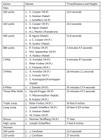
The outcome of this groundbreaking meeting was that Western Province defeated the Natal team by 94 to 61 points. Western Province team dominated the sprint events.128 Newspaper reports highlight the gender bias of the time.
The athletics results of the first senior SAAA&CBOC championship129
Conclusion
The sport-historical events leading to the first senior championship meeting of the SAAA&CBOC was a journey characterised by overcoming racial exclusion. It was however a journey of racial exclusion in South African athletics that led to the formation of SAAA&CBOC. This research also reveals how, after the Second World War, the SAAA&CBOC began organising on a national basis, with the aim of international competition. South African black athletics history has much in common with other black sporting codes. Henry (Harry) Hendricks, for example, an athlete in the 1948 championships and later president of the SAAAB, was also a senior South African Swimming Federation official. Early officials of the SAAA&CBOC were thus also involved with other sports where non-racialism had taken root. The SAAA&CBOC, was a non-racial entity from its inception; a reality that the ruling class was unable to comprehend. The early SAAAU insisted on segregation and apartheid measures were introduced into its organisation.
As early as 1938, black communities, after being excluded by the official national body, attempted to organise athletics on a national scale. However, black sport clubs, struggled to rid themselves of divisions along ethnic lines. The National Library of South Africa (Cape Town Division) newspaper archive proved an invaluable source of information for capturing this history and future historians would do well to use this resource. The archive revealed that the SAAA&CBOC had organised itself on a national, non-racial basis and left a legacy of results and data worthy of research.
REFERENCES
- Alegi, P. Laduma! Soccer, Politics and Society in South Africa. Pietermaritzburg: University of Kwazulu-Natal Press, 2004.
- Archer, R. and A. Bouillon. The South African Game: Sport and Racism. London: Zed Press, 1982.
- Booley, A. Forgotten Heroes. A History of Black Rugby. Cape Town: Manie Booley, 1998.
- Chetty, V. and R. Naidoo. Master of Turbulence: Morgan Naidoo and the Struggle for Non-Racial Sport. Durban: Rebel Rabble, 2023.
- Cleophas, F.J. 'Physical Education and Physical Culture in the Coloured Community of the Western Cape, 1837-1966', PhD thesis, Stellenbosch University, 2009.
- Cleophas, F.J. 'Contexting an Ad Hoc Unity in Natal, 1945-48'. South African Journal for Research in Sport, Physical Education and Recreation, 35, 2 (2013), 15-35.
- Cleophas, F.J. and F.J.G. Van der Merwe, 'Reshaping a Hero: The Real Life and Times of Archibald Richards'. African Journal for Physical Health Education, Recreation and Dance, 15, 3 (2009), 476-492.
- Coghlan, D. 'The Development of Athletics in South Africa: 1814 to 1914', Vols 1 and 2. PhD thesis, Rhodes University, 1986.
- Cottrell, T., I. Laxton and L. Lombard, L. Comrades Marathon Yearbook (Parklands: Southern Book Publishers), 1998.
- Desai, A. and G. Vahed, Monty Naicker: Between Reason and Treason. Pietermaritzburg: Shuter, 2010.
- Desai, V., K. Padayachee, K. Reddy and G. Vahed, Blacks in Whites: A Century of Cricket Struggles in KwaZulu-Natal (Scottsville: University of Natal, 2002), 109.
- Draper, M. Sport and Race in South Africa. Johannesburg: South African Institute of Race Relations, 1963.
- Du Plessis, C. Other Side of the Track. Untold Stories of Athletics. Cape Town: C du Plessis, 2021.
- Ebrahim, E. Noor's Story: My Life in District Six. Cape Town: District Six Museum, 2007.
- Fortune, L. The House in Tyne Street: Childhood Memories of District Six. Cape Town: Kwela Books, 1996.
- Grundlingh, A. and S.B. Spies. Beyond the Tryline. Rugby and South African Society. Johannesburg: Ravan, 1995.
- Jattiem, R. District Six: Thanks for the Memories. Cape Town: R. Jattiem, 2017.
- Labuschagne, P. 'Sport, Politics and Black Athletics in South Africa during the Apartheid Era: A Political-Sociological Perspective'. Journal for Contemporary History, 41, 2 (2016), 82-104.
- Le Roux, G. (ed.) 90 Golden Years. Pretoria: SAAAU, 1984.
- Manuel, G. and D. Hatfield. District Six. Cape Town: Longmans, 1967.
- Matshotshwane J. and M. Ngoepe, 'Golden Bulb Covered with a Dark Cloth: Memories of Undocumented Athletes in South Africa'. Journal of the Eastern and Southern Africa Regional Branch of the International Council on Archives, 41 (2022).
- Noronha, F. Kipchoge of Kenya. Nakuru: Elimu, 1970.
- Odendaal, A., K. Reddy, C. Merrett and J. Winch. Cricket and Conquest: The History of South African Cricket Retold, 1795-1914. Cape Town: HSRC, 2016.
- O'Malley, P. Shades of Difference: Mac Maharaj and the Struggle for South Africa. New York: Penguin, 2008.
- Smith, T and D. Steele, Silent Gesture: The Autobiography of Tommie Smith. Philadelphia: Templeton University, 2008.
- Steyn, D. History of South African Cross-country, Middle and Long Distances Running and Walking, 1894 to 2014, Volumes 1-5, 1894-2014. Pretoria: Group 7 Drukkers en Uitgewers, 2015.
1 The Leader, 10 January 1948, 11; The Leader, 15 November 1947, 11.
2 The Cape Standard, 4 January 1938, 11.
3 The Sun, 10 February 1939, 10; The Cape Standard, 14 February 1939, 2.
4 The Sun, 27 January 1939, 9. For details on Archibald Richards see F.J. Cleophas and F.J.G. Van der Merwe, 'Reshaping a Hero: The Real Life and Times of Archibald Richards', African Journal for Physical Health Education, Recreation and Dance, 15, 3 (2009), 476-492.
5 The Sun, 27 July 1934, 8; The Sun, 8 January 1937, 8.
6 The Cape Standard, 25 July 1944, 4.
7 G. Le Roux (ed.), 90 Golden Years (Pretoria: SAAAU, 1984), 5, 10, 28.
8 Rand Daily Mail, 13 August 1977, 7; Rand Daily Mail, 17 September 1977, 16.
9 M. Draper, Sport and Race in South Africa (Johannesburg: South African Institute of Race Relations, 1963), 11.
10 Paarl Post, 6 January 1948, 7.
11 R. Archer and A. Bouillon, The South African Game: Sport and Racism (London: Zed Press, 1982), 277.
12 Le Roux, Golden Years, 7.
13 Le Roux, Golden Years, 11.
14 Rand Daily Mail, 4 April 1929, 4.
15 D. Coghlan, 'The Development of Athletics in South Africa: 1814 to 1914' (PhD thesis, Rhodes University, 1986); J. Matshotshwane and M. Ngoepe, 'Golden Bulb Covered with a Dark Cloth: Memories of Undocumented Athletes in South Africa', Journal of the Eastern and Southern Africa Regional Branch of the International Council on Archives, 41 (2022).
16 P. Labuschagne, 'Sport, Politics and Black Athletics in South Africa during the Apartheid Era: A Political-Sociological Perspective', Journal for Contemporary History, 41, 2 (2016), 82-104; D. Steyn, History of South African Cross-country, Middle and Long Distances Running and Walking 1894 to 2014, Volumes 1-5, 1894-2014 (Pretoria: Group 7 Drukkers en Uitgewers, 2015).
17 F.J. Cleophas, 'Contexting an Ad Hoc Unity in Natal, 1945-48', South African Journal for Research in Sport, Physical Education and Recreation, 35, 2 (2013), 15-35.
18 C. Du Plessis, Other Side of the Track. Untold Stories of Athletics (Cape Town: C du Plessis, 2021).
19 A. Odendaal, The Story of an African Game: Black Cricketers and the Unmasking of One of Cricket's Greatest Myths, South Africa, 1850-2003 (Cape Town: David Philip, 2003); A. Odendaal, K. Reddy, C. Merrett and J. Winch, Cricket and Conquest: The History of South African Cricket Retold, 1795-1914 (Cape Town: HSRC, 2016); A. Booley, Forgotten Heroes. A History of Black Rugby (Cape Town: Manie Booley, 1998); A. Grundlingh, A. Odendaal and S.B. Spies, B. Beyond the Tryline: Rugby and South African Society (Johannesburg: Ravan, 1995).
20 F.J. Cleophas, 'A Historical-social Overview of Athletics in 19th Century Cape Colony', African Journal for Physical, Health Education, Recreation and Dance, 20, 2 (2014), 585-592; F.J. Cleophas, 'Exploring Afro-American Influences on Athletics in the Cape Colony, International Journal of the History of Sport, 33 (2017); F.J. Cleophas, 'Black Athletics in Cape Town prior to 1920', in F.J. Cleophas, ed., Exploring Decolonizing Themes in SA Sport History (Sun Media, 2018), 35-46; F.J. Cleophas, 'Reclaiming School Athletics in Cape Town's Underclass, 1933-1955', Historia, 1 (2022), 75-88; R. Willis, 'A Historical Narrative of High School Athletics amongst Oppressed Communities in the Western Cape', (Ph.D thesis, Stellenbosch, 2023).
21 Coghlan, 'Development of Athletics in South Africa', 450.
22 The Sun, 19 June 1936, 2.
23 Coghlan, 'Development of Athletics', 450; Western Province (C) Amateur Athletics and Cycling Association, Rules and Constitution (Cape Town: 1945), cover page.
24 Cleophas, 'Black Athletics in Cape Town', 37.
25 The Cape Standard, 9 May 1944, 2.
26 The Cape Standard, 28 March 1944, 4.
27 The Cape Standard, 28 March 1944, 4.
28 S.A. Clarion, 2 October 1920, 15. The City and Suburban Ringpitching Association was in existence by 1919, S.A. Clarion, 14 June 1919, 2.
29 The Sun, 10 April 1936, 8.
30 S.A. Clarion, 10 January 1920, 15; The Sun, 24 January 1936, 8; The Cape Standard, 9 May 1944, 2.
31 The Cape Standard, 11 March 1941, 2; The Cape Standard, 18 March 1941, 2.
32 The Cape Standard, 20 May 1941, 2.
33 The Cape Standard, 14 March 1944, 8.
34 The Cape Standard, 22 July 1947, 5; The Sun, 11 July 1947, 4.
35 The Sun, 11 July 1947, 4.
36 The Cape Standard, 5 August 1947, 6.
37 The Torch, 20 May 1958, 8.
38 S. Viljoen, Richard Rive. A Partial Biography (Johannesburg: Wits University Press, 2013), 27-28.
39 The Sun, 9 November 1934, 8.
40 T. Smith and D. Steele, Silent Gesture: The Autobiography of Tommie Smith (Philadelphia: Templeton University, 2008), 65.
41 F. Noronha, Kipchoge of Kenya (Nakuru: Elimu, 1970), 18.
42 Rive edited anthologies of African writing and was the author of short stories in English published in many countries and in several translations. One of his short stories, 'The Bench', has been dramatised and staged in the USA. His novel, Emergency, was published in England in 1964; see G. Manuel and D. Hatfield, District Six (Cape Town: Longmans, 1967), 105. In 1955 he won a prize from Drum magazine for his short story 'Black and Brown Song' about slum hooligans in Cape Town. On this see The Drum, May 1955, 50.
43 Viljoen, Richard Rive, 27.
44 The Torch, 4 March 1946, 11.
45 Western Province (C) Amateur Athletics and Cycling Association. Rules and Constitution, 1.
46 The Sun, 15 January 1937, 10.
47 P. O'Malley, Shades of Difference: Mac Maharaj and the Struggle for South Africa (New York: Penguin, 2008), 55.
48 A. Desai, V. Padayachee, K. Reddy and G. Vahed, Blacks in Whites: A Century of Cricket Struggles in KwaZulu-Natal (Scottsville: University of Natal, 2002), 109.
49 See F.J. Cleophas, 'Opening a Window on Early Twentieth Century School Sport in Cape Town Society, International Journal of the History of Sport, 31, 15 (2014), 1868-1881; The Cape Standard, 8 March 1938, 6. By 1934, 75% of coloured school leavers departed with a standard two certificate, The Sun, 14 December 1934, 3.
50 The Leader, 3 May 1947, 10.
51 The Leader, 5 July 1947, 11.
52 The Leader, 7 June 1947, 11.
53 The Leader, 7 June 1947, 11.
54 The Leader, 15 November 1947, 11.
55 The Leader, 22 November 1947, 5.
56 The Leader, 15 November 1947, 11; The Leader, 29 November 1947, 11.
57 South African Amateur Athletics & Cycling Board of Control (hereafter SAACBOC), Souvenir programme. South African Senior, Junior and Ladies championships, 1-2 January 1948, 3.
58 The Leader, 22 November 1947, 5.
59 The Leader, 29 November 1947, 11.
60 The Leader, 29 November 1947, 11; The Leader, 6 December 1947, 11.
61 The Leader, 6 December 1947, 11.
62 The Leader, 13 December 1947, 11.
63 Kajee was described as a moderate politician who 'approached the government on all matters relating to the Indian people', The Sun, 9 January 1948, 1. He was a member of the Durban merchant class that broke away from the Natal Indian Congress (NIC), to form the Natal Indian Organisation in 1945. Kajee received messages of support from the Coloured Advisory Council and the Coloured People's National Union, The Sun, 16 January 1948, 1, 8.
64 Desai, et al., Blacks in Whites, 57.
65 Desai, et al, Blacks in Whites, 78.
66 Desai, et al, Blacks in Whites, 70, 170.
67 A. Desai and G. Vahed, Monty Naicker: Between Reason and Treason (Pietermaritzburg: Shuter, 2010), 40.
68 Desai and Vahed, Monty Naicker, 41.
69 Desai, et al, Blacks in Whites, 111.
70 Desai, et al, Blacks in Whites, 114.
71 Desai, et al, Blacks in Whites, 206.
72 The Leader, 19 July 1947, 11.
73 The Leader, 19 July 1947, 11.
74 Desai et al, Blacks in Whites, 118.
75 Desai et al, Blacks in Whites, 225.
76 Desai et al, Blacks in Whites, 233, 252.
77 V. Chetty and R. Naidoo, Master of Turbulence: Morgan Naidoo and the Struggle for Non-racial Sport (Durban: Rebel Rabble, 2023), 85-86.
78 Chetty and Naidoo, Master of Turbulence, 85.
79 SAACBOC, Souvenir Programme, 2.
80 The Cape Standard, 7 January 1947, 8.
81 N. Ebrahim, Noor's Story: My Life in District Six (Cape Town: District Six Museum, 2007), 68.
82 R. Jattiem, District Six: Thanks for the Memories (Cape Town: R. Jattiem, 2017), 32.
83 C. Schoeman, District Six: The Spirit of Kanala (Cape Town: Human and Rousseau, 1994), 61.
84 L. Fortune, The House in Tyne Street: Childhood Memories of District Six (Cape Town: Kwela Books, 1996), 86.
85 Anon. Oddfellows Hall. https://esat.sun.ac.za/index.php/Oddfellows_Hall (14 January 2022). Accessed: 10 October 2023.
86 The Sun, 16 January 1937, 10.
87 The Cape Standard, 24 January 1939, 2. The Colour Bar was a set of laws that enabled government ministers to differentiate on grounds of 'race', The Cape Standard, 22 March 1938, 3. Between 1910 and 1944, 38 racial discriminatory laws were passed, The Cape Standard, 15 February 1944, 3.
88 S. J. du Toit, Atletiek op ons Skole (Cape Town: National Press, 1942), ii.
89 . Stellenbosch University Archives (hereafter SUA): Minutes of special meeting of the South African Olympic and British Empire Games Association held in the Carlton Hotel, 16 April 1946, 1.
90 The Leader, 2 March 1946, 6.
91 The Cape Standard, 7 June 1946, 12.
92 The Leader, 11 January 1947, 6.
93 The Leader, 22 March 1947, 6.
94 SUA, Minutes of special meeting of the South African Olympic and British Empire Games Association held in the Carlton Hotel, 16 April 1946, 1.
95 Letter from J. Sigrid Edstrom to South African Olympic and British Empire Games Association, 16 September 1946, 4.
96 A. Hocking, Oppenheimer and Son (Johannesburg: Mcgraw-Hill, 1973), 233.
97 Rand Daily Mail, 7 January 1948, 9.
98 F.J. Cleophas, 'Running a History Programme outside the Classroom. A Case Study of Athletics at Zonnebloem College', Yesterday & Today 8 (2012), 63-87; Cleophas, 'A Historical-social Overview of Athletics', 585-592; Cleophas, 'Exploring Afro-American Influences; Cleophas, 'Black Athletics in Cape Town prior to 1920', 35-46; Cleophas, 'Reclaiming School Athletics', 75-88; Willis, 'A Historical Narrative of High School Athletics'; and Du Plessis, Other Side of the Track.
99 The Leader, 3 January 1948, 7.
100 The Leader, 11 January 1946, 8.
101 Odendaal, Story of an African Game, 107, 109; Desai, and Vahed Monty Naicker, 123.
102 The Leader, 15 November 1947, 11.
103 The Leader, 22 March 1947, 6.
104 SAACBOC, Souvenir Programme, 1 - 2 January 1948, 1.
105 WP (C) Amateur Athletics and Cycling Association, Rules and Constitution, 1.
106 WP (C) Amateur Athletics and Cycling Association, Rules and Constitution, 1945, 1.
107 Cleophas, 'Physical Education and Physical Culture', 185.
108 The Cape Standard, 26 April 1946, 7.
109 Rand Daily Mail, 7 November 1947, 13.
110 The Cape Standard, 26 April 1946, 7.
111 The Cape Standard, 7 January 1947, 8.
112 The Leader, 3 May 1947, 10.
113 See T. Cottrell, I. Laxton and L. Lombard, Comrades Marathon Yearbook (Parklands: Southern Book Publishers, 1998) for a history of the Comrades marathon.
114 The Leader, 12 July 1947, 11.
115 The Leader, 5 July 1947, 11. Karstens was also on the Western Province team's organising committee in January of that year, The Cape Standard, 7 January 1947, 8.
116 The Leader, 5 July 1947, 11.
117 The Leader, 15 November 1947, 11.
118 The Cape Standard, 28 October 1947, 7.
119 SAACBOC, Souvenir programme, 16, 21.
120 The Leader, 15 November 1947, 11.
121 Paarl Post, 6 January 1948, 6.
122 SAACBOC, Souvenir Programme. SA Senior, Junior and Ladies championships, 1 - 2 January 1948, 1, 9, 15, 19, 21, 23, 26, 27.
123 SAACBOC, Souvenir Programme. SA Senior, Junior and Ladies championships, 1 - 2 January 1948, 4.
124 The Leader, 3 January 1948, 7.
125 SAACBOC, Souvenir Programme, 1.
126 The Sun, 9 January 1948, 7.
127 SAACBOC, Souvenir Programme, 6; The Leader, 3 January 1948, 7.
128 The Leader, 10 January 1948, 11.
129 Paarl Post, 6 January 1948, 7; The Leader, 10 January 1948, 11.
