Land Use Change Detection as a Decolonial Pedagogy for Food Sovereignty in South African Vocational Education
Abstract
This study investigates a critical paradox in South African vocational education. While food sovereignty depends on community control of land, prevailing technical and vocational education and training (TVET) curricula depoliticise agricultural land use, reducing it to a technical input and thereby reinforcing historical dispossession. There is also a profound disconnect between technical land use and land cover (LULC) skills and critical land justice frameworks in TVET. It is posited that vocational education must become a site of epistemic struggle to counteract this. Hence, this study confronts the technicist dominance in geospatial education by investigating LULC change detection as a decolonial pedagogy for food sovereignty within TVET. This research examines LULC potential to depoliticise vocational training and align it directly with food sovereignty. Further, the study is addressed through theoretically synthesising Freirean conscientisation, Ubuntu ethics, and food sovereignty theory. In South African TVET colleges, students employ LULC analysis as co-researchers interrogating historical land alienation and contemporary threats to communal food systems. The study findings reveal that students evolved from passive skill-recipients into agents of counter-cartography, producing "sovereignty maps" that visualise land loss, thus advocating for agroecological reclamation and community tenure. This process fostered critical consciousness, challenged neoliberal and colonial logics, and reshaped professional identity towards ecological stewardship. The study recommends that TVET systems urgently pivot to pedagogies framing agricultural land as the foundational territory for food sovereignty. This necessitates curricula integrating geospatial technology with critical agrarian studies, lecturer development focused on epistemic justice, training in facilitating land-rights dialogues, and partnerships with social movements to ensure vocational skills serve the democratic reclamation of food systems.
Counter-Cartography; Decolonial Pedagogy; Epistemic Justice; Food Sovereignty; Land Use Change Detection; TVET Curriculum
Introduction
South Africa's agrarian landscape is a palimpsest of contested histories and ongoing struggles (du Toit, 2020; Winer, 2020). The legacy of colonialism and apartheid is etched not only into the socioeconomic fabric but directly onto the land itself, through patterns of dispossession, skewed ownership, and environmental degradation (Shackleton & Gwedla, 2021). In the contemporary moment, the call for food sovereignty-the right of peoples to healthy and culturally appropriate food produced through ecologically sound and sustainable methods, and their right to define their own food and agriculture systems has become a powerful rallying cry against the prevailing corporate, industrial food regime (Borras et al., 2018; Robbins, 2018). Central to this struggle is the fundamental question of land: who controls it, how is it used, and for whose benefit. It is within that charged political and ecological context that this study examines a critical and largely overlooked actor: the South African technical and vocational education and training (TVET) college. Tasked with producing a skilled workforce for the agricultural sector, TVET colleges are paradoxically positioned. On one hand, they are charged with equipping students with the technical competencies demanded by the agricultural economy (Gyimah, 2020). On the other, their curricula, often inherited from technicist and modernist paradigms, tend to depoliticise agricultural practice, framing land as a neutral input for maximising production rather than as a site of historical injustice, cultural identity, and political struggle (Akinde & Vitung, 2020; Majola, 2024). This technocratic orientation actively silences the critical linkages between land use, power, and the enduring struggle for food sovereignty, thereby reproducing the very conditions of dispossession they might otherwise help to redress. This constitutes what we term the "depoliticisation paradox" in vocational education.
This research confronts that paradox head-on. It posits that if food sovereignty is predicated on community control of land, then vocational education, as a key site for shaping future agrarians, must become a terrain of epistemic struggle. It must move beyond the transmission of decontextualised skills to foster a critical consciousness capable of interrogating and transforming unjust land relations. To this end, the study investigates the potential of land use and land cover (LULC) change detection-a core geospatial technology skill taught in many TVET agricultural programmes-to be reframed as a decolonial pedagogy. The central research question is: "How can the ostensibly neutral, technical practice of LULC analysis be mobilised to cultivate a critical, decolonial understanding of land and to advance the goals of food sovereignty within South African vocational education?" The study is guided by a unique theoretical synthesis, weaving together Paulo Freire's (1970) concept of conscientisation, the African philosophical framework of Ubuntu ethics, and the radical political economy of food sovereignty theory. This framework allows for an investigation that is simultaneously pedagogical, ethical, and political.
The findings, detailed in this article, reveal a profound transformation. Students evolved from viewing themselves as skill-recipients to becoming agents of what we term "counter-cartography." By producing "sovereignty maps"-visual artefacts that documented land loss, contested land use, and sites of potential agroecological reclamation-they weaponised a technical tool for epistemic and political ends. This process fostered a critical conscientisation, challenged the ingrained neoliberal and colonial logics embedded in conventional agricultural training, and fundamentally reshaped their professional identities towards a vision of ecological stewardship and community advocacy. This article makes a significant contribution to the fields of vocational education, critical agrarian studies, and decolonial pedagogy. It demonstrates that geospatial technology, when yoked to a critical framework, can be a powerful instrument for epistemic justice, enabling marginalised communities to reclaim the power to represent and narrate their own landscapes. Ultimately, the study issues a compelling recommendation for a systemic pivot within TVET. We argue for the urgent need to reframe curricula to understand agricultural land not merely as a factor of production, but as the foundational territory for food sovereignty. This necessitates a holistic transformation involving the integration of critical agrarian studies into technical programmes, sustained lecturer development in epistemic justice and facilitating land-rights dialogues, and the cultivation of robust partnerships with social movements to ensure that vocational skills are ultimately placed in the service of the democratic reclamation of South Africa's food systems.
Theoretical Framework
This study is animated by the conviction that research in vocational education cannot be value-neutral; it must be explicitly positioned in relation to the power structures it seeks to interrogate. To investigate the potential of LULC change detection as a decolonial pedagogy, this research synthesises three distinct yet mutually reinforcing theoretical traditions: Paulo Freire's critical pedagogy (conscientisation), the African ethical philosophy of Ubuntu, and the political-economic framework of food sovereignty. This tripartite perspective allows for a multi-dimensional analysis that addresses the cognitive, relational, and structural dimensions of land justice.
Freirean Conscientisation: From Technical Learners to Critical Interrogators
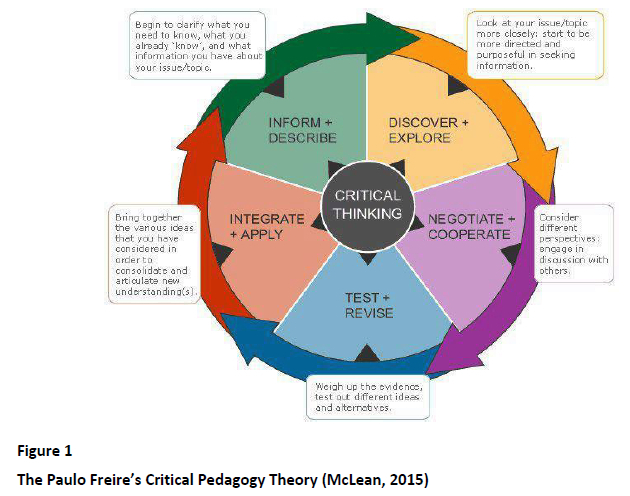
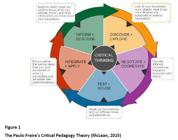
The pedagogical foundation of this study is rooted in the work of Brazilian educator Paulo Freire (2021), particularly his concept of conscientisation-the process by which learners achieve a deepening awareness of the social, political, and economic contradictions shaping their reality, enabling them to act against oppression. Freire's critique of the "banking model" of education, where students are treated as passive containers to be filled by expert knowledge, directly parallels the critique advanced in this study against the technicist dominance in South African TVET curricula. In the conventional model, LULC skills are deposited into students without critical examination of the historical contexts that produced the very landscapes being mapped. Freire's alternative-problem-posing education-provides the methodological impetus for this research. It positions students as co-investigators in dialogue with their educators. In this study, LULC change detection is not taught as a disembodied technical skill but is posed as a problem: "Why have the land use patterns in your community changed?" "Who benefited from these changes?" "What would a just landscape look like?" This reframing transforms the geospatial laboratory into a space of critical inquiry, where technical competence becomes a tool for "reading the world" (Moorman, 2019). The production of sovereignty maps by students is, therefore, an act of Freirean praxis, a cycle of reflection and action aimed at transforming the structures of land alienation. Figure 1 depicts the Paulo Freire's critical pedagogy theory.
Ubuntu Ethics: Relationality, Interdependence, and Communal Land Stewardship
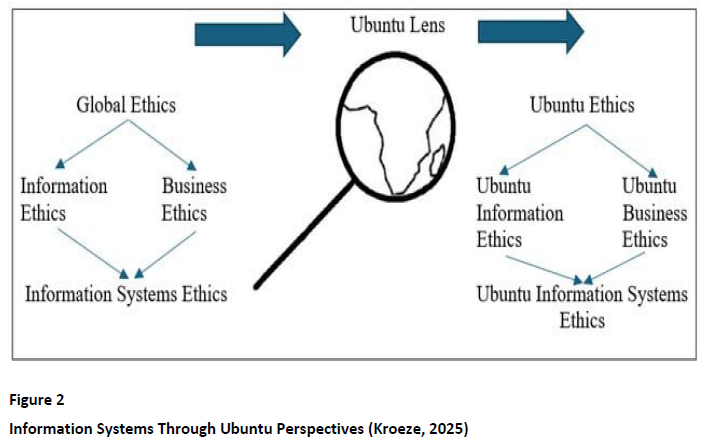
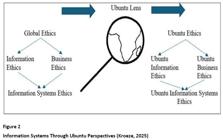
While Freire (1970) provides a robust theory of critical consciousness, his framework, originating in the Latin American context, requires grounding in the specific philosophical terrain of Southern Africa. This study, therefore, integrates the ethic of Ubuntu, often summarised by the maxim umuntu ngumuntu ngabantu-a person is a person through other persons (Ewuoso & Hall, 2019; Mligo, 2021). Ubuntu is not merely a descriptive term for community cohesion; it is a prescriptive ethical system that posits the interdependence of human beings and their environment (Mkhize, 2018). In the context of land and food sovereignty, Ubuntu offers a profound challenge to the neoliberal and colonial logics embedded in conventional agricultural training (Ndhlovu, 2024). Colonialism imposed a regime of private property and individual accumulation, disrupting communal land tenure systems rooted in Ubuntu principles of reciprocity and shared stewardship (Mabele et al., 2022). The ethical dimension of Ubuntu compels the research to ask: "Does the use of LULC technology foster a sense of responsibility towards the community and the land itself?" "Does it cultivate an ecological stewardship that transcends the individualistic, profit-maximising ethos of industrial agriculture?" Ubuntu thus provides the normative compass for the study, ensuring that the counter-cartography produced by students is not merely a technical exercise in protest but is grounded in a positive vision of communal flourishing. Figure 2 depicts information systems through Ubuntu perspectives.
Food Sovereignty Theory: Politicising Land and Agrarian Futures
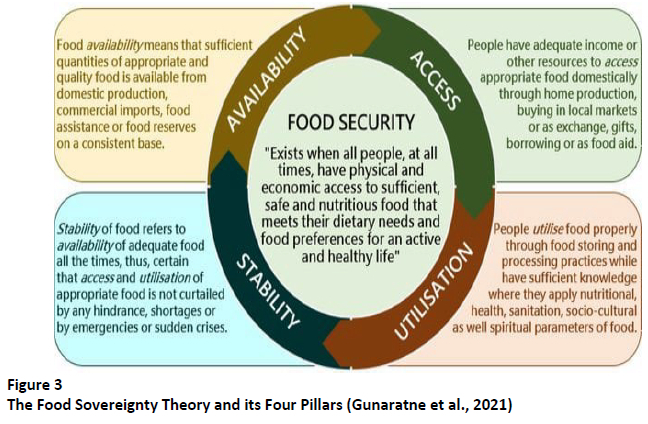
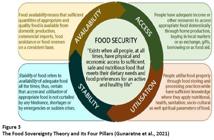
The third pillar of the framework, food sovereignty theory, provides the structural and political analysis necessary to link micro-level pedagogical practices to macro-level agrarian struggles (Iles & De Wit, 2018). The concept of food sovereignty was introduced by La-Vía (1996) as a radical alternative to the dominant discourse of food security. While food security focuses on the availability of food, food sovereignty emphasises the power of peoples to define their own food and agricultural systems (Byaruhanga & Isgren, 2023; Sampson et al., 2021). Central to this is the demand for agrarian reform and the recognition that food sovereignty is impossible without land sovereignty: the right of peasants, smallholders, and indigenous communities to have access to, control over, and steward their territories (Figueroa-Helland et al., 2018). This theoretical perspective directly illuminates the central paradox of the study. It explains why the depoliticisation of land in TVET curricula is an active political act that reinforces the corporate food regime. By framing land as a technical input, the curriculum implicitly endorses the status quo of dispossession. Food sovereignty theory demands that land be re-politicised (Nikolaidou et al., 2025). Consequently, this framework guides the analysis of the students' LULC work. When students use satellite imagery to visualise the shrinkage of communal grazing lands or the expansion of commercial monocultures, they are not just detecting land cover change; they are identifying the material processes that undermine food sovereignty. The resulting sovereignty maps become tools for advocacy, visual evidence supporting claims for agroecological reclamation and community tenure, which are core demands of the food sovereignty movement. Figure 3 reveals the Food Sovereignty Theory and its four pillars.
Theoretical Synthesis: A Decolonial Pedagogical Conceptualisation
The power of this study's theoretical framework lies in the synergy between its three components. Freirean conscientisation provides the method for critical engagement, transforming the classroom into a space of inquiry. Ubuntu ethics provides the moral orientation for that inquiry, grounding it in values of relationality, communal well-being, and ecological respect. Food sovereignty theory provides the political analysis of the object of inquiry (the land), explaining the historical and structural forces that have shaped it and offering a vision for its just transformation. Together, these three components constitute a decolonial pedagogical praxis. They enable the research to move beyond merely identifying a skills gap in the curriculum to fundamentally challenging the epistemic foundations of vocational education. This framework posits that to teach LULC skills without addressing land justice is to perpetuate a colonial epistemology that severs knowledge from ethics and technique from history. Conversely, to teach LULC through this synthesised perspective is to engage in a process of epistemic justice-restoring to marginalised students the right to know, to name, and to reclaim their world. This theoretical synthesis, therefore, frames the research question, justifies the methodology and provides the critical vocabulary for interpreting the students' transformative journey from passive recipients of skills to active agents of counter-cartography.
Methodology
This study is grounded in a systematic literature review (SLR) conducted to map the intellectual terrain at the intersection of vocational education, geospatial technology, land justice, and food sovereignty in the South African context. An SLR was deemed essential to move beyond a traditional narrative review, which can be susceptible to authorial selection bias and instead, provide a transparent, replicable, and rigorous synthesis of existing scholarship (Van-Dinter et al., 2021). The review sought to identify not only what is known about the application of LULC change detection in educational settings but also to expose the silences and gaps in the literature, particularly the absence of critical, decolonial perspectives within TVET research. This section outlines the protocol guiding the review, including the research questions, search strategy, inclusion and exclusion criteria, quality appraisal, and method of synthesis. The SLR was guided by a primary research question and three subsidiary questions designed to systematically interrogate the literature:
• Primary question: How is the integration of LULC change detection into vocational and technical education curricula discussed in the existing scholarly literature, and to what extent does this literature engage with critical perspectives on land justice and food sovereignty?
• Subsidiary questions:
o What pedagogical frameworks and approaches are documented for teaching geospatial technologies (including LULC analysis) in vocational education contexts, particularly in the Global South?
o How does the literature conceptualise the relationship between technical agricultural education and the broader political economy of land, including histories of dispossession and contemporary struggles for land reform?
o What gaps and silences exist in the literature regarding the potential for vocational education to contribute to decolonial pedagogies and food sovereignty movements?
Search Strategy
To ensure comprehensive coverage of relevant scholarship, a multi-stage search strategy was employed, encompassing both electronic databases and supplementary hand-searching techniques:
• Electronic Databases: The following academic databases were systematically searched due to their relevance to education, geography, development studies, and African studies:
o Education-focused: ERIC (Education Resources Information Center), Education Source, British Education Index
o Geospatial/Technical: Scopus, Web of Science Core Collection, IEEE Xplore (for geospatial technology in education)
o Development & African Studies: Africa-Wide Information, JSTOR, Project MUSE, Google Scholar (for grey literature and broader reach)
o Search Terms and Boolean Logic: The search strategy was built around four conceptual blocks, combined using Boolean operators (AND, OR) to ensure precision and recall. Truncation (*) and phrase searching (" ") were employed to capture variations in terminology. Search Terms (combined with OR within each block)
• Population/Context: "vocational education" OR "technical and vocational education and training" OR TVET OR "further education and training" OR "agricultural education" OR "vocational training" OR "skills development"
• Technology/Method: "land use and land cover" OR LULC OR "land use change" OR "change detection" OR "geospatial technology" OR "geographic information system*" OR GIS OR "remote sensing" OR "satellite imagery" OR cartography OR mapping
• Critical framework "food sovereignty" OR "land justice" OR "land reform" OR "agrarian reform" OR decolon* OR "critical pedagogy" OR "epistemic justice" OR "counter-mapping" OR "land alienation" OR dispossession
• Geography: "South Africa" OR "Southern Africa" OR "sub-Saharan Africa" OR "Global South" OR "developing countr*"
• The final Boolean string combined all four blocks: (vocational OR TVET) AND (LULC OR GIS OR "remote sensing") AND ("food sovereignty" OR decolon* OR "land justice") AND ("South Africa" OR "Global South").
Inclusion and Exclusion Criteria
Studies were selected for inclusion in the review based on a predefined set of criteria applied to titles, abstracts, and subsequently full texts. The criteria were designed to ensure relevance, quality, and focus:
• Inclusion criteria (focus): The study must substantively address at least two of the three core concepts: (a) vocational/technical education or training, (b) geospatial technologies/LULC analysis, and (c) critical perspectives on land, agriculture, or food systems. Studies focusing on South Africa were prioritised. However, studies from other contexts in the Global South (particularly sub-Saharan Africa) were included if they offered transferable theoretical or pedagogical insights relevant to the research questions.
• Eligibility: The full texts of the remaining 181 articles were retrieved and assessed in detail. A further 136 articles were excluded at this stage. Common reasons for exclusion included a superficial treatment of the educational context, a primary focus on technical GIS development rather than pedagogy, or a geographical focus on the Global North with no substantive relevance to the research questions. A final corpus of 45 studies was included in the study.
Findings
Becoming Counter-Cartographers: Reclaiming the Power to Represent
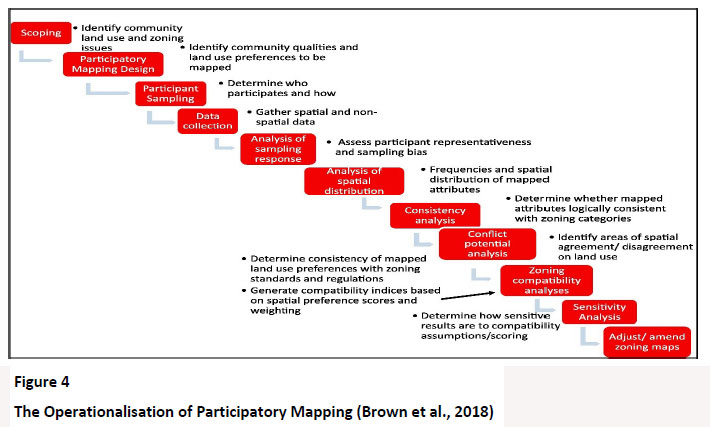
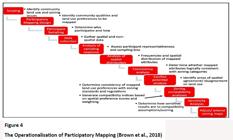
The most immediate and striking finding was the fundamental shift in students' relationship to geospatial technology. Initially, students approached LULC change detection as a discrete technical exercise, a matter of correctly classifying pixels and calculating acreages to meet assessment requirements. This orientation reflected the entrenched technicist paradigm of TVET education, where competence is measured by fidelity to prescribed protocols. However, as the research progressed and students began applying these skills to their own communities, a profound transformation occurred. Students started to question whose stories the official land use data told and, more importantly, whose stories were omitted. One student, reflecting on a map showing the expansion of a commercial timber plantation onto what older community members recalled as communal grazing land, remarked: "The satellite sees the trees, but it doesn't see the cattle that no longer have a place to graze. It doesn't see my grandmother's memory." This realisation catalysed a shift from passive skill application to active counter-cartography-the deliberate production of maps that challenge dominant narratives and visualise suppressed histories (Oslender, 2021). Students began annotating official LULC classifications with community knowledge, creating layered representations that juxtaposed technical data with oral histories, place names, and markers of dispossession. These artefacts, termed sovereignty maps, became the material expression of a newly politicised technical practice (Brown & Eckold, 2020; Brown et al., 2018). Figure 4 depicts the operationalisation of participatory mapping.
Visualising Dispossession: Sovereignty Maps as Evidence of Land Alienation
The sovereignty maps produced by students constituted the second major finding, revealing the tangible power of LULC analysis when yoked to a critical research question. Through time-series analysis of satellite imagery, students documented alarming patterns of land use change across their communities. These included the progressive encroachment of agribusiness monocultures onto smallholder farms, the fencing off of previously commonage areas for private game farming or conservation tourism, and the degradation of communal rangelands due to forced overcrowding resulting from historical land dispossession (Jurkevics, 2022; Rogers et al., 2025). Crucially, these maps did more than simply illustrate change; they provided visual evidence that students could use to articulate claims for land justice. In one striking example, a group of students produced a time-lapse sequence showing how a community's access to a perennial river had been progressively severed over three decades by the expansion of upstream commercial irrigation schemes (Rose-Redwood et al., 2020; Schlemper et al., 2018). This map became the centrepiece of a community meeting where students presented their findings to local elders and traditional council members.
The Emergence of Critical Consciousness: Interrogating Colonial and Neoliberal Logics
The third finding pertains to the internal, cognitive transformation experienced by students, which aligned closely with Freire's (1970) concept of conscientisation. As students engaged with the historical layers revealed by their LULC analysis, they began to connect contemporary land use patterns to deeper structural forces. Classroom discussions moved beyond technical questions of classification accuracy to interrogate the political economy of land. Students drew connections between the 1913 Natives Land Act, which allocated a mere 7% of South Africa's land to the African majority, and the contemporary spatial patterns they observed in their communities. They questioned why, decades after apartheid, the boundaries of commercial agriculture still largely coincided with the racial geography of the colonial era. This historical consciousness was accompanied by a critical analysis of contemporary neoliberalism. Students identified how post-apartheid land reform programmes, constrained by the willing-buyer-willing-seller principle and a focus on creating a class of Black commercial farmers, had largely failed to address the land hunger of the majority. As one student articulated during a group dialogue: "They tell us we must be farmers, but they do not give us the land. They give us a qualification and send us into a world where the land is already owned. What are we supposed to farm-the air?"
This critique extended to the curriculum itself, with students recognising how their training had deliberately avoided these uncomfortable questions, framing agriculture as a technical challenge rather than a political struggle. The research process, therefore, functioned as a form of epistemic disobedience (Clapp & Ruder, 2020), enabling students to think against the grain of their own education.
Reimagining Students' Professional Aspirations and Sense of Vocational Purpose
The fourth finding revealed a fundamental reshaping of students' professional aspirations and sense of vocational purpose (Billett et al., 2022; Lee et al., 2018; Seymour & Connelly, 2023). At the outset of the research, students typically articulated their career goals in conventional terms: farm manager, extension officer, GIS technician-roles defined by technical competence and individual advancement within existing agricultural structures. Students began to articulate a vision of themselves as community-embedded agroecologists, whose professional responsibility extended beyond productivity metrics to encompass ecological integrity, social justice, and food sovereignty. This emerging identity was not a rejection of technical competence but its integration into a broader ethical framework informed by Ubuntu values.
Discussion
The findings of this study invite critical engagement with existing scholarship across multiple domains, including critical geography, vocational education studies, decolonial theory, and food sovereignty research. This discussion situates the study's contributions within these broader intellectual conversations while also acknowledging limitations and identifying avenues for future inquiry.
Reframing LULC Analysis: Between Technocratic Tool and Decolonial Weapon
This study contributes to a growing body of literature that critically examines the politics of mapping and geospatial technologies. Mainstream geographic information science has historically presented itself as a value-neutral discipline concerned with objective representation and technical accuracy. Critical cartographers have long challenged this positivist orientation, demonstrating how maps are never neutral artefacts but rather inscriptions of power that produce the very realities they claim to represent (Nelson et al., 2022). This study extends this critique by demonstrating how LULC analysis, a seemingly mundane technical practice within vocational agriculture, can be mobilised for decolonial ends. The students' sovereignty maps functioned as what might be termed "technologies of testimony" artefacts that translate embodied, community knowledge into a visual register legible to both state authorities and international advocacy networks. This finding resonates with Oslender's (2021) study on counter-mapping in Colombia, where Indigenous communities appropriated state mapping technologies to claim ancestral territories.
Yet, this reframing is not without its tensions and contradictions. Critical scholars of technology have cautioned against technological determinism, the assumption that tools themselves possess inherent political qualities (Boyd & Holton, 2018). LULC analysis, like any technology, is ambivalent; it can be deployed for dispossession as readily as for liberation. The apartheid state was itself a pioneer of remote sensing and geographic information systems, using these technologies to enforce racial zoning and population removal (Venter et al., 2020). This historical reality demands that we resist any idea of counter-cartography as inherently progressive. The students in this study did not simply appropriate a neutral tool; they entered a contested technological terrain already saturated with colonial histories. Their sovereignty maps derived their power not from the technology itself but from the political consciousness animating their production and the community mobilisations they enabled. This suggests that the decolonial potential of LULC analysis resides not in the technique but in the pedagogy, the critical framework within which it is taught, and the social movements to which it is articulated.
Conscientisation in the Vocational Context: Beyond Freire's Original Formulation
The study's findings regarding the emergence of critical consciousness among TVET students contribute to ongoing debates about the applicability of Freirean pedagogy in contemporary educational contexts. Freire (1970) developed his approach in the context of adult literacy programmes among Brazilian peasants, a setting far removed from the institutionalised, credential-focused environment of South African TVET colleges. Critics have questioned whether Freire's revolutionary pedagogy can survive transplantation into formal education systems fundamentally oriented towards labour market reproduction (Mayo, 2019). This study suggests that while the institutional constraints are real, they are not insurmountable. The SLR methodology created what Freire termed culture circles-dialogic spaces where students could collectively interrogate their reality-within the interstices of the formal curriculum. This finding aligns with scholarship demonstrating the continued relevance of Freirean approaches in vocational and technical education, particularly when linked to social movement activism (Kuk & Tarlau, 2020; O'Cadiz, 2018). However, the conscientisation observed in this study differed from Freire's original formulation in significant respects. Freire's pedagogy was primarily linguistic and dialogic, focused on the word and the world. In this study, conscientisation was mediated through technology, that is, through satellite images, GIS software, and printed maps. The students' critical awakening was not a purely discursive process but was materially grounded in the act of seeing, measuring, and representing. This suggests the need for what might be termed a techno-materialist extension of Freirean theory, one that attends to how critical consciousness is shaped by the specific technologies through which learners engage with their world (Kallio, 2024). Future research might productively explore how different technologies-from soil testing kits, to weather apps, to market price information systems-mediate the development of critical consciousness in vocational agricultural education.
Ubuntu and the Politics of Land: Between Ethical Ideal and Political Reality
The integration of Ubuntu ethics into the theoretical framework was intended to ground the study in Southern African philosophical traditions and to provide a normative vision of communal land stewardship. The findings suggest that Ubuntu did indeed resonate with students, providing an ethical vocabulary for articulating alternatives to neoliberal individualism. Students' invocation of Ubuntu principles-interdependence, reciprocity, communal responsibility-in their reflections on professional identity demonstrates the continued salience of this philosophical tradition for young South Africans navigating the contradictions of post-apartheid society. Nevertheless, the research also revealed significant tensions in the application of Ubuntu to land politics that warrant critical examination. Scholars of Ubuntu have debated whether this ethical system, rooted in precolonial communal societies, can be straightforwardly translated to address the complexities of contemporary agrarian struggles (Naude, 2019; Swilling, 2019). Critics have cautioned against "Ubuntuism" that erases the power relations, gender hierarchies, and generational conflicts that characterised precolonial societies, and that may be ill-equipped to address the realities of a capitalist economy and a liberal democratic state (Ouma, 2025; Simba, 2021). These debates manifested in the research process when students encountered resistance from traditional authorities who invoked custom to defend their own control over communal land, sometimes against the interests of women, youth, or landless households. Ubuntu, in these instances, became a contested discourse, mobilised by different actors to advance competing claims. This finding suggests that Ubuntu should not be deployed as a static ethical blueprint but rather as a living, contested tradition that must be critically interrogated in each concrete situation. The pedagogical challenge is not to inculcate students with a predefined set of Ubuntu values but to create spaces where they can collectively deliberate on what Ubuntu means for land relations in contemporary South Africa, navigating the tensions between communal ideals and internal differentiations of power. This aligns with what Ogude (2019) terms remembering Ubuntu-an active, political process of reconstructing African philosophical traditions in ways that address present struggles without romanticising the past.
Food Sovereignty and Vocational Education: Bridging Movement and Institution
The study's location at the intersection of food sovereignty activism and vocational education institutions raises important questions about the relationship between social movements and the state. Food sovereignty emerged from transnational peasant movements as a radical challenge to corporate agriculture and neoliberal trade regimes (Akram-Lodhi, 2018). Its relationship to the state has been ambivalent-movements demand state action to protect peasant agriculture while remaining deeply suspicious of state co-optation and bureaucratic capture (Soper, 2020). TVET colleges, as state institutions tasked with reproducing the agricultural labour force, would seem unlikely sites for advancing food sovereignty. Yet this study demonstrates that these institutions can become what Williams and Satgar (2021) term interstitial spaces-zones where hegemonic and counter-hegemonic forces coexist and contend, and where transformative possibilities emerge from within state structures. This finding contributes to debates within food sovereignty scholarship about the appropriate scale and site of struggle. Early formulations of food sovereignty emphasised local autonomy and community control, sometimes neglecting the question of how to engage with state institutions and transform them from within (Shattuck et al., 2018).
Comparative Insights: South African TVET in International Context
While this study is situated in the specific historical and political context of South Africa, its findings resonate with international debates about the purpose and politics of vocational education. Comparative scholarship has documented the persistence of technicist, depoliticised curricula in agricultural education across postcolonial contexts, from Kenya to Brazil to India (de Toledo et al., 2019; Freire, 2021; Savage, 2018). In each of these settings, colonial education systems were designed to produce compliant functionaries for extractive agricultural economies, and post-independence reforms have often failed to fundamentally reorient this inheritance. The depoliticisation paradox identified in this study-whereby education for food production systematically obscures the land question-is therefore not unique to South Africa but reflects a broader pattern of colonial continuity in vocational education. However, South Africa's particular history of racialised land dispossession, and the continued salience of land as a political issue, lends this study a specific urgency. The scale of land inequality in South Africa, where the majority of agricultural land remains in White ownership nearly three decades after democracy, is exceptional even by regional standards (Kepe & Hall, 2020). This context intensifies the stakes of the research and underscores the imperative for pedagogies that equip students not only to work the land but to struggle for it. The sovereignty maps produced by students in this study are, in this sense, contributions to a longer history of land restitution claims, social movement mobilisation, and constitutional advocacy that has defined post-apartheid South Africa. They represent an effort to ensure that the next generation of agrarians enters this struggle equipped with both technical skills and critical consciousness.
Conclusion
This study set out to investigate whether LULC change detection could be mobilised as a decolonial pedagogy for food sovereignty within South African vocational education. This study confronts the depoliticisation paradox underpinning TVET curricula, wherein agricultural education privileges technical competence while systematically overlooking the land question, despite community land control constituting the foundation of food sovereignty. To address this contradiction, the study advances a transformative pedagogical framework that synthesises Freirean conscientisation, Ubuntu ethics, and food sovereignty theory. The findings demonstrate that such a transformation is not only possible but profoundly generative. Students evolved from passive recipients of technical skills into active agents of counter-cartography, producing sovereignty maps that visualised historical land alienation and contemporary threats to communal food systems. This process catalysed the emergence of critical consciousness, enabling students to interrogate the colonial and neoliberal logics embedded in their own training and in the landscapes they inhabited. It also fundamentally reshaped their professional identities, replacing individualistic, productivist aspirations with a vision of ecological stewardship grounded in Ubuntu principles of communal responsibility and intergenerational reciprocity. These findings carry significant implications for policy and practice. They suggest that the urgent transformation of South Africa's agrarian landscape requires not only land reform legislation and social movement mobilisation but also a fundamental reorientation of the educational institutions that produce the next generation of agrarians. TVET colleges must pivot from technicist training towards critical pedagogies that frame agricultural land as the foundational territory for food sovereignty. This necessitates a multi-dimensional reform agenda encompassing curriculum transformation that integrates geospatial technology with critical agrarian studies, sustained lecturer development focused on epistemic justice and the facilitation of land-rights dialogues, and the cultivation of robust partnerships with landless people's movements and food sovereignty activists to ensure that vocational skills are placed in the service of democratic land reclamation. In essence, this study affirms that vocational education is a contested political terrain where competing visions of agrarian futures are produced and contested. The struggle for food sovereignty in South Africa will be won or lost not only in parliament, in the courts, or on the land itself, but also in the classrooms and training farms where young people learn what it means to be farmers, what it means to work the land, and what it means to belong to a community. By demonstrating that LULC change detection can become a tool for counter-cartography rather than merely a technical input, this study offers both an empirical contribution and a political provocation: that the transformation of vocational education is not a distraction from the land question but central to its resolution. The sovereignty maps produced by students in this research are small artefacts, but they point towards a larger possibility-that the children of the dispossessed might, through their education, acquire not only the skills to farm but the consciousness to reclaim the land that is rightfully theirs.
Akinde, S., & Vitung, A. E. (2020). Analysis of agricultural technical and vocational education and training (ATVET) system in Nigeria [Study report]. International Network for Agricultural and Rural Training (Réseau FAR). https://www.reseau-far.com/wp-content/uploads/2020/07/2020_akinde_vitung_nigeria_far_report_study.pdf
Akram-Lodhi, A. H. (2018). Accelerating towards food sovereignty. In E. Holt-Giménez, A. Alonso-Fradejas, T. Holmes, & M. J. Robbins (Eds.), Food sovereignty: Convergence and contradictions, conditions and challenges (pp. 133-153). Routledge. https://doi.org/10.4324/9781315227580-8
Billett, S., Dymock, D., Hodge, S., Choy, S., & Le, A. H. (2022). Shaping young people's decision-making about post-school pathways: Institutional and personal factors. In S. Billett, B. E. Stalder, V. Aarkrog, S. Choy, S. Hodge, & A. H. Le (Eds.), The standing of vocational education and the occupations it serves: Current concerns and strategies for enhancing that standing (pp. 103-136). Springer. https://doi.org/10.1007/978-3-030-96237-1_6
Borras, S. M., Franco, J. C., & Suárez, S. M. (2018). Land and food sovereignty. In E. Holt-Giménez, A. Alonso-Fradejas, T. Holmes, & M. J. Robbins (Eds.), Food sovereignty: Convergence and contradictions, conditions and challenges (pp. 170-187). Routledge. https://doi.org/10.4324/9781315227580-10
References
- Boyd, R., & Holton, R. J. (2018). Technology, innovation, employment and power: Does robotics and artificial intelligence really mean social transformation?. Journal of Sociology, 54(3), 331-345. https://doi.org/10.1177/1440783317726591
- Brown, G., & Eckold, H. (2020). An evaluation of public participation information for land use decisions: Public comment, surveys, and participatory mapping. Local Environment, 25(2), 85-100. https://doi.org/10.1080/13549839.2019.1703660
- Brown, G., Sanders, S., & Reed, P. (2018). Using public participatory mapping to inform general land use planning and zoning. Landscape and Urban Planning, 177, 64-74. https://doi.org/10.1016/j.landurbplan.2018.04.011
- Byaruhanga, R., & Isgren, E. (2023). Rethinking the alternatives: Food sovereignty as a prerequisite for sustainable food security. Food Ethics, 8(2), 16. https://doi.org/10.1007/s41055-023-00126-6
- Clapp, J., & Ruder, S. L. (2020). Precision technologies for agriculture: Digital farming, gene-edited crops, and the politics of sustainability. Global Environmental Politics, 20(3), 49-69. https://doi.org/10.1162/glep_a_00566
- de Toledo, N., Knijnik, G., & Valero, P. (2018). Mathematics education in the neoliberal and corporate curriculum: The case of Brazilian agricultural high schools. Educational Studies in Mathematics, 99(1), 73-87. https://doi.org/10.1007/s10649-018-9825-4
- du Toit, A. (2020). Without the blanket of the land: Agrarian change and biopolitics in post-apartheid South Africa. In M. Levien, M. Watts, & Y. Hairong (Eds.), Agrarian Marxism (pp. 234-255). Routledge. https://doi.org/10.4324/9780429197444-11
- Figueroa-Helland, L., Thomas, C., & Aguilera, A. P. (2018). Decolonizing food systems: Food sovereignty, indigenous revitalization, and agroecology as counter-hegemonic movements. Perspectives on Global Development and Technology, 17(1/2), 173-201. https://doi.org/10.1163/15691497-12341473
- Freire, P. (1970). Cultural action and conscientization. Harvard Educational Review, 40(3), 452-477. https://doi.org/10.17763/haer.40.3.h76250x720j43175
- Freire, P. (2021). Education for critical consciousness. Bloomsbury.
- Gunaratne, M. S., Radin Firdaus, R. B., & Rathnasooriya, S. I. (2021). Climate change and food security in Sri Lanka: Towards food sovereignty. Humanities and Social Sciences Communications, 8(1). https://doi.org/10.1057/s41599-021-00917-4
- Gyimah, N. (2020). Assessment of technical and vocational education and training (TVET) on the development of the world's economy: Perspective of Africa, Asia and Europe. SSRN. https://doi.org/10.2139/ssrn.3541072
- Iles, A., & De Wit, M. M. (2018). Sovereignty at what scale? An inquiry into multiple dimensions of food sovereignty. In A. Shattuck, C. Schiavoni, & Z. VanGelder (Eds.), The politics of food sovereignty (pp. 61-76). Routledge. https://doi.org/10.4324/9781315226156-5
- Kallio, J. (2024). Cultivating the biophilic self: Urpo Harva as a theorist of environmental adult education. European Journal for Research on the Education and Learning of Adults, 15(2), 159-178. https://doi.org/10.3384/rela.2000-7426.4695
- Kepe, T., & Hall, R. (2020). Land redistribution in South Africa: Towards decolonisation or recolonisation? In L. Piper (Ed.), Decolonisation after democracy: Rethinking the research and teaching of political science in South Africa (pp. 128-137). Routledge. https://doi.org/10.4324/9780429435621-10
- Kroeze, J. H. (2025). Grounding information systems values in Ubuntu business ethics. Southern African Business Review, 29, 21-pages. https://doi.org/10.25159/1998-8125/19258
- La-Vía Campesina. (1996). The right to produce and access to land: Food sovereignty, a future without hunger. Statement presented at the World Food Summit, Rome, Italy. https://viacampesina.org/en/wp-content/uploads/sites/2/2021/11/1996-Declaration-of-Food-Sovereignty.pdf
- Mabele, M. B., Krauss, J. E., & Kiwango, W. (2022). Going back to the roots: Ubuntu: And just conservation in Southern Africa. Conservation and Society, 20(2), 92-102. https://doi.org/10.4103/cs.cs_33_21
- Majola, E. (2024). Vocational education and the relentless struggles of TVET graduates in the Eastern Cape, South Africa: A Freirean approach (Unpublished doctoral thesis). Nelson Mandela University.
- Mayo, P. (2019). Liberating praxis: Paulo Freire's legacy for radical education and politics (Vol. 1). Brill. https://doi.org/10.1163/9789004406124
- McLean, S. (2015). Decolonize all the things: The unsettling reflections of a decolonial scientist. https://decolonizeallthethings.com/2015/01/01/critical-thinking-employing-education-to-develop-a-critical-consciousness/
- Mkhize, N. (2018). Ubuntu-botho approach to ethics: An invitation to dialogue. In N. Nortjé, J.-C. De Jongh, & W. A. Hoffmann (Eds.), African perspectives on ethics for healthcare professionals (pp. 25-48). Springer. https://doi.org/10.1007/978-3-319-93230-9_3
- Mligo, E. S. (2021). The African principle of reciprocity: Examining the "golden rule" in light of the ubuntu philosophy of life. Stellenbosch Theological Journal, 7(1), 1-20. https://doi.org/10.17570/stj.2021.v7n1.a19
- Moorman, L. (2019). The evolution and definition of geospatial literacy. In S. Balram & J. Boxall (Eds.), GIScience teaching and learning perspectives (pp. 9-36). Springer. https://doi.org/10.1007/978-3-030-06058-9_2
- Nelson, T. A., Goodchild, M. F., & Wright, D. J. (2022). Accelerating ethics, empathy, and equity in geographic information science. Proceedings of the National Academy of Sciences, 119(19), e2119967119. https://doi.org/10.1073/pnas.2119967119
- O'Cadiz, P. (2018). Education and democracy: Paulo Freire, social movements, and educational reform in São Paulo. Routledge. https://doi.org/10.4324/9780429500879
- Ogude, J. (Ed.). (2019). Ubuntu and the reconstitution of community. Indiana University Press. https://doi.org/10.2307/j.ctvh4zgdk
- Oslender, U. (2021). Decolonizing cartography and ontological conflict: Counter-mapping in Colombia and "cartographies otherwise." Political Geography, 89, 102444. https://doi.org/10.1016/j.polgeo.2021.102444
- Ouma, S. O. (2025). Indigenous systems, colonialism, colonial legacies, and Africa's economic challenges: Why is Africa failing? Springer. https://doi.org/10.1007/978-3-032-00317-1
- Robbins, M. J. (2018). Exploring the "localisation" dimension of food sovereignty. In E. Holt-Giménez, A. Alonso-Fradejas, T. Holmes, & M. J. Robbins (Eds.), Food sovereignty: Convergence and contradictions, conditions and challenges (pp. 19-38). Routledge. https://doi.org/10.4324/9781315227580-2
- Rogers, D., Leach, A., Ludewig, J., Thorpe, A., & Troy, L. (2025). Mapping the frontiers of private property in New South Wales, Australia. Geographical Research, 63(2), 236-248. https://doi.org/10.1111/1745-5871.12581
- Rose-Redwood, R., Blu Barnd, N., Lucchesi, A. H. E., Dias, S., & Patrick, W. (2020). Decolonizing the map: Recentering Indigenous mappings. Cartographica: The International Journal for Geographic Information and Geovisualization, 55(3), 151-162. https://doi.org/10.3138/cart.53.3.intro
- Savage, P. (2018). Um só Povo: Transnational solidarity and art education in Mozambique 1961-1986. Royal College of Art (United Kingdom).
- Shattuck, A., Schiavoni, C., & VanGelder, Z. (Eds.). (2018). The politics of food sovereignty: Concept, practice and social movements. Routledge. https://doi.org/10.4324/9781315226156
- Simba, P. (2021). A feminist critique of ubuntu: Implications for citizenship education in Zimbabwe (Unpublished doctoral dissertation). Stellenbosch University.
- Soper, R. (2020). From protecting peasant livelihoods to essentializing peasant agriculture: Problematic trends in food sovereignty discourse. The Journal of Peasant Studies, 47(2), 265-285. https://doi.org/10.1080/03066150.2018.1543274
- Swilling, M. (2019). The age of sustainability: Just transitions in a complex world. Routledge. https://doi.org/10.4324/9780429057823
- Venter, Z. S., Shackleton, C. M., van Staden, F., Selomane, O., & Masterson, V. A. (2020). Green apartheid: Urban green infrastructure remains unequally distributed across income and race geographies in South Africa. Landscape and Urban Planning, 203, 103889. https://doi.org/10.1016/j.landurbplan.2020.103889