Integrating ChatGPT in teaching: Enhancing critical thinking and ethical awareness in South African students
Abstract
This study examines the integration of ChatGPT into two Bachelor of Commerce modules at a Historically Disadvantaged Institution in South Africa. It explores how generative AI can enhance learning by promoting critical thinking, engagement, and ethical awareness. Using an autoethnographic approach, two lecturers reflected on an assignment where students generated responses with ChatGPT, compared them to course materials, and evaluated ethical implications. Data were analysed using Connectivism Theory. Findings show that ChatGPT supported critical evaluation of content, encouraging students to assess accuracy and relevance. However, students demonstrated limited ethical awareness, raising concerns about academic integrity, bias, and over-reliance on AI. The study concludes that while ChatGPT can enhance engagement in resource-constrained contexts, its effective use requires structured guidance, ethical integration, and improved digital access in higher education.
Artificial Intelligence in education; ChatGPT; critical thinking; higher education
Introduction
Generative artificial intelligence (AI) tools such as ChatGPT are increasingly shaping teaching and learning practices in higher education (Funda & Piderit, 2024). These technologies offer new possibilities for student engagement, access to information and the development of higher-order skills such as critical thinking and ethical awareness (Slimi, 2021). At the same time, their rapid adoption has raised significant pedagogical, ethical and epistemic questions, particularly regarding academic integrity, student dependency, and the role of human judgment in knowledge construction (Dawson, et al., 2023).
In resource-constrained contexts such as South Africa's Historically Disadvantaged Institutions (HDIs), the integration of generative AI presents both opportunities and challenges. HDIs continue to operate within conditions shaped by systemic inequalities, including limited digital infrastructure, unreliable internet connectivity, and uneven levels of digital literacy among students (Mhlanga & Moloi, 2020; Sivanath, 2020). While AI tools may offer alternative pathways to accessing information and supporting independent learning, their effectiveness in such contexts cannot be assumed (Pedró, 2020). Instead, their use must be examined critically, with attention to issues of equity, access and pedagogical purpose.
Importantly, generative AI tools are not neutral technologies. They are embedded within global knowledge systems that privilege particular languages, epistemologies, and forms of expertise. In the South African higher education context, where students often come from multilingual environments, the predominantly English orientation of tools such as ChatGPT raises important ethical and pedagogical concerns. While AI has the potential to scaffold learning and support comprehension, it may also reinforce linguistic hierarchies, marginalise indigenous languages, and limit epistemic access for students who do not primarily engage in English. These tensions position multilingualism as a central consideration in evaluating the educational use of generative AI.
This study examines the integration of ChatGPT into two undergraduate modules, Databases and Business and Systems Analysis, within a Bachelor of Commerce programme at a South African Historically Disadvantaged Institution (HDI). Using a reflective autoethnographic approach, the study explores how ChatGPT was incorporated into assessment and classroom activities, and how students engaged with the tool when prompted to critically evaluate AI-generated responses and reflect on the ethical implications. The central research question guiding the study is:
How can ChatGPT be used as a teaching tool to foster critical thinking and ethical awareness among students at a Historically Disadvantaged Institution?
By studying the lived experiences of educators and students, this study contributes a critical, context-sensitive perspective to the growing literature on generative AI in higher education. Rather than positioning ChatGPT as a solution to educational challenges, the study examines its pedagogical possibilities alongside its limitations, risks, and ethical implications. In doing so, it offers insights into how generative AI can inform teaching and learning practices in higher education, particularly within multilingual and under-resourced contexts.
Literature review and theoretical framework
HDIs in South Africa were established to redress the deep educational inequalities produced by apartheid; however, many continue to operate under conditions of limited funding, infrastructural constraints and unequal access to digital technologies (Woldegiorgis & Chiramba, 2025). These structural challenges shape students' learning experiences and influence how new educational technologies are accessed and utilised. As a result, the adoption of generative artificial intelligence (AI) tools in HDIs must be examined with sensitivity to context, equity and access rather than assumed to be universally beneficial.
Globally, the integration of generative AI into higher education has been framed as part of a broader push towards digital transformation and innovation (Funda & Piderit, 2024). Tools such as ChatGPT have been associated with benefits including personalised learning support, rapid access to information, and opportunities for interactive engagement with academic content (Lukianets & Lukianets, 2023). However, scholars caution against uncritical adoption, noting risks related to academic integrity, shallow learning, algorithmic bias and student over-reliance on AI-generated content (Dwivedi, et al., 2023; Zawacki-Richter, et al., 2024). These concerns are particularly pronounced in under-resourced contexts, where uneven digital literacy and access may exacerbate existing educational inequalities.
A growing body of literature highlights the potential of generative AI to support the development of critical thinking when its use is intentionally scaffolded and pedagogically guided. Rather than positioning AI as a source of authoritative knowledge, researchers argue that learning activities should encourage students to interrogate, verify and contextualise AI-generated responses (Bakhshi, et al., 2023). At the same time, ethical considerations have emerged as a central concern in AI-enabled education, including issues of authorship, plagiarism, transparency and accountability. Developing students' ethical awareness is therefore increasingly recognised as an essential component of AI integration in higher education.
This study is theoretically informed by Connectivism, a learning theory that conceptualises knowledge as distributed across networks of people, digital tools and information sources (Western Governors University, 2021). Connectivism challenges traditional views of learning as the internalisation of static knowledge, instead emphasising learners' capacity to navigate, evaluate and synthesise information across dynamic and technologically-mediated environments. Within this framework, digital tools such as generative AI can be understood as knowledge nodes that contribute to, but do not replace, human sense-making and critical judgment. While Connectivism provides a useful lens for understanding learning in digitally mediated contexts, critics caution that it may overestimate learners' access to networks and technologies, particularly in contexts marked by structural inequality. This tension makes the theory especially relevant for examining AI use in HDIs.
An additional and often underexplored dimension of generative AI in higher education is language. Most widely used AI tools, including ChatGPT, are predominantly trained on English-language data, which raises concerns about linguistic bias and exclusion. In multilingual contexts such as South Africa, where many students engage with academic content in a second or third language, English-dominant AI systems may simultaneously offer scaffolding support and reinforce linguistic hierarchies. Scholars argue that such dynamics have implications for epistemic access, as language shapes whose knowledge is legitimised and whose voices are marginalised. From an ethical perspective, the use of AI in multilingual classrooms therefore requires careful consideration of how language, power and access intersect in digitally mediated learning environments.
The literature highlights both the pedagogical potential and the ethical risks of integrating generative AI into higher education. While existing studies have explored AI use in well-resourced contexts, there remains limited empirical research examining how educators and students in HDIs navigate these technologies in practice, particularly through a critical and theoretically grounded lens. This study responds to this gap by using Connectivism to examine the integration of ChatGPT in a South African HDI, with specific attention to critical thinking, ethical awareness and multilingual considerations.
Methodology
This study adopts a qualitative research approach to examine the pedagogical and ethical implications of integrating generative artificial intelligence (AI) into undergraduate teaching at a Historically Disadvantaged Institution (HDI). Given the study's focus on educators' situated experiences and the complex institutional conditions shaping AI use in higher education, an autoethnographic design was employed. The methodology foregrounds reflexivity and contextual sensitivity, enabling an in-depth exploration of how ChatGPT was introduced, negotiated and critically engaged within teaching and learning practices. Multiple data sources were drawn on to capture both lecturer perspectives and student responses and a thematic analysis approach was used to identify patterns related to critical thinking, ethical awareness and challenges associated with AI use.
Research design
This study adopted an autoethnographic research design. Autoethnography is a qualitative approach that situates the researcher's lived experiences within broader social, cultural and institutional contexts (Méndez, 2014). This approach is particularly appropriate for examining pedagogical innovation in higher education, where educators' reflective engagement can illuminate how teaching practices intersect with systemic challenges and institutional conditions. In the context of this study, autoethnography enabled us, as lecturers at an HDI, to critically examine the pedagogical, ethical and practical implications of integrating ChatGPT into undergraduate teaching.
Rather than treating generative AI as a neutral instructional tool, the autoethnographic approach allowed us to foreground our situated experiences of introducing ChatGPT within a resource-constrained, multilingual and unequal educational environment. This design aligns with the study's aim to produce context-sensitive insights into how generative AI is experienced, negotiated and problematised in practice.
Context and participants
The study was conducted at a South African HDI and involved two undergraduate modules within a Bachelor of Commerce programme, namely: Databases and Business and Systems Analysis. Both modules are offered at second-year level and enrol cohorts of approximately 450 students across two campuses. The student population reflects the broader institutional context, characterised by diverse linguistic backgrounds, varying levels of digital literacy and uneven access to reliable internet connectivity and digital devices.
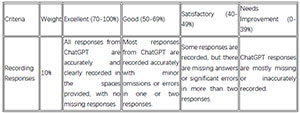
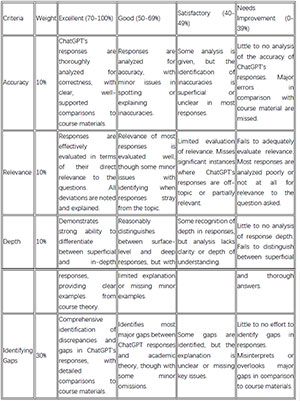
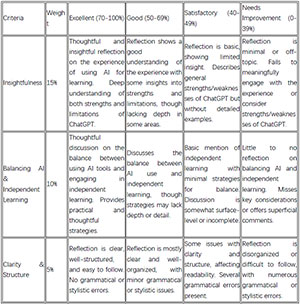
ChatGPT was introduced as part of a structured practical assignment (Appendix A) designed to encourage students to engage critically with AI-generated content rather than use it as a shortcut to answers. The assignment required students to generate responses using ChatGPT, compare these outputs with prescribed academic materials and reflect on the ethical implications of AI use in their learning.
Data sources and data collection
Data was generated from three primary sources over an eight-month period (August 2024-March 2025), corresponding with the design, implementation and evaluation phases of the ChatGPT-based assignment.
Reflective journals were maintained by both lecturers throughout the study. Reflections were recorded immediately following key teaching and learning moments, including the introduction of ChatGPT, classroom interactions, assessment marking and student consultations. These journals captured observations of student engagement, pedagogical challenges, ethical concerns and our evolving perspectives as educators.
Student reflections were collected through real-time in-class quizzes administered using Mentimeter and Wooclap. These tools were used at multiple points during the semester to capture students' perceptions of ChatGPT, their engagement with the assignment and their views on ethical AI use. Questions included Likert-scale items and short open-ended prompts focused on learning experience, reliance on AI and ethical awareness.
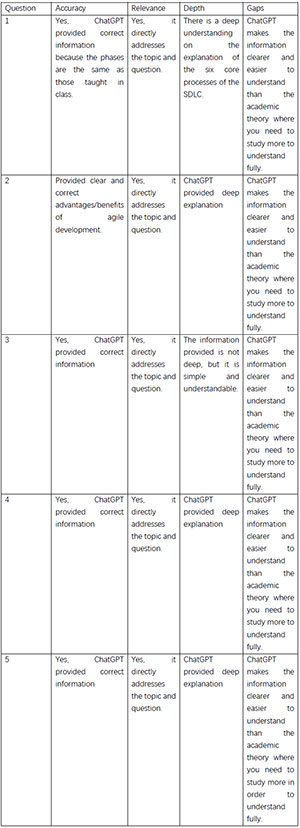
Student artefacts, including anonymised assignment submissions (e.g., the sample provided in Appendix C), were examined to illustrate patterns of engagement, critical analysis and over-reliance on AI-generated content. These artefacts provided concrete evidence to triangulate lecturer reflections and student self-reports.
Data analysis
Data analysis followed a reflexive thematic analysis process. All data sources (lecturer reflective journals, student quiz responses, selected student artefacts) were read iteratively to gain familiarity with the dataset. Initial open coding was conducted inductively, focusing on recurring patterns related to student engagement, critical evaluation of AI outputs, ethical awareness and challenges associated with AI use.
Codes were then reviewed and grouped into broader categories through constant comparison across data sources. Through this iterative process, three overarching themes were developed; these are discussed further below. These themes aligned with the study's research question and were refined through ongoing reflection and discussion between the two researchers.
Throughout the analysis, we sought to balance descriptive accounts of classroom experiences with analytical interpretation informed by Connectivism Theory and existing literature on generative AI in higher education.
Ethics and reflexivity
Ethical considerations were central to the study. Students' participation in classroom activities formed part of routine teaching and learning processes and no identifying information was collected or reported. All student responses and artefacts were anonymised and data was reported at an aggregate level.
Given our dual role as lecturers and researchers, reflexivity was a critical component of the research process. We remained attentive to how our positionality, assumptions, and pedagogical commitments shaped both data generation and interpretation. To mitigate potential bias, reflective accounts were compared across researchers and triangulated with student-generated data. ChatGPT was explicitly framed as a learning support tool rather than an authoritative knowledge source and ethical use was emphasised through assessment rubrics and classroom discussion. These ethical and reflexive practices align with recommendations for responsible integration of AI tools in higher education (Zawacki-Richter, et al., 2024).
Findings
This section presents the findings from lecturer reflections, student quiz responses (Mentimeter and Wooclap) and selected student artefacts. The findings are organised into three themes: (1) student engagement and critical thinking, (2) ethical awareness and shifts in understanding and (3) challenges related to access and dependence on AI tools.
Theme 1: Student engagement and critical thinking
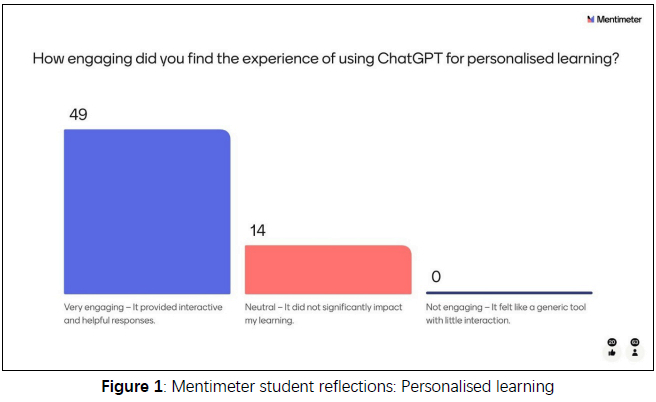
Student engagement with course content increased following the introduction of ChatGPT as part of a structured practical assignment. Lecturer reflections indicated that students were generally motivated by the interactive nature of the tool and its ability to provide immediate responses to queries. Mentimeter results showed that many students perceived ChatGPT as supporting a more personalised learning experience (see Figure 1).
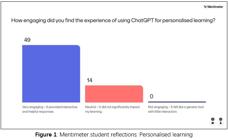
Student reflections highlighted that ChatGPT was experienced as accessible and supportive, particularly when engaging with complex or abstract theoretical concepts. One student noted that
ChatGPT breaks down the topics in a way that feels more approachable, especially when I don't understand everything in the lecture notes. Another commented that the tool gave me a starting point for my research and helped me organise my ideas better.
These responses suggest that ChatGPT functioned as an entry point into course material for students who might otherwise struggle with dense academic texts.
At the same time, evidence from lecturer reflections and student artefacts indicated variability in the depth of students' critical engagement. While some students identified gaps and inaccuracies in AI-generated responses, others accepted ChatGPT's outputs with minimal interrogation. This pattern was particularly visible in student submissions where responses focused on summarising AI-generated content without substantive comparison to prescribed academic sources (see Appendix C).
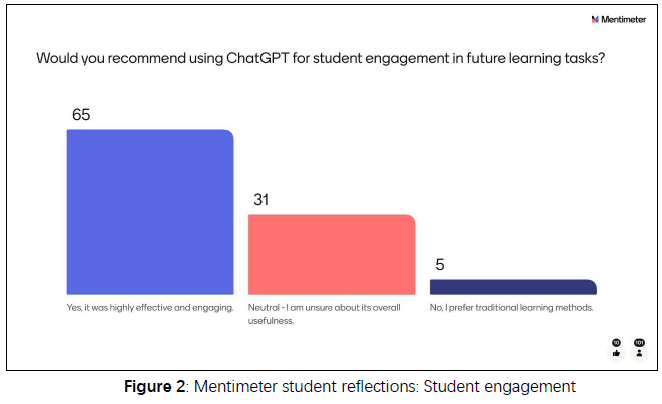
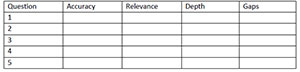
Mentimeter responses further indicated that most students would recommend the use of ChatGPT to support engagement with learning materials (see Figure 2). However, lecturer observations noted that effective engagement was closely linked to the structure provided by the assignment rubric (see Appendix B), which explicitly required students to assess accuracy, relevance and depth.
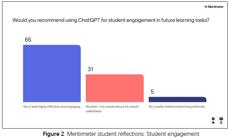
Differences in students' familiarity with digital tools were also evident. While some students adapted quickly to using ChatGPT, others required additional support to navigate the platform. These differences shaped how effectively students engaged with the task and the extent to which they evaluated AI-generated content critically.
Theme 2: Ethical awareness and shifts in understanding
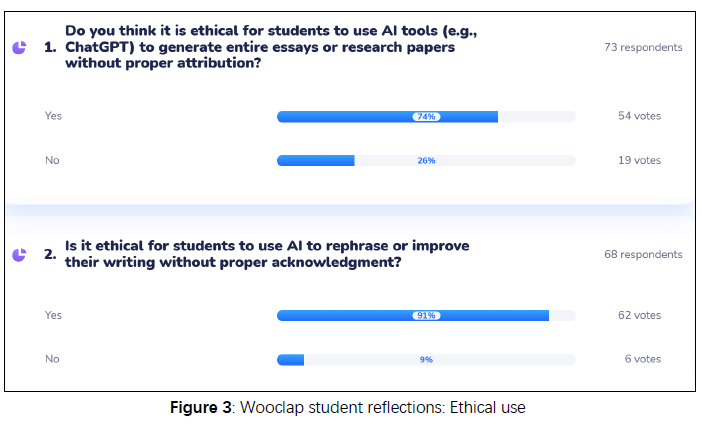
Student reflections revealed notable shifts in ethical awareness over the course of the assignment. Early Wooclap responses indicated that many students initially viewed the unrestricted use of AI tools in academic work as acceptable (see Figure 3). However, later reflections showed increased concern regarding originality, academic integrity and over-reliance on AI-generated content.
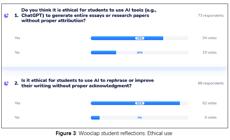
Several students explicitly questioned whether reliance on ChatGPT might undermine independent thinking. One student reflected,
I found ChatGPT useful, but I worried about relying on it too much. It's important to make sure my ideas are my own.
Another noted that
using ChatGPT made me think about how technology is changing learning, and how we need to use it responsibly.
These reflections suggest a growing awareness of ethical considerations related to AI use in academic contexts.
Lecturer reflections supported this pattern, noting that ethical discussions became more nuanced as students progressed through the assignment. While initial engagement focused on convenience and efficiency, later interactions reflected greater attention to accountability, authorship and responsible use.
Theme 3: Challenges related to access and dependence on AI tools
Alongside positive engagement, students also reported challenges related to the limitations of ChatGPT. Some students expressed frustration with responses they perceived as overly general or lacking depth. One student commented,
Sometimes ChatGPT gave answers that were too basic, and I had to spend extra time finding better explanations.
These responses indicate that AI-generated content did not consistently meet students' expectations for academic depth.
Issues of access and dependence were also evident. Lecturer reflections highlighted disparities in students' access to reliable internet connectivity and digital devices, which affected participation and confidence in using the tool. Additionally, some students demonstrated a tendency to depend on ChatGPT as a primary source of information rather than as a starting point for inquiry.
Analysis of student artefacts reinforced these concerns. In some cases, submissions closely mirrored AI-generated responses, with limited evidence of independent synthesis or critical comparison with academic materials (see Appendix C). These patterns highlight the uneven ways in which students engaged with generative AI and underscore the importance of structured guidance.
Discussion
This study set out to explore how ChatGPT can be integrated into undergraduate teaching at a Historically Disadvantaged Institution (HDI) to foster critical thinking and ethical awareness. Interpreted through the lens of Connectivism, the findings highlight both the pedagogical potential and the inherent risks of generative AI in higher education, particularly within contexts marked by structural inequality, uneven access and linguistic diversity.
From a connectivist perspective, the findings related to student engagement and critical thinking (Theme 1) suggest that ChatGPT functioned as a knowledge node within a broader learning network rather than as a standalone source of authority. When guided by a structured assignment and rubric, students were prompted to evaluate, verify and contextualise AI-generated content against prescribed academic materials. This aligns with Connectivism's emphasis on learners' capacity to navigate multiple sources of knowledge and exercise judgement in selecting what is credible and relevant. However, the uneven depth of engagement observed among students also exposes a key limitation of connectivist assumptions: access to digital tools does not automatically translate into the ability to use them critically. Without explicit scaffolding, some students defaulted to surface-level interaction, underscoring the need for intentional pedagogical design.
The findings related to ethical awareness (Theme 2) further illustrate how generative AI complicates traditional understandings of authorship, originality and academic integrity. Initially, many students viewed unrestricted AI use as acceptable, reflecting a limited ethical framework for engaging with emerging technologies. Over time, however, structured reflection and guided discussion appeared to support a shift towards more nuanced ethical reasoning. From a connectivist standpoint, this ethical learning can be understood as engagement not only with informational networks, but also with normative and ethical networks that shape responsible participation in knowledge production. At the same time, the findings caution against assuming that ethical awareness develops organically through exposure to AI, rather, it requires deliberate pedagogical intervention.
Theme 3 studied the challenges that shape AI use in HDIs, including uneven access to reliable internet connectivity, variable digital literacy and the risk of over-reliance on AI-generated outputs. These findings complicate optimistic narratives about generative AI as a solution to educational inequality. While ChatGPT lowered certain barriers to accessing information, it also introduced new forms of dependence and exclusion. From a critical perspective, this tension highlights how AI tools can simultaneously enable and constrain learning, particularly when institutional and socio-economic inequalities remain unaddressed. Connectivism offers a useful framework for understanding these dynamics, but the findings suggest that it must be applied cautiously in contexts where access to learning networks is uneven.
Considering ChatGPT within the broader ecosystem of generative AI tools further clarifies these risks and opportunities. Compared to Google Bard and Microsoft Bing AI, ChatGPT's conversational design and relative simplicity made it more accessible for students engaging in iterative questioning and reflection. Bard's reliance on real-time internet access and Bing AI's integration of search functionality may offer advantages for research-intensive tasks, but they also introduce barriers in contexts characterised by unstable connectivity and limited digital resources. The comparison underscores that tool selection is not merely a technical decision, but a pedagogical and ethical one, shaped by institutional context and student needs.
An additional critical dimension emerging from this discussion concerns language and multilingualism. While ChatGPT supported comprehension by simplifying complex concepts (Allam, et al., 2023), its predominantly English-language orientation risks reinforcing English-only academic norms in a multilingual higher education context. For students who engage with academic content in a second or third language, AI-generated explanations may offer valuable scaffolding, but they may also marginalise indigenous languages and epistemologies. From an ethical standpoint, this raises questions about epistemic access and linguistic justice. Educators therefore need to scaffold multilingual usage intentionally, for example by encouraging students to interrogate AI outputs across languages, reflect on translation limitations and critically examine whose knowledge is being prioritised.
These findings suggest that integrating generative AI into teaching at HDIs requires a careful balance between innovation and critique. For higher education practitioners, the implications are both practical and ethical. AI tools such as ChatGPT should be embedded within structured learning designs that promote critical evaluation, ethical reflection and multilingual sensitivity. Rather than positioning AI as a time-saving replacement for pedagogical labour, educators must engage with it as a complex socio-technical system that reshapes how knowledge is accessed, produced and valued.
Challenges and Limitations
The integration of ChatGPT into teaching revealed several challenges and limitations that shape the interpretation of this study's findings. These limitations are particularly salient in the context of a resource-constrained Historically Disadvantaged Institution (HDI).
One significant challenge was the persistent digital divide among students. Uneven access to reliable internet connectivity and suitable digital devices limited some students' ability to engage fully with the ChatGPT-based assignment. This constraint affected both participation and depth of engagement and reflects broader structural inequalities within South African higher education (Mhlanga & Moloi, 2020). As a result, the learning opportunities afforded by generative AI were not experienced uniformly across the cohort.
A further limitation relates to students' tendency to over-rely on AI-generated content. Despite the use of structured rubrics and explicit guidance, some students accepted ChatGPT's responses with limited critical interrogation. This pattern complicates interpretations of enhanced critical thinking and aligns with wider concerns regarding convenience-driven learning practices associated with generative AI use (Zawacki-Richter, et al., 2024). It also highlights the challenge of distinguishing between AI-assisted engagement and independent cognitive effort.
Ethical challenges also shaped the study. Questions of academic integrity, authorship and the boundaries between acceptable support and misconduct emerged throughout the assignment. While ethical reflection was embedded into the learning design, the evolving nature of institutional policies on generative AI limited the extent to which clear and consistent guidelines could be enforced. This uncertainty may have influenced students' decision-making and responses.
From a methodological perspective, the autoethnographic approach constitutes both a strength and a limitation. While it enabled rich, context-sensitive insights into teaching practice, the findings are shaped by the researchers' positionality as lecturers within a single institution and discipline. Consequently, the study does not claim generalisability across all higher education contexts or AI applications.
Finally, the study is limited by the linguistic orientation of generative AI tools such as ChatGPT. The predominantly English-language outputs constrained the exploration of multilingual engagement and may have limited epistemic access for students more comfortable in other languages. This limitation underscores the need for further research on generative AI in multilingual and linguistically diverse higher education settings.
Conclusion
This study examined the integration of ChatGPT into undergraduate teaching at a Historically Disadvantaged Institution (HDI), with a focus on fostering critical thinking and ethical awareness. Using a reflective autoethnographic approach, the study explored how generative Artificial Intelligence (AI) was experienced by both educators and students within a resource-constrained and multilingual higher education context.
The findings suggest that ChatGPT can support student engagement and act as a catalyst for critical inquiry when embedded within structured pedagogical designs. Rather than functioning as an authoritative source of knowledge, the tool was most effective when students were required to interrogate, verify and contextualise AI-generated responses against academic materials. At the same time, the study highlights important risks, including uneven access, surface-level engagement and ethical ambiguity, underscoring that generative AI does not automatically enhance learning without intentional scaffolding.
For higher education institutions, particularly HDIs, the integration of generative AI demands a cautious and context-sensitive approach. Effective use depends on investment in digital infrastructure, explicit guidance on ethical and responsible AI use and pedagogical practices that foreground critical thinking and multilingual sensitivity. Educators play a central role in mediating how AI tools are understood and used, ensuring that they complement rather than replace human judgement and disciplinary knowledge.
Future research could extend this work by examining the long-term effects of generative AI on student learning and by exploring AI use across different disciplines and multilingual contexts. As generative AI becomes increasingly embedded in higher education, critical, empirically grounded studies such as this remain essential for understanding how these technologies shape teaching, learning, and epistemic access.
Declaration of generative AI and AI-assisted technologies in the writing process
During the preparation of this work, we utilised ChatGPT for language editing and refinement. After using this tool, we reviewed and edited the content as needed. We take full responsibility for the content of the publication.
Allam, H., Dempere, J. M., Akre, V., Parakash, D., Mazher, N. & Ahamed, J. 2023. Artificial Intelligence in education: An argument of Chat-GPT use in education. Information Technology Trends. 9th International Conference on information technology trends, 24-25 May 2023. Dubai.
References
- Bakhshi, H., Di Novo, S. & Fazio, G. 2023. The "Great Lockdown" and cultural consumption in the UK. Journal of Cultural Economics, 47(4): 555-587.
- Dawson, S., Joksimovic, S., Mills, C., Gašević, D. & Siemens, G. 2023. Advancing theory in the age of artificial intelligence. British Journal of Educational Technology, 54(5): 1051-1056.
- Dwivedi, Y. K., Kshetri, N., Hughes, L., Slade, E. L., Jeyaraj, A., Kar, A. K., Baabdullah, A. M., Koohang, A., Raghavan, V., Ahuja, M., Albanna, H., Albashrawi, M. A., Al-Busaidi, A. S., Balakrishnan, J., Barlette, Y., Basu, S., Bose, I., Brooks, L., Buhalis, D., … Wright, R. 2023. Opinion Paper: "So what if ChatGPT wrote it?" Multidisciplinary perspectives on opportunities, challenges and implications of generative conversational AI for research, practice and policy. International Journal of Information Management, 71: 102642.
- Funda, V. & Piderit, R. 2024. A review of the application of artificial intelligence in South African Higher Education. 2024 Conference on Information Communications Technology and Society (ICTAS), 44-50.
- Lukianets, H. & Lukianets, T. 2023. Promises and perils of AI use on the tertiary educational level. Grail of Science, 25: 306-311.
- Méndez, M.G. 2014. Autoethnography as a research method: Advantages, limitations and criticisms. Colombian Applied Linguistics Journal, 15(2): 279.
- Mhlanga, D. & Moloi, T. 2020. COVID-19 and the Digital Transformation of Education: What We Are Learning in South Africa. Education Sciences, 10(7): 180.
- Sivanath, A. 2020. Teaching and learning challenges of disadvantaged students in the context of access and equity in South African higher education: A case study of the Durban University of Technology. Unpublished MA dissertation. Durban University of Technology.
- Slimi, Z. 2021. The impact of AI implementation in higher education on educational process future: A systematic review [Preprint]. In Review. Available at: https://doi.org/10.21203/rs.3.rs-1081043/v1
- Western Governors University. 2021. Connectivism Learning Theory. Available at: https://www.wgu.edu/blog/connectivism-learning-theory2105.html (Accessed: 15 April 2026).
- Woldegiorgis, E.T. & Chiramba, O. 2025. Access and success in higher education: Fostering resilience in historically disadvantaged students in South Africa. Journal of Applied Research in Higher Education, 17(2): 759-771.
- Zawacki-Richter, O., Bai, J. Y. H., Lee, K., Slagter Van Tryon, P.J. & Prinsloo, P. 2024. New advances in artificial intelligence applications in higher education? International Journal of Educational Technology in Higher Education, 21(1).

Accepted: 15 April 2026